

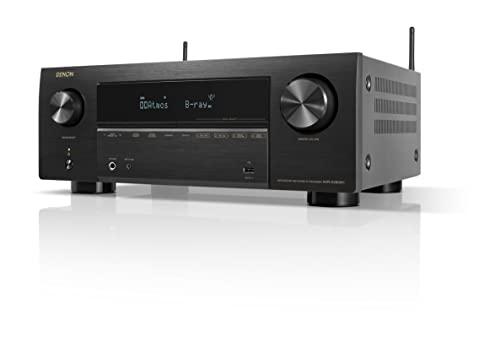
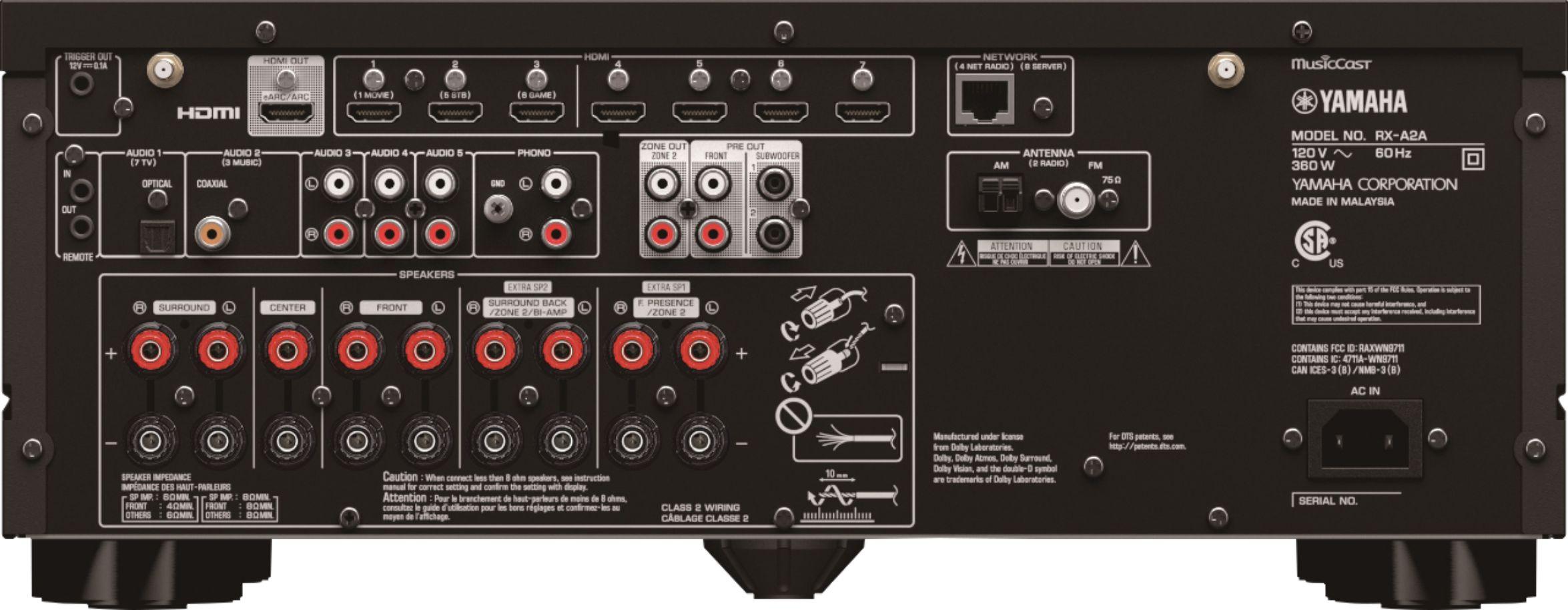
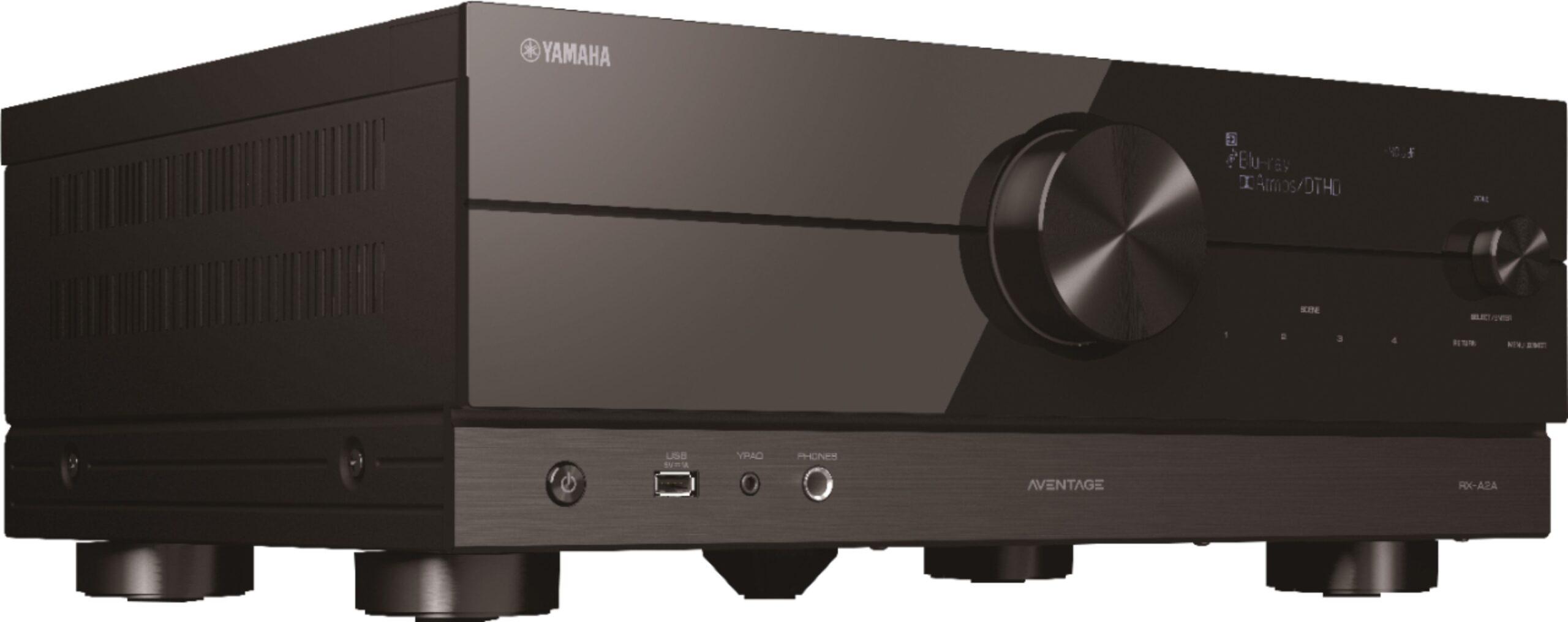
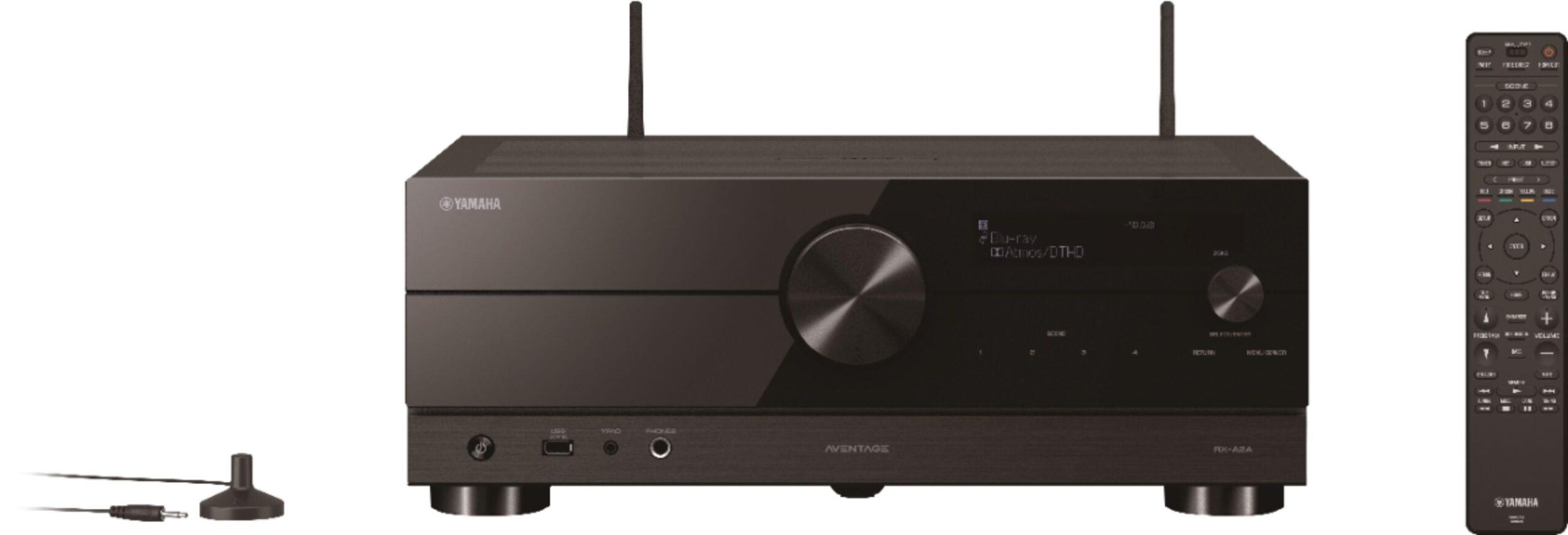
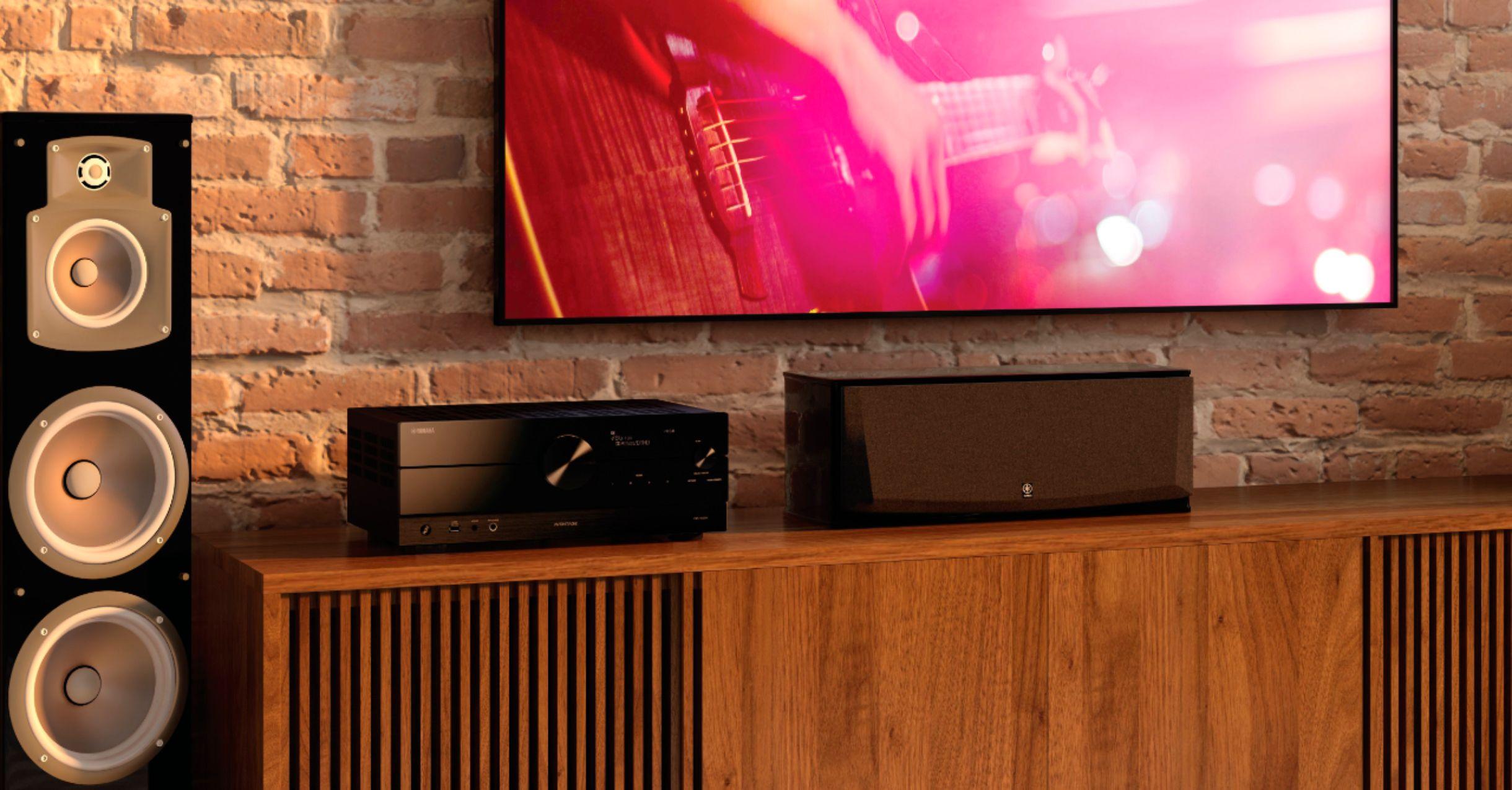
When building or upgrading a home theater, the AV receiver sits at the heart of everything—it's the brain that processes your audio, routes video signals, and powers your speakers. After researching these two popular 7.2 channel receivers, the choice between the Denon AVR-X2800H and Yamaha Aventage RX-A2A comes down to whether you prioritize cutting-edge video capabilities or proven audio excellence at a better value.
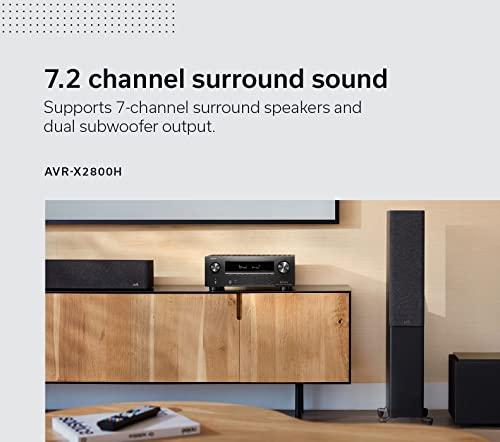
Before diving into specifics, let's establish what matters most in this category. A 7.2 channel receiver means it can handle seven main speakers (like a typical 5.1 surround setup plus two height speakers for Dolby Atmos) and two subwoofers. These mid-range units typically cost between $700-900 at the time of writing, positioning them as the sweet spot for serious home theater enthusiasts who want advanced features without flagship pricing.
The most critical performance areas include power output (measured in watts per channel), video processing capabilities, audio room correction systems, and connectivity options. Modern receivers also need to handle immersive audio formats like Dolby Atmos—which creates three-dimensional soundscapes by bouncing audio off your ceiling—and support the latest video standards including 8K resolution and gaming features like Variable Refresh Rate (VRR), which eliminates screen tearing during fast-paced games.
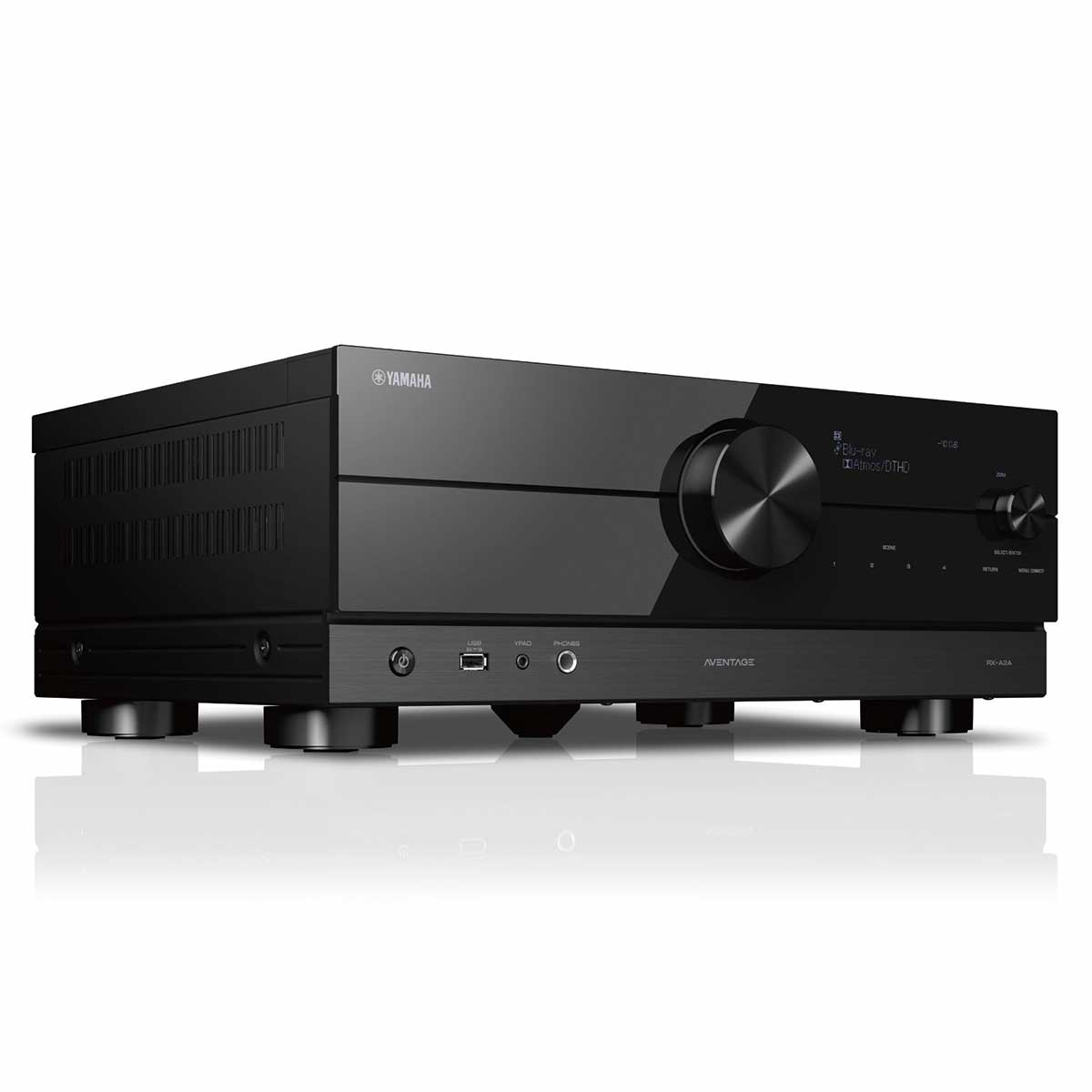
The Yamaha RX-A2A launched in 2020 as part of Yamaha's premium Aventage series, representing their commitment to audiophile-grade performance in the mid-range segment. The Denon AVR-X2800H arrived two years later in 2022, giving it a significant technological advantage in video processing and next-generation gaming support.
This timing difference matters enormously. The rapid evolution of video standards means the Denon benefits from more mature HDMI 2.1 implementation—the connection standard that enables 8K video and advanced gaming features. Meanwhile, the Yamaha has had more time for firmware updates and real-world testing, resulting in a more stable, proven platform.
The Yamaha RX-A2A delivers 100 watts per channel compared to the Denon AVR-X2800H's 95 watts per channel. While this 5-watt difference seems minor on paper, it represents better headroom for demanding speakers and dynamic movie scenes. Both use discrete amplification—meaning each channel gets its own dedicated amplifier section rather than sharing power—which typically delivers cleaner, more controlled sound.
In practical terms, that extra power matters most if you have larger speakers, sit farther from them, or enjoy reference-level volume for action movies. The Yamaha's amplifier section uses a fully discrete design throughout, while the Denon employs a Class AB discrete topology. Both approaches prioritize clean, dynamic sound over pure efficiency.
Room acoustics dramatically affect sound quality, which is why both receivers include sophisticated calibration systems. The Yamaha RX-A2A features YPAO (Yamaha Parametric Acoustic Optimizer) with R.S.C. (Reflected Sound Control), which analyzes your room's acoustics and adjusts the sound accordingly. This system excels at taming problematic reflections and creating a balanced soundscape across multiple listening positions.
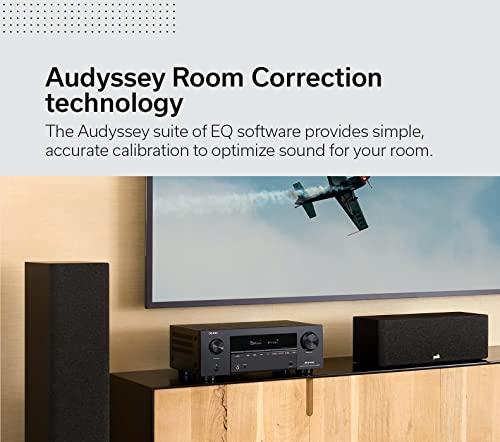
The Denon AVR-X2800H counters with Audyssey MultEQ XT, which measures up to eight different positions in your room to create a comprehensive acoustic picture. Audyssey systems are generally more aggressive in their corrections, which can dramatically improve difficult rooms but may sound over-processed to some listeners. The Denon also supports the Audyssey Editor app, letting you fine-tune the calibration to your preferences.
Based on extensive research into user and expert reviews, the Yamaha RX-A2A consistently receives praise for its engaging, musical sound quality. Users describe "outstanding sound quality" and "immersive surround sound" that brings movie soundtracks to life. Professional reviewers note its "spacious but focused presentation" that works equally well for music listening and home theater applications.
The Denon AVR-X2800H, while newer, shows a refined approach to sound reproduction. Reviews highlight its "more intimacy and greater tonal depth" particularly for dialogue clarity—crucial for understanding movie conversations without cranking the volume. However, some find it slightly less engaging than the Yamaha for pure music listening.
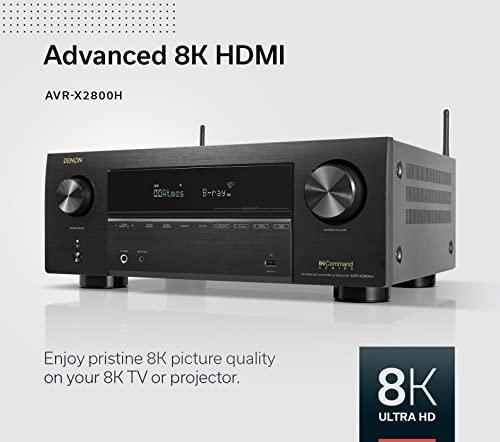
This represents the most significant difference between these receivers. The Denon AVR-X2800H offers genuine 8K upscaling capabilities, meaning it can take lower-resolution content and intelligently enhance it for 8K displays. More importantly, it handles 8K at 60Hz and 4K at 120Hz with full 4:4:4 chroma subsampling—technical terms that essentially mean pristine color accuracy without compression artifacts.
The Yamaha RX-A2A limits upscaling to 4K 60Hz with 4:4:4 chroma. While perfectly adequate for current content, this represents a significant limitation as 8K televisions become more affordable and 8K content emerges. The performance gap here isn't subtle—it's a generation-defining difference that affects long-term value.
HDMI 2.1 enables the bandwidth necessary for 8K video and advanced gaming features, but implementation quality varies dramatically. The Denon AVR-X2800H provides native HDMI 2.1 processing with full 40Gbps bandwidth on three inputs and both outputs. This means no compression or quality compromises.
The Yamaha RX-A2A uses Display Stream Compression (DSC) to achieve HDMI 2.1 features—essentially squeezing the data to fit through smaller pipes. While DSC is considered visually lossless, it represents a compromise that may affect future compatibility or introduce subtle artifacts with certain content types.
Modern gaming consoles like the Xbox Series X and PlayStation 5 demand specific features for optimal performance. The Denon AVR-X2800H immediately supports Variable Refresh Rate (VRR), Auto Low Latency Mode (ALLM), Quick Frame Transport (QFT), and Quick Media Switching (QMS)—features that eliminate screen tearing, reduce input lag, and create smoother gameplay.
The Yamaha RX-A2A promised these features through firmware updates, but implementation has been slow and incomplete. Some features require hardware upgrades for full compatibility, particularly with Xbox Series X. This creates uncertainty for serious gamers who want guaranteed performance.
Both receivers support multi-room audio but through different ecosystems. The Yamaha RX-A2A integrates with MusicCast, Yamaha's mature multi-room platform that works with various Yamaha speakers and components. Its Intelligent Power Amp Assign feature cleverly redirects amplifier channels, allowing Zone 2 operation even when running a full 7.1 main system—a genuinely useful innovation.
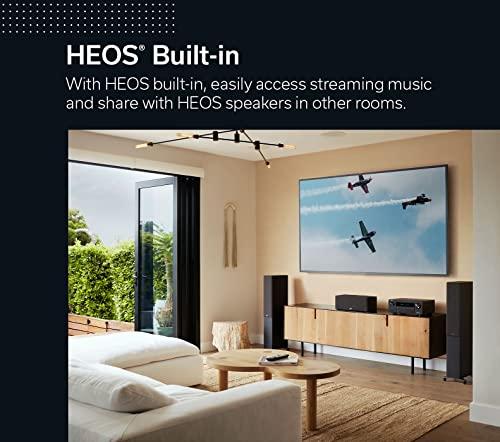
The Denon AVR-X2800H uses HEOS Built-in, which offers broader device compatibility and more streaming service integration. HEOS works with many third-party speakers and has proven reliability across different network environments.
Both receivers support modern streaming essentials: Wi-Fi, Bluetooth, AirPlay 2, and Spotify Connect. The Yamaha RX-A2A includes comprehensive file format support up to 384kHz/32-bit resolution and DSD files for audiophile music collections. The Denon AVR-X2800H matches this capability while adding more robust voice assistant integration with Alexa, Google Assistant, and Siri.
The Yamaha RX-A2A benefits from Aventage series premium construction, featuring a vibration-damped chassis and carefully selected components. Users consistently praise its build quality and reliability—important factors for a device that should last many years.
The Denon AVR-X2800H represents Denon's latest engineering efforts with updated power supplies and improved component selection. While newer doesn't always mean better, the 2022 design incorporates lessons learned from previous generations and addresses known issues.
User experience heavily favors the Yamaha RX-A2A, with customers praising its "easy setup" and intuitive interface. The auto-calibration system works reliably, and the mobile app provides comprehensive control without frustrating glitches.
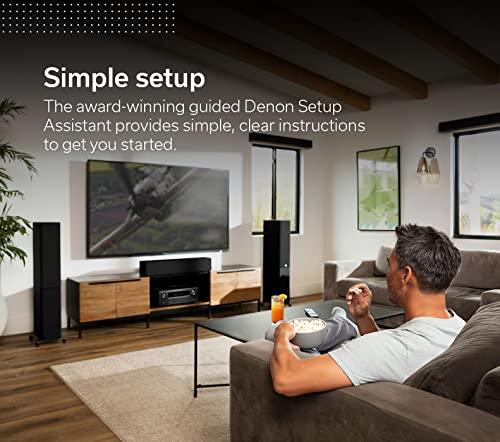
The Denon AVR-X2800H features a modernized setup process with an updated graphical interface. However, some users find certain advanced features complex to access, though day-to-day operation remains straightforward.
At the time of writing, the Yamaha RX-A2A typically costs $75-100 less than the Denon AVR-X2800H, making it the better immediate value proposition. You get higher power output, proven audio performance, and mature multi-room capabilities at a lower price.
However, the Denon AVR-X2800H represents better long-term value for users embracing next-generation video standards. Its superior 8K processing and native HDMI 2.1 implementation provide meaningful future-proofing that could extend the receiver's useful life by several years.
The value equation also depends on your current setup. If you're using a 4K television with no plans to upgrade, the Yamaha's video limitations matter less. But if you're building a system intended to last 5-7 years, the Denon's video advantages become increasingly valuable.
For dedicated home theater rooms, the Yamaha RX-A2A excels with its engaging sound character and powerful amplification. Movie soundtracks sound dynamic and immersive, while dialogue remains clear and natural. The multi-room features work well for whole-home audio integration.
The Denon AVR-X2800H shines in mixed-use scenarios where video quality matters as much as audio. Its superior upscaling makes lower-quality content look better, while gaming features ensure optimal performance with modern consoles.
Both receivers handle stereo music well, but with different characters. The Yamaha RX-A2A offers a more engaging, musical presentation that makes long listening sessions enjoyable. Its discrete amplification and careful component selection show in refined dynamics and tonal accuracy.
The Denon AVR-X2800H takes a more analytical approach, providing excellent detail retrieval and precise imaging. It's particularly good at revealing subtle details in complex recordings, though some listeners might prefer the Yamaha's more emotionally engaging sound.
Prioritize proven audio performance over cutting-edge video features. The Yamaha RX-A2A delivers consistently excellent sound quality that satisfies both casual listeners and audio enthusiasts. Its higher power output and engaging sound character make movies and music more enjoyable.
Want better immediate value. At a lower price point, you get more power per dollar and proven reliability. The multi-room capabilities work well today without waiting for firmware updates or worrying about compatibility issues.
Use primarily 4K displays with no near-term 8K plans. If your current television meets your needs and you don't plan to upgrade soon, the Yamaha's video limitations won't affect your experience.
Prefer mature, stable technology. With over two years of real-world use, the Yamaha RX-A2A has proven reliability and comprehensive feature implementation without waiting for updates.
Want future-proof video capabilities. The Denon AVR-X2800H provides genuine 8K processing and full HDMI 2.1 implementation that will remain relevant as content and display technology evolve.
Are a serious gamer. Immediate support for VRR, ALLM, and other gaming features ensures optimal performance with Xbox Series X and PlayStation 5 consoles without waiting for updates.
Plan to keep the receiver for many years. The superior video processing justifies the higher cost by extending the receiver's useful life as video standards advance.
Value cutting-edge technology over immediate savings. If having the latest features matters more than saving money upfront, the Denon's advanced capabilities provide meaningful benefits.
Both receivers excel in their intended roles, making this a choice between different philosophies rather than clear winner and loser. The Yamaha RX-A2A offers better immediate value with superior audio performance and proven reliability at a lower price. It's the smart choice for users who prioritize sound quality and don't need the absolute latest video features.
The Denon AVR-X2800H justifies its premium through superior video processing and future-proofing capabilities. It's the better long-term investment for users building systems intended to remain current as technology advances.
For most home theater enthusiasts, I lean toward recommending the Yamaha RX-A2A because its audio advantages are immediately apparent and enjoyable, while its video limitations won't affect most users for several years. However, if you're already planning to upgrade to 8K displays or need guaranteed gaming performance today, the Denon AVR-X2800H becomes the clear choice despite its higher cost.
The decision ultimately depends on whether you value proven audio excellence at a better price or prefer investing in future-ready video technology. Both represent solid choices within their strengths, ensuring satisfying performance regardless of which direction you choose.
| Denon AVR-X2800H | Yamaha Aventage RX-A2A |
|---|---|
| Power Output - Higher wattage means better performance with demanding speakers | |
| 95W per channel (8 ohms, 0.08% THD) | 100W per channel (8 ohms, 0.06% THD) |
| Release Year - Newer models typically offer better video processing | |
| 2022 (latest generation technology) | 2020 (mature, proven platform) |
| 8K Video Processing - Critical for future-proofing with next-gen displays | |
| Full 8K/60Hz upscaling with 4:4:4 chroma | Limited to 4K/60Hz upscaling |
| HDMI 2.1 Implementation - Affects gaming performance and video quality | |
| Native 40Gbps bandwidth (3 inputs, 2 outputs) | DSC compression-based implementation |
| Gaming Features - Essential for Xbox Series X/PS5 optimization | |
| VRR, ALLM, QFT, QMS available immediately | Requires firmware updates, some need hardware upgrades |
| Room Correction System - Automatically optimizes sound for your space | |
| Audyssey MultEQ XT (8-position measurement) | YPAO with R.S.C. (multi-point measurement) |
| Multi-Room Audio Platform - For whole-home audio integration | |
| HEOS Built-in (broader device compatibility) | MusicCast (Yamaha ecosystem integration) |
| HDMI Inputs/Outputs - More ports mean better connectivity flexibility | |
| 6 inputs, 2 outputs (3 inputs are HDMI 2.1) | 7 inputs, 1 output (limited HDMI 2.1) |
| Build Quality Series - Premium construction affects longevity | |
| Standard X-series construction | Aventage premium series (vibration-damped chassis) |
| Voice Assistant Support - For hands-free control convenience | |
| Alexa, Google Assistant, Siri | Alexa, Google Assistant, Siri |
| High-Resolution Audio Support - For audiophile music collections | |
| Up to 384kHz/32-bit, DSD support | Up to 384kHz/32-bit, DSD up to 11.2MHz |
| Zone 2 Capability - For independent audio in second room | |
| Standard Zone 2 implementation | Intelligent Power Amp Assign (works with full 7.1) |
The Yamaha Aventage RX-A2A delivers 100 watts per channel compared to the Denon AVR-X2800H's 95 watts per channel. While both provide sufficient power for most home theater setups, the Yamaha RX-A2A offers slightly better headroom for demanding speakers and larger listening spaces.
The Denon AVR-X2800H offers superior video processing with full 8K upscaling and native HDMI 2.1 implementation, while the Yamaha RX-A2A is limited to 4K upscaling and uses compression-based HDMI 2.1. For future-proofing with 8K displays, the Denon AVR-X2800H is the clear winner.
The Denon AVR-X2800H provides immediate support for all gaming features including VRR, ALLM, and QFT. The Yamaha RX-A2A requires firmware updates for these features, with some requiring hardware upgrades. Serious gamers should choose the Denon AVR-X2800H.
Both receivers offer excellent room correction, but with different approaches. The Denon AVR-X2800H uses Audyssey MultEQ XT with 8-position measurement, while the Yamaha RX-A2A features YPAO with R.S.C. The Yamaha RX-A2A is often praised for more natural-sounding corrections.
The Yamaha RX-A2A typically costs less while offering higher power output and proven audio performance, making it better immediate value. However, the Denon AVR-X2800H provides better long-term value through superior video processing and future-proofing capabilities.
The Denon AVR-X2800H offers 6 HDMI inputs with 3 full HDMI 2.1 ports, while the Yamaha RX-A2A provides 7 HDMI inputs but with limited HDMI 2.1 implementation. The Denon AVR-X2800H is better for users needing multiple high-bandwidth connections.
User reviews consistently praise the Yamaha RX-A2A for its engaging, musical sound quality and superior dynamics. The Denon AVR-X2800H offers more analytical sound with excellent detail retrieval. Music enthusiasts often prefer the Yamaha RX-A2A's warmer character.
The Yamaha RX-A2A uses MusicCast with Intelligent Power Amp Assign, allowing Zone 2 operation even with a full 7.1 setup. The Denon AVR-X2800H features HEOS Built-in with broader device compatibility. Both systems work well, but the Yamaha RX-A2A offers more flexibility.
The Yamaha RX-A2A has been available since 2020, allowing time for firmware maturation and bug fixes. Users consistently praise its easy setup and stable operation. The Denon AVR-X2800H is newer with updated interfaces but may have occasional software quirks.
The Yamaha RX-A2A belongs to Yamaha's premium Aventage series with vibration-damped construction and discrete amplification throughout. The Denon AVR-X2800H offers solid construction with updated components. Both are well-built, but the Yamaha RX-A2A has a slight edge in premium materials.
For pure home theater use, the Yamaha RX-A2A excels with its higher power output, engaging sound character, and proven movie performance. However, if you plan to upgrade to 8K displays or need gaming features, the Denon AVR-X2800H becomes more compelling despite the higher cost.
The Denon AVR-X2800H (2022) offers cutting-edge video processing and immediate gaming feature support, while the Yamaha RX-A2A (2020) provides mature, proven performance at better value. Choose the Denon AVR-X2800H for future-proofing or the Yamaha RX-A2A for immediate satisfaction and savings.
We've done our best to create useful and informative comparisons to help you decide what product to buy. Our research uses advanced automated methods to create this comparison and perfection is not possible - please contact us for corrections or questions. These are the sites we've researched in the creation of this article: theaudiotailor.com.au - ecoustics.com - simplehomecinema.com - whathifi.com - audioadvisor.com - youtube.com - bestbuy.com - e-catalog.com - crutchfield.com - avsforum.com - crutchfield.com - whathifi.com - richersounds.com - bestbuy.com - accessories4less.com - projectorscreen.com - adiglobaldistribution.us - youtube.com - bestbuy.com - bestbuy.com - sweetwater.com - bestbuy.com - safeandsoundhq.com - crutchfield.com - crutchfield.com - usa.yamaha.com - hifimart.com - ca.yamaha.com - usa.yamaha.com - adorama.com - avsforum.com - bestbuy.com

Privacy Policy
Terms and Conditions - Affiliate Policy
Home Security
© Copyright 2008-2026.
11816 Inwood Rd #1211, Dallas, TX 75244