

When you're building a home theater system, the AV receiver acts as the central nervous system—it's the component that takes all your video sources, processes the audio, amplifies it to drive your speakers, and sends clean video to your display. Get this choice right, and everything else falls into place. Get it wrong, and you'll be fighting limitations for years.
Today we're comparing two receivers that represent very different philosophies: the Denon AVR-X2800H, released in 2022, and the Sony STR-AZ5000ES, which hit the market in 2023. At the time of writing, these receivers sit in different price tiers—the Denon positioned as a premium mid-range option while the Sony commands nearly double the price as a flagship model. But higher cost doesn't always mean better value, especially when your needs might not require every premium feature.
Before diving into specifics, let's establish what really matters in an AV receiver. The most critical factors are channel count (how many speakers you can power), amplification quality (how cleanly and powerfully it drives those speakers), video processing capabilities (how it handles and improves your content), and room calibration systems (automated software that optimizes sound for your specific space).
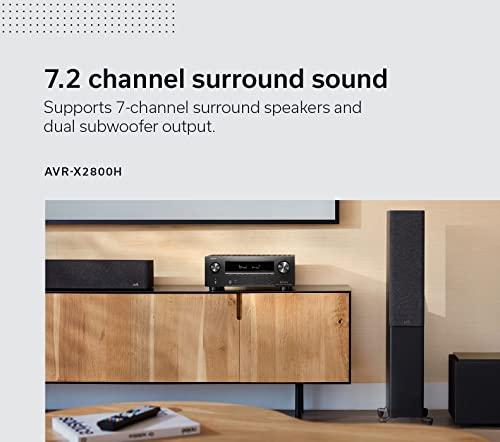
Channel count seems straightforward—7.2 means seven main speakers plus two subwoofers—but it determines your entire speaker layout. Video processing has become increasingly important as 8K content emerges and streaming quality varies wildly. Room calibration can make or break your system's sound, as even expensive speakers sound poor in the wrong acoustic environment.
The amplification section deserves special attention because it directly affects what you hear. Power ratings get thrown around carelessly, but what matters is clean power delivery across all frequencies without distortion. A receiver with 95 watts per channel that maintains low distortion will often outperform one rated at 130 watts with higher distortion levels.
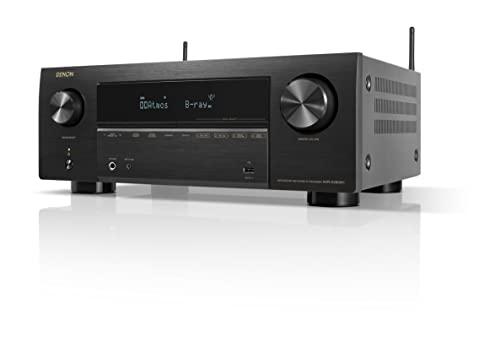
The Denon AVR-X2800H represents Denon's sweet spot for serious home theater enthusiasts who want modern features without flagship pricing. Released in 2022 as an update to the popular X2700H, it brought significant improvements in video processing and HDMI connectivity that address the biggest complaints about its predecessor.
The Denon delivers 95 watts per channel using discrete Class AB amplification—a design where each channel gets its own dedicated amplifier circuit rather than sharing resources. This matters because it prevents one channel from stealing power from another during demanding passages. In practice, this translates to better dynamics and cleaner sound when multiple channels are working hard simultaneously.
Our research into user and expert feedback reveals a consistent theme: the X2800H produces a refined, balanced sound signature that excels with dialogue clarity. The treble frequencies are clean without being harsh, and the midrange handles vocals naturally. However, the bass response is somewhat restrained compared to competitors—this isn't necessarily negative, as it avoids the boomy, one-note bass that plagues many receivers, but bass lovers might find it underwhelming.
The receiver supports Dolby Atmos and DTS:X in configurations up to 5.1.2, meaning five main speakers, one subwoofer, and two height channels. Height channels create that overhead sound effect that makes helicopters seem to fly above your head or rain appear to fall from the ceiling. The Denon handles height channel processing with sophistication, offering flexible assignment options for different speaker types and positions.
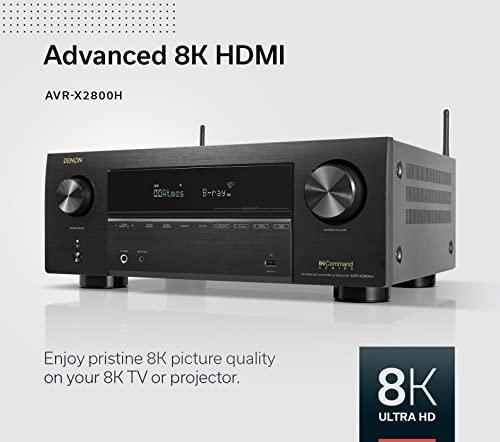
This is where the Denon AVR-X2800H truly shines and justifies its 2022 release timing. It features three HDMI 2.1 inputs capable of handling 8K video at 60 frames per second and 4K at 120 frames per second—specifications that matter tremendously for gaming and future content. HDMI 2.1 also enables Variable Refresh Rate (VRR) and Auto Low Latency Mode (ALLM), which reduce input lag and screen tearing for smoother gaming experiences.
The 8K upscaling capability deserves special mention. This technology takes lower resolution content and intelligently adds pixels to create sharper images on 8K displays. While native 8K content remains rare, the upscaling makes a noticeable difference with 4K and even 1080p sources, particularly with streaming content that's often compressed.
HDR (High Dynamic Range) support includes HDR10, HDR10+, Dolby Vision, and HLG. HDR10+ and Dolby Vision add dynamic metadata that adjusts brightness and color on a scene-by-scene basis, creating more realistic images with better contrast and color accuracy. The Denon processes these formats cleanly without the artifacts that can plague lesser receivers.
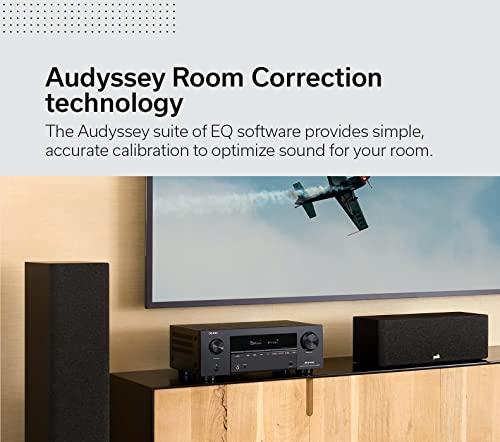
Audyssey MultEQ XT32 handles room calibration, and it's one of the most sophisticated systems available at this price point. Using the included microphone, it measures your room's acoustic characteristics from up to eight listening positions, then applies corrections for speaker distance, volume levels, and frequency response.
What sets Audyssey apart is the MultEQ Editor app, which lets you see and adjust the frequency response curves manually. This level of control appeals to enthusiasts who want to fine-tune their system's sound signature. The automatic calibration tends to be conservative, which works well for most rooms but might sound subdued to those expecting dramatic changes.
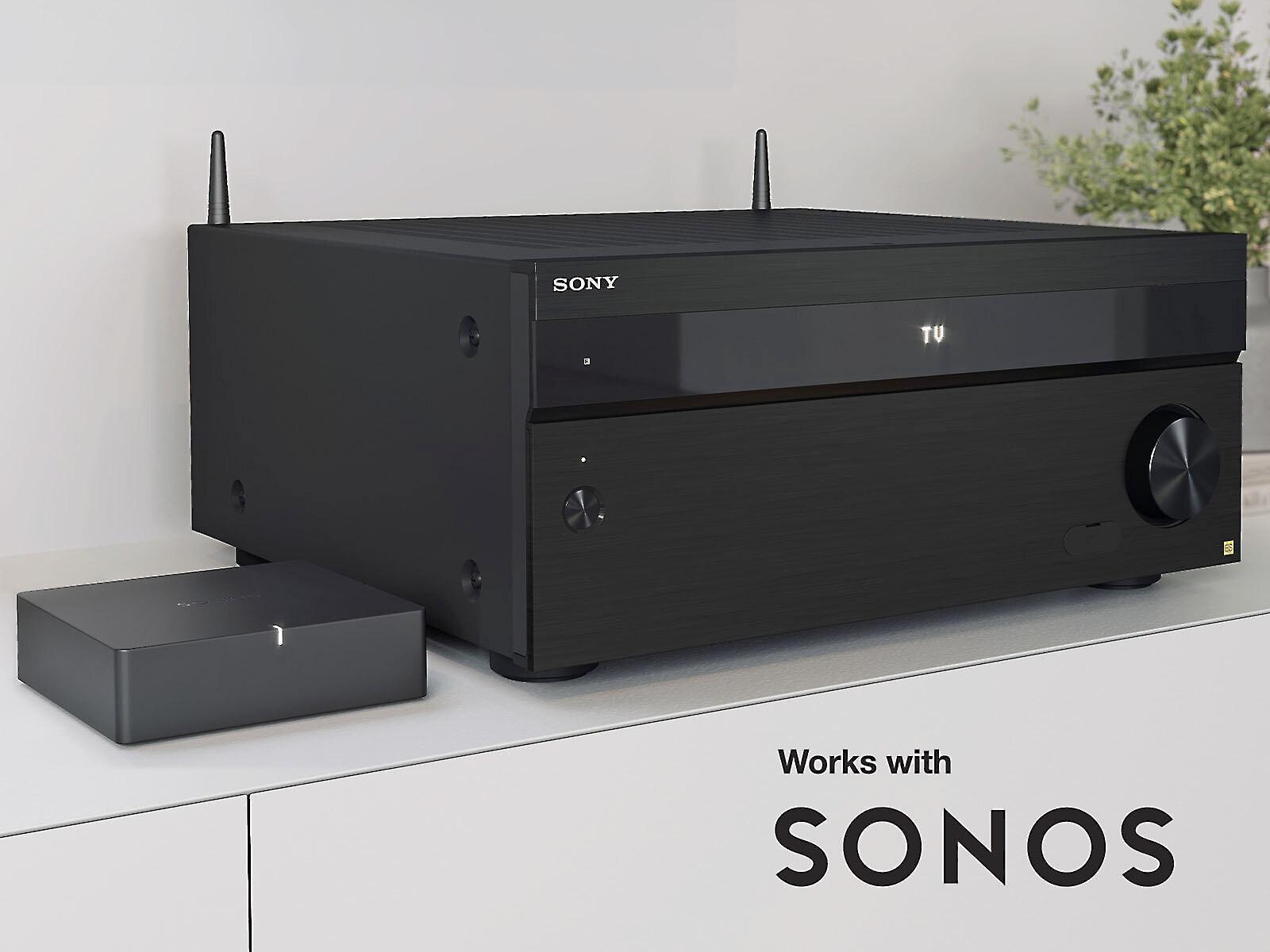
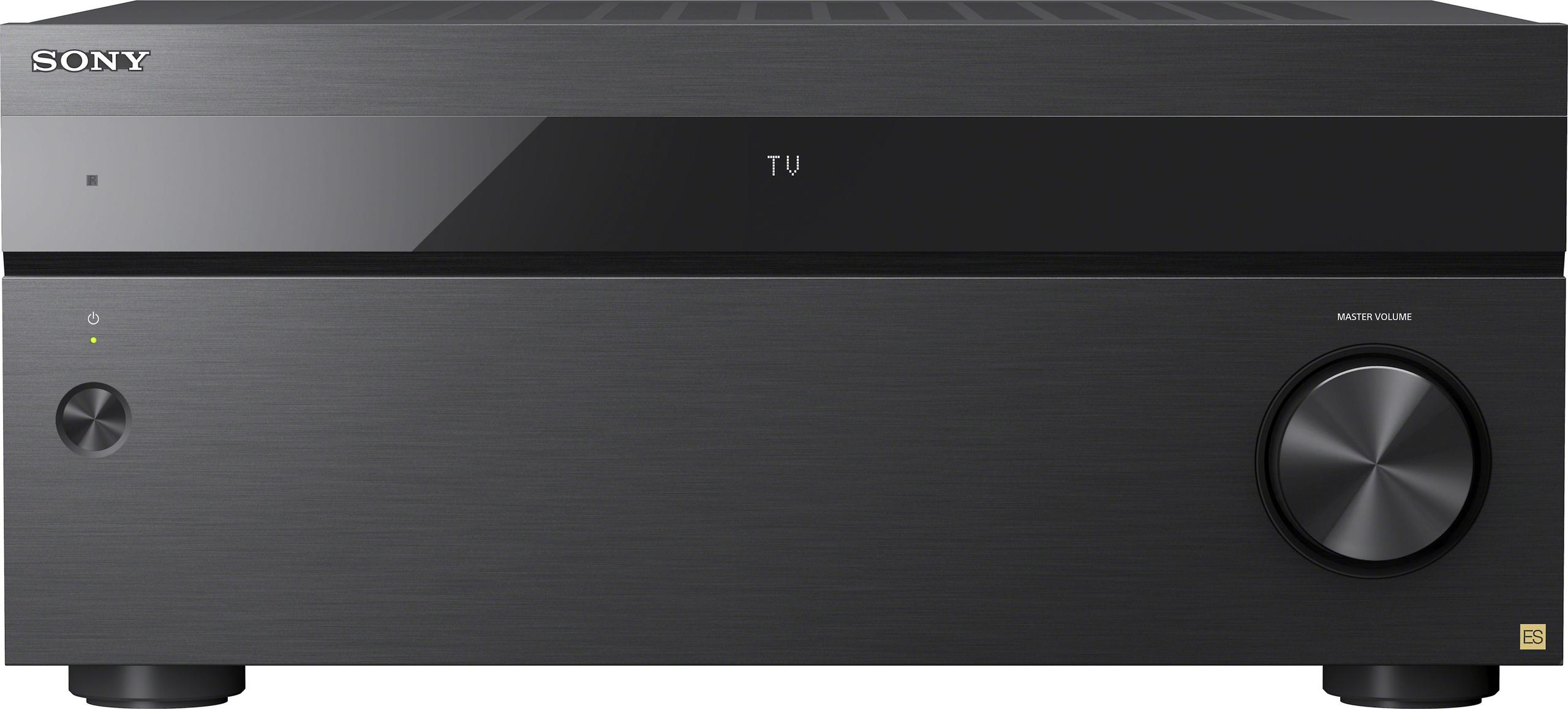
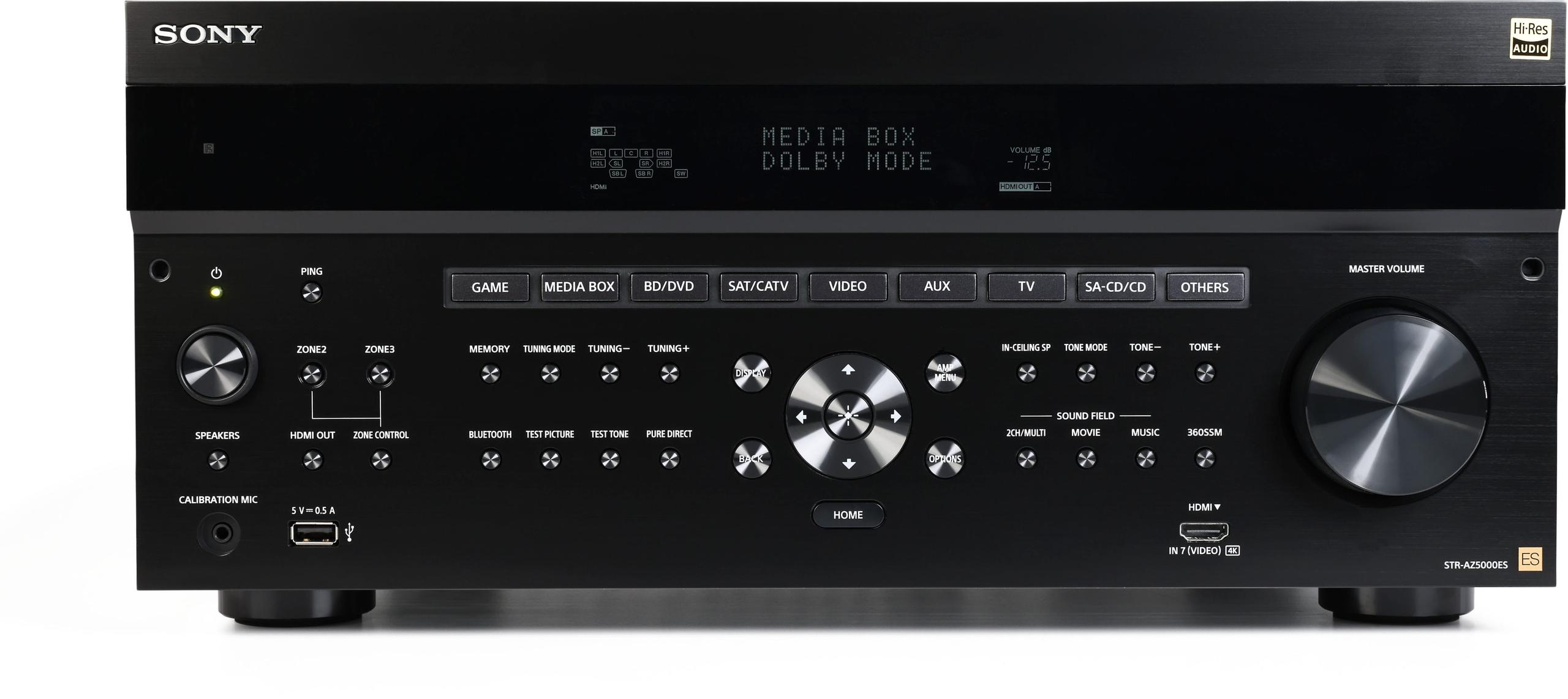
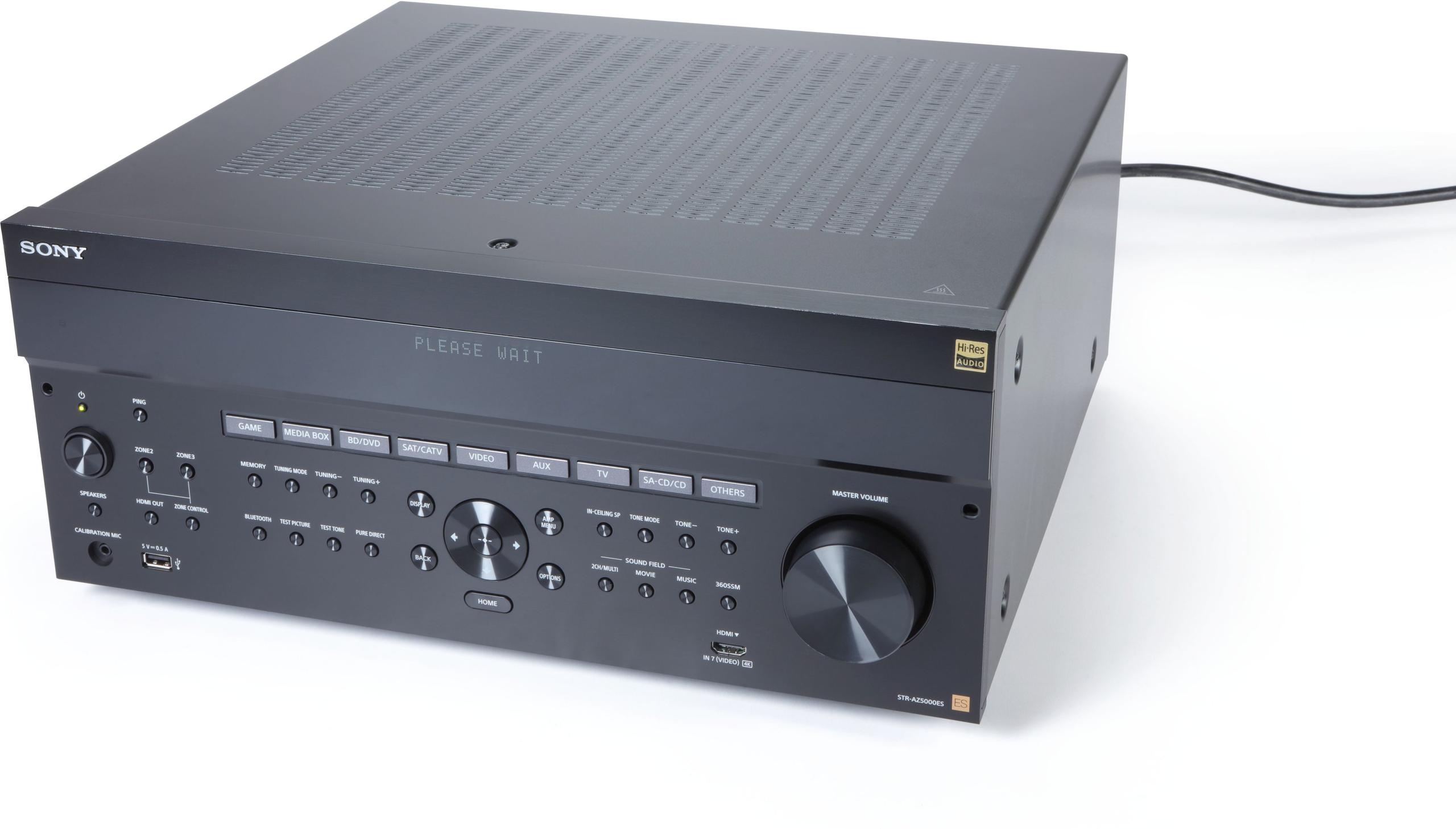
The Sony STR-AZ5000ES comes from Sony's ES (Elevated Standard) series, representing their flagship approach to home theater receivers. Released in 2023, it targets the custom installation market and serious audiophiles willing to pay premium prices for exceptional build quality and advanced features.
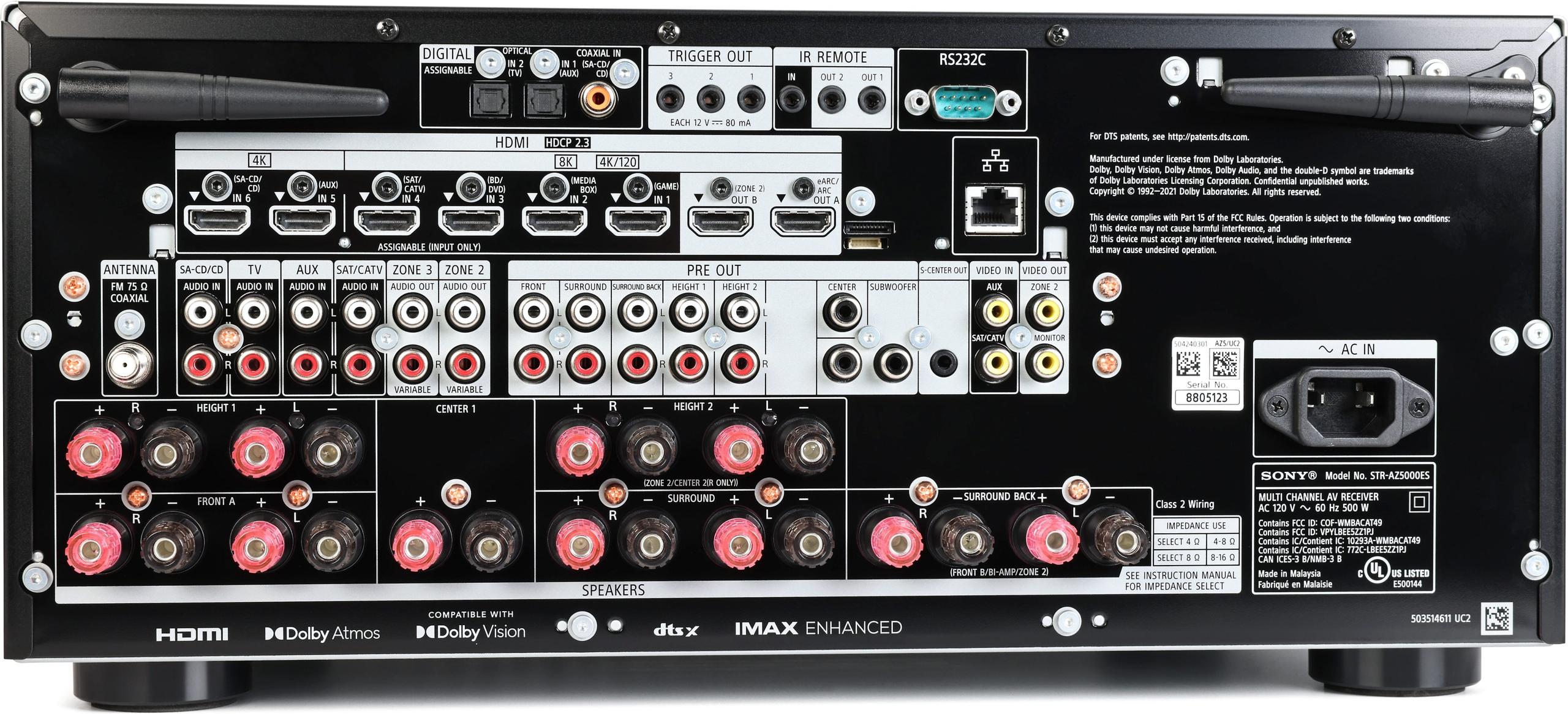
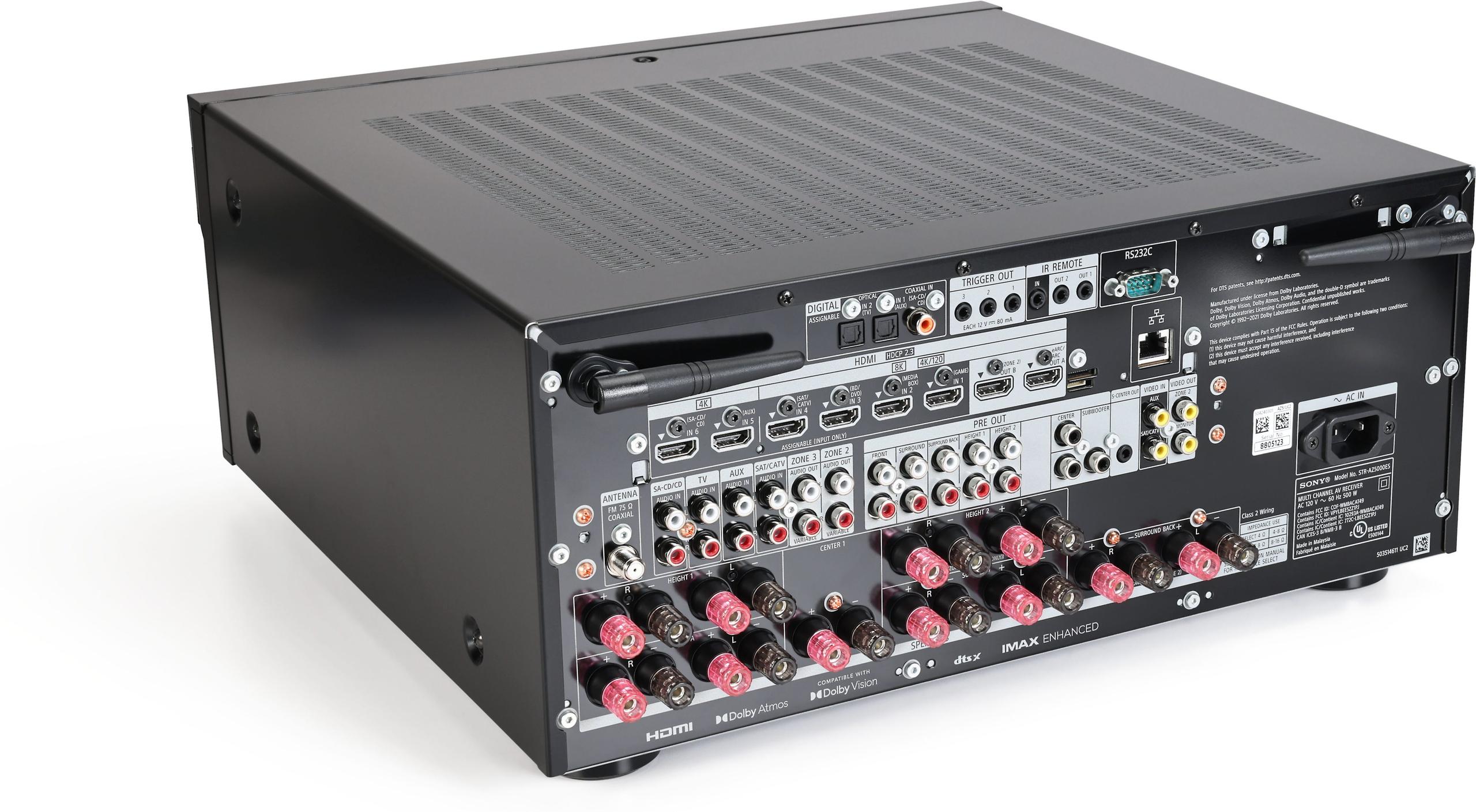
At 130 watts per channel across 11.2 channels, the Sony offers significantly more power and flexibility than the Denon. This isn't just about raw wattage—the additional channels enable complex Dolby Atmos configurations like 7.1.4 (seven main speakers, one subwoofer, four height speakers) or 9.1.2 that create truly immersive soundscapes.
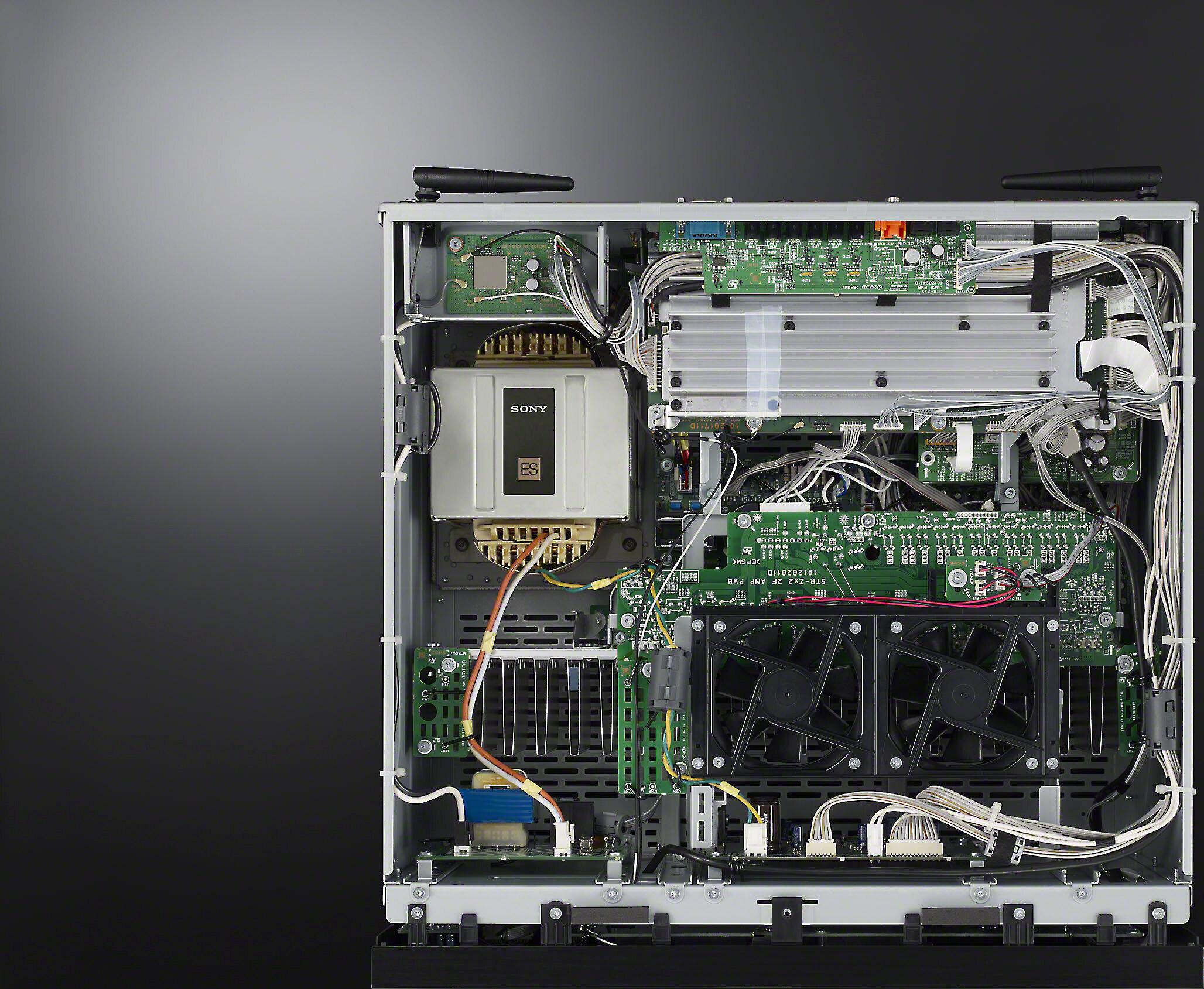
The build quality immediately announces its premium positioning. At over 42 pounds, the STR-AZ5000ES feels substantial in a way that inspires confidence. The internal construction uses high-quality components throughout, including robust power supplies and premium capacitors that contribute to cleaner power delivery and better longevity.
User feedback consistently highlights the receiver's dynamic, engaging sound character. Where the Denon sounds refined and controlled, the Sony delivers more punch and excitement. This difference in sound signature reflects different design philosophies—neither is objectively better, but they appeal to different preferences.
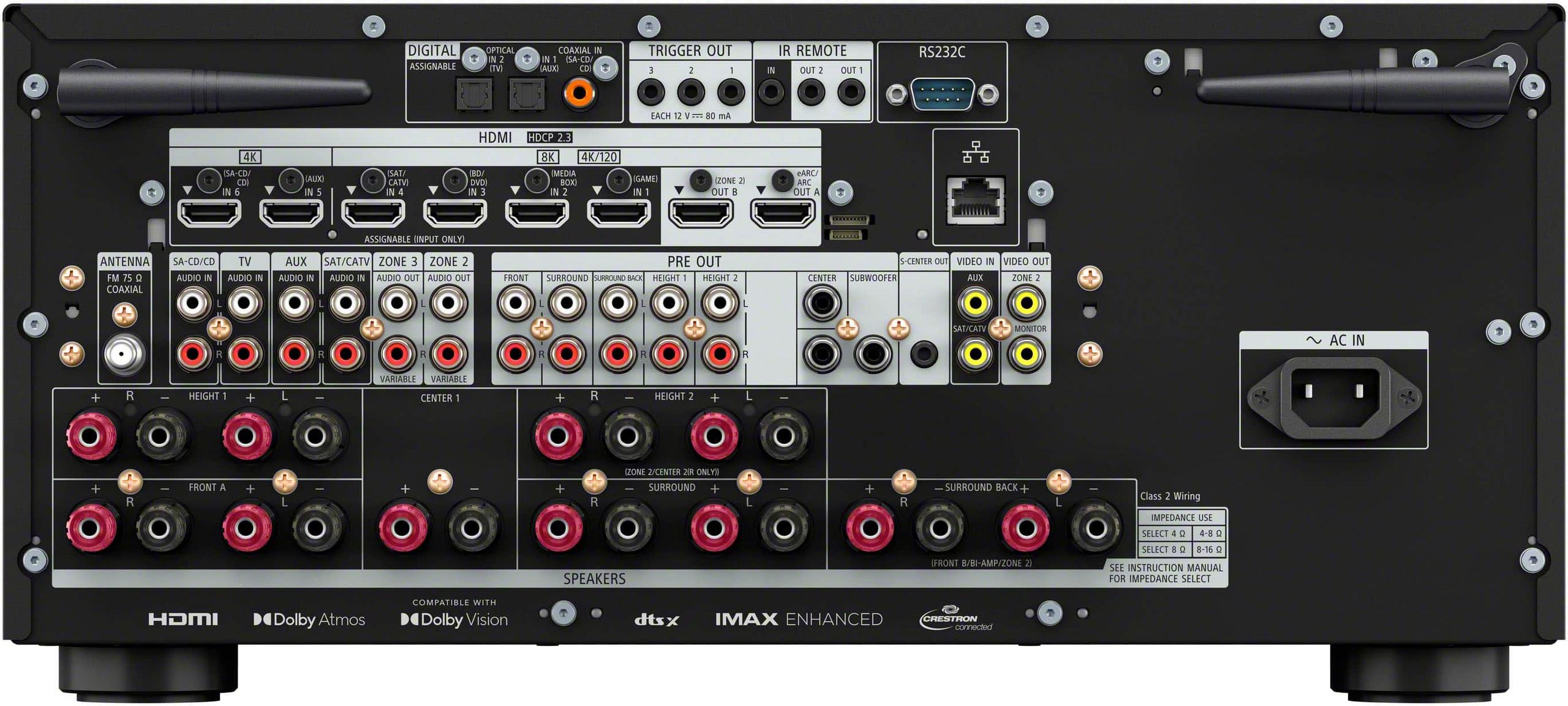
The 11.2 channel processing opens possibilities unavailable with 7.2 systems. You can run a full 7.1 surround setup with four height speakers, or use the extra channels for bi-amping your main speakers (sending low and high frequencies through separate amplifier channels) or powering additional zones throughout your home.
Here's where the Sony STR-AZ5000ES reveals its most significant weakness: despite its 2023 release date, it lacks 8K support entirely. This seems particularly puzzling given Sony's position in both the television and gaming console markets. The receiver handles 4K content excellently, but there's no 8K passthrough or upscaling capability.
HDR support includes HDR10, Dolby Vision, and HLG, but notably omits HDR10+. While HDR10+ adoption remains limited, its absence at this price point feels like an oversight, especially when the less expensive Denon includes it.
The seven HDMI inputs provide ample connectivity for most setups, and the video processing quality for supported formats is excellent. However, the lack of 8K future-proofing represents a significant consideration for buyers planning to keep their receiver for many years.
Sony's DCAC EX (Digital Cinema Auto Calibration) takes a different approach than Audyssey, using proprietary algorithms developed from Sony's professional cinema equipment experience. The calibration process requires more detailed room measurements, including precise speaker positioning and room dimensions.
The system's strength lies in its integration with Sony's broader ecosystem. If you're using Sony displays and speakers, the calibration can optimize the entire system holistically rather than just the audio portion. For custom installers, the STR-AZ5000ES offers advanced control options and reliability features that justify its professional positioning.
The fundamental difference comes down to power and channels versus refinement and value. The Sony STR-AZ5000ES delivers more raw amplification power and can drive demanding speakers more effectively. If you have inefficient speakers or a large room, this additional power reserve matters significantly.
However, the Denon AVR-X2800H often sounds more composed and balanced in typical home theater applications. Its 95 watts per channel proves adequate for most speakers in most rooms, and the refined sound signature works well across different content types.
For music listening, both receivers perform admirably, but with different characters. The Denon offers precise imaging and natural tonality that works well for acoustic music and vocals. The Sony provides more dynamic excitement that can make rock and electronic music feel more engaging.
This comparison reveals the most dramatic difference between these receivers. The Denon AVR-X2800H clearly wins the future-proofing battle with its comprehensive 8K support, upscaling capabilities, and HDR10+ compatibility. Given that both gaming consoles now support 4K/120Hz and 8K content is gradually appearing, these features provide genuine long-term value.
The Sony STR-AZ5000ES's lack of 8K support feels increasingly problematic as time passes. While 8K content remains limited, the upscaling benefits and gaming features of HDMI 2.1 provide immediate advantages that the Sony simply can't match.
The Sony offers superior flexibility for complex installations with its 11.2 channel capability and professional-grade calibration options. If you're planning an elaborate Dolby Atmos setup with multiple height speakers or need multiple zones throughout your home, the additional channels become essential.
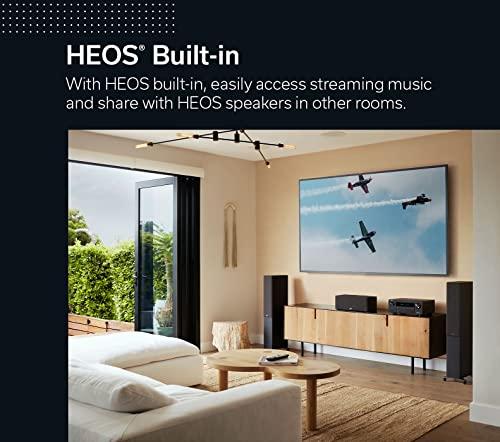
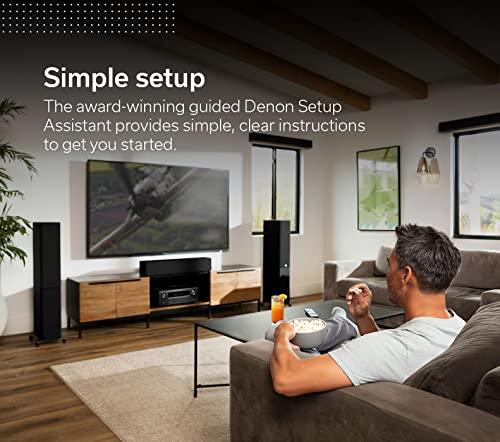
The Denon works better for straightforward installations where 7.2 channels meet your needs. Its setup process is more user-friendly, and the HEOS multi-room system offers excellent streaming integration for whole-home audio.
At the time of writing, the price difference between these receivers is substantial—nearly double for the Sony compared to the Denon. This price gap raises important questions about value and necessity.
The Denon AVR-X2800H delivers exceptional value by concentrating on features that matter most to typical users: clean amplification, modern video processing, and comprehensive streaming capabilities. You get 8K future-proofing, solid build quality, and proven reliability at a price that doesn't require mortgage refinancing.
The Sony STR-AZ5000ES justifies its premium pricing through superior build quality, additional channels, and professional-grade features. The five-year warranty reflects Sony's confidence in the product's longevity, and the ES series has historically maintained strong resale value. However, the lack of 8K support at this price point creates value questions that become more pressing over time.
You want modern features without flagship pricing. The Denon makes sense for enthusiasts who prioritize value and future-proofing over ultimate power or channel count. If your room works well with 7.2 channels and you want 8K capabilities for gaming or future content, the X2800H delivers more features per dollar than almost any competitor.
The receiver particularly appeals to vinyl enthusiasts thanks to its built-in phono stage, eliminating the need for external preamps. Gamers will appreciate the comprehensive HDMI 2.1 implementation with VRR and ALLM support that many competitors lack.
You need the additional channels and power for complex installations or demanding speakers. The Sony makes sense for serious audiophiles with high-end speakers that benefit from the additional amplification, or for custom installations requiring professional-grade reliability and control features.
If you're committed to the Sony ecosystem with compatible displays and speakers, the integrated calibration and control advantages become more compelling. The premium build quality and extensive warranty provide peace of mind for long-term installations.
These receivers represent different philosophies and priorities. The Denon AVR-X2800H focuses on delivering modern features and excellent performance at accessible pricing, while the Sony STR-AZ5000ES emphasizes premium construction and advanced capabilities for demanding applications.
For most home theater enthusiasts, the Denon provides better overall value with its combination of 8K future-proofing, solid audio performance, and comprehensive feature set. The lack of 8K support in the Sony becomes increasingly problematic as time passes, especially at its premium price point.
However, if you need the additional channels, prefer the more dynamic sound signature, or require professional-grade reliability features, the Sony delivers exceptional performance that justifies its positioning in the premium market segment.
The decision ultimately comes down to matching features to your specific needs and budget. Both receivers will serve their intended audiences well, but understanding their different strengths and limitations ensures you choose the one that best fits your home theater goals and expectations.
| Denon AVR-X2800H | Sony STR-AZ5000ES |
|---|---|
| Channel Configuration - Determines speaker layout possibilities and Dolby Atmos complexity | |
| 7.2 channels (supports up to 5.1.2 Dolby Atmos) | 11.2 channels (supports up to 7.1.4 or 9.1.2 Dolby Atmos) |
| Power Output - Affects volume levels and speaker compatibility | |
| 95W per channel (8Ω, discrete amplification) | 130W per channel (8Ω, premium amplification) |
| 8K Video Support - Critical for future-proofing and gaming | |
| Full 8K/60Hz + 4K/120Hz on 3 HDMI inputs with upscaling | No 8K support (4K maximum) |
| HDR Format Support - Impacts picture quality on compatible displays | |
| HDR10, HDR10+, Dolby Vision, HLG (comprehensive) | HDR10, Dolby Vision, HLG (missing HDR10+) |
| HDMI Connectivity - Determines device compatibility and future needs | |
| 6 inputs (3x HDMI 2.1, 3x HDMI 2.0), 2 outputs | 7 inputs (HDMI 2.0), 2 outputs |
| Room Calibration System - Optimizes sound for your specific space | |
| Audyssey MultEQ XT32 with app-based fine-tuning | DCAC EX with professional-grade 3D mapping |
| Weight/Build Quality - Indicates internal component quality and longevity | |
| 21 lbs (solid mid-tier construction) | 42+ lbs (premium ES-series tank build) |
| Streaming Integration - Affects daily usability and ecosystem compatibility | |
| HEOS, AirPlay 2, Spotify Connect, voice assistants | Chromecast Built-In, Bluetooth, Sony ecosystem |
| Analog Inputs - Important for vinyl enthusiasts and legacy equipment | |
| MM phono input included | No phono input (external preamp required) |
| Multi-Zone Audio - Enables music in multiple rooms simultaneously | |
| Zone 2 audio support | Zone 2 & Zone 3 support |
| Warranty Coverage - Reflects manufacturer confidence and long-term value | |
| Standard manufacturer warranty | 5-year ES-series premium warranty |
| Gaming Features - Essential for console users and competitive gaming | |
| VRR, ALLM, QFT with 4K/120Hz support | Basic gaming support, limited to 4K/60Hz |
The Denon AVR-X2800H provides superior value for most users, delivering 8K video processing, comprehensive HDR support, and solid 7.2 channel amplification at a significantly lower price point. The Sony STR-AZ5000ES costs nearly double while lacking 8K capabilities, making the Denon the clear value winner unless you specifically need 11.2 channels.
The Denon AVR-X2800H supports 7.2 channel configurations (7 speakers + 2 subwoofers), enabling Dolby Atmos setups up to 5.1.2. The Sony STR-AZ5000ES handles 11.2 channels, allowing for more complex Dolby Atmos configurations like 7.1.4 or 9.1.2, plus multi-zone audio distribution throughout your home.
The Denon AVR-X2800H excels for gaming with three HDMI 2.1 inputs supporting 4K/120Hz, 8K/60Hz, Variable Refresh Rate (VRR), and Auto Low Latency Mode (ALLM). The Sony STR-AZ5000ES lacks these advanced gaming features and is limited to 4K/60Hz, making the Denon the clear choice for PlayStation 5 and Xbox Series X owners.
Only the Denon AVR-X2800H offers 8K support, including 8K/60Hz passthrough and intelligent upscaling that improves lower-resolution content. The Sony STR-AZ5000ES surprisingly lacks any 8K capabilities despite its premium positioning and later release date, limiting it to 4K maximum resolution.
The Sony STR-AZ5000ES delivers 130 watts per channel compared to the Denon AVR-X2800H's 95 watts per channel. However, both provide clean, discrete amplification that's adequate for most speakers and room sizes. The Sony's additional power mainly benefits large rooms or very inefficient speakers.
The Denon AVR-X2800H uses Audyssey MultEQ XT32 with an app that lets you see and adjust frequency response curves manually. The Sony STR-AZ5000ES features DCAC EX with professional-grade 3D room mapping. Both systems work well, but Audyssey offers more user customization while Sony's system integrates better with other Sony components.
The Denon AVR-X2800H includes HEOS multi-room, AirPlay 2, Spotify Connect, and voice assistant support, plus a built-in phono input for turntables. The Sony STR-AZ5000ES features Chromecast Built-In and excellent Sony ecosystem integration but lacks phono input and has fewer streaming service options built-in.
The Sony STR-AZ5000ES weighs over 42 pounds with premium ES-series construction and a 5-year warranty, reflecting serious internal components. The Denon AVR-X2800H at 21 pounds still offers solid build quality but represents more typical mid-range construction. Both are reliable, but Sony provides flagship-level durability.
Yes, both support multi-room audio but differently. The Denon AVR-X2800H offers Zone 2 plus HEOS wireless multi-room streaming to compatible speakers throughout your home. The Sony STR-AZ5000ES provides Zone 2 and Zone 3 hardwired multi-room capability, better for traditional whole-home audio installations.
Both excel at music but with different characters. The Denon AVR-X2800H delivers refined, balanced sound with excellent dialogue clarity and natural tonality. The Sony STR-AZ5000ES offers more dynamic, engaging sound with greater power reserves. Music lovers often prefer the Sony's more exciting presentation, while the Denon appeals to those wanting accuracy.
The Denon AVR-X2800H is significantly more future-proof with 8K support, comprehensive HDR including HDR10+, and advanced gaming features. The Sony STR-AZ5000ES lacks 8K entirely and missing HDR10+, making it less prepared for emerging content standards despite its premium price and newer release date.
For most home theater setups, the Denon AVR-X2800H is the better choice, offering 8K future-proofing, excellent 7.2 channel performance, and comprehensive features at a much lower price. Choose the Sony STR-AZ5000ES only if you specifically need 11.2 channels for complex Dolby Atmos setups, require professional installation features, or prioritize maximum build quality over modern video capabilities.
We've done our best to create useful and informative comparisons to help you decide what product to buy. Our research uses advanced automated methods to create this comparison and perfection is not possible - please contact us for corrections or questions. These are the sites we've researched in the creation of this article: theaudiotailor.com.au - ecoustics.com - simplehomecinema.com - whathifi.com - audioadvisor.com - youtube.com - bestbuy.com - e-catalog.com - crutchfield.com - avsforum.com - crutchfield.com - whathifi.com - richersounds.com - bestbuy.com - accessories4less.com - projectorscreen.com - adiglobaldistribution.us - youtube.com - bestbuy.com - bestbuy.com - sweetwater.com - cepro.com - new-age-electronics.com - walmart.com - crutchfield.com - crutchfield.com - snapav.com - merlinstv.com - sweetwater.com - skybygramophone.com - musicloversaudio.com - youtube.com - projectorscreen.com

Privacy Policy
Terms and Conditions - Affiliate Policy
Home Security
© Copyright 2008-2026.
11816 Inwood Rd #1211, Dallas, TX 75244