

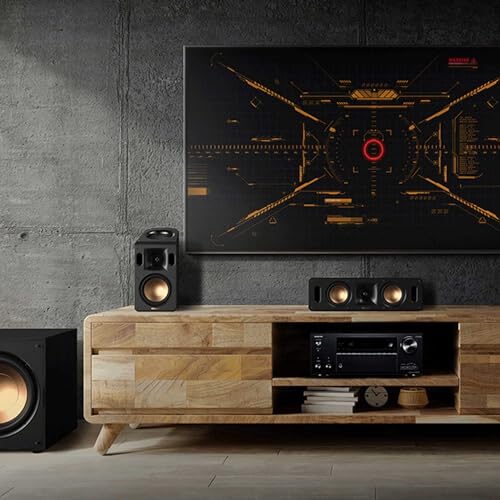
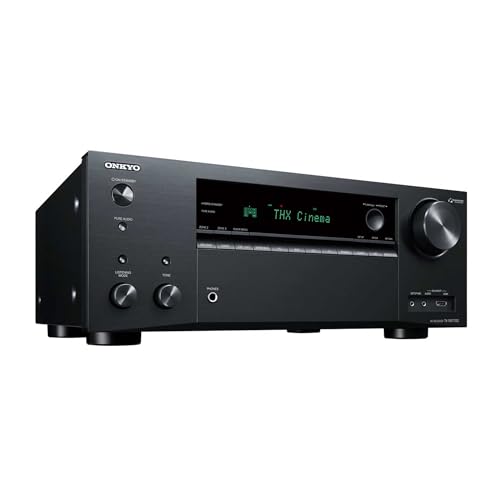
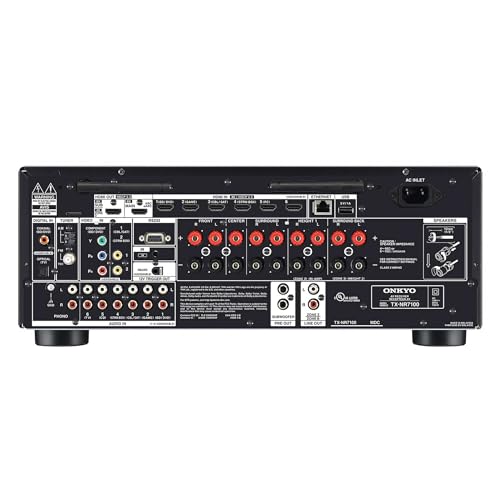
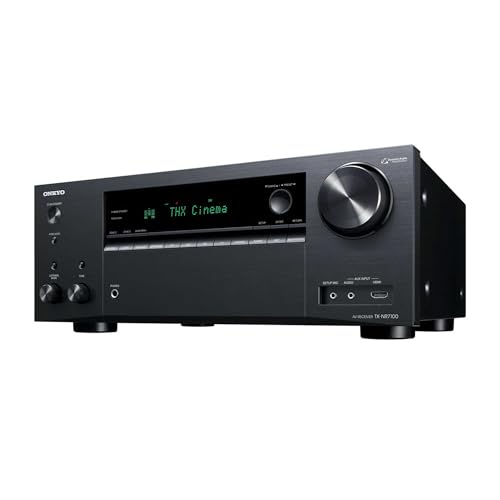
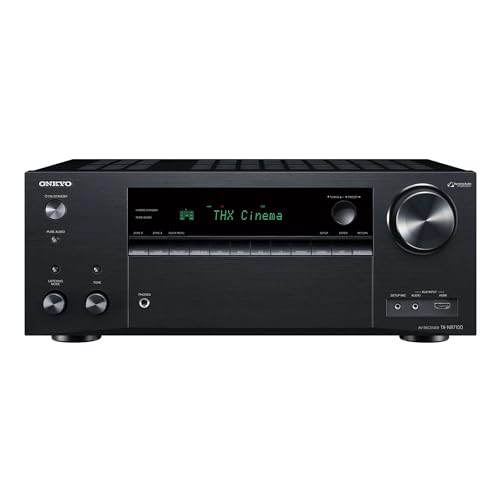
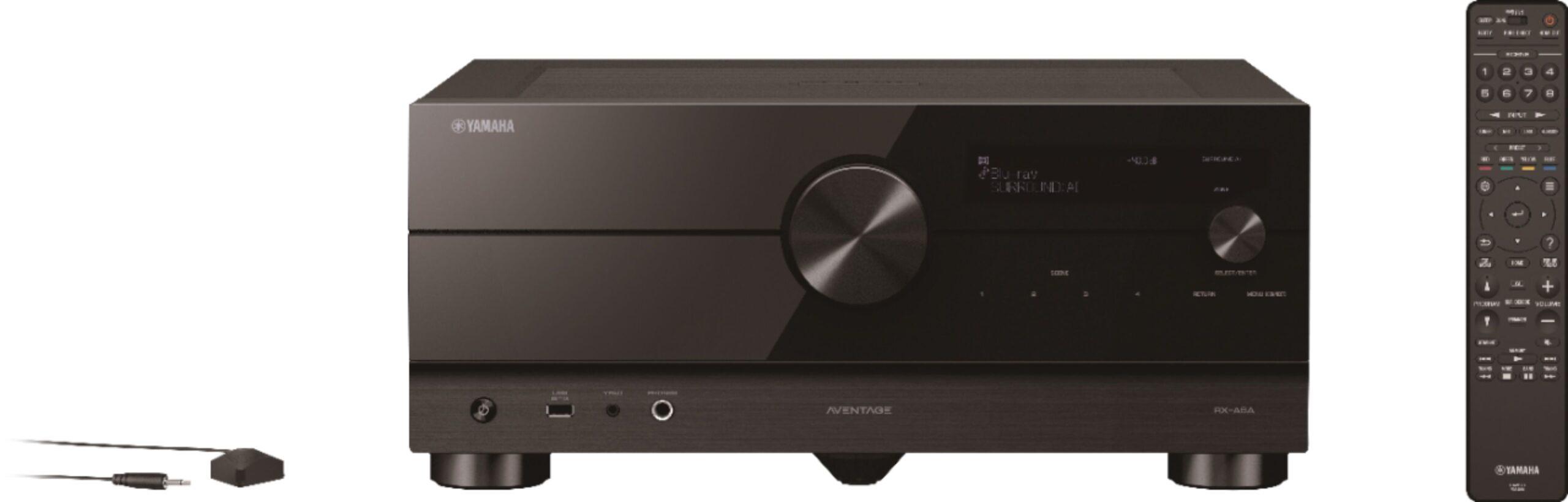
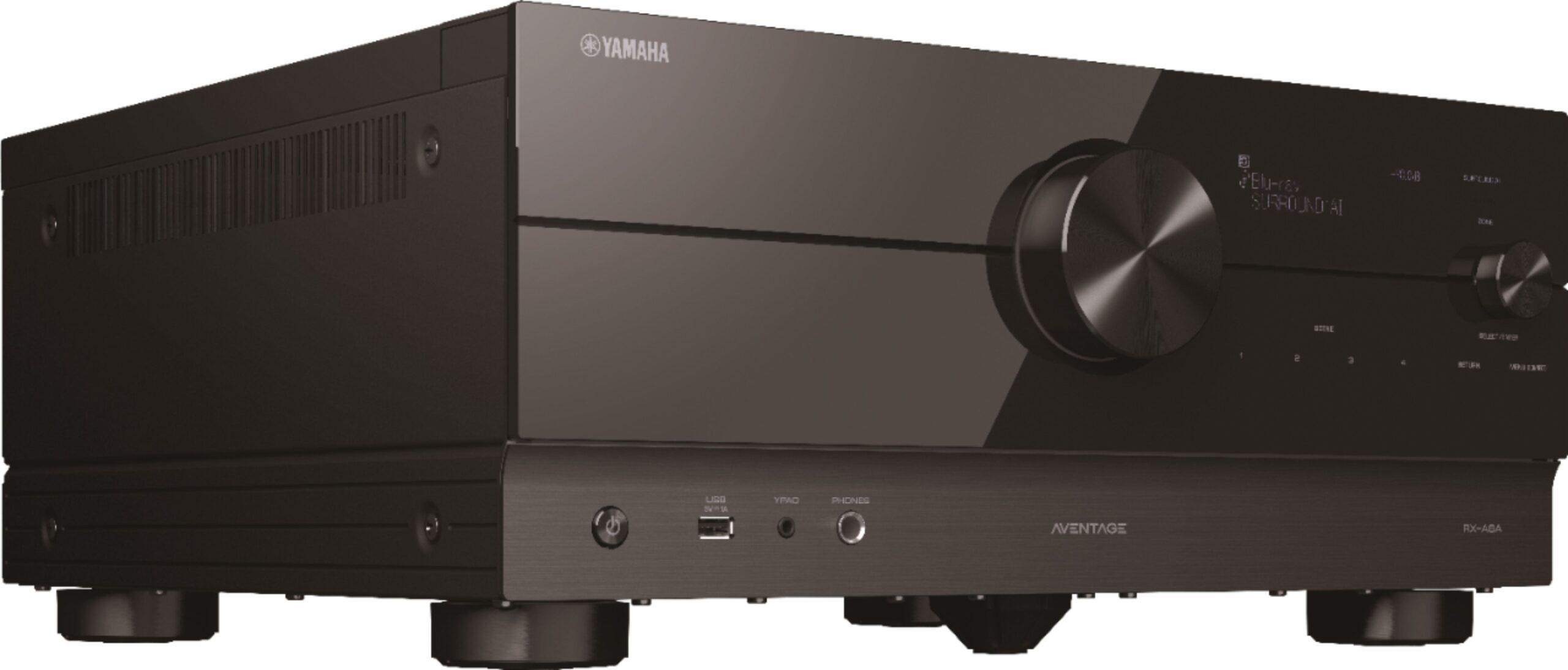
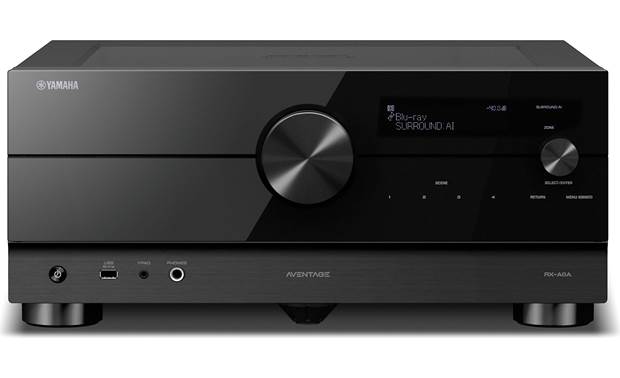
When you're building a serious home theater system, the AV receiver becomes your command center—the brain that processes all your audio and video signals while amplifying sound to fill your room with cinema-quality experiences. Both the Onkyo TX-NR7100 and Yamaha AVENTAGE RX-A6A launched in 2021, representing different philosophies in the 9.2-channel receiver market that continues to evolve today.
The "9.2" designation tells you these receivers can power nine speakers plus two subwoofers, enabling those immersive Dolby Atmos configurations where sound moves around and above you. But the similarities largely end there. After researching extensive user feedback and professional reviews, these two receivers target distinctly different buyers, and understanding their approaches will save you from an expensive mistake.
Before diving into specifics, it's worth understanding what matters most in today's AV receiver market. Power output remains crucial—weak amplification creates compressed dynamics and limits your speaker choices. Room calibration technology has become equally important because even expensive speakers sound mediocre in acoustically problematic rooms. Connectivity determines future-proofing, especially with gaming consoles pushing 4K/120Hz and 8K video standards.
Since 2021, we've seen significant improvements in room correction algorithms, with manufacturers increasingly licensing premium technologies like Dirac Live rather than relying solely on proprietary solutions. HDMI 2.1 implementation has also matured, resolving early compatibility issues that plagued first-generation products.
The reliability factor cannot be ignored either. AV receivers generate substantial heat while processing complex audio algorithms and amplifying multiple channels simultaneously. Poor thermal management leads to protective shutdowns during peak performance—exactly when you need the receiver most.
The power difference between these receivers immediately stands out. The Yamaha RX-A6A delivers 150 watts per channel into 8-ohm loads, while the Onkyo TX-NR7100 provides 100 watts into the same impedance. This isn't merely a numbers game—it represents a fundamental difference in amplifier architecture and target audience.
Total Harmonic Distortion (THD) measures how cleanly the amplifier reproduces signals, with lower numbers indicating cleaner sound. The Yamaha achieves 0.06% THD compared to the Onkyo's 0.08%. While both figures represent excellent performance, the Yamaha's advantage becomes audible with demanding musical passages or explosive movie scenes where amplifier stress increases.
However, raw wattage doesn't tell the complete story. The Onkyo TX-NR7100 delivers 220 watts into 6-ohm loads, demonstrating robust current delivery capabilities. Many speakers present lower impedances during complex musical passages, so this higher-impedance performance matters more than spec sheets suggest. The Onkyo also incorporates THX certification, meaning it passes thousands of rigorous tests ensuring reference-quality performance standards.
For practical applications, the Yamaha's extra power headroom benefits larger rooms or speakers with lower sensitivity ratings. If you're driving demanding tower speakers in a spacious family room, those additional 50 watts per channel provide meaningful dynamic range improvements. Conversely, the Onkyo's 100 watts prove entirely adequate for most bookshelf speakers or moderate-sized rooms, especially when paired with capable subwoofers handling bass duties.
Room calibration technology represents where these receivers diverge most dramatically. The Onkyo TX-NR7100 includes Dirac Live, a premium room correction system that analyzes your room's acoustic signature and applies precise frequency response corrections across all speakers. Unlike basic calibration systems that simply adjust levels and delays, Dirac Live performs complex mathematical modeling of your room's reflections, resonances, and nulls.
The process involves placing a calibrated microphone at multiple listening positions while the system plays test tones through each speaker. Dirac Live then creates a detailed acoustic map, identifying problematic frequencies and applying targeted corrections. The results often transform mediocre-sounding rooms into acoustically balanced spaces where dialogue clarity improves dramatically and bass response becomes more even.
The Yamaha RX-A6A counters with YPAO (Yamaha Parametric Room Acoustic Optimizer) featuring 3D measurement capabilities. While not quite matching Dirac Live's sophistication, YPAO performs multi-point analysis and applies parametric equalization to optimize frequency response. The Yamaha also includes SURROUND:AI, an innovative feature that uses artificial intelligence to analyze incoming audio signals in real-time, separating dialogue, music, and sound effects before applying optimized surround processing to each element.
Based on user feedback, Dirac Live consistently produces more dramatic improvements in challenging acoustic environments. However, YPAO offers simpler setup procedures and more automated operation, appealing to users who prefer plug-and-play convenience over manual fine-tuning options.
Both receivers support essential modern formats like Dolby Atmos and DTS:X, which create three-dimensional soundscapes by treating audio as objects that move through space rather than fixed channels. However, their extended format support reveals different target markets.
The Onkyo TX-NR7100 focuses heavily on cinema-standard formats, including IMAX Enhanced certification for content mastered specifically for IMAX theaters. This certification ensures proper decoding of IMAX's enhanced audio tracks and DTS:X processing optimized for large-scale presentations. The Onkyo also supports DTS Virtual:X, which creates height effects through psychoacoustic processing when physical height speakers aren't available.
The Yamaha RX-A6A takes a broader approach with Auro-3D support, a competing 3D audio format that creates hemispherical soundfields using different speaker layouts than Dolby Atmos. While Auro-3D content remains limited, the format offers unique spatial characteristics that some users prefer for music listening. The Yamaha also includes more sophisticated music-focused processing through its CINEMA DSP HD3 algorithms.
THX certification on the Onkyo shouldn't be overlooked. THX standards ensure the receiver reproduces cinema soundtracks exactly as mixing engineers intended, with specific requirements for frequency response, dynamic range, and distortion characteristics. For dedicated home theater applications, this certification provides confidence that movie soundtracks will sound as intended.
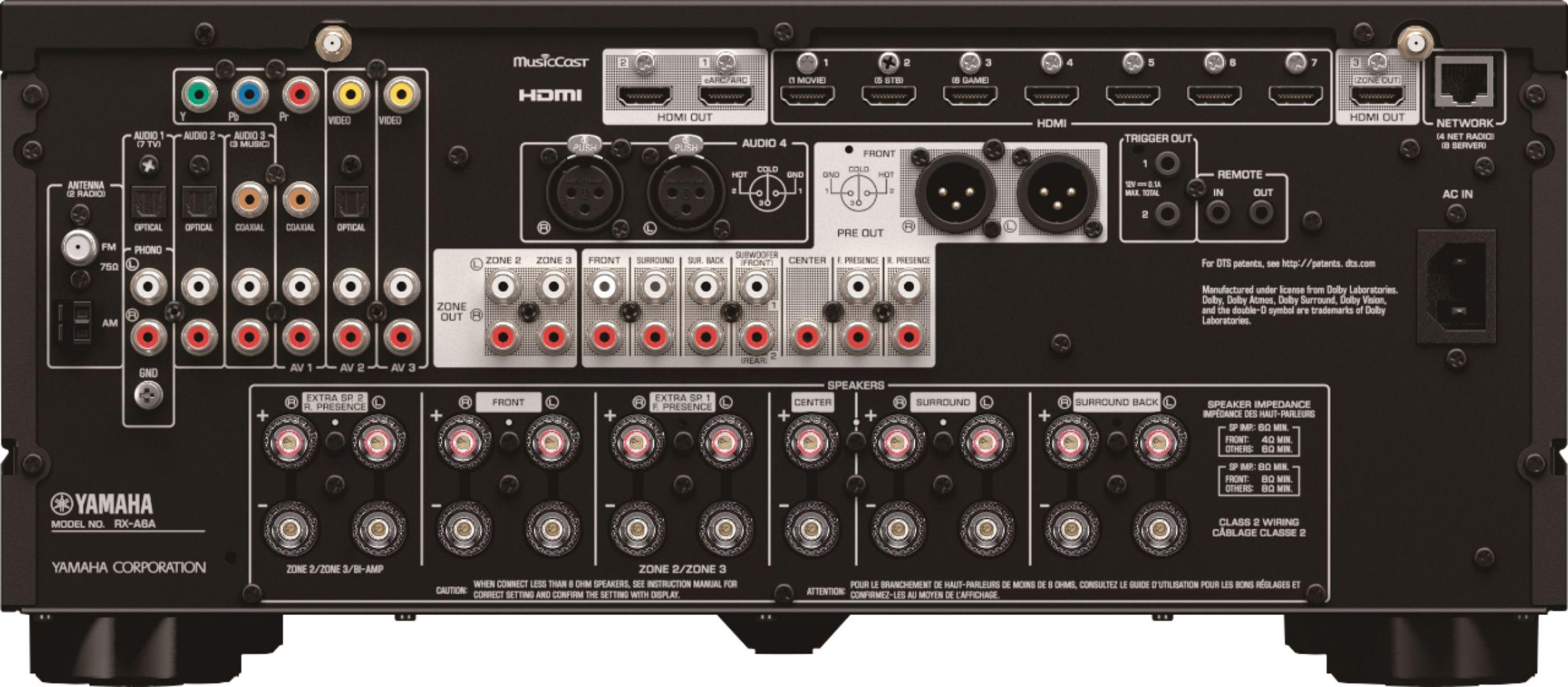
Modern AV receivers must handle increasingly complex connectivity requirements as gaming consoles, streaming devices, and display technologies evolve. The Yamaha RX-A6A provides superior connectivity options with seven HDMI inputs and three outputs compared to the Onkyo's seven inputs and two outputs. More importantly, the Yamaha offers three optical digital inputs and two coaxial inputs versus the Onkyo's single optical and coaxial inputs.
This connectivity advantage matters for users integrating multiple digital sources like game consoles, streaming devices, CD players, and cable boxes. The Yamaha's additional HDMI output enables simultaneous connection to both a main display and a projector or second-zone TV, providing flexibility for complex installations.
The Yamaha also includes analog-to-HDMI video conversion, upscaling older component and composite video sources for display on modern TVs. While legacy video sources are becoming rare, this feature proves valuable for retro gaming consoles or older media players that lack HDMI outputs.
However, the Onkyo TX-NR7100 counters with unique features like speaker A/B switching, enabling connection of two different speaker sets that can be switched manually or automatically. The Onkyo also provides more comprehensive Bluetooth support with aptX HD codec compatibility, delivering higher-quality wireless audio than standard Bluetooth implementations.
Both receivers support modern HDMI 2.1 features including 4K/120Hz and 8K/60Hz video passthrough, Variable Refresh Rate (VRR) for gaming, and Auto Low Latency Mode (ALLM). These features ensure compatibility with PlayStation 5, Xbox Series X, and next-generation gaming PCs that demand high bandwidth video connections.
Multi-room audio has evolved significantly since these receivers launched, with wireless protocols becoming more reliable and whole-home audio systems gaining popularity. The Yamaha RX-A6A supports three independent zones with separate source selection, enabling audio distribution to additional rooms while maintaining different content in each zone. This capability suits larger homes where family members want different audio sources simultaneously.
The Yamaha's MusicCast ecosystem integration provides seamless whole-home audio when combined with compatible Yamaha speakers and components. MusicCast enables synchronized playback across multiple rooms or independent content selection, controlled through Yamaha's mobile app or voice commands.
The Onkyo TX-NR7100 provides two-zone capability but compensates with broader ecosystem compatibility. The Onkyo is Works with Sonos certified, enabling integration with existing Sonos systems without requiring additional hardware. This certification proves valuable for users who've already invested in Sonos components and want to incorporate their main theater system into the existing network.
Both receivers support popular streaming protocols including AirPlay 2, Chromecast built-in, and DTS Play-Fi, ensuring compatibility with various mobile devices and streaming services. The Onkyo provides particularly comprehensive streaming service support with built-in apps for Spotify, Tidal, Amazon Music, and others.
Thermal management represents a critical yet often overlooked aspect of AV receiver design. These units generate substantial heat while processing multiple audio channels and driving speakers simultaneously. Poor thermal design leads to protective shutdowns during demanding content—exactly when you need maximum performance.
The Onkyo TX-NR7100 incorporates active cooling with an aluminum heatsink and cooling fan, providing aggressive heat dissipation during extended operation. This design philosophy prioritizes sustained performance over silent operation, though the fan remains nearly inaudible during normal listening levels.
The Yamaha RX-A6A employs passive cooling with a metal heatsink design, reflecting the AVENTAGE series' emphasis on premium construction and silent operation. Yamaha's approach relies on superior component quality and conservative power management to minimize heat generation rather than aggressive cooling.
User feedback suggests both approaches work effectively, though the Onkyo's active cooling provides additional safety margins during extreme operating conditions. The Yamaha's passive approach appeals to users who prioritize silent operation in noise-sensitive environments.
Build quality extends beyond thermal management to overall construction philosophy. The Yamaha AVENTAGE series emphasizes premium materials and meticulous assembly, with features like a monolithic volume control and carefully selected components throughout the signal path. The Onkyo focuses more on engineering performance per dollar while maintaining solid construction standards.
At the time of writing, the Yamaha RX-A6A commands approximately double the price of the Onkyo TX-NR7100, representing one of the most significant value differentials in the 9.2-channel receiver market. This price gap raises important questions about performance scaling and feature necessity.
The Onkyo TX-NR7100 delivers exceptional value by incorporating premium technologies like Dirac Live room correction and THX certification at a mid-range price point. These features typically appear in much more expensive receivers, making the Onkyo particularly attractive for budget-conscious buyers seeking flagship-level audio processing.
Professional reviews consistently praise the Onkyo's price-to-performance ratio, with several noting that it delivers sound quality rivaling receivers costing significantly more. The inclusion of IMAX Enhanced certification and comprehensive streaming support further enhance its value proposition.
The Yamaha RX-A6A justifies its premium pricing through superior power output, extensive connectivity options, and three-zone multi-room capability. For users building high-end systems requiring maximum flexibility and power delivery, these advantages warrant the additional cost. The AVENTAGE series also carries Yamaha's reputation for long-term reliability and premium construction.
However, the value equation becomes more complex when considering long-term usage patterns. Many users never utilize multi-zone capabilities or require extensive connectivity options, making the Yamaha's premium features unnecessary for their applications.
Home theater performance represents the primary application for both receivers, but their different strengths become apparent in specific scenarios. For dedicated home theater rooms with properly positioned speakers, the Onkyo TX-NR7100's Dirac Live room correction and THX certification provide reference-quality movie reproduction that rivals much more expensive systems.
The Onkyo's IMAX Enhanced support proves particularly valuable for action movies and blockbuster content, providing optimized processing for large-scale presentations. Combined with its robust amplification at lower impedances, the Onkyo handles demanding movie soundtracks with impressive dynamics and clarity.
The Yamaha RX-A6A excels in larger rooms or with less efficient speakers where its additional power headroom becomes crucial. The Yamaha's superior connectivity also benefits users with extensive source collections or complex multi-room requirements.
For music listening, both receivers perform admirably, though with different characteristics. The Onkyo's THX tuning emphasizes accuracy and neutrality, appealing to listeners who prioritize faithful reproduction. The Yamaha's CINEMA DSP processing provides more colorful, spacious presentations that some users prefer for stereo music.
After extensive research into user experiences and professional evaluations, clear recommendations emerge for different user profiles and scenarios.
Choose the Onkyo TX-NR7100 if you prioritize maximum performance per dollar spent. Its combination of Dirac Live room correction, THX certification, and IMAX Enhanced support delivers flagship-level features at a mid-range price point. The Onkyo suits budget-conscious buyers who want professional-grade audio processing without premium pricing.
The Onkyo also appeals to users with existing Sonos systems or those who value comprehensive streaming service integration. Its active cooling design provides peace of mind for extended operation in challenging thermal environments.
Choose the Yamaha AVENTAGE RX-A6A if you require maximum power output for demanding speakers or large rooms. Its superior amplification capabilities and lower distortion figures justify the premium for users building high-end systems around inefficient or challenging speakers.
The Yamaha also suits users requiring extensive connectivity options or three-zone multi-room capability. If you're building a whole-home audio system or integrating multiple digital sources, the Yamaha's superior I/O options provide necessary flexibility.
For most users building dedicated home theaters in typical residential spaces, the Onkyo TX-NR7100 provides exceptional value and performance that rivals much more expensive alternatives. Its combination of advanced room correction and cinema-focused processing delivers professional results at an accessible price point.
However, if your budget allows and your system requirements include high-power amplification or extensive multi-room distribution, the Yamaha RX-A6A justifies its premium through superior capabilities and AVENTAGE construction quality. The choice ultimately depends on matching receiver capabilities to your specific requirements and budget constraints.
| Onkyo TX-NR7100 | Yamaha AVENTAGE RX-A6A |
|---|---|
| Power Output - Critical for driving demanding speakers and filling large rooms | |
| 100W per channel (8 ohms), 220W (6 ohms) | 150W per channel (8 ohms) - 50% more power |
| Total Harmonic Distortion - Lower numbers mean cleaner, more accurate sound | |
| 0.08% THD (excellent performance) | 0.06% THD (slightly cleaner amplification) |
| Room Calibration - Essential for optimizing sound in your specific room | |
| Dirac Live (premium room correction system) | YPAO with 3D + SURROUND:AI (automated optimization) |
| HDMI Connectivity - Determines how many devices you can connect | |
| 7 inputs, 2 outputs (adequate for most setups) | 7 inputs, 3 outputs (better for complex installations) |
| Digital Audio Inputs - Important for connecting CD players, game consoles, streaming devices | |
| 1 optical, 1 coaxial (limited connectivity) | 3 optical, 2 coaxial (extensive digital connectivity) |
| Multi-Room Audio Zones - For playing different audio in separate rooms | |
| 2 zones (sufficient for most homes) | 3 zones (ideal for larger homes or complex setups) |
| Audio Format Support - Determines compatibility with different content types | |
| Dolby Atmos, DTS:X, IMAX Enhanced, DTS Virtual:X | Dolby Atmos, DTS:X, Auro-3D (broader format support) |
| Certifications - Industry standards ensuring quality performance | |
| THX Certified (cinema reference quality) | No THX certification |
| Cooling System - Affects reliability during extended use | |
| Active cooling with fan (better thermal management) | Passive cooling (silent operation) |
| Streaming Services - Built-in access to music platforms | |
| Extensive support: Spotify, Tidal, Amazon Music, Works with Sonos | MusicCast ecosystem, standard streaming services |
| Special Features - Unique capabilities that set each apart | |
| Speaker A/B switching, aptX HD Bluetooth | Analog-to-HDMI conversion, premium AVENTAGE construction |
| Value Proposition - Performance relative to cost | |
| Exceptional value with flagship features at mid-range pricing | Premium pricing justified by higher power and extensive connectivity |
The Yamaha AVENTAGE RX-A6A is better suited for large rooms and demanding speakers due to its higher power output of 150 watts per channel compared to the Onkyo TX-NR7100's 100 watts per channel. The Yamaha also has lower distortion at 0.06% THD, providing cleaner amplification for high-end speakers that reveal audio imperfections.
The Onkyo TX-NR7100 features Dirac Live, a premium room correction system that performs sophisticated acoustic analysis and frequency response corrections across all speakers. The Yamaha AVENTAGE RX-A6A uses YPAO with 3D measurement plus SURROUND:AI technology that uses artificial intelligence to optimize surround effects in real-time by separating dialogue, music, and sound effects.
The Onkyo TX-NR7100 delivers exceptional value by incorporating flagship features like Dirac Live room correction and THX certification at a significantly lower price point than the Yamaha. The Yamaha AVENTAGE RX-A6A costs approximately double but justifies its premium pricing through higher power output and extensive connectivity options.
Both receivers offer 7 HDMI inputs, but the Yamaha AVENTAGE RX-A6A provides 3 HDMI outputs compared to the Onkyo TX-NR7100's 2 outputs. The Yamaha also offers more digital audio inputs with 3 optical and 2 coaxial connections versus the Onkyo's single optical and coaxial inputs.
The Yamaha AVENTAGE RX-A6A supports 3 independent audio zones with separate source selection, making it better for larger homes with complex multi-room requirements. The Onkyo TX-NR7100 offers 2-zone capability but compensates with Works with Sonos certification, making it ideal for integrating with existing Sonos systems.
Yes, both the Onkyo TX-NR7100 and Yamaha AVENTAGE RX-A6A support Dolby Atmos and DTS:X for immersive 3D audio. However, the Onkyo adds IMAX Enhanced and DTS Virtual:X support, while the Yamaha includes Auro-3D compatibility for broader format support.
The Onkyo TX-NR7100 uses active cooling with an aluminum heatsink and fan for superior thermal management during extended operation. The Yamaha AVENTAGE RX-A6A employs passive cooling and emphasizes premium AVENTAGE construction with high-quality materials and meticulous assembly for silent operation.
Both receivers excel for gaming with HDMI 2.1 support for 4K/120Hz and 8K/60Hz video passthrough, plus gaming features like Variable Refresh Rate (VRR) and Auto Low Latency Mode (ALLM). The Onkyo TX-NR7100 adds IMAX Enhanced support for cinematic gaming experiences, while the Yamaha AVENTAGE RX-A6A provides more HDMI outputs for complex gaming setups.
Both receivers perform well for music, but with different approaches. The Onkyo TX-NR7100 emphasizes accuracy and neutrality through THX certification, appealing to listeners who want faithful reproduction. The Yamaha AVENTAGE RX-A6A offers more colorful, spacious presentations through its CINEMA DSP HD3 processing.
The Onkyo TX-NR7100 provides extensive built-in streaming support including Spotify, Tidal, Amazon Music, and Works with Sonos certification. The Yamaha AVENTAGE RX-A6A focuses on MusicCast ecosystem integration with standard streaming services. Both support AirPlay 2, Chromecast, and voice control through Alexa and Google Assistant.
User feedback consistently praises the Onkyo TX-NR7100 for trouble-free operation and reliability, with its active cooling providing additional thermal protection. The Yamaha AVENTAGE RX-A6A benefits from Yamaha's reputation for long-term reliability and premium AVENTAGE construction quality, though it relies on passive cooling.
Choose the Onkyo TX-NR7100 if you want flagship audio processing features like Dirac Live and THX certification at an exceptional value, especially for dedicated home theaters in typical room sizes. Choose the Yamaha AVENTAGE RX-A6A if you need maximum power for demanding speakers, extensive connectivity for complex installations, or three-zone multi-room capability and have the budget for premium features.
We've done our best to create useful and informative comparisons to help you decide what product to buy. Our research uses advanced automated methods to create this comparison and perfection is not possible - please contact us for corrections or questions. These are the sites we've researched in the creation of this article: crutchfield.com - prohifi.in - bestbuy.com - h-m-entertainment.com - audiosciencereview.com - crutchfield.ca - soundandvision.com - avsforum.com - avgadgets.com - youtube.com - onkyo.com - crutchfield.com - onkyo.com - accessories4less.com - klipsch.com - youtube.com - listenup.com - intl.onkyo-av.com - bestbuy.com - 420spotshop.com - support.onkyousa.com - soundandvision.com - new-age-electronics.com - klarna.com - crutchfield.com - whathifi.com - us.puretheatre.com - listeningpost.co.nz - bestbuy.com - audioholics.com - usa.yamaha.com - shop.usa.yamaha.com

Privacy Policy
Terms and Conditions - Affiliate Policy
Home Security
© Copyright 2008-2026.
11816 Inwood Rd #1211, Dallas, TX 75244