

When building a home theater system, the AV receiver acts as the nerve center of your entire setup. It's the component that takes audio and video signals from your various sources—like streaming devices, gaming consoles, and Blu-ray players—and distributes them to your speakers and display. Getting this choice right makes or breaks your entertainment experience.
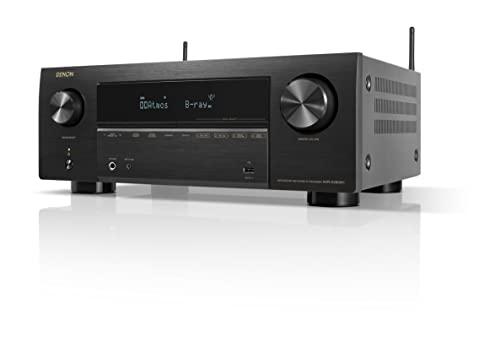
The world of AV receivers can feel overwhelming, especially when comparing models from sister companies that share similar DNA but target different audiences. That's exactly the situation we face with the Denon AVR-X2800H and Marantz Cinema 60, both released in 2022 and representing the evolution of their respective brands' philosophies.
Before diving into these specific models, it's worth understanding what separates good AV receivers from great ones. The most critical factors include amplifier power and quality, audio processing capabilities, video handling, room correction systems, and connectivity options.
Amplifier power isn't just about raw wattage—though that matters for driving demanding speakers. It's also about current delivery, which determines how well the receiver handles complex audio passages and dynamic swings. The quality of the amplifier circuits affects everything from background noise levels to how accurately your speakers reproduce the original recording.
Audio processing has become increasingly sophisticated, with modern receivers supporting object-based surround formats like Dolby Atmos and DTS:X. These technologies place individual sound effects in three-dimensional space rather than just channeling them to specific speakers, creating more realistic soundscapes.
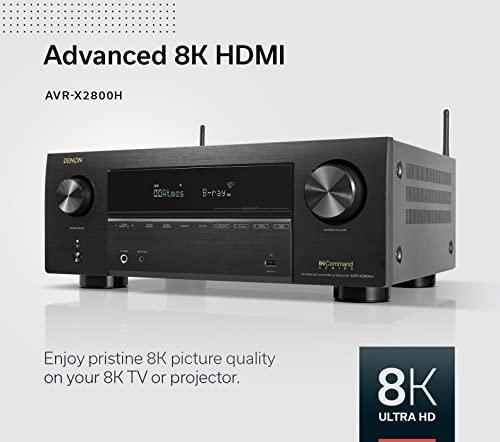
Video capabilities matter more than ever with 8K displays becoming mainstream and gaming consoles pushing 4K content at 120Hz refresh rates. The receiver needs to handle these signals without introducing lag or quality loss.
The Denon AVR-X2800H positions itself as an award-winning value champion, earning What Hi-Fi?'s 2022 recognition in the entry-level category. At the time of writing, it typically costs several hundred dollars less than its Marantz counterpart while delivering most of the same core functionality.
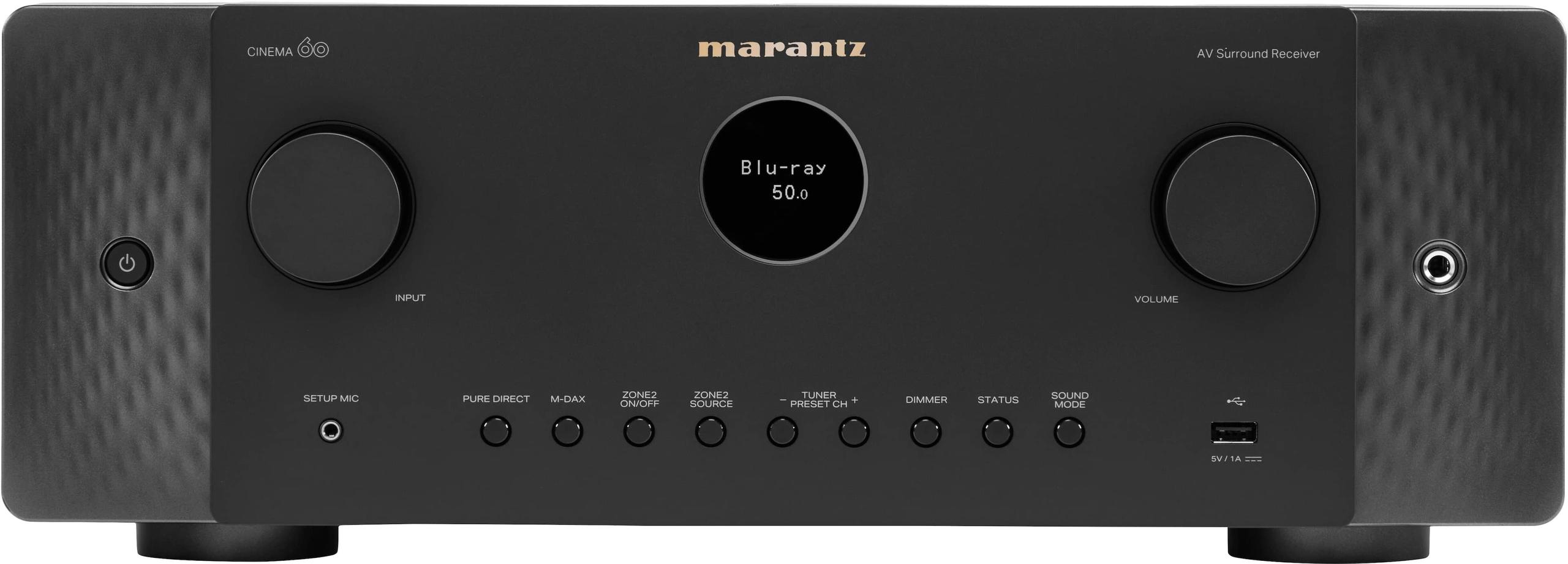
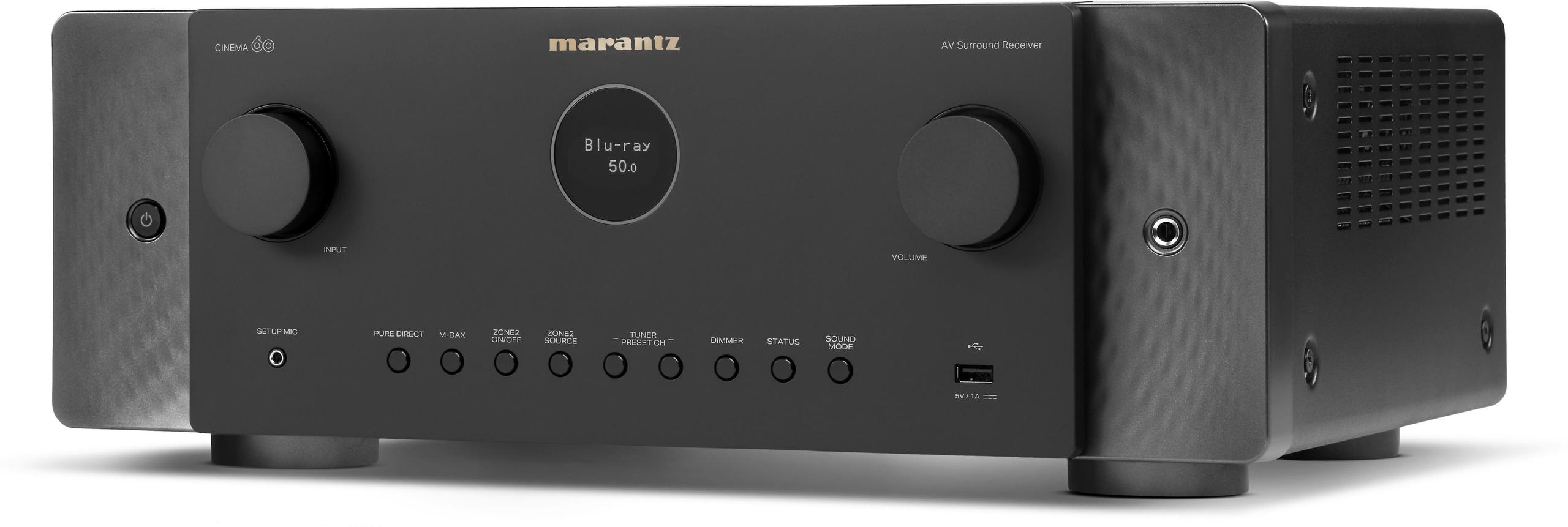
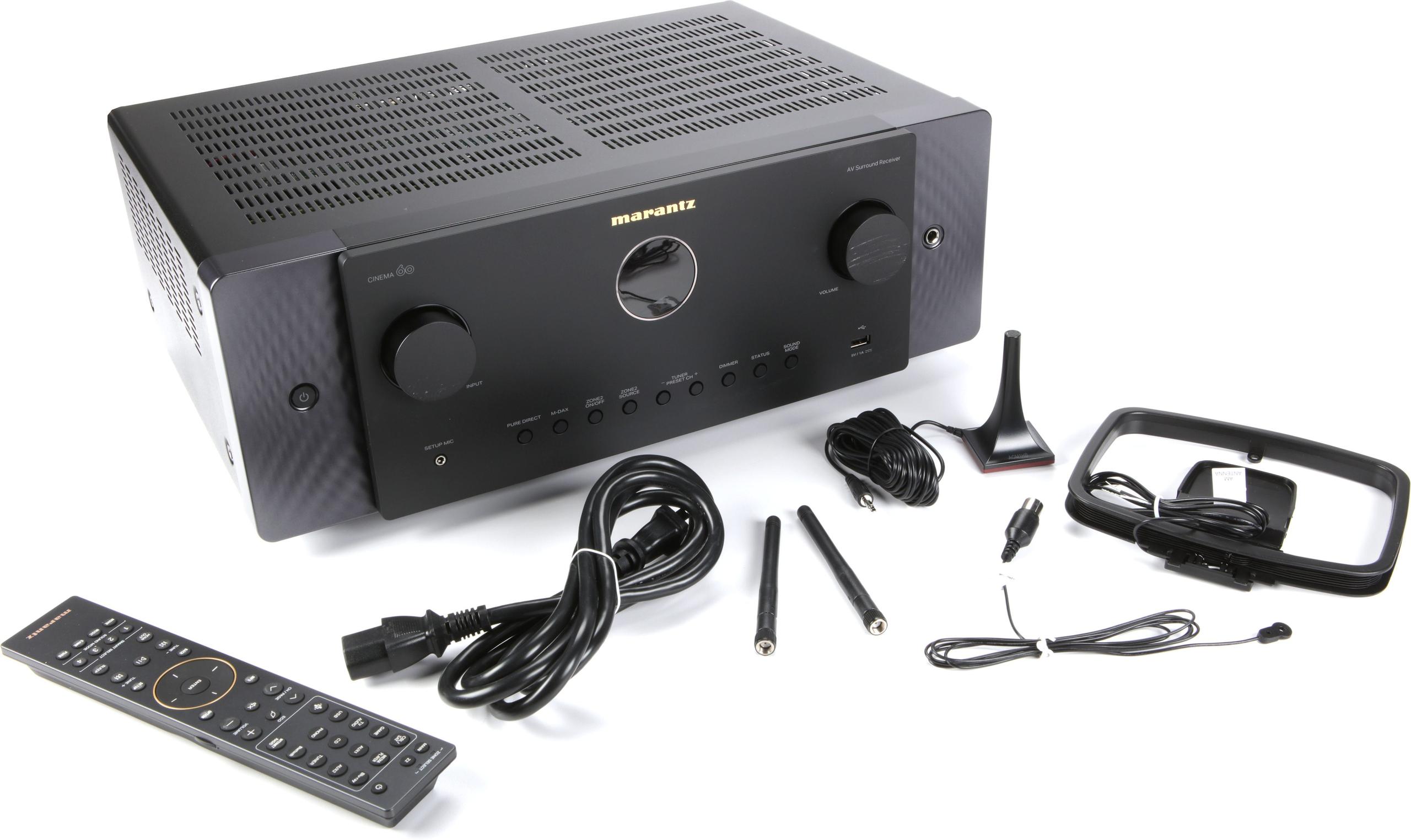
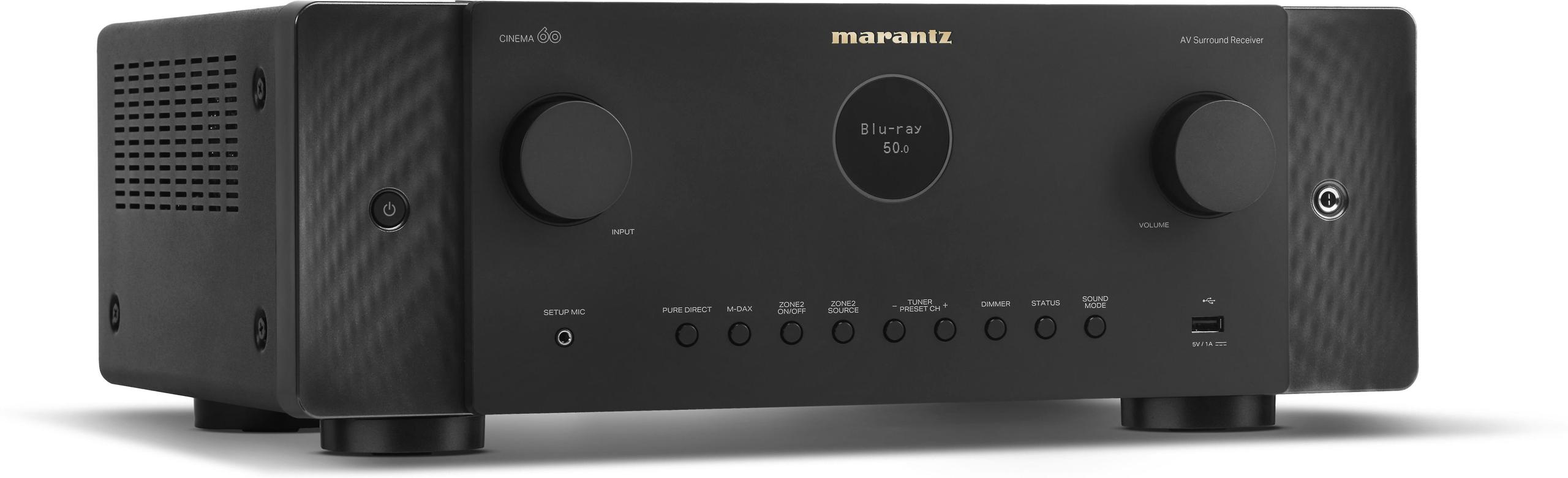
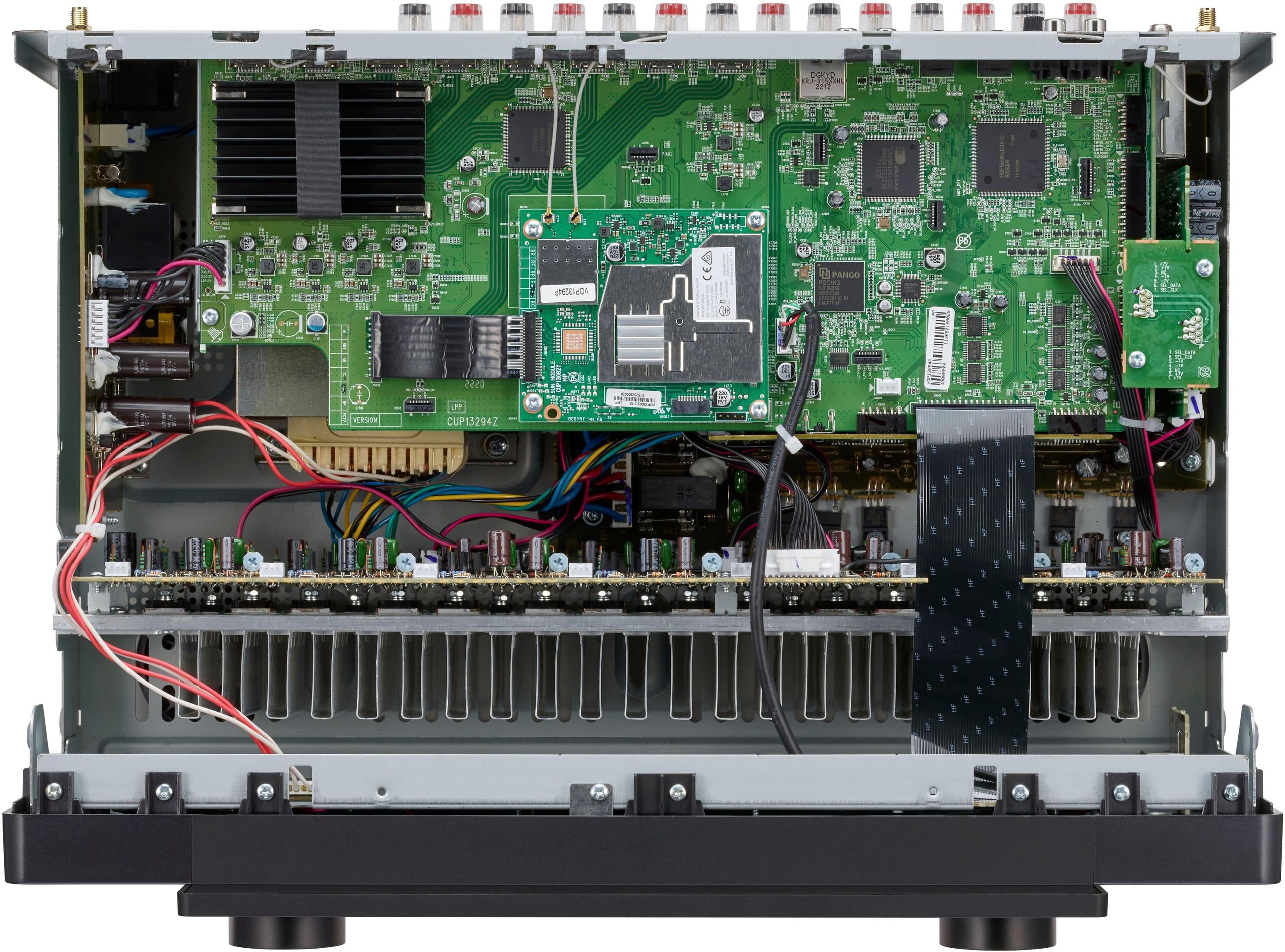
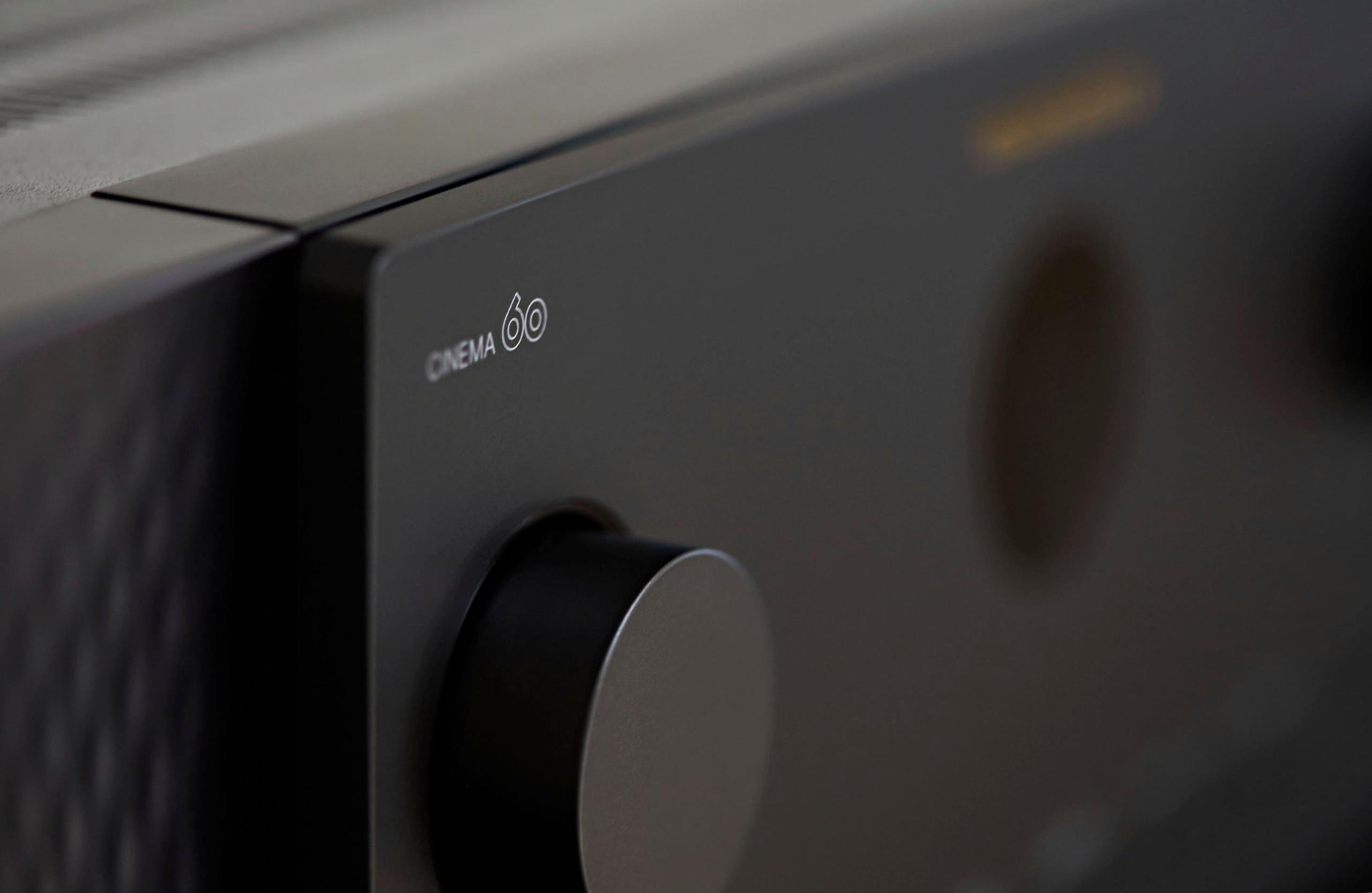
The Marantz Cinema 60, meanwhile, commands a premium price point but promises enhanced musicality and build quality. Marantz significantly updated this model beyond a simple refresh, implementing new circuit designs and maintaining the brand's reputation for warm, musical sound.
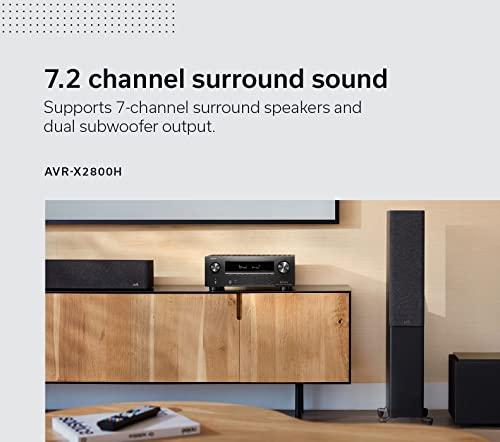
Both receivers support 7.2 channels, meaning they can power seven main speakers plus two subwoofers, or handle a 5.1.2 Dolby Atmos setup with overhead effects. This configuration works perfectly for most home theaters without requiring the complexity and cost of higher channel counts.
When examining amplifier specifications, the Denon AVR-X2800H delivers 95 watts per channel into 8-ohm loads, while the Marantz Cinema 60 provides 100 watts per channel under the same conditions. These measurements follow industry standards—specifically 20Hz to 20kHz frequency response with only two channels driven simultaneously and 0.08% total harmonic distortion.
That 5-watt difference might seem minimal, and in many cases it is. However, the real story lies in the amplifier design and current delivery capabilities. The Marantz Cinema 60 uses enhanced HDAM-SA2 (Hyper Dynamic Amplifier Module) circuitry, which Marantz developed to provide superior low-noise performance and faster response times. This technology translates to better handling of demanding speakers with complex impedance curves or lower sensitivity ratings.
In practical terms, if your speakers are reasonably efficient—around 88 decibels sensitivity or higher—both receivers will drive them adequately in most rooms. However, if you own speakers that dip to 4 ohms impedance or have sensitivity ratings below 86 decibels, the Marantz Cinema 60 provides more headroom and stability.
The amplifier quality also affects dynamics, which refers to the difference between quiet and loud passages in music or movies. Better amplifiers maintain clarity during complex, demanding scenes while preserving subtle details during quiet moments. From our research into user experiences and professional reviews, both receivers handle dynamics well, but the Marantz tends to maintain composure slightly better when pushed to higher volumes.
This is where these receivers truly diverge, despite sharing similar underlying technology. The Denon AVR-X2800H delivers what reviewers consistently describe as authoritative and dynamic sound. It emphasizes impact and clarity, making action movie sequences feel visceral while keeping dialogue crisp and forward. The receiver underwent sonic tuning for 2022, resulting in more refined treble and better balance compared to previous Denon models.
The Marantz Cinema 60 takes a different approach, prioritizing musicality and tonal warmth. Professional testing with reference Dolby Atmos content revealed the receiver's ability to create realistic depth and extension across all dimensions. Even during complex scenes with multiple audio elements, dialogue remained distinct and natural—a hallmark of Marantz's processing philosophy.
For music listening, the differences become more pronounced. The Marantz Cinema 60 includes M-DAX2 (Marantz Dynamic Audio eXpander) technology, which analyzes compressed music files like MP3, AAC, and WMA to restore information lost during compression. This feature proves particularly valuable given how much music we stream today. The receiver also supports high-resolution audio formats including FLAC, ALAC, and DSD streaming at 2.8 and 5.6MHz sample rates.
The Denon AVR-X2800H focuses more on dynamics and punch, making it particularly engaging for gaming and action movies. Its sound signature favors clarity and impact over warmth, which some listeners prefer for home theater applications where you want effects to grab your attention.
Both receivers support the latest immersive audio formats, but implementation matters as much as compatibility. Dolby Atmos and DTS:X create three-dimensional soundscapes by treating audio as objects that can be placed anywhere in space, rather than just routing sounds to specific channels.
For overhead effects without dedicated ceiling speakers, both receivers offer height virtualization. This technology uses psychoacoustic processing to create the illusion of overhead sound through your existing speakers. While not as convincing as actual height speakers, it's a practical solution for many rooms.
The real test comes with complex scenes—imagine a helicopter sequence where the aircraft starts behind you, moves overhead, and disappears in front while dialogue continues and music swells. Both receivers handle these scenarios well, but the Marantz Cinema 60 maintains slightly better separation between elements, while the Denon AVR-X2800H delivers more aggressive impact.
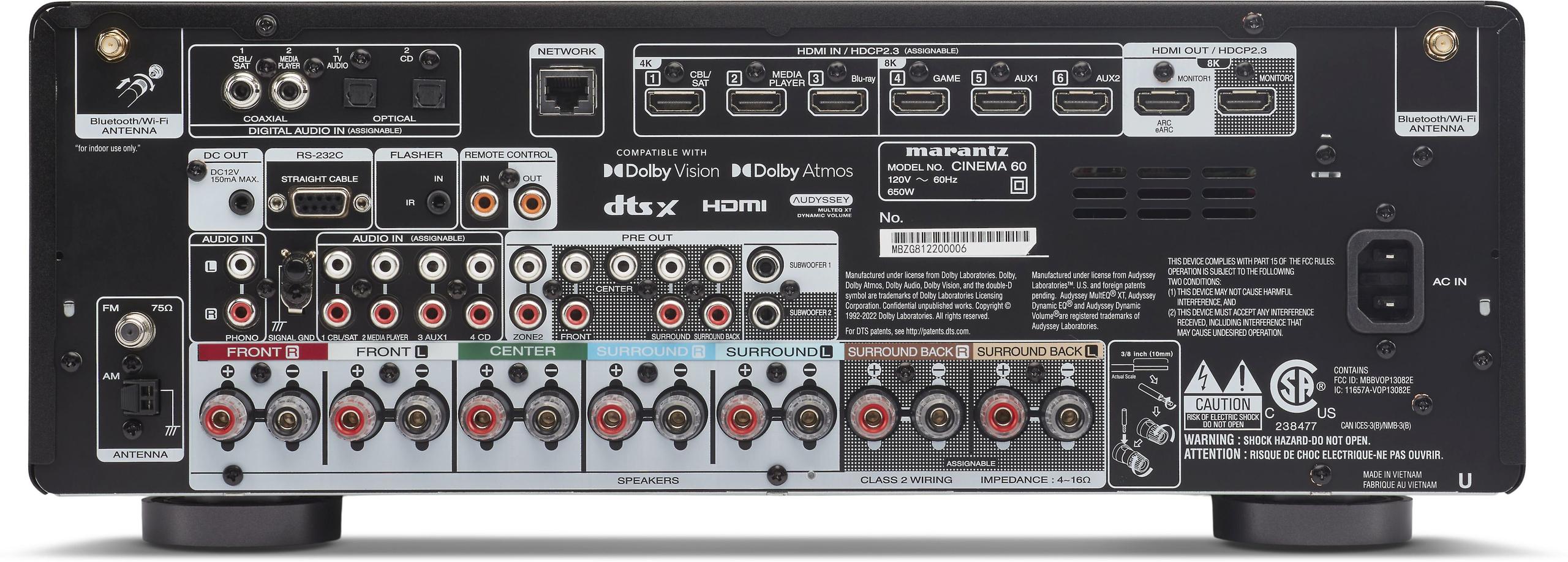
Since both receivers share identical video specifications, this becomes less of a differentiating factor and more about implementation quality. Both offer three HDMI 2.1 inputs capable of 40 Gbps bandwidth, supporting 8K/60Hz and 4K/120Hz pass-through. This covers current and future gaming consoles, streaming devices, and display technologies.
The gaming features deserve special attention. Auto Low Latency Mode (ALLM) automatically switches your display to game mode when it detects a gaming source, reducing input lag. Variable Refresh Rate (VRR) eliminates screen tearing by synchronizing the display refresh rate with the source frame rate. Quick Frame Transport (QFT) reduces latency by optimizing how frames are processed.
Both receivers also upscale lower-resolution content to 8K, though the quality depends heavily on your source material and display. The upscaling proves most beneficial with well-mastered HD and 4K content, while lower-quality sources may not see dramatic improvements.
HDR (High Dynamic Range) support includes HDR10, HDR10+, Dolby Vision, and HLG formats. This ensures compatibility with virtually any HDR content you'll encounter, from streaming services to Ultra HD Blu-rays.
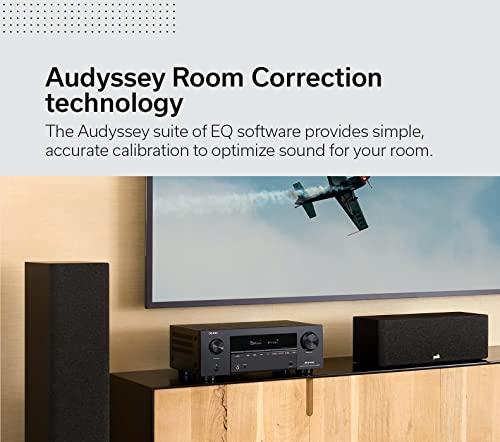
Both receivers use Audyssey MultEQ XT room correction, which analyzes your room's acoustic properties using a supplied microphone and adjusts the audio output accordingly. The system measures multiple listening positions—up to eight—and creates filters to compensate for room reflections, standing waves, and speaker placement issues.
While the underlying technology is similar, the implementation can vary. The Marantz Cinema 60 tends to apply corrections more conservatively, maintaining the natural character of your speakers while addressing obvious room problems. The Denon AVR-X2800H can be more aggressive in its corrections, which some users prefer but others find overly processed.
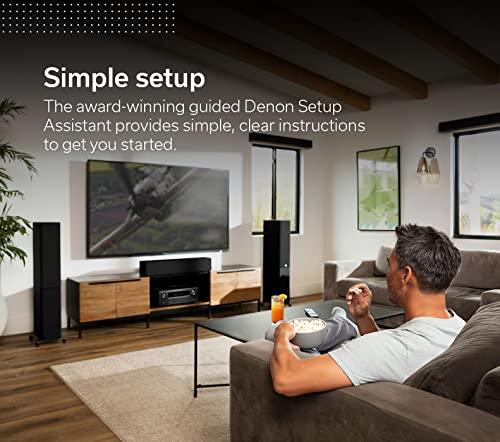
The room correction setup process requires patience but pays dividends in improved sound quality. You'll place the microphone at your main listening position plus several others around your seating area, then let the system run its measurements. The entire process takes 15-20 minutes, and most users report noticeable improvements in bass response and overall clarity.
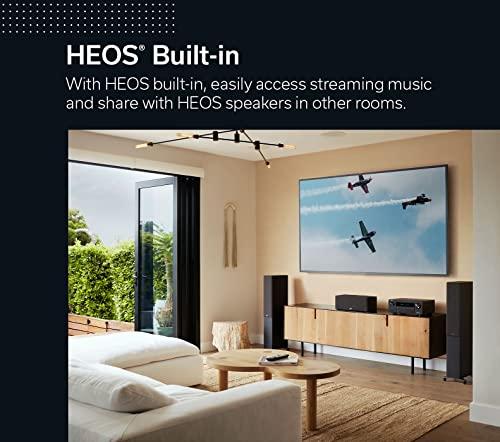
Both receivers embrace wireless connectivity with HEOS multi-room capability built-in. HEOS allows you to stream music throughout your home using compatible speakers, creating a whole-house audio system. The technology works reliably and integrates with popular streaming services like Spotify, Tidal, and Amazon Music.
AirPlay 2 support means seamless integration with Apple devices, while Bluetooth provides universal compatibility with phones, tablets, and computers. Voice assistant support includes Amazon Alexa, Google Assistant, and Apple Siri, though you'll need compatible smart speakers or devices to take advantage of voice control.
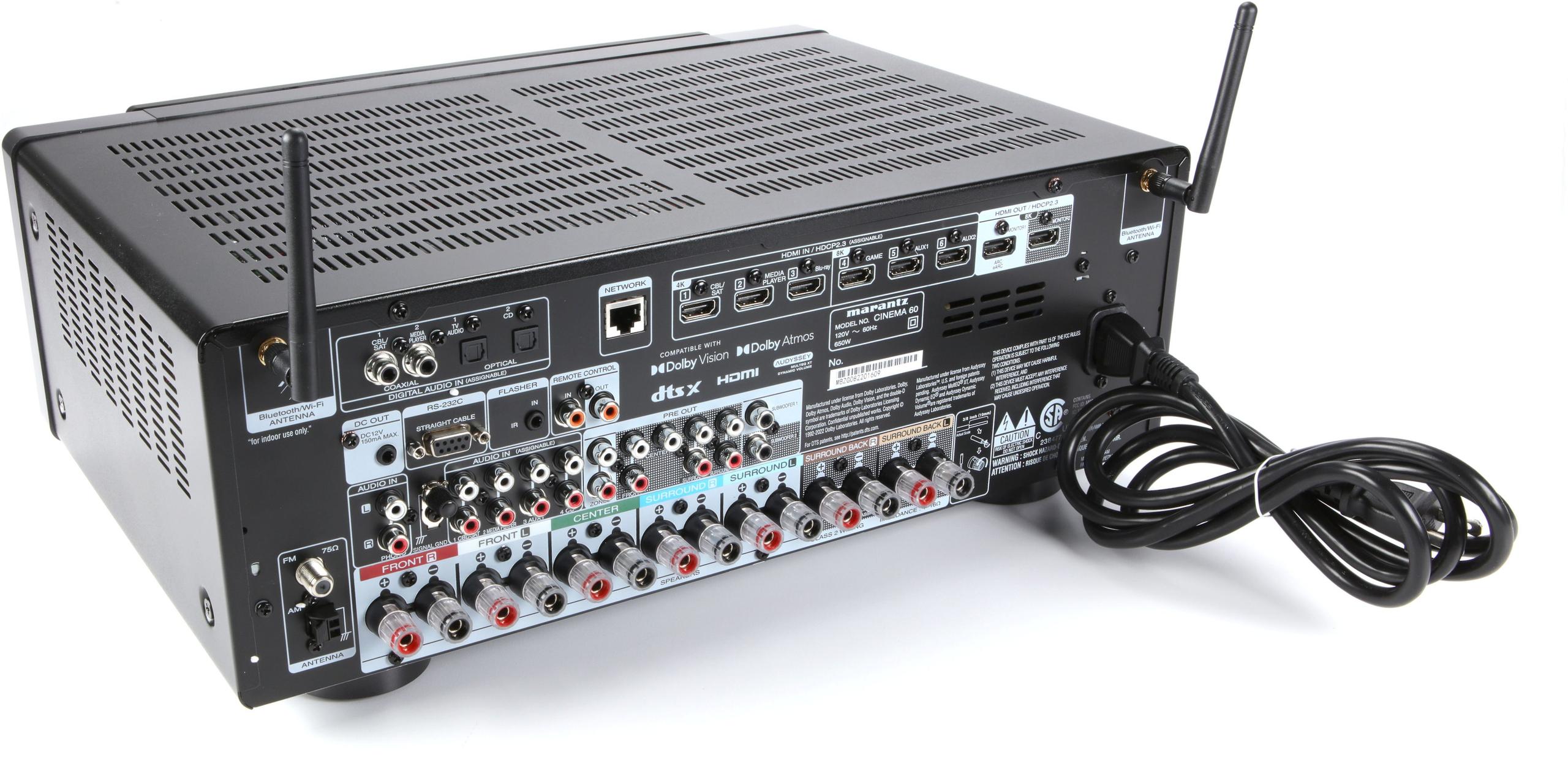
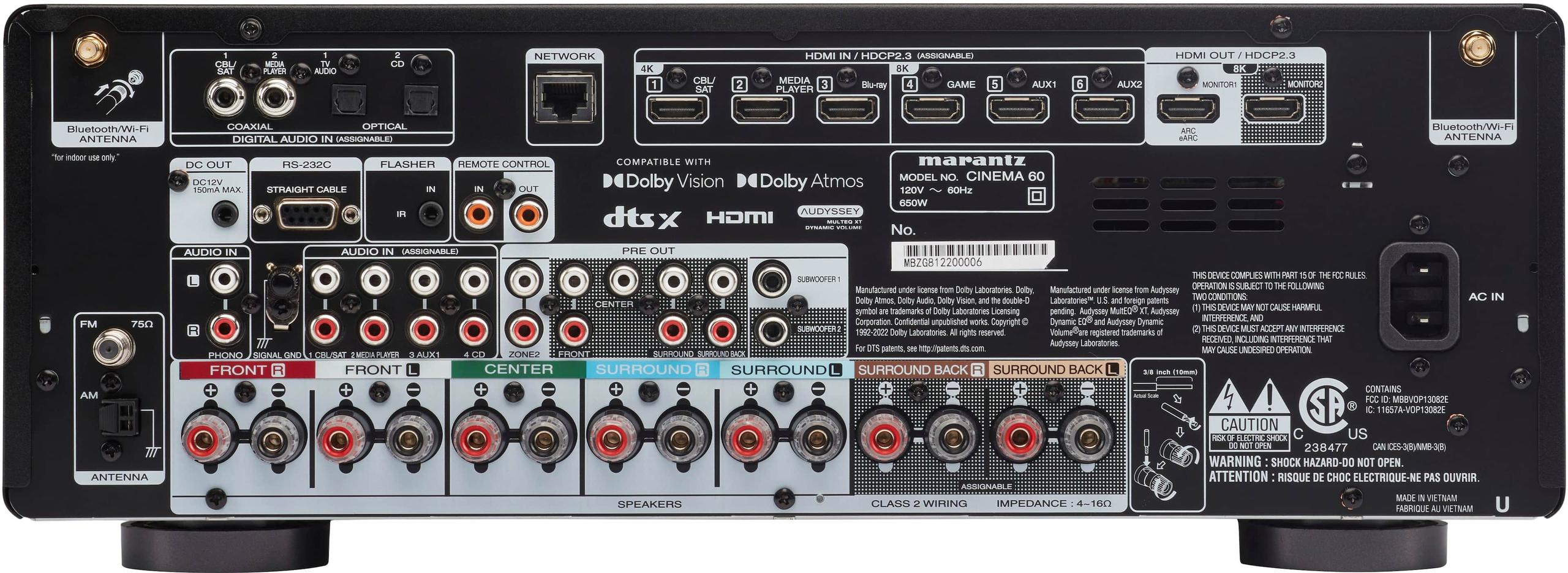
The physical connectivity matches between models, with six HDMI inputs, digital audio inputs, analog connections, and phono inputs for turntables. This covers virtually any source component you might want to connect.
At the time of writing, the Denon AVR-X2800H costs significantly less than the Marantz Cinema 60—often $400-500 difference depending on sales and availability. This price gap represents a substantial consideration for most buyers.
The value question becomes: does the Marantz Cinema 60 justify its premium? The answer depends heavily on your priorities and system context. If you primarily watch movies and play games, the Denon AVR-X2800H delivers 90-95% of the performance at a much lower price point. Its dynamic, engaging sound signature suits these applications well.
However, if music listening plays an equally important role in your entertainment, the Marantz Cinema 60 offers meaningful advantages. The M-DAX2 processing improves compressed music files noticeably, while the overall tonal balance favors longer listening sessions. The enhanced amplifier design also provides more flexibility with challenging speakers.
Both receivers represent significant updates from their 2021 predecessors, incorporating lessons learned from the early days of HDMI 2.1 implementation. Earlier receivers sometimes struggled with handshaking issues or compatibility problems with certain gaming consoles and streaming devices. The 2022 models addressed most of these concerns through improved chipsets and firmware updates.
The move to three HDMI 2.1 inputs from earlier models' single ports reflects the reality of modern source requirements. With gaming consoles, streaming devices, and potentially a PC all demanding high-bandwidth connections, having multiple future-proof inputs eliminates the need for external switching devices.
The decision between these receivers ultimately comes down to priorities and budget considerations. The Denon AVR-X2800H represents exceptional value for money, delivering award-winning performance with modern features at a price point that won't break the bank. It excels in home theater applications where dynamics and impact matter most.
Choose the Denon AVR-X2800H if you're building a dedicated home theater focused on movies and gaming, have reasonably efficient speakers (88dB sensitivity or higher), and want to maximize performance per dollar. Its punchy, engaging sound signature and comprehensive feature set make it hard to beat at its price point.
The Marantz Cinema 60 justifies its premium through enhanced musicality, superior speaker compatibility, and refined build quality. It's the better choice if music listening is equally important as movies, if you own demanding speakers that need more current delivery, or if you simply prefer Marantz's warmer, more sophisticated sound signature.
For most users building their first serious home theater system, the Denon AVR-X2800H offers the better value proposition. It provides all the modern features you need while delivering engaging performance that will satisfy for years. The Marantz Cinema 60 makes more sense for experienced users who understand the subtle differences in sound signature and are willing to pay for refinement.
Both receivers will serve you well in a modern home theater context. The choice comes down to whether you prioritize maximum value and dynamic performance, or prefer to invest in enhanced musicality and build quality. Either way, you're getting a capable foundation for years of entertainment enjoyment.
| Denon AVR-X2800H | Marantz Cinema 60 |
|---|---|
| Power Output - Drives speaker performance and volume capabilities | |
| 95 watts per channel (8Ω, 2 channels driven) | 100 watts per channel (8Ω, 2 channels driven) |
| Amplifier Technology - Affects sound quality and speaker compatibility | |
| Class AB discrete amplifier with standard circuitry | HDAM-SA2 enhanced circuitry for better speaker matching |
| Sound Signature - Defines the listening experience character | |
| Dynamic, punchy, authoritative (ideal for movies/gaming) | Warm, musical, refined (excellent for music and movies) |
| Music Enhancement Features - Improves compressed audio quality | |
| Standard audio processing | M-DAX2 technology for enhancing MP3/AAC/WMA files |
| High-Resolution Audio Support - For audiophile music listening | |
| Standard PCM up to 192kHz/24-bit | PCM plus DSD streaming (2.8/5.6MHz) support |
| HDMI 2.1 Inputs - Future-proofs for 8K and 4K/120Hz gaming | |
| 3 inputs with 40Gbps bandwidth | 3 inputs with 40Gbps bandwidth |
| Total HDMI Connections - Determines how many sources you can connect | |
| 6 inputs, 2 outputs | 6 inputs, 1 output |
| Room Correction System - Optimizes sound for your specific room | |
| Audyssey MultEQ XT (8 measurement positions) | Audyssey MultEQ XT (8 measurement positions) |
| Gaming Features - Reduces lag and improves gaming experience | |
| VRR, ALLM, QFT, QMS support | VRR, ALLM, QFT support |
| Streaming and Wireless - Built-in connectivity options | |
| HEOS, AirPlay 2, Bluetooth, voice assistants | HEOS, AirPlay 2, Bluetooth, voice assistants |
| Award Recognition - Third-party validation of performance | |
| What Hi-Fi? 2022 Award Winner (Entry Level) | No major awards noted |
| Speaker Efficiency Requirements - Determines compatibility with your speakers | |
| Best with 88dB+ sensitivity speakers | Better compatibility with challenging/inefficient speakers |
| Value Proposition - Performance per dollar consideration | |
| Exceptional value with 95% of premium performance | Premium pricing for enhanced musicality and refinement |
The Denon AVR-X2800H is generally better for beginners due to its lower price point and straightforward setup process. It won What Hi-Fi?'s 2022 award for entry-level receivers and delivers excellent performance without the complexity of premium features. The Denon AVR-X2800H provides all the modern capabilities you need including 8K support, Dolby Atmos, and gaming features at a more accessible price.
The Denon AVR-X2800H delivers dynamic, punchy sound that's ideal for movies and gaming, while the Marantz Cinema 60 offers a warmer, more musical sound signature. The Marantz Cinema 60 excels at music reproduction with enhanced processing for compressed audio files, making it better for users who listen to music as much as they watch movies.
The Marantz Cinema 60 provides 100 watts per channel compared to 95 watts for the Denon AVR-X2800H. More importantly, the Marantz Cinema 60 uses enhanced HDAM-SA2 circuitry that handles demanding speakers with challenging impedance curves better than the standard amplification in the Denon AVR-X2800H.
Yes, both the Denon AVR-X2800H and Marantz Cinema 60 offer identical video capabilities with three HDMI 2.1 inputs supporting 8K/60Hz and 4K/120Hz pass-through. Both include gaming features like VRR, ALLM, and QFT for optimal performance with PlayStation 5, Xbox Series X, and modern streaming devices.
The Denon AVR-X2800H provides significantly better value, typically costing several hundred dollars less than the Marantz Cinema 60 while delivering 90-95% of the performance. Unless you specifically need the enhanced musicality and speaker compatibility of the Marantz Cinema 60, the Denon AVR-X2800H offers exceptional performance per dollar.
Both the Denon AVR-X2800H and Marantz Cinema 60 support Dolby Atmos and DTS:X in 5.1.2 configurations with dedicated height speakers. They also include height virtualization technology to create overhead effects through existing speakers when ceiling speakers aren't practical for your room.
The Marantz Cinema 60 is superior for music listening due to its M-DAX2 technology that enhances compressed music files, support for high-resolution audio formats including DSD streaming, and Marantz's signature warm sound. The Denon AVR-X2800H handles music well but focuses more on dynamic impact for home theater applications.
Both the Denon AVR-X2800H and Marantz Cinema 60 use Audyssey MultEQ XT room correction with 8-position measurement capability. The systems automatically calibrate your speakers for optimal performance in your specific room, though the Marantz Cinema 60 tends to apply more conservative corrections that preserve speaker character.
The Marantz Cinema 60 handles challenging speakers better due to its enhanced HDAM-SA2 amplifier design and superior current delivery. If you have speakers with low sensitivity (below 88dB) or complex impedance curves that dip to 4 ohms, the Marantz Cinema 60 provides more stable performance and headroom.
Yes, both the Denon AVR-X2800H and Marantz Cinema 60 include HEOS multi-room streaming, AirPlay 2, Bluetooth, and voice assistant compatibility with Alexa, Google Assistant, and Siri. They support popular streaming services like Spotify Connect, Tidal, and Amazon Music with identical wireless capabilities.
For a dedicated home theater focused on movies and gaming, the Denon AVR-X2800H is often the better choice due to its dynamic sound signature, excellent value, and award-winning performance. However, if your theater also serves as a music listening room or you have demanding speakers, the Marantz Cinema 60 may justify its premium through enhanced musicality.
Choose the Denon AVR-X2800H for best value, dynamic movie/gaming performance, and if you have efficient speakers. Choose the Marantz Cinema 60 if music quality is equally important as movies, you have challenging speakers to drive, or you prefer Marantz's refined, warm sound signature and don't mind paying extra for these enhancements.
We've done our best to create useful and informative comparisons to help you decide what product to buy. Our research uses advanced automated methods to create this comparison and perfection is not possible - please contact us for corrections or questions. These are the sites we've researched in the creation of this article: theaudiotailor.com.au - ecoustics.com - simplehomecinema.com - whathifi.com - audioadvisor.com - youtube.com - bestbuy.com - e-catalog.com - crutchfield.com - avsforum.com - crutchfield.com - whathifi.com - richersounds.com - bestbuy.com - accessories4less.com - projectorscreen.com - adiglobaldistribution.us - youtube.com - bestbuy.com - bestbuy.com - sweetwater.com - hifireport.com - valueelectronics.com - abt.com - hometheaterhifi.com - audioadvisor.com - snapav.com - digitalcinema.com.au - marantz.com - bestbuy.com - audioadvice.com - crutchfield.com

Privacy Policy
Terms and Conditions - Affiliate Policy
Home Security
© Copyright 2008-2026.
11816 Inwood Rd #1211, Dallas, TX 75244