

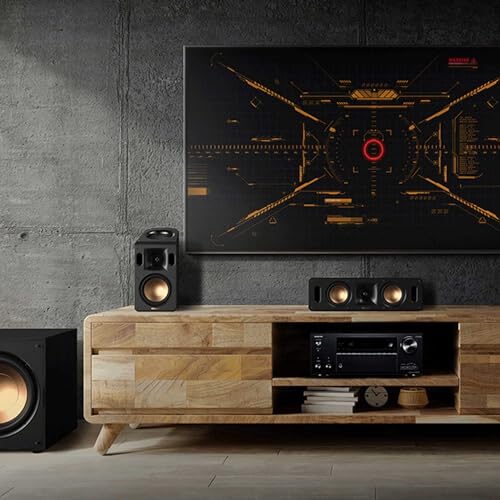
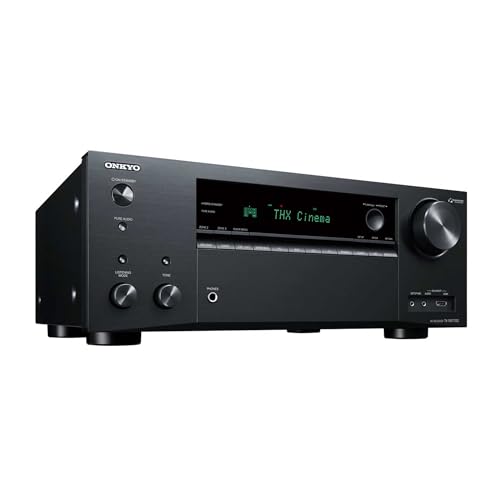
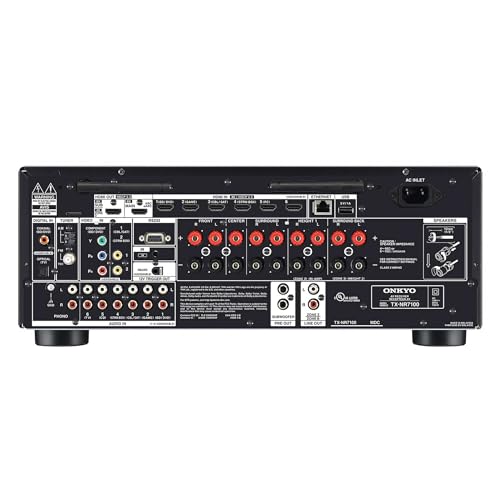
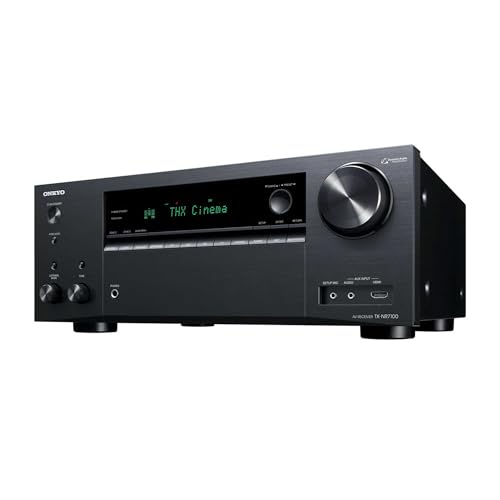
If you're building a home theater system, the AV receiver is essentially the brain of your entire setup. It's the hub that processes audio from all your sources, amplifies sound to your speakers, manages video switching between devices, and increasingly handles smart home integration. Getting this choice right can make or break your home theater experience, regardless of how much you spend on speakers or your TV.
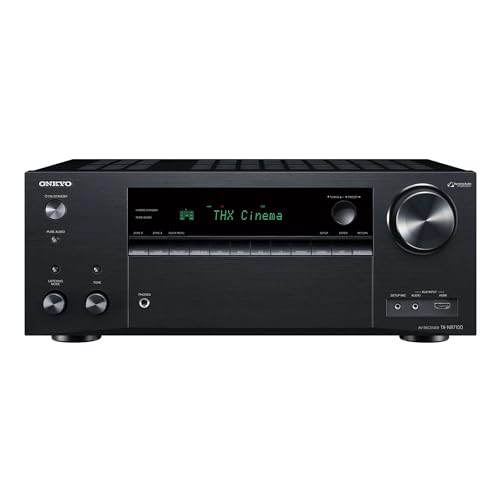
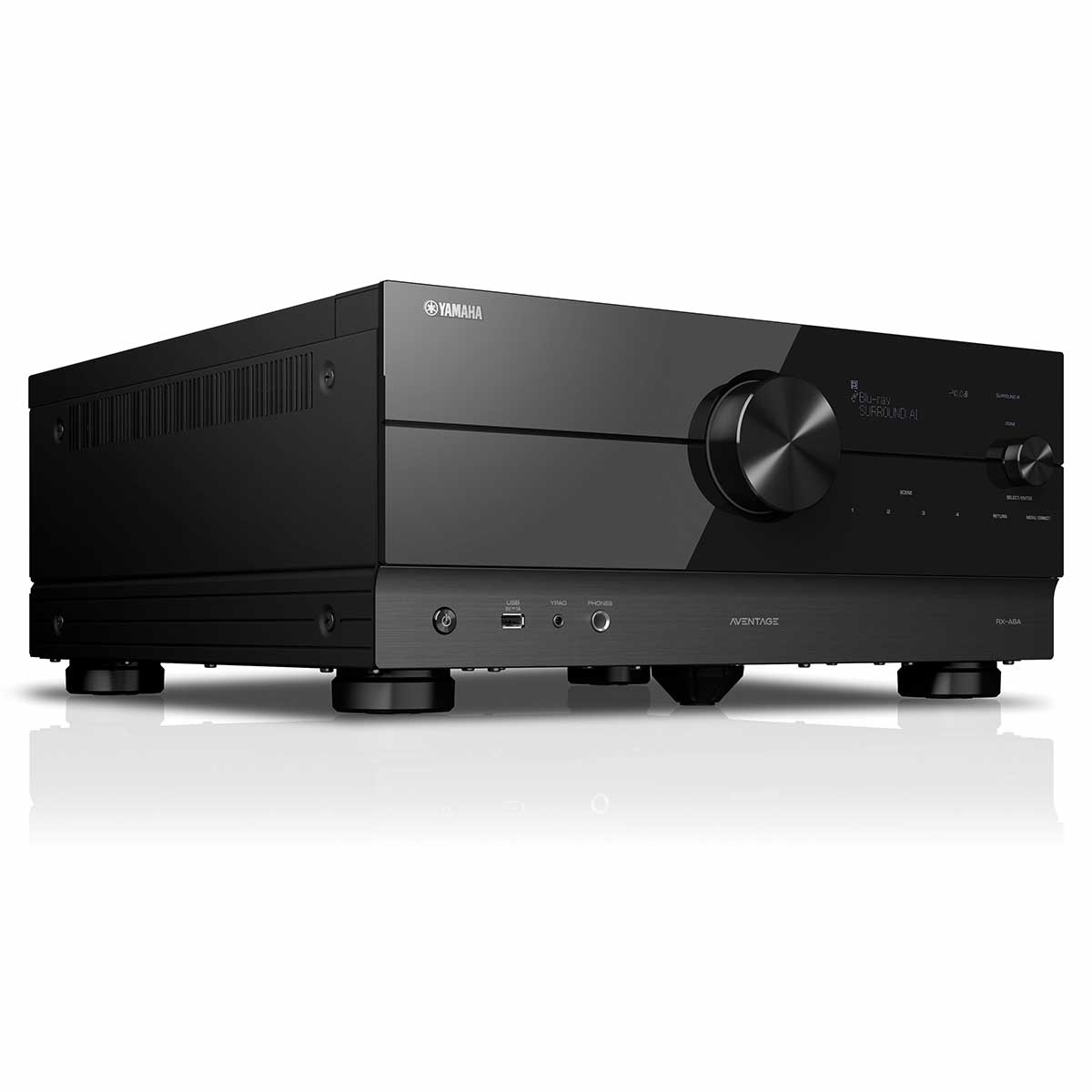
The challenge is that modern AV receivers pack an overwhelming array of features, specs, and technical jargon that can leave even tech-savvy buyers confused. Today we're comparing two receivers that represent very different approaches to the same goal: the mid-range Onkyo TX-NR7100 and the flagship Yamaha RX-A8A. Both launched around 2021, during a period when manufacturers were racing to implement HDMI 2.1 support for next-generation gaming consoles and 8K video.
Before diving into specifics, let's establish what really matters when choosing an AV receiver. The most critical factors are channel configuration (how many speakers you can connect), amplification power (how loud and clear your speakers will sound), audio processing quality (how well surround sound effects are created), video capabilities (what formats your receiver can handle), and room correction technology (automated tuning to optimize sound for your specific space).
Channel configuration is expressed as numbers like "9.2" or "11.2" – the first number indicates how many main speakers the receiver can power, while the second shows how many subwoofers it can manage. More channels generally mean more immersive surround sound, but they also increase complexity and cost.
Power output, measured in watts per channel, determines how effectively the receiver can drive your speakers. However, raw wattage numbers can be misleading – the quality of that power delivery often matters more than the absolute number. Total Harmonic Distortion (THD) percentages tell you how much the amplifier colors the original signal – lower percentages mean cleaner, more accurate sound reproduction.
The Onkyo TX-NR7100 represents what I'd call the "smart value" approach. Released in 2021, it packs features typically found in much more expensive receivers into a mid-range package. The standout feature is built-in Dirac Live room correction, a technology that usually requires either expensive hardware additions or flagship-tier receivers. This 9.2-channel receiver delivers 100 watts per channel and includes THX certification, which means it has passed thousands of rigorous tests to ensure reference-quality performance.
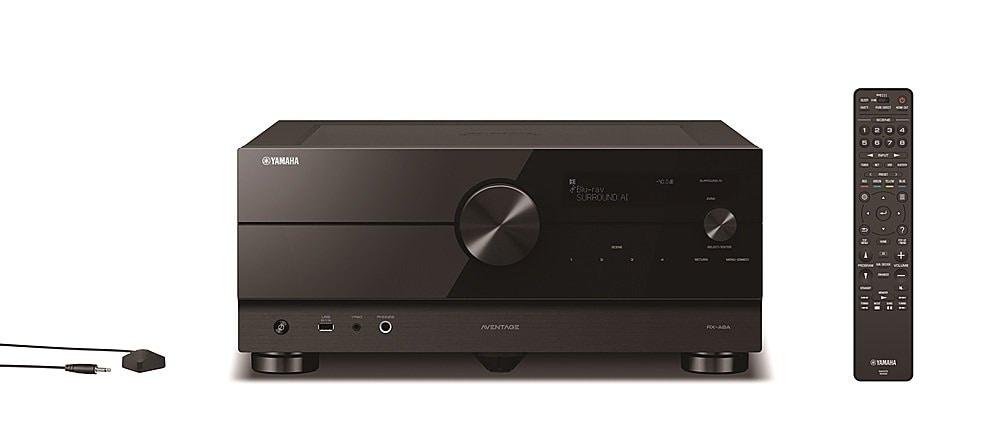
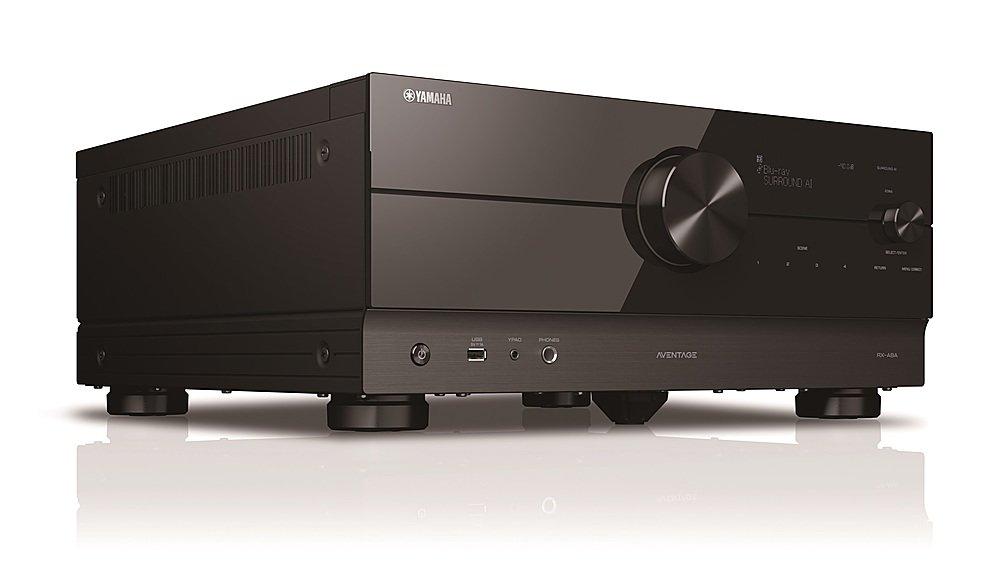
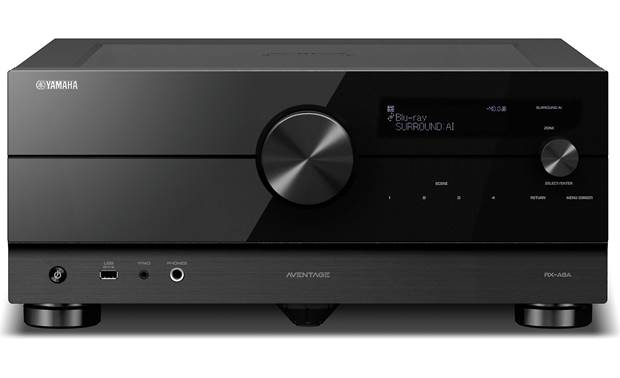
The Yamaha RX-A8A, also from 2021, takes the "no-compromise flagship" route. As Yamaha's top-tier AVENTAGE model, it offers 11.2 channels of amplification at 150 watts per channel, dual premium ESS Sabre DACs (digital-to-analog converters), and Yamaha's proprietary Surround:AI processing. At the time of writing, it commands a price premium that's roughly double the Onkyo TX-NR7100.
The audio performance gap between these receivers reveals itself in several key areas. The Yamaha RX-A8A employs dual ESS Sabre Pro Premier ES9026PRO DACs across all channels. DACs are crucial components that convert digital audio signals into analog signals your speakers can reproduce. Higher-quality DACs like these Sabre chips provide better detail retrieval, lower noise floors, and more accurate sound reproduction. The Onkyo TX-NR7100 uses quality DACs as well, but not at this premium tier.
However, the Onkyo TX-NR7100 counters with Dirac Live room correction, which many audio experts consider superior to competing systems. Room correction technology measures how sound behaves in your specific space and automatically adjusts the receiver's output to compensate for acoustic problems. Dirac Live is particularly sophisticated, using up to 13 measurement positions to create a detailed acoustic map of your room. It then applies precise frequency and time-domain corrections that can dramatically improve clarity, imaging, and bass response.
The Yamaha RX-A8A includes YPAO (Yamaha Parametric Room Acoustic Optimizer) room correction, which is competent but generally considered less advanced than Dirac Live. However, Yamaha adds their Surround:AI technology, which analyzes content in real-time and automatically optimizes surround processing. This can be particularly effective with movie soundtracks, where the system adapts moment-by-moment to create the most immersive experience possible.
From our research into user and expert reviews, the Onkyo TX-NR7100 tends to excel at creating precise, well-defined soundstages with excellent dialogue clarity once Dirac Live is properly configured. The Yamaha RX-A8A is frequently praised for its effortless power delivery and natural, uncolored sound reproduction, particularly with music playback.
The channel difference between 9.2 and 11.2 might seem small, but it significantly impacts your setup flexibility. The Onkyo TX-NR7100's 9.2 configuration typically supports speaker arrangements like 5.2.4 (five main speakers, two subwoofers, four height speakers) or 7.2.2 (seven main speakers, two subwoofers, two height speakers). These configurations work excellently for most home theaters and provide convincing Dolby Atmos and DTS:X immersion.
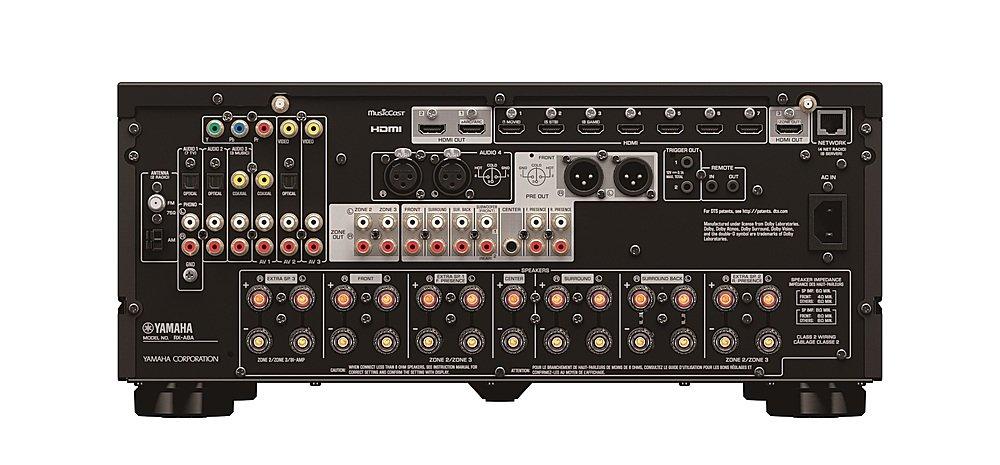
The Yamaha RX-A8A's 11.2 channels unlock more ambitious configurations like 7.2.4 or even 9.2.2 arrangements. This extra flexibility becomes valuable in larger rooms or dedicated theater spaces where you want maximum immersion. The receiver can actually connect up to 13 speakers total, using intelligent amp assignment to determine which 11 need amplification at any given time.
Power delivery tells a more nuanced story than the raw numbers suggest. The Onkyo TX-NR7100's 100 watts per channel (8 ohms, 0.08% THD) is quite respectable and sufficient for most speakers in typical room sizes. The Yamaha RX-A8A's 150 watts per channel (8 ohms, 0.06% THD) provides more headroom, which becomes particularly important when driving inefficient speakers or filling large spaces with sound.
Both receivers can handle speaker impedances from 4 to 16 ohms, but the Yamaha's extra power gives it an advantage with demanding 4-ohm speakers that can stress lesser amplifiers. The Yamaha also features what they call "high slew rate" amplifier design, which helps maintain clean sound reproduction during dynamic passages with sudden volume changes.
Both receivers arrived during the transition to HDMI 2.1, and both handle modern video formats competently. Each offers seven HDMI 2.1 inputs supporting 8K video at 60Hz and 4K video at 120Hz – crucial for next-generation gaming consoles and future video sources. They also support HDR10+, Dolby Vision, and HLG (Hybrid Log-Gamma) for enhanced dynamic range in compatible content.
For gamers, both receivers include Variable Refresh Rate (VRR), Auto Low Latency Mode (ALLM), and Quick Frame Transport (QFT) – features that reduce input lag and eliminate screen tearing. The Onkyo TX-NR7100 offers two HDMI outputs compared to three on the Yamaha RX-A8A, but for most users, this difference won't matter significantly.
Where the receivers diverge is in multi-zone video distribution. The Onkyo TX-NR7100 can send different HDMI video to a second zone, while specific zone capabilities of the Yamaha RX-A8A focus more on audio distribution to multiple rooms.
Modern AV receivers need to integrate seamlessly with streaming services, smart home systems, and multi-room audio setups. The Onkyo TX-NR7100 excels here with broad compatibility across streaming platforms including Spotify, TIDAL, Amazon Music, and Deezer. It supports Chromecast built-in, AirPlay 2, DTS Play-Fi, and even integrates with Sonos systems.
One unique advantage of the Onkyo TX-NR7100 is its Bluetooth implementation with aptX and aptX-HD codec support. These higher-quality Bluetooth codecs provide better wireless audio quality than standard SBC compression, particularly noticeable when using quality wireless headphones for late-night movie watching.
The Yamaha RX-A8A centers its smart features around MusicCast, Yamaha's proprietary multi-room ecosystem. While MusicCast works well, it's less universal than the Onkyo TX-NR7100's approach. However, the Yamaha can distribute audio to up to four zones compared to three on the Onkyo, making it better suited for whole-house audio systems.
Room acoustics can make even the best speakers sound mediocre, which is why automated room correction has become so important. The Onkyo TX-NR7100's Dirac Live system represents a significant value proposition. Dirac Live typically adds hundreds of dollars to a receiver's cost, yet it's included here as a standard feature.
Dirac Live works by playing test tones through your speakers and measuring how they interact with your room using multiple microphone positions. It then creates digital filters that compensate for acoustic problems like standing waves, reflections, and frequency response irregularities. The result can be transformative, particularly for bass response and soundstage precision.
The Yamaha RX-A8A's YPAO system is competent and user-friendly, but it typically doesn't achieve the same level of acoustic optimization as Dirac Live. However, YPAO is simpler to use and requires less technical knowledge to achieve good results.
Based on our analysis of user experiences, properly configured Dirac Live in the Onkyo TX-NR7100 often produces more accurate frequency response and better bass integration than YPAO, though the Yamaha's natural sound character may require less correction to begin with.
At the time of writing, these receivers target different market segments despite performing similar core functions. The Onkyo TX-NR7100 delivers flagship-level features at a mid-range price point, making it an exceptional value for enthusiasts who want sophisticated room correction and comprehensive connectivity without premium pricing.
The Yamaha RX-A8A commands roughly double the price but justifies it with superior amplification, additional channels, premium components, and Yamaha's reputation for long-term reliability. It's positioned for buyers who want the absolute best performance and aren't constrained by budget considerations.
Choose the Onkyo TX-NR7100 if you're building a serious home theater on a reasonable budget. Its Dirac Live room correction can make modest speakers sound exceptional, and nine channels provide adequate flexibility for most Atmos configurations. The comprehensive streaming support and aptX Bluetooth make it particularly appealing for mixed-use systems that handle both movies and music.
The Onkyo TX-NR7100 also makes sense if your room has challenging acoustics. Dirac Live's sophisticated correction algorithms can tame problematic spaces that might overwhelm simpler room correction systems.
Consider the Yamaha RX-A8A if you have a large dedicated theater space, demanding speakers that need substantial amplification, or plans for an 11+ channel speaker configuration. Its premium components and additional power headroom become valuable when pushing the boundaries of what's possible in home audio.
The Yamaha also suits buyers who prefer a more traditional approach to high-end audio, where quality components and careful engineering deliver natural sound reproduction without heavy digital processing.
Both receivers represent their manufacturers' philosophies well. The Onkyo TX-NR7100 democratizes high-end features, bringing sophisticated room correction and comprehensive connectivity to a broader audience. The Yamaha RX-A8A maintains the traditional flagship approach, offering uncompromising performance for users willing to pay premium prices.
For most home theater enthusiasts, the Onkyo TX-NR7100 provides better value and more meaningful performance improvements through its superior room correction technology. However, if you need maximum channels, want flagship-level amplification, or are building a no-compromise system where budget isn't the primary concern, the Yamaha RX-A8A delivers the goods.
The decision ultimately depends on your specific room, speaker choices, and performance priorities. Both receivers will create engaging home theater experiences – the question is which approach better matches your needs and budget constraints.
| Onkyo TX-NR7100 | Yamaha Aventage RX-A8A |
|---|---|
| Channel Configuration - Determines maximum speaker setup complexity | |
| 9.2 channels (supports 5.2.4 or 7.2.2 Atmos) | 11.2 channels (supports 7.2.4 or 9.2.2 Atmos) |
| Power Output - Critical for driving demanding speakers and filling large rooms | |
| 100W per channel (8Ω, 0.08% THD) | 150W per channel (8Ω, 0.06% THD) |
| Room Correction Technology - Essential for optimizing sound in your specific space | |
| Dirac Live (premium correction system) | YPAO (competent but less advanced) |
| Digital-to-Analog Converters - Affects audio quality and detail retrieval | |
| Quality 24-bit/192kHz DACs | Dual ESS Sabre Pro Premier ES9026PRO DACs |
| HDMI Inputs/Outputs - Determines source connectivity and multi-zone video | |
| 7 HDMI 2.1 inputs / 2 outputs | 7 HDMI 2.1 inputs / 3 outputs |
| Video Support - Future-proofing for gaming and high-resolution content | |
| 8K/60Hz, 4K/120Hz, HDR10+, Dolby Vision | 8K/60Hz, 4K/120Hz, HDR10+, Dolby Vision |
| Smart Features - Daily convenience and streaming integration | |
| Spotify, TIDAL, Chromecast, AirPlay 2, DTS Play-Fi, Sonos compatible | MusicCast, AirPlay 2, Surround:AI processing |
| Bluetooth Audio Quality - Important for wireless headphone use | |
| aptX and aptX-HD support (superior quality) | Standard SBC/AAC codecs |
| Multi-Zone Audio - For whole-house audio distribution | |
| 3 zones of audio distribution | 4 zones of audio distribution |
| THX Certification - Validates cinema-quality performance standards | |
| THX Certified Select | Not THX certified |
| Target Market - Who each receiver is designed for | |
| Mid-range enthusiasts wanting flagship features | Premium buyers needing maximum channels and power |
For most home theater setups, the Onkyo TX-NR7100 offers better value with its built-in Dirac Live room correction and THX certification at a mid-range price. The Yamaha RX-A8A is better for large, dedicated theaters requiring maximum power and 11+ channel configurations, but costs significantly more.
The Onkyo TX-NR7100 is a 9.2-channel receiver, supporting configurations like 5.2.4 or 7.2.2 Dolby Atmos setups. The Yamaha RX-A8A offers 11.2 channels, enabling more complex arrangements like 7.2.4 or 9.2.2. Most home theaters work perfectly fine with 9 channels, making the extra channels valuable mainly for large rooms or audiophile installations.
The Onkyo TX-NR7100 includes Dirac Live room correction, which is generally considered superior to most competing systems. The Yamaha RX-A8A uses YPAO room correction, which is competent but less sophisticated than Dirac Live. For rooms with challenging acoustics, the Onkyo's room correction provides a significant advantage.
The Onkyo TX-NR7100 delivers 100 watts per channel, while the Yamaha RX-A8A provides 150 watts per channel. Both have low distortion levels, but the Yamaha's extra power helps with demanding speakers and larger rooms. For typical home theater setups, the Onkyo's power is usually sufficient.
Yes, both the Onkyo TX-NR7100 and Yamaha RX-A8A feature seven HDMI 2.1 inputs supporting 8K/60Hz and 4K/120Hz video. They include gaming features like Variable Refresh Rate (VRR), Auto Low Latency Mode (ALLM), and Quick Frame Transport (QFT) for next-generation consoles.
Both receivers excel at music playback, but in different ways. The Yamaha RX-A8A features premium ESS Sabre DACs and natural sound reproduction that many audiophiles prefer. The Onkyo TX-NR7100 offers superior room correction that can dramatically improve music reproduction in challenging acoustic spaces.
The Onkyo TX-NR7100 supports a broader range of streaming services including Spotify, TIDAL, Amazon Music, Deezer, plus Chromecast, AirPlay 2, and DTS Play-Fi. The Yamaha RX-A8A centers around Yamaha's MusicCast ecosystem with AirPlay 2 support but has fewer built-in streaming options.
The Yamaha RX-A8A supports up to 4 zones of audio distribution, while the Onkyo TX-NR7100 handles 3 zones. However, the Onkyo offers broader compatibility with existing multi-room systems including Sonos, making it more flexible for mixed ecosystems.
Yes, both the Onkyo TX-NR7100 and Yamaha RX-A8A fully support Dolby Atmos, DTS:X, and other immersive audio formats. The Yamaha can support more complex speaker configurations due to its additional channels, while the Onkyo includes THX certification for reference-quality surround sound.
The Onkyo TX-NR7100 typically offers better value, providing flagship-level features like Dirac Live room correction and THX certification at a mid-range price point. The Yamaha RX-A8A costs significantly more but justifies it with premium components, extra channels, and superior amplification for demanding setups.
The Onkyo TX-NR7100 supports high-quality aptX and aptX-HD Bluetooth codecs, providing superior wireless audio quality for compatible headphones and speakers. The Yamaha RX-A8A uses standard SBC and AAC codecs, which are adequate but not as advanced as the Onkyo's implementation.
For small to medium rooms, the Onkyo TX-NR7100 is typically the better choice. Its Dirac Live room correction can optimize sound for smaller spaces more effectively than raw power increases. The Yamaha RX-A8A is better suited for large rooms where its additional power and channels become more valuable.
We've done our best to create useful and informative comparisons to help you decide what product to buy. Our research uses advanced automated methods to create this comparison and perfection is not possible - please contact us for corrections or questions. These are the sites we've researched in the creation of this article: crutchfield.com - prohifi.in - bestbuy.com - h-m-entertainment.com - audiosciencereview.com - crutchfield.ca - soundandvision.com - avsforum.com - avgadgets.com - youtube.com - onkyo.com - crutchfield.com - onkyo.com - accessories4less.com - klipsch.com - youtube.com - listenup.com - intl.onkyo-av.com - bestbuy.com - 420spotshop.com - support.onkyousa.com - bestbuy.com - crutchfield.com - avsforum.com - avnirvana.com - hifiheaven.net - snapav.com - ielectrica.com - bestbuy.com - usa.yamaha.com - shop.usa.yamaha.com - audiosciencereview.com

Privacy Policy
Terms and Conditions - Affiliate Policy
Home Security
© Copyright 2008-2026.
11816 Inwood Rd #1211, Dallas, TX 75244