

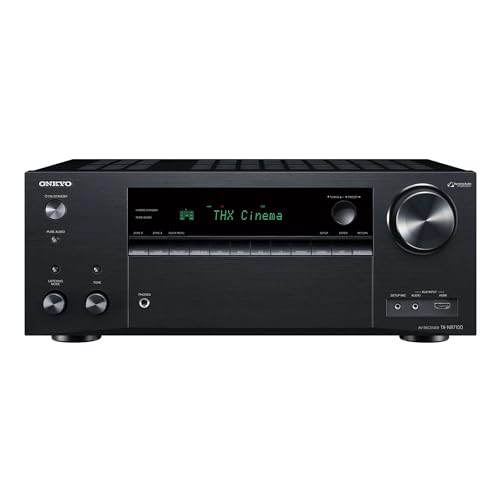
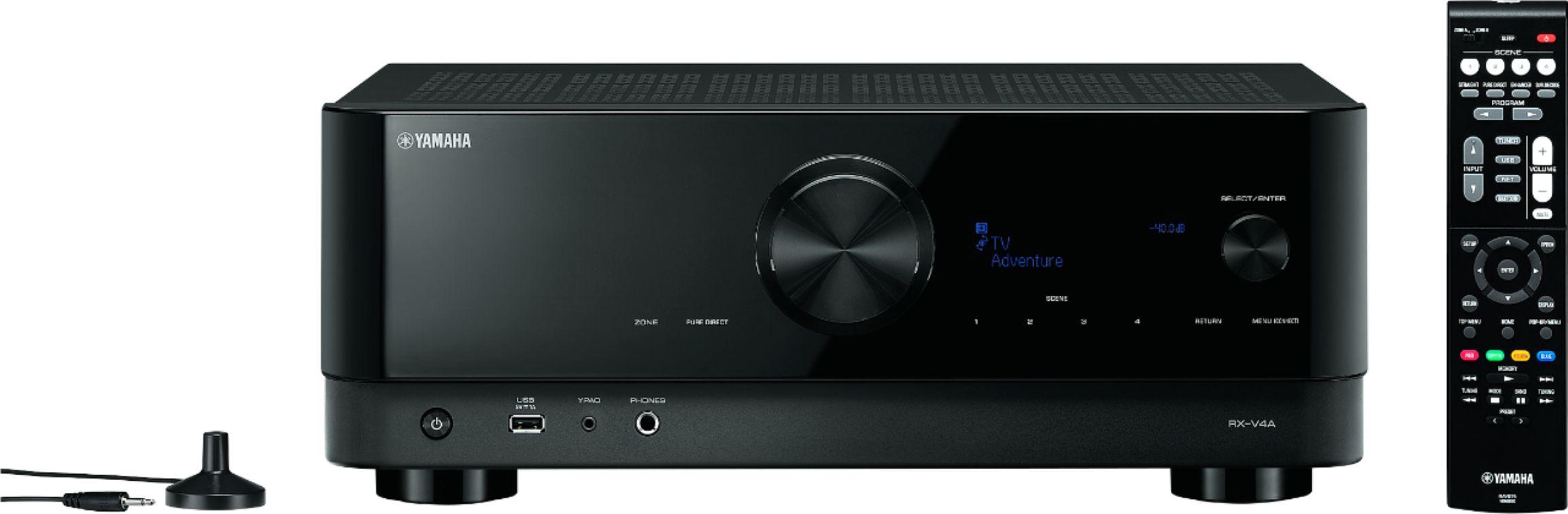
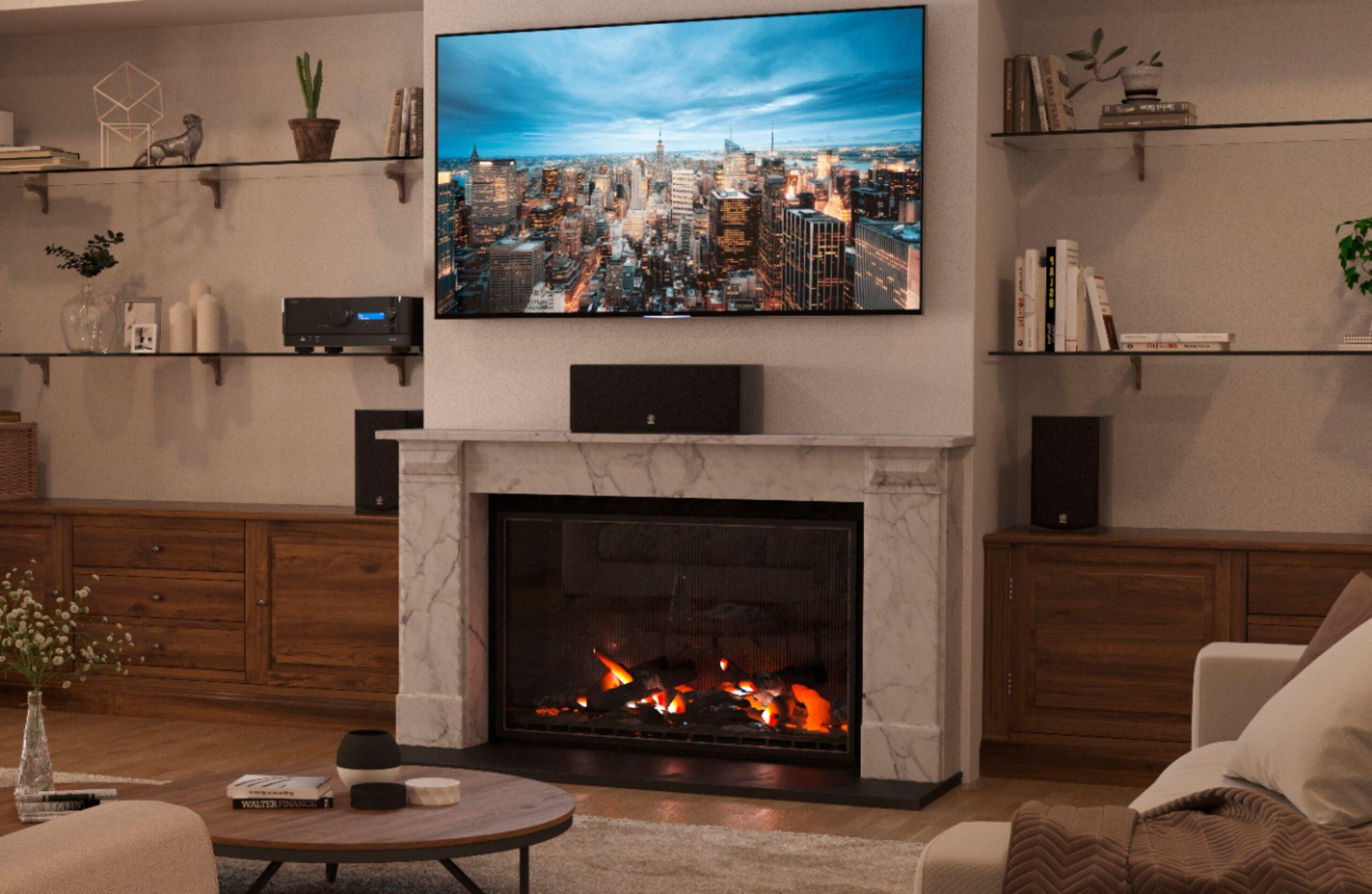
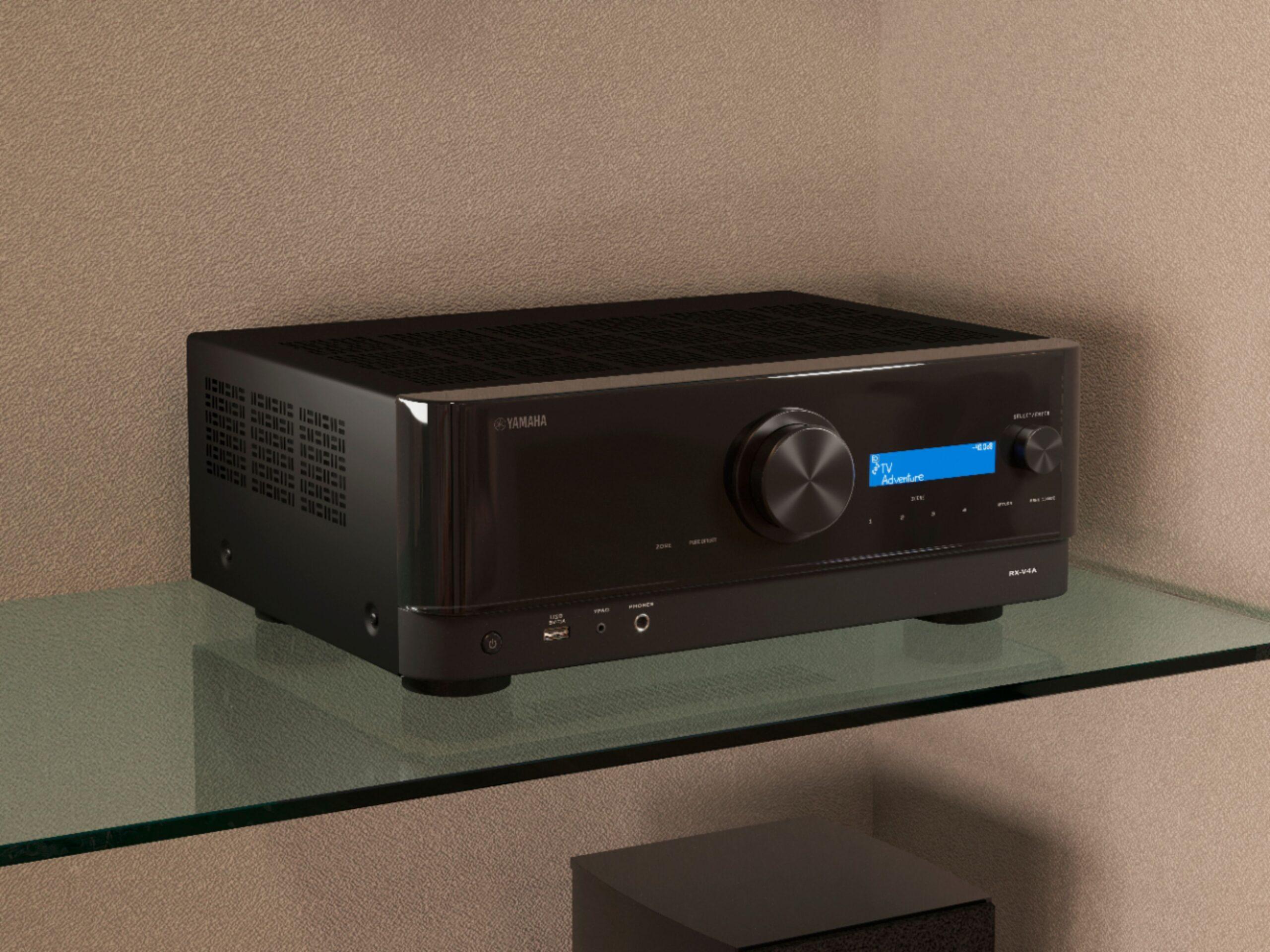
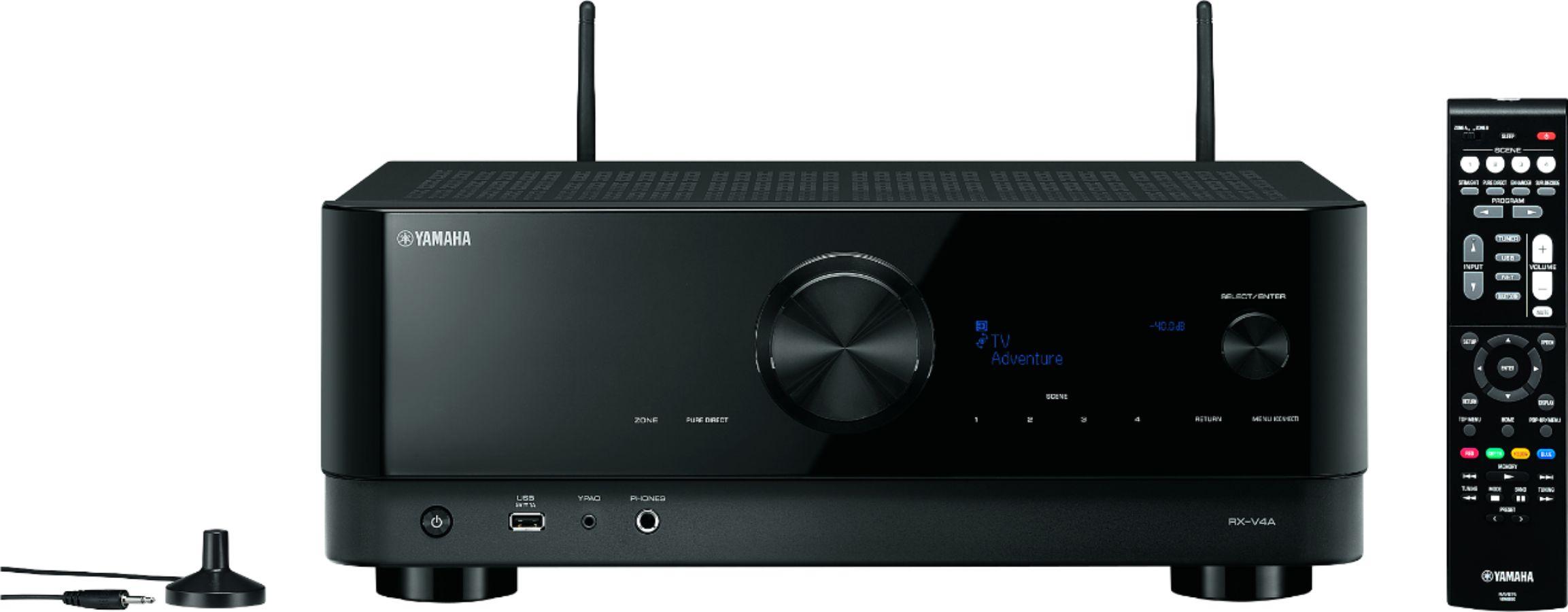
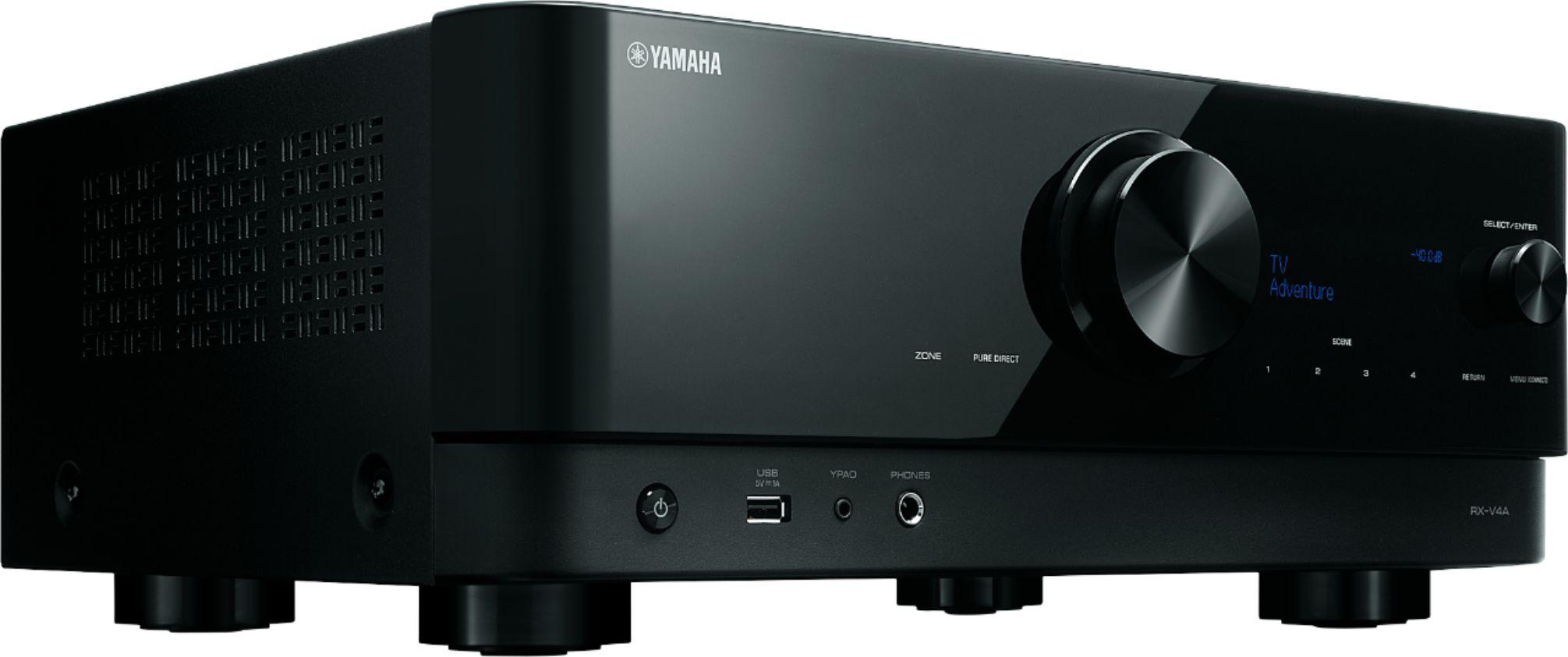
Choosing an AV receiver can feel overwhelming, especially when you're comparing products that seem similar on the surface but serve very different purposes. The Onkyo TX-NR7100 and Yamaha RX-V4A represent two distinct philosophies in home theater design, and understanding their differences will help you build the entertainment system you actually want.
Both receivers launched around 2020-2021, arriving during a significant shift in home theater technology. This period brought widespread adoption of HDMI 2.1 (which allows higher video resolutions and refresh rates), object-based surround sound like Dolby Atmos, and streaming-first entertainment consumption. However, these two receivers took dramatically different approaches to incorporating these new technologies.
Think of an AV receiver as the central nervous system of your home theater. It takes audio and video signals from multiple sources—your game console, streaming device, Blu-ray player—and routes them to your TV and speakers while processing the sound to create that immersive surround experience you're after.
The key considerations when shopping for a receiver include channel configuration (how many speakers it can power), connectivity options (especially HDMI inputs for modern devices), audio processing capabilities (the formats it supports and how well it handles room acoustics), and long-term value. At the time of writing, both the Onkyo TX-NR7100 and Yamaha RX-V4A occupy similar price brackets in the mid-range market, making this comparison particularly relevant for buyers seeking the best bang for their buck.
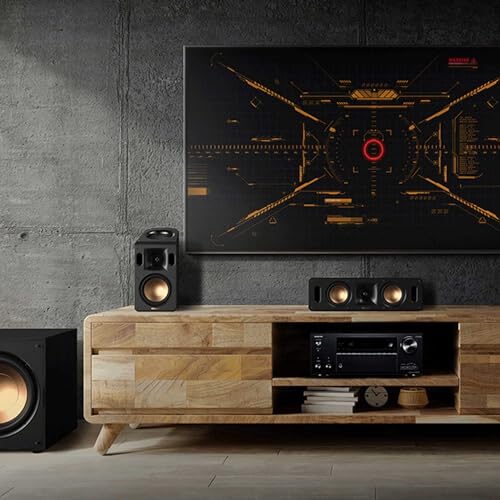
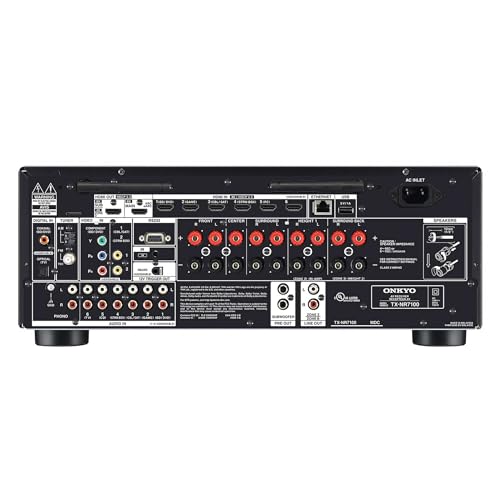
The most fundamental difference between these receivers lies in their amplification capabilities. The Onkyo TX-NR7100 is a 9.2-channel receiver, meaning it can power nine individual speakers plus two subwoofers. This opens up configurations like 7.1.2 (seven main speakers, one subwoofer, two height speakers) or 5.1.4 (five main speakers, one sub, four height speakers) for true Dolby Atmos experiences.
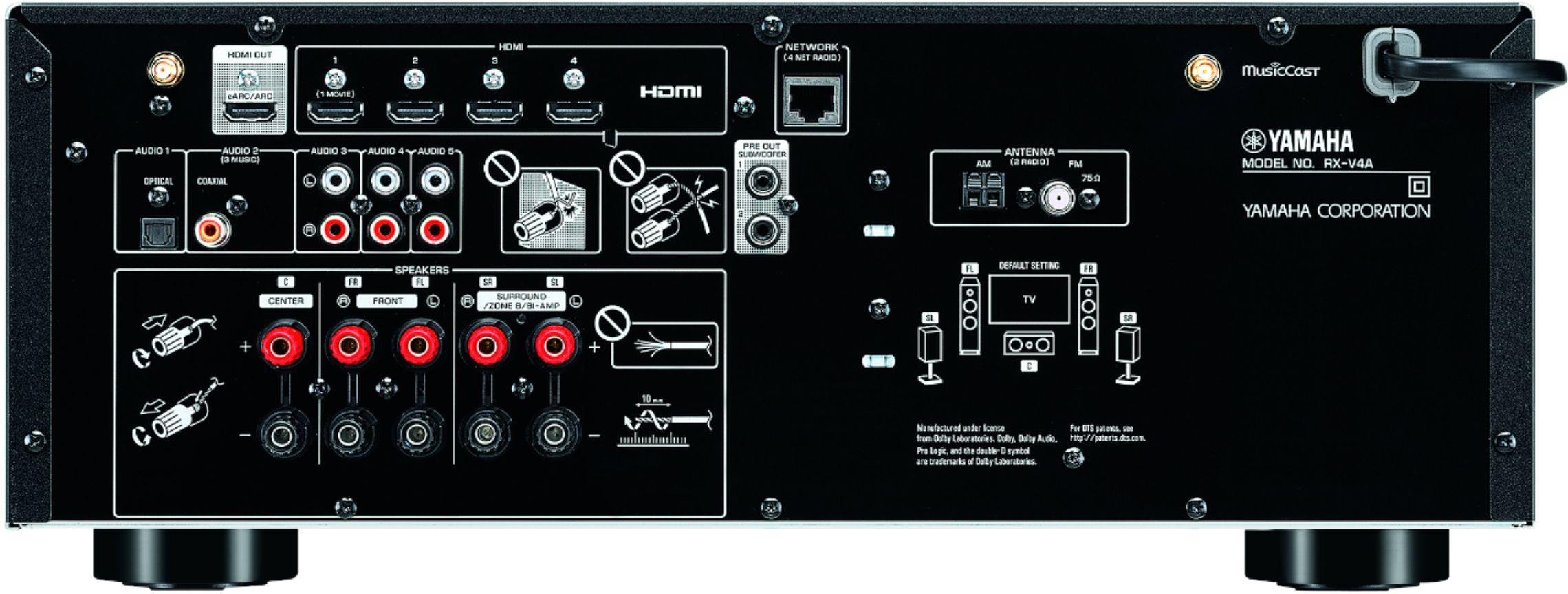
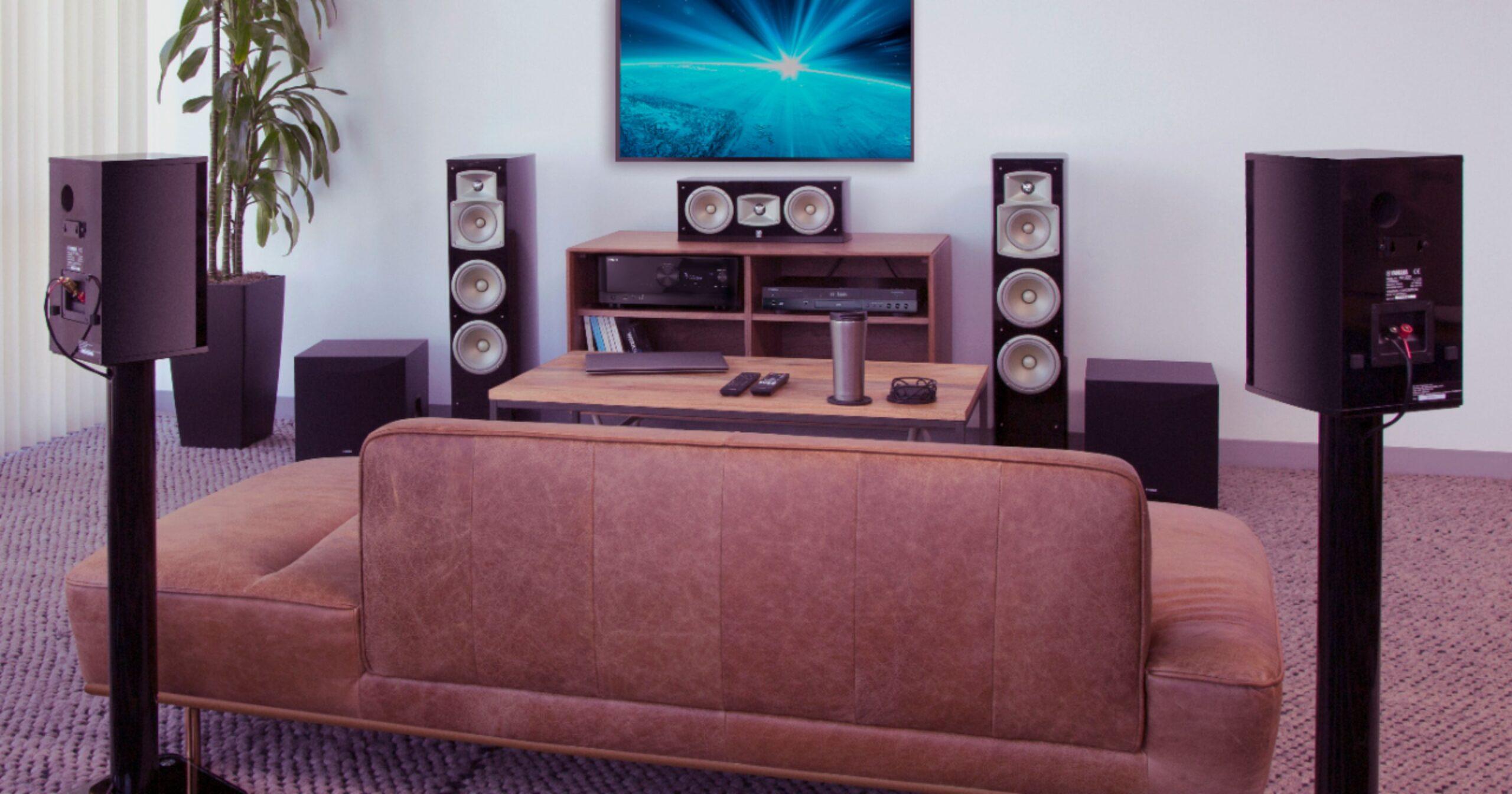
The Yamaha RX-V4A, on the other hand, provides 5.2 channels—five speakers and two subs. This limits you to traditional surround sound configurations without dedicated height channels for overhead effects. While it can decode Dolby Atmos signals, it uses processing tricks to simulate height effects through your existing speakers rather than providing discrete overhead channels.
Power output differs significantly too. The Onkyo delivers 100 watts per channel into 8-ohm speakers, while the Yamaha provides 80 watts per channel. In practical terms, this translates to the Onkyo being capable of driving more demanding speakers or filling larger rooms with satisfying volume levels.
The Onkyo TX-NR7100 excels at creating that "you're inside the movie" experience that modern home theaters promise. Its nine-channel amplification enables true Dolby Atmos configurations where sounds can literally move over your head. When a helicopter flies across the screen, you'll hear it travel from front to back and overhead—not just side to side.
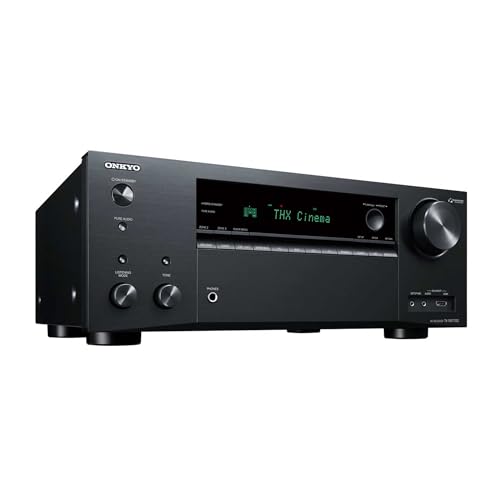
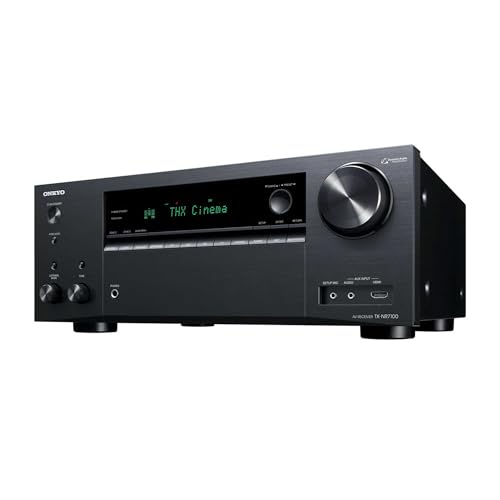
This receiver's THX certification means it has passed rigorous testing to ensure it reproduces movie soundtracks exactly as directors intended. THX processing adds specific enhancements for different content types, including a "cinema" mode that adds subtle reverberation to make your living room sound more like a movie theater. For science fiction films and action blockbusters, this creates genuinely impressive "ominous and weighty soundscapes" that smaller receivers simply can't match.
The gaming performance of the Onkyo deserves special attention. Its HDMI 2.1 inputs support 4K video at 120 frames per second—crucial for PlayStation 5 and Xbox Series X gaming where frame rates this high create noticeably smoother motion. Variable Refresh Rate (VRR) eliminates screen tearing, while Auto Low Latency Mode (ALLM) reduces input lag for competitive gaming. These features weren't widely available when both receivers launched, making the Onkyo more future-proof for gaming enthusiasts.
The Yamaha RX-V4A takes a different approach, prioritizing consistent performance and user-friendly operation over maximum channel count. Yamaha receivers have earned a reputation for exceptional reliability—they tend to run cooler and experience fewer long-term failures compared to some competitors.
While the Yamaha can't create true overhead effects like the Onkyo, its surround sound processing is still quite effective for most content. The receiver's Compressed Music Enhancer uses sophisticated algorithms to restore detail lost when audio is compressed for streaming services like Spotify or Apple Music. This feature is particularly valuable given how much content we consume from streaming platforms today.
The YPAO (Yamaha Parametric room Acoustic Optimizer) room correction system automatically adjusts the audio output to compensate for your room's acoustics. While not as advanced as some premium systems, YPAO provides noticeable improvements in dialogue clarity and bass response with minimal setup effort.
The Onkyo TX-NR7100 incorporates Dirac Live room correction, which represents a significant step up in acoustic calibration technology. Dirac Live analyzes your room using multiple measurement positions (you move a microphone to different listening spots), then creates a detailed acoustic profile. This system can correct not just frequency response issues but also timing problems caused by sound reflections, resulting in remarkably improved clarity and imaging.
The receiver's 24-bit/192kHz digital-to-analog converters handle high-resolution audio files with exceptional detail. Vector Linear Shaping Circuitry (VLSC) is Onkyo's proprietary technology that reconstructs analog signals with minimal distortion—particularly important for maintaining the subtle details in movie soundtracks and high-quality music recordings.
Where the Yamaha RX-V4A shows its expertise is in music reproduction. Yamaha has decades of experience building musical instruments and audio equipment, and this knowledge translates into receivers that handle stereo content particularly well. The sound signature tends toward neutral and balanced, making it suitable for various musical genres without favoring any particular style.
The receiver's Adaptive Dynamic Range Control automatically adjusts volume levels to maintain clear dialogue and effects without sudden loud passages—essential for late-night viewing when you can't crank the volume. This feature works more elegantly than simple volume limiting, preserving the dynamic impact of the soundtrack while keeping peak levels in check.
This category shows the most dramatic difference between these receivers. The Onkyo TX-NR7100 provides seven HDMI inputs, with six supporting the full HDMI 2.1 specification for 8K/60Hz or 4K/120Hz content. This connectivity future-proofs your system for next-generation gaming consoles, streaming devices, and eventually 8K content sources.
The Yamaha RX-V4A offers four HDMI inputs with more basic 4K support. While adequate for current needs, this limitation could become problematic as you add more source devices or upgrade to equipment requiring higher bandwidth connections.
Both receivers support the latest audio formats including Dolby Atmos, DTS:X, and various high-resolution audio codecs. However, the Onkyo can actually utilize these formats to their full potential thanks to its additional amplification channels.
Here's where the Yamaha RX-V4A demonstrates clear superiority. Yamaha's MusicCast ecosystem creates seamless wireless audio streaming throughout your home. You can easily send music from the receiver to MusicCast-compatible speakers in other rooms, or stream different sources to different zones simultaneously.
The MusicCast app provides intuitive control over all these features, and the integration with voice assistants like Alexa and Google Assistant works more reliably than many competitors. If multi-room audio is important to your setup, this represents significant added value.
The Onkyo includes Chromecast built-in, DTS Play-Fi, and AirPlay 2 support, providing good streaming capabilities but without the ecosystem integration that makes Yamaha's approach so appealing for whole-home audio.
The Onkyo TX-NR7100 offers exceptional flexibility in how you deploy its nine channels. Beyond traditional surround configurations, you can:
The receiver includes comprehensive bass management and crossover controls, allowing fine-tuning of how frequencies are distributed between your main speakers and subwoofers. This level of control becomes increasingly important with more complex speaker configurations.
The Yamaha RX-V4A embraces simplicity while still offering some flexibility. You can reassign the surround channels to power speakers in a second room, or use them to bi-amp your front speakers. While more limited than the Onkyo's options, these configurations cover most users' actual needs.
The emphasis on wireless streaming makes the Yamaha particularly attractive for users who primarily listen to music from streaming services and want easy access across multiple rooms.
When evaluating AV receivers, certain performance characteristics prove more important than others based on real-world usage:
Dynamic Range determines how well the receiver handles the difference between quiet dialogue and explosive action sequences. The Onkyo TX-NR7100 excels here, maintaining composure during complex movie scenes while preserving subtle details during quieter moments.
Channel Separation affects how distinctly you can hear different elements of the soundtrack. More channels generally provide better separation, giving the Onkyo an advantage in creating convincing surround effects.
Room Correction Effectiveness significantly impacts your listening experience regardless of channel count. The Dirac Live system in the Onkyo provides more comprehensive correction than the Yamaha's YPAO, though both offer meaningful improvements over no room correction at all.
Thermal Management affects long-term reliability. Some users report the Onkyo running quite warm during extended use, occasionally triggering protective modes that interrupt playback. The Yamaha RX-V4A typically runs cooler and shows fewer thermal-related issues.
Based on user feedback and professional reviews, reliability differs significantly between these models. The Yamaha RX-V4A benefits from Yamaha's reputation for building receivers that operate consistently for many years without issues. The simpler design with fewer amplification channels likely contributes to this reliability advantage.
The Onkyo TX-NR7100, while offering more features, has received some reports of protective mode activations and running quite hot during demanding use. However, these issues appear relatively uncommon and may be related to specific installation conditions or particularly demanding speaker loads.
At the time of writing, both receivers occupy similar price points, making the value comparison particularly interesting. The Onkyo TX-NR7100 delivers significantly more amplification, processing power, and connectivity for roughly the same investment. Features like Dirac Live room correction and HDMI 2.1 support typically appear in much more expensive receivers.
However, value isn't just about feature count. The Yamaha RX-V4A provides reliable performance, excellent streaming integration, and easier setup—benefits that have real worth for many users. If you don't need nine channels of amplification, paying for simpler, more reliable operation might represent better value.
Want the most immersive possible home theater experience with true overhead effects and the latest gaming features. This receiver makes sense for serious movie enthusiasts and gamers who plan to build around a 7.1.2 or 5.1.4 Atmos configuration. The advanced room correction and professional-grade processing justify the potential complexity for users seeking reference-quality performance.
The Onkyo also suits users planning future expansion—those additional amplification channels provide flexibility as your system evolves. If you're building a dedicated home theater room or have a large living space that needs substantial power, this receiver delivers the goods.
Prioritize reliability, simplicity, and multi-room streaming over maximum channel count. This receiver excels for users who want excellent surround sound without the complexity of height channels, ceiling speakers, or extensive calibration procedures. The superior multi-room capabilities make it ideal for households where music streaming throughout the home matters more than ultimate movie theater simulation.
The Yamaha also makes sense for smaller rooms where 5.2 channels provide adequate coverage, or for users who prefer proven reliability over cutting-edge features. If your primary sources are streaming services and you value consistent, trouble-free operation, this approach has merit.
These receivers represent fundamentally different philosophies. The Onkyo TX-NR7100 provides more capability, more future-proofing, and more impressive audio performance for roughly the same investment—making it the better choice for serious home theater enthusiasts. However, the Yamaha RX-V4A offers a more reliable, user-friendly experience that better serves casual users who want quality surround sound without complexity.
Your choice ultimately depends on whether you're building a dedicated entertainment system that pushes the boundaries of what's possible, or creating a reliable, easy-to-use setup that enhances your daily entertainment without demanding constant attention. Both approaches have merit—just make sure you're choosing the receiver that matches how you actually plan to use it.
| Onkyo TX-NR7100 | Yamaha RX-V4A |
|---|---|
| Channel Configuration - Determines speaker layout possibilities and immersive audio capability | |
| 9.2 channels (enables true Dolby Atmos with overhead speakers) | 5.2 channels (traditional surround only, Atmos via virtualization) |
| Power Output - Affects volume levels and speaker compatibility | |
| 100W per channel (8 ohms, drives demanding speakers effectively) | 80W per channel (8 ohms, adequate for most bookshelf/tower speakers) |
| HDMI Inputs - Critical for connecting multiple modern devices | |
| 7 HDMI inputs (6 with full HDMI 2.1 support) | 4 HDMI inputs (basic 4K support, limited future-proofing) |
| Gaming Features - Essential for PlayStation 5/Xbox Series X optimization | |
| 4K/120Hz, VRR, ALLM support (full next-gen gaming compatibility) | Basic 4K support (no advanced gaming features) |
| Room Correction - Automatically optimizes sound for your specific room | |
| Dirac Live (professional-grade acoustic calibration) | YPAO (effective but less sophisticated room optimization) |
| Multi-Room Audio - Ability to stream music throughout the house | |
| Chromecast, DTS Play-Fi, AirPlay 2 (good but not ecosystem-integrated) | MusicCast ecosystem (seamless whole-home audio streaming) |
| Streaming Services - Built-in access to music platforms | |
| Spotify, TIDAL, Pandora, TuneIn built-in | Limited built-in services, relies more on external sources |
| THX Certification - Ensures cinema-reference audio quality | |
| THX Certified Select (passes rigorous movie audio standards) | No THX certification (still capable surround processing) |
| Reliability Reputation - Long-term durability considerations | |
| Some heat generation reports, occasional protective mode activation | Excellent reliability track record, runs cooler consistently |
| Setup Complexity - How difficult it is to configure optimally | |
| More complex due to 9 channels and advanced features | Simpler setup process, more beginner-friendly interface |
The primary difference is channel count and capability. The Onkyo TX-NR7100 is a 9.2-channel receiver that supports true Dolby Atmos with overhead speakers, while the Yamaha RX-V4A is a 5.2-channel receiver limited to traditional surround sound configurations. The Onkyo offers more amplification channels, advanced gaming features, and professional-grade room correction.
The Onkyo TX-NR7100 is significantly better for home theater movies due to its 9.2-channel configuration, THX certification, and Dirac Live room correction. It can create true immersive Dolby Atmos experiences with overhead effects that the Yamaha RX-V4A cannot match with its 5.2-channel limitation.
The Onkyo TX-NR7100 excels for gaming with full HDMI 2.1 support, 4K/120Hz capability, Variable Refresh Rate (VRR), and Auto Low Latency Mode (ALLM) - essential for PlayStation 5 and Xbox Series X. The Yamaha RX-V4A offers only basic 4K support without advanced gaming optimizations.
The Onkyo TX-NR7100 can power up to 9 speakers plus 2 subwoofers, enabling configurations like 7.1.2 or 5.1.4 Atmos setups. The Yamaha RX-V4A powers 5 speakers plus 2 subwoofers, limiting you to traditional 5.1 or 5.2 surround sound without dedicated height channels.
The Yamaha RX-V4A has a better reliability reputation, running cooler and experiencing fewer long-term issues. Some users report the Onkyo TX-NR7100 running hot and occasionally entering protective mode, though these issues appear relatively uncommon.
Yes, both support Dolby Atmos decoding, but differently. The Onkyo TX-NR7100 provides true Dolby Atmos with dedicated height channels for authentic overhead effects. The Yamaha RX-V4A uses virtualization to simulate height effects through existing speakers without dedicated overhead channels.
The Yamaha RX-V4A excels at streaming with its MusicCast ecosystem, offering seamless multi-room audio and intuitive app control. The Onkyo TX-NR7100 includes Chromecast, DTS Play-Fi, and AirPlay 2 but lacks the integrated ecosystem approach of Yamaha's solution.
The Onkyo TX-NR7100 delivers 100 watts per channel into 8-ohm speakers, while the Yamaha RX-V4A provides 80 watts per channel. This power difference means the Onkyo can drive more demanding speakers and fill larger rooms more effectively.
The Yamaha RX-V4A is significantly easier to set up due to its simpler 5.2-channel configuration and user-friendly interface. The Onkyo TX-NR7100 requires more complex configuration with its 9 channels, advanced features, and professional room correction system.
Yes, but different systems. The Onkyo TX-NR7100 features Dirac Live, a professional-grade room correction system that provides comprehensive acoustic calibration. The Yamaha RX-V4A uses YPAO room optimization, which is effective but less sophisticated than Dirac Live.
The Onkyo TX-NR7100 provides 7 HDMI inputs with 6 supporting full HDMI 2.1 specifications for future-proofing. The Yamaha RX-V4A offers 4 HDMI inputs with basic 4K support, which may limit connectivity as you add more source devices.
The Onkyo TX-NR7100 offers better value for serious home theater enthusiasts, providing significantly more capability, channels, and future-proofing features. However, the Yamaha RX-V4A provides better value for users prioritizing reliability, simplicity, and multi-room streaming over maximum channel count and advanced features.
We've done our best to create useful and informative comparisons to help you decide what product to buy. Our research uses advanced automated methods to create this comparison and perfection is not possible - please contact us for corrections or questions. These are the sites we've researched in the creation of this article: crutchfield.com - prohifi.in - bestbuy.com - h-m-entertainment.com - audiosciencereview.com - crutchfield.ca - soundandvision.com - avsforum.com - avgadgets.com - youtube.com - onkyo.com - crutchfield.com - onkyo.com - accessories4less.com - klipsch.com - youtube.com - listenup.com - intl.onkyo-av.com - bestbuy.com - 420spotshop.com - support.onkyousa.com - bestbuy.com - europe.yamaha.com - audioadvice.com - crutchfield.com - usa.yamaha.com - my.yamaha.com - bestbuy.com - crutchfield.com - proaudiobrands.com - justanswer.com - avstore.in

Privacy Policy
Terms and Conditions - Affiliate Policy
Home Security
© Copyright 2008-2026.
11816 Inwood Rd #1211, Dallas, TX 75244