

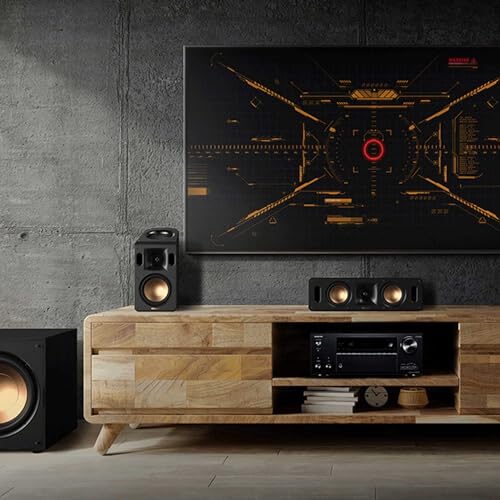
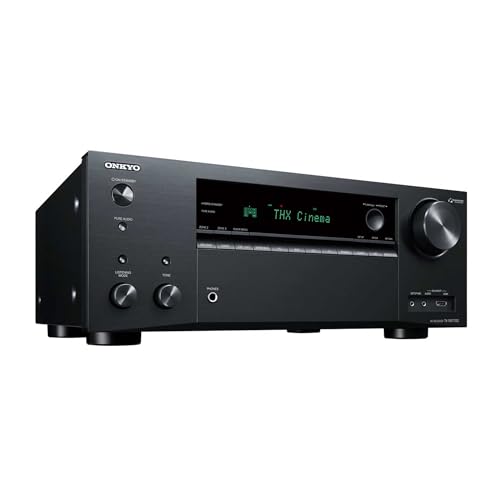
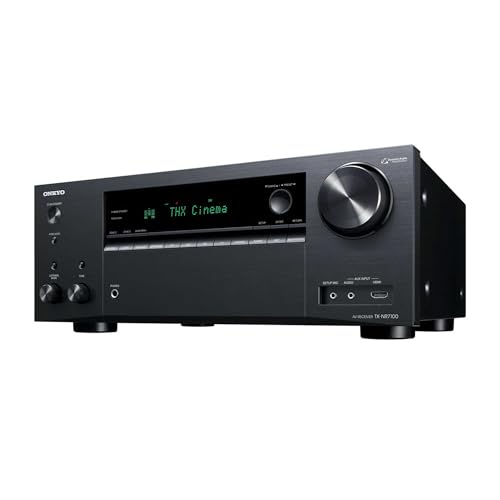
When building a serious home theater system, the AV receiver sits at the heart of everything. It's the brain that processes your movies' soundtracks, amplifies audio to your speakers, and routes video signals to your display. Choose poorly, and you'll compromise years of movie nights. Choose well, and you'll have a foundation that makes every film feel like a cinematic experience.
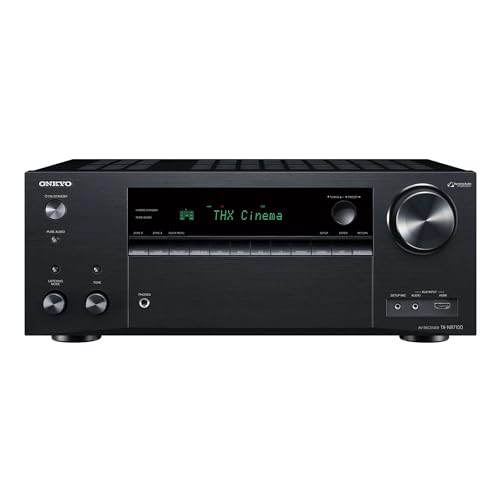
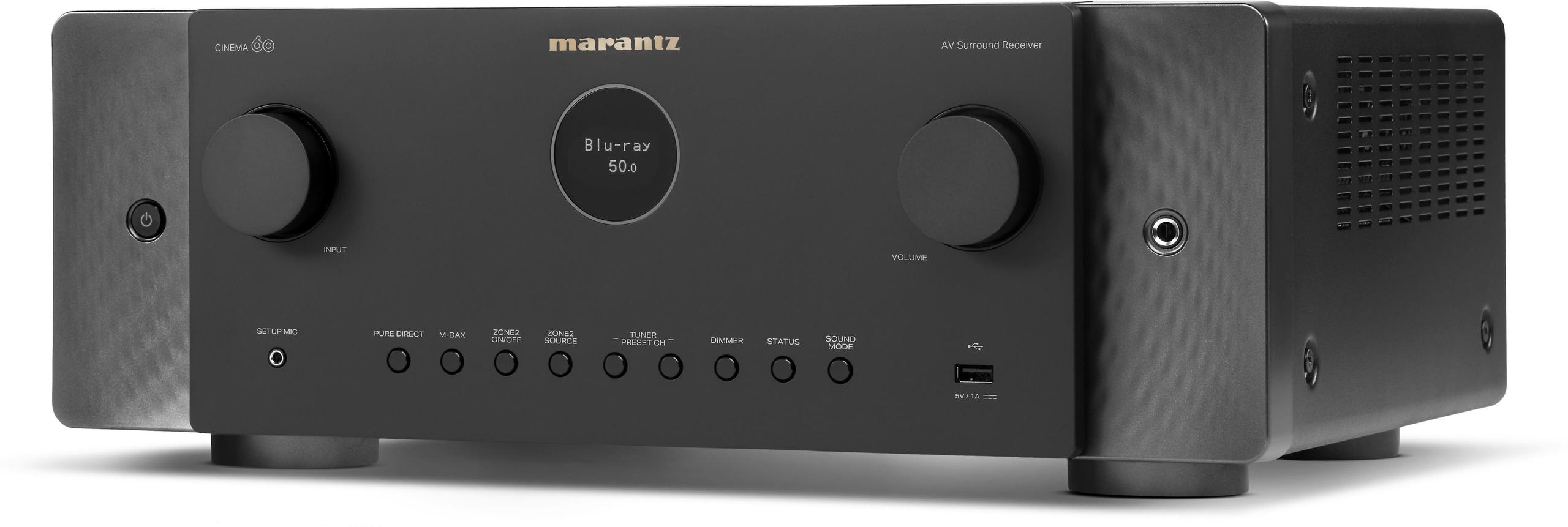
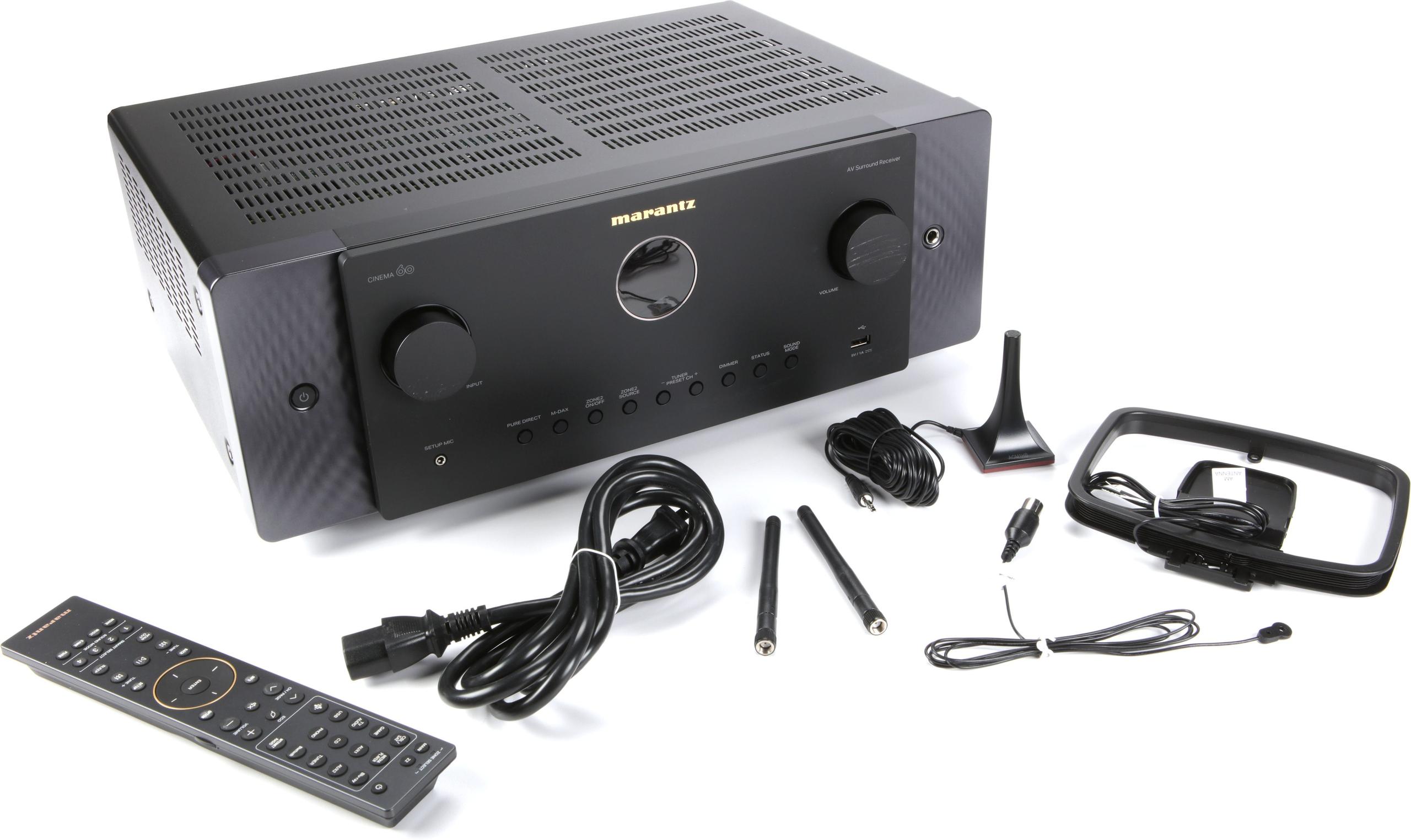
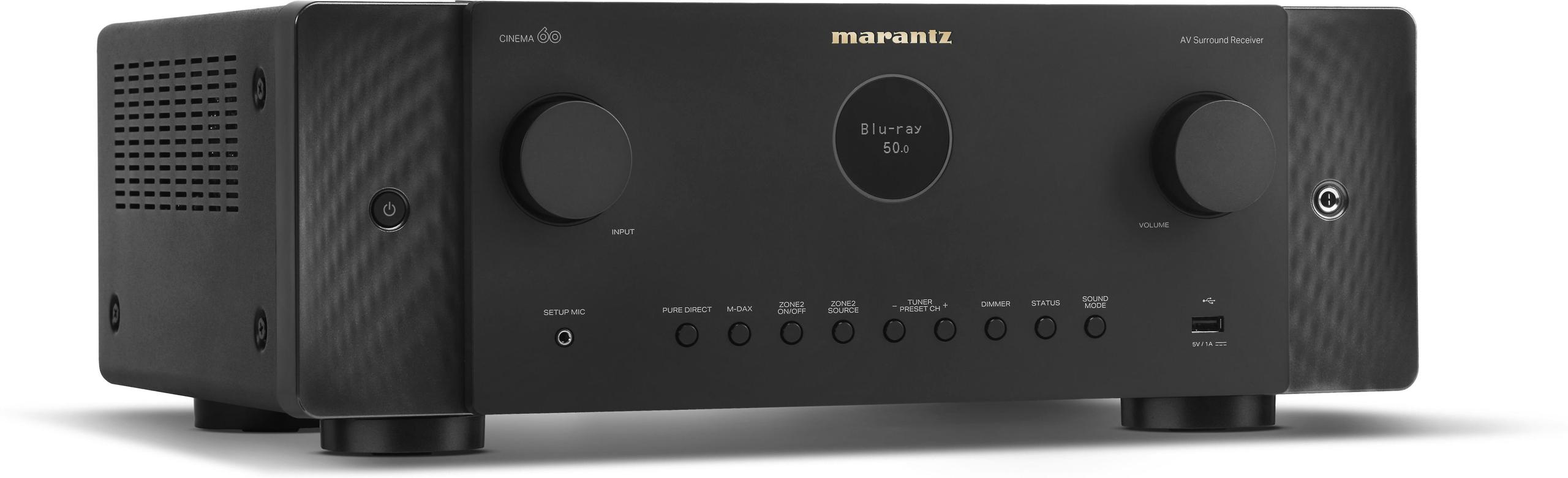
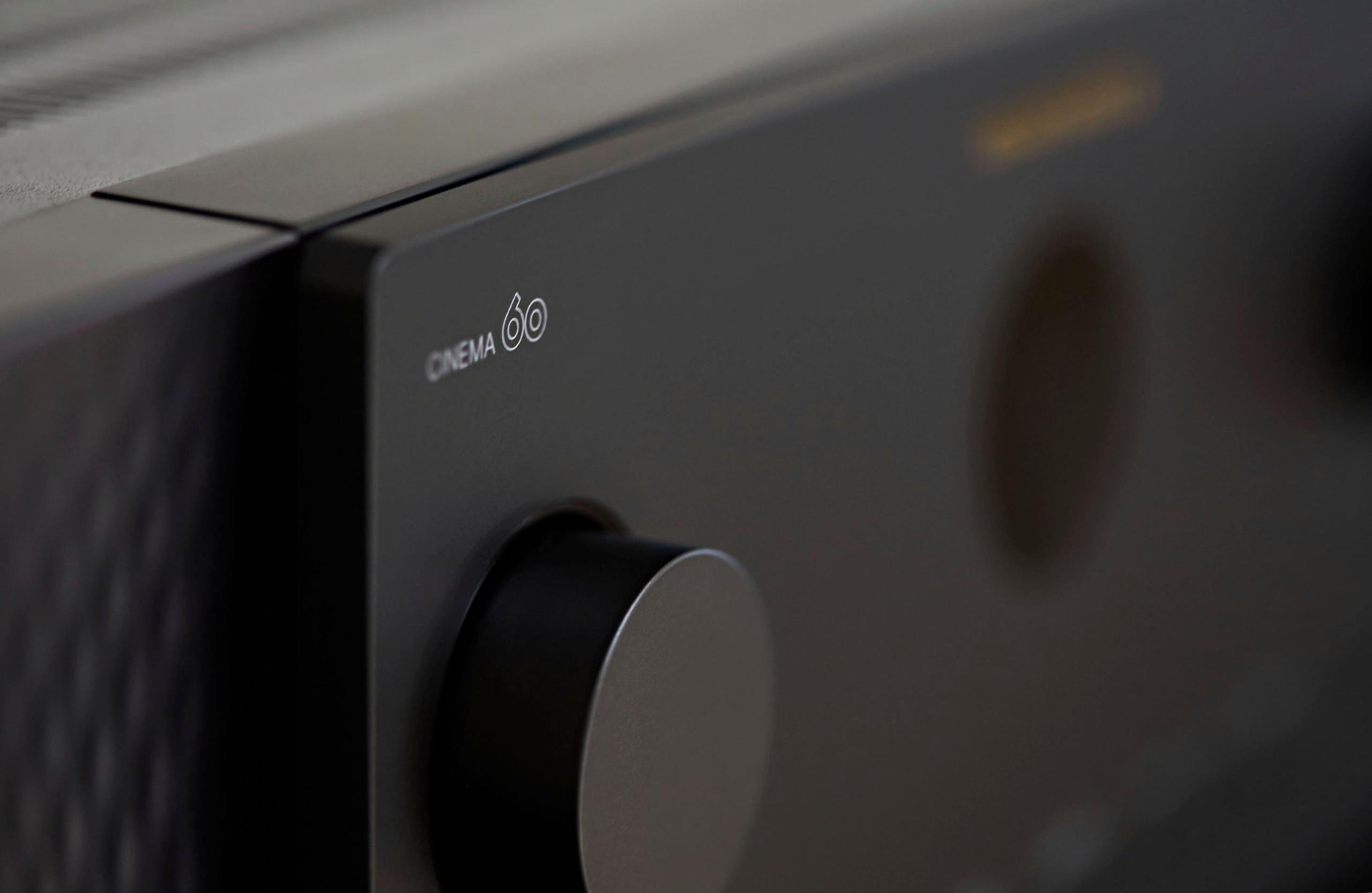
The challenge? The mid-range AV receiver market offers compelling options that approach home theater differently. The Onkyo TX-NR7100, released in 2021, prioritizes channel count and advanced room correction. The Marantz Cinema 60, launched in 2022, emphasizes audio refinement and system expandability. Both cost roughly the same at the time of writing, but deliver distinctly different experiences.
Understanding these differences matters because AV receivers typically last 7-10 years in most setups. The decision you make today will influence how your system sounds and what upgrade paths remain available for nearly a decade.
Modern AV receivers handle an incredible array of tasks simultaneously. They decode complex audio formats like Dolby Atmos (which uses "object-based" audio to place sounds in 3D space around your room), amplify signals to drive speakers, process 4K and 8K video, and manage streaming from dozens of services.
The most critical considerations when evaluating receivers include channel configuration (how many speakers they can power), room correction technology (software that optimizes sound for your specific space), connectivity options for modern sources, and expandability for future upgrades. Power output matters, but it's often overstated—most listening happens at a fraction of a receiver's maximum wattage.
Room correction deserves special attention because your room dramatically affects sound quality. Hard surfaces create reflections, furniture absorbs certain frequencies, and speaker placement introduces timing delays. Advanced room correction systems measure these acoustic problems using microphones, then apply digital filters to compensate. The difference between good and poor room correction can be more significant than upgrading speakers.
The Onkyo TX-NR7100 processes 9.2 channels, meaning it can power nine speakers plus two subwoofers simultaneously. The Marantz Cinema 60 handles 7.2 channels—seven speakers and two subs. This difference fundamentally shapes what each receiver can accomplish.
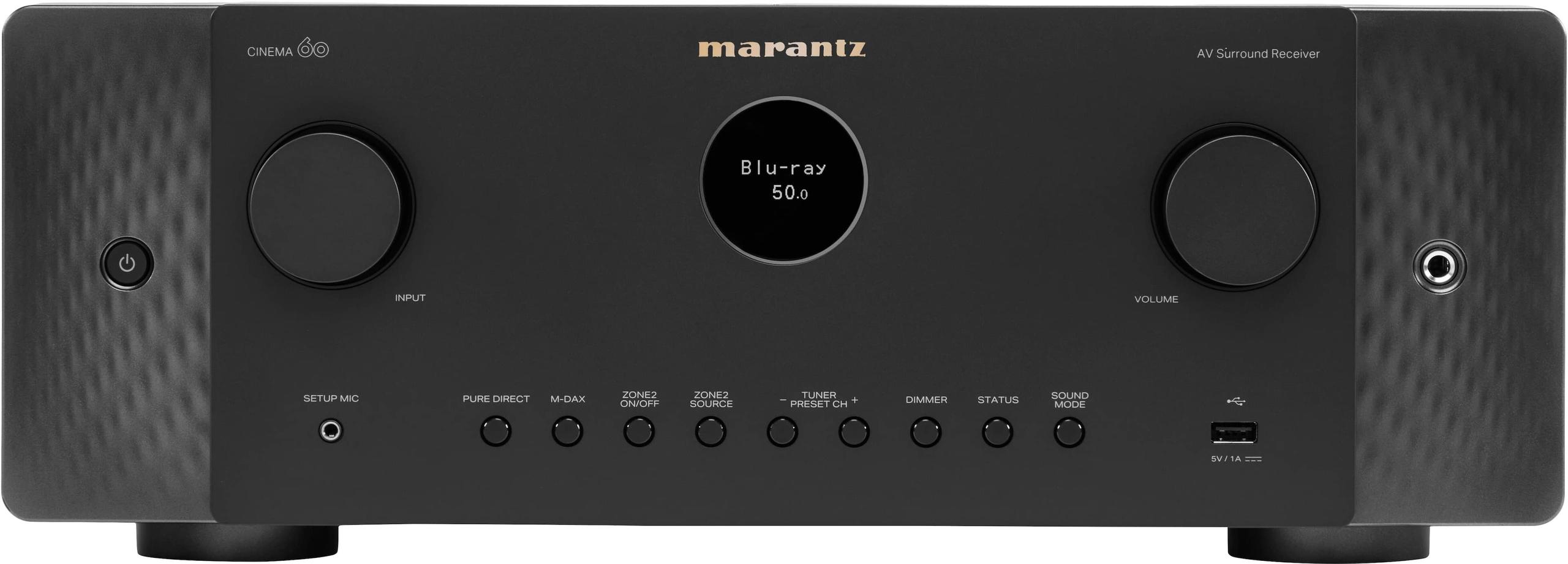
For Dolby Atmos installations, those extra channels on the Onkyo translate to more immersive audio. You can run a 7.1.2 setup (seven main speakers, one subwoofer, two height speakers) or even 5.1.4 (five main speakers, one sub, four height speakers). The Cinema 60 tops out at 5.1.2 configurations.
Why does this matter? Dolby Atmos works by placing sound objects in 3D space around your listening position. More speakers provide more precise localization and smoother panning effects. When a helicopter moves across the screen and overhead, additional height speakers make the movement more convincing and immersive.
However, most rooms don't accommodate nine speakers elegantly. If you're setting up in a living room rather than a dedicated theater, the Cinema 60's seven channels might be more practical. The key question becomes whether you have space and spousal approval for those extra speakers.
Both receivers support flexible speaker configurations through "amp assign" functions. You can redirect unused channels to power a second zone, bi-amp your main speakers (using two amplifier channels per speaker for potentially better performance), or add height speakers for 3D audio. This flexibility proves valuable as your system evolves.
Here's where these receivers diverge most significantly. The Onkyo TX-NR7100 includes both its proprietary AccuEQ system and Dirac Live room correction. Dirac Live represents one of the most sophisticated acoustic optimization systems available in consumer receivers.
Dirac Live measures your room using up to 13 microphone positions, then creates detailed frequency and phase corrections. It doesn't just adjust volume levels—it corrects timing delays, smooths frequency response irregularities, and can even improve stereo imaging. User reports consistently praise Dirac Live's ability to create cohesive, immersive soundstages with sublime panning effects.
The Marantz Cinema 60 uses Audyssey MultEQ XT, a capable but less advanced system. Audyssey focuses primarily on frequency response correction and doesn't address phase issues as comprehensively as Dirac Live. While Audyssey works well and includes useful features like Dynamic EQ (which adjusts bass and treble at lower volumes), it generally can't match Dirac Live's sophistication.
This difference becomes crucial in challenging acoustic environments. If your theater has hard surfaces, irregular dimensions, or suboptimal speaker placement, Dirac Live's advanced corrections can deliver dramatically better results. In well-treated rooms with good speaker positioning, the gap narrows but doesn't disappear.
Both receivers claim 100 watts per channel into 8-ohm loads with two channels driven. However, their approaches to amplification differ meaningfully.
The Onkyo TX-NR7100 employs Dynamic Audio Amplification with a high-current power supply designed for instantaneous power delivery during demanding passages. It's THX Select certified, meaning it passed rigorous testing for cinema-quality performance. Dynamic power ratings show 220 watts at 6 ohms and 250 watts at 4 ohms, suggesting strong performance with lower-impedance speakers.
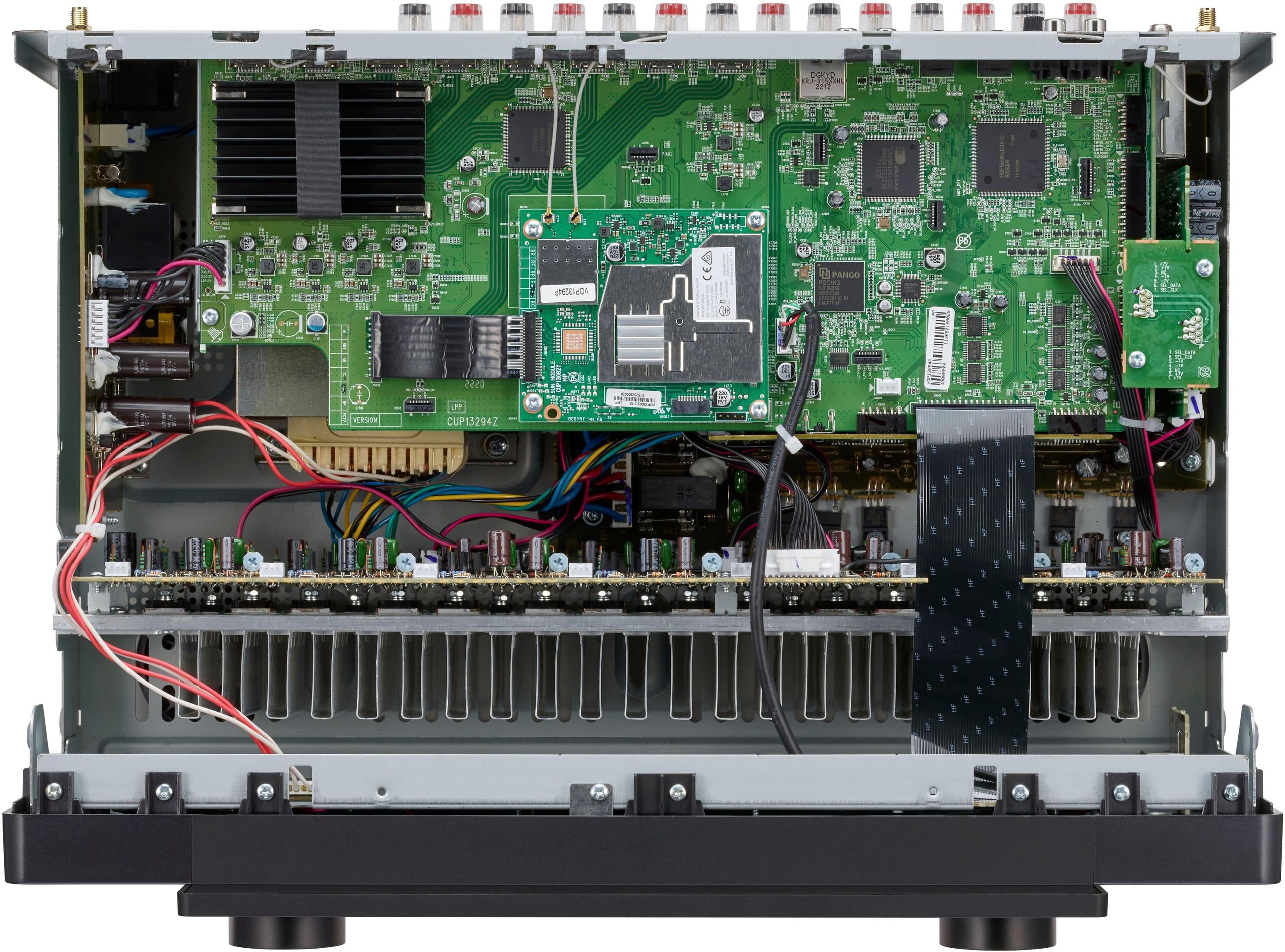
The Marantz Cinema 60 uses HDAM (Hyper Dynamic Amplifier Module) technology, Marantz's proprietary discrete amplifier design. HDAM aims for lower noise and wider bandwidth compared to integrated circuits. However, its 6-ohm rating of 140 watts suggests less current delivery capability than the Onkyo.
In practice, both receivers provide ample power for most home theater applications. The difference becomes apparent with demanding speakers or at high volumes. The Onkyo's higher current capability may provide better dynamic performance with power-hungry speakers, while the Marantz's HDAM design might offer more refined sound quality at moderate levels.
The Onkyo TX-NR7100 incorporates a 384kHz/32-bit DAC (Digital-to-Analog Converter), compared to the Cinema 60's 192kHz/24-bit implementation. Higher specifications don't automatically mean better sound, but they indicate more processing headroom and potentially lower distortion.
Both receivers support identical surround formats: Dolby Atmos, DTS:X, and IMAX Enhanced. The Onkyo adds THX post-processing modes, which can enhance dialog clarity and create more spacious soundstages. User feedback suggests THX processing brings noticeable improvements in staging and storytelling, though personal preference plays a role.
For music listening, the differences become more pronounced. The Marantz Cinema 60 follows the brand's tradition of prioritizing musicality over pure technical specifications. Reviews consistently praise Marantz receivers for stereo performance, describing them as more emotionally engaging with music content.
The Onkyo TX-NR7100, conversely, receives mixed reviews for two-channel audio. While it excels with movie soundtracks and multichannel content, some users find it less engaging with stereo music. This reflects different design philosophies—Onkyo prioritizing home theater dynamics versus Marantz emphasizing musical refinement.
Both receivers support HDMI 2.1 features essential for modern gaming and 8K content. However, their implementations differ in important ways.
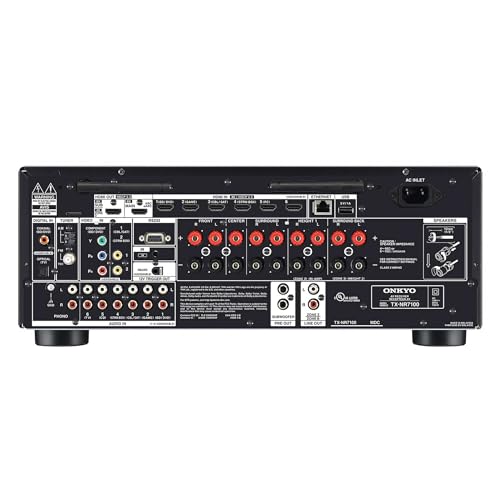
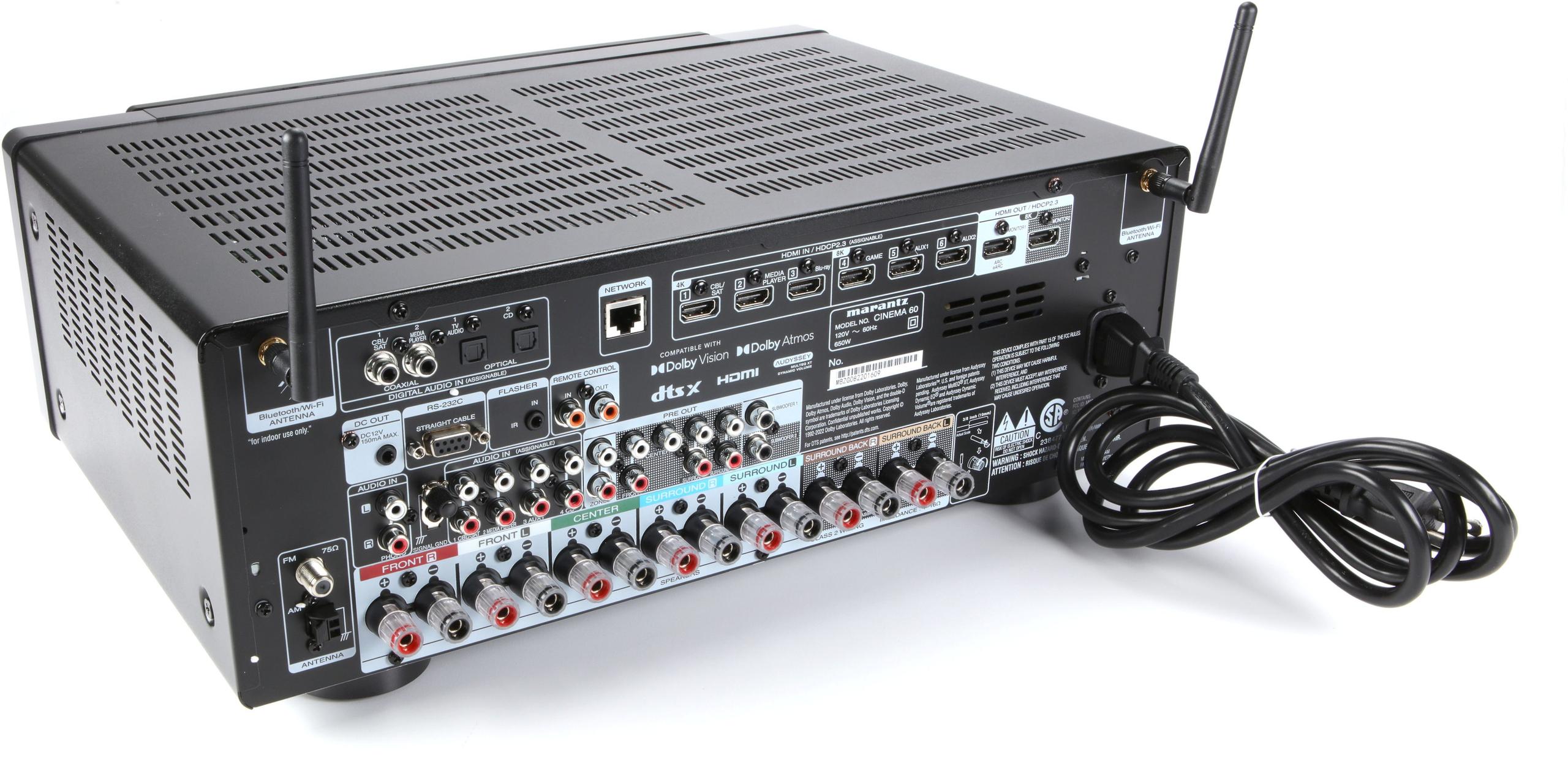
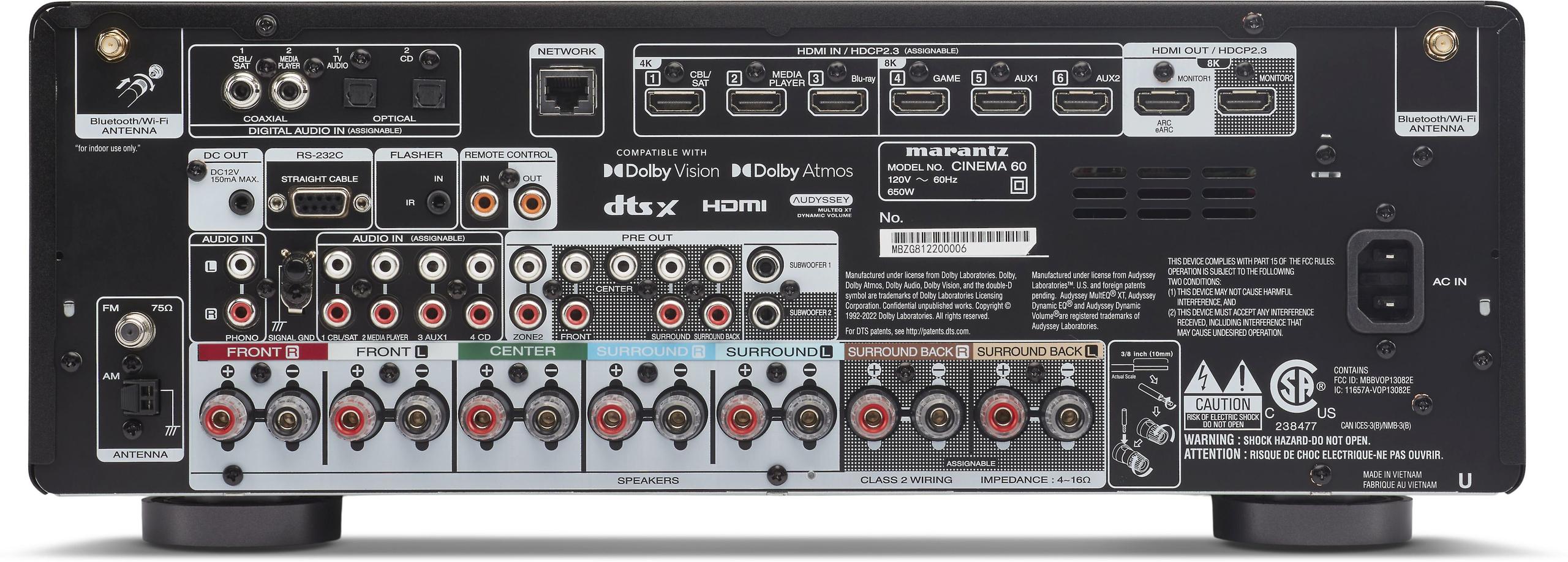
The Onkyo TX-NR7100 provides seven HDMI inputs (six rear-panel, one front-panel) with all supporting full 8K/60Hz and 4K/120Hz passthrough. This universal support means any HDMI input can handle your most demanding sources without restriction.
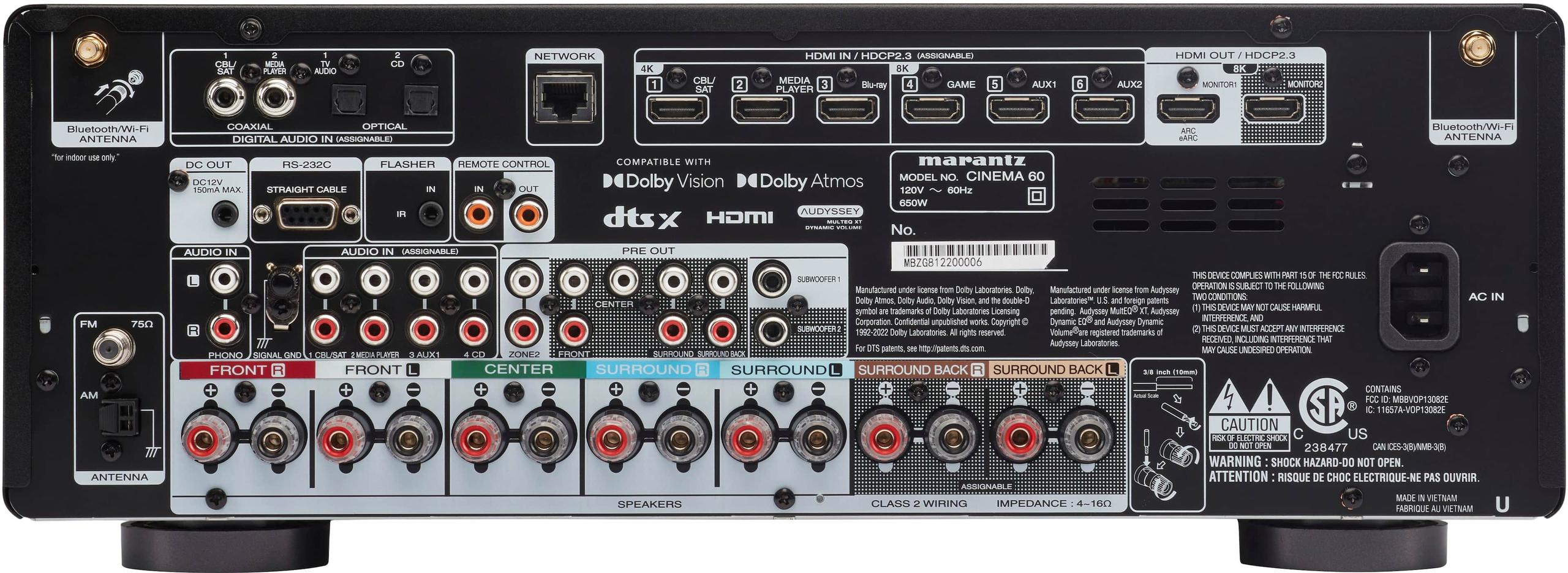
The Marantz Cinema 60 offers six HDMI inputs, but only three support 8K passthrough. For users with multiple 8K sources or next-generation gaming consoles requiring 4K/120Hz, this limitation could prove problematic.
Both receivers support Variable Refresh Rate (VRR), Auto Low Latency Mode (ALLM), and Quick Frame Transport (QFT)—features that reduce input lag and eliminate screen tearing for gaming. eARC support enables high-quality audio return from compatible TVs.
The Marantz provides three HDMI outputs compared to the Onkyo's two, enabling more complex display configurations. However, most users connect to a single display, making this less critical for typical installations.
Here's where the Marantz Cinema 60 takes a commanding lead. It includes 7.2 RCA pre-outputs for every channel, enabling connection to external amplifiers. This expandability proves crucial for users who might want to upgrade amplification later without replacing the entire receiver.
The Onkyo TX-NR7100 provides only 0.2 pre-outs—just the subwoofer outputs. This severely limits expansion options and forces complete receiver replacement if you want to add external amplification.
For many buyers, this difference matters enormously. External amplifiers can provide better power delivery, reduced heat generation, and improved sound quality. The ability to add a two-channel amplifier for front speakers or a multichannel amplifier for the entire system extends a receiver's useful life significantly.
If you're building a system that might grow over time, the Marantz's pre-outs represent substantial added value. If you plan to use only the receiver's internal amplification throughout its life, this advantage disappears.
The Marantz Cinema 60 includes HEOS built-in, Marantz's proprietary multi-room audio system. HEOS enables seamless music streaming throughout the home using compatible speakers and creates synchronized playback across multiple zones. For users already invested in HEOS products, this integration proves valuable.
The Onkyo TX-NR7100 supports standard streaming protocols like AirPlay 2 and Chromecast but lacks a proprietary ecosystem. However, it supports more advanced Bluetooth codecs including aptX and aptX HD, which provide better wireless audio quality than the basic SBC codec in the Marantz.
Both receivers support major streaming services and voice assistants. The practical difference lies in ecosystem integration—HEOS for Marantz users, superior Bluetooth for wireless headphone users favoring the Onkyo.
The Onkyo TX-NR7100 supports three zones with powered outputs for zones 2 and 3, plus HDMI output for zone 2. This enables independent audio and video distribution to different areas of your home.
The Marantz Cinema 60 provides two zones with pre-out capability. While fewer zones, the HEOS integration might provide superior multi-room functionality for compatible systems.
For most users, two zones prove adequate. The Onkyo's additional zone provides more flexibility but may not justify selection unless you specifically need three-zone capability.
Both receivers include smartphone apps for setup and control. The Onkyo Controller app enables Dirac Live calibration and provides quick access to key settings. The Marantz app integrates with HEOS functionality and generally receives positive reviews for usability.
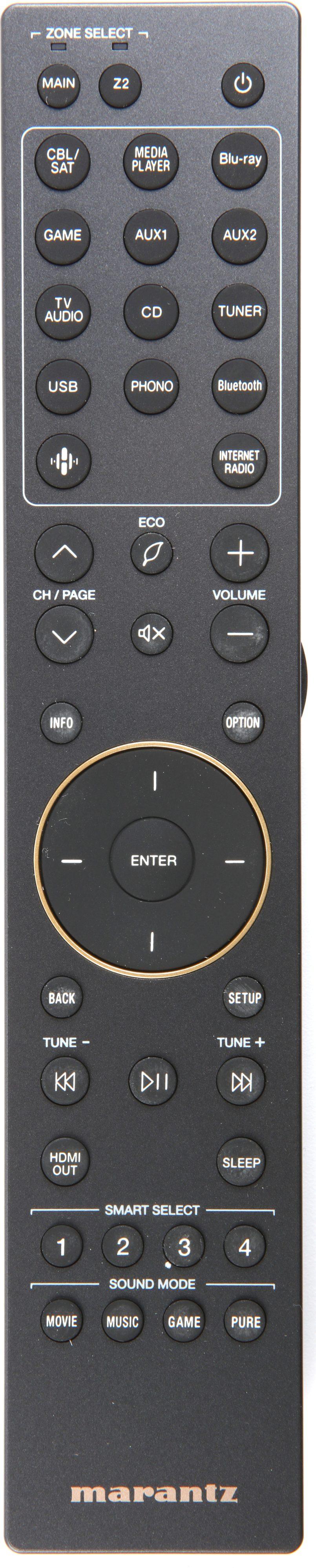
Remote control quality differs notably. The Onkyo's remote lacks backlighting, a significant oversight for a receiver in this price range. The Marantz typically provides better remote ergonomics, though specific implementations vary.
Based on extensive user feedback and professional reviews, distinct performance characteristics emerge. The Onkyo TX-NR7100 excels with movie soundtracks, delivering dynamic, precise surround performance. Dirac Live room correction consistently impresses users with its ability to create immersive soundstages and improve bass integration.
However, the Onkyo receives criticism for stereo music performance, with some users describing it as less emotionally engaging compared to similarly priced competitors. This reflects its optimization for home theater over music listening.
The Marantz Cinema 60 demonstrates more balanced performance across content types. While it may not match the Onkyo's peak home theater dynamics, it provides more refined music reproduction and generally smoother sound character.
Choose the Onkyo TX-NR7100 if you prioritize home theater performance above all else. Its 9.2 channels enable more sophisticated Dolby Atmos installations, while Dirac Live room correction can transform challenging acoustic spaces. The universal 8K HDMI support and THX certification add value for serious home theater enthusiasts.
The Onkyo makes sense for dedicated theater rooms, challenging acoustic environments, and users who rarely listen to stereo music. Its technical advantages in channel count and room correction justify selection despite limitations in expandability and music performance.
Select the Marantz Cinema 60 if you want a more well-rounded receiver that handles both movies and music competently. The 7.2 pre-outs enable significant system expansion, while HEOS integration provides superior multi-room capabilities. Better stereo performance makes it more suitable for combined music and movie systems.
The Marantz works better in living room installations, for users who listen to substantial amounts of music, and in situations where future system expansion seems likely. Its refinement and expandability justify the premium over the Onkyo's raw home theater focus.
At the time of writing, both receivers offer strong value propositions in the mid-range market. The Onkyo TX-NR7100 provides more advanced home theater features and room correction for roughly similar money. The Marantz Cinema 60 offers better overall refinement and expandability.
Neither choice disappoints if aligned with your priorities. The key lies in honest assessment of your needs, room constraints, and long-term plans. For pure home theater performance, the Onkyo's advantages in channel count and room correction prove compelling. For balanced performance and future flexibility, the Marantz's refinement and pre-outs justify its selection.
Both represent solid foundations for serious home theater systems that should provide years of satisfying performance. The decision ultimately comes down to whether you prioritize the Onkyo's home theater specialization or the Marantz's well-rounded capabilities and expansion potential.
| Onkyo TX-NR7100 | Marantz Cinema 60 |
|---|---|
| Channel Configuration - Determines maximum speaker setup complexity | |
| 9.2 channels (supports 7.1.2 or 5.1.4 Atmos) | 7.2 channels (supports up to 5.1.2 Atmos) |
| Power Output - Drives speaker performance and maximum volume | |
| 100W @ 8Ω, 220W @ 6Ω (high current capability) | 100W @ 8Ω, 140W @ 6Ω (refined HDAM amplification) |
| Room Correction - Optimizes sound for your specific space | |
| Dirac Live + AccuEQ (premium correction technology) | Audyssey MultEQ XT (solid but less advanced) |
| HDMI Inputs/Outputs - Connects modern sources and displays | |
| 7 inputs (all 8K/4K120Hz capable) / 2 outputs | 6 inputs (only 3 are 8K capable) / 3 outputs |
| Pre-amp Outputs - Enables external amplifier expansion | |
| 0.2 pre-outs (subwoofer only, very limited) | 7.2 pre-outs (full expansion capability) |
| DAC Quality - Affects digital audio conversion fidelity | |
| 384kHz/32-bit (higher spec processing) | 192kHz/24-bit (standard high-quality) |
| Bluetooth Audio Quality - Wireless headphone/speaker performance | |
| aptX, aptX HD, AAC, SBC (superior wireless quality) | SBC only (basic wireless audio) |
| Multi-room Audio - Whole home streaming capability | |
| 3 zones, standard streaming protocols | 2 zones, HEOS built-in ecosystem |
| Music Performance - Stereo listening quality based on reviews | |
| Good for movies, underwhelming for music | Excellent musicality and refinement |
| Best Use Case - Primary strength and ideal buyer | |
| Dedicated home theater with complex speaker setups | Balanced music/movie system with expansion plans |
The Onkyo TX-NR7100 offers 9.2 channels compared to the Marantz Cinema 60's 7.2 channels. This means the Onkyo can power two additional speakers, making it better for complex Dolby Atmos setups like 7.1.2 or 5.1.4 configurations. The Marantz Cinema 60 is limited to 5.1.2 Atmos layouts.
Both the Onkyo TX-NR7100 and Marantz Cinema 60 deliver 100 watts per channel into 8-ohm loads. However, the Onkyo TX-NR7100 provides 220 watts at 6 ohms versus the Marantz's 140 watts, indicating better performance with demanding speakers.
The Onkyo TX-NR7100 includes Dirac Live room correction, which is considered more advanced than the Marantz Cinema 60's Audyssey MultEQ XT system. Dirac Live offers more precise frequency and phase corrections, making the Onkyo TX-NR7100 better for challenging acoustic environments.
The Onkyo TX-NR7100 features 7 HDMI inputs with all supporting full 8K/4K120Hz passthrough. The Marantz Cinema 60 has 6 HDMI inputs, but only 3 support 8K capabilities. For users with multiple high-resolution sources, the Onkyo TX-NR7100 offers better connectivity.
The Marantz Cinema 60 is generally considered superior for stereo music playback, following Marantz's reputation for musical refinement. The Onkyo TX-NR7100 excels with movie soundtracks but receives mixed reviews for two-channel music performance.
The Marantz Cinema 60 includes full 7.2 pre-amp outputs, making it excellent for system expansion with external amplifiers. The Onkyo TX-NR7100 only offers subwoofer pre-outs (0.2), severely limiting expansion options.
The Onkyo TX-NR7100 supports advanced Bluetooth codecs including aptX and aptX HD for superior wireless audio quality. The Marantz Cinema 60 only supports basic SBC Bluetooth codec, making the Onkyo TX-NR7100 better for wireless headphones and speakers.
Yes, both the Onkyo TX-NR7100 and Marantz Cinema 60 fully support Dolby Atmos, DTS:X, and IMAX Enhanced formats. However, the Onkyo TX-NR7100 can utilize more speakers for these immersive formats due to its additional channels.
The Onkyo TX-NR7100 supports 3 zones with powered outputs, while the Marantz Cinema 60 offers 2 zones but includes HEOS built-in for seamless multi-room streaming. The Marantz Cinema 60 provides better integration if you already use HEOS products.
Both the Onkyo TX-NR7100 and Marantz Cinema 60 support HDMI 2.1 gaming features like Variable Refresh Rate (VRR) and Auto Low Latency Mode (ALLM). The Onkyo TX-NR7100 has an advantage with universal 8K support across all inputs for multiple gaming consoles.
The Onkyo TX-NR7100 is generally better for dedicated home theater use due to its 9.2 channels, superior Dirac Live room correction, and THX Select certification. The Marantz Cinema 60 works better for combined music and movie systems in living rooms.
Choose the Onkyo TX-NR7100 for maximum home theater performance with complex speaker setups and advanced room correction. Choose the Marantz Cinema 60 for better music performance, system expandability through pre-outs, and if you prefer Marantz's refined sound signature.
We've done our best to create useful and informative comparisons to help you decide what product to buy. Our research uses advanced automated methods to create this comparison and perfection is not possible - please contact us for corrections or questions. These are the sites we've researched in the creation of this article: crutchfield.com - prohifi.in - bestbuy.com - h-m-entertainment.com - audiosciencereview.com - crutchfield.ca - soundandvision.com - avsforum.com - avgadgets.com - youtube.com - onkyo.com - crutchfield.com - onkyo.com - accessories4less.com - klipsch.com - youtube.com - listenup.com - intl.onkyo-av.com - bestbuy.com - 420spotshop.com - support.onkyousa.com - hifireport.com - valueelectronics.com - abt.com - hometheaterhifi.com - audioadvisor.com - snapav.com - digitalcinema.com.au - marantz.com - bestbuy.com - audioadvice.com - crutchfield.com

Privacy Policy
Terms and Conditions - Affiliate Policy
Home Security
© Copyright 2008-2026.
11816 Inwood Rd #1211, Dallas, TX 75244