

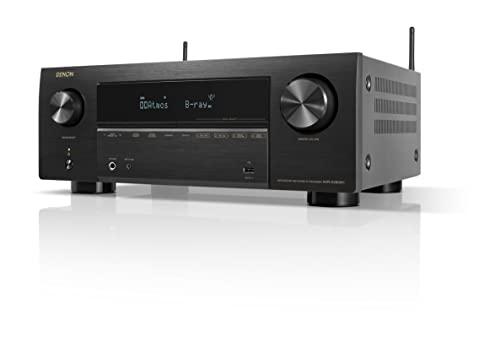
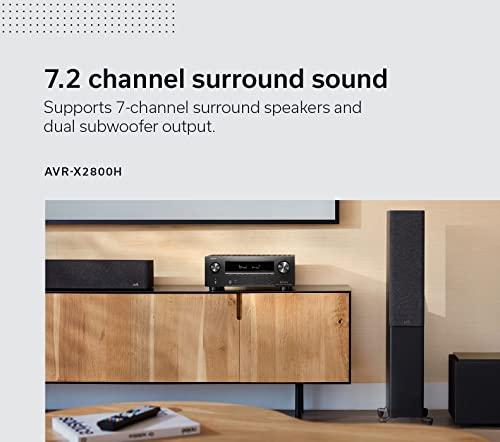
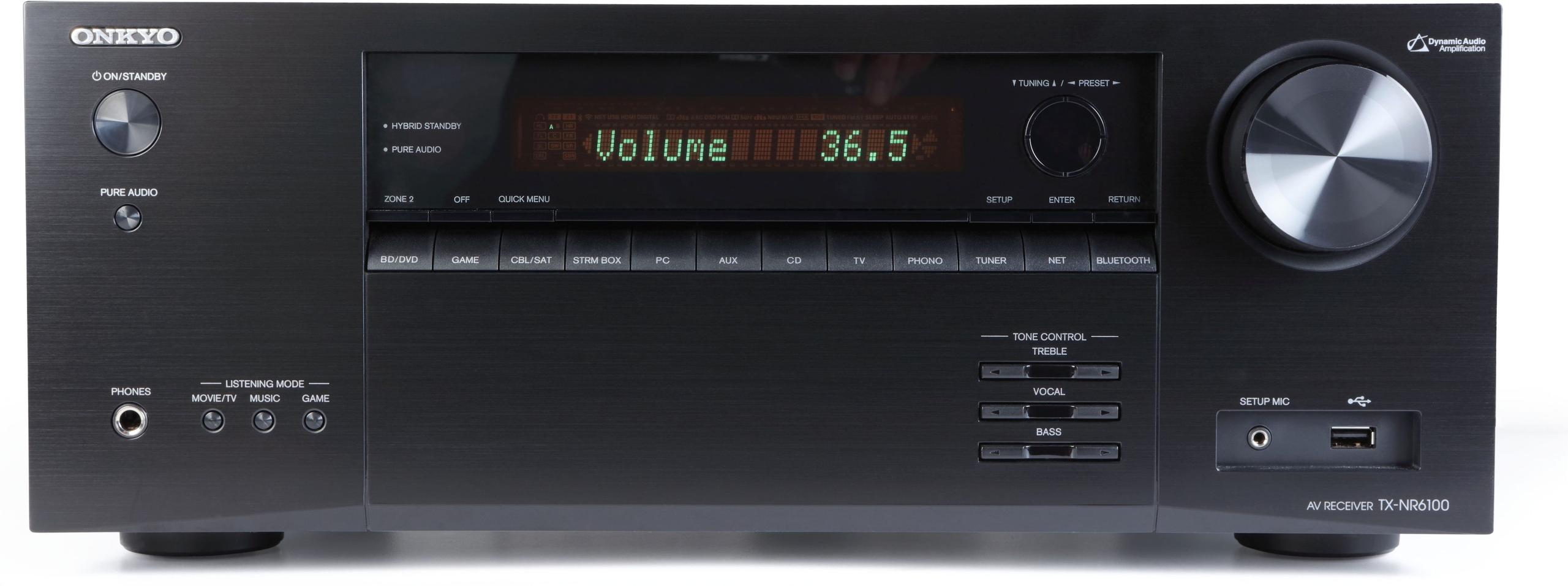

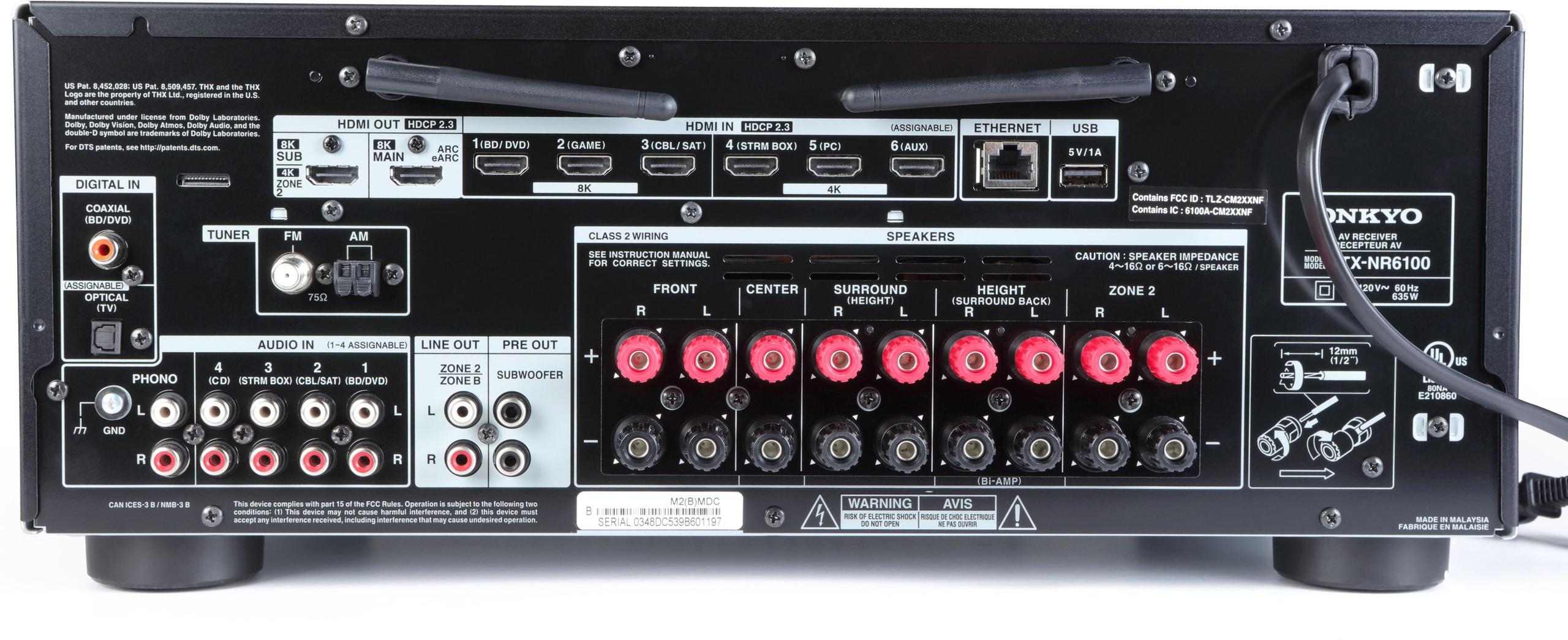
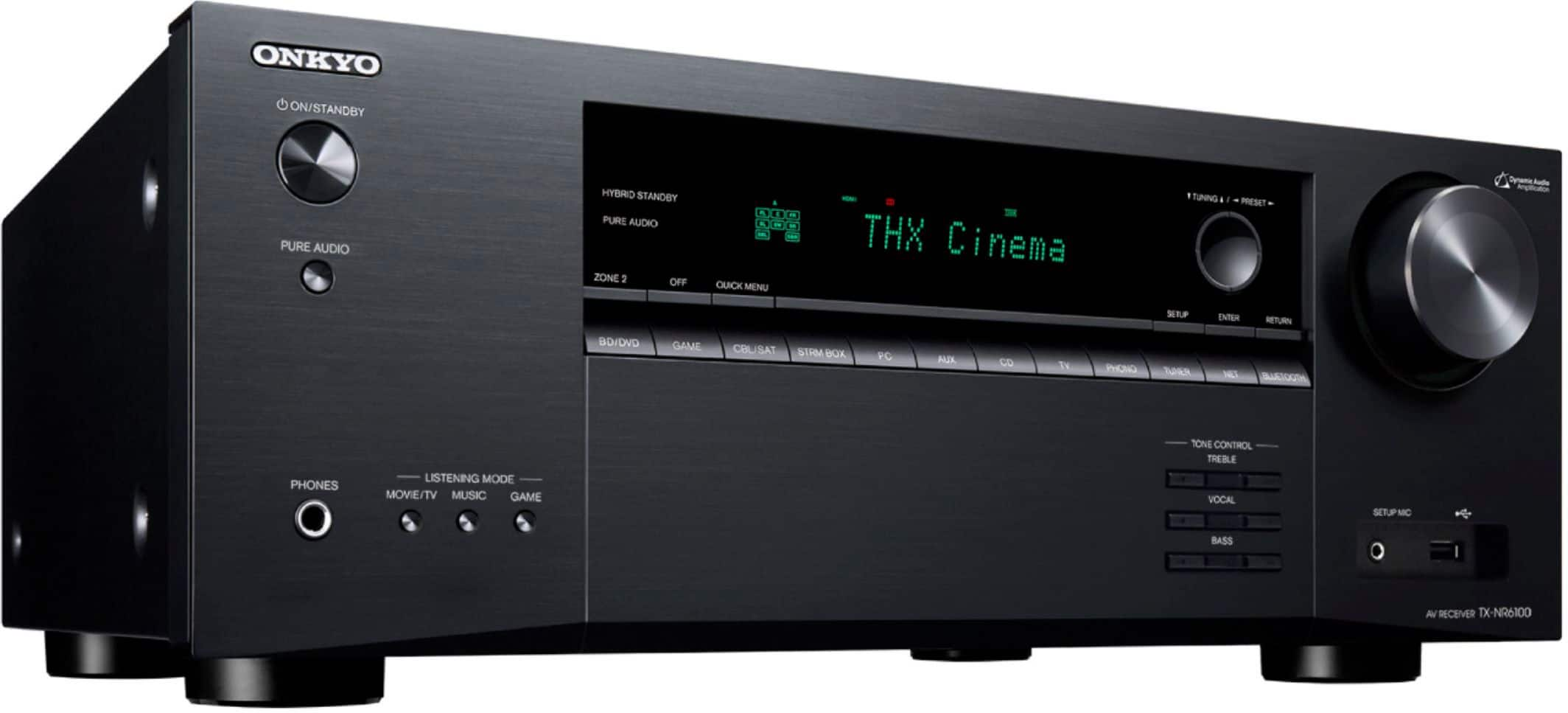
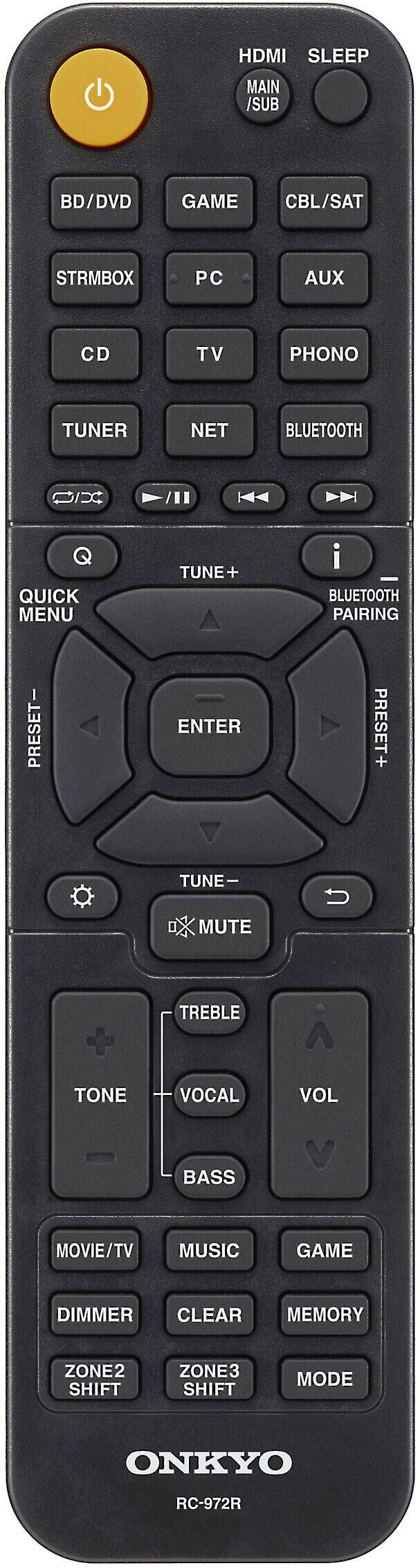
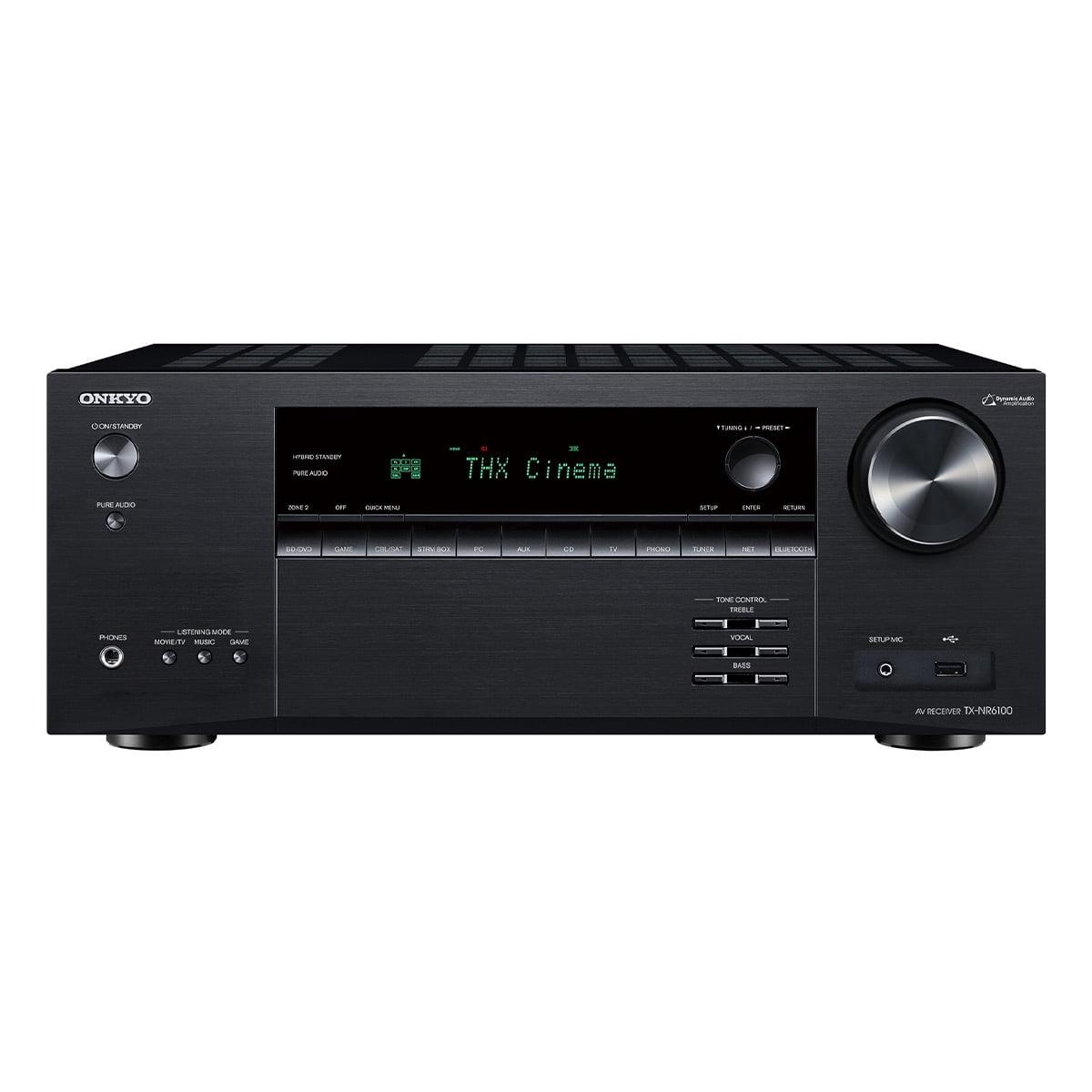
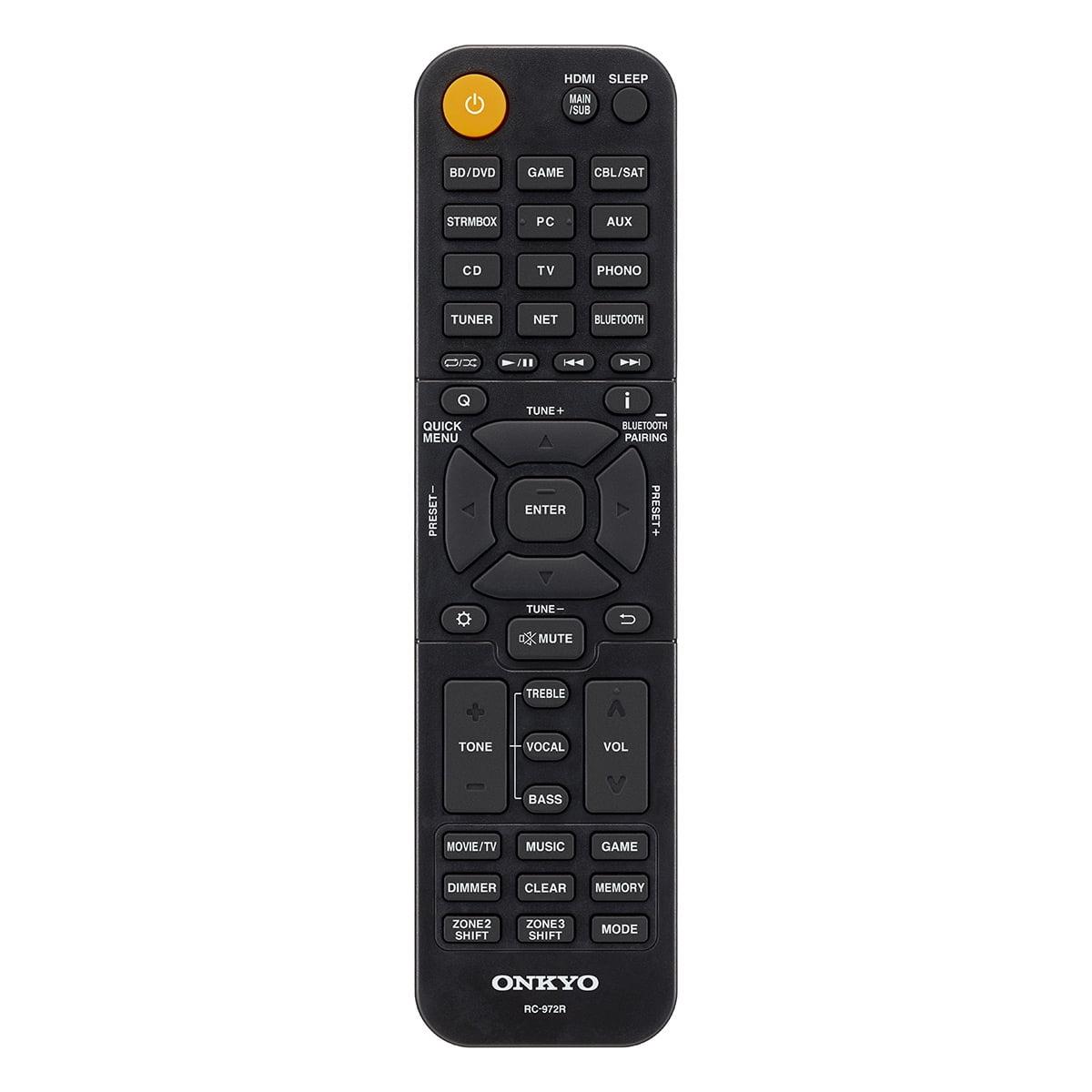
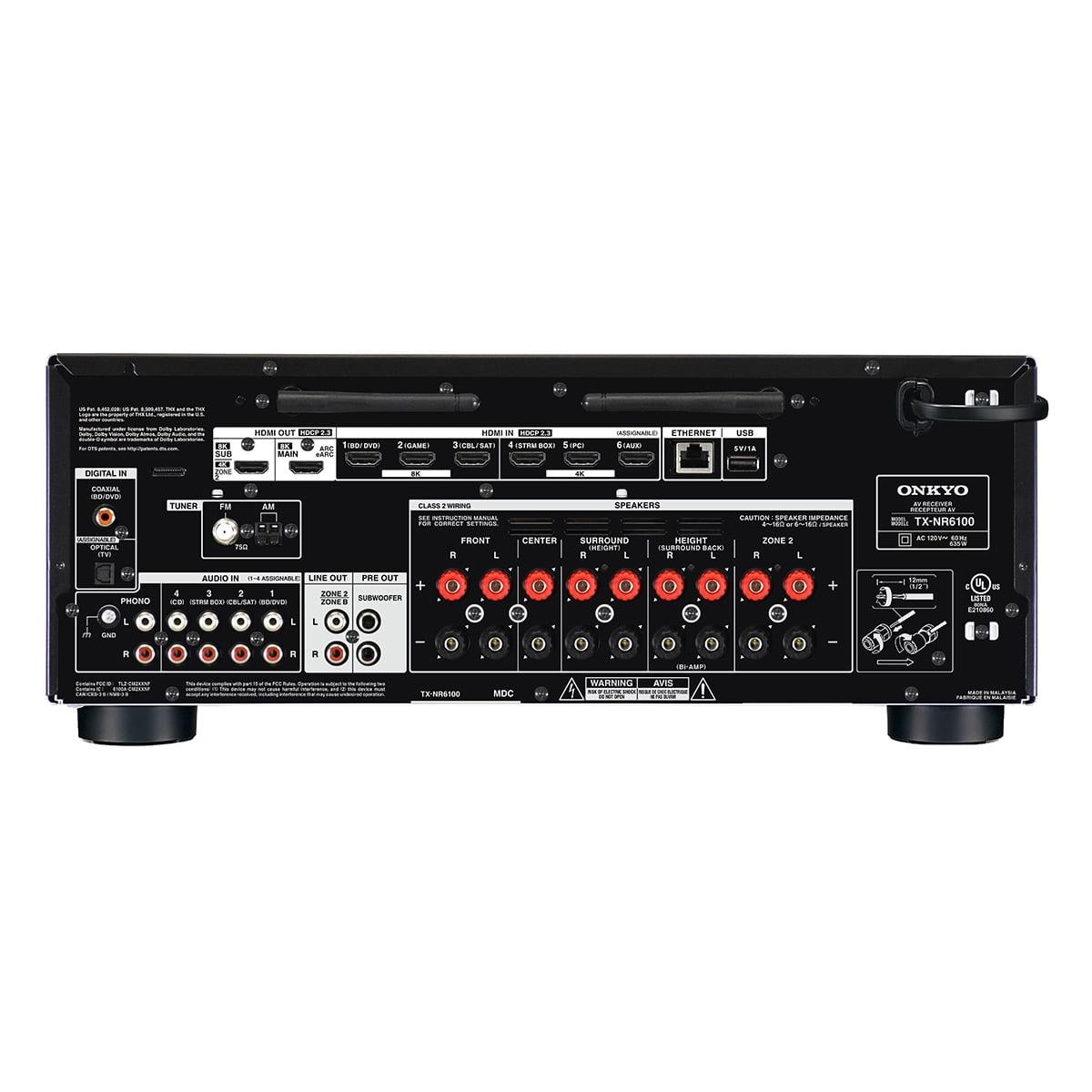
When you're building a home theater system, the AV receiver sits at the heart of everything. It's the component that takes all your video sources—your streaming devices, gaming consoles, and Blu-ray players—and routes them to your TV while processing the audio for your surround sound speakers. In the 7.2 channel category, you're looking at receivers that can power a full 7.1 surround setup or handle modern object-based audio formats like Dolby Atmos in a 5.1.2 configuration (that's five main speakers, one subwoofer, and two height speakers).
Two standout options in this space are the Denon AVR-X2800H, released in 2022, and the Onkyo TX-NR6100, which hit the market in 2021. At the time of writing, these receivers are priced competitively in the mid-range market, with the Onkyo typically running about $80-100 less than the Denon. Both represent excellent value, but they take distinctly different approaches to achieving great home theater performance.
Let's start with the most fundamental aspect—how these receivers actually power your speakers. The Onkyo TX-NR6100 delivers 100 watts per channel into 8-ohm speakers (the most common type), while the Denon AVR-X2800H provides 95 watts per channel under the same conditions. On paper, that 5-watt difference is negligible—you'd need to double the power to get a noticeable volume increase.
What's more interesting is how they achieve this power. The Denon uses what's called "discrete amplification," meaning each channel has its own dedicated amplifier circuit rather than sharing components. This typically results in better channel separation and cleaner sound, especially when multiple channels are working hard during intense movie scenes.
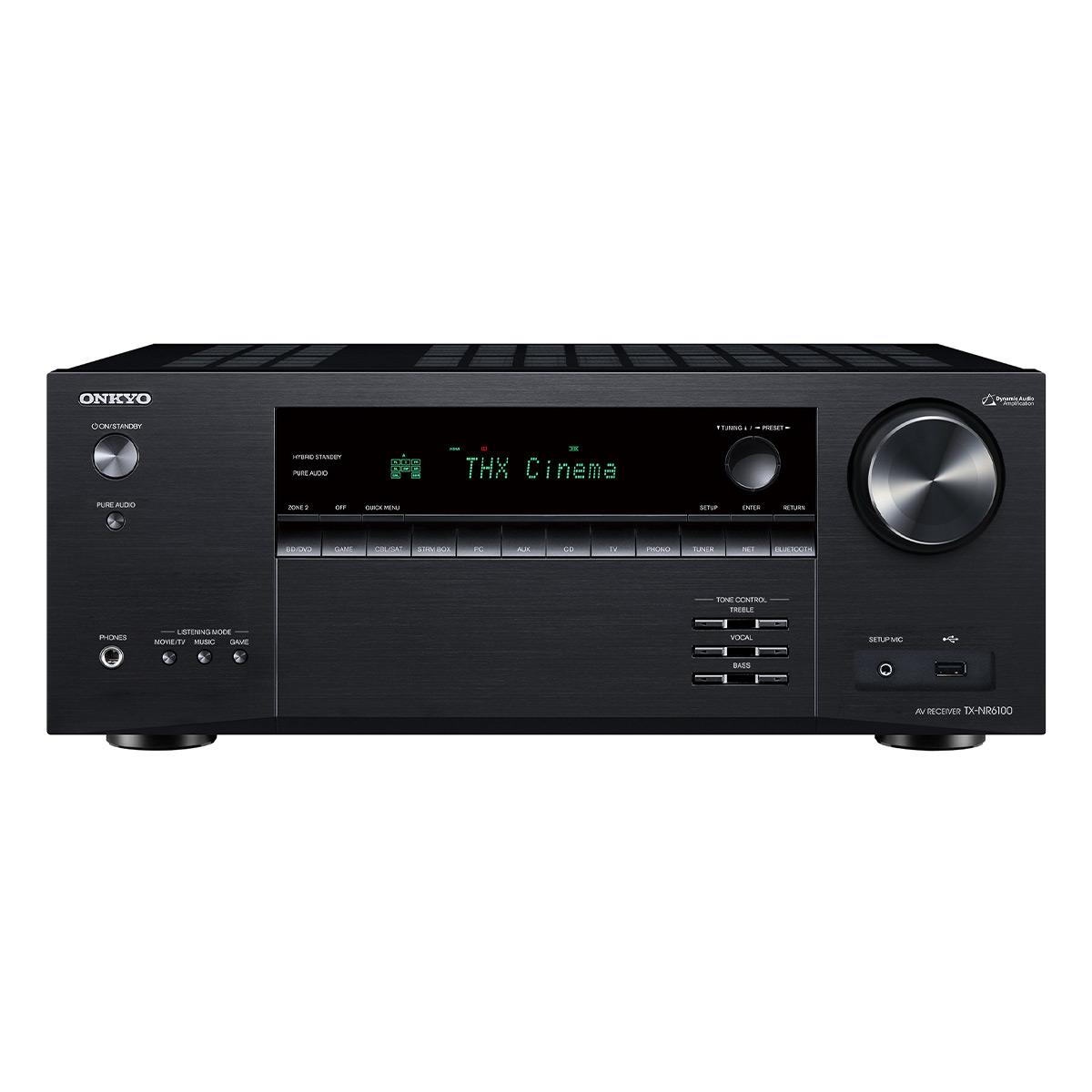
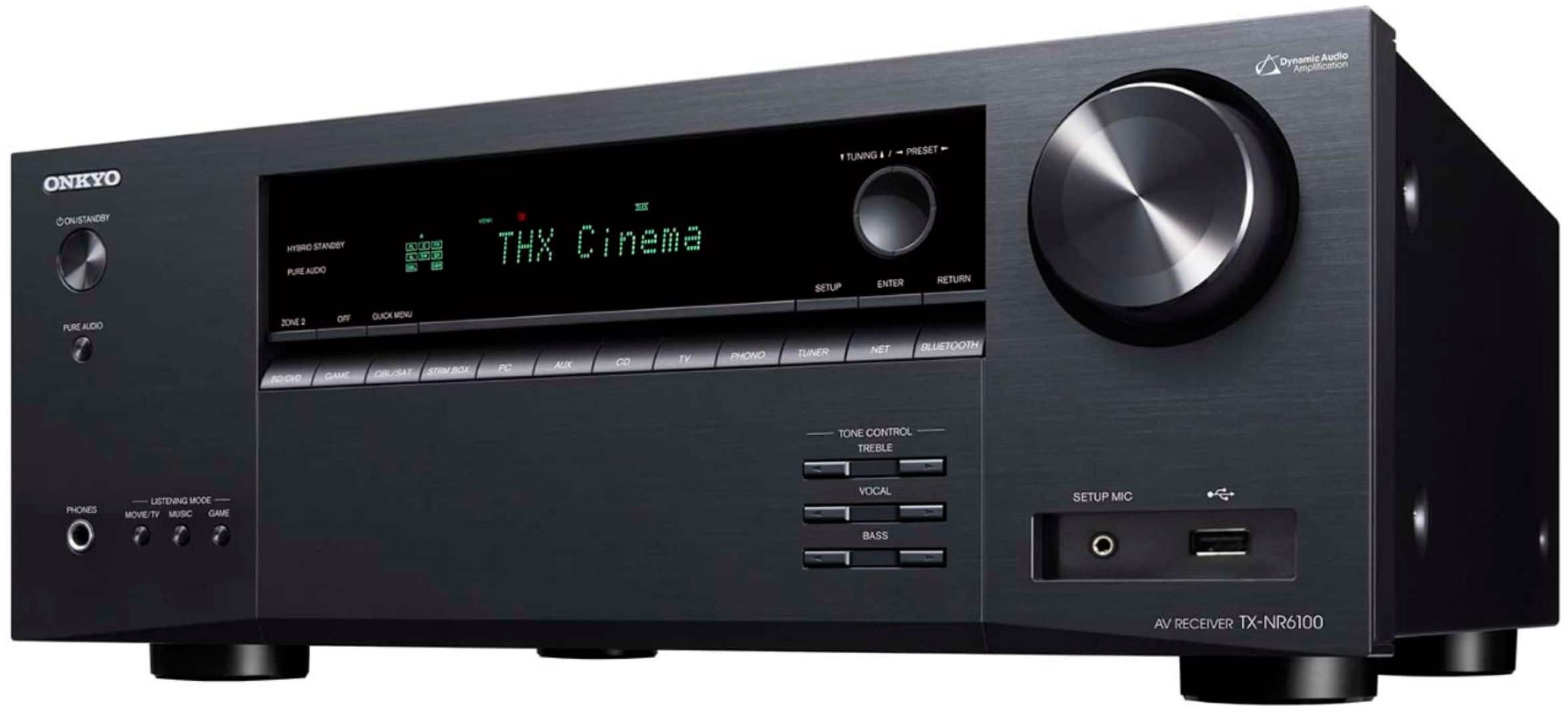
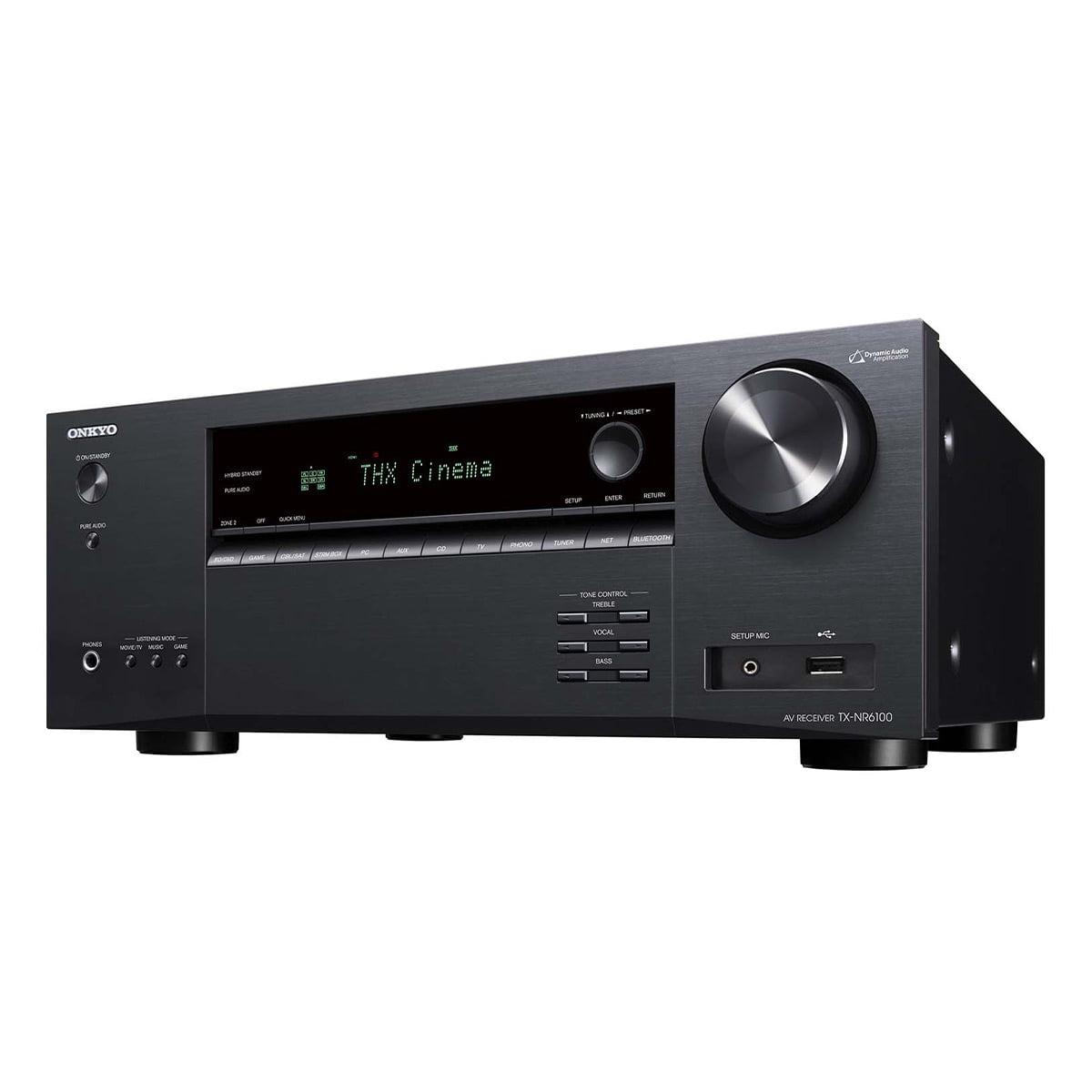
The Onkyo, meanwhile, carries THX Select certification—a designation that means it meets the strict performance standards set by Lucasfilm's THX division. This certification isn't just marketing fluff; it ensures the receiver can reproduce reference-level sound (the same volume and quality you'd experience in a commercial movie theater) in rooms where you're sitting about 12 feet from the screen.
Here's where things get really interesting. The Denon AVR-X2800H features 32-bit/192kHz Texas Instruments DACs (digital-to-analog converters) on every single channel. Think of DACs as translators that convert the digital audio from your streaming service or Blu-ray into the analog signals your speakers actually use. Higher bit-depth and sampling rates generally mean more accurate sound reproduction, and having identical high-quality DACs on all channels ensures perfect matching between your front, surround, and height speakers.
The Onkyo TX-NR6100 uses 24-bit/192kHz DACs, which are still excellent but not quite as advanced. However, Onkyo includes their Vector Linear Shaping Circuitry (VLSC) on the front channels—a technology that specifically targets and eliminates the digital noise that can creep into audio conversion. This is particularly important for the front left, center, and right speakers, which handle most of the dialogue and main soundtrack elements.
Both receivers support all the modern surround sound formats you'd want: Dolby Atmos (object-based surround that can place sounds anywhere in 3D space), DTS:X (a competing format that does similar things), and all the traditional formats like DTS-HD Master Audio and Dolby TrueHD that you'll find on Blu-rays.
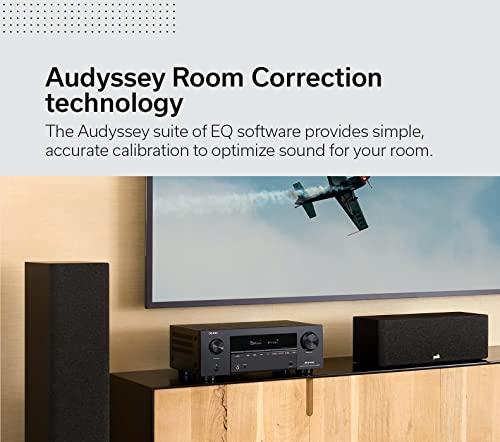
Unless you have a perfectly acoustically designed room (and most of us don't), your speakers will sound different than intended due to room reflections, furniture absorption, and other factors. Both receivers include sophisticated room correction systems to address this.
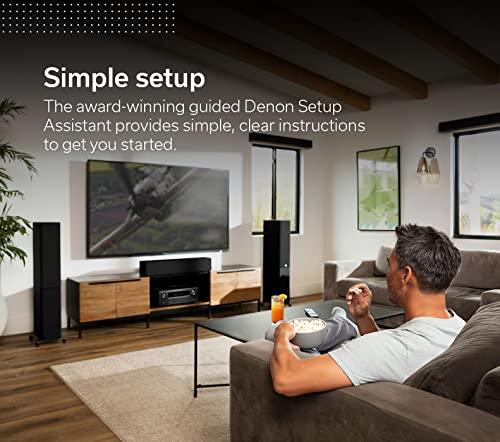
The Denon uses Audyssey MultEQ XT, which takes measurements from up to eight different listening positions using an included microphone. It then creates a comprehensive picture of how your room affects sound and applies correction to flatten the frequency response. Audyssey is widely regarded as one of the most effective room correction systems available, and the Denon even supports the MultEQ Editor app, which lets you fine-tune the correction if you want to get really deep into customization.
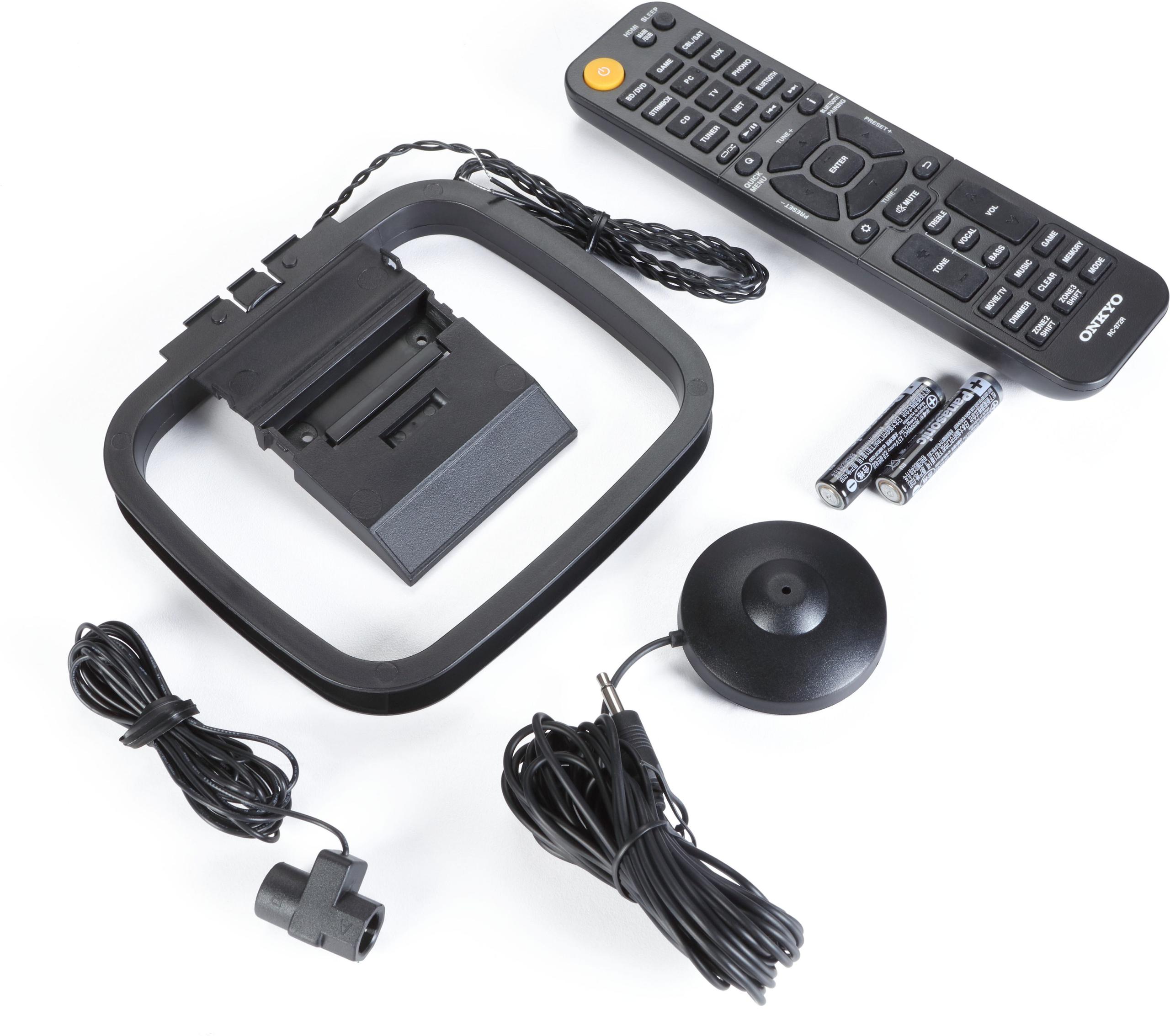
The Onkyo includes AccuEQ calibration with a special AccuReflex feature designed specifically for Dolby Atmos setups. While generally considered less sophisticated than Audyssey, it's still quite effective and notably easier to use for those who prefer a "set it and forget it" approach.
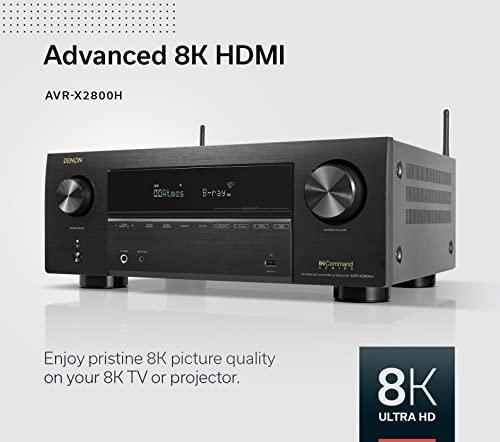
Both receivers are well-prepared for current and future video standards, but with some important differences. The Denon AVR-X2800H and Onkyo TX-NR6100 both support 8K/60Hz and 4K/120Hz pass-through on three of their six HDMI inputs—perfect for connecting the PlayStation 5, Xbox Series X, and other high-performance devices that can actually output these demanding formats.
Where the Denon pulls ahead is in 8K upscaling. This feature takes lower-resolution content (like regular 4K or even 1080p) and intelligently upscales it to 8K resolution. While true 8K content is still rare, this upscaling can provide immediate benefits if you have an 8K TV, making your current library look sharper and more detailed.
High Dynamic Range (HDR) makes a huge difference in video quality, providing brighter highlights, deeper blacks, and more vibrant colors. Both receivers support the major HDR formats: HDR10 (the baseline standard), Dolby Vision (which uses dynamic metadata to optimize each scene), and HLG (Hybrid Log Gamma, mainly used for broadcast content).
The key difference is that the Denon also supports HDR10+, Samsung's competing format to Dolby Vision. While not as widely adopted as Dolby Vision, HDR10+ is increasingly used by streaming services like Amazon Prime Video and Paramount+. Having support for all formats means you won't miss out on the best possible picture quality from any source.
Modern gaming demands special consideration, and both receivers deliver. They support Variable Refresh Rate (VRR), which eliminates screen tearing; Auto Low Latency Mode (ALLM), which automatically switches to the lowest-lag video processing when it detects a game console; and Quick Frame Transport (QFT), which reduces processing delays. These features work together to provide the smoothest, most responsive gaming experience possible.
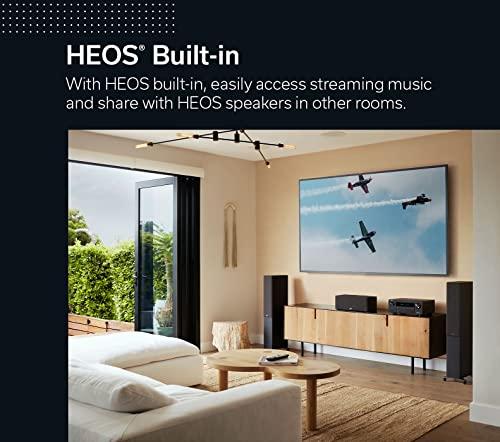
The Denon AVR-X2800H comes with HEOS built-in, Denon's multi-room audio platform. This lets you stream music wirelessly throughout your home if you have other HEOS-compatible speakers. It also supports AirPlay 2 for seamless streaming from Apple devices and works with major voice assistants including Alexa, Google Assistant, and Siri.
The Onkyo TX-NR6100 takes a more flexible approach to multi-room audio, supporting multiple platforms including Chromecast built-in, AirPlay 2, DTS Play-Fi, and even Works with Sonos. This broader platform support means you're more likely to find compatibility with whatever multi-room ecosystem you might already have or choose in the future.
Here's where the Onkyo really shines. While both receivers can power speakers in a second zone (like a patio or bedroom), the Onkyo goes further by including HDMI Zone 2 output. This means you can send different video content to a second TV while the main zone is watching something else entirely. The Denon only supports audio in Zone 2, which is a significant limitation if you want true multi-room entertainment.
Based on extensive research into user reviews and professional evaluations, some clear patterns emerge. The Denon AVR-X2800H consistently receives praise for its refined, articulate sound quality. Users describe dialogue as particularly clear and well-defined, with a sound signature that's engaging without being fatiguing. The Audyssey room correction receives frequent mentions as being especially effective at taming problem rooms.
The Onkyo TX-NR6100 earns recognition for its authoritative, powerful sound that lives up to its THX certification. Users often note that it sounds more "cinematic" in action sequences, with excellent dynamic range that makes explosions feel impactful without overwhelming quieter dialogue moments. The build quality also receives consistent praise, with many noting that it runs cooler than previous Onkyo models while maintaining their reputation for robust construction.
While both receivers excel with movies, their music performance shows some differences. The Denon tends to present music with excellent imaging and a clean, detailed midrange that works particularly well for acoustic and vocal-heavy content. Its streaming capabilities also get high marks, with users praising the stability and sound quality of services like Spotify Connect.
The Onkyo brings its THX tuning to music as well, providing a more traditional hi-fi presentation that many users find satisfying for rock, classical, and other dynamic genres. Its slightly warmer tonal balance can be particularly pleasing for longer listening sessions.
The Onkyo TX-NR6100 is physically larger and heavier, which typically indicates more robust power supply components and better heat management. At the same time, it draws more power from the wall—635W in operation compared to the Denon's 500W. This isn't necessarily bad; it often means the power supply has more headroom for demanding passages.
The Denon takes a more efficient approach, packing impressive performance into a more compact chassis. This makes it easier to fit into entertainment centers, but also means it relies more heavily on intelligent design rather than brute-force engineering.
Both receivers have established reputations for reliability, though Onkyo went through some corporate changes in recent years that initially raised concerns about support. However, the TX-NR6100 represents their return to form, and user reports suggest these concerns have been largely addressed.
At the time of writing, the price difference between these receivers is relatively modest—typically $80-100 in favor of the Onkyo. This makes the value calculation particularly interesting.
The Onkyo TX-NR6100 offers compelling value with its THX certification, HDMI Zone 2 capability, and robust build quality at the lower price point. For users who prioritize multi-zone video distribution or want the assurance of THX performance standards, it's an excellent choice.
The Denon AVR-X2800H, while slightly more expensive, justifies its premium with superior audio processing, comprehensive smart home integration, and future-proofing features like 8K upscaling and HDR10+ support. The advanced DACs and Audyssey room correction also provide tangible benefits that many users will appreciate.
You're building a traditional home theater where audio performance and multi-zone capabilities are top priorities. The THX certification provides assurance that you're getting reference-quality performance, while the HDMI Zone 2 output makes it perfect for homes where you want independent video sources in multiple rooms. It's also the better choice if you prefer multiple multi-room platform options or want to integrate with an existing Sonos ecosystem.
The Onkyo particularly excels in dedicated theater rooms where you can take advantage of its powerful, cinematic sound signature. Its robust build quality also makes it ideal for users who plan to push their systems hard with demanding content.
You value cutting-edge audio processing and want a receiver that integrates seamlessly with modern smart home ecosystems. The superior DAC technology and sophisticated room correction make it excellent for users who care deeply about audio fidelity, while the comprehensive voice assistant support and streaming capabilities make it perfect for tech-forward households.
The Denon is particularly well-suited for mixed-use spaces where the receiver needs to excel at both movies and music, and where the more compact size is advantageous. Its 8K upscaling capability also provides immediate benefits for users with 8K displays.
Both the Denon AVR-X2800H and Onkyo TX-NR6100 represent excellent choices in the competitive 7.2 channel receiver market. The Onkyo delivers outstanding value with its THX certification, multi-zone video capabilities, and traditional hi-fi approach at a slightly lower price. The Denon commands its modest premium through superior digital processing, advanced smart features, and comprehensive future-proofing.
Your choice ultimately comes down to priorities: if you need robust multi-zone capabilities and prefer proven reference-standard performance, the Onkyo is hard to beat. If you want the latest in audio processing technology with seamless smart home integration, the Denon is worth the extra investment.
Either way, you're getting a receiver that will serve as the foundation of an excellent home theater system for years to come. Both have the video capabilities to handle whatever displays and sources you throw at them, and the audio processing to make your favorite movies and music sound their absolute best.
| Denon AVR-X2800H | Onkyo TX-NR6100 |
|---|---|
| Power Output - Drives speaker volume and dynamics | |
| 95W per channel (8Ω, 2ch driven) | 100W per channel (8Ω, 2ch driven) |
| THX Certification - Ensures reference theater performance | |
| Not THX certified | THX Select certified |
| DAC Quality - Controls audio fidelity and channel matching | |
| 32-bit/192kHz TI DACs (all channels) | 24-bit/192kHz DACs |
| Room Correction - Optimizes sound for your space | |
| Audyssey MultEQ XT (8 positions) | AccuEQ with AccuReflex |
| 8K Video Features - Future-proofs your setup | |
| 8K upscaling + 8K/60Hz passthrough | 8K/60Hz passthrough only |
| HDR Support - Enhances video quality | |
| HDR10, HDR10+, Dolby Vision, HLG | HDR10, Dolby Vision, HLG (no HDR10+) |
| HDMI 2.1 Inputs - For gaming and 8K sources | |
| 3 of 6 inputs support 4K/120Hz | 3 of 6 inputs support 4K/120Hz |
| Multi-Zone Video - Send different content to second TV | |
| Zone 2 audio only | Zone 2 with HDMI video output |
| Smart Home Integration - Voice control and automation | |
| Alexa, Google Assistant, Siri support | Limited voice assistant support |
| Multi-Room Audio Platforms - Wireless streaming options | |
| HEOS, AirPlay 2 | Chromecast, AirPlay 2, DTS Play-Fi, Works with Sonos |
| Physical Size - Important for cabinet fitting | |
| Compact: 434×341×167mm, 9.5kg | Larger: 435×380×174mm, 9.8kg |
| Power Consumption - Running costs and heat generation | |
| 500W operating | 635W operating |
| Speaker Impedance Support - Compatibility with different speakers | |
| 6-16 ohms | 4-16 ohms (more flexible) |
Both the Denon AVR-X2800H and Onkyo TX-NR6100 deliver excellent sound quality, but with different strengths. The Denon features superior 32-bit DACs on all channels and refined audio processing that provides clear, articulate dialogue and detailed soundstaging. The Onkyo TX-NR6100 carries THX Select certification, ensuring reference-level theater performance with powerful, cinematic dynamics that excel during action sequences.
The key difference is their approach to performance. The Denon AVR-X2800H focuses on advanced digital audio processing, smart home integration, and 8K upscaling capabilities. The Onkyo TX-NR6100 emphasizes THX-certified reference performance, robust multi-zone video capabilities, and broader multi-room platform support at a lower price point.
Both receivers handle gaming equally well with 4K/120Hz support, VRR, ALLM, and low-latency processing on their HDMI 2.1 inputs. The Denon offers slight advantages with 8K upscaling for future games, while the Onkyo provides the same core gaming features. Either receiver will deliver smooth, responsive gaming performance.
Yes, both the Denon AVR-X2800H and Onkyo TX-NR6100 fully support Dolby Atmos, DTS:X, and all current surround sound formats. Both can handle 5.1.2 Dolby Atmos configurations with height speakers for immersive three-dimensional audio in your home theater setup.
The Onkyo TX-NR6100 typically costs less while offering THX certification and HDMI Zone 2 video output, making it excellent value for traditional home theater setups. The Denon costs slightly more but provides advanced audio processing, smart home features, and future-proofing capabilities that justify the premium for tech-focused users.
Both receivers support 8K/60Hz passthrough on three HDMI inputs, but the Denon AVR-X2800H goes further with 8K upscaling on all inputs. This means the Denon can improve the appearance of 4K content on 8K TVs today, while both will handle true 8K sources when they become more common.
The Onkyo TX-NR6100 supports more platforms including Chromecast, DTS Play-Fi, and Works with Sonos, making it more flexible for existing multi-room setups. The Denon uses HEOS built-in, which works well but is more limited. For multi-room video, the Onkyo clearly wins with its HDMI Zone 2 output.
The Denon AVR-X2800H uses Audyssey MultEQ XT, which is widely considered more sophisticated and effective at correcting room acoustics. The Onkyo includes AccuEQ calibration, which is simpler to use but less comprehensive. For problem rooms or audiophile listening, the Denon's Audyssey system provides better results.
The Denon AVR-X2800H offers comprehensive smart home integration with Alexa, Google Assistant, and Siri support. The Onkyo TX-NR6100 has limited voice assistant compatibility. If smart home integration is important, the Denon is the clear choice for seamless automation and voice control.
Yes, the Denon AVR-X2800H supports HDR10+ in addition to HDR10, Dolby Vision, and HLG, providing broader streaming service compatibility. The Onkyo TX-NR6100 lacks HDR10+ support, which could limit optimal picture quality from certain streaming platforms like Amazon Prime Video.
Both receivers have solid reputations for reliability. The Onkyo TX-NR6100 is larger and heavier with robust power supply components, while the Denon uses efficient design in a more compact chassis. The Onkyo draws more power but may have better thermal management, while the Denon focuses on premium component selection.
For larger rooms or demanding speakers, the Onkyo TX-NR6100's THX certification and slightly higher power output provide assurance of reference performance. The Denon AVR-X2800H excels in medium-sized rooms where its refined processing and room correction can optimize performance. Both handle 4-16 ohm speakers, but the Onkyo supports lower impedance speakers for more flexibility.
We've done our best to create useful and informative comparisons to help you decide what product to buy. Our research uses advanced automated methods to create this comparison and perfection is not possible - please contact us for corrections or questions. These are the sites we've researched in the creation of this article: theaudiotailor.com.au - ecoustics.com - simplehomecinema.com - whathifi.com - audioadvisor.com - youtube.com - bestbuy.com - e-catalog.com - crutchfield.com - avsforum.com - crutchfield.com - whathifi.com - richersounds.com - bestbuy.com - accessories4less.com - projectorscreen.com - adiglobaldistribution.us - youtube.com - bestbuy.com - bestbuy.com - sweetwater.com - bestbuy.com - avsforum.com - crutchfield.com - homecinemachoice.com - camelcamelcamel.com - onkyo.com - audioadvice.com - assets.onkyo-av.com - intl.onkyo-av.com - audioadvice.com - audiosciencereview.com - onkyo.com

Privacy Policy
Terms and Conditions - Affiliate Policy
Home Security
© Copyright 2008-2026.
11816 Inwood Rd #1211, Dallas, TX 75244