


When you're building a serious home theater, the AV receiver sits at the heart of everything. It's the component that takes all your sources—your Blu-ray player, gaming console, streaming device—and transforms them into the immersive audio and video experience that makes movie night special. But with receivers ranging from a few hundred to several thousand dollars, picking the right one can feel overwhelming.
Today we're comparing two receivers that represent very different approaches to home theater: the Onkyo TX-NR7100, released in 2021, and the Marantz Cinema 40, which hit the market in 2023. At the time of writing, these receivers sit in completely different price brackets—the Onkyo positioned as a feature-rich mid-to-upper tier option, while the Marantz commands premium pricing that puts it firmly in flagship territory.
Before diving into specifics, let's talk about what actually matters in an AV receiver. The most important considerations boil down to a few key areas: how much clean power it can deliver to your speakers, how well it processes modern audio and video formats, what kind of room correction it offers, and how it connects to your other devices and streaming services.
Power output gets talked about a lot, but it's not just about the raw wattage numbers. What matters more is how cleanly that power is delivered and whether the receiver can handle the impedance (electrical resistance) of your specific speakers. Room correction has become increasingly important as these systems can dramatically improve how your speakers sound in your actual room, not just in a lab.
Video processing capabilities have exploded in importance since 2021, with 8K content slowly emerging and gaming features like Variable Refresh Rate (VRR) and Auto Low Latency Mode (ALLM) becoming standard expectations. These features reduce input lag and screen tearing, making your gaming experience smoother.
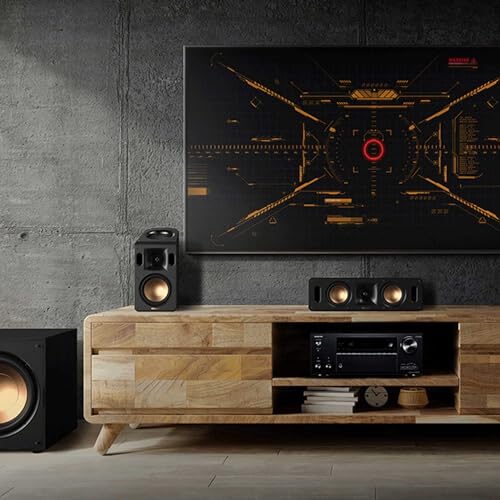
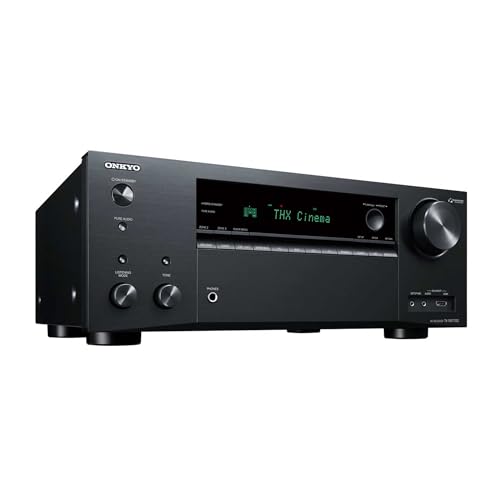
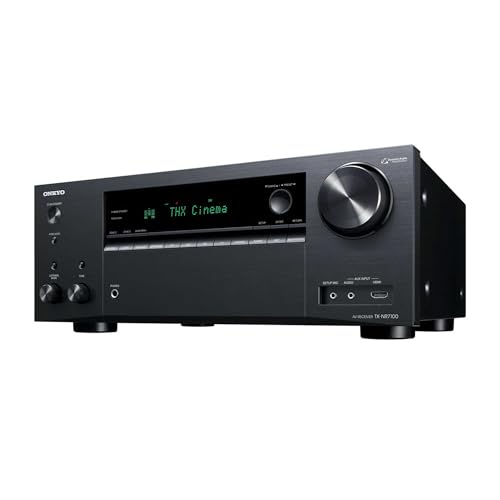
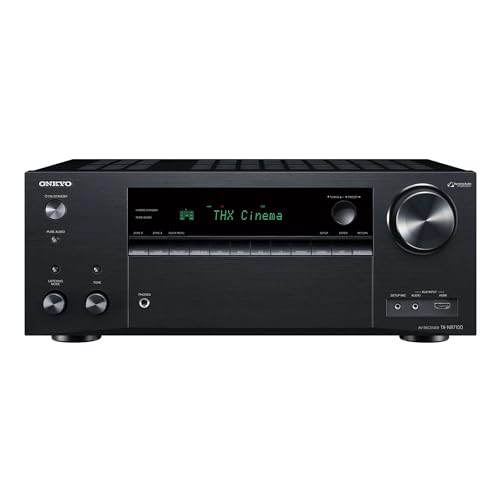
The Onkyo TX-NR7100 represents Onkyo's philosophy of packing flagship-level features into a more accessible package. Released in 2021, it arrived at a time when many manufacturers were still catching up to the latest HDMI 2.1 standards and advanced room correction systems.
What immediately stands out about the TX-NR7100 is its inclusion of Dirac Live room correction—a system that was previously found mainly on much more expensive receivers. Dirac Live works by measuring how sound bounces around your room using a microphone, then creating digital filters to correct for acoustic problems. Think of it like having a professional audio engineer tune your system, but automated and much more precise.
The receiver delivers 100 watts per channel across nine channels, with the ability to push significantly more power into lower impedance speakers—up to 250 watts into 3-ohm loads. This flexibility matters because not all speakers are created equal. Some high-end speakers present challenging loads that require more current delivery, and the Onkyo handles this well.
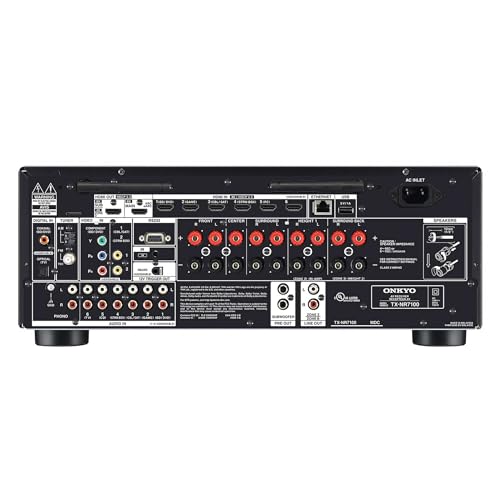
For video, the TX-NR7100 was ahead of its time with seven HDMI 2.1 inputs supporting 8K/60Hz and 4K/120Hz passthrough. This was crucial timing, as the PlayStation 5 and Xbox Series X launched around the same period, finally bringing 4K/120Hz gaming to living rooms. The receiver also supports all the major HDR formats including HDR10+, Dolby Vision, and HLG (Hybrid Log-Gamma), ensuring compatibility with virtually any source.
One unique feature that sets the Onkyo apart is its Bluetooth implementation with aptX and aptX HD support. Most receivers treat Bluetooth as an afterthought, but Onkyo included high-quality codecs that actually make wireless audio sound good. The aptX HD codec can handle near-CD quality audio wirelessly, while the low-latency mode keeps audio and video in sync when you're watching movies with Bluetooth headphones.
The TX-NR7100 also earned THX certification, meaning it passed thousands of rigorous tests to ensure it can reproduce movie soundtracks as the directors intended. This certification particularly matters for larger rooms where you need clean, powerful amplification to fill the space properly.
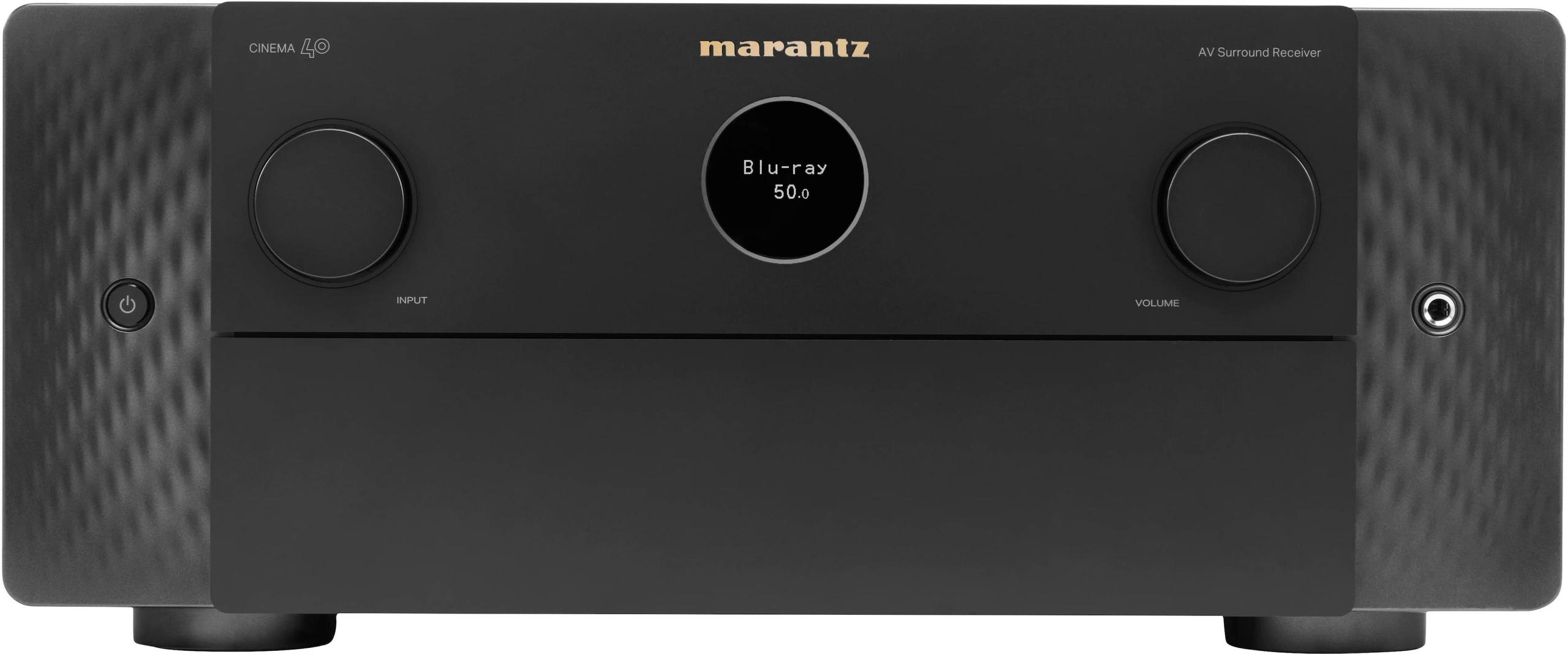
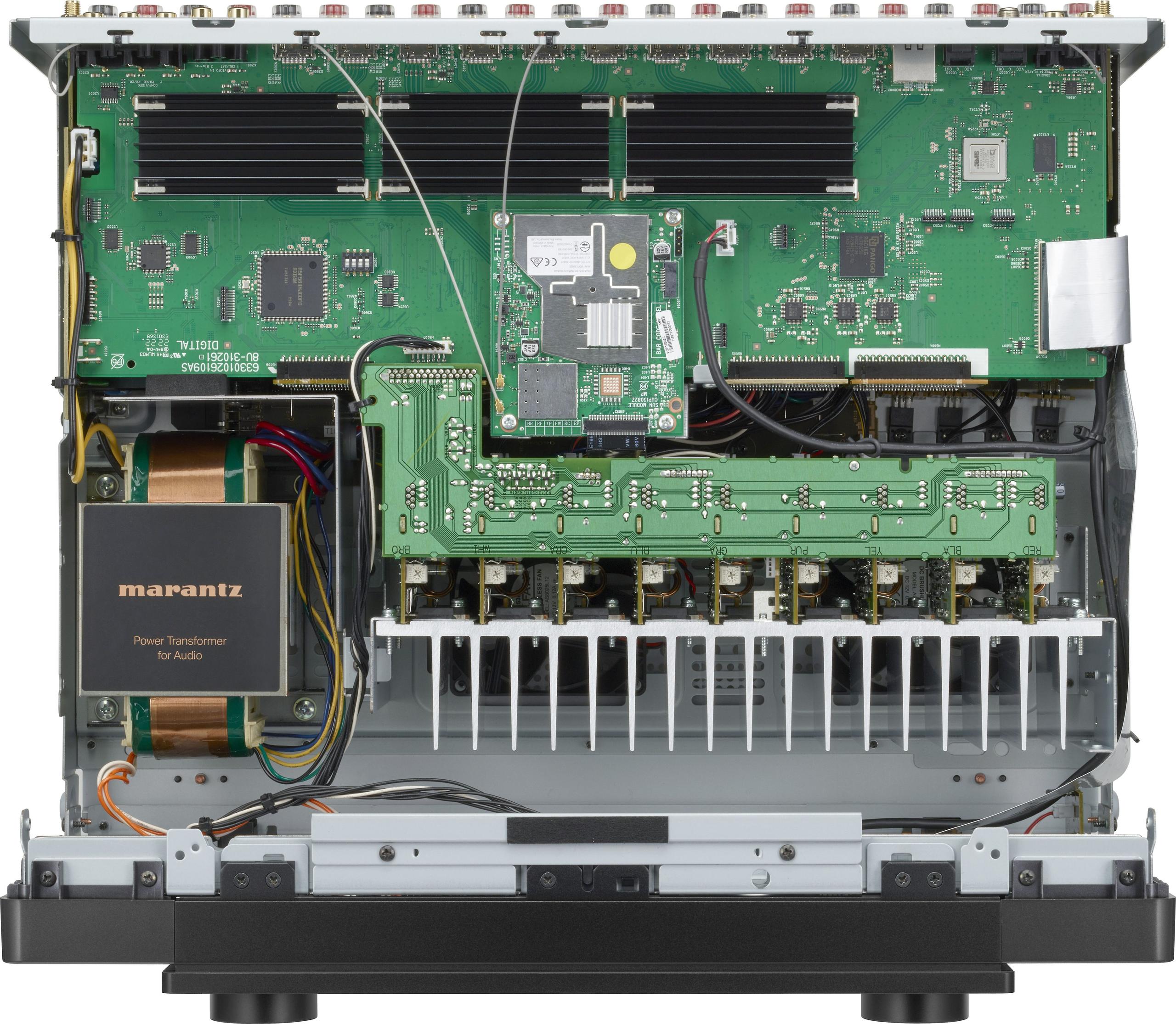
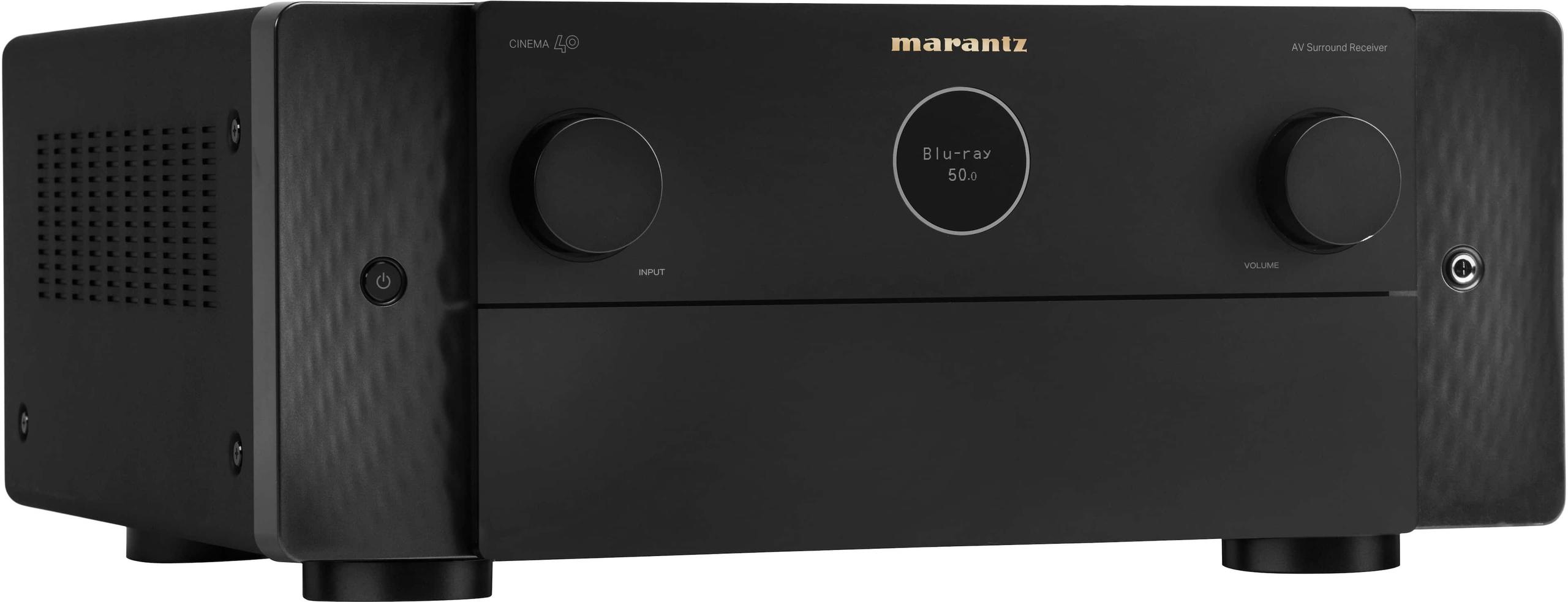
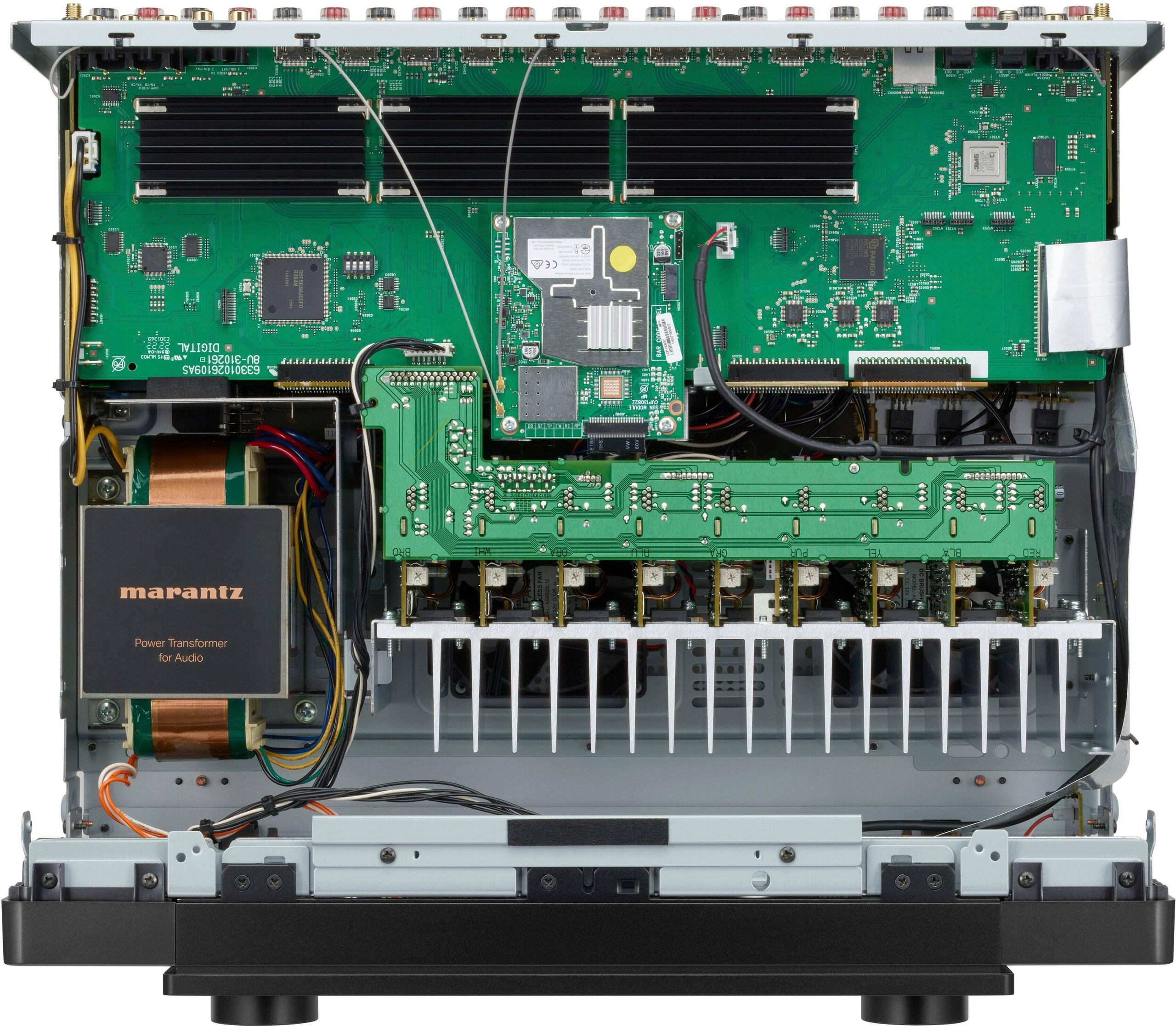
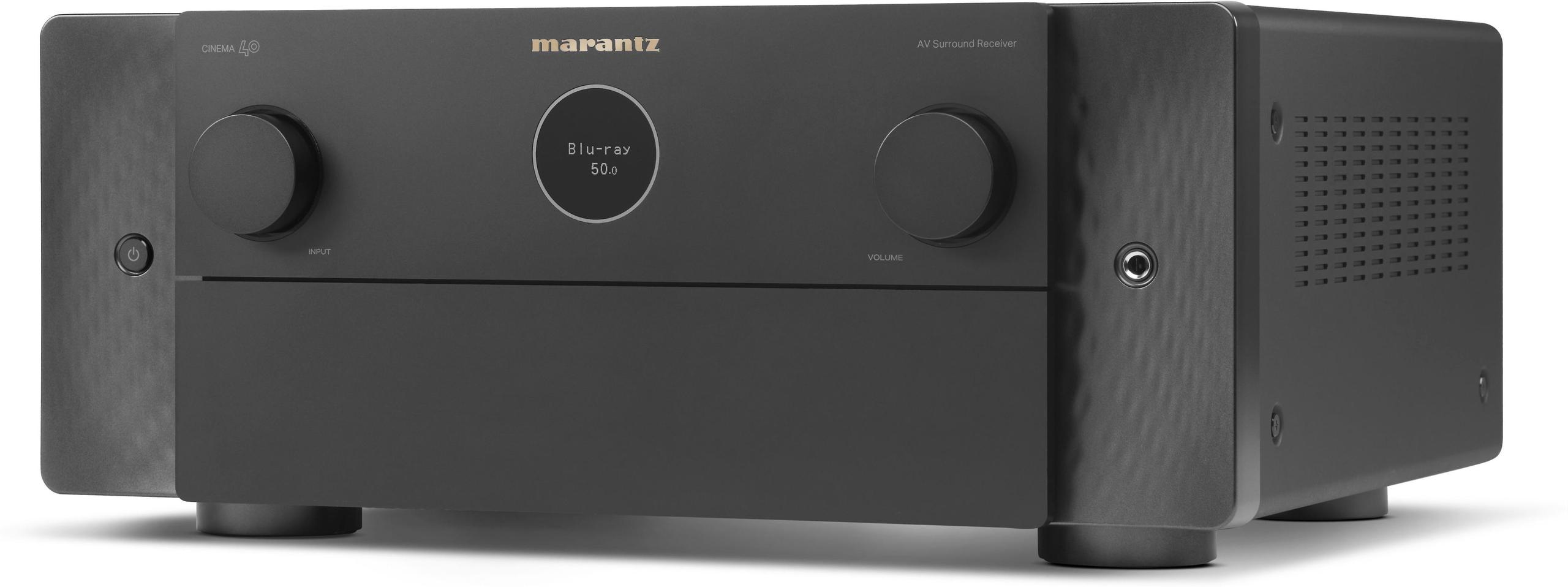
The Marantz Cinema 40, launching in 2023, represents a completely different approach. While the Onkyo focuses on feature density, the Cinema 40 emphasizes premium internal components and what Marantz calls "parts you can't see"—the high-grade capacitors, discrete amplifier designs, and careful engineering that justify its significantly higher price point.
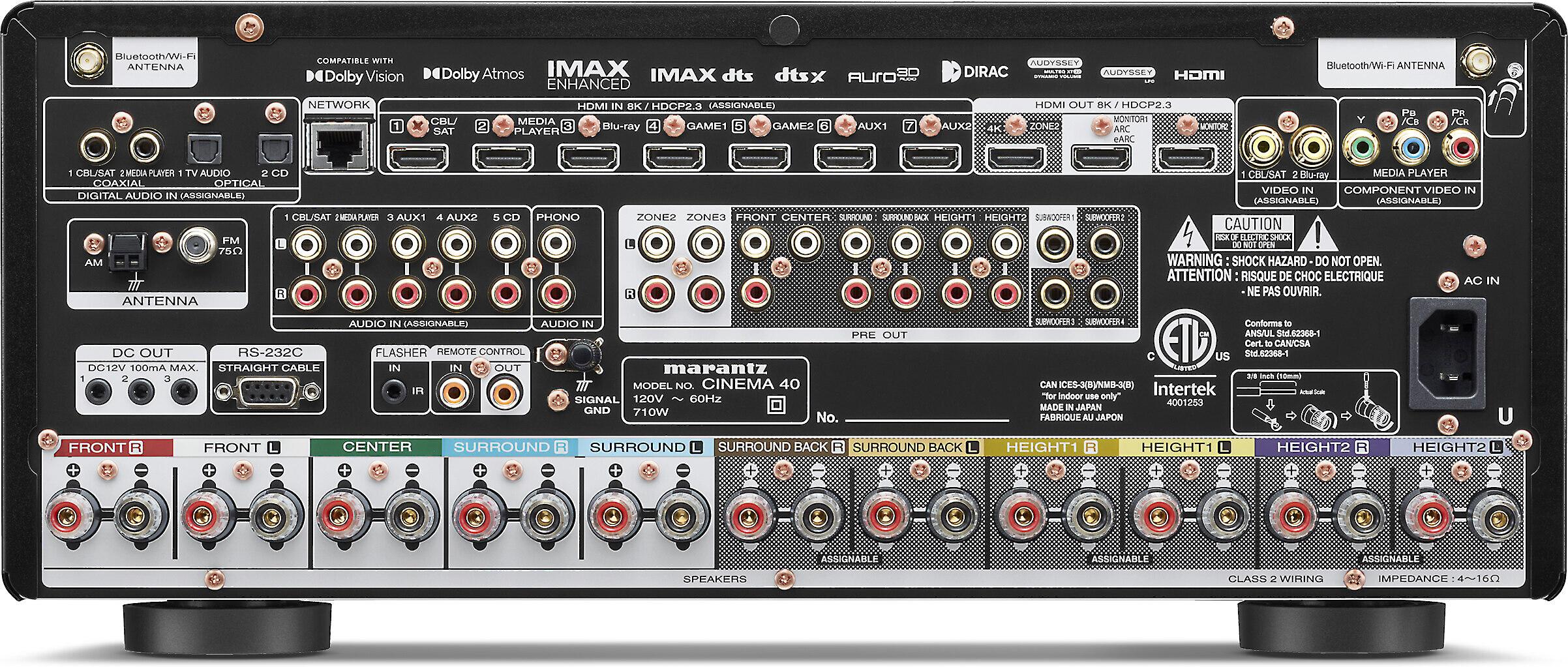
The Cinema 40 pushes 125 watts per channel through nine amplified channels, but the real difference lies in how that power is delivered. Marantz uses their proprietary Hyper Dynamic Amplifier Modules (HDAM) and Current Feedback Topology—fancy terms that essentially mean the amplifiers can respond more quickly to musical transients and deliver current more efficiently to demanding speakers.
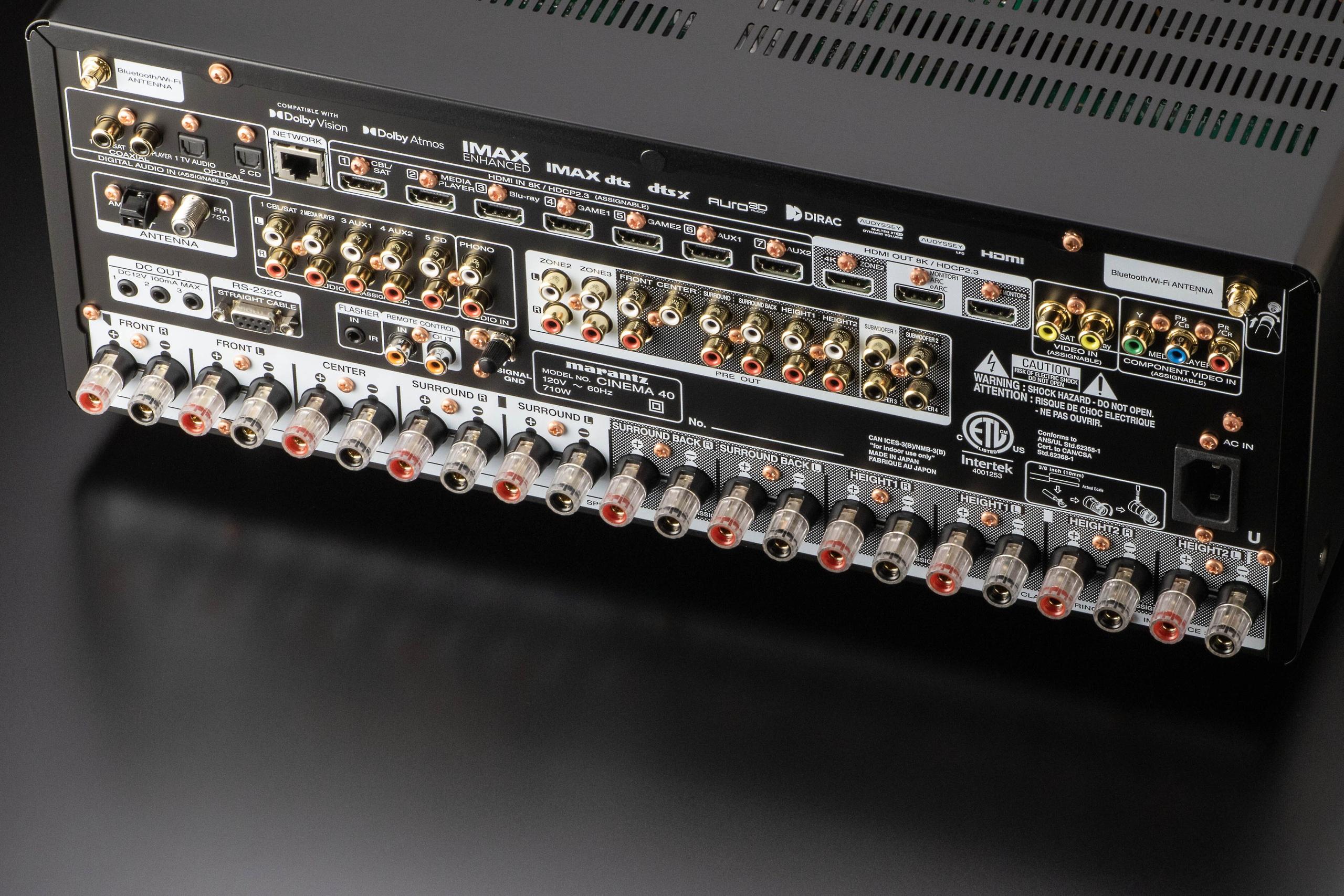
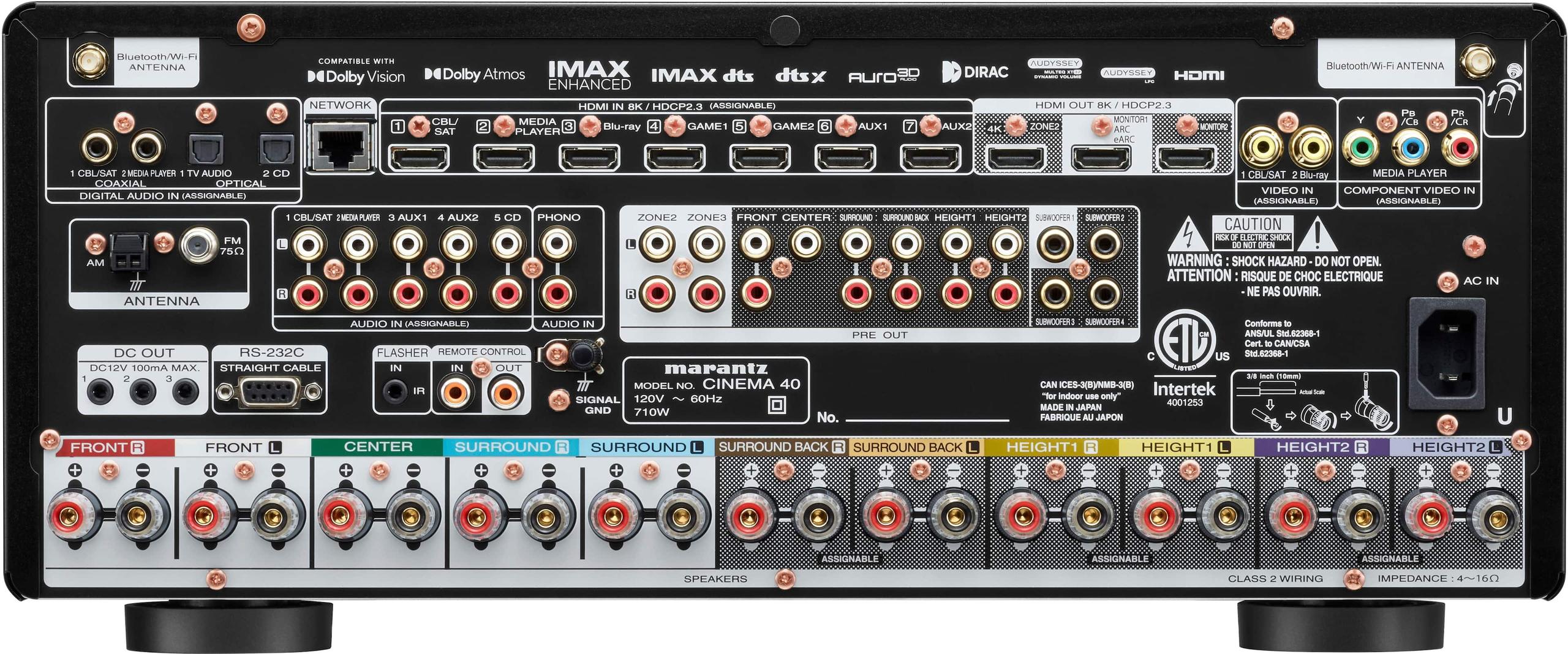
This receiver can actually process up to 11.4 channels of audio, even though it only amplifies nine internally. This means you could add external amplifiers for additional height or surround channels, making it more expandable for truly ambitious home theater setups.
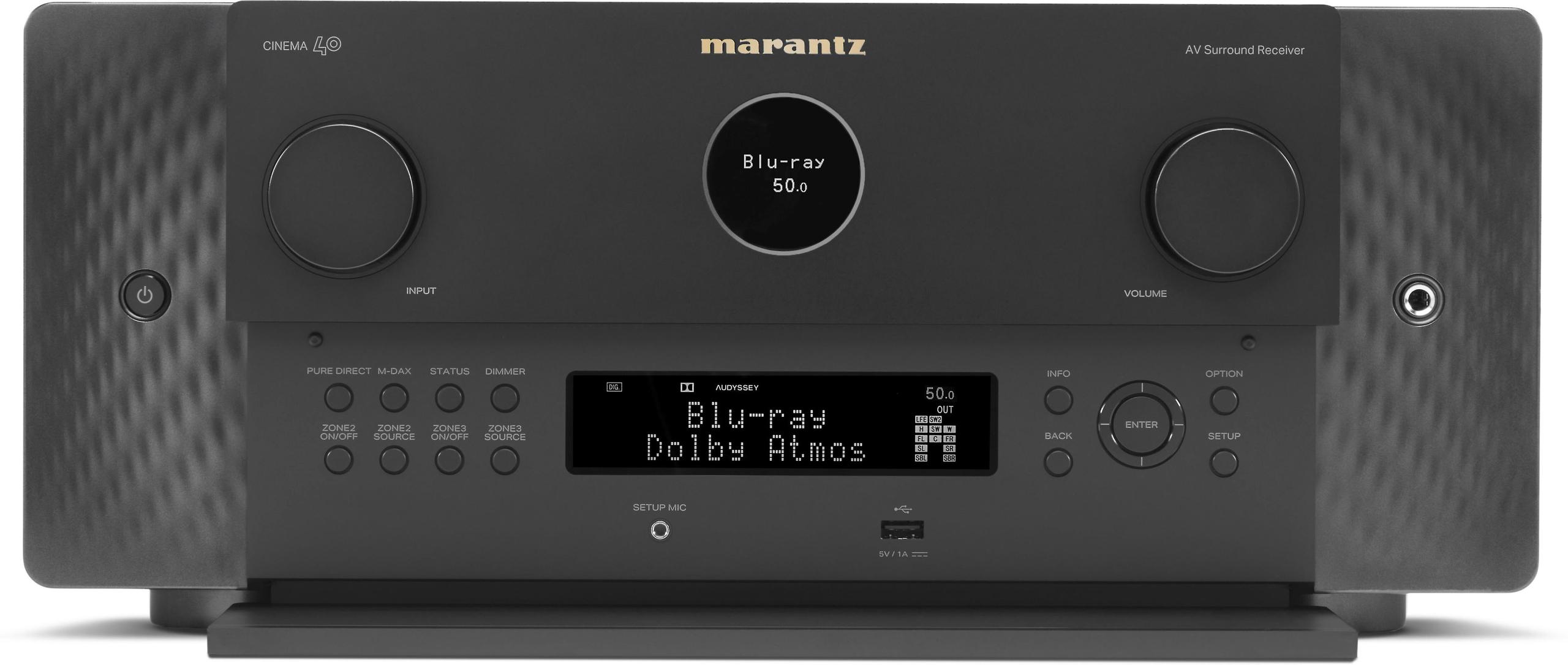
For room correction, the Cinema 40 uses Audyssey MultEQ XT32, a mature system that's been refined over many years. While not as advanced as Dirac Live in terms of raw correction capability, Audyssey integrates more seamlessly with Marantz's overall system design and tends to produce a warmer, more musical sound signature that many users prefer for both movies and music.
The Cinema 40 includes HEOS built-in, Marantz's multiroom audio platform that's been around since before most streaming services existed. If you're already invested in the HEOS ecosystem or plan to expand to multiroom audio throughout your house, this integration is seamless and mature.
Video capabilities match or exceed the Onkyo with seven HDMI inputs and three outputs (compared to the Onkyo's two outputs). All inputs support 8K passthrough, and the additional output makes it easier to feed video to multiple displays or a second zone.
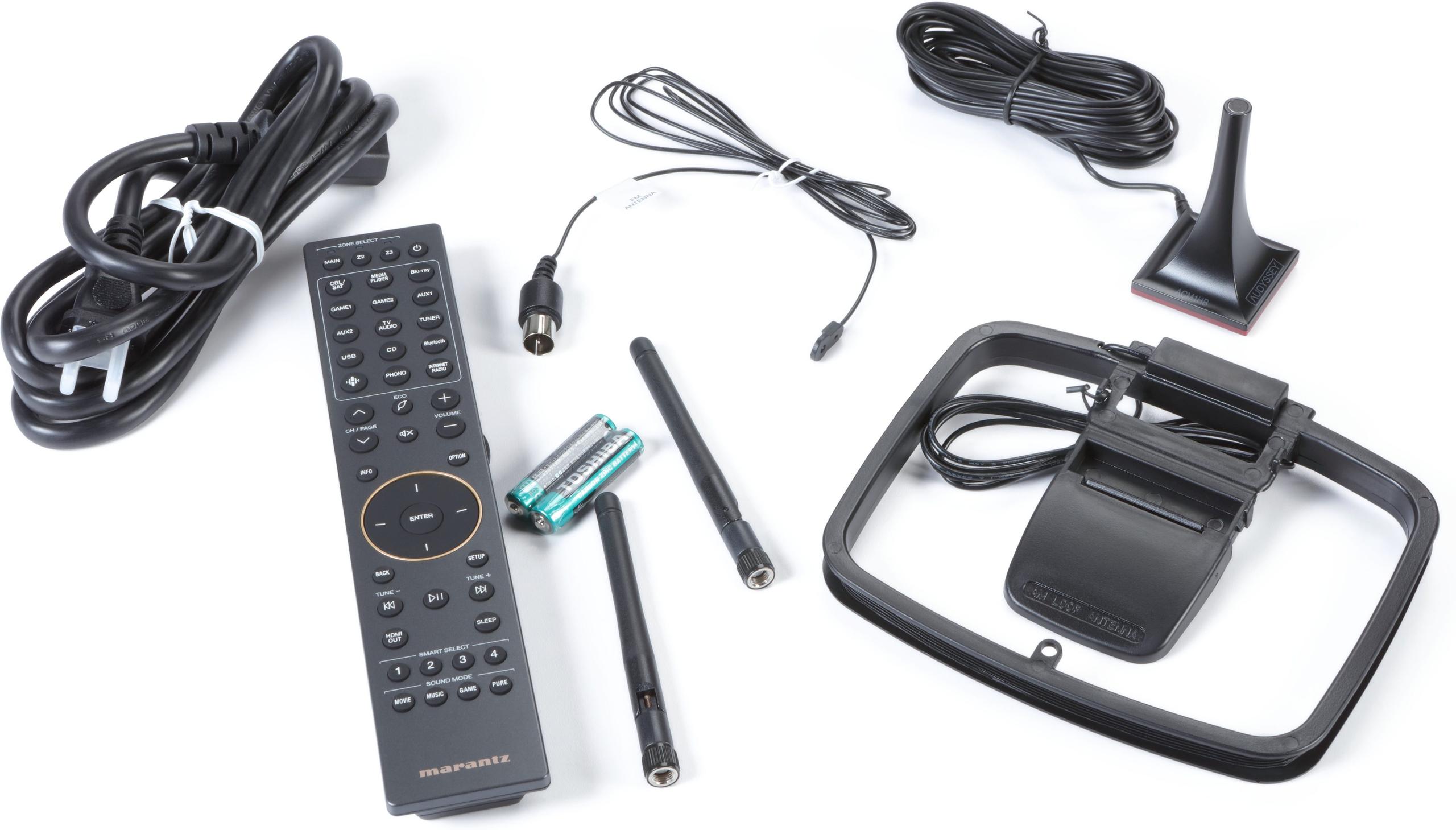
Both receivers provide adequate power for most home theater setups, but they deliver it differently. The TX-NR7100 focuses on flexibility, handling speaker impedances from 4 to 16 ohms comfortably. Its THX certification ensures it can drive speakers to reference levels in rooms up to about 3,000 cubic feet.
The Cinema 40's advantage lies in amplifier quality rather than raw power. The discrete amplifier design and premium components mean it's likely to sound more refined with high-end speakers, particularly at moderate listening levels where the quality of the amplification circuit becomes more apparent than raw power output.
Based on our research into user experiences, the Onkyo tends to sound more dynamic and punchy—great for action movies and pop music. The Marantz typically delivers a warmer, more sophisticated presentation that excels with acoustic music and dialog-heavy content.
This is where the TX-NR7100 really shines. Dirac Live is consistently rated as one of the most effective room correction systems available, and having it built into a receiver at this price point was revolutionary when it launched. Users regularly report significant improvements in dialog clarity, bass integration, and overall soundstage width after running Dirac calibration.
The system works by taking measurements from up to 13 positions in your room, then creating custom filters for each speaker that correct for both frequency response problems and timing issues. The result is often dramatically better sound, especially in challenging rooms with lots of hard surfaces or unusual layouts.
The Cinema 40's Audyssey system is no slouch—it's been refined over many years and integrates well with Marantz's house sound. However, most audio enthusiasts consider Dirac Live more advanced in its correction algorithms and flexibility.
Both receivers handle modern video formats well, but there are subtle differences. The TX-NR7100 was designed during the early days of HDMI 2.1, so its implementation focuses on core gaming features like VRR, ALLM, and Quick Frame Transport. These features work reliably with PlayStation 5, Xbox Series X, and modern gaming PCs.
The Cinema 40, being newer, likely has more refined HDMI processing and potentially better compatibility with the latest source devices. The additional HDMI output also provides more flexibility for complex setups with multiple displays or zones.
For gamers specifically, both receivers deliver the low-latency, high-refresh rate performance needed for competitive gaming, but the Onkyo has been in the field longer with fewer reported compatibility issues.
The streaming landscape has evolved rapidly since 2021, and both receivers reflect this. The TX-NR7100 takes a compatibility-first approach, supporting Chromecast, AirPlay 2, DTS Play-Fi, and even "Works with Sonos" certification. This broad compatibility means it plays well with almost any ecosystem you might already have.
The Cinema 40 focuses more deeply on its own HEOS platform while still supporting the major standards. If you plan to build a whole-home audio system, HEOS is mature and reliable, but it does create some vendor lock-in.
One area where the Onkyo clearly wins is Bluetooth quality. The inclusion of aptX HD is rare in AV receivers and makes a real difference if you use wireless headphones for late-night viewing.
At the time of writing, these receivers sit in dramatically different price categories, which fundamentally changes how we evaluate them.
The TX-NR7100 offers exceptional value for money. You get Dirac Live room correction, comprehensive HDMI 2.1 support, THX certification, and solid build quality at a price point that makes serious home theater accessible to more people. The feature set rivals receivers costing significantly more.
The Cinema 40 commands premium pricing but justifies it with premium components. The discrete amplifier design, higher-grade internal parts, and Marantz's reputation for long-term reliability appeal to buyers who view their receiver as a long-term investment rather than a features checklist.
Based on user feedback and expert reviews, the Onkyo consistently punches above its weight class in terms of features and performance per dollar. However, some users report occasional HDMI handshaking issues and note that it requires higher volume settings than some competitors to reach the same playback levels.
The Cinema 40, while expensive, delivers the refined sound quality and build confidence you'd expect from a premium product. It's the kind of receiver you buy once and use for a decade.
The Onkyo TX-NR7100 makes the most sense for enthusiasts who want flagship performance without flagship pricing. If you're building your first serious home theater, upgrading from an older receiver, or simply want the best features-per-dollar ratio, it's an excellent choice. The Dirac Live room correction alone can transform a mediocre-sounding room into something special, and the comprehensive connectivity ensures it won't become obsolete quickly.
It's particularly well-suited for people who plan to use multiple streaming services, different source devices, and want flexibility in how they connect everything. The THX certification also makes it ideal for larger rooms where you need clean, powerful amplification.
The Cinema 40 targets a different buyer entirely. If audio quality is your absolute priority, you have high-end speakers that would benefit from premium amplification, or you're building a system you expect to keep for many years, the premium is justified. It's also the clear choice if you're already invested in the HEOS ecosystem or plan to expand to multiroom audio.
The Marantz also makes sense for music lovers who want their receiver to excel with both movies and stereo content. The warmer sound signature and premium components typically result in more engaging music playback.
Both receivers represent excellent examples of their respective approaches to home theater. The TX-NR7100 proves that you don't need to spend flagship money to get flagship features, while the Cinema 40 demonstrates what premium components and careful engineering can achieve.
For most people building a serious home theater, the Onkyo offers the better value proposition. Its combination of Dirac Live, comprehensive connectivity, and solid performance covers all the bases without breaking the bank. The reported HDMI issues are concerning but appear to affect only a small percentage of units.
The Cinema 40 earns its premium pricing with genuine performance advantages, but you need to value audio quality and long-term reliability over immediate features-per-dollar value. It's a receiver for people who view their home theater as a long-term investment rather than a technology upgrade cycle.
Ultimately, both receivers will deliver impressive home theater experiences. Your choice comes down to budget, priorities, and how you balance features against refinement. The good news is that either choice will likely leave you very satisfied with your home theater for years to come.
| Onkyo TX-NR7100 | Marantz Cinema 40 |
|---|---|
| Power Output - Critical for driving speakers to reference levels | |
| 100W per channel (8Ω), 250W dynamic (3Ω) | 125W per channel (8Ω), 235W (6Ω, 1-channel) |
| Amplifier Design - Affects sound quality and long-term reliability | |
| Class A/B with THX certification | Discrete design with HDAM and Current Feedback Topology |
| Channel Configuration - Determines surround sound capability | |
| 9.2 channels (9 amplified, 2 subwoofer outputs) | 9.4 channels (9 amplified, 4 subwoofer outputs, 11.4 processing) |
| Room Correction - Most impactful feature for sound quality improvement | |
| Dirac Live (widely considered superior) | Audyssey MultEQ XT32 (mature, well-integrated) |
| HDMI Connectivity - Essential for modern sources and gaming | |
| 7 inputs (6 HDMI 2.1), 2 outputs | 7 inputs (all 8K capable), 3 outputs |
| Video Support - Future-proofing for latest content and gaming | |
| 8K/60Hz, 4K/120Hz, HDR10+, Dolby Vision | 8K/60Hz, 4K/120Hz, comprehensive HDR support |
| Audio Format Support - Determines immersive audio capability | |
| Dolby Atmos, DTS:X, IMAX Enhanced, THX certified | Dolby Atmos, DTS:X, Auro-3D, IMAX Enhanced |
| Streaming Integration - Convenience for modern entertainment | |
| Chromecast, AirPlay 2, DTS Play-Fi, Works with Sonos | HEOS built-in, AirPlay 2, voice assistant support |
| Bluetooth Quality - Matters for wireless headphone users | |
| aptX and aptX HD support (rare feature) | Standard Bluetooth implementation |
| Multi-Zone Capability - Important for whole-home audio | |
| 3 zones with speaker and preamp outputs | Multiple zones with HEOS integration |
| Build Quality & Warranty - Reflects long-term value | |
| Solid construction, standard warranty | Premium components, 5-year warranty |
| Release Year - Indicates technology generation | |
| 2021 (early HDMI 2.1 adopter) | 2023 (refined implementation) |
Both the Onkyo TX-NR7100 and Marantz Cinema 40 excel at home theater, but serve different needs. The Onkyo TX-NR7100 offers exceptional value with Dirac Live room correction, THX certification, and comprehensive HDMI 2.1 support. The Marantz Cinema 40 provides premium build quality, more powerful amplification, and refined sound processing. For most home theaters, the Onkyo delivers flagship performance at a more accessible price point.
The primary difference is market positioning and price. The Onkyo TX-NR7100 focuses on maximum features per dollar, including superior Dirac Live room correction and broad ecosystem compatibility. The Marantz Cinema 40 emphasizes premium components, discrete amplifier design, and audiophile-grade sound quality at a significantly higher price point.
The Onkyo TX-NR7100 has superior room correction with Dirac Live, widely considered one of the most advanced systems available. It can dramatically improve sound quality in challenging rooms. The Marantz Cinema 40 uses Audyssey MultEQ XT32, which is capable but less advanced than Dirac Live in terms of correction algorithms and flexibility.
Yes, both the Onkyo TX-NR7100 and Marantz Cinema 40 support 8K/60Hz and 4K/120Hz video passthrough with full HDR format compatibility. The Onkyo has 7 HDMI inputs with 2 outputs, while the Cinema 40 offers 7 inputs with 3 outputs for more flexible multi-zone video distribution.
Both receivers excel for gaming with HDMI 2.1 support, VRR, ALLM, and low-latency processing. The Onkyo TX-NR7100 has been field-tested longer with fewer reported compatibility issues. Both support 4K/120Hz gaming from PlayStation 5, Xbox Series X, and modern PCs, making either an excellent choice for serious gamers.
The Onkyo TX-NR7100 delivers 100 watts per channel across 9 channels, with dynamic power up to 250 watts into lower impedance speakers. The Marantz Cinema 40 provides 125 watts per channel with premium discrete amplifier design that delivers cleaner, more refined power delivery, especially beneficial for high-end speakers.
The Onkyo TX-NR7100 offers broader compatibility with Chromecast, AirPlay 2, DTS Play-Fi, and Works with Sonos certification. The Marantz Cinema 40 focuses on its mature HEOS ecosystem while supporting major streaming standards. The Onkyo also includes superior Bluetooth with aptX HD support for high-quality wireless audio.
Yes, both the Onkyo TX-NR7100 and Marantz Cinema 40 fully support Dolby Atmos, DTS:X, and other immersive audio formats. The Onkyo is THX certified for reference-level performance, while the Cinema 40 adds Auro-3D support and can process up to 11.4 channels of audio.
The Onkyo TX-NR7100 provides exceptional value with flagship features like Dirac Live room correction, THX certification, and comprehensive connectivity at a mid-tier price. The Marantz Cinema 40 justifies its premium pricing with superior components and build quality but represents a different value proposition focused on long-term investment and audio refinement.
The Onkyo TX-NR7100 generally receives positive feedback, though some users report occasional HDMI handshaking issues. The Marantz Cinema 40 benefits from premium component quality and comes with a 5-year warranty, suggesting greater confidence in long-term reliability and Marantz's reputation for durability.
The Marantz Cinema 40 typically excels for music with its warmer sound signature, premium DAC implementation, and discrete amplifier design that provides more nuanced musical reproduction. The Onkyo TX-NR7100 delivers more dynamic, punchy sound that many prefer for both movies and contemporary music genres.
Choose the Onkyo TX-NR7100 if you want maximum features and performance per dollar, superior room correction, and broad ecosystem compatibility. Select the Marantz Cinema 40 if audio quality is your top priority, you have high-end speakers that benefit from premium amplification, or you're building a long-term system where component quality matters more than immediate value.
We've done our best to create useful and informative comparisons to help you decide what product to buy. Our research uses advanced automated methods to create this comparison and perfection is not possible - please contact us for corrections or questions. These are the sites we've researched in the creation of this article: crutchfield.com - prohifi.in - bestbuy.com - h-m-entertainment.com - audiosciencereview.com - crutchfield.ca - soundandvision.com - avsforum.com - avgadgets.com - youtube.com - onkyo.com - crutchfield.com - onkyo.com - accessories4less.com - klipsch.com - youtube.com - listenup.com - intl.onkyo-av.com - bestbuy.com - 420spotshop.com - support.onkyousa.com - worldwidestereo.com - dreamediaav.com - avsforum.com - crutchfield.com - 7review.com - hometheaterhifi.com - bestbuy.com - marantz.com - marantz.com - marantz.com - valueelectronics.com - audioadvisor.com - safeandsoundhq.com - audioholics.com - skybygramophone.com

Privacy Policy
Terms and Conditions - Affiliate Policy
Home Security
© Copyright 2008-2026.
11816 Inwood Rd #1211, Dallas, TX 75244