

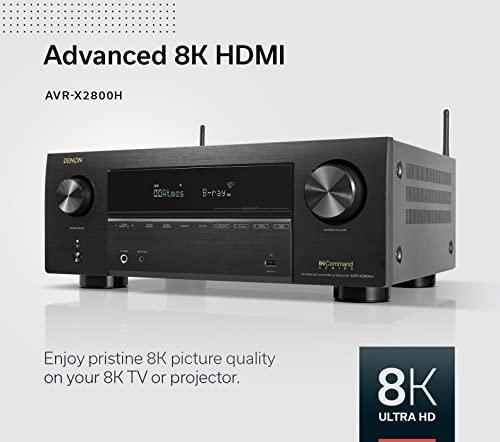
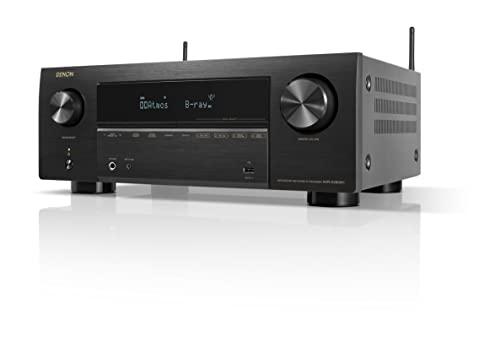
When you're ready to upgrade from a soundbar or build your first serious home theater, choosing the right AV receiver can feel overwhelming. These devices serve as the brain of your entertainment system, handling everything from decoding surround sound formats to switching between your gaming console and streaming device. Today, we're comparing two popular 7.2-channel receivers: the award-winning Denon AVR-X2800H and the visually striking JBL MA7100HP.
Both receivers promise 8K video support, immersive surround sound, and modern connectivity features. However, after researching user experiences and expert reviews, one clear winner emerges for most buyers. Let's dive into what makes each receiver unique and help you decide which fits your needs and budget.
Before comparing specific models, it's worth understanding what you're actually buying. An AV receiver combines several functions that would otherwise require separate components. It decodes audio formats like Dolby Atmos (which places sounds in three-dimensional space around you), amplifies those signals to drive your speakers, and switches video sources to your TV or projector.
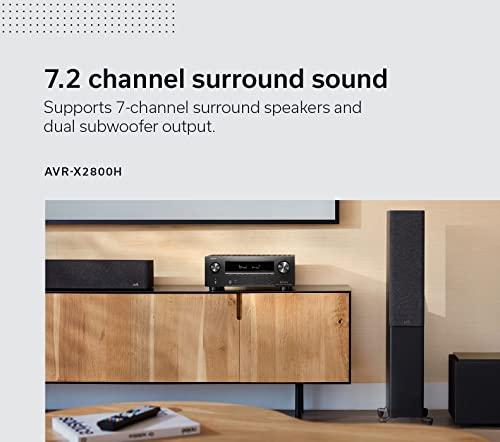
The "7.2" designation means these receivers can power seven main speakers plus two subwoofers. In practice, this typically translates to a 5.1.2 setup – five speakers around ear level, one subwoofer, and two overhead speakers for that immersive Atmos experience where helicopters seem to fly directly over your head.
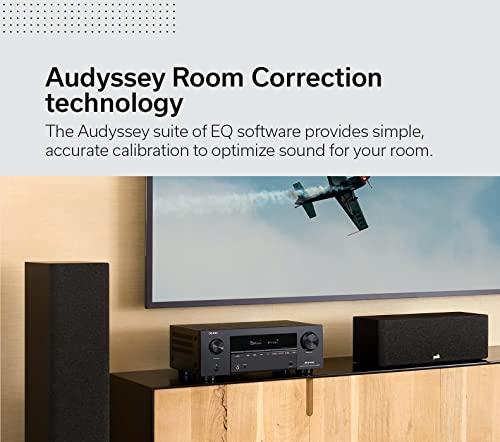
Room correction represents another crucial function. These systems use microphones to measure how sound bounces around your specific room, then adjust the audio to compensate for acoustic problems. Think of it as automatically tuning your system for optimal performance, similar to how noise-canceling headphones adjust to your environment.
The Denon AVR-X2800H launched in 2022 as part of Denon's established X-series lineup. This receiver follows Denon's traditional approach: prioritize sound quality above flashy features, include comprehensive room correction, and build something reliable that audiophiles will appreciate years later. It immediately won What Hi-Fi?'s award for best entry-level AVR, validating this conservative but effective strategy.
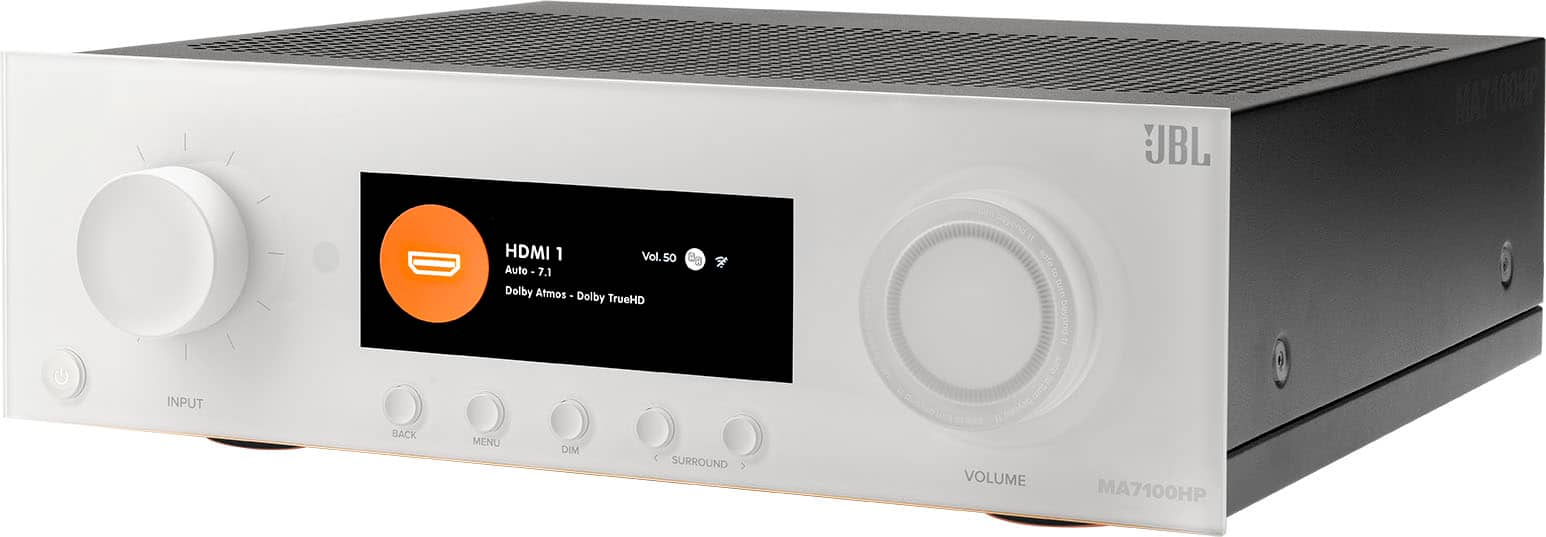
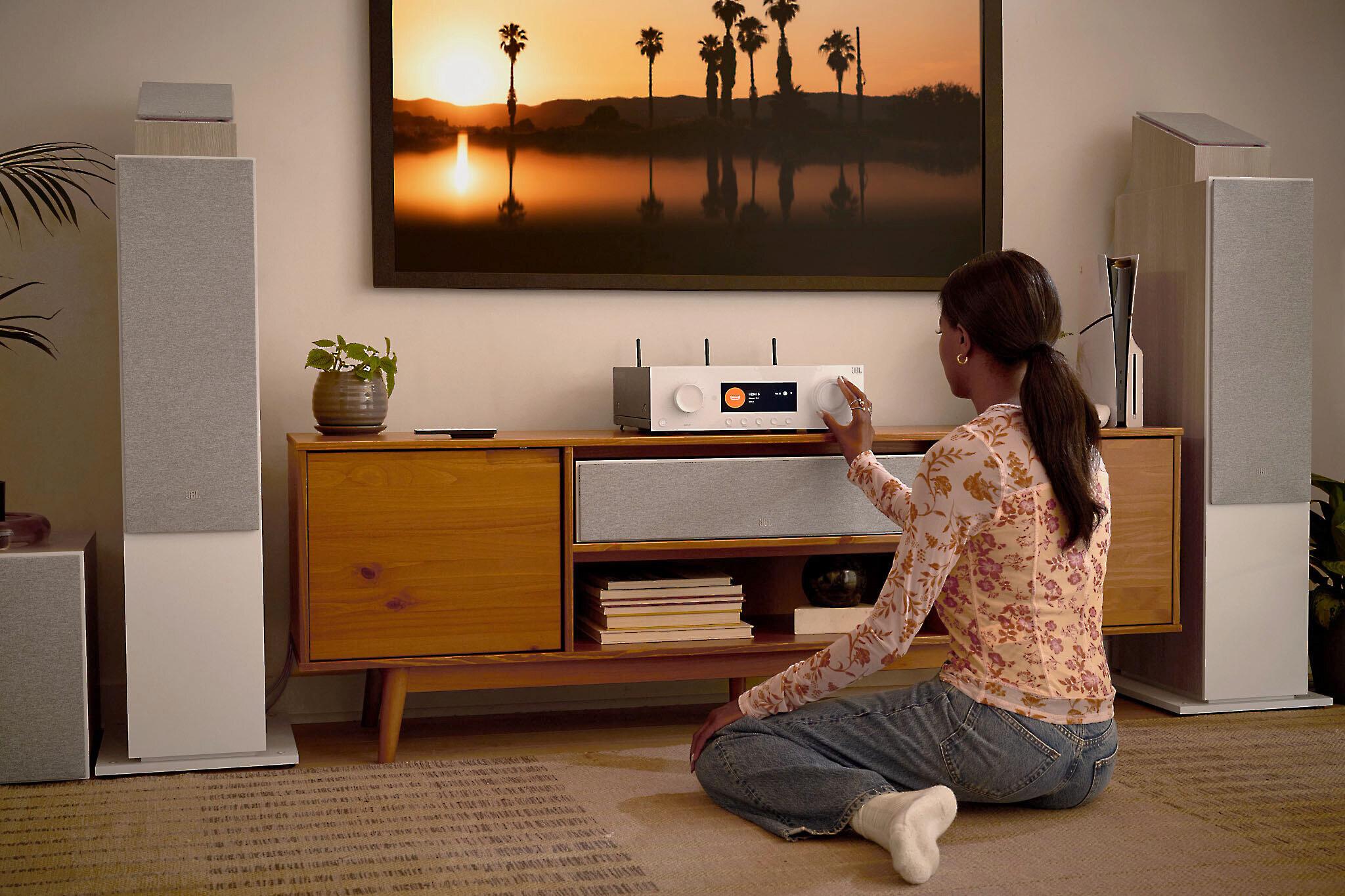
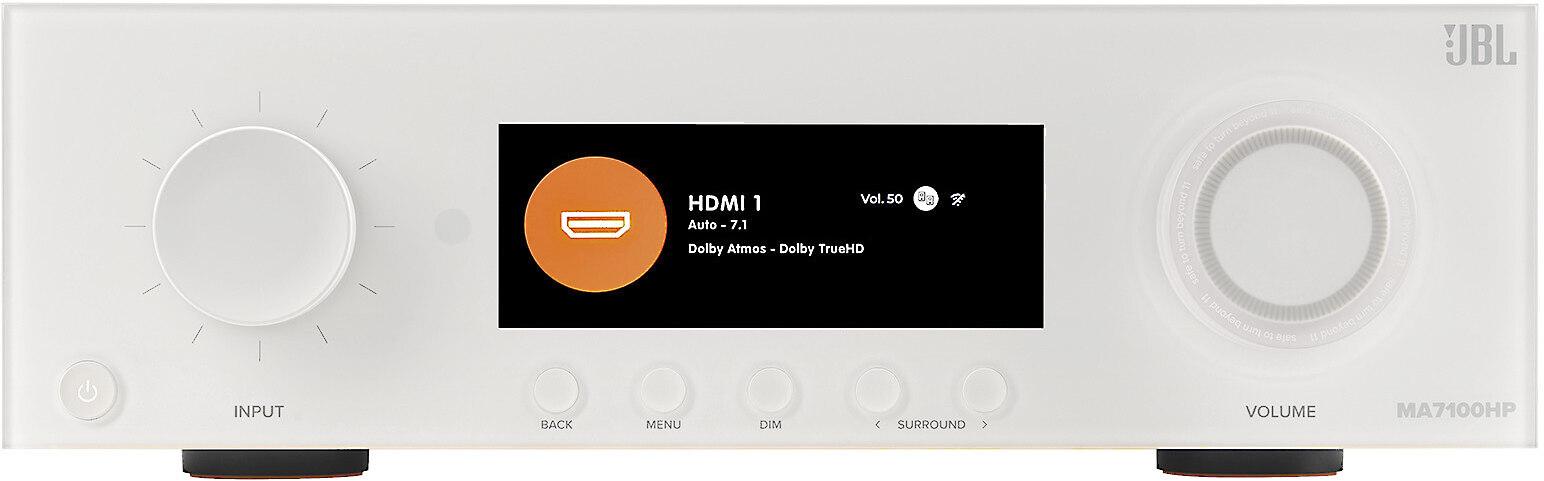
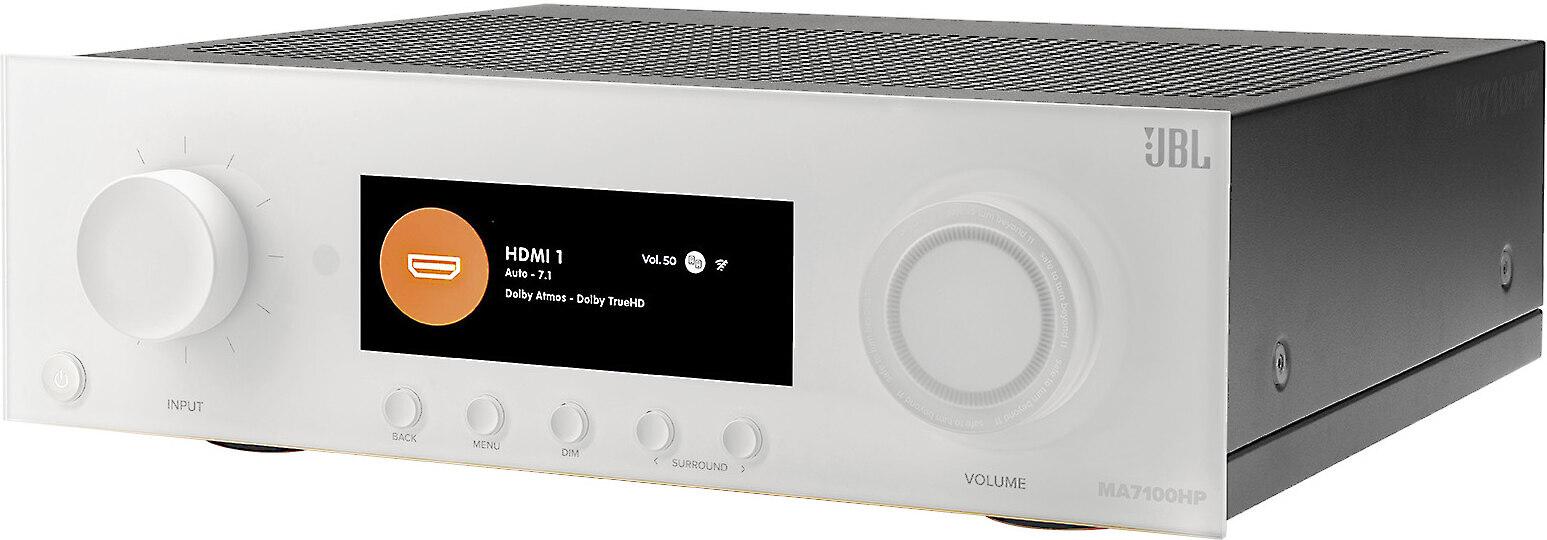
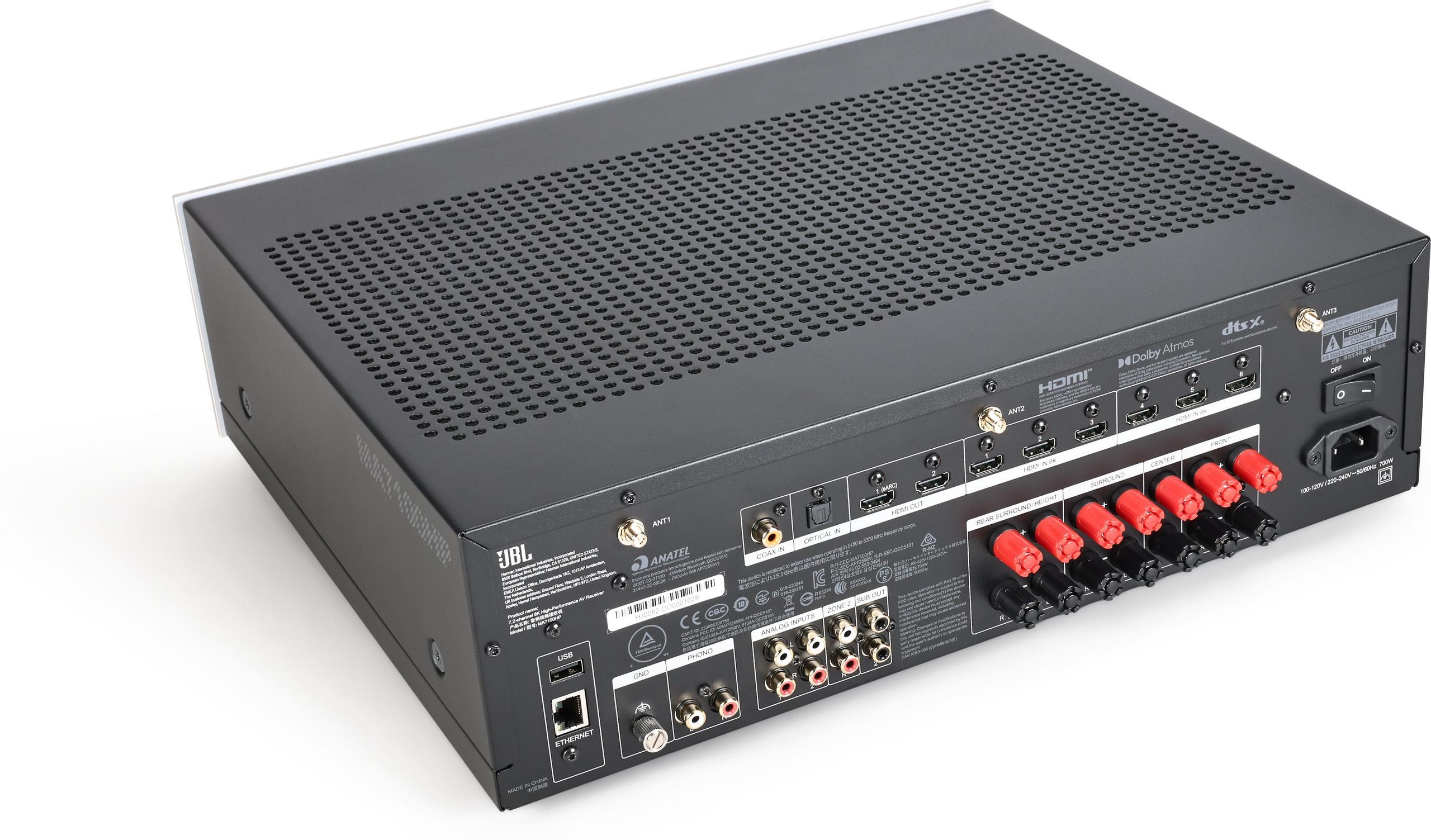
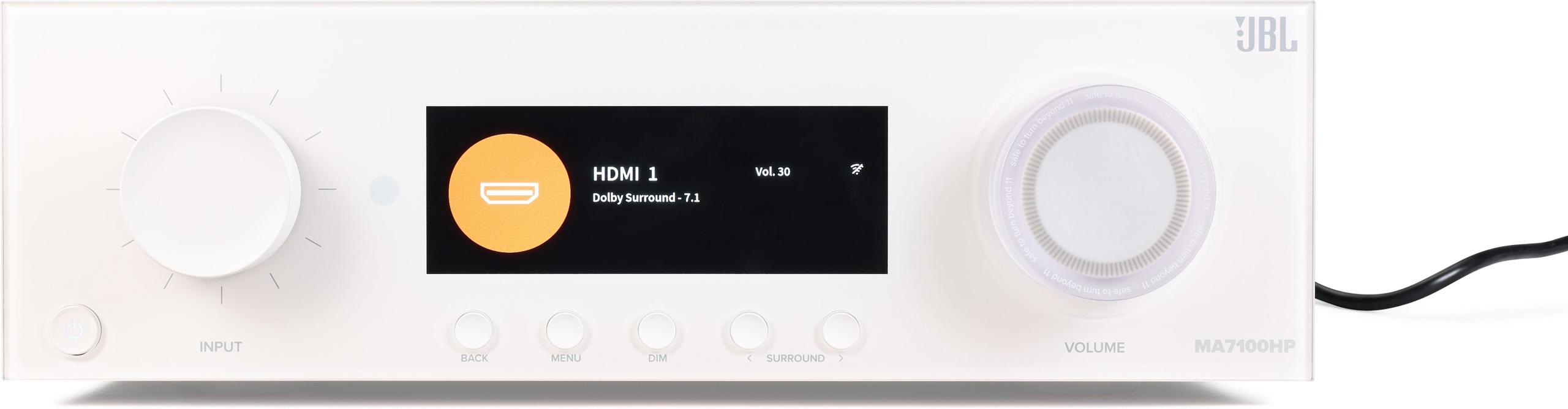
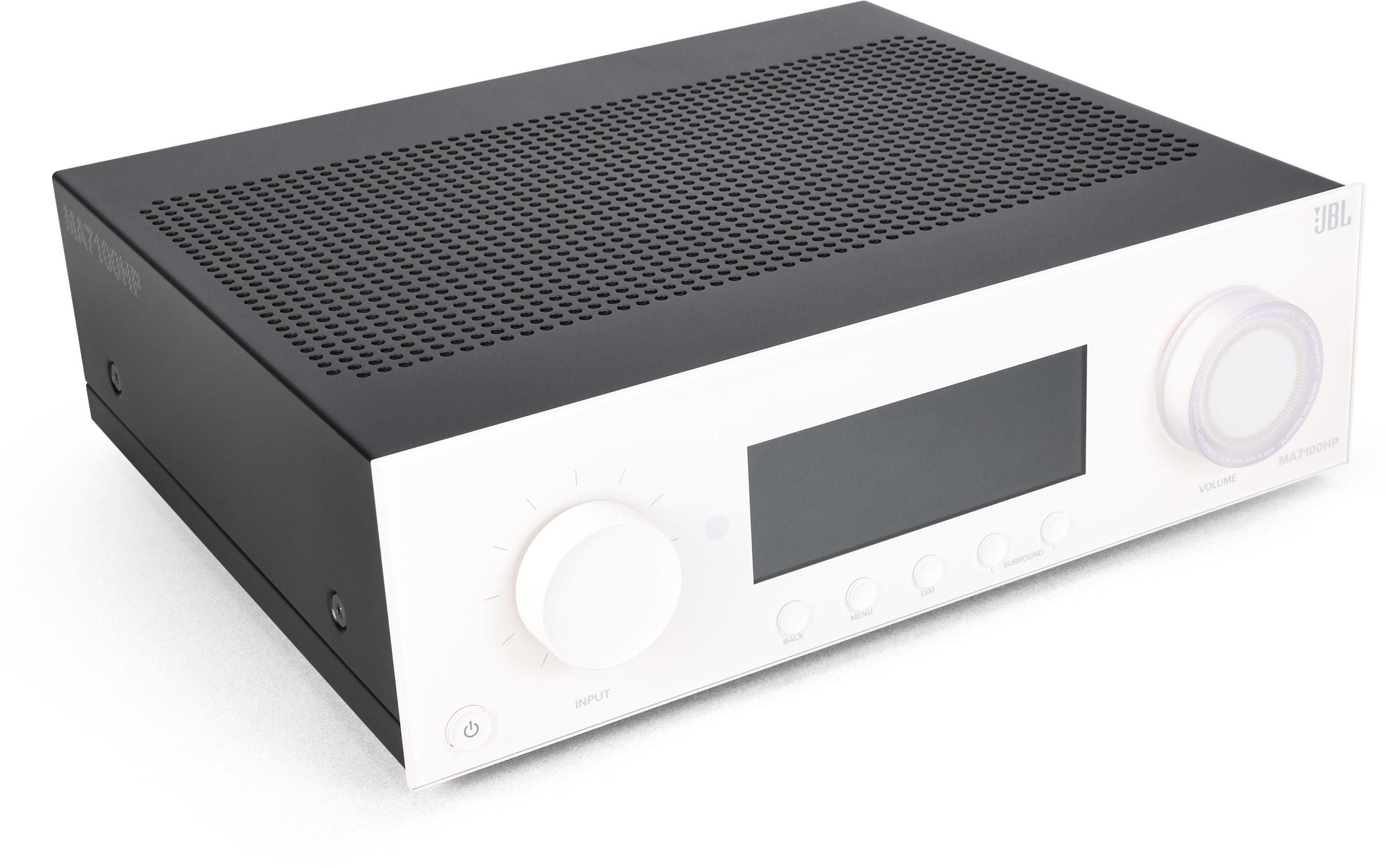
The JBL MA7100HP, part of JBL's Modern Audio series, takes a completely different approach. Released more recently, it targets people transitioning from soundbars who might be intimidated by traditional receiver complexity. JBL emphasized visual appeal with a front-facing color display, customizable LED lighting, and a distinctly modern aesthetic that looks nothing like typical black box receivers.
At the time of writing, the Denon costs roughly $100-150 less than the JBL, making it not only the better performer but also the better value. This price difference becomes especially significant when you consider the performance gap between these models.
Audio performance represents the most critical difference between these receivers, and unfortunately for JBL, it's where their receiver struggles most. Based on extensive user feedback and expert evaluations, the Denon AVR-X2800H delivers what reviewers describe as "authoritative weight" with refined balance. This means explosions have proper impact without overwhelming dialogue, and music maintains clarity across all frequency ranges.
The Denon excels at dialogue intelligibility – crucial for movie watching where you don't want to constantly adjust volume levels. Its soundstage presentation creates convincing spatial effects, making it feel like sounds actually originate from specific locations around your room rather than just coming from speaker positions.
Conversely, the JBL MA7100HP suffers from what multiple reviewers characterize as flat, uninvolving dynamics. Sound effects often feel synthetic rather than realistic, and dialogue frequently gets lost during complex scenes with lots of ambient noise or music. The overall presentation lacks the subtlety and finesse that make home theater truly immersive.
This difference becomes particularly noticeable with reference-quality content like 4K Blu-ray movies. Films with demanding soundtracks – think Interstellar's organ-heavy score or Dune's layered atmospheric effects – reveal the Denon's superior ability to maintain clarity and impact simultaneously. The JBL tends to compress these complex passages into a "mushy" presentation that robs scenes of their emotional impact.
On paper, the JBL MA7100HP appears more powerful with 125 watts per channel compared to the Denon's 95 watts (both measured at 8 ohms with two channels driven). However, power specifications can be misleading without considering real-world performance.
The Denon uses Class AB amplification, a more traditional approach that maintains excellent sound quality even when pushed hard. Multiple users report clean, undistorted performance at high volume levels across all seven channels simultaneously – something that's actually quite demanding for mid-range receivers.
The JBL employs Class D amplification, which offers better power efficiency but can introduce noise and distortion at maximum output levels. Technical measurements reveal that the JBL struggles to maintain its claimed performance when actually driving multiple speakers at once, showing significant noise and distortion issues that prevent it from delivering true 16-bit dynamic range even at moderate levels.
For most home theater applications, both receivers provide adequate power for typical speaker configurations. However, the Denon's superior amplifier design means it maintains audio quality better under demanding conditions, making it more suitable for larger rooms or less efficient speakers.
Both receivers support current video standards, including 8K/60Hz and 4K/120Hz passthrough – important for connecting modern gaming consoles and future 8K sources. They also handle all current HDR (High Dynamic Range) formats including HDR10, HDR10+, and Dolby Vision, which deliver more vibrant colors and better contrast than standard video.
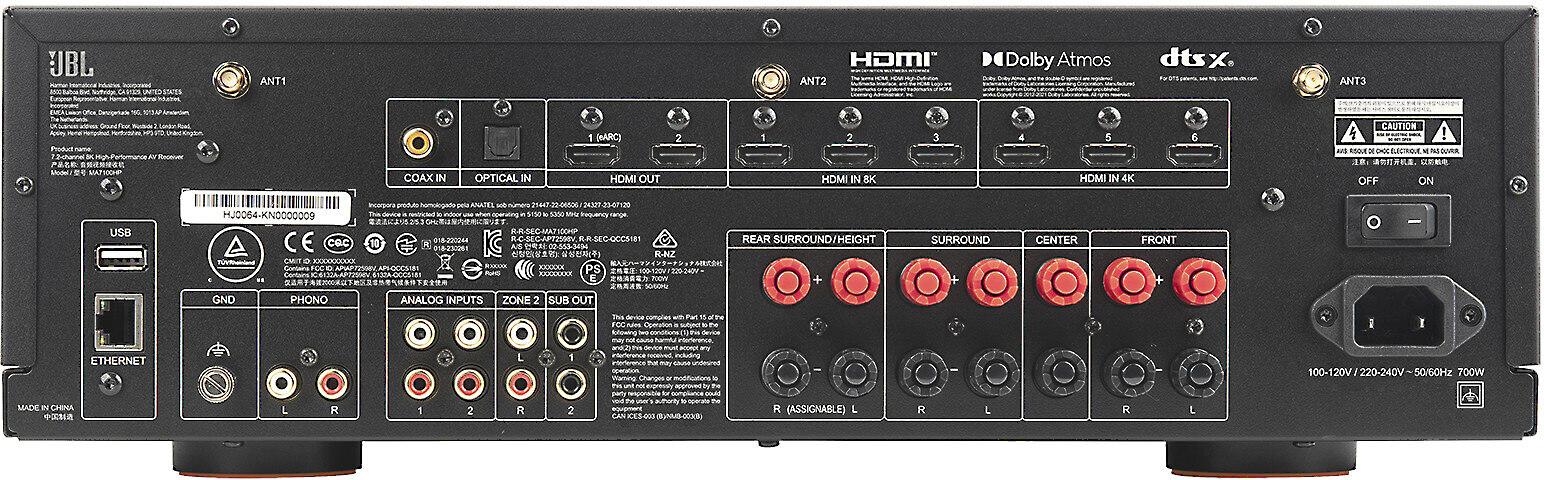
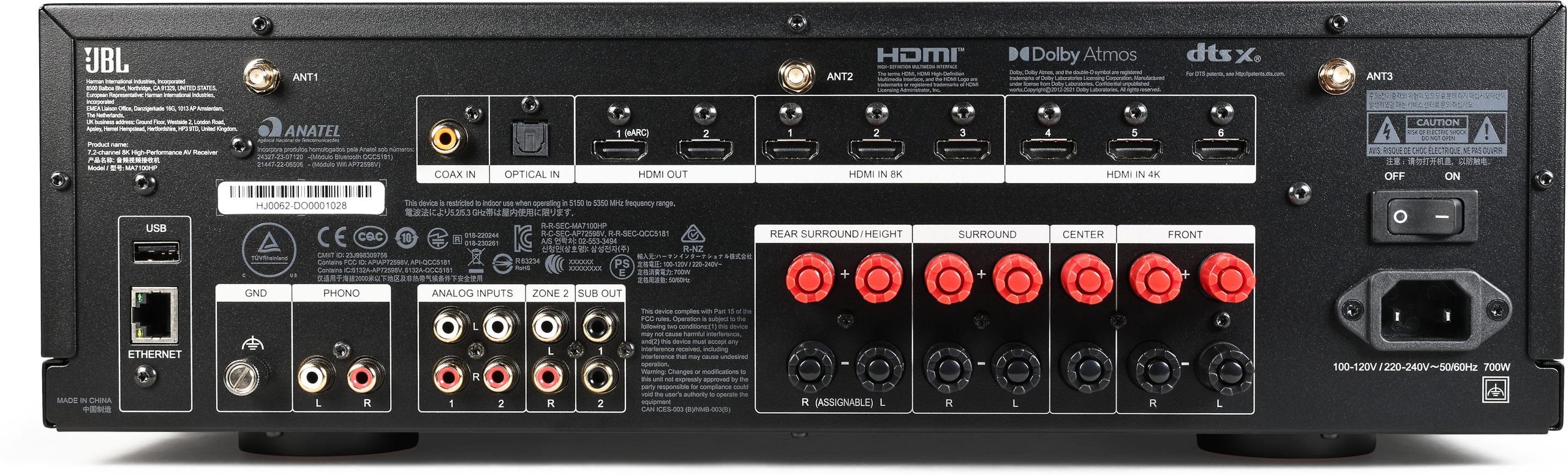
The Denon AVR-X2800H provides three HDMI 2.1 inputs capable of handling full 40Gbps bandwidth, plus three additional HDMI 2.0 inputs for older sources. This comprehensive implementation ensures compatibility with current and future devices while providing excellent video processing and upscaling capabilities.
The JBL MA7100HP offers similar HDMI 2.1 support but with less detailed bandwidth specifications available in our research. Both receivers include gaming-specific features like Variable Refresh Rate (VRR) and Auto Low Latency Mode (ALLM) that reduce input lag and eliminate screen tearing – crucial for competitive gaming.
For practical purposes, both receivers handle modern video requirements adequately. The Denon's more comprehensive implementation provides better future-proofing and potentially better compatibility with demanding sources.
Room correction technology has evolved dramatically in recent years, and the approach each company takes reveals their design philosophy. The Denon AVR-X2800H includes Audyssey MultEQ XT, a comprehensive system that measures up to eight different listening positions using the included calibration microphone.
This system automatically sets speaker distances, adjusts individual channel levels, and applies frequency response correction to compensate for room acoustics. The process takes about 15-20 minutes and requires minimal user intervention beyond placing the microphone in different seating positions. Once complete, Audyssey provides noticeable improvements in sound quality, particularly for rooms with acoustic challenges.
The JBL MA7100HP takes a more basic approach with its EZ EQ system, which requires downloading a separate smartphone app. Users must walk around their room while the app uses the phone's microphone to measure acoustics. However, this system only provides basic frequency response correction without setting proper speaker distances or levels – fundamental calibration steps that significantly impact sound quality.
Even more problematic, the JBL requires a second app (JBL Premium Audio) for streaming and Bluetooth connectivity. This dual-app approach creates confusion and contradicts JBL's stated goal of simplifying home theater setup for newcomers.
The room correction difference alone justifies choosing the Denon for most users. Proper acoustic calibration makes a substantial difference in any room, and Audyssey's comprehensive approach delivers significantly better results than JBL's simplified system.
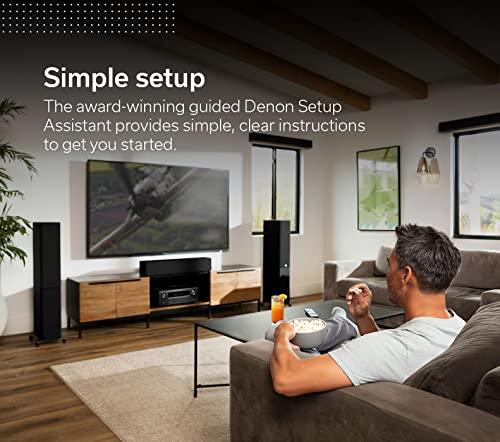
The Denon AVR-X2800H offers what most would consider a traditional AV receiver experience, but refined and modernized. The on-screen interface has been updated with full-screen menus that are more intuitive than older Denon models. Setup follows established patterns that work well, and the comprehensive manual provides clear guidance for various speaker configurations.
The JBL MA7100HP attempts to differentiate itself through unique visual features. The front-panel color display shows album artwork and track information – undeniably cool when streaming music via Bluetooth or network connections. Customizable LED lighting adds ambiance that some users appreciate, especially in media rooms designed around modern aesthetics.
However, these visual enhancements come at the cost of operational complexity. The dual-app requirement for basic functions creates unnecessary friction, and the simplified room correction actually makes setup more difficult by omitting essential calibration steps. Users frequently report confusion about which app controls which functions.
The Denon's approach proves more practical for daily use. While it lacks the JBL's visual flair, it provides a more reliable, comprehensive experience that doesn't require smartphone apps for basic operation.
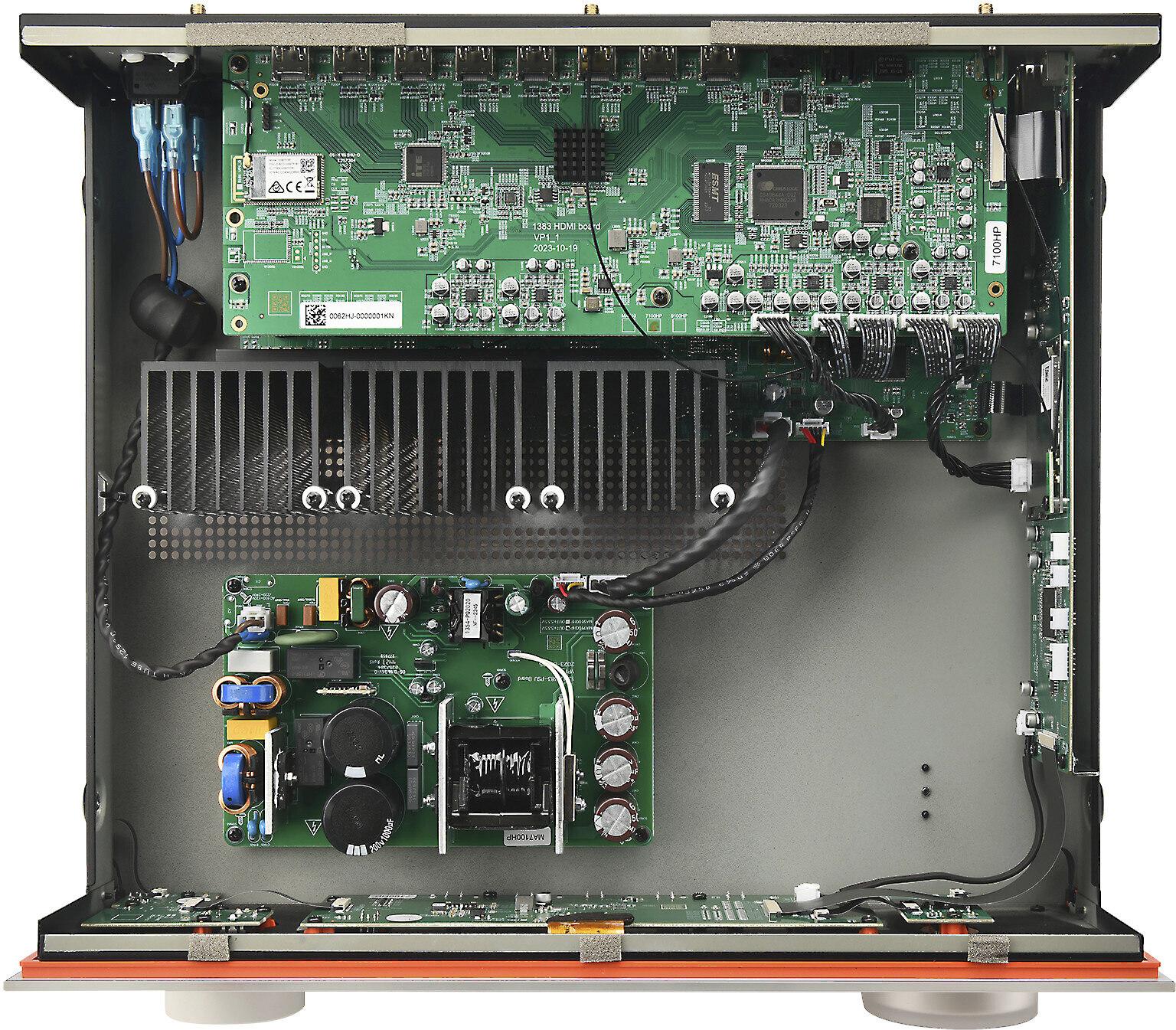
Physical construction reveals important differences between these receivers. The Denon AVR-X2800H follows established engineering practices with robust internal layout, quality components, and the kind of solid construction that Denon receivers are known for. This translates to better heat dissipation, lower component stress, and typically longer operational life.
The JBL MA7100HP weighs significantly less at just 7.6kg, indicating cost-cutting in internal components and construction. While this makes it easier to move around, lighter weight in AV receivers often correlates with less robust power supplies and cheaper internal components that may not age as well.
Denon's established presence in the AV receiver market also provides advantages for long-term support, firmware updates, and service availability. JBL's limited history in receivers creates uncertainty about ongoing support and part availability years down the road.
Both receivers adequately support modern gaming requirements with HDMI 2.1 features like VRR, ALLM, and 4K/120Hz passthrough. These technologies work with PlayStation 5, Xbox Series X/S, and high-end PC graphics cards to deliver smooth, lag-free gaming experiences.
The Denon AVR-X2800H provides slightly more comprehensive HDMI implementation with better bandwidth specifications and more detailed gaming mode options. For competitive gamers or those with multiple modern consoles, this extra flexibility proves valuable.
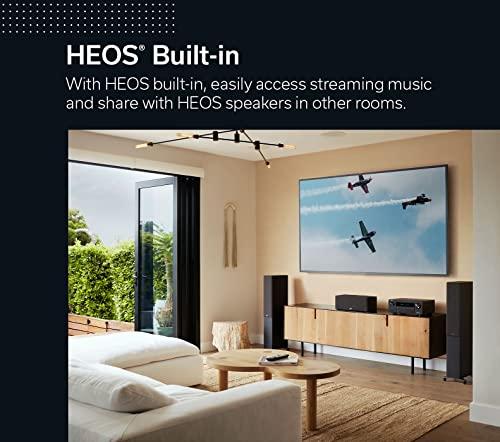
Both receivers support modern streaming protocols including AirPlay 2, Chromecast, and Bluetooth connectivity. The JBL MA7100HP includes more advanced Bluetooth codecs like aptX HD and aptX Adaptive, which can provide better wireless audio quality from compatible devices.
At the time of writing, the Denon AVR-X2800H costs roughly $100-150 less than the JBL MA7100HP while delivering superior sound quality, more comprehensive room correction, and proven reliability. This represents exceptional value in the mid-range receiver market.
The JBL's higher price becomes difficult to justify given its sound quality limitations and operational complications. While some users may appreciate its unique visual features, these enhancements don't compensate for fundamental performance shortcomings.
For most buyers, the Denon offers better long-term value through superior audio performance, comprehensive features, and the reliability that comes from an established AV receiver manufacturer.
The Denon AVR-X2800H suits the vast majority of home theater enthusiasts. Choose it if sound quality matters most to you, if you want proven reliability and comprehensive features, or if you're building a serious home theater system where audio performance is paramount. It's also the better choice for music listening, rooms with acoustic challenges, or anyone who values straightforward operation over flashy features.
The JBL MA7100HP makes sense for a much smaller group of buyers. Consider it only if visual aesthetics are your top priority, if you're specifically attracted to the front display and lighting features, or if you're upgrading from a soundbar and prioritize modern styling over audio performance. Even then, the sound quality limitations may prove frustrating over time.
Based on extensive research and user feedback, the Denon AVR-X2800H emerges as the clear winner for most buyers. It delivers award-winning performance at a lower price point, making it both the better receiver and the better value. Unless distinctive styling is your primary concern, the Denon provides significantly better sound quality, features, and long-term satisfaction for serious home theater use.
The choice ultimately depends on your priorities, but for most people building or upgrading a home theater system, the Denon AVR-X2800H represents the smarter investment that will deliver years of excellent performance.
| Denon AVR-X2800H | JBL MA7100HP |
|---|---|
| Power Output - Real-world amplification capability for your speakers | |
| 95W per channel (8Ω, clean power with low distortion) | 125W per channel (8Ω, but with noise/distortion issues at max) |
| Sound Quality - The most critical performance factor | |
| Award-winning audio with authoritative weight and refined balance | Flat dynamics, synthetic effects, poor dialogue clarity |
| Room Correction - Automatically optimizes sound for your space | |
| Audyssey MultEQ XT (comprehensive 8-position calibration) | Basic EZ EQ via smartphone app (frequency only, no distance/levels) |
| HDMI 2.1 Support - Future-proofing for 8K and gaming | |
| 3 HDMI 2.1 inputs with 40Gbps bandwidth, 6 total inputs | 3 HDMI 2.1 inputs (unspecified bandwidth), 6 total inputs |
| Setup Experience - How easy it is to get running | |
| Single integrated interface with comprehensive calibration | Requires two separate mobile apps for full functionality |
| Build Quality - Long-term reliability indicator | |
| Robust construction with proven Denon engineering | Lightweight build (7.6kg) suggesting cost-cutting measures |
| Visual Features - Aesthetic and display elements | |
| Traditional black receiver design | Color front display with album artwork and LED lighting |
| Amplifier Technology - Affects sound quality and efficiency | |
| Class AB discrete amplification (maintains quality at high volumes) | Class D amplification (efficient but prone to distortion) |
| Brand Heritage - Support and reliability track record | |
| Established AV receiver leader with extensive service network | Limited AV receiver experience, primarily known for speakers |
| Value Proposition - Performance per dollar at time of writing | |
| Superior sound quality at lower cost with proven reliability | Higher price for inferior audio performance and complex operation |
The Denon AVR-X2800H delivers significantly better sound quality with award-winning audio performance, clear dialogue, and refined balance. The JBL MA7100HP suffers from flat dynamics, synthetic-sounding effects, and poor dialogue clarity that can make movie watching frustrating.
The JBL MA7100HP claims higher power at 125W per channel versus the Denon AVR-X2800H's 95W per channel. However, the Denon maintains cleaner power delivery without distortion, while the JBL shows noise and distortion issues at maximum output levels.
The Denon AVR-X2800H offers a more straightforward setup with integrated room calibration and a single interface. The JBL MA7100HP requires two separate mobile apps and has a more complex setup process that contradicts its ease-of-use goals.
Yes, both the Denon AVR-X2800H and JBL MA7100HP support 8K/60Hz and 4K/120Hz passthrough, along with gaming features like VRR and ALLM. The Denon provides more comprehensive HDMI implementation with better bandwidth specifications.
The Denon AVR-X2800H includes comprehensive Audyssey MultEQ XT room correction that calibrates speaker distances, levels, and frequency response across eight listening positions. The JBL MA7100HP offers basic smartphone-based correction that only adjusts frequency response without essential calibration steps.
The Denon AVR-X2800H features a traditional black receiver design focused on performance. The JBL MA7100HP offers a modern aesthetic with a color front display showing album artwork, customizable LED lighting, and distinctive orange accents.
The Denon AVR-X2800H excels at music reproduction with superior dynamics, spatial presentation, and clarity across all frequency ranges. The JBL MA7100HP's compressed, "mushy" sound signature makes it less suitable for serious music listening.
The Denon AVR-X2800H offers robust construction typical of established AV receiver manufacturers with proven long-term reliability. The JBL MA7100HP uses lighter construction at 7.6kg, suggesting cost-cutting measures that may affect durability.
The Denon AVR-X2800H provides superior value with better sound quality, comprehensive features, and proven reliability at a lower price point. The JBL MA7100HP costs more while delivering inferior audio performance and operational complications.
Both the Denon AVR-X2800H and JBL MA7100HP support Dolby Atmos and DTS:X in 5.1.2 configurations. However, the Denon delivers much better spatial effects and immersive audio quality that makes these formats truly effective.
The Denon AVR-X2800H performs better in large rooms and with demanding speakers due to its superior amplifier design that maintains clean power across all channels simultaneously. The JBL MA7100HP may struggle with power delivery under demanding conditions.
Choose the Denon AVR-X2800H if sound quality, reliability, and value matter most to you. The JBL MA7100HP only makes sense if visual aesthetics and unique design features are your top priority, and you're willing to accept significant audio performance compromises.
We've done our best to create useful and informative comparisons to help you decide what product to buy. Our research uses advanced automated methods to create this comparison and perfection is not possible - please contact us for corrections or questions. These are the sites we've researched in the creation of this article: theaudiotailor.com.au - ecoustics.com - simplehomecinema.com - whathifi.com - audioadvisor.com - youtube.com - bestbuy.com - e-catalog.com - crutchfield.com - avsforum.com - crutchfield.com - whathifi.com - richersounds.com - bestbuy.com - accessories4less.com - projectorscreen.com - adiglobaldistribution.us - youtube.com - bestbuy.com - bestbuy.com - sweetwater.com - bestbuy.com - audioadvice.com - bestbuy.com - audiosciencereview.com - safeandsoundhq.com - listenup.com - jbl.com - musicdirect.com - crutchfield.com - crutchfield.com

Privacy Policy
Terms and Conditions - Affiliate Policy
Home Security
© Copyright 2008-2026.
11816 Inwood Rd #1211, Dallas, TX 75244