

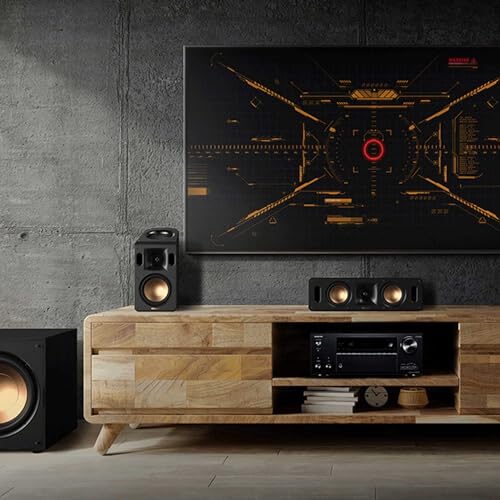
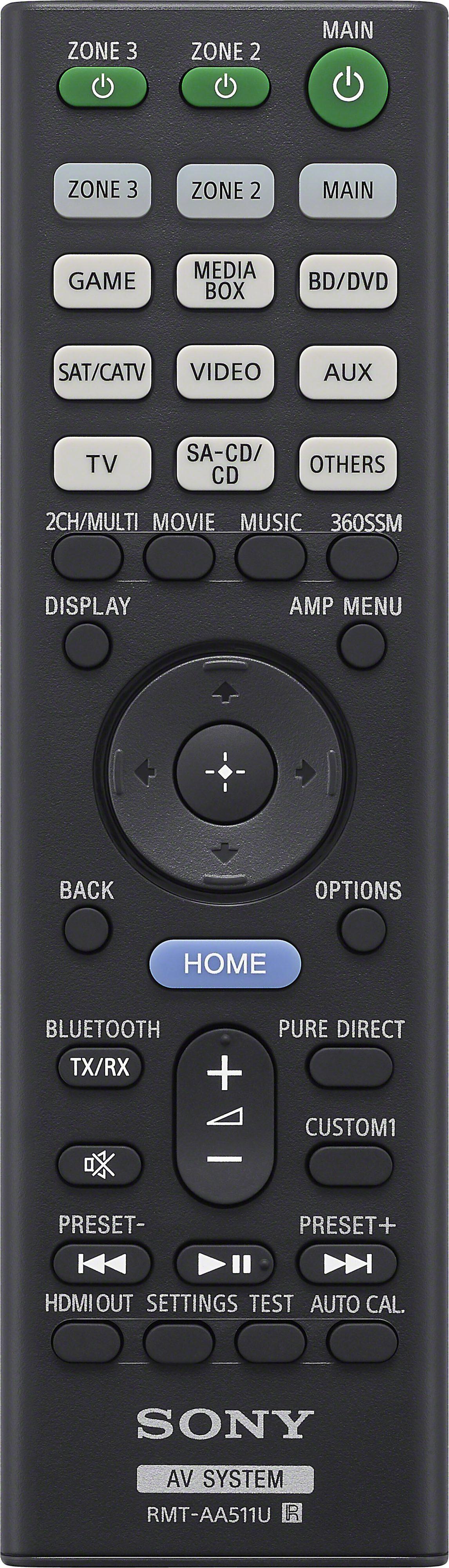
When you're building a home theater system, the AV receiver is arguably the most critical component—it's the brain that processes all your audio and video signals while powering your speakers. Think of it as a sophisticated traffic controller that manages everything from your Netflix streaming to your PlayStation 5's audio, all while delivering the power needed to make your speakers sing.
Modern AV receivers have evolved far beyond simple amplifiers. They're now multimedia powerhouses that handle complex audio formats like Dolby Atmos (which adds height channels for overhead sound effects), manage multiple video sources, correct your room's acoustics, and integrate with smart home systems. The challenge is finding the right balance between performance, features, and value for your specific needs.
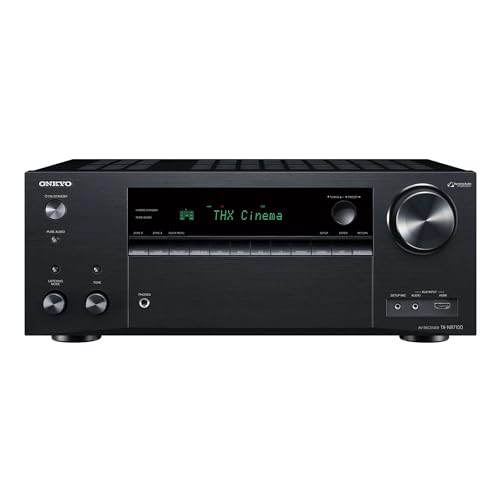
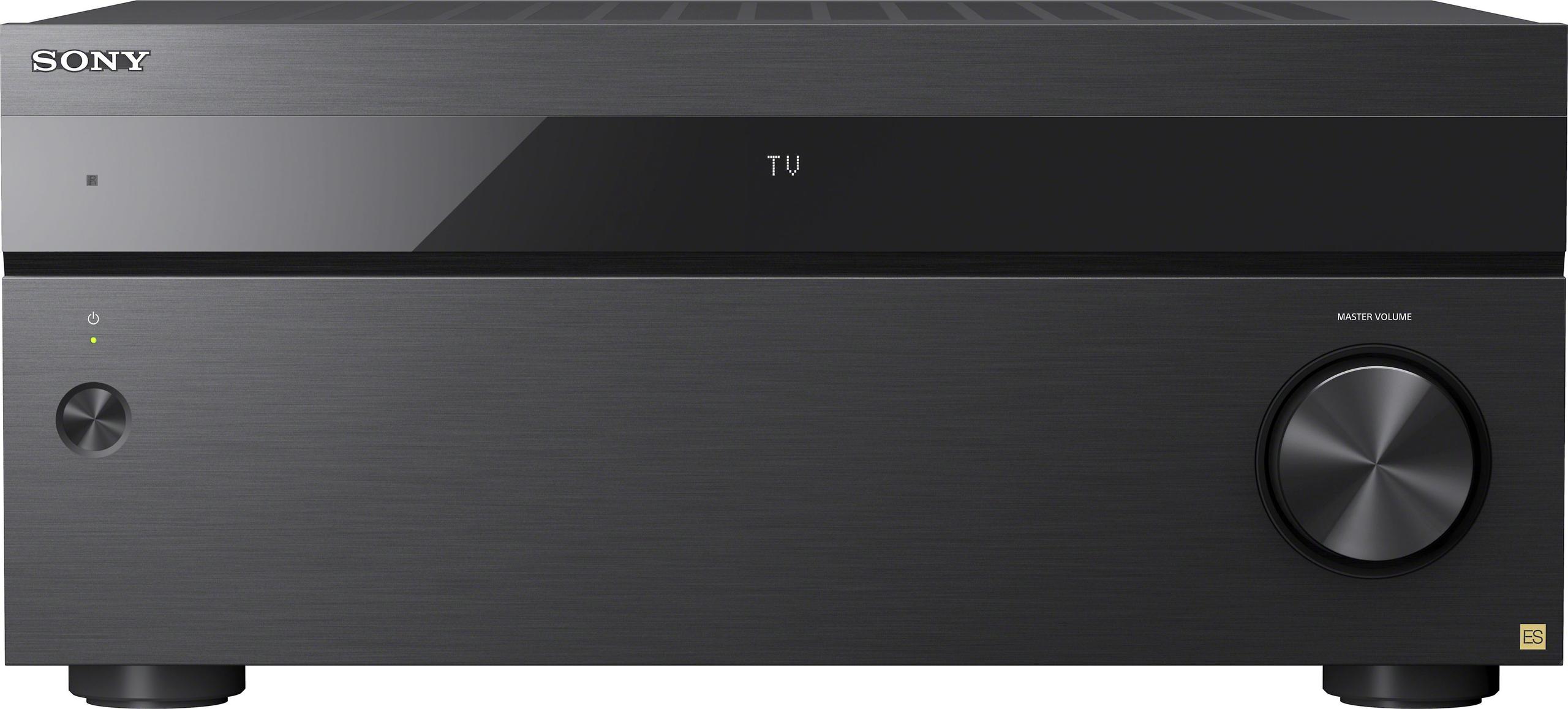
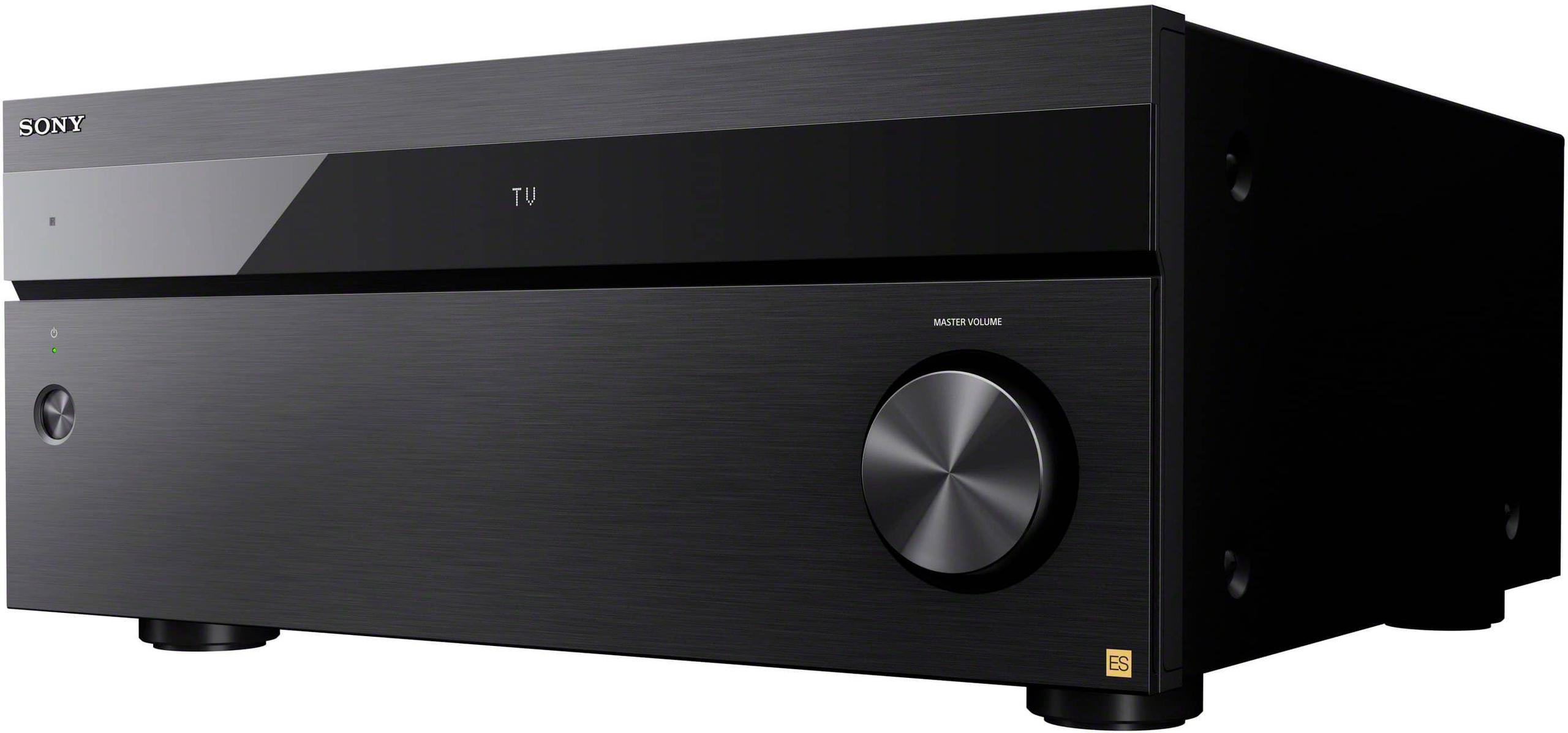
Today we're comparing two compelling but very different approaches: the Onkyo TX-NR7100 from 2021 and the Sony STR-AZ3000ES from 2023. These receivers represent different philosophies in home theater design—one prioritizing connectivity and value, the other emphasizing premium construction and advanced processing.
Before diving into specifics, it's worth understanding what separates good receivers from great ones. Power delivery matters, but it's not just about watts per channel—the quality of that power and how consistently it's delivered across all channels is equally important. Audio processing capabilities determine how well your receiver can decode and enhance modern surround sound formats. Video switching and upscaling affect picture quality, while room correction systems can dramatically improve how your system sounds in your actual living space.
Connectivity has become increasingly important as we accumulate more devices. Gaming consoles, streaming boxes, Blu-ray players, and cable boxes all need HDMI connections, preferably with the latest HDMI 2.1 standard that supports 8K video and high refresh rate gaming. Smart features and app control have shifted from nice-to-have to essential, especially as we stream more content directly to our receivers.
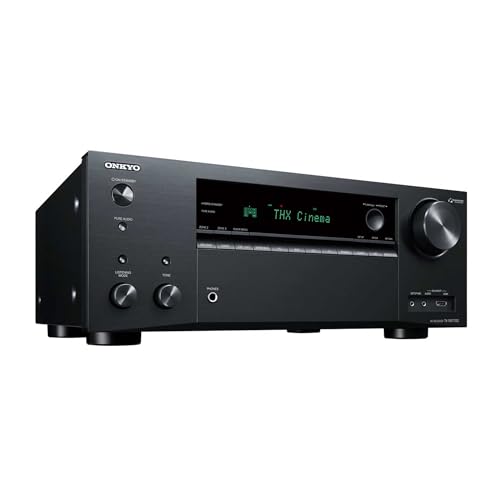
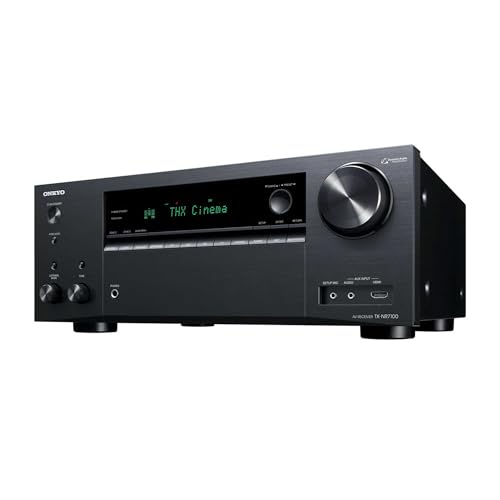
The Onkyo TX-NR7100 arrived in 2021 as part of Onkyo's effort to pack premium features into a more accessible package. It's designed for enthusiasts who want extensive connectivity options and solid performance without breaking the bank. At 22.9 pounds, it represents the modern trend toward lighter, more efficient designs.
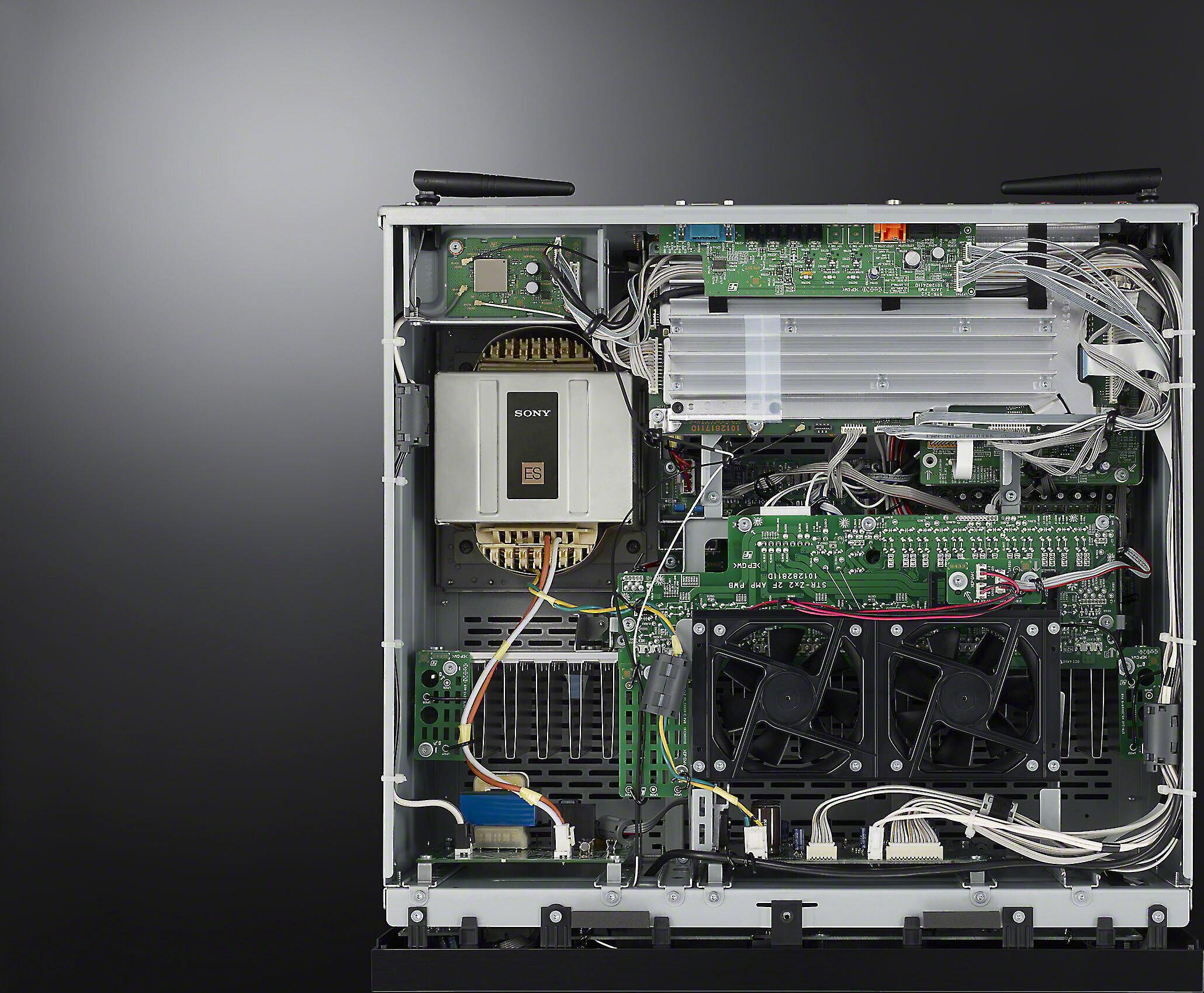
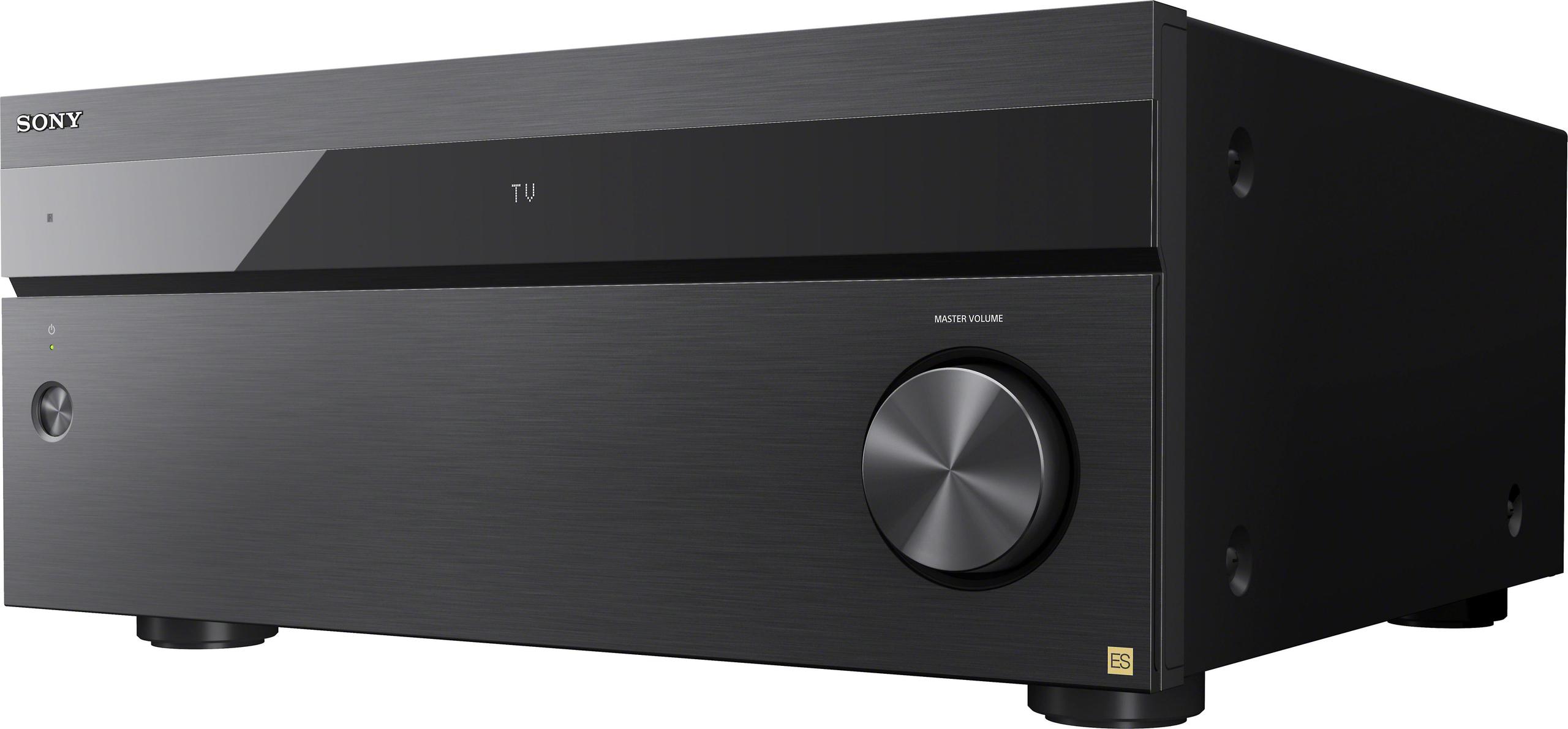
The Sony STR-AZ3000ES launched in 2023 after Sony took nearly six years off from the high-end receiver market. The "ES" designation signals Sony's premium engineering series, and at over 41 pounds, it feels like a return to the heavy, overbuilt receivers of the past. This weight difference isn't just about impressive heft—it typically indicates larger power supplies, better heat dissipation, and more robust internal components.
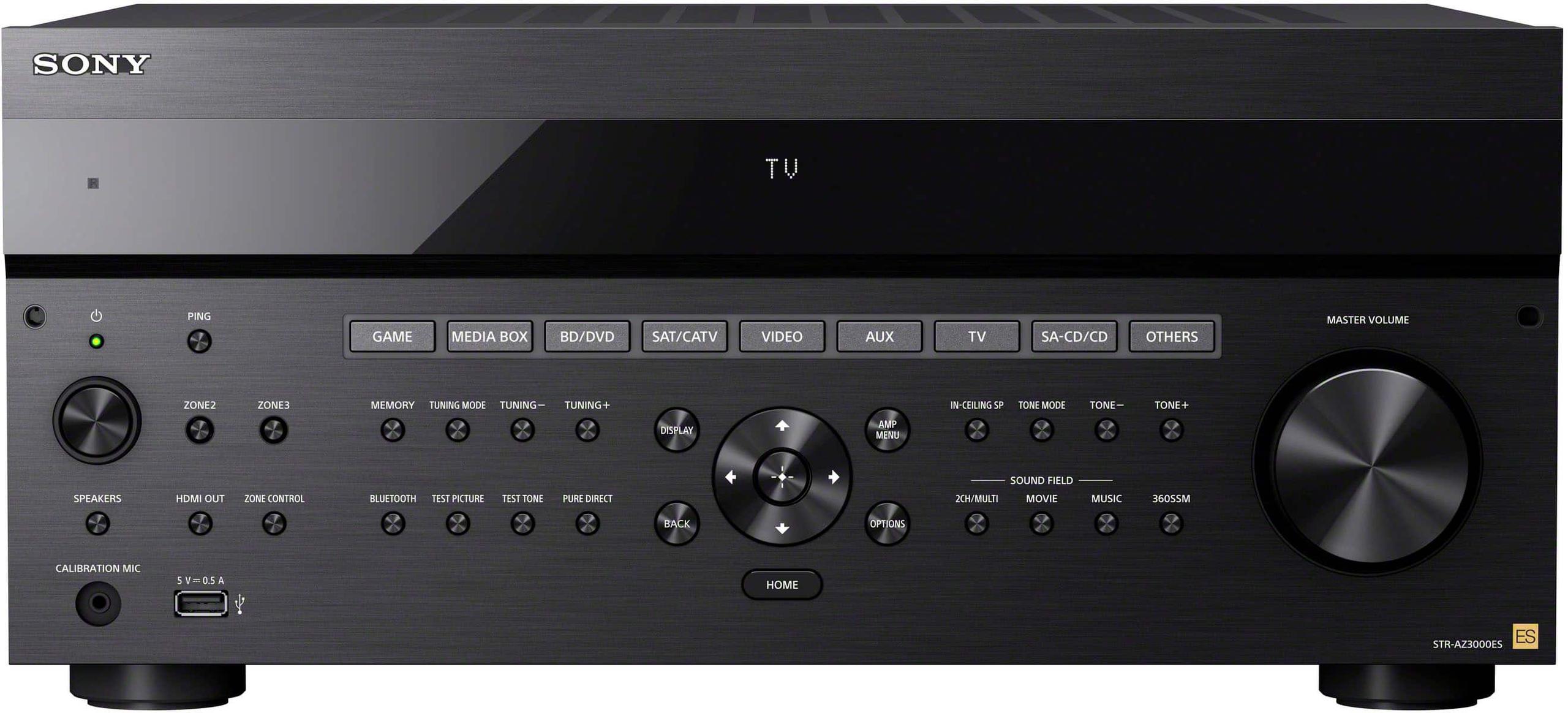
The power specifications tell only part of the story. The Sony STR-AZ3000ES delivers 110 watts per channel compared to the Onkyo TX-NR7100's 100 watts, but that 10-watt difference pales compared to the construction quality gap. Sony's frame-beam chassis design with increased thickness provides the rigid foundation that high-quality audio components need to perform their best.
Here's why build quality matters in practice: when you're playing a movie with explosive action sequences, lesser receivers can struggle to deliver clean power to all channels simultaneously. The power supply sags, causing compression in the sound and reducing the dynamic impact that makes movies exciting. Heavier, better-built receivers typically have larger power supplies with more capacitance (think of it as electrical storage) that can handle these demanding moments without breaking a sweat.
The Sony's professional-grade construction becomes particularly important if you're driving demanding speakers. Large tower speakers or inefficient bookshelf models need receivers that can deliver clean power consistently. Based on our research of user experiences, the Sony maintains its composure with difficult speaker loads better than lighter competitors.
Both receivers are rated for speakers with impedance (electrical resistance) from 4 to 16 ohms, but the Sony's robust power supply gives it more headroom with lower-impedance speakers that draw more current. If you're planning to use high-end speakers or want a system that will perform reliably for years, the construction quality difference becomes a significant factor.
This is where the differences become really interesting. Both receivers support all the current surround sound formats—Dolby Atmos, DTS:X, and high-resolution audio—but they approach enhancement and optimization differently.
The Sony STR-AZ3000ES includes 360 Spatial Sound Mapping (SSM), a proprietary technology that's genuinely impressive. Traditional surround sound relies on precisely positioned speakers to create the illusion of sounds moving around you. Sony's SSM analyzes your room and speaker setup, then processes the audio to create the impression of additional speakers where none exist. Based on expert reviews we've analyzed, this isn't marketing fluff—it demonstrably expands the soundstage and creates more convincing surround effects, particularly beneficial for 5.1.2 Atmos setups where you have fewer physical speakers.
For room correction, both systems tackle the challenge of making your speakers sound their best in your specific room. The Onkyo TX-NR7100 includes Dirac Live, a well-regarded room correction system that measures your room's acoustics and adjusts the sound accordingly. Sony's Digital Cinema Auto Calibration EX (D.C.A.C. EX) takes a different approach, offering multiple calibration types and allowing you to store two completely separate speaker profiles.
The Sony's dual-profile capability is particularly clever for home theater enthusiasts. You can have one profile optimized for full surround movie watching and another for stereo music listening, switching between them based on what you're enjoying. This flexibility addresses a common complaint that room correction systems optimized for movies can make music sound clinical or overly processed.
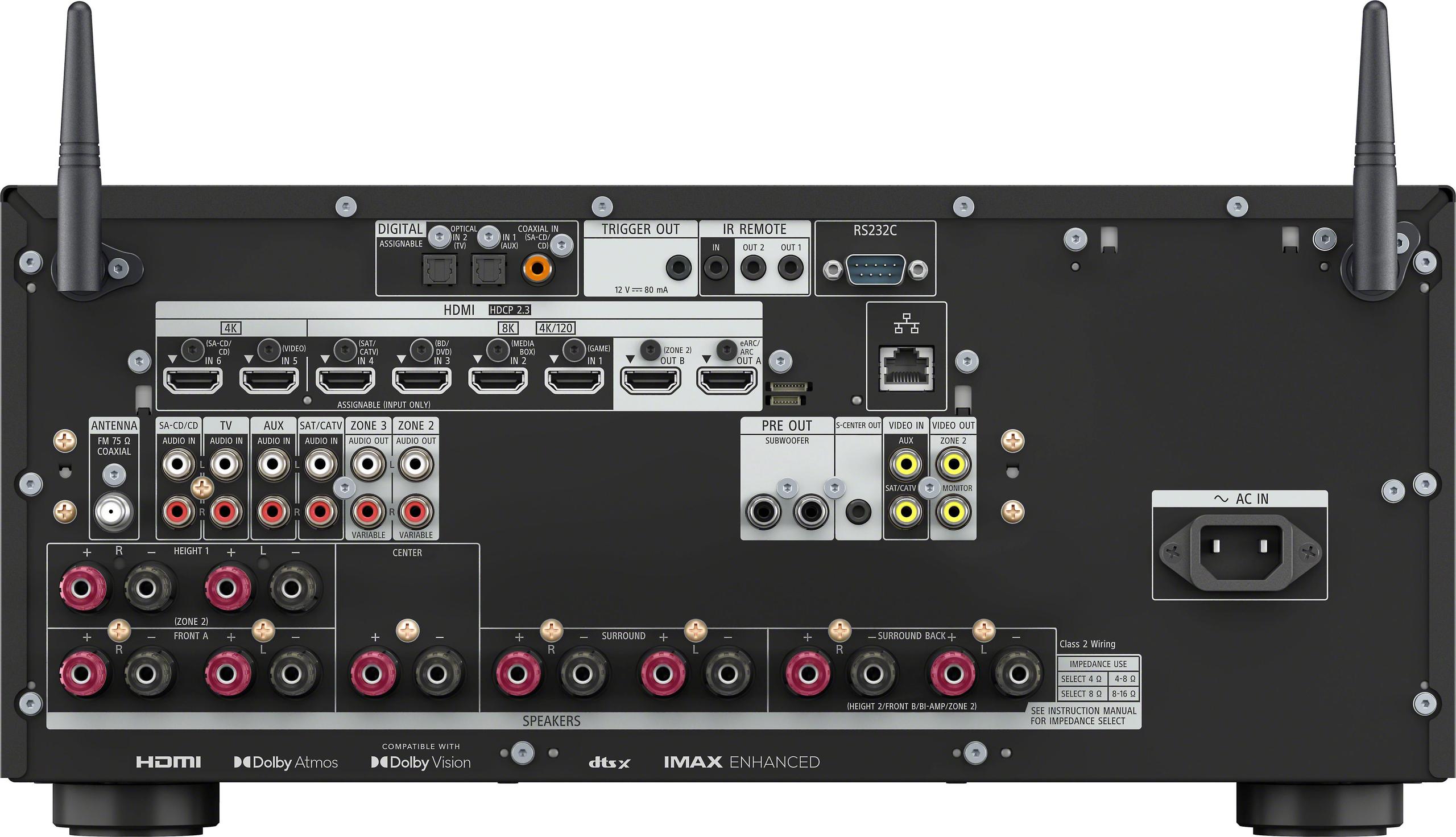
Processing power also affects future flexibility. The Sony can handle up to 11.2 channels of processing compared to the Onkyo's 9.1 maximum. While both physically amplify 9 channels, the Sony's additional processing capability means you could add an external amplifier later for more sophisticated speaker configurations—perhaps a 7.1.4 Atmos setup with four height speakers for truly immersive overhead effects.
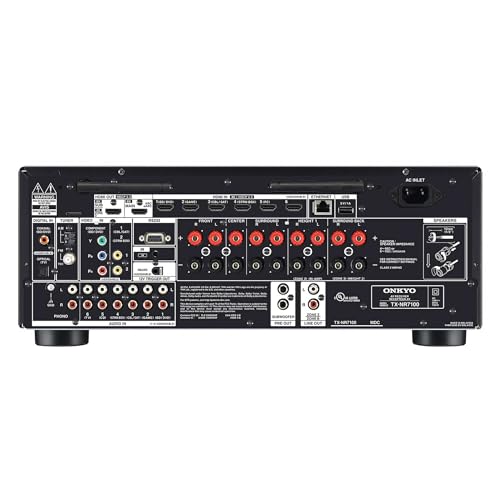
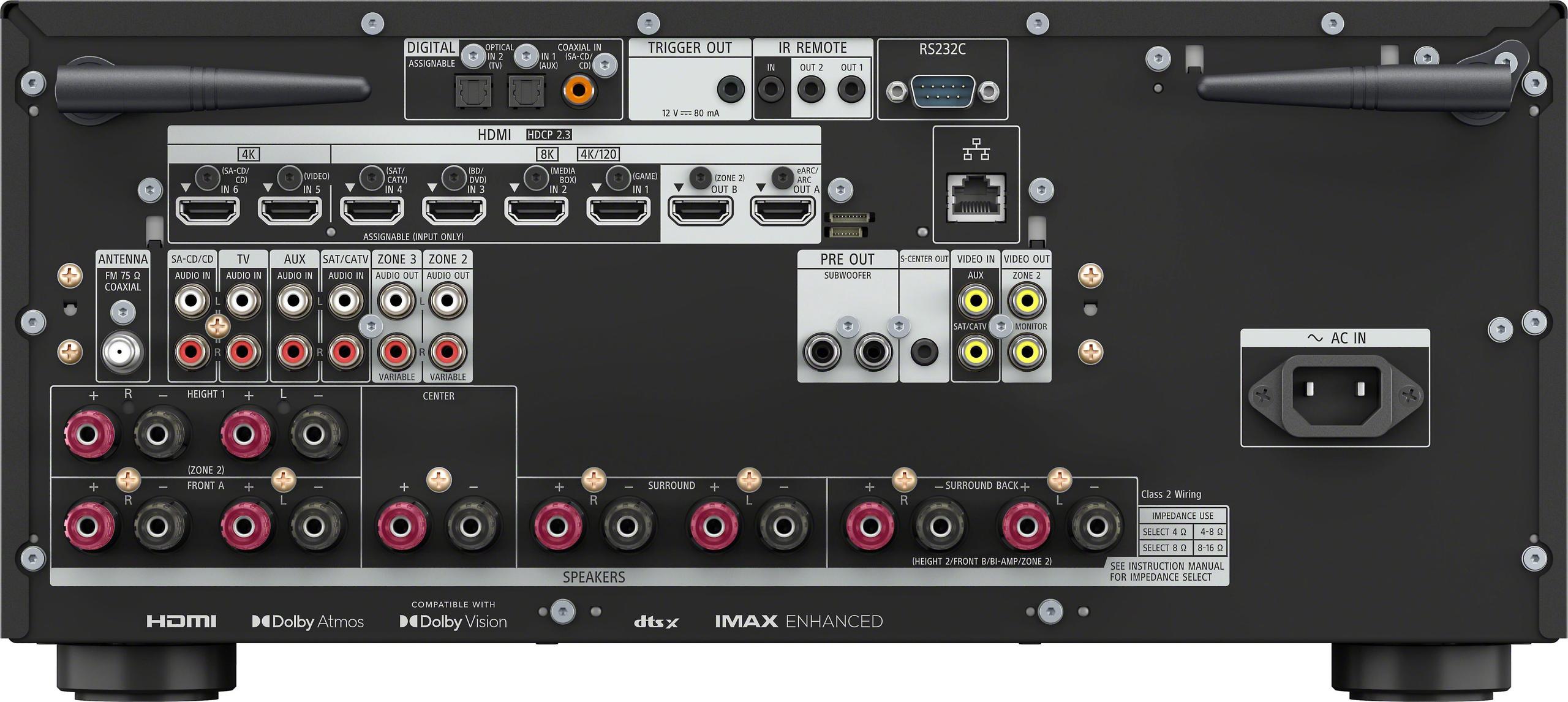
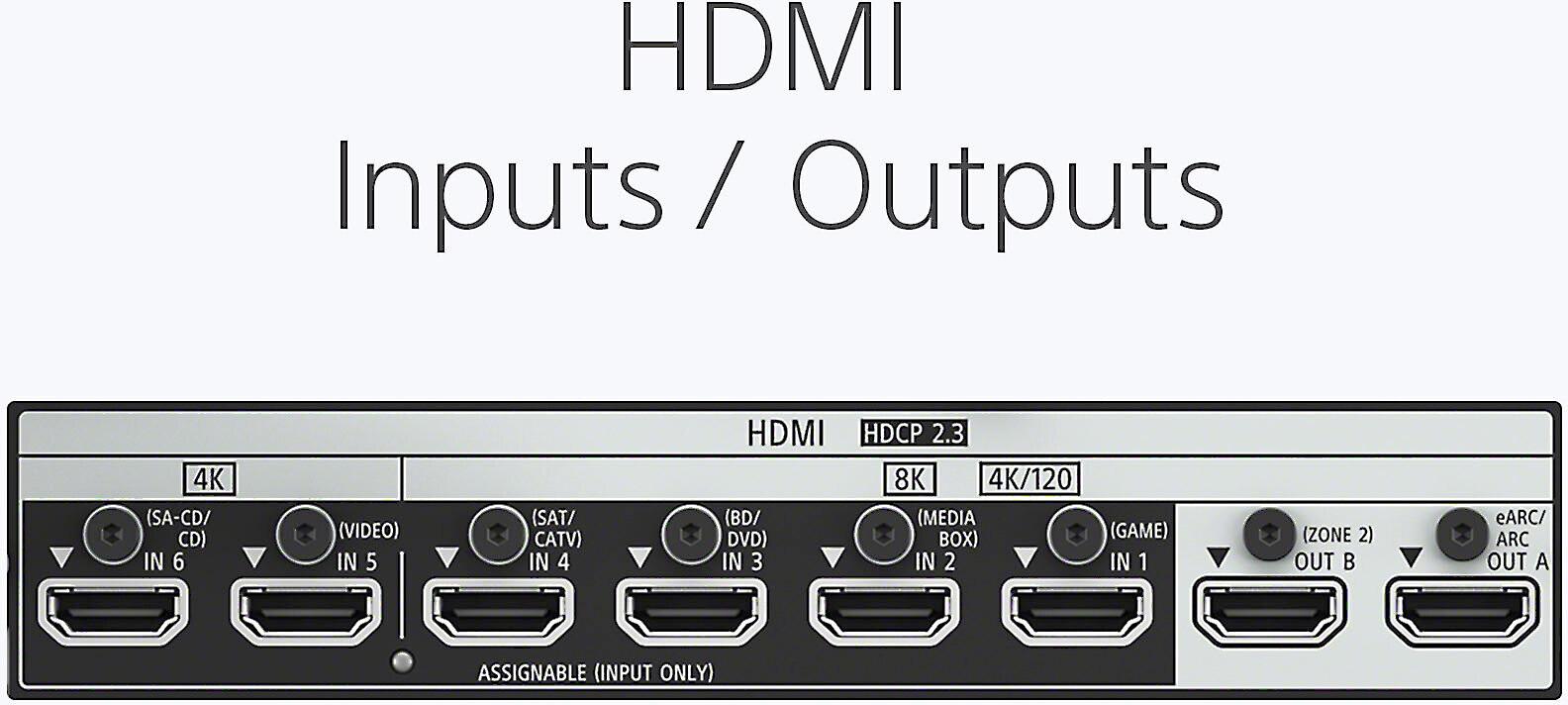
HDMI connectivity has become a crucial differentiator as our entertainment devices multiply. The Onkyo TX-NR7100 provides seven HDMI 2.1 inputs—the latest standard supporting 8K/60Hz and 4K/120Hz video—along with two outputs for main and zone displays. The Sony STR-AZ3000ES offers six HDMI inputs total, with four supporting the full HDMI 2.1 specification.
For most users, both provide adequate connectivity, but gamers with multiple current-generation consoles (PlayStation 5, Xbox Series X, high-end gaming PC) might appreciate the Onkyo's additional HDMI 2.1 ports. These connections support Variable Refresh Rate (VRR) and Auto Low Latency Mode (ALLM)—features that reduce input lag and eliminate screen tearing for smoother gaming experiences.
Video processing capabilities matter when you're upscaling lower-resolution content. Both receivers can upscale 1080p content to 4K and 4K content to 8K, but the Sony provides more precise upscaling specifications. In practice, this means slightly sharper, more detailed images when watching older content or lower-resolution streaming services.
Smart connectivity represents both the biggest promise and most significant pitfall of modern receivers. When it works well, streaming music directly to your receiver, controlling everything through smartphone apps, and integrating with voice assistants creates a seamless experience. When it doesn't work, it's incredibly frustrating.
Based on our research of user experiences, this is where the Sony STR-AZ3000ES shows its biggest weakness. Multiple reviews report unreliable casting functionality, with the receiver disappearing from Chromecast and AirPlay device lists or cutting out mid-stream. This isn't uncommon with first-generation smart features, but it's disappointing on a premium receiver. The issue may be resolved through firmware updates, but it represents a real usability concern at the time of writing.
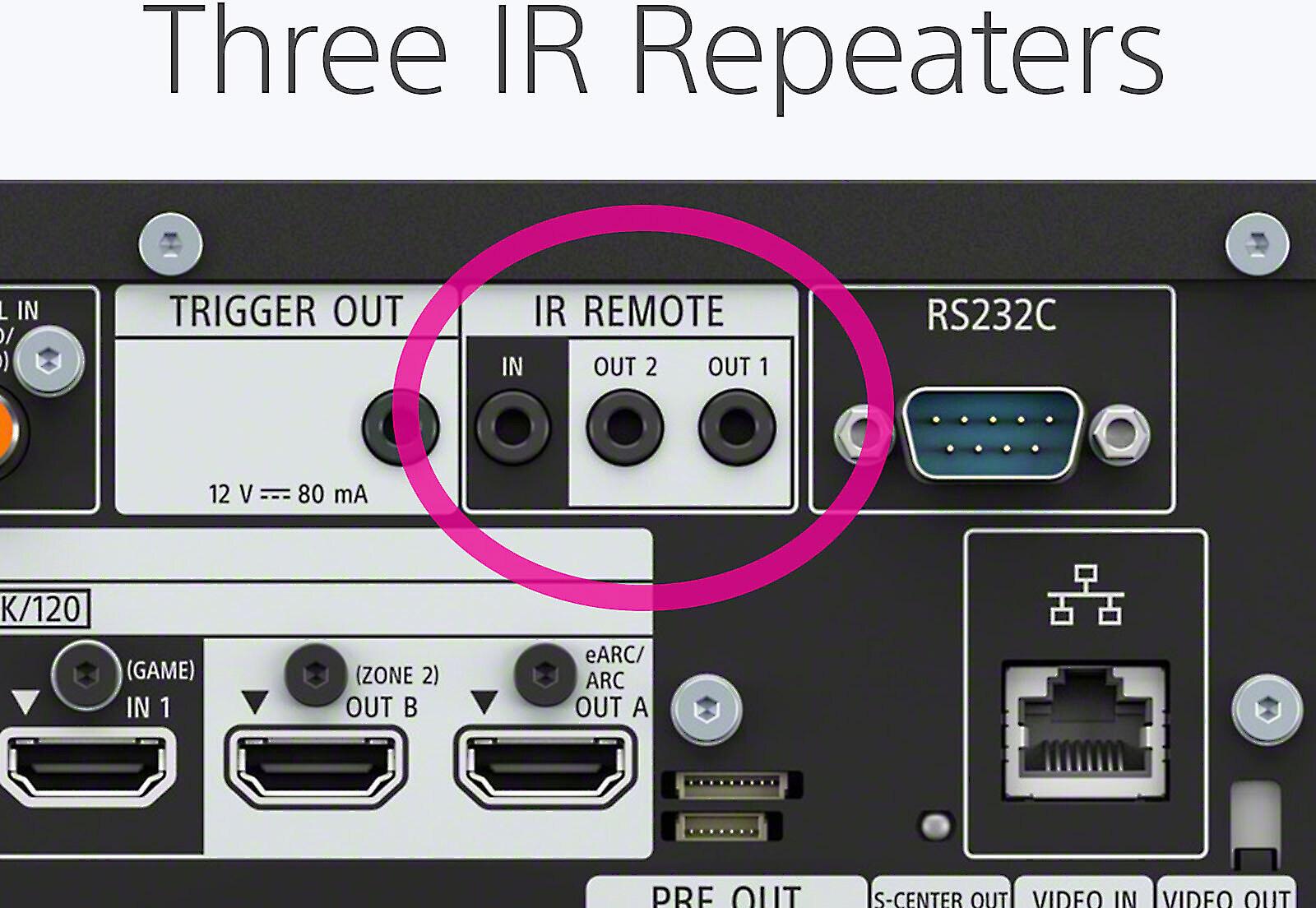
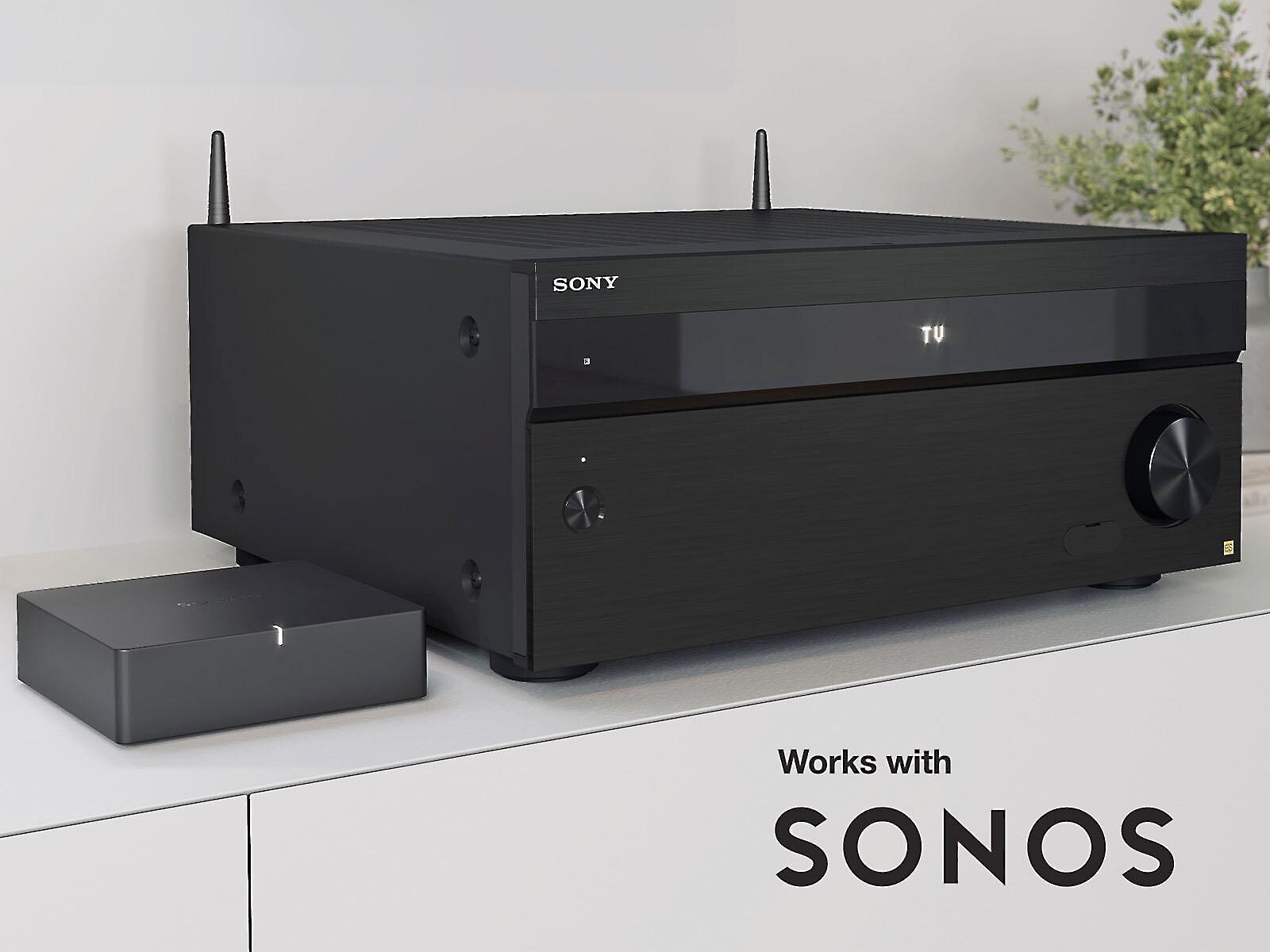
The Sony does excel in professional integration, supporting Control4, Crestron, and Savant control systems extensively. Its "Works with Sonos" feature is particularly clever—when paired Sonos devices start playing, the receiver automatically powers on, switches inputs, and adjusts to preset volume levels. This seamless integration could be transformative for multi-room audio setups.
The Onkyo TX-NR7100 appears to have fewer reported smart connectivity issues, though specific app reliability wasn't as extensively documented in the reviews we analyzed. Sometimes the more conservative approach to smart features proves more reliable in daily use.
Both receivers support multi-zone audio, allowing you to send different sources to speakers in other rooms. The Sony STR-AZ3000ES provides more comprehensive zone control with dedicated HDMI outputs for Zone 2 and Zone 3, enabling independent video and audio feeds to different areas of your home.
This flexibility becomes valuable in larger homes where you want background music in the kitchen while someone watches a movie in the main theater. The Sony's zone capabilities feel more thought-out and professional, likely reflecting its positioning toward custom installation markets.
The processing power difference also affects flexibility. The Sony's 11.2-channel processing means you could eventually expand your system with external amplification for more sophisticated configurations. If you're starting with a 5.1.2 Atmos setup but dream of upgrading to 7.1.4 eventually, the Sony provides a clearer upgrade path.
For dedicated home theater use, several factors become critical. Dynamic range—the difference between the quietest and loudest sounds—determines how impactful movie soundtracks feel. Clean center channel performance affects dialogue clarity. Subwoofer integration impacts bass response and overall system cohesion.
Based on expert reviews and user feedback we've analyzed, both receivers perform well in these areas, but with different strengths. The Sony STR-AZ3000ES's superior power supply and construction typically translate to better dynamic performance with demanding movie soundtracks. The 360 Spatial Sound Mapping feature consistently receives praise for making movies feel more immersive, particularly in rooms where perfect speaker placement isn't possible.
The Onkyo TX-NR7100 delivers solid performance that satisfies most users, with particular strength in handling multiple high-bandwidth video sources simultaneously. If your theater doubles as a gaming room with multiple consoles, the additional HDMI 2.1 connections provide practical advantages.
Both support modern HDR formats (HDR10, Dolby Vision, HLG) that make properly mastered content look spectacular on compatible displays. The gaming features work well for reducing input lag, though serious competitive gamers might still prefer direct connections to their displays for ultimate responsiveness.
At the time of writing, these receivers target different market segments despite similar channel counts. The Onkyo TX-NR7100 typically offers better value for users prioritizing features and connectivity over ultimate build quality. It provides most of the capabilities enthusiasts want—extensive HDMI switching, Dolby Atmos processing, room correction—at a more accessible price point.
The Sony STR-AZ3000ES commands a premium that reflects its professional-grade construction and five-year warranty—significantly longer than typical industry coverage. This positioning makes sense for users building dedicated theater rooms, working with custom installers, or simply wanting equipment that will perform reliably for many years.
The value equation also depends on your specific priorities. If maximum HDMI connectivity is crucial for your setup, the Onkyo's seven HDMI 2.1 inputs provide tangible benefit over the Sony's six total inputs. Conversely, if you value audio processing innovations and build quality over pure connectivity, the Sony's premium becomes more justifiable.
The Sony STR-AZ3000ES is the clear choice for serious home theater enthusiasts who prioritize long-term performance and advanced audio processing. The 360 Spatial Sound Mapping technology provides genuine improvements in surround presentation, while the professional-grade construction suggests years of reliable operation. The ability to process 11.2 channels provides future expansion possibilities that justify the premium for system builders planning sophisticated installations.
However, the reported streaming reliability issues represent a significant concern. For a receiver in this price category, basic connectivity features should work flawlessly. These problems might be resolved through firmware updates, but they affect daily usability in ways that superior build quality can't compensate for.
The Onkyo TX-NR7100 makes more sense for users who need maximum connectivity, prefer straightforward operation, or are working within tighter budgets. Seven HDMI 2.1 inputs provide genuine advantages for source-heavy setups, and the generally reliable operation eliminates the frustration that smart feature problems can cause.
For gaming-focused setups, the Onkyo's additional high-bandwidth inputs and seemingly more stable smart features create practical advantages. For dedicated two-channel music listening, both receivers perform well, though the Sony's ability to store separate calibration profiles for music and movies provides more flexibility.
The decision ultimately comes down to priorities: premium construction and advanced processing versus maximum connectivity and reliable operation. Both represent competent approaches to modern home theater, but they serve different users and different priorities in ways that make the choice clearer once you understand your specific needs and tolerance for potential smart feature frustrations.
| Onkyo TX-NR7100 | Sony STR-AZ3000ES |
|---|---|
| Power Output - Higher wattage drives demanding speakers more effectively | |
| 100W per channel (8Ω) | 110W per channel (8Ω) |
| Build Quality - Weight indicates power supply capacity and long-term reliability | |
| 22.9 pounds (lighter, modern design) | 41+ pounds (professional-grade construction) |
| Channel Processing - More channels enable complex Dolby Atmos configurations | |
| 9.1 channels maximum | 11.2 channels (allows future expansion) |
| HDMI 2.1 Inputs - Critical for gaming consoles and 8K sources | |
| 7 HDMI 2.1 inputs (excellent for multiple gaming systems) | 4 HDMI 2.1 inputs + 2 HDMI 2.0 |
| Room Correction - Optimizes sound for your specific listening environment | |
| Dirac Live (industry-standard calibration) | D.C.A.C. EX with dual profiles (movie/music modes) |
| Proprietary Audio Enhancement - Unique technologies that expand soundstage | |
| Standard surround processing | 360 Spatial Sound Mapping (creates wider soundfield) |
| Smart Connectivity - Streaming reliability affects daily usability | |
| Generally stable casting and streaming | Reported issues with Chromecast/AirPlay reliability |
| Professional Integration - Important for custom installations | |
| Basic control system support | Comprehensive Control4/Crestron/Savant compatibility |
| Multi-Zone Capabilities - Enables audio in multiple rooms simultaneously | |
| Zone 2 audio output | Zone 2/3 with dedicated HDMI outputs |
| Warranty Coverage - Longer warranties indicate manufacturer confidence | |
| Standard 1-2 year warranty | 5-year ES series warranty |
| Release Year - Newer models typically include latest features and fixes | |
| 2021 (established, stable platform) | 2023 (latest generation with modern processing) |
The Sony STR-AZ3000ES is better for dedicated home theaters due to its professional-grade construction, 360 Spatial Sound Mapping technology that creates more immersive surround sound, and superior power delivery. However, the Onkyo TX-NR7100 offers excellent performance for most users at a more accessible price point.
The Sony STR-AZ3000ES delivers 110 watts per channel compared to the Onkyo TX-NR7100's 100 watts per channel. More importantly, the Sony's heavier construction (41+ pounds vs 22.9 pounds) indicates a more robust power supply that can maintain clean power delivery during demanding scenes.
The Onkyo TX-NR7100 provides 7 HDMI 2.1 inputs, making it better for users with multiple gaming consoles, streaming devices, and other sources. The Sony STR-AZ3000ES offers 6 total HDMI inputs, with 4 supporting the latest HDMI 2.1 standard.
Yes, both the Onkyo TX-NR7100 and Sony STR-AZ3000ES fully support Dolby Atmos, DTS:X, and all current surround sound formats. The Sony adds proprietary 360 Spatial Sound Mapping for enhanced surround effects.
Based on user reports, the Onkyo TX-NR7100 appears more reliable for streaming, with fewer reported connectivity issues. The Sony STR-AZ3000ES has documented problems with Chromecast and AirPlay reliability that may require firmware updates to resolve.
The Onkyo TX-NR7100 uses Dirac Live room correction, while the Sony STR-AZ3000ES features D.C.A.C. EX with the ability to store two separate calibration profiles—one for movies and one for music listening.
Yes, both receivers support 8K/60Hz and 4K/120Hz video pass-through with gaming features like Variable Refresh Rate (VRR) and Auto Low Latency Mode (ALLM). The Onkyo TX-NR7100 has more HDMI 2.1 ports for these high-bandwidth connections.
The Sony STR-AZ3000ES offers superior build quality with professional-grade construction, a 5-year warranty, and components designed for long-term reliability. The Onkyo TX-NR7100 uses modern, lighter construction that's still reliable but not as robust.
Both receivers can power 9 speakers directly. However, the Sony STR-AZ3000ES can process up to 11.2 channels, allowing you to add external amplifiers for more complex Dolby Atmos configurations with additional height speakers.
The Onkyo TX-NR7100 typically offers better value with extensive features and connectivity at a more accessible price. The Sony STR-AZ3000ES justifies its premium pricing with superior construction, advanced audio processing, and professional-grade reliability.
Both support multi-room audio, but the Sony STR-AZ3000ES offers more comprehensive multi-zone capabilities with dedicated HDMI outputs for Zone 2 and Zone 3. The Onkyo TX-NR7100 provides basic Zone 2 functionality that works well for most users.
Choose the Onkyo TX-NR7100 if you need maximum HDMI connectivity, prefer reliable streaming, or want excellent performance at a lower price. Choose the Sony STR-AZ3000ES if you prioritize build quality, want advanced audio processing features, or are building a dedicated home theater room.
We've done our best to create useful and informative comparisons to help you decide what product to buy. Our research uses advanced automated methods to create this comparison and perfection is not possible - please contact us for corrections or questions. These are the sites we've researched in the creation of this article: crutchfield.com - prohifi.in - bestbuy.com - h-m-entertainment.com - audiosciencereview.com - crutchfield.ca - soundandvision.com - avsforum.com - avgadgets.com - youtube.com - onkyo.com - crutchfield.com - onkyo.com - accessories4less.com - klipsch.com - youtube.com - listenup.com - intl.onkyo-av.com - bestbuy.com - 420spotshop.com - support.onkyousa.com - crutchfield.com - merlinstv.com - avsforum.com - youtube.com - musicloversaudio.com - skybygramophone.com - snapav.com - sweetwater.com - crutchfield.com - ca.community.sony.com

Privacy Policy
Terms and Conditions - Affiliate Policy
Home Security
© Copyright 2008-2026.
11816 Inwood Rd #1211, Dallas, TX 75244