

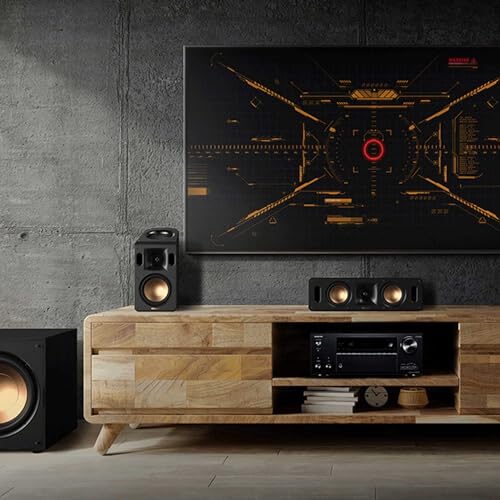
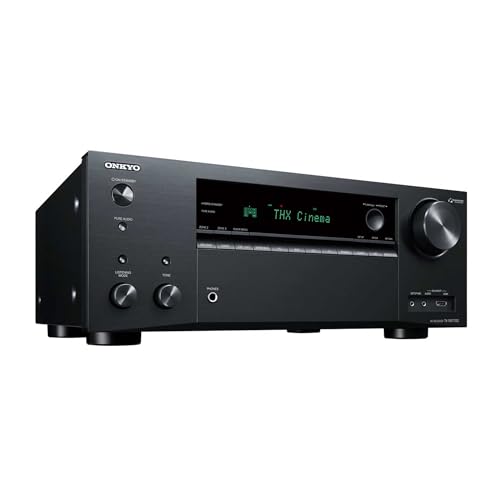
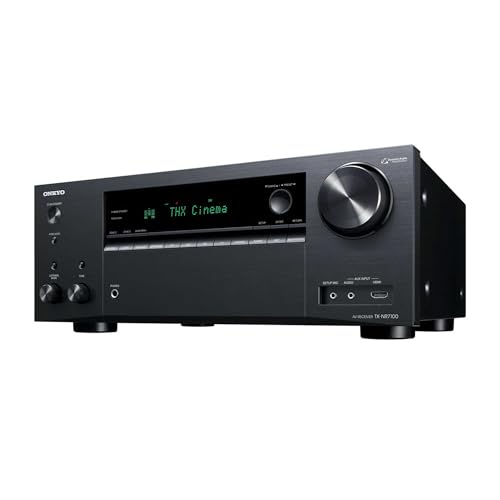
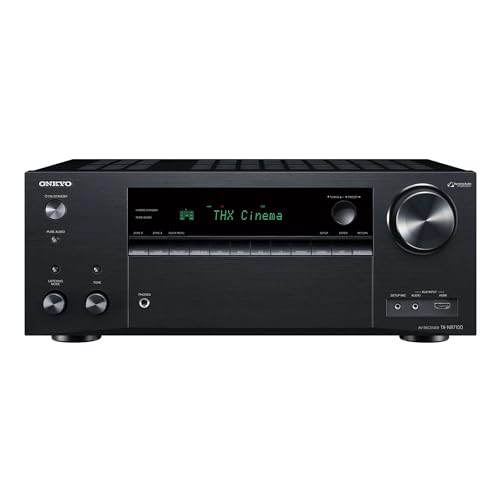
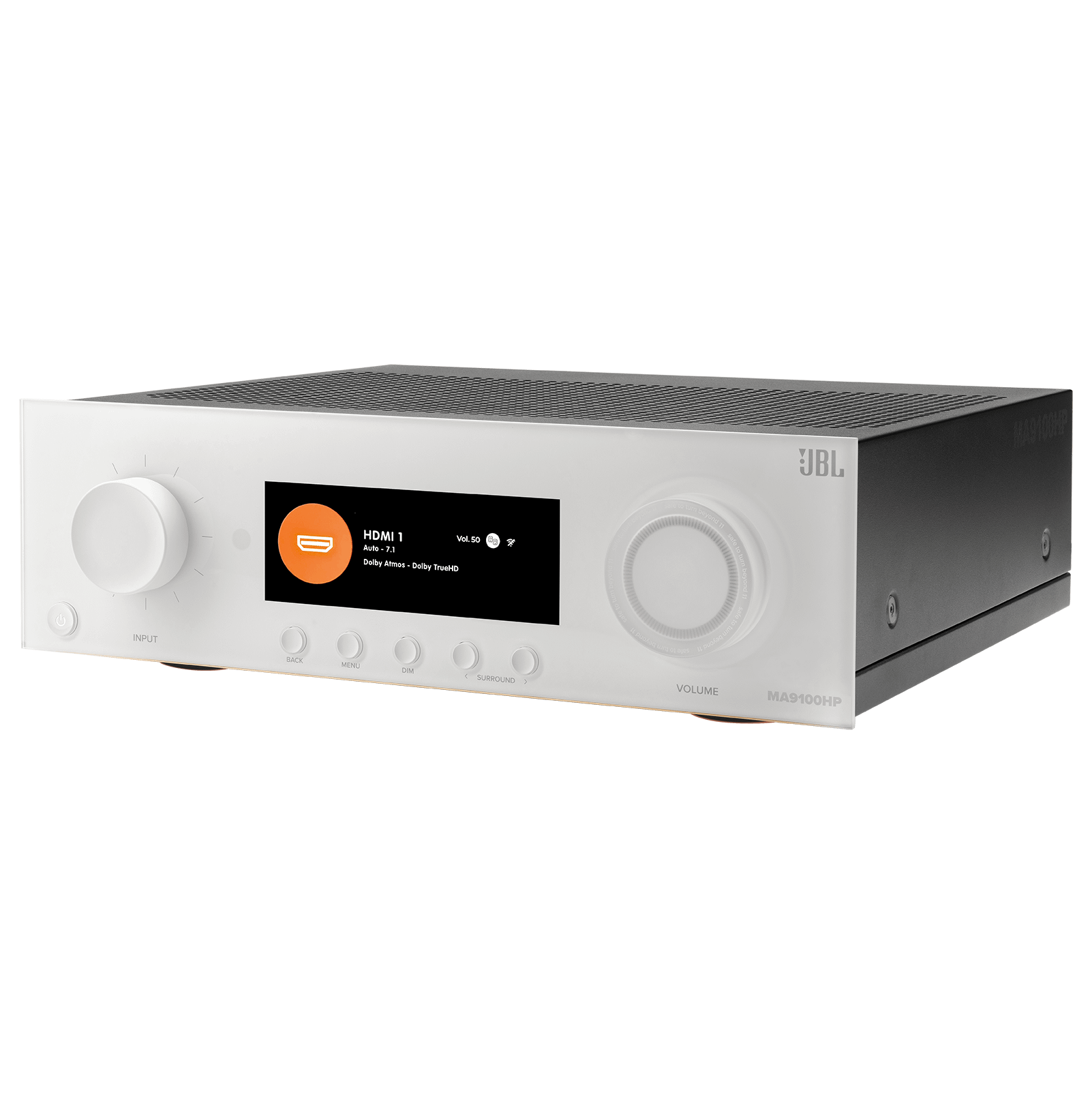
When you're building a serious home theater system, the AV receiver sits at the heart of everything. It's the brain that processes all your audio and video signals, powers your speakers, and connects all your devices together. Think of it as the conductor of an orchestra—coordinating every component to create that perfect movie night experience.
Both the Onkyo TX-NR7100 and JBL MA9100HP are 9.2-channel receivers, meaning they can power nine speakers plus two subwoofers simultaneously. This configuration opens up exciting possibilities for immersive surround sound formats like Dolby Atmos, where sounds can literally move around and above you. But despite sharing this basic framework, these receivers take dramatically different approaches to achieving great sound.
Before diving into specifics, let's talk about what really matters in an AV receiver. Power output is obviously important—measured in watts per channel, it determines how loud and dynamic your system can sound without distortion. But raw power isn't everything. The quality of that power, how consistently it's delivered across all channels, and how well the receiver manages different audio formats matters just as much.
Room correction technology has become increasingly crucial. Your living room isn't an acoustically perfect recording studio, and furniture, wall materials, and room shape all affect how sound reaches your ears. Advanced room correction systems use microphones to measure these acoustic problems and automatically adjust the audio to compensate.
HDMI connectivity determines your future-proofing. With gaming consoles now supporting 4K at 120 frames per second and 8K TVs becoming more common, having the latest HDMI 2.1 standard ensures your receiver won't become a bottleneck as technology advances.
The power difference between these receivers tells an interesting story. The JBL MA9100HP delivers 140 watts per channel compared to the Onkyo TX-NR7100's 100 watts—that's a significant 40% advantage on paper. In practical terms, this extra headroom means the JBL can handle demanding movie soundtracks and music with more authority, especially in larger rooms or with less efficient speakers.
However, power specifications only tell part of the story. The Onkyo TX-NR7100 carries THX Select certification, which means it has passed thousands of rigorous tests to ensure it meets specific performance standards for cinema-quality sound reproduction. THX certification isn't just marketing—it guarantees the receiver can accurately reproduce the sound as filmmakers intended it.
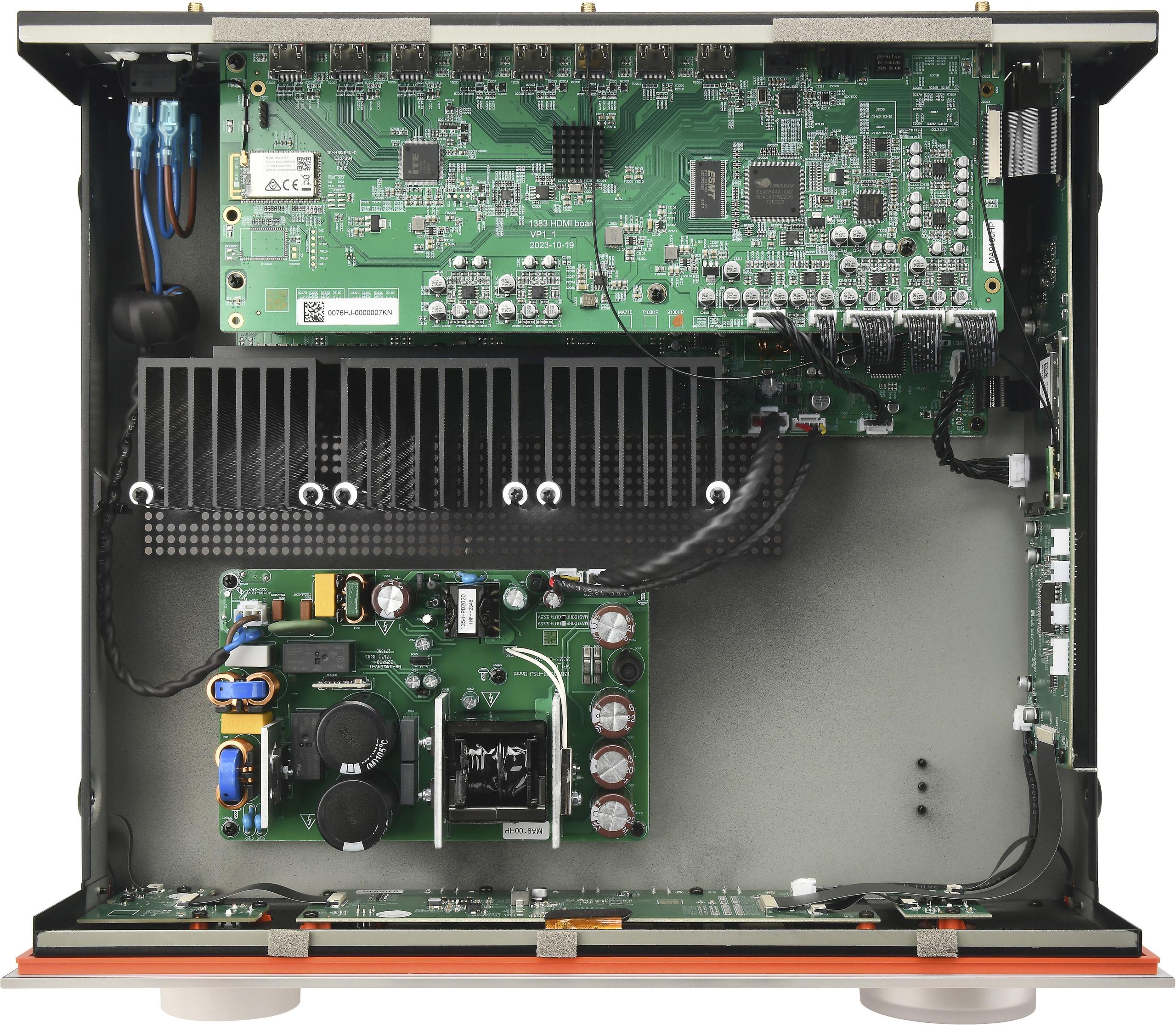
The JBL uses modern Class D amplification technology, which is more efficient and generates less heat than traditional designs. This allows for a more compact form factor while still delivering substantial power. Class D amplifiers work by rapidly switching on and off thousands of times per second, creating the audio waveform through precise timing rather than linear amplification. The result is less wasted energy and cooler operation.
Based on our research into user experiences and professional reviews, both receivers excel at surround sound processing, but with subtle differences. The Onkyo TX-NR7100 consistently receives praise for creating what reviewers call a "convincing sound bubble" where effects pan smoothly around the room and overhead sounds feel genuinely three-dimensional. The JBL MA9100HP earns recognition for its balanced soundstage and precise instrument placement, particularly excelling with stereo music content.
For music listening, the approaches differ noticeably. The Onkyo TX-NR7100 tends toward a neutral, balanced presentation that doesn't favor any particular genre—whether you're listening to classical, jazz, or modern pop, it presents the music without editorial commentary. The JBL MA9100HP creates what users describe as a cohesive soundstage where individual instruments occupy distinct, well-defined spaces in the mix.
This is where these receivers reveal their fundamental philosophical differences. Room correction technology analyzes your room's acoustic properties—how sound bounces off walls, gets absorbed by furniture, and interacts with the space's dimensions—then automatically adjusts the audio output to compensate for acoustic problems.
The Onkyo TX-NR7100 includes Dirac Live room correction built right in. Dirac Live is widely considered the gold standard in consumer room correction, offering sophisticated analysis that can measure up to 13 different positions in your room and create a comprehensive acoustic map. The system then applies precise corrections to improve everything from bass response to dialogue clarity and spatial imaging.
What makes this particularly valuable is that Dirac Live typically costs $259 to $350 as a standalone purchase. By including it as standard equipment, Onkyo provides immediate access to professional-grade room optimization without additional investment or technical complexity.
The JBL MA9100HP takes a different approach—it's "Dirac Live Ready," meaning the hardware can support the software, but you'll need to purchase a separate license, download computer software, and acquire a compatible USB measurement microphone like the popular Umik-1. This process requires more technical comfort and represents a significant additional investment.
The JBL does include basic EZ Set EQ as standard equipment, but this is a simplified system compared to full Dirac Live implementation. More concerning from a user experience standpoint, the JBL MA9100HP has no automatic setup wizard when you first power it on. You're immediately dropped into menu screens where you must manually configure speaker distances, levels, and crossover frequencies—tasks that most users expect to be automated in modern receivers.
This setup philosophy reflects JBL's apparent targeting toward more technically inclined users who prefer manual control over automated convenience. However, based on our research into user feedback, this approach can be frustrating for buyers expecting a more plug-and-play experience.
Both receivers support the latest HDMI 2.1 standard, which is crucial for handling 8K video at 60 frames per second and 4K video at 120 frames per second. These high refresh rates are particularly important for gaming, where they can reduce input lag and provide smoother motion during fast-paced action.
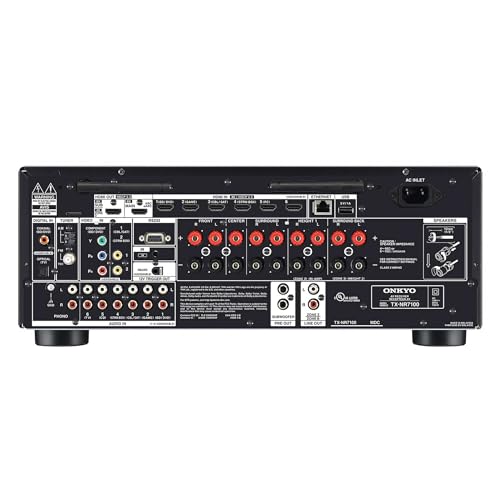
The Onkyo TX-NR7100 provides seven HDMI inputs—six on the rear panel supporting the full HDMI 2.1 specification, plus one front-panel input for convenient temporary connections. This gives you flexibility for multiple gaming consoles, streaming devices, and other sources without constantly swapping cables.
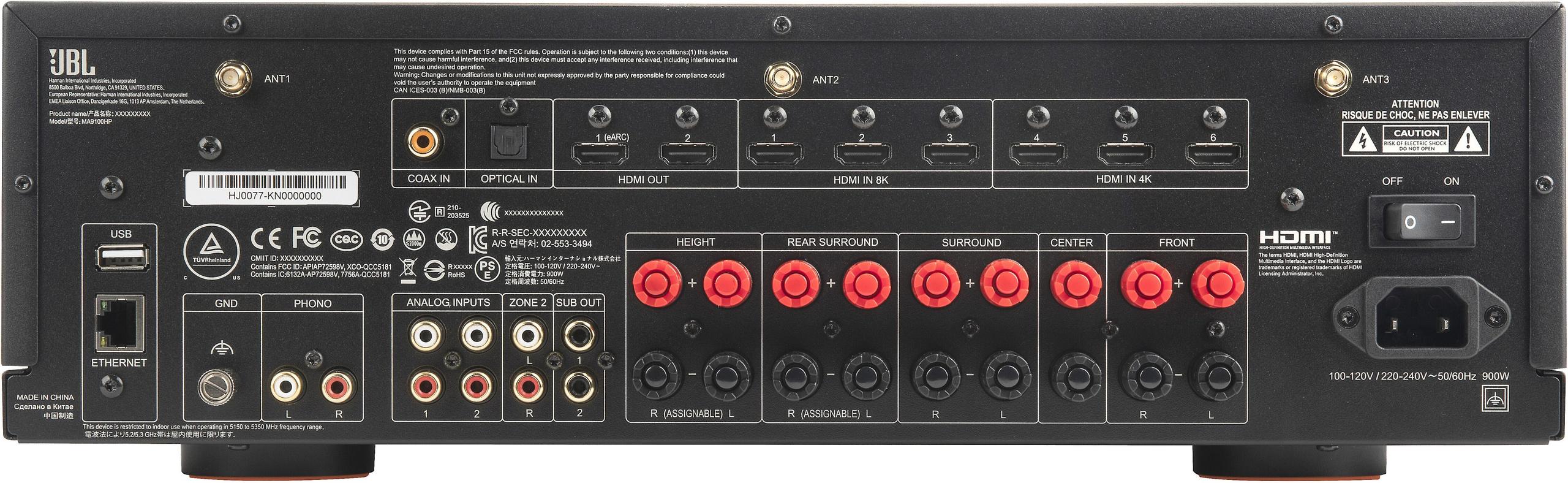
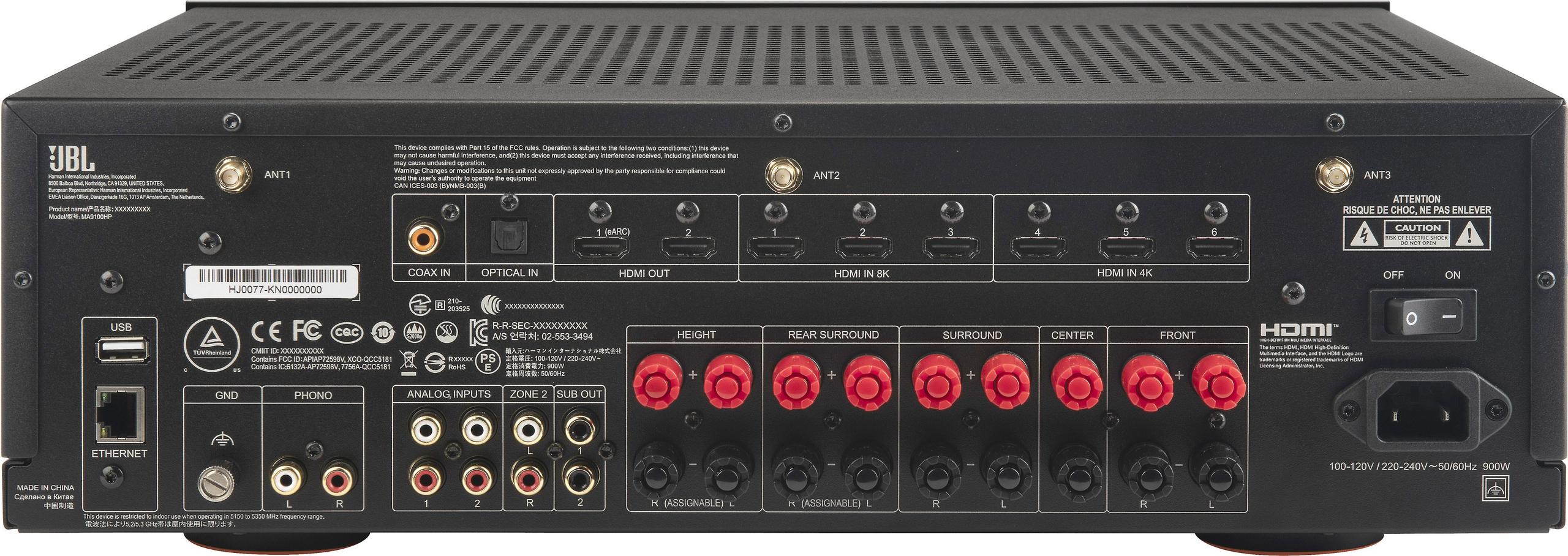
The JBL MA9100HP offers six HDMI inputs with two outputs, and notably includes three inputs specifically optimized for 4K/120Hz gaming performance. This focused approach reflects JBL's attention to gaming applications, supporting Variable Refresh Rate (VRR), Auto Low Latency Mode (ALLM), and Quick Frame Transport (QFT)—technologies that work together to minimize lag and eliminate screen tearing during gaming.
Both receivers support HDR (High Dynamic Range) video formats that provide expanded color gamuts and contrast ranges for more lifelike picture quality. However, there's a subtle but potentially important difference: the Onkyo TX-NR7100 supports HLG (Hybrid Log-Gamma), a broadcast HDR standard used by some streaming services and broadcast television, while the JBL MA9100HP notably omits HLG support.
Modern AV receivers need to seamlessly integrate with today's streaming-centric entertainment ecosystem. Both receivers support the essential wireless protocols, but with different emphases.
The Onkyo TX-NR7100 takes a comprehensive approach to streaming integration, including built-in support for Spotify, TIDAL, Deezer, and other services directly accessible through the receiver's interface. It supports AirPlay 2 for Apple devices, Chromecast for Google ecosystem integration, and DTS Play-Fi for multi-room audio distribution. The receiver also integrates with Sonos systems and supports both Amazon Alexa and Google Assistant voice control.
Bluetooth implementation includes aptX and aptX-HD codecs, which provide higher-quality wireless audio transmission compared to standard Bluetooth. The Onkyo TX-NR7100 can also transmit audio via Bluetooth to wireless headphones, with a low-latency mode that maintains lip-sync accuracy when watching movies—a thoughtful feature that many receivers overlook.
The JBL MA9100HP includes similar streaming capabilities with AirPlay 2, Chromecast, and Spotify Connect integration. Its Bluetooth implementation supports aptX Adaptive in addition to standard aptX and aptX-HD, providing dynamic bit rate adjustment based on wireless conditions. However, it lacks the comprehensive streaming service integration found in the Onkyo, and our research suggests it only supports Google Assistant for voice control.
The ability to distribute audio and video to other rooms in your house has become increasingly important as home entertainment systems expand beyond a single dedicated space.
The Onkyo TX-NR7100 provides three-zone capability, meaning you can send different audio sources to three separate areas simultaneously. Zone 2 includes both powered speaker outputs and an independent HDMI video output, so you could run audio to a patio and completely different video content to a bedroom TV. This flexibility makes the Onkyo particularly attractive for whole-house audio/video integration.
The JBL MA9100HP supports two-zone operation with a secondary HDMI output for video distribution, which covers most typical multi-room scenarios but provides less flexibility for complex installations.
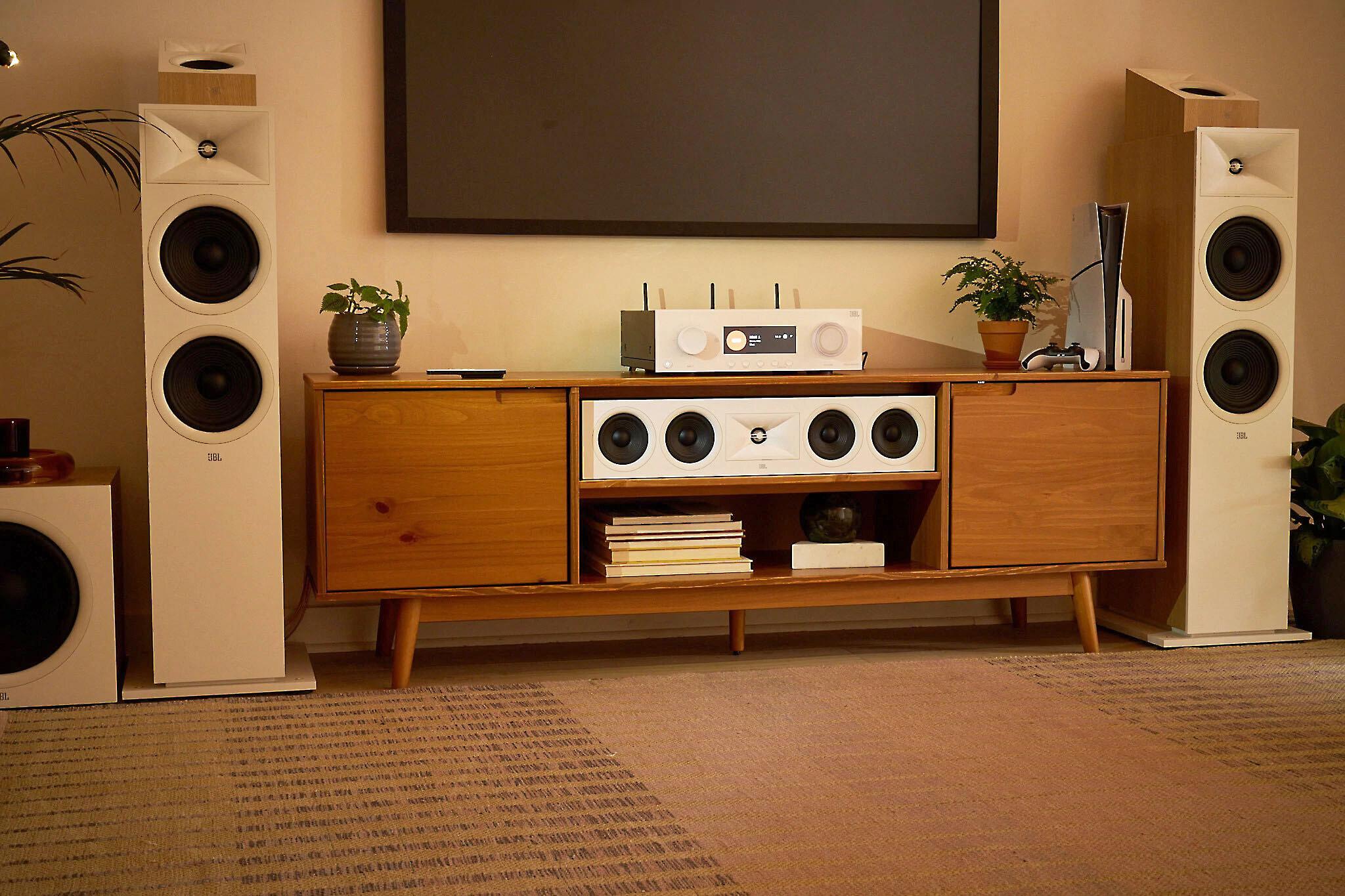
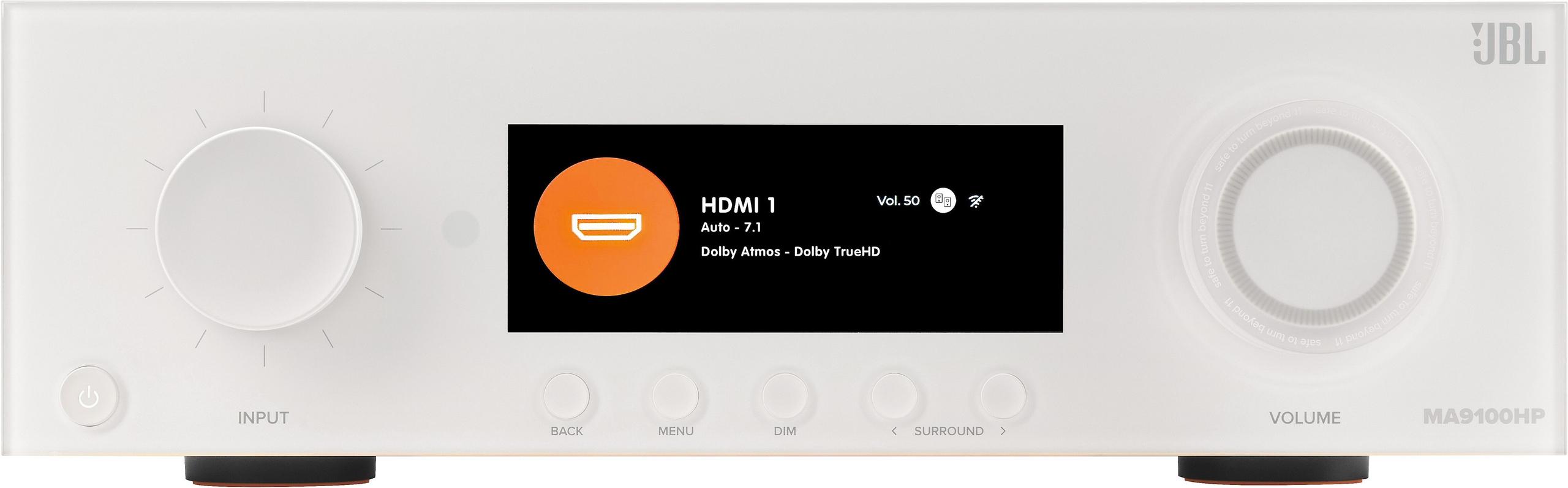
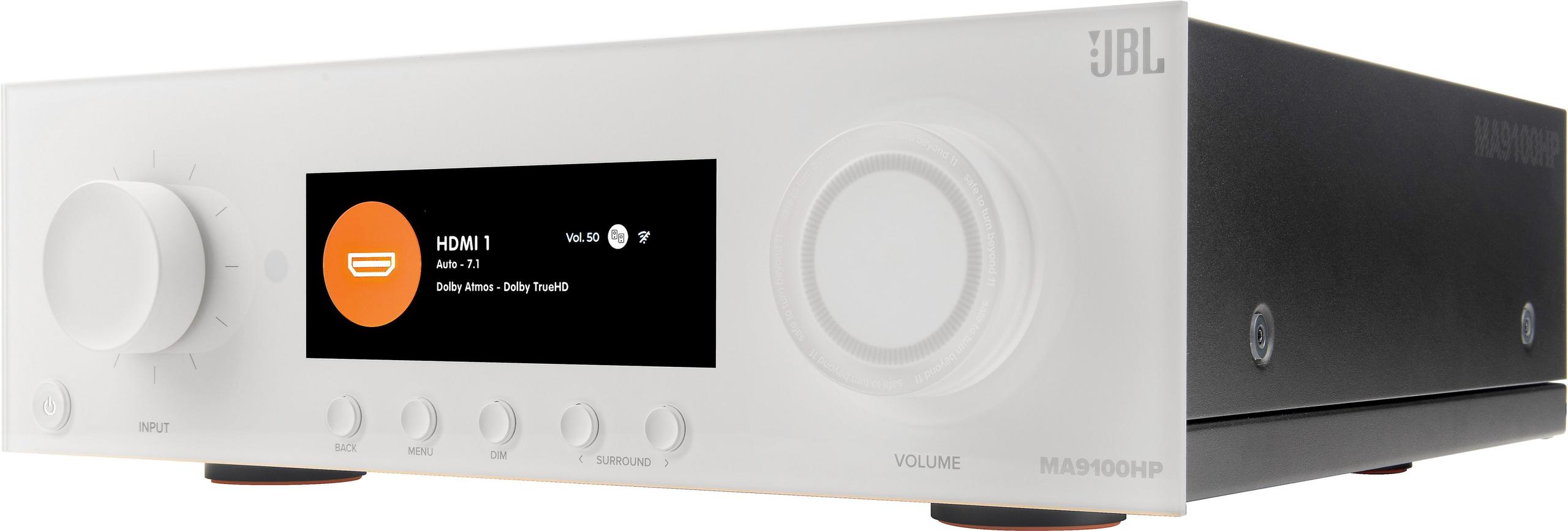
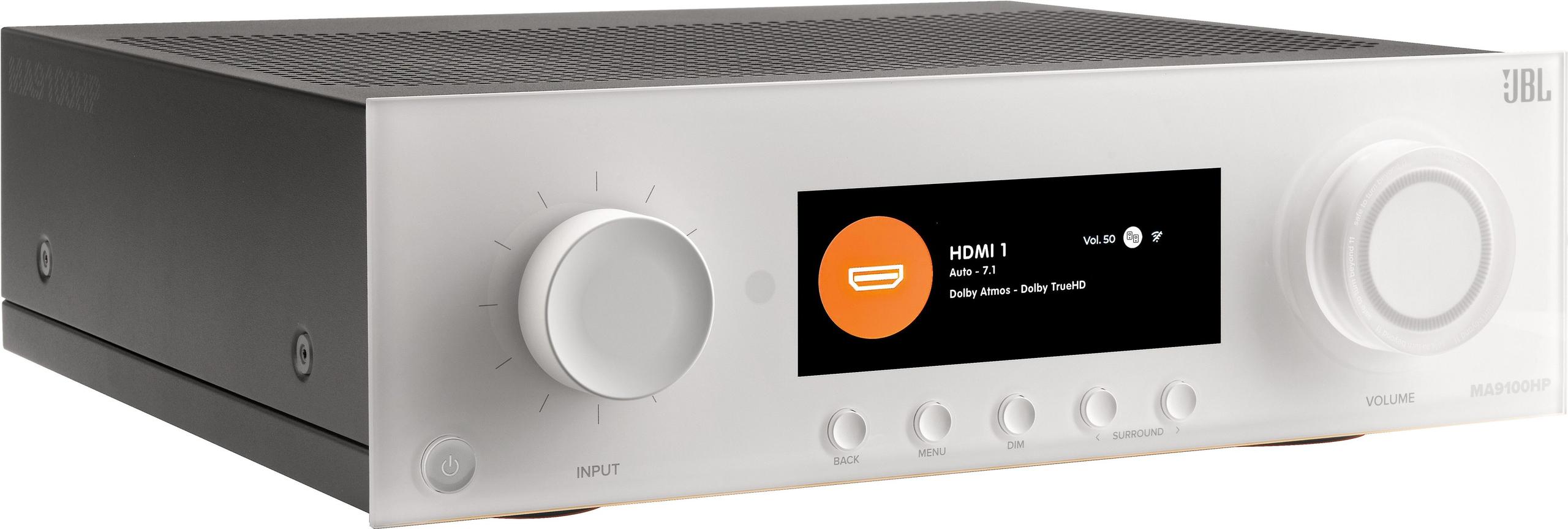
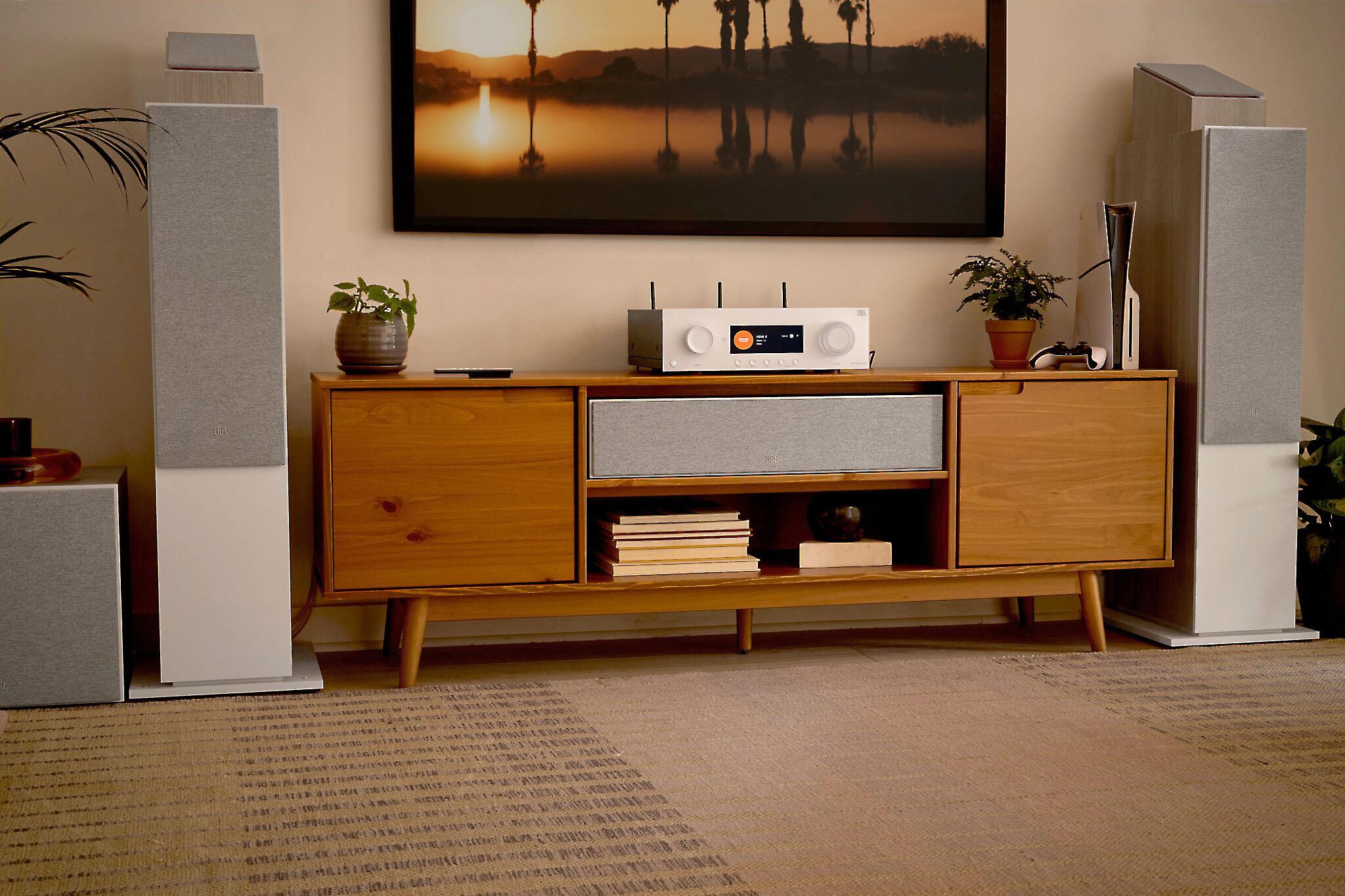
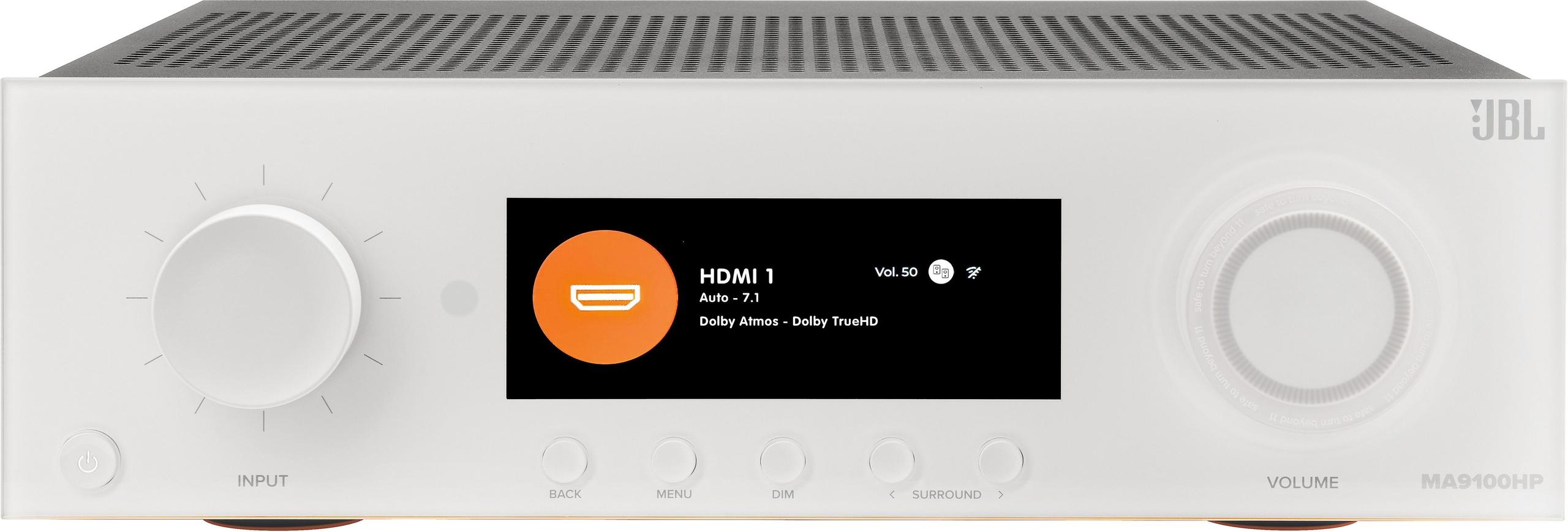
Physical design might seem superficial, but it affects daily usability and long-term satisfaction. The JBL MA9100HP clearly prioritizes modern aesthetics with its sleek metal chassis, full-color display, and even adjustable LED underglow lighting. It's noticeably more compact than typical receivers, thanks partly to its efficient Class D amplification.
However, our research reveals some usability concerns with the JBL's interface design. The display shows small values that are difficult to read from normal viewing distances, and the menu system positions information in the upper portion of the screen rather than center, making navigation less intuitive. More frustratingly, input information doesn't automatically appear on the main display when switching sources—a basic convenience feature that users have come to expect.
The Onkyo TX-NR7100 takes a more traditional approach to design but emphasizes functional clarity. Users consistently praise its intuitive graphical interface and comprehensive mobile app that allows quick adjustments to critical settings like subwoofer and center channel levels.
Here's where a critical limitation emerges with the JBL MA9100HP: it completely lacks pre-amplifier outputs. Pre-outs allow you to bypass the receiver's internal amplifiers and connect external power amplifiers, which is valuable for upgrading your system's power handling or achieving higher performance levels.
This omission is unusual for receivers in this class and represents a significant limitation for users who might want to expand their systems over time. If you ever want to add external amplification for your main speakers or dedicate separate amplifiers to specific channels, the JBL simply can't accommodate this upgrade path.
The absence of pre-outputs also limits bi-amping possibilities, where you might want to connect separate amplifiers to the woofers and tweeters of high-end speakers for improved control and dynamics.
Both receivers were released in recent years during a period of rapid advancement in home theater technology. The 2020s have seen the convergence of several important trends: the mainstream adoption of object-based surround sound formats like Dolby Atmos, the gaming industry's push toward higher frame rates and resolutions, and the streaming industry's expansion beyond stereo audio to immersive formats.
The Onkyo TX-NR7100 represents Onkyo's response to demands for high-performance room correction at accessible price points. Onkyo, historically known for excellent build quality and sound characteristics, made the strategic decision to include Dirac Live as standard equipment rather than treating it as an expensive upgrade.
The JBL MA9100HP, released as part of JBL's renewed focus on home audio (the company is better known for professional audio and portable speakers), takes a different approach by emphasizing power delivery and modern design while requiring users to invest separately in advanced features.
Since these receivers launched, the market has continued evolving toward more integrated smart home functionality and improved gaming support, making their future-proofing capabilities increasingly important.
At the time of writing, the Onkyo TX-NR7100 and JBL MA9100HP are priced competitively within the mid-to-upper tier AV receiver market. However, when factoring in the cost of Dirac Live licensing for the JBL (which adds several hundred dollars to achieve equivalent room correction capability), the total cost of ownership shifts significantly in favor of the Onkyo.
The value equation becomes clearer when considering long-term usability. The Onkyo TX-NR7100 provides immediate access to professional-grade room correction, comprehensive streaming integration, and traditional ease-of-use that appeals to a broad range of users. Its THX certification provides performance assurance that the JBL lacks.
The JBL MA9100HP appeals to users who prioritize raw power output and modern aesthetics over convenience and expandability. Its 40% power advantage is genuinely meaningful for larger rooms or demanding speakers, and its compact, modern design will appeal to users who want their AV gear to look contemporary rather than utilitarian.
Choose the Onkyo TX-NR7100 if you want the most complete package out of the box. It's ideal for users who value automated setup, comprehensive room correction without additional costs, and maximum multi-room flexibility. The THX certification provides confidence in its performance standards, and the included Dirac Live represents exceptional value. This receiver suits both first-time buyers and experienced users who appreciate its balance of features and usability.
The Onkyo TX-NR7100 also makes sense if you might want to expand your system in the future with external amplifiers, though specific pre-out information wasn't available in our research.
Choose the JBL MA9100HP if you prioritize maximum power output and don't mind additional complexity. Its 40% power advantage over the Onkyo is substantial and will be appreciated by users with large rooms or inefficient speakers. The modern design aesthetic and compact form factor appeal to users who want their equipment to look as contemporary as it sounds.
However, be prepared for manual configuration requirements and potential additional costs for optimal room correction. The lack of pre-amplifier outputs makes it unsuitable for users who might want to expand their systems with external amplification.
For most home theater enthusiasts, the Onkyo TX-NR7100 provides better overall value by including professional-grade room correction as standard equipment, offering more flexible multi-zone capabilities, and maintaining traditional ease-of-use at a competitive total cost. The comprehensive feature set and user-friendly approach make it the more versatile choice for a wider range of applications and users.
The JBL MA9100HP serves a more specific niche: users who need maximum power, prefer modern aesthetics, and are comfortable with manual configuration. Unless you specifically need that extra power headroom and are attracted to its contemporary design, the Onkyo delivers more value for most situations.
Both receivers represent solid engineering and will serve their intended audiences well, but they clearly target different user priorities and technical comfort levels. Understanding these differences helps ensure you choose the receiver that best matches your specific needs and preferences.
| Onkyo TX-NR7100 | JBL MA9100HP |
|---|---|
| Power Output - Determines how loud and dynamic your system can sound | |
| 100W per channel (8Ω, 2-ch driven) | 140W per channel (8Ω, 2-ch driven) - 40% more power |
| Room Correction - Critical for optimizing sound in your specific room | |
| Dirac Live included (professional-grade, $250+ value) | Dirac Live Ready (requires separate $250-350 license purchase) |
| THX Certification - Guarantees cinema-quality performance standards | |
| THX Select Certified | Not THX certified |
| HDMI Inputs - More inputs mean fewer cable swaps | |
| 7 HDMI inputs (6 rear HDMI 2.1, 1 front) | 6 HDMI inputs (3 optimized for 4K/120Hz gaming) |
| Multi-Zone Audio - Send different audio to other rooms | |
| 3-zone capability with Zone 2 HDMI output | 2-zone capability with secondary HDMI output |
| Pre-Amplifier Outputs - Essential for future system expansion | |
| Available (specific channels not confirmed) | None - limits upgrade potential |
| Setup Experience - Affects how quickly you'll be enjoying great sound | |
| Automated calibration with guided setup | Manual configuration required - no setup wizard |
| Amplifier Design - Affects efficiency and heat generation | |
| Traditional Class A/B design | Modern Class D (more efficient, compact) |
| HDR Video Support - Important for streaming and 4K content | |
| HDR10+, Dolby Vision, HLG | HDR10+, Dolby Vision (missing HLG broadcast standard) |
| Voice Control Integration - Convenience for smart homes | |
| Amazon Alexa and Google Assistant | Google Assistant only |
| Streaming Services Built-in - Access music without extra devices | |
| Spotify, TIDAL, Deezer, plus comprehensive app ecosystem | Spotify Connect, TIDAL, basic streaming integration |
The JBL MA9100HP delivers 140 watts per channel compared to the Onkyo TX-NR7100's 100 watts per channel. This 40% power advantage means the JBL MA9100HP can drive speakers louder and handle more demanding audio content, especially in larger home theater rooms.
Yes, both the Onkyo TX-NR7100 and JBL MA9100HP support 8K/60Hz and 4K/120Hz video through HDMI 2.1. Both include gaming features like Variable Refresh Rate (VRR) and Auto Low Latency Mode (ALLM), making them excellent choices for modern gaming consoles and high-end home theaters.
Both the Onkyo TX-NR7100 and JBL MA9100HP excel at Dolby Atmos processing with 9.2-channel support. The Onkyo TX-NR7100 is praised for creating immersive "sound bubble" effects, while the JBL MA9100HP offers precise spatial placement and balanced soundstages.
The Onkyo TX-NR7100 includes professional Dirac Live room correction built-in at no extra cost. The JBL MA9100HP is "Dirac Live Ready" but requires purchasing a separate license and additional equipment, adding significant cost for equivalent room optimization capabilities.
The Onkyo TX-NR7100 provides 7 HDMI inputs (6 rear, 1 front), while the JBL MA9100HP offers 6 HDMI inputs. Both receivers have 2 HDMI outputs, but the Onkyo TX-NR7100 gives you one additional input for connecting more devices.
The Onkyo TX-NR7100 offers automated calibration with guided setup procedures. The JBL MA9100HP requires manual configuration of speaker distances, levels, and settings with no automatic setup wizard, making the Onkyo TX-NR7100 more beginner-friendly.
The Onkyo TX-NR7100 appears to include pre-amplifier outputs for future expansion with external power amplifiers. The JBL MA9100HP lacks pre-amplifier outputs entirely, limiting your ability to upgrade or expand the system with external amplification.
The Onkyo TX-NR7100 includes built-in support for Spotify, TIDAL, Deezer, and comprehensive streaming integration. The JBL MA9100HP supports Spotify Connect and TIDAL but has more limited streaming service integration compared to the Onkyo TX-NR7100.
The Onkyo TX-NR7100 supports 3-zone audio distribution with independent HDMI output for Zone 2. The JBL MA9100HP provides 2-zone capability with secondary HDMI output. For whole-house audio systems, the Onkyo TX-NR7100 offers more flexibility.
The Onkyo TX-NR7100 supports both Amazon Alexa and Google Assistant voice control. The JBL MA9100HP only supports Google Assistant, making the Onkyo TX-NR7100 more compatible with different smart home ecosystems.
The Onkyo TX-NR7100 carries THX Select certification, guaranteeing it meets rigorous performance standards for cinema-quality sound reproduction. The JBL MA9100HP does not have THX certification, though it still delivers excellent audio performance.
The Onkyo TX-NR7100 typically offers better value by including professional Dirac Live room correction, more HDMI inputs, 3-zone capability, and automated setup. The JBL MA9100HP provides more power and modern design but requires additional investment for equivalent room correction, making the Onkyo TX-NR7100 the better value for most buyers.
We've done our best to create useful and informative comparisons to help you decide what product to buy. Our research uses advanced automated methods to create this comparison and perfection is not possible - please contact us for corrections or questions. These are the sites we've researched in the creation of this article: crutchfield.com - prohifi.in - bestbuy.com - h-m-entertainment.com - audiosciencereview.com - crutchfield.ca - soundandvision.com - avsforum.com - avgadgets.com - youtube.com - onkyo.com - crutchfield.com - onkyo.com - accessories4less.com - klipsch.com - youtube.com - listenup.com - intl.onkyo-av.com - bestbuy.com - 420spotshop.com - support.onkyousa.com - sound-advice.online - theaudiosolutions.com - crutchfield.com - whathifi.com - musicdirect.com - safeandsoundhq.com - audioadvice.com - puretheatre.com - bestbuy.com - worldwidestereo.com - mm.jbl.com - abt.com

Privacy Policy
Terms and Conditions - Affiliate Policy
Home Security
© Copyright 2008-2026.
11816 Inwood Rd #1211, Dallas, TX 75244