

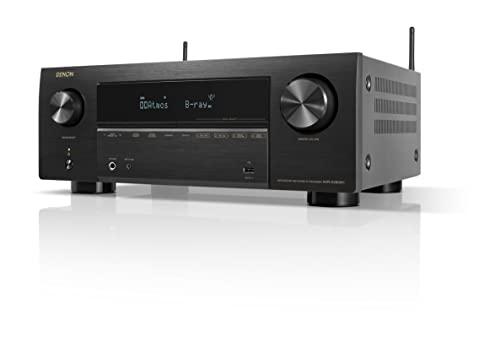
When you're building a home theater system, the AV receiver sits at the heart of everything. It's the brain that processes your audio, switches between video sources, and powers your speakers. In the mid-range category—roughly $800 to $1,200 at the time of writing—you'll find some compelling options that balance performance with value.
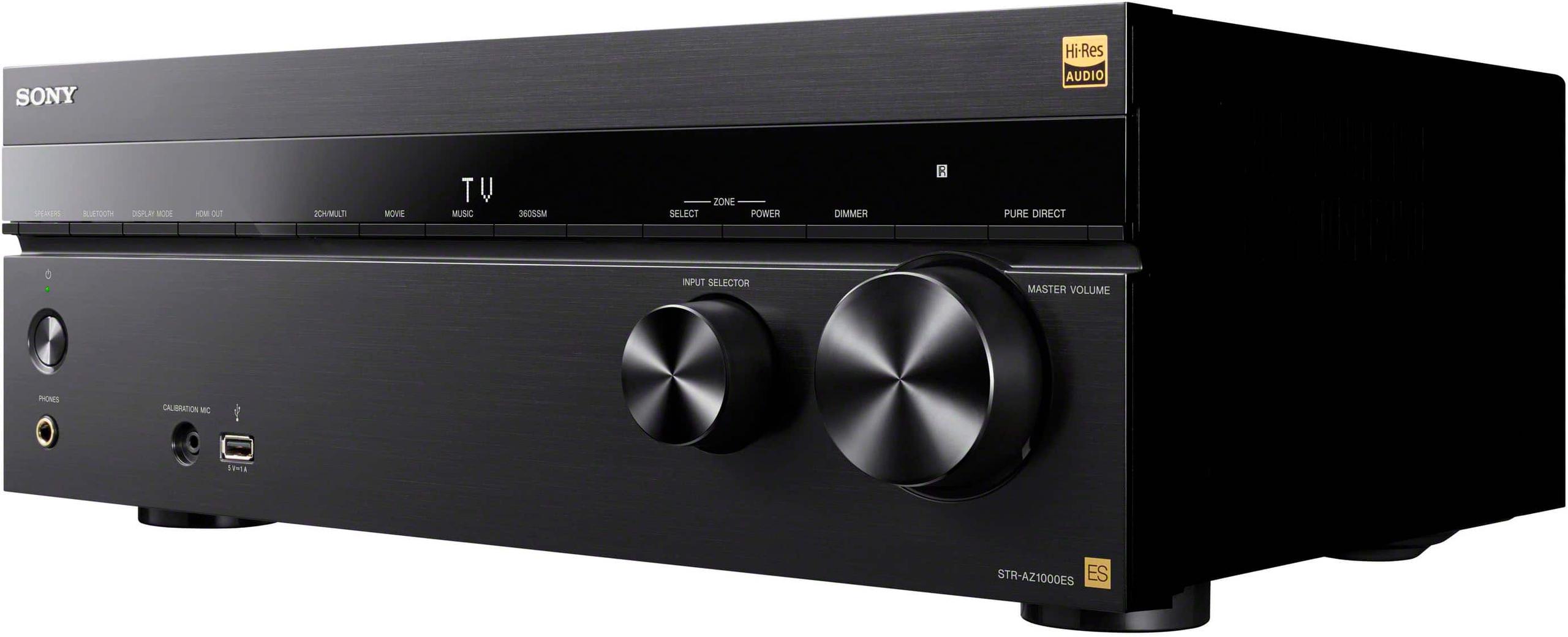
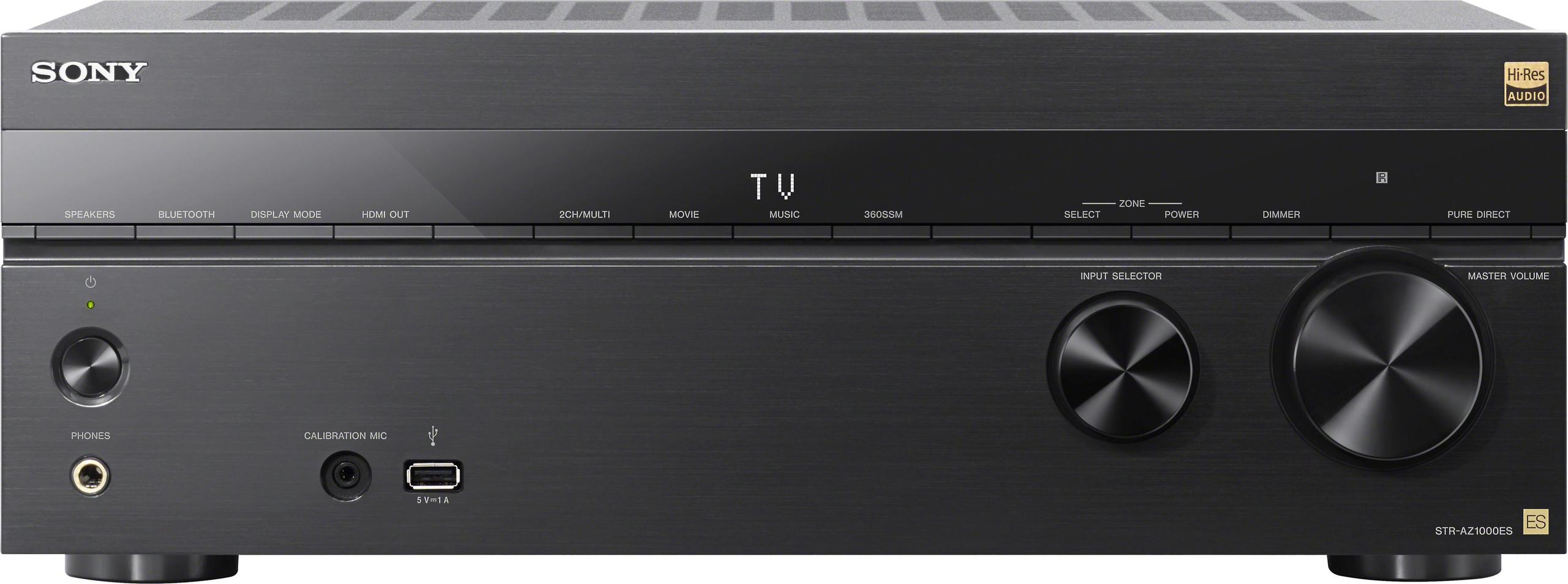
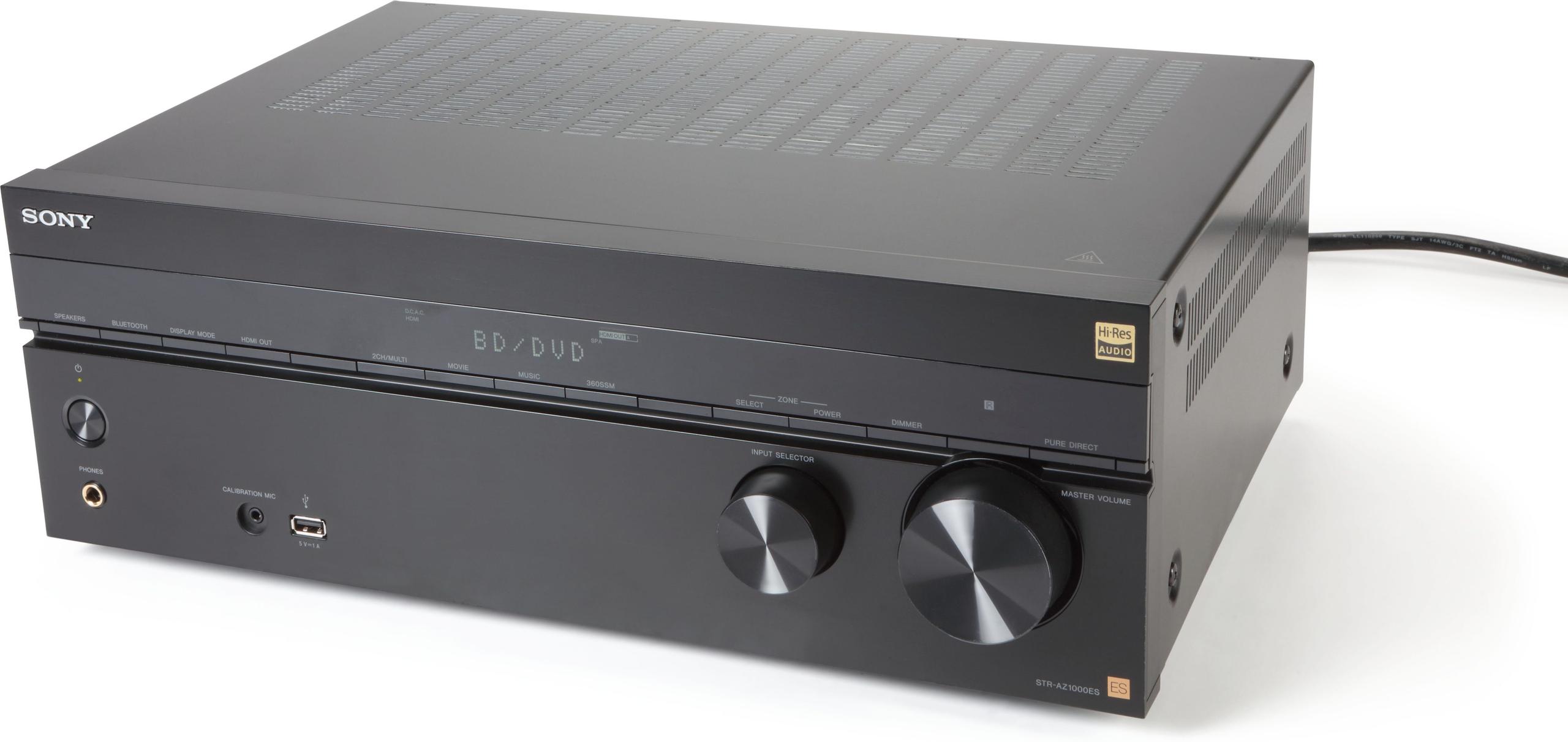
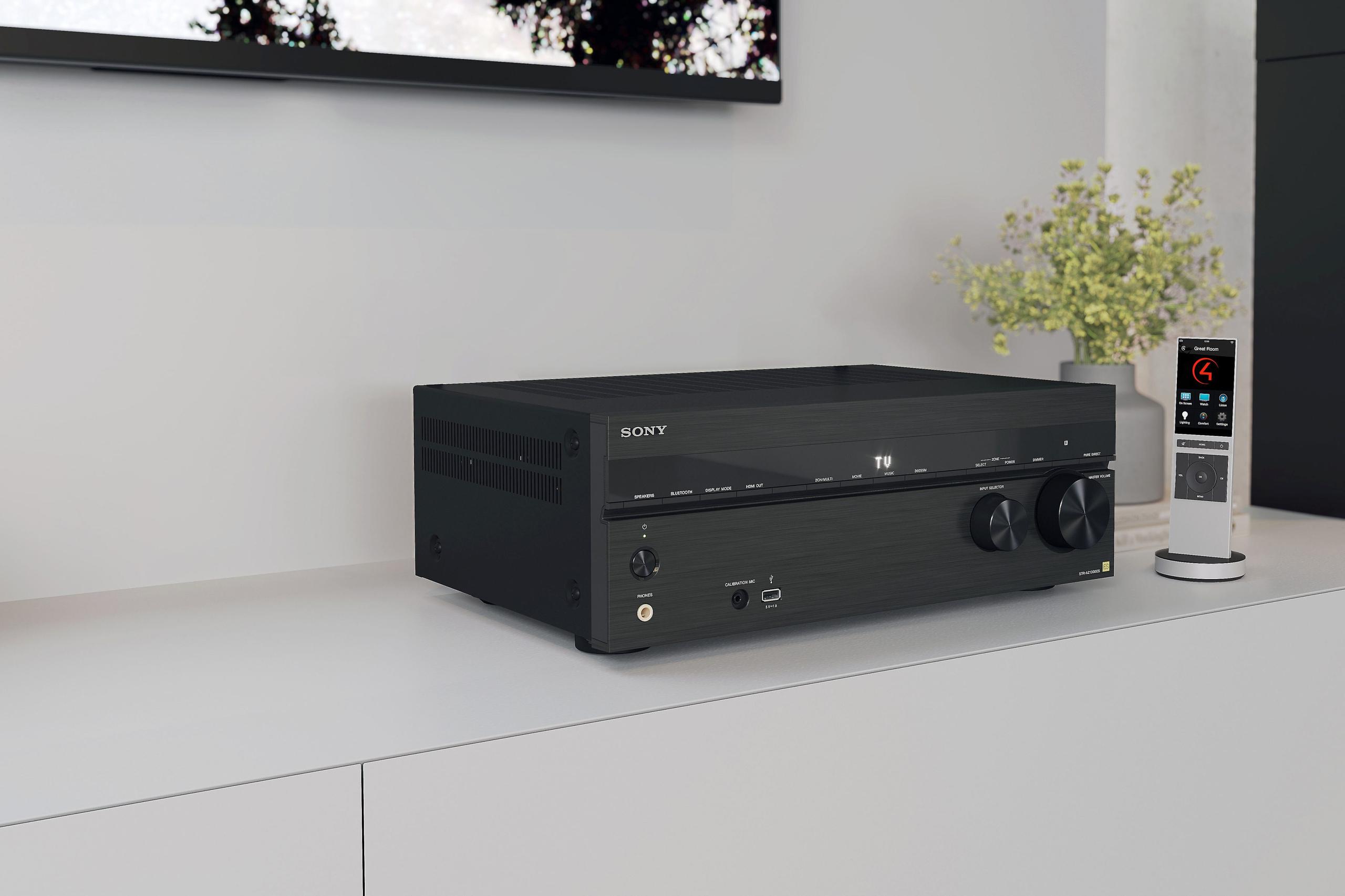
Two standout models represent very different philosophies: the Denon AVR-X2800H and the Sony STR-AZ1000ES. Both launched in the early 2020s, but they take distinctly different approaches to what matters most in a home theater receiver.
Before diving into these specific models, it's worth understanding what separates good receivers from great ones. Power output determines how loud and clear your speakers will sound, especially during demanding movie scenes with explosions or orchestra crescendos. Processing capabilities handle the complex math behind surround sound formats like Dolby Atmos, which places sounds in three-dimensional space around you.
Video passthrough has become increasingly important as 4K and 8K content proliferates. Your receiver needs to handle these high-resolution signals without degrading the picture quality. Room correction uses microphones and digital signal processing (DSP) to measure your room's acoustics and adjust the sound accordingly—think of it as auto-tune for your listening space.
Connectivity rounds out the essentials, covering everything from wireless streaming to multi-room audio distribution throughout your home.
The Denon AVR-X2800H delivers 95 watts per channel into 8-ohm speakers when driving two channels simultaneously. The Sony STR-AZ1000ES produces 70 watts under the same conditions. That 36% power advantage for the Denon might seem decisive, but context matters enormously here.
In most living rooms, you'll rarely push either receiver to its limits. The difference between 70 and 95 watts translates to roughly 1.3 decibels—barely perceptible to human ears. However, if you're driving inefficient speakers (those rated below 87 decibels sensitivity) or filling a large room, that extra headroom from the Denon becomes meaningful.
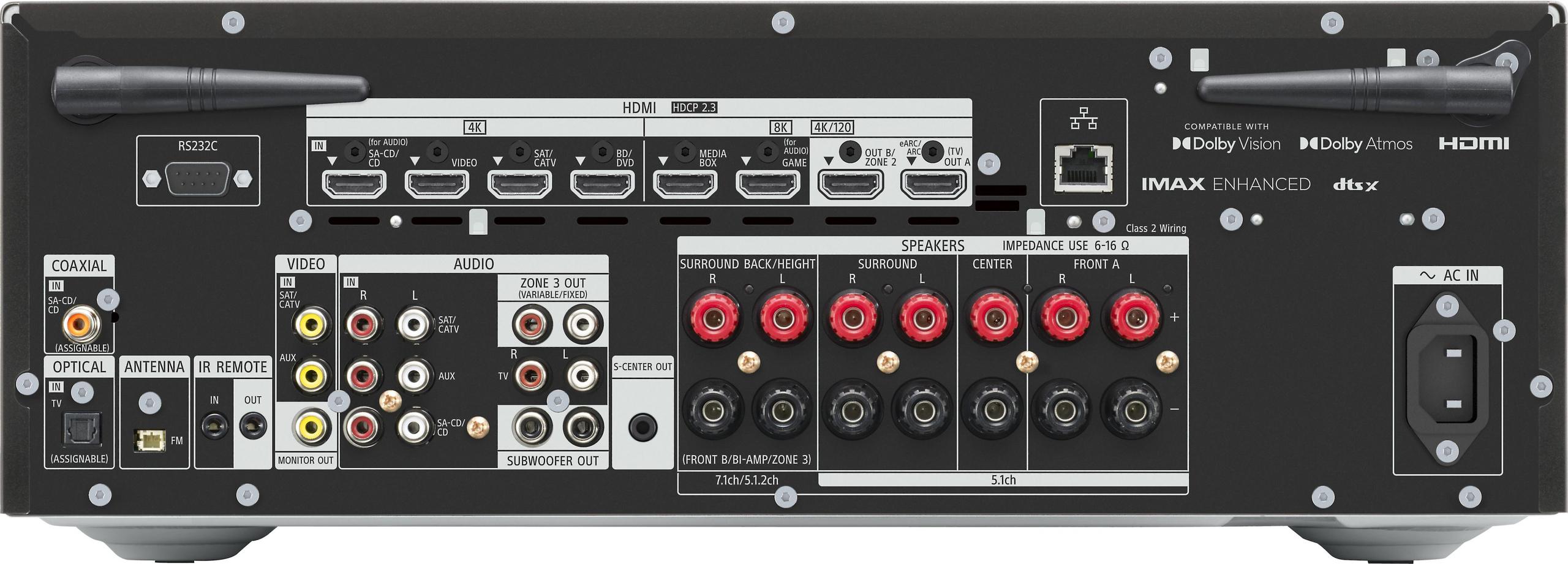
Both receivers use discrete amplification, meaning each channel gets its own dedicated amplifier circuit rather than sharing power from a common pool. This approach ensures consistent performance across all seven channels, even during complex surround sound passages where multiple speakers demand power simultaneously.
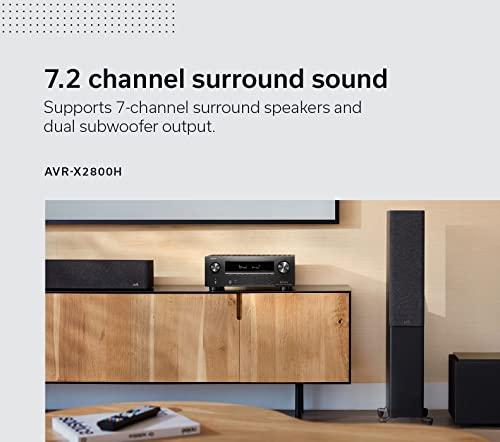
The Sony compensates for its lower power rating through superior processing capabilities. While limited to seven physical amplifier channels, it can process up to 9.2 channels of audio. This means you could add external amplifiers later to drive additional height speakers for more immersive Dolby Atmos setups, or run dual subwoofers for more even bass response throughout your room.
Here's where these receivers truly diverge. Based on extensive expert reviews and user feedback, the Sony STR-AZ1000ES consistently delivers more engaging sound quality despite its lower power rating. This isn't surprising—Sony's ES (Elevated Standard) line has historically prioritized sonic performance over raw specifications.
The Sony presents music and movie soundtracks with more dynamic contrast, meaning the difference between quiet dialogue and explosive action sequences feels more dramatic and realistic. Bass response hits deeper and with more impact, while vocals come through with enhanced clarity and emotional nuance. This engaging presentation makes movies feel more involving and music more alive.
The Denon AVR-X2800H offers a more traditional, warmer sound signature that many will find appealing. It creates a spacious soundstage—the perceived width and depth of the audio image—and delivers crisp high-frequency detail. However, it sounds somewhat more reserved compared to the Sony's punchy presentation.
Both receivers support the latest immersive audio formats. Dolby Atmos and DTS:X create three-dimensional soundscapes by treating individual sounds as objects that can be placed anywhere in space, rather than just assigning them to specific channels. Height virtualization technology can simulate overhead effects even without dedicated ceiling speakers, though physical height speakers always sound more convincing.
Room acoustics dramatically affect how your system sounds. Hard surfaces create reflections that muddy dialogue, while carpets and furniture absorb certain frequencies more than others. Both receivers include sophisticated room correction systems to address these issues.
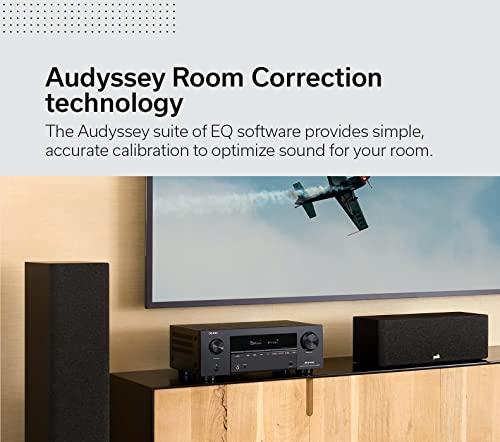
The Denon uses Audyssey MultEQ XT, which takes measurements from up to eight different listening positions using the included microphone. This comprehensive approach captures how your room affects sound from multiple perspectives, then applies digital filters to compensate for acoustic problems. Audyssey has been refined over many years and offers optional smartphone app control for fine-tuning.
The Sony employs its D.C.A.C. (Digital Cinema Auto Calibration) system, which completes setup faster than Audyssey but requires more involved preliminary measurements. The tradeoff is worthwhile—Sony's calibration often produces more natural-sounding results without the over-processing that sometimes affects Audyssey's output.
Both receivers handle modern video standards, but with important differences. The Denon AVR-X2800H supports HDR10+ in addition to standard HDR10 and Dolby Vision. HDR10+ matters primarily for Samsung TV owners, as it provides scene-by-scene brightness optimization that creates more realistic contrast in movies and games.
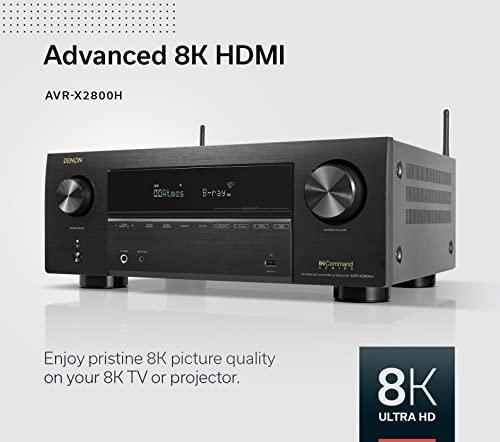
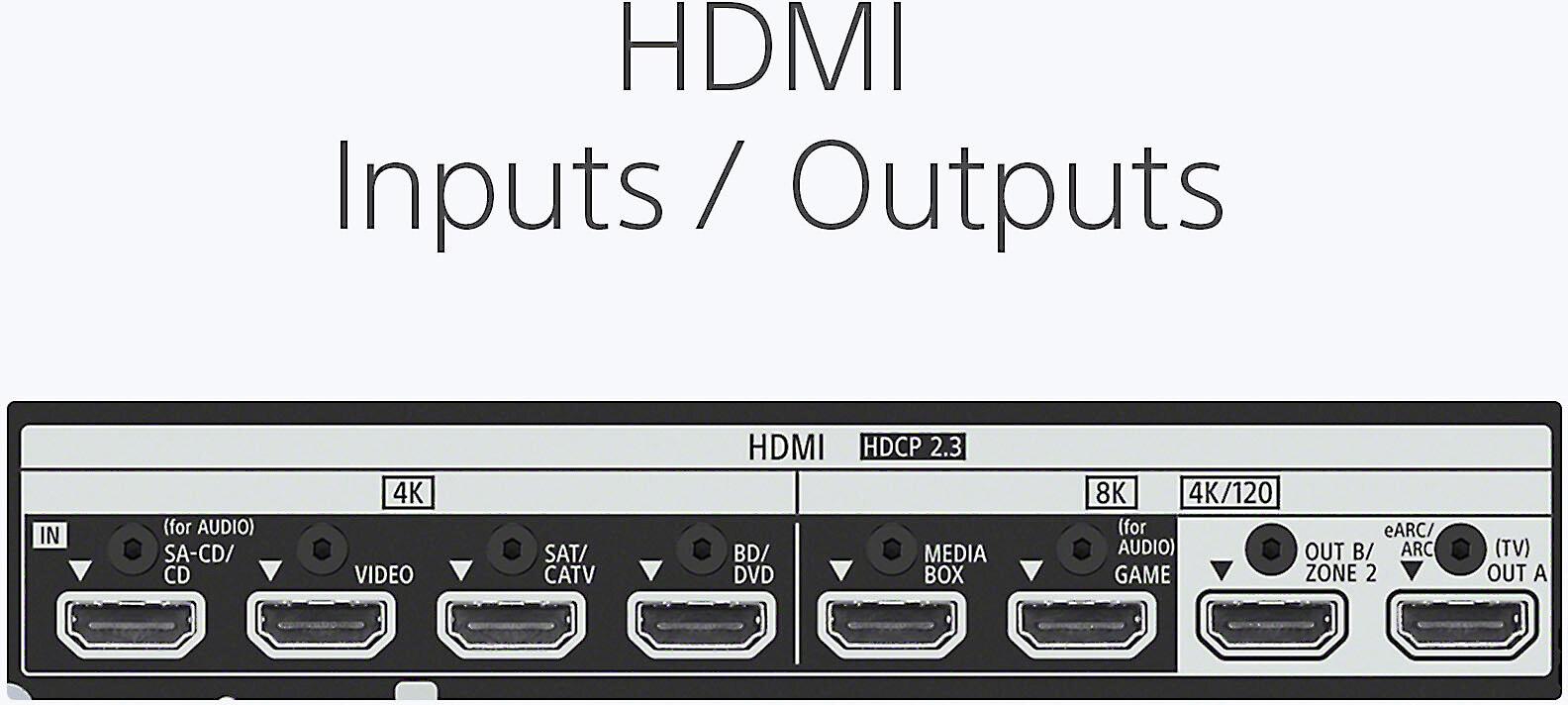
For HDMI connectivity, the Denon provides three HDMI 2.1 inputs capable of handling 8K video at 60 frames per second or 4K at 120 frames per second. The Sony offers only two such inputs. If you're planning to connect multiple next-generation gaming consoles along with an 8K media player, that extra input on the Denon provides valuable flexibility.
Gaming features like Variable Refresh Rate (VRR) and Auto Low Latency Mode (ALLM) work on both receivers. VRR eliminates screen tearing by synchronizing your console's frame rate with your TV's refresh rate, while ALLM automatically switches to the lowest input lag mode when it detects game content.
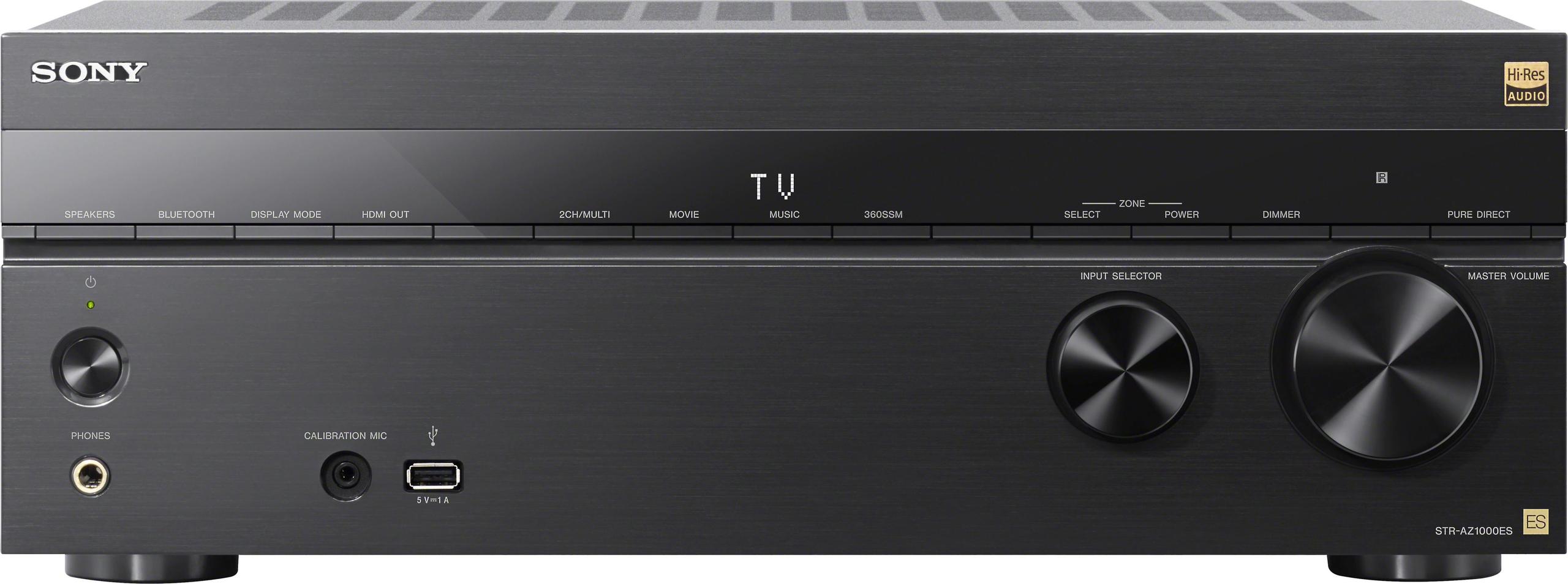
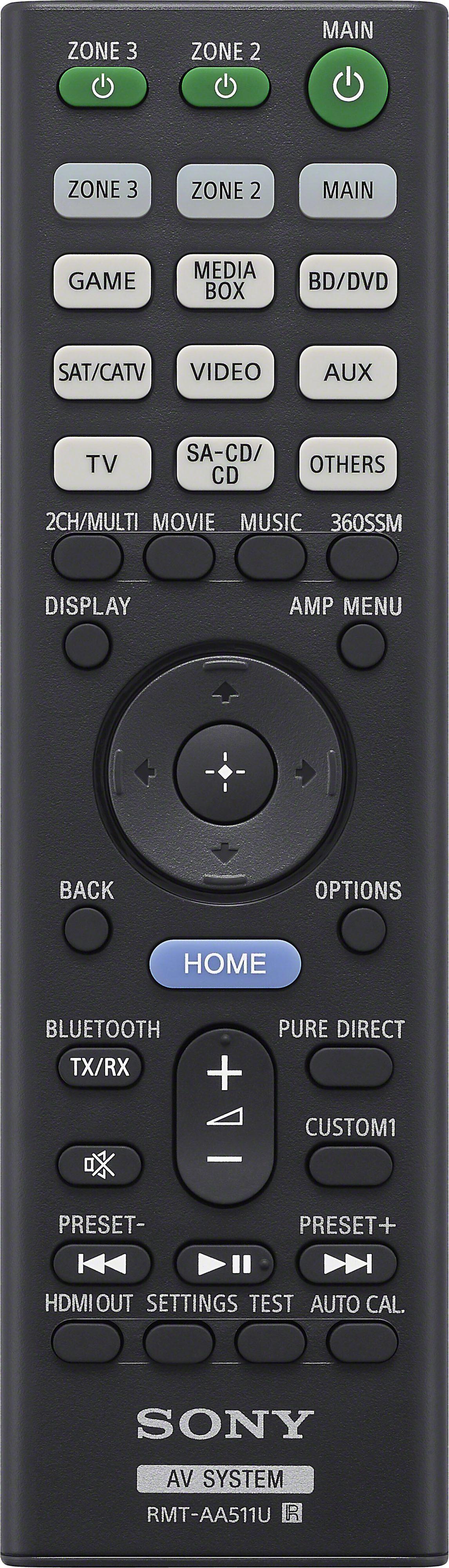
The Sony STR-AZ1000ES includes 360 Spatial Sound Mapping, Sony's proprietary technology that creates phantom speakers—virtual sound sources that seem to come from locations where no physical speakers exist. This can make a 5.1 system sound more like a 7.1 setup by using psychoacoustic processing to fool your brain about sound placement.
Sony's ES designation carries weight in the audio world. These receivers use higher-quality components, including premium capacitors in the power supply and enhanced DAC (digital-to-analog converter) circuits. The 32-bit DAC processes digital audio with exceptional precision before converting it to analog signals for your speakers.
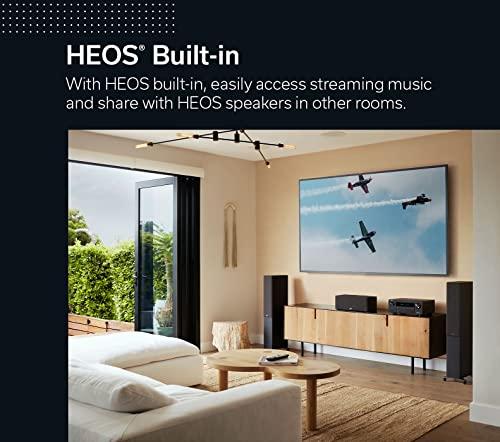
The Denon counters with its HEOS multi-room platform, which lets you stream different music to various rooms throughout your home. If you're building a whole-home audio system, HEOS integrates seamlessly with other Denon and Marantz products. The receiver also includes a traditional AM/FM radio tuner—a feature that Sony omitted.
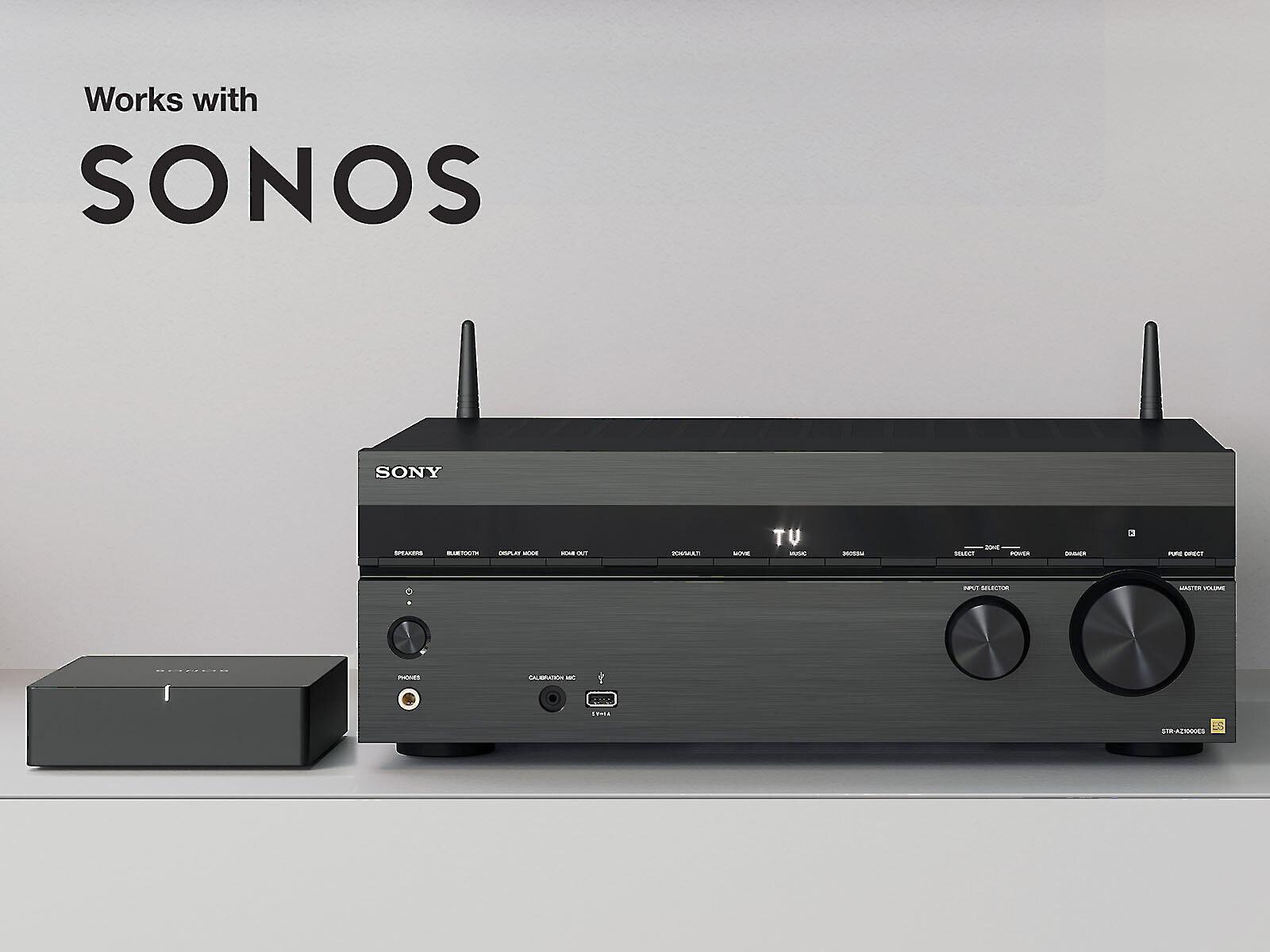
Both receivers embrace wireless streaming, but through different ecosystems. The Sony includes Chromecast built-in, making it simple to cast audio from your phone, and integrates with existing Sonos systems if you already have that multi-room setup.
The Denon focuses on its own HEOS platform, which directly supports services like Tidal and Deezer for high-resolution music streaming. HEOS offers more comprehensive multi-room capabilities if you're starting from scratch, but requires buying into Denon's ecosystem.
Both support AirPlay 2 for iPhone users and include Bluetooth for quick connections. Ethernet ports ensure stable network connections for streaming and software updates.
The Sony benefits from ES-level construction quality, with attention paid to power supply design and component selection that should translate to better long-term reliability and potentially longer software support. Sony's ES line historically receives firmware updates for several years after release.
The Denon offers solid construction typical of the brand's reputation, with quality discrete amplification stages and proven reliability. Denon has been making receivers for decades and understands thermal management and component longevity.
At the time of writing, the Denon AVR-X2800H costs roughly $100-150 less than the Sony STR-AZ1000ES. For that lower price, you get more power, additional HDMI 2.1 inputs, comprehensive HDR format support, and an established multi-room ecosystem.
The Sony justifies its premium through notably superior sound quality, more flexible processing capabilities, premium build quality, and that coveted ES designation. If audio performance is your primary concern, the price difference feels justified.
For movie watching, both receivers excel at different aspects. The Sony makes action sequences more thrilling through its dynamic presentation and superior bass response. Dialogue clarity—crucial for understanding movies without constantly adjusting volume—is excellent on both, though the Sony edges ahead slightly.
The Denon creates a more spacious soundstage that can make smaller rooms feel larger acoustically. Its warmer tonal balance suits longer viewing sessions without fatigue, while the Sony's more aggressive presentation might prove tiring during extended movie marathons.
For music listening, the Sony clearly wins with more engaging dynamics and better tonal balance across genres. The Denon handles classical and acoustic music well with its warmer character, but lacks the rhythmic drive that makes rock and electronic music compelling.
Choose the Denon AVR-X2800H if you have a larger room that demands higher power output, own Samsung TVs that benefit from HDR10+ support, or need multiple high-bandwidth HDMI inputs for gaming setups. It also makes sense if you're building a multi-room system from scratch using HEOS products, or if budget is a primary concern while still wanting excellent performance.
The Sony STR-AZ1000ES suits listeners who prioritize sound quality above all else and are willing to pay extra for meaningfully better audio performance. Its processing flexibility makes it ideal if you plan to expand your speaker system later, and the premium build quality suggests better long-term reliability.
For most home theater enthusiasts, the Sony represents the better long-term investment despite its higher price. The superior sound quality is immediately apparent and will continue providing enjoyment for years. However, if you need the extra power or HDMI inputs that the Denon provides, those practical advantages might outweigh the Sony's sonic superiority.
Both receivers will serve you well, but they cater to different priorities. The Denon focuses on comprehensive features and value, while the Sony emphasizes audio performance and premium construction. Your choice should align with whether you value practical flexibility or sonic excellence more highly.
| Denon AVR-X2800H | Sony STR-AZ1000ES |
|---|---|
| Power Output - Determines how loud and clear speakers sound in larger rooms | |
| 95 watts per channel (better for demanding speakers) | 70 watts per channel (adequate for most setups) |
| Processing Channels - Affects speaker configuration flexibility | |
| 7.1 maximum (limited expansion options) | 9.2 maximum (allows dual subs and more height speakers) |
| Sound Quality - Most important factor for overall enjoyment | |
| Warm, spacious presentation (traditional AV receiver sound) | More engaging and dynamic (superior bass and vocal clarity) |
| HDR Video Support - Critical for Samsung TV owners and future-proofing | |
| HDR10, HDR10+, Dolby Vision, HLG (comprehensive support) | HDR10, Dolby Vision, HLG (missing HDR10+ for Samsung TVs) |
| HDMI 2.1 Inputs - Essential for gaming and 8K content | |
| 3 inputs supporting 8K/60Hz or 4K/120Hz | 2 inputs supporting 8K/60Hz or 4K/120Hz |
| Room Correction - Optimizes sound for your specific space | |
| Audyssey MultEQ XT (up to 8 positions, app control available) | D.C.A.C. system (faster setup, more natural sound) |
| Multi-Room Audio - For whole-home music distribution | |
| HEOS built-in (comprehensive but requires Denon ecosystem) | Works with Sonos (integrates with existing Sonos systems) |
| Build Quality - Affects long-term reliability and performance | |
| Solid construction (proven Denon reliability) | ES premium components (higher-grade capacitors and DACs) |
| Streaming Features - Modern connectivity options | |
| HEOS, AirPlay 2, Bluetooth, AM/FM radio | Chromecast, AirPlay 2, Bluetooth, Spotify Connect |
| Value Proposition - What you get for your investment | |
| More power and features for less money | Superior sound quality justifies premium pricing |
The Sony STR-AZ1000ES delivers superior sound quality with more engaging dynamics, deeper bass response, and clearer vocal reproduction. While the Denon AVR-X2800H offers a warmer, more spacious presentation, the Sony provides a more involving listening experience for both movies and music.
The Denon AVR-X2800H produces 95 watts per channel compared to the Sony STR-AZ1000ES's 70 watts per channel. This 36% power advantage makes the Denon better suited for larger rooms or less efficient speakers that need more power to sound their best.
Yes, both the Denon AVR-X2800H and Sony STR-AZ1000ES support 8K/60Hz and 4K/120Hz video passthrough with gaming features like Variable Refresh Rate and Auto Low Latency Mode. However, the Denon offers three HDMI 2.1 inputs versus the Sony's two inputs.
The Denon AVR-X2800H provides more comprehensive HDR support, including HDR10+ which is particularly important for Samsung TV owners. The Sony STR-AZ1000ES supports HDR10, Dolby Vision, and HLG but lacks HDR10+ compatibility.
The Sony STR-AZ1000ES offers more flexibility with 9.2 channel processing capability, allowing you to add external amplifiers for additional height speakers or dual subwoofers. The Denon AVR-X2800H is limited to 7.1 channel processing maximum.
Both receivers include effective room correction systems. The Denon AVR-X2800H uses Audyssey MultEQ XT with up to 8 measurement positions and optional app control. The Sony STR-AZ1000ES features D.C.A.C. calibration that often produces more natural-sounding results with faster setup.
The Denon AVR-X2800H includes HEOS multi-room, AirPlay 2, Bluetooth, and AM/FM radio. The Sony STR-AZ1000ES offers Chromecast built-in, AirPlay 2, Bluetooth, Spotify Connect, and integrates with existing Sonos systems.
The Denon AVR-X2800H typically costs less while delivering more power, additional HDMI inputs, and comprehensive HDR support. The Sony STR-AZ1000ES costs more but justifies the premium through superior sound quality and ES-level build quality.
The Denon AVR-X2800H is better suited for larger rooms due to its higher 95-watt power output. While the Sony STR-AZ1000ES can work in larger spaces, its 70-watt output is more appropriate for small to medium-sized rooms.
The Sony STR-AZ1000ES benefits from ES (Elevated Standard) construction with premium components, upgraded power supplies, and higher-quality DACs. The Denon AVR-X2800H offers solid build quality typical of the brand's reliable reputation.
Yes, both the Denon AVR-X2800H and Sony STR-AZ1000ES support Dolby Atmos, DTS:X, and height virtualization technologies. The Sony also includes proprietary 360 Spatial Sound Mapping for enhanced surround effects.
Choose the Denon AVR-X2800H if you need more power for larger rooms, want comprehensive HDR support, or prioritize value and features. Select the Sony STR-AZ1000ES if sound quality is your top priority, you want processing flexibility for future expansion, or prefer premium build quality despite the higher cost.
We've done our best to create useful and informative comparisons to help you decide what product to buy. Our research uses advanced automated methods to create this comparison and perfection is not possible - please contact us for corrections or questions. These are the sites we've researched in the creation of this article: theaudiotailor.com.au - ecoustics.com - simplehomecinema.com - whathifi.com - audioadvisor.com - youtube.com - bestbuy.com - e-catalog.com - crutchfield.com - avsforum.com - crutchfield.com - whathifi.com - richersounds.com - bestbuy.com - accessories4less.com - projectorscreen.com - adiglobaldistribution.us - youtube.com - bestbuy.com - bestbuy.com - sweetwater.com - ecoustics.com - electronics.sony.com - youtube.com - crutchfield.com - audioadvice.com - abt.com - merlinstv.com - worldwidestereo.com - snapav.com - overtureav.com - sony.ca - audioholics.com

Privacy Policy
Terms and Conditions - Affiliate Policy
Home Security
© Copyright 2008-2026.
11816 Inwood Rd #1211, Dallas, TX 75244