

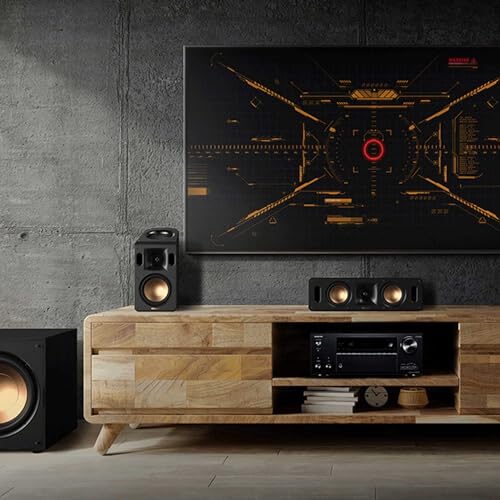
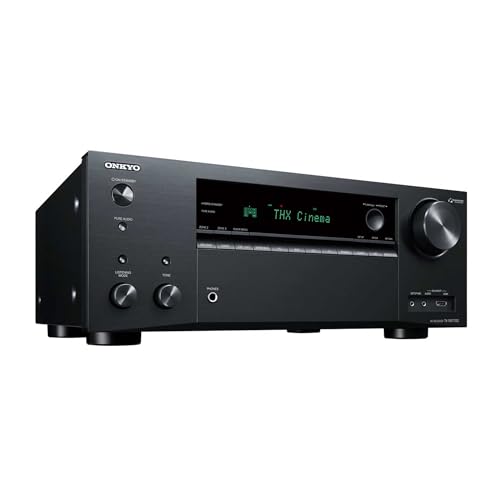
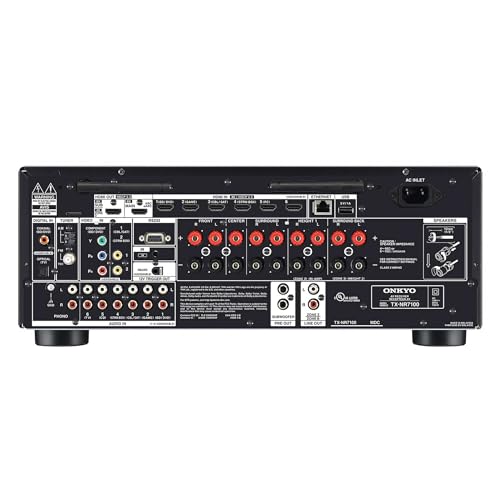
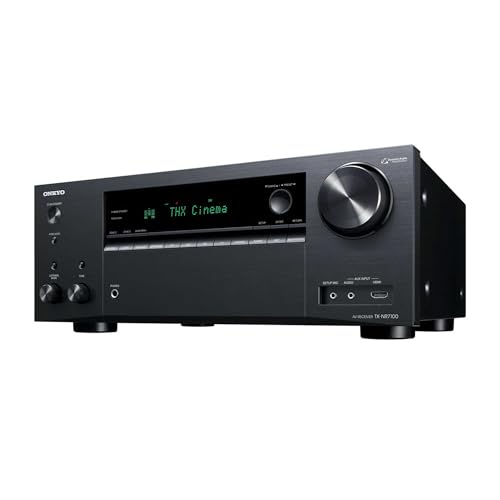
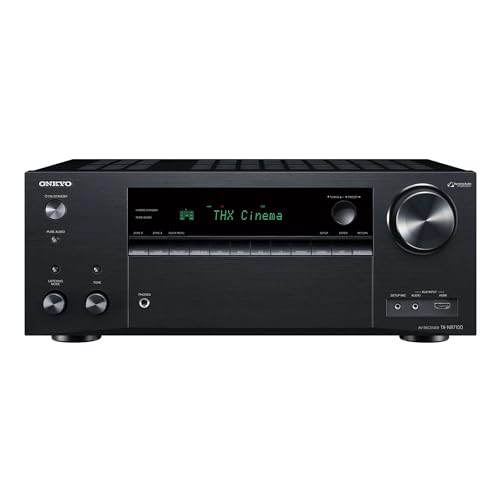
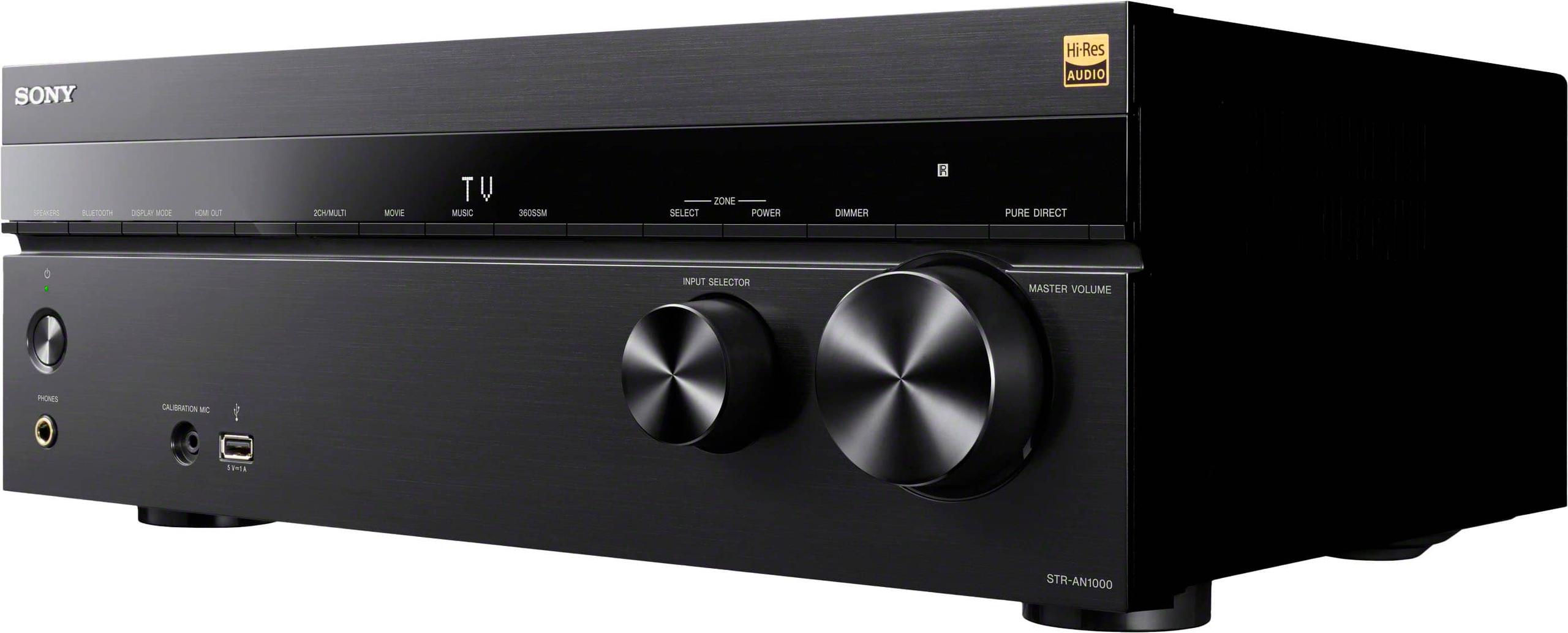
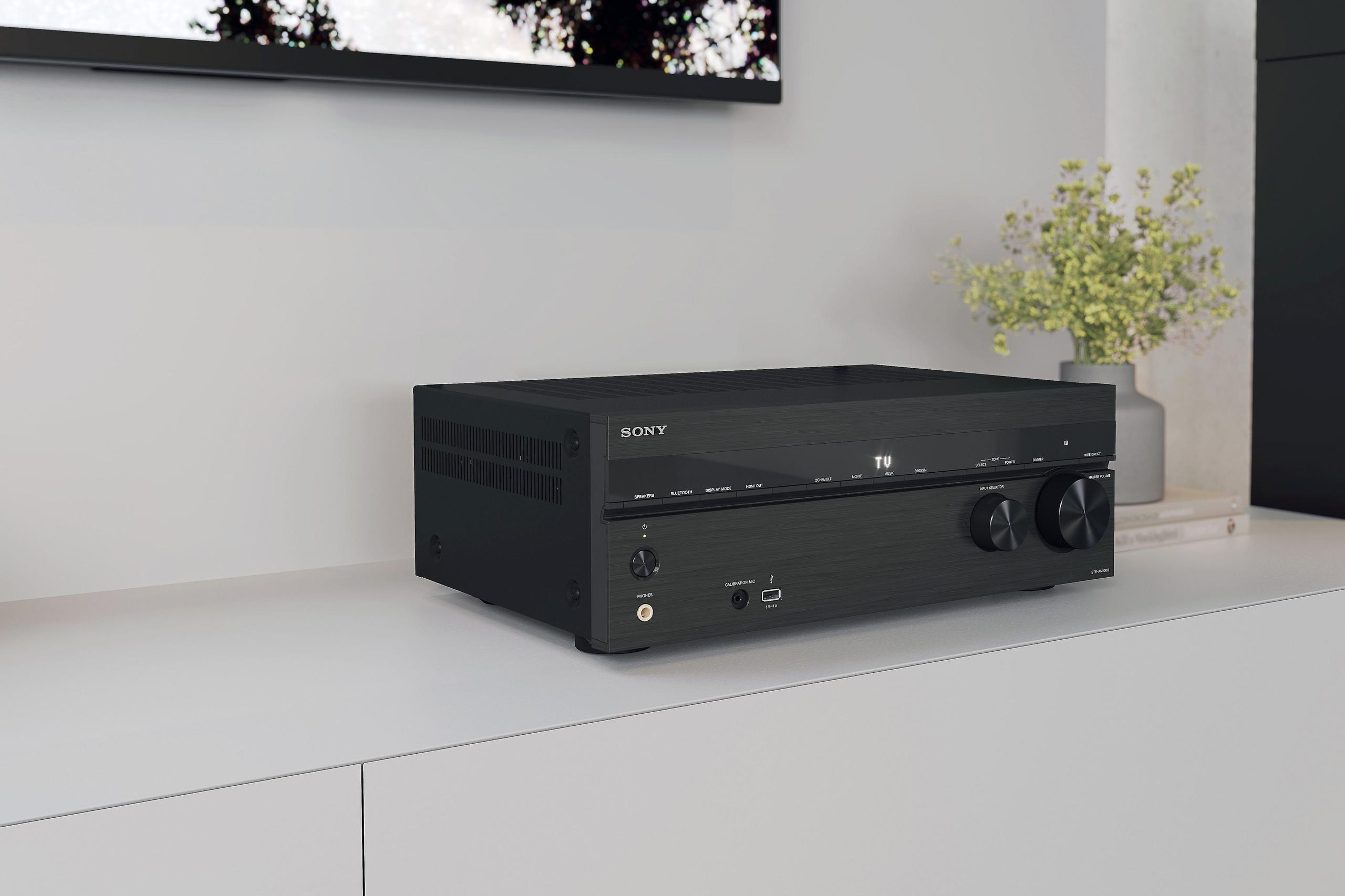
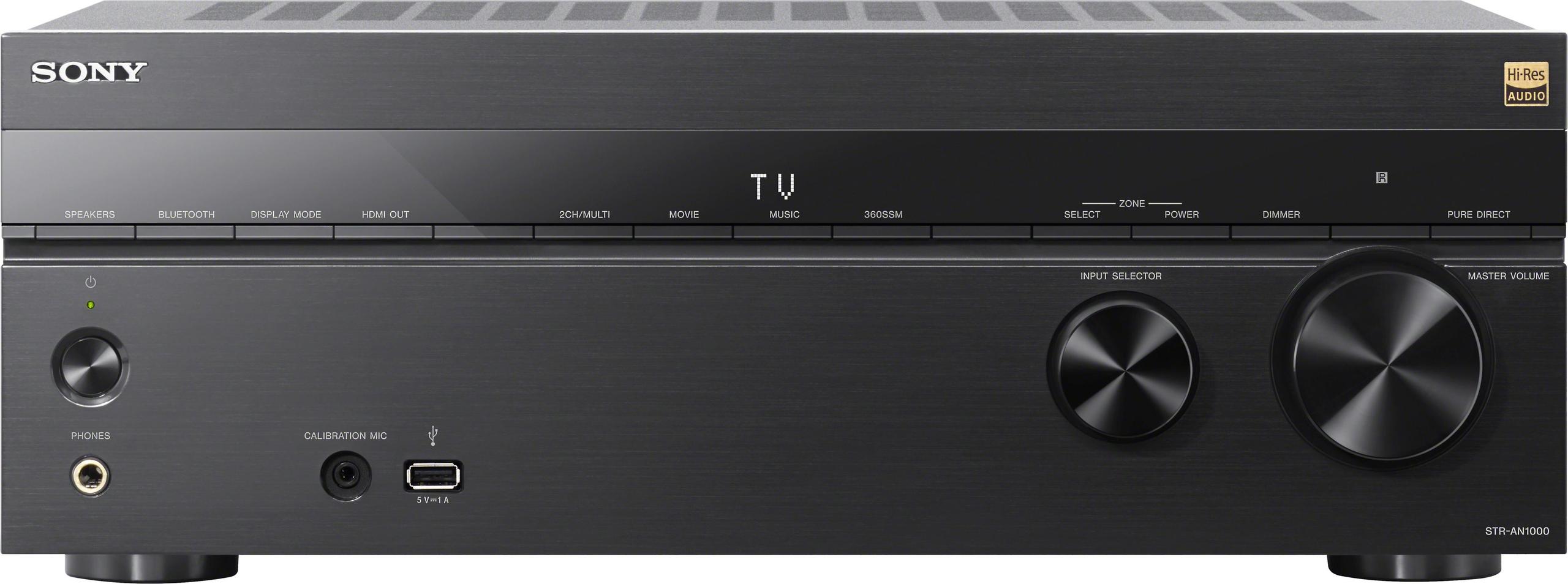

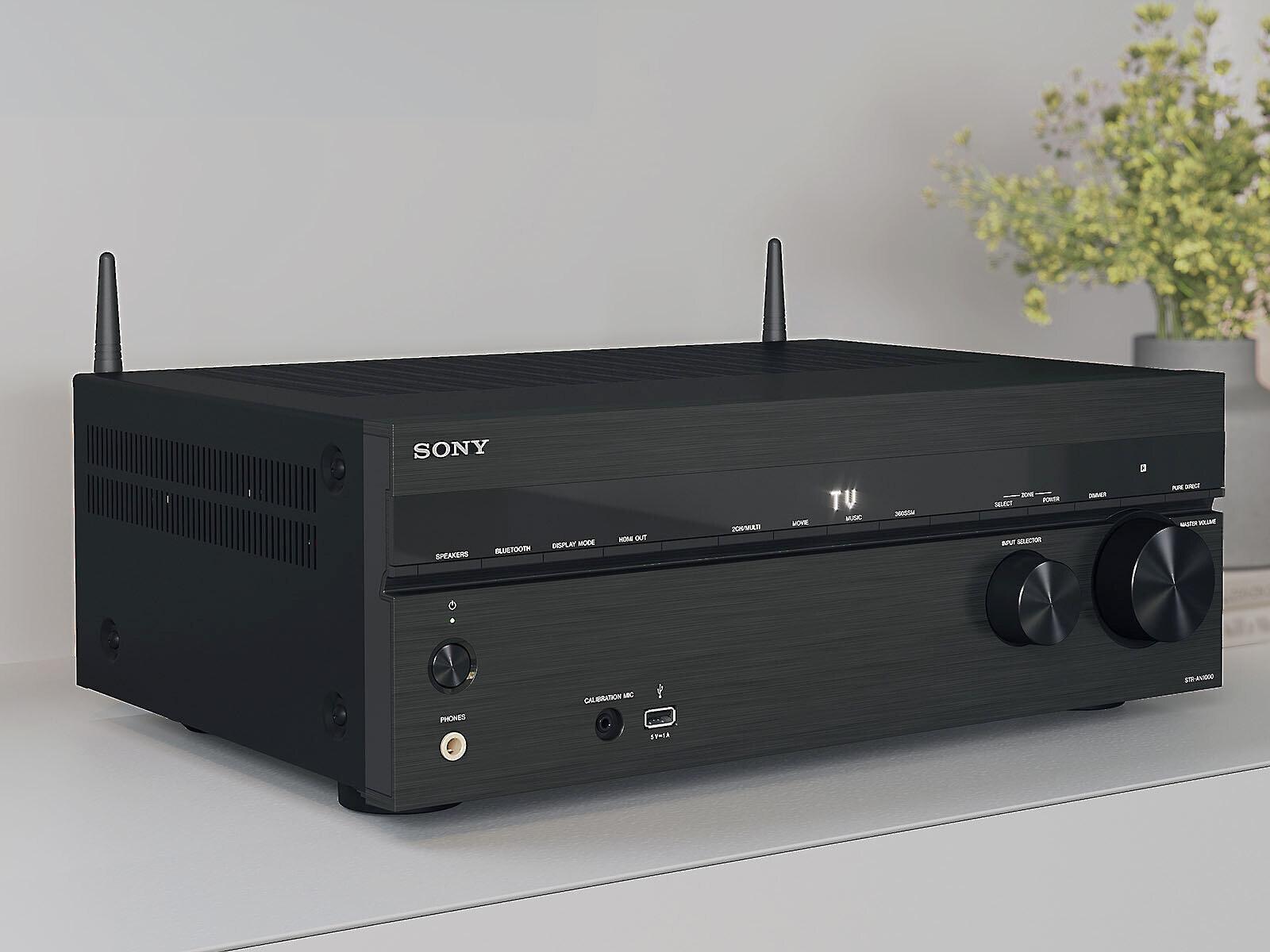

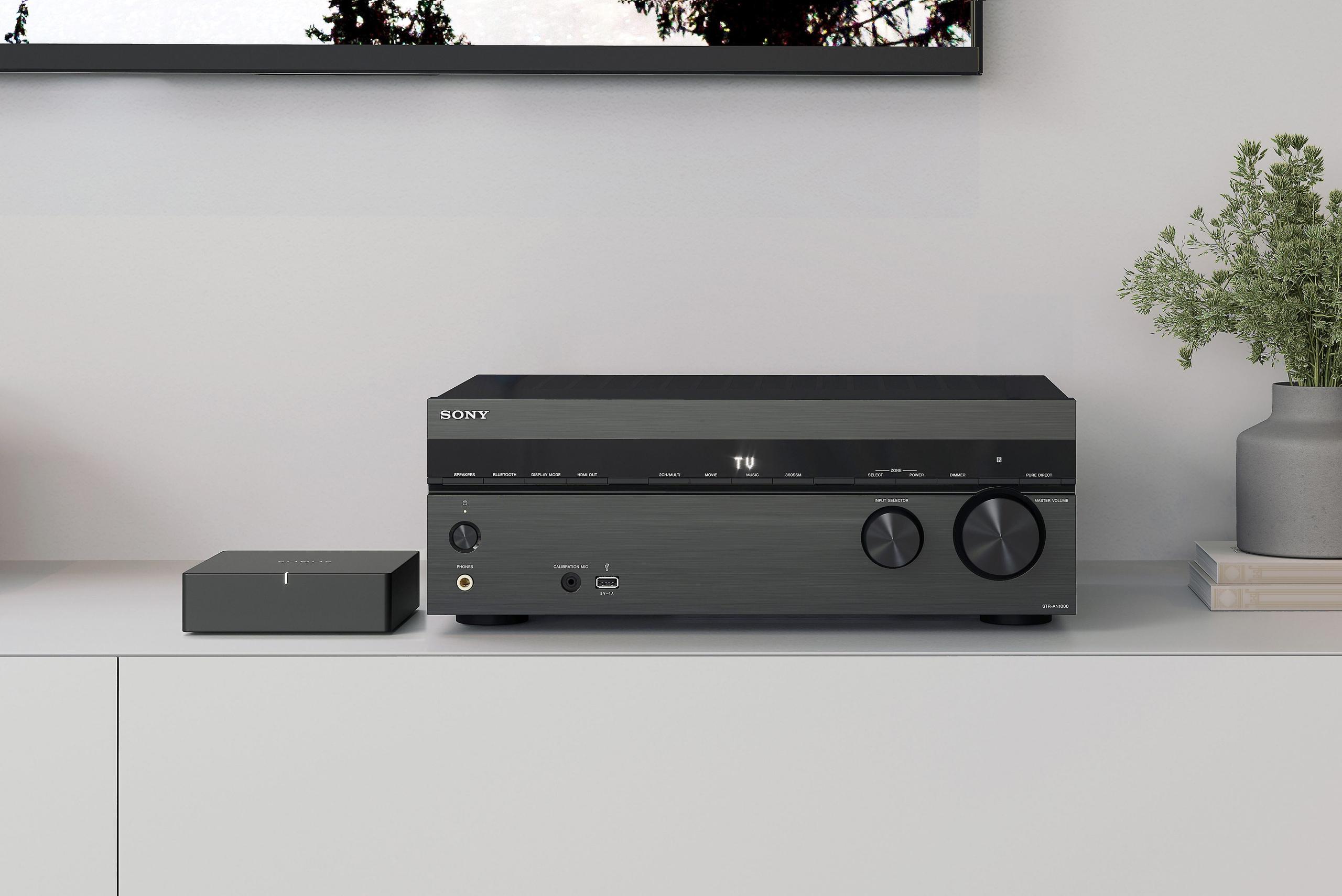
Home theater receivers have evolved dramatically over the past few years, and choosing the right one can make or break your entertainment setup. Two receivers that perfectly illustrate different approaches to home audio are the Onkyo TX-NR7100 and the Sony STR-AN1000. Released in 2021 and 2023 respectively, these receivers represent a fascinating clash between traditional multi-channel power and innovative spatial audio processing.
Before diving into these specific models, let's establish what actually matters in an AV receiver. Think of your receiver as the conductor of an orchestra – it needs to coordinate multiple audio channels, process complex surround sound formats like Dolby Atmos (which adds overhead speakers for truly three-dimensional audio), and seamlessly handle video switching between your various devices.
The key performance areas that separate good receivers from great ones include amplification quality, audio processing capabilities, video connectivity, and room correction systems. Room correction is particularly important because it uses microphones and sophisticated algorithms to measure how your specific room affects sound, then adjusts the audio output to compensate for acoustic problems.
Channel count is another crucial consideration. A 7.2-channel receiver has seven main speakers (front left/right, center, surround left/right, and two rear surround) plus two subwoofers. A 9.2-channel system adds two more speakers, typically height channels for Dolby Atmos effects. More channels generally means more immersive surround sound, but also higher costs and complexity.
The Onkyo TX-NR7100 and Sony STR-AN1000 represent two completely different philosophies. The Onkyo follows the traditional approach: throw more amplification channels at the problem. With 9.2 channels of discrete amplification at 100 watts per channel, it can power complex speaker configurations like 7.1.2 or 5.1.4 Atmos setups (the numbers represent main channels, subwoofers, and height speakers respectively).
The Sony STR-AN1000, on the other hand, takes a more sophisticated approach. While it only offers 7.2 physical channels, it compensates with advanced digital signal processing through Sony's 360 Spatial Sound Mapping technology. This system creates phantom speakers – virtual speaker positions that your brain perceives as real speakers in locations where none actually exist.
At the time of writing, the Onkyo TX-NR7100 typically costs significantly more than the Sony STR-AN1000 – we're talking about a premium that could buy you a decent pair of bookshelf speakers. This price difference makes the value comparison particularly interesting.
The Onkyo TX-NR7100 delivers true 9.2-channel processing with discrete amplification for each channel. This means you can run incredibly complex Atmos configurations that would make a movie theater jealous. Want four ceiling speakers for overhead effects plus a full 7.1 ground-level setup? The Onkyo can handle it without breaking a sweat.
More importantly, the Onkyo TX-NR7100 can simultaneously power three different zones. Zone 2 and Zone 3 capabilities mean you could have different audio playing in your living room, bedroom, and patio simultaneously – all controlled from the same receiver. This multi-zone functionality is genuinely useful for larger homes or entertainment spaces.
The Sony STR-AN1000 provides 7.2 channels with approximately 85 watts effective power per channel (the 6-ohm rating converts to roughly this much power across all channels simultaneously). While this sounds limiting compared to the Onkyo's nine channels, Sony's approach focuses on making those seven channels work harder and smarter.
Here's where it gets interesting: our research consistently shows that the Sony STR-AN1000 can make a modest 5.1.2 setup (five main speakers, one subwoofer, two height speakers) sound more immersive than many 9-channel competitors. The 360 Spatial Sound Mapping doesn't just add phantom speakers – it analyzes your room's acoustics and creates a convincing three-dimensional soundfield that can transform even stereo music into an enveloping experience.
The Onkyo TX-NR7100 comes armed with serious audiophile credentials. THX certification means it has passed thousands of rigorous tests to meet reference theater standards. IMAX Enhanced support ensures compatibility with the latest premium movie formats. Most impressively, it includes Dirac Live room correction – widely considered the gold standard for acoustic calibration.
Dirac Live is genuinely sophisticated technology. It measures your room from up to 13 different listening positions, then creates a complex mathematical model of how sound behaves in your space. The corrections it applies can transform a problematic room into an acoustically neutral environment. However, our research reveals that many users find Dirac Live's setup process somewhat complex, requiring patience and often manual fine-tuning after the automated calibration.
The Sony STR-AN1000 takes a completely different approach with 360 Spatial Sound Mapping. Instead of just correcting for room problems, this technology actively creates new virtual speaker positions using psychoacoustic processing – essentially tricking your brain into hearing speakers that aren't actually there. The results, according to multiple expert reviews, are remarkable.
What makes Sony's approach particularly clever is that it works with any source material. Feed it a stereo recording, and it can create a convincing multichannel soundfield. Play a Dolby Atmos movie, and it enhances the existing surround information with additional spatial cues. This isn't just marketing hype – the technology leverages Sony's decades of research in spatial audio processing.
In real-world performance testing, both receivers excel but in different ways. The Onkyo TX-NR7100 delivers what experts consistently describe as precise object placement and thunderous low-frequency effects. When a helicopter flies overhead in an Atmos movie, you'll hear it move convincingly from speaker to speaker across your ceiling. The raw power handling capability means it can deliver those room-shaking explosions that make action movies memorable.
However, there's a significant caveat with the Onkyo TX-NR7100 that potential buyers absolutely need to understand. Technical analysis has revealed a serious power limiting issue where the amplifier can enter an undocumented "limp mode" when it clips (distorts due to insufficient power). This reduces output to approximately 15% of rated power without any indication to the user. You could be watching a movie at dramatically reduced volume thinking everything is normal, when in reality you need to physically disconnect the power cable to reset the amplifier.
This isn't just a theoretical problem – it affects real-world use and represents a major reliability concern that undermines the Onkyo TX-NR7100's higher price point.
The Sony STR-AN1000, meanwhile, consistently receives praise for its dialogue clarity and immersive surround effects. The spatial mapping technology creates what reviewers describe as an "amazing" surround experience that's "indistinguishable" from much more expensive receivers when using overhead speakers. Even with a modest speaker configuration, users report feeling completely enveloped by the soundfield.
For gaming, both receivers support the latest HDMI 2.1 features including 8K/60Hz and 4K/120Hz passthrough, Variable Refresh Rate (VRR), and Auto Low Latency Mode (ALLM). However, the Sony STR-AN1000 shows particular optimization for PlayStation 5, with notably seamless HDMI switching that's faster than many costlier competitors.
While both receivers are designed primarily for home theater use, their music performance reveals interesting characteristics. The Onkyo TX-NR7100 delivers what reviewers consistently describe as neutral and balanced sound across various genres. The Dirac Live room correction can provide precise acoustic tuning, though achieving optimal results requires patience and often manual adjustment.
The Sony STR-AN1000 takes a more detail-oriented approach to music reproduction. Its spatial mapping technology can actually enhance stereo music by creating a wider, more enveloping soundstage. Reviews suggest it "firms up center imaging and enlarges the soundstage in ways few traditional stereo setups can match." This isn't just gimmicky processing – it's genuinely useful spatial enhancement that works with your existing music library.
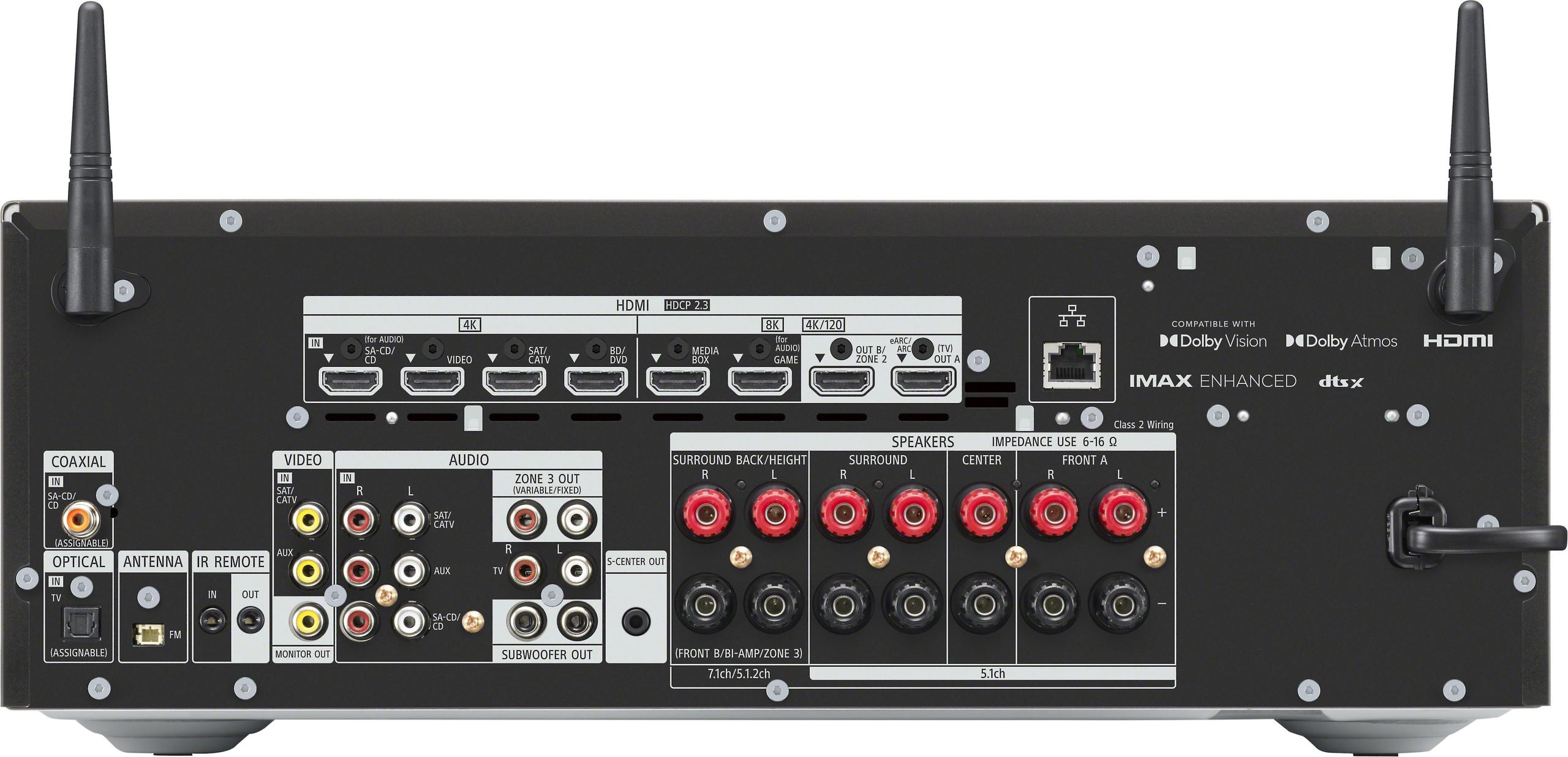
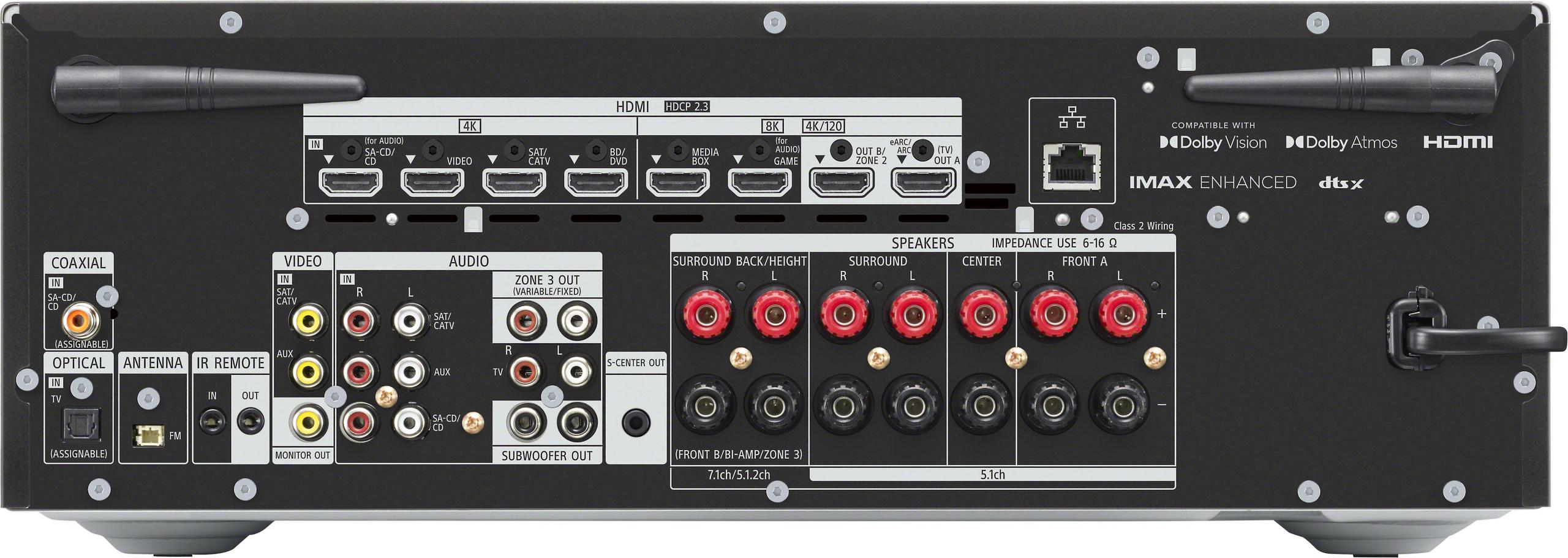
Both receivers provide comprehensive HDMI connectivity with six inputs, supporting all the latest video formats including HDR10, Dolby Vision, and various gaming features. However, they differ in some important details.
The Onkyo TX-NR7100 includes a built-in phono stage for turntables – increasingly important as vinyl continues its resurgence. It also offers superior Bluetooth capabilities with aptX and aptX HD codec support, providing higher-quality wireless audio than standard Bluetooth implementations.
The Sony STR-AN1000 focuses on modern streaming integration with Apple AirPlay 2, Chromecast built-in, and seamless Spotify Connect functionality. However, it lacks a phono input, requiring turntable owners to use either a turntable with built-in preamp or a separate phono stage.
At the time of writing, the price difference between these receivers is substantial enough to influence the decision significantly. The Sony STR-AN1000 typically costs considerably less while delivering what many consider superior real-world performance for most users.
The value proposition becomes particularly clear when you consider that most home theater enthusiasts will use 5.1.2 to 7.1.2 speaker configurations. In these common setups, the Sony STR-AN1000's spatial processing often delivers more impressive results than the Onkyo TX-NR7100's additional channels.
However, if you genuinely need nine or more discrete channels – perhaps for a large dedicated theater room with complex Atmos configuration – the Onkyo TX-NR7100 becomes the only option, reliability concerns notwithstanding.
The Sony STR-AN1000 represents the better choice for most home theater enthusiasts. Its combination of innovative spatial processing, excellent gaming performance, and significantly lower cost makes it compelling for users who want cutting-edge audio without breaking their budget. The 360 Spatial Sound Mapping technology genuinely transforms the listening experience in ways that additional amplifier channels often cannot.
Choose the Sony STR-AN1000 if you have a typical 5.1.2 to 7.1 speaker configuration, prioritize gaming performance, value reliability and simplicity, or simply want the most innovative audio processing technology available at this price point. It's particularly attractive for users who stream music frequently, as the spatial enhancement works remarkably well with stereo content.
The Onkyo TX-NR7100 makes sense for a smaller subset of users with specific requirements. If you're planning a complex Atmos installation with nine or more speakers, need multiple zones throughout your home, require THX certification, or already own a turntable, it provides capabilities the Sony cannot match.
However, the power limiting reliability issue represents a significant concern that's difficult to overlook, especially given the premium pricing. Any potential buyer should be prepared to physically power cycle the unit if they experience unexpectedly low volume levels.
Since these receivers launched, the home theater landscape has continued evolving rapidly. The Sony STR-AN1000's 2023 release date means it benefits from more recent technological developments, particularly in spatial audio processing and gaming optimization. The Onkyo TX-NR7100, while still competitive in raw specifications, represents a more traditional approach that feels increasingly dated compared to Sony's innovation.
Looking at the broader industry trends, spatial audio processing and virtual speaker positioning represent the future of home theater, while simply adding more amplifier channels feels like yesterday's solution to tomorrow's problems.
For the vast majority of home theater enthusiasts, the Sony STR-AN1000 delivers superior value, more reliable operation, and genuinely innovative audio processing that transforms the listening experience. Its spatial mapping technology represents a fundamental advancement in how we approach surround sound, making modest speaker setups perform far beyond their apparent limitations.
The Onkyo TX-NR7100 remains viable for users with specific requirements for additional channels or multi-zone capabilities, but the reliability concerns and premium pricing make it difficult to recommend broadly.
In an era where smart processing increasingly outperforms brute-force solutions, the Sony STR-AN1000 points the way forward for home theater audio.
| Onkyo TX-NR7100 | Sony STR-AN1000 |
|---|---|
| Channel Configuration - Determines speaker setup flexibility and immersive audio potential | |
| 9.2 channels with discrete amplification | 7.2 channels with virtual spatial enhancement |
| Power Output - Affects volume levels and dynamic range in larger rooms | |
| 100W per channel (8Ω, 2-ch driven) | 100W per channel (6Ω, 2-ch driven) ≈ 85W effective |
| Audio Processing Technology - The brain behind surround sound quality | |
| THX Certified, IMAX Enhanced, Dirac Live room correction | 360 Spatial Sound Mapping, 360 Reality Audio |
| Room Correction - Compensates for acoustic problems in your listening space | |
| Dual systems: AccuEQ + premium Dirac Live | Digital Cinema Auto Calibration IX with spatial mapping |
| Multi-Zone Capability - Allows different audio in separate rooms simultaneously | |
| 3 zones (main + Zone 2 + Zone 3) | 2 zones (main + Zone 2) |
| HDMI Connectivity - Future-proofs your setup for 8K and gaming | |
| 6 HDMI 2.1 inputs, 2 outputs, 40Gbps bandwidth | 6 HDMI 2.1 inputs, 2 outputs with seamless switching |
| Vinyl Playback Support - Essential for turntable owners | |
| Built-in MM phono stage included | No phono input (requires external preamp) |
| Bluetooth Audio Quality - Affects wireless music streaming fidelity | |
| aptX and aptX HD codec support | Standard SBC/AAC codecs |
| Release Date - Indicates how current the technology is | |
| 2021 (established but aging tech) | 2023 (latest spatial audio innovations) |
| Critical Reliability Issue - Major operational concern | |
| Undocumented power limiting mode reduces output to 15% | No known reliability issues |
| Value Proposition - Performance and features relative to typical pricing | |
| Premium price for traditional multi-channel approach | Excellent value with cutting-edge spatial processing |
The Onkyo TX-NR7100 has 9.2 channels while the Sony STR-AN1000 has 7.2 channels. The Onkyo TX-NR7100 can support more complex Dolby Atmos speaker configurations like 7.1.2 or 5.1.4 setups, making it better for large home theaters with many speakers.
Both the Onkyo TX-NR7100 and Sony STR-AN1000 support 8K/60Hz and 4K/120Hz gaming, but the Sony STR-AN1000 has optimized performance for PlayStation 5 with faster HDMI switching. The Sony STR-AN1000 is generally preferred by gamers for its seamless connectivity.
Yes, both the Onkyo TX-NR7100 and Sony STR-AN1000 support Dolby Atmos for overhead surround sound effects. The Onkyo TX-NR7100 can power more physical height speakers, while the Sony STR-AN1000 uses spatial mapping to create virtual height effects.
The Onkyo TX-NR7100 offers neutral, balanced sound with premium Dirac Live room correction for precise tuning. The Sony STR-AN1000 provides excellent detail and can enhance stereo music with spatial processing to create a wider soundstage. Both are capable music performers.
The Onkyo TX-NR7100 includes a built-in MM phono stage for direct turntable connection. The Sony STR-AN1000 lacks a phono input, so you'll need a turntable with built-in preamp or a separate phono stage to play vinyl records.
The Sony STR-AN1000 typically costs significantly less than the Onkyo TX-NR7100 while delivering comparable or superior performance for most users. The Sony STR-AN1000 provides excellent value with its innovative spatial audio technology at a lower price point.
The Onkyo TX-NR7100 offers both AccuEQ and premium Dirac Live room correction systems. The Sony STR-AN1000 uses Digital Cinema Auto Calibration IX combined with 360 Spatial Sound Mapping. Both systems effectively optimize sound for your specific room.
The Sony STR-AN1000 has no known major reliability issues. The Onkyo TX-NR7100 has a documented power limiting problem where it can reduce output to 15% of rated power without warning, requiring a power cycle to reset.
Yes, both the Onkyo TX-NR7100 and Sony STR-AN1000 support 8K/60Hz video passthrough with HDMI 2.1 connectivity. They also handle 4K/120Hz for high-refresh gaming and support HDR formats like Dolby Vision and HDR10+.
The Sony STR-AN1000 excels in smaller spaces with its 360 Spatial Sound Mapping technology that makes modest speaker setups sound more immersive. The Onkyo TX-NR7100 is better suited for larger rooms that can benefit from its additional channels and higher power output.
Both receivers support wireless streaming, but with different services. The Onkyo TX-NR7100 offers Bluetooth with high-quality aptX HD, plus Chromecast and AirPlay. The Sony STR-AN1000 includes AirPlay 2, Chromecast built-in, and Spotify Connect for easy wireless music streaming.
For a basic 5.1 speaker setup, the Sony STR-AN1000 is the better choice due to its lower cost, reliable operation, and spatial processing that enhances the surround experience. The Onkyo TX-NR7100's additional channels won't be utilized in a simple 5.1 configuration, making it unnecessarily expensive.
We've done our best to create useful and informative comparisons to help you decide what product to buy. Our research uses advanced automated methods to create this comparison and perfection is not possible - please contact us for corrections or questions. These are the sites we've researched in the creation of this article: crutchfield.com - prohifi.in - bestbuy.com - h-m-entertainment.com - audiosciencereview.com - crutchfield.ca - soundandvision.com - avsforum.com - avgadgets.com - youtube.com - onkyo.com - crutchfield.com - onkyo.com - accessories4less.com - klipsch.com - youtube.com - listenup.com - intl.onkyo-av.com - bestbuy.com - 420spotshop.com - support.onkyousa.com - tomsguide.com - electronics.sony.com - klarna.com - crutchfield.com - cnet.com - skybygramophone.com - bestbuy.com - sony.com - videoandaudiocenter.com - youtube.com - us.community.sony.com - sony-asia.com

Privacy Policy
Terms and Conditions - Affiliate Policy
Home Security
© Copyright 2008-2026.
11816 Inwood Rd #1211, Dallas, TX 75244