

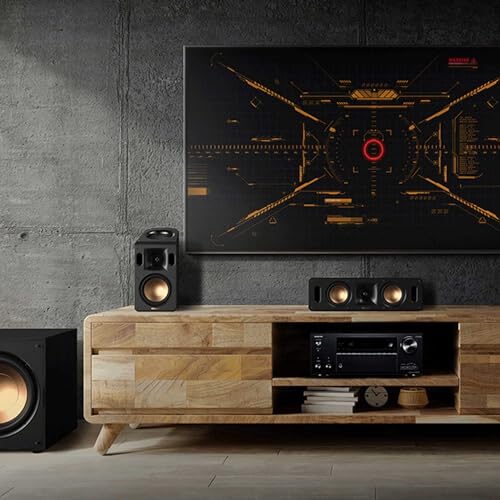
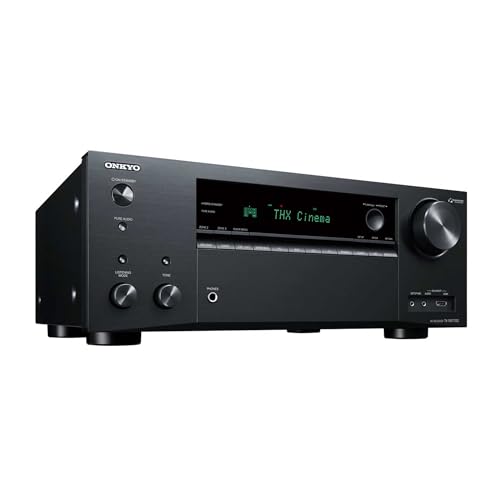
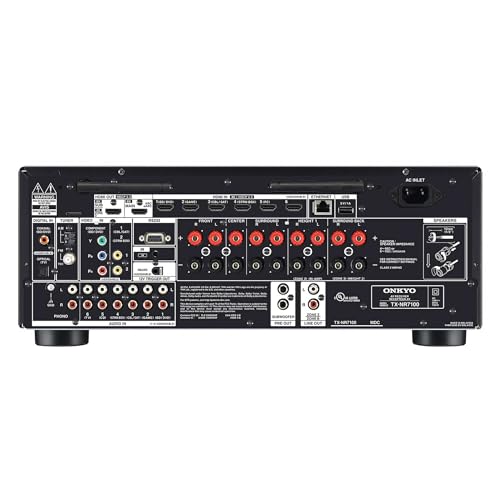
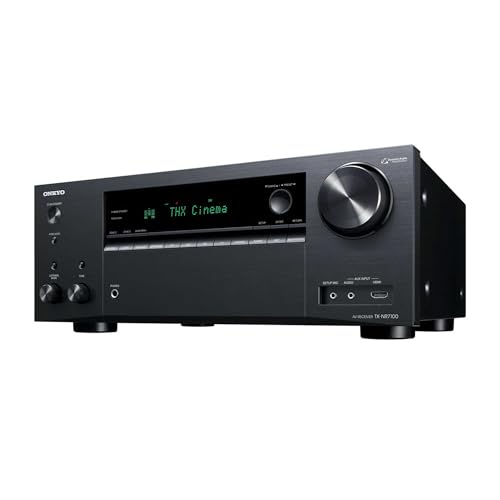
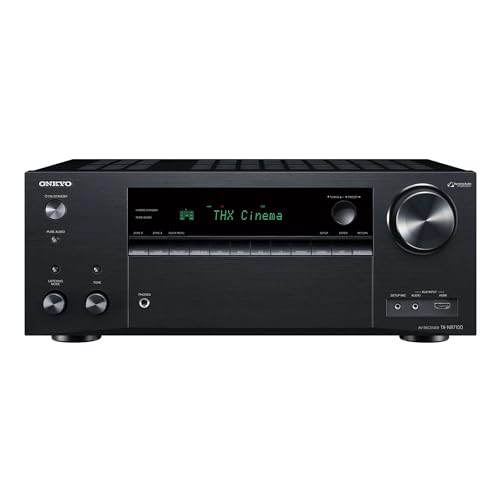
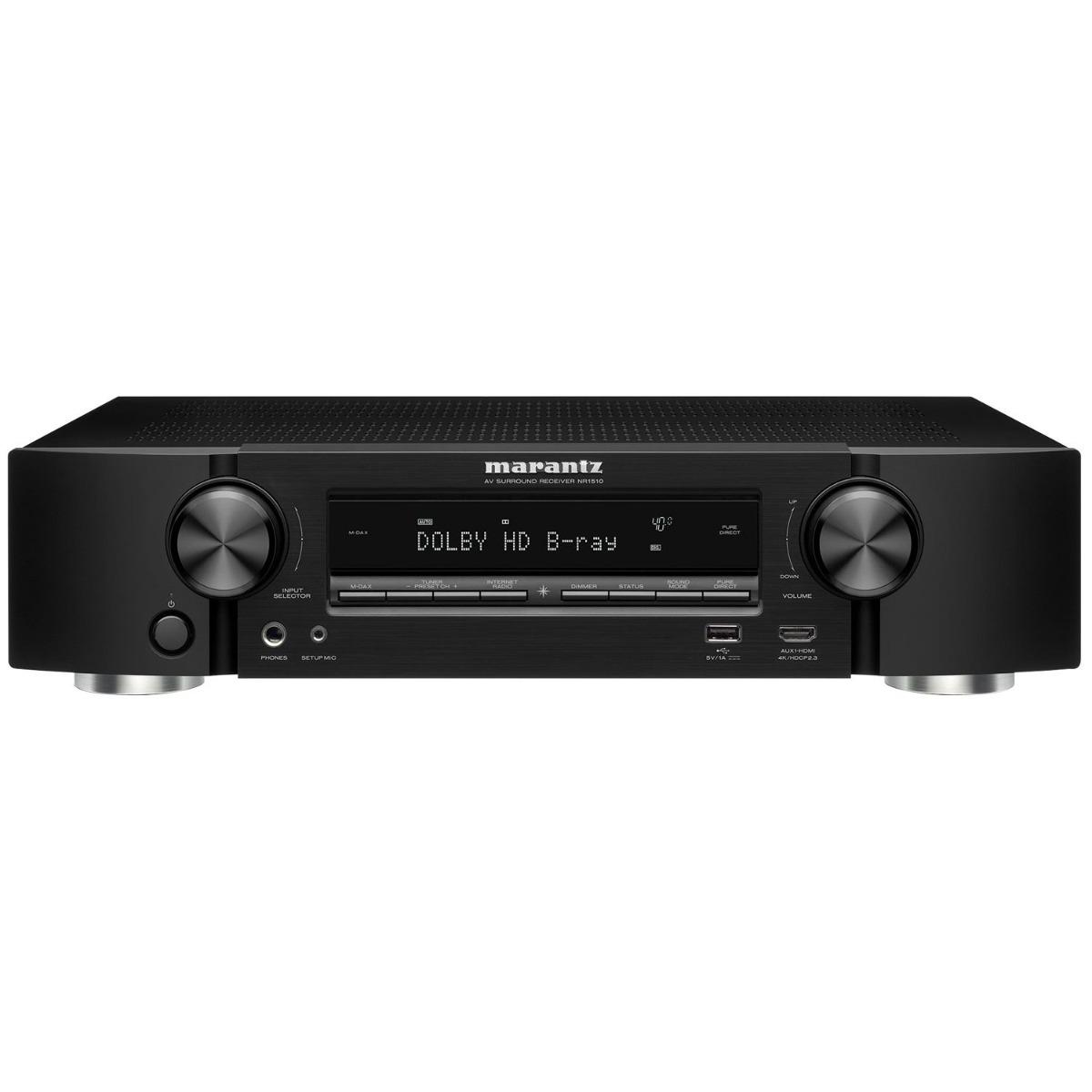
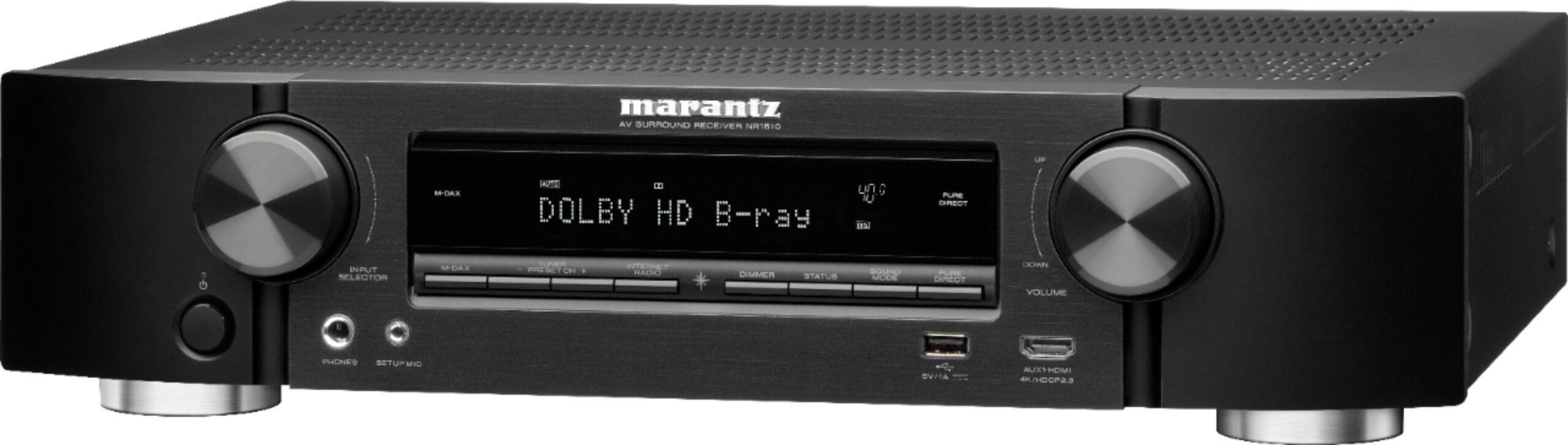
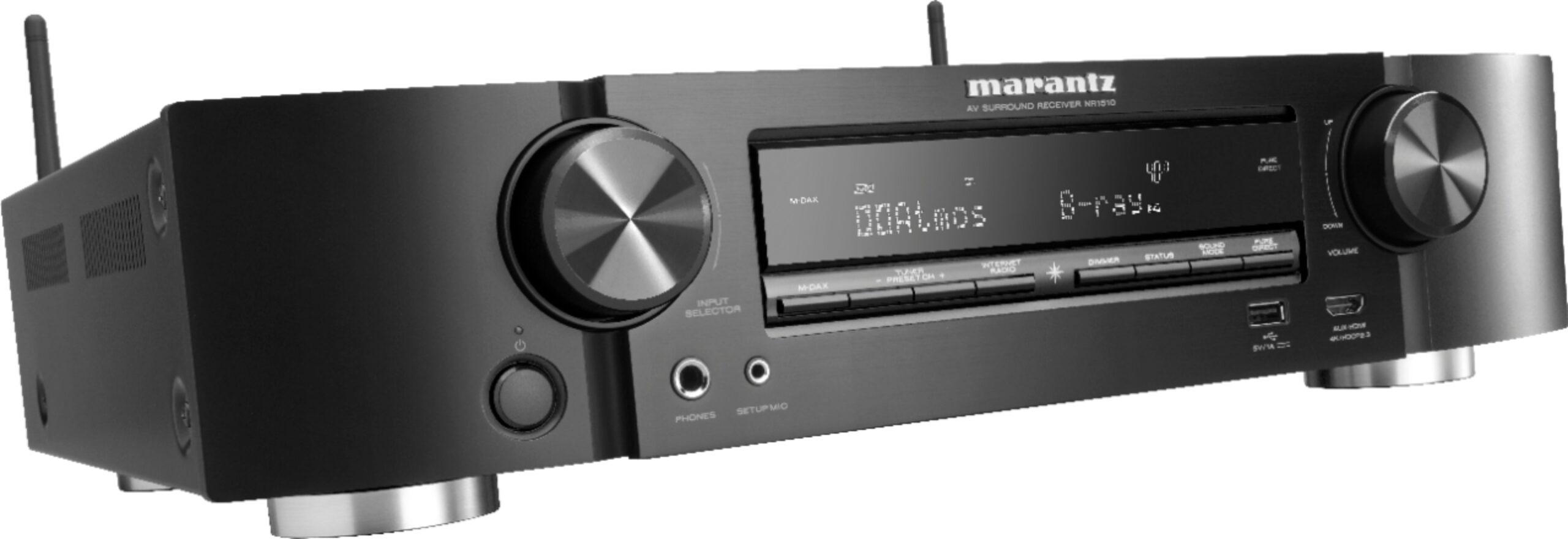
When you're shopping for an AV receiver, you're essentially looking for the brain of your home theater system. These devices take all your sources—streaming boxes, game consoles, Blu-ray players—and route their audio and video to your speakers and TV. But the Onkyo TX-NR7100 and Marantz NR1510 represent two completely different philosophies in how to approach this task.
Released in 2021, the TX-NR7100 arrived as Onkyo's answer to the growing demand for immersive audio and next-generation gaming features. Meanwhile, the NR1510, which hit the market in 2019, was Marantz's solution for people who wanted quality sound in impossibly tight spaces. At the time of writing, these receivers sit at opposite ends of both the price spectrum and feature set—making this one of the more interesting comparisons in home theater gear.
Before diving into the nitty-gritty, it's worth understanding what separates a good AV receiver from a great one. The most important factors are channel count (how many speakers you can connect), power output (how loud and clean your audio will be), audio format support (what types of surround sound you can experience), and video capabilities (how well it handles modern gaming and streaming).
The Onkyo TX-NR7100 is what we'd call a premium home theater receiver. It's designed for people who want the full cinematic experience at home, complete with overhead speakers, powerful amplification, and all the latest gaming features. The Marantz NR1510, on the other hand, is a compact, budget-conscious option that prioritizes fitting into small spaces while still delivering quality audio for music and movies.
Here's where these two receivers diverge most dramatically. The TX-NR7100 offers 9.2 channels of amplification at 100 watts per channel, while the NR1510 provides 5.2 channels at 50 watts per channel. But what does this actually mean for your listening experience?
Channel count determines your speaker layout possibilities. With the Onkyo's 9.2 configuration, you can run a full 5.1.4 Dolby Atmos setup—that's five speakers around ear level, one subwoofer, and four overhead speakers for those spectacular helicopter flyovers and rain effects. The "point-two" refers to dual subwoofer outputs, which helps even out bass response across larger rooms.
The Marantz's 5.2 setup limits you to traditional surround sound—front left and right, center channel, two rear speakers, and those same dual subwoofer outputs. This works perfectly for smaller rooms and most movie content, but you'll miss out on the overhead dimension that modern soundtracks increasingly rely on.
Power output matters more than many people realize. Those 100 watts per channel from the Onkyo don't just mean it plays louder—they mean it maintains clean, undistorted sound even during demanding passages. When an explosion hits in a movie, or when you're pushing the volume for a party, having that extra headroom prevents the harsh distortion that ruins the experience.
The Marantz's 50 watts per channel work well with efficient speakers in smaller rooms, but they'll struggle with harder-to-drive speakers or larger spaces. Based on user feedback and expert reviews, the Onkyo consistently delivers more dynamic, impactful sound, while the Marantz excels at refined, musical playback at moderate volumes.
This is arguably the biggest functional difference between these receivers. The TX-NR7100 supports Dolby Atmos and DTS:X—the latest immersive audio formats that place sounds in three-dimensional space around you. The NR1510 doesn't support these formats at all.
Dolby Atmos works by treating individual sounds as objects that can be placed anywhere in a sphere around the listener. Instead of just sending a helicopter sound to the rear speakers, it can move that helicopter smoothly overhead from front to back. This creates an incredibly convincing sense of space that traditional surround sound simply can't match.
From our research into user experiences, Dolby Atmos content—whether from streaming services like Netflix and Disney+, or from 4K Blu-rays—creates genuinely transformative moments. Rain falling from above, planes flying overhead, or even subtle ambient effects like wind through trees become viscerally convincing. The Onkyo even includes Dolby Atmos Height Virtualizer, which can simulate overhead effects even without dedicated ceiling speakers, though the effect isn't as convincing as real height channels.
If you're someone who watches a lot of modern movies or plays current-generation games, this difference alone might make the decision for you. The Marantz will give you excellent traditional 5.1 surround sound, but it can't process the spatial audio information that's becoming standard in new content.
The video capabilities reveal another major divide. The TX-NR7100 includes six HDMI 2.1 inputs that support 8K video at 60Hz and 4K video at 120Hz. This matters enormously if you own a PlayStation 5, Xbox Series X, or high-end gaming PC. These consoles can output 4K games at 120 frames per second, but only if your receiver can pass that signal through without downgrading it.
HDMI 2.1 also brings gaming-specific features like Variable Refresh Rate (VRR), which eliminates screen tearing, and Auto Low Latency Mode (ALLM), which automatically switches your TV to its fastest gaming mode. These features can make the difference between winning and losing in competitive online games.
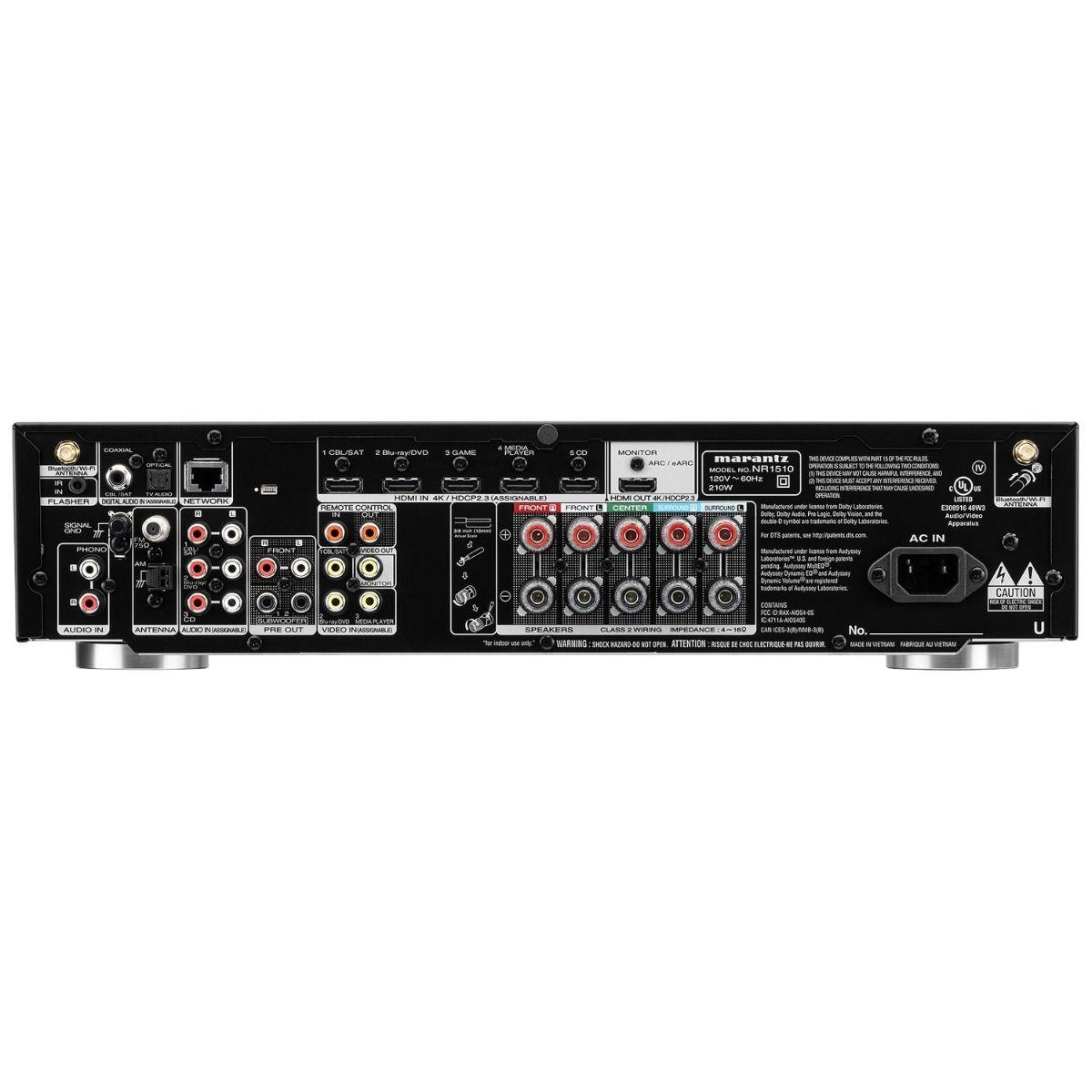
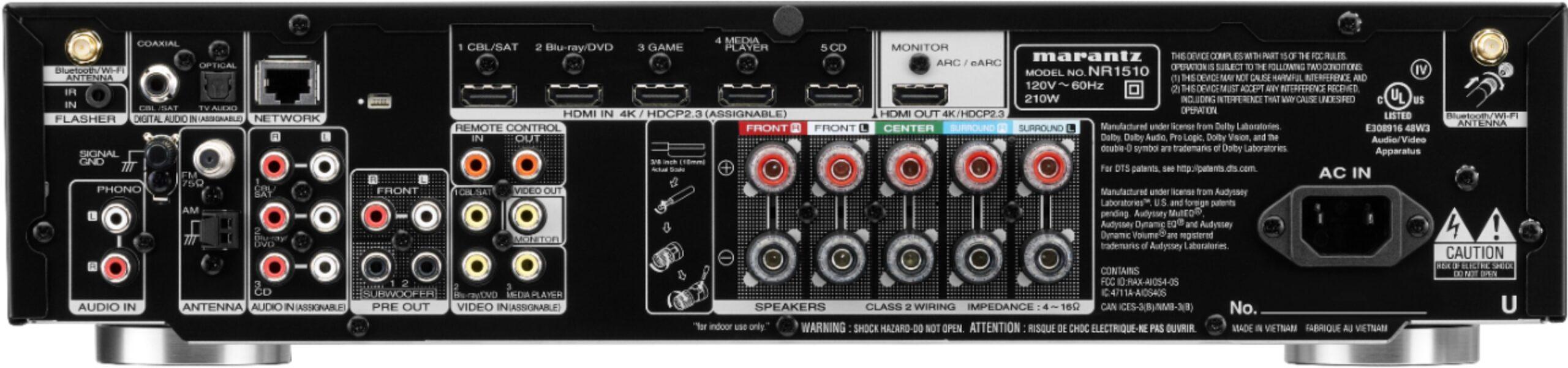
The Marantz NR1510 uses older HDMI 2.0 inputs that max out at 4K/60Hz. For most current content and gaming, this works fine, but it doesn't leave room for future upgrades. Based on the typical lifecycle of AV receivers (7-10 years), this could become limiting sooner than you'd expect.
Both receivers support HDR (High Dynamic Range) video, which makes colors more vibrant and contrasts more dramatic. However, the Onkyo supports more HDR formats, including the premium Dolby Vision standard that provides the best possible picture quality from supported content.
Every room has acoustic problems—hard surfaces that create echoes, furniture that absorbs certain frequencies, or irregular shapes that cause standing waves. Both receivers include automatic room correction systems, but they take very different approaches.
The TX-NR7100 includes Dirac Live, which is widely considered one of the most sophisticated room correction systems available. Dirac Live analyzes your room using multiple measurement positions and then applies precise corrections to each speaker's output. The result is more natural-sounding bass, clearer dialogue, and better stereo imaging. Based on professional reviews and user feedback, Dirac Live often transforms mediocre-sounding rooms into genuinely impressive listening spaces.
The NR1510 uses Audyssey MultEQ, which is competent but less advanced. Audyssey takes fewer measurements and applies broader corrections. It still improves most rooms noticeably, but it's not as precise or effective as Dirac Live.
For anyone setting up speakers in a less-than-ideal room—which describes most of us—this difference in room correction can be as important as the speakers themselves.
Modern AV receivers need to integrate with whole-home audio systems, and here the Onkyo offers significantly more flexibility. It supports three-zone audio, meaning you can send different music to your main listening room, bedroom, and patio simultaneously. The dedicated Zone 2 HDMI output even lets you watch different content in another room.
The Onkyo also works with Sonos systems through its "Works with Sonos" certification, letting you integrate it seamlessly into an existing Sonos ecosystem. For streaming, it supports virtually everything: Wi-Fi, Bluetooth (including the higher-quality aptX codec), AirPlay 2, Chromecast built-in, and DTS Play-Fi.
The Marantz NR1510 focuses on single-room performance but includes HEOS Built-in for multi-room audio. HEOS is Marantz's proprietary system that works well but requires other HEOS-compatible devices to create a multi-room setup. The streaming options are solid—Wi-Fi, Bluetooth, and AirPlay 2—but not as comprehensive as the Onkyo's.
Here's where the Marantz shines: it's genuinely compact. At just 3.34 inches tall, it's roughly half the height of a traditional receiver. This slim profile lets it fit in entertainment centers where other receivers simply won't go. If you've got a wall-mounted TV with a narrow shelf underneath, or a built-in cabinet with limited vertical space, this might be the deciding factor.
The TX-NR7100, at nearly 7 inches tall, requires standard AV cabinet space. It's not unusually large for its feature set, but it won't squeeze into tight spots.
Both receivers are well-built, but they reflect different priorities. The Marantz maximizes features within size constraints, while the Onkyo maximizes features within budget constraints for its price tier.
Based on extensive research into professional reviews and user experiences, these receivers have distinct sonic personalities. The TX-NR7100 excels at dynamic, exciting sound that makes movies feel alive. Its THX Certified Select status means it meets strict standards for cinema reference audio. Users consistently praise its ability to deliver clear dialogue, impactful bass, and spacious soundstaging.
The Marantz NR1510 follows Marantz's tradition of musical, refined sound. It's particularly good with music playback, offering smooth, natural-sounding audio that doesn't fatigue over long listening sessions. However, users note that it can sound somewhat restrained compared to more powerful receivers, especially during action movie scenes.
For home theater use specifically, the Onkyo's extra power and immersive audio support create more engaging experiences with modern content. The Marantz works better for people who primarily listen to music and occasionally watch movies at moderate volumes.
The TX-NR7100 is the clear choice for serious home theater enthusiasts. If you're planning a dedicated theater room, want the full Dolby Atmos experience, own next-generation gaming consoles, or have a room larger than about 300 square feet, its extra capabilities justify the higher price. It's also the better long-term investment, with HDMI 2.1 and immersive audio support that will remain relevant for years to come.
The Marantz NR1510 makes sense in specific situations: when space is severely limited, when budget constraints are primary, or when you're primarily interested in music with occasional movie watching. It's also ideal for smaller rooms where its 50-watt output is adequate and where you don't need the complexity of height speakers.
Since the NR1510's 2019 release, the home theater landscape has shifted dramatically. Streaming services now routinely offer Dolby Atmos content, new gaming consoles have embraced 4K/120Hz gaming, and 8K TVs have become more affordable. The TX-NR7100's 2021 release timing let it incorporate these newer standards from the beginning.
This technological progression means that while the Marantz was competitive in 2019, it's missing features that have become increasingly important. The question becomes whether you need those features now or might want them in the future.
At the time of writing, the Onkyo TX-NR7100 commands roughly double the price of the Marantz NR1510, but it delivers significantly more than twice the features. The value proposition depends entirely on your specific needs and constraints.
Choose the Onkyo if you're building a serious home theater system, want immersive audio, need gaming-optimized video features, or plan to expand your system over time. Its combination of power, features, and future-proofing makes it an excellent long-term investment for enthusiasts.
Choose the Marantz if space constraints are paramount, if you're primarily interested in music playback, if your room is smaller than 250 square feet, or if budget considerations require staying in the lower price tier. It's a refined, capable receiver that does traditional home theater very well within its limitations.
The decision ultimately comes down to matching the receiver's capabilities to your actual needs. Both are quality products from respected manufacturers—they just serve very different users and use cases. Consider your room size, content preferences, upgrade timeline, and space constraints carefully, and the right choice should become clear.
| Onkyo TX-NR7100 | Marantz NR1510 |
|---|---|
| Channel Configuration - Determines speaker layout possibilities and room coverage | |
| 9.2 channels (supports up to 5.1.4 Dolby Atmos setups) | 5.2 channels (limited to traditional 5.1 surround sound) |
| Power Output - Critical for volume levels and speaker compatibility | |
| 100W per channel (8Ω) - handles demanding speakers and larger rooms | 50W per channel (8Ω) - adequate for smaller rooms with efficient speakers |
| Immersive Audio Support - Essential for modern streaming and gaming content | |
| Full Dolby Atmos & DTS:X with height virtualization | No Dolby Atmos or DTS:X support - traditional surround only |
| HDMI Video Support - Important for gaming and future-proofing | |
| 6x HDMI 2.1 inputs (8K/60Hz, 4K/120Hz, gaming features) | 6x HDMI 2.0 inputs (4K/60Hz maximum) |
| Room Correction Technology - Optimizes sound for your specific space | |
| Dirac Live (professional-grade acoustic optimization) | Audyssey MultEQ (basic automatic calibration) |
| Physical Size - Critical for cabinet fit and installation | |
| 6.81" height (standard AV receiver dimensions) | 3.34" height (slim profile fits tight spaces) |
| Multi-Room Capabilities - Enables whole-home audio integration | |
| 3-zone audio with Zone 2 HDMI output, Sonos compatibility | Single zone only, HEOS multi-room ecosystem |
| Gaming Features - Matters for PS5/Xbox Series X owners | |
| VRR, ALLM, QFT support for lag-free gaming | Basic HDMI pass-through, no advanced gaming features |
| Release Year & Future-Proofing - Indicates technology relevance | |
| 2021 release with latest standards built-in | 2019 release, lacks newer immersive audio and video standards |
| Best Use Case - Who should choose this receiver | |
| Serious home theater enthusiasts with larger rooms | Space-constrained setups prioritizing music and basic movies |
The primary difference is that the Onkyo TX-NR7100 is a 9.2-channel receiver with full Dolby Atmos support, while the Marantz NR1510 is a 5.2-channel receiver without immersive audio capabilities. The Onkyo also delivers twice the power at 100W per channel versus the Marantz's 50W per channel.
The Marantz NR1510 is better for small spaces due to its slim 3.34-inch height that fits in tight entertainment centers. Its 50W power output is also more appropriate for smaller rooms where you don't need high volume levels. The Onkyo TX-NR7100 requires more cabinet space and delivers more power than small rooms typically need.
The Onkyo TX-NR7100 offers superior gaming support with HDMI 2.1 inputs that handle 4K/120Hz and 8K video, plus gaming features like VRR and ALLM for PS5 and Xbox Series X. The Marantz NR1510 has HDMI 2.0 inputs limited to 4K/60Hz without advanced gaming features.
For home theater use, the Onkyo TX-NR7100 delivers superior movie performance with its Dolby Atmos support, higher power output, and THX certification. The overhead effects and dynamic range make action movies more immersive. The Marantz NR1510 provides good traditional surround sound but lacks the three-dimensional audio experience of modern movie soundtracks.
The Onkyo TX-NR7100 offers comprehensive multi-room capabilities with three-zone audio, Zone 2 HDMI output, and Sonos compatibility. The Marantz NR1510 is limited to single-zone operation but includes HEOS multi-room technology that requires additional HEOS-compatible devices.
Both receivers handle music well, but they have different strengths. The Marantz NR1510 follows Marantz's musical heritage with refined, smooth sound that's excellent for stereo music. The Onkyo TX-NR7100 delivers more dynamic, powerful music playback but is optimized more for home theater than pure music listening.
The Onkyo TX-NR7100 supports up to 9 speakers plus 2 subwoofers (9.2 configuration), enabling full Dolby Atmos setups like 5.1.4 or 7.1.2. The Marantz NR1510 supports 5 speakers plus 2 subwoofers (5.2 configuration) for traditional surround sound setups.
Yes, both include automatic room correction but with different capabilities. The Onkyo TX-NR7100 features Dirac Live, a professional-grade system that provides precise acoustic optimization. The Marantz NR1510 uses Audyssey MultEQ, which offers basic but effective automatic calibration.
Value depends on your needs. The Marantz NR1510 offers excellent value for basic home theater and music in small spaces. The Onkyo TX-NR7100 provides better long-term value for serious home theater enthusiasts due to its future-proof features like HDMI 2.1 and Dolby Atmos support.
Both receivers support wireless streaming. The Onkyo TX-NR7100 offers more options including Wi-Fi, Bluetooth with aptX, AirPlay 2, Chromecast built-in, and DTS Play-Fi. The Marantz NR1510 provides Wi-Fi, Bluetooth, AirPlay 2, and integration with HEOS streaming services.
The Onkyo TX-NR7100 is significantly more future-proof with HDMI 2.1 support for 8K video, Dolby Atmos for immersive audio, and gaming features for next-gen consoles. The Marantz NR1510, released in 2019, lacks these newer technologies that are becoming standard in modern content.
The Marantz NR1510 works best in rooms under 250 square feet where its 50W output provides adequate volume. The Onkyo TX-NR7100 is better suited for medium to large rooms (300+ square feet) where its 100W power output and additional channels can fill the space effectively with immersive surround sound.
We've done our best to create useful and informative comparisons to help you decide what product to buy. Our research uses advanced automated methods to create this comparison and perfection is not possible - please contact us for corrections or questions. These are the sites we've researched in the creation of this article: crutchfield.com - prohifi.in - bestbuy.com - h-m-entertainment.com - audiosciencereview.com - crutchfield.ca - soundandvision.com - avsforum.com - avgadgets.com - youtube.com - onkyo.com - crutchfield.com - onkyo.com - accessories4less.com - klipsch.com - youtube.com - listenup.com - intl.onkyo-av.com - bestbuy.com - 420spotshop.com - support.onkyousa.com - bestbuy.com - upscaleaudio.com - youtube.com - hometheatreexperts.in - audiolab.com - crutchfield.com - flanners.com - manuals.marantz.com - marantz.com - youtube.com

Privacy Policy
Terms and Conditions - Affiliate Policy
Home Security
© Copyright 2008-2026.
11816 Inwood Rd #1211, Dallas, TX 75244