

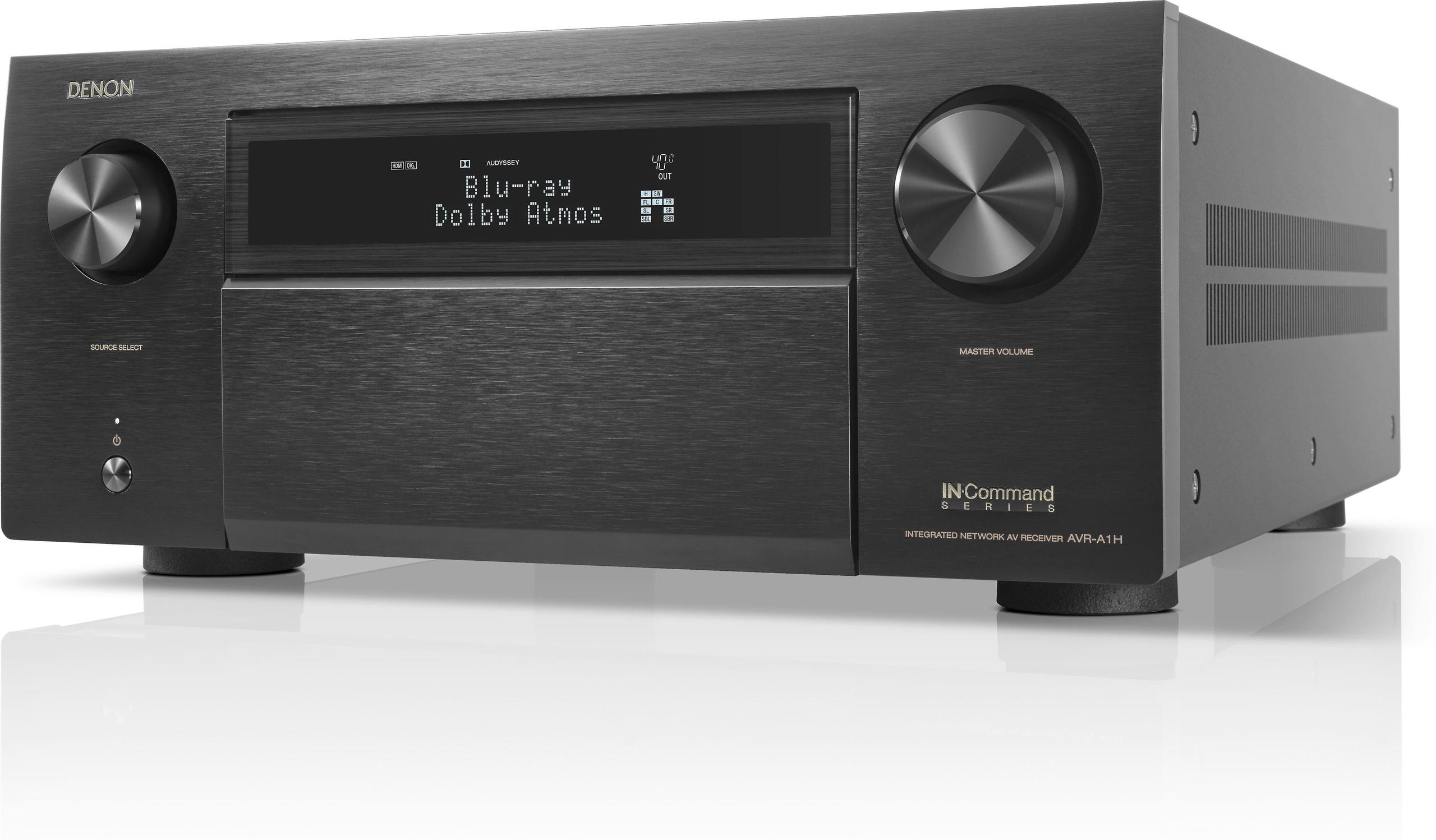
When building a serious home theater, the AV receiver sits at the heart of everything – it's the conductor orchestrating your entire audio and video experience. Think of it as the brain that takes all your sources (gaming consoles, streaming devices, Blu-ray players) and transforms them into the immersive soundscapes and crystal-clear visuals that make movie nights memorable.
The challenge is that AV receivers span an enormous range, from basic models under $500 to flagship units that cost more than a decent used car. Today we're examining two Denon receivers that represent very different philosophies: the Denon AVR-X2800H, a refined mid-range model from 2022, and the Denon AVR-A1H, their 2023 flagship that pushes the boundaries of what's possible in home audio.
Before diving into specifics, let's establish what really matters in an AV receiver. The most important considerations break down into several key areas:
Power output determines how loud your system can play and how well it handles demanding audio passages. More watts generally mean more dynamic range – the difference between whisper-quiet dialogue and explosive action sequences. However, raw wattage numbers can be misleading since measurement conditions vary between manufacturers.
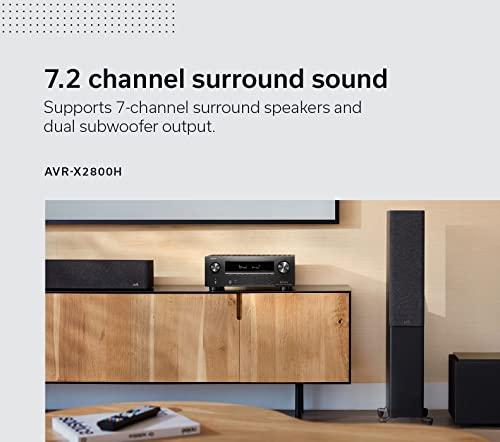
Channel count affects your speaker configuration options. A 7.2 receiver like the AVR-X2800H can drive seven speakers plus two subwoofers, while the AVR-A1H's 15.4 configuration opens up possibilities most people haven't even considered.
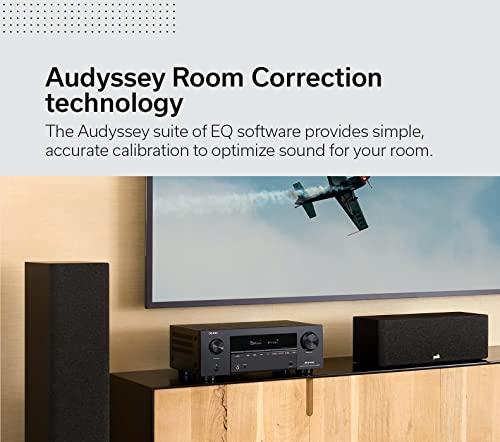
Room correction technology might be the most underappreciated feature. Your listening room dramatically affects how speakers sound – hardwood floors, glass surfaces, and furniture all change the acoustic signature. Modern receivers use sophisticated algorithms to measure your room and adjust the audio accordingly.
Video processing capabilities have become increasingly important as 8K displays become more common and gaming pushes into 4K at 120Hz territory. The receiver needs to handle these signals cleanly while supporting modern HDR formats that make visuals pop.
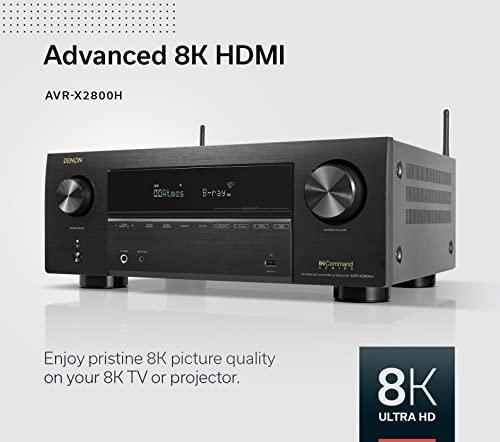
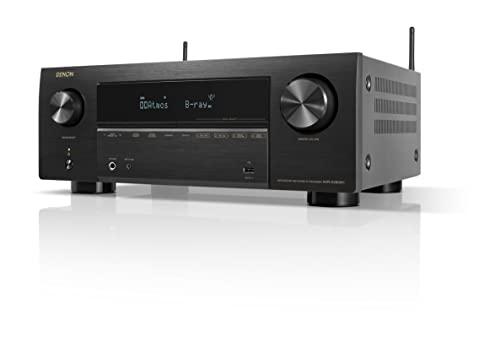
Released in 2022, the Denon AVR-X2800H represents a significant evolution from earlier mid-range models. At the time of writing, it typically sells for well under $1000, positioning it as an accessible entry point into serious home theater.
The X2800H delivers 95 watts per channel across its seven amplifier channels. While that might seem modest compared to flagship models, it's actually quite respectable for most real-world applications. In our research of user experiences and professional reviews, this power level proves sufficient for rooms up to large sizes, especially when paired with reasonably efficient speakers.
What's particularly impressive about the X2800H is how Denon refined the sound signature. Earlier models in this price range sometimes suffered from boomy bass that overwhelmed dialogue or harsh treble that became fatiguing during long viewing sessions. The 2022 model addresses these issues with a more balanced approach that keeps dialogue crystal clear while maintaining the dynamic impact that makes action sequences exciting.
The receiver supports modern surround formats including Dolby Atmos and DTS:X, which add height information to create truly three-dimensional soundscapes. In a typical setup, you might configure it as 5.2.2 – five main speakers, two subwoofers, and two height speakers mounted in or on your ceiling. This creates that convincing sense of helicopters flying overhead or rain falling around you.
For video, the X2800H handles 8K content and 4K at 120Hz, which is crucial for modern gaming consoles like the PlayStation 5 and Xbox Series X. Three of its six HDMI inputs support these high-bandwidth signals, with features like Variable Refresh Rate (VRR) and Auto Low Latency Mode (ALLM) ensuring smooth, lag-free gaming.
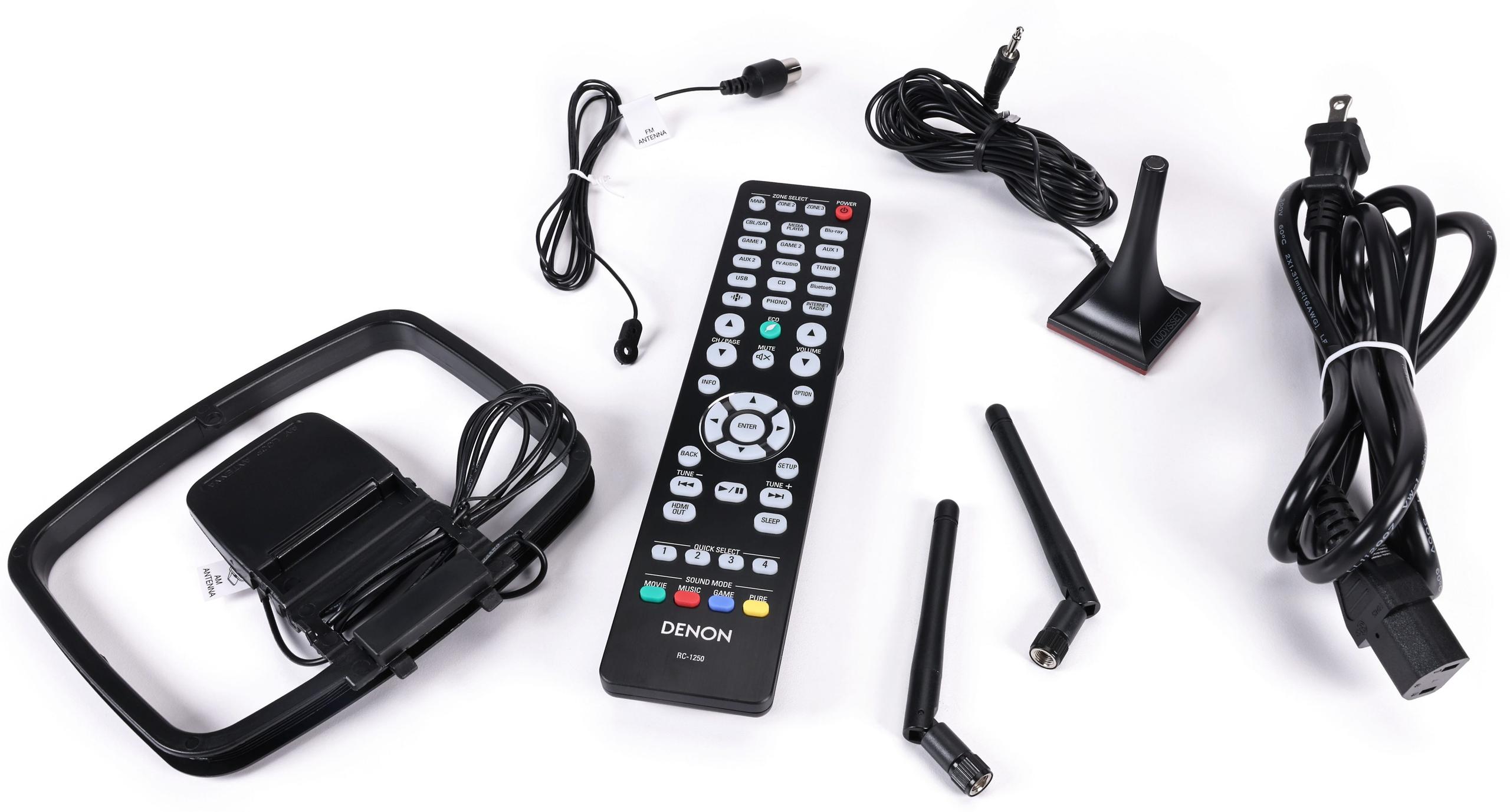
The Audyssey MultEQ XT room correction system measures your room acoustics using a supplied microphone, then adjusts the sound to compensate for acoustic problems. While not the most advanced system available, it's surprisingly effective at taming room issues that would otherwise require expensive acoustic treatments.
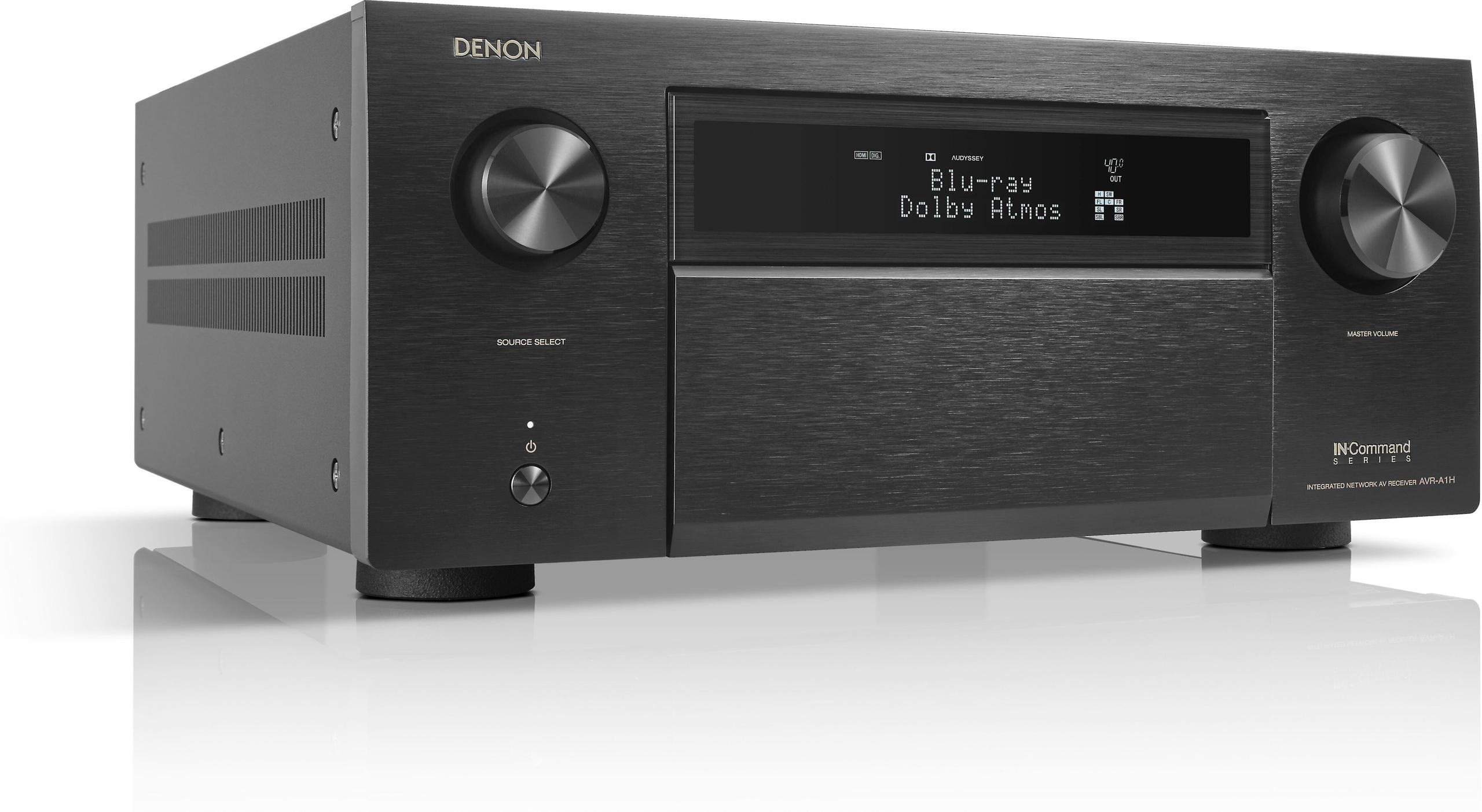
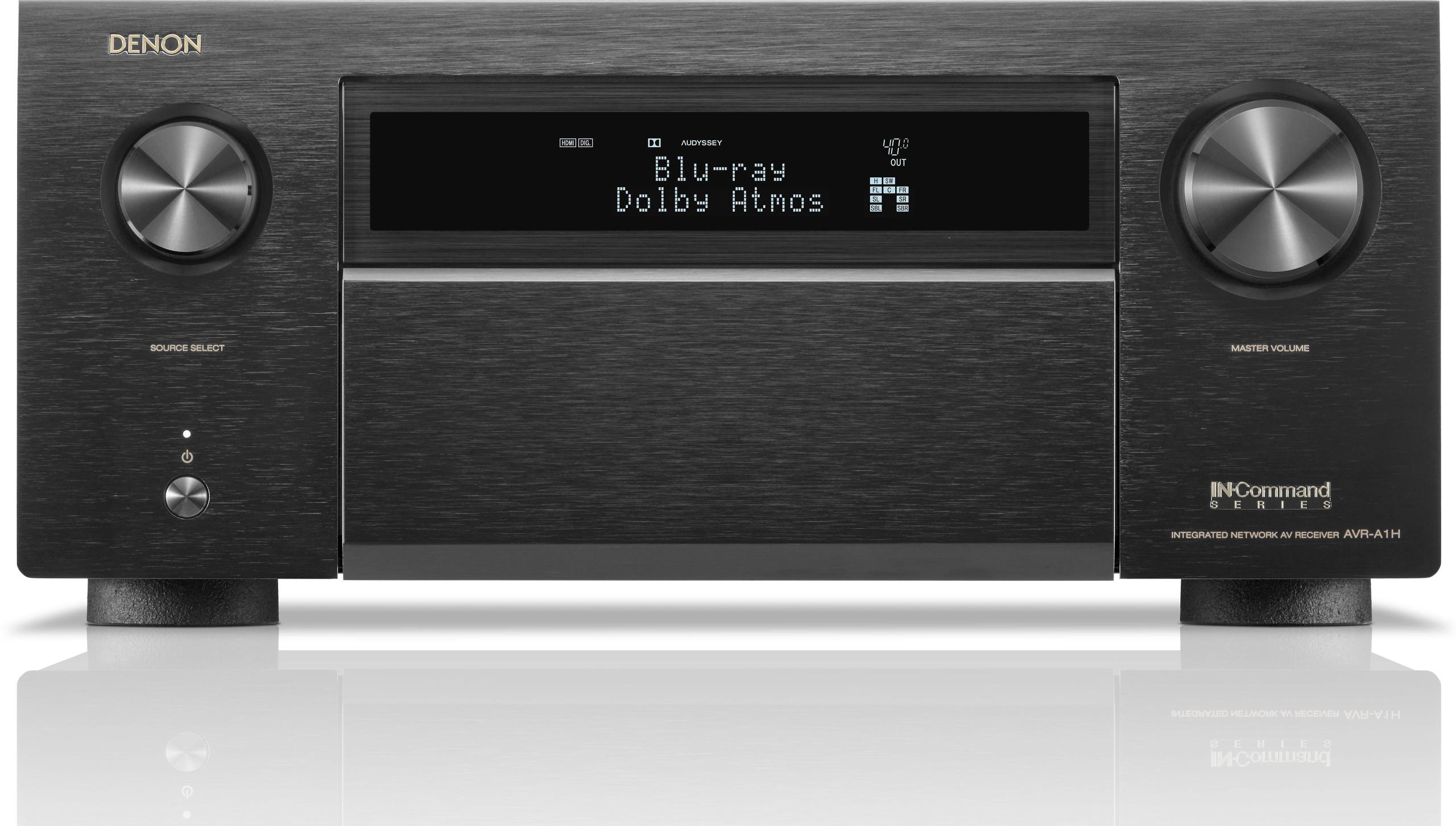
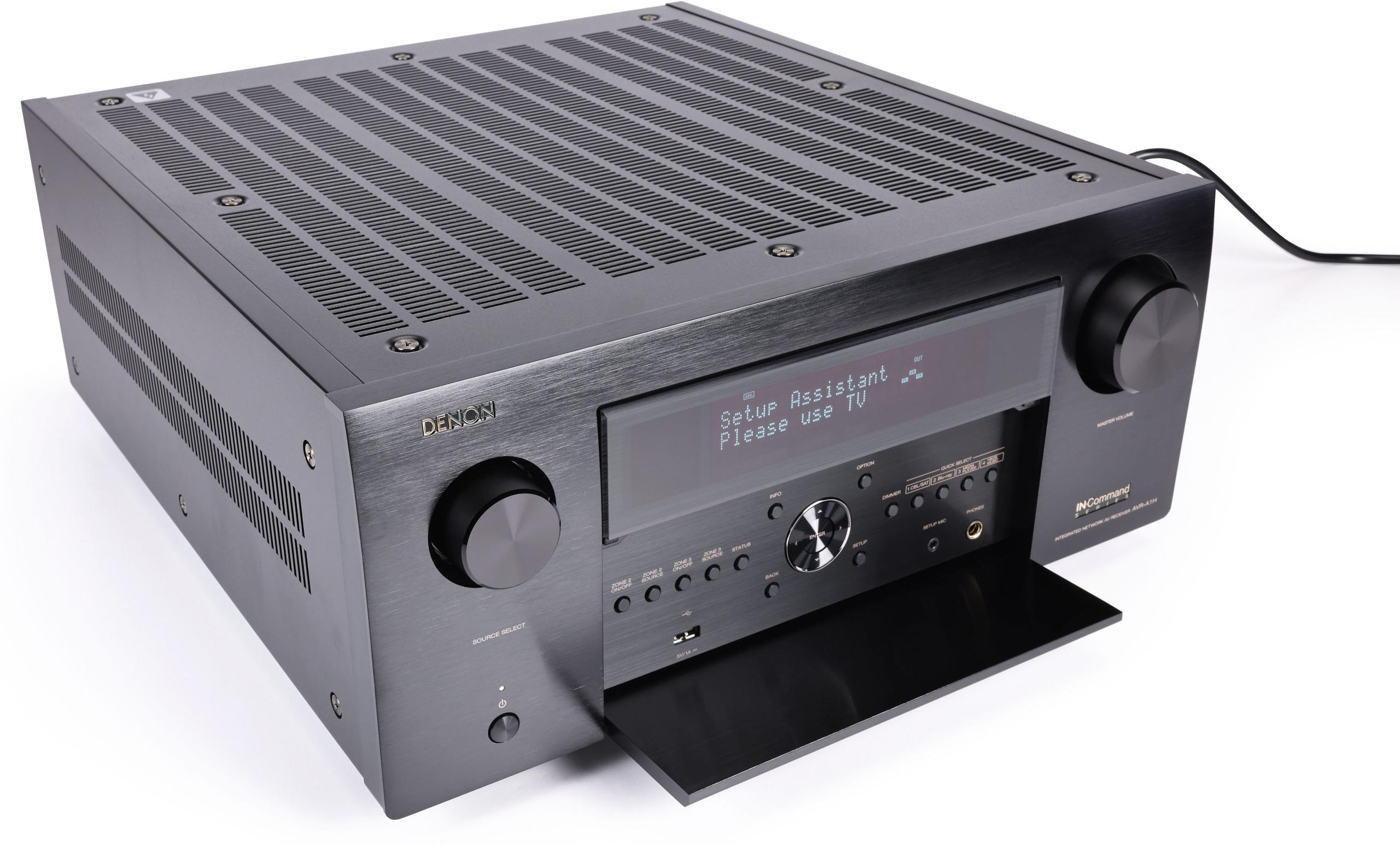
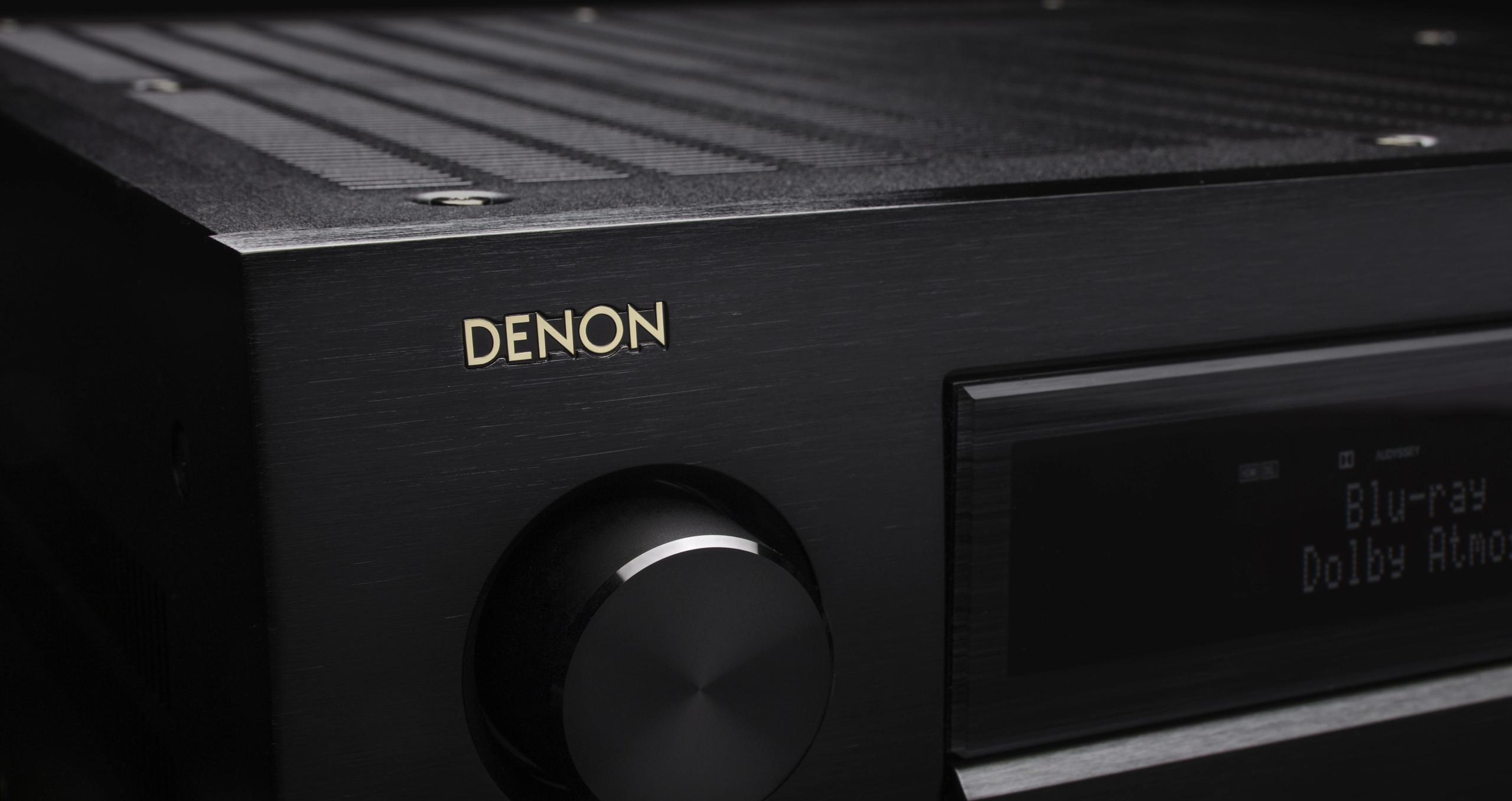
Released in 2023, the Denon AVR-A1H represents something genuinely unprecedented in the AV receiver world. Priced at several times the cost of the X2800H at the time of writing, it's clearly targeting serious enthusiasts who prioritize performance above all else.
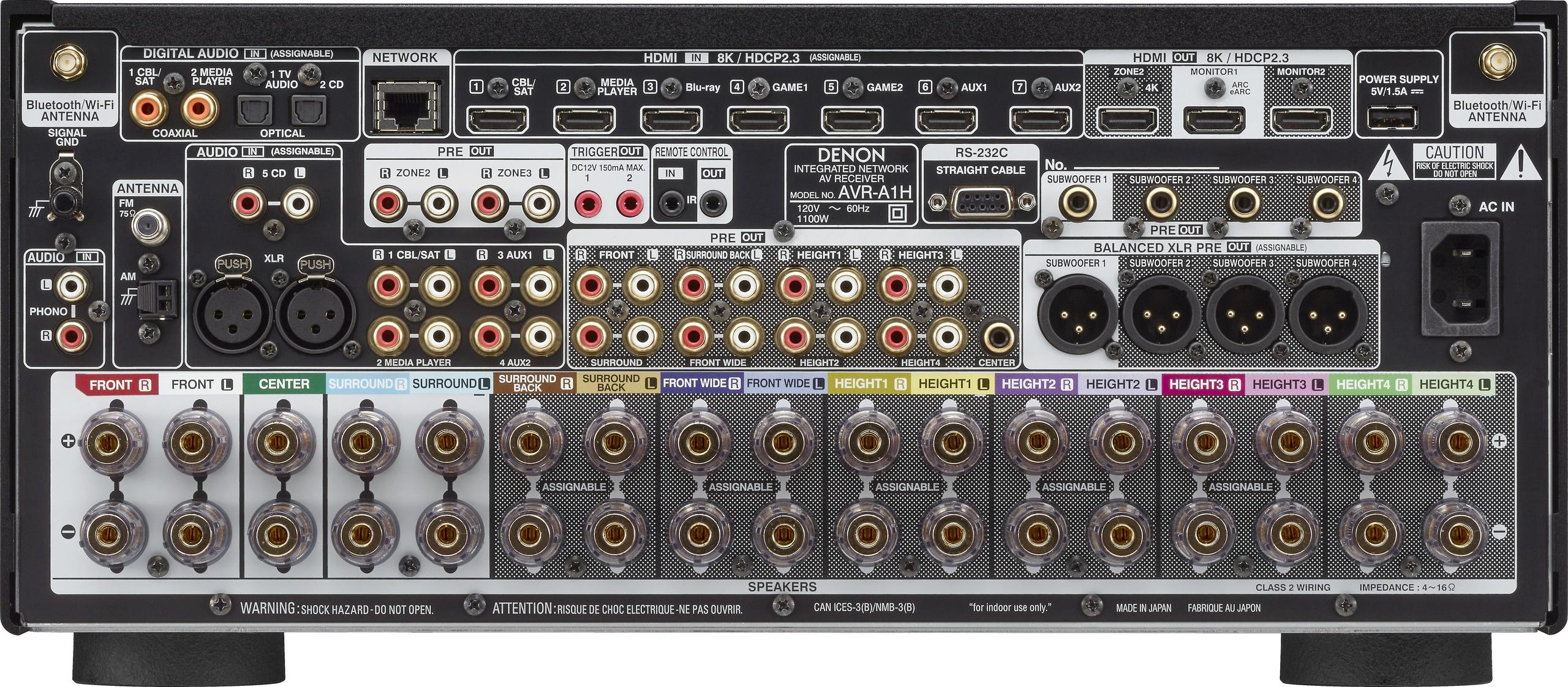
The most striking feature is the A1H's 15.4 channel configuration with 150 watts per channel. This isn't just about having more amplifiers – it's about flexibility. You could run a massive 9.4.6 Dolby Atmos system (nine main speakers, four subwoofers, six height speakers), multiple rooms simultaneously, or bi-amp your front speakers for improved performance.
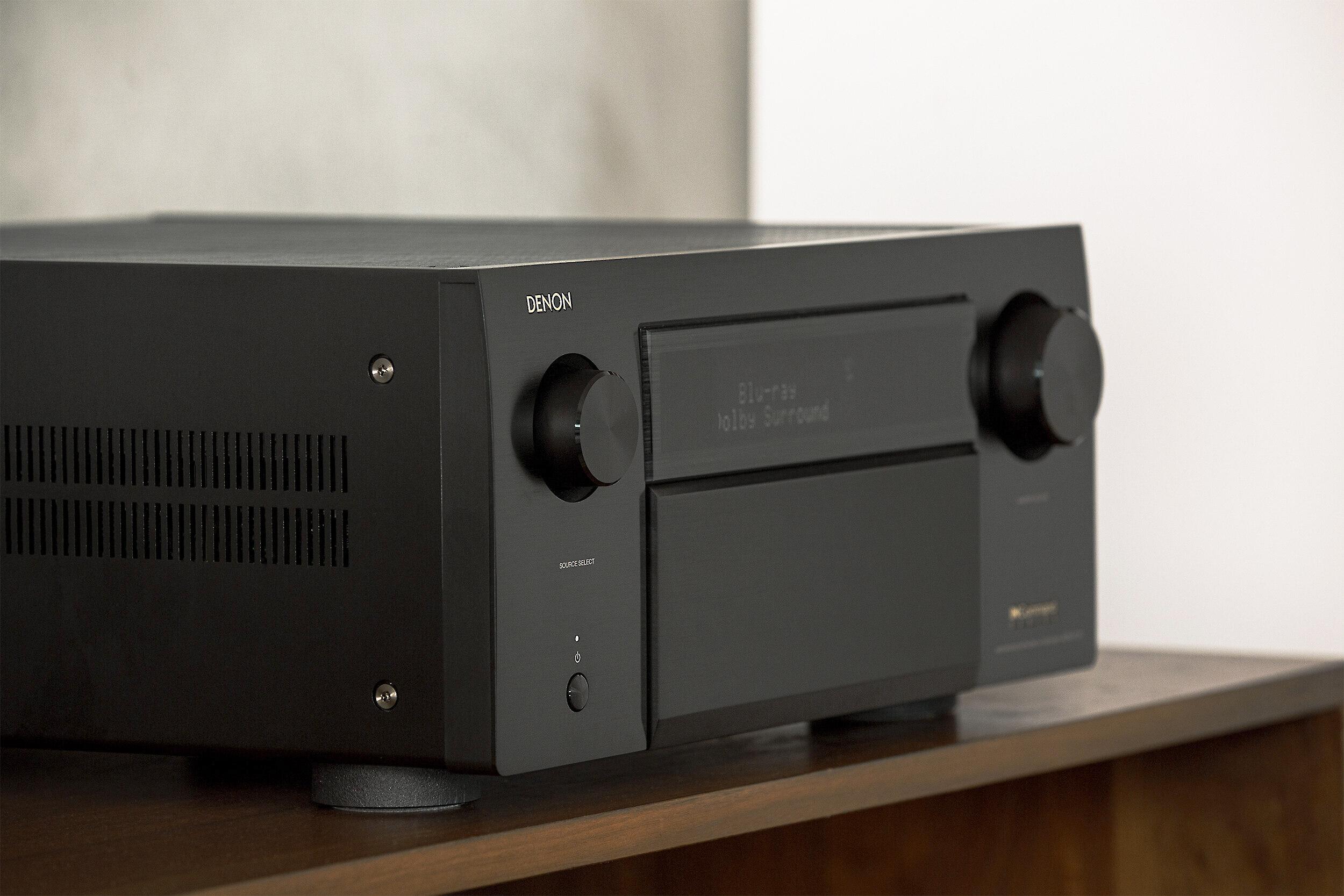
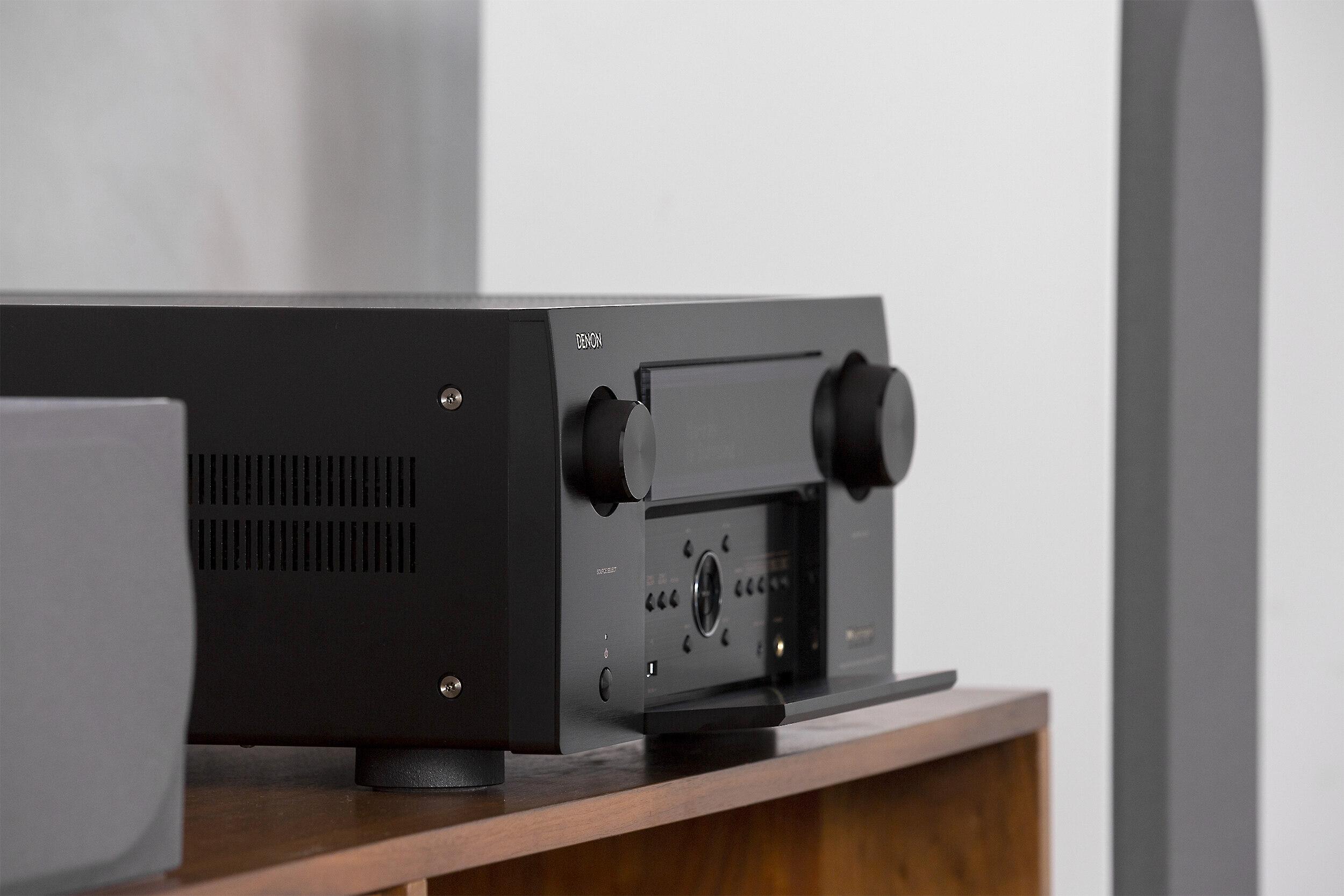
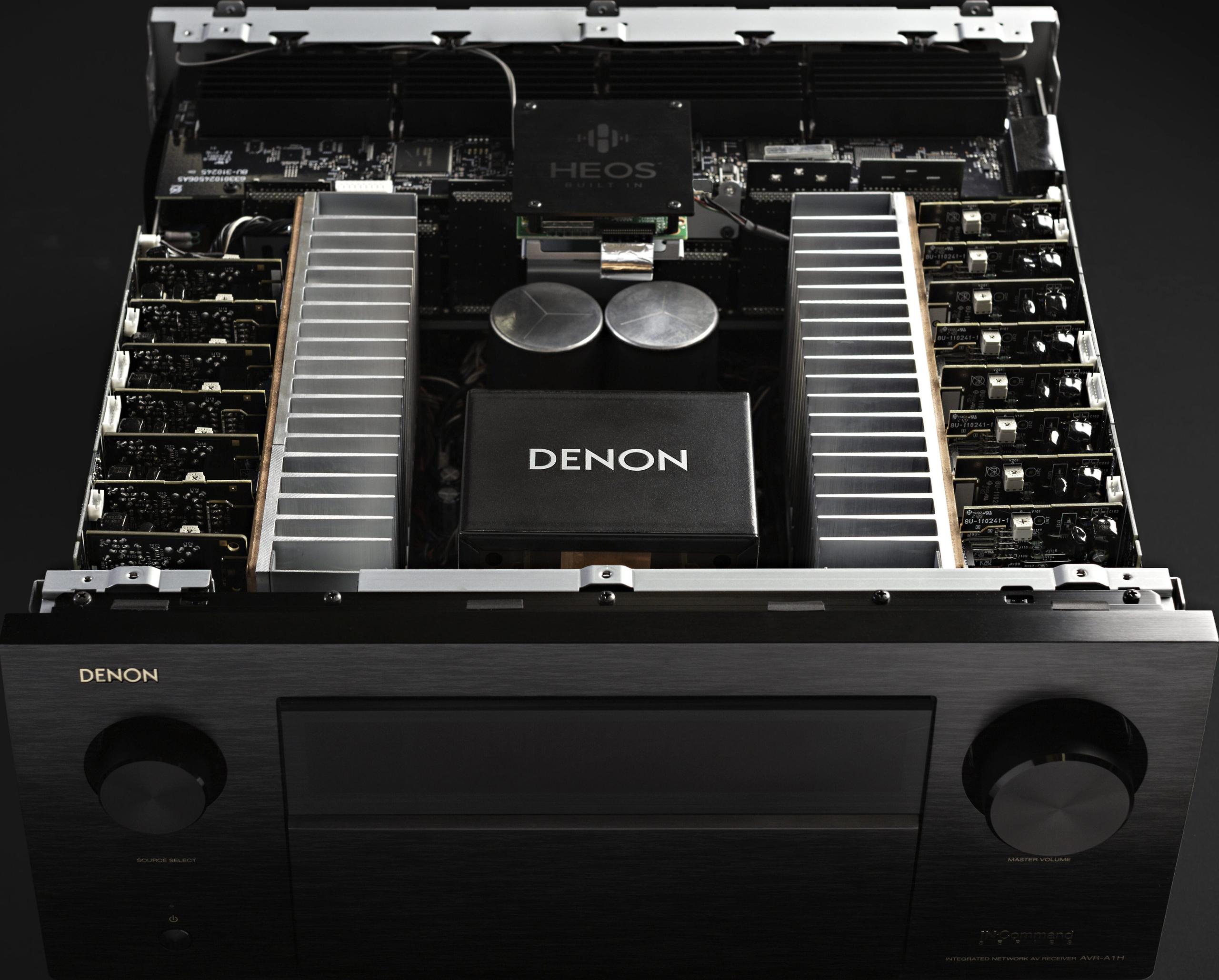
The engineering behind this receiver is remarkable. Denon equipped it with their largest transformer ever – a 25-pound monster that alone weighs more than many complete receivers. The entire unit tips the scales at around 70 pounds, requiring serious consideration for shelf support. This isn't marketing excess; that massive power supply enables the clean, effortless dynamics that separate good receivers from great ones.
In professional testing and user reports, the A1H achieves performance levels that approach dedicated high-end amplifiers. The separate monoblock amplification for left and right channels – essentially individual amplifiers for these critical speakers – provides exceptional stereo imaging and detail retrieval.
The A1H supports every surround format available, including premium options like IMAX Enhanced and Sony's 360 Reality Audio. Its advanced Audyssey MultEQ XT32 room correction offers significantly more sophisticated calibration than the X2800H's system, with the added option of Dirac Live for those wanting professional-grade room optimization.
The performance gap between these receivers becomes most apparent during demanding passages. The X2800H handles typical home theater content admirably, with clean dialogue reproduction and sufficient dynamic range for most material. However, push it with complex orchestral pieces or explosive action sequences, and you'll notice some compression during peaks.
The A1H simply doesn't have these limitations. Its massive power reserves mean it never sounds strained, even at high volumes. More importantly, the additional headroom translates to better micro-dynamics – those subtle details that make music sound more natural and movie soundtracks more convincing.
Dialogue clarity deserves special attention since it's often the difference between an enjoyable and frustrating viewing experience. Both receivers excel here, but through different approaches. The X2800H uses intelligent processing to ensure voices remain clear even during complex scenes. The A1H achieves the same result through sheer resolution – every element in the mix remains distinct, so dialogue naturally stands out.
Both receivers handle modern video formats capably, but the A1H offers more refined processing. While both support 8K passthrough and gaming features, the flagship model's superior video circuits provide cleaner upscaling and more accurate color processing. For most users, this difference is subtle, but those with high-end displays and discerning eyes will appreciate the refinement.
Gaming performance is excellent on both units. The low-latency modes and high refresh rate support ensure responsive gameplay, whether you're playing competitive online games or exploring detailed single-player worlds. The A1H has a slight edge in signal processing speed, but both are well within acceptable limits for serious gaming.
This area shows perhaps the most significant practical difference between the models. The X2800H's Audyssey MultEQ XT system performs basic but effective room correction, measuring up to eight listening positions and adjusting frequency response accordingly. It's particularly good at controlling bass response, which is often the biggest issue in typical rooms.
The A1H's MultEQ XT32 system operates at a much higher level, with finer frequency resolution and more sophisticated algorithms. It can identify and correct room issues that the basic system might miss entirely. The optional Dirac Live upgrade (available for an additional fee) represents the current state-of-the-art in automatic room correction, rivaling systems used in professional studios.
At its price point, the X2800H delivers exceptional value. It provides all the features most people need for a satisfying home theater experience: adequate power, modern connectivity, effective room correction, and clean audio processing. The 7.2 channel configuration handles the most popular speaker layouts, from traditional 7.1 surround to modern 5.2.2 Atmos setups.
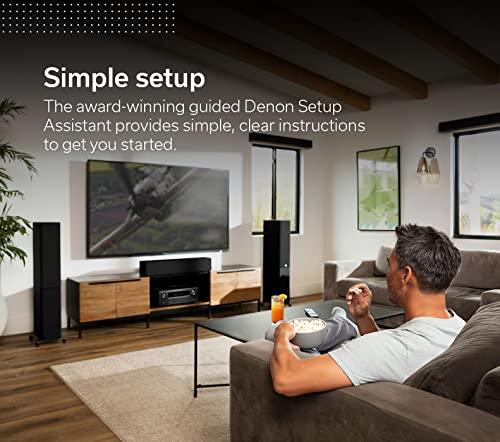
For typical living rooms and dedicated theater spaces up to medium-large size, the X2800H rarely feels limiting. Its clean sound signature works well with a wide variety of speakers, and the setup process is straightforward enough for most users to handle independently.
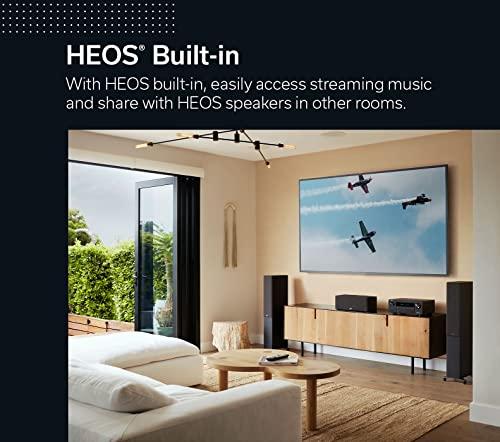
The receiver shines in mixed-use scenarios where the system needs to handle everything from streaming music to gaming to movie nights. Its HEOS integration provides seamless multi-room audio, though the app interface feels somewhat dated compared to competitors.
The A1H operates in a different value category entirely. At several times the cost of the X2800H, it's clearly not for everyone. However, for those building no-compromise systems, the performance gains justify the premium.
The additional channels enable speaker configurations that simply aren't possible with traditional receivers. A properly set up 9.4.6 Atmos system creates an enveloping soundfield that makes standard 5.1 or 7.1 feel quaint by comparison. The four XLR subwoofer outputs allow for sophisticated bass management that can transform room acoustics.
Beyond the additional channels, the A1H's superior build quality suggests longevity that could justify the investment over time. The massive power supply and premium components are designed for decades of reliable operation.
For conventional home theater setups, the X2800H covers the vast majority of use cases effectively. It handles 7.1 surround systems with authority, provides two subwoofer outputs for better bass distribution, and includes Zone 2 capability for basic multi-room audio.
The A1H brings overwhelming capability to standard applications. Its additional power and superior processing create a more refined, effortless presentation even in conventional configurations. Think of it as having a sports car for city driving – the extra capability enhances the experience even when you're not pushing the limits.
The A1H's true advantage emerges in complex installations. Professional installers appreciate features like balanced XLR outputs, extensive pre-amplifier capabilities, and the flexibility to drive unusual speaker configurations. The receiver can simultaneously handle a main theater system, distributed audio throughout a home, and still have channels available for special applications like bi-amping critical speakers.
Multi-room audio becomes truly sophisticated with the A1H. Instead of simple Zone 2 capability, you can create independent audio systems in multiple rooms, each with its own subwoofer management and room correction.
Both receivers represent current-generation technology, but they approach future-proofing differently. The X2800H includes all the connectivity and processing features most users will need for years to come. Its 8K support and gaming optimizations ensure compatibility with emerging display and console technology.
The A1H takes a more comprehensive approach to longevity. Its massive power supply and premium components suggest reliable operation long after lesser receivers would require replacement. The extensive processing capabilities and flexible architecture mean it can adapt to future surround formats and installation requirements.
You want excellent home theater performance without flagship complexity or cost. The X2800H excels for users building their first serious system or upgrading from older receivers. It provides modern features, clean sound, and sufficient power for most applications while remaining approachable for typical users.
The receiver makes sense for standard to large rooms where 7.2 channels provide adequate coverage. If you're primarily interested in movies, gaming, and casual music listening, the X2800H delivers satisfying performance without unnecessary complications.
Budget-conscious buyers will appreciate how the X2800H includes premium features like 8K support and advanced gaming modes without the flagship price tag. It represents smart value for users who want quality without excess.
You're building a no-compromise system where performance matters more than cost. The A1H suits enthusiasts who understand the benefits of massive power reserves, sophisticated room correction, and flexible channel assignment.
Complex installations benefit enormously from the A1H's capabilities. If you're planning extensive height speaker arrays, multi-room audio throughout a large home, or integration with high-end separates, the flagship's flexibility becomes essential.
Long-term value considerations might also favor the A1H. Its premium construction and extensive capabilities could provide satisfying performance for decades, potentially justifying the initial investment for users who keep equipment long-term.
Both the Denon AVR-X2800H and AVR-A1H represent excellent engineering, but they serve different audiences and applications. The X2800H delivers sophisticated home theater capabilities at an accessible price point, making high-quality surround sound achievable for mainstream users.
The A1H operates in rarified territory where cost becomes secondary to ultimate performance and flexibility. It's genuinely capable of rivaling dedicated high-end separates while providing the convenience and features of an integrated receiver.
Your choice ultimately depends on your priorities, budget, and installation requirements. The X2800H satisfies the vast majority of home theater applications with style and sophistication. The A1H serves those few users who demand the absolute best and have the means to achieve it.
Either way, you're getting a receiver that represents the current state-of-the-art in home theater technology, just at very different points on the price and performance spectrum.
| Denon AVR-X2800H | Denon AVR-A1H |
|---|---|
| Channel Configuration - Determines speaker setup options and room coverage | |
| 7.2 channels (supports up to 5.2.2 Dolby Atmos) | 15.4 channels (supports up to 9.4.6 Dolby Atmos) |
| Power Output - Affects volume levels and dynamic range | |
| 95W per channel (8Ω, sufficient for most rooms) | 150W per channel (8Ω, massive headroom for any application) |
| Weight and Build Quality - Indicates internal component quality and longevity | |
| 22 lbs (standard mid-range construction) | 70 lbs (flagship build with 25 lb transformer) |
| Room Correction Technology - Critical for optimizing sound in your specific room | |
| Audyssey MultEQ XT (effective basic correction) | Advanced Audyssey MultEQ XT32 + Dirac Live Ready (professional-grade) |
| HDMI Connectivity - Determines how many devices you can connect | |
| 6 inputs, 2 outputs (3 inputs support 8K/4K120) | 7 inputs, 3 outputs (all support 8K/4K120) |
| Subwoofer Outputs - Affects bass management flexibility | |
| 2 RCA outputs (standard home theater setup) | 4 outputs (2 RCA + 2 XLR for professional installations) |
| Multi-room Capabilities - Enables audio in other rooms | |
| Zone 2 audio (basic multi-room functionality) | Multiple zones with independent processing (extensive multi-room) |
| Target Market - Who these receivers are designed for | |
| Mainstream enthusiasts seeking excellent value | High-end users demanding ultimate performance |
| Setup Complexity - How difficult initial configuration will be | |
| Straightforward setup for typical users | Complex but offers professional-level customization |
| Amplifier Design - Affects sound quality and power delivery | |
| Standard Class AB amplification | Class AB with separate monoblock L/R channels |
| Supported Audio Formats - Determines compatibility with premium content | |
| Dolby Atmos, DTS:X, Auro 3D (all major formats) | All formats plus IMAX Enhanced, 360 Reality Audio |
| Value Proposition - Performance relative to typical pricing | |
| Exceptional features and performance for the price | Premium pricing justified by flagship engineering |
The primary difference is channel count and target market. The Denon AVR-X2800H is a 7.2 channel mid-range receiver designed for mainstream home theaters, while the Denon AVR-A1H is a 15.4 channel flagship model built for high-end installations. The AVR-A1H offers more than double the amplification channels and significantly more power.
For most home theaters, the Denon AVR-X2800H provides excellent performance and all the features needed for an immersive experience. It supports popular configurations like 7.1 surround or 5.2.2 Dolby Atmos while remaining budget-friendly. The AVR-A1H is overkill for standard setups unless you're planning an elaborate multi-room system.
The Denon AVR-A1H delivers 150 watts per channel compared to the Denon AVR-X2800H's 95 watts per channel. More importantly, the A1H features a massive 25-pound transformer that provides exceptional power reserves and dynamic range that the X2800H cannot match.
Yes, both the Denon AVR-X2800H and Denon AVR-A1H support 8K video passthrough, 4K at 120Hz, and gaming features like Variable Refresh Rate (VRR) and Auto Low Latency Mode (ALLM). The X2800H has three 8K-capable HDMI inputs, while the A1H supports 8K on all seven inputs.
The Denon AVR-A1H features advanced Audyssey MultEQ XT32 with optional Dirac Live support, providing professional-grade room optimization. The Denon AVR-X2800H includes Audyssey MultEQ XT, which is effective for basic room correction but less sophisticated than the flagship's system.
The Denon AVR-X2800H supports configurations up to 5.2.2 Dolby Atmos (five main speakers, two subwoofers, two height speakers). The Denon AVR-A1H can handle massive 9.4.6 setups with nine main speakers, four subwoofers, and six height speakers, plus multi-room configurations.
The Denon AVR-X2800H offers basic Zone 2 capability for simple multi-room setups. The Denon AVR-A1H excels at complex multi-room installations with multiple independent zones, advanced bass management, and professional-grade connectivity options throughout a large home.
The Denon AVR-X2800H is designed for straightforward setup and operation, making it accessible for most users. The Denon AVR-A1H offers extensive customization options that can be complex but provide professional-level control over every aspect of your system.
Both support major formats like Dolby Atmos and DTS:X. The Denon AVR-X2800H includes all essential formats plus Auro 3D. The Denon AVR-A1H adds premium formats like IMAX Enhanced and Sony's 360 Reality Audio for the ultimate surround experience.
The Denon AVR-X2800H delivers exceptional value with premium features at a mid-range price point. The Denon AVR-A1H justifies its premium pricing through flagship engineering, massive power reserves, and capabilities that exceed most users' needs but satisfy the most demanding applications.
The Denon AVR-X2800H weighs approximately 22 pounds with standard dimensions suitable for most entertainment centers. The Denon AVR-A1H weighs around 70 pounds and requires substantial shelf support due to its massive internal components and professional-grade construction.
Choose the Denon AVR-X2800H if you want excellent home theater performance with modern features at a reasonable price. Select the Denon AVR-A1H if you're building a no-compromise system, need extensive multi-room capability, or require the ultimate in power and flexibility regardless of cost.
We've done our best to create useful and informative comparisons to help you decide what product to buy. Our research uses advanced automated methods to create this comparison and perfection is not possible - please contact us for corrections or questions. These are the sites we've researched in the creation of this article: theaudiotailor.com.au - ecoustics.com - simplehomecinema.com - whathifi.com - audioadvisor.com - youtube.com - bestbuy.com - e-catalog.com - crutchfield.com - avsforum.com - crutchfield.com - whathifi.com - richersounds.com - bestbuy.com - accessories4less.com - projectorscreen.com - adiglobaldistribution.us - youtube.com - bestbuy.com - bestbuy.com - sweetwater.com - 7review.com - hometheatreexperts.in - abt.com - soundandvision.com - stereonet.com - audiolab.com - capitalsound.ca - crutchfield.com - audioholics.com - valueelectronics.com - theaudiosolutions.com - capitolhometheater.com - audioadvice.com

Privacy Policy
Terms and Conditions - Affiliate Policy
Home Security
© Copyright 2008-2026.
11816 Inwood Rd #1211, Dallas, TX 75244