

Home theater receivers often feel like mysterious black boxes filled with confusing acronyms and technical specifications. But understanding what makes a great AV receiver doesn't require an engineering degree. At their core, these devices serve as the brain of your entertainment system, processing surround sound formats, amplifying audio to drive your speakers, and routing video signals to your display. The real question is: which approach serves your needs better?
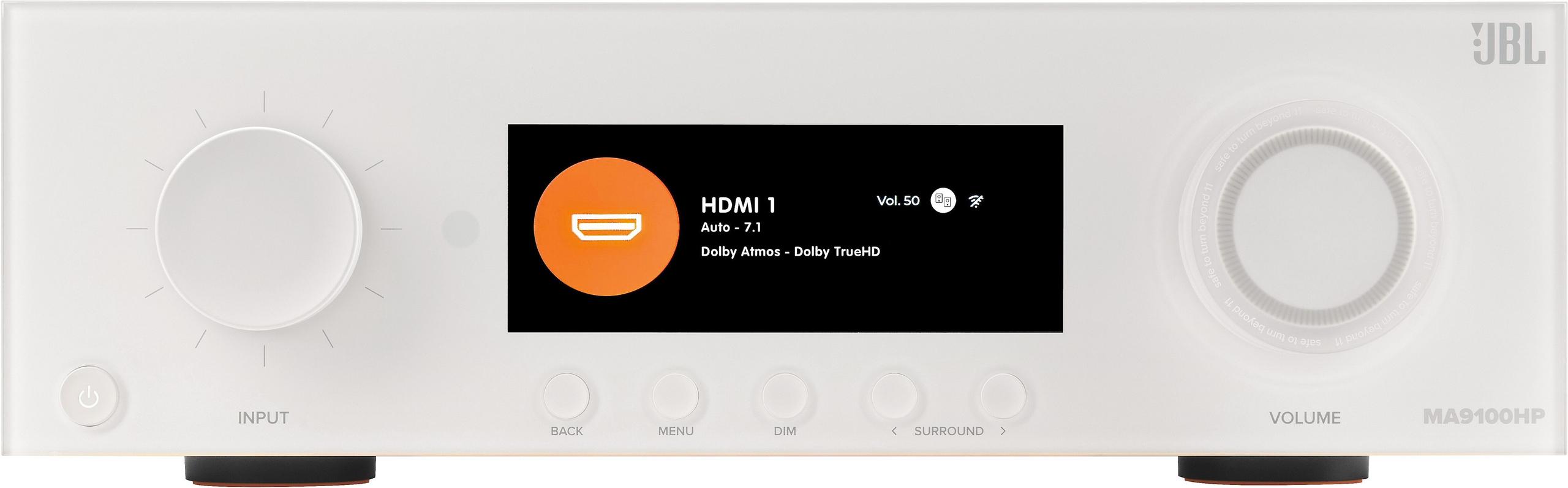
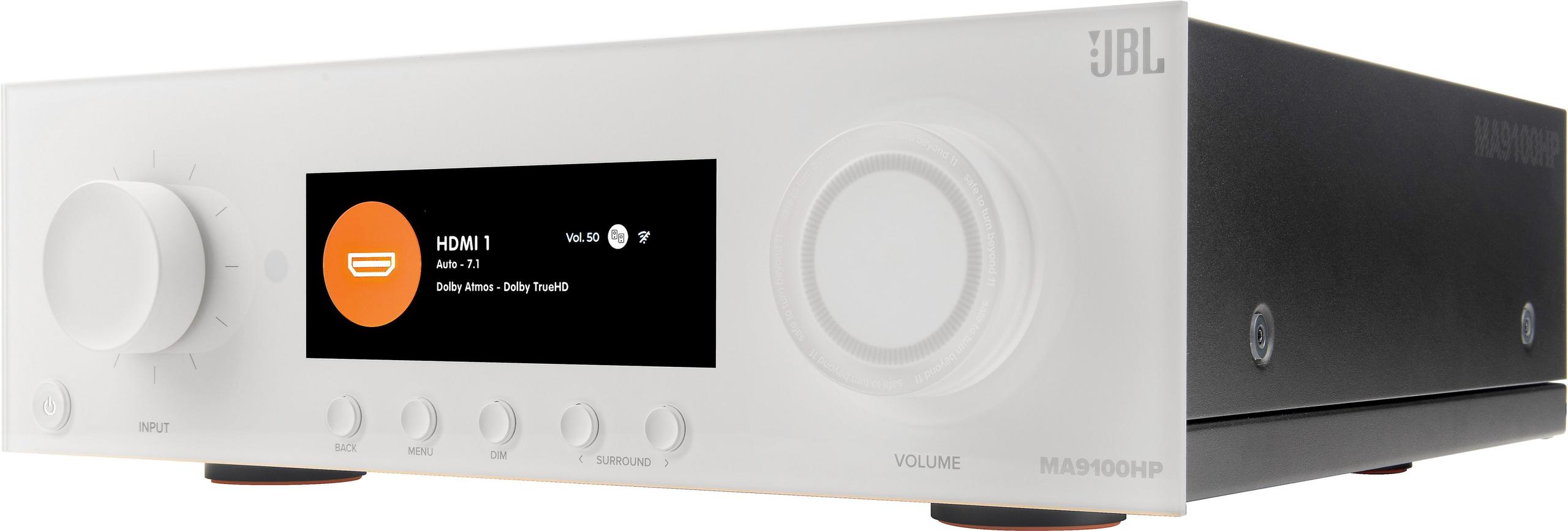
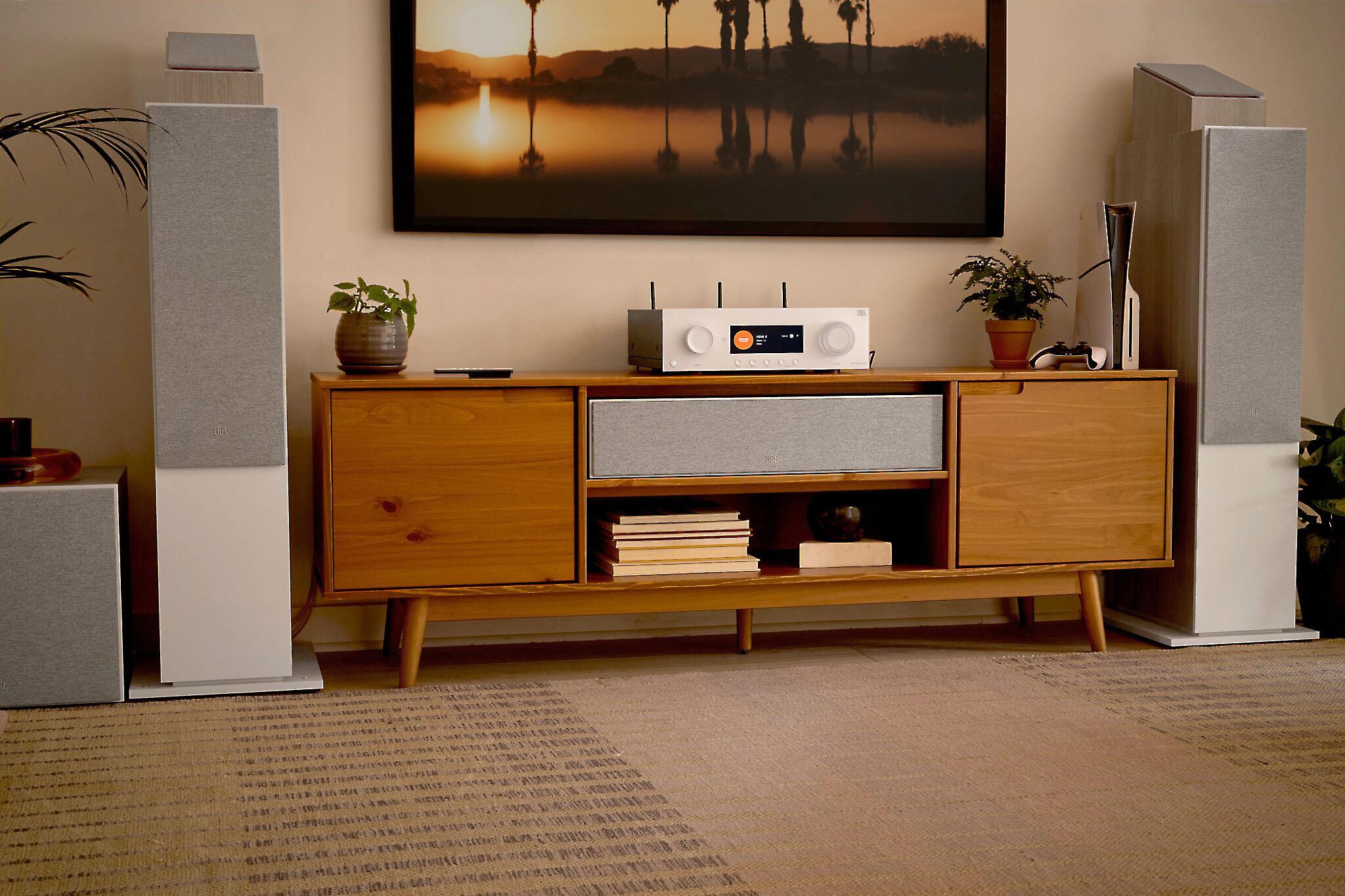
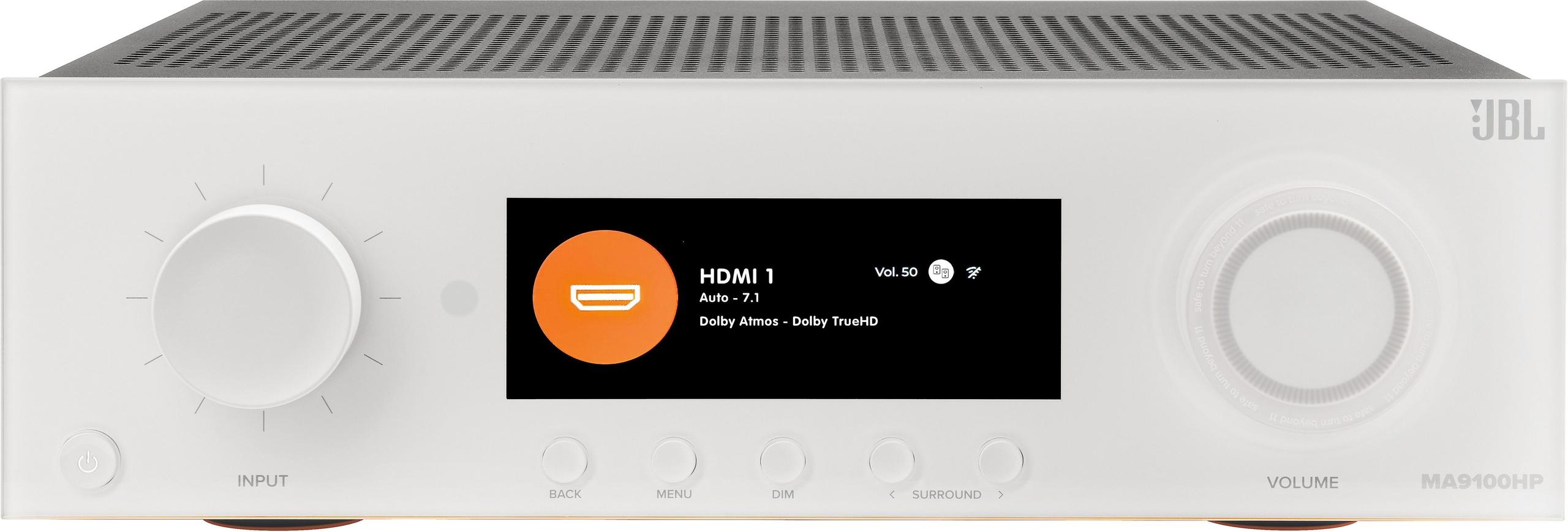
Today we're comparing two receivers that represent different philosophies in home theater design: the Denon AVR-X2800H, a refined 7.2-channel workhorse, and the JBL MA9100HP, a powerful 9.2-channel newcomer. Both were released in recent years (2022 and 2024 respectively), incorporating the latest video standards and gaming features that have become essential as 8K displays and next-generation consoles have entered the market.
Before diving into specifics, it's worth understanding what's changed in the receiver world. Five years ago, 4K video was still becoming mainstream, and Dolby Atmos—the immersive surround sound format that adds overhead audio—was primarily found in commercial theaters. Today's receivers must handle 8K video signals, support gaming features like Variable Refresh Rate (VRR, which eliminates screen tearing), and process complex audio formats that can place sounds anywhere in a three-dimensional space around your listening position.
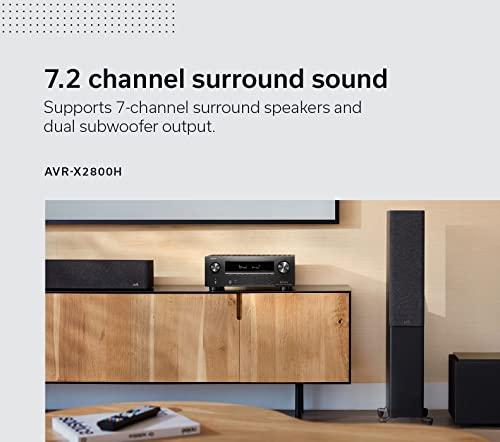
The channel count tells you how many speakers a receiver can power independently. A 7.2 receiver like the Denon AVR-X2800H supports seven speakers plus two subwoofers, while the JBL MA9100HP's 9.2 configuration adds two more channels. Those extra channels aren't just numbers on a spec sheet—they enable more sophisticated surround sound configurations, particularly for Dolby Atmos setups where overhead speakers create a dome of sound around listeners.
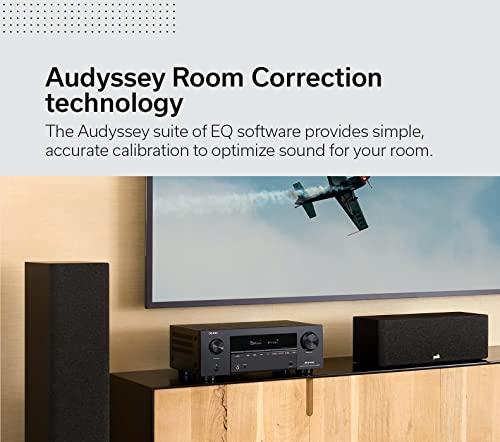
Room correction represents perhaps the most significant advancement in modern receivers. Your living room isn't an anechoic chamber (a specially designed room that eliminates sound reflections), so audio bounces off walls, furniture, and even people, creating acoustic problems. Advanced room correction systems measure these issues using microphones and apply digital filters to compensate, essentially tuning your speakers to work optimally in your specific space.
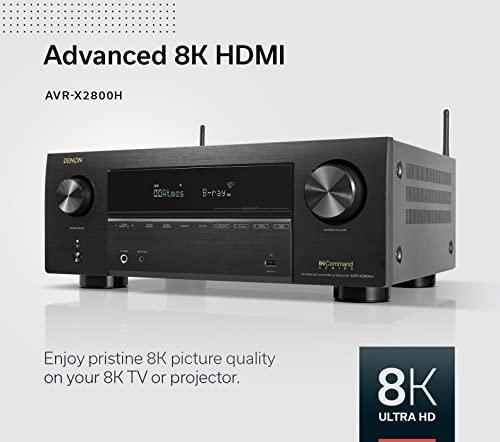
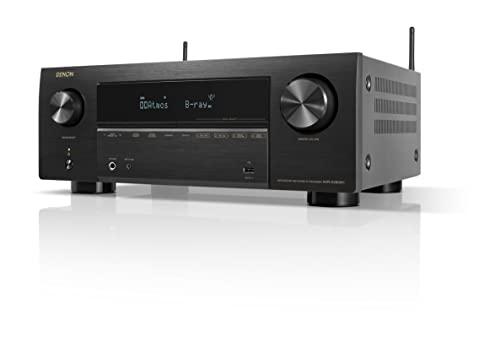
The Denon AVR-X2800H represents decades of refinement in receiver design. Denon has been building audio equipment since 1910, and their 2022 X2800H incorporates that institutional knowledge into a receiver that prioritizes reliability and proven performance. It features Audyssey MultEQ XT room correction, seven channels of Class AB amplification rated at 95 watts per channel, and comprehensive streaming capabilities through their HEOS platform.
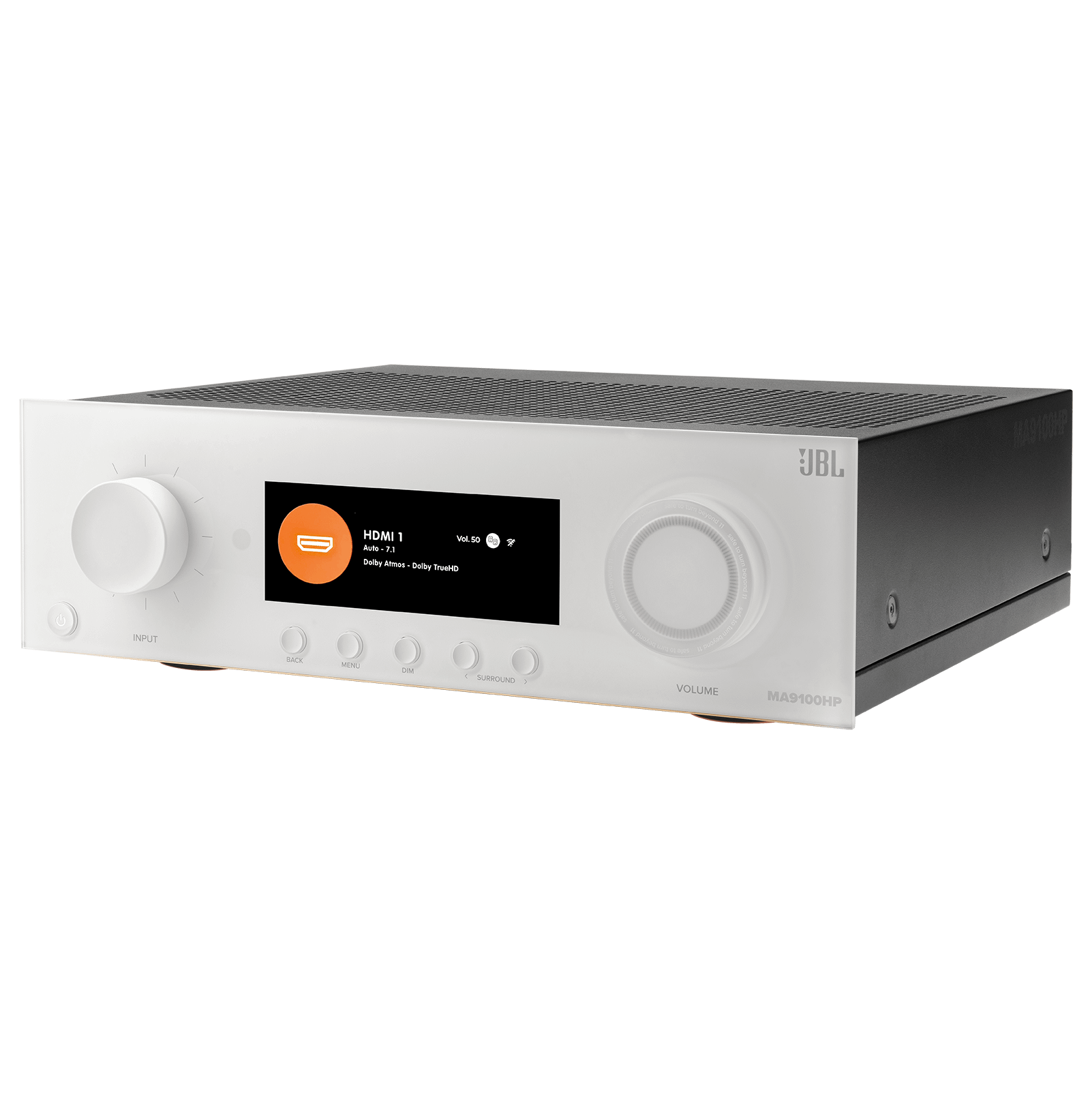
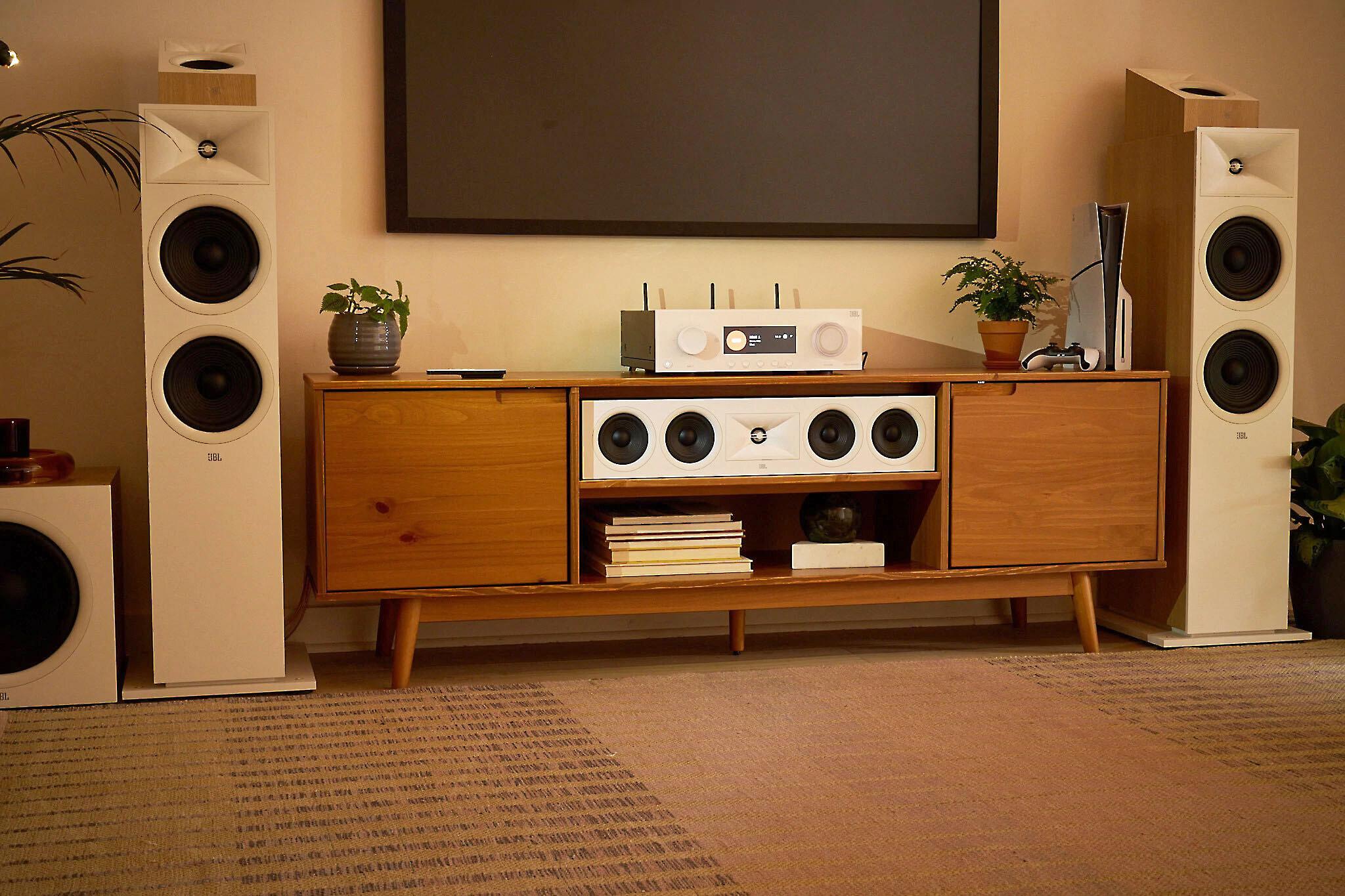
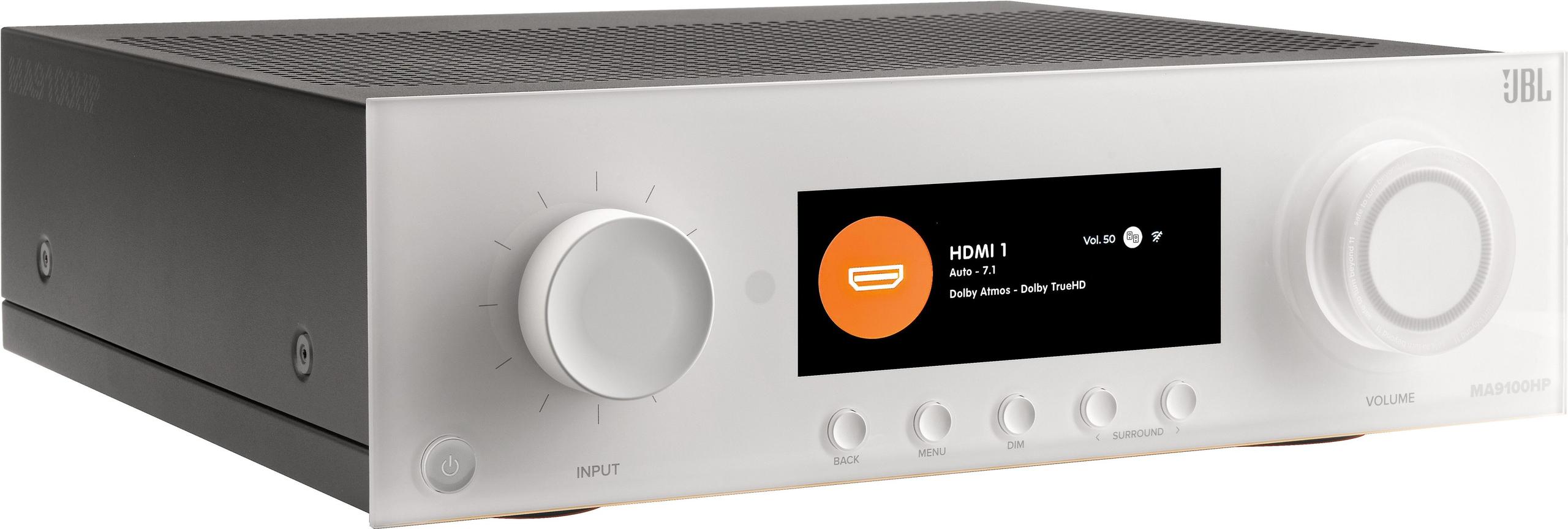
The JBL MA9100HP, introduced in 2024, takes a more aggressive approach. JBL, primarily known for professional audio equipment and consumer speakers, has entered the receiver market with this Modern Audio series unit. It delivers 140 watts per channel across nine channels using Class D amplification and comes "Dirac Live Ready," meaning it can run one of the industry's most sophisticated room correction systems (though you'll need to purchase the software separately).
At the time of writing, the Denon AVR-X2800H typically costs several hundred dollars less than the JBL MA9100HP, making it an attractive option for those seeking premium features without flagship pricing. However, the JBL's higher cost brings genuine performance advantages that matter in specific scenarios.
Power specifications can be misleading, but the differences here are substantial. The JBL MA9100HP provides 140 watts per channel compared to the Denon AVR-X2800H's 95 watts—that's nearly 50% more power. In practical terms, this translates to the ability to play roughly 3 decibels louder, which sounds modest but represents a noticeable increase in dynamic headroom.
More importantly, the power difference affects how confidently each receiver handles demanding passages. During explosive movie scenes or complex musical passages, amplifiers must deliver sudden bursts of power. The JBL MA9100HP's Class D amplification design runs cooler and more efficiently than traditional Class AB circuits, maintaining consistent performance even during sustained high-output situations.
However, amplifier power alone doesn't determine sound quality. The Denon AVR-X2800H uses discrete amplifier channels with high-current capability, which helps it maintain control over speakers even at moderate volume levels. Our research into user experiences suggests the Denon delivers particularly clean dialogue reproduction and maintains composure across different music genres.
The JBL MA9100HP's nine-channel configuration provides flexibility that seven-channel receivers simply cannot match. While a 7.2 setup might use a 5.1.2 Dolby Atmos configuration (five main speakers, one subwoofer, two overhead speakers), the JBL enables 5.1.4 or 7.1.2 arrangements. Those additional overhead channels create more precise object placement in Dolby Atmos content—imagine helicopters circling overhead with smooth, continuous movement rather than discrete left-right positioning.
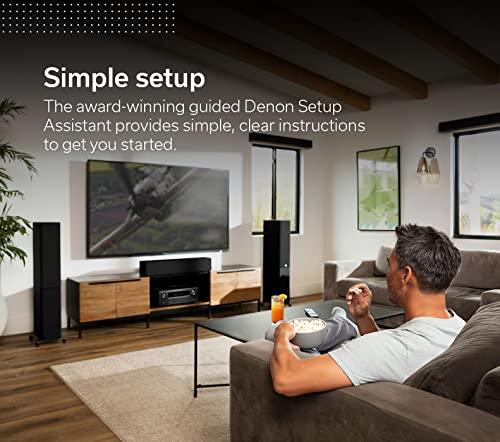
This category showcases perhaps the most significant philosophical difference between these receivers. The Denon AVR-X2800H includes Audyssey MultEQ XT, which measures your room using the included microphone and automatically applies corrections. The system works well, particularly for dialogue clarity and overall tonal balance. Setup involves placing the microphone at multiple listening positions while the receiver plays test tones—the process takes about 30 minutes and requires no technical expertise.
The JBL MA9100HP takes a different approach by supporting Dirac Live, widely considered the most sophisticated room correction available. However, accessing this capability requires purchasing a separate license (around $250 at the time of writing). Dirac Live provides more detailed acoustic analysis and offers user control over the correction process, allowing fine-tuning that appeals to audio enthusiasts.
For most users, Audyssey provides excellent results with minimal effort. Dirac Live offers superior performance but demands both additional investment and technical involvement. The choice often comes down to whether you want good room correction included, or exceptional room correction that requires extra cost and setup complexity.
Both receivers excel at video processing, supporting 8K/60Hz and 4K/120Hz signals that accommodate the latest gaming consoles and future display technologies. However, the details matter for long-term satisfaction.
The Denon AVR-X2800H provides six HDMI inputs with three supporting full 8K specifications. Its video processing includes upscaling lower-resolution content to 8K, which can improve the appearance of older movies and shows on modern displays. The receiver supports HDR10, HDR10+, and Dolby Vision—the various high dynamic range formats that provide more realistic brightness and color ranges.
The JBL MA9100HP matches these video capabilities while adding comprehensive gaming features across more inputs. Variable Refresh Rate (VRR) eliminates screen tearing during gaming, while Auto Low Latency Mode (ALLM) automatically reduces input delay when gaming consoles are detected. These features have become increasingly important as gaming has evolved from a niche interest to mainstream entertainment.
Both receivers support eARC (Enhanced Audio Return Channel), which allows high-quality audio from smart TV apps to be processed through the receiver's sophisticated audio systems. This capability has become crucial as streaming services deliver Dolby Atmos content directly through TV applications.
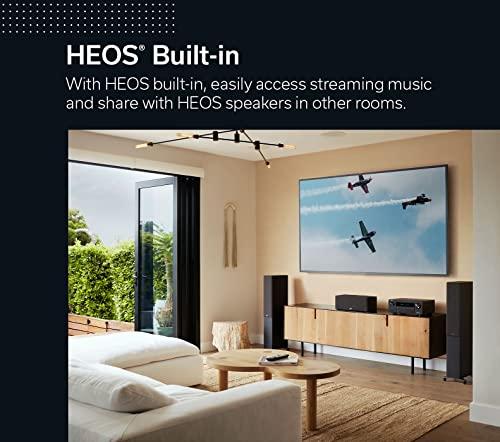
The streaming capabilities reveal different approaches to modern connectivity. The Denon AVR-X2800H centers around HEOS, Denon's proprietary multi-room system. HEOS works reliably and integrates well with popular streaming services, though it limits you to Denon's ecosystem for multi-room audio. The receiver supports AirPlay 2 for iOS users and includes comprehensive voice assistant integration.
The JBL MA9100HP takes a more platform-agnostic approach, supporting both AirPlay 2 and Chromecast built-in. This broader compatibility means more streaming services work directly without needing specific apps. The receiver also supports Bluetooth with aptX Adaptive, providing higher-quality wireless audio from compatible devices.
Both receivers include Moving Magnet phono inputs for turntables—a feature that's become surprisingly important as vinyl has experienced renewed popularity. The inclusion demonstrates that both manufacturers understand modern users often blend digital and analog sources.
Sound quality assessments inevitably involve subjective preferences, but certain characteristics emerge consistently from user and professional evaluations. The Denon AVR-X2800H earns praise for its balanced, refined presentation. Dialogue remains clear and natural, while musical content displays good imaging and soundstage depth. The receiver handles both delicate acoustic performances and explosive action sequences with composure.
The JBL MA9100HP provides what many describe as a more dynamic, powerful presentation. Its additional channels and higher power output create more enveloping surround experiences, particularly with Dolby Atmos content. The receiver maintains precision across its expanded channel count, avoiding the muddy or unfocused sound that can plague lesser multi-channel amplifiers.
For music listening, both receivers perform admirably, though with different strengths. The Denon AVR-X2800H delivers traditional audiophile qualities—accurate tonal balance, good stereo imaging, and minimal harshness. The JBL MA9100HP provides more dynamic impact and can better reveal the spatial elements in modern recordings that utilize surround mixing.
Modern gaming demands have transformed receiver requirements. Both models support the essential features for PlayStation 5 and Xbox Series X gaming, but implementation details vary.
The Denon AVR-X2800H handles 4K/120Hz gaming signals reliably and supports Variable Refresh Rate on its 8K-capable inputs. Input lag measurements from various sources suggest excellent performance that won't handicap competitive gaming.
The JBL MA9100HP provides similar gaming performance but extends advanced features across more inputs. Its more powerful amplification also benefits games with sophisticated audio design, providing the dynamic range necessary for modern titles that use audio as gameplay elements.
At the time of writing, the price difference between these receivers is substantial—typically several hundred dollars separating them. This gap raises important questions about value and necessity.
The Denon AVR-X2800H represents exceptional value for most home theater installations. Its seven-channel configuration accommodates the vast majority of practical speaker setups, while its included room correction and proven reliability provide peace of mind. For users building their first serious home theater or upgrading from a soundbar, the Denon delivers premium performance without premium complexity.
The JBL MA9100HP justifies its higher cost in specific scenarios. If you're planning a dedicated home theater room with complex speaker layouts, need substantial amplifier power for demanding speakers, or want the ultimate in room correction capability, the JBL's additional features provide genuine value. However, these advantages remain largely theoretical unless your installation can utilize them.
Denon's decades-long presence in the receiver market provides confidence in long-term reliability and service availability. Their receivers typically maintain firmware support for many years, and replacement parts remain available well after discontinuation.
JBL's newer entry into the receiver market means less long-term data, though their professional audio background suggests solid engineering. The Modern Audio series represents a serious commitment to the home theater market, not a casual experiment.
Choose the Denon AVR-X2800H if you want proven performance at reasonable cost. It excels in typical home theater installations with seven or fewer speakers, provides reliable 8K video support, and includes effective room correction without additional purchases. This receiver suits first-time buyers, medium-sized rooms, and anyone prioritizing simplicity over maximum flexibility.
The JBL MA9100HP makes sense for ambitious installations where its additional capabilities can be fully utilized. Its nine-channel configuration, substantial power output, and Dirac Live compatibility appeal to enthusiasts building dedicated theater rooms or complex Dolby Atmos systems. The higher investment pays dividends when matched with appropriate speakers and room configurations.
Both receivers represent solid engineering and deliver excellent performance within their intended contexts. The decision ultimately comes down to matching capabilities with actual needs—and being honest about whether you'll utilize advanced features that justify premium pricing.
For most people building a home theater, the Denon AVR-X2800H provides everything necessary for an exceptional experience. But for those pursuing the ultimate in immersive audio and willing to invest accordingly, the JBL MA9100HP offers capabilities that few receivers can match.
| Denon AVR-X2800H | JBL MA9100HP |
|---|---|
| Channel Configuration - Determines how many speakers you can connect and surround sound complexity | |
| 7.2 channels (supports 5.1.2 Dolby Atmos, 7.1 surround, or 5.1 + Zone 2) | 9.2 channels (enables 5.1.4, 7.1.2, or 9.1 configurations for more immersive audio) |
| Power Output - Higher power means better dynamics and ability to drive demanding speakers | |
| 95W per channel (8Ω) - adequate for most home theaters | 140W per channel (8Ω), 240W (4Ω) - 47% more power for larger rooms and demanding speakers |
| Room Correction - Optimizes sound for your specific room acoustics | |
| Audyssey MultEQ XT included (good performance, simple setup) | Dirac Live Ready (industry-leading correction, requires $250 license purchase) |
| Amplification Type - Affects efficiency, heat generation, and sound characteristics | |
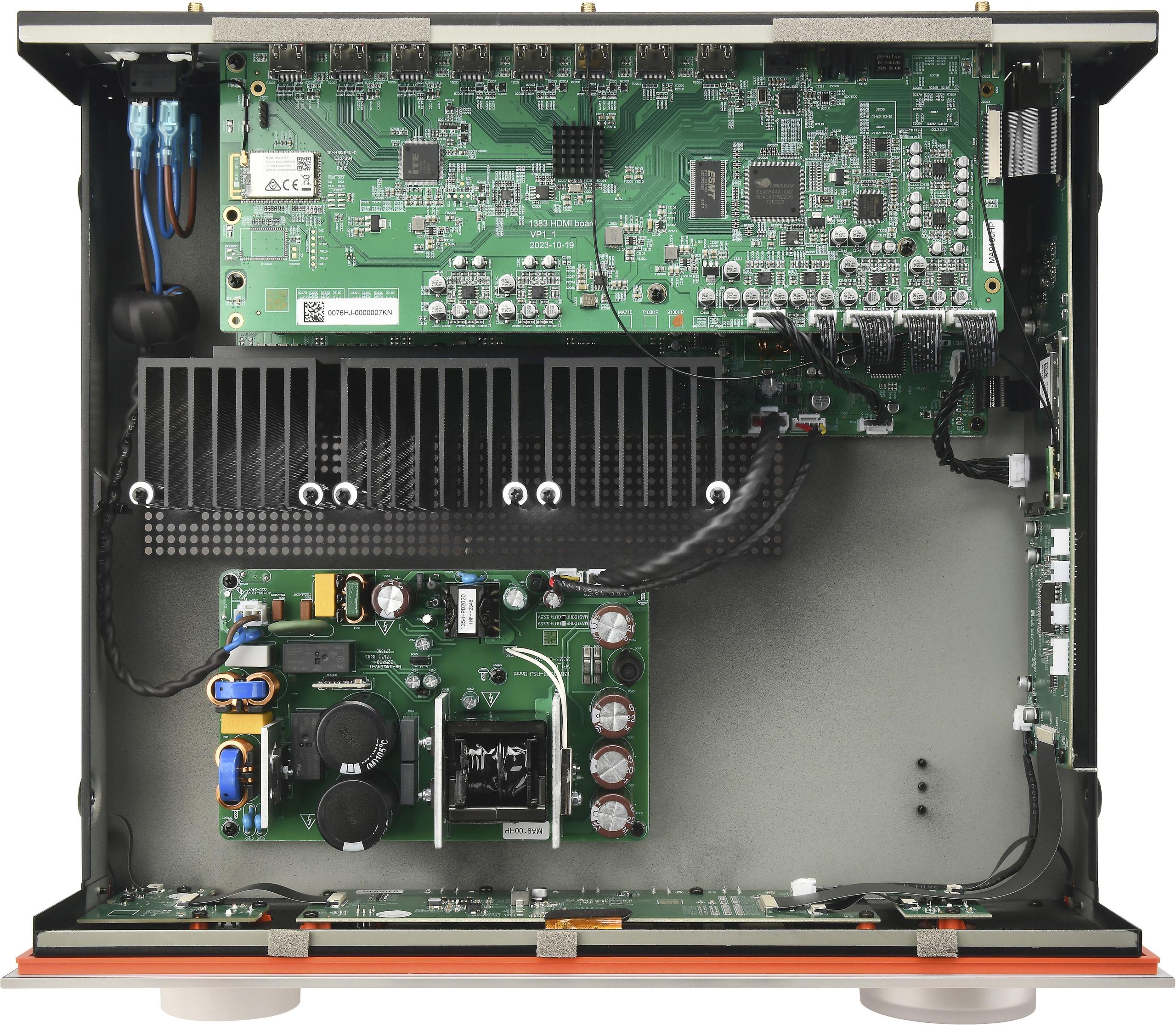
| Class AB discrete high-current design (traditional, proven approach) | Class D amplification across all 9 channels (more efficient, runs cooler) |
| HDMI Inputs/Outputs - Number of devices you can connect directly | |
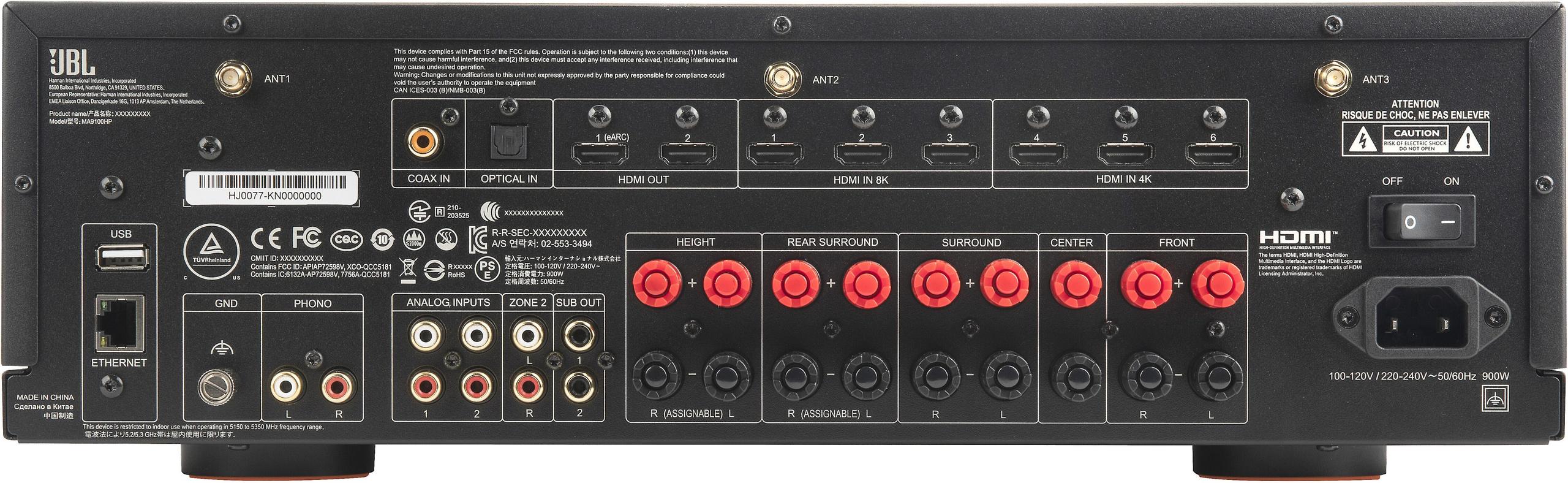
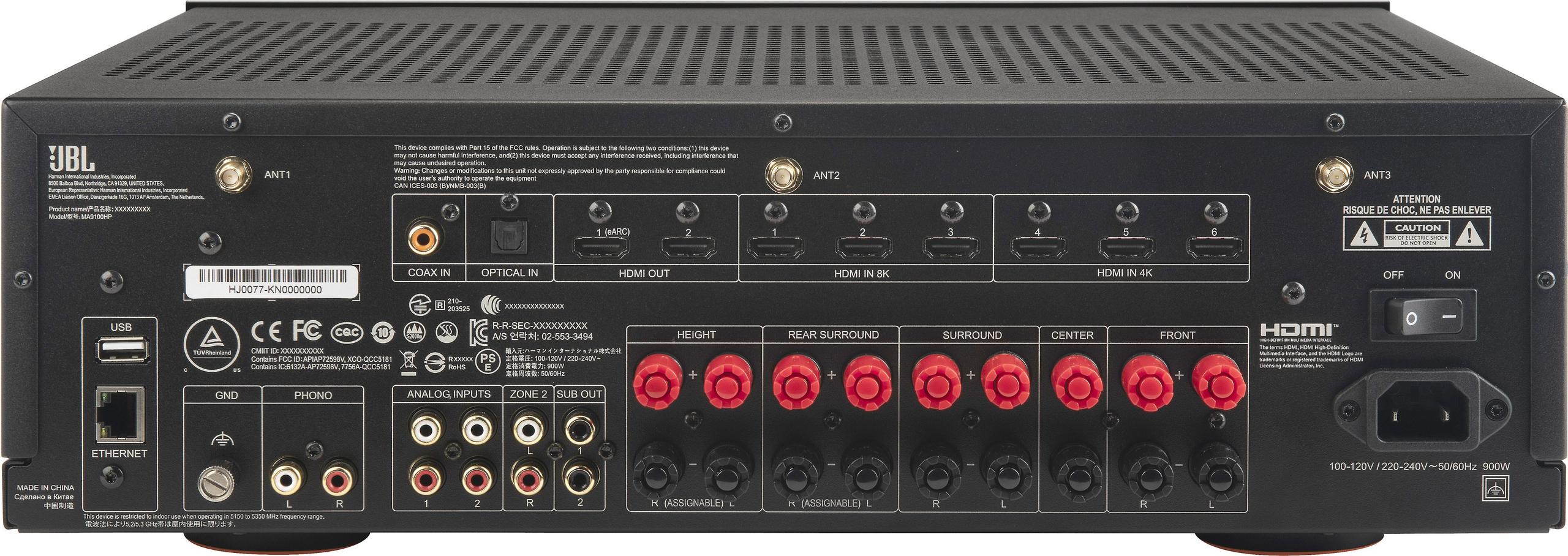
| 6 inputs (3 supporting 8K), 2 outputs with eARC | 6 inputs (3 supporting 8K), 2 outputs with eARC - similar connectivity |
| Video Support - Future-proofing for next-generation content and gaming | |
| 8K/60Hz, 4K/120Hz, HDR10/HDR10+/Dolby Vision, VRR on select inputs | 8K/60Hz, 4K/120Hz, HDR10/HDR10+/Dolby Vision, comprehensive gaming features |
| Wireless Streaming - Built-in music streaming capabilities | |
| HEOS multi-room, AirPlay 2, Bluetooth, voice assistants | AirPlay 2, Chromecast built-in, Bluetooth aptX Adaptive - broader platform support |
| Build Quality & Warranty - Long-term reliability and support | |
| Established brand with decades of AV receiver experience | Newer to receiver market but professional audio background, 3-year warranty |
| Best For - Target user and installation type | |
| First serious home theater, medium rooms, proven reliability seeker | Dedicated theaters, complex Dolby Atmos setups, power-hungry speakers |
The JBL MA9100HP offers 9.2 channels compared to the Denon AVR-X2800H's 7.2 channels. This means the JBL can power nine speakers plus two subwoofers, while the Denon supports seven speakers plus two subwoofers. The extra channels on the JBL MA9100HP enable more complex Dolby Atmos configurations like 5.1.4 or 7.1.2 setups.
The JBL MA9100HP delivers significantly more power at 140 watts per channel (8Ω) compared to the Denon AVR-X2800H's 95 watts per channel. This 47% increase in power output means the JBL MA9100HP can drive speakers to higher volumes and handle dynamic peaks better, especially beneficial in larger rooms.
The Denon AVR-X2800H includes Audyssey MultEQ XT room correction built-in at no extra cost. The JBL MA9100HP is "Dirac Live Ready," meaning it can run the superior Dirac Live room correction software, but you must purchase the license separately for around $250. Dirac Live offers more advanced correction capabilities than Audyssey.
Yes, both the Denon AVR-X2800H and JBL MA9100HP support 8K/60Hz and 4K/120Hz video passthrough. Each has three HDMI inputs capable of handling 8K signals, along with support for HDR formats including HDR10, HDR10+, and Dolby Vision. Both are well-equipped for next-generation gaming consoles and 8K displays.
Both receivers excel at gaming with 4K/120Hz support and Variable Refresh Rate (VRR), but the JBL MA9100HP offers gaming features across more inputs and provides additional power that can benefit games with sophisticated audio design. The Denon AVR-X2800H still delivers excellent gaming performance with low input lag and reliable signal processing.
The Denon AVR-X2800H uses the HEOS platform and supports AirPlay 2, while the JBL MA9100HP offers broader compatibility with both AirPlay 2 and Chromecast built-in. The JBL also includes Bluetooth with aptX Adaptive for higher-quality wireless audio. Both receivers support voice assistants and popular streaming services.
For small to medium rooms, the Denon AVR-X2800H is typically the better choice. Its 7.2 channel configuration is perfectly adequate for most living spaces, and the included room correction works well without additional purchases. The extra power and channels of the JBL MA9100HP may be unnecessary in smaller spaces.
Yes, both the Denon AVR-X2800H and JBL MA9100HP support Dolby Atmos and DTS:X immersive audio formats. However, the JBL MA9100HP's additional channels allow for more sophisticated Atmos configurations with four overhead speakers instead of two, creating more precise three-dimensional sound placement.
The Denon AVR-X2800H typically offers better value for most users, providing excellent performance at a lower cost with room correction included. The JBL MA9100HP costs more but justifies the premium for users who need its additional channels, higher power output, and advanced room correction capabilities in dedicated home theater installations.
The Denon AVR-X2800H uses traditional Class AB amplification with discrete high-current design, while the JBL MA9100HP employs Class D amplification across all nine channels. Class D amplification runs more efficiently and generates less heat, while Class AB is a proven technology known for reliable performance and sound quality.
The JBL MA9100HP is better suited for large, dedicated home theater rooms. Its nine-channel configuration, 140-watt power output, and Dirac Live compatibility make it ideal for complex speaker arrangements and demanding acoustic environments. The Denon AVR-X2800H works well in medium-sized spaces but may lack the power and flexibility needed for elaborate installations.
Yes, both the Denon AVR-X2800H and JBL MA9100HP include Moving Magnet (MM) phono inputs with ground terminals for connecting turntables directly. This feature reflects the renewed popularity of vinyl records and eliminates the need for a separate phono preamp when using compatible turntables.
We've done our best to create useful and informative comparisons to help you decide what product to buy. Our research uses advanced automated methods to create this comparison and perfection is not possible - please contact us for corrections or questions. These are the sites we've researched in the creation of this article: theaudiotailor.com.au - ecoustics.com - simplehomecinema.com - whathifi.com - audioadvisor.com - youtube.com - bestbuy.com - e-catalog.com - crutchfield.com - avsforum.com - crutchfield.com - whathifi.com - richersounds.com - bestbuy.com - accessories4less.com - projectorscreen.com - adiglobaldistribution.us - youtube.com - bestbuy.com - bestbuy.com - sweetwater.com - sound-advice.online - theaudiosolutions.com - crutchfield.com - whathifi.com - musicdirect.com - safeandsoundhq.com - audioadvice.com - puretheatre.com - bestbuy.com - worldwidestereo.com - mm.jbl.com - abt.com

Privacy Policy
Terms and Conditions - Affiliate Policy
Home Security
© Copyright 2008-2026.
11816 Inwood Rd #1211, Dallas, TX 75244