


Home theater receivers have evolved dramatically over the past few years, becoming sophisticated entertainment hubs that handle everything from Netflix streaming to immersive Dolby Atmos soundtracks. If you're shopping for an AV receiver today, you're likely weighing features like channel count, amplifier power, room correction systems, and video capabilities. Two standout options that represent different philosophies are the Denon AVR-X2800H and the Onkyo TX-RZ50 – and understanding their differences will help you make the right choice for your home theater.
Before diving into specifics, it's worth understanding what makes a great AV receiver in 2024. These devices serve as the brain of your home theater, taking audio and video signals from multiple sources and routing them to your speakers and display. The best receivers handle complex surround sound processing, provide clean amplification for your speakers, and offer seamless connectivity for modern devices.
The key considerations when shopping include channel configuration (how many speakers you can connect), amplifier power (how loud and clean your system can play), audio processing capabilities (including room correction systems that optimize sound for your specific space), and video features like 8K support and gaming enhancements. Build quality and long-term reliability matter too, especially since most people keep receivers for many years.
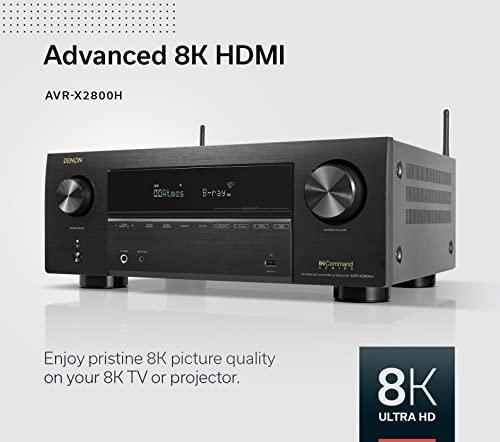
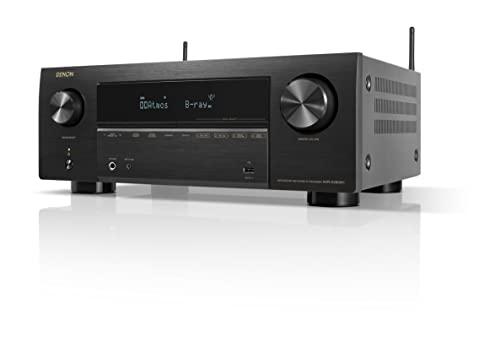
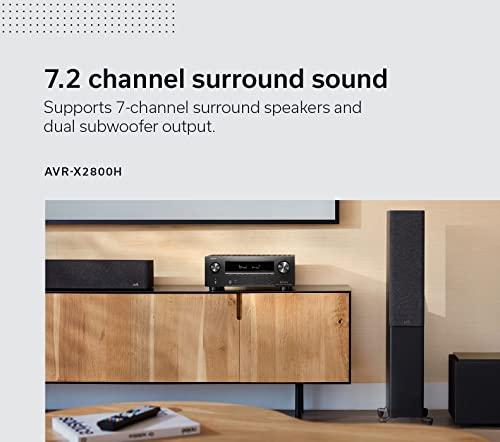
The Denon AVR-X2800H launched in 2022 as part of Denon's mainstream lineup, targeting users who want excellent performance without paying premium prices. It's a 7.2-channel receiver, meaning it can power seven main speakers plus two subwoofers – perfect for traditional surround sound setups and basic Dolby Atmos configurations.
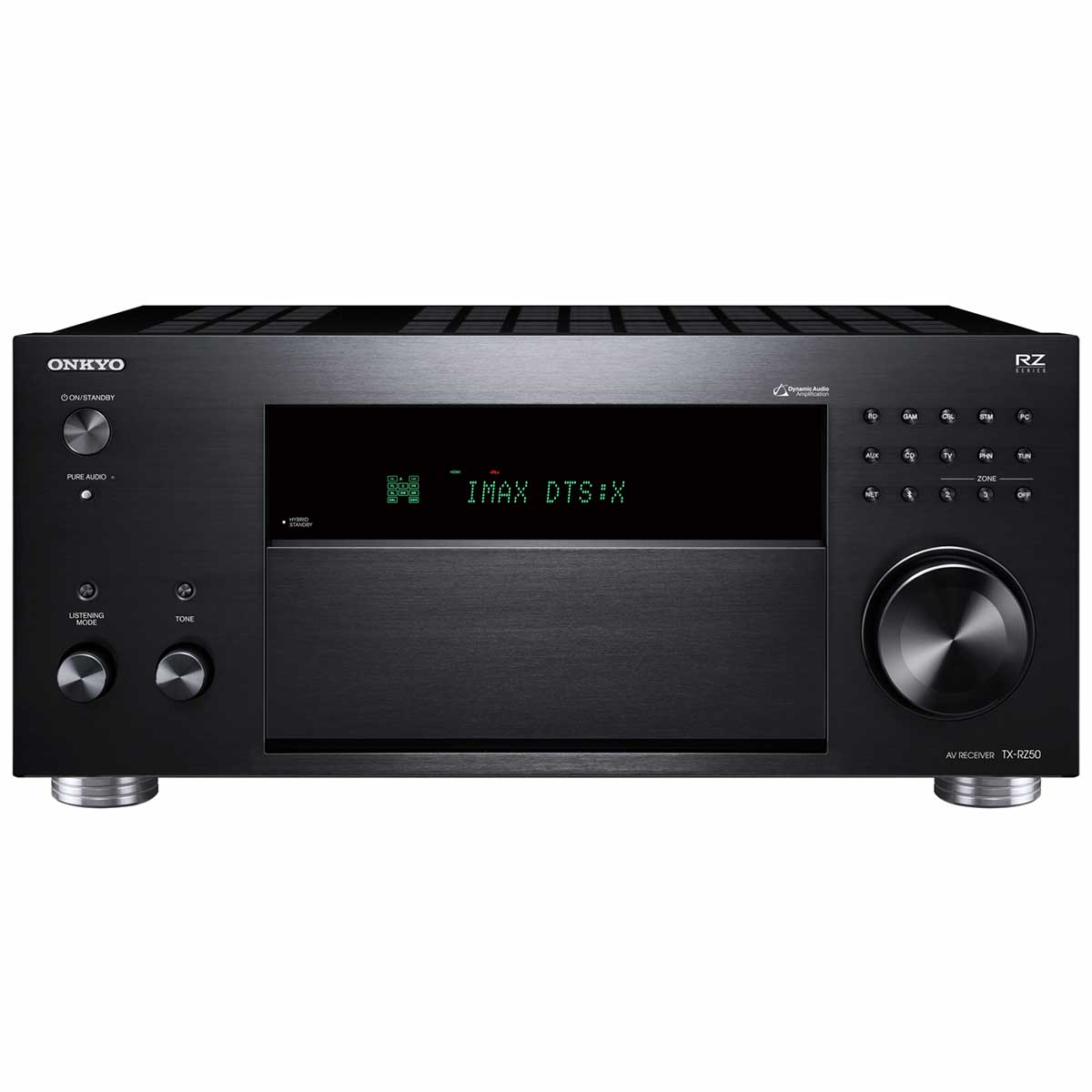
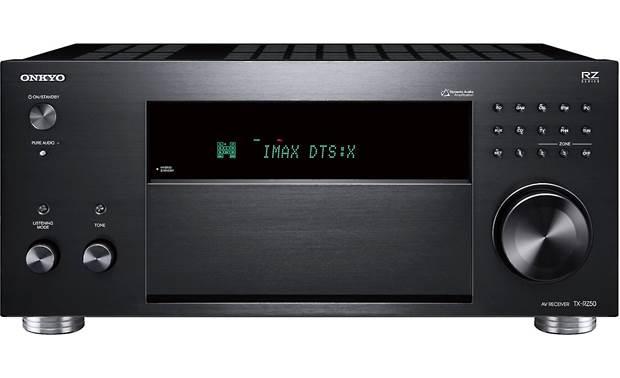
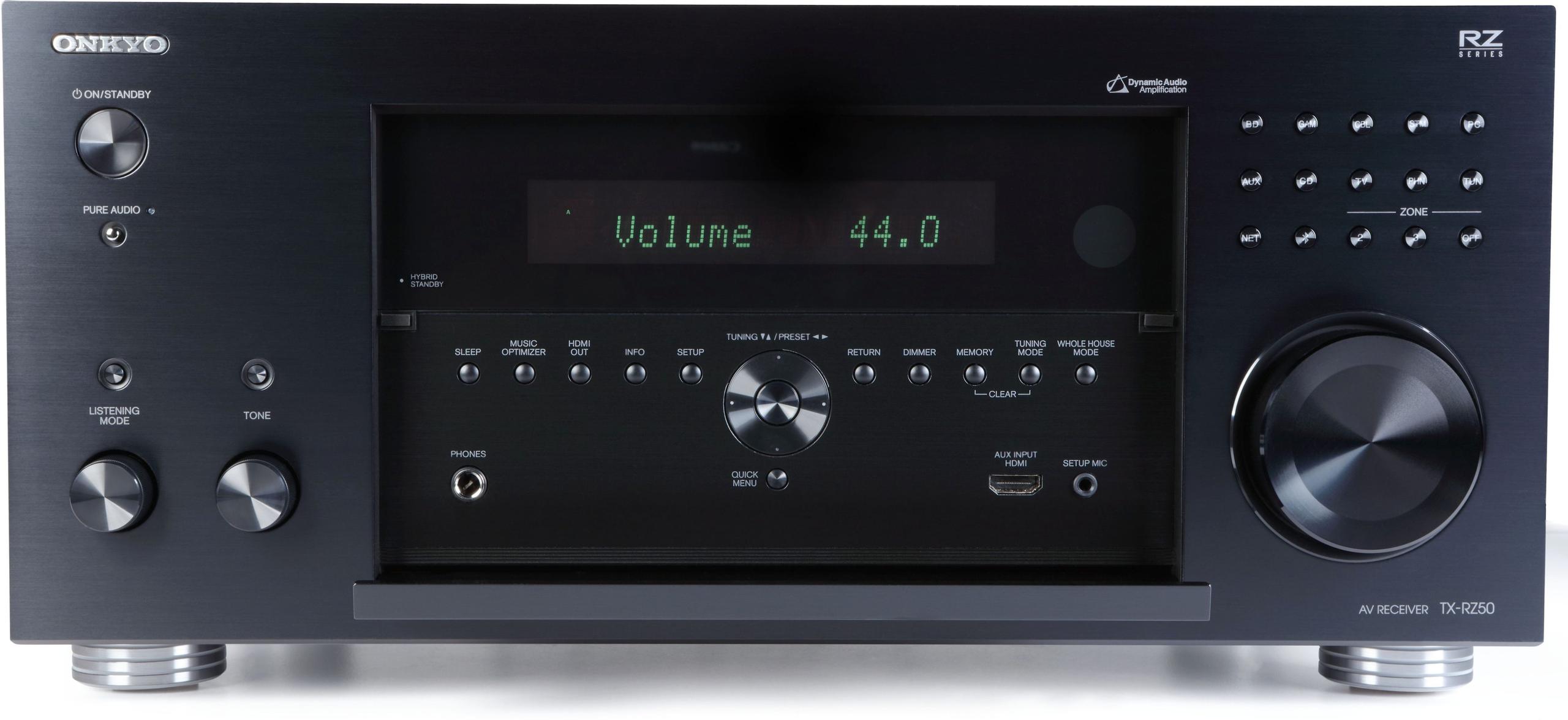
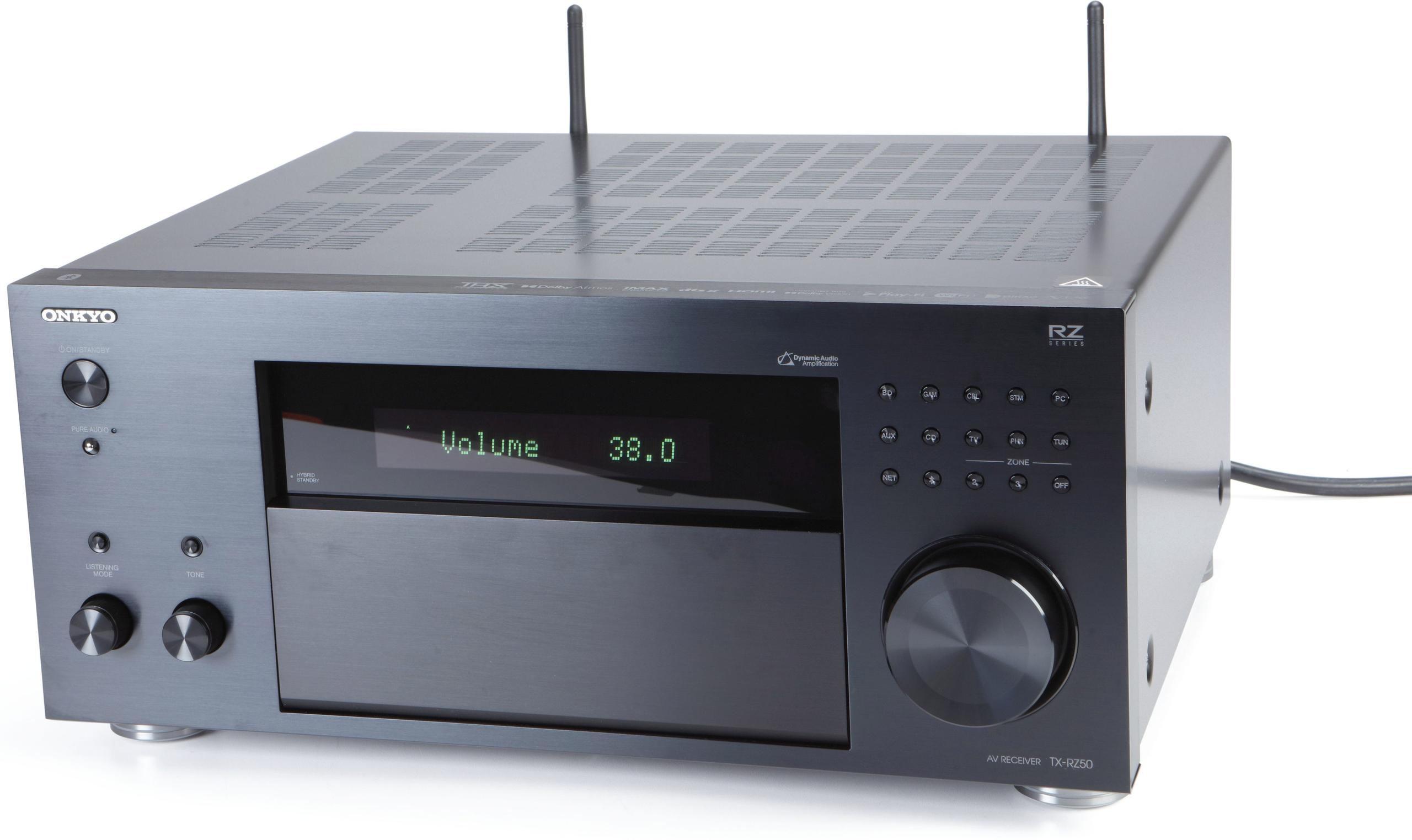
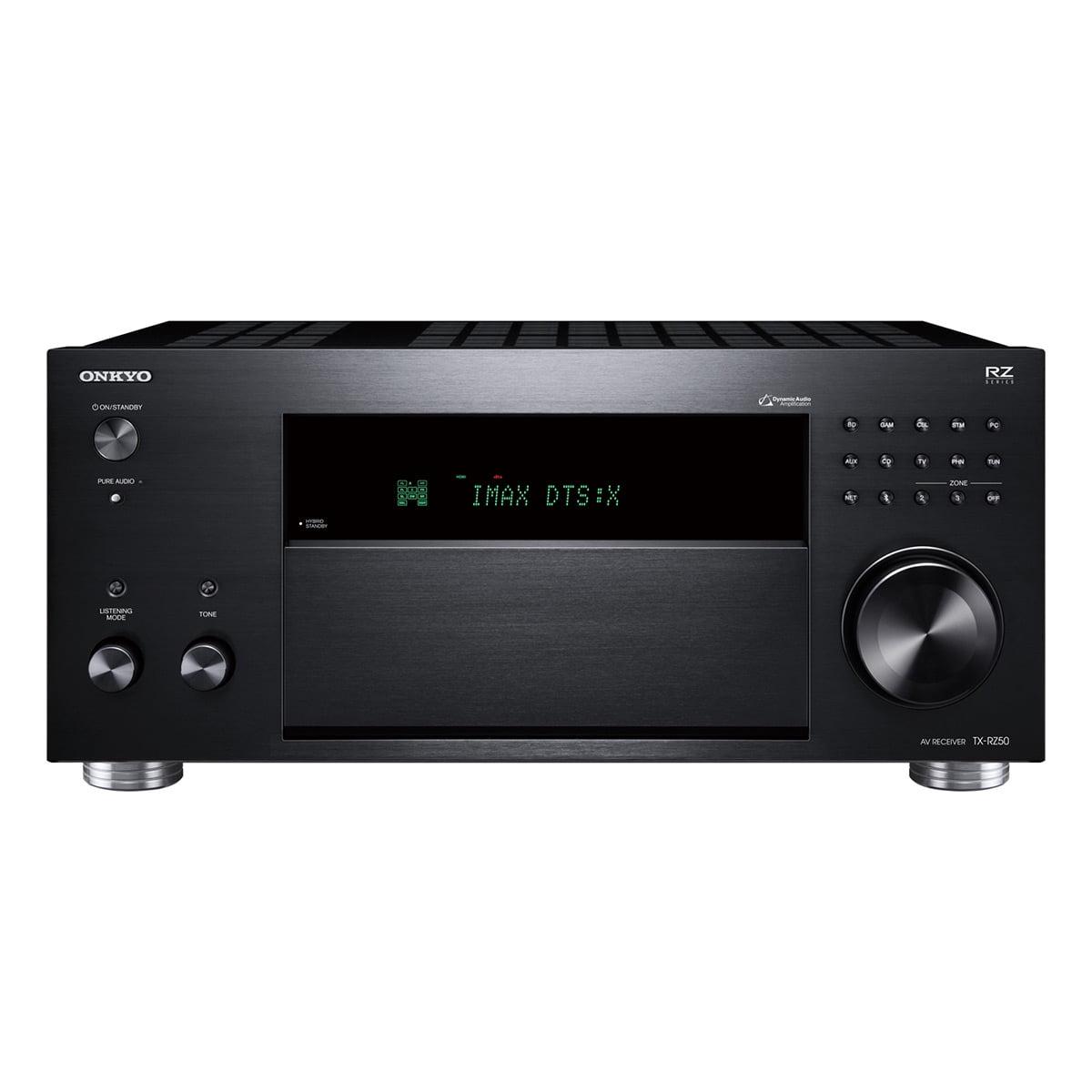
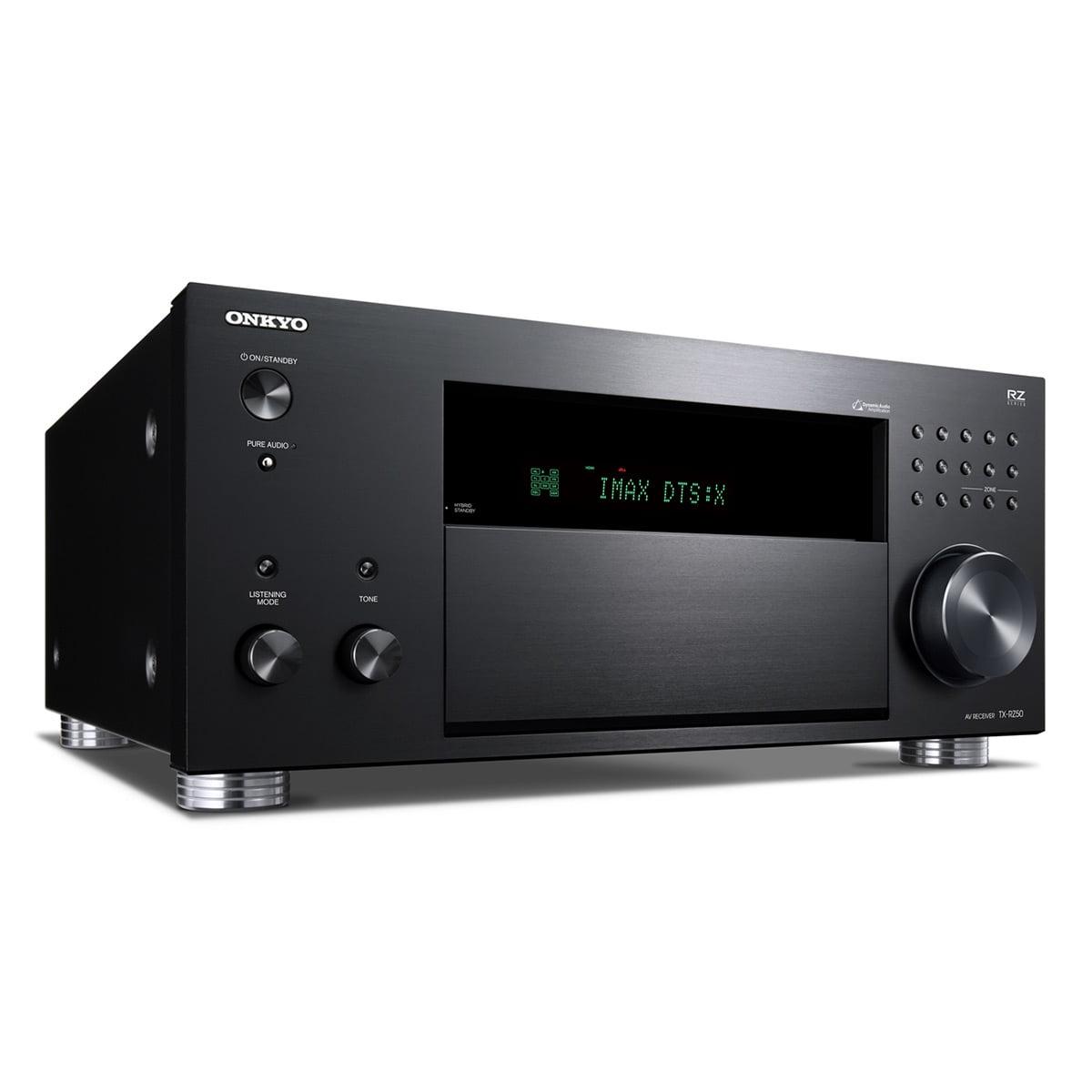
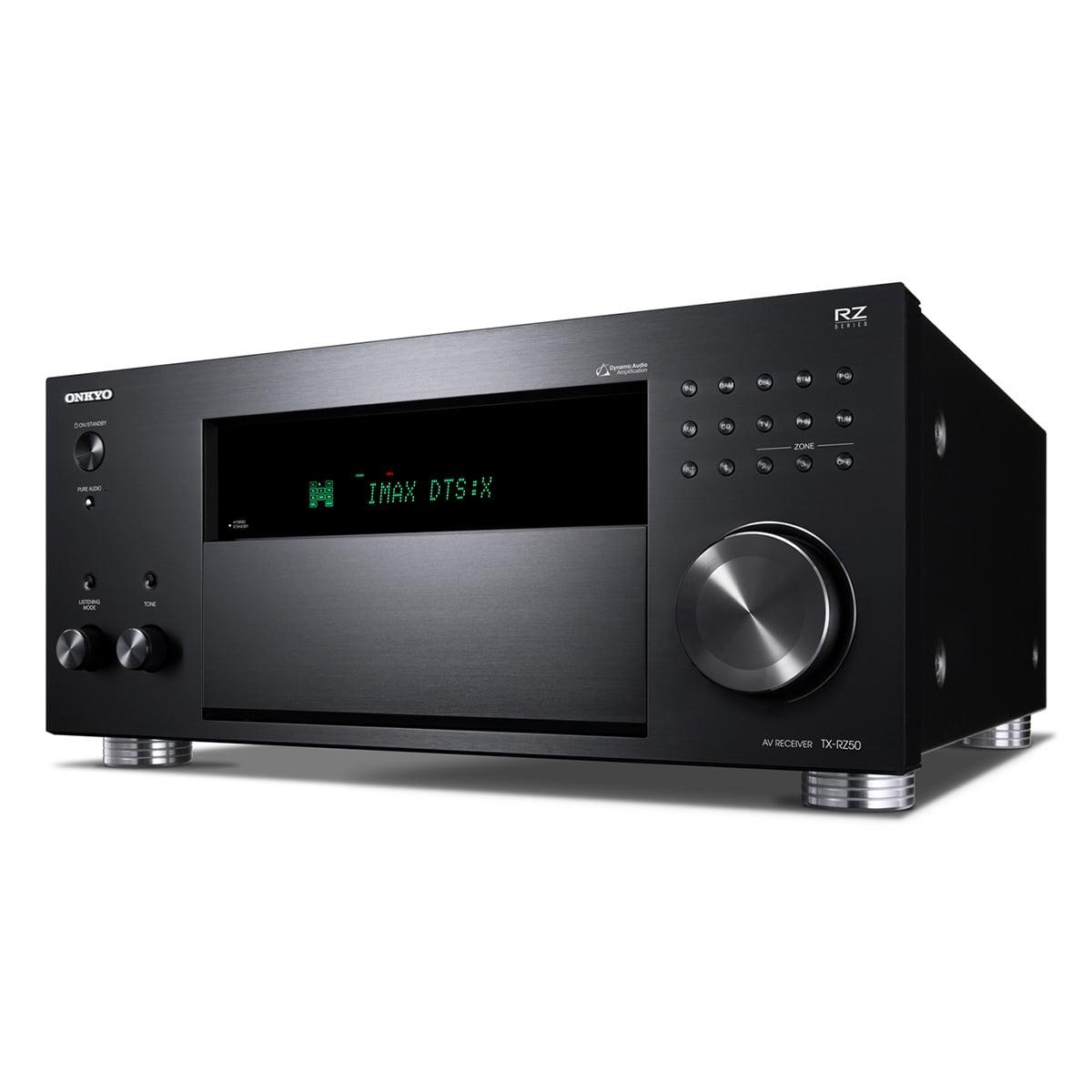
The Onkyo TX-RZ50 arrived a year earlier in 2021 as a premium offering with 9.2 channels and more ambitious specifications. Onkyo positioned this receiver for enthusiasts who want maximum flexibility and don't mind paying extra for it.
At the time of writing, there's a significant price gap between these receivers, with the TX-RZ50 commanding a substantial premium over the AVR-X2800H. This difference raises an important question: does the Onkyo justify its higher cost, or does the Denon deliver better value?
The most fundamental difference between these receivers lies in their amplification capabilities. The TX-RZ50 delivers 120 watts per channel into 8-ohm speakers, while the AVR-X2800H provides 95 watts per channel. That 25-watt difference might not sound like much, but it translates to noticeably more headroom and dynamic range.
Why does this matter? When you're watching an action movie with explosive soundtracks or listening to music with sudden peaks, that extra power helps maintain clean, undistorted sound even at higher volumes. The difference becomes more pronounced with less efficient speakers or in larger rooms where you need more volume to fill the space properly.
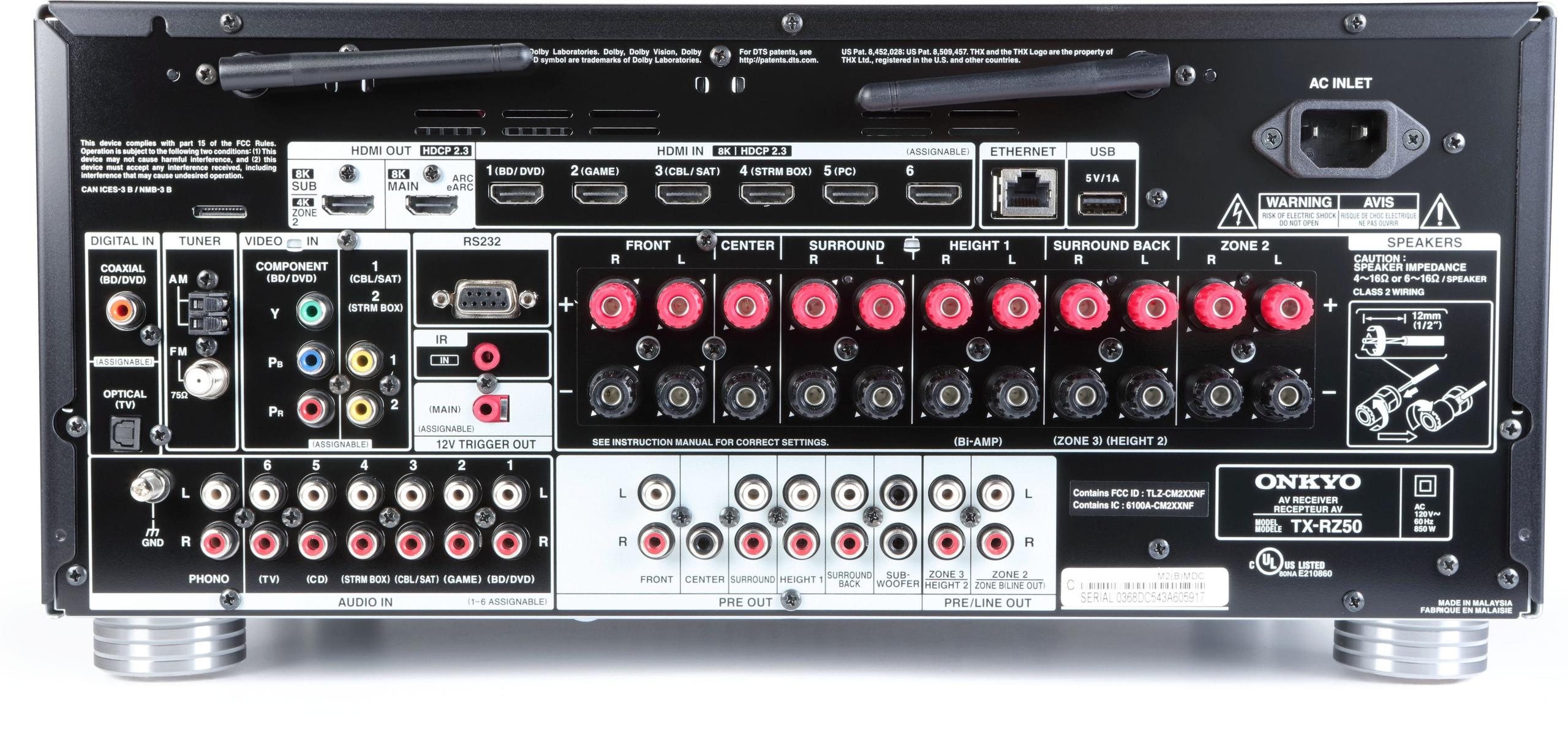
The channel count difference is even more significant. The Onkyo TX-RZ50 offers 9.2 channels with pre-amp outputs for up to 11.2 channels, enabling complex speaker configurations like 7.2.4 Dolby Atmos setups. This means you could have seven main speakers, two subwoofers, and four height channels for truly immersive three-dimensional sound.
The Denon AVR-X2800H, with its 7.2 configuration, handles most common setups beautifully but limits you to configurations like 5.2.2 Atmos (five main speakers, two subs, two height speakers) or traditional 7.1 surround sound. For many users, this is perfectly adequate, but if you're planning an elaborate home theater with ceiling speakers and multiple zones, the Onkyo's flexibility becomes valuable.
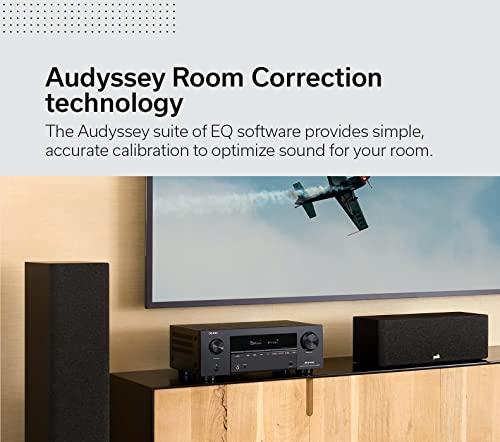
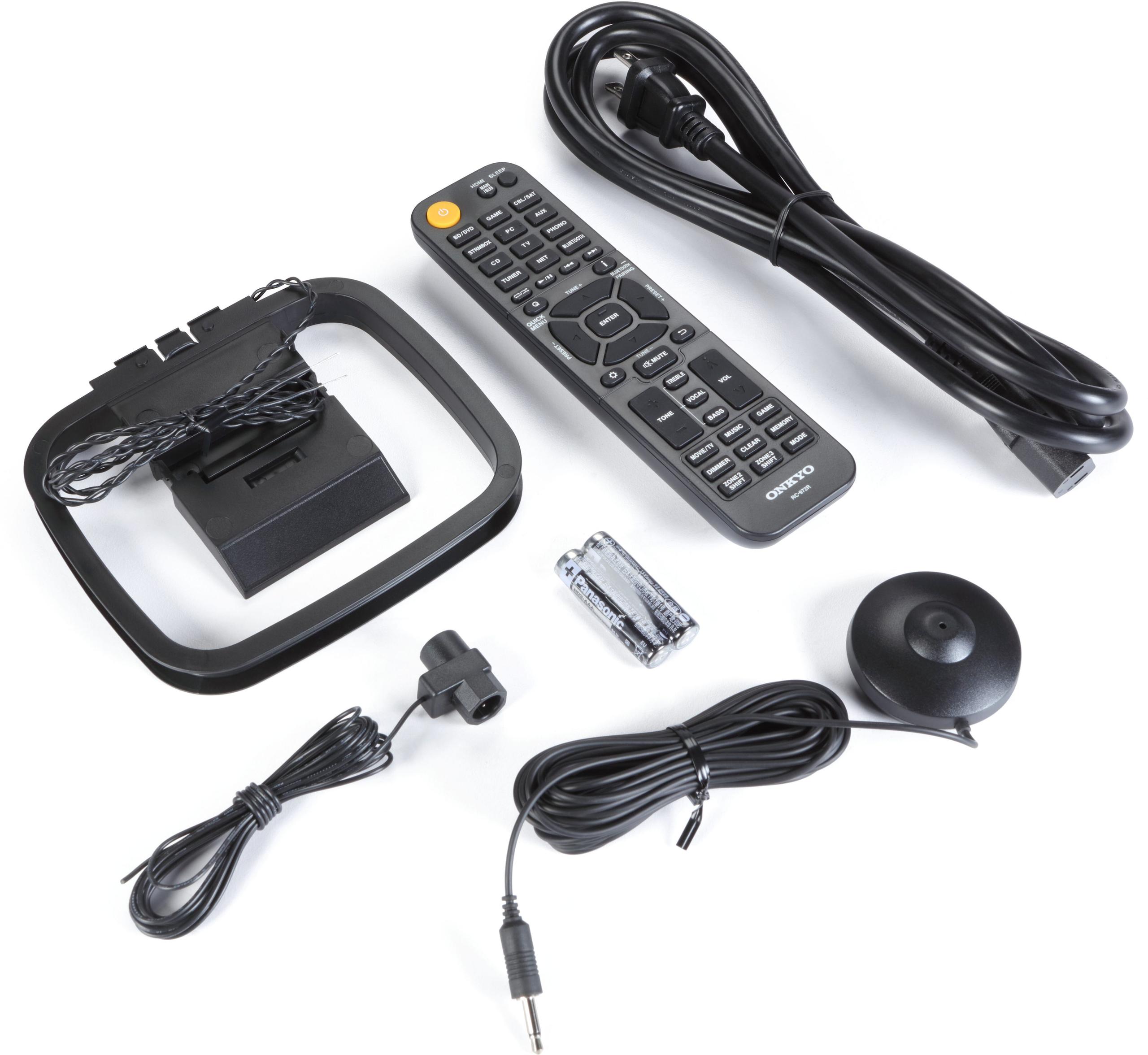
Both receivers include sophisticated room correction systems, but they take different approaches. The AVR-X2800H uses Audyssey MultEQ XT, which measures your room's acoustics using a provided microphone and adjusts the receiver's output to compensate for acoustic problems. Audyssey has been refined over many years and generally provides excellent results with minimal user intervention.
The TX-RZ50 includes AccuEQ as its standard room correction system, but it also supports Dirac Live – a professional-grade correction system often found in much more expensive receivers. Dirac Live offers more precise measurements and corrections, particularly in the critical midrange frequencies where dialogue and most musical content lives. However, accessing Dirac Live's full capabilities requires additional software purchases and more involved setup procedures.
In practical terms, both systems significantly improve sound quality by reducing room-induced coloration and optimizing speaker integration. The Audyssey system excels at simplicity and consistently good results, while Dirac Live can achieve superior correction for users willing to invest the time and money.
Here's where technical specifications reveal meaningful differences. The TX-RZ50 employs 384kHz/32-bit digital-to-analog converters (DACs), while the AVR-X2800H uses 192kHz/32-bit DACs. These numbers relate to how precisely the receiver can convert digital audio files into analog signals that your speakers can reproduce.
Higher specifications don't automatically mean better sound, but they do indicate the receiver's ability to handle high-resolution audio sources without compromise. If you stream high-quality music from services like Tidal or play high-resolution audio files, the Onkyo's superior DACs can potentially extract more detail and nuance from your sources.
Both receivers embrace current video standards with comprehensive HDMI 2.1 support, including 8K/60Hz and 4K/120Hz passthrough capabilities. These features matter for gaming consoles like the PlayStation 5 and Xbox Series X, which can output 4K resolution at 120 frames per second for incredibly smooth gameplay.
The TX-RZ50 provides seven HDMI inputs versus six on the AVR-X2800H, but both offer enough connections for typical setups including gaming consoles, streaming devices, and disc players. More importantly, both support advanced gaming features like Variable Refresh Rate (VRR) and Auto Low Latency Mode (ALLM), which reduce input lag and eliminate screen tearing for competitive gaming.
One advantage for the Denon AVR-X2800H is its analog-to-HDMI upconversion capability. This feature converts older analog video sources to digital HDMI output, making it easier to integrate legacy components like older gaming systems or video players into modern setups.
The Onkyo TX-RZ50 carries THX Select certification, meaning it meets professional cinema standards for audio reproduction. It also supports IMAX Enhanced content, providing optimized playback for movies specifically mastered for IMAX theaters. These certifications indicate serious attention to audio accuracy and dynamics.
The AVR-X2800H lacks these premium certifications but compensates with solid engineering and Denon's reputation for reliability. User reports consistently praise Denon's build quality and long-term durability, factors that matter when you're investing in equipment you'll use for many years.
Both receivers feature comprehensive streaming capabilities, including built-in Wi-Fi, Bluetooth, and support for services like Spotify, Amazon Music, and Apple AirPlay 2. The AVR-X2800H includes HEOS multiroom functionality, allowing you to create a whole-home audio system with compatible Denon speakers and components.
Based on extensive research of user reviews and professional evaluations, both receivers deliver excellent sound quality, but with different characteristics. The TX-RZ50 tends to produce more powerful, dramatic bass response with solid midrange clarity that keeps dialogue and action sounds prominent. However, some users note it may lack the high-frequency detail that makes musical instruments truly sparkle.
The AVR-X2800H receives consistent praise for balanced, refined sound quality. Users frequently mention its excellent dialogue clarity and spacious soundstage, particularly when properly calibrated with Audyssey. The receiver excels at both movie soundtracks and music playback, making it versatile for different types of content.
Power delivery differences become apparent in challenging scenarios. The TX-RZ50 maintains composure better when driving difficult speakers or playing at high volumes, while the AVR-X2800H can sound strained with particularly demanding speakers or in very large rooms.
At the time of writing, the price gap between these receivers is substantial enough to influence purchasing decisions significantly. The AVR-X2800H offers remarkable value, delivering most features that matter to mainstream users at a more accessible price point.
The TX-RZ50 commands a premium that reflects its additional channels, higher power output, and premium certifications. Whether this premium is justified depends entirely on your specific needs and room requirements.
Consider the total system cost when evaluating value. If you're planning a 7.2.4 Dolby Atmos setup, the TX-RZ50 can power all those speakers directly, while the AVR-X2800H would require external amplification for such complex configurations. The additional amplifier cost could narrow the price gap considerably.
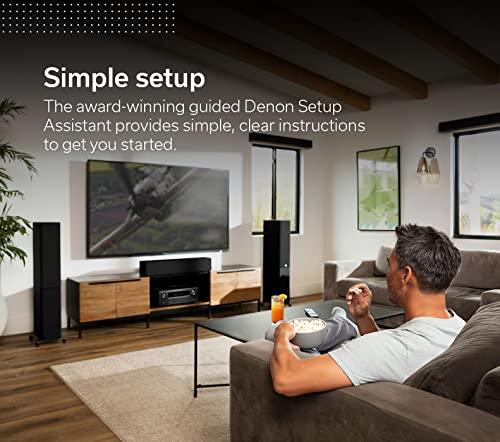
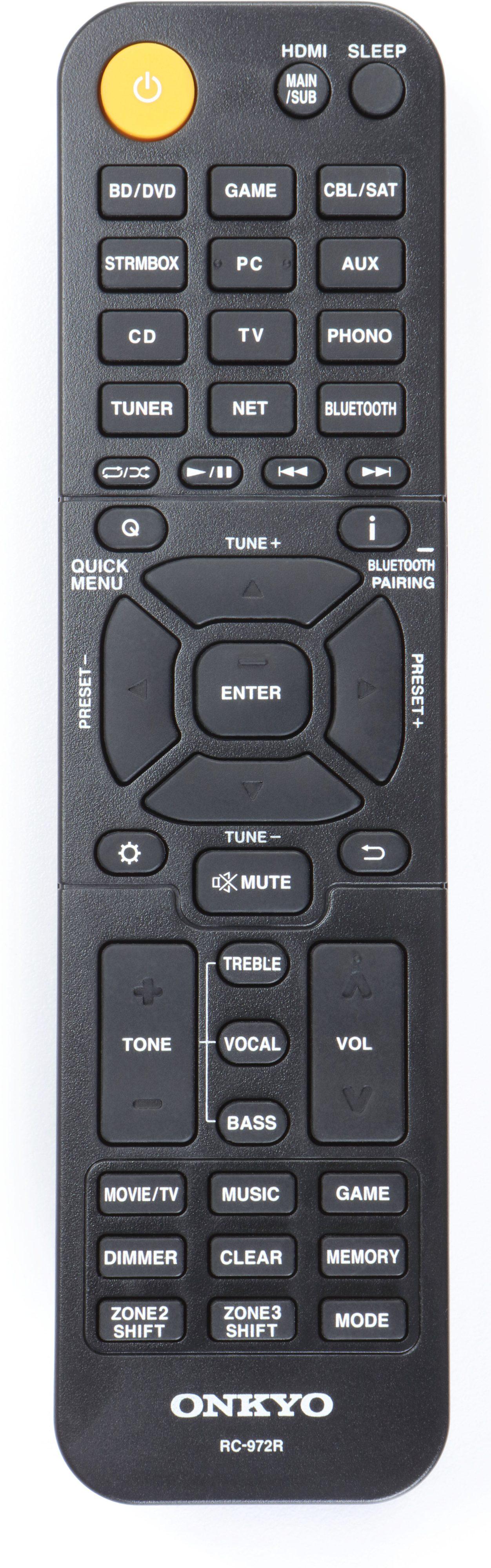
Both receivers offer modern setup experiences with on-screen guidance and mobile apps for control. The AVR-X2800H generally receives higher marks for setup simplicity, particularly regarding its Audyssey calibration process. Most users report straightforward installation and configuration.
The TX-RZ50 can be more complex to set up optimally, especially if you want to leverage its full capabilities with Dirac Live room correction. The additional complexity may intimidate less technical users but provides more precise control for those willing to invest the time.
Choose the Denon AVR-X2800H if you:
Want excellent mainstream performance without paying premium prices. This receiver shines in typical home theater scenarios with 5.1, 7.1, or 5.2.2 speaker configurations. It's ideal for medium-sized rooms where its 95-watt amplification provides adequate headroom, and the Audyssey room correction system delivers consistently good results with minimal fuss.
The Denon makes particular sense if you value proven reliability, straightforward setup, and comprehensive features including analog upconversion for older sources. Users who want to integrate legacy components or prefer simpler calibration procedures will appreciate its user-friendly approach.
Choose the Onkyo TX-RZ50 if you:
Have ambitious home theater plans requiring complex speaker configurations or multiple zones. The additional channels and power output become valuable in larger rooms or with less efficient speakers. THX Select and IMAX Enhanced certifications provide confidence in professional-grade performance standards.
This receiver suits enthusiasts willing to pay extra for maximum flexibility and future expansion possibilities. The 11.2 pre-amp outputs allow gradual system growth with external amplification, while superior DACs and optional Dirac Live correction can extract maximum performance from high-quality sources.
Both receivers represent excellent engineering, but they target different users and budgets. The AVR-X2800H delivers outstanding value for mainstream home theater applications, providing features and performance that will satisfy most users without unnecessary complexity or cost.
The TX-RZ50 justifies its premium pricing for users who need its additional capabilities and don't mind paying extra for them. Its superior power output, additional channels, and premium certifications make it the better choice for demanding installations and larger rooms.
Ultimately, the decision comes down to matching the receiver's capabilities to your specific needs and budget. Most users will find the Denon AVR-X2800H provides everything they need with money left over for better speakers or room treatments. However, if you're planning an elaborate home theater or have challenging room acoustics, the Onkyo TX-RZ50 offers the tools and power to handle more demanding scenarios.
Consider your long-term plans carefully. If you might expand your system significantly or move to a larger space, the TX-RZ50's additional flexibility could prove valuable. But if you're satisfied with a well-executed 7.1 or 5.2.2 setup, the AVR-X2800H delivers exceptional performance at a more reasonable price point.
| Denon AVR-X2800H | Onkyo TX-RZ50 |
|---|---|
| Channel Configuration - Determines speaker setup flexibility and immersive audio capabilities | |
| 7.2 channels (supports up to 5.2.2 Dolby Atmos) | 9.2 channels with 11.2 pre-outs (enables 7.2.4 Atmos setups) |
| Power Output - Critical for driving speakers cleanly at higher volumes | |
| 95W per channel (8Ω, adequate for most speakers) | 120W per channel (8Ω, better headroom for demanding speakers) |
| Room Correction System - Optimizes sound quality for your specific room acoustics | |
| Audyssey MultEQ XT (proven, user-friendly system) | AccuEQ + optional Dirac Live (professional-grade precision) |
| Digital Audio Processing - Affects sound quality with high-resolution sources | |
| 192kHz/32-bit DACs (excellent for standard content) | 384kHz/32-bit DACs (superior for high-res audio files) |
| HDMI Connectivity - Determines how many devices you can connect | |
| 6 HDMI inputs, 2 outputs (sufficient for most setups) | 7 HDMI inputs, 2 outputs (extra input for complex systems) |
| Video Support - Future-proofing for gaming and streaming | |
| 8K/60Hz, 4K/120Hz, VRR, ALLM gaming features | 8K/60Hz, 4K/120Hz, VRR, ALLM gaming features |
| Premium Certifications - Professional audio standards compliance | |
| None (still delivers excellent sound quality) | THX Select + IMAX Enhanced (cinema-grade performance) |
| Analog Video Support - Important for legacy devices | |
| Analog-to-HDMI upconversion included | No analog video conversion |
| Multiroom Audio - Whole-home streaming capabilities | |
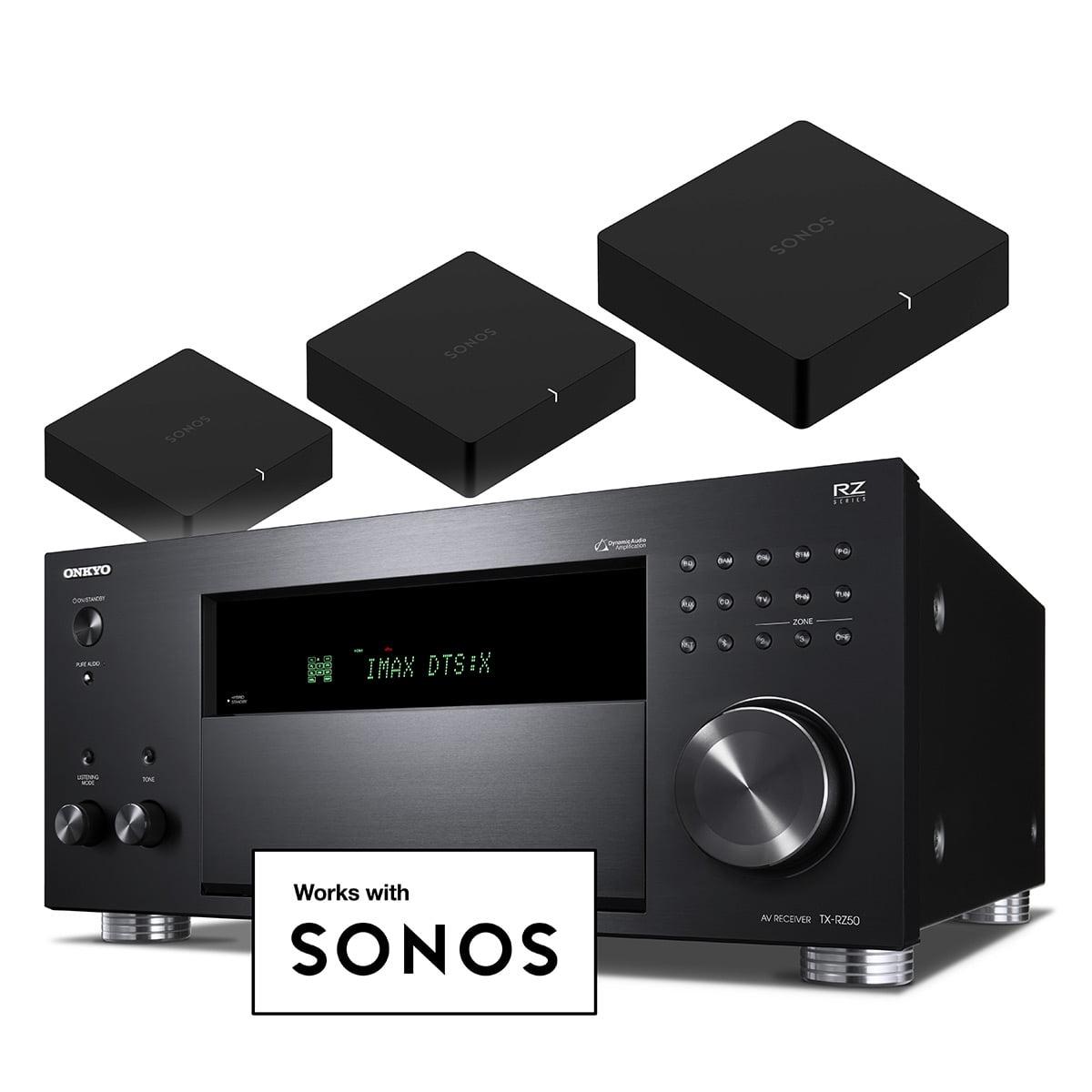
| HEOS built-in (works with Denon ecosystem) | Works with Sonos, DTS Play-Fi (broader compatibility) |
| Target User - Who each receiver is designed for | |
| Mainstream users wanting excellent value and simplicity | Enthusiasts needing maximum flexibility and power |
The Onkyo TX-RZ50 offers 9.2 channels compared to the Denon AVR-X2800H's 7.2 channels. This means the TX-RZ50 can power more speakers directly, enabling complex setups like 7.2.4 Dolby Atmos configurations with four height speakers. The AVR-X2800H supports up to 5.2.2 Atmos setups, which is sufficient for most home theaters.
The Onkyo TX-RZ50 delivers 120 watts per channel while the Denon AVR-X2800H provides 95 watts per channel. The 25-watt difference gives the TX-RZ50 more headroom for driving demanding speakers and maintaining clean sound at higher volumes, especially important in larger rooms.
The Denon AVR-X2800H is more beginner-friendly with its straightforward Audyssey room correction system and simpler setup process. The Onkyo TX-RZ50 offers more advanced features but can be overwhelming for new users, particularly when configuring its optional Dirac Live room correction.
Yes, both the Denon AVR-X2800H and Onkyo TX-RZ50 support 8K/60Hz and 4K/120Hz video passthrough with gaming features like Variable Refresh Rate (VRR) and Auto Low Latency Mode (ALLM). Both are fully compatible with PlayStation 5 and Xbox Series X gaming consoles.
The Onkyo TX-RZ50 has superior room correction potential with its optional Dirac Live system, which offers professional-grade calibration. However, the Denon AVR-X2800H's Audyssey MultEQ XT system is excellent for most users and much easier to set up and use effectively.
The Denon AVR-X2800H includes analog-to-HDMI upconversion, making it easier to connect older gaming systems or video players. The Onkyo TX-RZ50 lacks this feature, focusing primarily on digital HDMI connections for modern devices.
The Denon AVR-X2800H provides excellent value for mainstream home theater users, offering strong performance and modern features at a lower price point. The TX-RZ50 costs significantly more but justifies the premium with additional channels, higher power output, and professional certifications.
Both receivers offer solid build quality, but they target different markets. The Onkyo TX-RZ50 carries THX Select certification and premium components, while the Denon AVR-X2800H focuses on reliable engineering and proven long-term durability at a more accessible price.
The Onkyo TX-RZ50 is better suited for large rooms due to its higher 120-watt power output per channel and ability to drive more speakers. The AVR-X2800H works well in medium-sized rooms but may struggle to fill very large spaces with adequate volume and dynamics.
Yes, both the Denon AVR-X2800H and Onkyo TX-RZ50 support popular streaming services, Wi-Fi, Bluetooth, and voice assistants. The AVR-X2800H includes HEOS multiroom audio, while the TX-RZ50 works with Sonos and DTS Play-Fi systems.
The Onkyo TX-RZ50 offers more future-proofing with its 11.2 pre-amp outputs for system expansion and superior DAC specifications for high-resolution audio. However, both receivers support current video standards equally well, making the Denon AVR-X2800H adequately future-proof for most users.
Choose the Denon AVR-X2800H if you plan to stick with 7.1 or 5.2.2 speaker configurations. Select the Onkyo TX-RZ50 if you want the flexibility to expand to complex multi-channel setups or add external amplification later. Consider your long-term home theater goals when deciding between these receivers.
We've done our best to create useful and informative comparisons to help you decide what product to buy. Our research uses advanced automated methods to create this comparison and perfection is not possible - please contact us for corrections or questions. These are the sites we've researched in the creation of this article: theaudiotailor.com.au - ecoustics.com - simplehomecinema.com - whathifi.com - audioadvisor.com - youtube.com - bestbuy.com - e-catalog.com - crutchfield.com - avsforum.com - crutchfield.com - whathifi.com - richersounds.com - bestbuy.com - accessories4less.com - projectorscreen.com - adiglobaldistribution.us - youtube.com - bestbuy.com - bestbuy.com - sweetwater.com - bestbuy.com - audioadvice.com - bestbuy.com - youtube.com - 7review.com - assets.onkyo-av.com - avsforum.com - youtube.com - onkyo.com - support.onkyousa.com - avsforum.com - stereoindex.com - forums.audioholics.com - audioholics.com

Privacy Policy
Terms and Conditions - Affiliate Policy
Home Security
© Copyright 2008-2026.
11816 Inwood Rd #1211, Dallas, TX 75244