

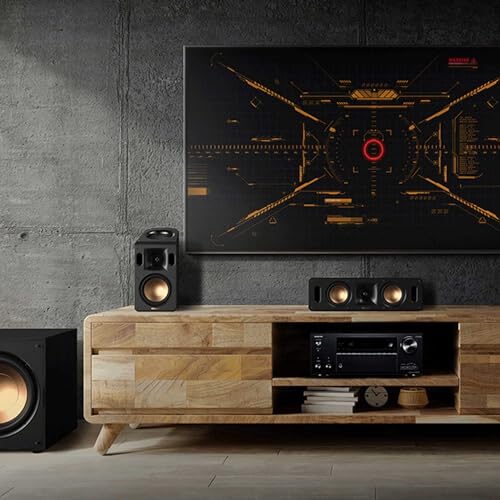
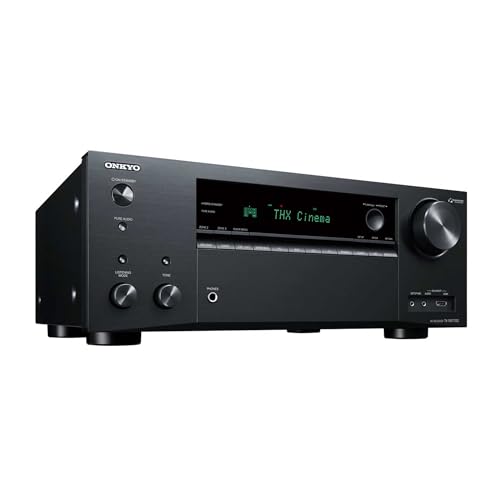
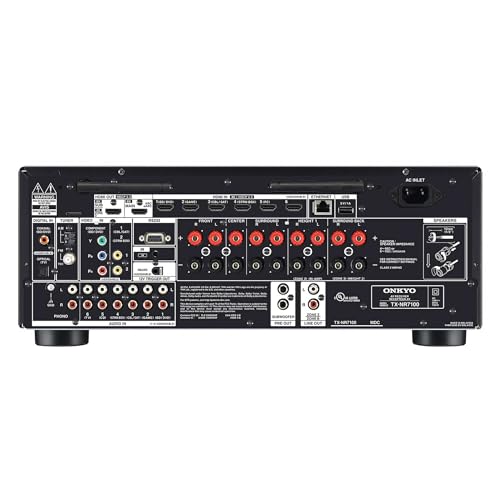
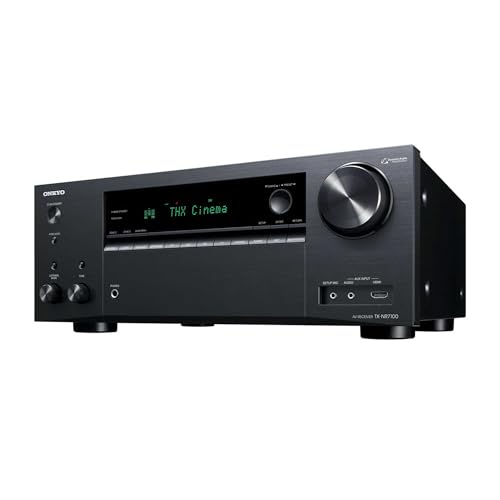
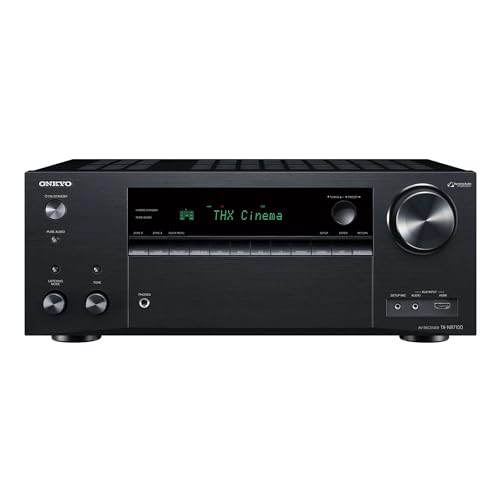
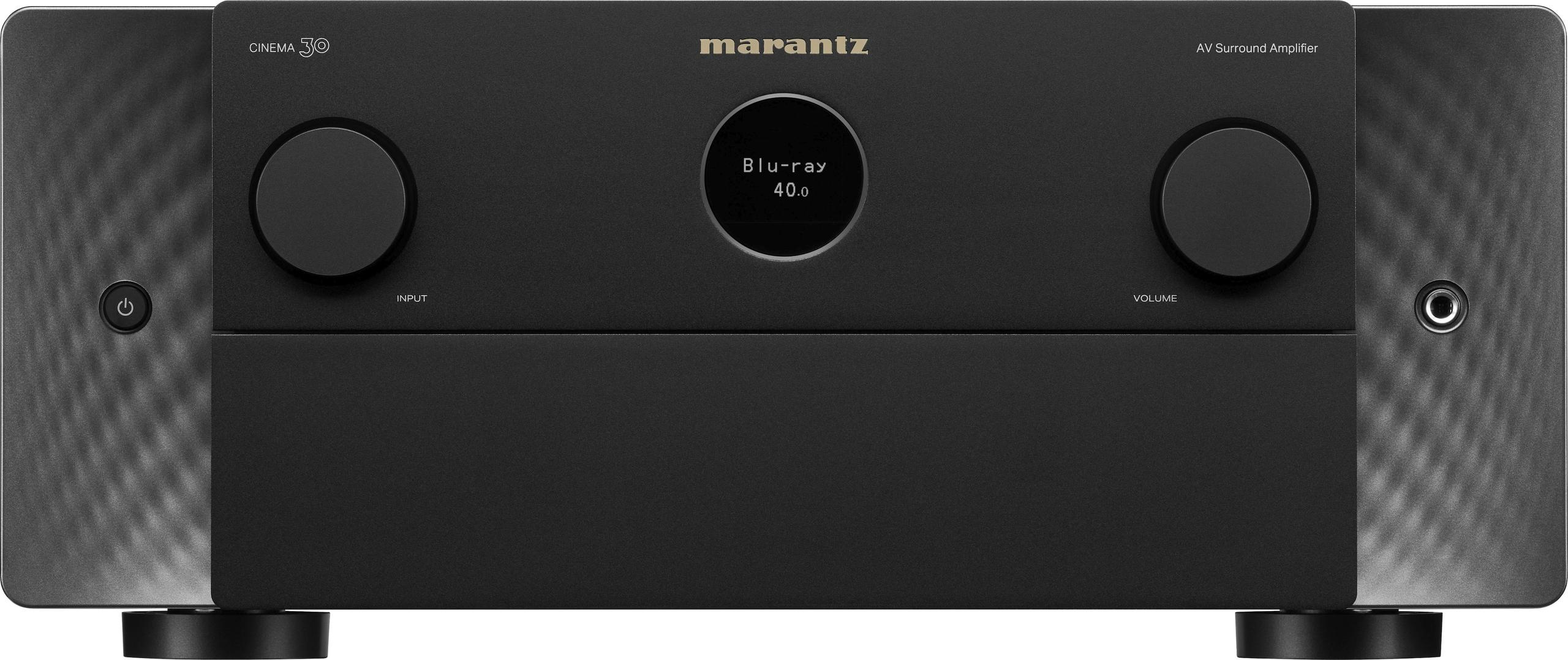
When shopping for an AV receiver—the brain of your home theater that handles everything from powering speakers to processing video—you'll quickly discover that not all receivers are created equal. Today we're comparing two models that couldn't be more different: the Onkyo TX-NR7100 and the Marantz CINEMA 30. Released in 2021 and 2024 respectively, these receivers represent completely different philosophies about what a home theater receiver should be and who it should serve.
At the time of writing, the price difference between these two is substantial—about five times more expensive for the Marantz. But that price gap tells an important story about what you're getting and who each receiver is designed for. Let's dive into what makes each special and help you figure out which approach makes sense for your situation.
Before we get into the specifics, it's worth understanding what an AV receiver actually does. Think of it as the central nervous system of your home theater. It takes audio and video signals from your sources (like a Blu-ray player or gaming console), processes and enhances those signals, then sends the video to your TV while amplifying the audio to power your speakers. Modern receivers also handle room correction (automatically adjusting sound based on your room's acoustics), streaming services, and multi-room audio distribution.
The key things to consider when choosing a receiver include how many speakers it can power (channel configuration), how much clean power it provides, what video resolutions it supports, which audio formats it can decode, and how well it integrates with your other devices. The quality of these features—and how much you're willing to pay for premium implementations—varies dramatically between budget and high-end models.
The Onkyo TX-NR7100 represents what I'd call the "democratization of flagship features" approach. When it launched in 2021, Onkyo packed features typically found in much more expensive receivers—like THX certification and built-in Dirac Live room correction—into a mid-range price point. It's designed for home theater enthusiasts who want the best possible sound quality without breaking the bank.
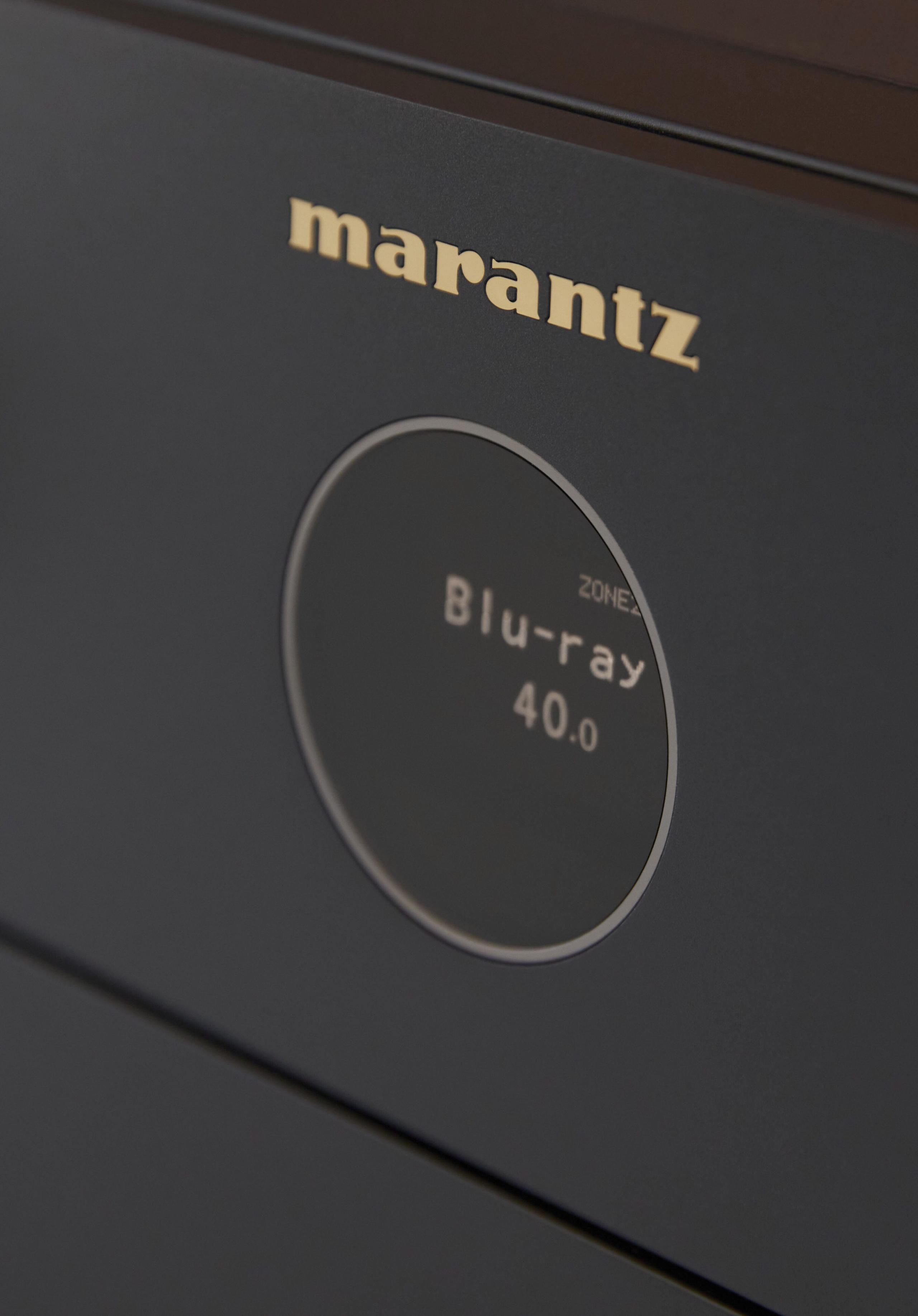
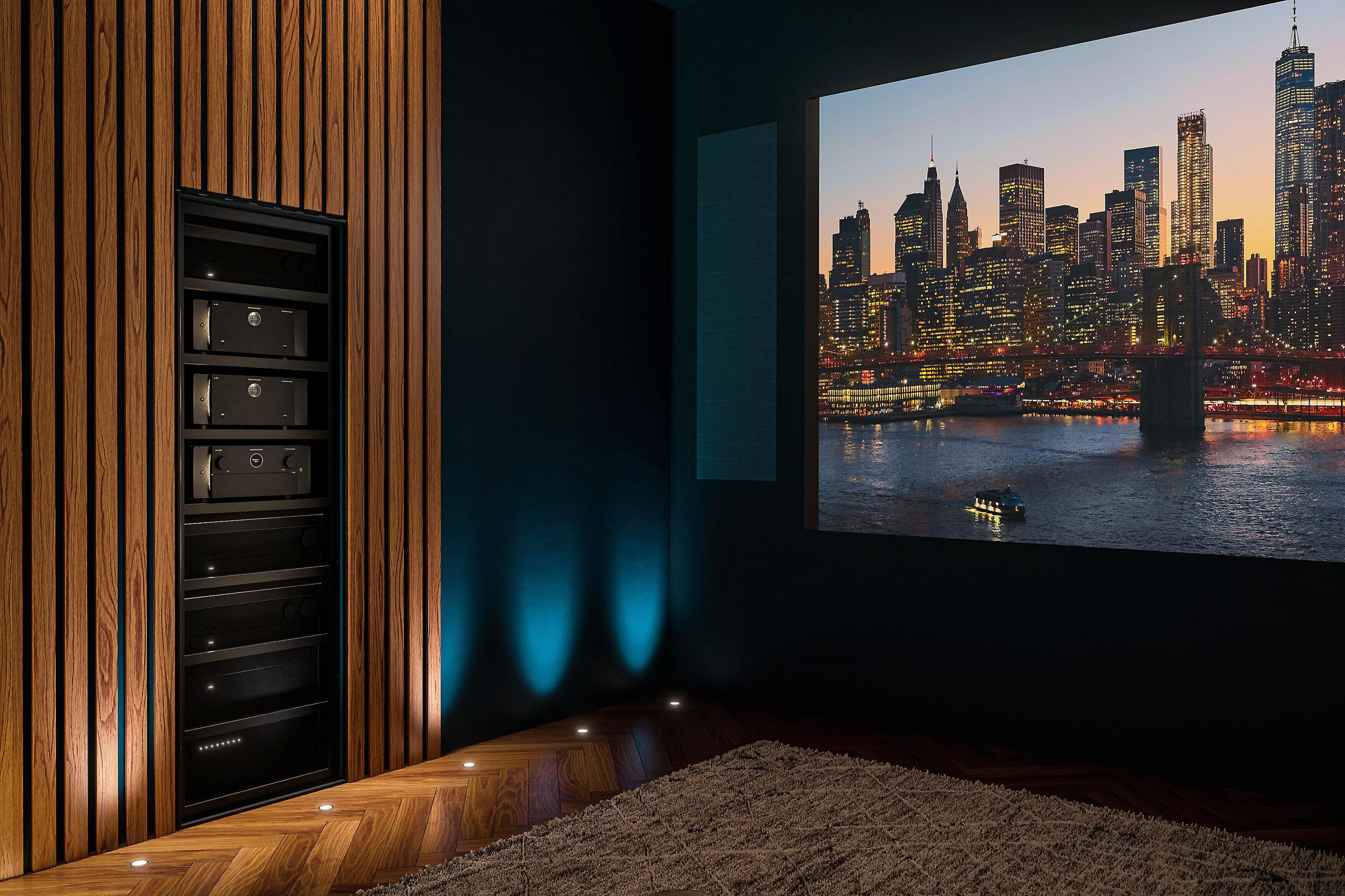
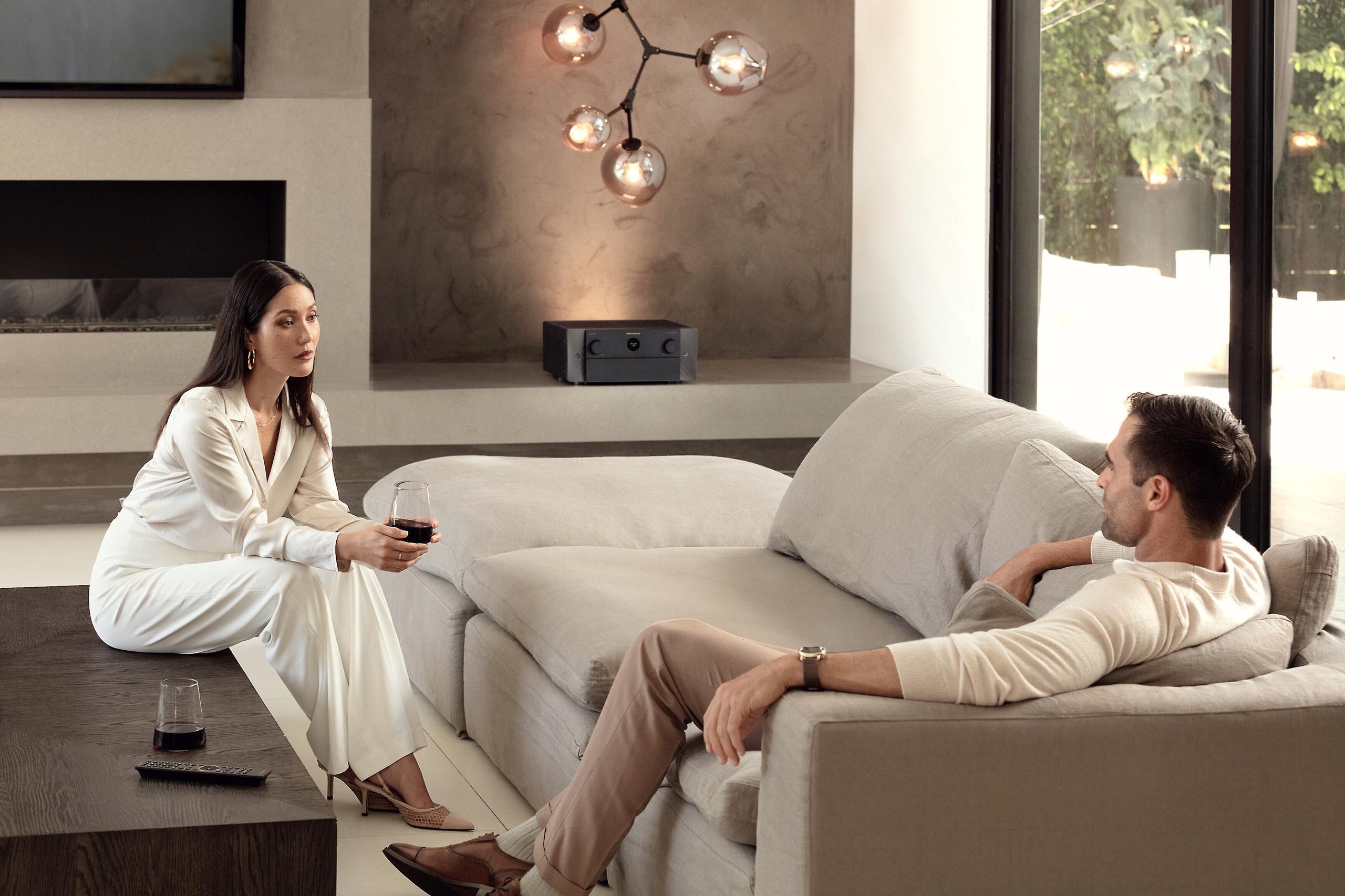
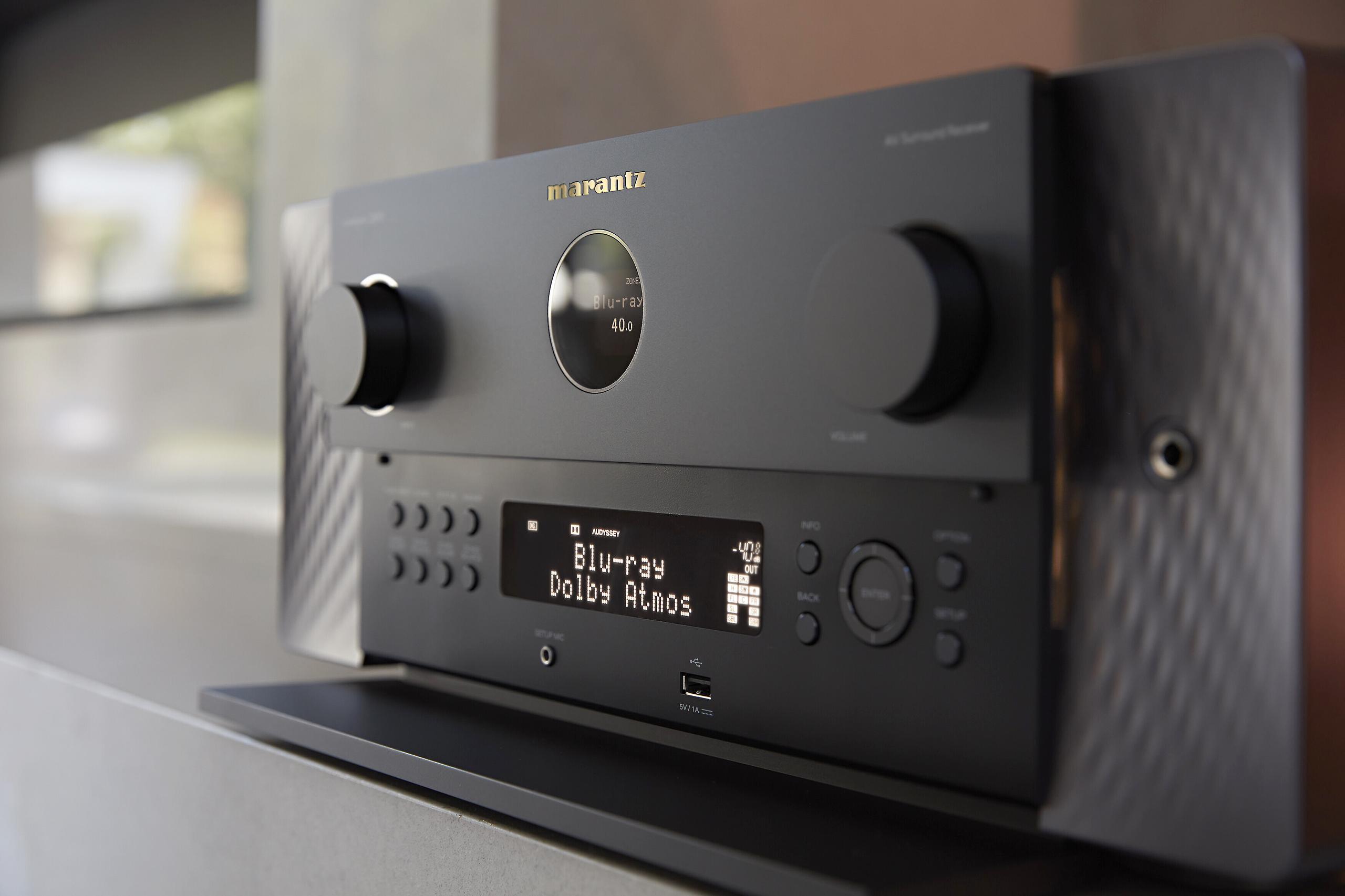
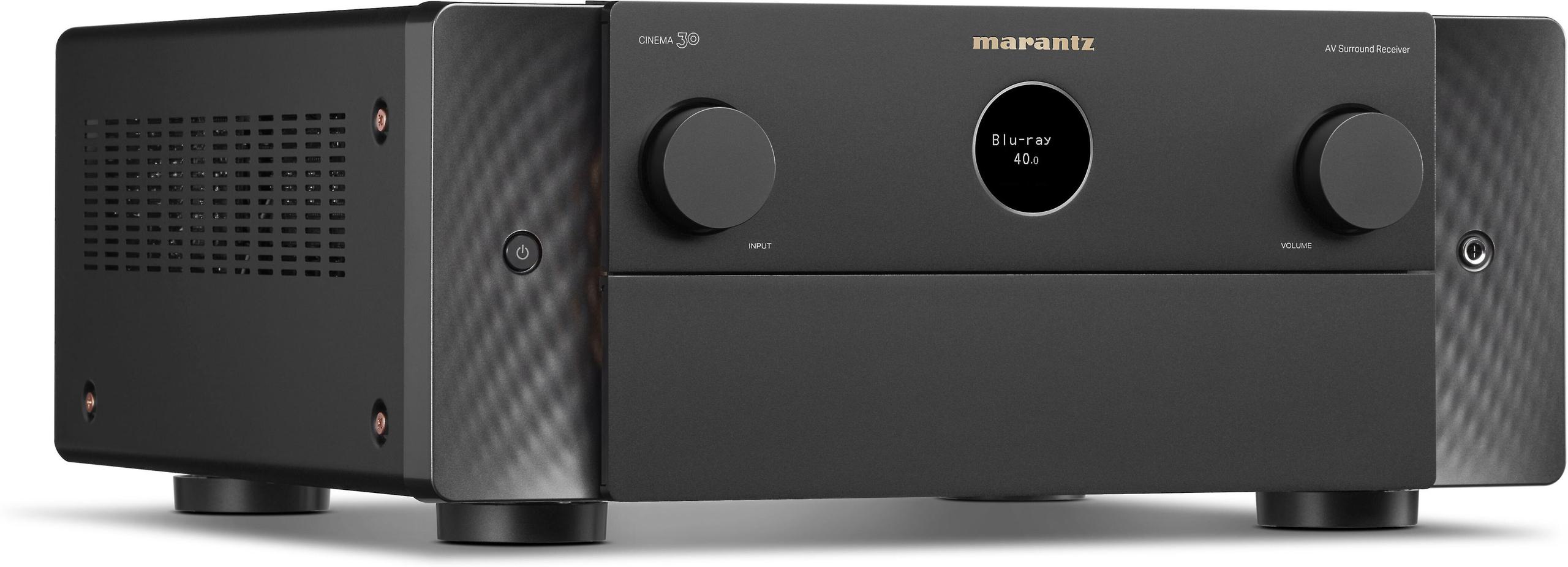
The Marantz CINEMA 30, released in 2024, takes the opposite approach: no compromises, premium everything, built for people who want the absolute best regardless of cost. It's part of Marantz's flagship Cinema series and represents the pinnacle of what the company knows how to build.
Since the Marantz launched three years later, it benefits from newer HDMI specifications and video processing capabilities that weren't available when the Onkyo was designed. This technological evolution is important to consider when evaluating features and future-proofing.
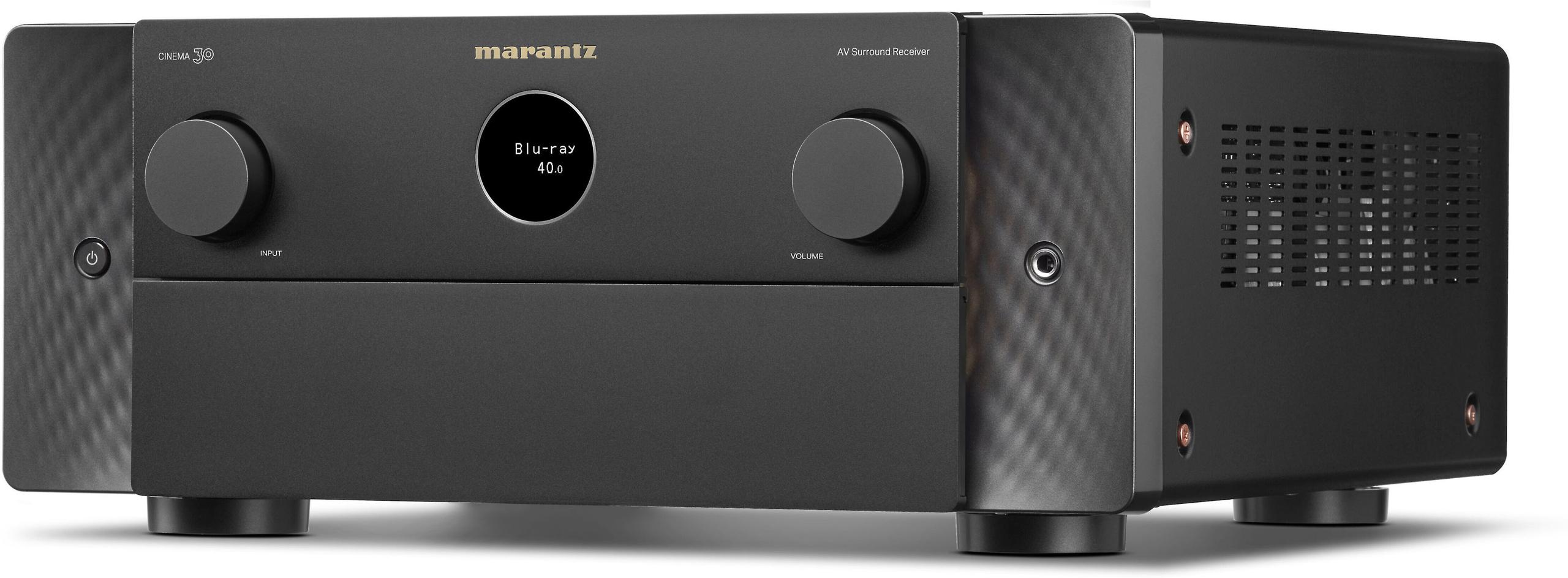
When it comes to actually powering your speakers, the differences between these receivers become immediately apparent. The Onkyo TX-NR7100 provides 100 watts per channel across 9 channels, while the Marantz CINEMA 30 delivers 140 watts per channel across 11 channels.
But raw wattage numbers don't tell the whole story. What matters more is how clean that power is and how well the receiver maintains it under demanding conditions. THD (Total Harmonic Distortion) measures how much the amplifier colors the original signal—lower is better. The Onkyo achieves 0.08% THD, which is excellent for its price range. The Marantz pushes this to 0.05% THD, representing a noticeable improvement in clarity, especially at higher volumes.
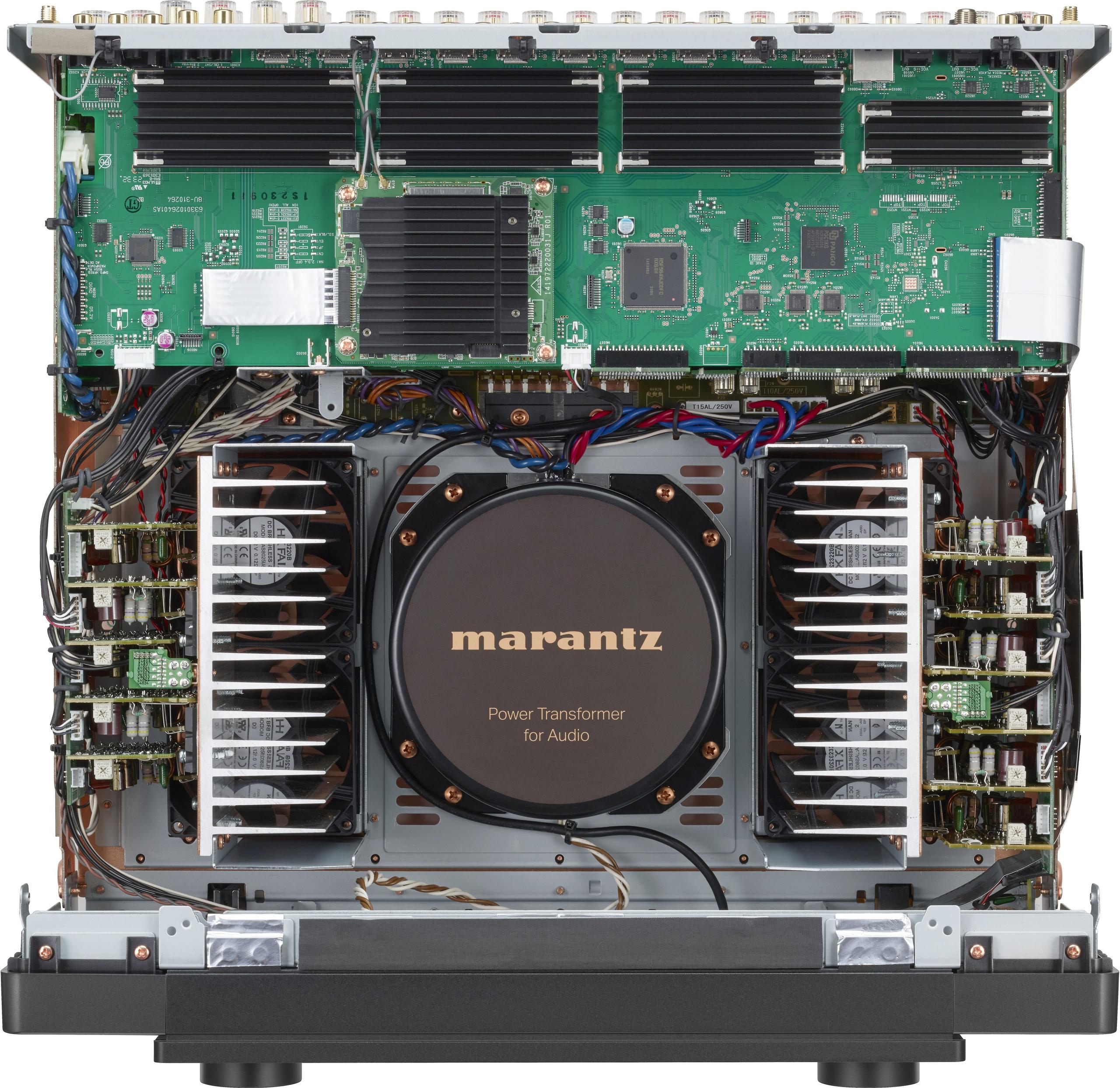
The power supply design makes a huge difference here. The Onkyo TX-NR7100 uses what it calls High Current Power Supply (H.C.P.S.) technology, which provides instantaneous power delivery for dynamic audio passages. The Marantz CINEMA 30 goes further with toroidal transformers—doughnut-shaped power transformers that reduce electromagnetic interference and provide more stable power delivery. This translates to better separation between instruments, cleaner vocals, and tighter bass response.
Based on our research into user experiences and professional reviews, the sonic characteristics differ notably. The Onkyo TX-NR7100 delivers what reviewers consistently describe as "neutral and balanced" sound with "powerful and well-integrated bass." Users particularly praise its ability to create immersive Atmos effects that "fill the listening space realistically." The Marantz CINEMA 30 takes this further with what professional reviewers call "clearer and more refined" sound quality, though at a significantly higher cost.
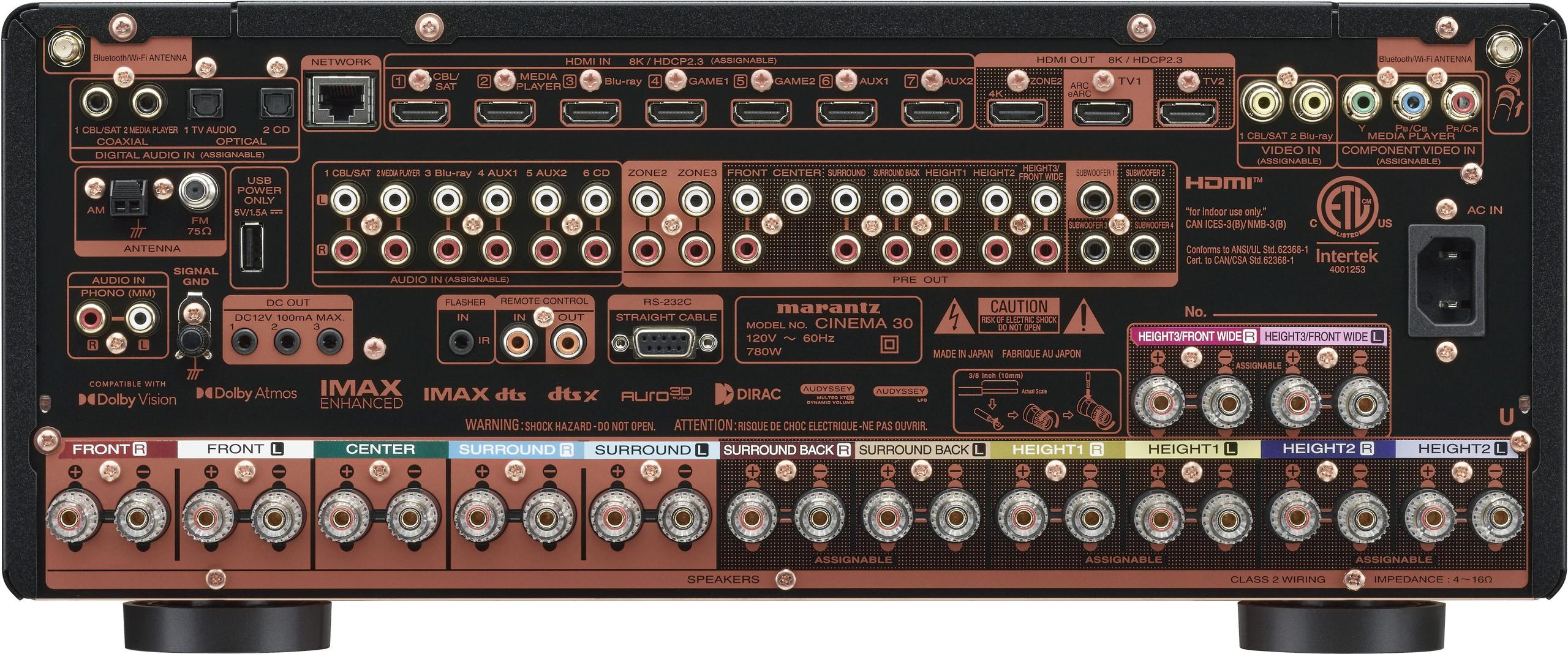
Here's where the fundamental differences become clear. The Onkyo TX-NR7100 is a 9.2-channel receiver, meaning it can power 9 speakers plus 2 subwoofer channels. This allows for speaker configurations like 5.1.4 (five main speakers, one subwoofer, four height speakers) or 7.1.2 (seven main speakers, one subwoofer, two height speakers) for Dolby Atmos surround sound.
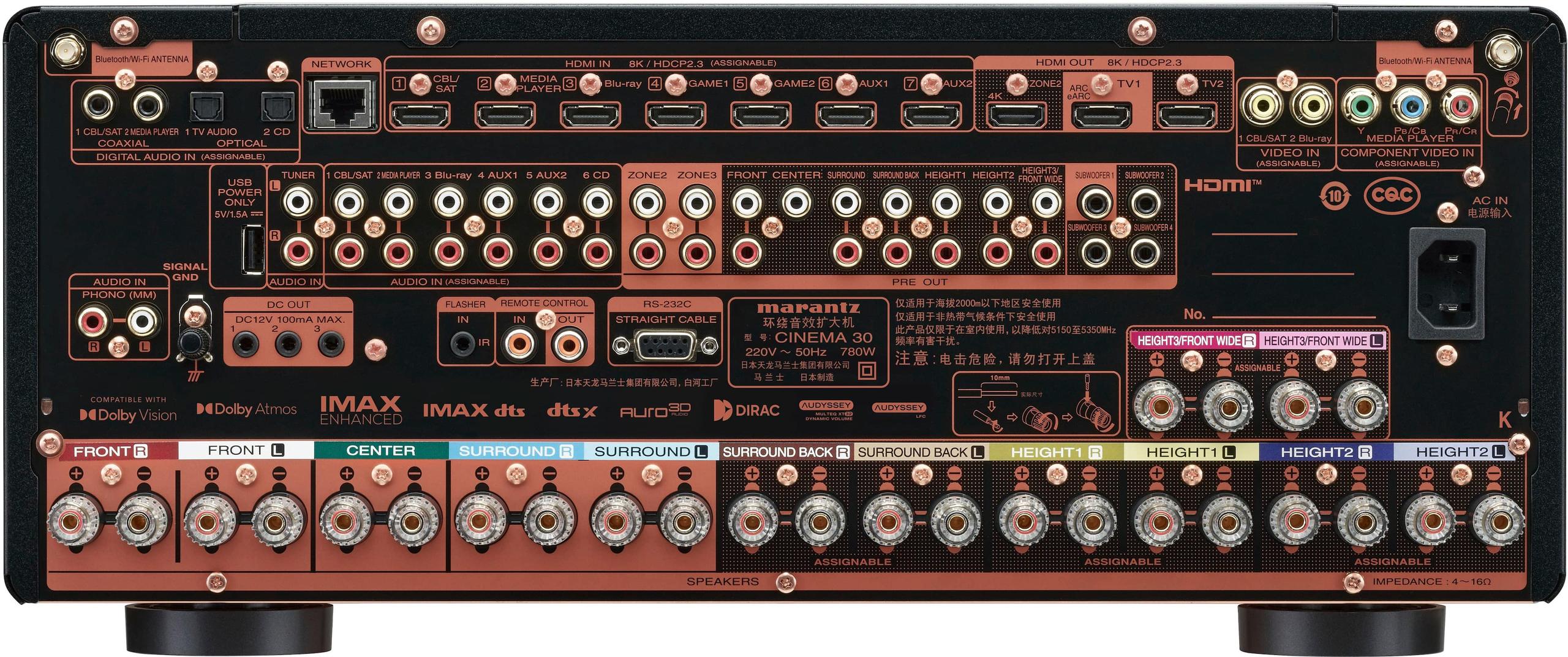
The Marantz CINEMA 30 provides 11 amplified channels plus 4 independent subwoofer outputs—hence the 11.4 designation. This extra flexibility allows for more complex speaker layouts without needing external amplifiers. More importantly, it includes 13.4 channel processing with pre-outputs, meaning you could theoretically build a system with 13 speakers and 4 subwoofers by adding external amplifiers.
For most people, the Onkyo's 9.2 configuration provides plenty of flexibility. You can create highly immersive Atmos experiences with careful speaker placement. The Marantz's extra channels are primarily beneficial for larger rooms or when you want to implement more sophisticated bass management with multiple subwoofers placed throughout the room.
This is where things get really interesting. Both receivers include advanced room correction technology, but they approach it differently. The Onkyo TX-NR7100 includes Dirac Live built-in—a feature that typically costs $500+ as an upgrade on other receivers. Dirac Live analyzes your room's acoustics using multiple measurement positions (up to 13 with this receiver) and automatically adjusts frequency response, timing, and levels to optimize sound quality.
User feedback on the Onkyo's Dirac Live implementation is overwhelmingly positive. One common sentiment we found in our research: "the sound quality is good out of the box, but extraordinary with Dirac Live engaged." The system significantly improves stereo imaging, dialogue clarity, and bass integration—transformations that can make a mediocre room sound great.
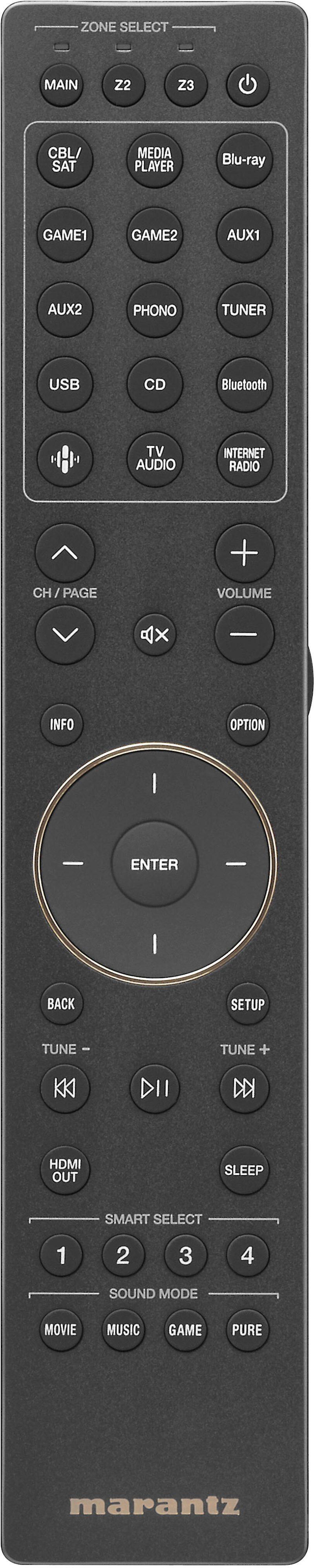
The Marantz CINEMA 30 includes Audyssey MultEQ XT32 as standard, with optional Dirac Live available as an upgrade. Audyssey is a capable room correction system, but most experts consider Dirac Live superior for its precision and flexibility. However, the Marantz includes four independent subwoofer outputs with advanced bass management features like Bass Sync technology, which coordinates multiple subwoofers for smoother low-frequency response throughout the room.
The three-year gap between these receivers' releases shows clearly in their video capabilities. The Onkyo TX-NR7100 supports HDMI 2.1 with 4K/120Hz and 8K/60Hz passthrough across its 7 inputs and 2 outputs. This was cutting-edge in 2021 and remains excellent for gaming with modern consoles and PCs.
The Marantz CINEMA 30, benefiting from more recent development, takes video processing further. It includes true 8K upscaling capabilities and three HDMI outputs (two supporting 8K, one supporting 4K for a second zone). The upscaling means it can take lower-resolution content and intelligently enhance it for 8K displays—a feature that becomes more valuable as 8K content slowly becomes available.
Both receivers support the full complement of HDR (High Dynamic Range) formats including HDR10+, Dolby Vision, and HLG. These formats provide enhanced contrast and color range for supported content. For gaming, both include Variable Refresh Rate (VRR), Auto Low Latency Mode (ALLM), and Quick Frame Transport (QFT)—technologies that reduce input lag and eliminate screen tearing for smoother gameplay.
Our research revealed a concerning pattern with the Onkyo TX-NR7100: HDMI-related reliability issues. Multiple user reports describe problems with HDMI switching, audio dropouts when changing sources, and eARC (Enhanced Audio Return Channel) functionality failures. Some users report units requiring extended warranty service with long wait times for replacement parts.
One typical user comment we encountered: "The unit has major HDMI switching issues that need to be addressed quickly. When changing from DVD back to cable TV, the video plays but the sound disappears." Another user mentioned their unit being "in service via Geek Squad for 3 months waiting for parts."
This doesn't mean every Onkyo TX-NR7100 will fail, but it's a risk factor to consider. When the receiver works properly, users consistently praise its sound quality and features. However, the potential for HDMI issues could be particularly frustrating given how central HDMI connectivity is to modern home theater use.
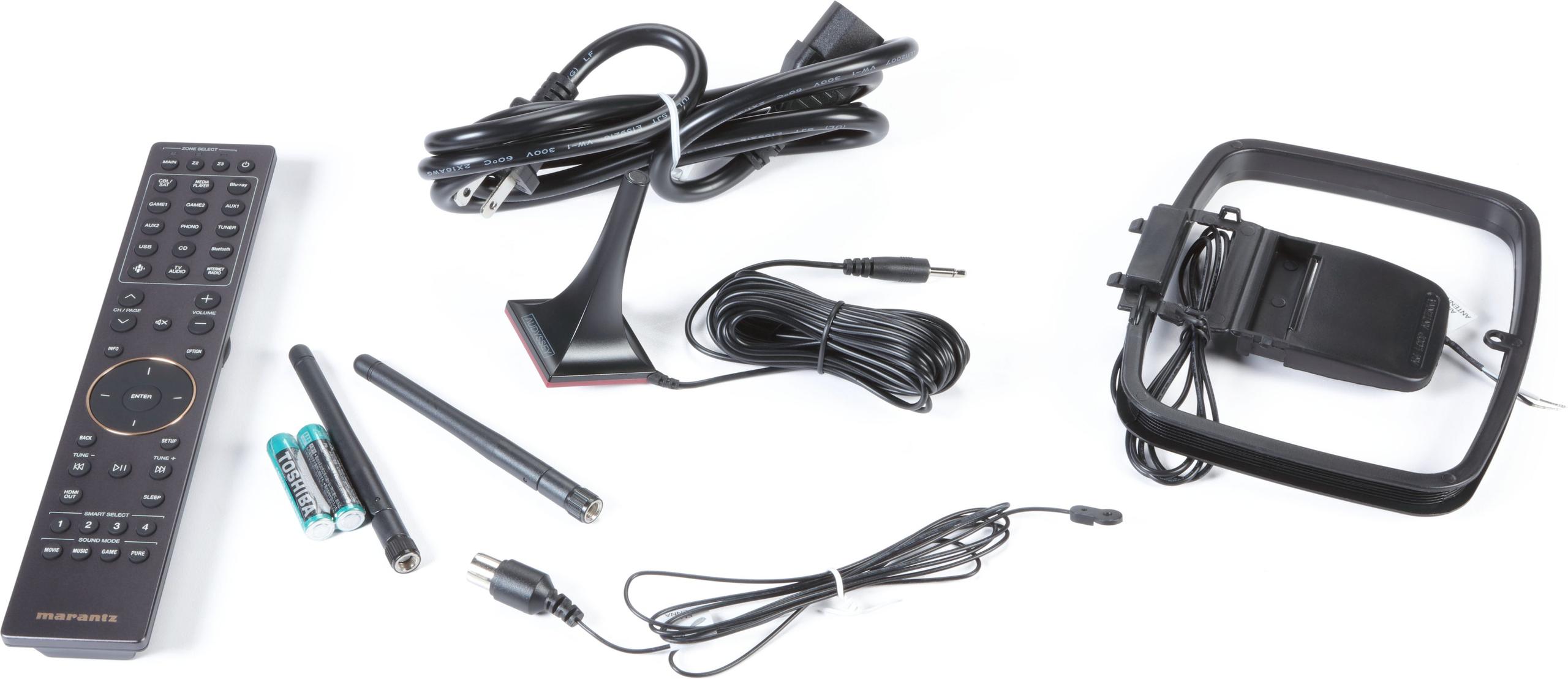
The Marantz CINEMA 30, being newer and more expensive, doesn't have extensive long-term reliability data yet. However, Marantz has built a reputation for premium construction quality and component selection. The receiver includes copper-plated chassis construction, gold-plated terminals, and other premium touches that suggest better long-term durability.
Both receivers embrace modern streaming needs but with different approaches. The Onkyo TX-NR7100 includes AirPlay 2, Chromecast built-in, and direct integration with Spotify, TIDAL, and other services. It also supports Roon (a high-end music management platform) and includes aptX HD Bluetooth codec support—a feature that's surprisingly rare and provides better wireless audio quality than standard Bluetooth.
The Marantz CINEMA 30 centers around HEOS, Marantz's proprietary multi-room platform. HEOS provides more sophisticated whole-home audio distribution and integrates with a broader range of smart home systems. This makes the Marantz better suited for complex installations where the receiver needs to work seamlessly with lighting systems, automation controllers, and other smart home devices.
The Onkyo TX-NR7100 provides three-zone capability, meaning you can send different audio sources to different areas of your home. Zone 2 even includes HDMI output, so you could send video to a second display with independent audio.
The Marantz CINEMA 30 takes multi-room functionality much further. The HEOS platform enables sophisticated whole-home audio with synchronized playback, independent volume control, and seamless integration with other HEOS-compatible devices throughout your home. For someone building a comprehensive smart home audio system, this represents a significant advantage.
The Onkyo TX-NR7100 makes sense for home theater enthusiasts who prioritize audio performance and want flagship features at a reasonable price point. At the time of writing, it offers remarkable value with THX certification, built-in Dirac Live, and comprehensive modern connectivity. It's ideal for dedicated home theaters in medium-sized rooms where you want the best possible sound quality without spending flagship money.
However, you need to be comfortable with the potential reliability issues. If you're handy with troubleshooting and have access to good warranty service, the audio quality benefits might outweigh the risks. It's also perfect for people who primarily care about the main theater experience rather than complex multi-room audio distribution.
The Marantz CINEMA 30 targets a completely different buyer: someone building a no-compromise home theater or whole-home audio system where cost is secondary to performance and reliability. The extra amplifier channels, superior video processing, and advanced multi-room capabilities justify the premium pricing for buyers who need these features.
It's also the better choice for custom installation environments where long-term reliability and professional integration capabilities are crucial. The extensive control options, premium construction, and established brand reputation make it suitable for high-end installations where failure isn't acceptable.
Consider your priorities carefully. If you're building your first serious home theater and want the best audio quality possible within a reasonable budget, the Onkyo TX-NR7100 offers exceptional value despite its reliability concerns. The included Dirac Live and THX certification provide sonic benefits typically reserved for much more expensive receivers.
If you're building a comprehensive smart home with sophisticated audio distribution needs, or if you simply want the best possible performance regardless of cost, the Marantz CINEMA 30 represents the no-compromise choice. The extra channels, superior video processing, and premium construction quality justify the significant price premium for buyers who need these capabilities.
The technology gap between 2021 and 2024 also matters for future-proofing. The Marantz's superior 8K processing and more advanced HDMI implementation provide better longevity as video standards continue evolving.
Ultimately, both receivers excel in their intended roles. The Onkyo democratizes high-end features for budget-conscious enthusiasts, while the Marantz provides uncompromising performance for premium installations. Your choice should align with your budget, reliability tolerance, and specific feature requirements rather than trying to find an objective "winner" between two products targeting completely different markets.
| Onkyo TX-NR7100 | Marantz CINEMA 30 |
|---|---|
| Channel Configuration - Determines speaker layout flexibility and immersive audio capability | |
| 9.2 channels (up to 5.1.4 or 7.1.2 Atmos) | 11.4 channels (up to 7.1.4 Atmos without external amps) |
| Power Output - Critical for dynamic range and speaker compatibility | |
| 100W per channel (8 ohms, 0.08% THD) | 140W per channel (8 ohms, 0.05% THD) |
| Room Correction - Essential for optimizing sound in your specific room | |
| Dirac Live included (typically $500+ upgrade elsewhere) | Audyssey MultEQ XT32 standard, Dirac Live optional |
| HDMI Inputs/Outputs - Determines source device connectivity | |
| 7 HDMI 2.1 inputs, 2 outputs | 7 HDMI 2.1 inputs, 3 outputs (2 at 8K, 1 at 4K) |
| Video Processing - Important for future-proofing and upscaling | |
| 4K/120Hz, 8K/60Hz passthrough | Full 8K upscaling, 4K/120Hz, 8K/60Hz with enhanced processing |
| Multi-Room Audio - For whole-home audio distribution | |
| 3-zone capability with Zone 2 HDMI output | Advanced HEOS platform with sophisticated multi-room integration |
| Build Quality - Affects long-term reliability and performance | |
| Solid construction but reported HDMI reliability issues | Premium Japanese construction with copper chassis and toroidal transformers |
| THX Certification - Ensures cinema reference quality | |
| THX Certified Select for cinema, gaming, music modes | Not THX certified but includes IMAX Enhanced |
| Subwoofer Outputs - For bass management flexibility | |
| 2 subwoofer outputs | 4 independent subwoofer outputs with Bass Sync technology |
| Streaming Integration - For accessing music services | |
| AirPlay 2, Chromecast, aptX HD Bluetooth, Roon certified | HEOS platform, AirPlay 2, extensive smart home integration |
| Target Market - Who each receiver is designed for | |
| Budget-conscious enthusiasts wanting flagship audio features | Premium installations requiring maximum flexibility and reliability |
The primary difference is channel configuration and target market. The Onkyo TX-NR7100 is a 9.2-channel receiver designed for budget-conscious home theater enthusiasts, while the Marantz CINEMA 30 is an 11.4-channel flagship receiver targeting premium installations. The Marantz offers more amplifier channels, superior build quality, and advanced multi-room capabilities at a significantly higher price point.
Both receivers support Dolby Atmos, but the Marantz CINEMA 30 has an advantage with 11.4 channels allowing for 7.1.4 configurations without external amplifiers. The Onkyo TX-NR7100 maxes out at 5.1.4 or 7.1.2 Atmos layouts. However, the Onkyo includes built-in Dirac Live room correction, which significantly improves Atmos positioning and clarity in most rooms.
Yes, both the Onkyo TX-NR7100 and Marantz CINEMA 30 support 4K/120Hz and 8K/60Hz video passthrough via HDMI 2.1. The key difference is that the Marantz includes true 8K upscaling capabilities and three HDMI outputs compared to the Onkyo's two outputs, making it better for multi-zone video distribution.
The Onkyo TX-NR7100 includes Dirac Live room correction built-in, which is typically a premium upgrade on other receivers. The Marantz CINEMA 30 comes with Audyssey MultEQ XT32 standard, with Dirac Live available as an optional upgrade. Most audio experts consider Dirac Live superior for precision and flexibility, giving the Onkyo an advantage in this area.
Based on user reports, the Onkyo TX-NR7100 has documented HDMI switching issues and audio dropout problems that have required warranty service. The Marantz CINEMA 30 benefits from premium construction quality with copper chassis and toroidal transformers, suggesting better long-term reliability, though it's newer with less long-term data available.
Both receivers support gaming features like Variable Refresh Rate (VRR) and Auto Low Latency Mode (ALLM). The Onkyo TX-NR7100 and Marantz CINEMA 30 both handle 4K/120Hz gaming well. However, reliability concerns with the Onkyo's HDMI switching could potentially impact gaming experiences, while the Marantz offers more stable performance.
The Onkyo TX-NR7100 can power 9 speakers plus 2 subwoofers in a 9.2 configuration. The Marantz CINEMA 30 can power 11 speakers plus 4 independent subwoofers in an 11.4 setup. The Marantz also includes 13.4 channel processing with pre-outputs for connecting external amplifiers to power even more speakers.
The Marantz CINEMA 30 excels in this area with its HEOS multi-room platform, offering sophisticated whole-home audio distribution and extensive smart home compatibility. The Onkyo TX-NR7100 includes AirPlay 2, Chromecast, and unique aptX HD Bluetooth support, but the Marantz provides more comprehensive integration options.
Yes, both support multi-room functionality but at different levels. The Onkyo TX-NR7100 offers 3-zone capability with Zone 2 HDMI output for independent video/audio distribution. The Marantz CINEMA 30 provides advanced multi-room processing through its HEOS platform with more sophisticated zone management and synchronization capabilities.
The Onkyo TX-NR7100 offers exceptional value with flagship features like THX certification and built-in Dirac Live at a mid-range price point. The Marantz CINEMA 30 justifies its premium pricing with superior construction, more channels, and advanced capabilities, but represents a significant investment primarily suited for high-end installations.
The Onkyo TX-NR7100 delivers 100 watts per channel with 0.08% THD, while the Marantz CINEMA 30 provides 140 watts per channel with lower 0.05% THD. The Marantz also features premium amplification technology with HDAM modules and toroidal transformers for cleaner, more refined sound quality.
For a dedicated home theater, choose based on your budget and room size. The Onkyo TX-NR7100 excels in medium-sized rooms with its built-in Dirac Live and THX certification providing reference-quality audio. The Marantz CINEMA 30 is better for larger rooms or installations requiring maximum flexibility, premium construction, and extensive multi-room capabilities.
We've done our best to create useful and informative comparisons to help you decide what product to buy. Our research uses advanced automated methods to create this comparison and perfection is not possible - please contact us for corrections or questions. These are the sites we've researched in the creation of this article: crutchfield.com - prohifi.in - bestbuy.com - h-m-entertainment.com - audiosciencereview.com - crutchfield.ca - soundandvision.com - avsforum.com - avgadgets.com - youtube.com - onkyo.com - crutchfield.com - onkyo.com - accessories4less.com - klipsch.com - youtube.com - listenup.com - intl.onkyo-av.com - bestbuy.com - 420spotshop.com - support.onkyousa.com - hometheaterhifi.com - valueelectronics.com - youtube.com - everydayaudiophile.com - safeandsoundhq.com - marantz.com - marantz.com - marantz.com - projectorscreen.com - audioholics.com - stereonet.com - stereonet.com

Privacy Policy
Terms and Conditions - Affiliate Policy
Home Security
© Copyright 2008-2026.
11816 Inwood Rd #1211, Dallas, TX 75244