

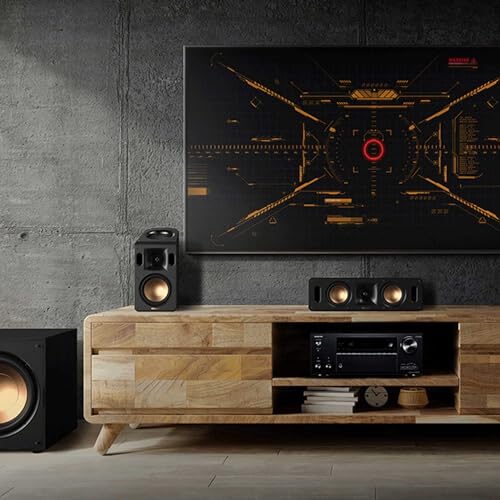

When you're building a home theater system, the AV receiver acts as the brain of your entire setup. It's the component that takes audio and video signals from your streaming devices, game consoles, and Blu-ray players, processes them, and sends the right signals to your speakers and TV. Think of it as a sophisticated traffic controller that also happens to be a powerful amplifier.
The choice between receivers can make or break your home theater experience. Two popular options that represent different approaches to home theater are the Onkyo TX-NR7100 and the JBL MA510. Released in 2021 and 2024 respectively, these receivers show how the market has evolved to serve different types of users – from serious home theater enthusiasts to those who want great sound without the complexity.
Before diving into these specific models, it's worth understanding what separates a basic receiver from a premium one. The most obvious difference is channel count – this refers to how many separate audio channels the receiver can process and amplify simultaneously. A 5.1 system has five main speakers (front left, center, front right, surround left, surround right) plus one subwoofer channel (the .1). More channels mean more speakers and potentially more immersive sound.
Power output, measured in watts per channel, determines how loud your system can go and how well it handles demanding audio passages. However, raw watts don't tell the whole story – the quality of the amplification, the power supply design, and how the receiver manages dynamic peaks matter just as much.
Room correction technology has become increasingly important. Your listening room's shape, size, furniture, and wall materials all affect how sound waves behave. Advanced room correction systems use microphones to measure how your room affects sound, then apply digital filters to compensate for problems like boomy bass or unclear dialogue.
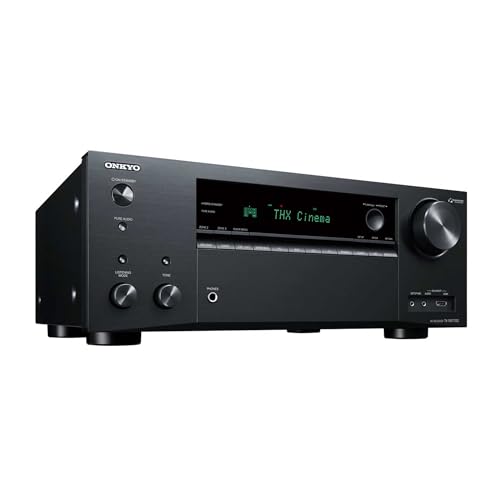
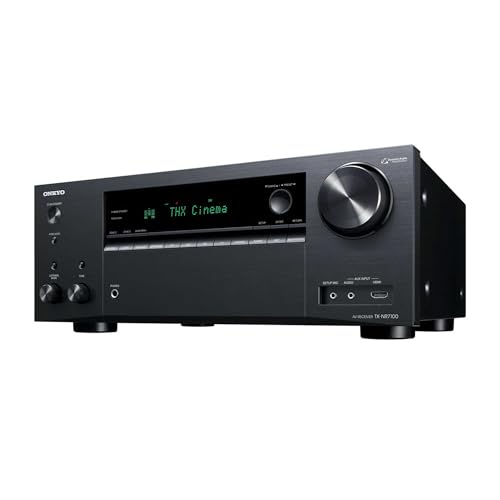
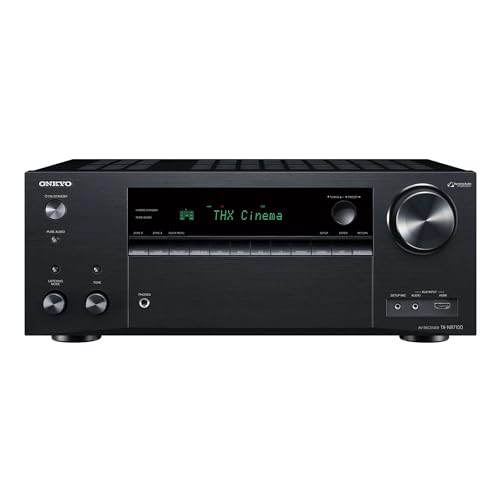
The Onkyo TX-NR7100 represents what happens when a company decides to pack premium features into a receiver that's accessible to serious enthusiasts. This 9.2-channel receiver delivers 100 watts per channel, which provides plenty of headroom for most home theater setups.
What sets the TX-NR7100 apart is its support for Dolby Atmos and DTS:X – advanced audio formats that add height information to create truly three-dimensional soundscapes. Instead of just having sound come from around you, these formats can place audio objects above you, creating the sensation of helicopters flying overhead or rain falling from the sky. The extra channels in the TX-NR7100 make this possible by powering dedicated height speakers or enabling more complex surround configurations like 7.1.2 (seven main channels, one sub, two height channels).
The receiver's Dirac Live room correction system represents a significant technical advancement. Unlike basic room correction that applies simple tone adjustments, Dirac Live analyzes your room's acoustic properties and creates detailed filters that address both frequency response problems and timing issues. The system can take up to 13 measurement positions throughout your listening area to create a comprehensive acoustic map of your room. This level of sophistication typically costs extra on other receivers, but it comes built-in with the Onkyo TX-NR7100.
THX certification adds another layer of performance assurance. THX is a set of standards that ensures audio and video equipment can reproduce movie soundtracks exactly as filmmakers intended. The certification process involves thousands of tests covering everything from distortion levels to dynamic range capabilities.
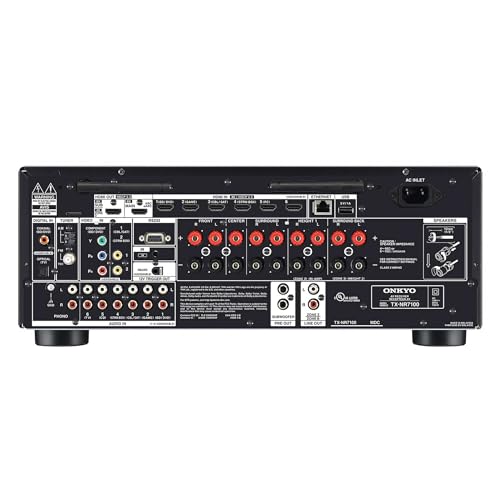
For connectivity, the TX-NR7100 includes seven HDMI 2.1 inputs, which is more than most users need but provides excellent flexibility. HDMI 2.1 supports the latest video formats including 8K at 60 frames per second and 4K at 120 frames per second – crucial for next-generation gaming consoles and high-end streaming content. The receiver also supports variable refresh rate (VRR) and auto low latency mode (ALLM), features that reduce input lag and screen tearing during gaming.
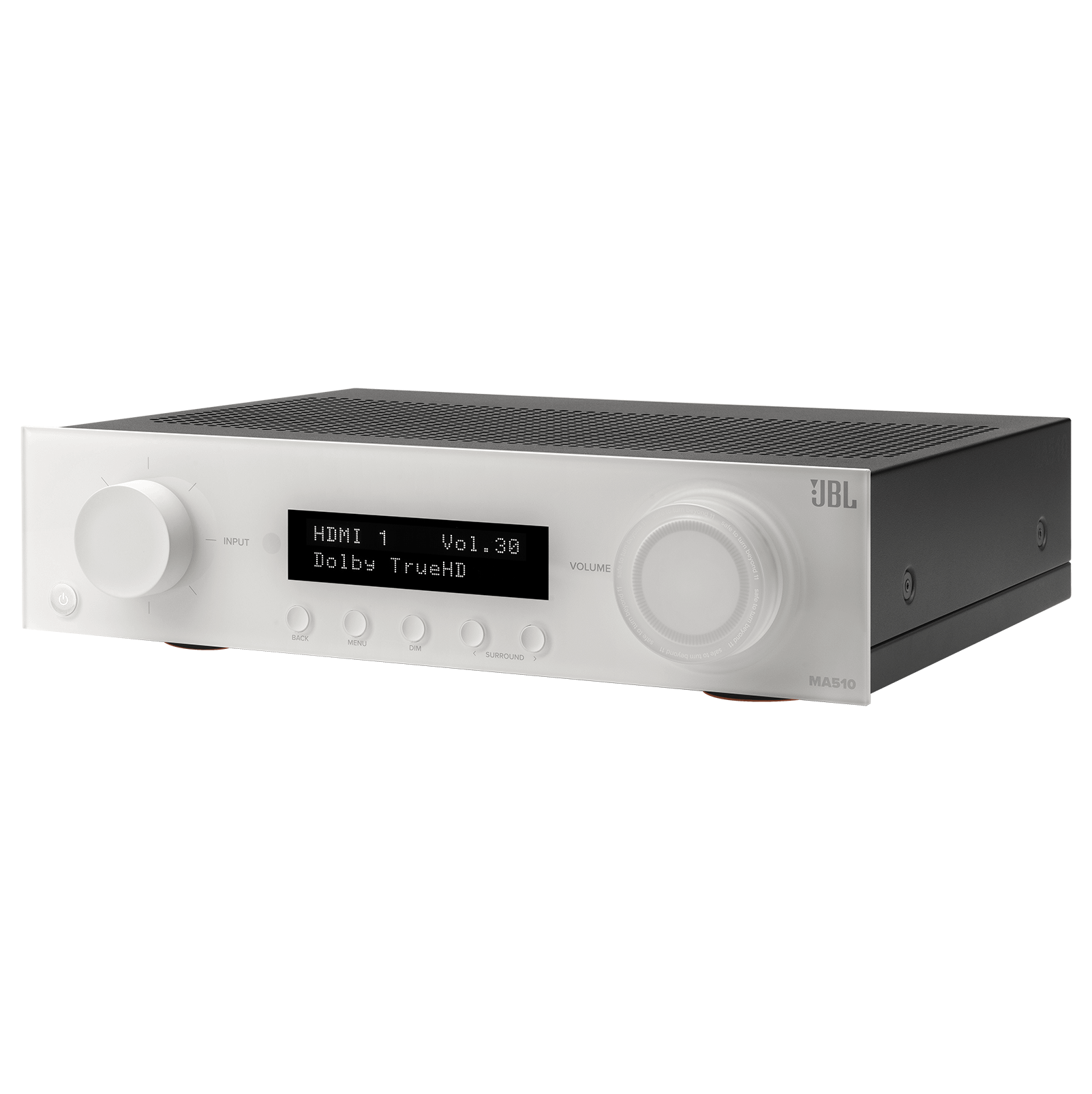
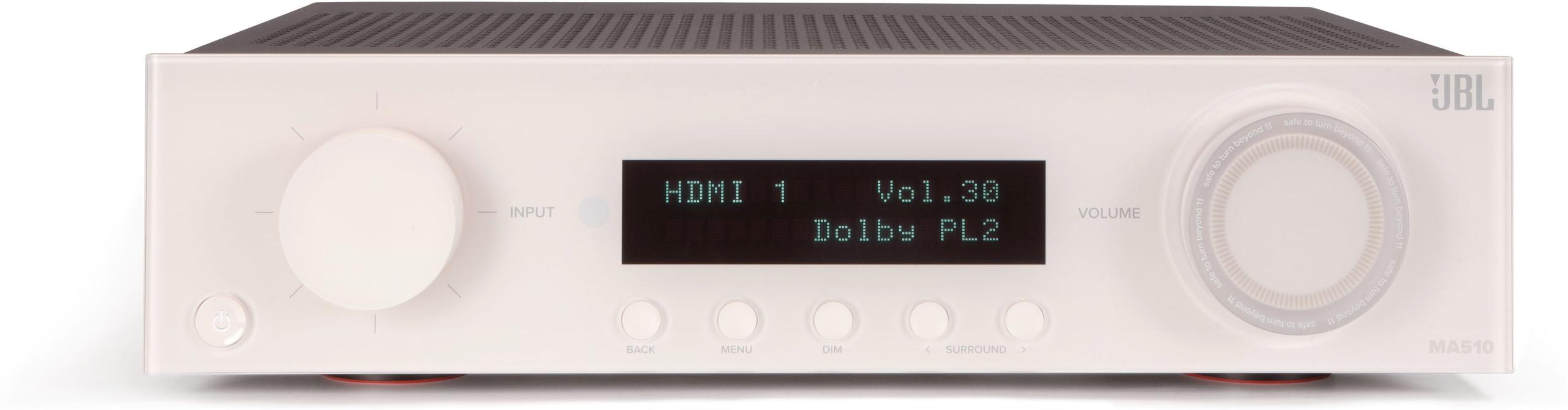
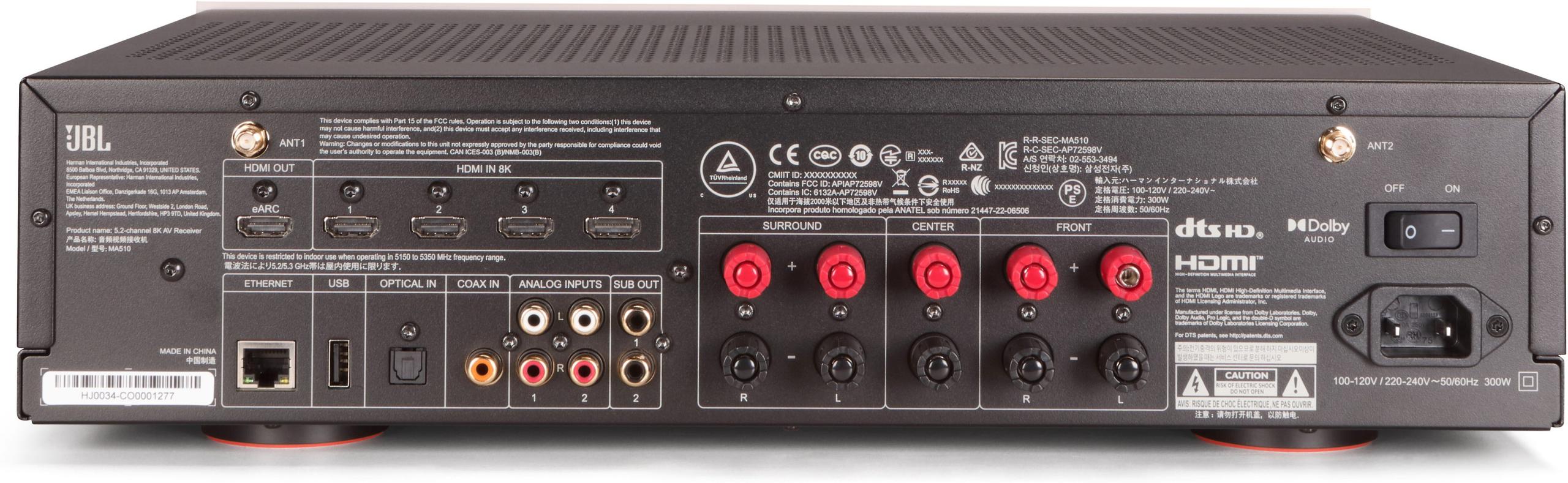
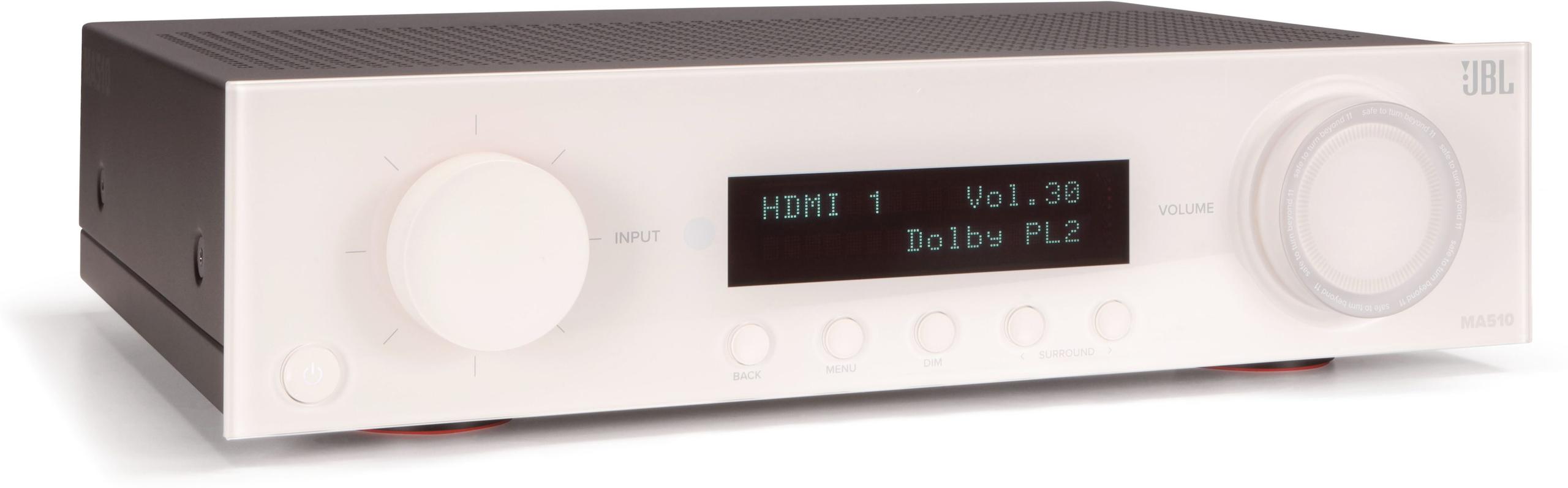
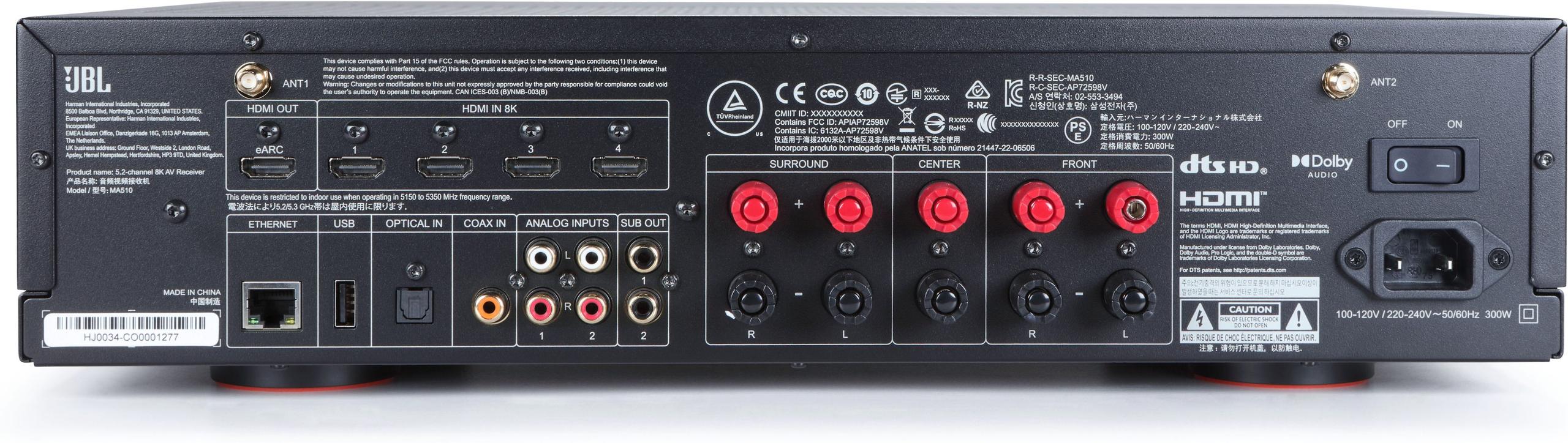
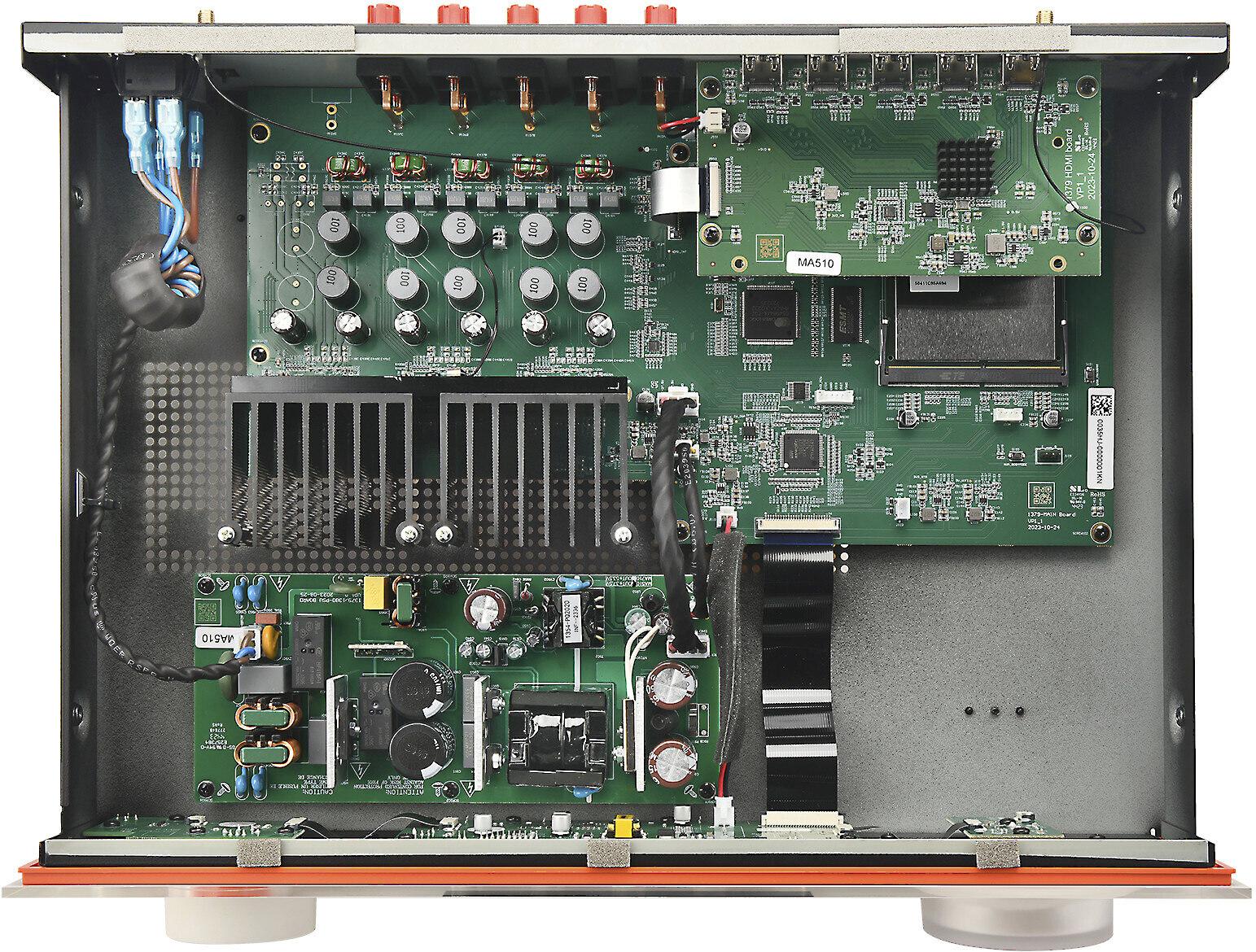
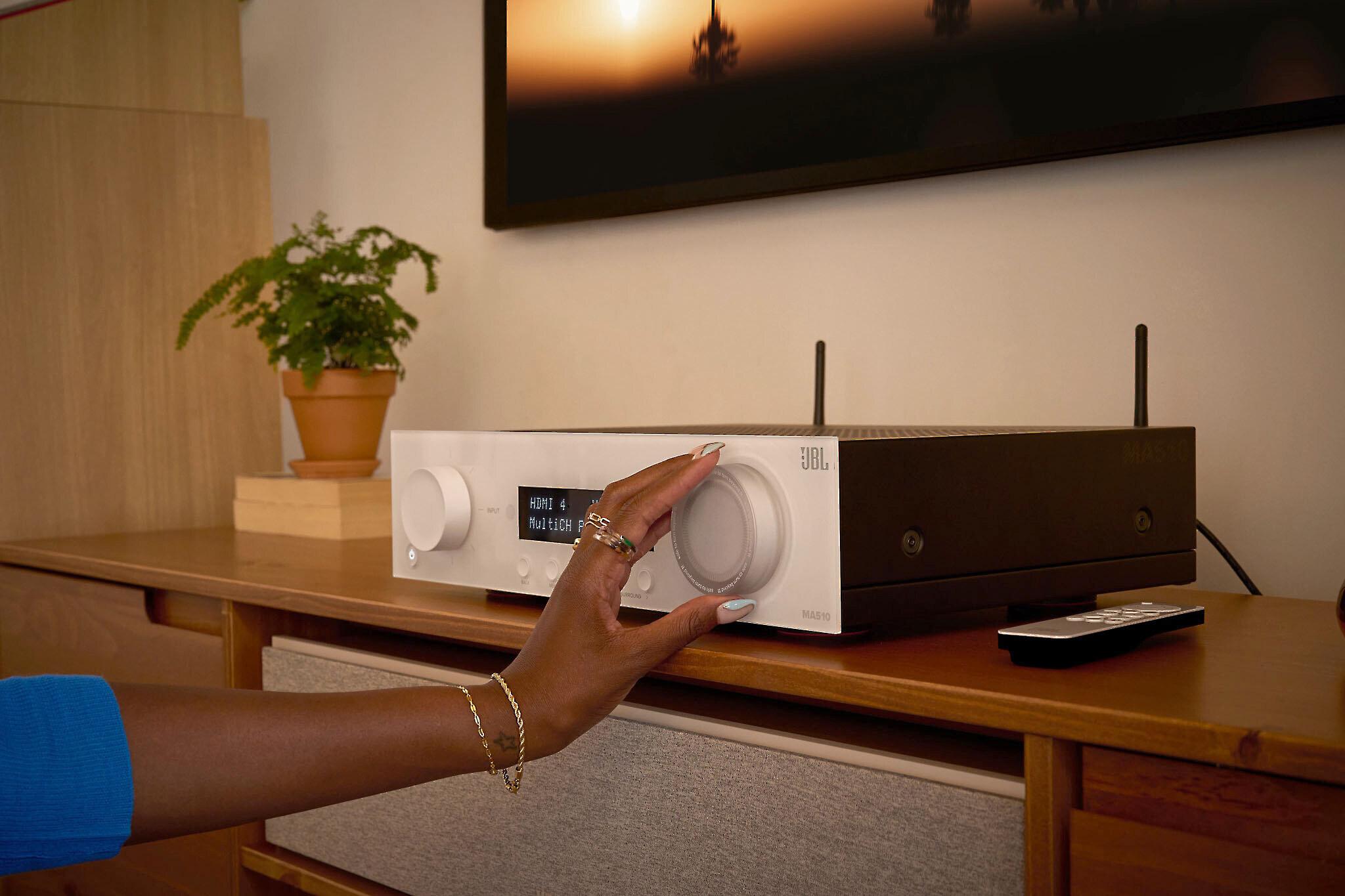
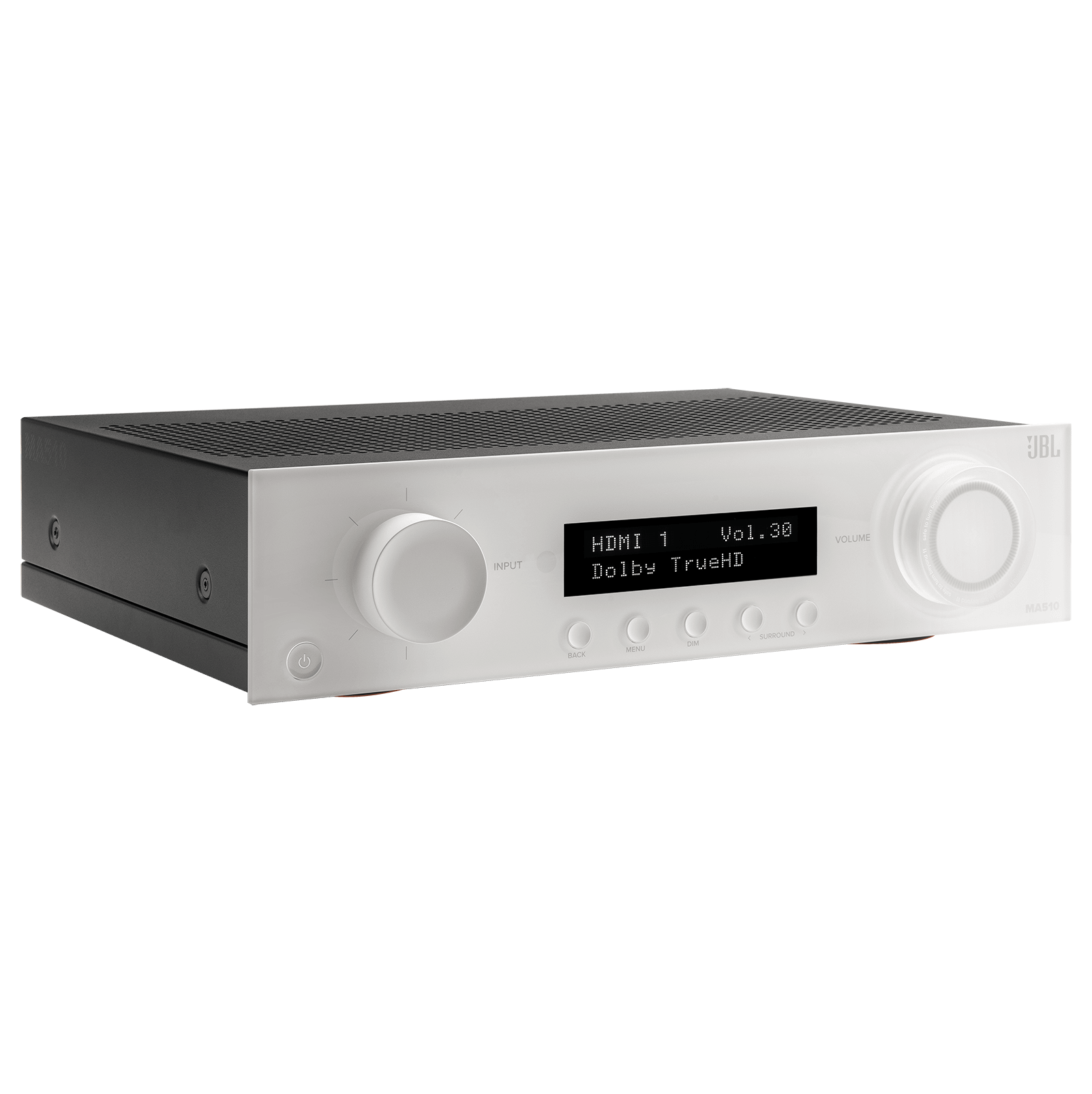
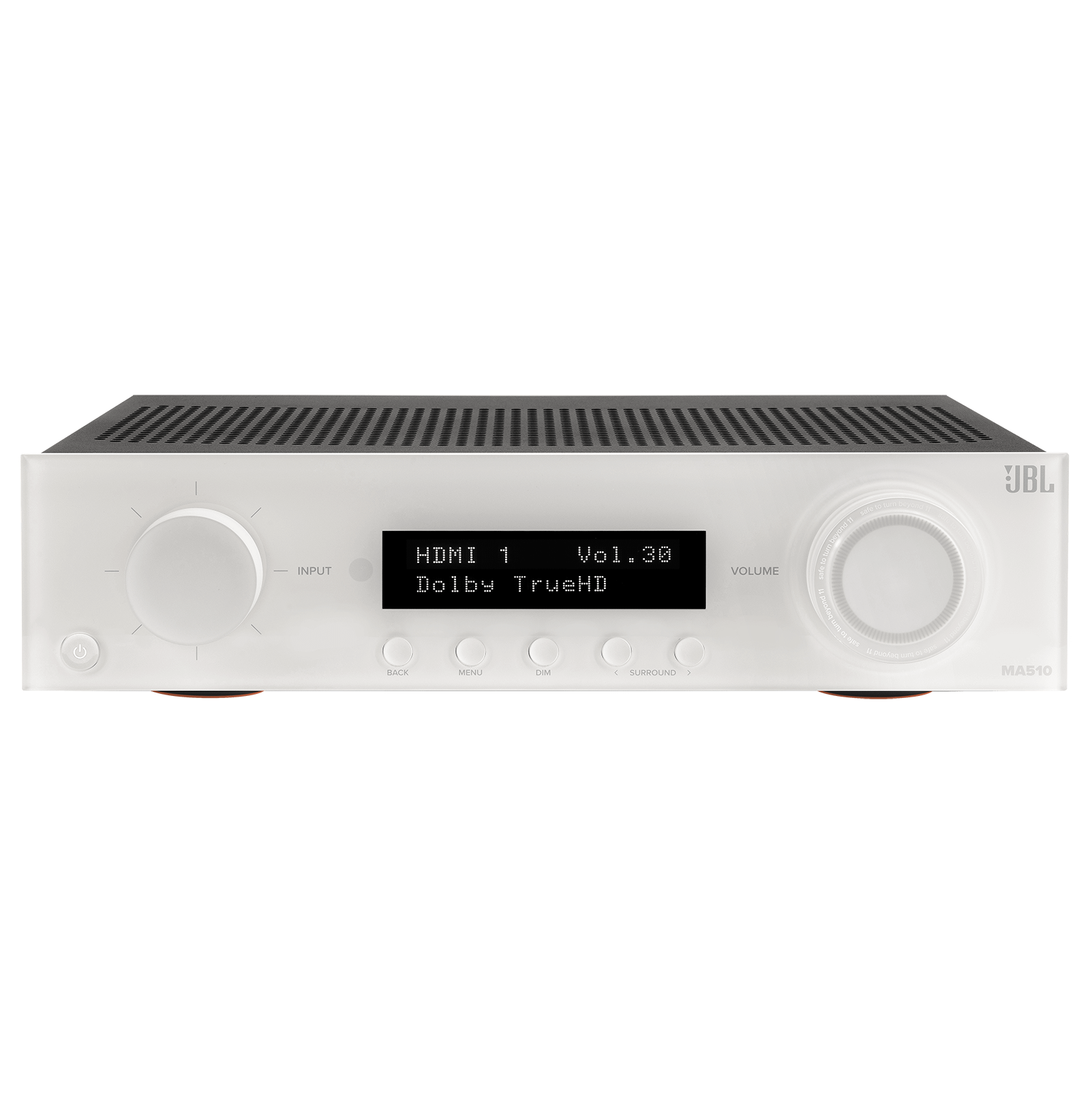
Released more recently in 2024, the JBL MA510 takes a completely different approach. This 5.2-channel receiver focuses on delivering solid performance for traditional home theater setups without the complexity of height channels or advanced processing modes.
The MA510 uses Class D amplification, a more efficient design that generates less heat and consumes less power than traditional amplifier designs. At 75 watts per channel, it provides adequate power for most living room setups, though it's 25 watts less per channel than the Onkyo TX-NR7100. In real-world listening, this power difference is less significant than you might expect – the jump from 75 to 100 watts represents only about a 1.2dB increase in maximum volume.
Where the JBL MA510 shines is in its approach to user experience. The EZ Set EQ room correction system completes its analysis in under two minutes per speaker and provides automated adjustments without requiring detailed technical knowledge. While not as sophisticated as the TX-NR7100's Dirac Live system, it's remarkably effective for its simplicity.
The MA510 includes four HDMI 2.1 inputs, which covers most users' needs for connecting game consoles, streaming devices, and Blu-ray players. It supports the same advanced video features as the Onkyo, including 8K/60Hz and 4K/120Hz passthrough with HDR support.
Based on user reviews and technical analysis, the Onkyo TX-NR7100 demonstrates superior dynamic range and detail retrieval. Its Dynamic Audio Amplification technology, combined with a high-current power supply, provides better control over demanding speakers and complex musical passages. Users consistently report more precise imaging – the ability to pinpoint exactly where sounds are coming from in the soundstage.
The JBL MA510 offers a warmer, more forgiving sound signature that many find appealing for music listening. The Class D amplification provides clean, efficient power delivery, though it lacks the absolute dynamic punch of the Onkyo's traditional amplifier design. For typical movie watching and music listening at moderate volumes, the difference is subtle but noticeable during demanding action sequences or orchestral crescendos.
The performance gap in room correction is significant. Dirac Live on the TX-NR7100 can address complex acoustic problems that simpler systems can't handle. It corrects not just frequency response issues (like boomy bass or harsh treble) but also timing problems that occur when sound waves bounce off walls and arrive at your ears at slightly different times. The result is clearer dialogue, better-defined bass, and improved stereo imaging.
The MA510's EZ Set EQ handles basic room correction tasks effectively, addressing obvious frequency response problems and speaker level matching. However, it can't perform the sophisticated analysis and correction that Dirac Live provides. For most users in typical rooms, the EZ Set EQ provides meaningful improvement over no room correction at all.
Both receivers handle modern video formats capably, but the TX-NR7100 offers more flexibility with seven HDMI inputs versus four on the MA510. This becomes important if you have multiple gaming consoles, streaming devices, and other sources. The Onkyo also provides dual HDMI outputs, enabling you to send different content to different displays – useful for multi-zone installations.
Gaming performance is excellent on both receivers, with full support for the latest console features. The auto low latency mode ensures minimal input lag, while variable refresh rate support eliminates screen tearing during fast-paced games.
The TX-NR7100 provides extensive smart home integration, working with Alexa, Google Assistant, and Sonos systems. The Sonos integration is particularly noteworthy, as it allows the receiver to work seamlessly with existing Sonos installations for whole-house audio. The receiver also supports premium Bluetooth codecs including aptX and aptX HD, which provide better wireless audio quality than standard Bluetooth.
The MA510 covers the basics with AirPlay 2 and Chromecast built-in, plus standard Bluetooth connectivity. The interface is more straightforward, which appeals to users who want functionality without complexity.
At the time of writing, these receivers occupy different price segments, reflecting their different feature sets and target audiences. The TX-NR7100, despite being older, typically commands a premium price due to its advanced features and 9-channel capability. However, the inclusion of Dirac Live room correction – which often costs several hundred dollars as a separate upgrade on other receivers – provides significant added value.
The MA510 positions itself as an entry-level option that doesn't compromise on essential features. The 8K HDMI support and basic room correction provide modern functionality at a more accessible price point. For users who don't need Dolby Atmos or complex multi-zone capabilities, it represents excellent value.
You're building a dedicated home theater room where immersive audio is a priority. The ability to add height speakers for Dolby Atmos creates a dramatically more engaging movie experience, particularly with content specifically mixed for these formats. Recent blockbuster movies and high-end streaming content increasingly take advantage of object-based audio to create more realistic soundscapes.
The advanced room correction becomes crucial in challenging acoustic environments. Rooms with hard surfaces, irregular shapes, or open floor plans benefit significantly from Dirac Live's sophisticated analysis and correction capabilities. The investment in better room correction often provides more noticeable improvement than upgrading speakers.
Multi-zone capability suits larger homes where you want music in different rooms controlled from a central system. The TX-NR7100 can power speakers in multiple zones while maintaining full home theater capability in the main room.
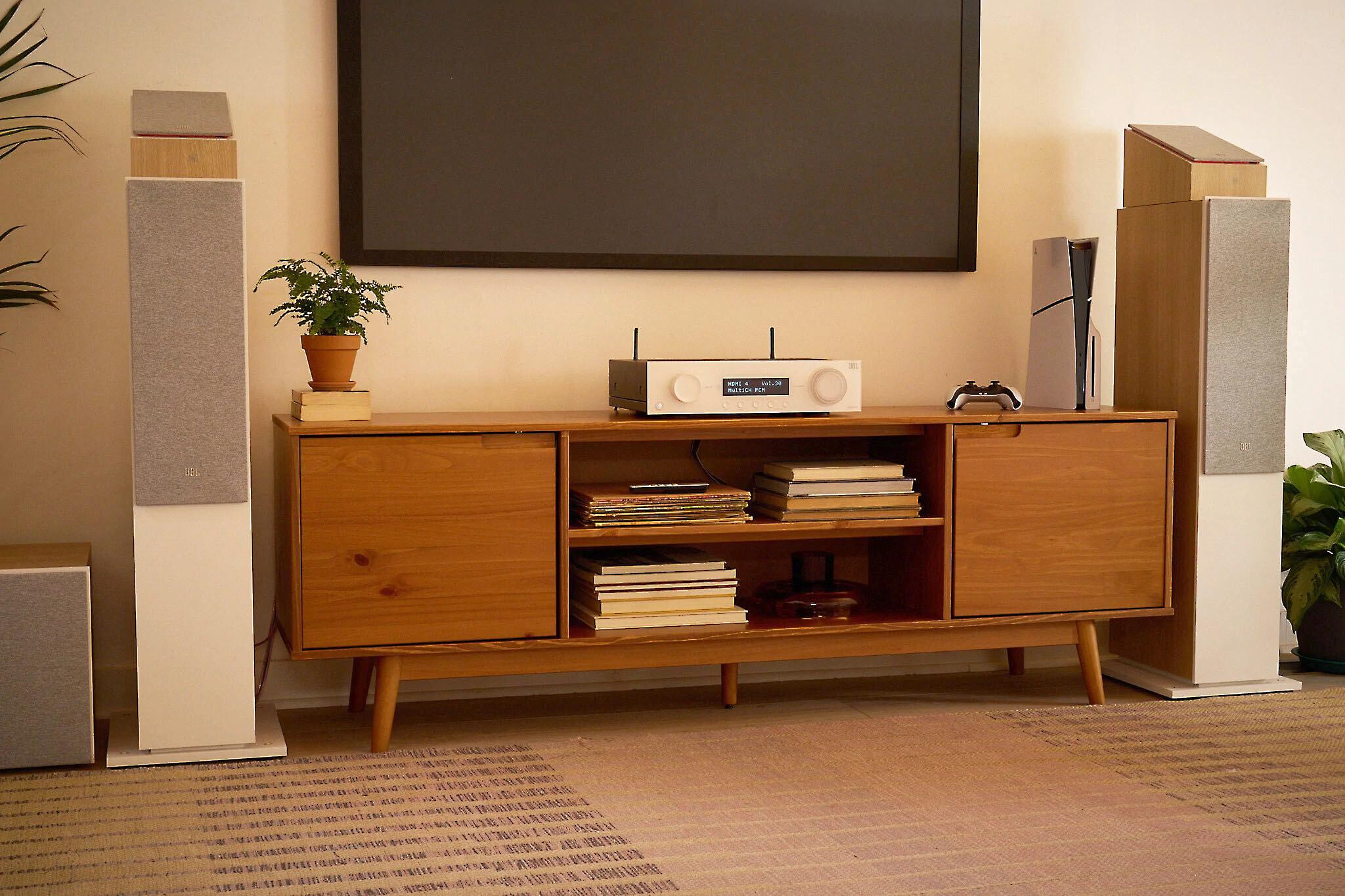
Living room installations where simplicity and aesthetics matter as much as performance. The streamlined setup process and fewer connection requirements make it ideal for integrated entertainment systems where the receiver needs to blend into existing furniture and décor.
Music-focused listening benefits from the MA510's warmer sound signature and efficient operation. Users who split their listening between movies and music often prefer the more forgiving character for extended listening sessions.
Apartment or smaller home installations where traditional 5.1 surround provides adequate immersion without the complexity of height channels. The MA510 delivers excellent traditional surround sound performance without overwhelming users with options they won't use.
The three-year gap between these receivers' releases reflects rapid advancement in AV receiver technology. The TX-NR7100's 2021 release came during the early adoption of HDMI 2.1 and 8K support, when these features were cutting-edge. The MA510's 2024 release shows how these advanced video features have become standard even in entry-level products.
Room correction technology has also evolved significantly. The built-in Dirac Live in the TX-NR7100 represented a major advancement when released, bringing professional-grade room correction to consumer receivers. The MA510's EZ Set EQ, while simpler, reflects improvements in automated calibration that make room correction more accessible to non-technical users.
Looking forward, both receivers should remain relevant for several years. The 8K and gaming features provide future-proofing for upcoming content and gaming developments. However, the TX-NR7100's additional channels and upgrade flexibility make it more adaptable to changing needs over time.
The decision between these receivers ultimately depends on your priorities and intended use. The Onkyo TX-NR7100 rewards users who want the most immersive possible home theater experience and are willing to invest time in setup and calibration. Its additional capabilities justify the premium pricing for users who will utilize the advanced features.
The JBL MA510 serves users who want modern AV receiver functionality without complexity. It handles the fundamentals exceptionally well and provides a more straightforward path to great home theater sound.
Consider the TX-NR7100 if you're building a system you plan to expand over time, value the most advanced room correction available, or want the flexibility of additional channels for future upgrades. Choose the MA510 if you want excellent performance with simple operation, prefer the efficiency of Class D amplification, or are building a system focused on traditional surround sound formats.
Both receivers represent solid engineering and good value in their respective categories. The choice comes down to whether you prioritize ultimate capability and flexibility or simplicity and focused performance.
| Onkyo TX-NR7100 | JBL MA510 |
|---|---|
| Channel Configuration - Determines speaker layout possibilities and immersive audio capability | |
| 9.2 channels (enables Dolby Atmos with height speakers) | 5.2 channels (traditional surround sound only) |
| Power Output - Affects volume levels and speaker control | |
| 100W per channel (8 ohms, high-current amplification) | 75W per channel (Class D, efficient operation) |
| Dolby Atmos Support - Essential for modern immersive movie audio | |
| Full Dolby Atmos and DTS:X with height channels | No Atmos support (traditional surround only) |
| Room Correction - Critical for optimizing sound in your specific space | |
| Dirac Live (professional-grade with 13 measurement positions) | EZ Set EQ (basic automated correction) |
| HDMI Inputs - Determines how many sources you can connect | |
| 7 HDMI 2.1 inputs (excellent for multiple gaming consoles) | 4 HDMI 2.1 inputs (adequate for most users) |
| THX Certification - Ensures reference-quality movie reproduction | |
| THX Certified Select (cinema-grade performance standards) | Not THX certified |
| 8K Video Support - Future-proofing for next-gen content | |
| 8K/60Hz, 4K/120Hz with 40Gbps bandwidth | 8K/60Hz, 4K/120Hz with standard HDMI 2.1 |
| Smart Home Integration - Connectivity with voice assistants and streaming | |
| Extensive (Alexa, Google, Sonos, AirPlay 2, aptX Bluetooth) | Basic (AirPlay 2, Chromecast, standard Bluetooth) |
| Multi-Zone Capability - Audio in different rooms simultaneously | |
| 3 zones with independent source control | Limited multi-room features |
| Release Year - Indicates technology generation and current relevance | |
| 2021 (mature HDMI 2.1 implementation) | 2024 (latest simplified approach) |
| Best For - Primary use case recommendation | |
| Dedicated home theaters wanting maximum immersion | Living rooms prioritizing simplicity and music |
The Onkyo TX-NR7100 offers 9.2 channels compared to the JBL MA510's 5.2 channels. This means the Onkyo TX-NR7100 can power more speakers for immersive Dolby Atmos setups with height speakers, while the JBL MA510 is limited to traditional 5.1 surround sound configurations.
No, the JBL MA510 does not support Dolby Atmos or DTS:X. Only the Onkyo TX-NR7100 supports these modern immersive audio formats that create 3D soundscapes with overhead effects for movies and games.
The Onkyo TX-NR7100 delivers 100 watts per channel compared to 75 watts per channel from the JBL MA510. While both provide adequate power for most home theaters, the Onkyo TX-NR7100 offers better dynamic range and can drive demanding speakers more effectively.
The Onkyo TX-NR7100 provides 7 HDMI inputs while the JBL MA510 offers 4 HDMI inputs. Both support HDMI 2.1 with 8K video, but the Onkyo TX-NR7100 allows more devices to be connected simultaneously without switching cables.
The Onkyo TX-NR7100 features professional-grade Dirac Live room correction that can take up to 13 measurement positions for precise acoustic optimization. The JBL MA510 uses simpler EZ Set EQ that completes calibration quickly but with less sophisticated analysis.
Yes, both the Onkyo TX-NR7100 and JBL MA510 support gaming features like Variable Refresh Rate (VRR), Auto Low Latency Mode (ALLM), and 4K/120Hz passthrough. However, the Onkyo TX-NR7100 offers more HDMI inputs for multiple gaming consoles.
The JBL MA510 is significantly easier to set up with its streamlined interface and quick EZ Set EQ calibration. The Onkyo TX-NR7100 offers more features but requires more time and technical knowledge to fully optimize its capabilities.
Yes, both the Onkyo TX-NR7100 and JBL MA510 support 8K/60Hz and 4K/120Hz video passthrough with HDR formats including Dolby Vision and HDR10+. Both are future-ready for next-generation content and gaming.
The JBL MA510 offers a warmer sound signature that many prefer for music, while the Onkyo TX-NR7100 provides more precise detail and imaging. Both handle music well, but the JBL MA510 may be more forgiving for extended listening sessions.
The Onkyo TX-NR7100 allows significant expansion from basic 5.1 to complex Dolby Atmos configurations up to 5.1.4 or 7.1.2 layouts. The JBL MA510 is permanently limited to 5.2 channels with no upgrade path for height speakers.
The Onkyo TX-NR7100 provides extensive smart home integration including Alexa, Google Assistant, Sonos compatibility, and premium Bluetooth codecs. The JBL MA510 covers basics with AirPlay 2 and Chromecast but has fewer advanced connectivity options.
For dedicated home theaters, choose the Onkyo TX-NR7100 for its Dolby Atmos support, professional room correction, and expansion flexibility. The JBL MA510 works better for living room setups where simplicity and integration with existing furniture are priorities over maximum immersion.
We've done our best to create useful and informative comparisons to help you decide what product to buy. Our research uses advanced automated methods to create this comparison and perfection is not possible - please contact us for corrections or questions. These are the sites we've researched in the creation of this article: crutchfield.com - prohifi.in - bestbuy.com - h-m-entertainment.com - audiosciencereview.com - crutchfield.ca - soundandvision.com - avsforum.com - avgadgets.com - youtube.com - onkyo.com - crutchfield.com - onkyo.com - accessories4less.com - klipsch.com - youtube.com - listenup.com - intl.onkyo-av.com - bestbuy.com - 420spotshop.com - support.onkyousa.com - trustedreviews.com - av-connection.com - skybygramophone.com - bestbuy.com - safeandsoundhq.com - jbl.com - bestbuy.com - audioadvice.com - musicdirect.com - sweetwater.com - crutchfield.com

Privacy Policy
Terms and Conditions - Affiliate Policy
Home Security
© Copyright 2008-2026.
11816 Inwood Rd #1211, Dallas, TX 75244