

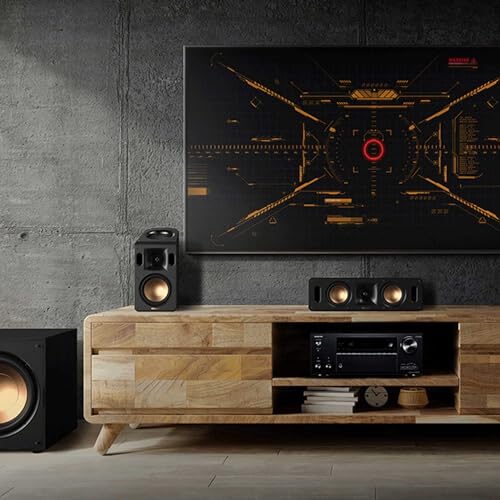
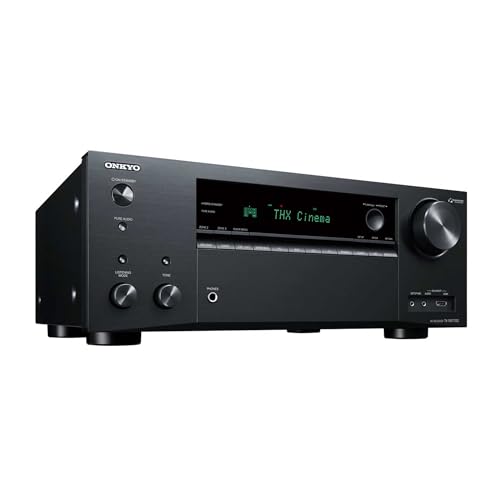
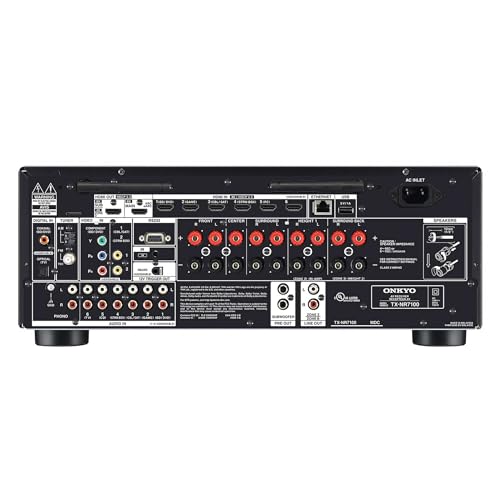
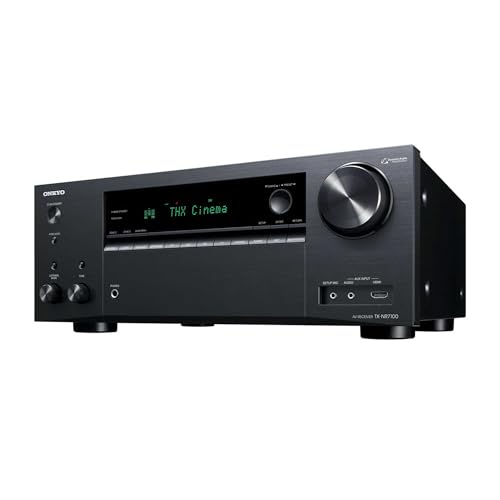
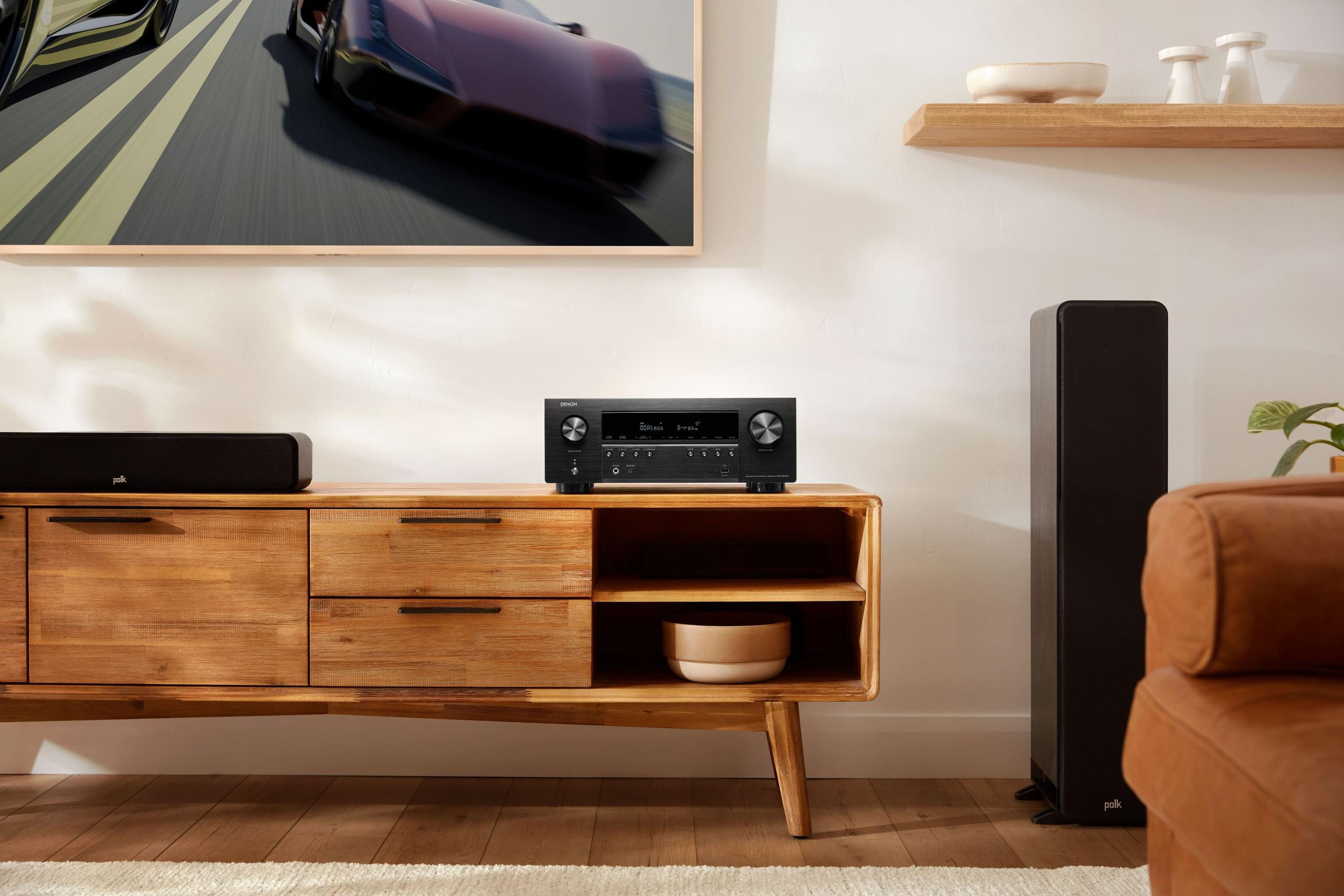
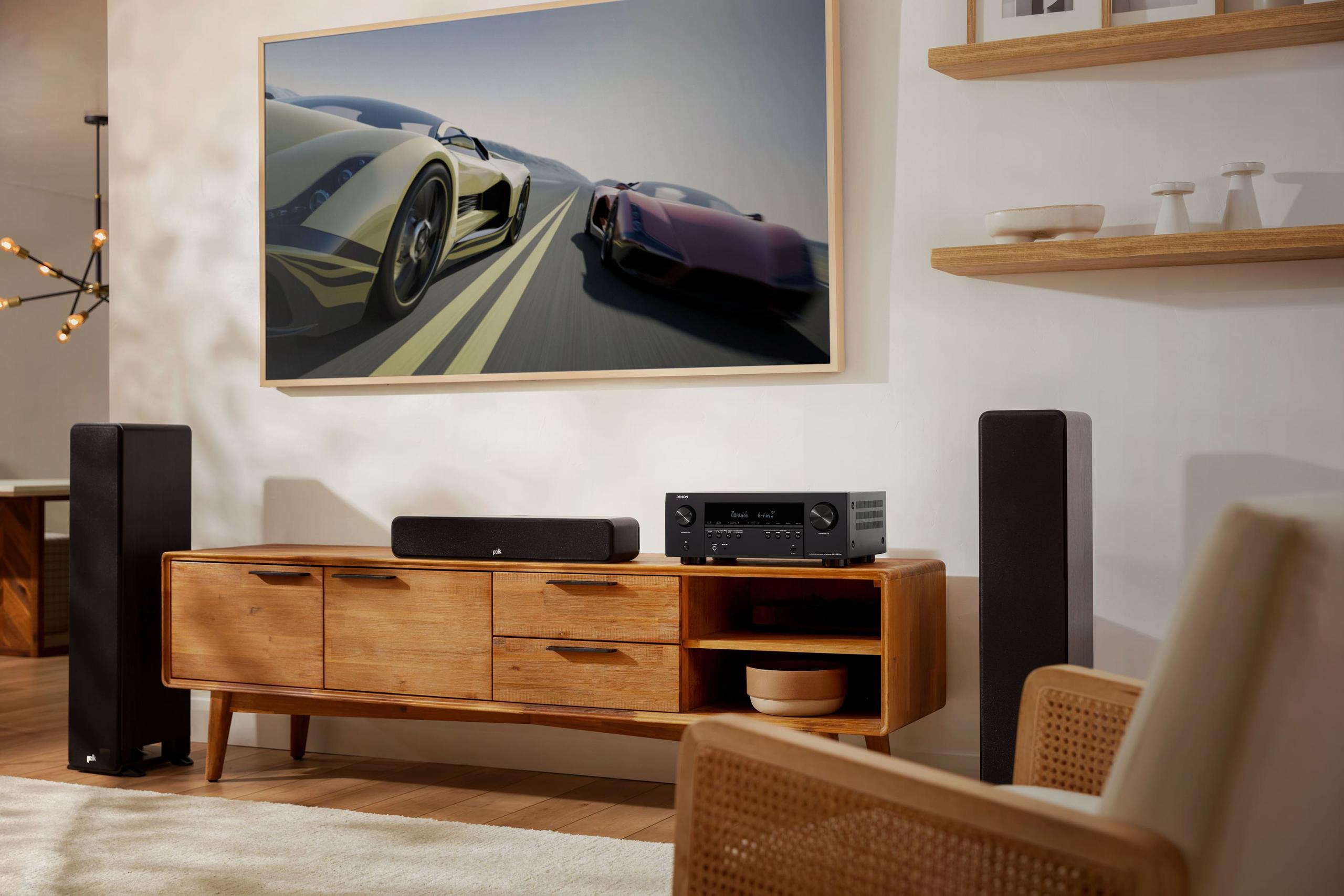
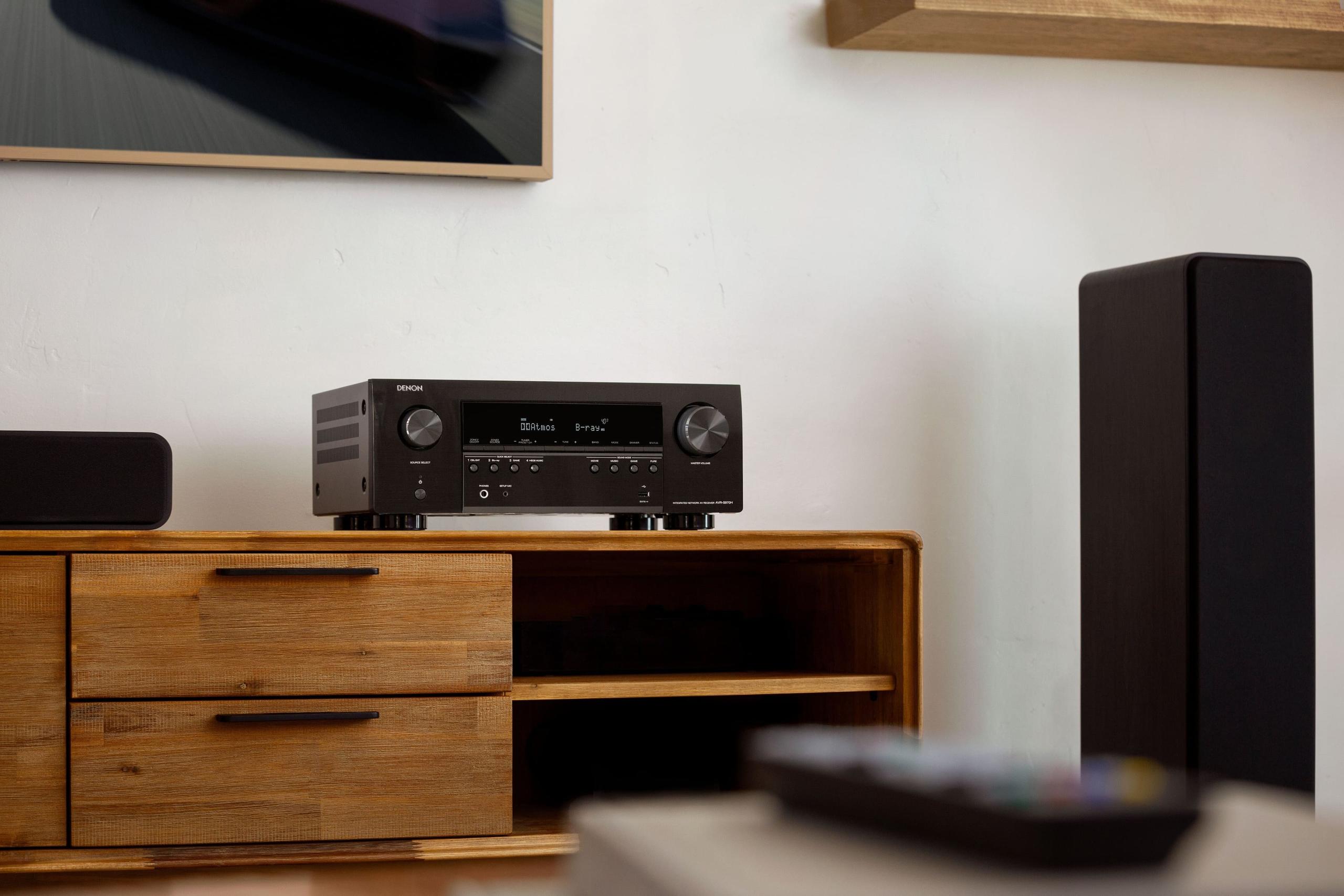
When you're building or upgrading a home theater system, the AV receiver sits at the heart of everything. It's the central hub that processes your audio, switches between video sources, amplifies sound to your speakers, and increasingly handles streaming duties too. Getting this choice right matters tremendously because you'll likely live with it for years to come.
The choice between the Onkyo TX-NR7100 and Denon AVR-S970H represents a classic dilemma in home theater: do you go for maximum specifications and flexibility, or prioritize reliability and value? At the time of writing, these receivers sit in different price tiers, with the Onkyo commanding roughly double the cost of the Denon. But as our research revealed, higher price doesn't always mean better real-world performance.
Before diving into specifics, let's establish what really matters when choosing an AV receiver. The most crucial considerations are channel configuration (how many speakers you can connect), power output (how loud and dynamic your system can get), video processing capabilities, audio processing quality, connectivity options, and long-term reliability.
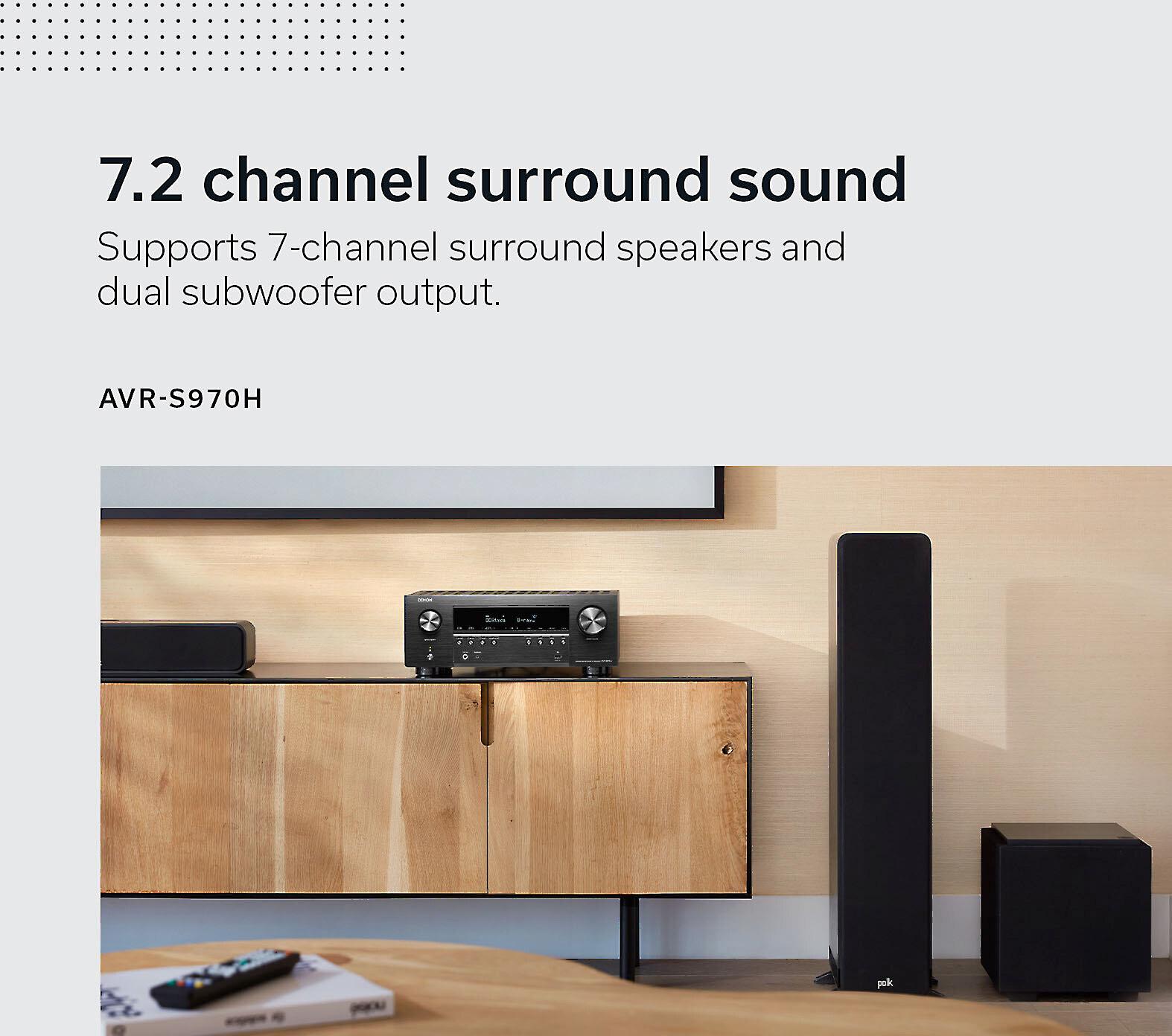
Channel configuration determines your speaker layout flexibility. A 7.2-channel receiver can handle seven main speakers plus two subwoofers, while a 9.2-channel unit adds two more speakers for more complex surround sound setups. Power output, measured in watts per channel, affects how well your receiver can drive different speakers and fill your room with sound.
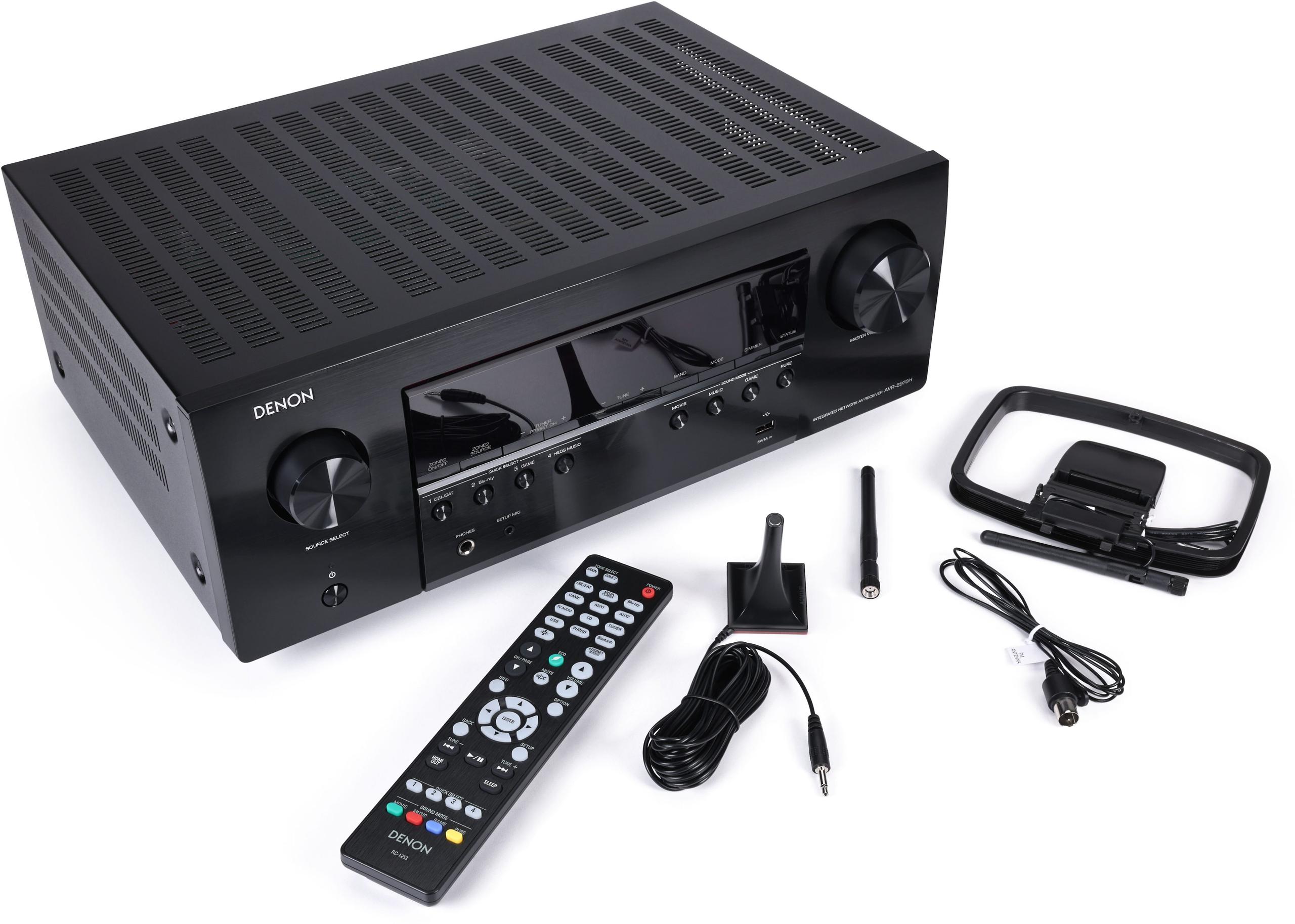
Room correction technology has become increasingly important too. This feature uses microphones to measure your room's acoustics and automatically adjusts the sound to compensate for problems like echoes or bass buildup in corners. It's like having an audio engineer tune your system professionally.
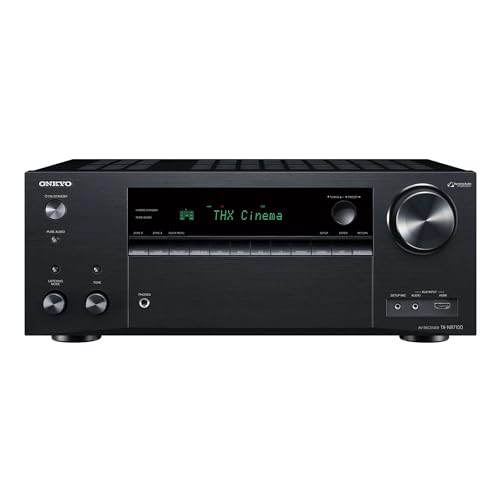
The Onkyo TX-NR7100 launched in 2021 as a feature-packed flagship targeting serious home theater enthusiasts. It boasts 9.2 channels, 100 watts per channel, and premium certifications like THX Select and IMAX Enhanced. Onkyo positioned it as a no-compromise solution for complex surround sound setups.
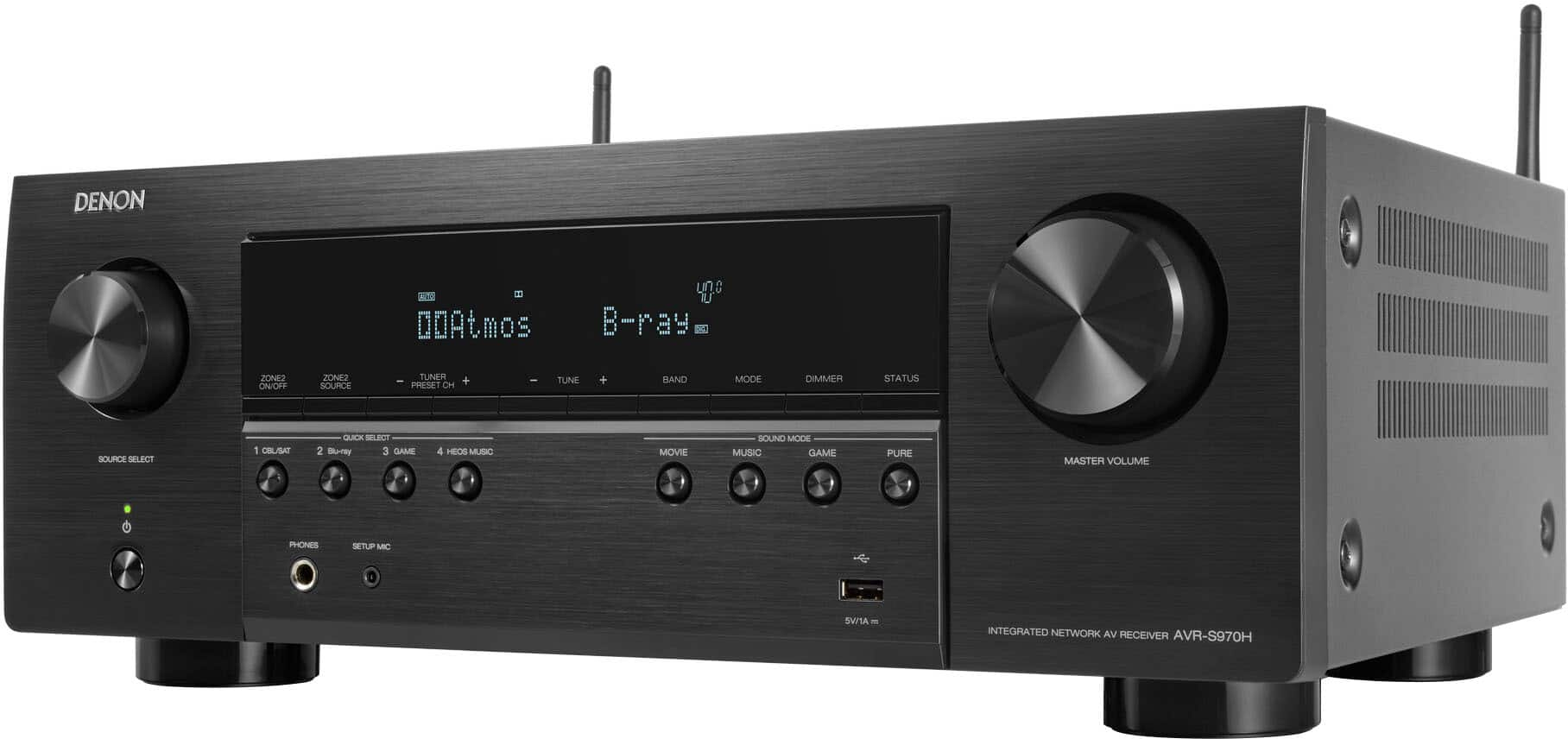
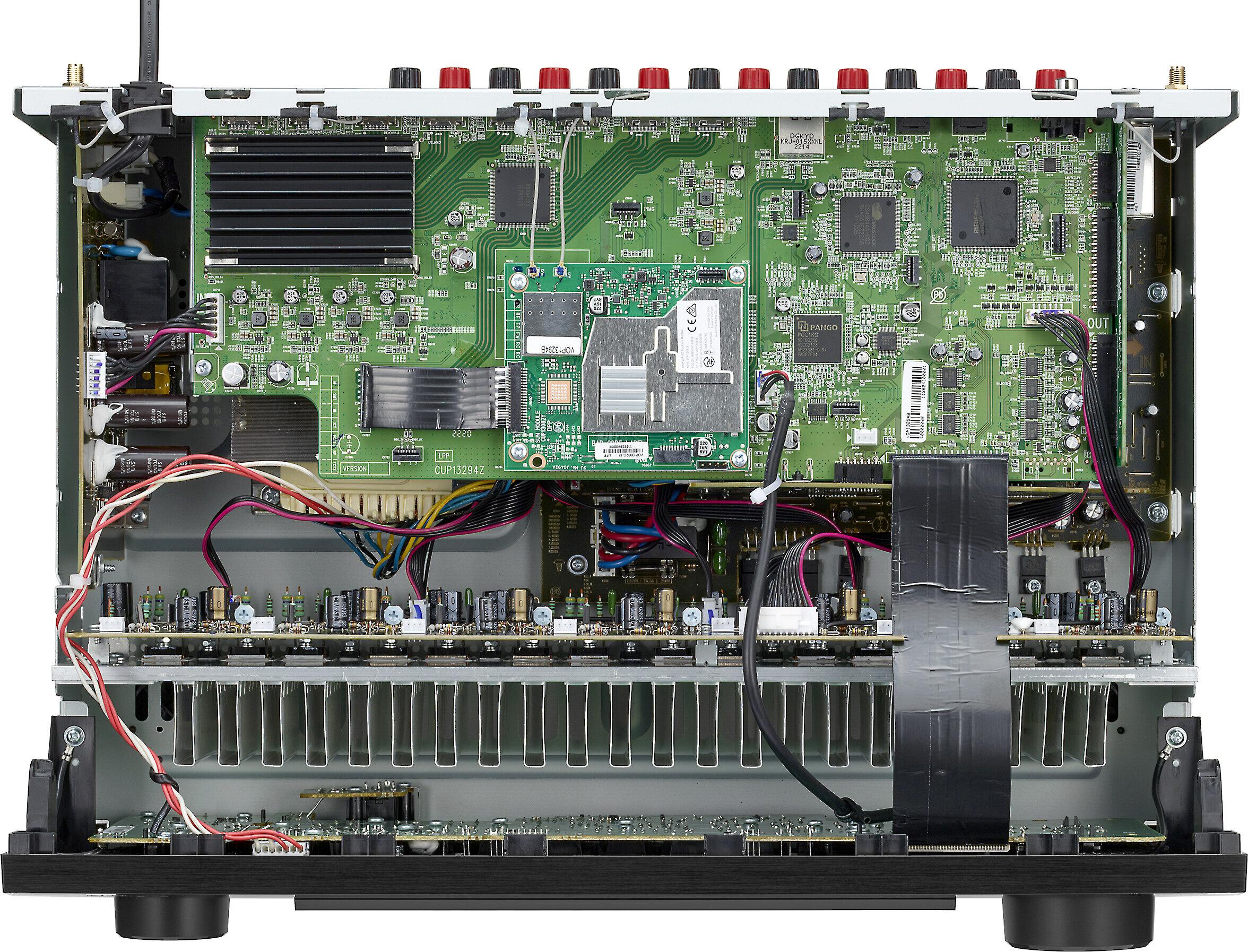
The Denon AVR-S970H arrived in 2022 with a different philosophy entirely. Rather than chasing maximum channel counts, Denon focused on delivering solid 7.2-channel performance with excellent reliability and user-friendly features at a more accessible price point. This timing difference matters because the Denon benefits from slightly newer HDMI processing chips and refined firmware based on lessons learned from earlier models.
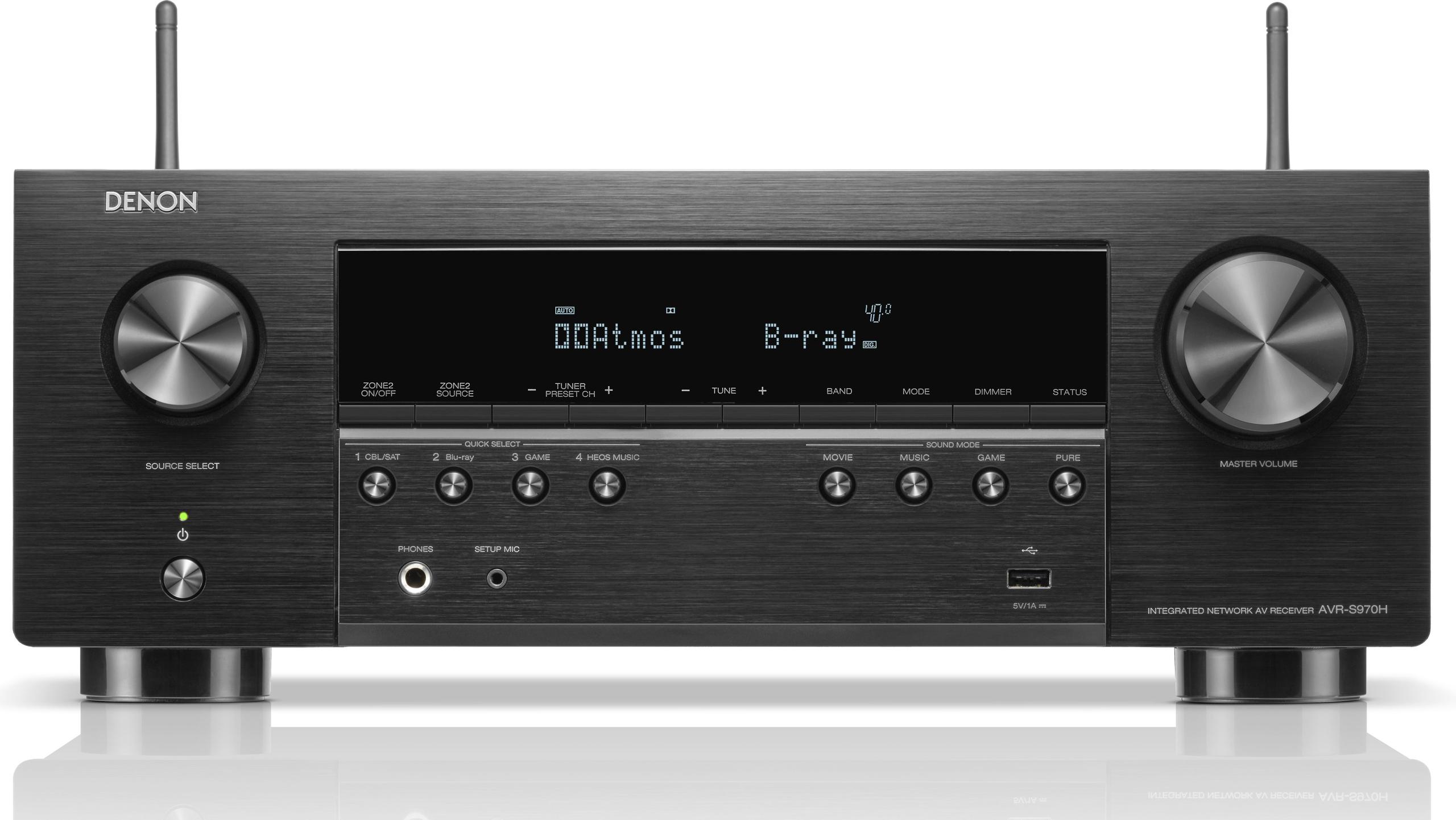
The most obvious difference between these receivers is channel configuration. The Onkyo TX-NR7100 offers 9.2 channels versus the Denon AVR-S970H's 7.2 channels. This might seem like a clear advantage for the Onkyo, but the reality is more nuanced.
Those extra two channels primarily benefit complex Dolby Atmos installations. Dolby Atmos creates three-dimensional sound by adding height speakers above your listening position. With 9 channels, you could theoretically run a 5.1.4 setup (five main speakers, one subwoofer, four height speakers) or a 7.1.2 configuration (seven main speakers, one subwoofer, two height speakers).
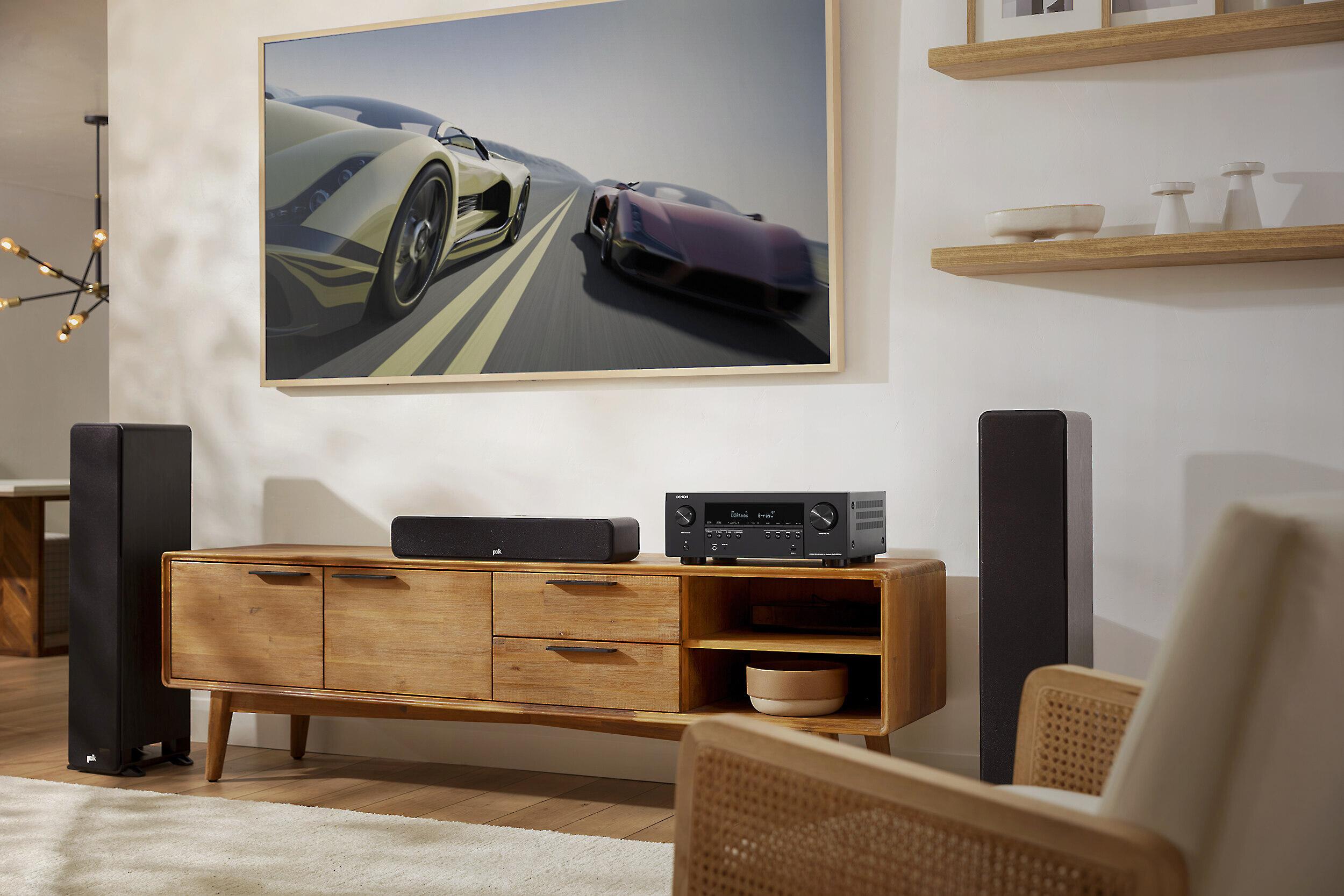
However, most living rooms work perfectly fine with 7.2-channel configurations. A typical 5.1.2 Atmos setup (five main speakers, one subwoofer, two height speakers) delivers excellent immersion without the complexity and cost of additional speakers and wiring. Unless you're building a dedicated theater room with a large seating area, the Denon's channel count proves sufficient for most scenarios.
The flexibility advantage of the Onkyo becomes more relevant if you're planning a complex multi-zone setup, where different rooms play different audio sources simultaneously. Those extra channels can be reassigned to power speakers in a second zone, though this reduces your main room's capabilities.
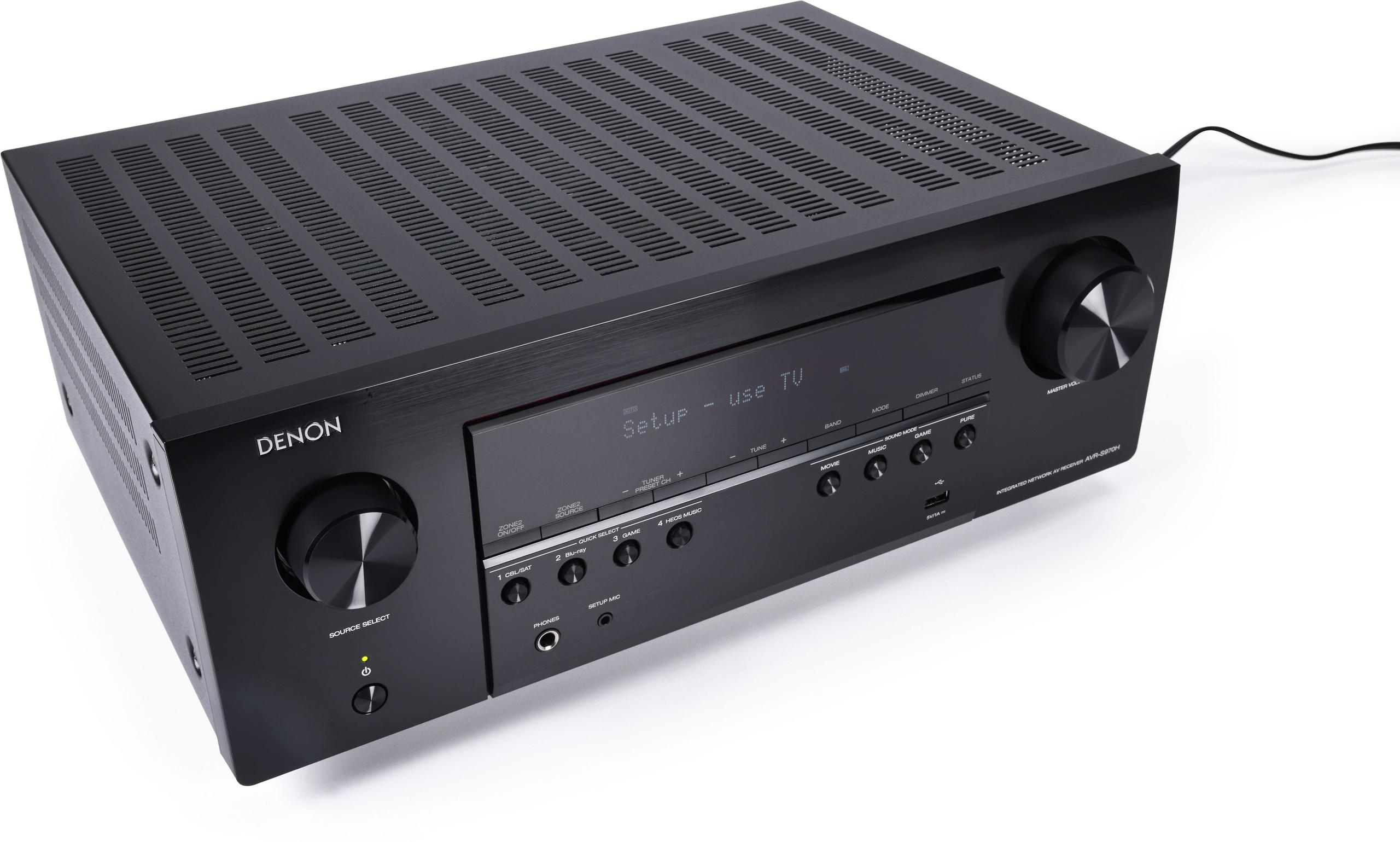
On paper, the Onkyo TX-NR7100 delivers 100 watts per channel compared to the Denon AVR-S970H's 90 watts per channel. This 10-watt difference is essentially meaningless in practice – you'd need to double the power to achieve a noticeable volume increase.
However, our research uncovered a critical reliability issue with the Onkyo that completely changes this equation. According to detailed technical analysis from Audio Science Review, the receiver has an undocumented "limp mode" that permanently reduces power output to just 15% of rated capacity if the unit ever clips (distorts) during use. Worse yet, there's no indication this mode is active, and it can only be reset by unplugging the AC power cord – not by using the power button.
This represents a fundamental design flaw that could leave users experiencing dramatically reduced performance without realizing why. Imagine thinking you have 100 watts per channel available, but actually getting only 15 watts because of a brief moment of distortion that happened weeks ago. The Denon, by contrast, shows no evidence of similar power limiting issues in our research.
Both receivers support modern immersive audio formats like Dolby Atmos and DTS:X, which create three-dimensional soundscapes by precisely placing sounds around and above your listening position. However, they differ significantly in their room correction approaches.
The Onkyo TX-NR7100 uses AccuEQ room correction, which provides decent automatic calibration but requires more manual tweaking to achieve optimal results. It also features a higher-resolution 384 kHz/32-bit DAC (digital-to-analog converter) compared to the Denon's 192 kHz/32-bit DAC. In theory, this should provide better audio quality, but real-world listening tests suggest the difference is minimal.
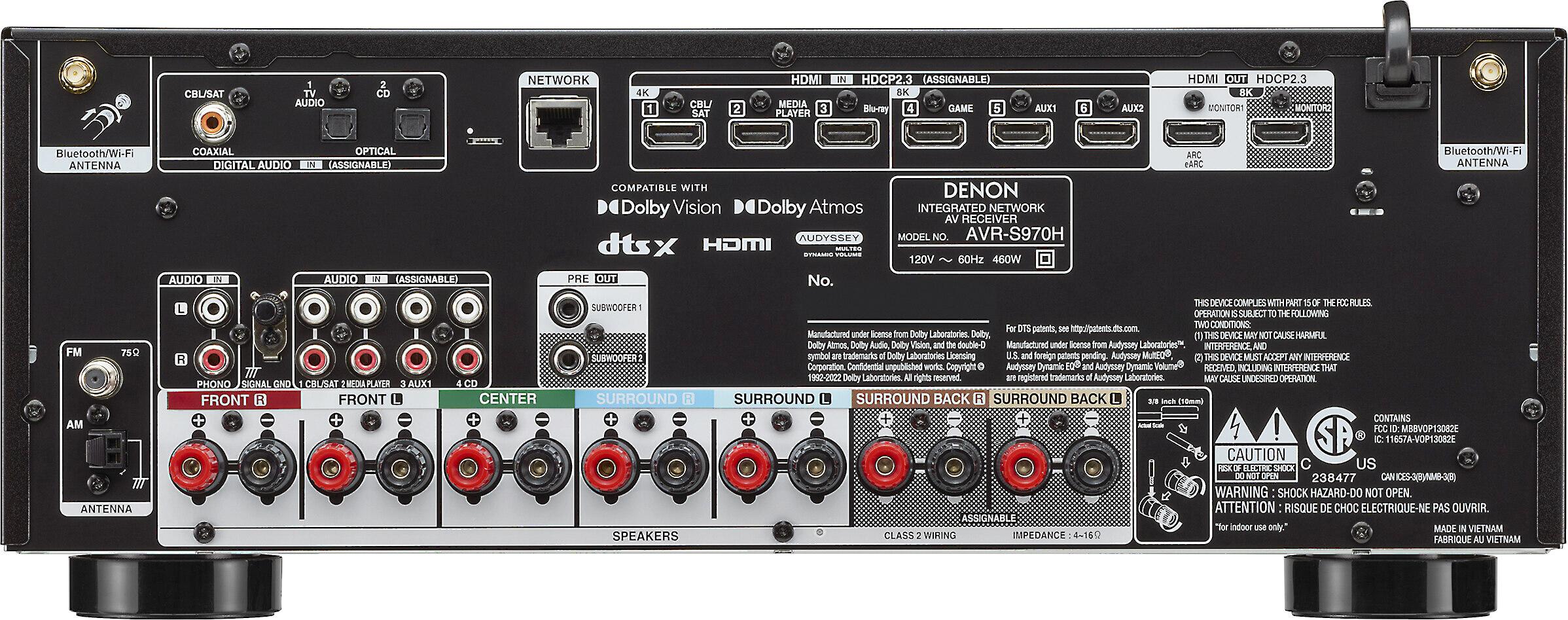
The Denon AVR-S970H employs Audyssey MultEQ room correction, which has earned a strong reputation for ease of use and effective results. Audyssey tends to produce more immediately satisfying sound with less user intervention. The system also includes Dynamic Volume and Dynamic EQ features that automatically adjust sound levels and frequency response based on your volume setting – useful for late-night movie watching when you need to keep things quieter.
From a pure audio quality standpoint, both receivers perform well, but the Denon's more refined room correction gives it a practical advantage for most users.
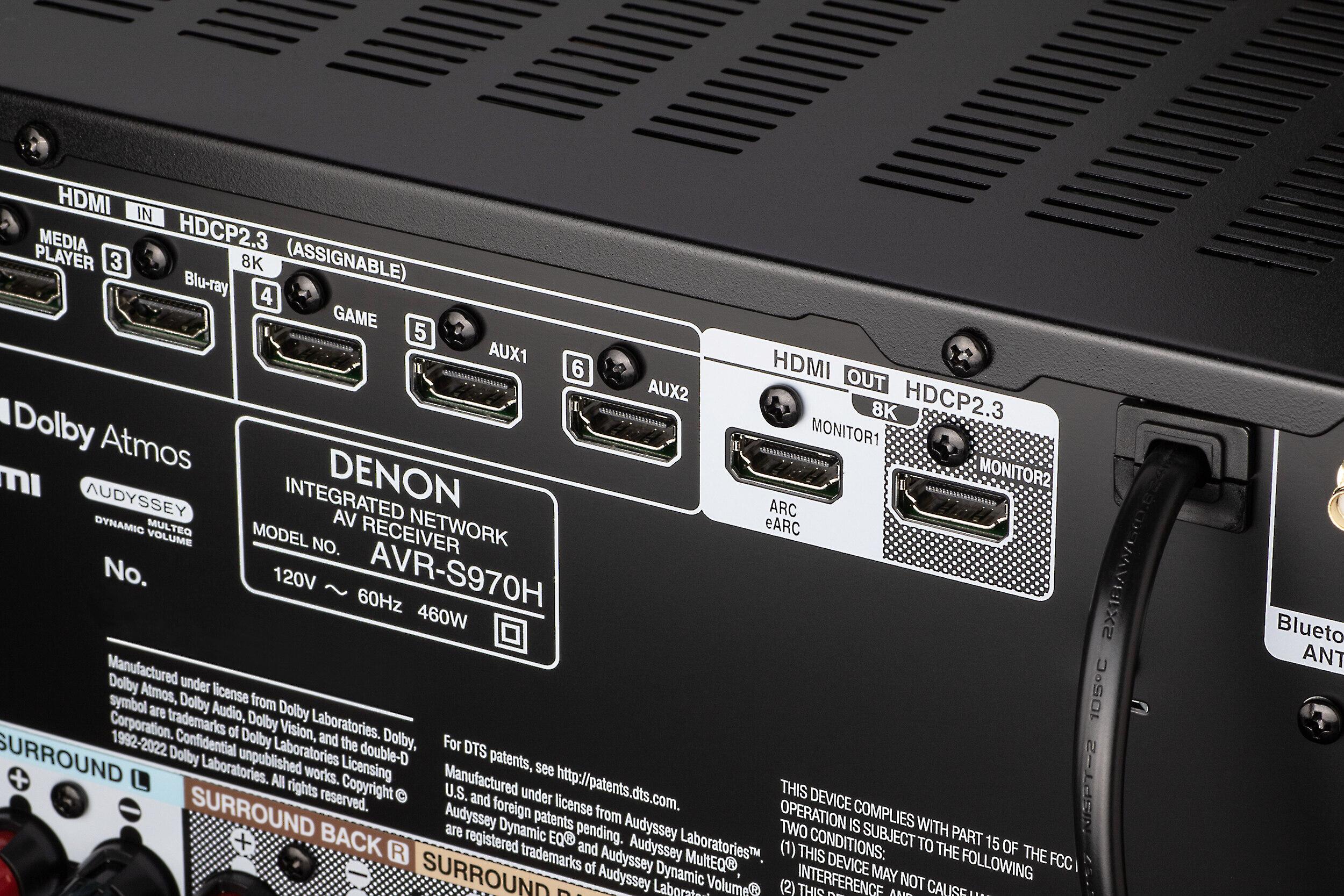
Both receivers handle modern video standards excellently, supporting 8K/60Hz and 4K/120Hz pass-through with all current HDR formats including HDR10+, Dolby Vision, and HLG (Hybrid Log-Gamma). They also support gaming-focused features like Variable Refresh Rate (VRR) and Auto Low Latency Mode (ALLM), which reduce input lag and screen tearing for console gaming.
The Onkyo TX-NR7100 provides seven HDMI inputs compared to the Denon's six, which could matter if you have many source devices. However, the Denon offers a unique advantage with its analog-to-HDMI video conversion capability. This means you can connect older gaming consoles or VCRs through composite video inputs and output the signal through HDMI to your TV – a genuinely useful feature for retro gaming or legacy device integration.
Regarding 8K video, both receivers are technically ready, but 8K content remains extremely limited as of this writing. Most users will primarily benefit from the improved 4K/120Hz support for gaming and future-proofing rather than actual 8K content consumption.
Modern AV receivers have evolved into streaming hubs, and both models excel here. They support all major streaming services including Spotify, Amazon Music, TIDAL, and others through built-in Wi-Fi and Bluetooth connectivity. Both also work with voice assistants like Amazon Alexa and Google Assistant for hands-free control.
The Onkyo TX-NR7100 uses FlareConnect for multi-room audio, while the Denon AVR-S970H employs HEOS Built-in technology. Based on user feedback we've researched, HEOS tends to be more reliable and user-friendly for multi-room applications, with a more intuitive smartphone app interface.
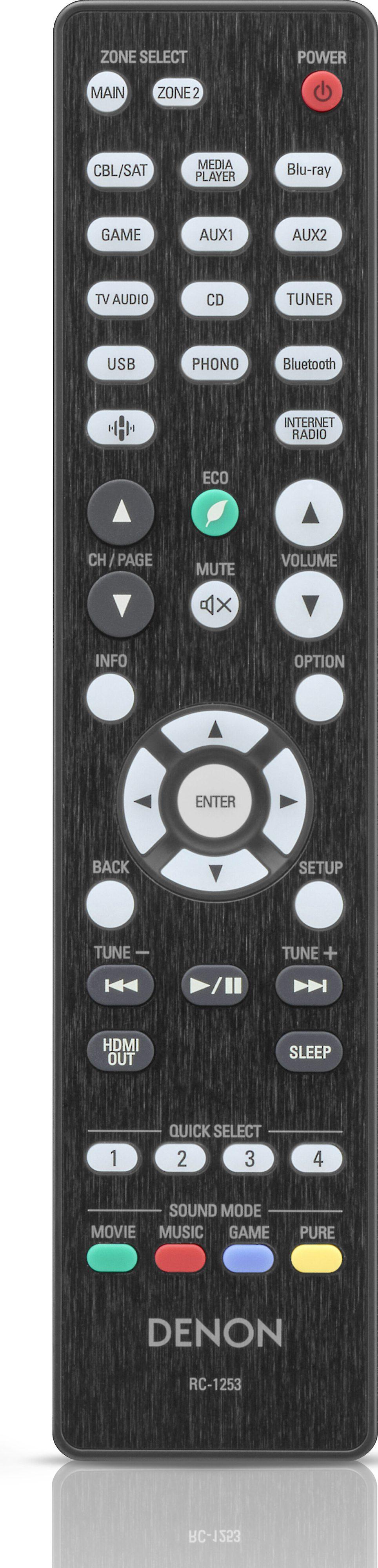
For custom installation, the Onkyo includes features like RS-232 control ports, IR inputs/outputs, and 12V trigger outputs that professional installers often require. The Denon focuses more on plug-and-play simplicity, which better serves typical homeowners.
Our research into user experiences reveals a clear pattern. Denon AVR-S970H owners consistently report reliable, satisfying performance with straightforward setup processes. The Audyssey room correction typically produces good results without extensive tweaking, and the receiver maintains consistent performance over time.
Onkyo TX-NR7100 experiences are more mixed. While some users praise its extensive features and specification numbers, others report frustrating reliability issues, including the power limiting problem mentioned earlier. The setup process is also more complex, requiring more technical knowledge to achieve optimal results.
From a home theater perspective, both receivers create engaging surround sound experiences when properly configured. However, the Denon's more reliable performance and easier setup make it more likely that average users will actually achieve that optimal configuration.
At the time of writing, the price difference between these receivers is substantial, with the Onkyo TX-NR7100 costing roughly double the Denon AVR-S970H's price. This immediately raises questions about value.
The Onkyo offers more channels, slightly higher power specifications, and additional features like IMAX Enhanced certification. However, the reliability concerns significantly undermine its value proposition. What good are extra features if the fundamental amplification function can randomly degrade without warning?
The Denon represents exceptional value by focusing on what most users actually need: reliable 7.2-channel performance, excellent room correction, comprehensive connectivity, and user-friendly operation. For the majority of home theater applications, it delivers equivalent real-world performance at significantly lower cost.
Choose the Onkyo TX-NR7100 only if you specifically need 9+ channels for a complex installation and understand the power limiting risk. This might apply if you're building a dedicated theater room with a large seating area requiring multiple height speakers, or if you need the additional channels for multi-zone audio distribution. The custom installation features also make it suitable for professional installations where those specific control interfaces are required.
The Denon AVR-S970H makes more sense for the vast majority of users. It's ideal for medium to large living rooms, first-time AV receiver buyers, anyone prioritizing reliability over maximum specifications, and users with mixed legacy and modern source devices. The excellent room correction and user-friendly interface make it particularly suitable for those who want great sound without extensive tweaking.
Despite the Onkyo TX-NR7100's impressive specification sheet, the documented reliability issues make it difficult to recommend for most users. The fundamental problem of unpredictable power limiting undermines the entire value proposition, regardless of additional features.
The Denon AVR-S970H emerges as the clear winner for typical home theater applications. It delivers reliable performance, excellent value, and sufficient capabilities for most users' needs. The money saved versus the Onkyo could be better spent on higher-quality speakers or acoustic treatments that would provide more noticeable performance improvements.
In the AV receiver market, reliability and consistent performance matter more than peak specifications. The Denon AVR-S970H understands this principle and delivers accordingly, making it our recommendation for most home theater enthusiasts seeking a solid foundation for their audio system.
| Onkyo TX-NR7100 | Denon AVR-S970H |
|---|---|
| Channel Configuration - Determines speaker layout flexibility and Atmos capabilities | |
| 9.2 channels (supports complex 5.1.4 or 7.1.2 Atmos setups) | 7.2 channels (handles most home theaters with 5.1.2 Atmos) |
| Power Output - Affects volume and speaker compatibility | |
| 100W per channel (but suffers from undocumented power limiting issue) | 90W per channel (consistent, reliable power delivery) |
| Reliability Concerns - Critical for long-term ownership | |
| Has "limp mode" bug that reduces power to 15% after clipping | No documented power limiting issues |
| Room Correction - Essential for optimizing sound in your space | |
| AccuEQ (requires more manual tweaking) | Audyssey MultEQ with Dynamic Volume/EQ (easier setup) |
| HDMI Connectivity - Important for source device connections | |
| 7 HDMI inputs, 2 outputs (more inputs for multiple devices) | 6 HDMI inputs, 2 outputs (sufficient for most setups) |
| Video Processing - Affects picture quality and gaming performance | |
| 8K/60Hz, 4K/120Hz, upscaling from 1080p/4K to 8K | 8K/60Hz, 4K/120Hz, analog-to-HDMI conversion |
| Audio Certifications - Premium format support | |
| THX Select, IMAX Enhanced, Dolby Atmos, DTS:X | Dolby Atmos, DTS:X (no premium certifications) |
| Digital-to-Analog Conversion - Affects audio fidelity | |
| 384kHz/32-bit DAC (higher spec but marginal real-world benefit) | 192kHz/32-bit DAC (excellent quality for the price) |
| Multi-Room Audio - For whole-home audio systems | |
| FlareConnect technology | HEOS Built-in (more user-friendly and reliable) |
| Custom Installation Features - For professional setups | |
| RS-232, IR inputs/outputs, 12V triggers included | Basic connectivity, focuses on simplicity |
| Legacy Device Support - For older equipment integration | |
| Component/composite inputs (but poor integration) | Analog-to-HDMI conversion (actually useful) |
| Overall Value Proposition - Performance per dollar spent | |
| High-spec but reliability issues undermine value | Excellent reliability and features at reasonable price |
The Denon AVR-S970H is better for most home theaters due to its reliable performance, easier setup, and excellent room correction. While the Onkyo TX-NR7100 has more channels, it suffers from documented reliability issues that can reduce power output without warning. For typical living room setups, the Denon's 7.2 channels provide sufficient flexibility for impressive Dolby Atmos experiences.
The Onkyo TX-NR7100 offers 9.2 channels versus the Denon AVR-S970H's 7.2 channels. This means the Onkyo can power two additional speakers, enabling more complex Dolby Atmos configurations like 5.1.4 or 7.1.2 setups. However, most home theaters work excellently with 7.2-channel configurations, making the Denon's setup adequate for most users while being simpler to configure.
On paper, the Onkyo TX-NR7100 delivers 100 watts per channel compared to the Denon AVR-S970H's 90 watts. However, the Onkyo has a critical "limp mode" issue that can permanently reduce power to just 15% after any clipping event. This makes the Denon more reliable for consistent power delivery despite slightly lower specifications.
Yes, both the Onkyo TX-NR7100 and Denon AVR-S970H support 8K/60Hz and 4K/120Hz video pass-through with gaming features like Variable Refresh Rate (VRR) and Auto Low Latency Mode (ALLM). The Onkyo offers seven HDMI inputs versus six on the Denon, but both provide excellent compatibility with modern gaming consoles and streaming devices.
The Denon AVR-S970H is significantly easier for beginners to set up. It features Audyssey MultEQ room correction that typically produces good results with minimal tweaking, while the Onkyo TX-NR7100 requires more technical knowledge and manual adjustments. The Denon's simpler interface and more intuitive smartphone app make it more user-friendly for first-time AV receiver buyers.
The Onkyo TX-NR7100 uses AccuEQ room correction, which provides decent automatic calibration but often requires manual fine-tuning. The Denon AVR-S970H employs Audyssey MultEQ with additional Dynamic Volume and Dynamic EQ features. Based on user feedback, the Denon's Audyssey system tends to be more effective and user-friendly out of the box.
The Denon AVR-S970H offers significantly better value for money. Despite having fewer channels than the Onkyo TX-NR7100, it delivers reliable performance at roughly half the price. The money saved could be better invested in higher-quality speakers or acoustic treatments that would provide more noticeable improvements to your home theater experience.
Both the Onkyo TX-NR7100 and Denon AVR-S970H support Dolby Atmos and DTS:X immersive audio formats. The Onkyo can handle more complex Atmos configurations due to its additional channels, while the Denon works excellently for typical 5.1.2 Atmos setups that satisfy most home theater requirements without added complexity.
Both receivers offer similar streaming capabilities with built-in Wi-Fi, Bluetooth, and support for major services like Spotify, Amazon Music, and TIDAL. However, the Denon AVR-S970H uses HEOS Built-in technology for multi-room audio, which tends to be more reliable and user-friendly than the Onkyo TX-NR7100's FlareConnect system based on user experiences.
Yes, the Onkyo TX-NR7100 has a documented reliability issue where it can enter an undocumented "limp mode" that reduces power output to 15% if the unit ever clips during use. This mode provides no user indication and can only be reset by unplugging the power cord. The Denon AVR-S970H shows no evidence of similar issues and maintains consistent performance over time.
The Denon AVR-S970H is better for connecting older devices thanks to its analog-to-HDMI video conversion capability. This allows you to connect legacy gaming consoles, VCRs, or other composite video sources and output them through HDMI to your TV. While the Onkyo TX-NR7100 has composite and component inputs, it lacks the useful conversion features.
Choose the Denon AVR-S970H for most home theater applications due to its reliable performance, excellent value, and user-friendly operation. Only consider the Onkyo TX-NR7100 if you specifically need 9+ channels for a complex installation and understand the reliability risks. The Denon delivers equivalent real-world performance for typical home theaters at significantly lower cost.
We've done our best to create useful and informative comparisons to help you decide what product to buy. Our research uses advanced automated methods to create this comparison and perfection is not possible - please contact us for corrections or questions. These are the sites we've researched in the creation of this article: crutchfield.com - prohifi.in - bestbuy.com - h-m-entertainment.com - audiosciencereview.com - crutchfield.ca - soundandvision.com - avsforum.com - avgadgets.com - youtube.com - onkyo.com - crutchfield.com - onkyo.com - accessories4less.com - klipsch.com - youtube.com - listenup.com - intl.onkyo-av.com - bestbuy.com - 420spotshop.com - support.onkyousa.com - audioadvisor.com - listenup.com - audioadvice.com - abt.com - bestbuy.com - adorama.com - snapav.com - crutchfield.com - gibbyselectronicsupermarket.ca - skybygramophone.com - denon.com - manuals.denon.com

Privacy Policy
Terms and Conditions - Affiliate Policy
Home Security
© Copyright 2008-2026.
11816 Inwood Rd #1211, Dallas, TX 75244