

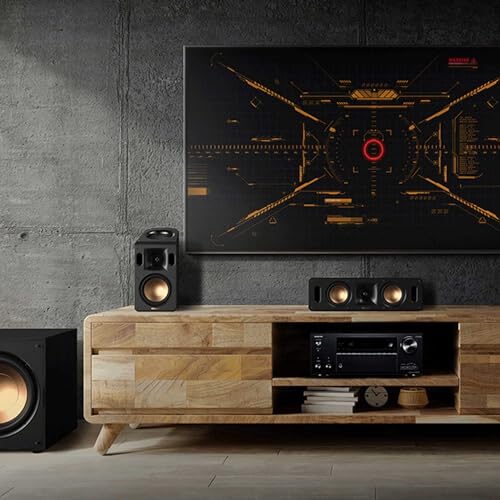
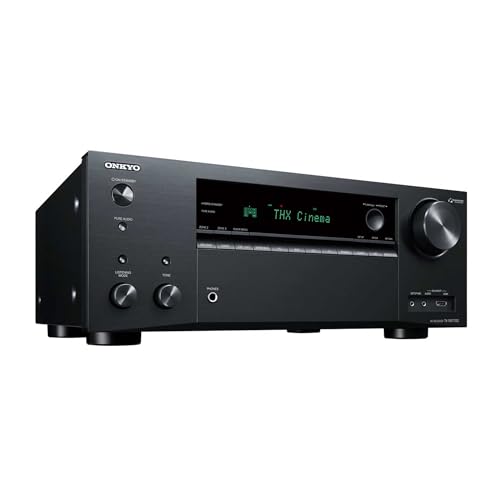
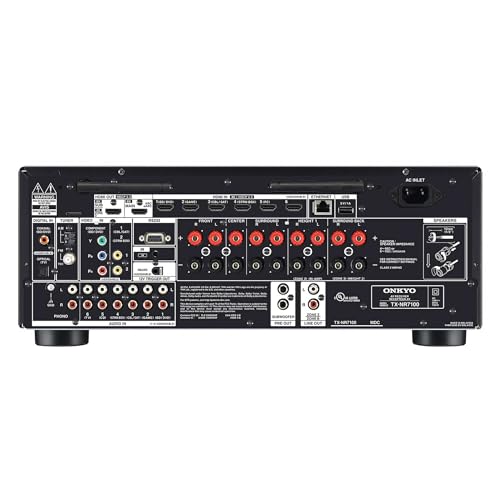
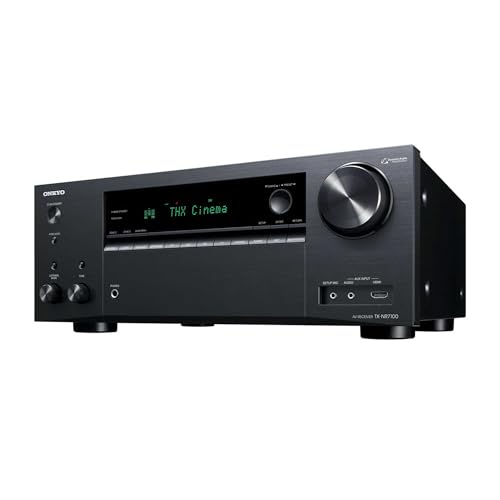

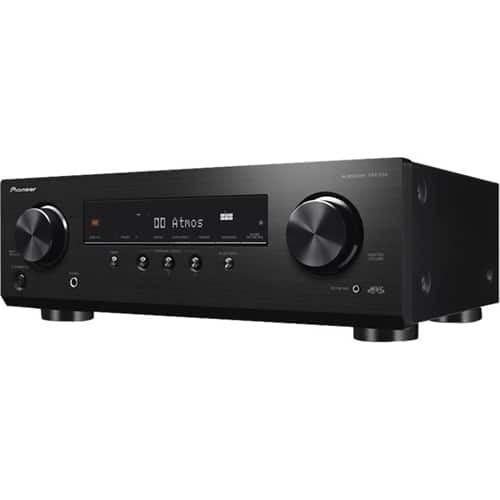
Shopping for an AV receiver can feel overwhelming, especially when you're comparing products that seem similar on the surface but serve very different needs. The Onkyo TX-NR7100 and Pioneer VSX-534 both promise to be the heart of your home theater system, but they represent completely different philosophies about what that means.
Before diving into specifics, let's clarify what these devices actually accomplish. An AV receiver is essentially the brain and muscle of your home theater setup. It takes audio and video signals from multiple sources (your Blu-ray player, gaming console, streaming device), processes and enhances the audio, amplifies it to power your speakers, and passes video to your TV or projector.
The key considerations when choosing a receiver include channel configuration (how many speakers you can connect), power output (how loud and clean your audio will be), video processing capabilities (what resolutions and formats it supports), connectivity options (how many devices you can connect), audio technologies (what modern sound formats it understands), and room correction systems (how well it adapts to your specific listening space).
Think of it this way: if your TV is the window to your entertainment, your AV receiver is the entire engine that brings that entertainment to life with immersive sound.
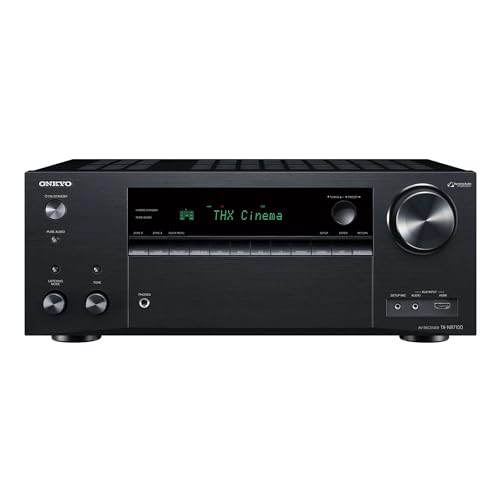
The Onkyo TX-NR7100, released in 2021, represents what I'd call the "serious enthusiast" approach to home theater. It's a 9.2-channel receiver that costs significantly more than entry-level options but delivers professional-grade features that were previously found only in high-end models. Onkyo positioned this as their answer to users who wanted flagship capabilities without flagship prices.
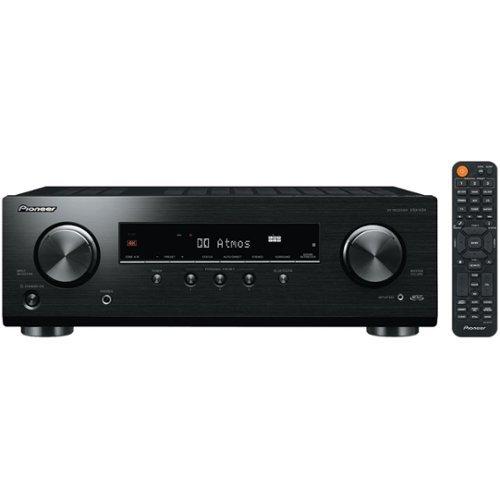
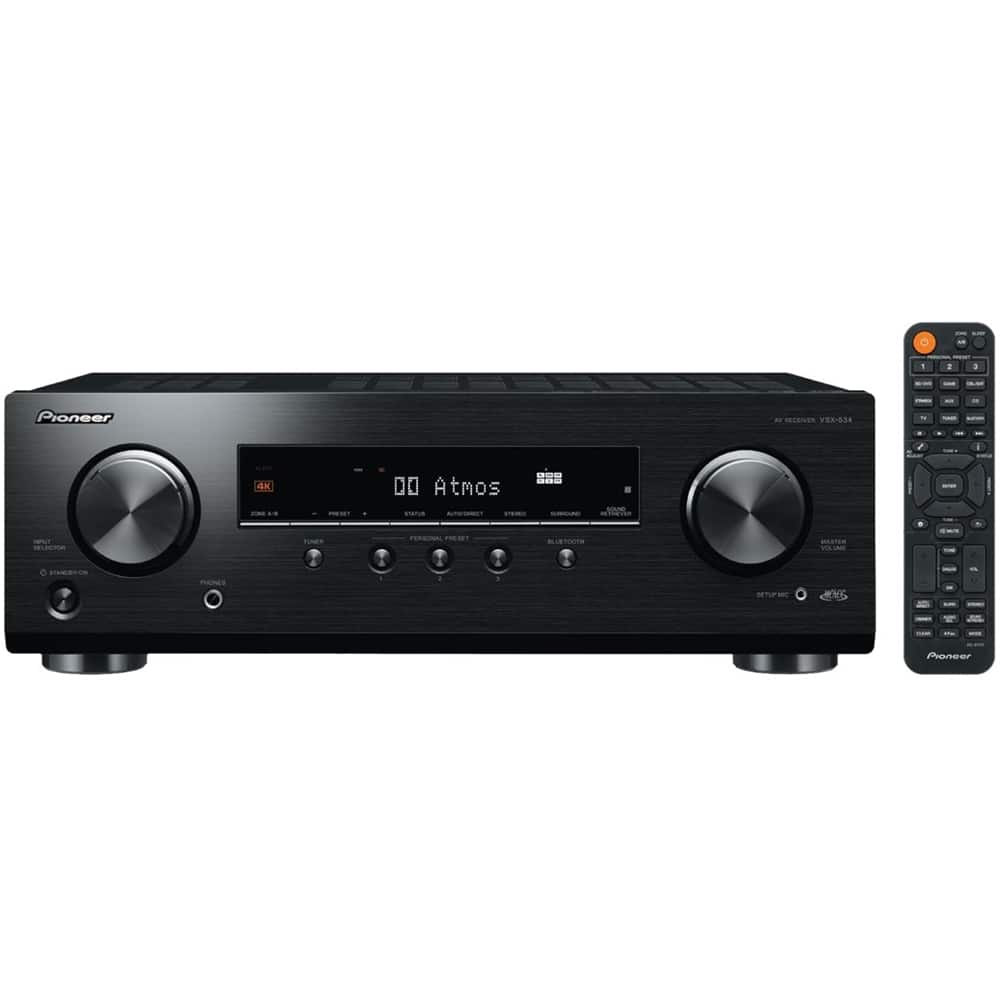
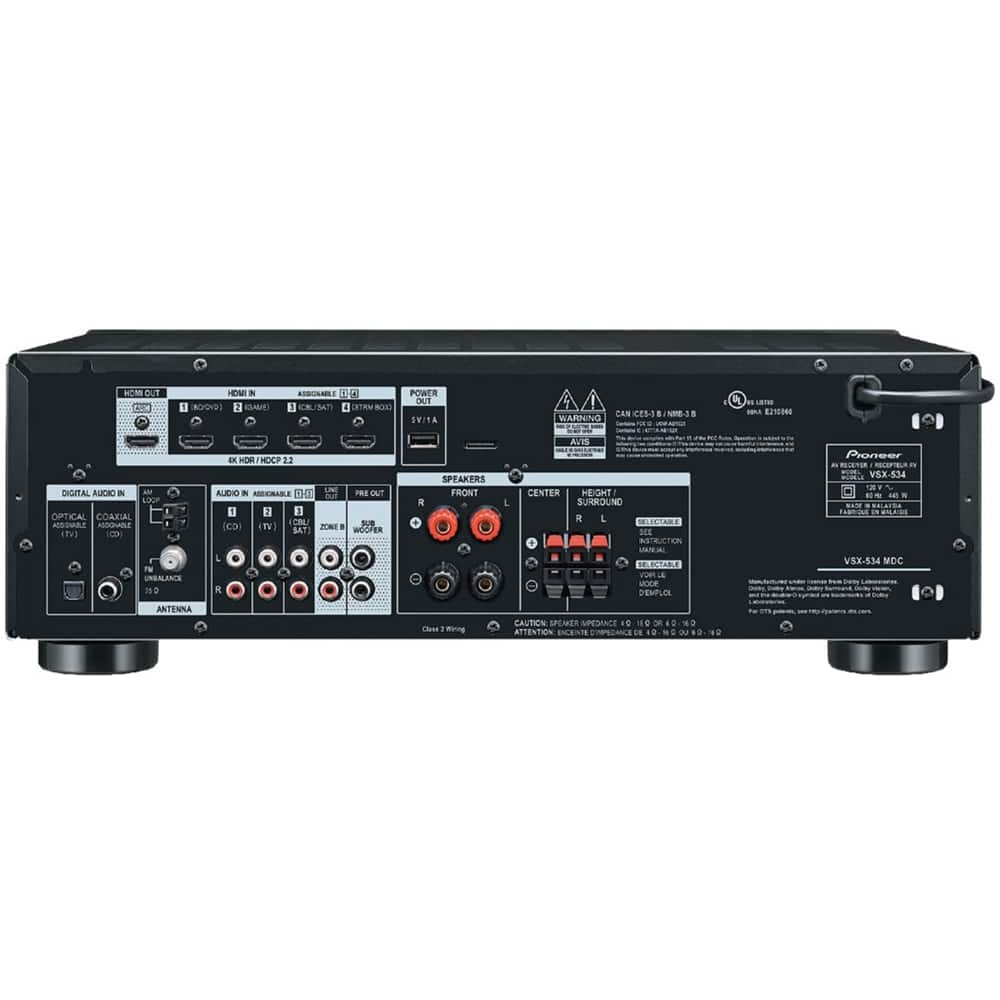
The Pioneer VSX-534, also from around the same timeframe, takes the "affordable accessibility" approach. It's a 5.2-channel receiver designed for people who want better-than-TV audio without breaking the bank or dealing with complex setups.
At the time of writing, the price gap between these receivers is substantial – the Pioneer VSX-534 typically costs several hundred dollars less than the Onkyo TX-NR7100. But as we'll see, you're not just paying for brand prestige; you're paying for fundamentally different capabilities.
Here's where the differences become immediately apparent. The Onkyo TX-NR7100 offers 9.2 channels, while the Pioneer VSX-534 provides 5.2 channels. But what does this actually mean for your movie nights?
Channel configuration refers to how many speakers you can connect and power directly from the receiver. The first number indicates full-range speakers, while the second indicates subwoofers (the ".2" means you can connect two subwoofers for better bass distribution).
With the Pioneer VSX-534's 5.2 setup, you're limited to a traditional surround sound configuration: front left, front right, center, and two surround speakers, plus your subwoofers. This creates good surround sound, but it's essentially the same speaker layout we've been using since the 1990s.
The Onkyo TX-NR7100's 9.2 configuration opens up modern possibilities like 5.2.4 or 7.2.2 Dolby Atmos setups. Those additional numbers after the second decimal represent height channels – speakers mounted on or in your ceiling that create true three-dimensional sound. When a helicopter flies overhead in a movie, you'll actually hear it move above you, not just around you.
This isn't just a luxury feature anymore. Dolby Atmos, which uses these height channels, has become the standard for premium content. Netflix, Disney+, and most new movies include Atmos soundtracks specifically mixed to use height information. The Pioneer VSX-534 can process Dolby Atmos signals, but it uses "virtualization" – digital trickery that tries to create the illusion of height through your existing speakers. It's like watching a 3D movie without 3D glasses; you get some of the experience, but you're missing the full effect.
Both receivers advertise impressive power figures, but the Onkyo TX-NR7100 reveals its superior engineering in the details. It delivers 100 watts per channel measured at 8 ohms across the full frequency range (20Hz-20kHz) with only 0.08% total harmonic distortion (THD) – that's the amount of unwanted noise introduced during amplification.
The Pioneer VSX-534 claims 150 watts per channel, but look closer at the specifications: that's measured at 6 ohms (an easier load for the amplifier), at only 1kHz (not the full frequency range), with 10% THD. Under identical test conditions, the Pioneer would likely produce significantly less power.
More importantly, the Onkyo TX-NR7100 uses what Onkyo calls Dynamic Audio Amplification with a hi-current power supply. In practical terms, this means it can deliver sudden bursts of power when your music or movies demand it – think of the difference between a sports car that can accelerate quickly versus one that just has a high top speed.
The power supply design also matters for speaker compatibility. The Onkyo TX-NR7100 can handle speakers with impedance ratings from 4 to 16 ohms, while the Pioneer VSX-534 is more limited. If you ever want to upgrade to high-end speakers that present a challenging electrical load, the Onkyo gives you more flexibility.
In 2021, both receivers entered a market where 4K was becoming standard, but 8K displays were starting to appear and next-generation gaming consoles were demanding new capabilities. The manufacturers' approaches to video processing reveal their different target audiences.
The Onkyo TX-NR7100 includes seven HDMI inputs with two outputs, and crucially, it supports full HDMI 2.1 specifications on multiple inputs. HDMI 2.1 might sound like a minor version upgrade, but it enables 8K video at 60 frames per second and 4K at 120 frames per second – essential for PlayStation 5 and Xbox Series X gaming.
More importantly for gamers, the Onkyo TX-NR7100 supports Variable Refresh Rate (VRR), Auto Low Latency Mode (ALLM), and Quick Frame Transport (QFT). VRR eliminates screen tearing when your console's frame rate fluctuates. ALLM automatically switches your display to its lowest-latency mode when gaming. QFT reduces the delay between controller input and on-screen action. These might seem like technical minutiae, but they represent the difference between laggy, stuttery gaming and smooth, responsive play.
The Pioneer VSX-534 offers 4K support with HDR10, which was adequate when it launched but doesn't include the advanced gaming features or 8K capabilities. If you primarily watch streaming content and don't own next-generation consoles, this might not matter. But if you're building a system you hope to keep for several years, the Onkyo's video processing provides crucial future-proofing.
Both receivers support modern audio formats like Dolby Atmos and DTS:X, but their implementations differ dramatically. The Onkyo TX-NR7100 is THX Certified, meaning it passed thousands of tests designed to ensure reference-quality playback of movie soundtracks. THX certification isn't marketing fluff – it represents measurable performance standards for frequency response, distortion, and dynamic range.
The Onkyo TX-NR7100 also includes IMAX Enhanced certification, which ensures proper playback of IMAX soundtracks with their specific calibration and dynamic range requirements. When you're watching "Dune" or "Top Gun: Maverick" with their IMAX-enhanced soundtracks, the Onkyo delivers them as the directors intended.
Perhaps most significantly, the Onkyo TX-NR7100 includes Dirac Live room correction built-in. Room correction systems analyze your specific listening space using a calibration microphone, then apply digital filters to compensate for acoustic problems. Your room's size, shape, furniture, and construction all affect how sound waves behave, and even expensive speakers can sound mediocre in a poorly acoustically-treated space.
Dirac Live is considered one of the most sophisticated room correction systems available. It can analyze up to 13 measurement positions in your room and create correction curves that address both frequency response issues and phase problems (timing discrepancies between speakers). The system can make a $500 speaker sound dramatically better in your specific room.
The Pioneer VSX-534 includes Pioneer's MCACC (Multi-Channel Acoustic Calibration System), which provides basic room correction. It's certainly better than no calibration, but it's much simpler than Dirac Live and can't address the complex acoustic issues that Dirac handles.
The Onkyo TX-NR7100 also employs a higher-quality digital-to-analog converter (DAC) with Vector Linear Shaping Circuitry (VLSC). DACs convert digital audio signals to analog signals that your speakers can reproduce. VLSC is Onkyo's proprietary technology that reduces pulse noise during this conversion, resulting in smoother, more natural-sounding audio. It's the kind of engineering detail that doesn't show up in specification sheets but contributes to better sound quality.
The connectivity differences between these receivers reflect their target audiences' lifestyles. The Onkyo TX-NR7100 includes dual-band Wi-Fi, DTS Play-Fi, AirPlay 2, and Chromecast built-in. This means you can stream music from virtually any device or service without additional hardware.
More impressively, the Onkyo TX-NR7100 supports Bluetooth with aptX HD codec in both receive and transmit modes. Most receivers only receive Bluetooth audio, but the Onkyo can also transmit to Bluetooth headphones with high-quality aptX HD encoding. This is particularly useful for late-night movie watching – you get full surround sound processing sent wirelessly to your headphones without disturbing others.
The receiver also integrates with smart home systems through Alexa and Google Assistant compatibility, and it's certified to work with Sonos multi-room systems. If you're building or expanding a whole-home audio system, the Onkyo TX-NR7100 provides the flexibility to grow with your needs.
The Pioneer VSX-534 offers basic Bluetooth connectivity and supports some streaming services, but lacks the comprehensive wireless ecosystem integration of the Onkyo.
Here's where the Onkyo TX-NR7100 reveals its versatility beyond the main listening room. It supports three-zone operation: Zone 1 (your main theater), Zone 2 (which can receive independent HDMI video and audio), and Zone 3 (audio only). You could watch a movie in your main theater while someone else streams music in the kitchen and another person watches different content in a bedroom.
The Zone 2 HDMI output is particularly clever – you can send 4K video to a second display while the main zone enjoys 8K content. This kind of flexibility turns the receiver into the hub for your entire home's entertainment system.
The Pioneer VSX-534 offers basic Zone B functionality through preamp outputs, but you'd need a separate amplifier to power speakers in that second zone. It's a much more limited implementation.
Based on extensive research into user experiences and professional reviews, some clear patterns emerge about how these receivers perform in actual home theaters.
The Onkyo TX-NR7100 consistently receives praise for its immersive surround sound capabilities. Users with proper Atmos setups report convincing overhead effects and precise sound placement. The Dirac Live calibration system earns particular appreciation for its ability to tame problematic room acoustics, though some users note that the calibration process requires patience and some technical understanding.
Music playback through the Onkyo TX-NR7100 is described as neutral and detailed, with solid imaging and natural tonal balance. The receiver doesn't favor any particular musical genre, making it suitable for everything from classical to electronic music.
The Pioneer VSX-534 receives positive feedback for its straightforward setup and reliable operation. Users appreciate its compact size and simple interface. However, reviews consistently note that while it handles basic surround sound adequately, it can't deliver the immersive experience that modern content is designed for.
No receiver is perfect, and both have reported quirks. The Onkyo TX-NR7100 occasionally experiences HDMI handshake issues when switching between sources, though firmware updates have addressed many of these problems. Some users report that the Zone 2 functionality requires disabling when not in use to prevent issues with the main zone – an annoying limitation for a receiver with multi-zone capabilities.
The Pioneer VSX-534's main limitation isn't a bug but a feature constraint: its inability to power dedicated height speakers means you're permanently locked out of true Dolby Atmos experiences.
The Onkyo TX-NR7100 makes sense for several specific scenarios. If you're building a dedicated home theater room with proper speaker placement, including height channels, it provides the processing power and amplification to create truly immersive experiences. Gamers with PlayStation 5 or Xbox Series X consoles will appreciate the 4K/120Hz and VRR support. Music enthusiasts who want both excellent two-channel performance and the option for surround sound will benefit from the superior DAC and room correction.
The receiver also suits users planning to grow their systems over time. You might start with a 5.1 setup but later add height speakers or additional zones. The Onkyo TX-NR7100 accommodates that growth.
The Pioneer VSX-534 serves different needs entirely. It's ideal for apartments or smaller rooms where a full Atmos setup isn't practical. Budget-conscious buyers who primarily want better-than-TV sound for streaming content and don't need cutting-edge features will find it adequate. It's also perfect for secondary systems – perhaps a family room setup where you want decent surround sound without the complexity of a flagship receiver.
At the time of writing, the price difference between these receivers reflects genuinely different capabilities rather than brand premium. The Pioneer VSX-534 delivers competent basic surround sound at an accessible price point. It's a solid choice if your needs are simple and unlikely to change.
The Onkyo TX-NR7100 represents a significant step up in every meaningful category: more channels for immersive audio, better video processing for modern sources, superior room correction for better sound in any space, and comprehensive connectivity for whole-home integration. Yes, it costs considerably more, but you're paying for capabilities that will remain relevant as content and technology continue evolving.
For most people building a serious home theater system, the Onkyo TX-NR7100 is the better long-term investment. Its additional capabilities justify the higher cost if you value immersive audio experiences and want a system that won't become obsolete as streaming services and gaming consoles continue pushing technological boundaries.
The Pioneer VSX-534 serves its intended market well, but it's fundamentally a stepping stone rather than a destination. If you're serious about home theater, you'll likely find yourself wanting the capabilities that only the Onkyo TX-NR7100 can provide.
| Onkyo TX-NR7100 | Pioneer VSX-534 |
|---|---|
| Channel Configuration - Determines speaker layout possibilities and immersive audio capabilities | |
| 9.2 channels (supports 5.2.4 or 7.2.2 Dolby Atmos with dedicated height speakers) | 5.2 channels (traditional surround sound only, relies on virtualization for height effects) |
| Power Output - Affects volume levels and speaker compatibility | |
| 100W per channel (8 ohms, 20Hz-20kHz, 0.08% THD) with hi-current power supply | 150W per channel (6 ohms, 1kHz, 10% THD) - less stringent test conditions |
| HDMI Connectivity - Critical for modern gaming and video sources | |
| 7 inputs, 2 outputs with HDMI 2.1 support for 8K/60Hz and 4K/120Hz | 6 inputs, 1 output with basic 4K support |
| Gaming Features - Essential for PlayStation 5 and Xbox Series X | |
| Full VRR, ALLM, QFT support for lag-free gaming | No advanced gaming features |
| Room Correction - Automatically optimizes sound for your specific room | |
| Dirac Live (professional-grade calibration with up to 13 measurement positions) | MCACC (basic room correction system) |
| Audio Certifications - Ensures reference-quality movie and music playback | |
| THX Certified Select and IMAX Enhanced | No professional certifications |
| Streaming and Wireless - Integration with modern smart home ecosystems | |
| Dual-band Wi-Fi, DTS Play-Fi, AirPlay 2, Chromecast, aptX HD Bluetooth (TX/RX) | Basic Bluetooth 4.2, limited streaming integration |
| Multi-Zone Capabilities - Ability to play different content in multiple rooms | |
| 3 zones with Zone 2 HDMI output for independent video/audio | Basic Zone B preamp output only |
| Digital Audio Processing - Quality of sound conversion and enhancement | |
| 24-bit/192kHz DAC with VLSC technology and jitter reduction | 32-bit/384kHz DAC with standard processing |
| Video Support - Compatibility with current and future display technologies | |
| 8K/60Hz, 4K/120Hz, HDR10+, Dolby Vision, HLG | 4K/60Hz, HDR10, HLG (no advanced formats) |
The Pioneer VSX-534 is more beginner-friendly due to its simpler 5.2-channel setup and straightforward interface. It offers basic surround sound without overwhelming new users with complex configuration options. The Onkyo TX-NR7100 provides superior performance but requires more technical knowledge to fully utilize its advanced features like Dirac Live room correction and multi-zone capabilities.
The Onkyo TX-NR7100 with 9.2 channels can power up to 9 speakers plus 2 subwoofers, enabling true Dolby Atmos setups with dedicated height speakers for immersive 3D sound. The Pioneer VSX-534 with 5.2 channels supports traditional 5.1 surround sound plus 2 subwoofers but cannot power dedicated height speakers, limiting it to virtualized height effects.
The Onkyo TX-NR7100 is significantly better for gaming, especially with PlayStation 5 and Xbox Series X consoles. It supports HDMI 2.1 features like 4K/120Hz, Variable Refresh Rate (VRR), Auto Low Latency Mode (ALLM), and Quick Frame Transport (QFT) for smooth, lag-free gaming. The Pioneer VSX-534 lacks these advanced gaming features and is limited to basic 4K support.
The Onkyo TX-NR7100 supports both 4K/120Hz and 8K/60Hz video pass-through with HDR10+, Dolby Vision, and HLG formats. The Pioneer VSX-534 handles 4K video with basic HDR10 support but cannot process 8K signals or advanced HDR formats, making the Onkyo TX-NR7100 more future-proof for next-generation content.
The Onkyo TX-NR7100 features Dirac Live room correction, a professional-grade system that can analyze up to 13 measurement positions and correct both frequency response and phase issues. The Pioneer VSX-534 includes Pioneer's MCACC system, which provides basic room correction but is much simpler and less sophisticated than the Dirac Live system in the Onkyo TX-NR7100.
Yes, both the Onkyo TX-NR7100 and Pioneer VSX-534 support Dolby Atmos, but with important differences. The Onkyo TX-NR7100 can power dedicated height speakers for true Atmos immersion, while the Pioneer VSX-534 relies on virtualization technology to simulate height effects through existing speakers, which is less convincing than actual overhead speakers.
The Onkyo TX-NR7100 is superior for music with its higher-quality 24-bit/192kHz DAC, Vector Linear Shaping Circuitry (VLSC) technology, and Dirac Live room correction that optimizes sound for your specific listening space. The Pioneer VSX-534 provides decent music playback but lacks the advanced audio processing and room correction features of the Onkyo TX-NR7100.
The Onkyo TX-NR7100 offers superior wireless headphone support with Bluetooth transmission capability using aptX HD codec for high-quality wireless audio. The Pioneer VSX-534 has basic Bluetooth 4.2 connectivity but lacks the advanced codec support and transmission features, making the Onkyo TX-NR7100 better for wireless headphone users.
The Onkyo TX-NR7100 has extensive streaming support with built-in Wi-Fi, Spotify, TIDAL, Amazon Music, Chromecast, AirPlay 2, and DTS Play-Fi integration. The Pioneer VSX-534 offers basic streaming capabilities but lacks the comprehensive wireless ecosystem and streaming service integration found in the Onkyo TX-NR7100.
The Onkyo TX-NR7100 excels at multi-zone audio with three-zone capability, including Zone 2 HDMI output for independent video and audio in different rooms. The Pioneer VSX-534 only offers basic Zone B preamp output, requiring a separate amplifier for additional rooms, making the Onkyo TX-NR7100 much more versatile for whole-home audio.
The Onkyo TX-NR7100 provides 7 HDMI inputs and 2 outputs, accommodating more devices like gaming consoles, streaming players, and Blu-ray players. The Pioneer VSX-534 offers 6 HDMI inputs and 1 output, which may be sufficient for basic setups but provides less connectivity flexibility than the Onkyo TX-NR7100.
For serious home theater enthusiasts, the Onkyo TX-NR7100 offers better long-term value with its 9.2-channel configuration, Dolby Atmos height speaker support, 8K video processing, and professional room correction. The Pioneer VSX-534 provides good value for budget-conscious buyers with basic surround sound needs, but the Onkyo TX-NR7100 delivers significantly more capability and future-proofing for dedicated home theaters.
We've done our best to create useful and informative comparisons to help you decide what product to buy. Our research uses advanced automated methods to create this comparison and perfection is not possible - please contact us for corrections or questions. These are the sites we've researched in the creation of this article: crutchfield.com - prohifi.in - bestbuy.com - h-m-entertainment.com - audiosciencereview.com - crutchfield.ca - soundandvision.com - avsforum.com - avgadgets.com - youtube.com - onkyo.com - crutchfield.com - onkyo.com - accessories4less.com - klipsch.com - youtube.com - listenup.com - intl.onkyo-av.com - bestbuy.com - 420spotshop.com - support.onkyousa.com - crutchfield.com - stereonet.com - walmart.com - audiolab.com - hifiheaven.net - assets.pioneerhomeusa.com - manua.ls - pioneerav.ca - pioneer-shop.gr - justanswer.co.uk

Privacy Policy
Terms and Conditions - Affiliate Policy
Home Security
© Copyright 2008-2026.
11816 Inwood Rd #1211, Dallas, TX 75244