

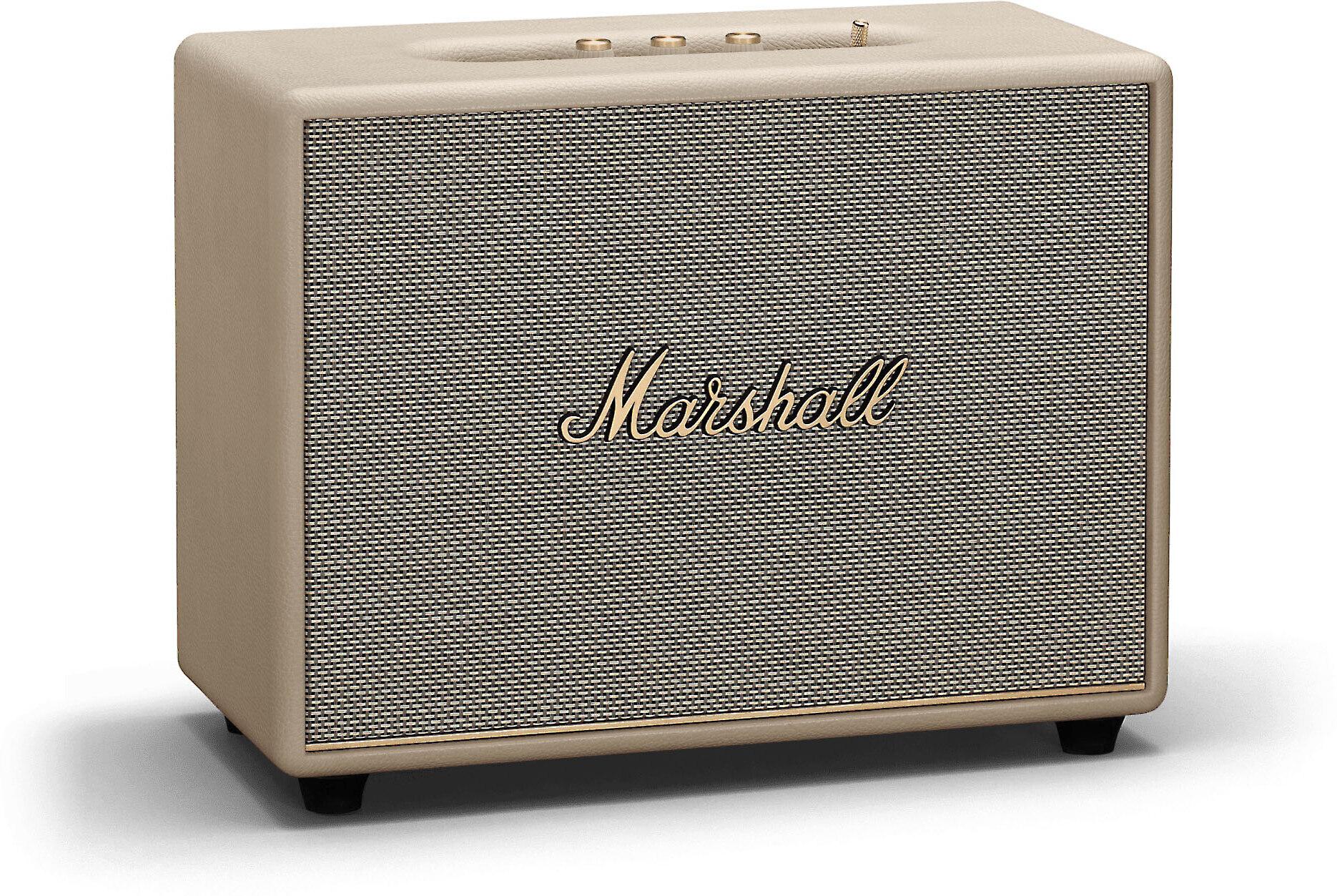
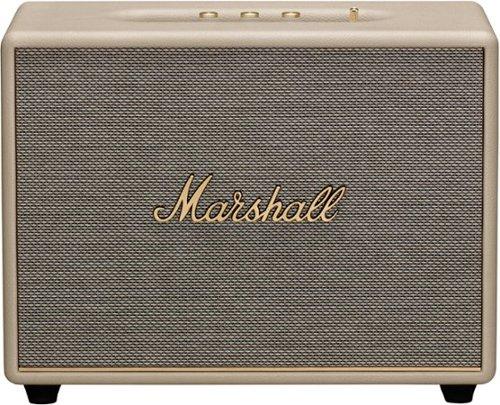
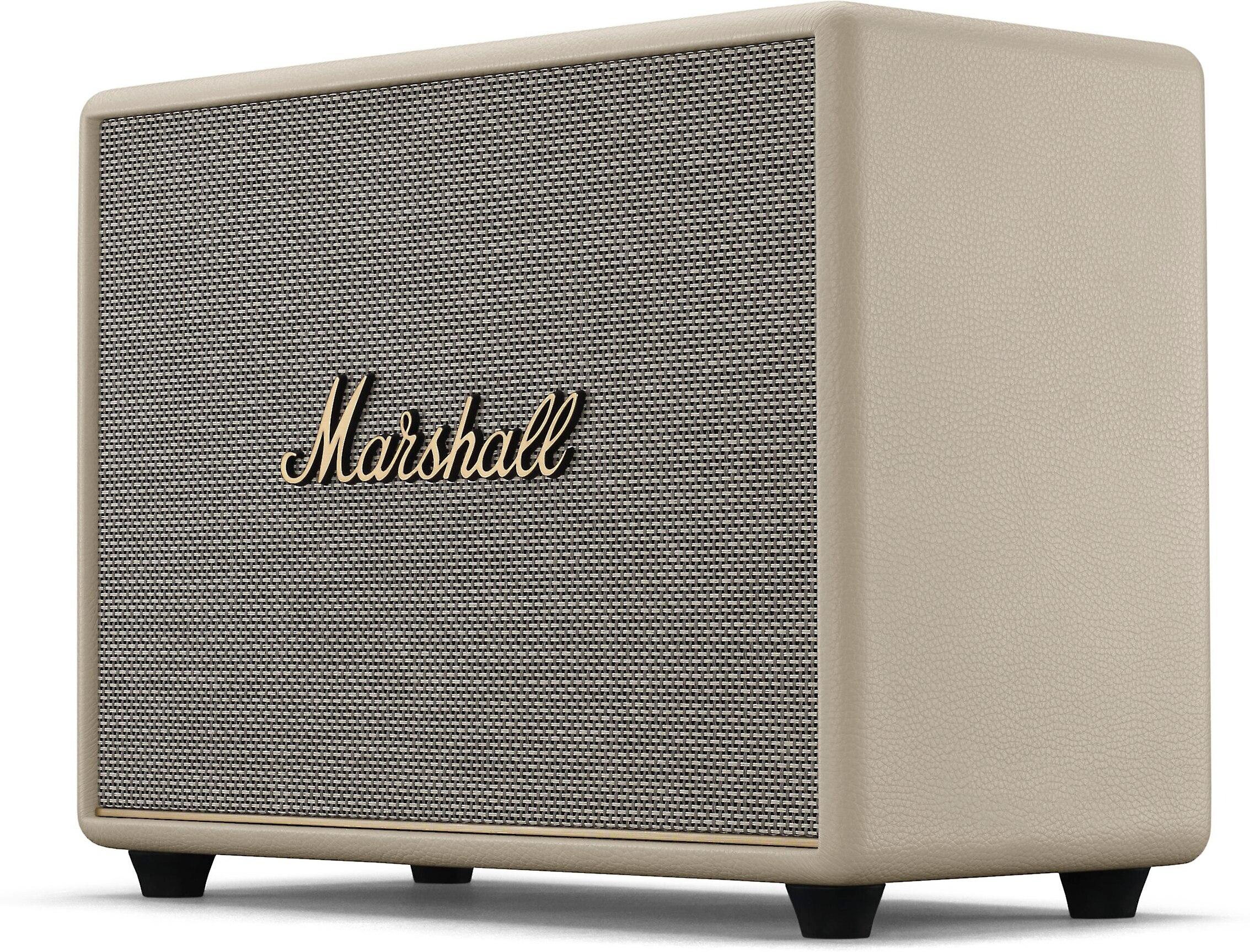
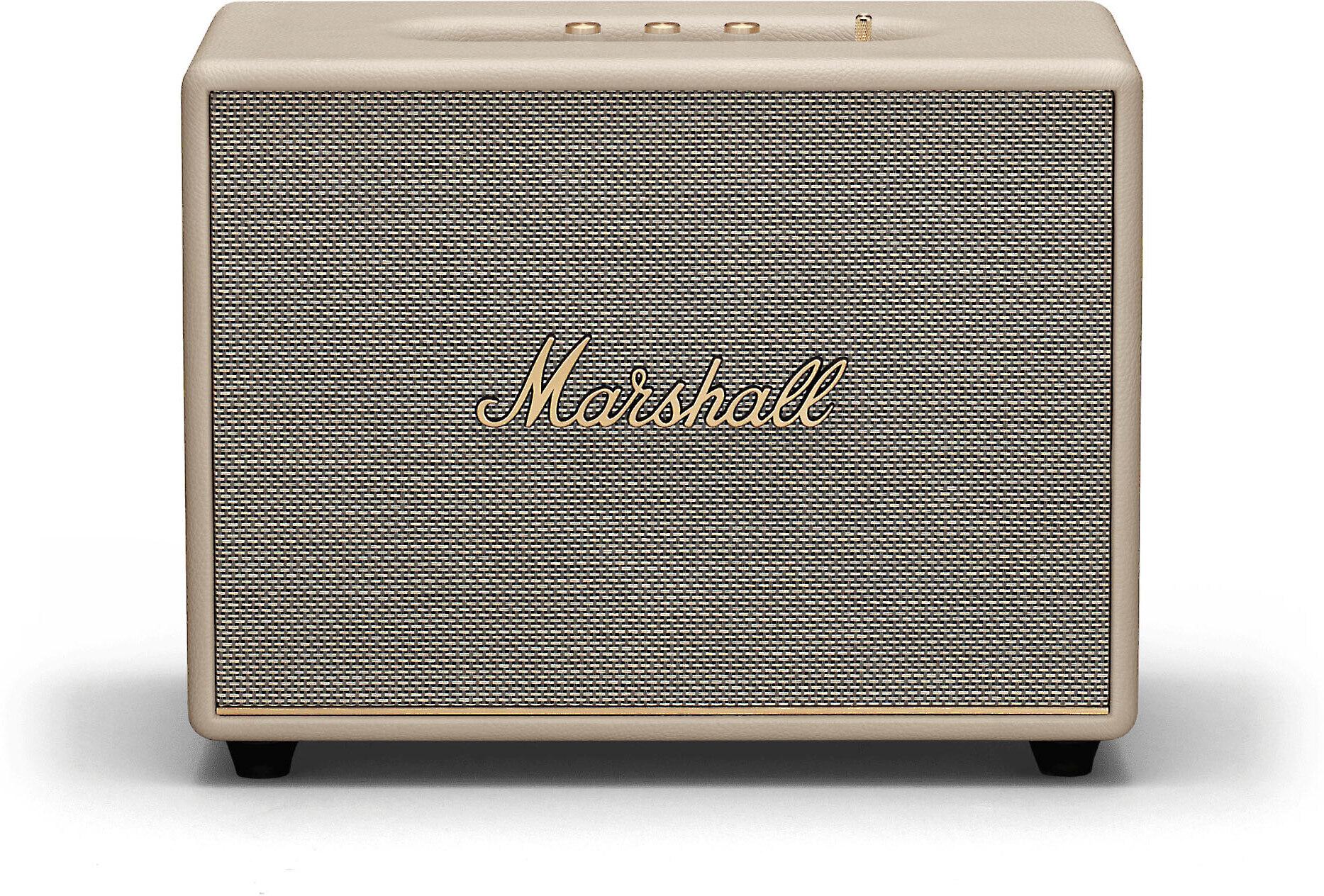
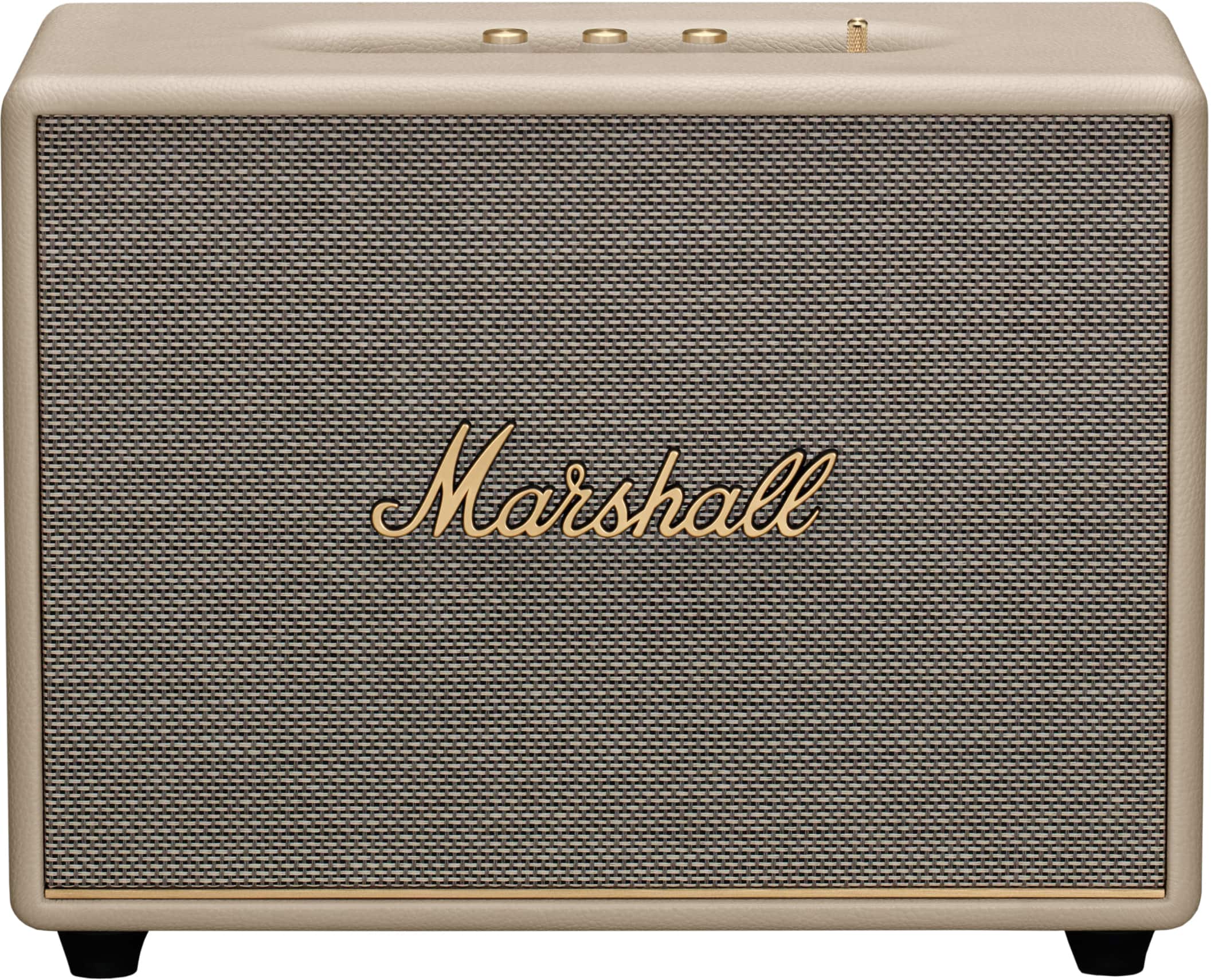
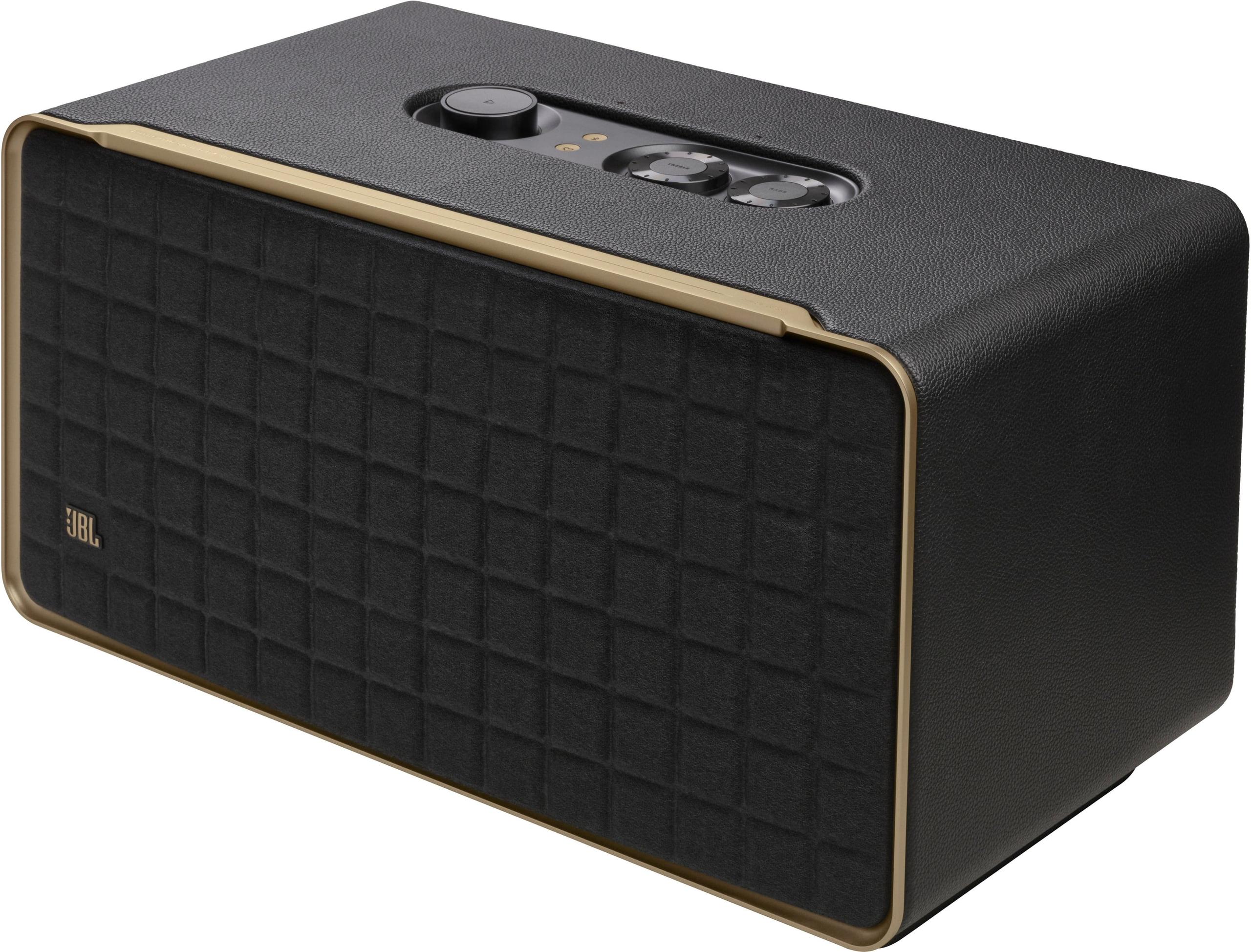
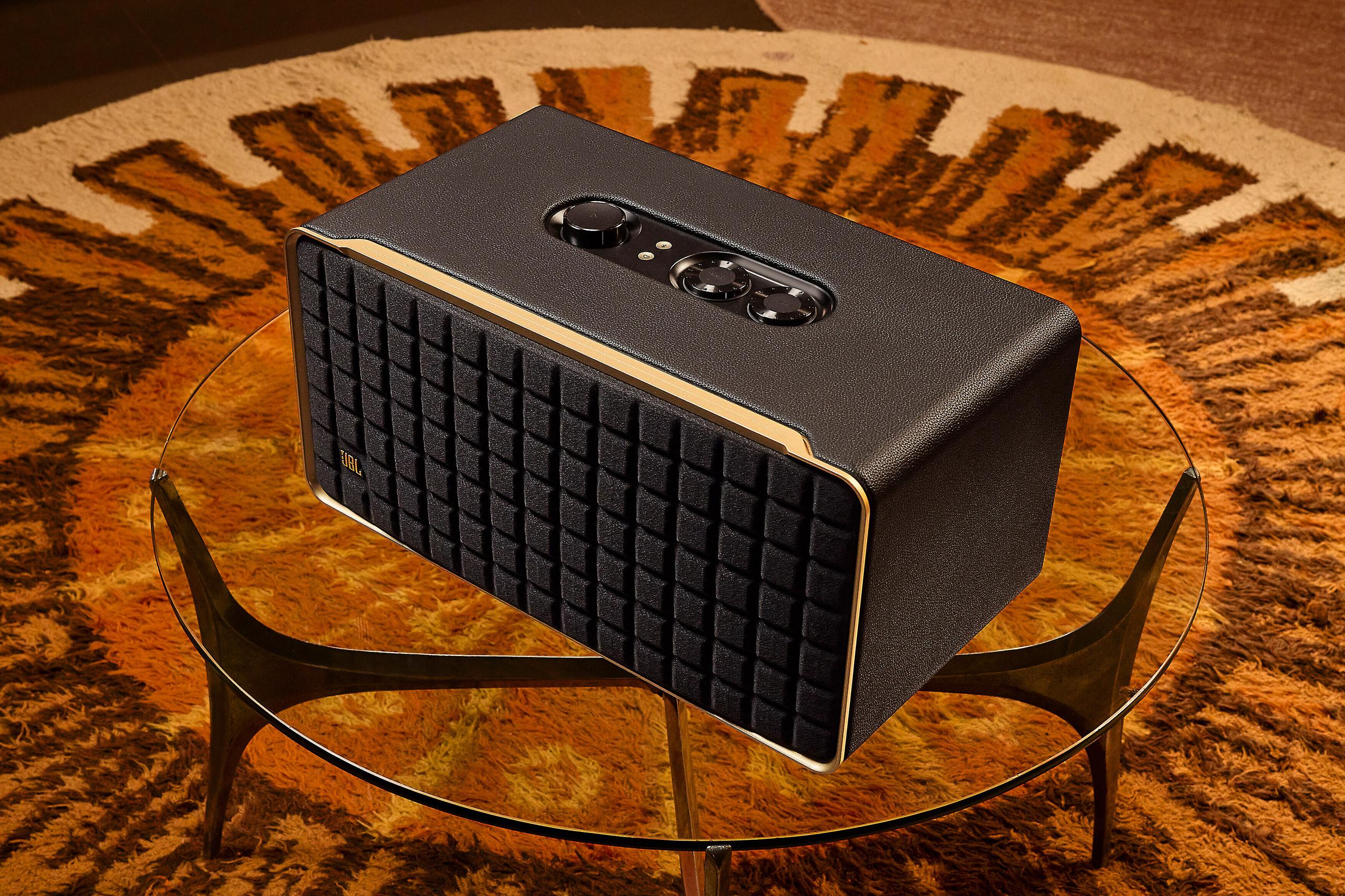
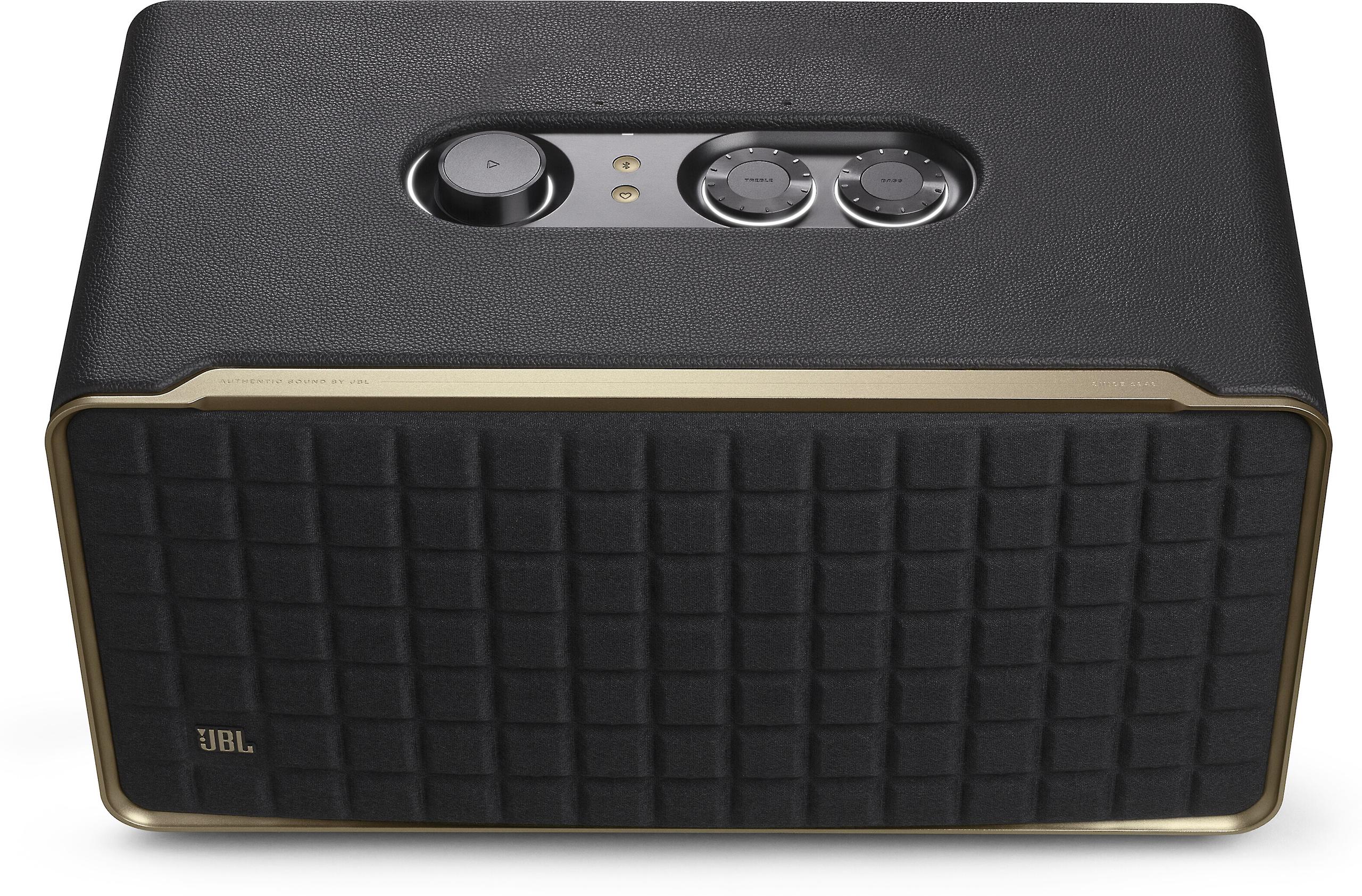
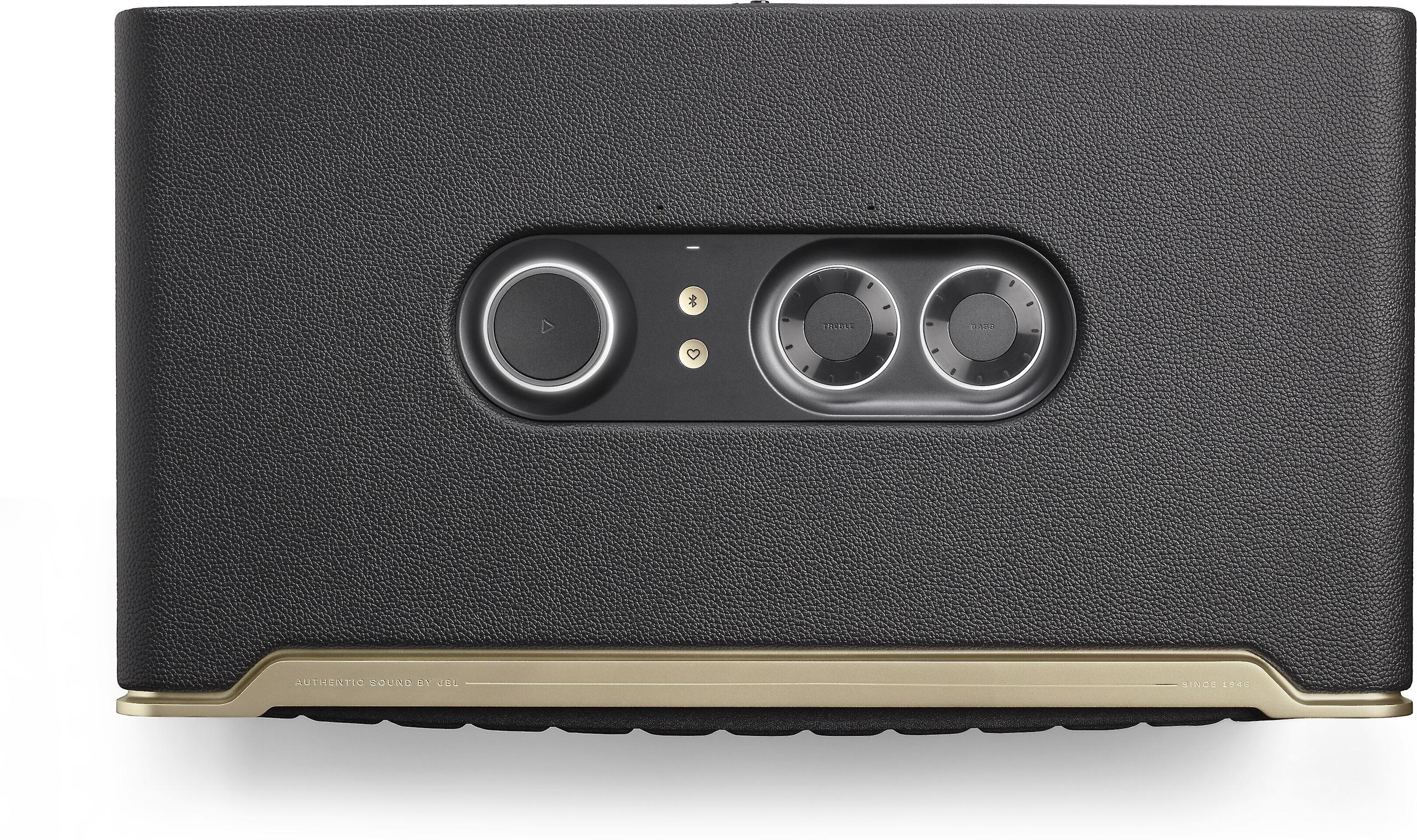
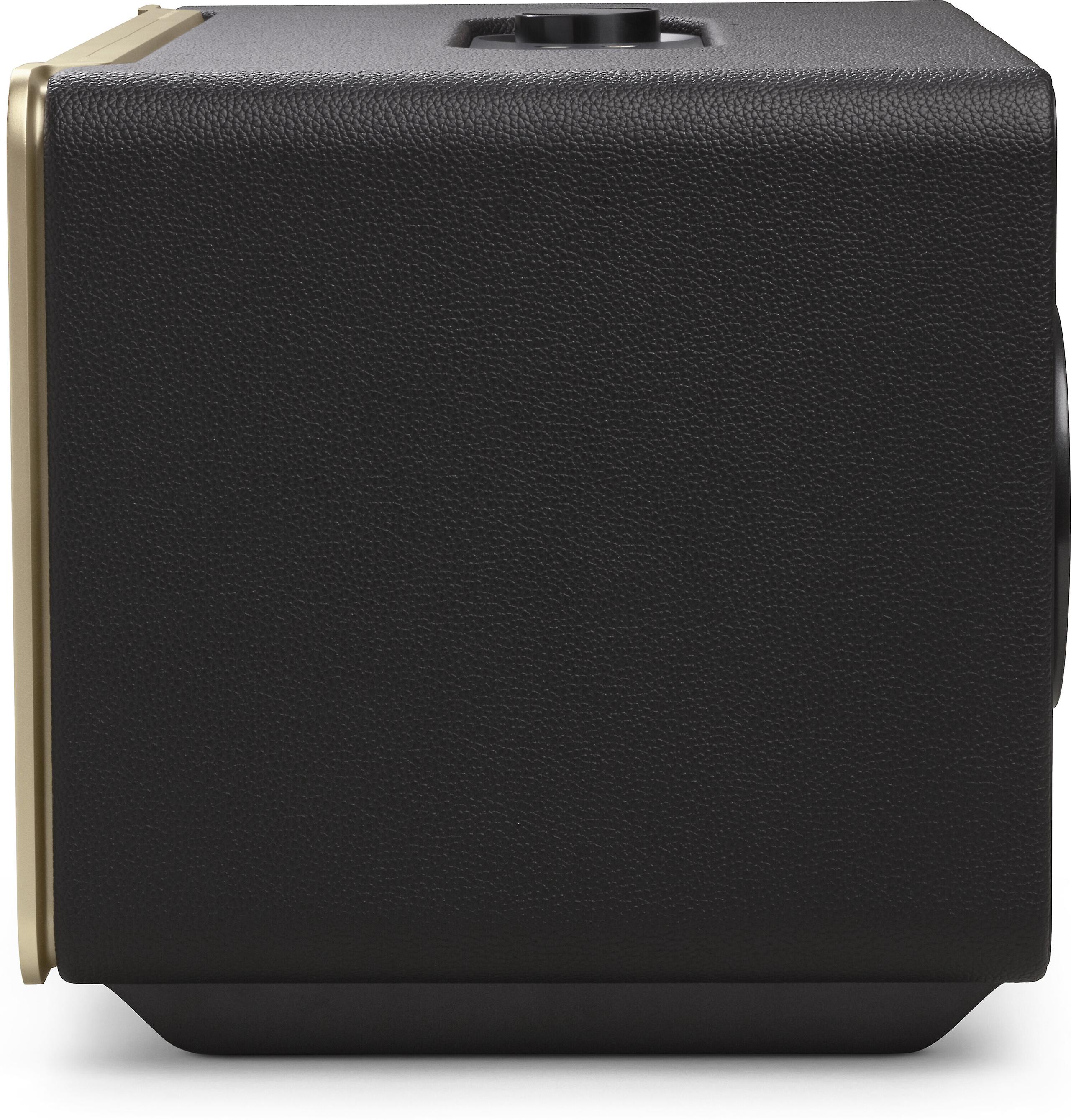
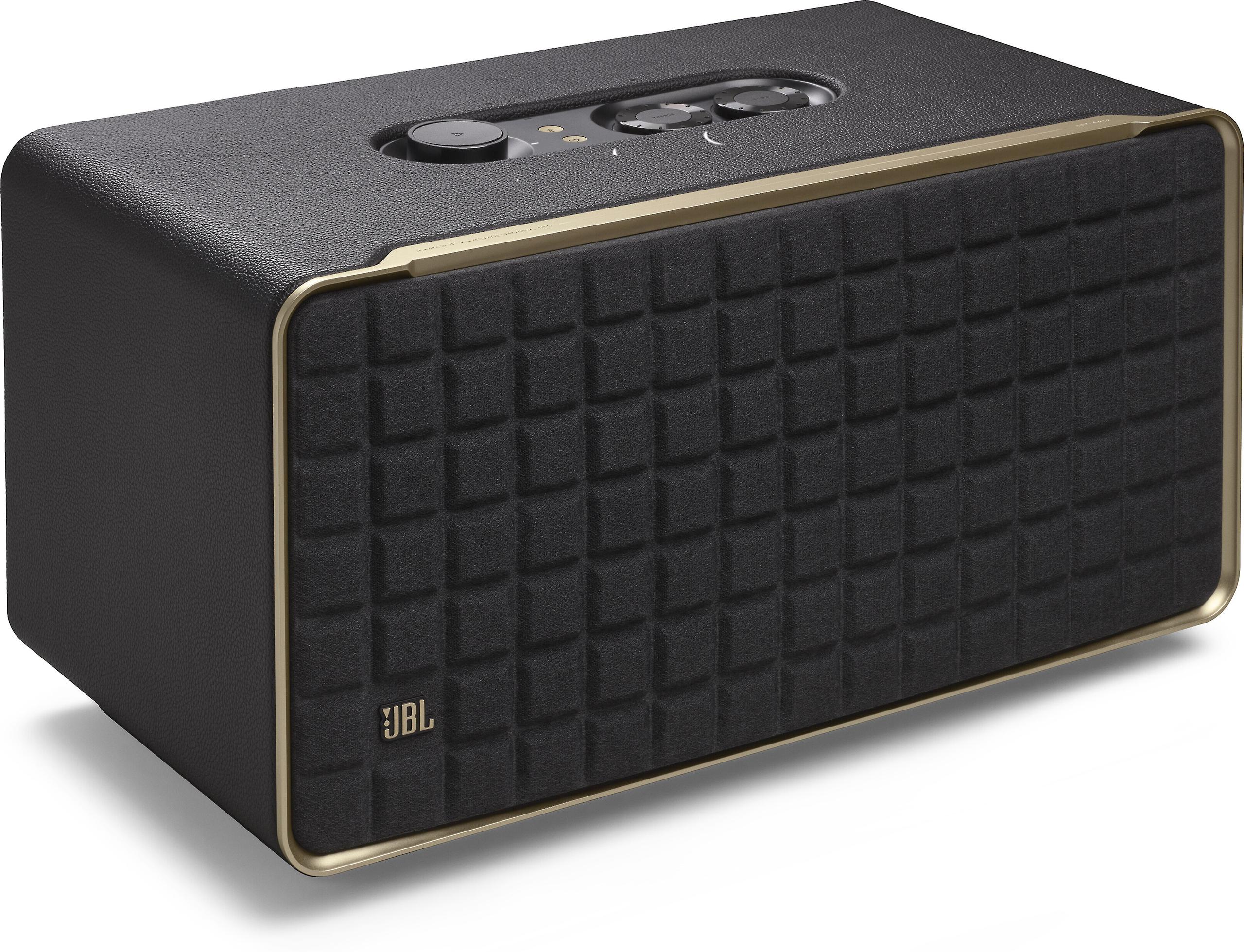
The high-end home speaker market has evolved significantly, with traditional audio companies adapting to the smart home era. Today we're comparing two distinct approaches: the Marshall Woburn III ($579.99) and the JBL Authentics 500 ($549.99). Both speakers aim to be the centerpiece of your home audio setup, but they take notably different paths to get there.
Modern home speakers have moved far beyond simple Bluetooth connectivity. Today's premium offerings combine advanced audio processing, room correction technology, and smart features that were unimaginable just a few years ago. But this evolution has created an interesting divide between pure audio-focused devices and smart home integration.
The Marshall Woburn III, released in late 2022, represents a more traditional approach with some modern conveniences, while the JBL Authentics 500, launched in mid-2023, embraces the full smart home ecosystem. Let's dive into what makes each unique and who they might be best for.
The Woburn III employs a sophisticated three-way driver system (which means separate speakers handle high, mid, and low frequencies). Its two 0.75" dome tweeters use special waveguides - essentially carefully designed speaker openings that help direct sound more effectively throughout your room. Combined with two 2.0" midrange drivers and a 6" woofer, this setup creates remarkably precise audio separation.
What's particularly clever is Marshall's Dynamic Loudness feature. It automatically adjusts frequency balance as you change volume - something our ears naturally need since we perceive different frequencies differently at various volume levels. This means you get full, rich sound whether playing quietly at night or cranking it up for a party.
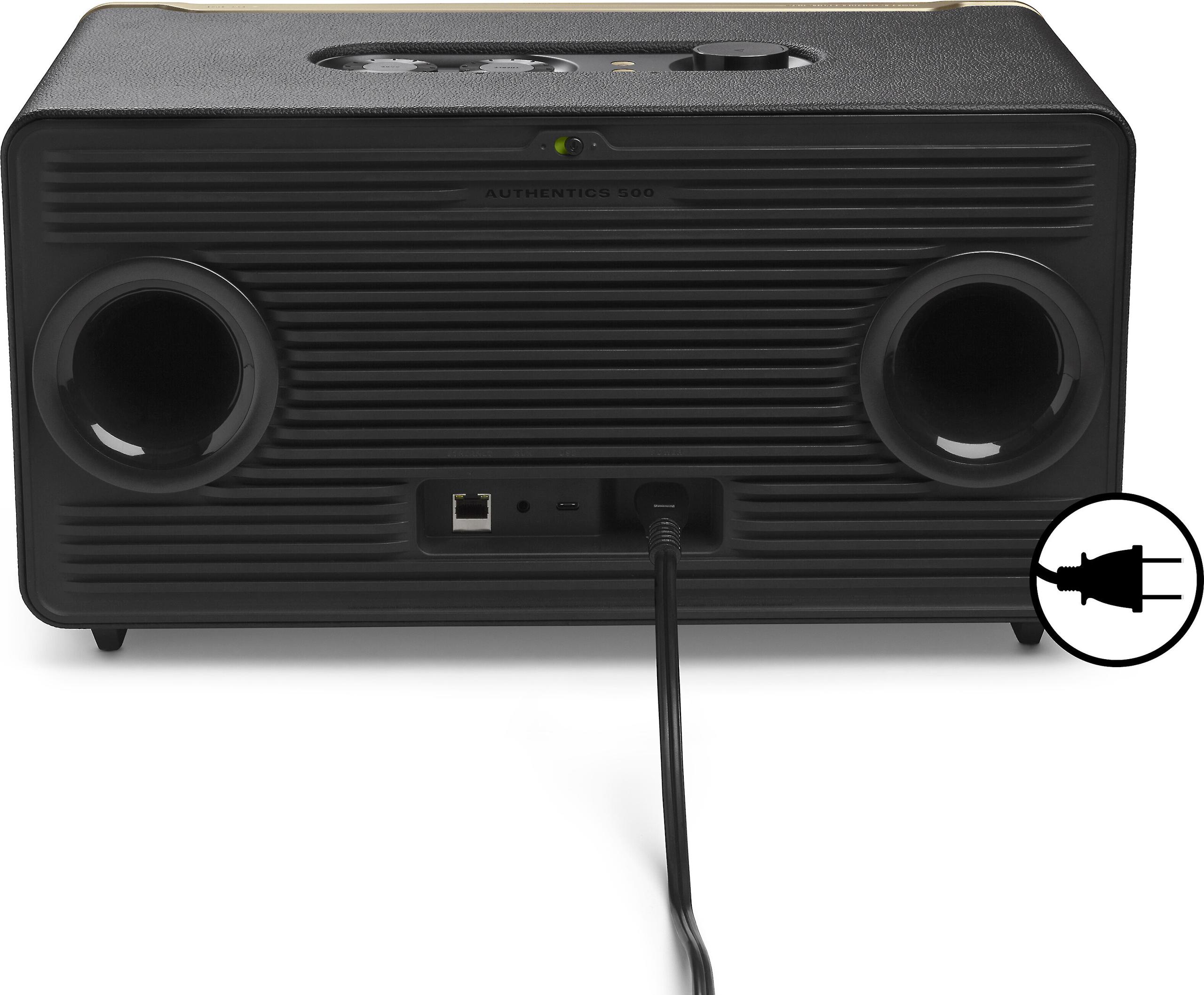
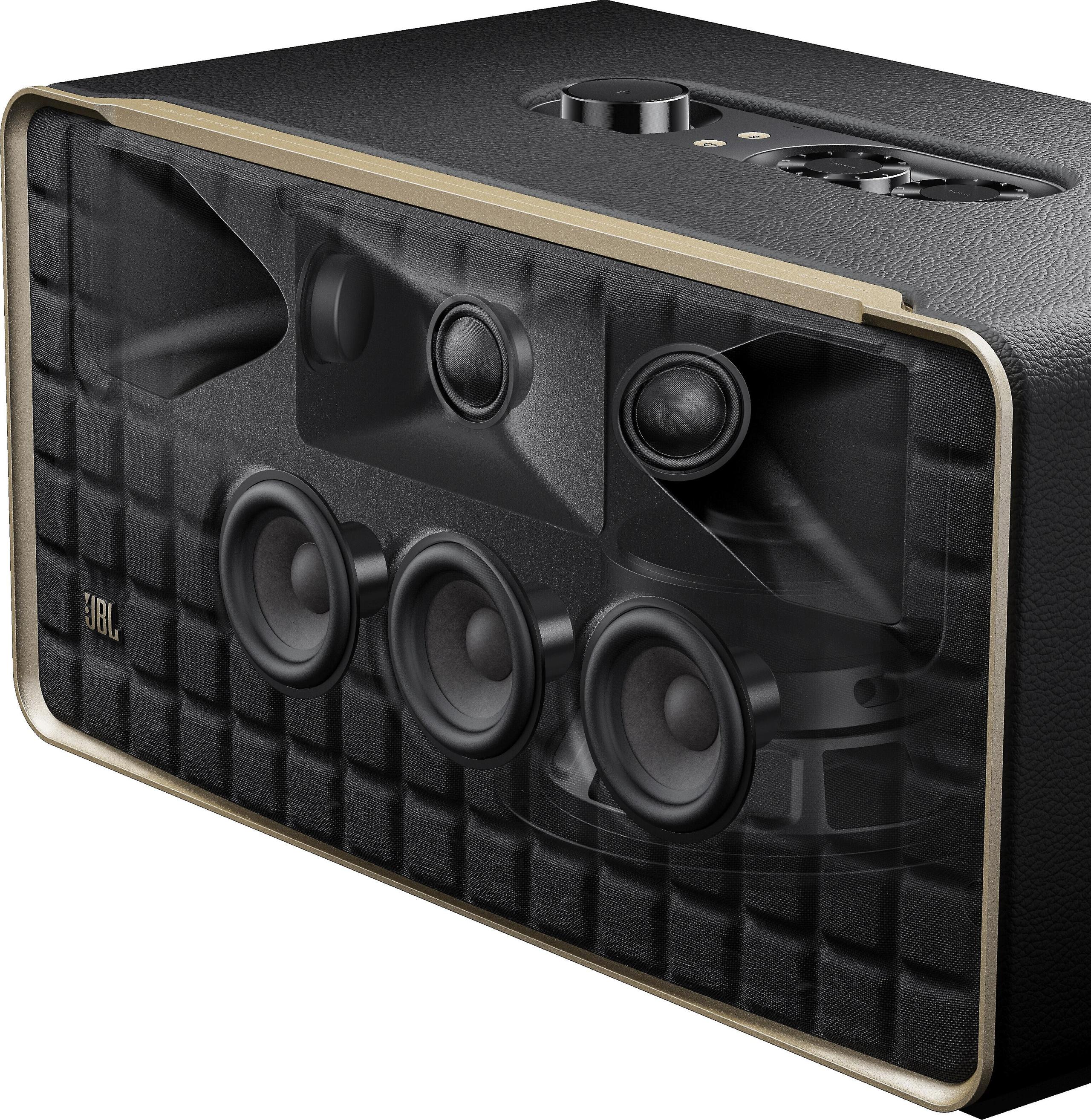
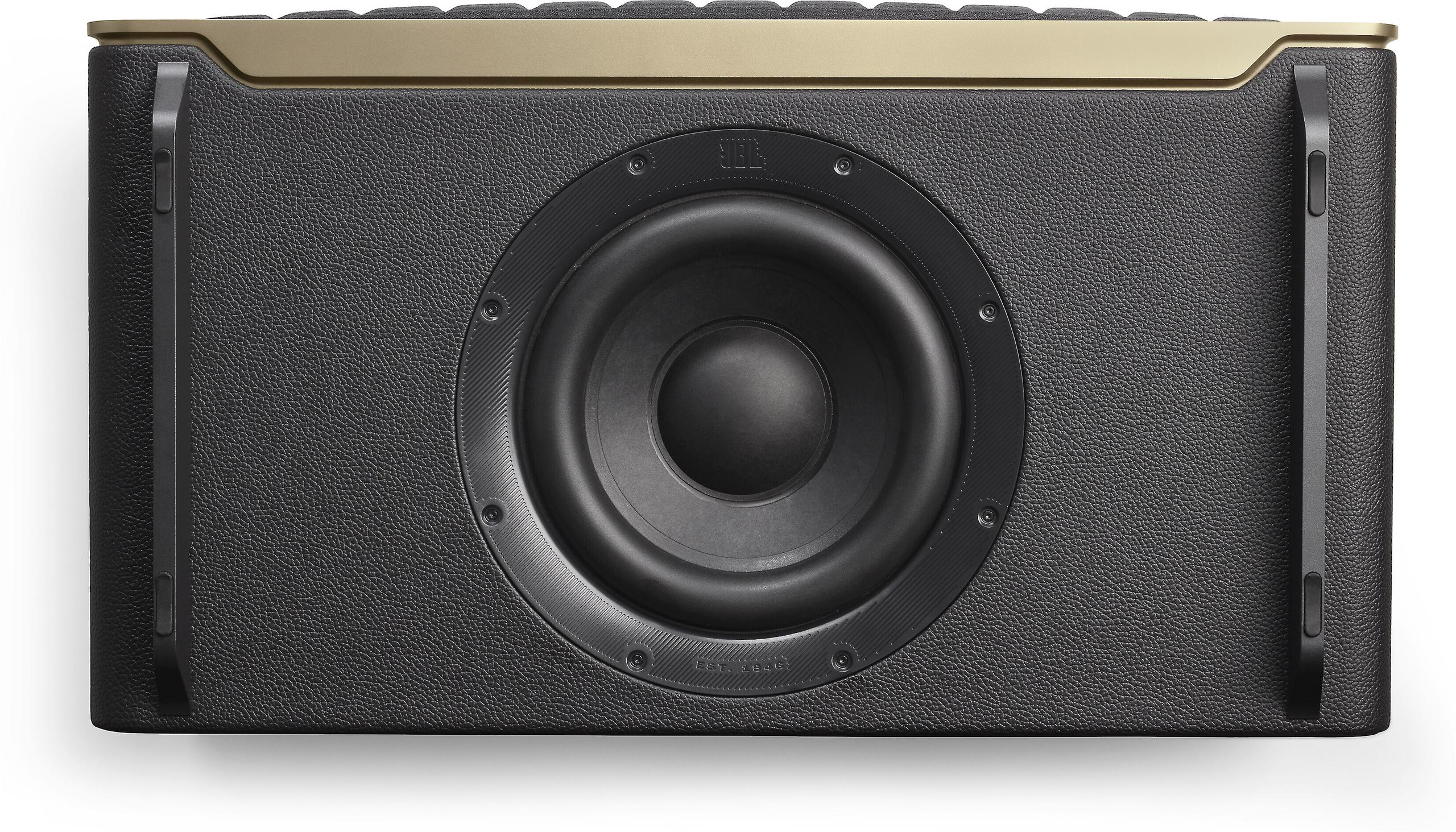
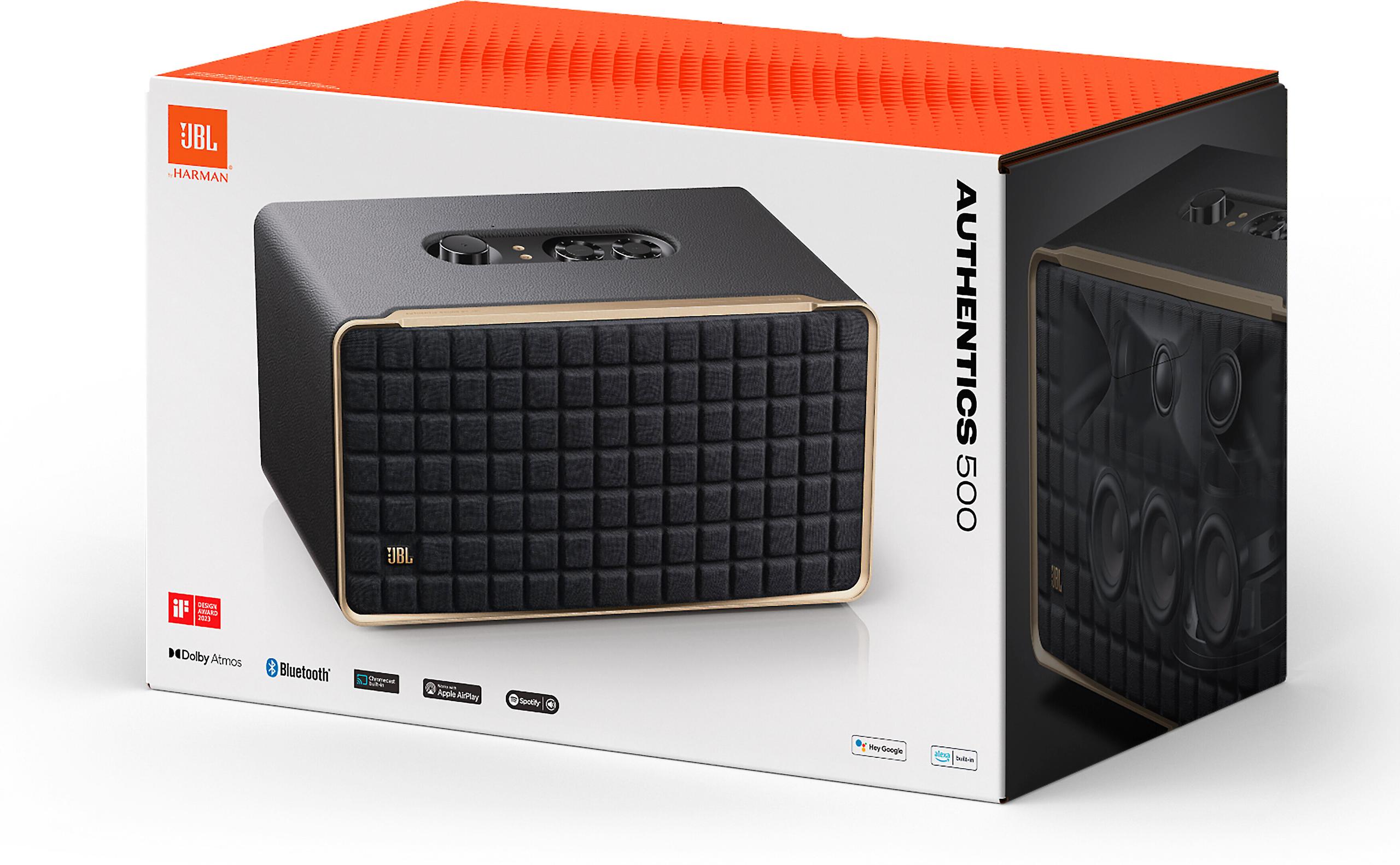
The Authentics 500 takes a different approach with its 3.1 channel system. The ".1" refers to a dedicated subwoofer channel, which in this case is a downward-firing 6.5" unit that creates powerful, room-filling bass. Its 270W total power output significantly exceeds the Marshall's 150W, though raw power numbers don't tell the whole story.
JBL's implementation of Dolby Atmos Music (a technology that creates a more three-dimensional soundstage) is particularly impressive. While not every music source supports Atmos, when playing compatible content, the spatial audio effect adds a noticeable sense of depth to the music.
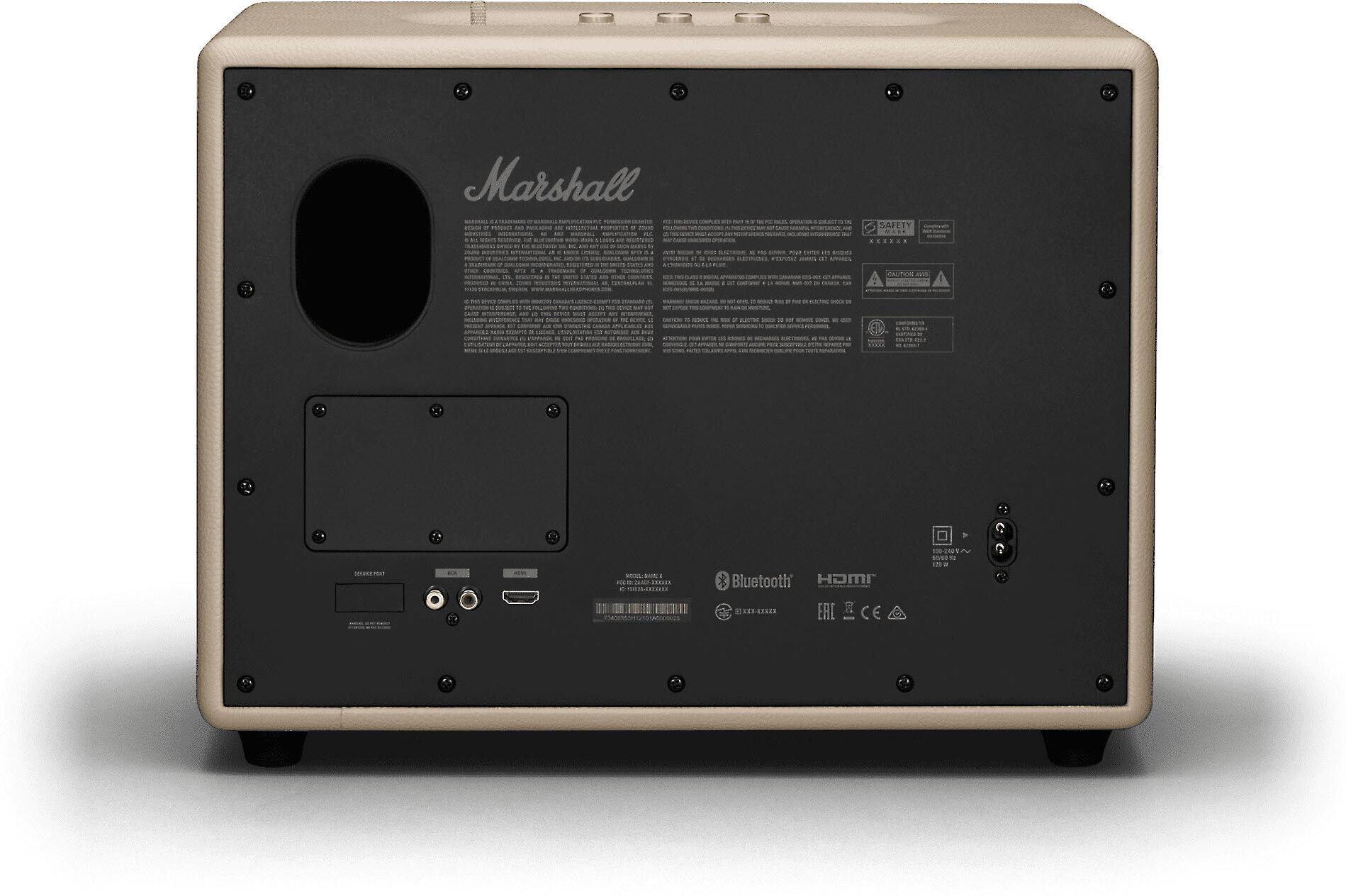
The difference in design philosophy becomes most apparent when looking at connectivity options:
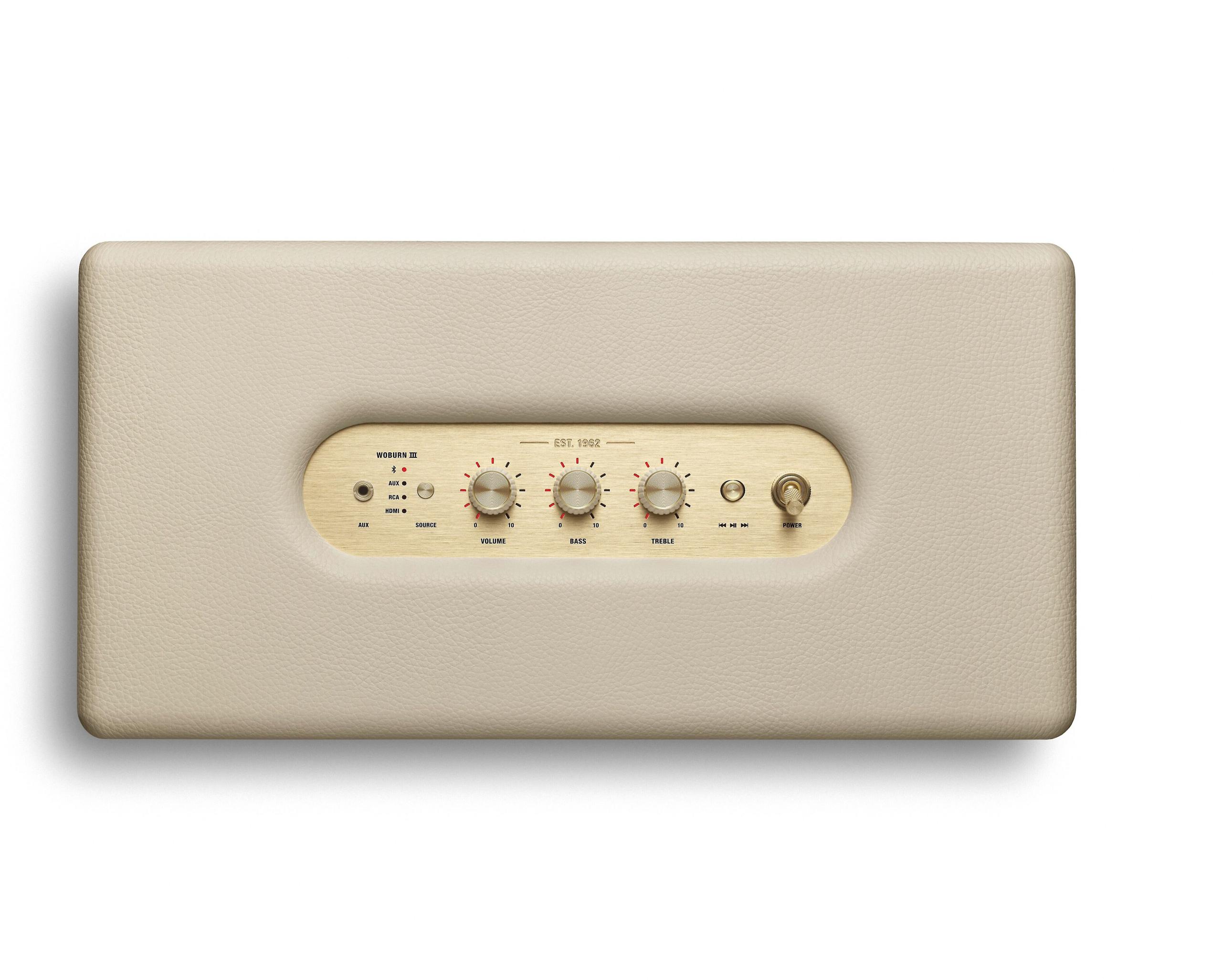
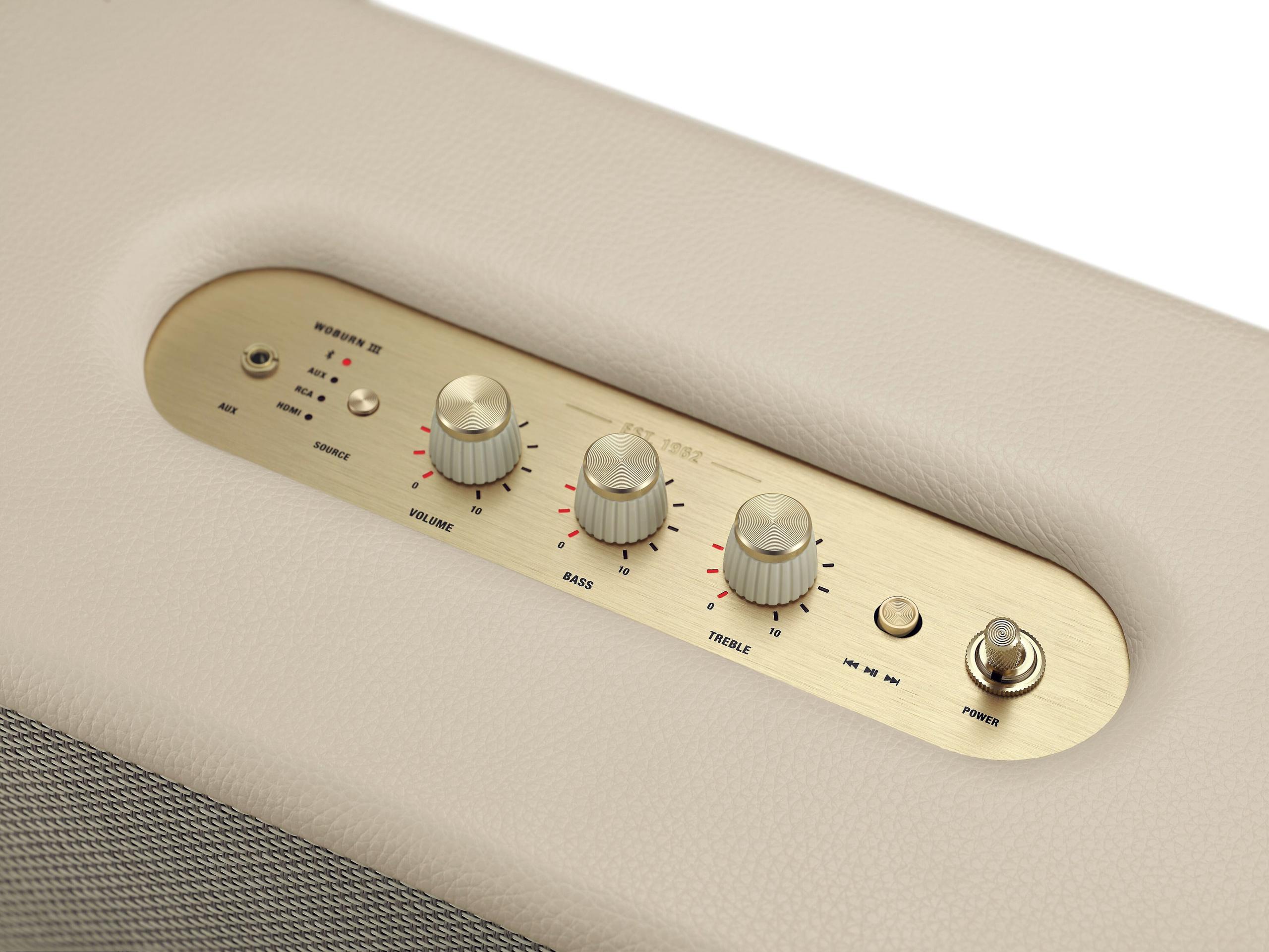
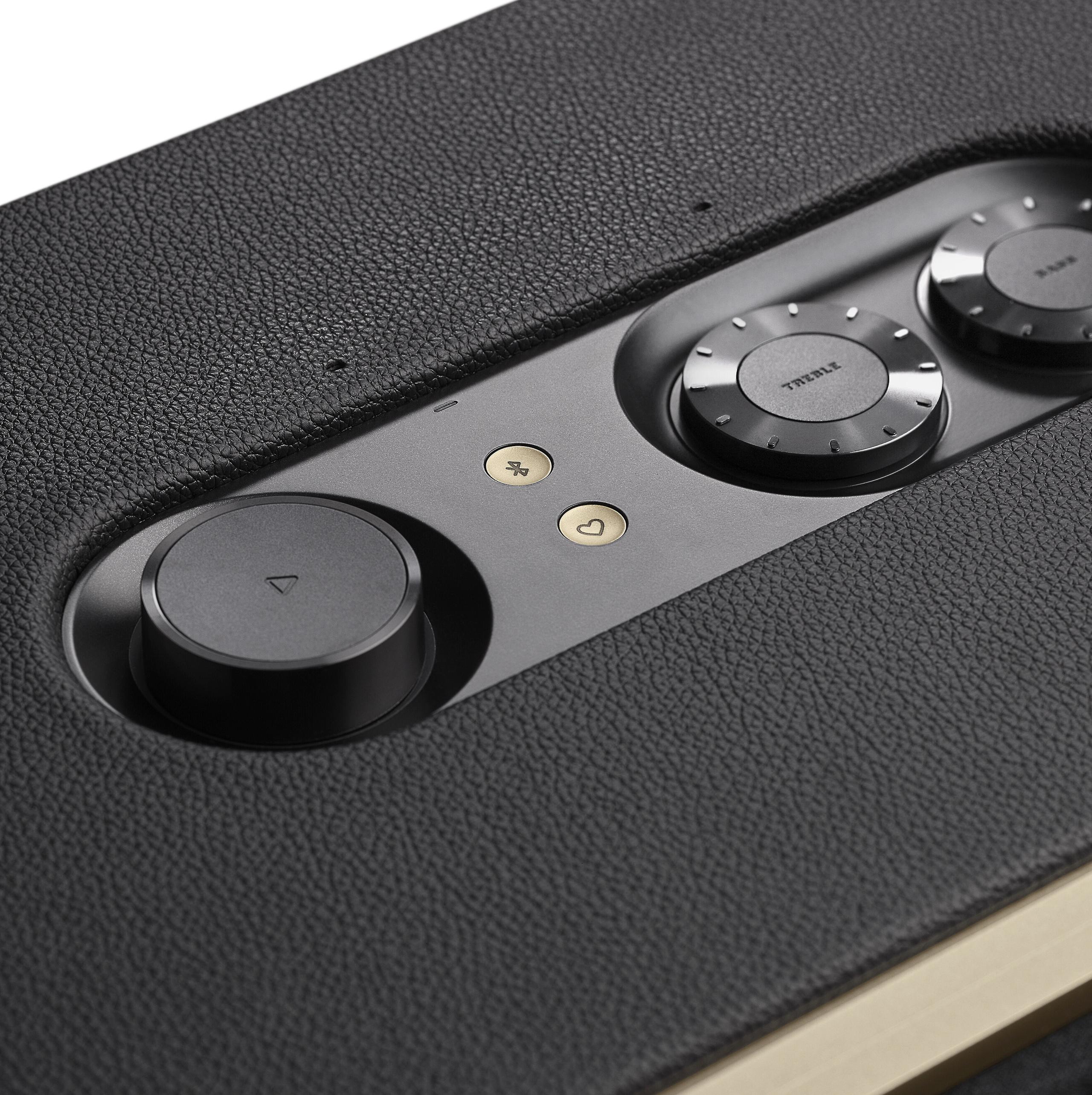
Having spent time with both speakers, their different strengths become clear. The Marshall Woburn III excels at pure music reproduction, particularly with rock, jazz, and acoustic genres where its precise stereo imaging and balanced frequency response shine. The physical controls provide a satisfying tactile experience, and the placement compensation feature effectively adjusts for nearby walls or corners.
The JBL Authentics 500 delivers more impactful bass and works exceptionally well for electronic music, hip-hop, and movie soundtracks. Its smart features make it more versatile - you can ask it to play specific songs, control smart home devices, or even set reminders. The self-tuning room correction is particularly impressive, automatically optimizing sound based on your room's acoustics.
Both speakers can serve as TV sound systems, but they approach this differently:
The Woburn III's HDMI ARC connection provides high-quality audio from your TV with minimal setup. It handles both stereo music and TV audio equally well, though it lacks surround sound capabilities. The Dynamic Loudness feature is particularly useful for late-night viewing, ensuring dialog remains clear at lower volumes.
The Authentics 500's 3.1 channel system provides more cinematic sound, with its dedicated subwoofer channel adding impact to movie explosions and sound effects. While it lacks HDMI input, it can connect to many smart TVs via Wi-Fi or Bluetooth, and its voice control capabilities make it easy to adjust volume or switch inputs without reaching for a remote.
Since their respective launches, both speakers have received several firmware updates:
At nearly identical price points ($579.99 for Marshall vs $549.99 for JBL), the value proposition depends entirely on your priorities:
The Marshall Woburn III offers:
The JBL Authentics 500 provides:
Choose the Marshall Woburn III if:
Choose the JBL Authentics 500 if:
Both speakers represent excellent value in their category, but they serve different user needs. The Marshall focuses on delivering exceptional audio quality with some modern conveniences, while the JBL creates a more connected, versatile experience that still delivers impressive sound.
The choice ultimately comes down to whether you prioritize pure audio performance or want a more feature-rich smart speaker that can serve as the hub of your connected home entertainment system.
| Marshall Woburn III ($579.99) | JBL Authentics 500 ($549.99) |
|---|---|
| Power Output - Determines maximum volume and dynamic range | |
| 150W total (90W woofer, 2x15W midrange, 2x15W tweeters) | 270W total (significantly more powerful for larger rooms) |
| Driver Configuration - Affects sound quality and clarity | |
| 6" woofer, 2x2" midrange, 2x0.75" tweeters | 6.5" subwoofer, 3x2.75" midrange, 3x25mm tweeters |
| Connectivity - Important for integration with other devices | |
| Bluetooth 5.2, HDMI ARC, RCA, 3.5mm aux | Bluetooth 5.3, Wi-Fi, AirPlay, Chromecast, Ethernet, USB |
| Smart Features - Determines integration with modern homes | |
| Basic app control, no voice assistants | Alexa & Google Assistant, self-tuning room correction |
| Audio Processing - Affects sound quality in different situations | |
| Dynamic Loudness, Placement Compensation | Dolby Atmos, Advanced room correction |
| Physical Controls - Important for daily interaction | |
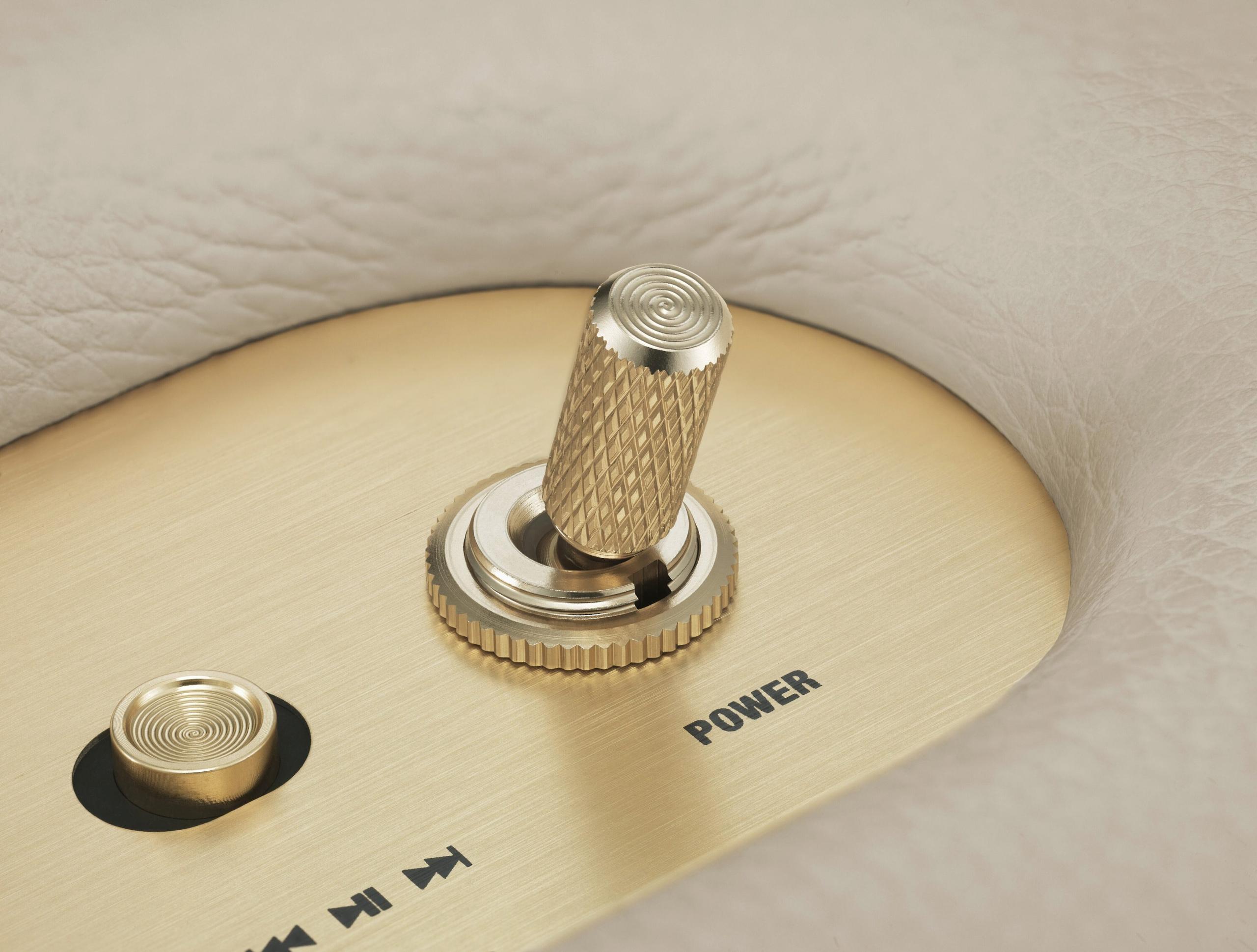
| Premium brass knobs for volume/bass/treble | Touch-sensitive controls, app-based adjustment |
| Size & Weight - Consider your space limitations | |
| 15.7" x 12.5" x 9", 16.42 lbs | 17.6" x 9.4" x 10", 17.2 lbs |
| Special Features - Unique capabilities that may matter to you | |
| HDMI ARC for TV audio, vintage amp styling | Voice control, multi-room audio, streaming service integration |
| Frequency Response - Range of sound reproduction | |
| 35Hz - 20kHz | 40Hz - 20kHz |
| Best Use Cases - Where each speaker excels | |
| Music-focused listening, TV audio integration | Smart home hub, multi-room audio, home theater |
The JBL Authentics 500 ($549.99) is significantly more powerful with 270W total output, compared to the Marshall Woburn III ($579.99) at 150W. This means the JBL can fill larger rooms more easily with sound.
Both excel at music playback but in different ways. The Marshall Woburn III offers warmer, more balanced sound that's great for rock and acoustic music. The JBL Authentics 500 provides stronger bass response and works better for electronic music and hip-hop.
Yes, but differently. The Marshall Woburn III has HDMI ARC for direct TV connection. The JBL Authentics 500 can connect via Wi-Fi or Bluetooth to smart TVs but lacks HDMI.
The JBL Authentics 500 offers significantly more smart features, including Alexa and Google Assistant, AirPlay, and Chromecast. The Marshall Woburn III is more basic with just app control and no voice assistants.
At similar prices, the JBL Authentics 500 offers more features and power for $549.99, while the Marshall Woburn III at $579.99 focuses on superior sound quality and build materials.
Yes, both speakers offer Bluetooth connectivity. The JBL Authentics 500 adds Wi-Fi streaming options like AirPlay and Chromecast, while the Marshall Woburn III uses Bluetooth 5.2 with multipoint connection.
The JBL Authentics 500 delivers stronger bass with its 6.5" down-firing subwoofer. The Marshall Woburn III offers more controlled, balanced bass from its 6" woofer.
Only the JBL Authentics 500 works with voice assistants (both Alexa and Google Assistant). The Marshall Woburn III doesn't support voice commands.
The Marshall Woburn III might be better for apartments due to its Dynamic Loudness feature for balanced sound at lower volumes. The JBL Authentics 500 can be louder than needed for apartment living.
Both speakers support multiple device connections. The Marshall Woburn III offers Bluetooth multipoint for two devices, while the JBL Authentics 500 supports multiple connections through various wireless methods.
The Marshall Woburn III features premium build quality with brass knobs and classic construction. The JBL Authentics 500 is well-built but focuses more on modern materials and design.
The Marshall Woburn III has simple plug-and-play setup with basic app features. The JBL Authentics 500 requires more initial setup for smart features but includes automatic room correction.
We've done our best to create useful and informative comparisons to help you decide what product to buy. Our research uses advanced automated methods to create this comparison and perfection is not possible - please contact us for corrections or questions. These are the sites we've researched in the creation of this article: bestbuy.com - crutchfield.com - rtings.com - idownloadblog.com - digit.in - crutchfield.com - epicrewards.com.ph - ione.com.kh - youtube.com - onward.ph - economictimes.indiatimes.com - 9to5google.com - youtube.com - community.roonlabs.com - techradar.com - mm.jbl.com - jbl.com - youtube.com - greentoe.com - jbl.com - projectorscreen.com - rtings.com - projectorscreenstore.com - stereoguide.com

Privacy Policy
Terms and Conditions - Affiliate Policy
Home Security
© Copyright 2008-2026.
11816 Inwood Rd #1211, Dallas, TX 75244