


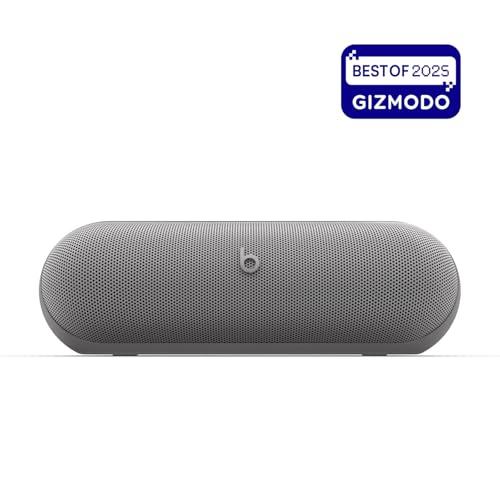
When you're shopping for a Bluetooth speaker today, you're essentially choosing between two completely different philosophies. Do you want something you can grab and take anywhere, or are you looking for a permanent audio upgrade for your home? The Beats Pill Kim Kardashian Edition and Marshall Woburn III represent these opposing approaches perfectly—and at the time of writing, they sit at very different price points that reflect their distinct missions.
The portable speaker market has exploded over the past decade, but it's created some confusion. Not every "Bluetooth speaker" is designed for the same job. Understanding this fundamental difference will save you from buyer's remorse and help you pick the right tool for your audio needs.
Before diving into specifics, it's crucial to understand what separates portable speakers from home audio systems. Portable speakers prioritize battery life, durability, and convenience over raw sound quality. They're engineered to work in unpredictable environments—poolside, at the beach, in your backpack. Home speakers, meanwhile, can focus entirely on sound quality since they don't need to conserve battery or survive being dropped.
This isn't just about size. A portable speaker uses a switching amplifier (also called a Class D amplifier) that's incredibly efficient but makes some sonic compromises. It needs to squeeze every minute of battery life possible while staying lightweight. A home speaker can use more power-hungry amplification that delivers better sound quality because it's always plugged into the wall.
The Beats Pill Kim Kardashian Edition, released in 2024, exemplifies the modern portable approach. The Marshall Woburn III, also from recent years, represents the premium home audio category. Both use Bluetooth connectivity, but that's where their similarities end.
The 2024 Beats Pill marked a significant comeback for the Beats portable line after the previous model was discontinued years ago. Apple completely redesigned the speaker from the ground up, addressing the major complaints from the earlier generation while incorporating lessons learned from their AirPods and HomePod development.
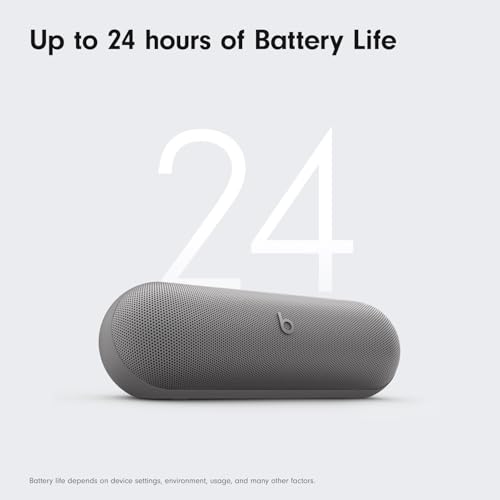
The standout feature of the Beats Pill is its genuine 24-hour battery life. This isn't marketing fluff—independent testing confirms it can actually hit this number at moderate volume levels. For context, most portable speakers claiming 20+ hours barely reach 8-10 hours in real-world use.
But here's what makes it even better: the Fast Fuel charging technology gives you two hours of playback from just a 10-minute charge. This addresses the biggest portable speaker frustration—realizing your speaker is dead right when you need it. The USB-C charging port also works in reverse, letting the Beats Pill function as a power bank for your phone. This dual-purpose design shows Apple's understanding of how people actually use portable speakers.
The Beats Pill's audio design centers around a custom racetrack-shaped woofer. Unlike traditional round drivers, this oval shape displaces 90% more air while fitting in the same compact enclosure. More air displacement means deeper bass without making the speaker bigger—exactly what you want in a portable design.
The frequency response spans from 56.6Hz to 19.6kHz, which covers the full range of most music content. That 56.6Hz low end is impressive for a speaker this size; most portable speakers struggle to reproduce anything below 80Hz with authority. The separate tweeter housing reduces distortion, particularly important when you're listening at higher volumes outdoors where ambient noise forces you to crank it up.
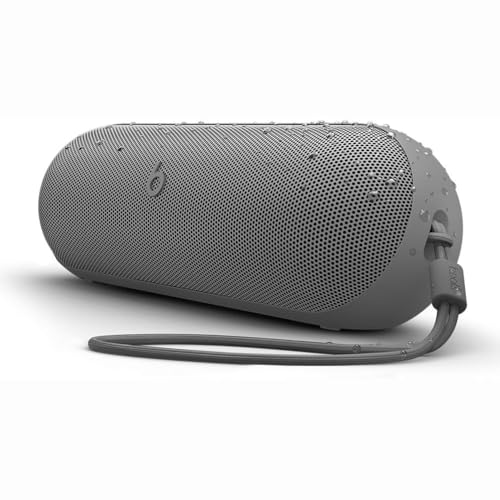
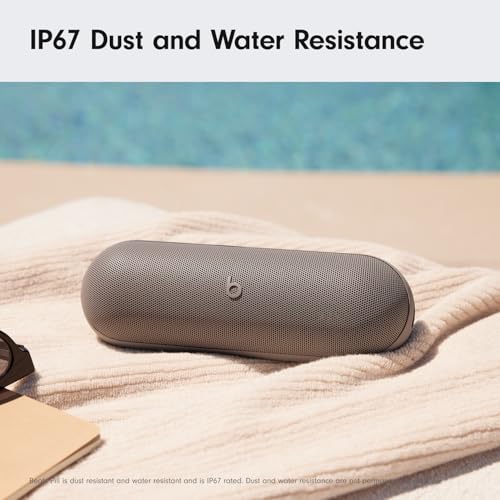
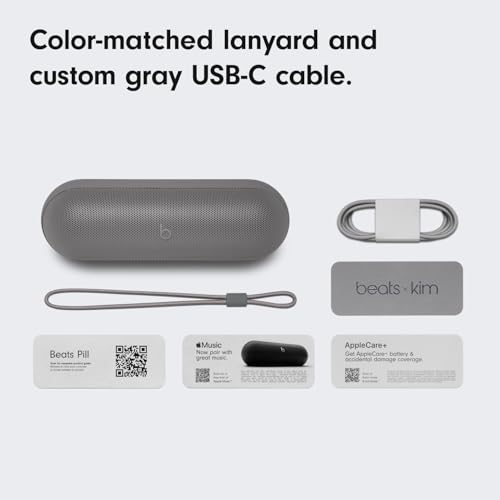
The IP67 rating means the Beats Pill can survive complete submersion in water up to one meter deep for 30 minutes. More practically, this means pool parties, beach trips, and unexpected rain won't kill your speaker. The soft-grip silicone backing provides protection from drops while the removable lanyard makes it nearly impossible to lose.
IP ratings might seem like alphabet soup, but they matter. The first digit (6) means complete dust protection—no particles can get inside. The second digit (7) indicates waterproofing beyond just splashes. Many "water-resistant" speakers only achieve IPX4 or IPX5, which means they can handle splashes but not submersion.
The Beats Pill uses Bluetooth 5.3, offering a 328-foot range in open spaces. This extended range is particularly noticeable outdoors where there are fewer obstructions. The one-touch pairing with both iOS and Android devices eliminates the usual Bluetooth frustrations.
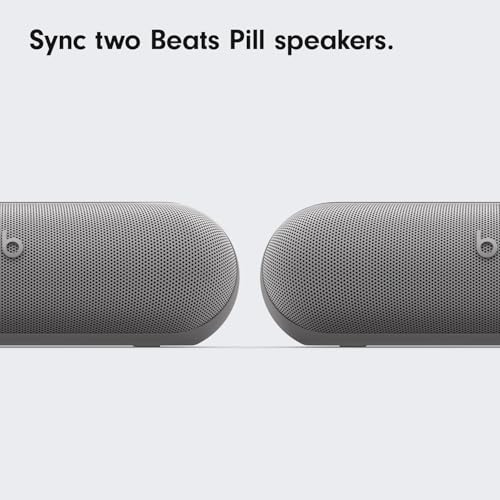
The dual-speaker modes set it apart from basic portable speakers. Amplify mode pairs two Beats Pills for double the volume output, while Stereo mode creates true left/right channel separation. This flexibility means you can start with one speaker and upgrade to a stereo pair later—something impossible with traditional home speakers.
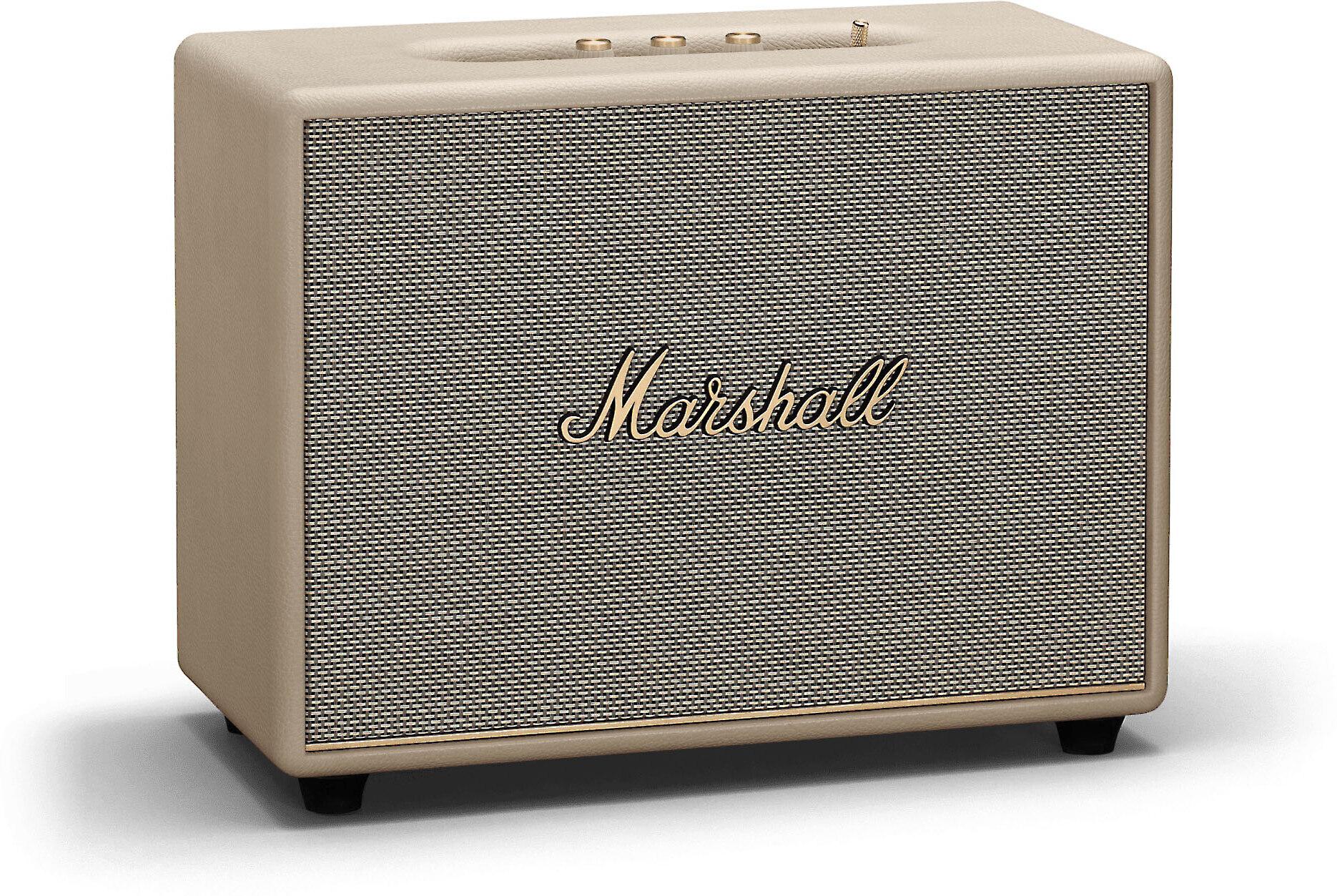
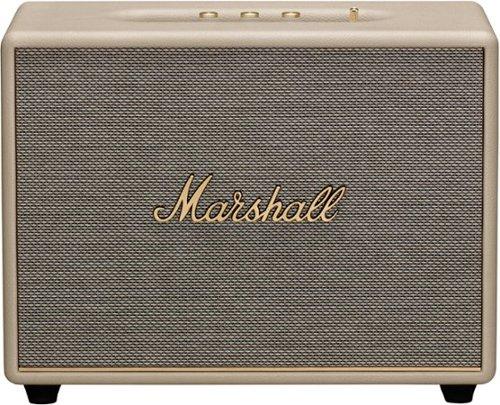
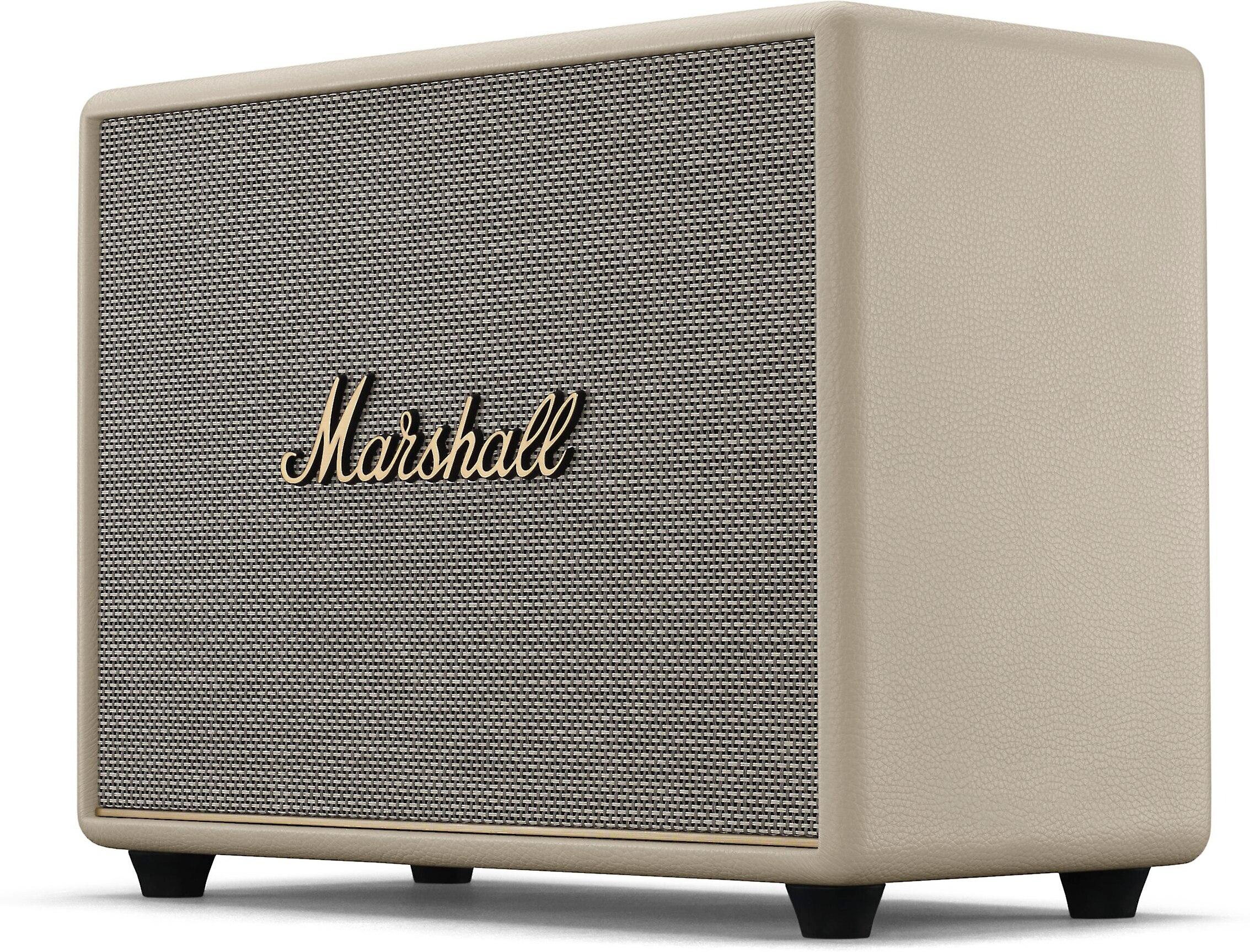
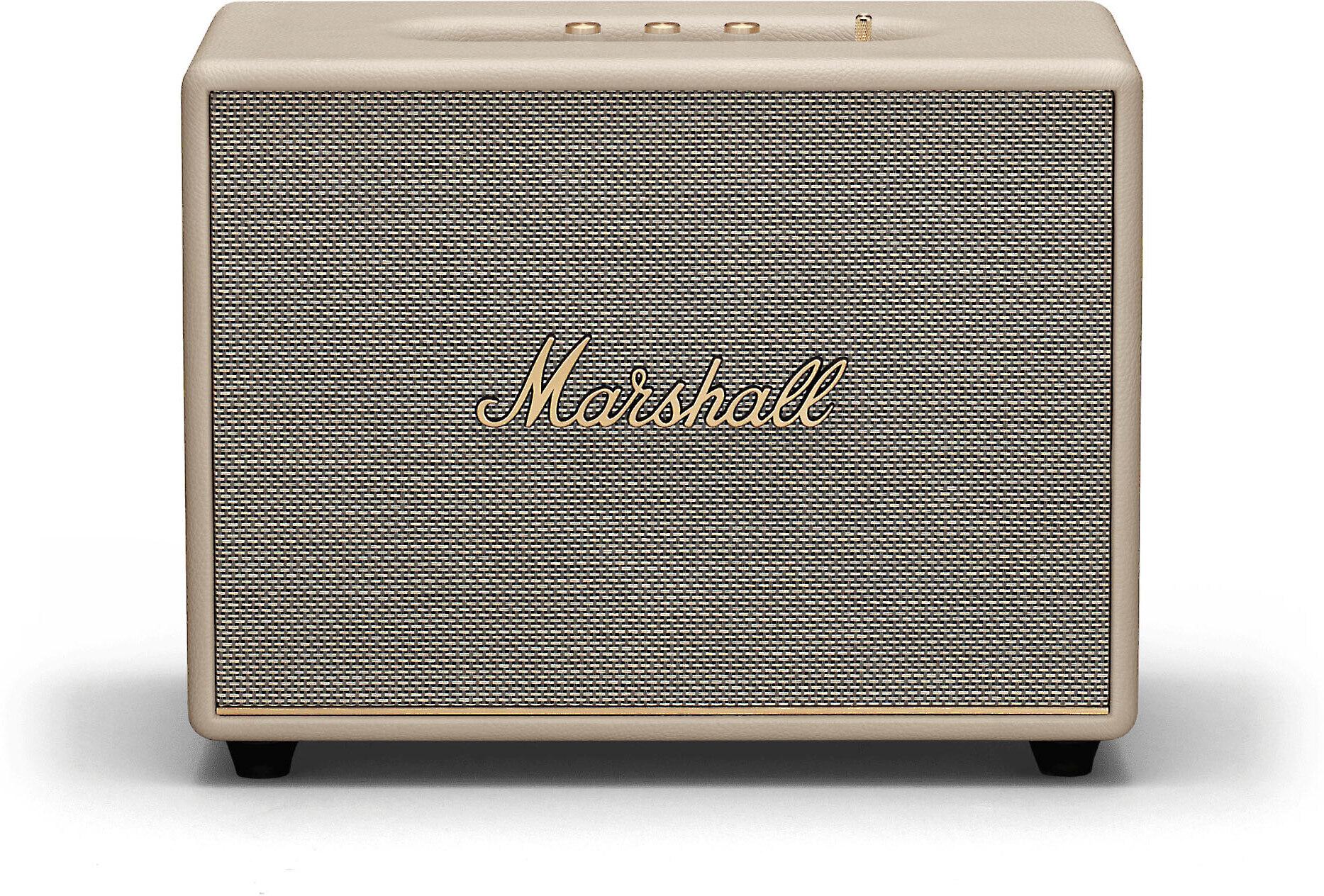
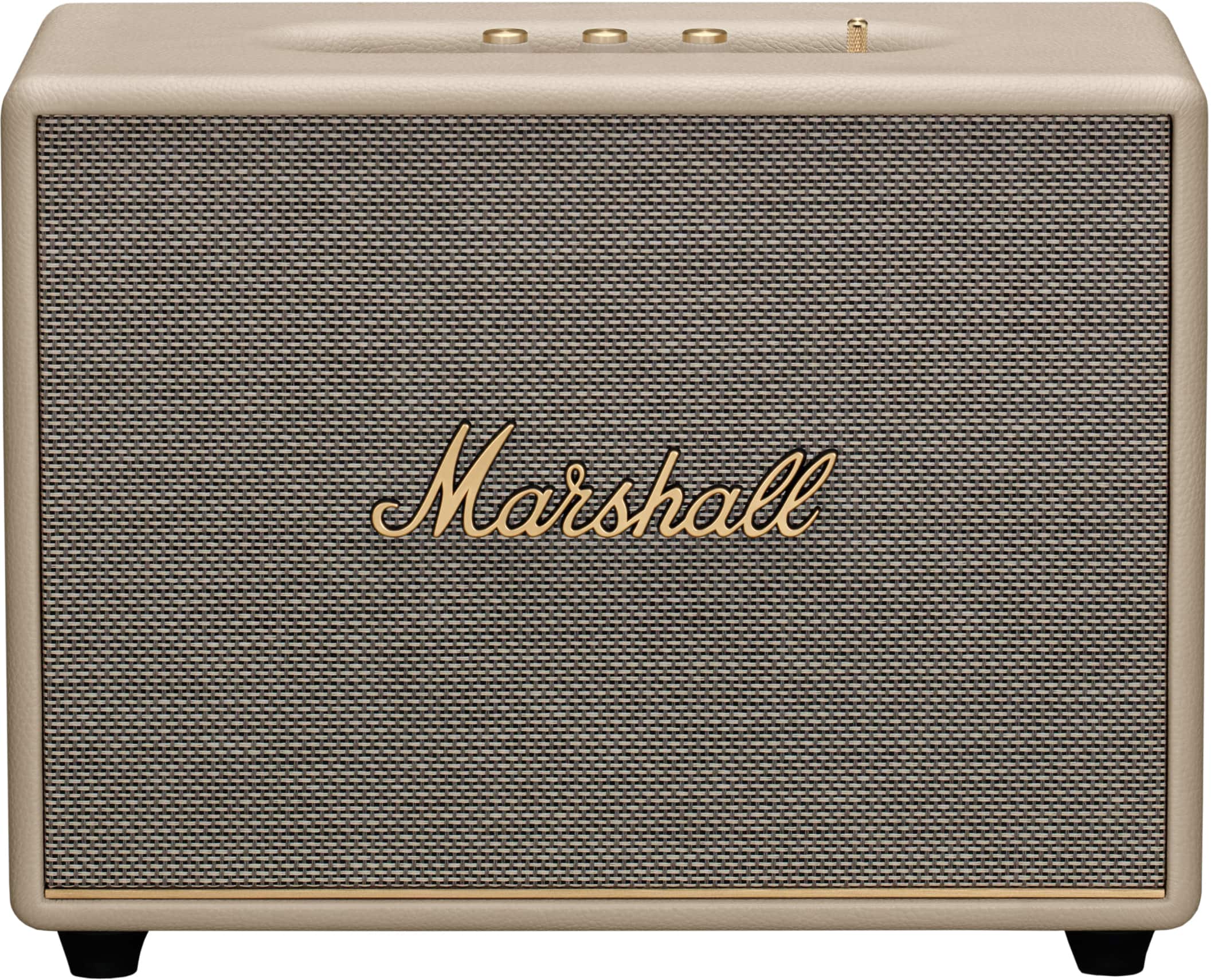
The Marshall Woburn III takes the opposite approach: maximum sound quality with zero portability concerns. Released as part of Marshall's third-generation home speaker line, it incorporates decades of amplifier design experience into a modern Bluetooth package.
At 150 watts total system power, the Marshall Woburn III delivers roughly 6-10 times more power than the Beats Pill. This isn't just about volume—more power means better dynamic range, cleaner reproduction at high volumes, and the ability to drive larger drivers effectively.
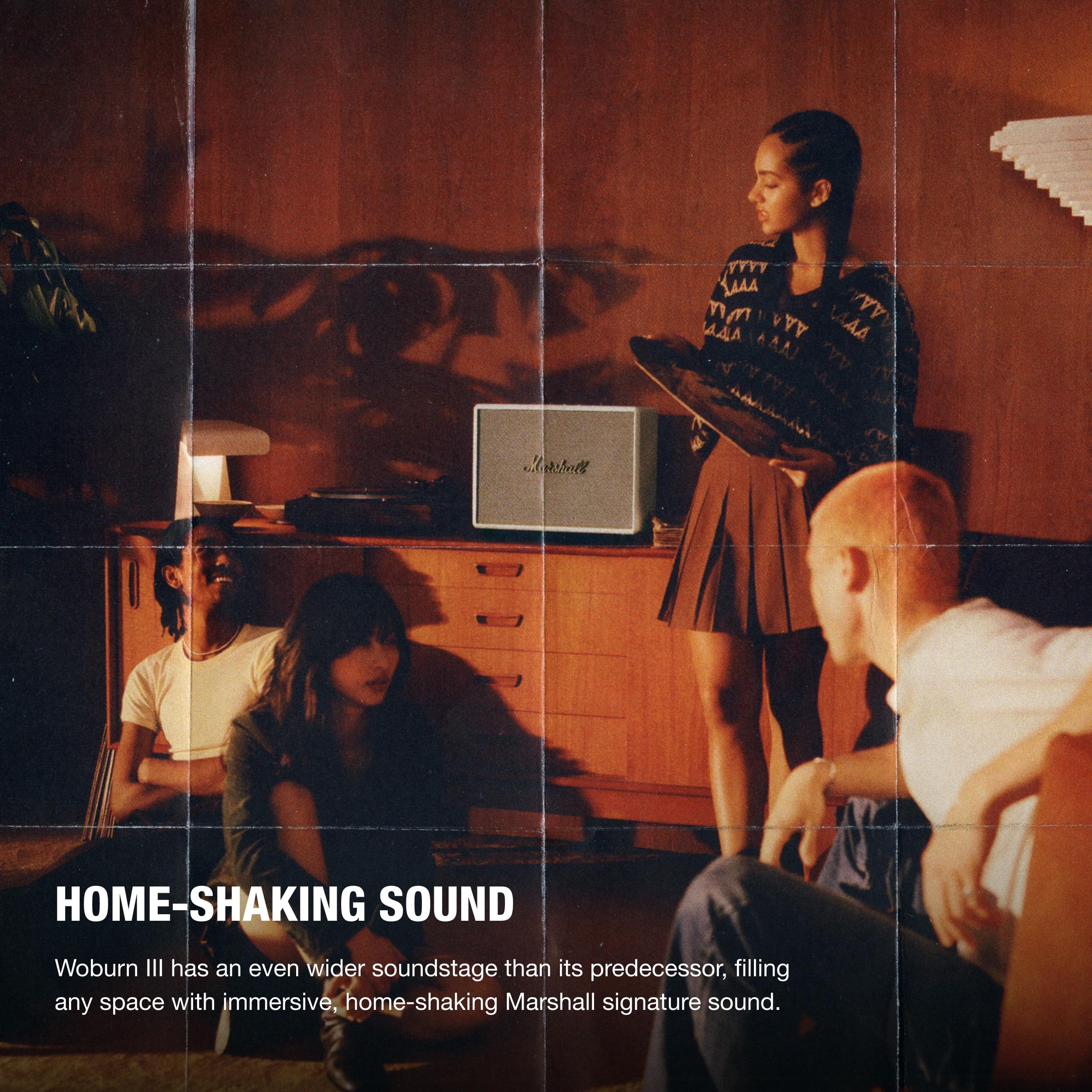
The three-way driver system is where the Marshall really shines. Most speakers use a two-way design (woofer plus tweeter) that asks each driver to handle a wide frequency range. The Marshall Woburn III adds dedicated 2-inch midrange drivers, allowing each driver to specialize in a narrower frequency band. This specialization reduces distortion and improves clarity, particularly in the critical midrange where vocals and most instruments live.
The 6-inch woofer, powered by 90 watts, can move enough air to reproduce bass down to 35Hz—nearly the limit of human hearing. That's a full octave lower than the Beats Pill, translating to the kind of chest-thumping bass you feel in live venues.
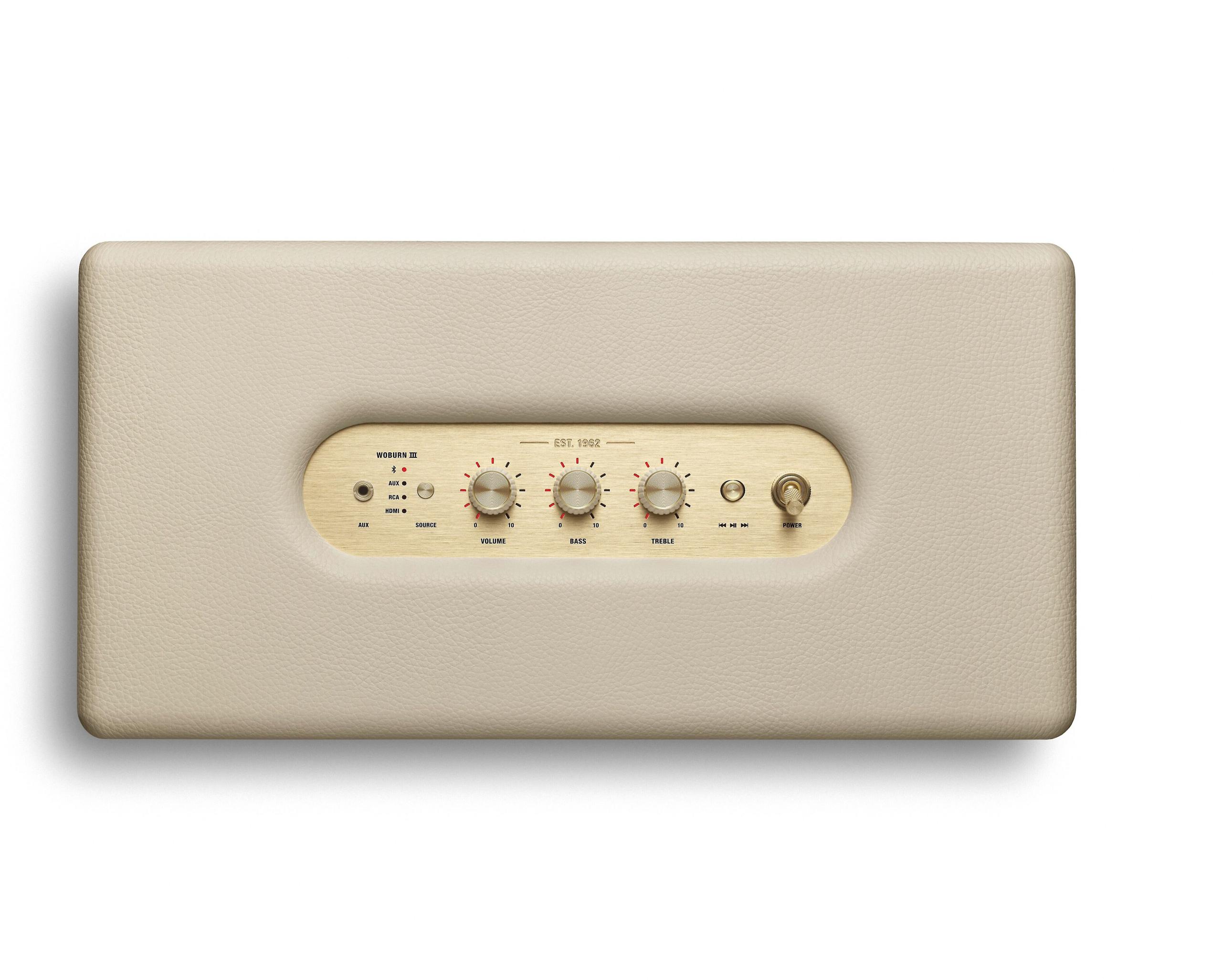
The Marshall Woburn III includes several sophisticated features rarely found in consumer speakers. Dynamic Loudness automatically adjusts the frequency balance as you change volume. Human hearing is less sensitive to bass and treble at lower volumes, so this feature compensates by boosting these frequencies when you're listening quietly. It's similar to the "loudness" button on vintage stereos, but implemented intelligently through digital processing.
Placement Compensation analyzes room acoustics and adjusts the sound accordingly. If you place the speaker near a wall or in a corner, bass frequencies get boosted by boundary reflections. The Marshall detects this through its built-in microphones and automatically reduces bass output to maintain balanced sound. This kind of room correction was previously only found in high-end home theater systems.
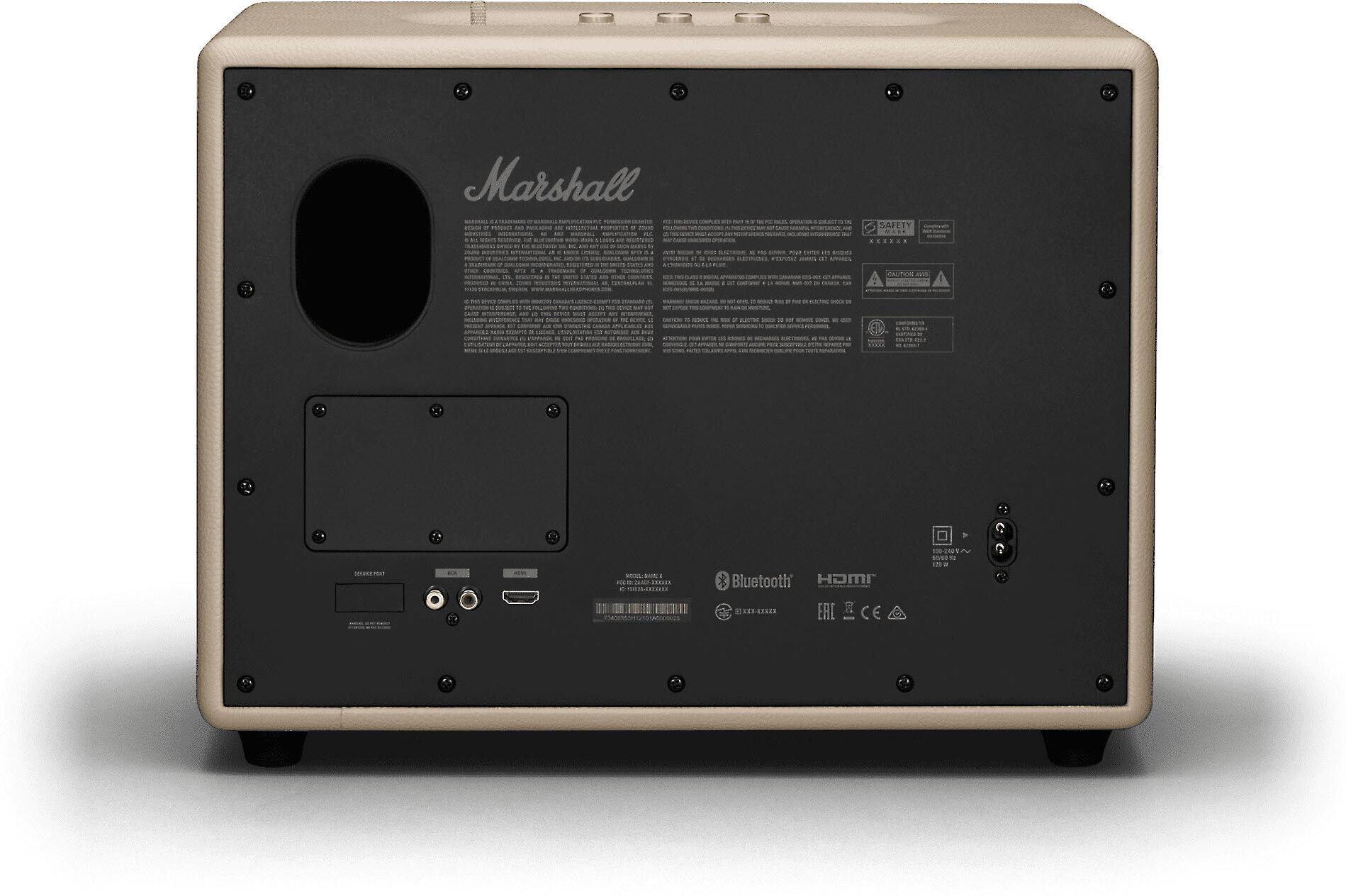
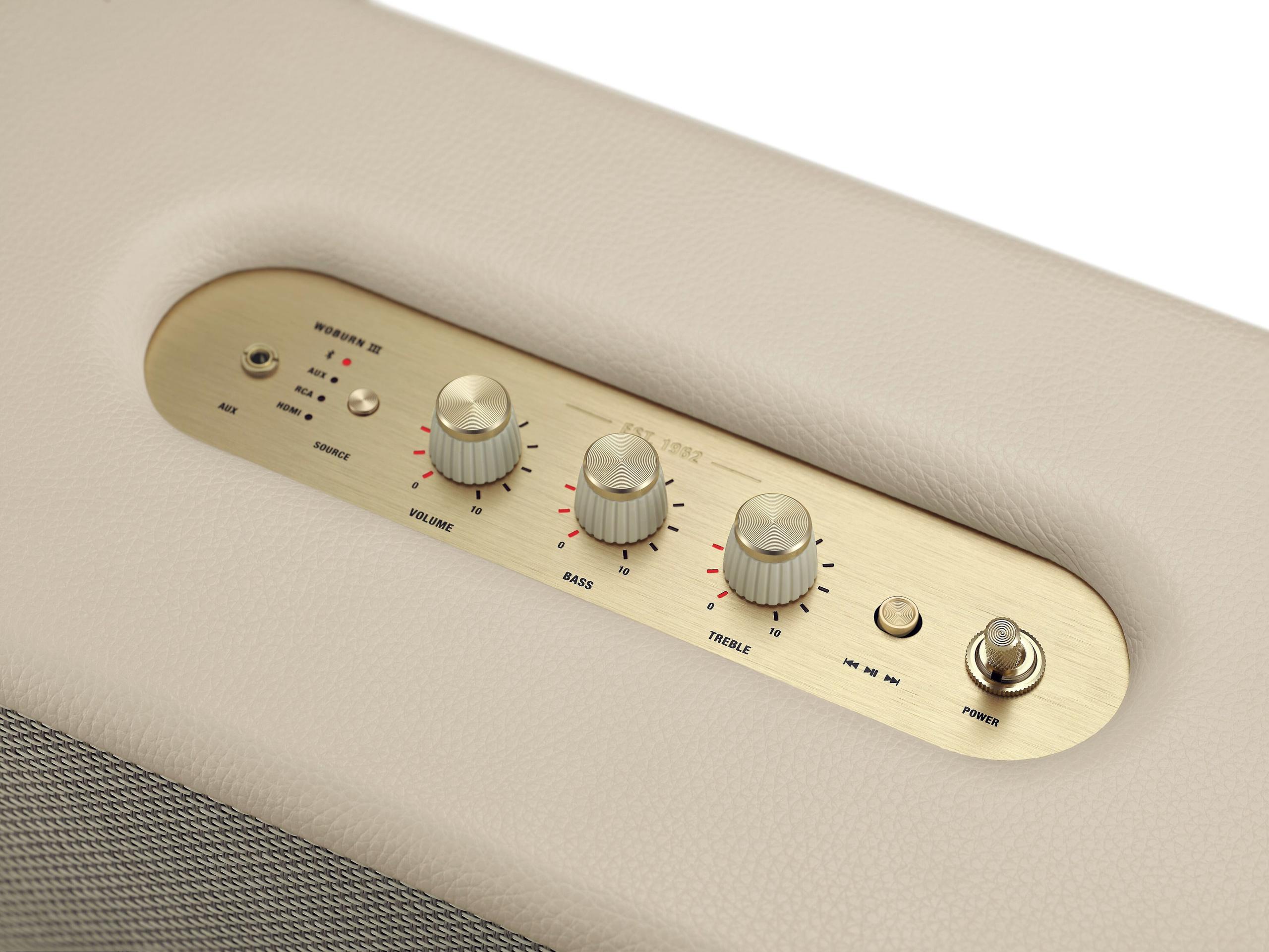
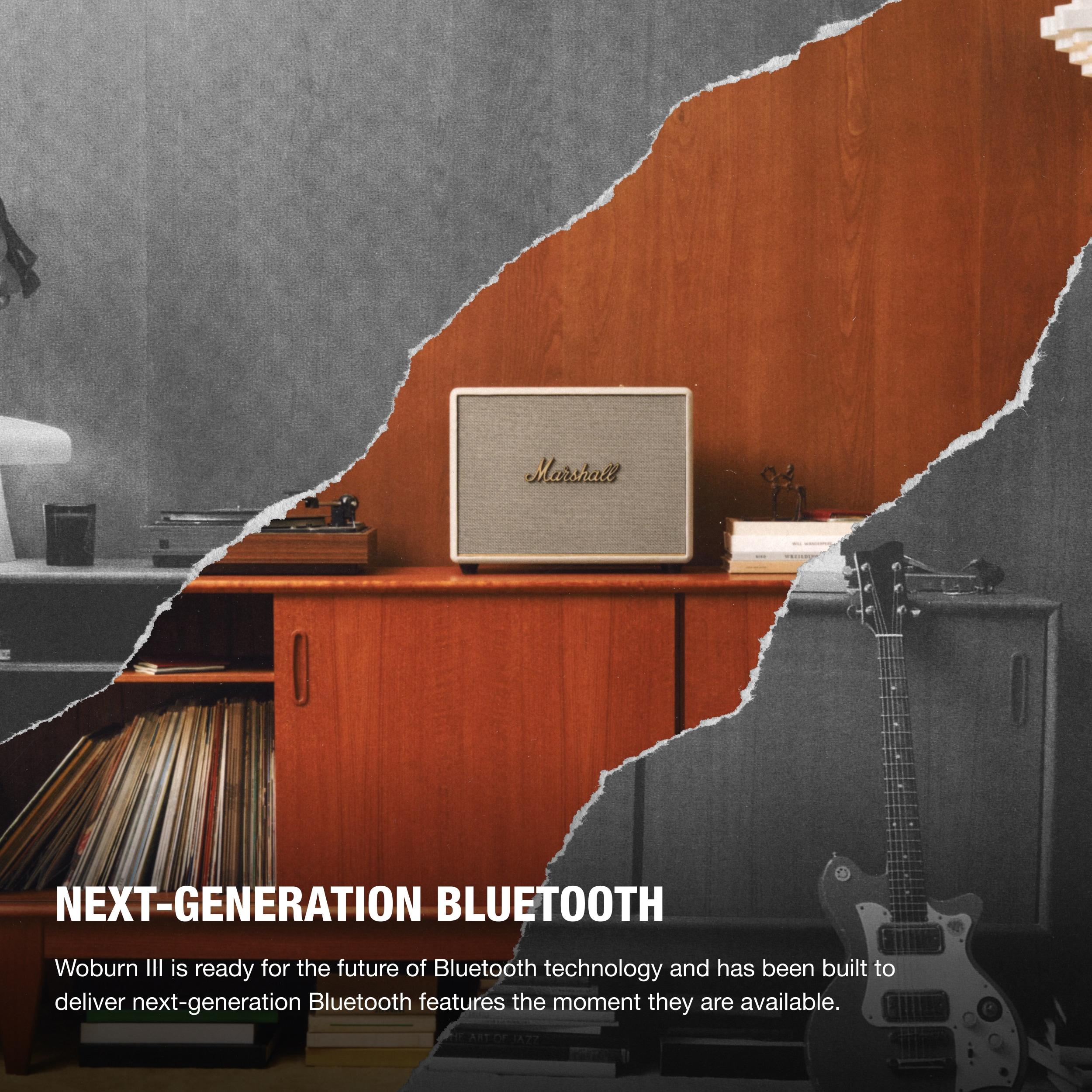
Beyond Bluetooth 5.2, the Marshall Woburn III offers multiple wired inputs that matter for serious listening. The HDMI ARC connection allows it to serve as your TV's sound system, supporting high-resolution PCM audio up to 24-bit/96kHz. This is particularly valuable since most modern TVs have terrible built-in speakers.
ARC stands for Audio Return Channel—it lets your TV send audio back to the speaker through the same HDMI cable. This eliminates the need for separate audio cables and allows the Marshall to automatically turn on when you start watching TV.
The RCA and 3.5mm inputs accommodate older devices and provide options for lossless digital-to-analog conversion. While Bluetooth is convenient, wired connections avoid the compression inherent in wireless audio transmission.
The fundamental difference comes down to physics. The Marshall Woburn III's larger cabinet volume, bigger drivers, and higher power output create a more authoritative sound across all frequencies. Bass reproduction is particularly dramatic—the Marshall's 35Hz capability versus the Beats' 56.6Hz might not seem like much on paper, but that's the difference between feeling bass lines and just hearing them.
Maximum SPL (Sound Pressure Level) tells the volume story. The Marshall Woburn III achieves 100.5 dB at one meter, which is genuinely loud—suitable for parties or large rooms. The Beats Pill, while respectable for its size, simply cannot match this output without significant distortion.
However, the Beats Pill holds its own in small-to-medium spaces. Its balanced frequency response and surprisingly good bass for the size make it perfectly adequate for most casual listening scenarios. The question isn't whether the Marshall sounds better—it does—but whether you need that level of performance.
For home theater use, the Marshall Woburn III presents a compelling alternative to soundbars. The HDMI ARC connection provides seamless integration with modern TVs, automatically switching inputs and adjusting volume. The wide soundstage created by the angled tweeters helps with movie dialogue clarity and stereo imaging.
The Dynamic Loudness feature becomes particularly valuable for TV watching, automatically boosting dialogue clarity at lower volumes without disturbing neighbors. Night Mode further reduces dynamic range, keeping explosions from waking the house while maintaining dialogue intelligibility.
The Beats Pill can technically connect to TVs via Bluetooth, but the experience isn't optimized for video content. Audio delay issues and the lack of automatic input switching make it impractical as a primary TV speaker.
At the time of writing, these speakers occupy very different price tiers. The Beats Pill Kim Kardashian Edition sits in the premium portable category, while the Marshall Woburn III commands significantly more money as a home audio solution.
The Beats Pill's value proposition centers on versatility. You're paying for the ability to use quality audio anywhere—poolside, camping, traveling, or just moving between rooms. The 24-hour battery, weather resistance, and dual-speaker capability justify the premium over basic Bluetooth speakers.
The Marshall Woburn III's higher price reflects its specialized mission. You're investing in sound quality that approaches dedicated hi-fi systems, plus the convenience of modern connectivity. For users planning to upgrade their home audio, the Marshall offers better long-term value than buying separate speakers and amplifiers.
The Beats Pill Kim Kardashian Edition makes sense if your listening happens in multiple locations. College students, frequent travelers, and anyone who enjoys outdoor activities will appreciate its portability and durability. The ability to use it as a phone charger adds practical value beyond audio.
The dual-speaker modes provide an upgrade path—start with one for personal use, then add a second for stereo sound or parties. This flexibility is impossible with traditional home speakers.
The Marshall Woburn III justifies its higher cost if you're looking for a permanent home audio upgrade. It's particularly compelling as a TV speaker replacement or primary music system for living rooms, home offices, or dedicated listening spaces.
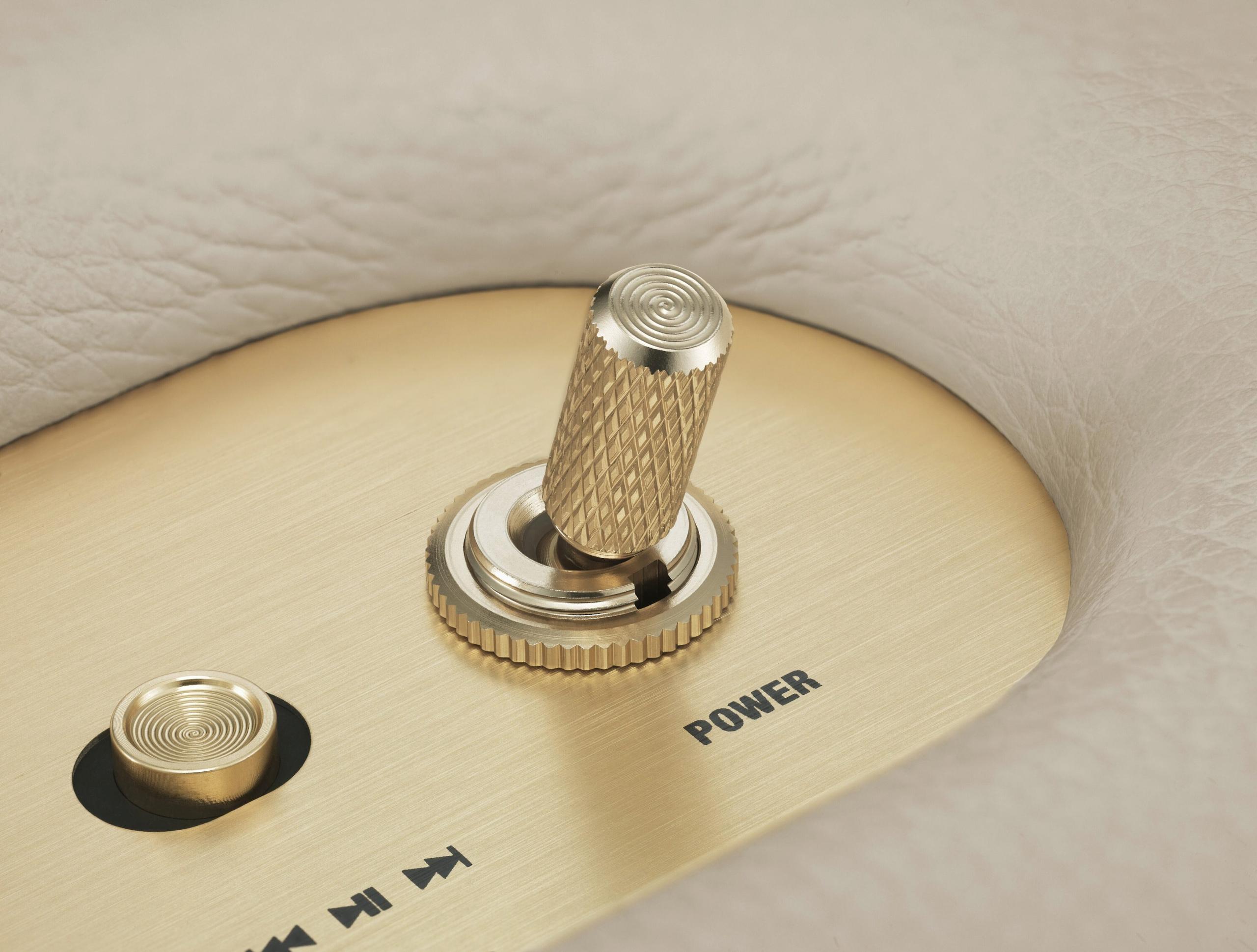
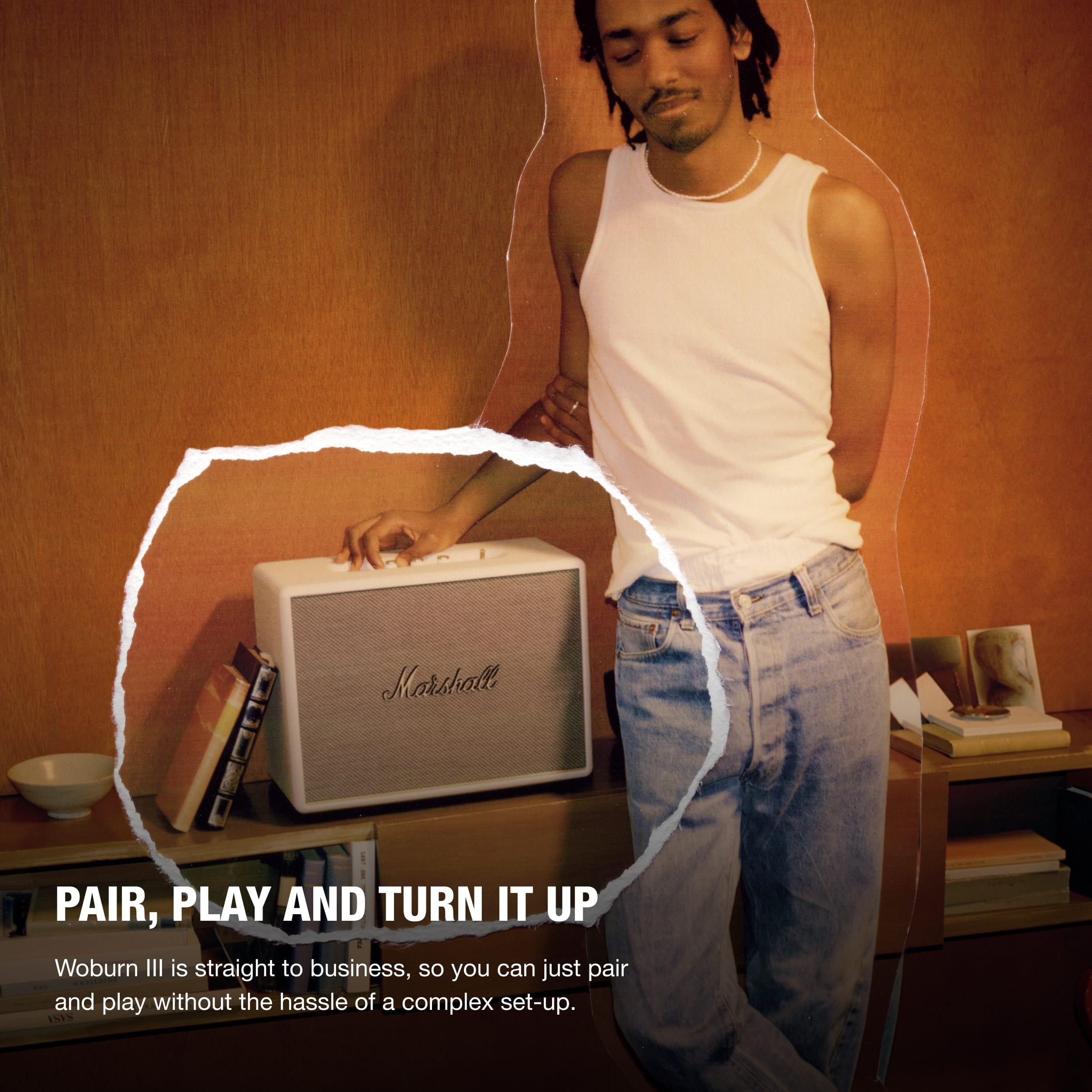
The multiple input options and room correction features make it genuinely versatile within its stationary context. Users who appreciate physical controls will love the brass knobs—a tactile experience that app-based controls can't match.
Neither speaker is perfect. The Beats Pill lacks the bass depth and maximum volume of larger speakers, making it less suitable for large gatherings or bass-heavy music genres. The absence of a 3.5mm aux input forces reliance on Bluetooth or USB-C connectivity.
The Marshall Woburn III demands dedicated space and positioning. Its 21.5-pound weight makes casual relocation impractical, and the lack of battery power limits placement options. Some users may find the classic Marshall aesthetic too bold for modern decor.
Your choice ultimately depends on how and where you listen to music. The Beats Pill Kim Kardashian Edition excels at bringing quality sound anywhere, while the Marshall Woburn III brings concert-level audio to your home.
Both speakers have evolved significantly from their predecessors, incorporating modern features and improved sound quality. The Beats Pill represents Apple's mature understanding of portable audio, while the Marshall Woburn III shows how traditional amplifier expertise translates to modern connectivity.
For most users, the decision comes down to lifestyle. If your music listening spans multiple environments and situations, the portable approach makes more sense. If you primarily listen at home and value maximum sound quality, the stationary approach delivers better long-term satisfaction.
Consider starting with the Beats Pill if you're unsure—its versatility means you'll find uses for it even if you later add a home audio system. The Marshall Woburn III requires more commitment but rewards serious listeners with substantially better sound quality and features.
Both speakers represent the best of their respective categories, making either choice a solid investment in better audio for years to come.
| Beats Pill Kim Kardashian Edition | Marshall Woburn III |
|---|---|
| Power Source - Determines where and how you can use the speaker | |
| Built-in 24-hour rechargeable battery | AC power only (no battery) |
| Total Power Output - Affects maximum volume and sound quality | |
| Undisclosed (optimized for battery efficiency) | 150 watts (90W woofer + 60W mid/treble) |
| Frequency Response - How deep the bass goes and how complete the sound is | |
| 56.6Hz - 19.6kHz (good bass for portable size) | 35Hz - 20kHz (subwoofer-level bass extension) |
| Maximum Volume - How loud it gets for parties or large rooms | |
| Moderate (designed for close-range listening) | 100.5 dB at 1 meter (genuinely loud) |
| Portability - Whether you can easily move it around | |
| 24 oz with removable lanyard (highly portable) | 21.5 lbs (requires dedicated placement) |
| Water/Dust Resistance - Protection for outdoor or poolside use | |
| IP67 rated (fully waterproof and dustproof) | None (indoor use only) |
| Driver Configuration - Affects sound clarity and separation | |
| Custom racetrack woofer + separate tweeter | 5-driver, 3-way system (dedicated midrange drivers) |
| Connectivity Options - How you can connect devices | |
| Bluetooth 5.3, USB-C audio/charging only | Bluetooth 5.2, 3.5mm, RCA, HDMI ARC |
| Multi-Speaker Capability - Options for expanding your setup | |
| Amplify mode (double volume) + Stereo mode | Single unit only |
| Smart Audio Features - Automatic sound optimization | |
| Basic voice assistant support | Dynamic Loudness, Placement Compensation, Night Mode |
| Physical Controls - Tactile adjustments without using your phone | |
| None (app or device volume only) | Brass volume, bass, and treble knobs |
| TV Integration - Connecting to your home theater setup | |
| Bluetooth only (potential audio delay issues) | HDMI ARC with automatic switching |
| Charging Features - Additional utility beyond audio | |
| Fast Fuel charging + USB-C power bank function | N/A (AC powered) |
| Design Aesthetic - Visual appeal and room integration | |
| Modern minimalist in Kim K neutral colors | Classic Marshall amplifier with vintage styling |
The Beats Pill Kim Kardashian Edition is significantly better for outdoor use thanks to its IP67 water and dust resistance rating, 24-hour battery life, and portable design. You can take it to the beach, pool parties, or camping without worrying about weather damage. The Marshall Woburn III requires AC power and has no weather protection, making it strictly an indoor speaker.
The Marshall Woburn III is much better for TV use with its dedicated HDMI ARC connection that provides seamless integration and automatic switching. The Beats Pill Kim Kardashian Edition can connect to TVs via Bluetooth, but may experience audio delay issues that make dialogue sync poorly with video content.
The Marshall Woburn III gets significantly louder with its 150-watt power output and 100.5 dB maximum volume, making it suitable for large rooms and parties. The Beats Pill is designed for personal to medium-sized room listening and cannot match the Marshall's volume levels without distortion.
Only the Beats Pill Kim Kardashian Edition has a battery, offering up to 24 hours of continuous playback. The Marshall Woburn III has no battery and must remain plugged into AC power at all times, limiting where you can place it in your home.
The Marshall Woburn III has significantly better bass with its 6-inch woofer and 35Hz frequency response that reaches near the limits of human hearing. The Beats Pill has respectable bass for its portable size (56.6Hz), but cannot match the deep, room-shaking bass of the larger Marshall speaker.
The Beats Pill Kim Kardashian Edition offers Amplify mode to double the volume with two speakers, plus Stereo mode for true left/right channel separation. The Marshall Woburn III is designed as a single-unit solution and cannot be paired with additional speakers.
The Beats Pill is highly portable at just 24 ounces with a removable lanyard and compact pill-shaped design. The Marshall Woburn III weighs 21.5 pounds and requires constant AC power, making it completely impractical for portable use.
The Marshall Woburn III offers multiple connections including Bluetooth, 3.5mm aux, RCA inputs, and HDMI ARC for TVs. The Beats Pill Kim Kardashian Edition only has Bluetooth and USB-C connectivity, with no traditional aux input option.
The Marshall Woburn III is purpose-built for home theater use with HDMI ARC connectivity, Dynamic Loudness for dialogue clarity, and Night Mode to reduce loud sounds. The Beats Pill lacks these TV-specific features and is better suited for personal music listening.
The Marshall Woburn III delivers superior sound quality with its 3-way driver system, room correction technology, and 150-watt power output. The Beats Pill Kim Kardashian Edition offers good sound for its size but focuses more on portability features like weatherproofing and long battery life.
Value depends on your needs: The Beats Pill offers excellent value for portable, versatile audio with weatherproofing and all-day battery life. The Marshall Woburn III provides better value for dedicated home listening with superior sound quality, multiple inputs, and smart audio features.
Choose the Beats Pill Kim Kardashian Edition if you need a speaker that travels with you to different locations, outdoor activities, or multiple rooms. Choose the Marshall Woburn III if you want the best possible sound quality for a dedicated home listening space and don't need portability.
We've done our best to create useful and informative comparisons to help you decide what product to buy. Our research uses advanced automated methods to create this comparison and perfection is not possible - please contact us for corrections or questions. These are the sites we've researched in the creation of this article: digitalreviews.net - routenote.com - androidcentral.com - youtube.com - beatsbydre.com - youtube.com - rtings.com - youtube.com - rtings.com - youtube.com - macrumors.com - consolecreatures.com - tomsguide.com - beatsbydre.com - bestbuy.ca - beatsbydre.com - designertale.com - yearbookscanning.com - moneycontrol.com - bestbuy.com - crutchfield.com - rtings.com - idownloadblog.com - digit.in - crutchfield.com - epicrewards.com.ph - ione.com.kh - youtube.com - onward.ph - economictimes.indiatimes.com

Privacy Policy
Terms and Conditions - Affiliate Policy
Home Security
© Copyright 2008-2026.
11816 Inwood Rd #1211, Dallas, TX 75244