

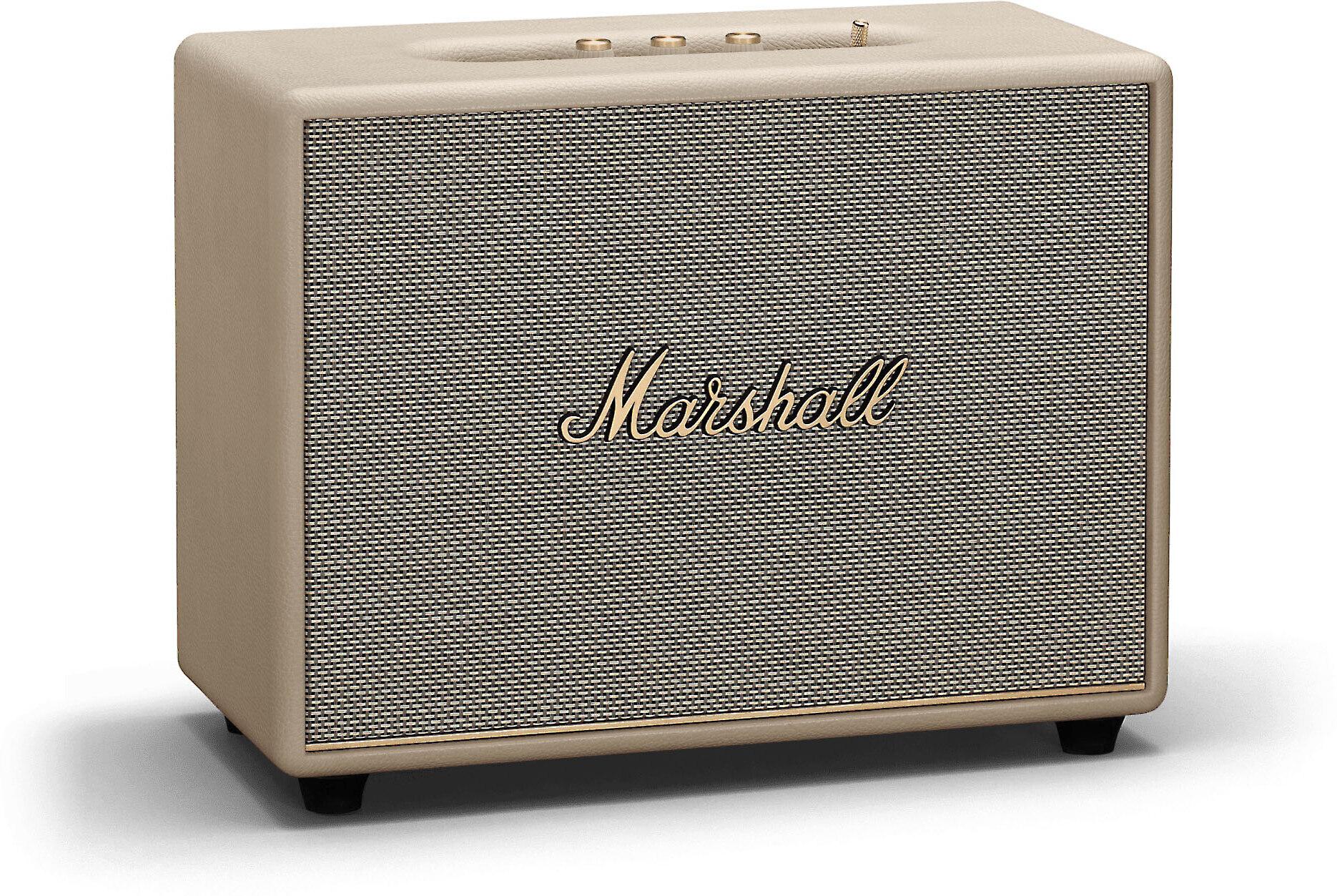
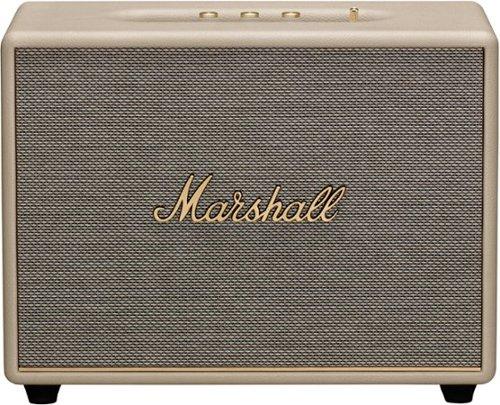
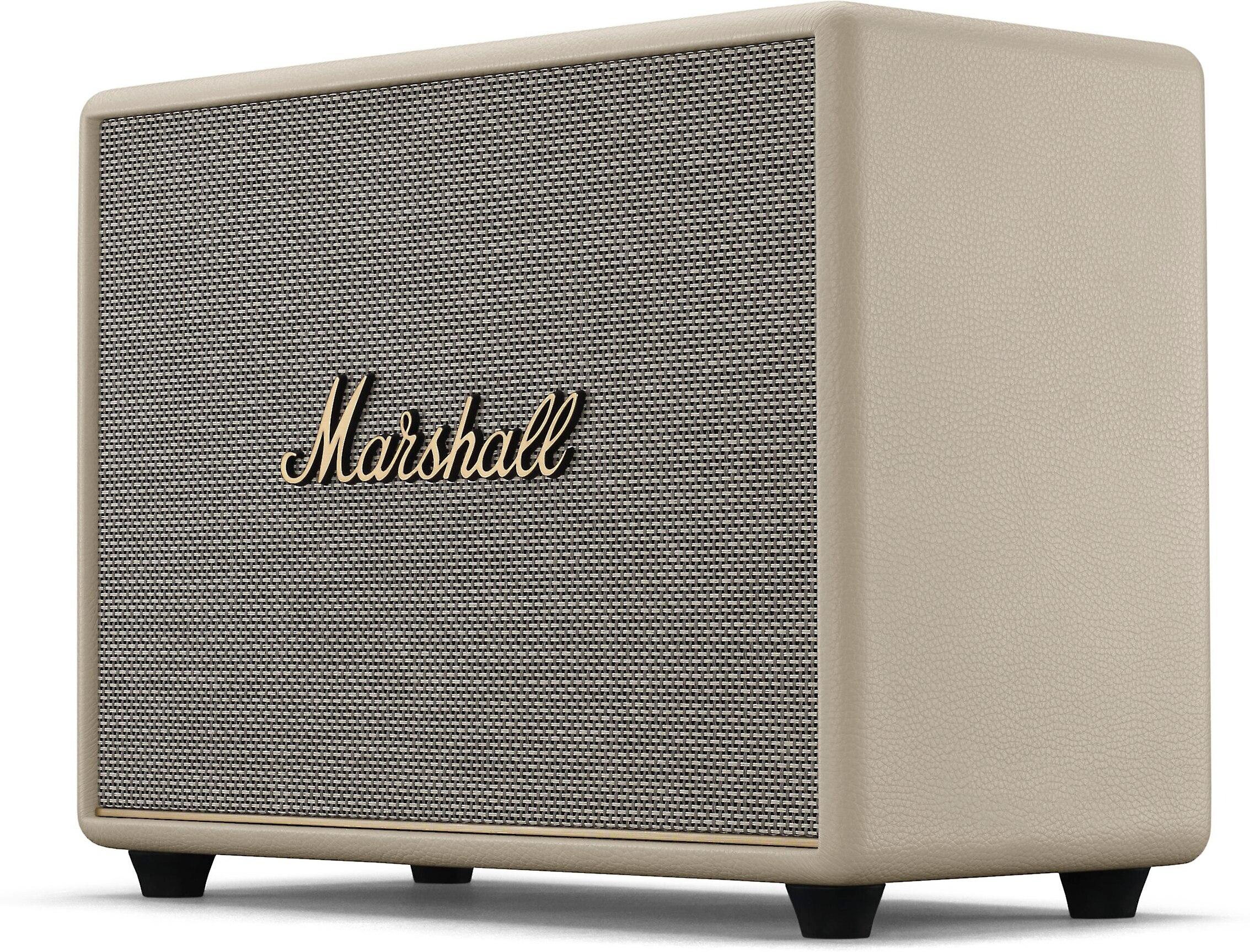
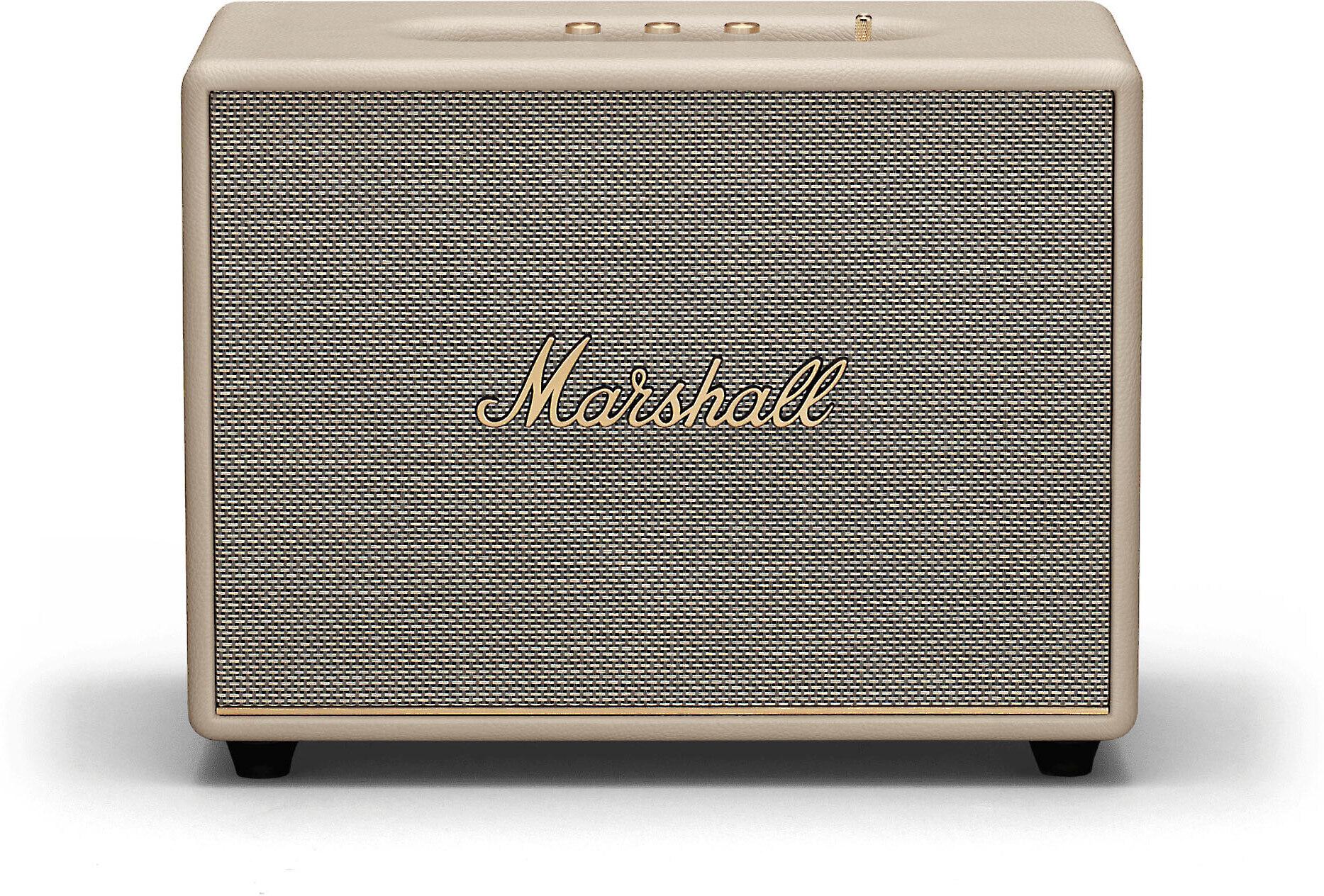
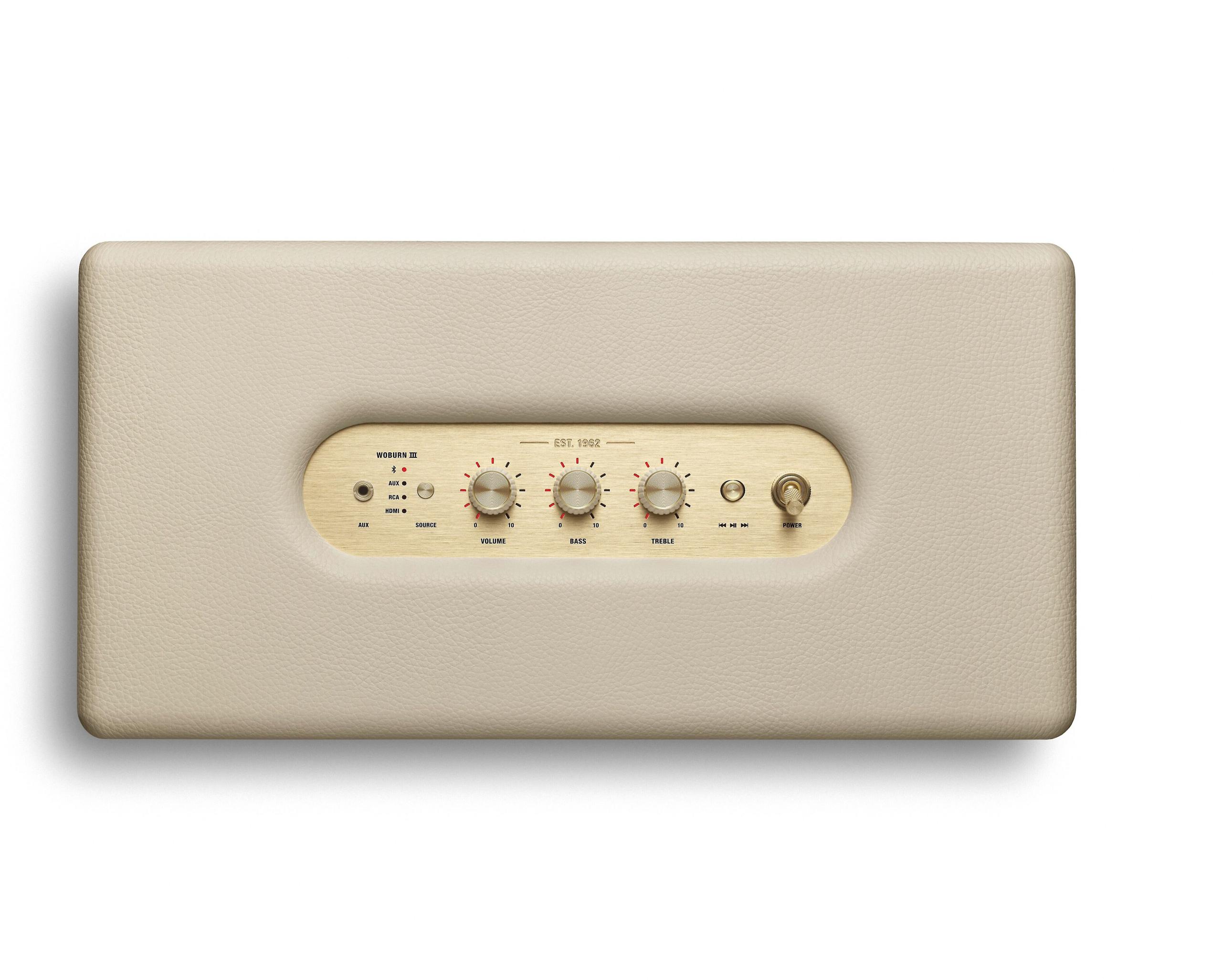
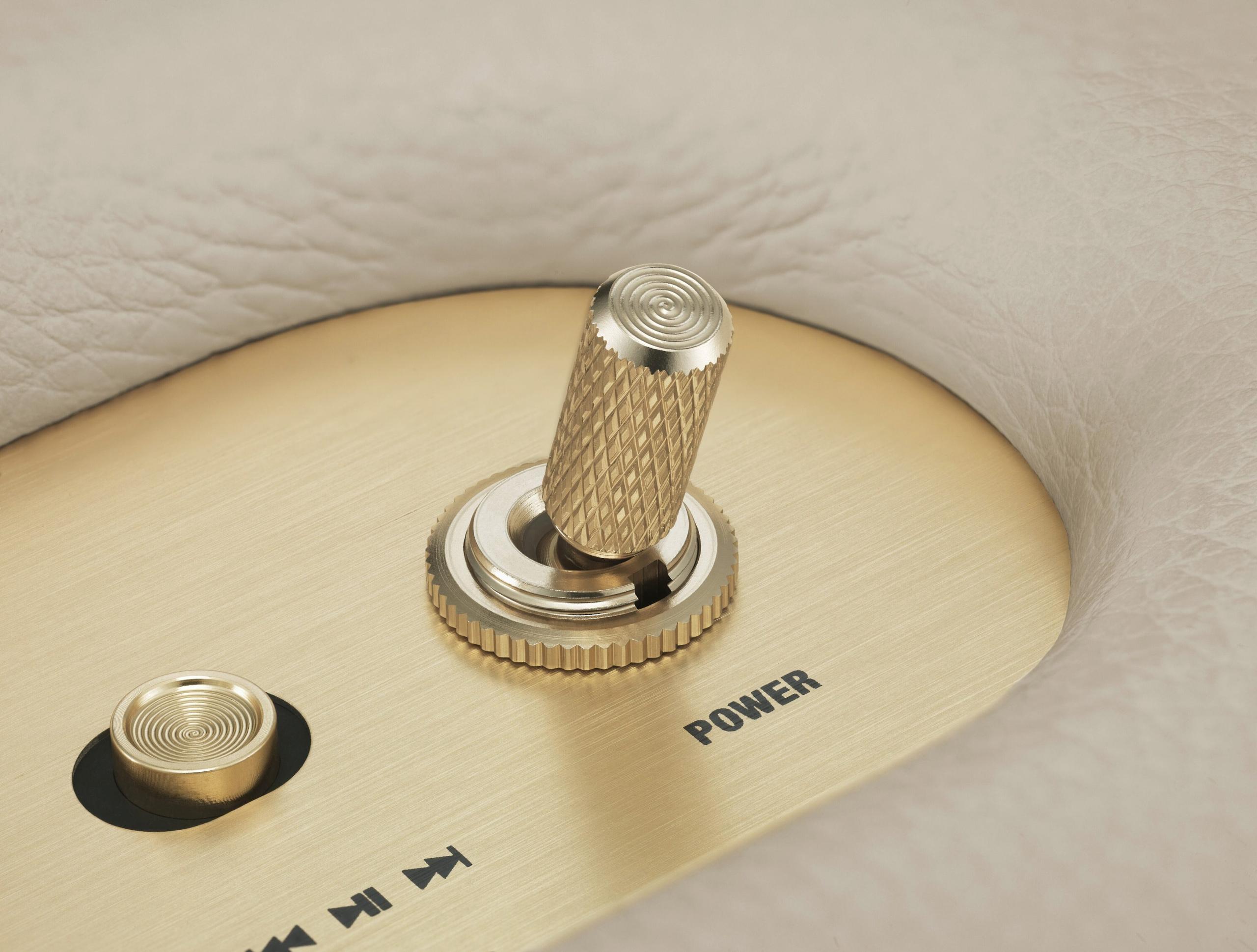
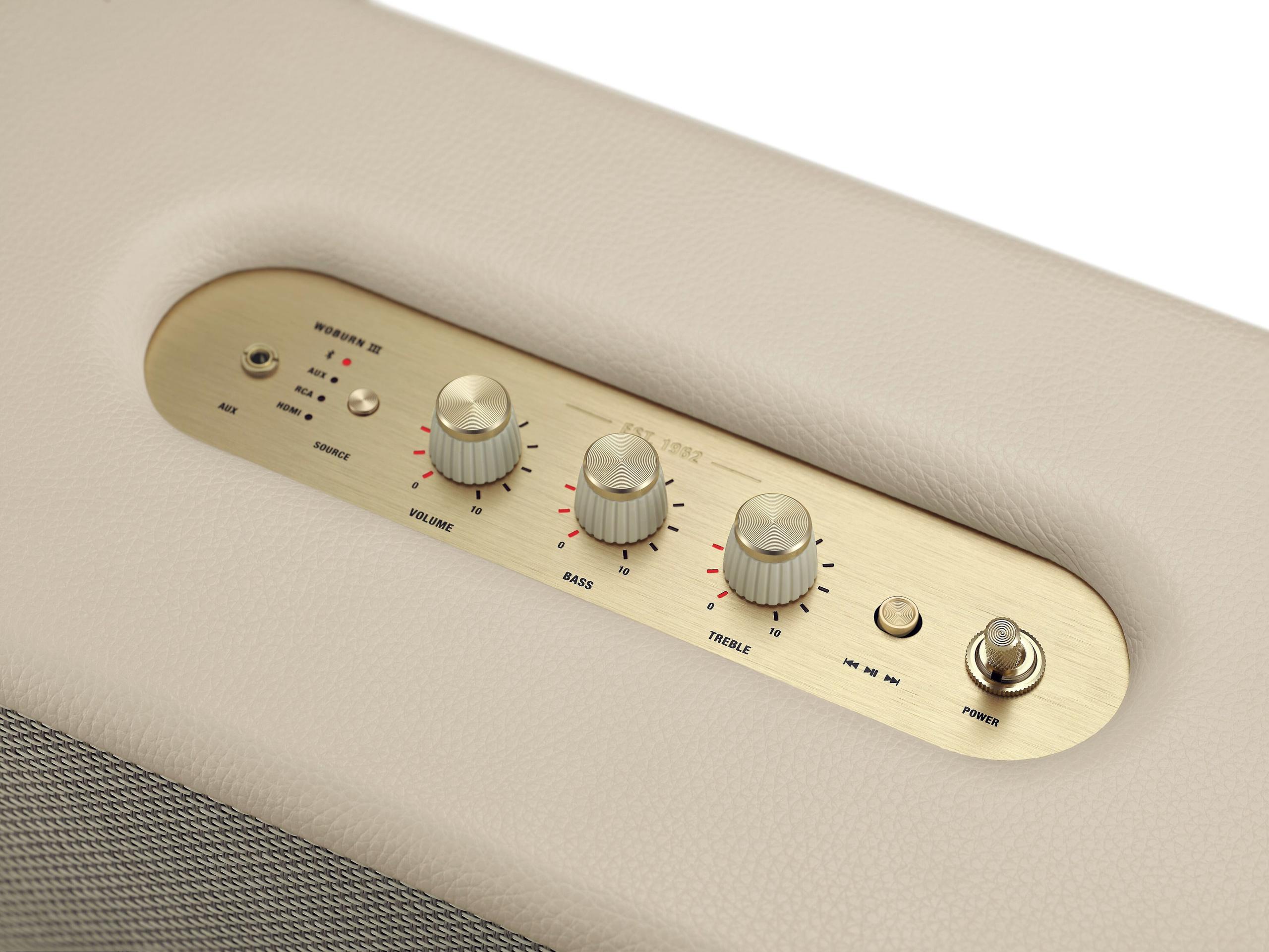
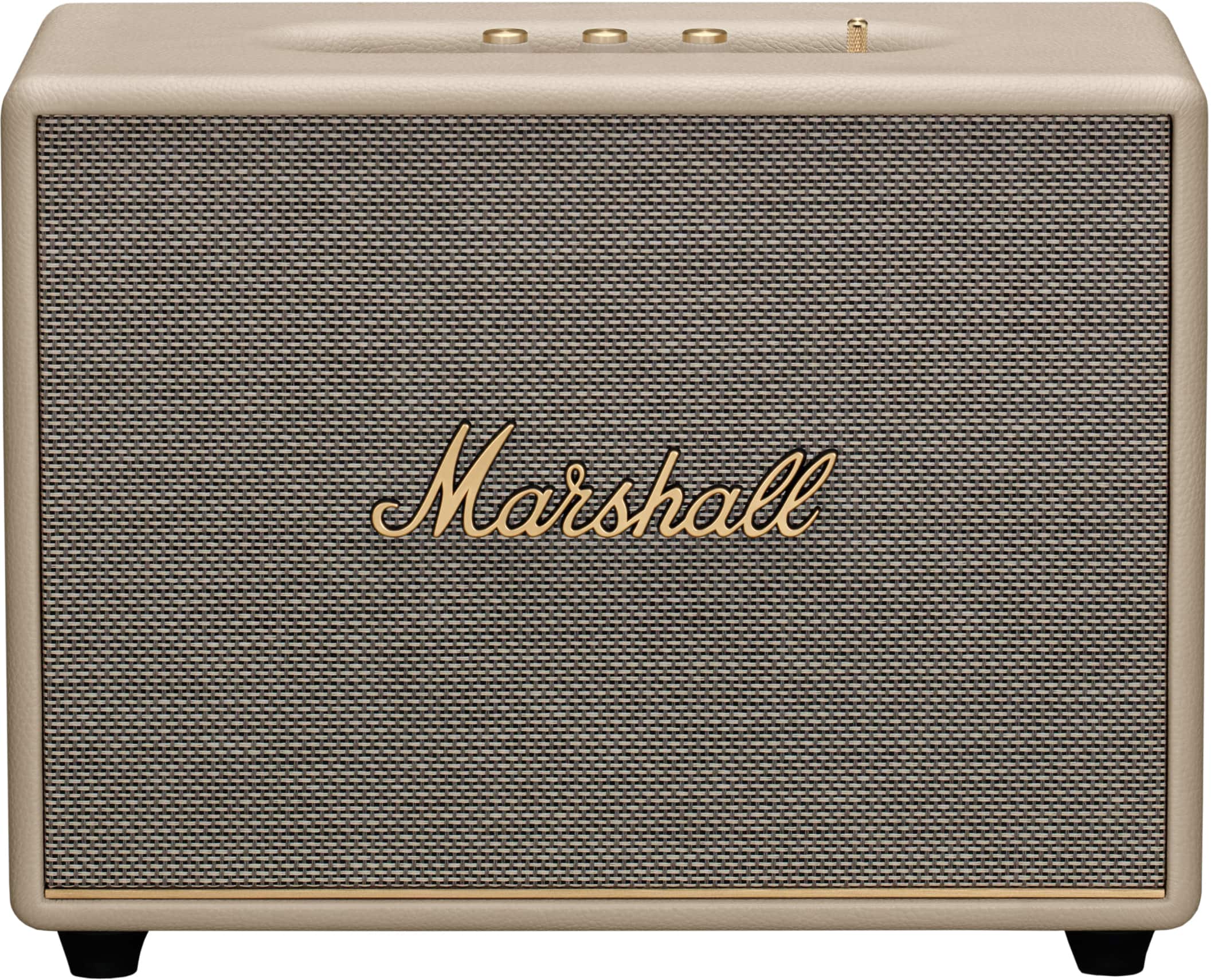
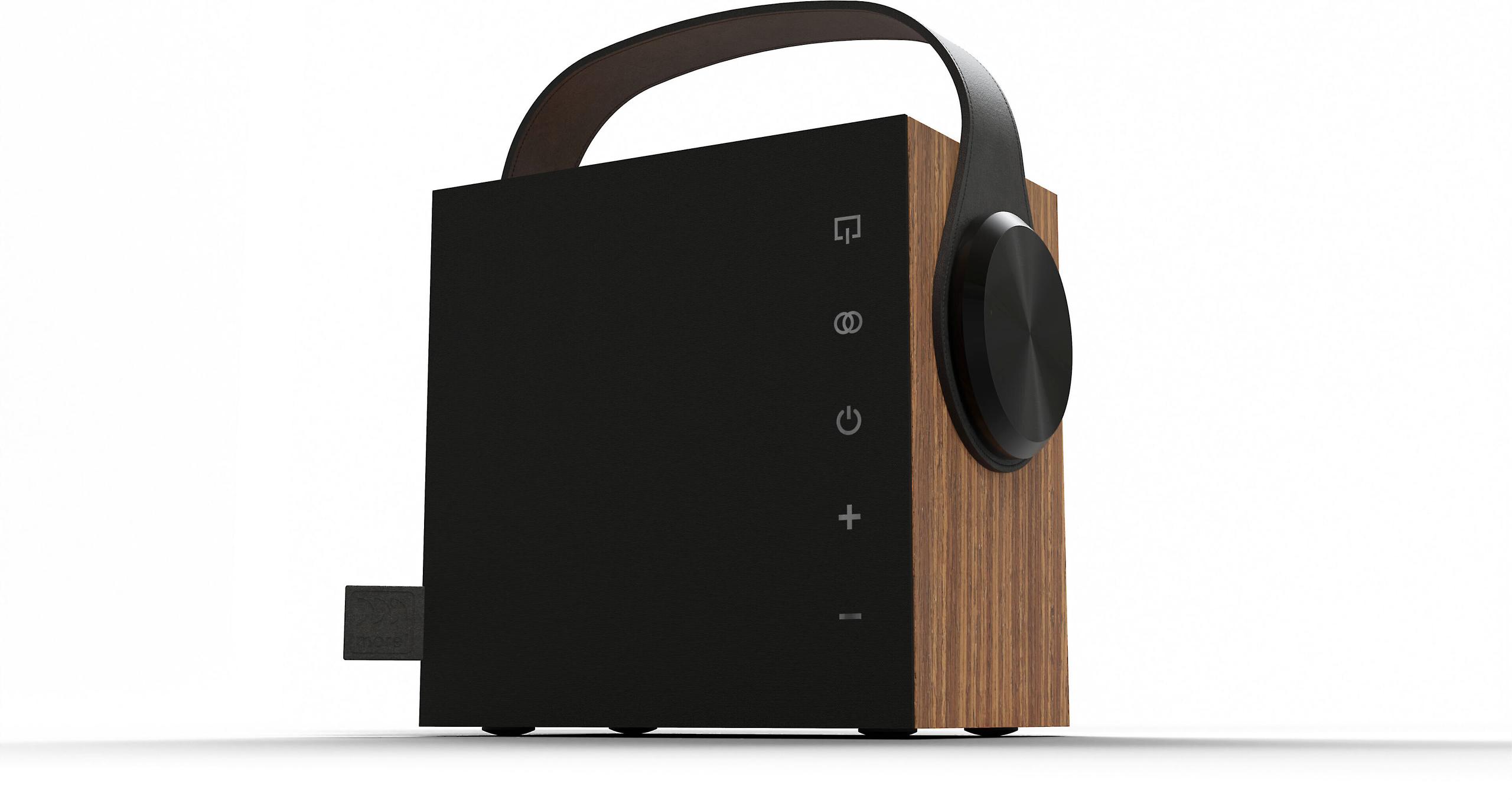
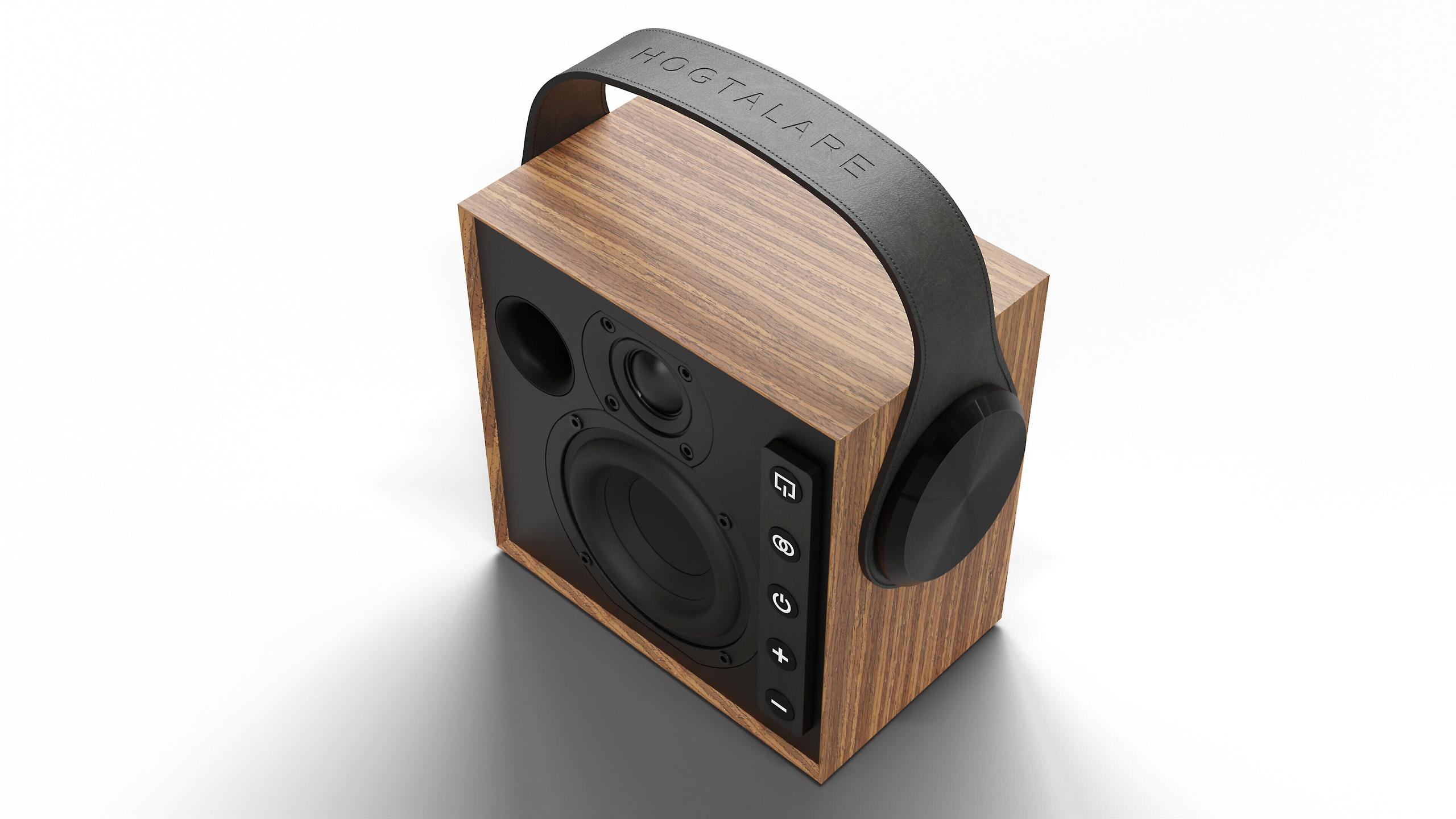
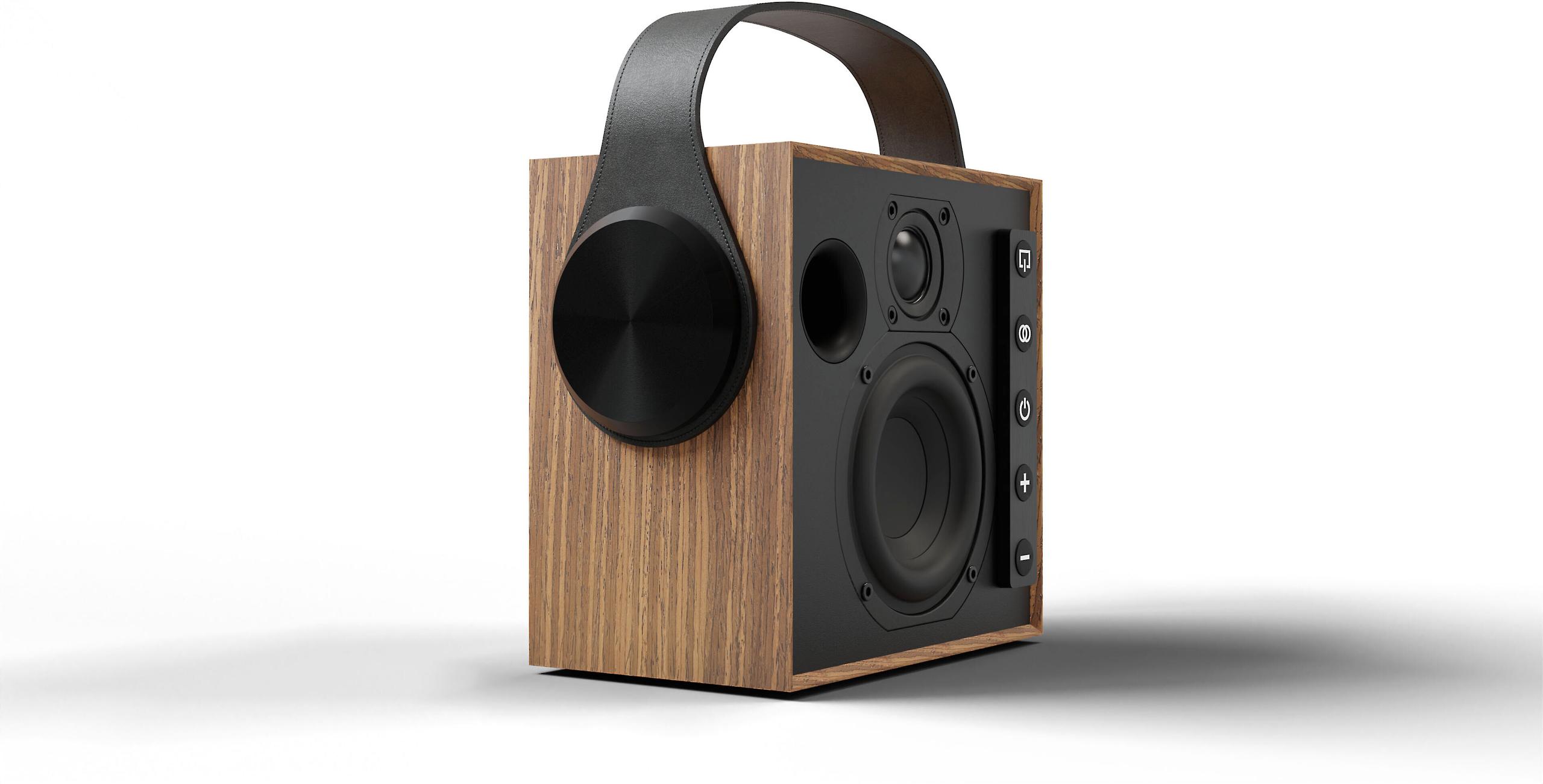
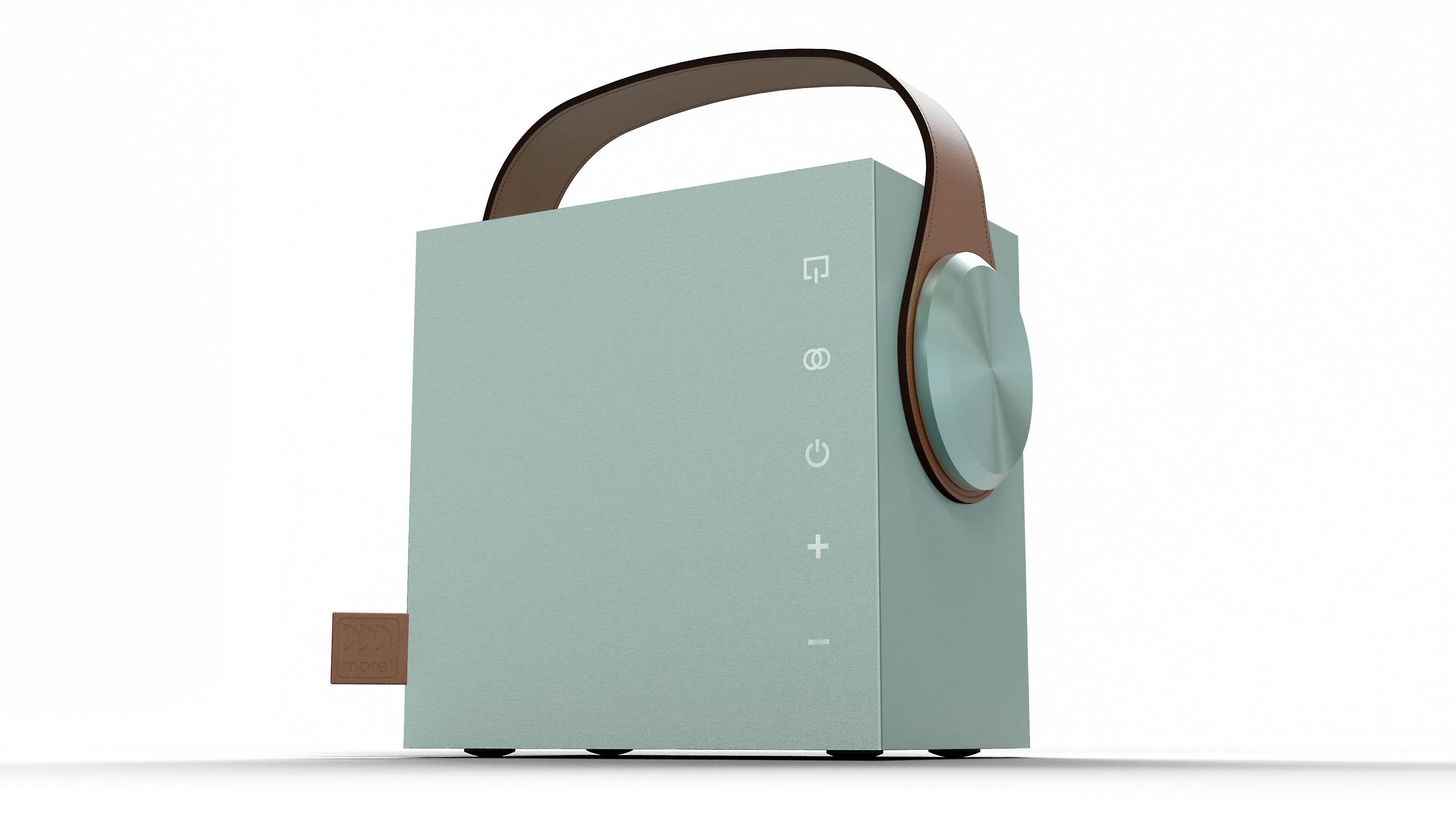
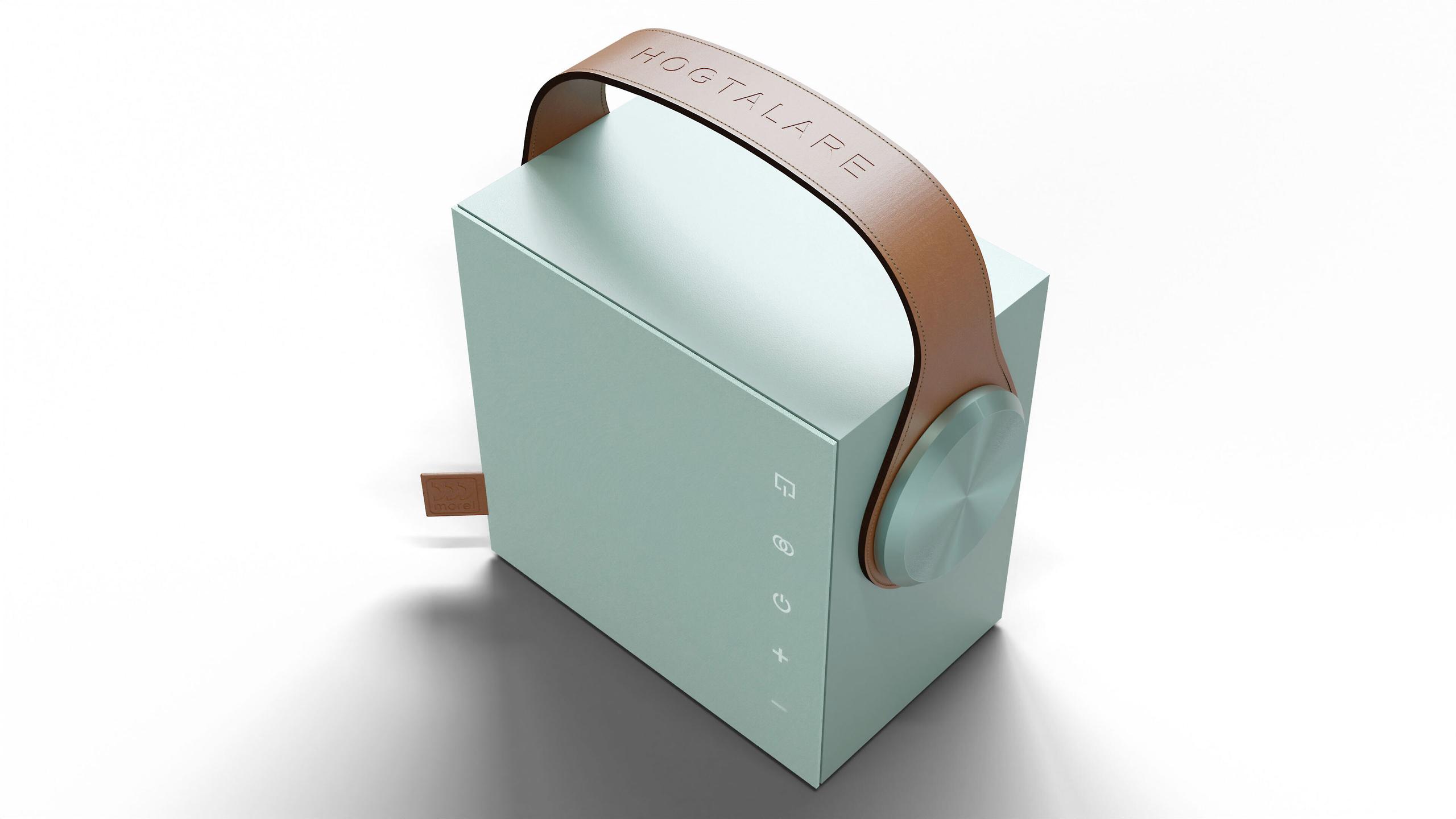
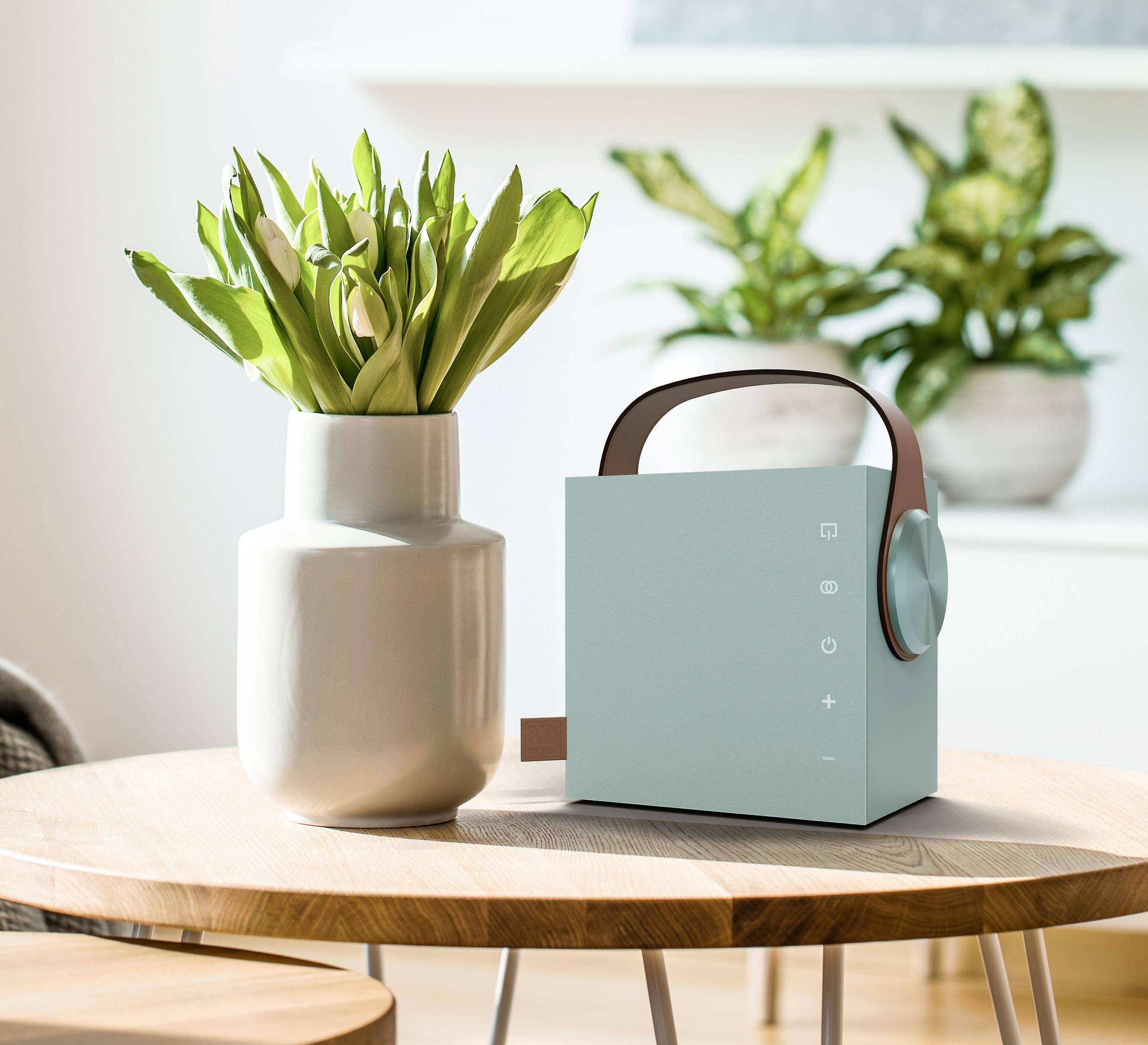
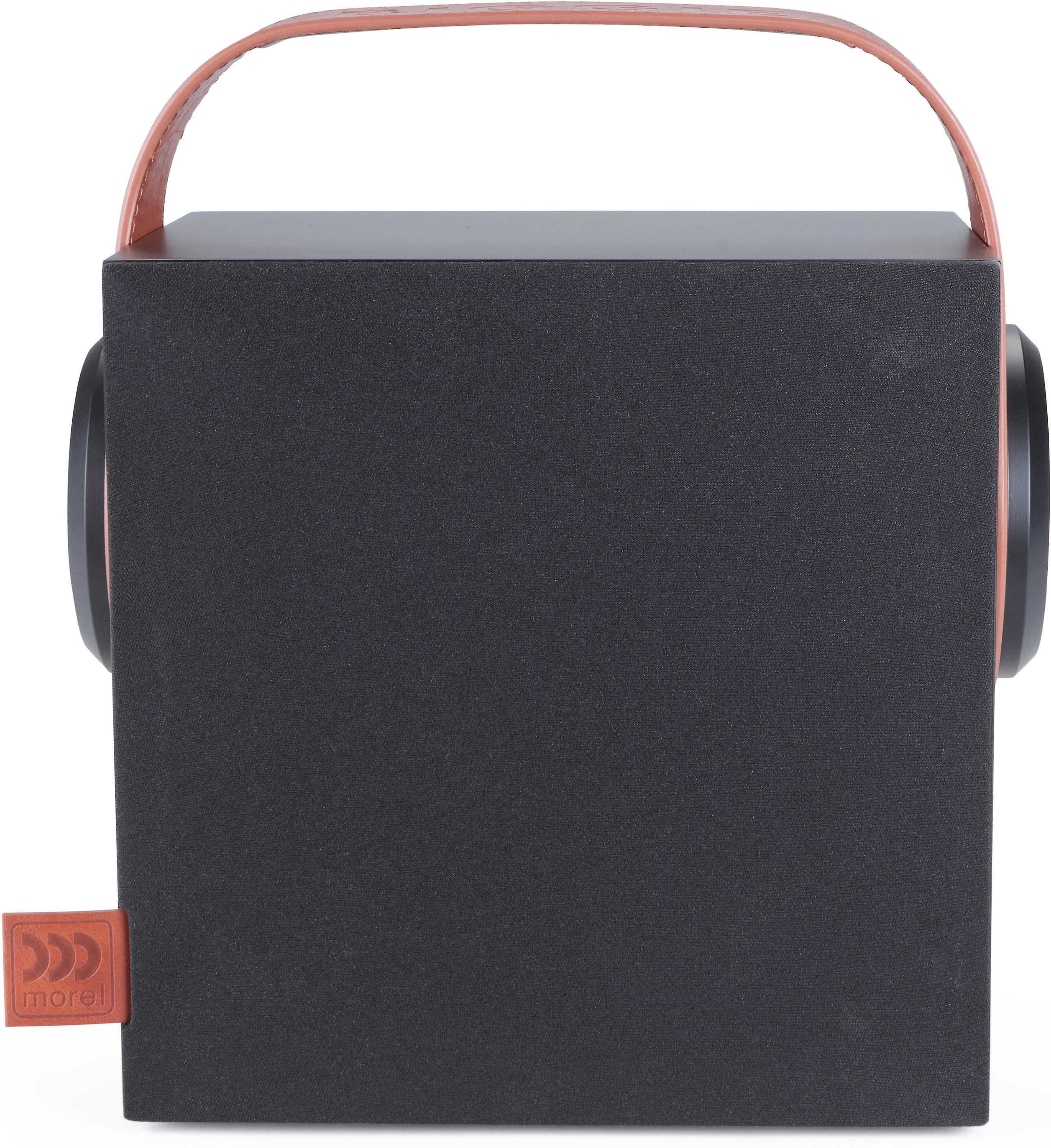
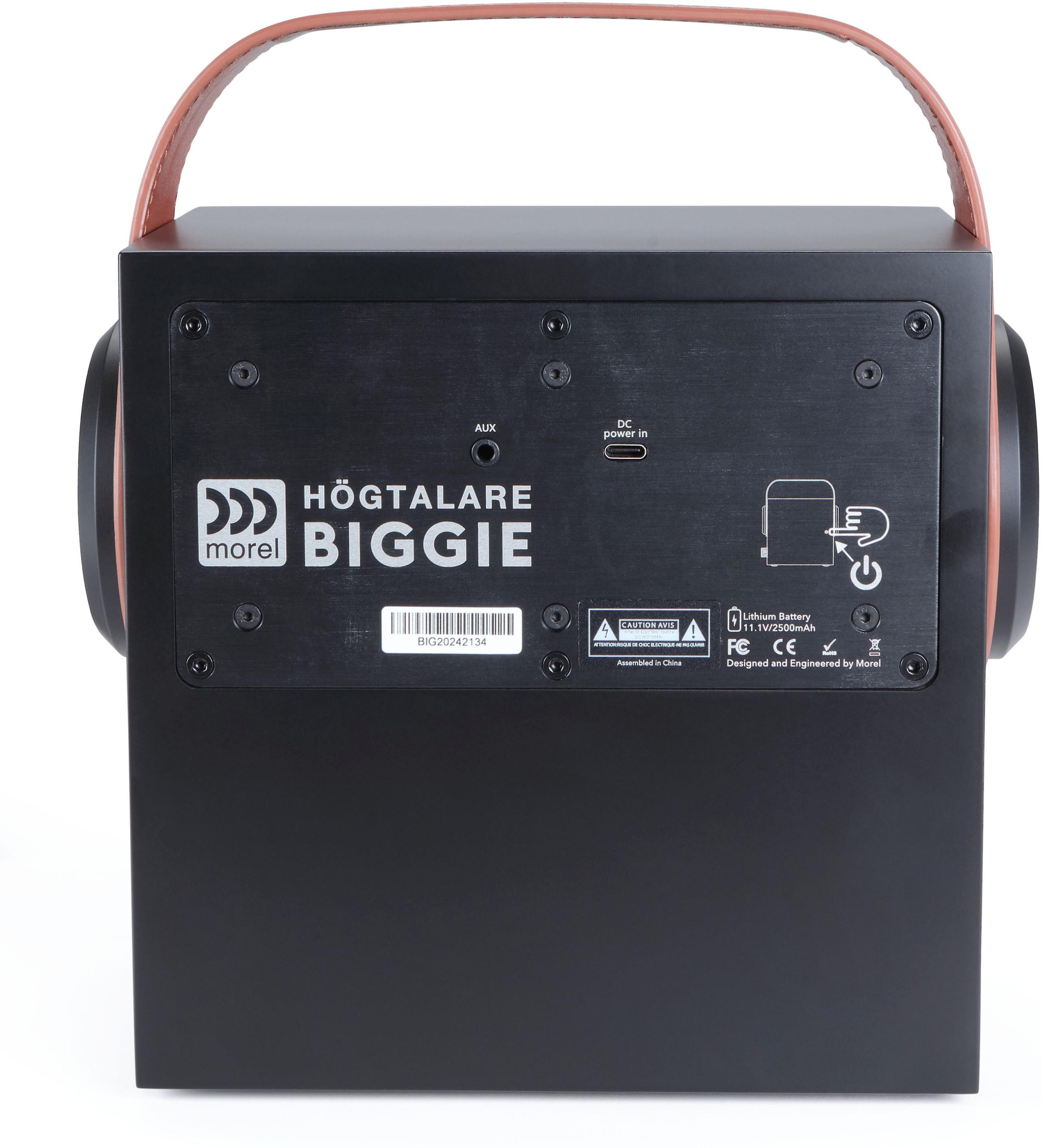
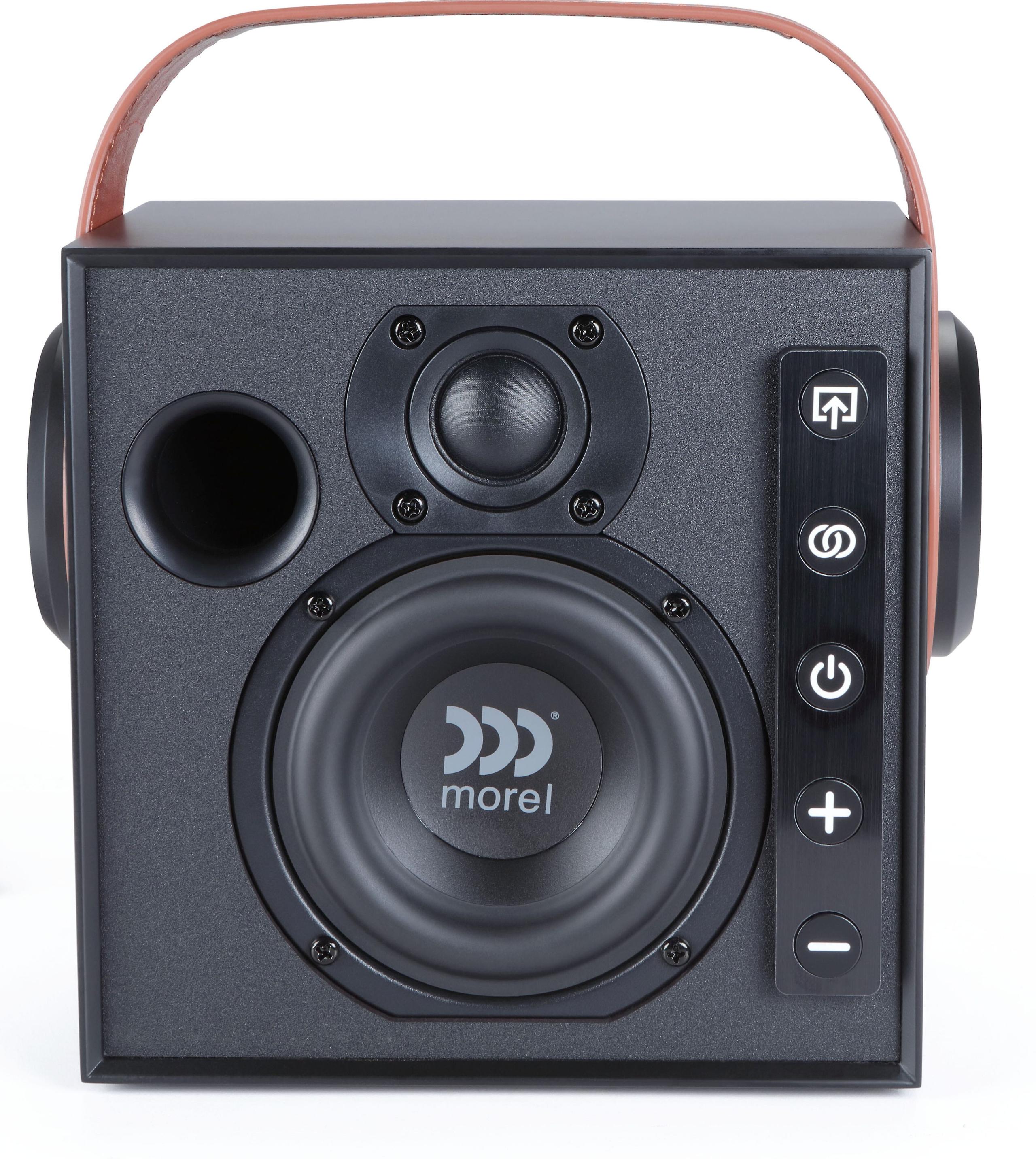
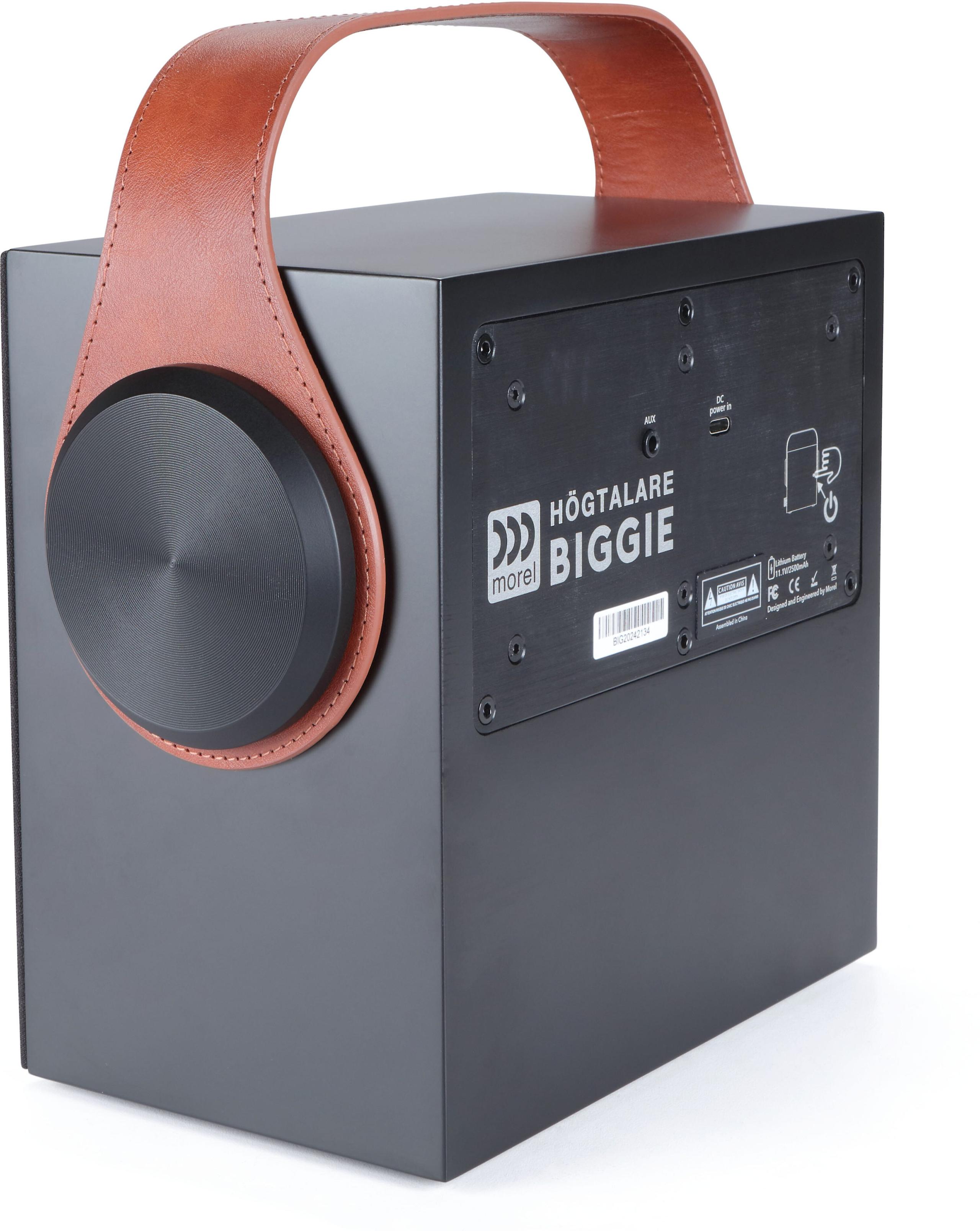
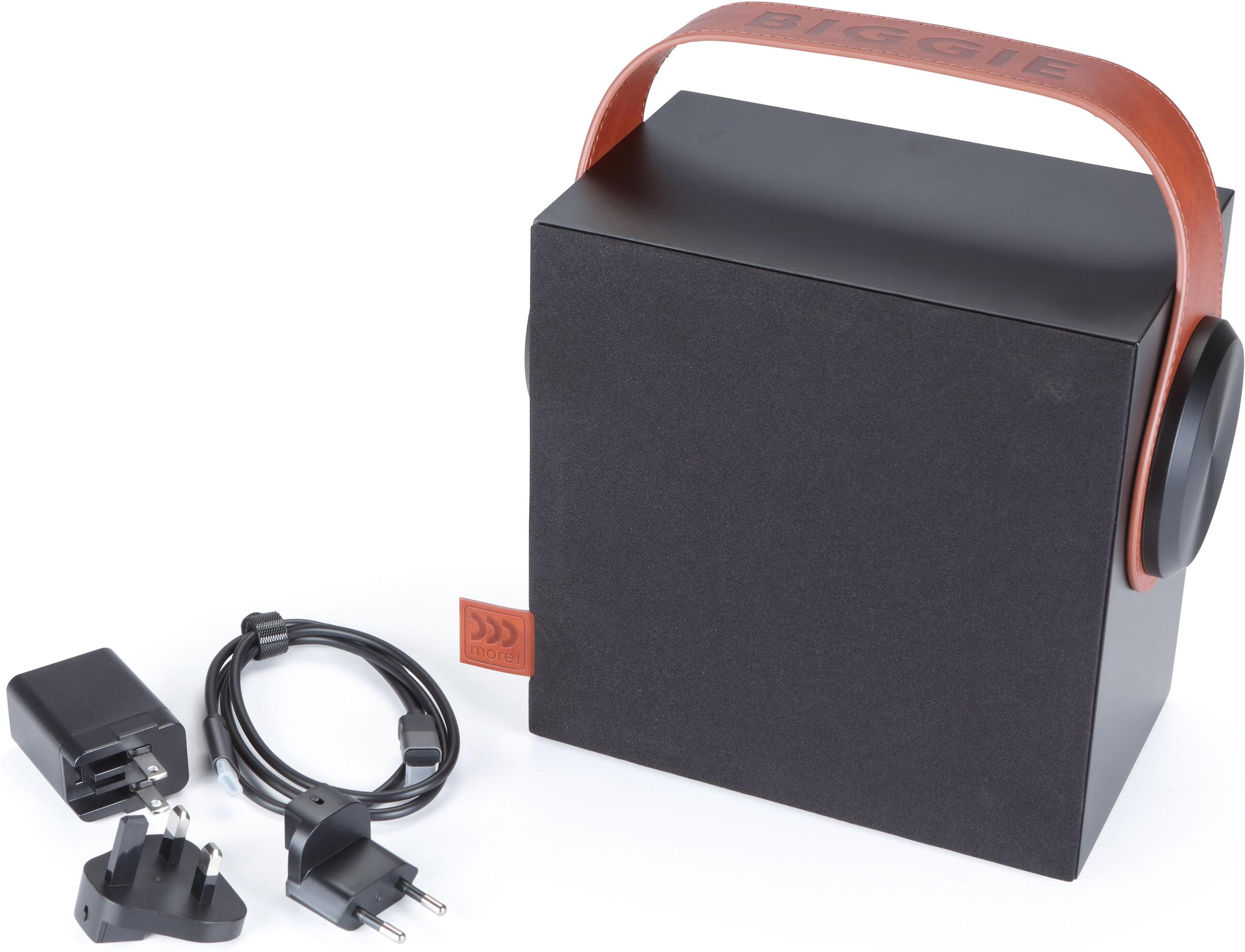

The world of premium Bluetooth speakers has evolved significantly in recent years, with manufacturers pushing boundaries in both sound quality and versatility. Today, we're comparing two distinct approaches: the Marshall Woburn III ($579.99), a powerhouse home speaker, and the Morel BIGGIE ($299), a portable premium audio solution.
Bluetooth speakers have come a long way from their early days of compromised sound quality and connectivity issues. Modern premium speakers now rival traditional home audio systems, thanks to advances in digital signal processing (DSP), amplification technology, and driver design. These improvements mean you no longer have to choose between convenience and audio quality.
The Marshall Woburn III and Morel BIGGIE represent different philosophies in modern audio. Released in September 2022, the Woburn III builds on Marshall's heritage in professional audio, bringing home theater capabilities to their signature amplifier-styled speaker line. The BIGGIE, released in early 2024, showcases Morel's focus on portable high-fidelity audio, incorporating their expertise in driver technology into a compact form factor.
The Woburn III employs a sophisticated three-way system with dedicated drivers for high, mid, and low frequencies. This includes two 0.75" dome tweeters (the small speakers that handle high frequencies), two 2" midrange drivers (for voices and most instruments), and a 6" woofer (for bass). Each frequency range gets its own amplifier, totaling 150 watts of power. This separation means each driver can focus on what it does best, resulting in clearer, more detailed sound.
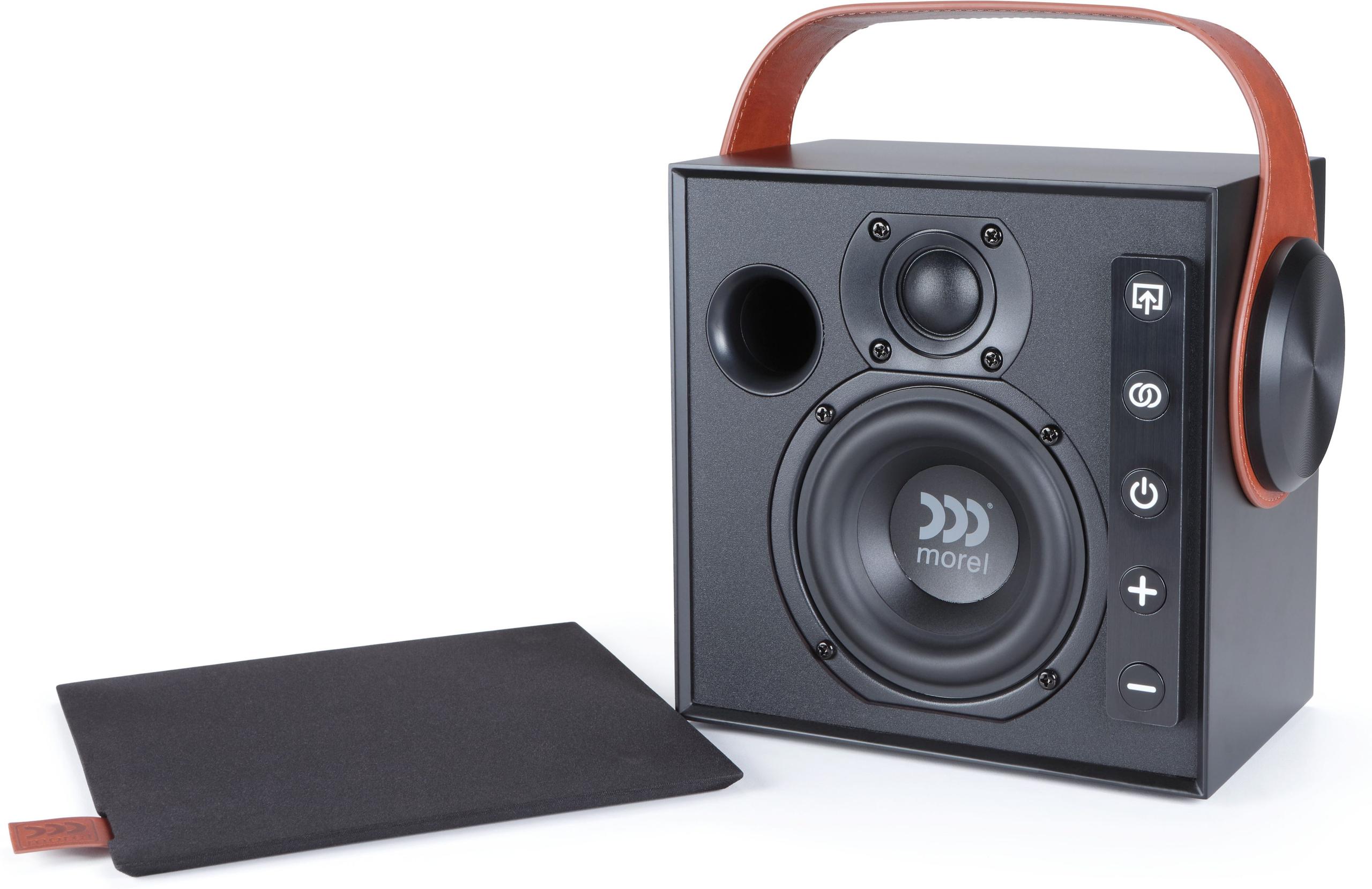
The BIGGIE takes a simpler but well-executed approach with a two-way system: a 1" soft dome tweeter and 4" woofer, powered by 60 watts of amplification. While this might seem less impressive on paper, Morel's expertise in driver design shows through in the speaker's performance. The soft dome tweeter provides smooth, natural high frequencies without harshness.
In practice, the Woburn III delivers room-filling sound with exceptional clarity and power. Its three-way design creates a wider "sweet spot" (the area where the sound is best balanced), making it ideal for larger rooms and social gatherings. The dedicated midrange drivers make voices sound particularly natural, whether you're watching movies or listening to vocal-heavy music.
The BIGGIE impresses with its ability to create a surprisingly large sound from a compact enclosure. While it can't match the Woburn III's raw power or bass extension, it produces a well-balanced sound that works great for near-field listening (when you're closer to the speaker) and medium-sized rooms.
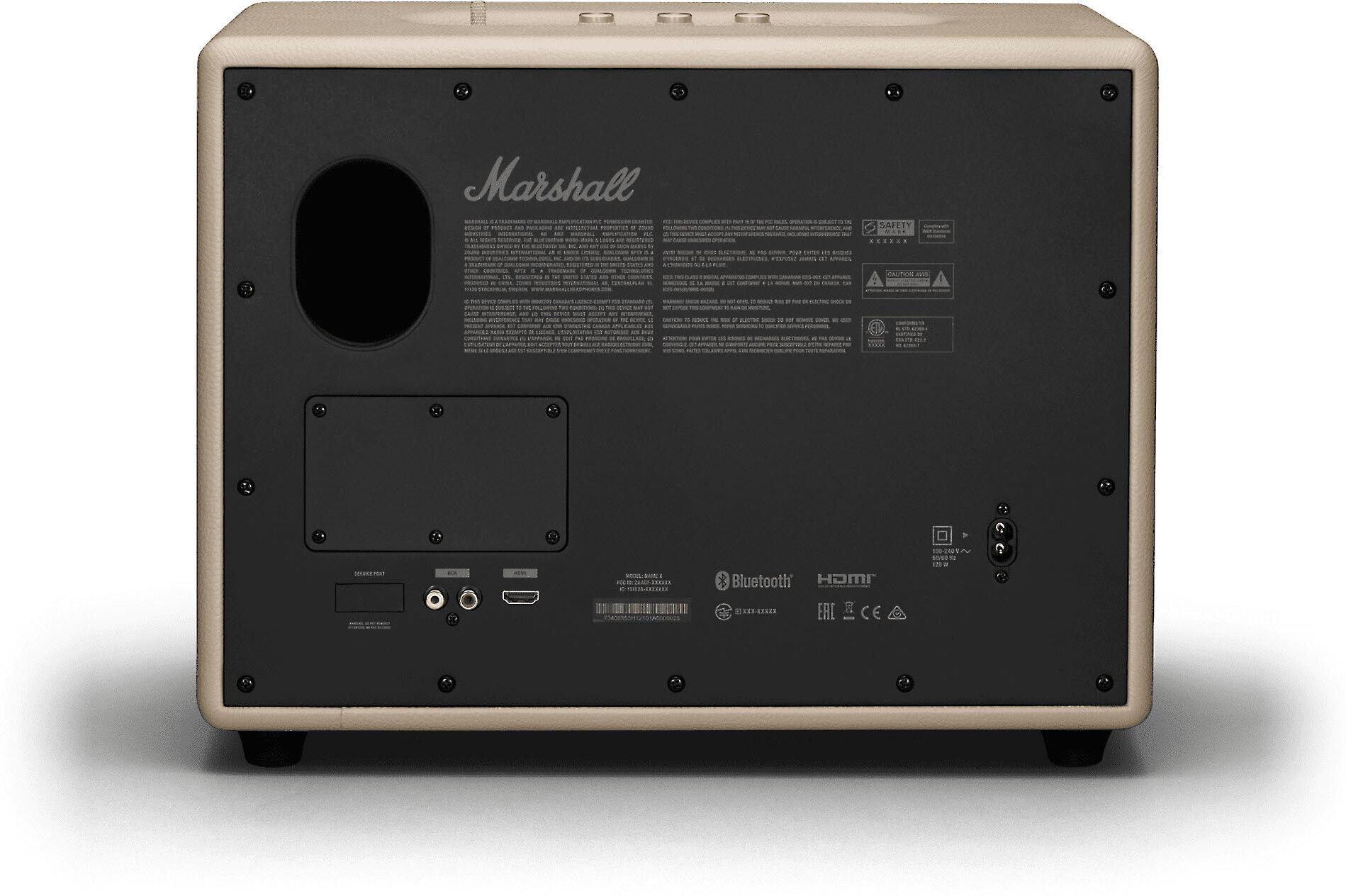
The Woburn III shines in a home theater setup thanks to its HDMI ARC input, which allows direct connection to your TV. This means the speaker can automatically turn on with your TV and be controlled by your TV remote. It handles high-resolution audio up to 24-bit/96kHz through this connection, ensuring high-quality sound for movies and shows.
The BIGGIE doesn't offer HDMI connectivity but provides flexibility through its USB-C port, which can both charge the speaker and serve as a power bank for other devices. This might not help in home theater use, but it's incredibly practical for portable scenarios.
Both speakers feature modern Bluetooth implementations - 5.2 for the Woburn III and 5.3 for the BIGGIE. The BIGGIE offers slightly better range (up to 165 feet) and is Auracast-ready, meaning it will support future Bluetooth broadcast features through a firmware update. Both include auxiliary inputs for wired connections, with the Woburn III adding RCA inputs for traditional audio equipment.
The Woburn III includes several intelligent features through its companion app:
The BIGGIE focuses on core functionality but includes Dynamic EQ to maintain sound quality at different volumes. While this works well, it's not as sophisticated as the Woburn III's implementation.
The BIGGIE clearly wins on portability at 5.7 pounds with up to 20 hours of battery life. Its removable handle and compact size make it genuinely portable without sacrificing too much sound quality. The fast-charging feature (4 hours of playback from a 20-minute charge) is particularly useful.
The Woburn III, at 16.42 pounds and requiring AC power, is designed to be placed and left in position. This isn't a negative - it's simply built for a different purpose.
The price difference between these speakers ($579.99 vs $299) reflects their different capabilities and target uses. The Woburn III justifies its higher price through:
The BIGGIE offers excellent value through:
Choose the Marshall Woburn III if:
Choose the Morel BIGGIE if:
Both speakers represent the current state of the art in their respective categories. The Woburn III shows how Bluetooth speakers can serve as serious home audio components, while the BIGGIE demonstrates that portable speakers can deliver impressive sound quality. The choice between them ultimately depends on your specific needs and how you plan to use them.
Remember, the best speaker is the one that fits your lifestyle and listening habits. Whether that's the powerful, feature-rich Woburn III or the versatile, portable BIGGIE, both options offer excellent performance in their intended roles.
| Marshall Woburn III ($579.99) | Morel BIGGIE ($299) |
|---|---|
| Power Output - Determines volume capability and headroom | |
| 150W total (90W woofer, 30W mids, 30W tweeters) | 60W total (45W woofer, 15W tweeter) |
| Driver Configuration - Affects sound clarity and separation | |
| Three-way: 6" woofer, 2x 2" mids, 2x 0.75" tweeters | Two-way: 4" woofer, 1" soft dome tweeter |
| Frequency Response - Range of bass to treble reproduction | |
| 35Hz - 20kHz (deeper bass extension) | 40Hz - 20kHz (still impressive for size) |
| Dimensions - Consider your space requirements | |
| 15.75" x 12.5" x 9" (larger home speaker) | 7" x 7" x 4.5" (compact, portable design) |
| Weight - Impacts portability | |
| 16.42 lbs (stationary design) | 5.7 lbs (easily moveable) |
| Power Source - Determines placement flexibility | |
| AC power only (needs outlet) | Battery powered, 20 hours playback |
| Connectivity Options - Affects integration flexibility | |
| Bluetooth 5.2, HDMI ARC, RCA, 3.5mm aux | Bluetooth 5.3, USB-C, 3.5mm aux |
| Special Features - Additional functionality | |
| Dynamic Loudness, Night Mode, Placement Compensation, App control | TWS pairing, USB power bank, Auracast-ready |
| Maximum Volume - Room size capability | |
| 100.5 dB @ 1m (fills large rooms) | 95 dB @ 1m (medium rooms) |
| Usage Scenario - Best application | |
| Primary home audio, home theater integration | Portable use, multi-room flexibility |
| Value Proposition - Price vs. capability | |
| Premium price for superior sound and features | Better value for portable needs |
The Marshall Woburn III ($579.99) is better for dedicated home use with its more powerful 150W output, HDMI ARC connection for TV audio, and room-filling sound. The BIGGIE ($299) works well in homes but is designed more for portable use.
The Marshall Woburn III offers superior sound quality with its three-way speaker system and more powerful amplification. However, the BIGGIE provides impressive sound for its size and price point.
The Woburn III has HDMI ARC input specifically for TV connection and can be controlled with your TV remote. The BIGGIE can connect to TVs only through its aux input, making it less ideal for TV use.
The Morel BIGGIE is significantly more portable at 5.7 lbs with 20 hours of battery life. The Woburn III requires AC power and weighs 16.42 lbs, making it a stationary speaker.
The BIGGIE offers better value at $299 if portability is important. The Woburn III costs more at $579.99 but provides superior sound quality and home theater features.
The BIGGIE is designed for both indoor and outdoor use with its battery power and portable design. The Woburn III requires AC power and isn't suitable for outdoor use.
The Woburn III produces deeper, more powerful bass with its 6" woofer and 90W bass amplification. The BIGGIE still delivers impressive bass for its size but can't match the Woburn's low-end performance.
The BIGGIE offers up to 20 hours of battery life. The Woburn III doesn't have a battery and requires constant AC power.
Both the Woburn III and BIGGIE support Bluetooth multipoint pairing, allowing connection to multiple devices, though only one can play audio at a time.
The Woburn III is better for parties with its higher volume capability and room-filling sound. The BIGGIE works well for smaller gatherings but isn't as powerful.
Both the Woburn III and BIGGIE work seamlessly with phones and tablets via Bluetooth, with the BIGGIE offering the additional feature of charging your devices through its USB-C port.
The BIGGIE offers better wireless range up to 165 feet with Bluetooth 5.3, while the Woburn III has a standard Bluetooth 5.2 range of about 30 feet.
We've done our best to create useful and informative comparisons to help you decide what product to buy. Our research uses advanced automated methods to create this comparison and perfection is not possible - please contact us for corrections or questions. These are the sites we've researched in the creation of this article: bestbuy.com - crutchfield.com - rtings.com - idownloadblog.com - digit.in - crutchfield.com - epicrewards.com.ph - ione.com.kh - youtube.com - onward.ph - economictimes.indiatimes.com - theabsolutesound.com - ecoustics.com - crutchfield.com - techradar.com - crutchfield.com - tpdhifi.com - audioxpress.com - nlp.stanford.edu - eisa.eu - muzix.eu

Privacy Policy
Terms and Conditions - Affiliate Policy
Home Security
© Copyright 2008-2026.
11816 Inwood Rd #1211, Dallas, TX 75244