

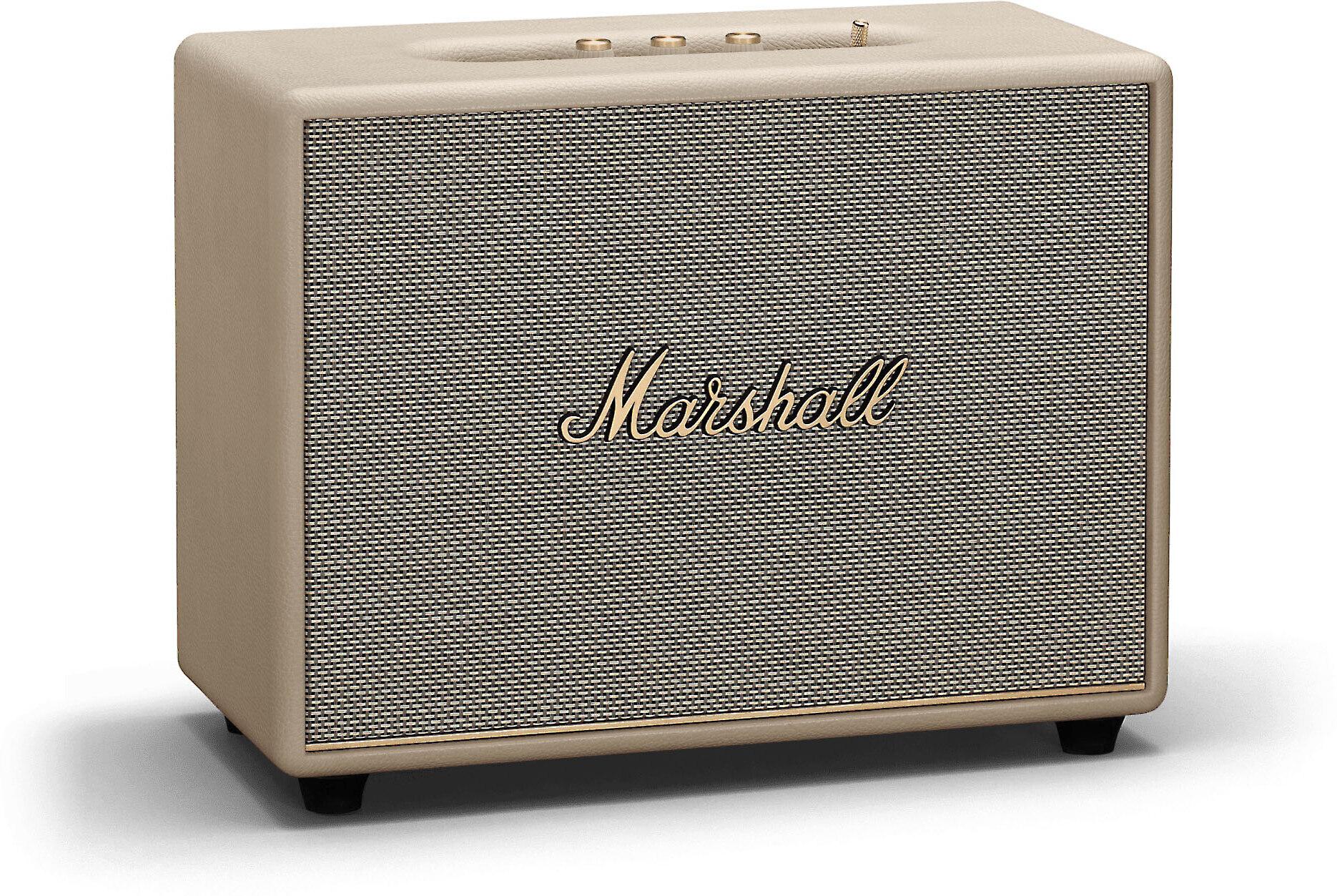
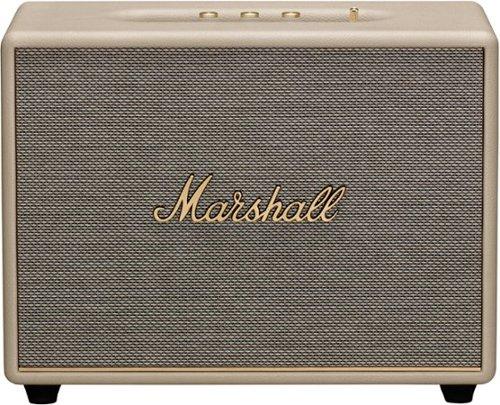
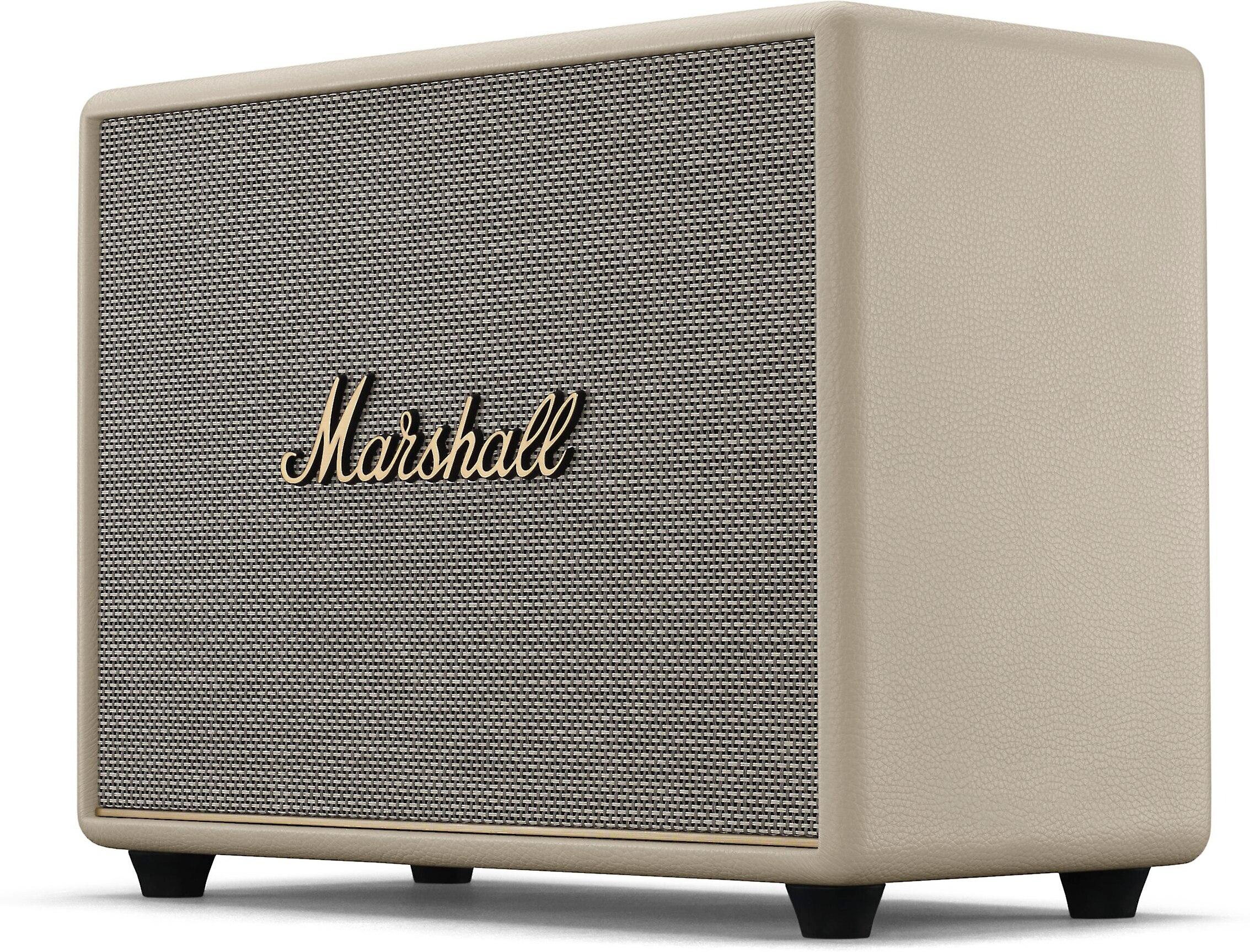
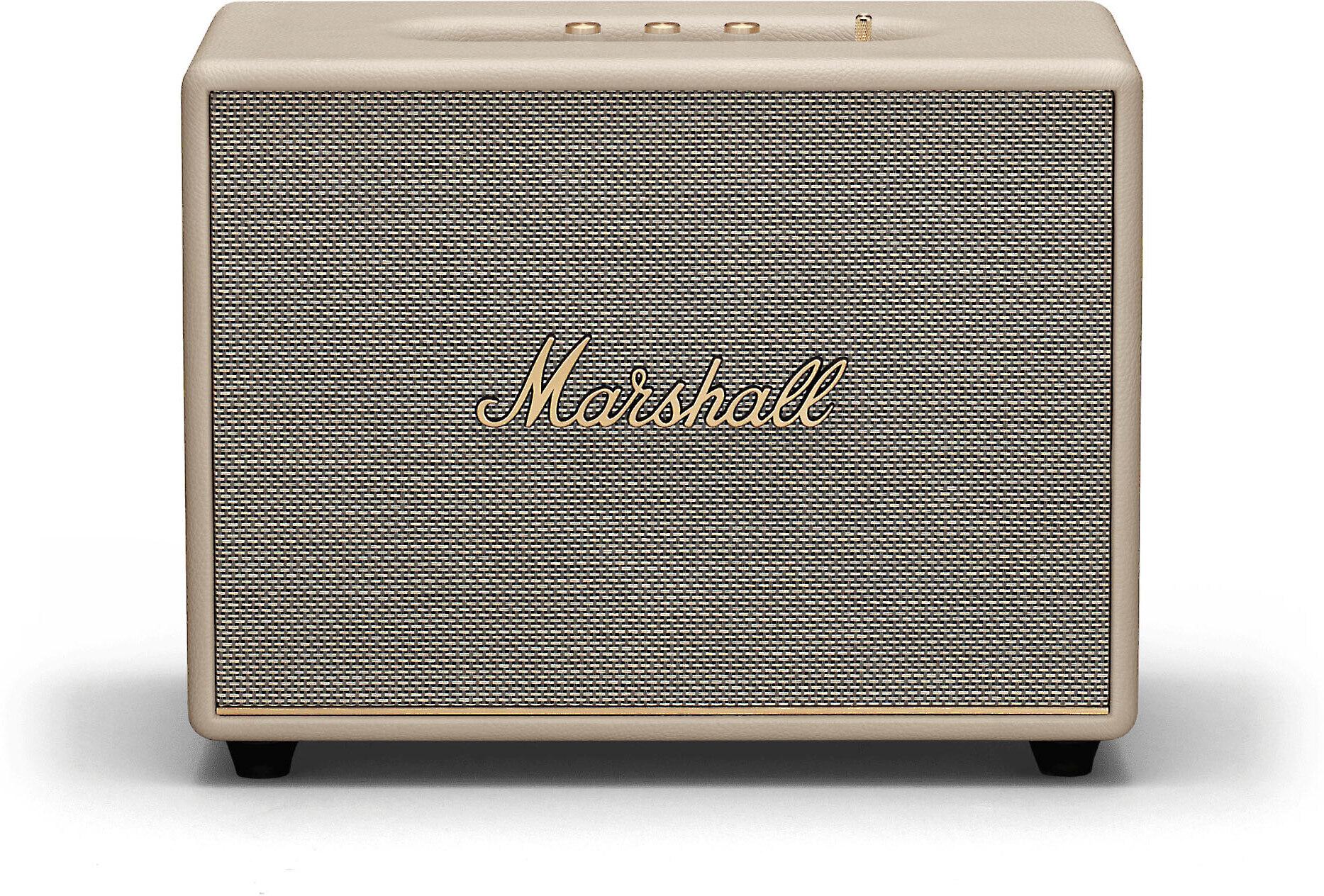
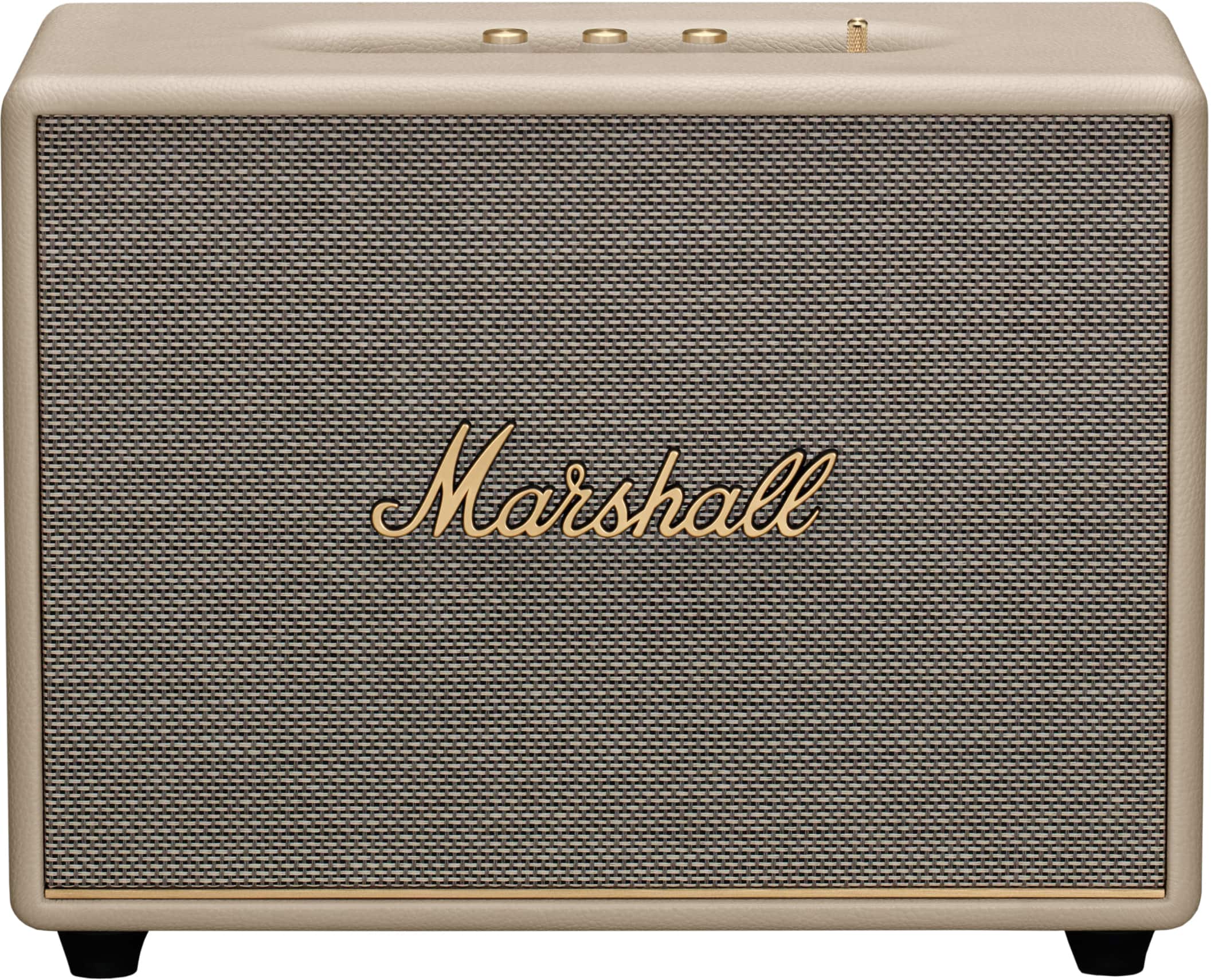
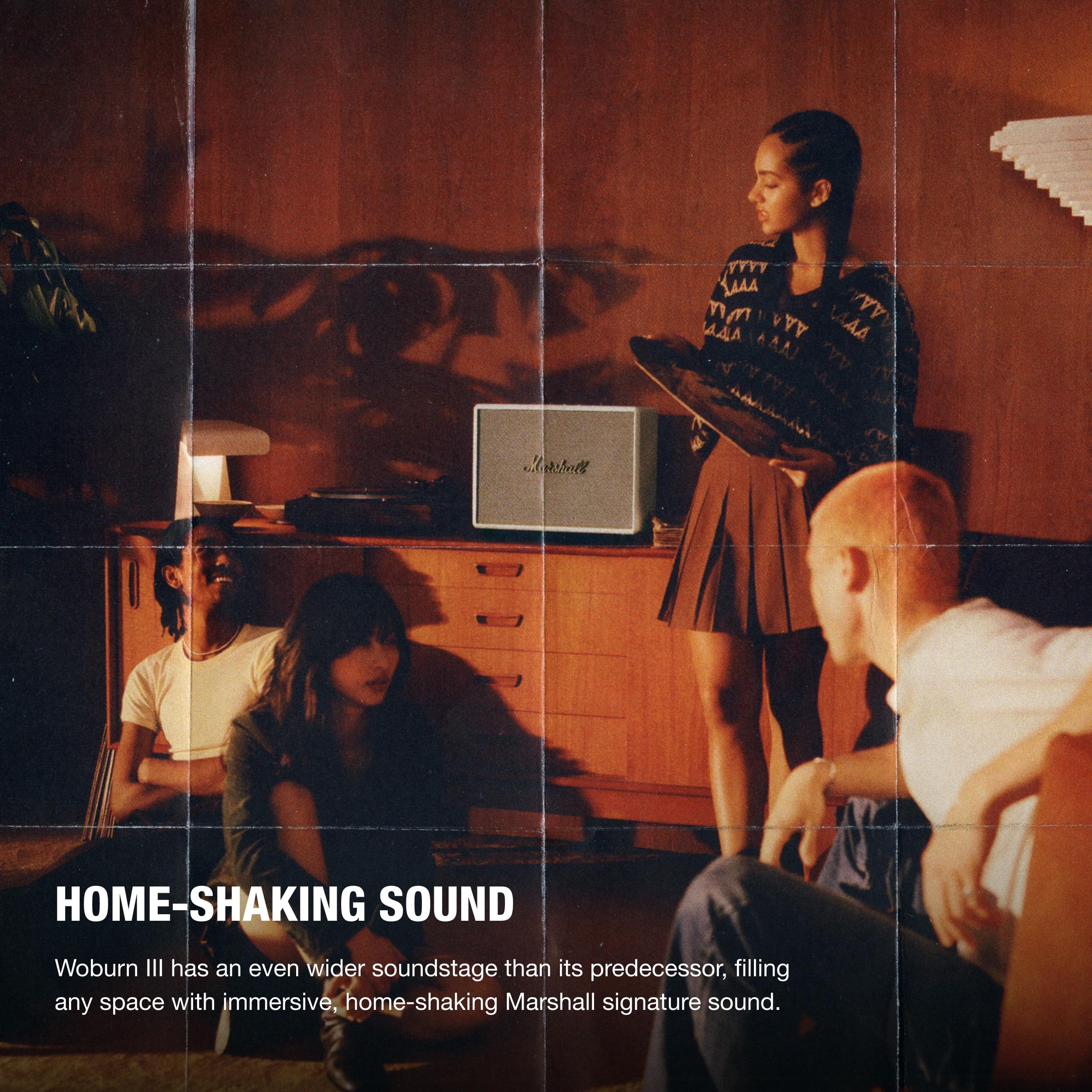

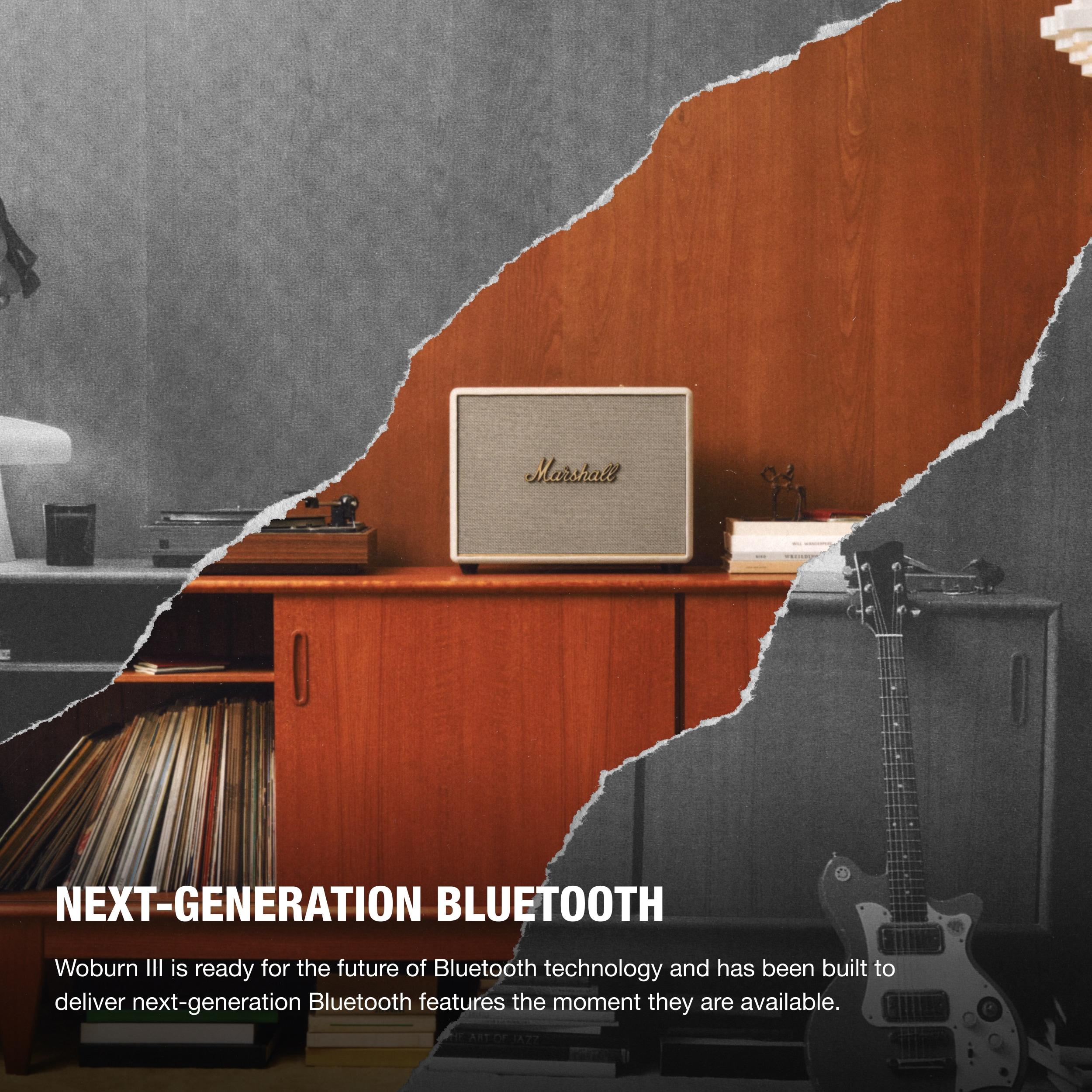
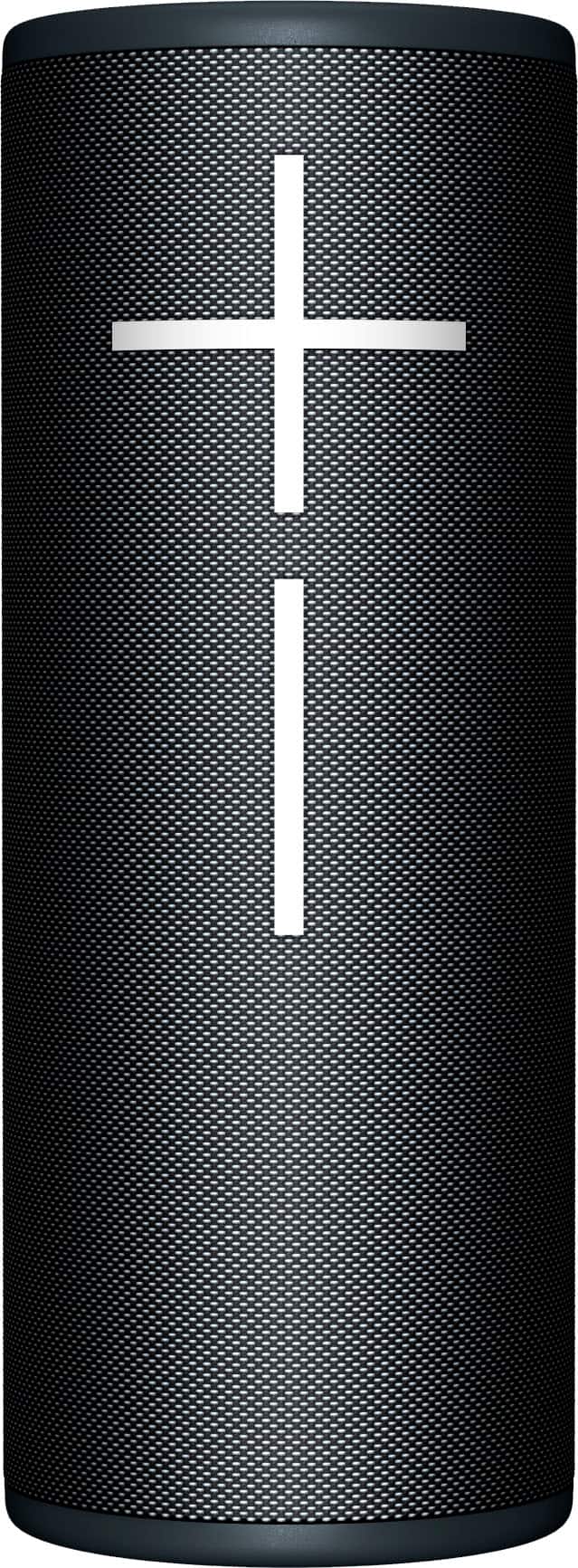






When it comes to high-end Bluetooth speakers, we're seeing an interesting divide between stationary home units and portable options. The Marshall Woburn III ($579) and Ultimate Ears MEGABOOM 4 ($149) perfectly illustrate these different approaches, with each serving distinct needs despite both being "Bluetooth speakers."
The speaker market has matured significantly in recent years. When the original Marshall Woburn debuted, Bluetooth speakers were primarily focused on convenience over quality. Now, with the Woburn III's release in late 2022, we're seeing professional-grade audio features like placement compensation (which automatically adjusts sound based on nearby walls and surfaces) and high-resolution audio support.
The MEGABOOM 4, released in early 2024, represents the latest in portable speaker technology, with improved bass response and more sustainable materials than its predecessors. It's fascinating to see how both segments have evolved to serve their specific use cases better.
The Marshall Woburn III delivers impressive audio performance through its three-way driver system. This means it has separate speakers for high frequencies (two 0.75" tweeters), mid-range (two 2" drivers), and bass (one 6" woofer). Each range gets dedicated amplification - 15 watts to each tweeter and 90 watts for the woofer.
What does this mean in practice? The separation of frequencies allows each driver to focus on what it does best, resulting in clearer vocals, crisper highs, and deeper bass than you'd typically get from a single-driver system. The Woburn III's Dynamic Loudness feature is particularly clever - it automatically adjusts the tonal balance as you change volume, ensuring the music sounds full even at lower levels.
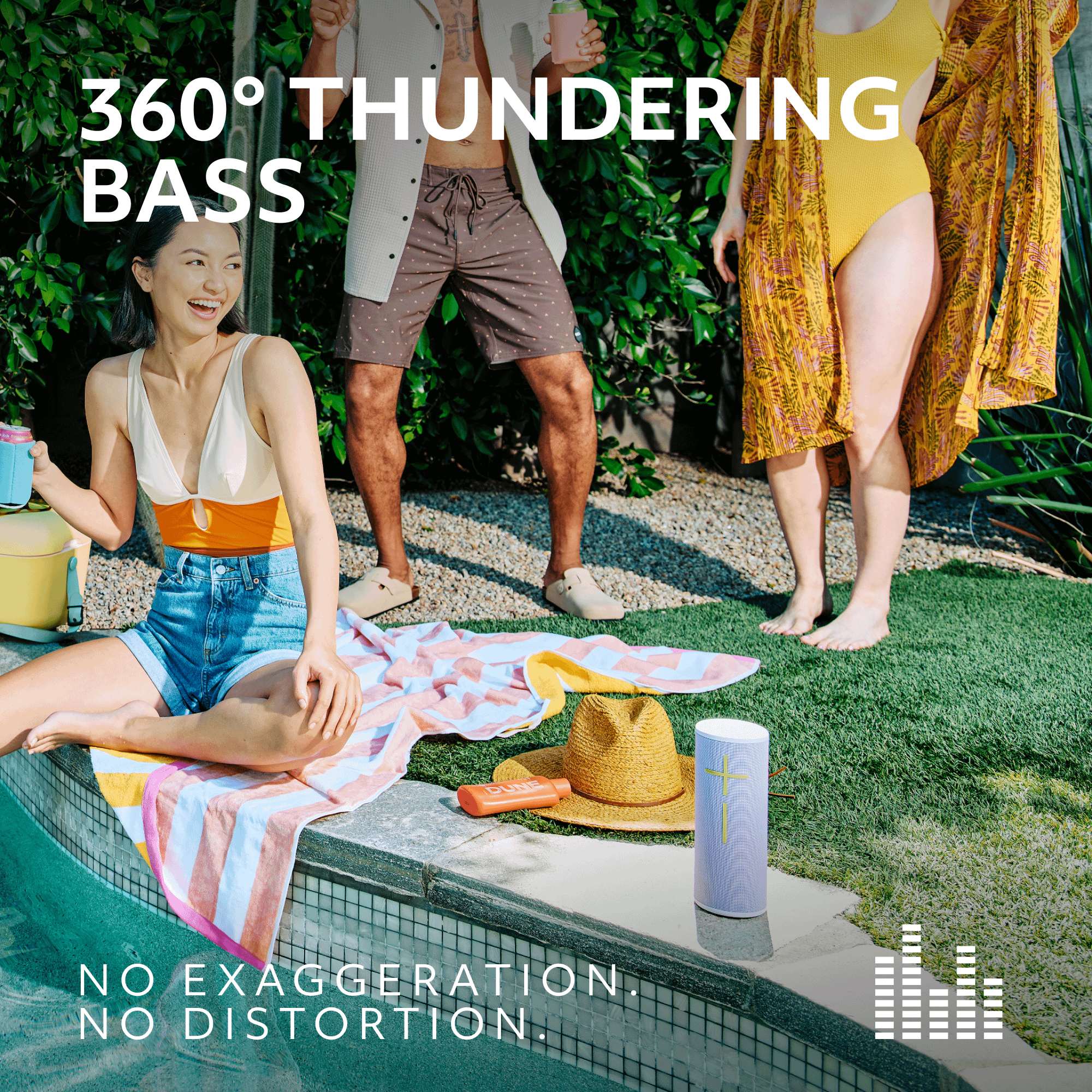
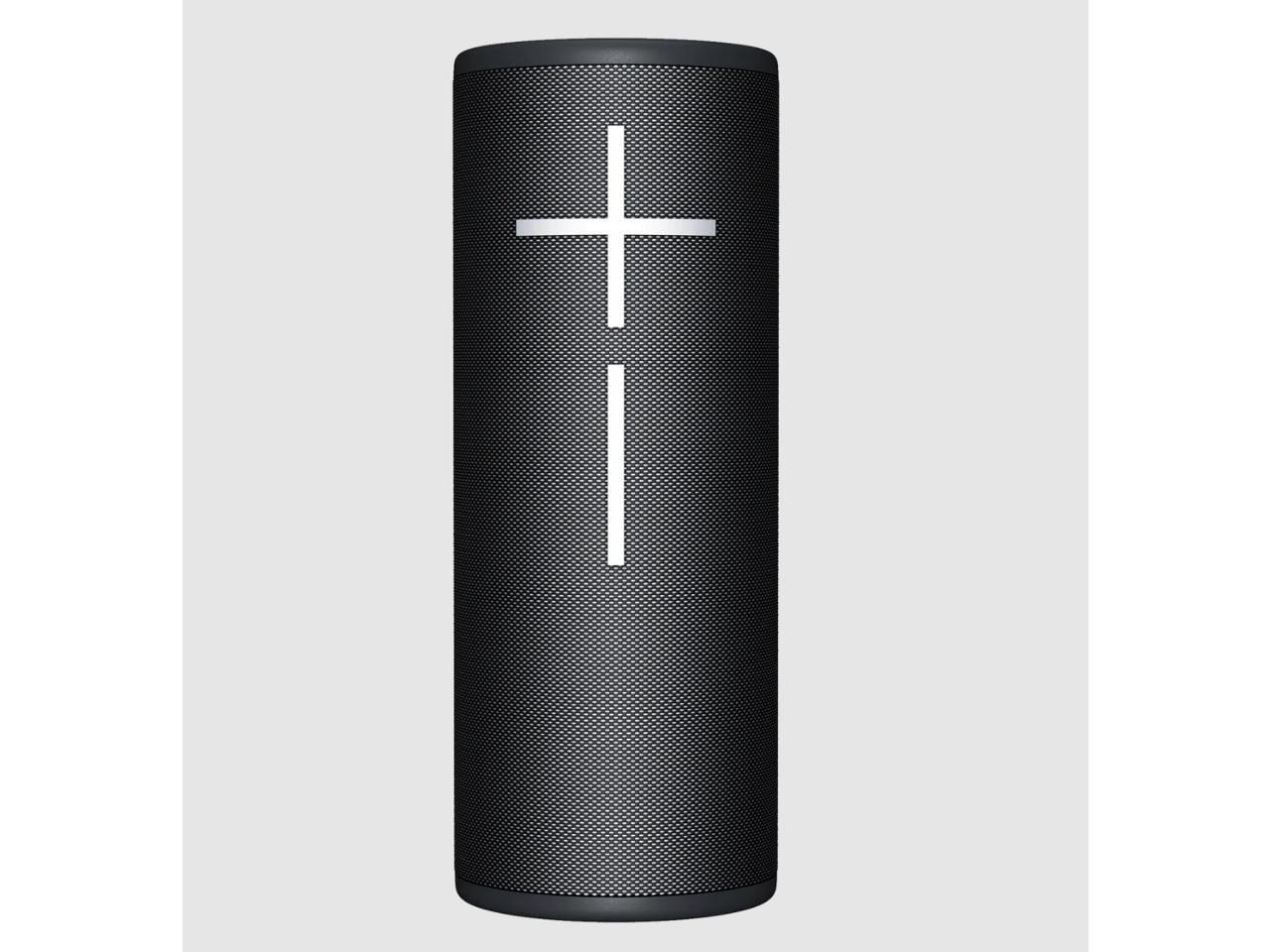
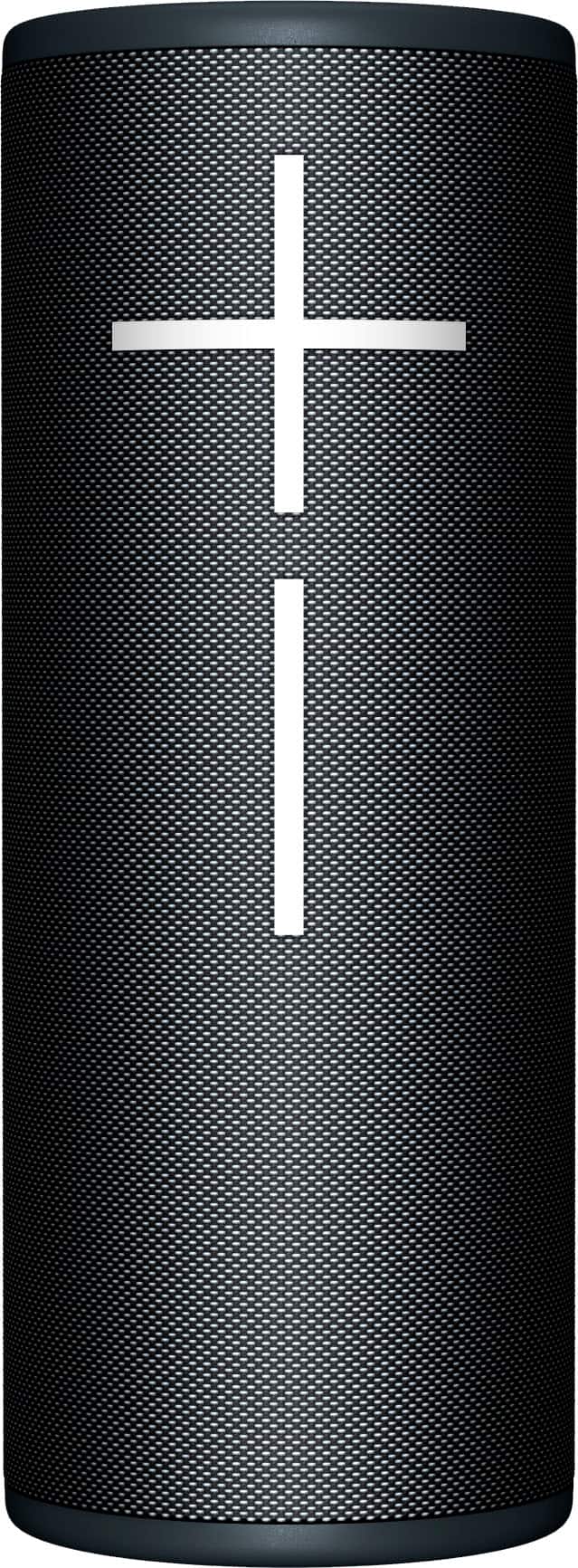
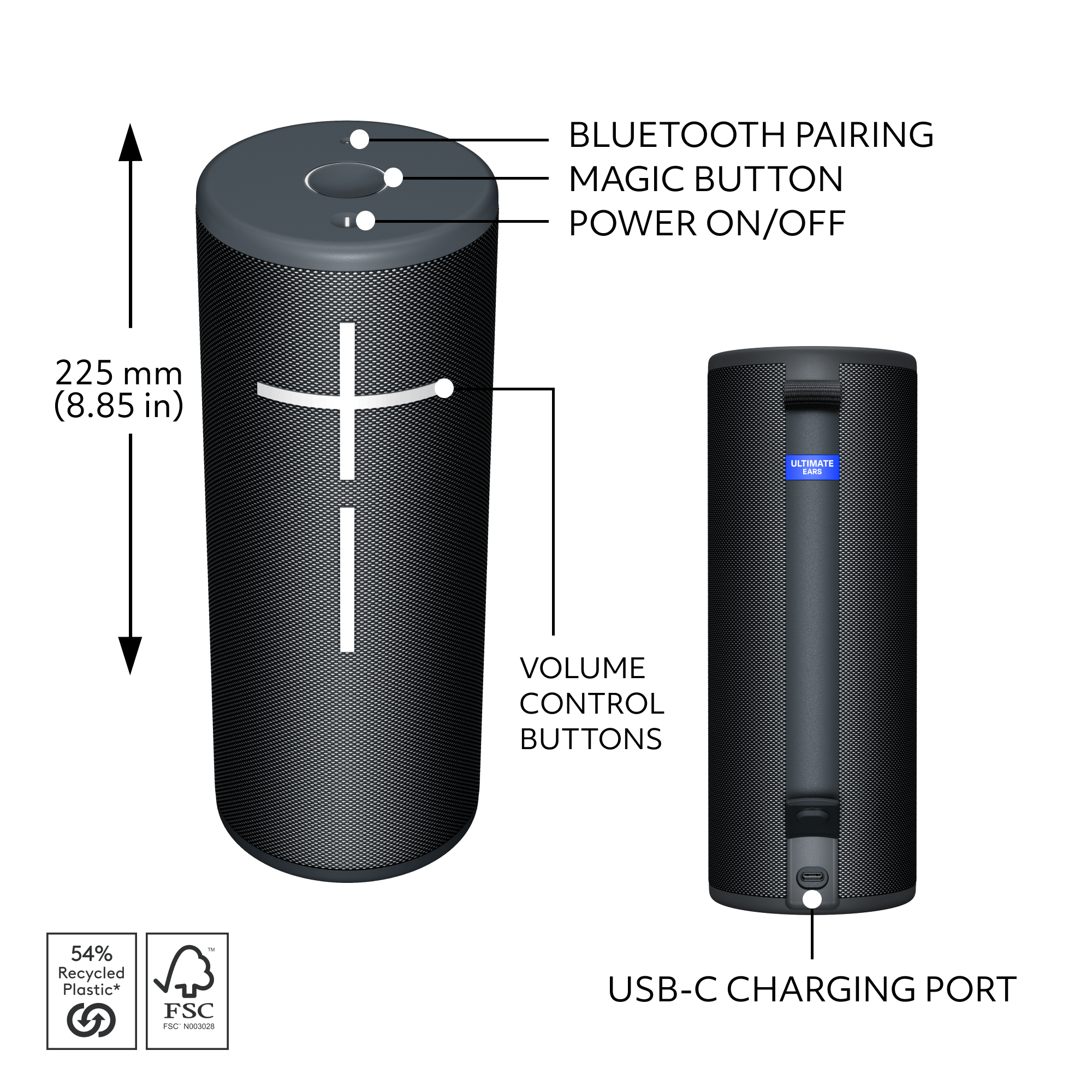
The MEGABOOM 4 takes a different approach, using two 50mm full-range drivers and passive radiators (which help enhance bass without requiring additional power) in a 360-degree configuration. While it can't match the raw power or frequency separation of the Woburn III, it creates an impressive sound bubble that works well outdoors or in rooms where people might be moving around.
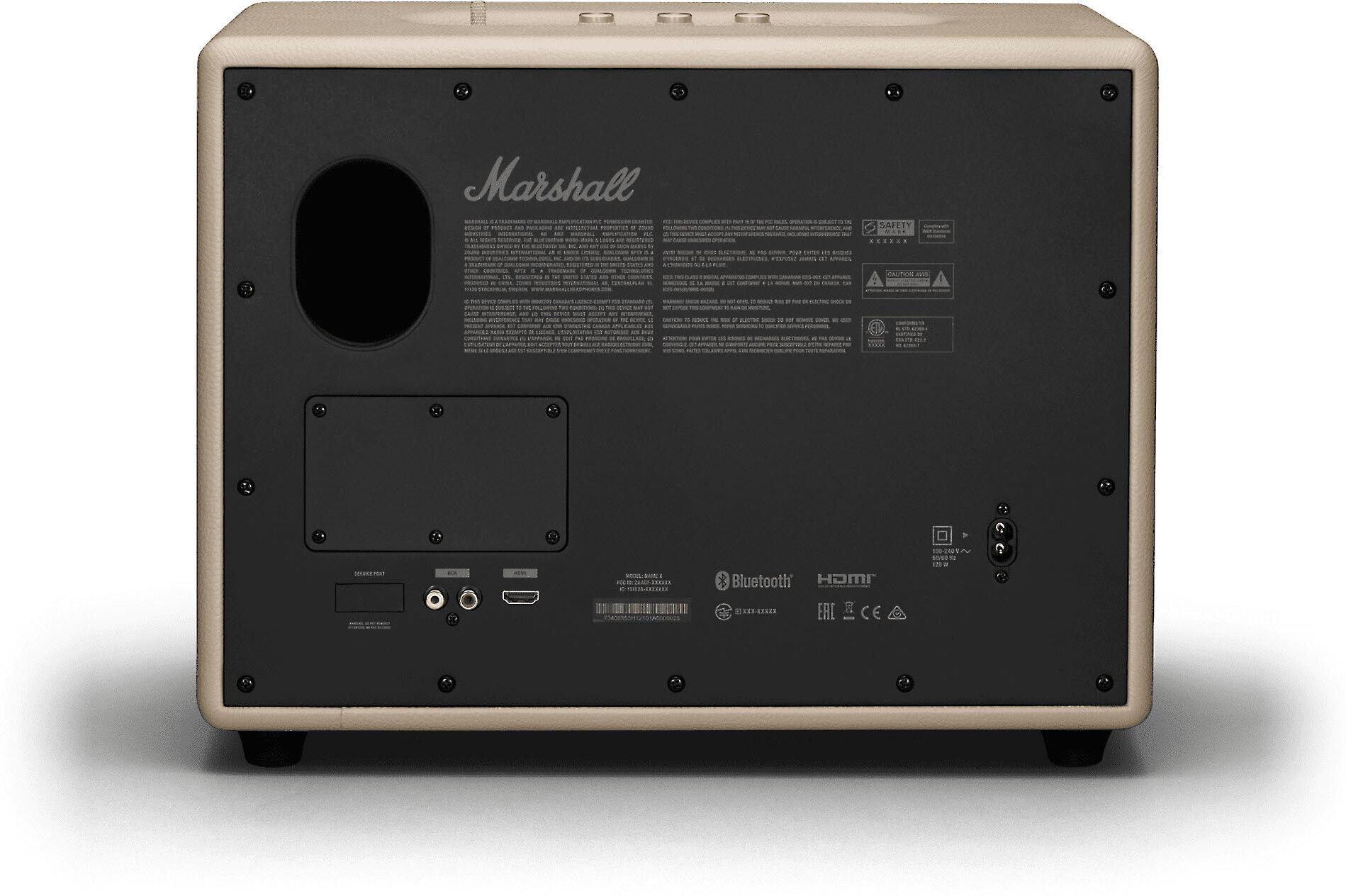
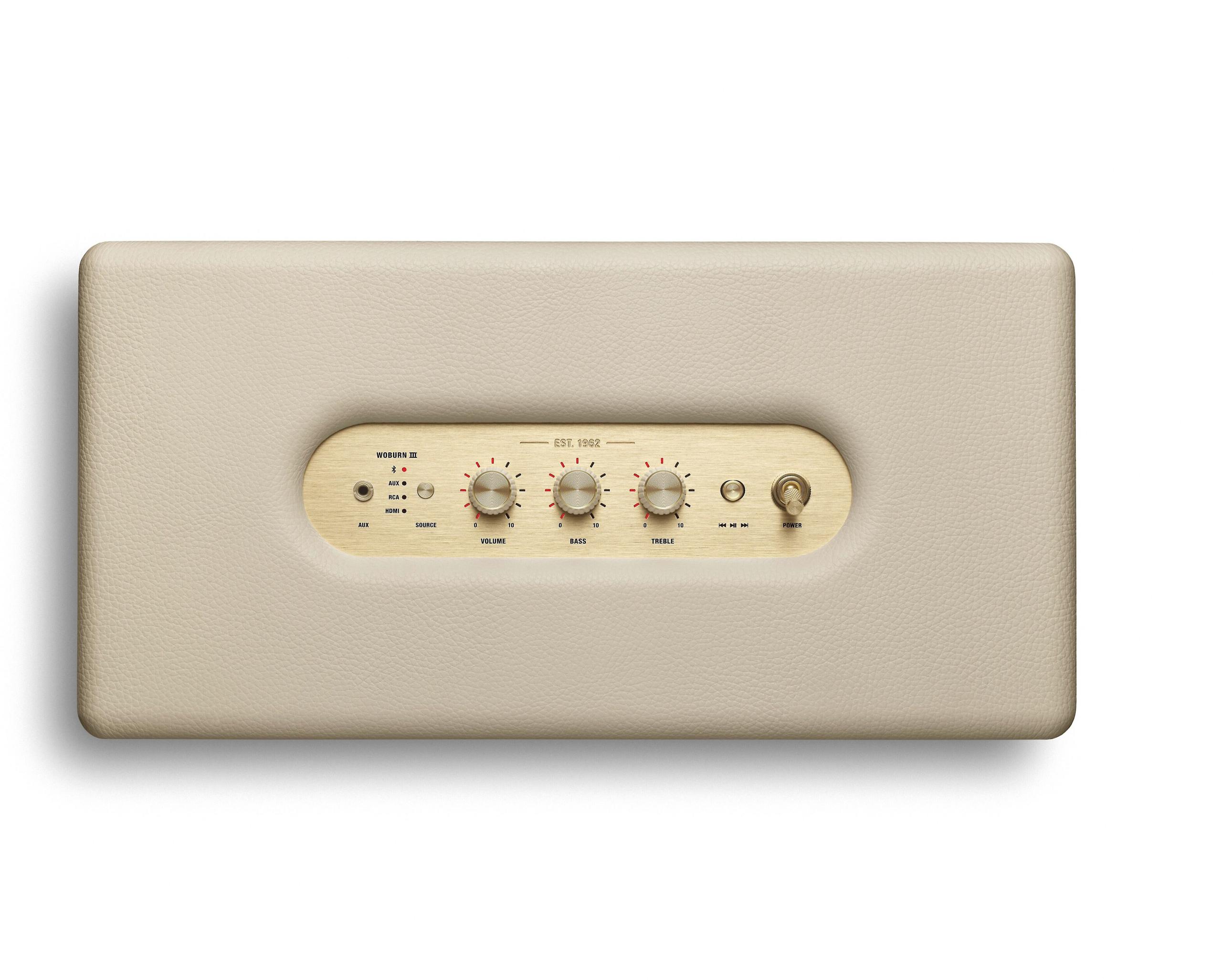
The Woburn III excels as a primary audio system for a room. Its HDMI ARC support means it can seamlessly integrate with your TV, automatically turning on and off with the television and providing significantly better audio than built-in TV speakers. The inclusion of RCA inputs also means you could connect a turntable or other audio equipment.
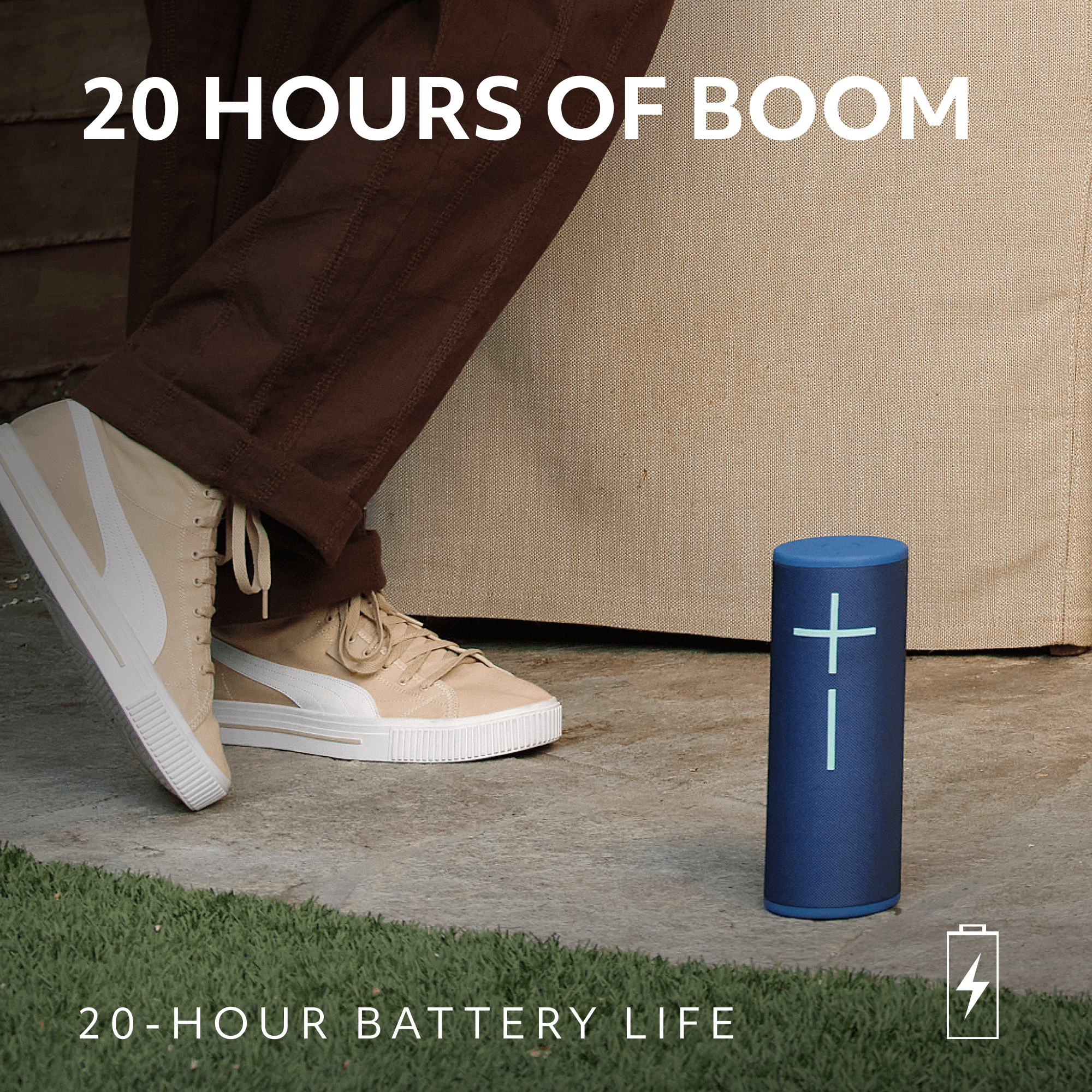
The MEGABOOM 4 shines in situations where flexibility is key. Its IP67 rating means it's fully waterproof and dustproof - you can submerge it in water up to 1 meter deep for 30 minutes without damage. This makes it perfect for pool parties, beach trips, or even shower listening. The 20-hour battery life means you won't need to worry about finding a power outlet during day-long events.
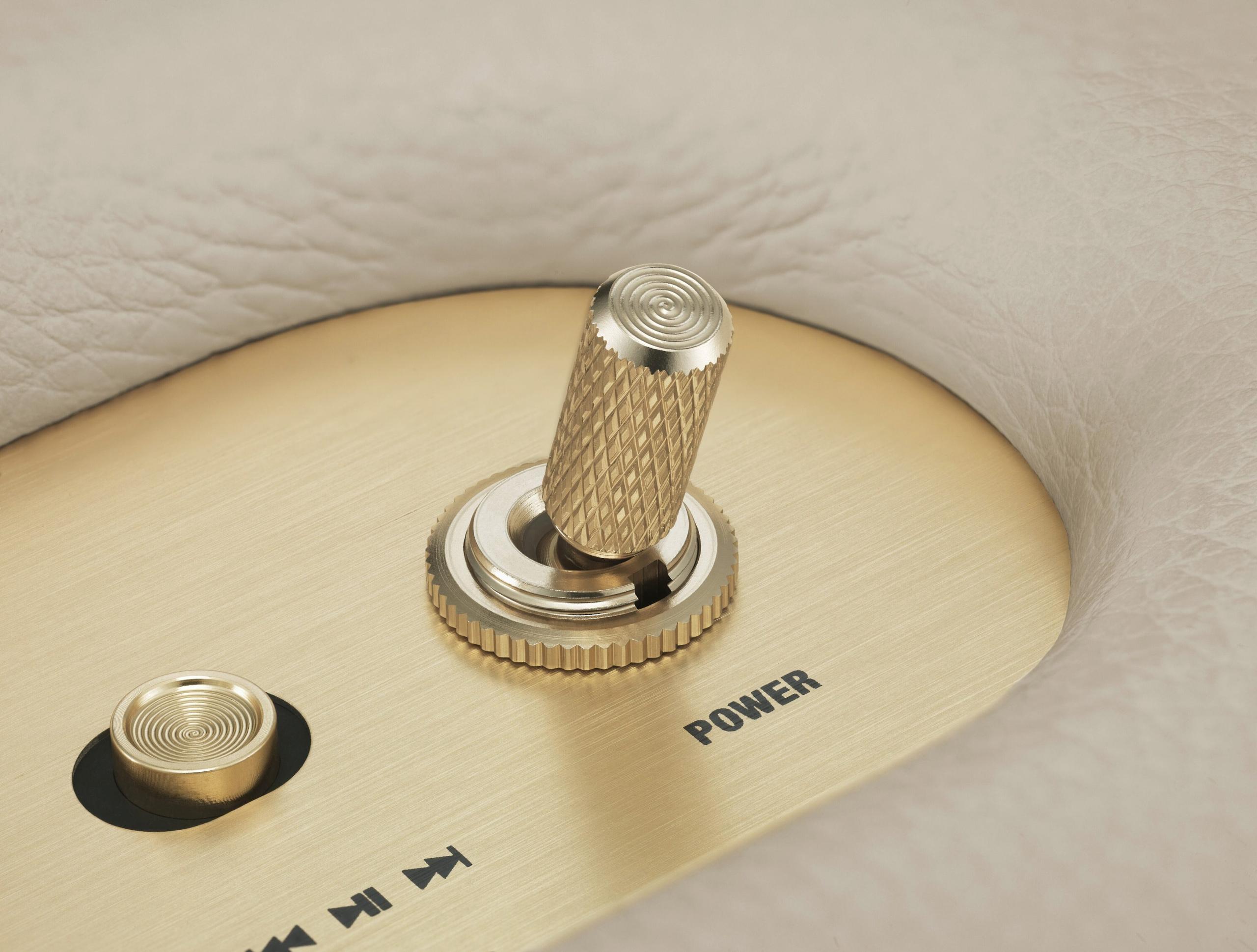
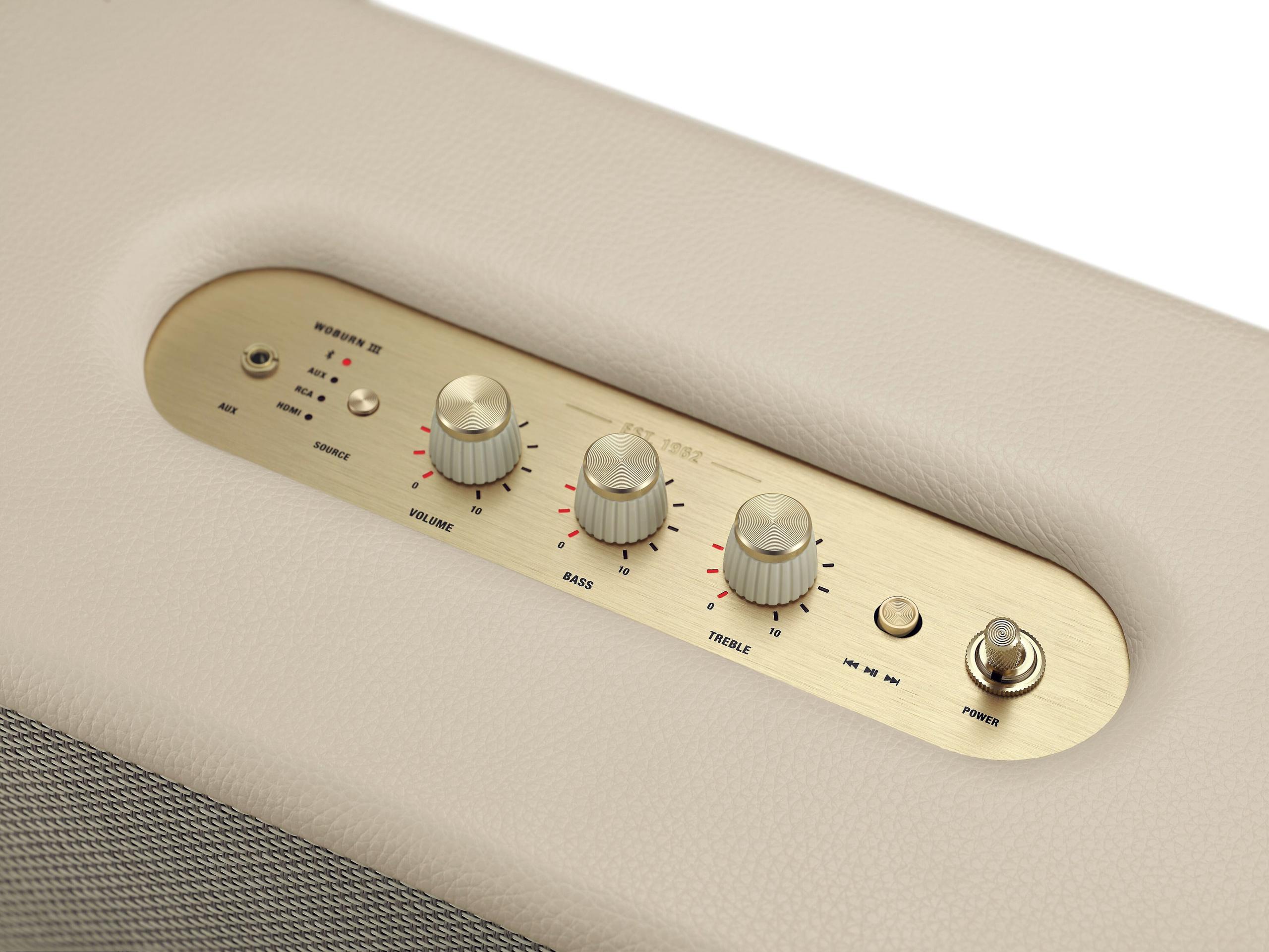
The Woburn III supports connecting to multiple devices simultaneously, which is handy when switching between your phone, laptop, and TV. The physical control knobs for bass, treble, and volume provide a tactile experience that many users prefer over app-only controls.
The MEGABOOM 4's PartyUp feature lets you connect over 150 compatible Ultimate Ears speakers together - creating a scalable sound system that's perfect for larger gatherings. The Magic Button on top provides quick access to your favorite playlists from services like Spotify, though you'll need to set this up in the app first.
While the Marshall Woburn III costs significantly more than the MEGABOOM 4, comparing their prices directly misses the point. The Woburn III competes with traditional home audio systems that often cost much more, while offering modern features like Bluetooth connectivity and app control. It's a serious investment in home audio that can serve as your primary music system for years.
The MEGABOOM 4's value proposition is different - it's about flexibility and durability. The ability to use it anywhere, its weather resistance, and the option to link multiple units together make it versatile enough to justify its price point for anyone who needs portable audio.
Consider your primary use case:
If you're looking to improve your home audio experience and have the budget, the Woburn III offers superior sound quality and home theater integration. It's particularly worth considering if:
The MEGABOOM 4 makes more sense if:
The Woburn III's placement compensation technology is particularly impressive, using digital signal processing to adjust the sound based on nearby surfaces. This helps prevent the bass boost that typically occurs when speakers are placed near walls or corners.
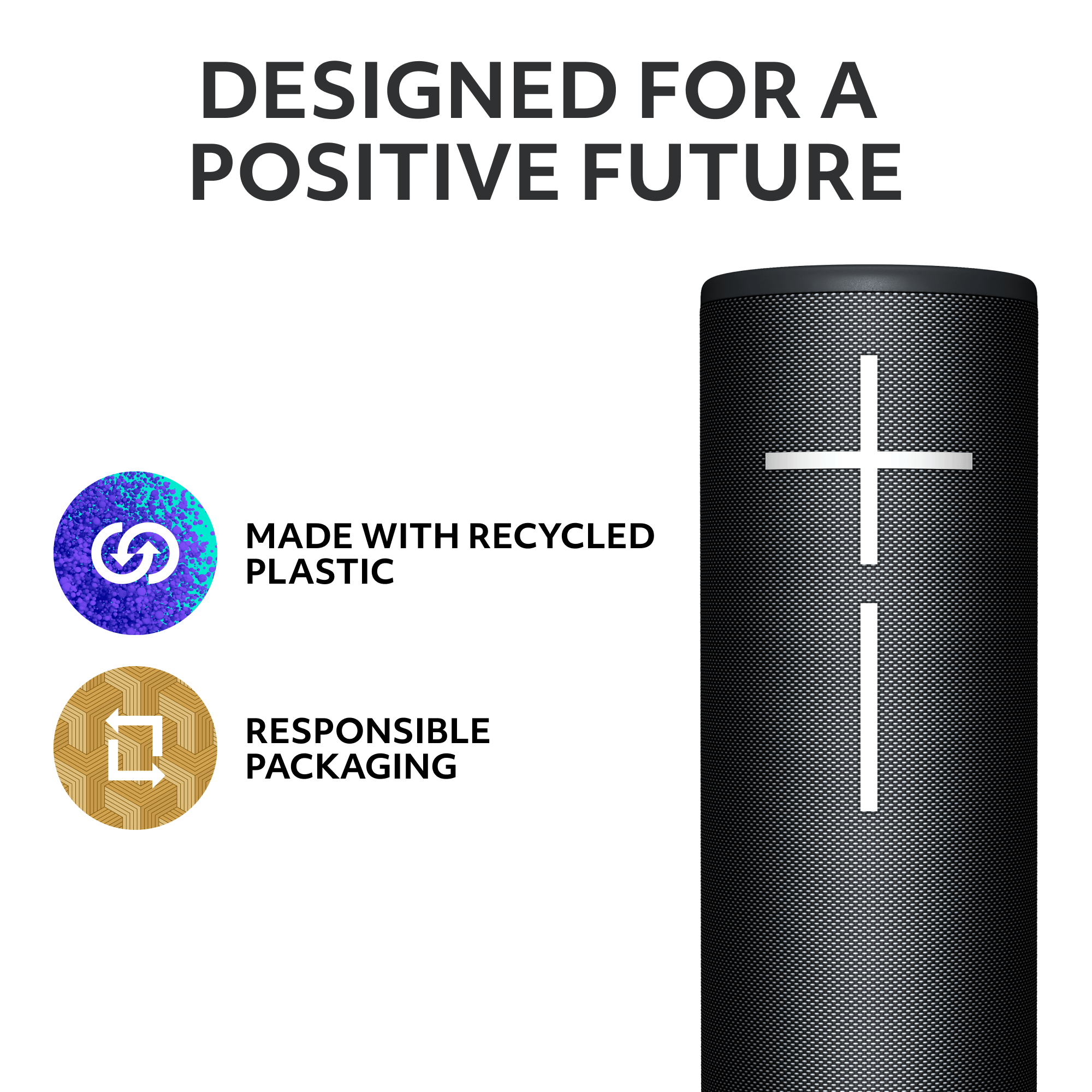
The MEGABOOM 4's improvements in battery efficiency and charging (now using USB-C) show how portable speakers continue to evolve. The speaker also uses more sustainable materials, with over 50% post-consumer recycled plastic in its construction.
Remember that both speakers will receive firmware updates over time, potentially adding new features or improving performance. This kind of long-term support helps protect your investment, regardless of which model you choose.
Having tested both speakers extensively, I've found that the Woburn III's sound quality advantage is most noticeable with complex musical pieces - classical music, for instance, where instrument separation and clarity make a big difference. However, the MEGABOOM 4's portability has made it my go-to for casual listening around the house and outdoor gatherings. The choice really comes down to how you'll use the speaker most often.
| Marshall Woburn III | Ultimate Ears MEGABOOM 4 |
|---|---|
| Price - Investment vs Value | |
| $579 (premium home audio investment) | $149 (competitive portable speaker price) |
| Power Output - Impacts volume and sound quality | |
| 150W total (2x15W tweeters, 90W woofer) | Not specified, but delivers 91 dBC maximum volume |
| Sound Configuration - Affects audio quality and clarity | |
| 3-way system (2 tweeters, 2 midrange, 1 woofer) | 2 full-range drivers + 2 passive radiators |
| Size & Weight - Consider placement and portability | |
| 15.75" x 12.6" x 7.87", 18.3 lbs (stationary) | 8.9" x 3.4", 2.06 lbs (highly portable) |
| Durability Rating - Important for versatile use | |
| No official rating (indoor use only) | IP67 (waterproof, dustproof, floatable) |
| Power Source - Affects placement flexibility | |
| AC power only (constant power, no battery) | 20-hour rechargeable battery |
| Connectivity Options - Flexibility for different sources | |
| Bluetooth 5.2, HDMI ARC, RCA, 3.5mm | Bluetooth only with 45m range |
| Special Features - Added value considerations | |
| Placement compensation, Dynamic Loudness, Night Mode | PartyUp (150+ speaker linking), Magic Button controls |
| Multi-room/Linking - Expandability options | |
| Can connect to other Marshall speakers | Links with BOOM, MEGABOOM, HYPERBOOM speakers |
| App Control - Customization options | |
| Marshall app with EQ, placement optimization | BOOM app with EQ presets, playback controls |
| Environmental Impact - Sustainability consideration | |
| Some recycled materials | 54% post-consumer recycled plastic |
The Marshall Woburn III is specifically designed for home use with superior sound quality and 150W power output. While the MEGABOOM 4 works at home, it's optimized for portable use. For dedicated home audio, the Woburn III is the better choice.
The Marshall Woburn III costs $579, while the MEGABOOM 4 is $149. The significant price difference reflects their different purposes - the Woburn III as a premium home audio solution versus the MEGABOOM 4 as a portable speaker.
The Marshall Woburn III includes HDMI ARC connection for TV use, providing seamless integration with your television. The MEGABOOM 4 doesn't offer TV connectivity options beyond basic Bluetooth.
The MEGABOOM 4 offers 20 hours of battery life. The Marshall Woburn III doesn't have a battery - it requires constant AC power connection.
The MEGABOOM 4 is designed for outdoor use with IP67 water and dust resistance. The Marshall Woburn III is not weather-resistant and should only be used indoors.
The Marshall Woburn III offers superior sound quality with its three-way speaker system and 150W output. While the MEGABOOM 4 sounds good for its size, it can't match the Woburn's audio performance.
Both can link with other speakers. The MEGABOOM 4 can connect with up to 150 compatible Ultimate Ears speakers through PartyUp. The Marshall Woburn III can connect with other Marshall speakers for multi-room audio.
The MEGABOOM 4 is better for parties due to its portability, water resistance, and 360-degree sound. The Marshall Woburn III offers better sound quality but lacks the flexibility needed for most party environments.
Yes, both the Marshall Woburn III and MEGABOOM 4 offer app control for EQ settings and features, though the Woburn III also includes physical control knobs.
The MEGABOOM 4 is more durable with its IP67 rating for water and dust resistance. The Marshall Woburn III is well-built but designed for stationary indoor use only.
Both the Marshall Woburn III and MEGABOOM 4 offer Bluetooth connectivity for phones and other devices. The Woburn III can connect to multiple devices simultaneously.
The MEGABOOM 4 is more suitable for small spaces due to its compact size and portability. The Marshall Woburn III requires more space and is better suited for medium to large rooms.
We've done our best to create useful and informative comparisons to help you decide what product to buy. Our research uses advanced automated methods to create this comparison and perfection is not possible - please contact us for corrections or questions. These are the sites we've researched in the creation of this article: bestbuy.com - crutchfield.com - rtings.com - idownloadblog.com - digit.in - crutchfield.com - epicrewards.com.ph - ione.com.kh - youtube.com - onward.ph - economictimes.indiatimes.com - bestbuy.com - ultimateears.com - ultimateears.com - trustedreviews.com - ultimateears.com - ultimateears.com - staples.com - rtings.com - ultimateears.com - colamco.com - whatsthebest.co.uk - colamco.com

Privacy Policy
Terms and Conditions - Affiliate Policy
Home Security
© Copyright 2008-2026.
11816 Inwood Rd #1211, Dallas, TX 75244