

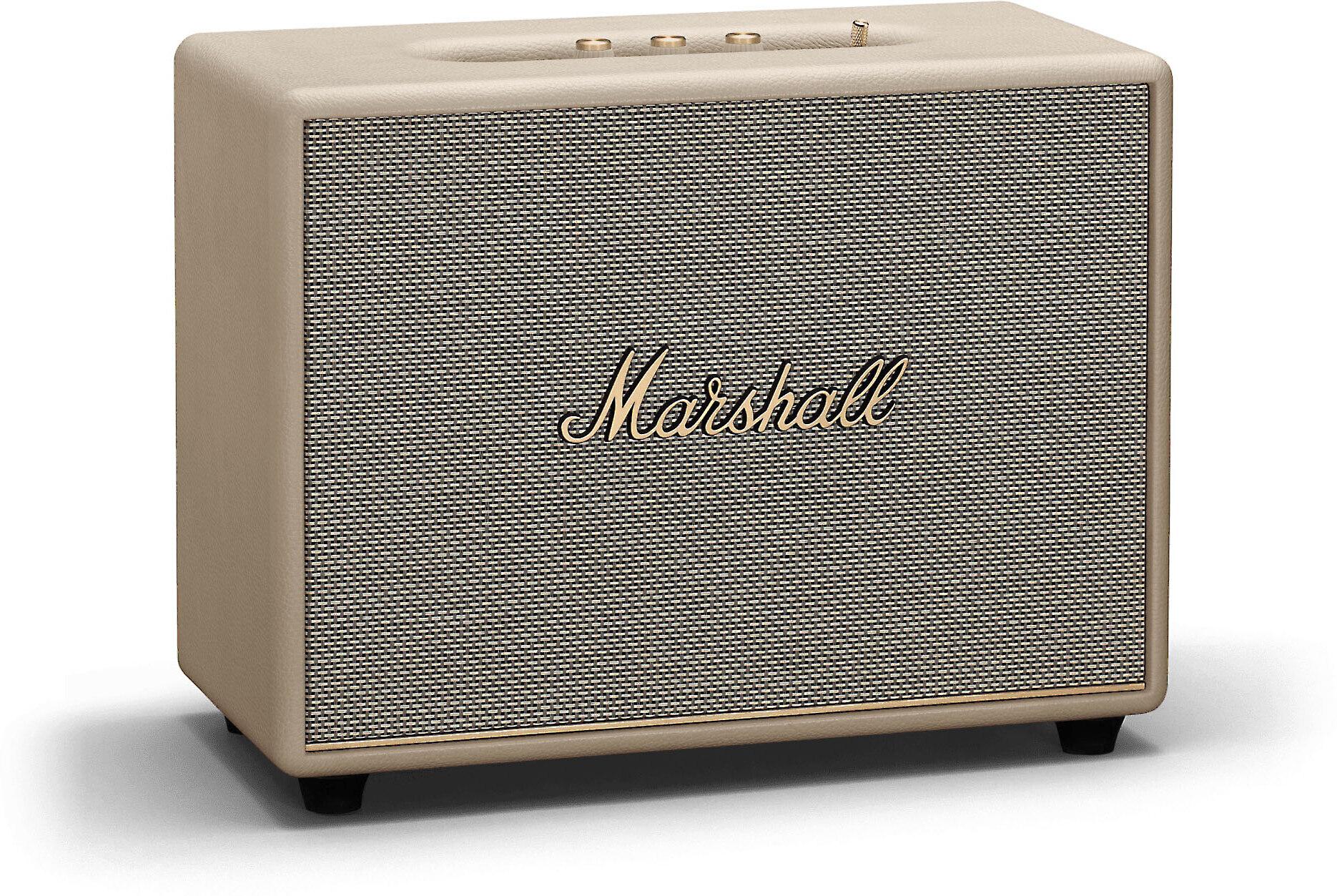
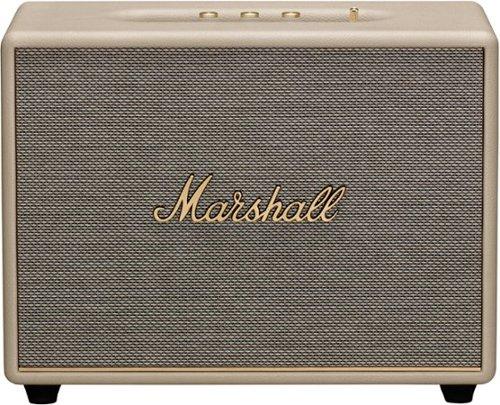
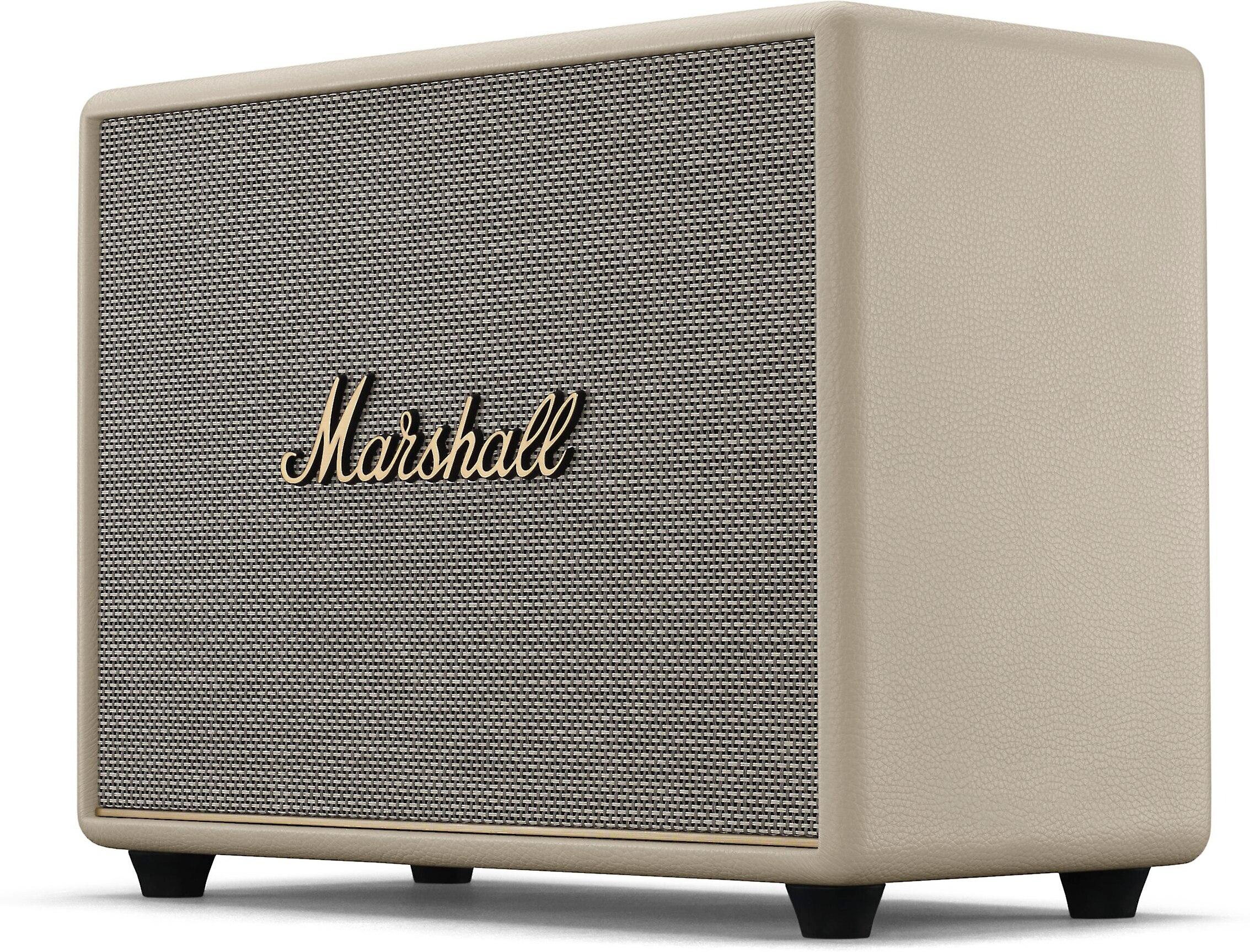
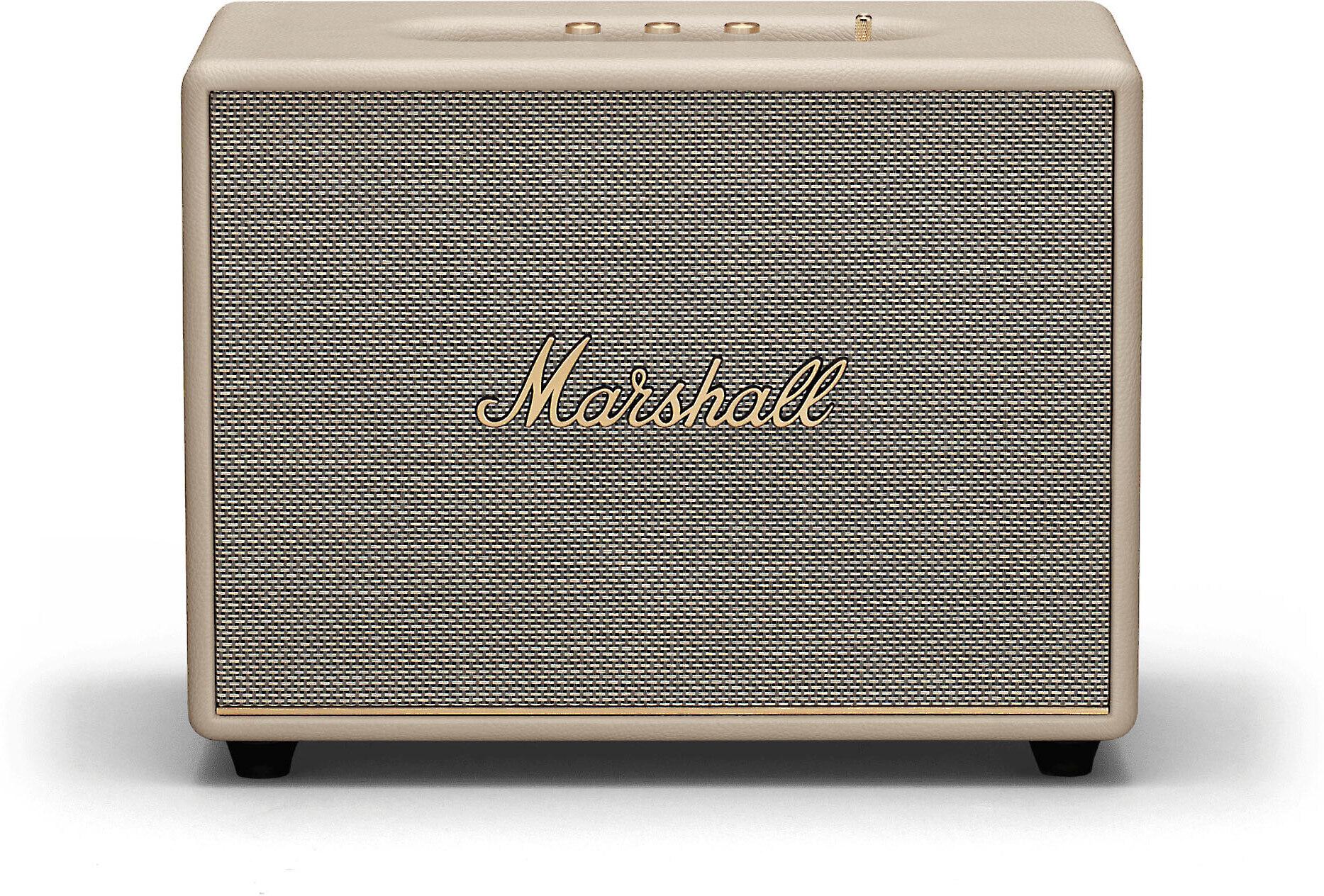
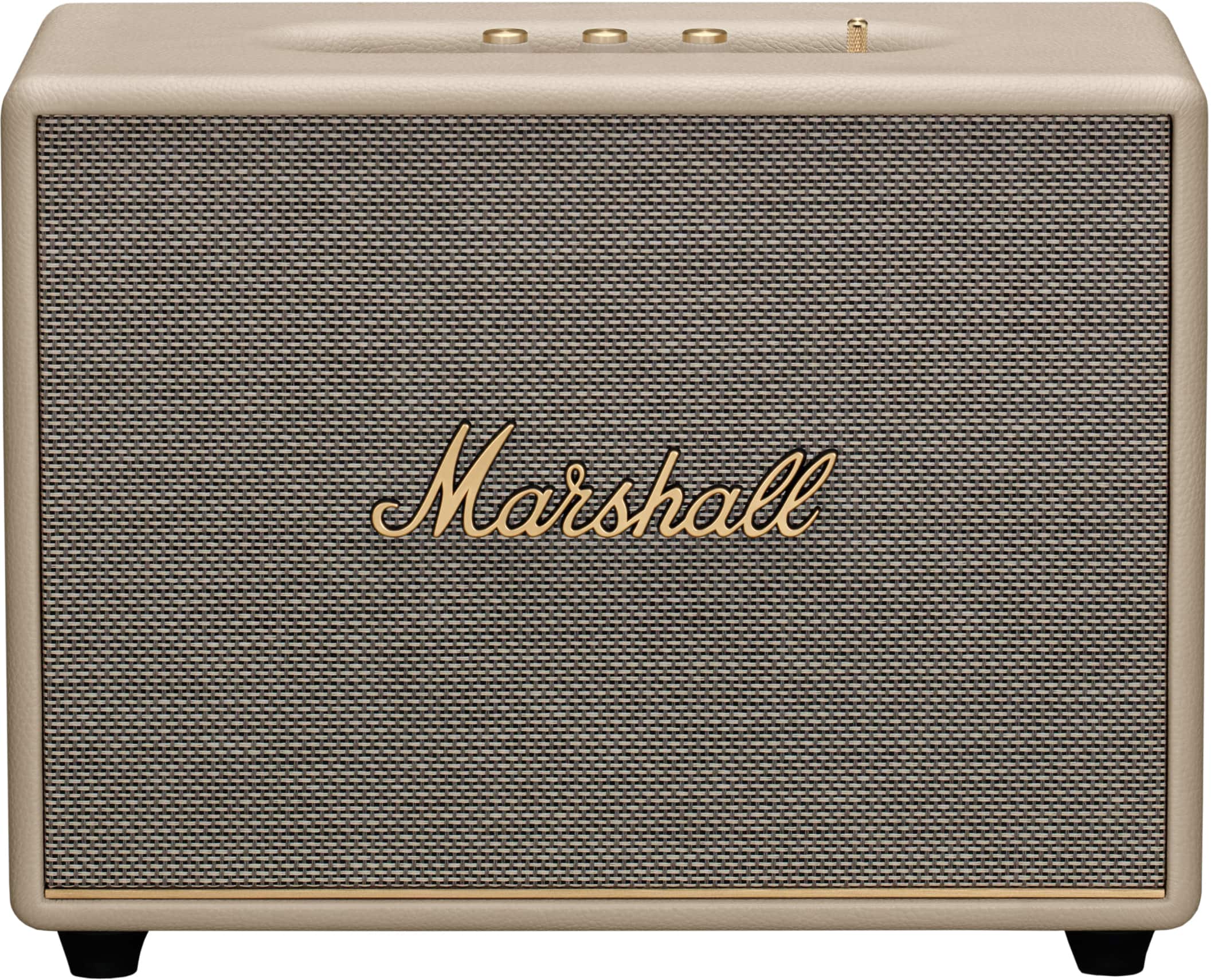

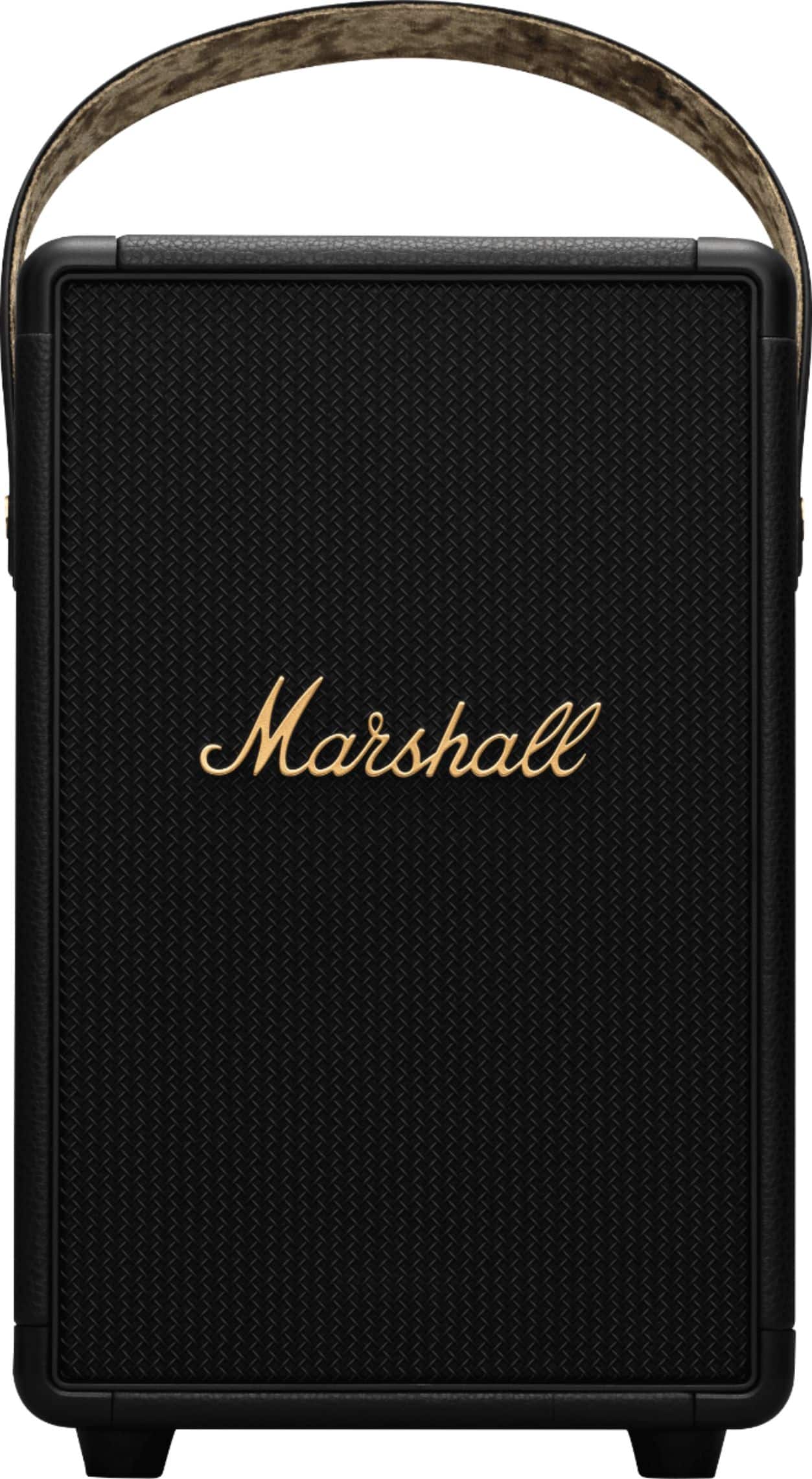
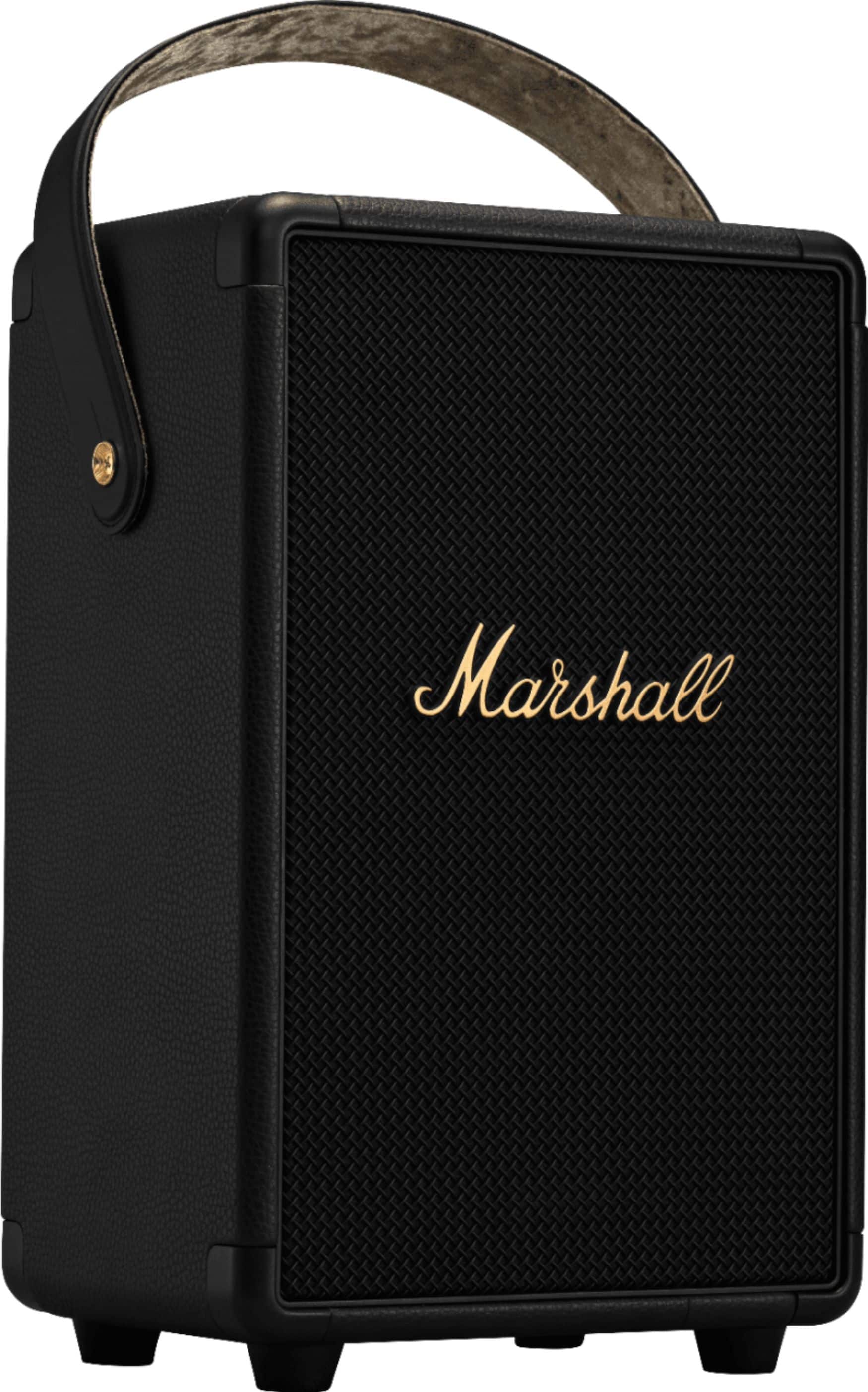
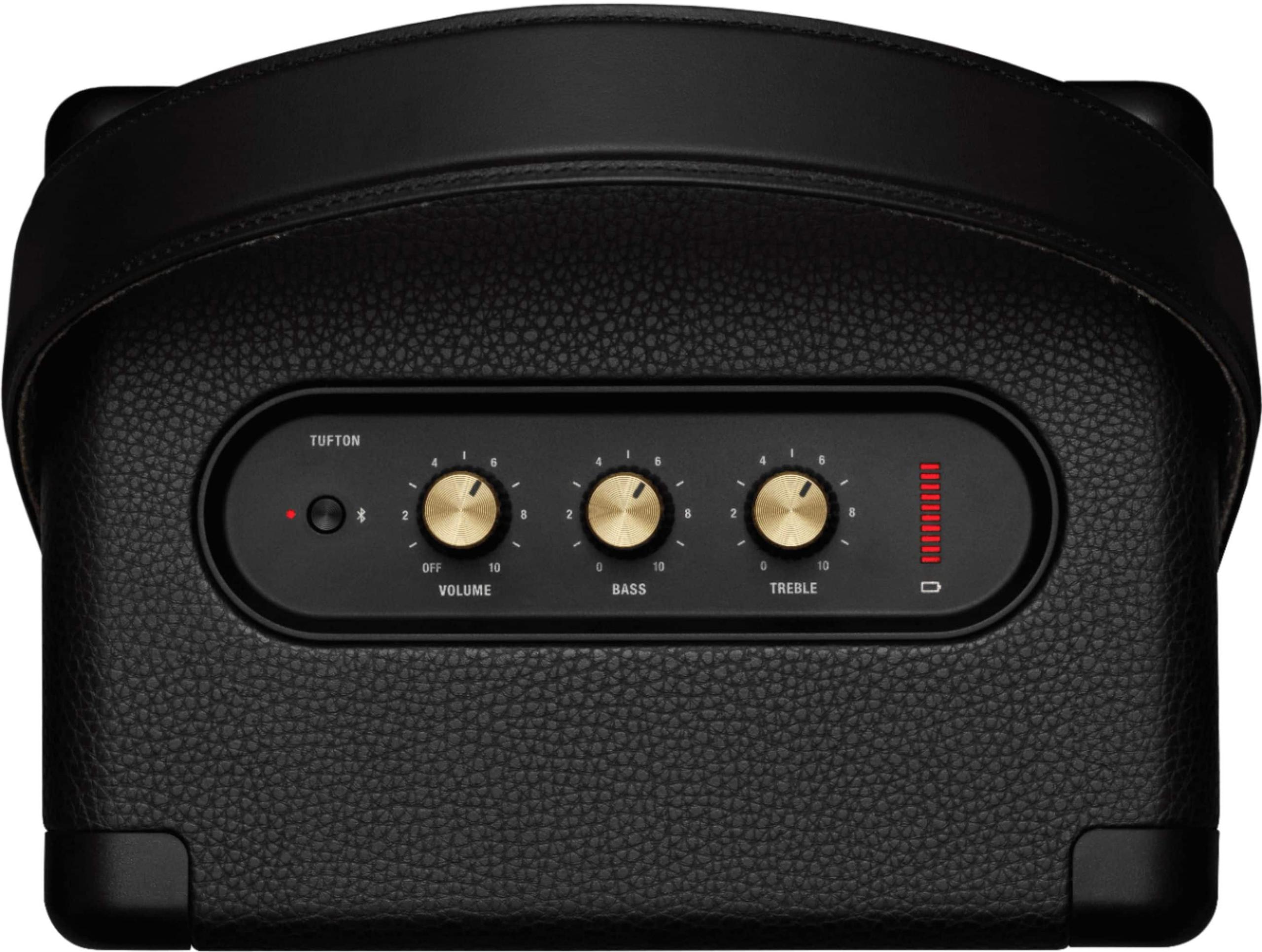
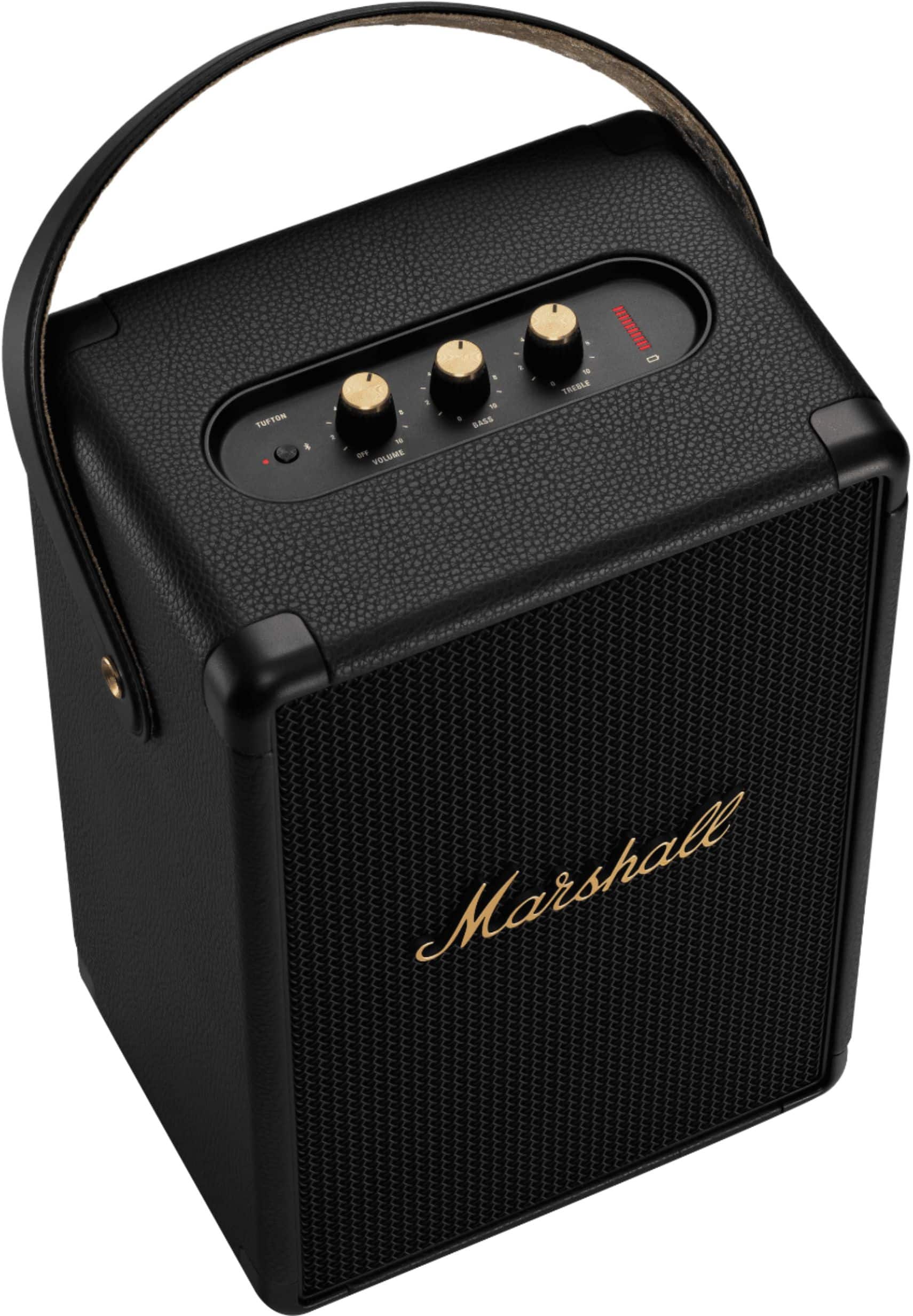
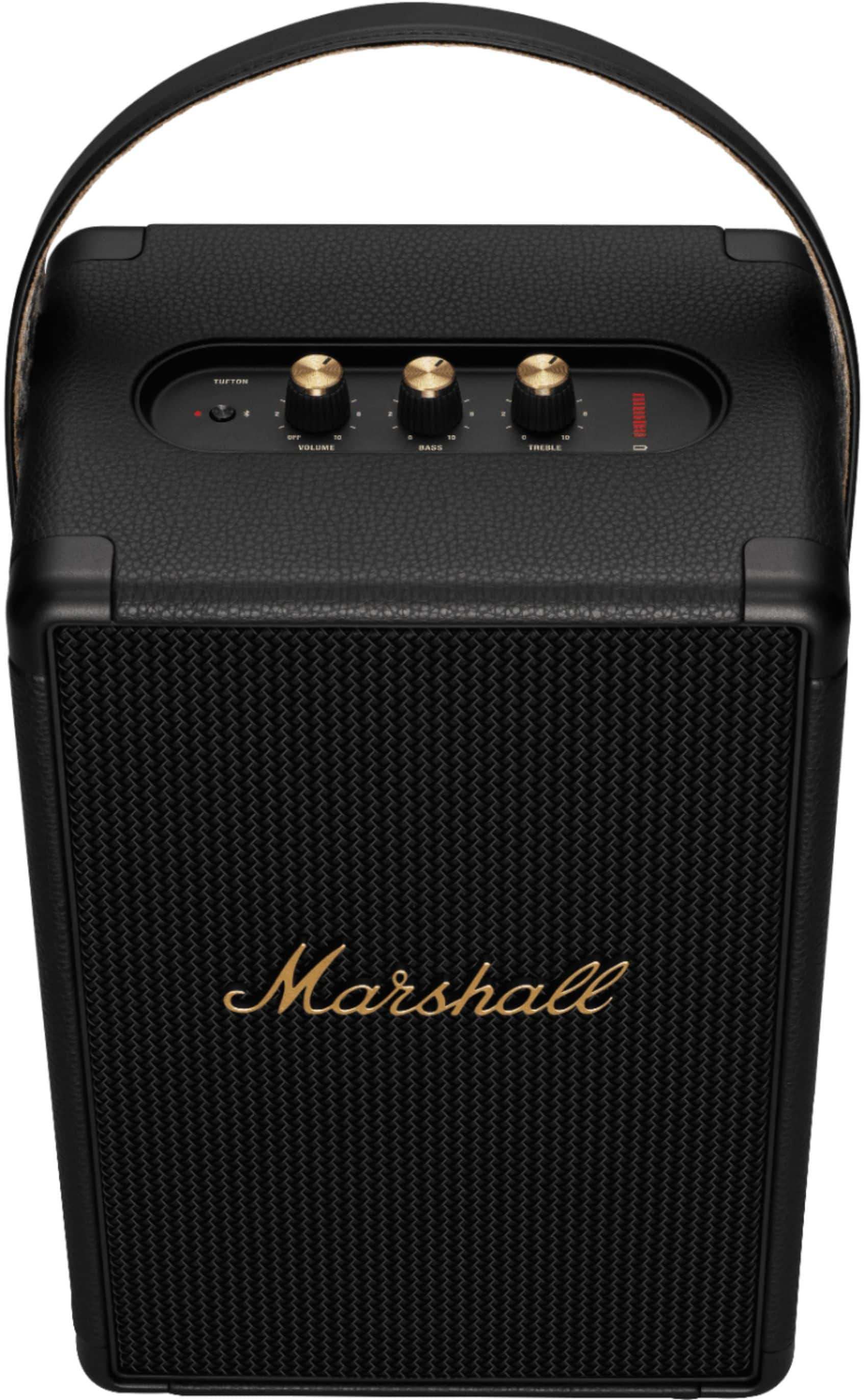


When Marshall launched the Tufton in 2019 and followed with the Woburn III in late 2022, they showcased two distinct approaches to premium audio. While both speakers carry Marshall's iconic styling and commitment to sound quality, they serve notably different purposes in today's connected home.
The core difference lies in their fundamental design philosophy: The $579.99 Woburn III aims to be the centerpiece of your home audio setup, while the $299.99 Tufton prioritizes mobility without severely compromising sound quality. Let's explore what that means for real-world use.
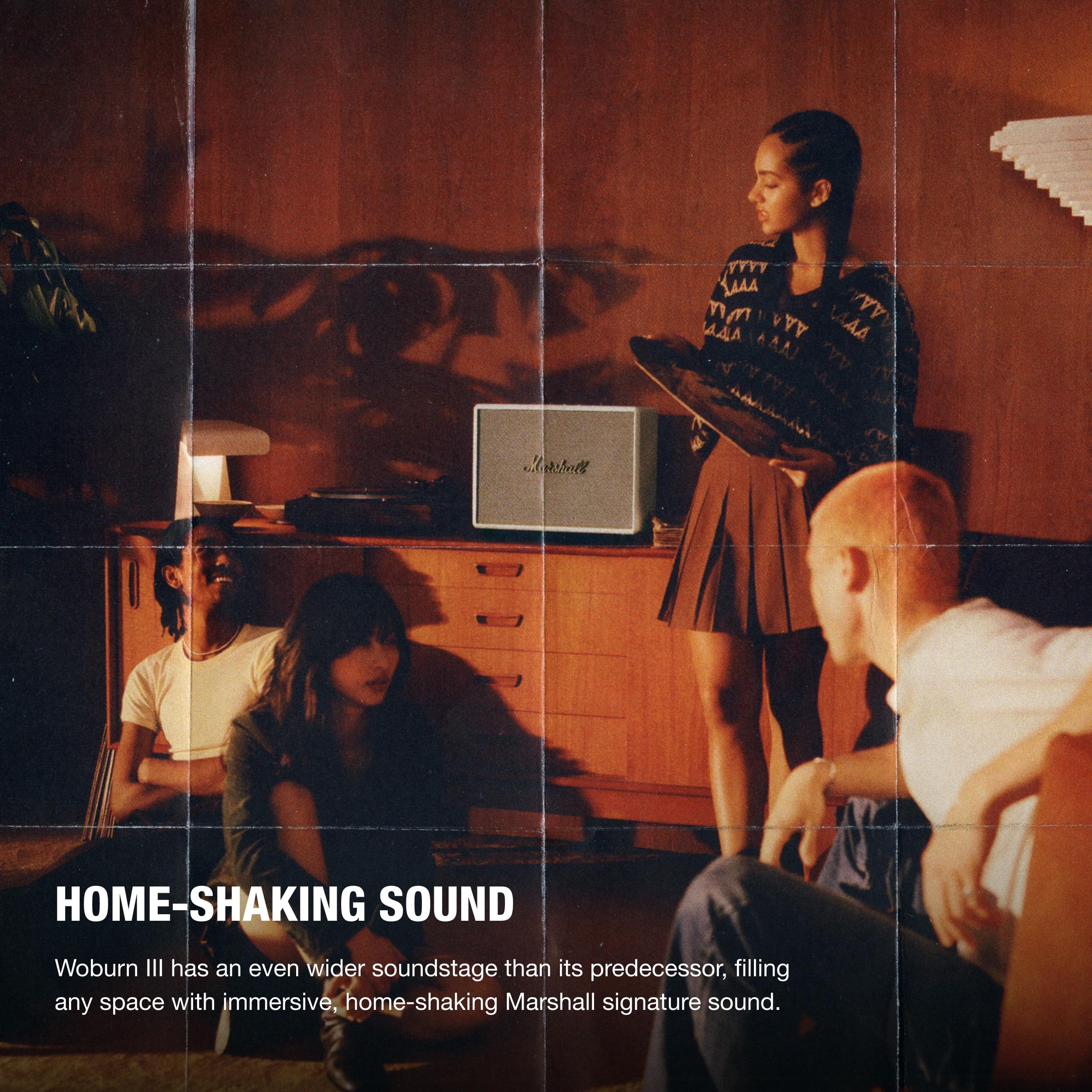
The Woburn III represents a significant evolution in Marshall's home speaker line. Its three-way driver system (which means separate drivers handle low, mid, and high frequencies) delivers impressively detailed sound. The 6-inch woofer handles the low end, reaching down to 35Hz - that's deep enough to feel movie explosions and bass drums with genuine impact. Two dedicated 2-inch midrange drivers (new to this generation) handle vocals and most instruments, while twin tweeters with special waveguides create a wider soundstage than previous models.
What does this mean in practice? Listening to complex music, you'll hear clear separation between instruments. The bass stays tight and controlled rather than muddy, while vocals come through with remarkable clarity. The speaker's Dynamic Loudness feature automatically adjusts frequency balance at different volumes - this means you'll get full-bodied sound even at lower listening levels, which is particularly useful for late-night viewing.
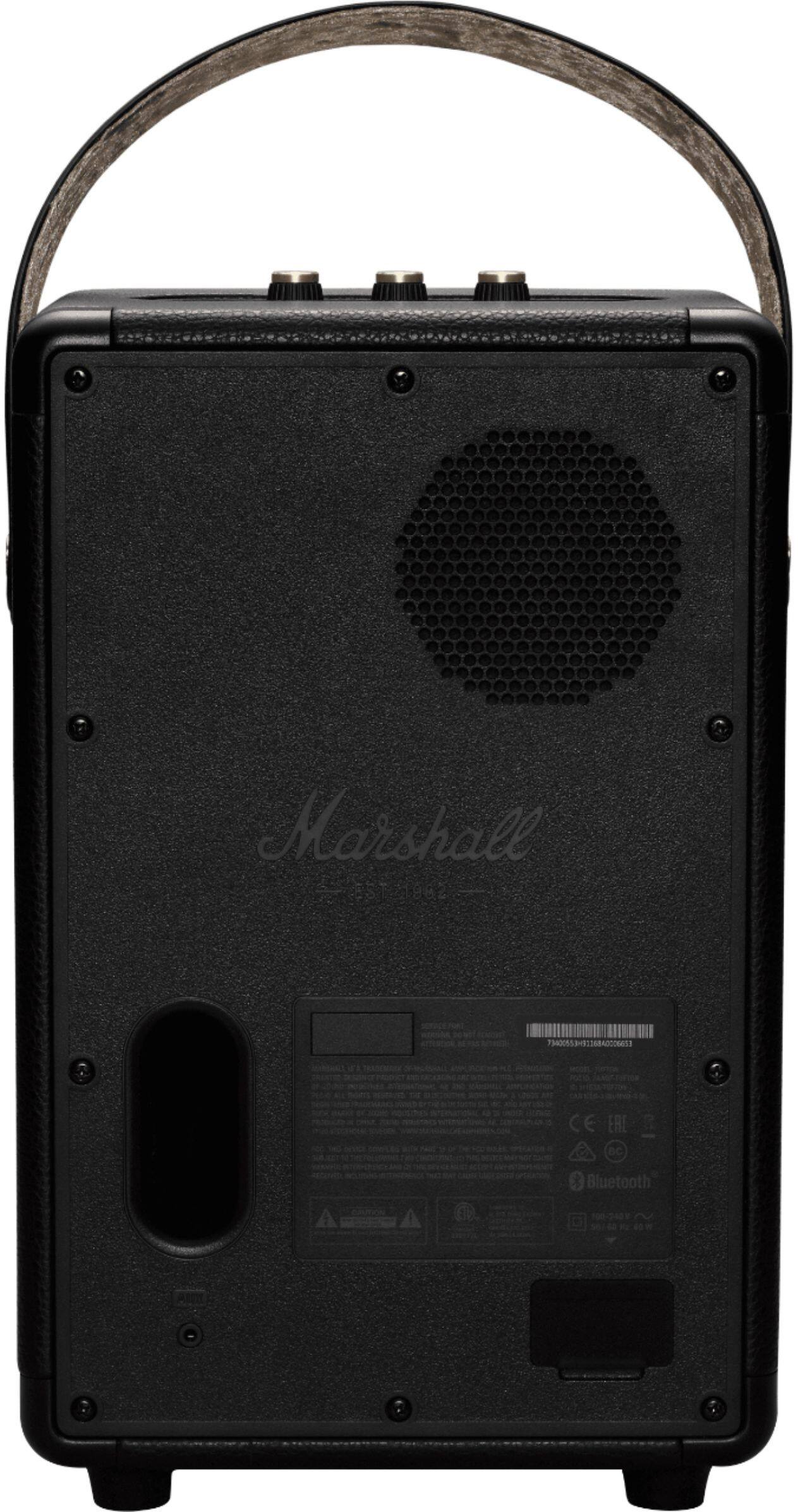
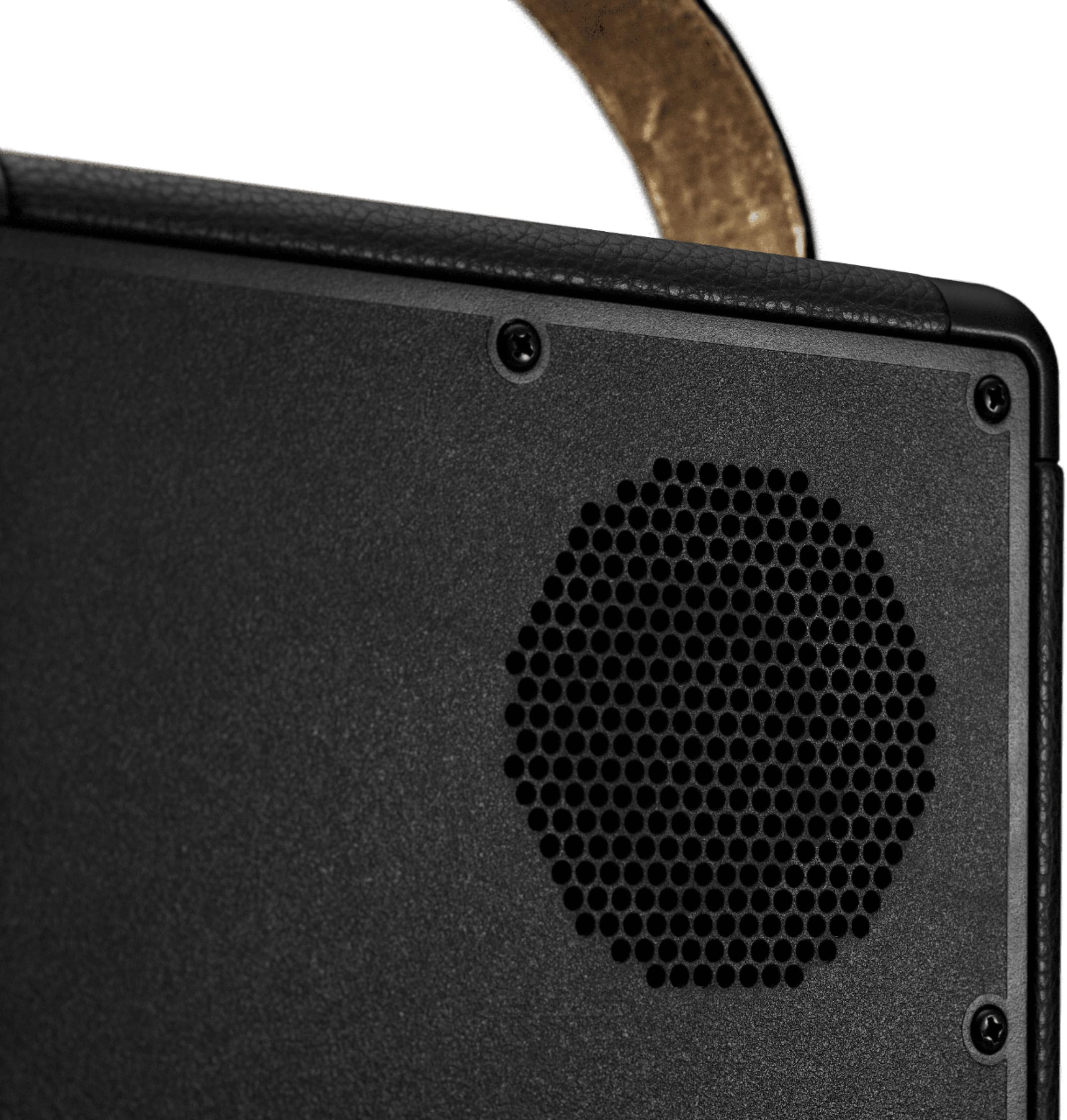
The Tufton takes a different approach, using a combination of front and rear-firing drivers to create 360-degree sound that works well in outdoor spaces. While it can't match the Woburn's raw power or refinement, it delivers impressive volume and clarity for its size. The 40Hz low-end response means you still get respectable bass impact, though it lacks the same depth and control as its larger sibling.
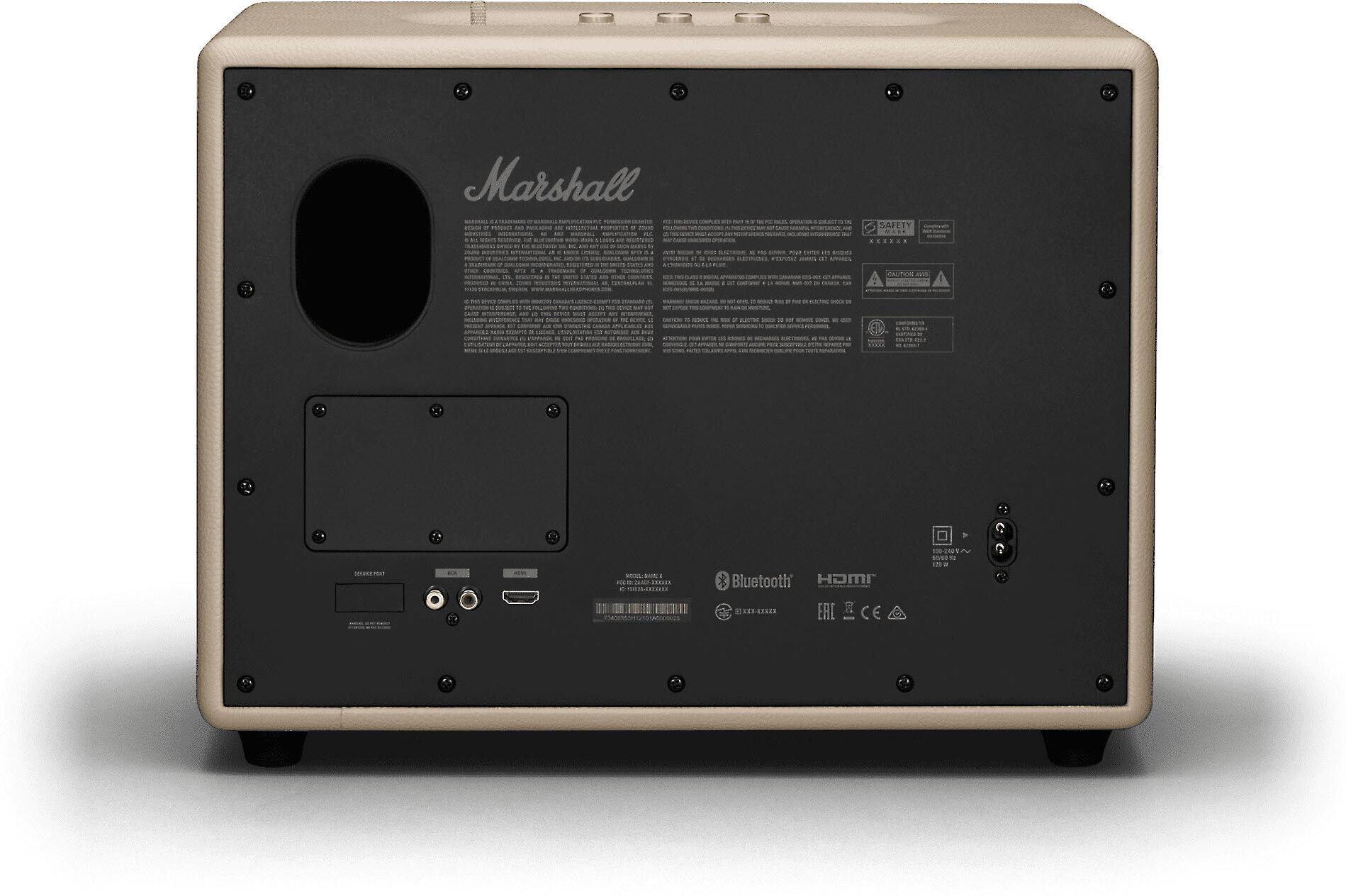
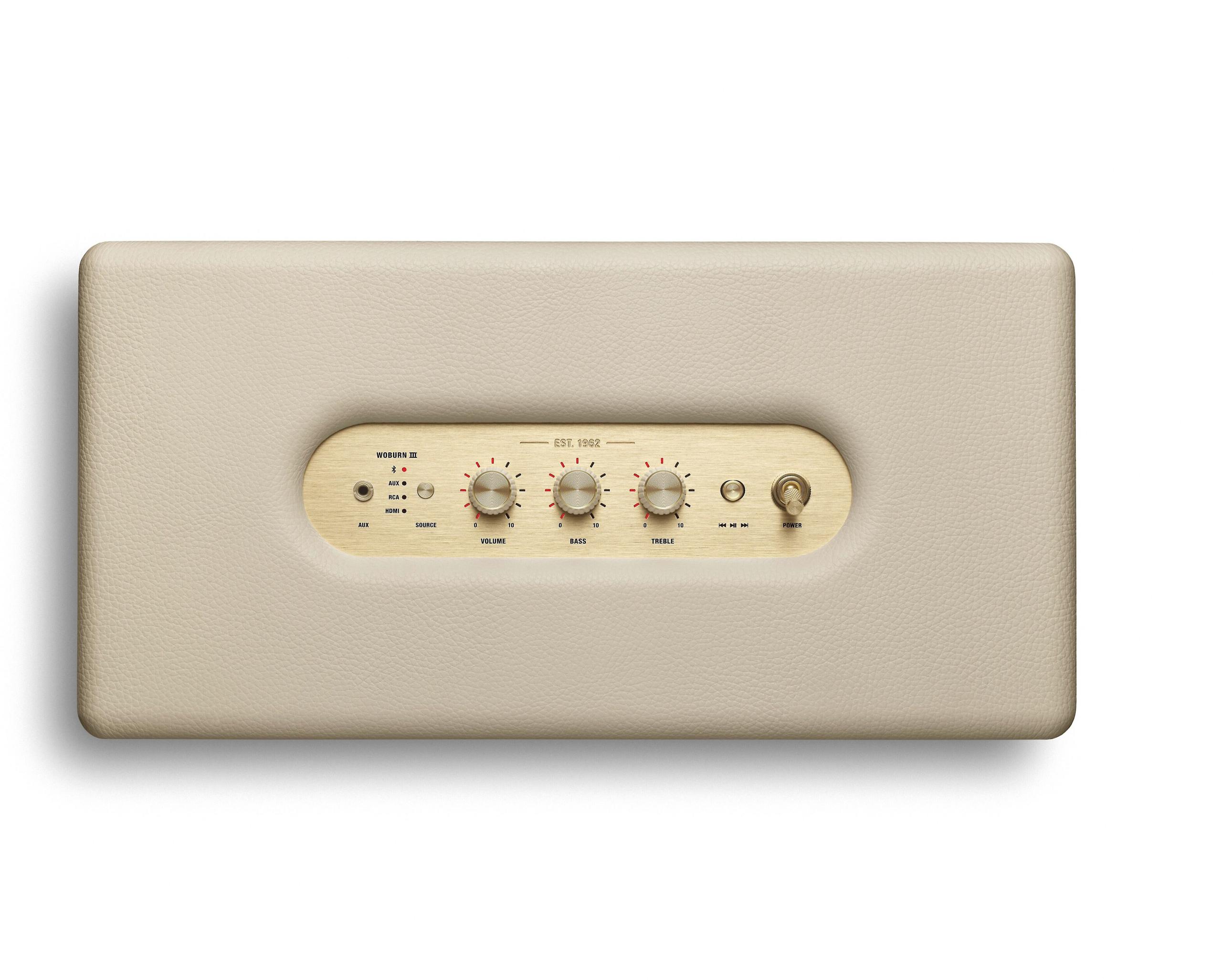
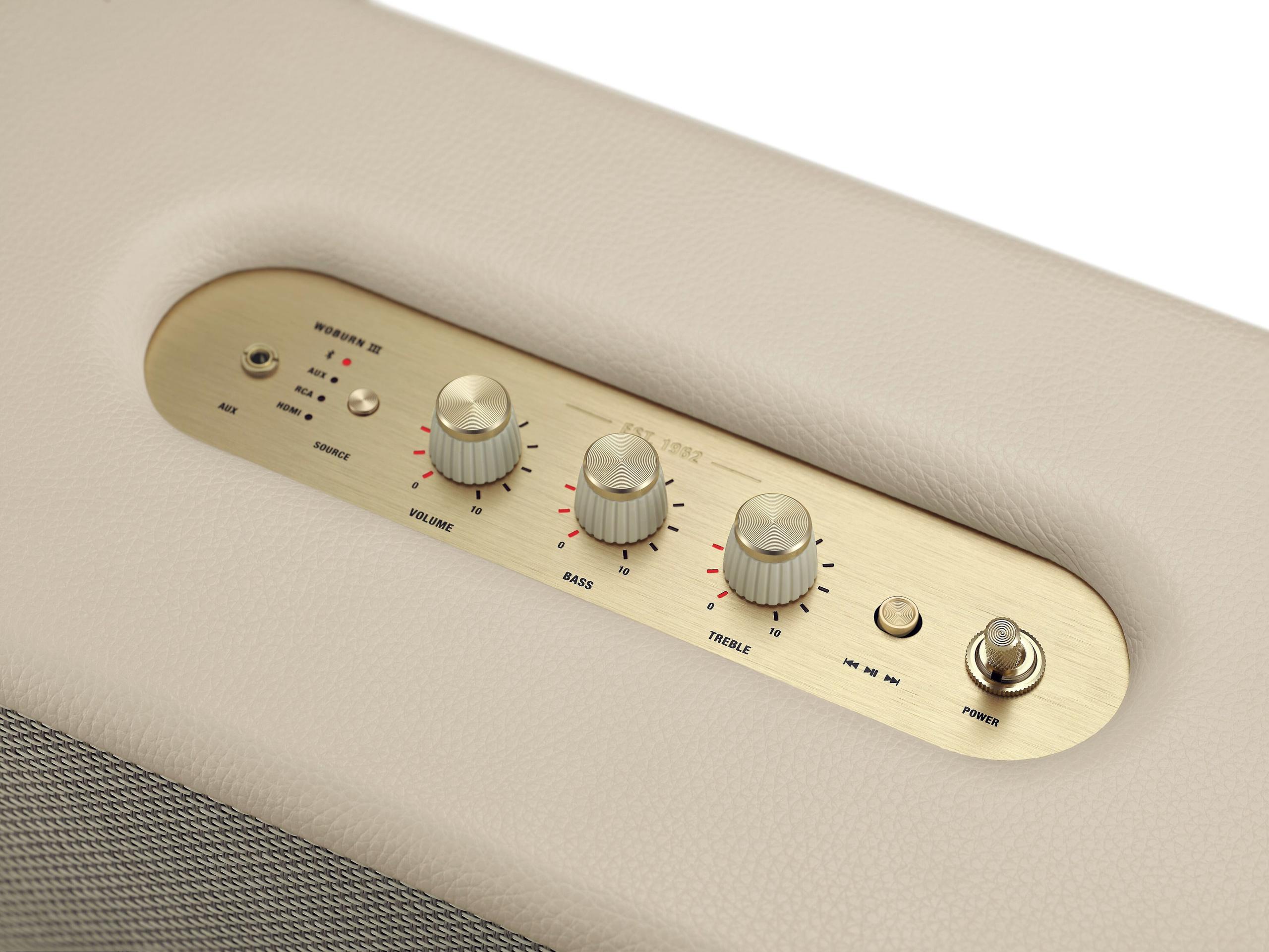
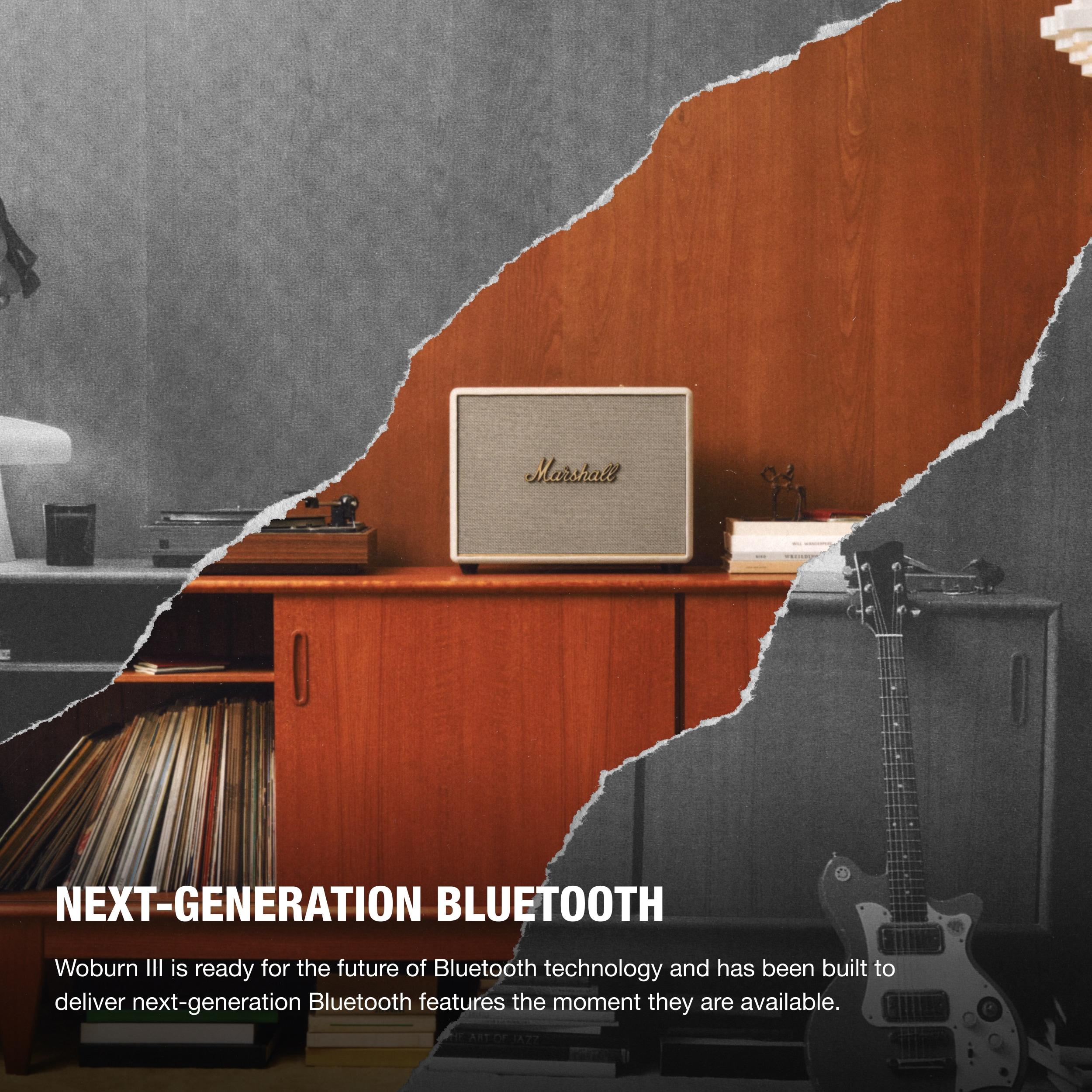
The Woburn III shines in a modern home theater setup. Its HDMI ARC connection means you can control it with your TV remote and get perfect audio sync. The speaker supports high-resolution audio up to 24-bit/96kHz through HDMI, ensuring you get the most from high-quality sources. Traditional RCA inputs also make it easy to connect turntables or other analog sources.
In contrast, the Tufton focuses on simplicity with Bluetooth 5.0 and an auxiliary input. While this might seem limited, it matches the speaker's portable mission perfectly. The multi-host functionality lets you quickly switch between two connected devices - ideal for parties where different people want to play DJ.
If you're considering the Woburn III for home theater use, its performance is impressive. The speaker's wide soundstage and strong center imaging create an engaging experience for movies and TV shows. Dialog remains clear and well-positioned, while action scenes benefit from the powerful bass response. However, remember this is still a stereo speaker - it won't provide the same surround experience as a multi-speaker setup.
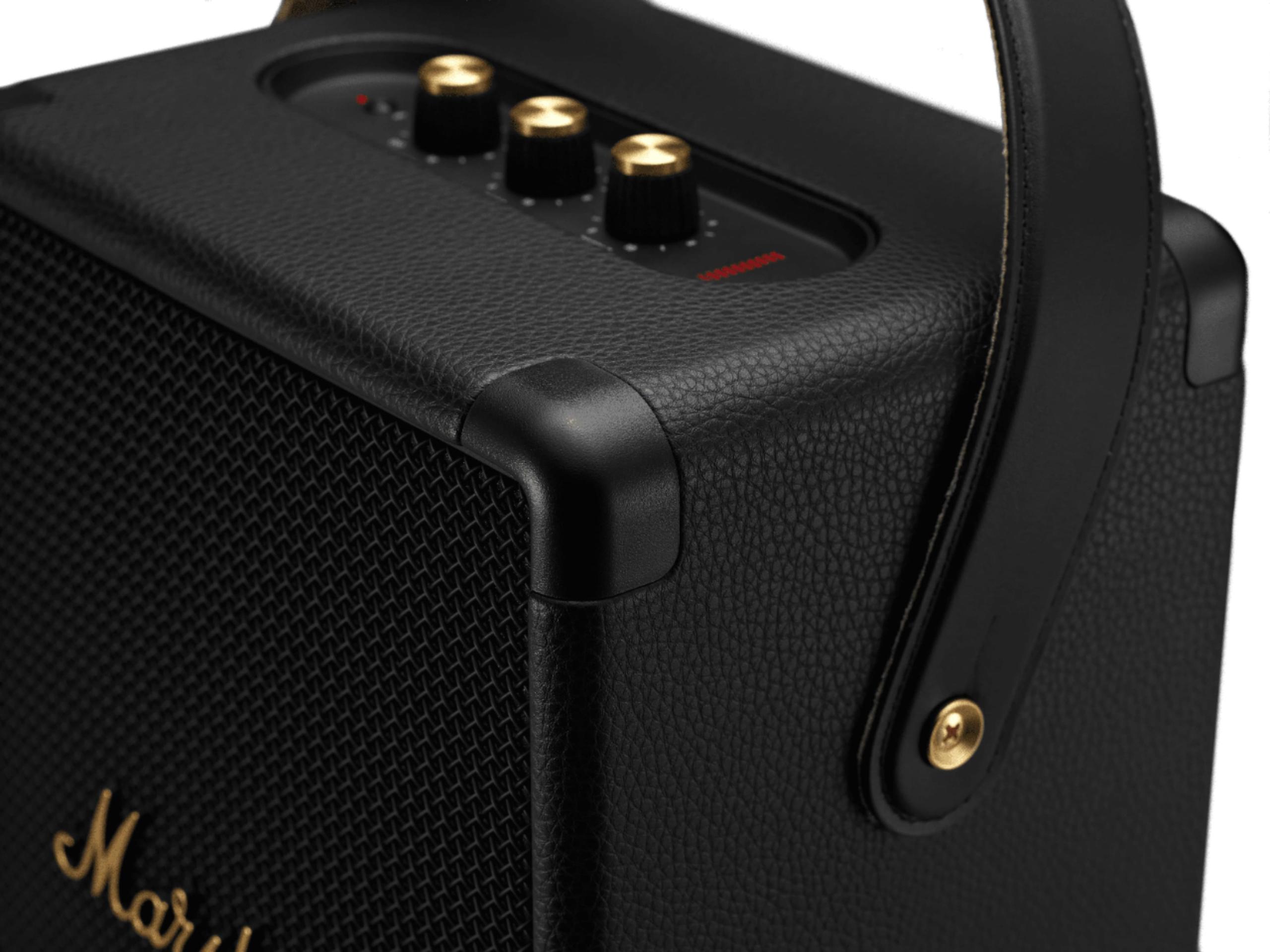
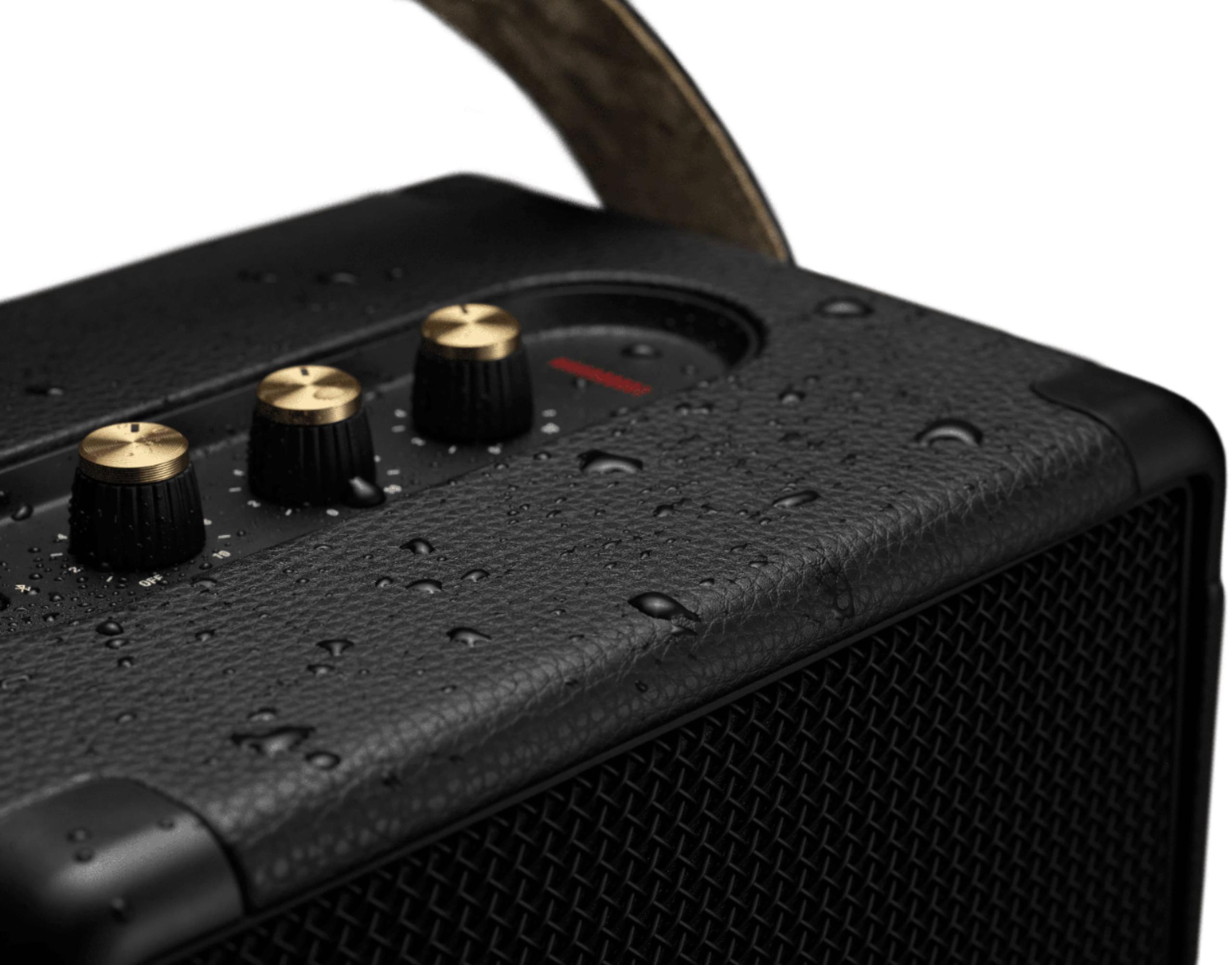
The Tufton truly excels in outdoor settings. Its IPX2 water resistance means light rain won't be an issue, and the 20+ hour battery life easily handles extended outdoor events. The 360-degree sound coverage means you can place it centrally at a gathering and everyone gets good sound. The quick-charge feature (4 hours of playback from 20 minutes of charging) has saved many a party from premature silence.
The Woburn III brings several meaningful improvements over its predecessor:
The Tufton, while older, introduced innovations that still impress:
When considering value, think beyond the price difference. The Woburn III at $579.99 represents a significant investment, but its versatility as both a music system and home theater speaker helps justify the cost. Its superior sound quality and connection options make it a long-term investment for a dedicated listening space.
The Tufton at $299.99 offers excellent value for those needing portability. While it can't match the Woburn's absolute sound quality, its flexibility and durability make it a compelling option for users who prioritize versatility over ultimate performance.
The choice between these speakers ultimately comes down to your primary use case and environment:
Choose the Woburn III if:
Choose the Tufton if:
Both speakers excel in their intended roles, but they serve distinctly different purposes. The Woburn III is a superior choice for dedicated home audio, while the Tufton offers remarkable versatility for those needing a more mobile solution.
| Marshall Woburn III | Marshall Tufton |
|---|---|
| Price - Investment vs Value | |
| $579.99 - Premium home audio investment | $299.99 - Better value for portable needs |
| Power Output - Determines maximum volume and sound quality | |
| 150W total (2x15W tweeters, 2x40W woofers, 40W sub) | 80W total (2x15W tweeters, 40W woofer, 10W rear) |
| Frequency Response - Range of sounds speaker can produce | |
| 35-20,000 Hz (deeper bass extension) | 40-20,000 Hz (still impressive for portable) |
| Driver Configuration - Affects sound clarity and separation | |
| 3-way system: 6" woofer, dual 2" midrange, dual 0.75" tweeters | 2-way system: Single woofer, dual tweeters, rear-firing driver |
| Connectivity Options - Flexibility for different sources | |
| Bluetooth 5.2, HDMI ARC, RCA, 3.5mm aux | Bluetooth 5.0, 3.5mm aux |
| Portability Features - Important for mobile use | |
| Not portable, AC power only | 20+ hour battery, IPX2 water resistance, carrying strap |
| Room Integration - How it fits your space | |
| Placement compensation, night mode, TV integration | 360° sound, flexible positioning, outdoor-friendly |
| Physical Dimensions - Space and mobility considerations | |
| 15.75" x 12.48" x 7.99", 16.42 lbs (stationary) | 13.78" x 9.06" x 6.3", 10.8 lbs (portable) |
| Special Features - Additional value-add capabilities | |
| Dynamic loudness, HDMI ARC, app control, OTA updates | Quick charge (4hrs from 20min), multi-host pairing |
| Best Use Case - Primary intended purpose | |
| Premium home audio system, home theater integration | Portable entertainment, outdoor events, multi-room flexibility |
The Marshall Woburn III is significantly better for home use, offering superior sound quality, HDMI connectivity for TV integration, and more powerful 150W output. While the Tufton can work at home, it's designed primarily for portable use.
The Marshall Woburn III costs $579.99, while the Marshall Tufton is priced at $299.99. The $280 difference reflects the Woburn III's superior audio capabilities and home theater features.
The Woburn III has HDMI ARC connectivity specifically for TV integration, providing synchronized audio and remote control compatibility. The Tufton can only connect to TVs via a 3.5mm auxiliary cable.
The Woburn III delivers superior sound quality with its three-way driver system, deeper bass response (35Hz vs 40Hz), and dedicated midrange drivers. The Tufton still sounds good but prioritizes portability over absolute sound quality.
The Tufton is designed for outdoor use with IPX2 water resistance and battery power. The Woburn III is not weather-resistant and requires AC power, making it unsuitable for outdoor use.
The Marshall Tufton offers 20+ hours of battery life and features quick charging (4 hours from 20 minutes). The Woburn III doesn't have a battery and must be plugged in.
The Tufton is better for parties due to its portability, 360-degree sound, and ability to work outdoors. The Woburn III offers higher quality sound but lacks the flexibility needed for most party situations.
Both speakers support multi-device pairing. The Woburn III and Tufton can connect to two Bluetooth devices simultaneously, making it easy to switch between sources.
The Woburn III produces deeper, more controlled bass with its 6-inch woofer and 35Hz low-end response. The Tufton still delivers good bass for a portable speaker but can't match the Woburn's power and depth.
Neither the Woburn III nor the Tufton has built-in voice assistant capabilities, though both can play audio from devices using voice assistants.
The Tufton is more compact and flexible for small spaces. While the Woburn III offers better sound, its larger size (15.75" x 12.48" x 7.99") requires more dedicated space.
Both the Marshall Woburn III and Marshall Tufton come with a standard one-year warranty covering manufacturing defects and hardware issues.
We've done our best to create useful and informative comparisons to help you decide what product to buy. Our research uses advanced automated methods to create this comparison and perfection is not possible - please contact us for corrections or questions. These are the sites we've researched in the creation of this article: bestbuy.com - crutchfield.com - rtings.com - idownloadblog.com - digit.in - crutchfield.com - epicrewards.com.ph - ione.com.kh - youtube.com - onward.ph - economictimes.indiatimes.com - techradar.com - youtube.com - youtube.com - bestbuy.com - trustedreviews.com - crutchfield.com - eriksonconsumer.com - youtube.com - runbazaar.com - marshall.com

Privacy Policy
Terms and Conditions - Affiliate Policy
Home Security
© Copyright 2008-2026.
11816 Inwood Rd #1211, Dallas, TX 75244