

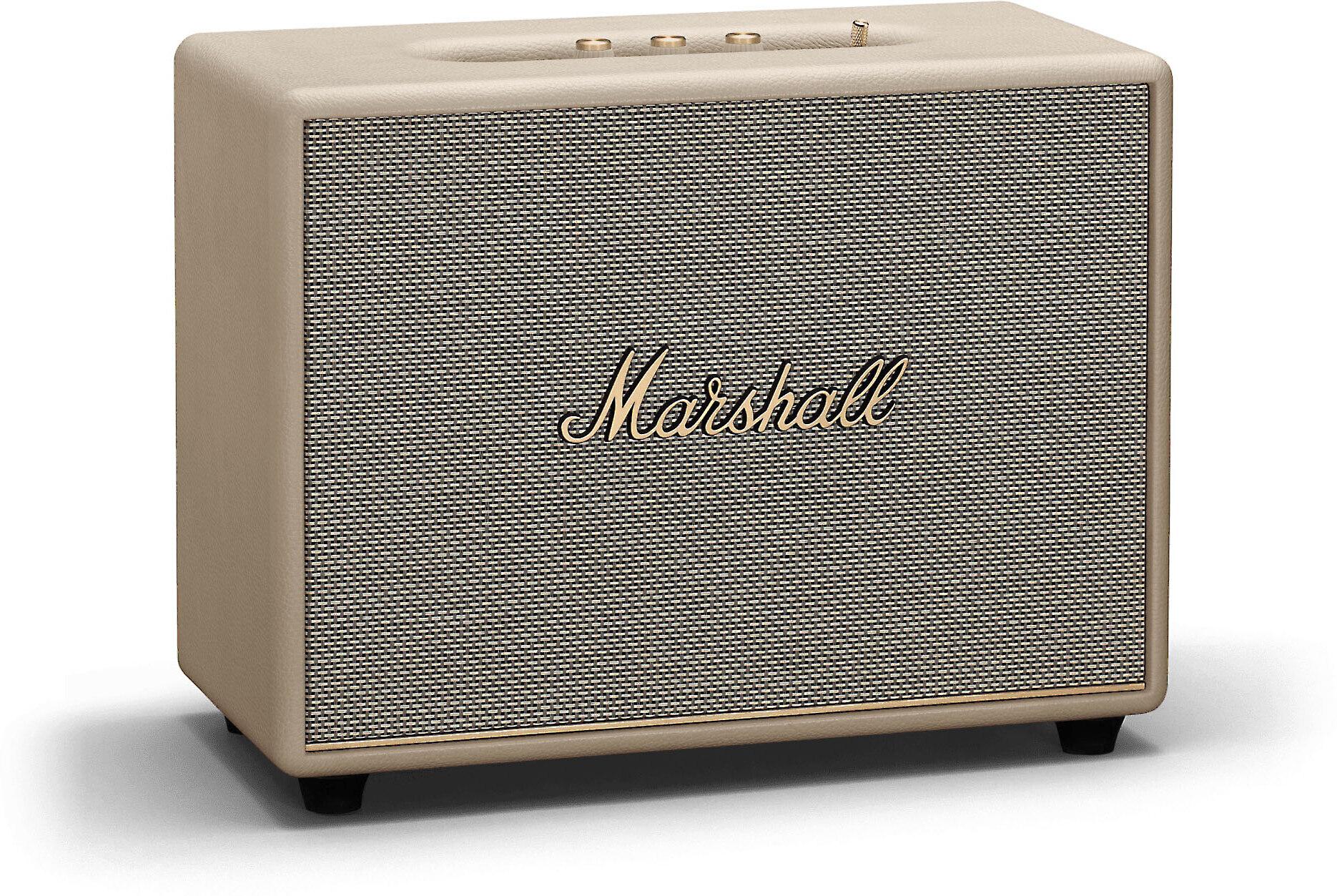
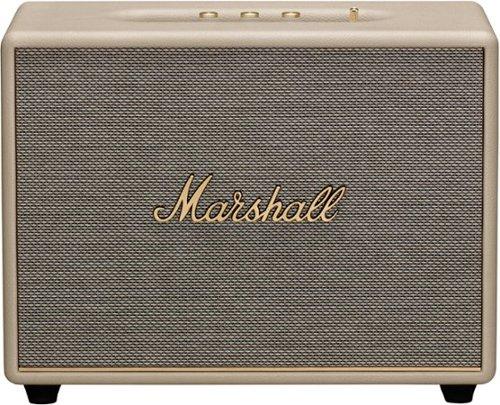
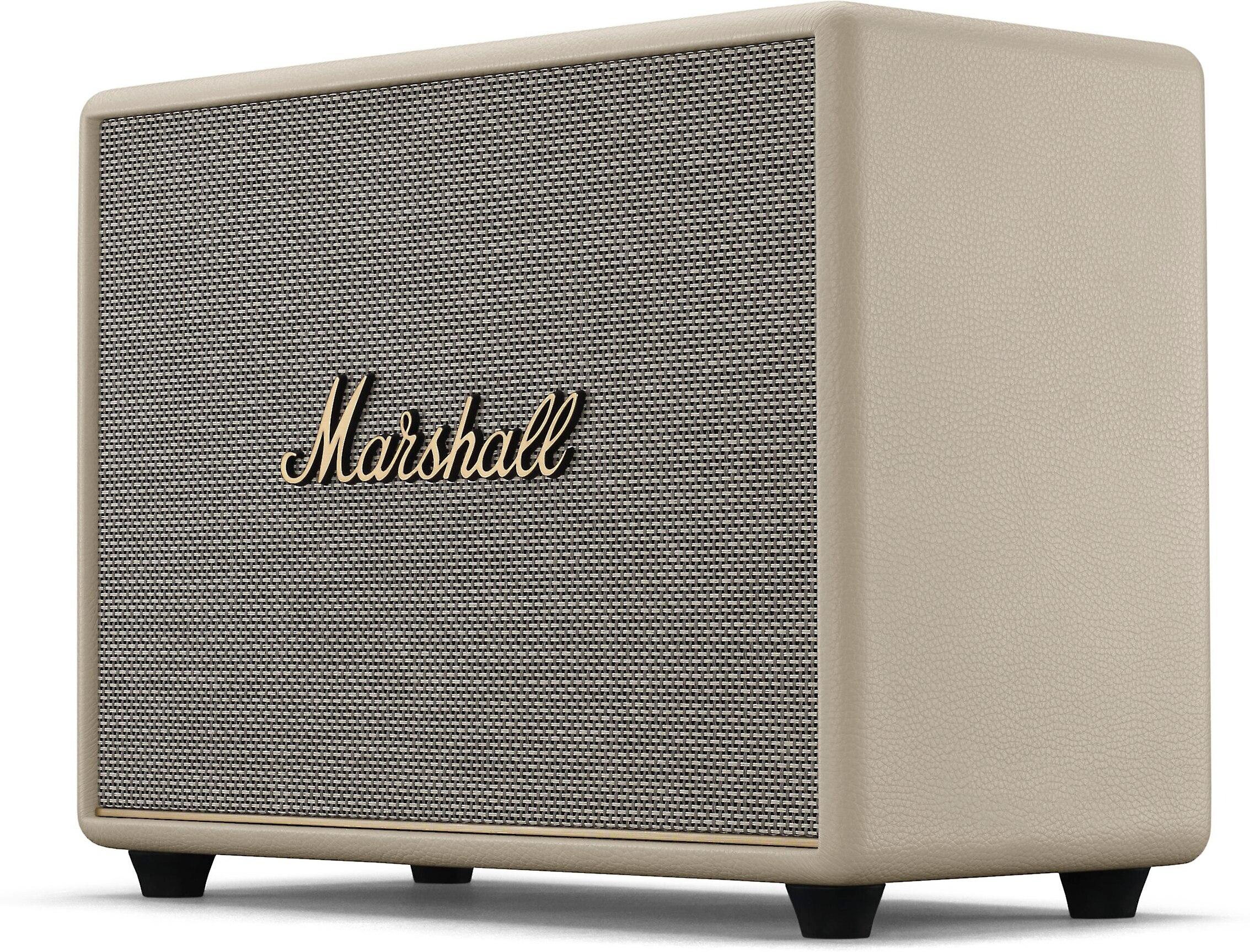
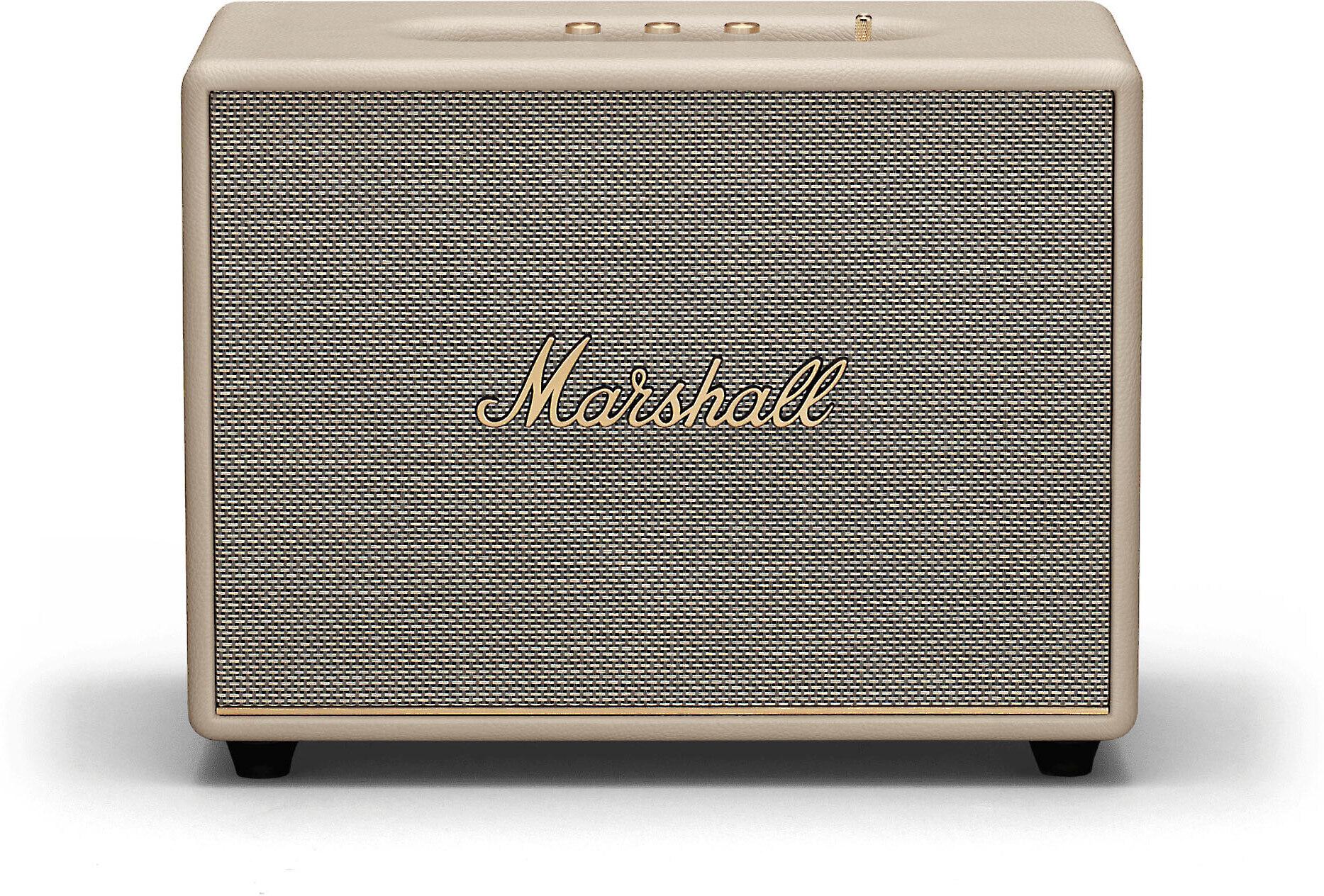
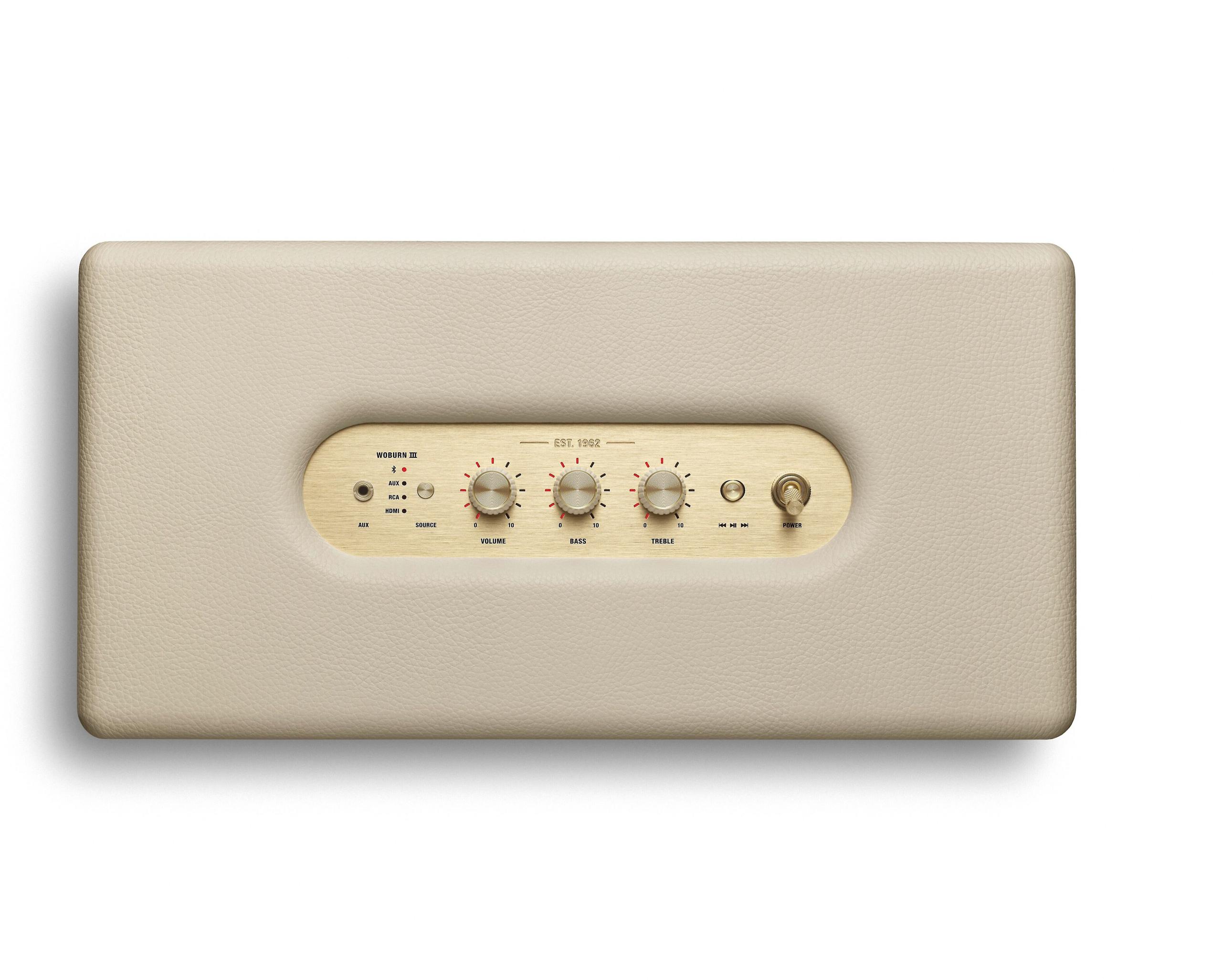
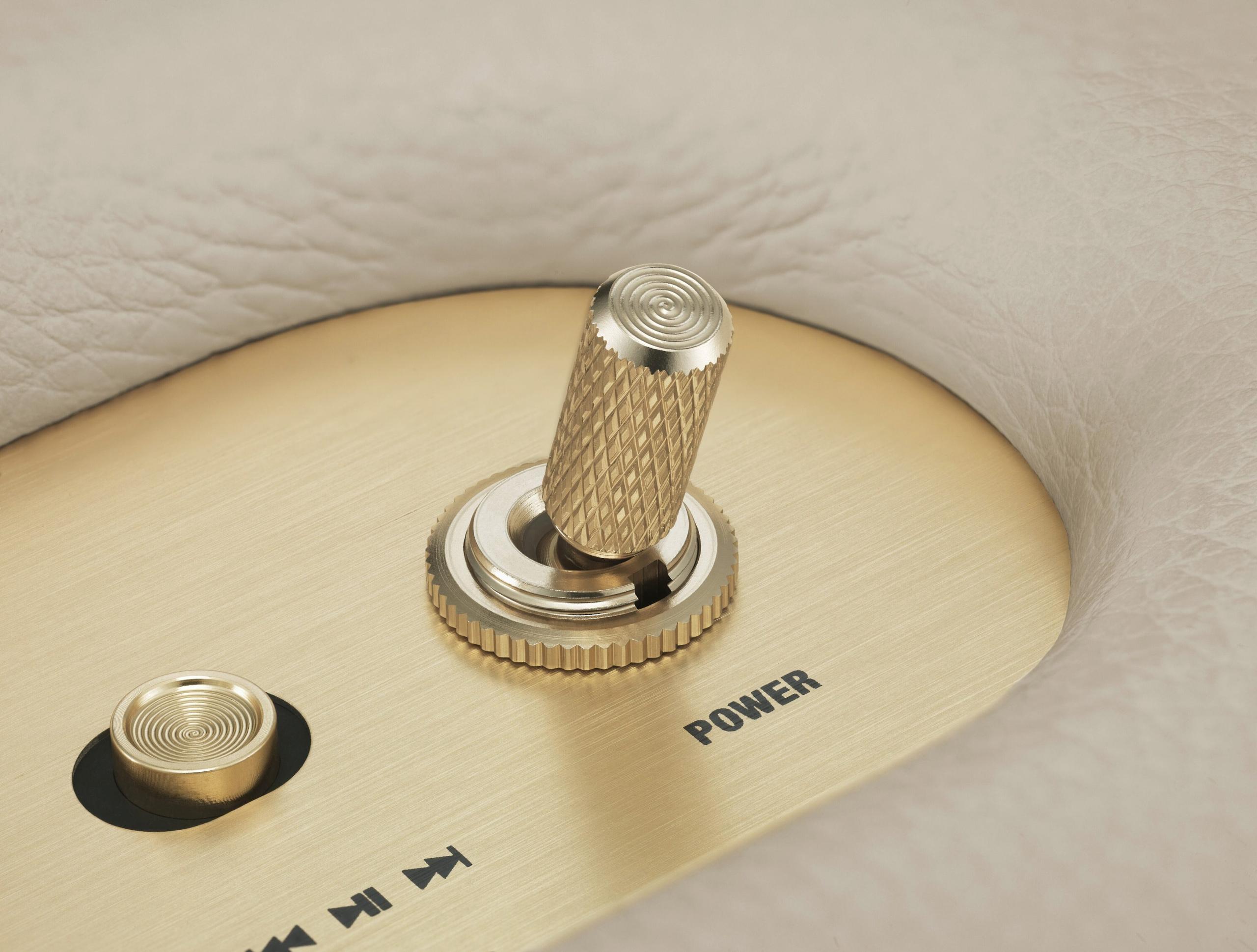
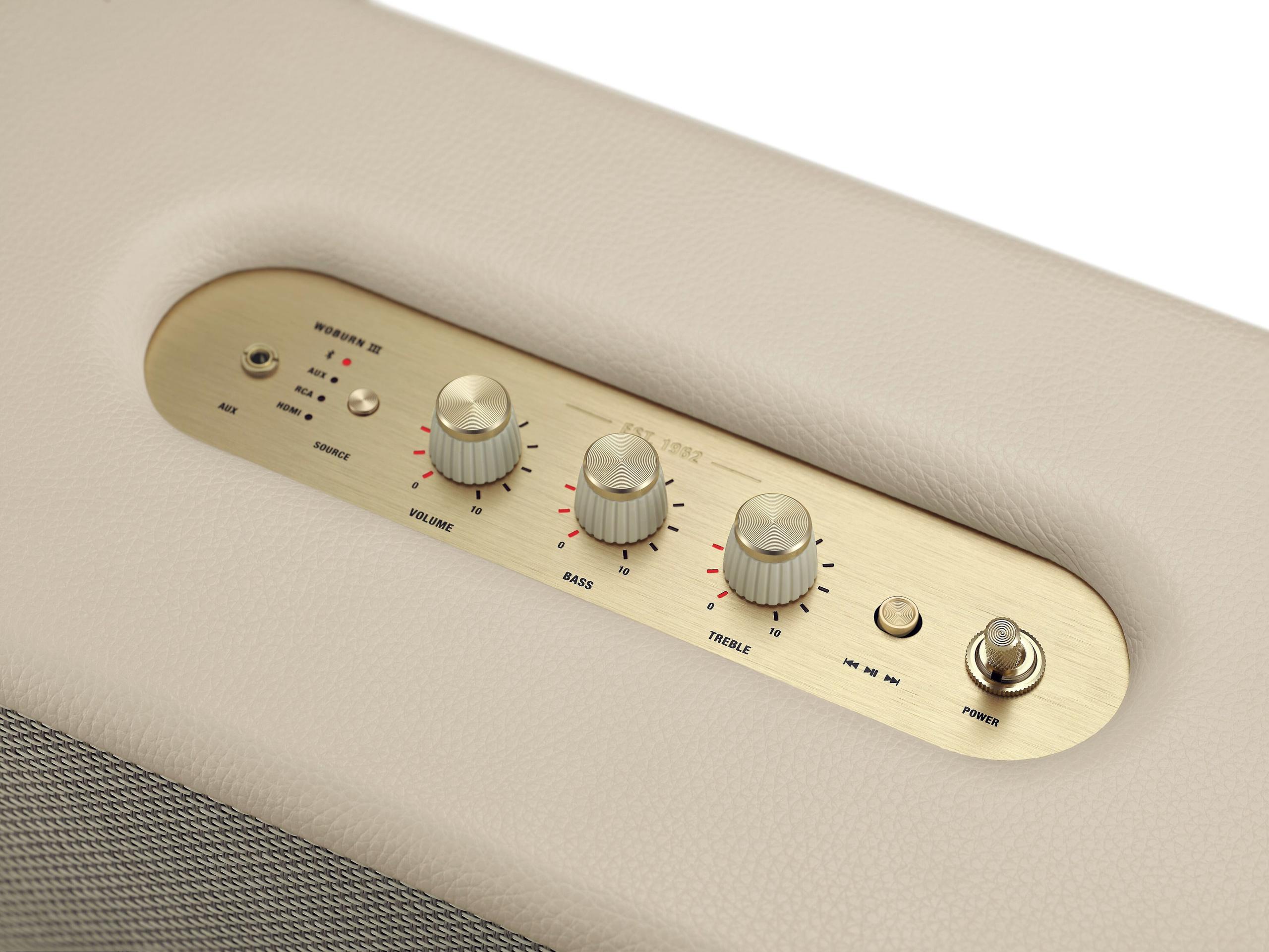
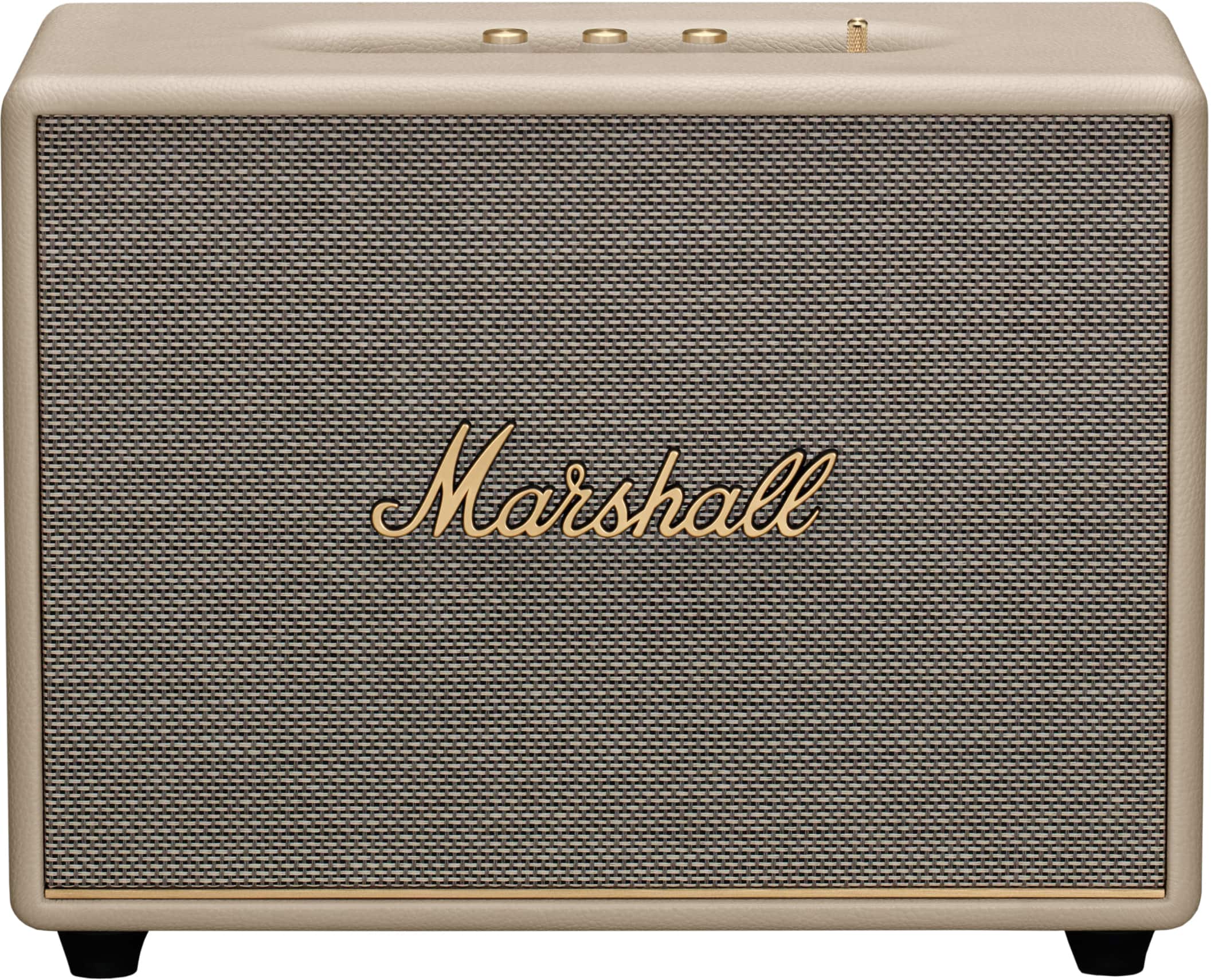
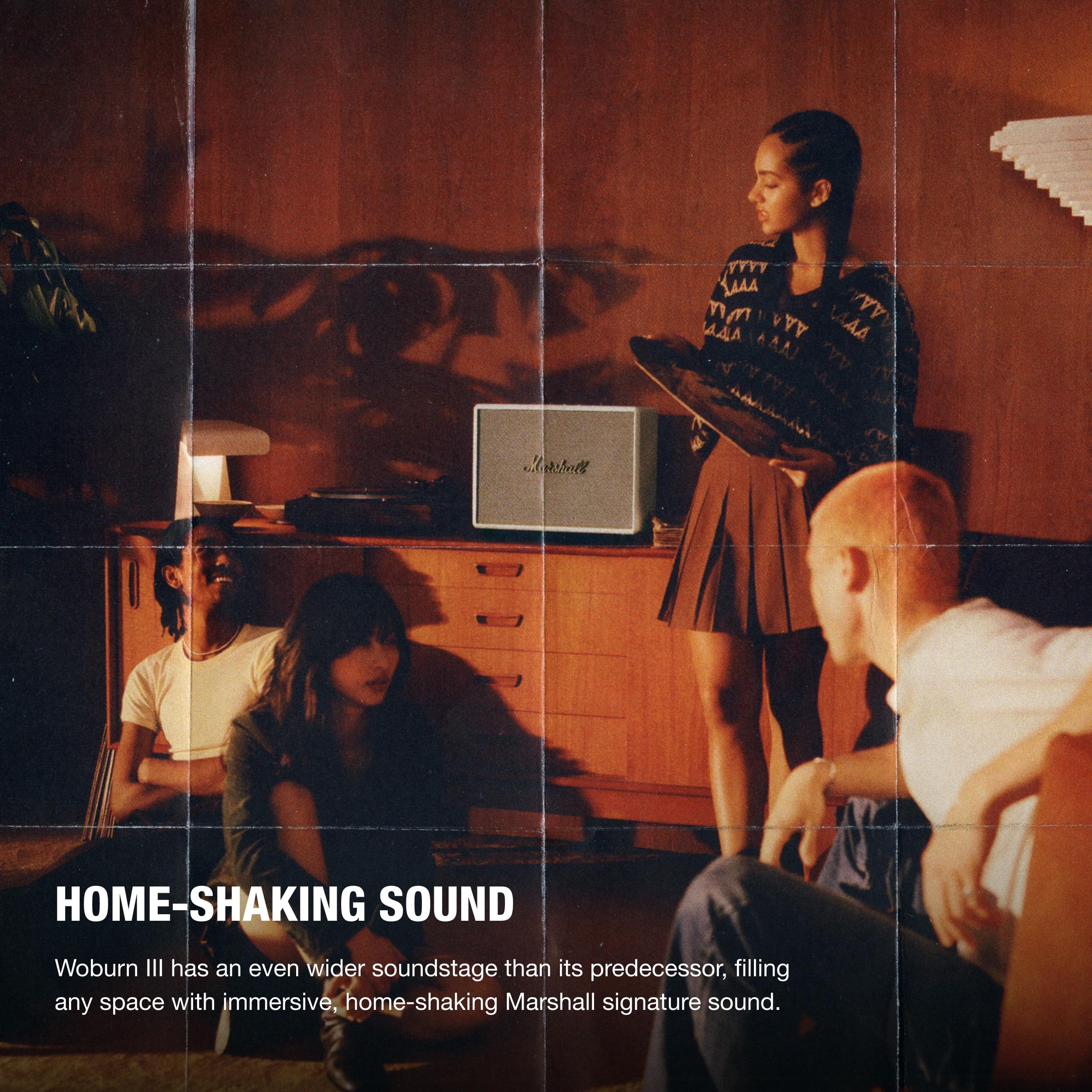
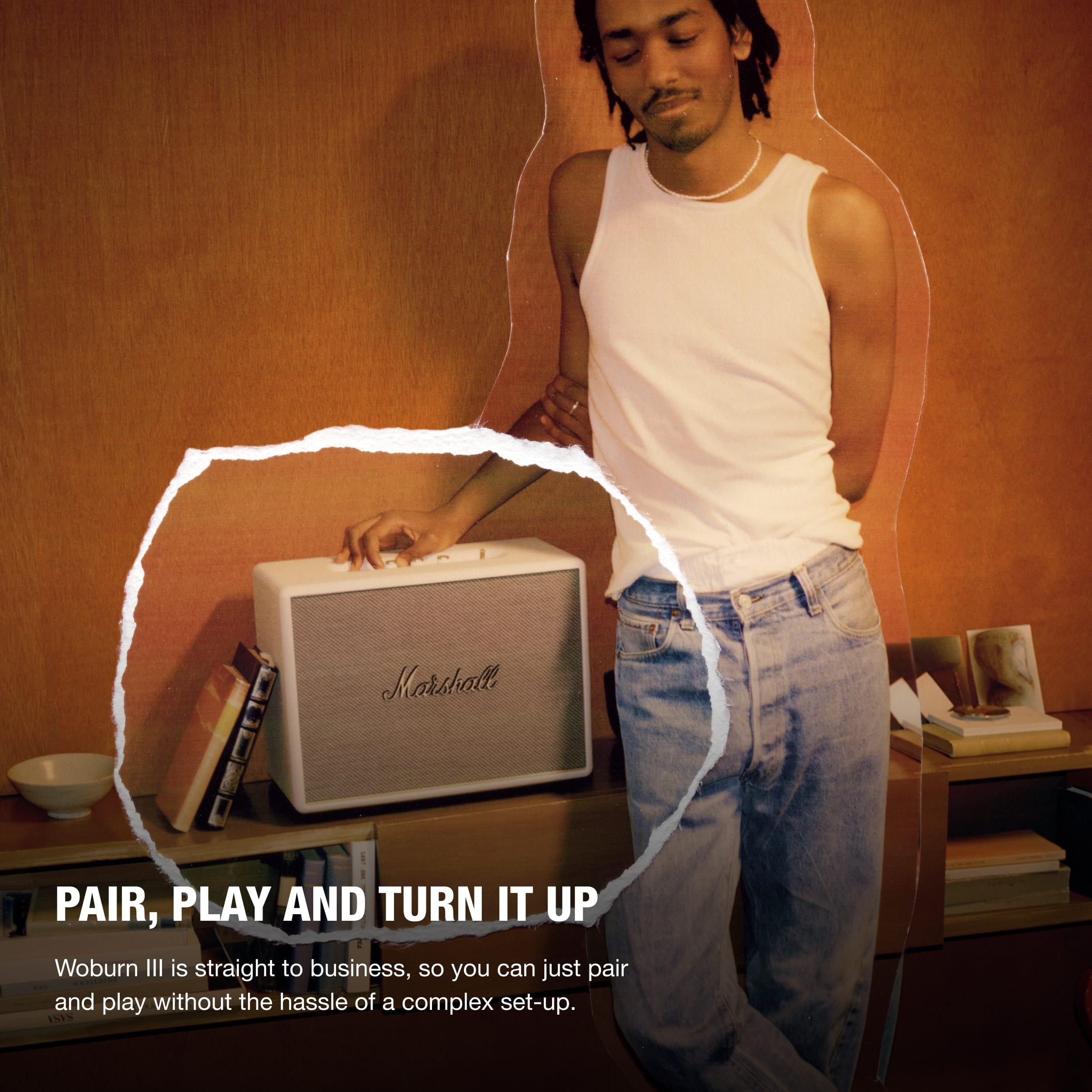
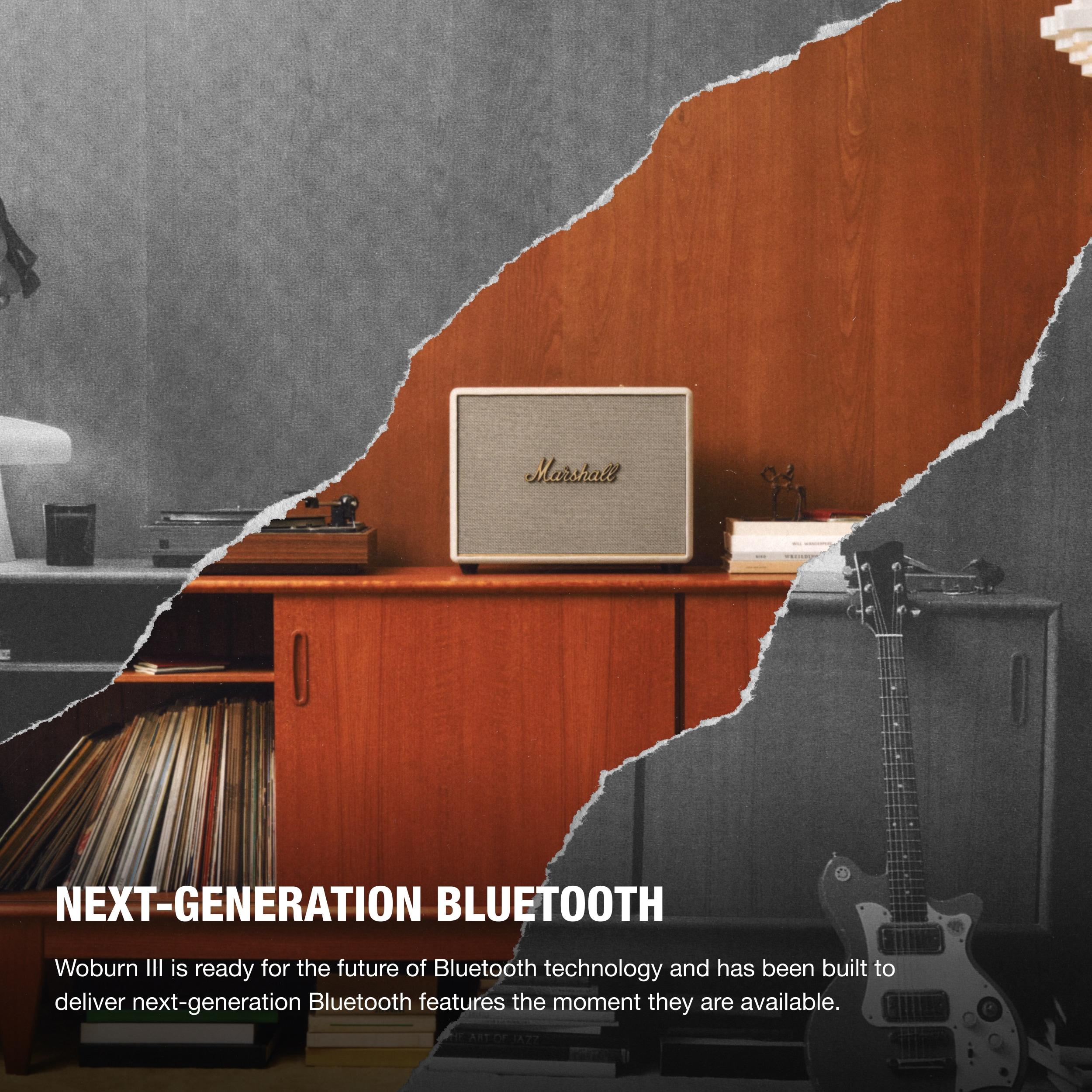
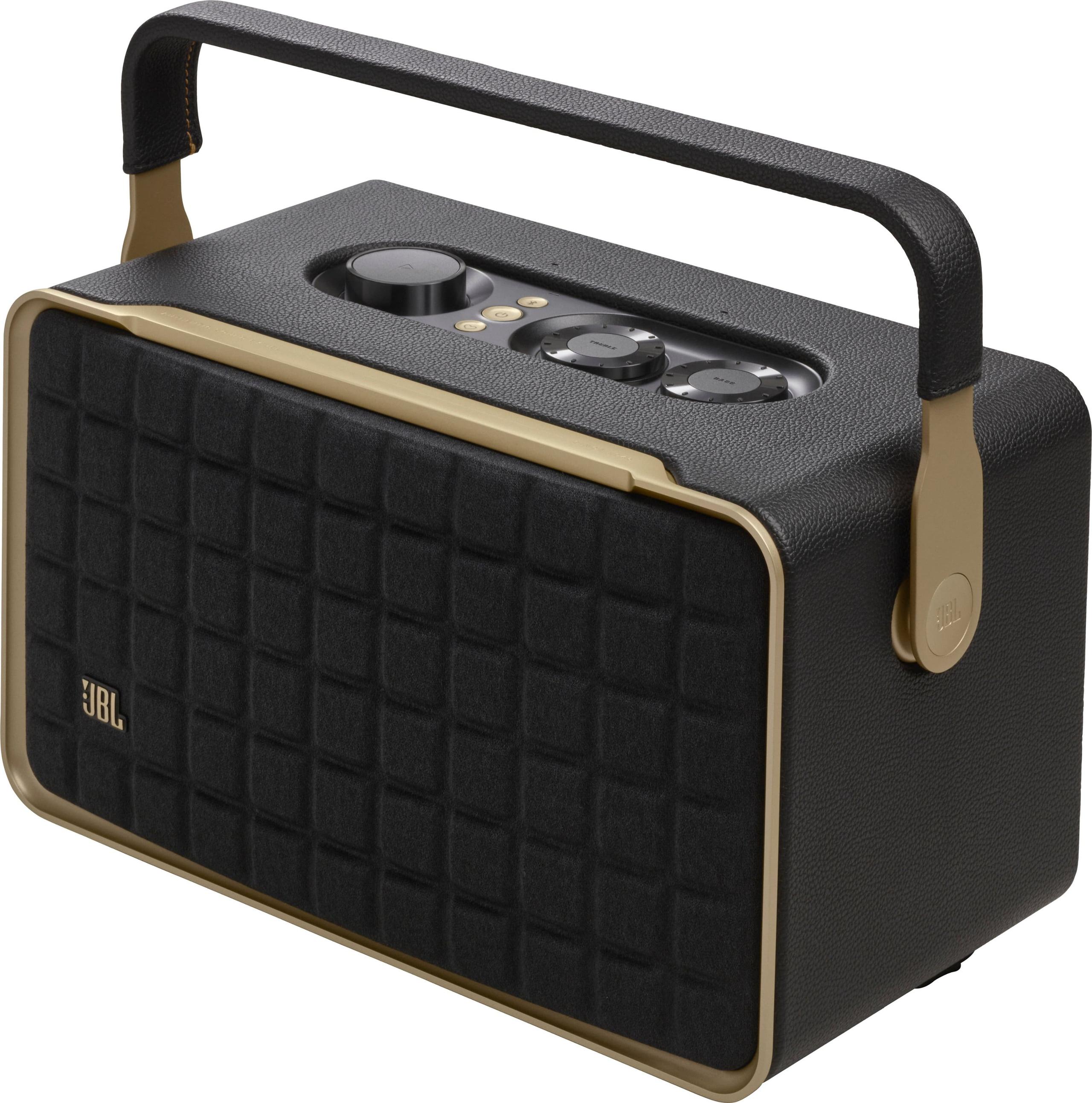
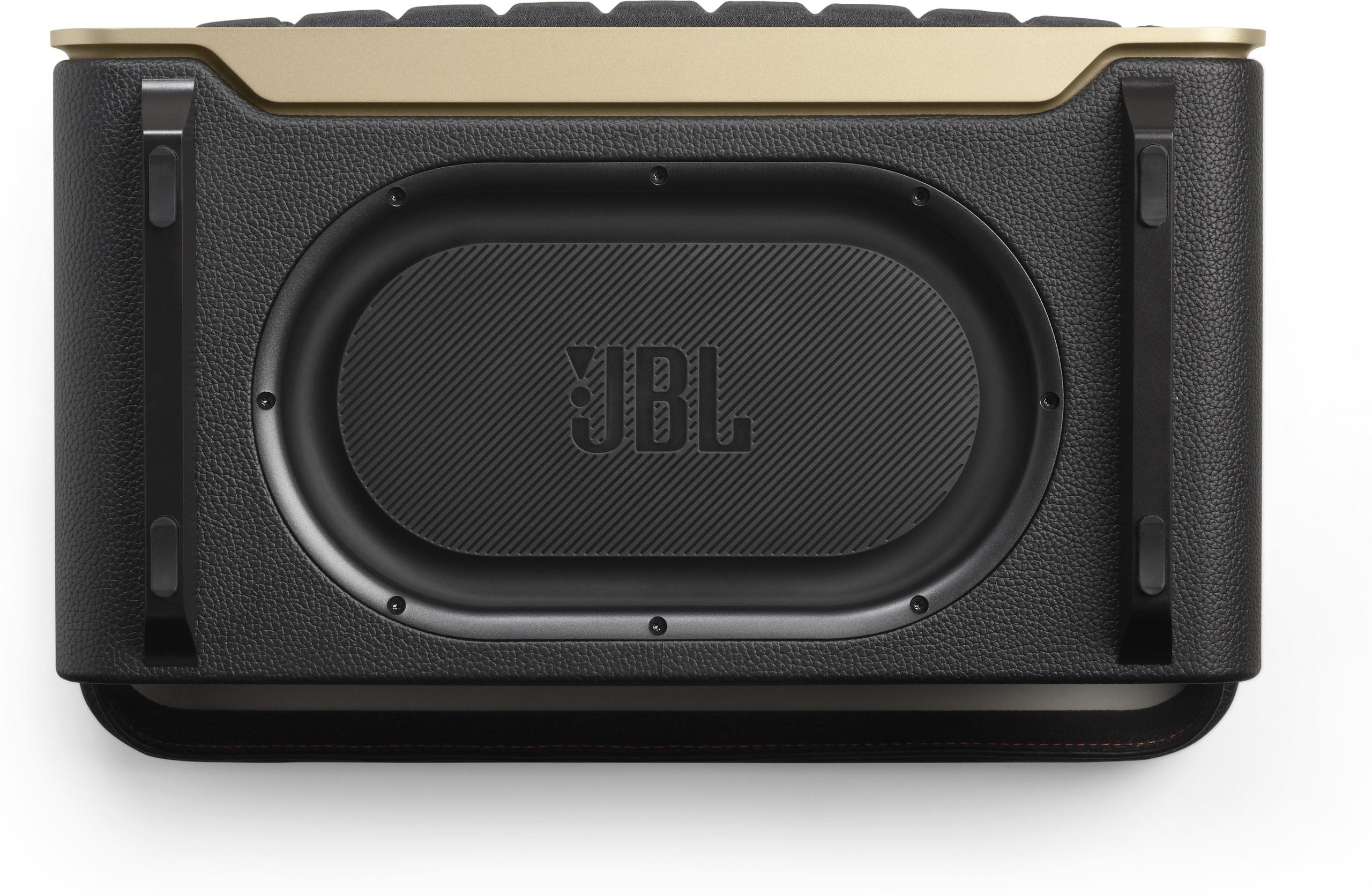
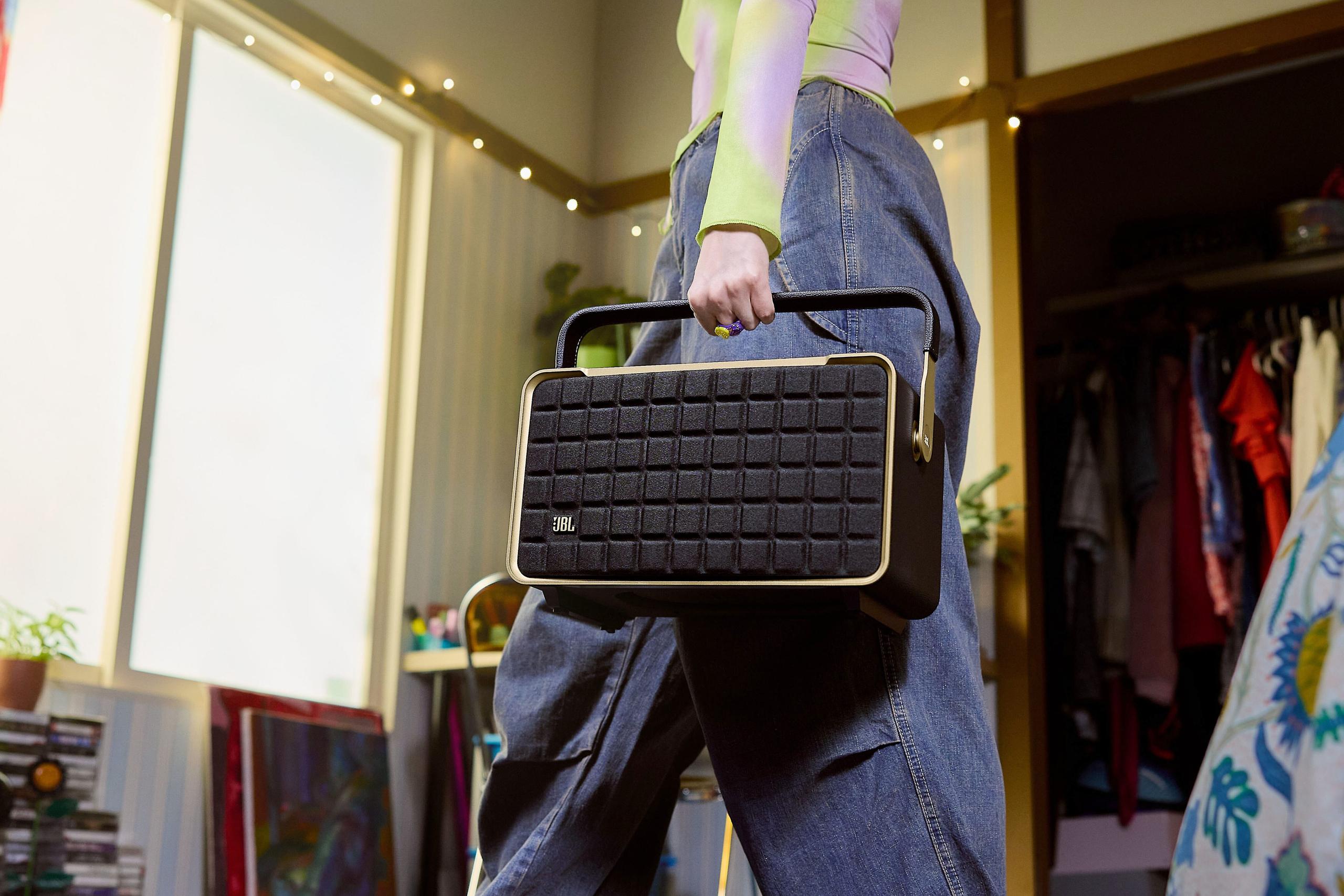
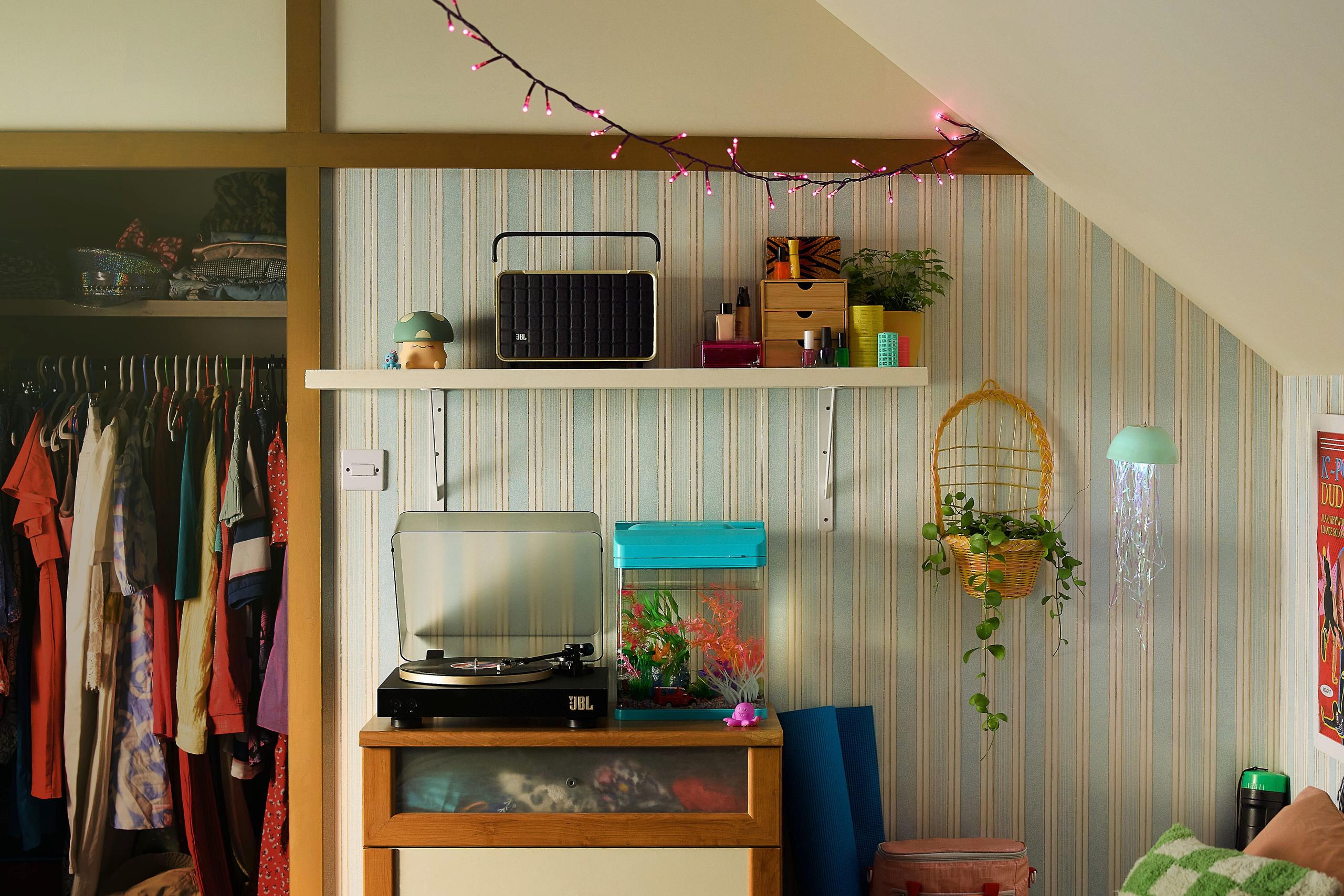
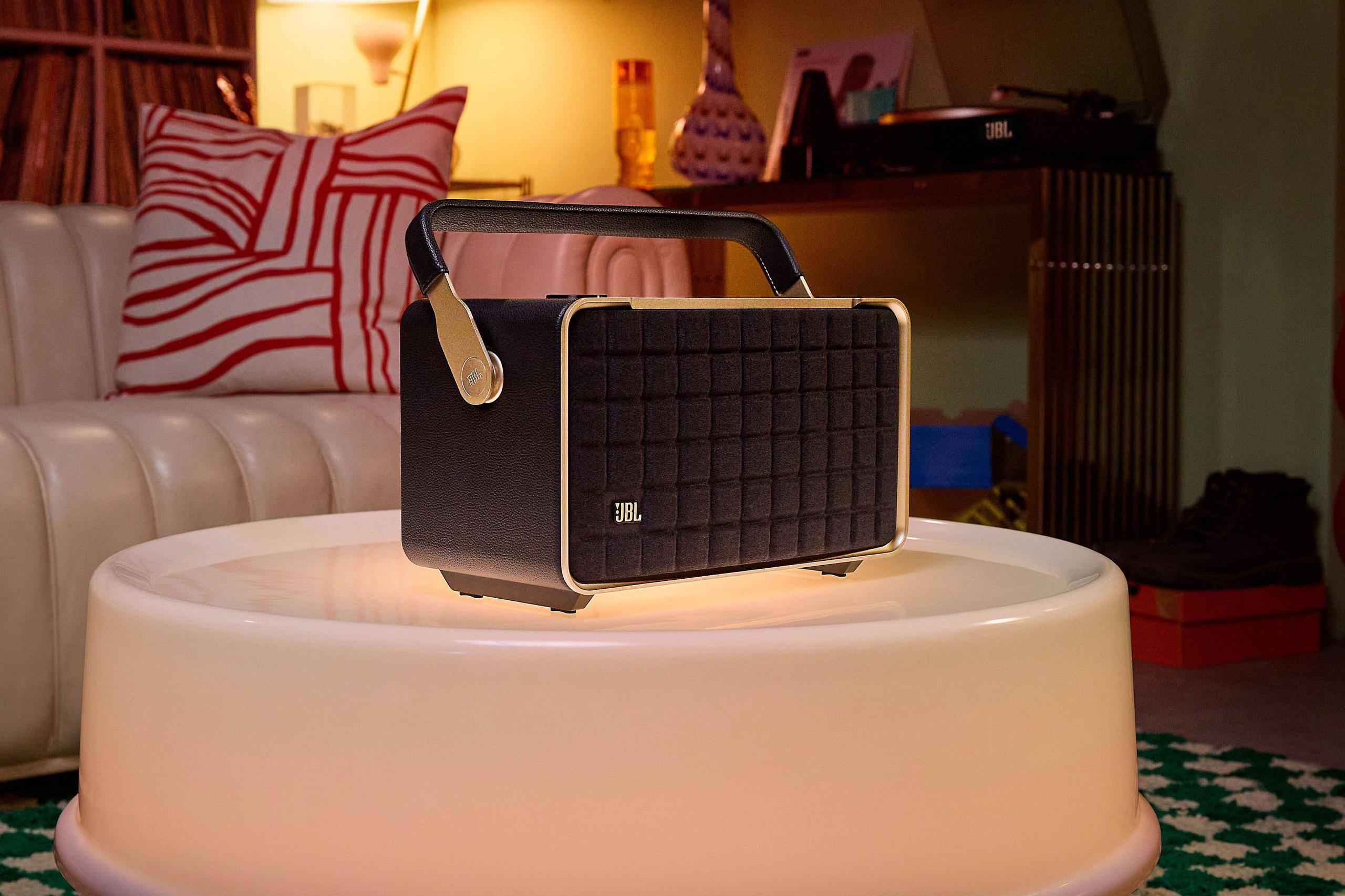
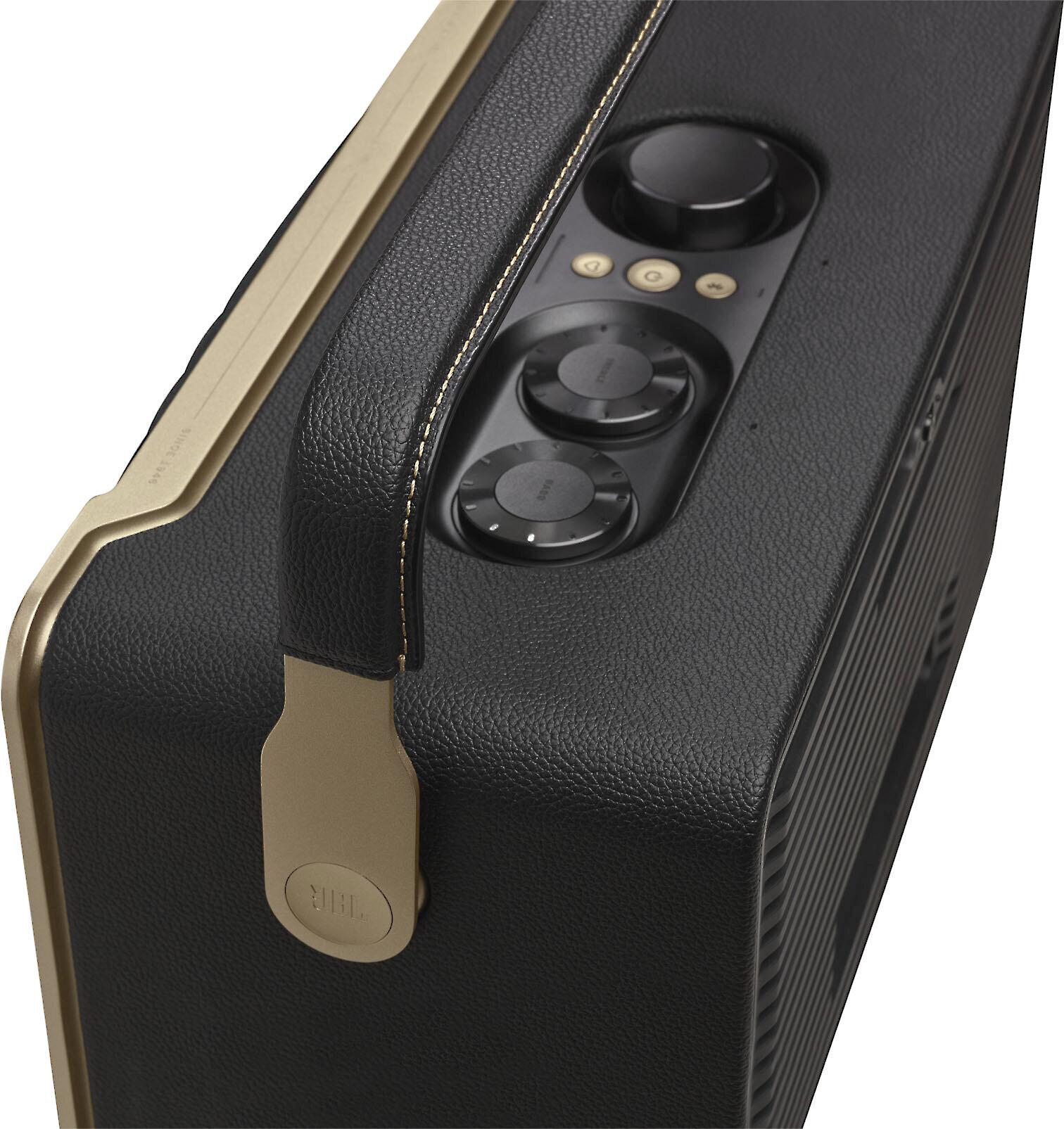
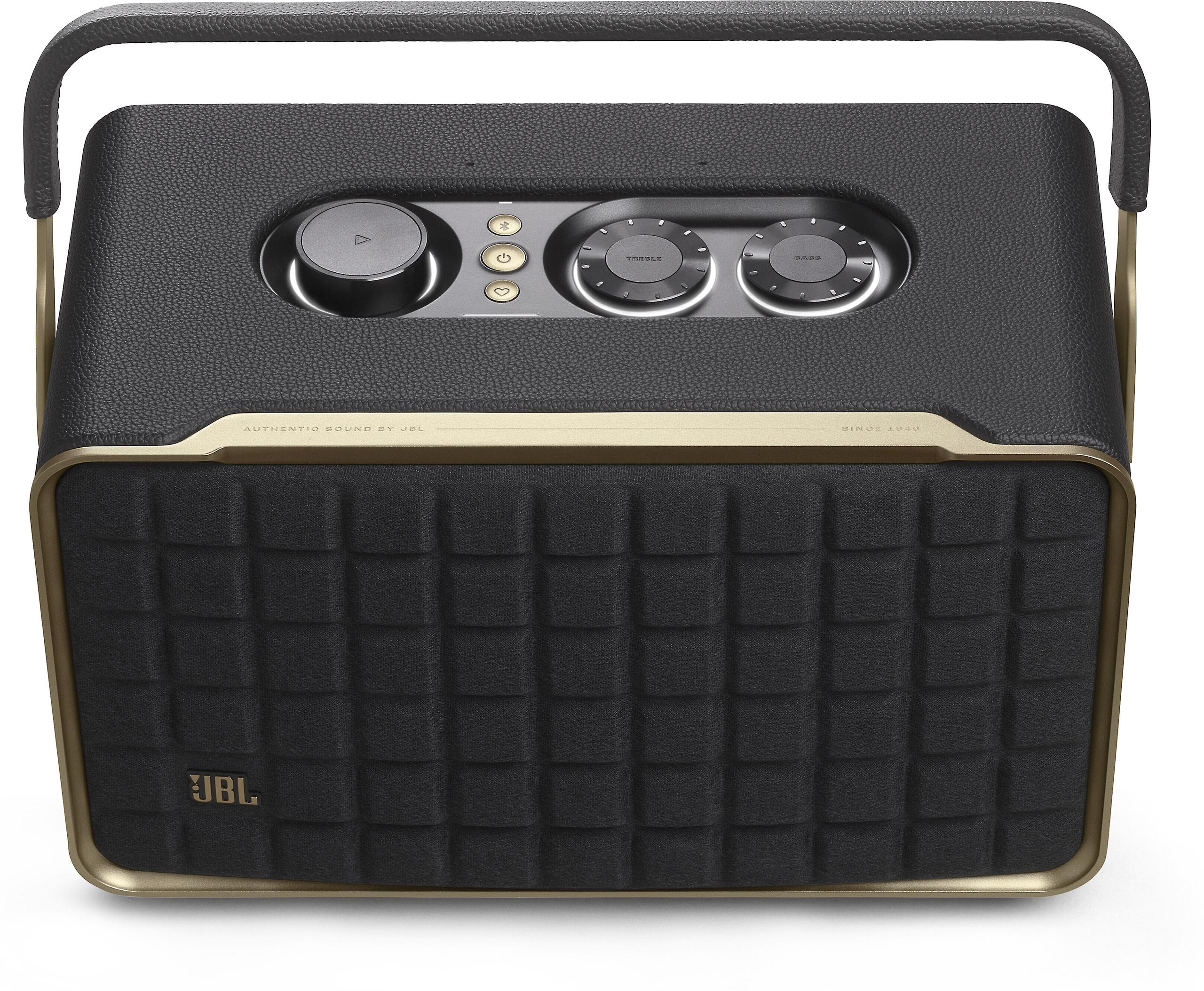
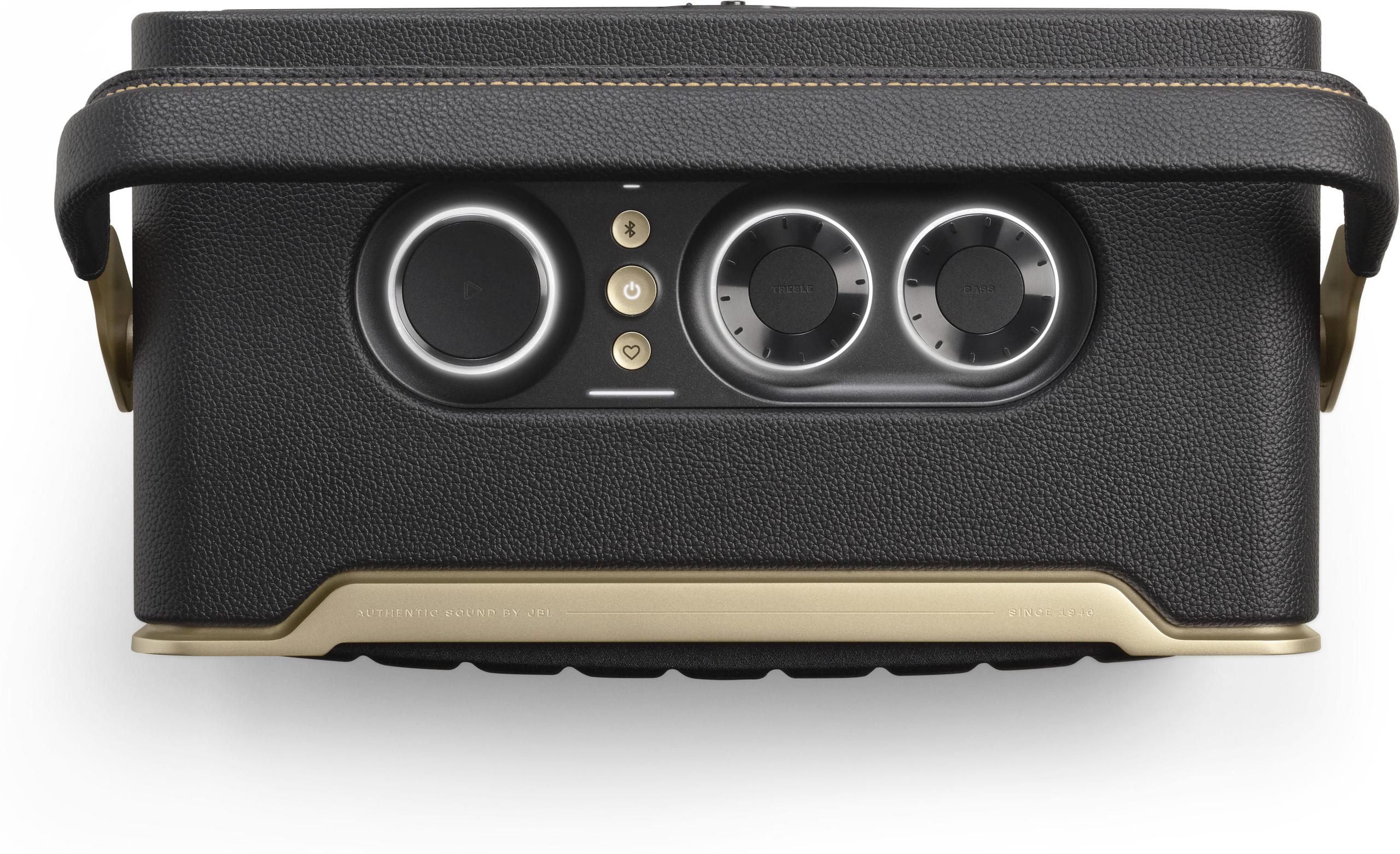
When it comes to high-end home audio, the choice between the Marshall Woburn III ($579.99) and JBL Authentics 300 ($349.99) isn't as straightforward as their price difference might suggest. Released in late 2022 and 2023 respectively, these speakers represent different approaches to premium home audio, each with distinct advantages for different types of users.
Premium home speakers have evolved significantly in recent years, moving beyond just playing music to become integral parts of our home entertainment systems. Today's high-end speakers need to balance pure audio performance with modern features like wireless connectivity, smart home integration, and flexible placement options. This evolution has created an interesting divide between traditional audiophile-focused products and more versatile smart speakers.
The Marshall Woburn III takes a traditional audiophile approach with its three-way speaker system - think of it as having specialized speakers for high, mid, and low frequencies. This separation allows each frequency range to be reproduced more accurately, resulting in clearer, more detailed sound. With 150 watts of total power and the ability to reach down to 35Hz in the bass frequencies (that's the kind of deep bass you can feel), it's notably more powerful than most home speakers.
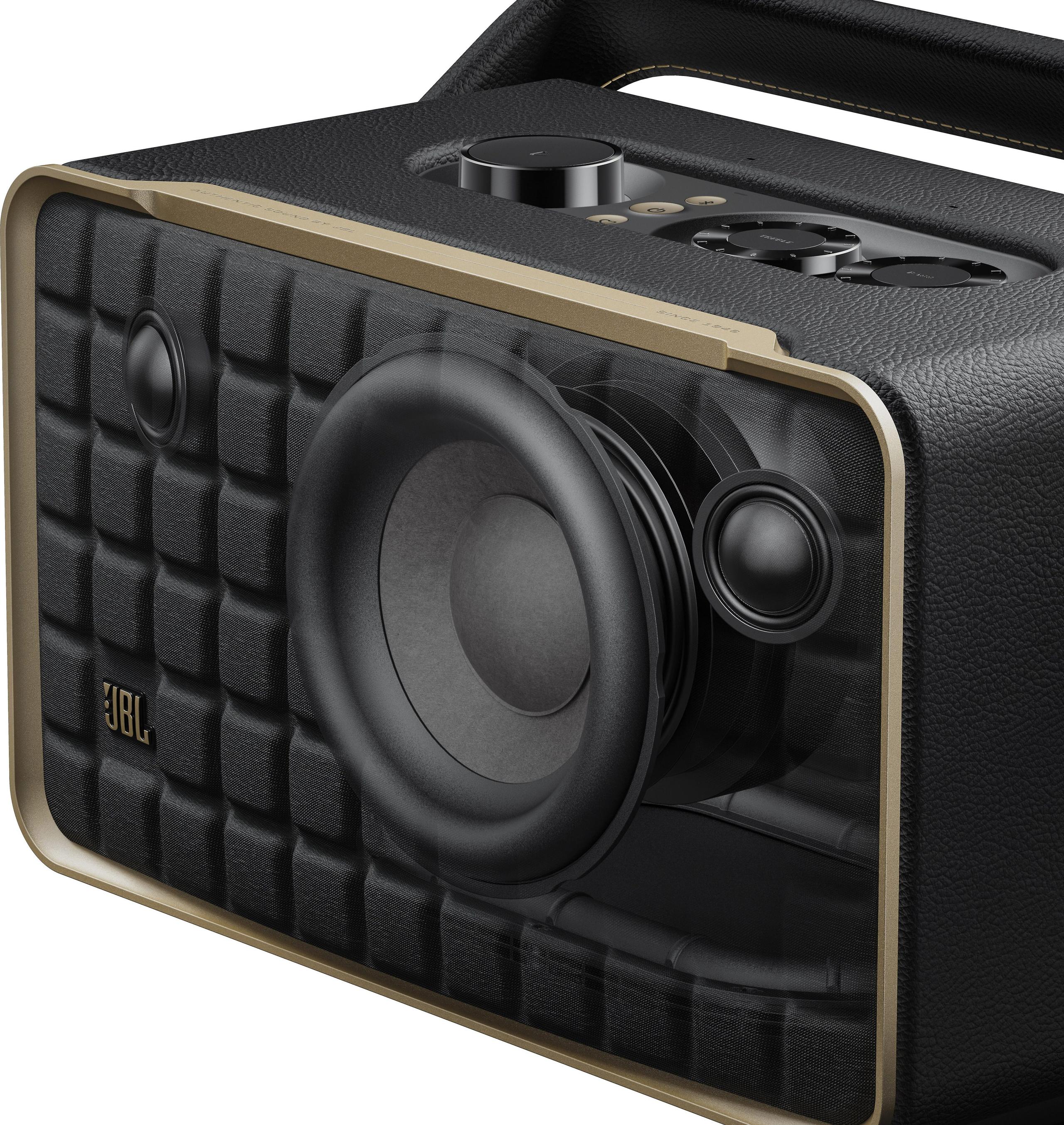
The JBL Authentics 300 uses a simpler two-way design with 100 watts of power, reaching down to 45Hz. While this might seem like a significant difference on paper, in real-world use, the JBL still produces impressive sound that will satisfy most listeners. The main difference becomes apparent at higher volumes and with bass-heavy music, where the Woburn III maintains better clarity and control.
Both speakers handle room placement differently. The Woburn III includes sophisticated placement compensation technology that automatically adjusts the sound based on nearby walls and surfaces. This makes it particularly effective in dedicated listening spaces where you want to optimize the sound for a specific location.
The Authentics 300 takes a more flexible approach with its auto-calibration feature, which adjusts the sound each time you move the speaker. This works well for its portable nature, ensuring good sound whether you're using it in the kitchen, bedroom, or outside on the patio.
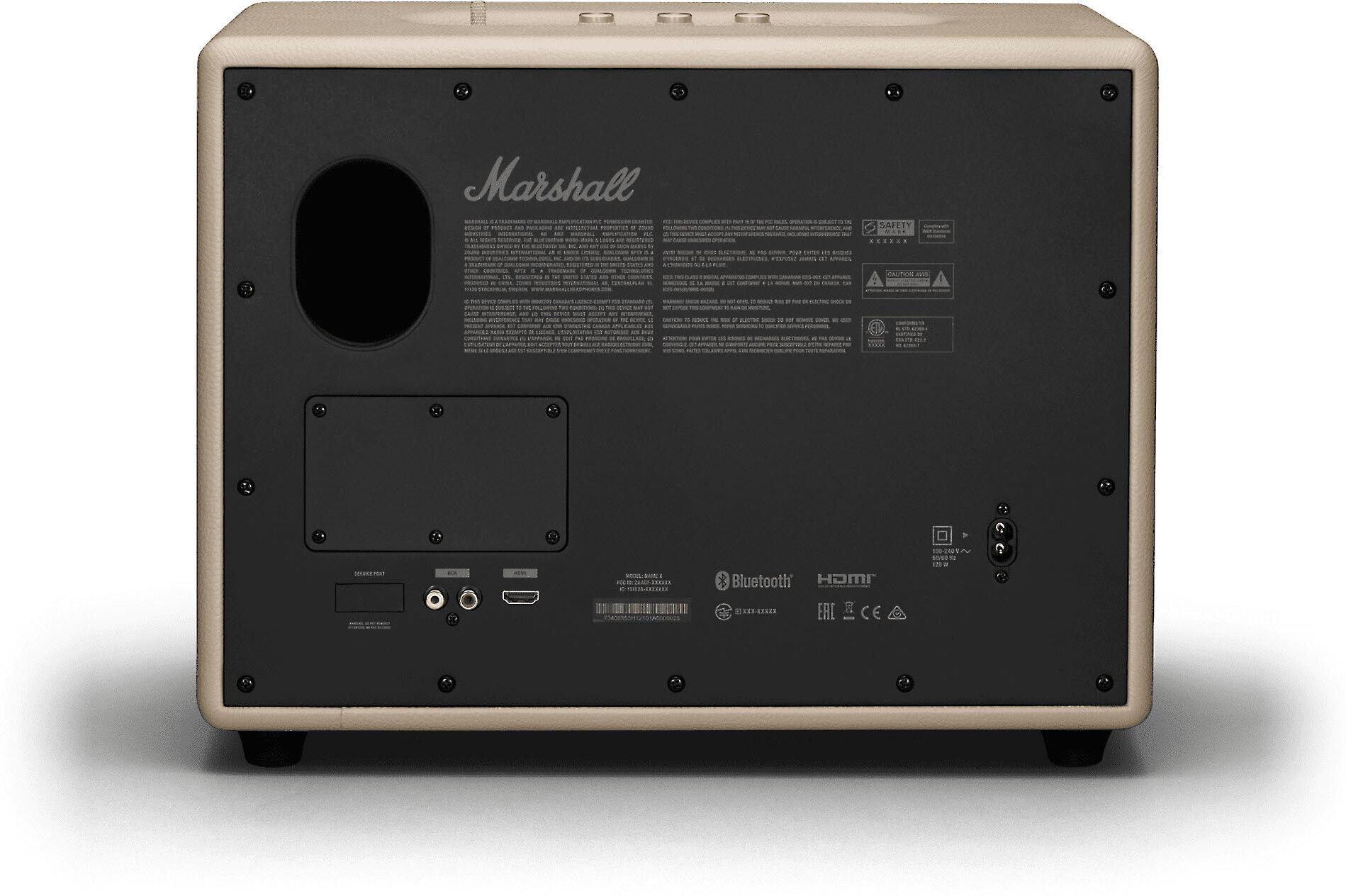
The Woburn III offers Bluetooth 5.2, HDMI ARC (which lets you connect it to your TV for better sound), and traditional RCA inputs. The HDMI ARC connection is particularly valuable for home theater use, as it allows the speaker to automatically turn on with your TV and use your TV remote for volume control.
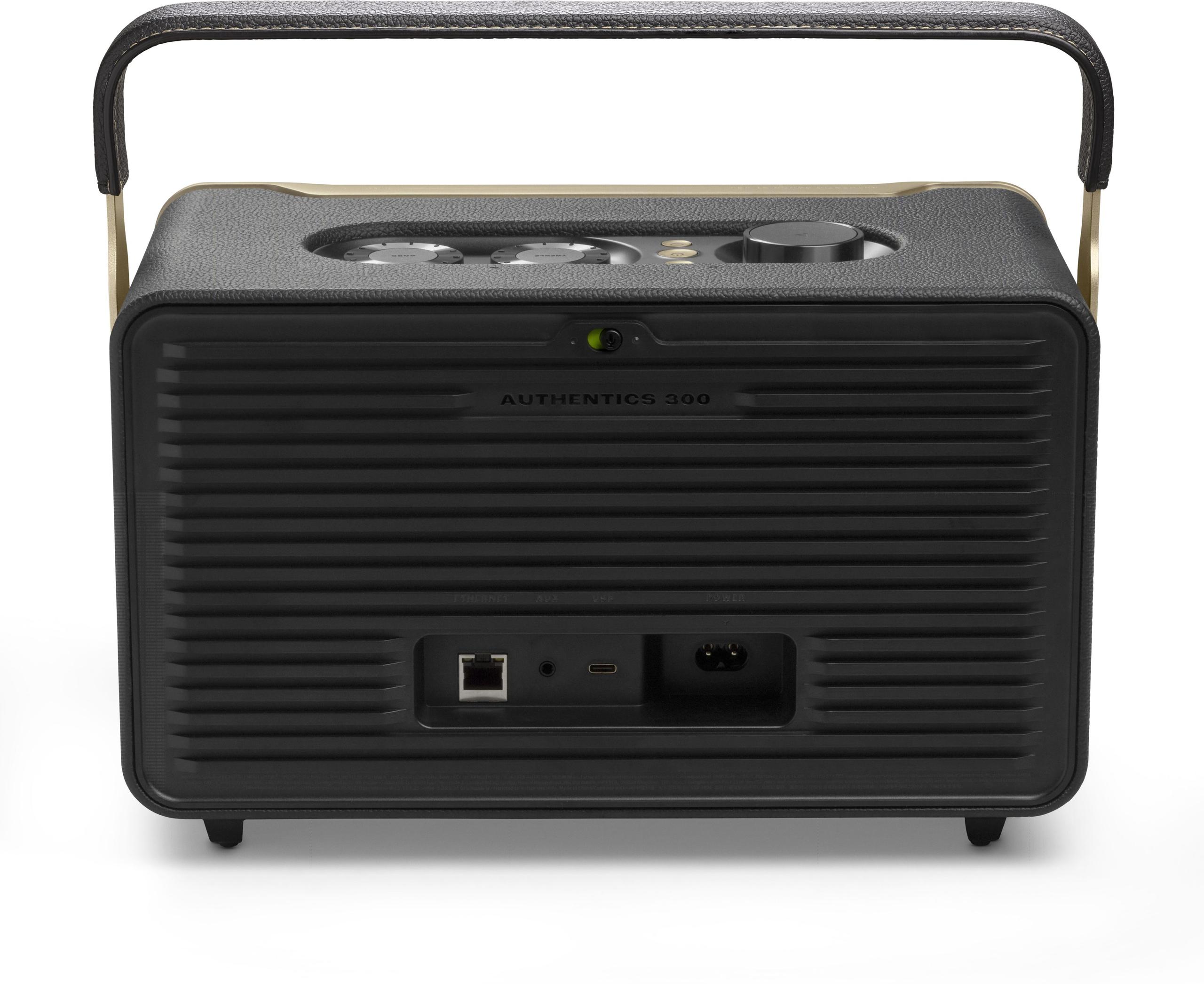
The Authentics 300 goes further with Bluetooth 5.3, Wi-Fi, AirPlay, and Chromecast built-in. This wider range of wireless options makes it more versatile for streaming and multi-room audio setups. The Wi-Fi connection is especially important as it allows for higher-quality audio streaming compared to Bluetooth.
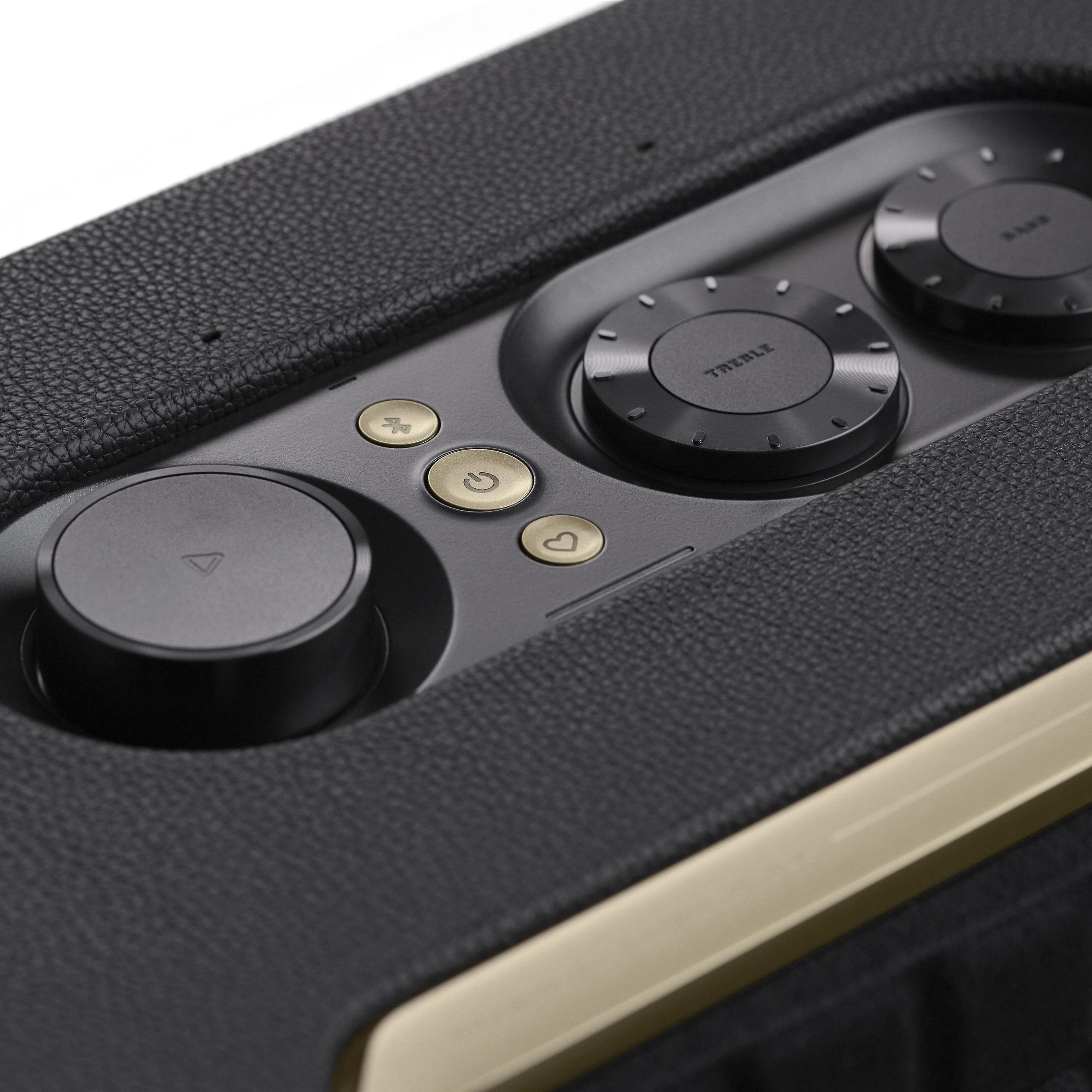
Here's where the products really diverge. The Woburn III keeps things simple with basic app control for EQ adjustments and firmware updates. The Authentics 300, however, embraces smart home integration with both Google Assistant and Amazon Alexa built-in, plus support for various streaming services and multi-room audio capabilities.
For home theater use, the Woburn III has a clear advantage. Its HDMI ARC connection and superior power handling make it an excellent TV speaker, particularly for movies and games where dynamic range is important. The addition of Night Mode, which balances loud and quiet sounds, is particularly useful for late-night viewing.
The Authentics 300 shines in whole-home audio scenarios. Its portability and Wi-Fi connectivity make it easy to move from room to room, and it can be part of a larger multi-room audio system. You can start a podcast in the kitchen while cooking and easily move it to the bedroom later.
When considering the $230 price difference, it's important to think about long-term use. The Woburn III's superior build quality and audio performance make it a better choice for dedicated listening spaces where it will stay in one place. Its classic design also tends to age well aesthetically.
The Authentics 300's lower price point and greater flexibility make it more appealing for users who want one speaker to serve multiple purposes. Its smart features and regular software updates also help keep it current with new technology.
Both speakers have introduced meaningful improvements since their release. The Woburn III's Dynamic Loudness feature, which automatically adjusts frequency response at different volumes, is particularly impressive for maintaining sound quality at any volume level. The Authentics 300's dual voice assistant capability and auto-calibration show JBL's focus on convenience and adaptability.
The choice between these speakers ultimately comes down to your primary use case and listening environment:
Choose the Marshall Woburn III if:
Choose the JBL Authentics 300 if:
Both speakers represent excellent choices in their respective categories, but they serve different needs. The Woburn III is the audiophile's choice, while the Authentics 300 is the more versatile, modern option. Consider your space, how you'll use the speaker, and what features matter most to you when making your decision.
| Marshall Woburn III ($579.99) | JBL Authentics 300 ($349.99) |
|---|---|
| Power Output - Determines maximum volume and audio clarity | |
| 150W total (90W woofer, 2x15W midrange, 2x15W tweeters) | 100W total output |
| Speaker Configuration - Impacts sound separation and clarity | |
| Three-way system with dedicated woofer, midrange, tweeters | Two-way system with tweeters and woofer |
| Frequency Response - Affects bass depth and overall range | |
| 35Hz - 20kHz (deeper bass extension) | 45Hz - 20kHz (good but less deep bass) |
| Connectivity Options - Determines integration flexibility | |
| Bluetooth 5.2, HDMI ARC, RCA, 3.5mm aux | Bluetooth 5.3, Wi-Fi, AirPlay, Chromecast, 3.5mm aux |
| Smart Features - Important for modern home integration | |
| Basic app control, no voice assistants | Dual voice assistants, multi-room audio, streaming services |
| Portability - Affects placement flexibility | |
| Static design, requires power outlet (16.4 lbs) | 8-hour battery life, portable design (10.8 lbs) |
| Room Adaptation - How speaker adjusts to space | |
| Placement compensation for fixed locations | Auto-calibration, adjusts when moved |
| Home Theater Features - TV integration capability | |
| HDMI ARC with Night Mode, TV audio sync | Basic TV audio via aux or Bluetooth |
| Build Materials - Impacts durability and aesthetics | |
| Premium materials, classic Marshall design | 100% recycled fabric, 85% recycled plastic, aluminum handle |
| Size - Consider your space requirements | |
| 15.8" x 12.5" x 8.0" (larger footprint) | 13.46" x 7.7" x 7.1" (more compact) |
The Marshall Woburn III ($579.99) offers superior sound quality with its 150W three-way speaker system and deeper bass response. While the JBL Authentics 300 ($349.99) sounds good, it doesn't match the Woburn III's audio performance.
The Marshall Woburn III costs $579.99, while the JBL Authentics 300 is priced at $349.99, making it $230 less expensive.
Yes, but differently. The Woburn III has HDMI ARC for direct TV connection and better integration, while the Authentics 300 can connect to TVs only via Bluetooth or aux cable.
The JBL Authentics 300 is portable with an 8-hour battery life. The Marshall Woburn III is not portable and requires constant power connection.
The JBL Authentics 300 supports both Google Assistant and Alexa. The Marshall Woburn III does not have voice assistant capabilities.
Yes, both speakers support Bluetooth streaming, but the Authentics 300 also offers Wi-Fi, AirPlay, and Chromecast options, while the Woburn III is limited to Bluetooth.
The Marshall Woburn III is better for large rooms due to its higher power output (150W vs 100W) and superior bass response.
The JBL Authentics 300 supports multi-room audio through Wi-Fi. The Marshall Woburn III cannot be connected to other speakers.
The Marshall Woburn III has better bass performance, reaching down to 35Hz compared to the Authentics 300's 45Hz, and offers more powerful bass through its dedicated woofer.
Both speakers have companion apps, but the Authentics 300 app offers more features including streaming service integration, while the Woburn III app is primarily for EQ adjustments.
The Marshall Woburn III delivers higher volume and better sound quality for parties, but the Authentics 300 offers more flexibility with its portable design and ability to move between rooms.
The JBL Authentics 300 is more future-proof with its smart features, Wi-Fi connectivity, and regular software updates, while the Marshall Woburn III focuses on traditional audio performance.
We've done our best to create useful and informative comparisons to help you decide what product to buy. Our research uses advanced automated methods to create this comparison and perfection is not possible - please contact us for corrections or questions. These are the sites we've researched in the creation of this article: bestbuy.com - crutchfield.com - rtings.com - idownloadblog.com - digit.in - crutchfield.com - epicrewards.com.ph - ione.com.kh - youtube.com - onward.ph - economictimes.indiatimes.com - tomsguide.com - 9to5google.com - bestbuy.com - jbl.com - androidpolice.com - jbl.com - greentoe.com - jbl.com - jbl.com - projectorscreen.com - kh.jbl.com - jbl.com

Privacy Policy
Terms and Conditions - Affiliate Policy
Home Security
© Copyright 2008-2026.
11816 Inwood Rd #1211, Dallas, TX 75244