

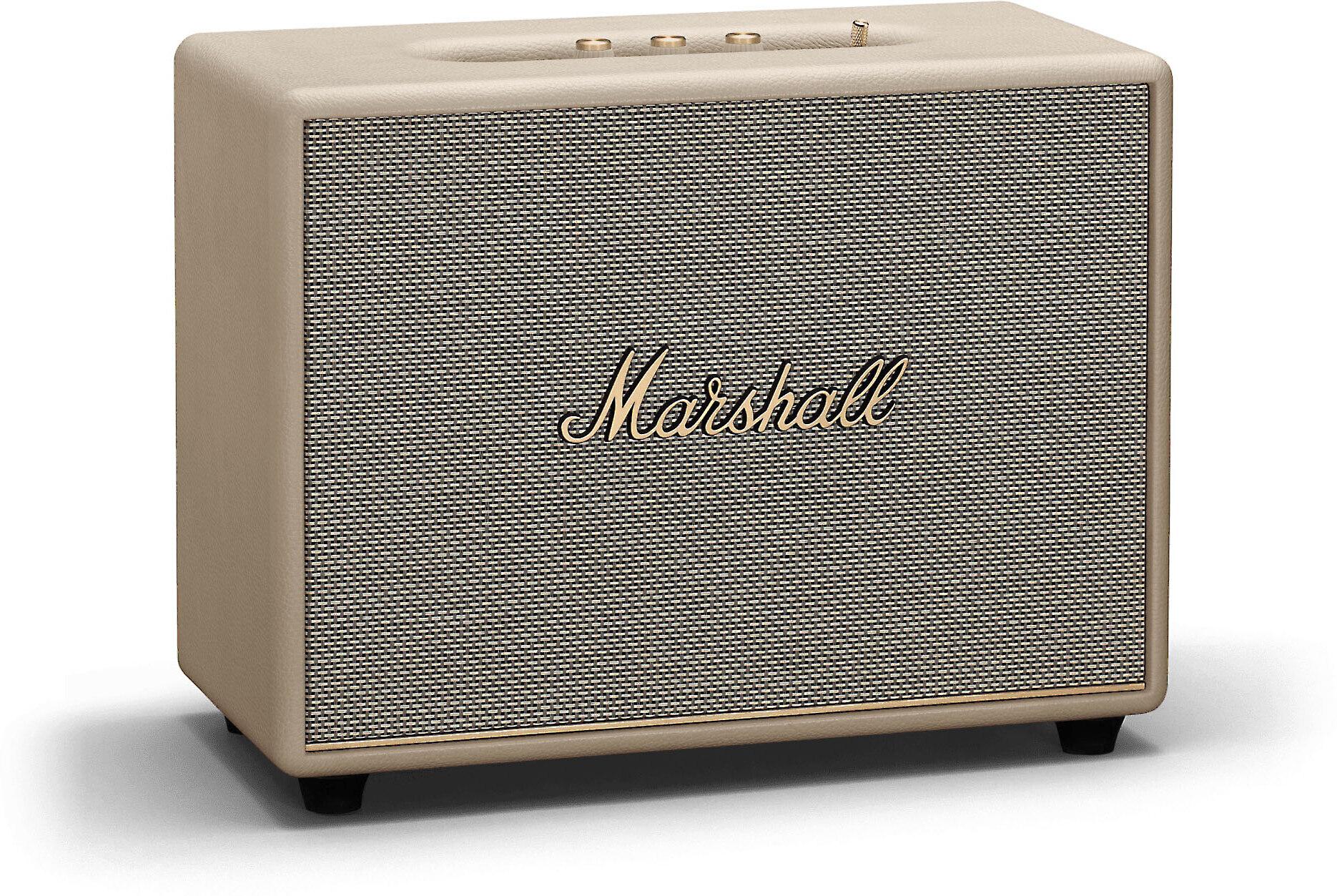
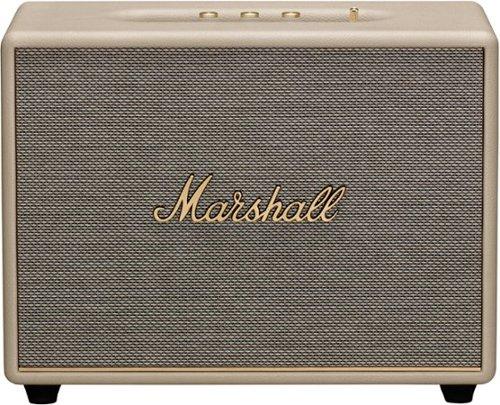
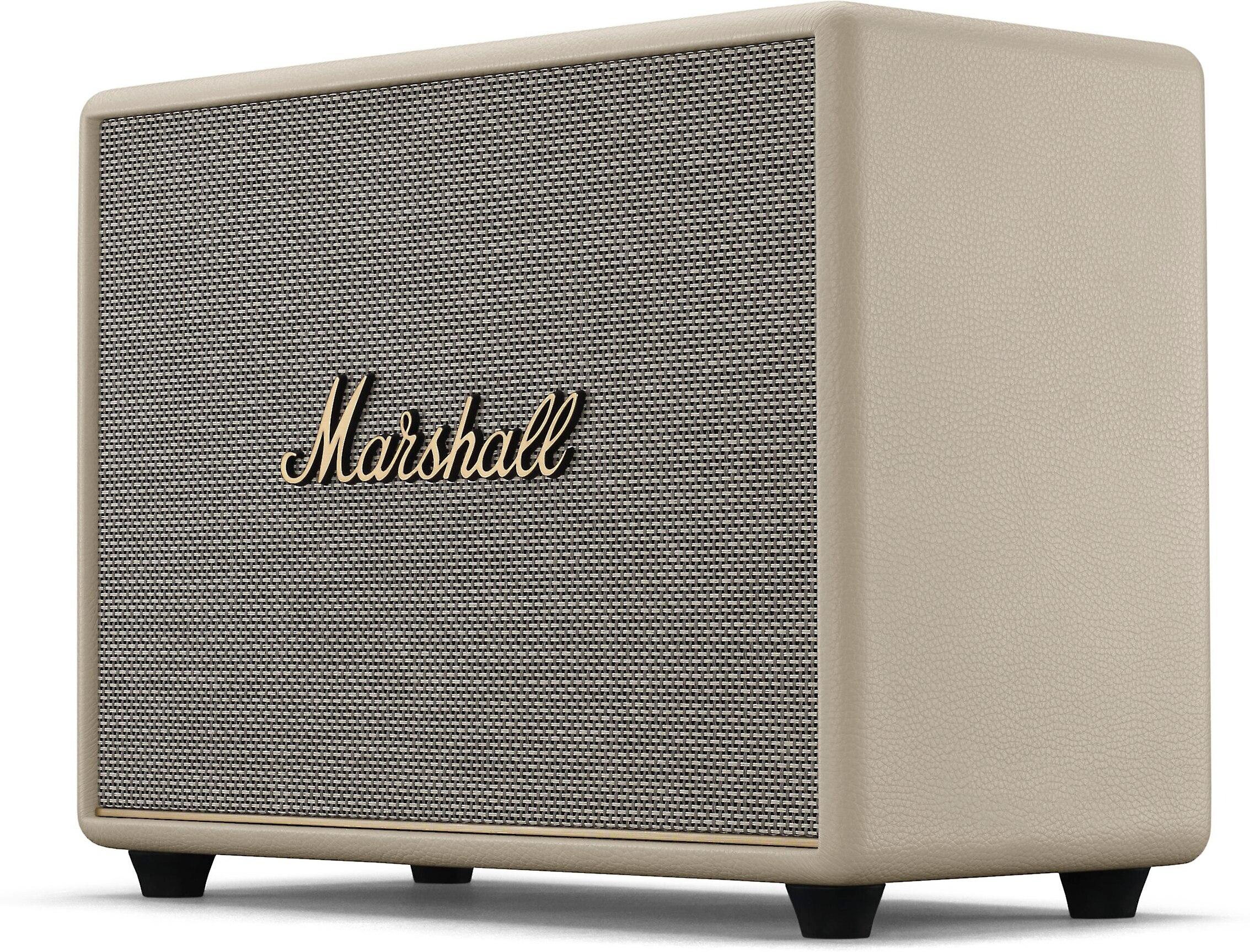
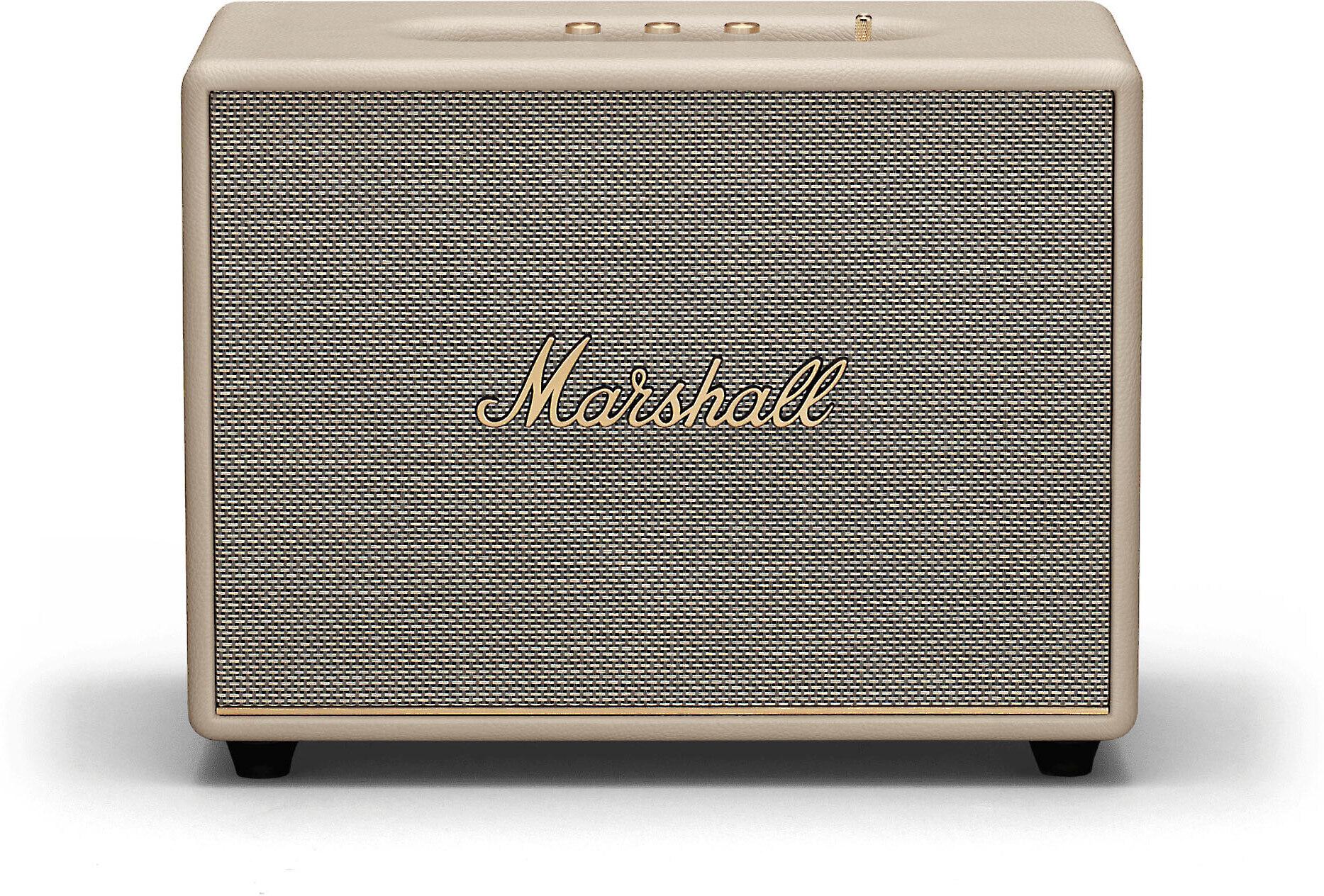
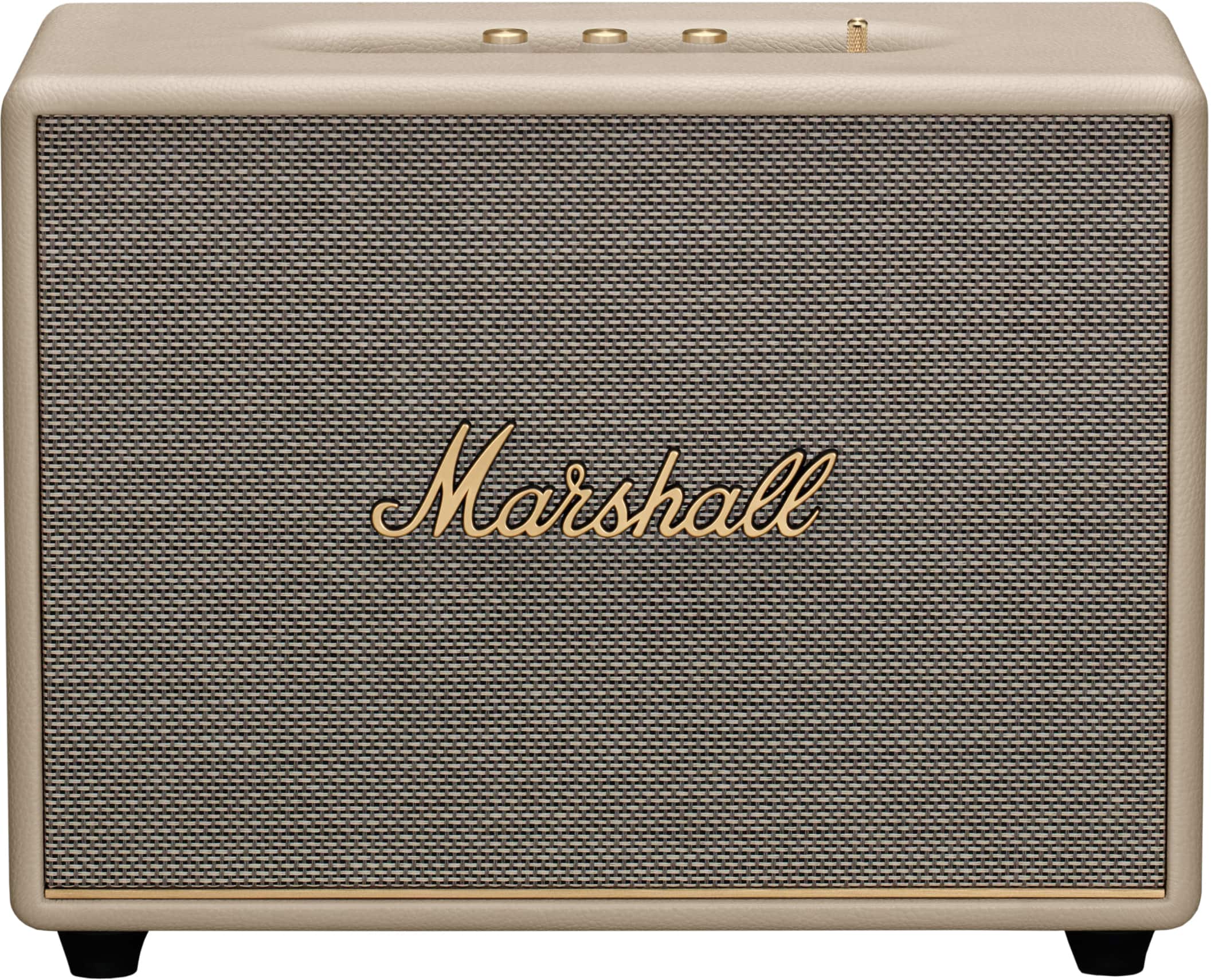

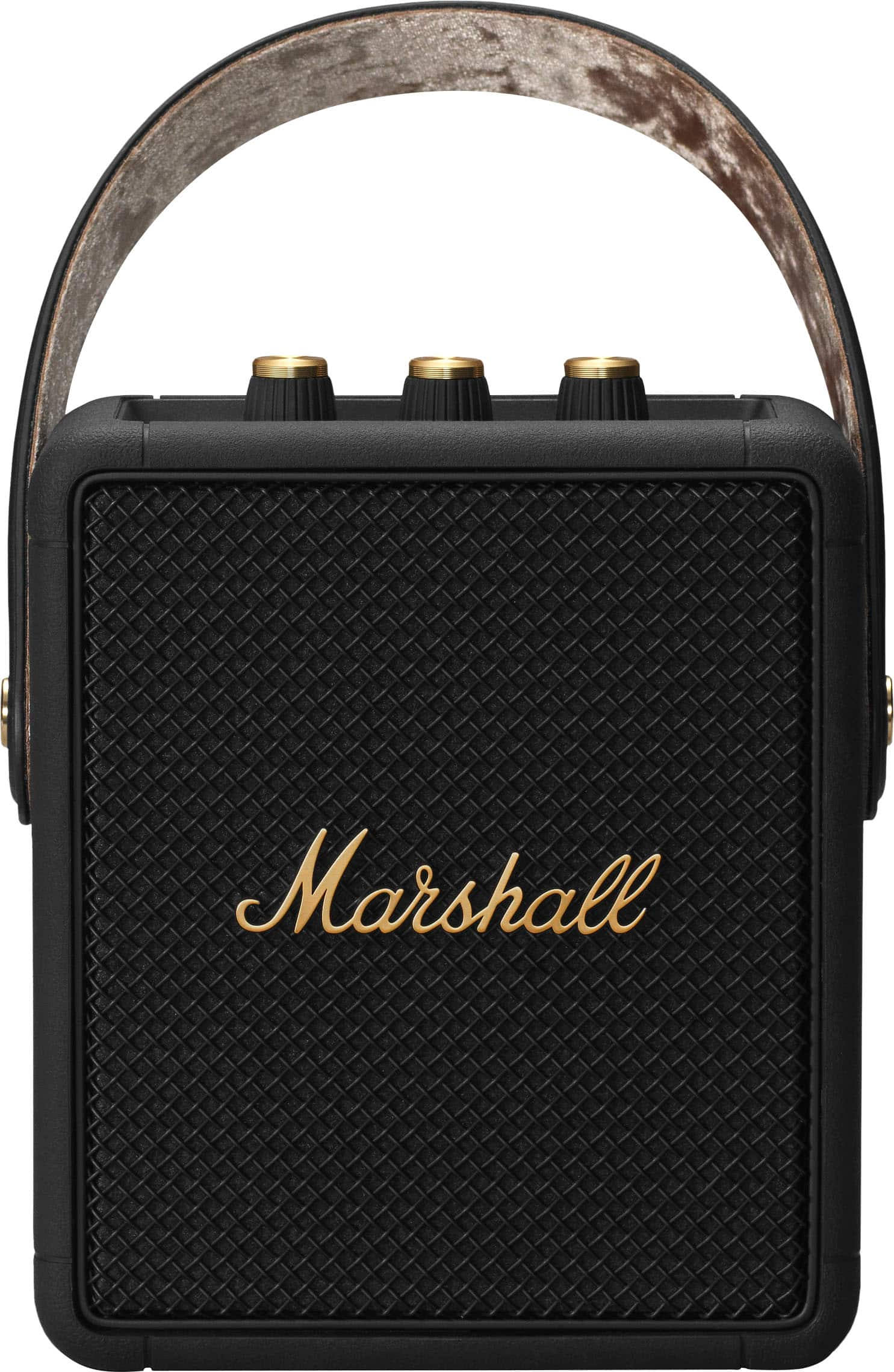
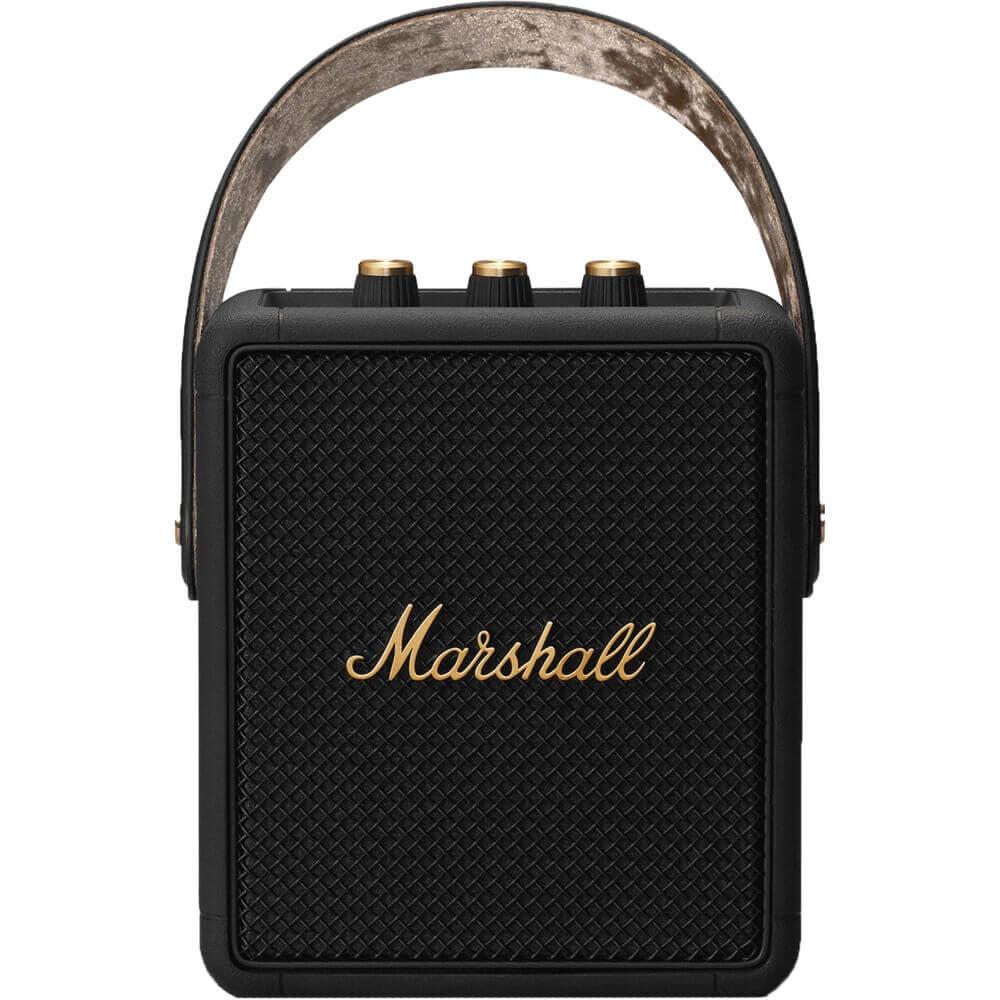
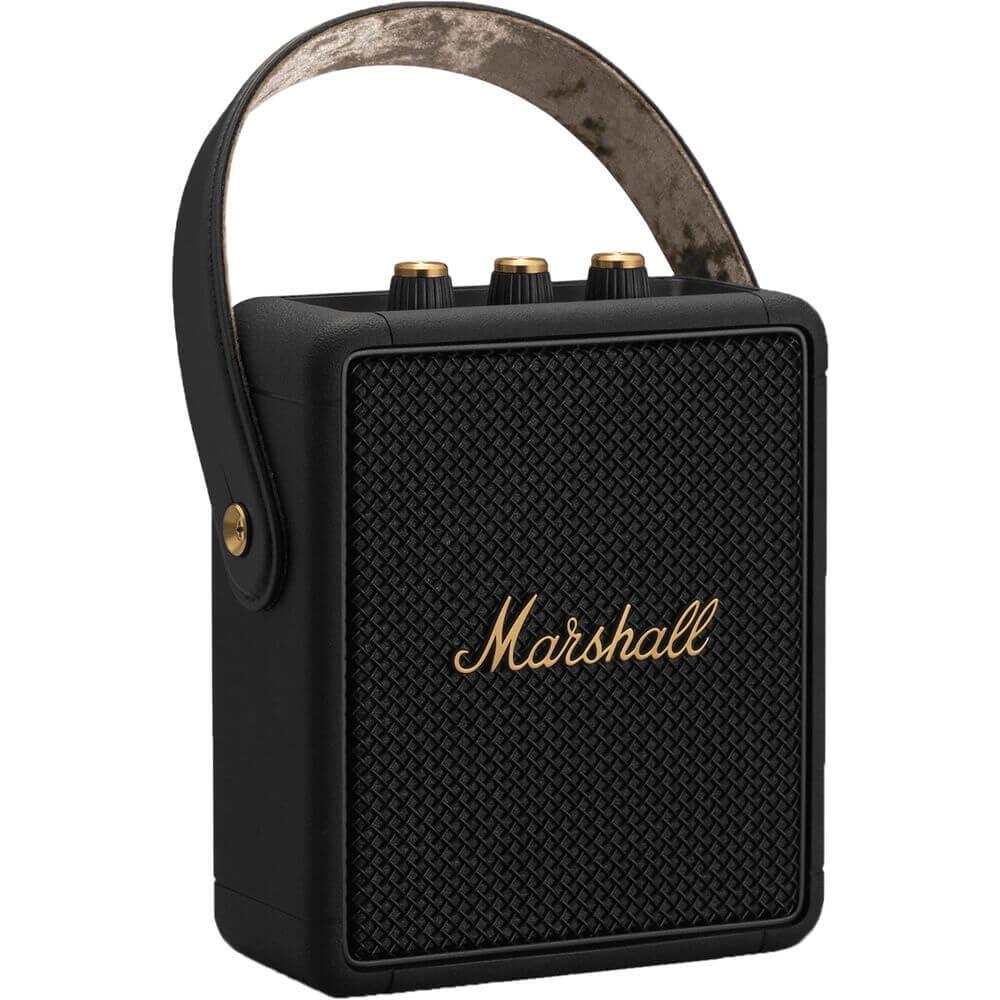

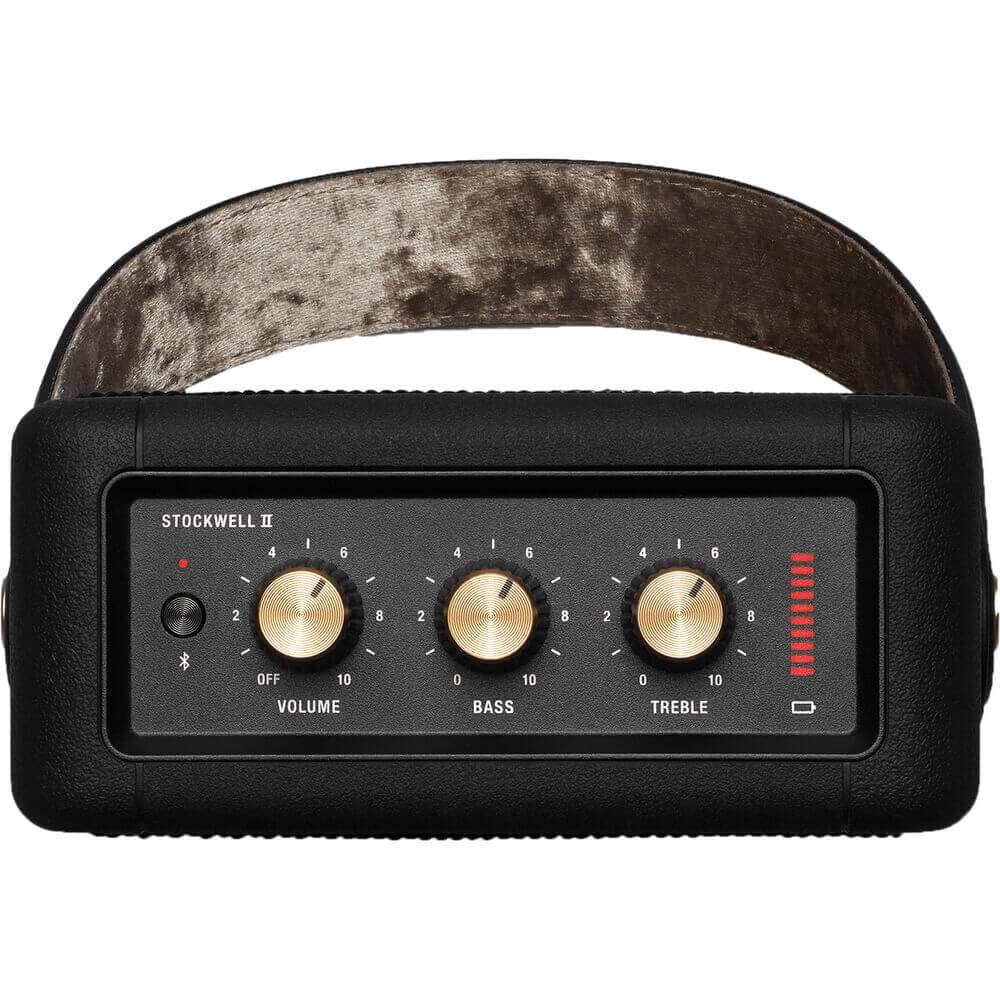
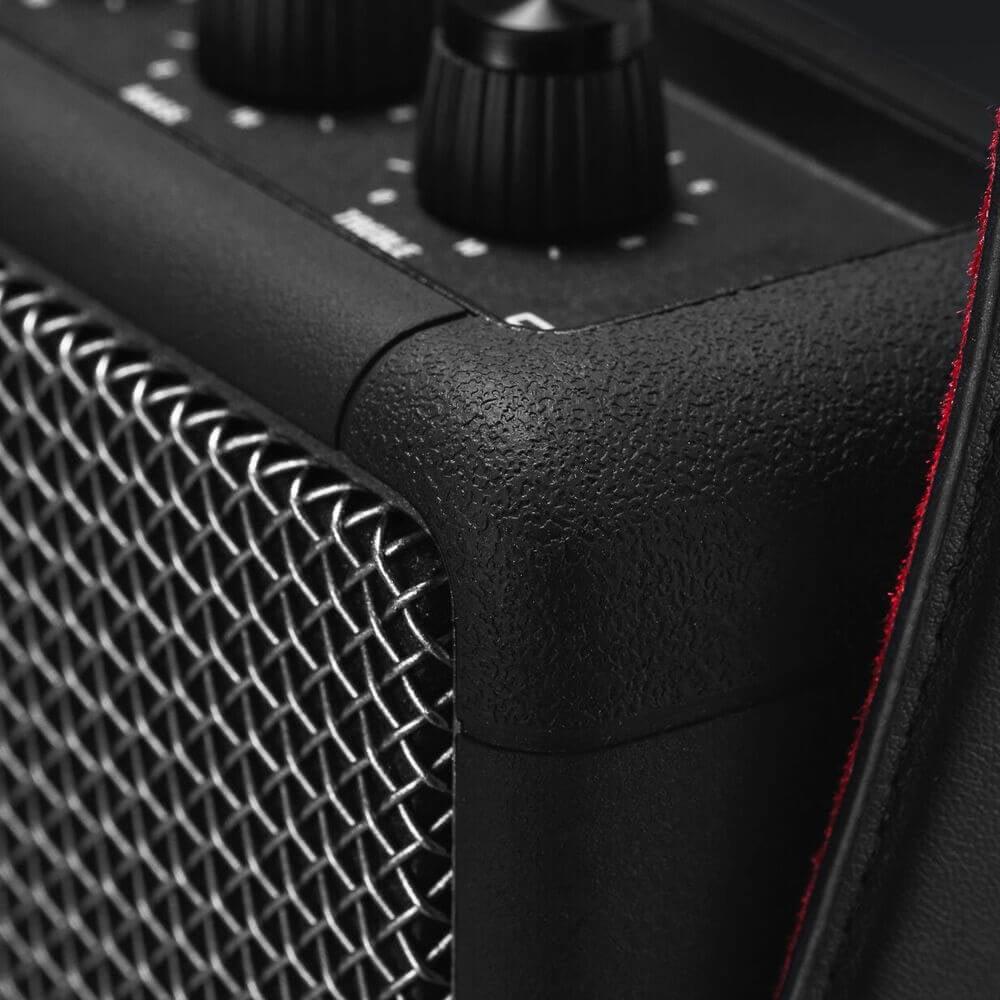
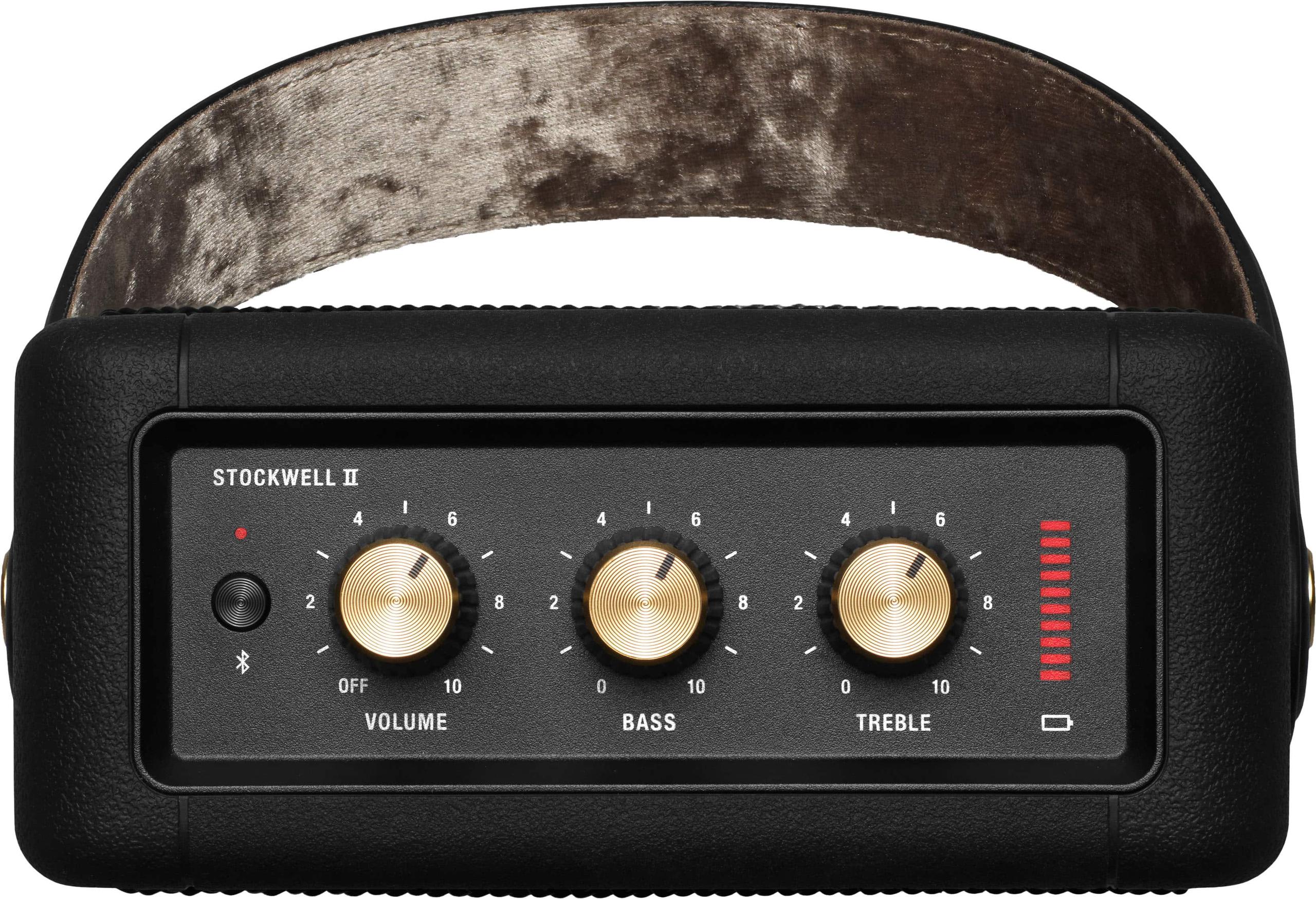
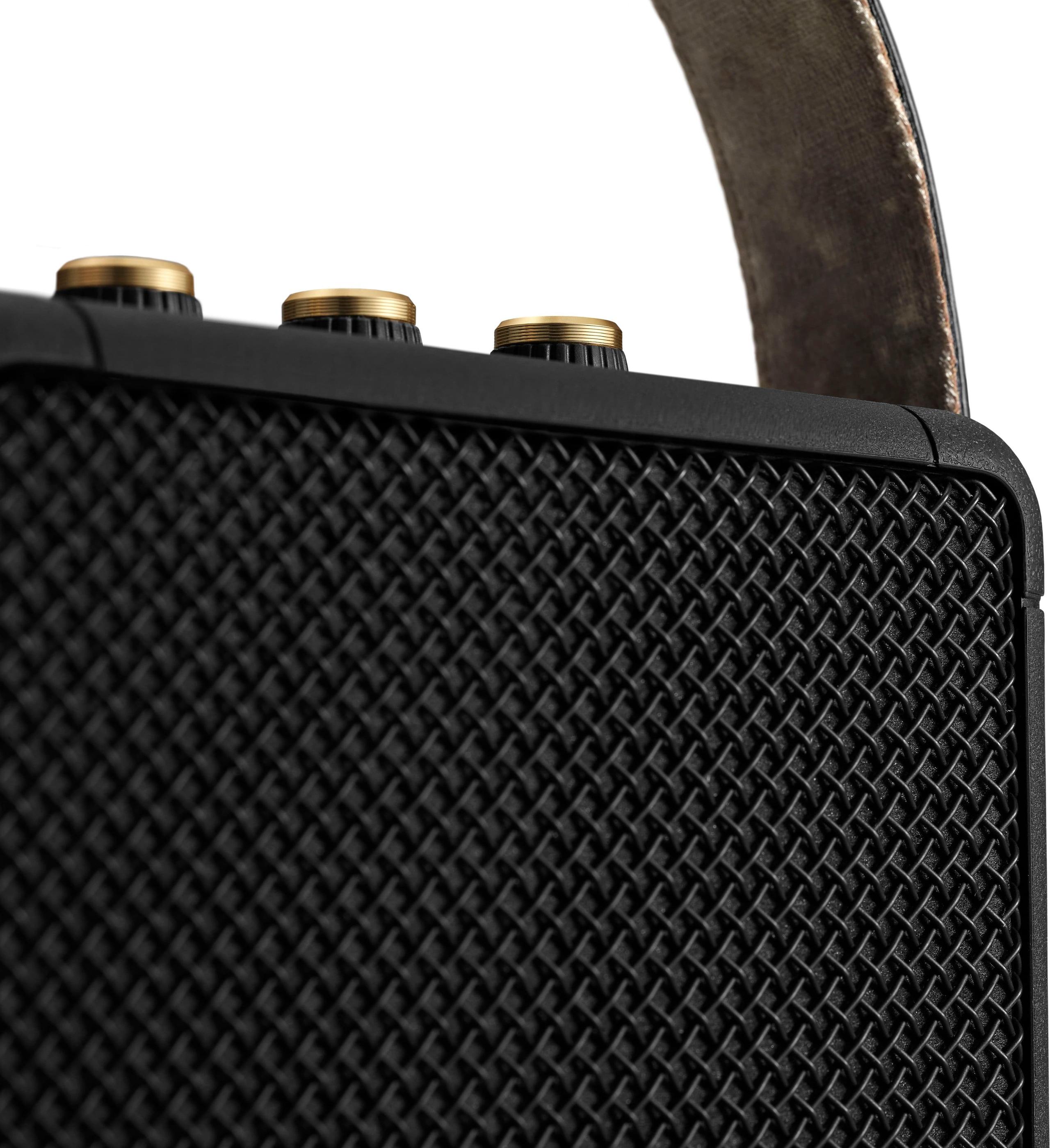
When it comes to high-end Bluetooth speakers, Marshall has carved out a distinctive niche with their guitar amp-inspired designs. Today we're comparing two very different approaches to wireless audio: the premium Marshall Woburn III ($579) home speaker and the portable Marshall Stockwell II ($149). Let's explore how these siblings serve different needs while sharing Marshall's signature sound and style.
The wireless speaker market has evolved significantly in recent years, with clear separation between home and portable segments. Home speakers prioritize sound quality and connectivity, while portable units balance audio performance with mobility and battery life. This fundamental difference drives many of the design and feature choices we'll explore.
The Woburn III, released in late 2022, represents Marshall's flagship home speaker with the latest audio processing and connectivity. The Stockwell II, from 2019, takes a more focused approach as a premium portable speaker. While both share Marshall's DNA, they serve distinct purposes.
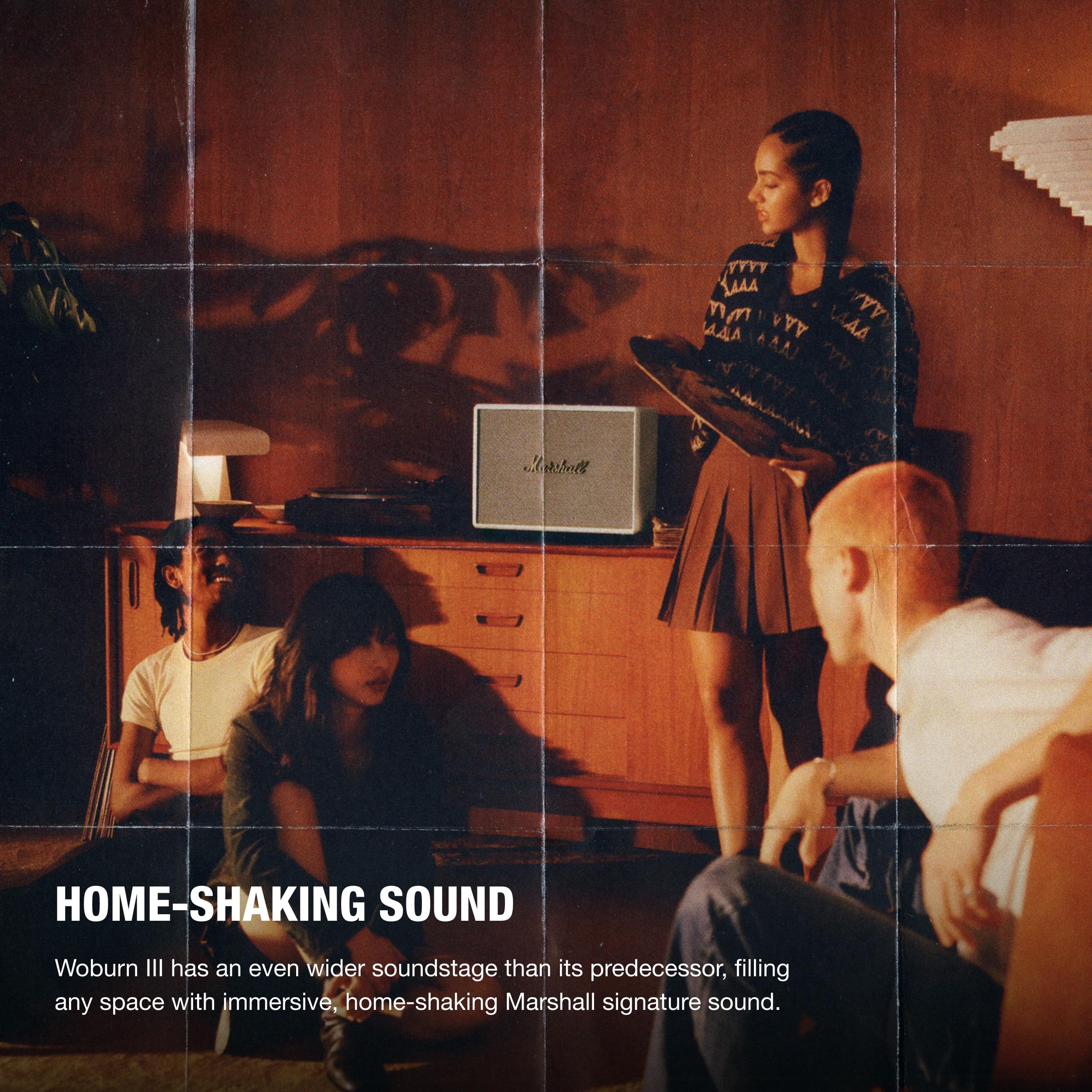
The Woburn III delivers impressive audio through its sophisticated three-way driver system. With dedicated drivers for high, mid, and low frequencies (two 0.75" tweeters, two 2" midrange drivers, and a 6" woofer), it produces detailed, room-filling sound. The 120W total power output provides serious volume capability without distortion.
A standout feature is Dynamic Loudness, which automatically adjusts frequency balance as volume changes. This ensures consistent tonal balance whether playing quietly or at party levels. The speaker also includes Placement Compensation, analyzing nearby surfaces to optimize sound - particularly useful for bass response when placed near walls.
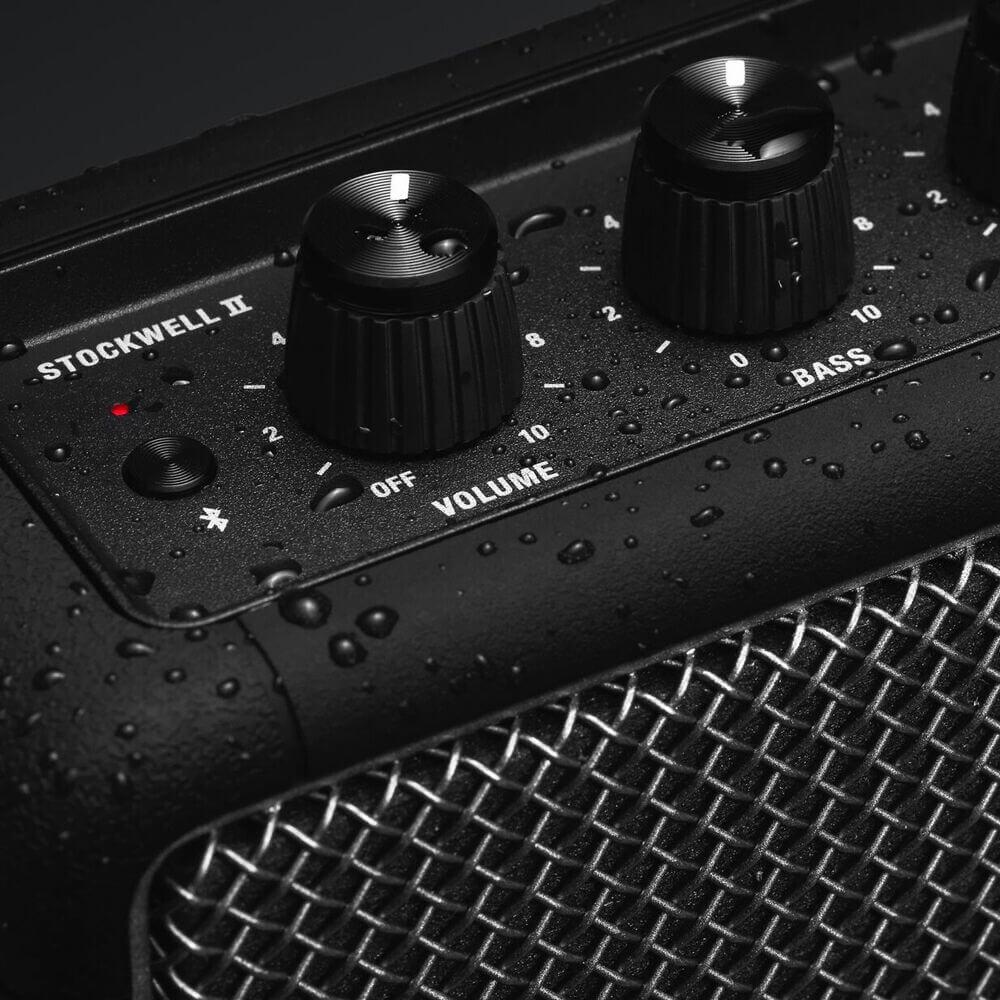
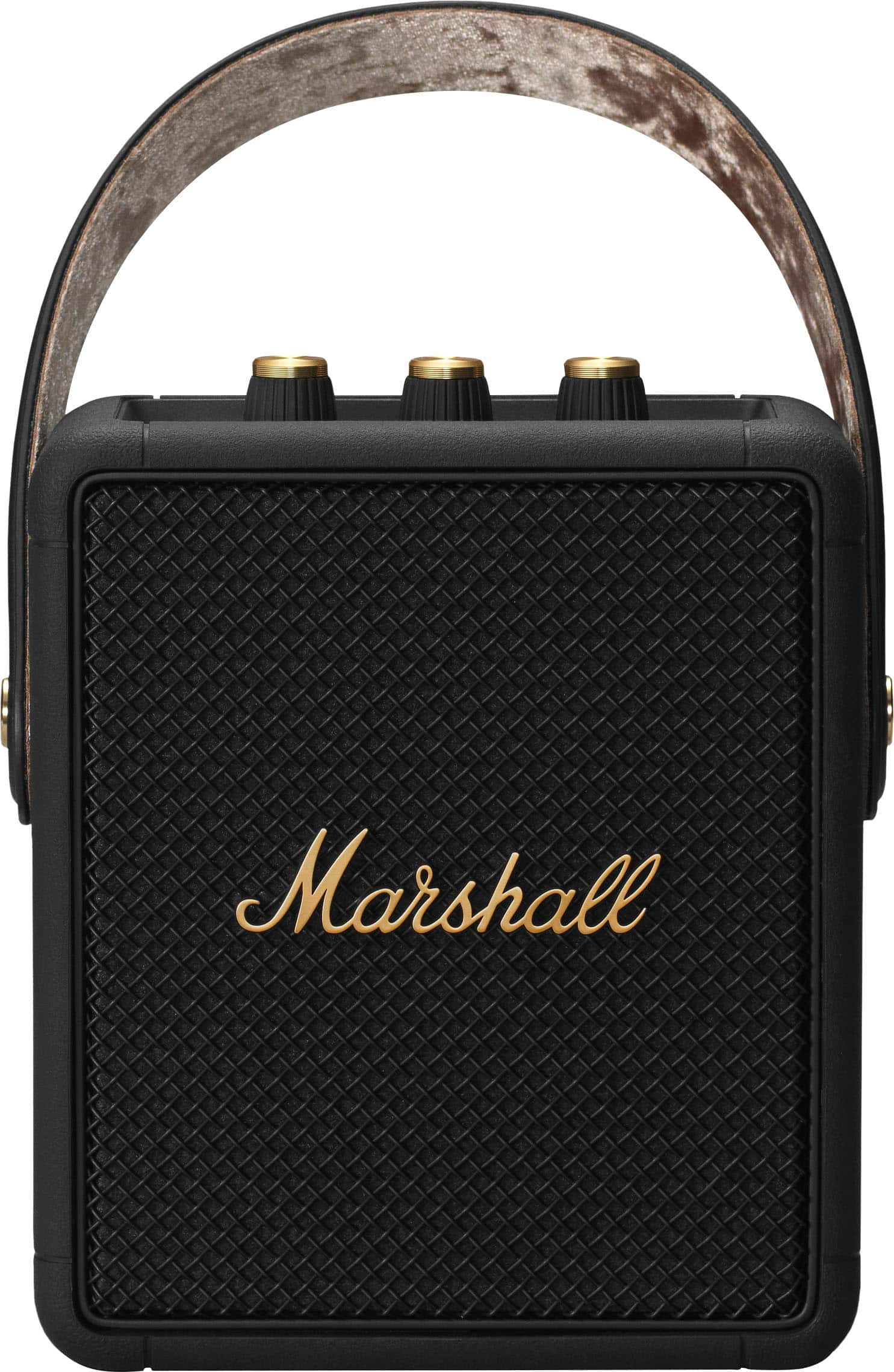
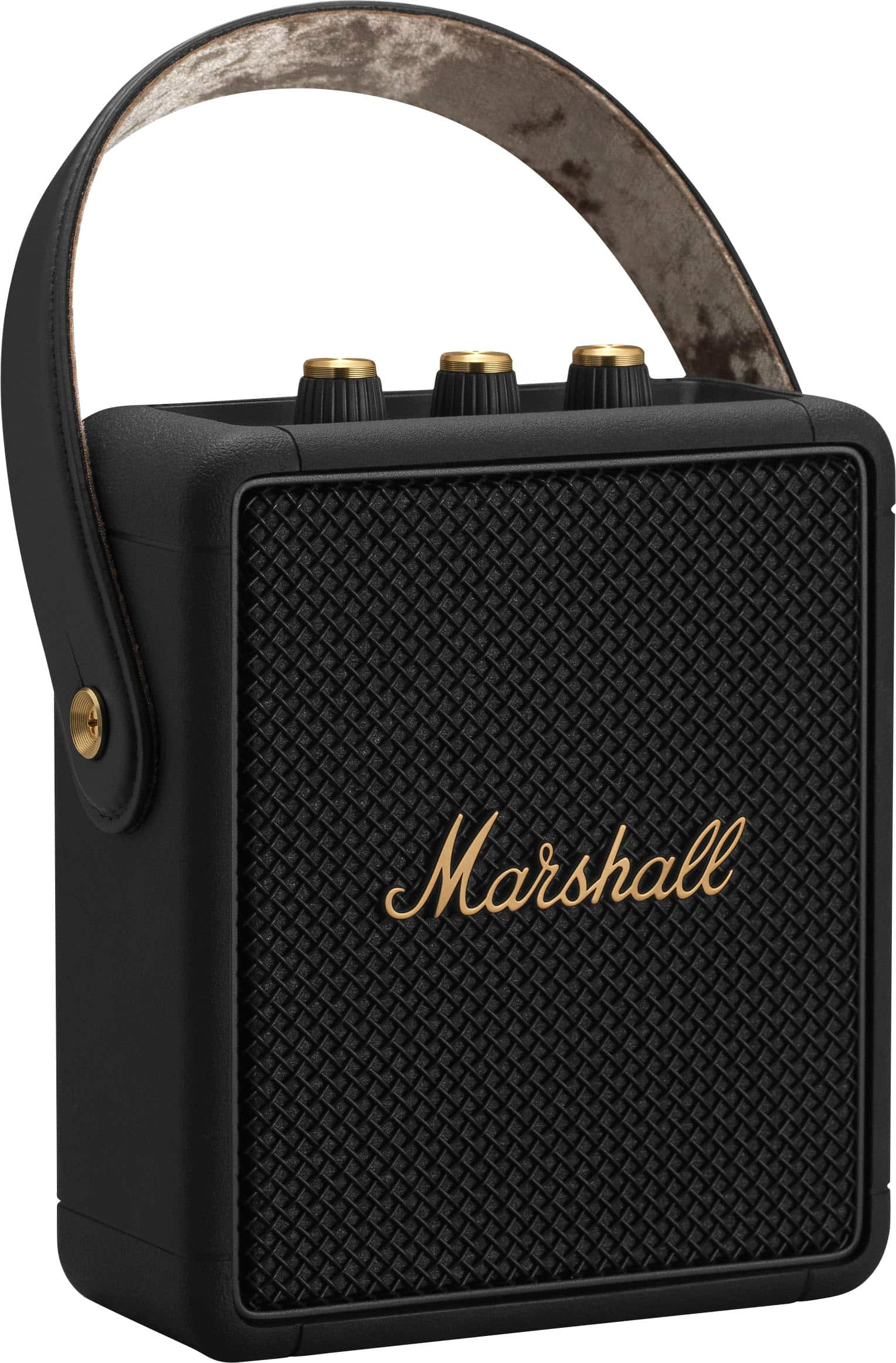
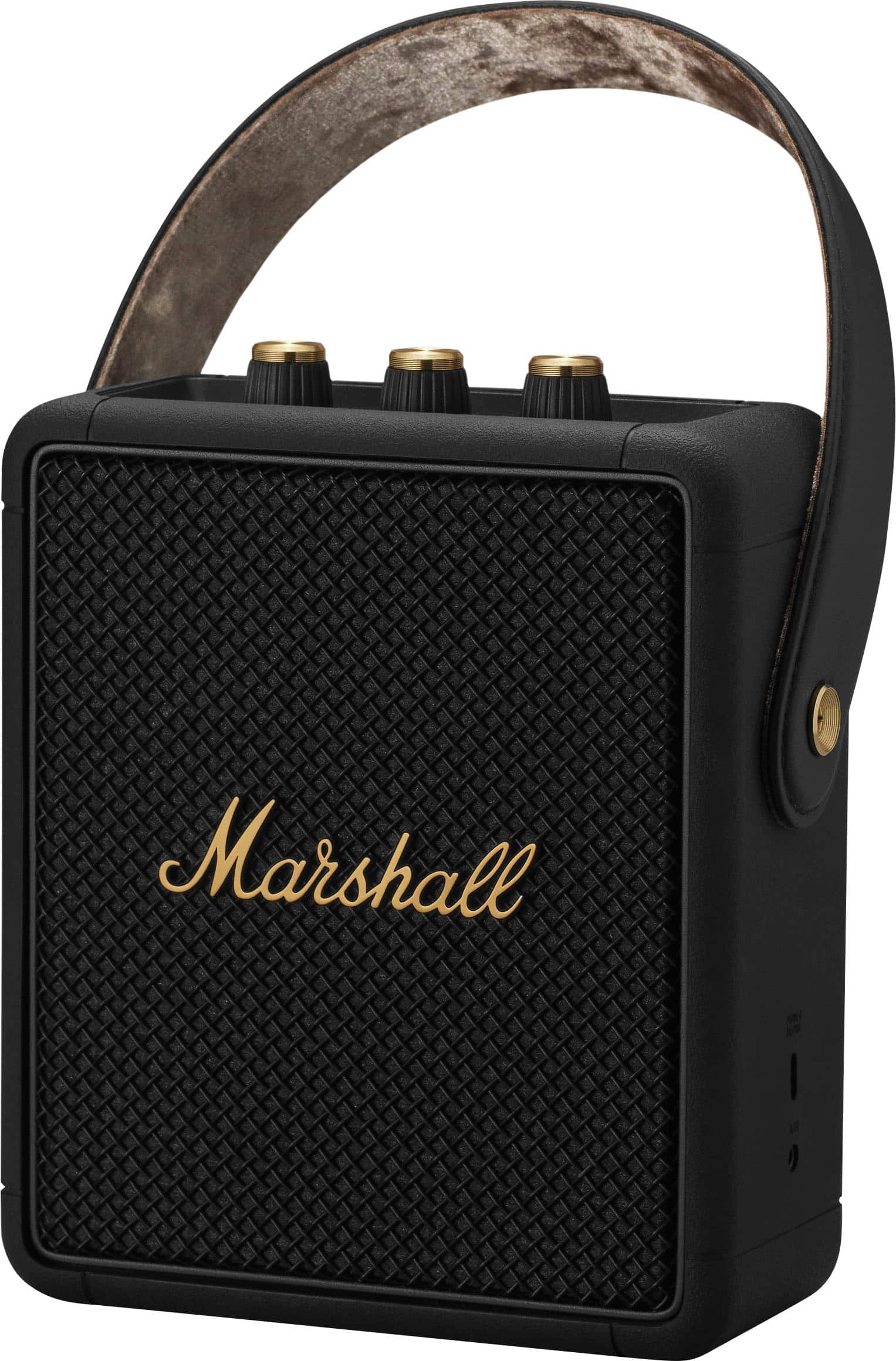
The Stockwell II takes a different approach, using a more compact two-way system with 20W total power. While it can't match the Woburn's bass extension or maximum volume, it produces surprisingly full sound for its size. The stereo drivers are angled for better sound dispersion, helping create a wider soundstage despite the compact housing.
Both speakers feature Marshall's classic amp-inspired aesthetic, but with different priorities:
Woburn III:
Stockwell II:
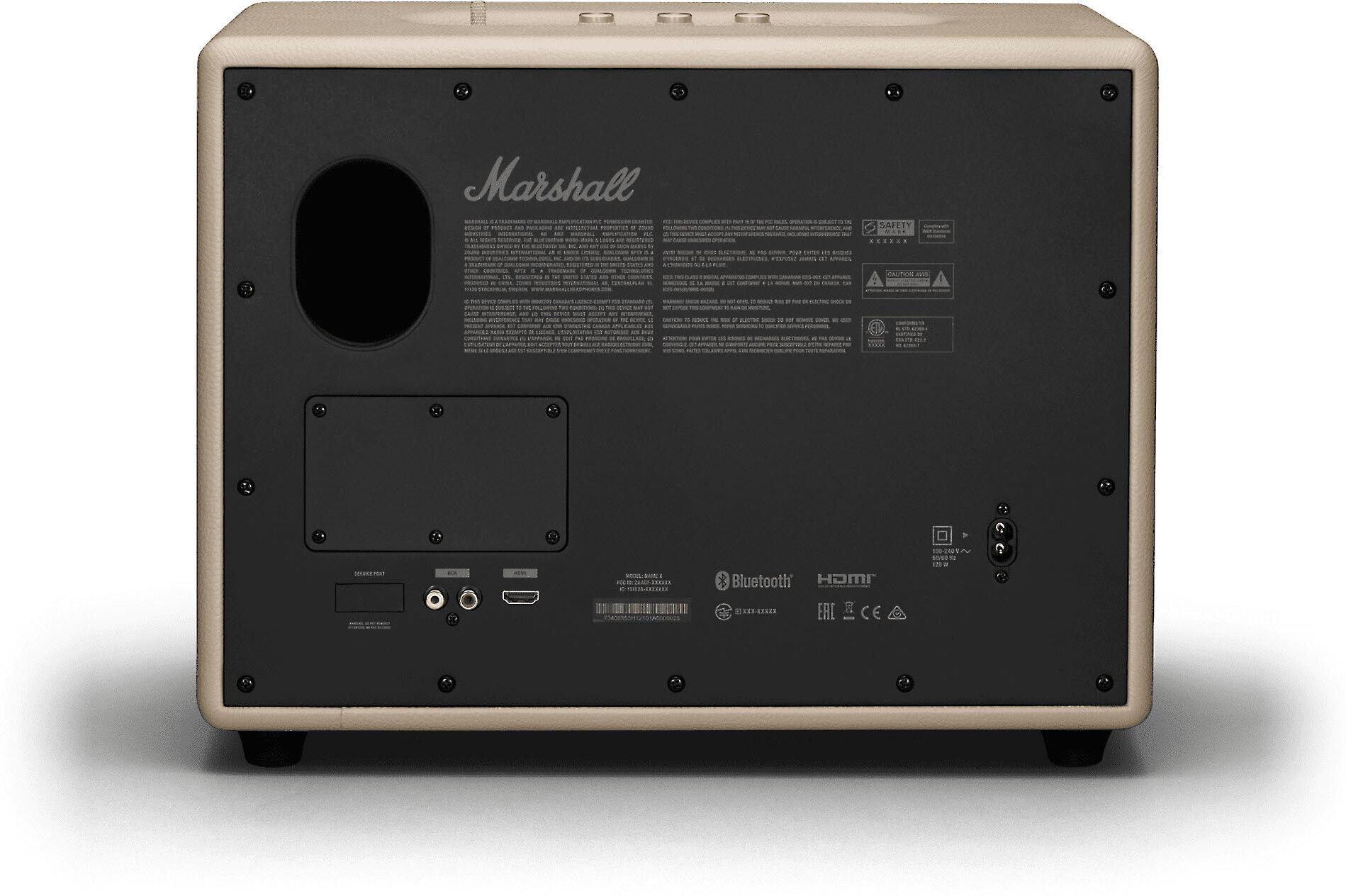
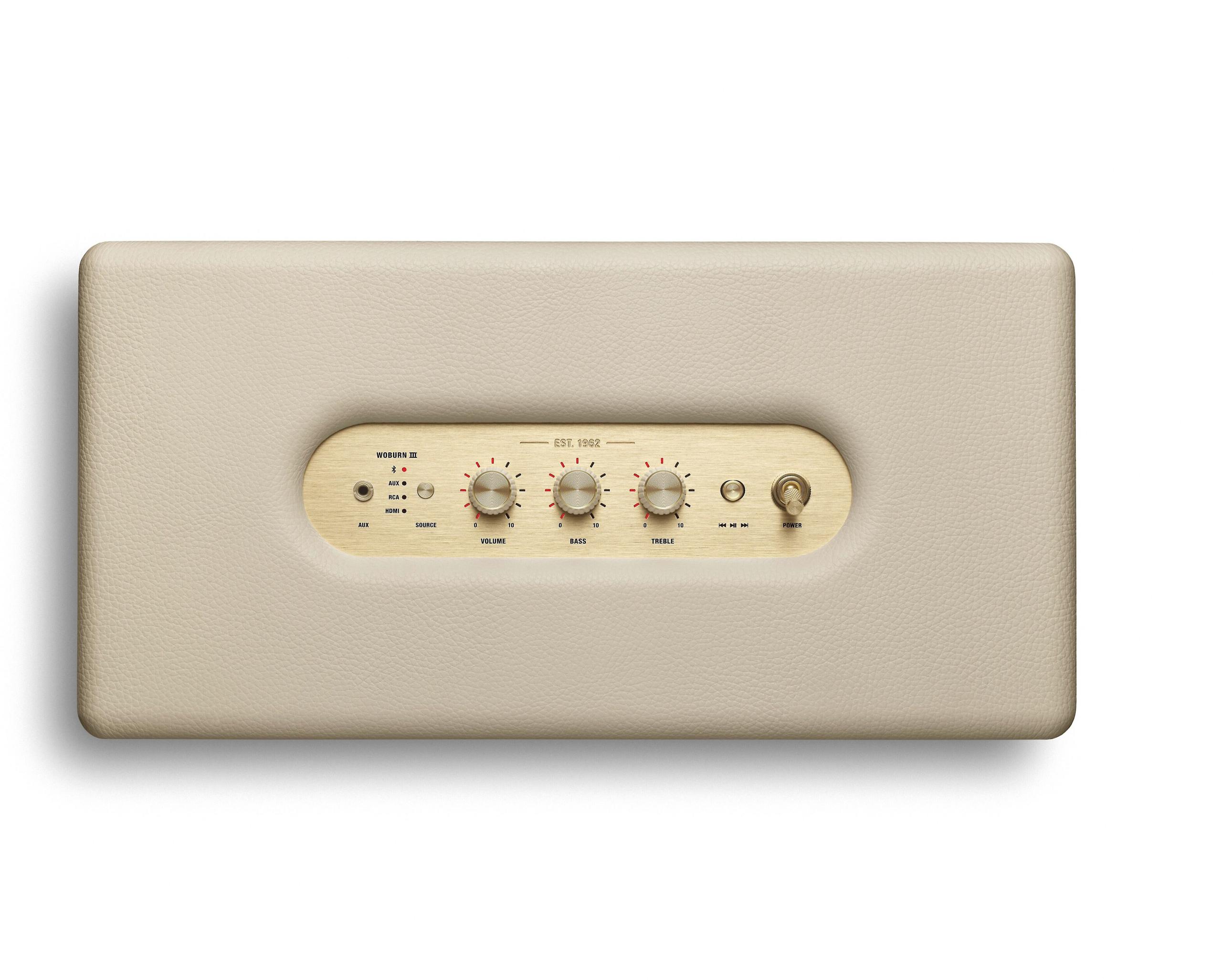
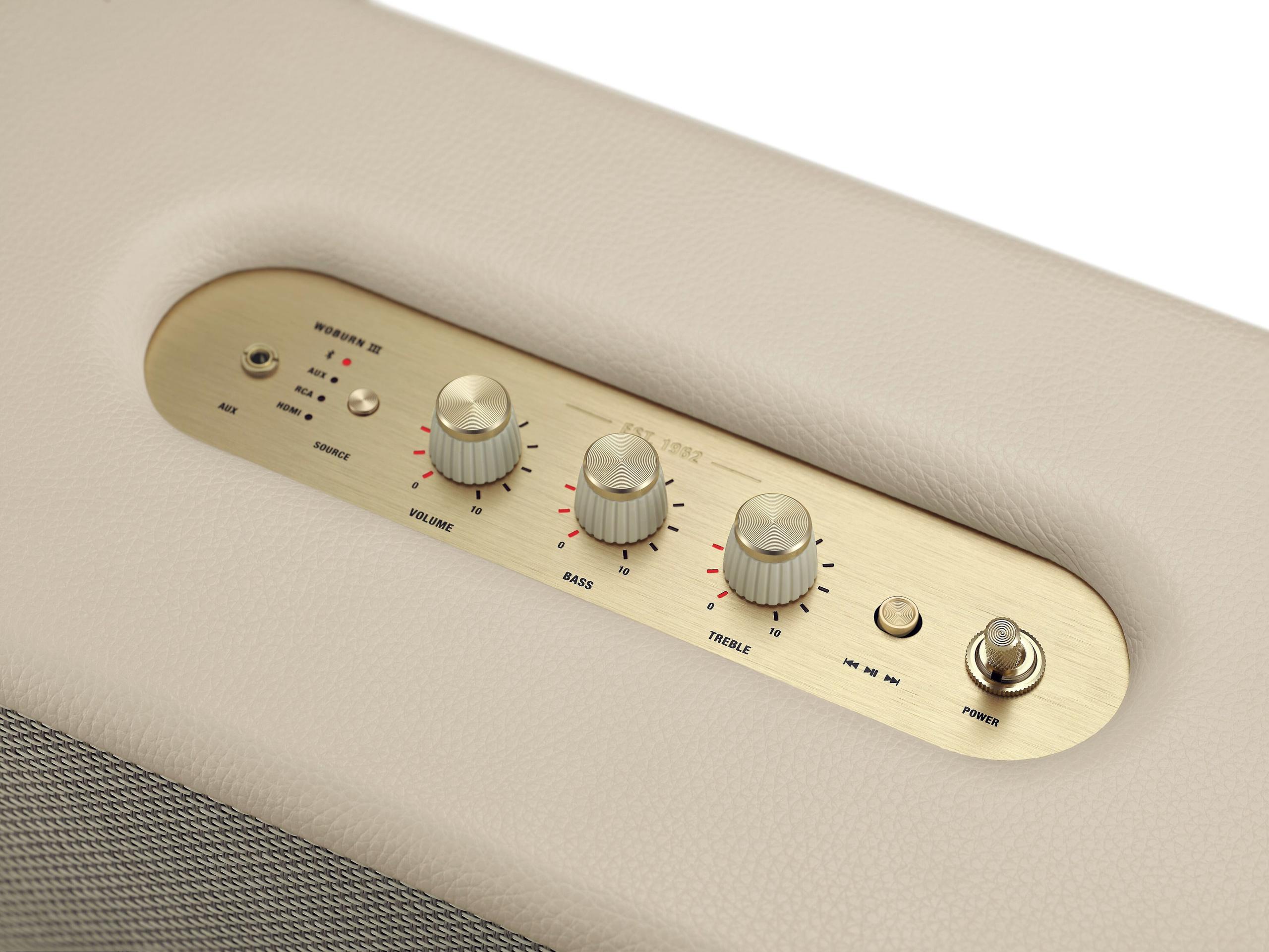
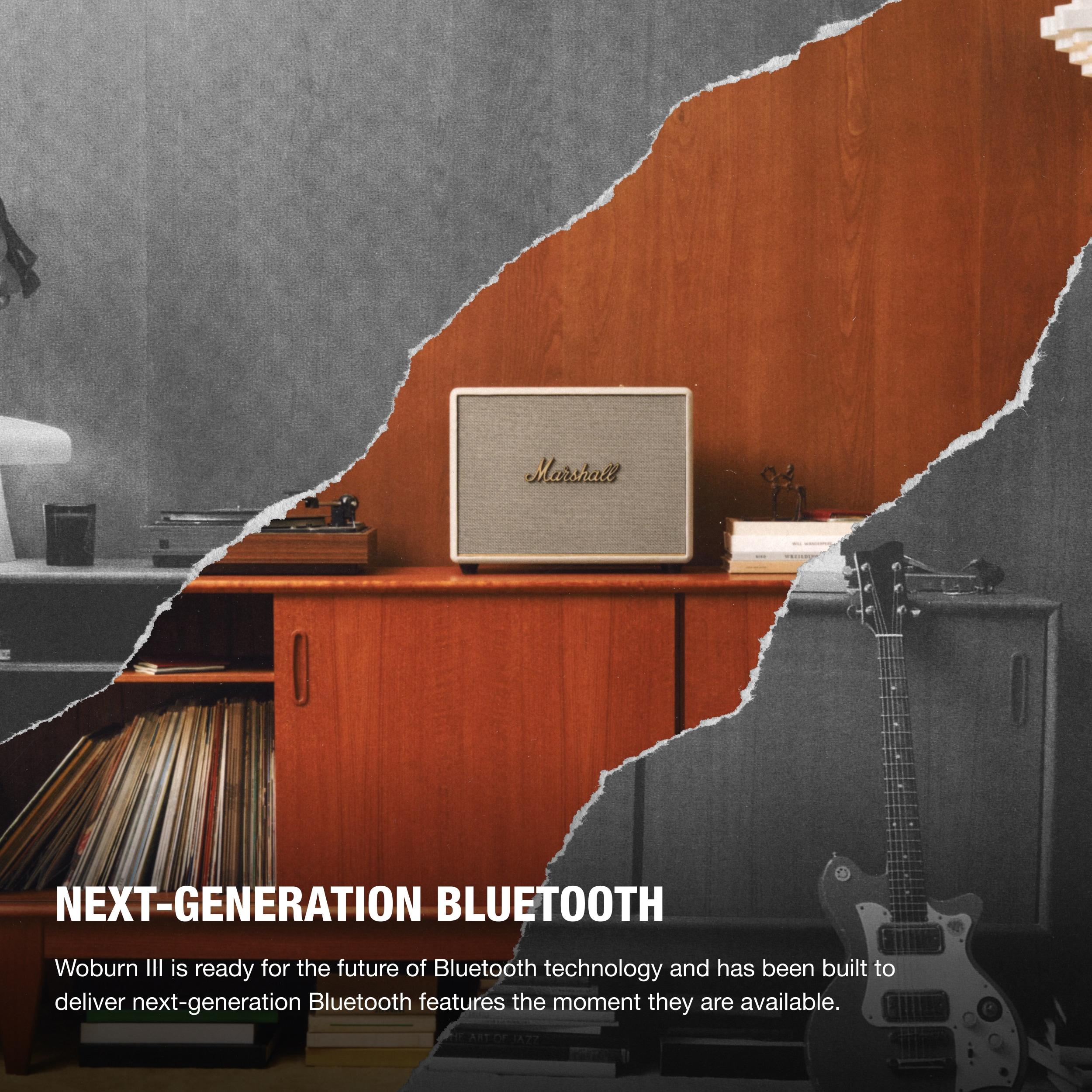
The Woburn III shows its premium positioning through advanced connectivity:
The Stockwell II focuses on core features:
For home theater use, the Woburn III offers clear advantages. The HDMI ARC connection allows seamless TV integration with single-remote volume control. It supports 24-bit/96kHz audio, ensuring high-quality playback from streaming and blu-ray sources. While not a surround system replacement, it's an excellent TV audio upgrade.
The Stockwell II wasn't designed for home theater use, though you could connect it via aux cable in a pinch. Its strengths lie elsewhere.
Having spent time with both speakers, the performance differences become clear in use. The Woburn III excels at filling medium to large rooms with rich, detailed sound. Bass response is particularly impressive - you can feel the impact of drums and bass guitars without the muddiness often found in wireless speakers.
The Stockwell II shines in different contexts. Its sound is well-balanced and surprisingly full for the size, though it can't match the Woburn's power or bass extension. What it lacks in raw power it makes up for in versatility - it's equally at home on a desk, patio, or packed for travel.
At $579, the Woburn III represents a significant investment. However, its performance and features compete with higher-priced systems, particularly when considering its TV integration capabilities. For those seeking premium audio in a stylish package, it delivers good value.
The Stockwell II at $149 hits an attractive price point for its capability. While not cheap for a portable speaker, its build quality, battery life, and sound performance justify the cost. The water resistance adds practical value for outdoor use.
The choice between these speakers really comes down to your primary use case:
Choose the Woburn III if:
Choose the Stockwell II if:
Both speakers excel within their intended use cases. The Woburn III provides premium home audio with modern features, while the Stockwell II offers impressive portable sound with practical durability. Consider your specific needs and choose accordingly.
Remember that while technology evolves quickly, both speakers remain current in their respective categories. The Woburn III's firmware updates keep it current with new features, while the Stockwell II's core capabilities haven't been significantly surpassed by newer portable speakers.
Ultimately, both options deliver Marshall's signature sound quality and style - just choose the form factor that best matches your listening habits and environment.
| Marshall Woburn III ($579) | Marshall Stockwell II ($149) |
|---|---|
| Audio System - Determines overall sound quality and power | |
| Three-way system: 6" woofer, 2x2" midrange, 2x0.75" tweeters | Two-way system: Single woofer, dual tweeters |
| Power Output - Impacts maximum volume and sound clarity | |
| 120W total (90W woofer + 2x15W tweeters) | 20W total (10W woofer + 2x5W tweeters) |
| Physical Design - Affects placement flexibility | |
| 15.75" x 12.48" x 7.99", 16.42 lbs, AC powered | 7.09" x 6.34" x 2.76", 3.04 lbs, battery powered |
| Connectivity - Determines source compatibility | |
| Bluetooth 5.2, HDMI ARC, RCA, 3.5mm aux | Bluetooth 5.0, 3.5mm aux only |
| Smart Features - Enhances usability and sound quality | |
| Dynamic Loudness, Placement Compensation, App control | Basic EQ controls, Multi-host functionality |
| Battery Life - Important for portable use | |
| No battery (AC only) | 20+ hours, 20-min quick charge for 6 hours |
| Environmental Protection - Enables outdoor use | |
| Indoor use only | IPX4 water resistance |
| Sound Profile - Key characteristics of audio output | |
| Room-filling, deep bass, precise stereo imaging | Balanced portable sound, limited bass extension |
| Best Use Case - Where each speaker excels | |
| Premium home audio, TV integration, large room sound | Portable use, travel, outdoor events, desk setup |
The Marshall Woburn III ($579) is significantly better for home use with its powerful 120W output, room-filling sound, and HDMI TV connectivity. The Stockwell II ($149) is designed primarily for portable use and lacks the power for larger rooms.
The main difference is their intended use - the Woburn III is a premium home speaker with superior sound quality, while the Stockwell II is a portable battery-powered speaker designed for mobility.
The Woburn III has HDMI ARC connectivity specifically for TV use, making it an excellent TV speaker. The Stockwell II can only connect to TVs via 3.5mm aux cable, which isn't ideal for home theater use.
The Woburn III offers superior sound quality with its three-way driver system and 120W power output. While the Stockwell II sounds good for its size, it can't match the Woburn's audio performance.
At $149, the Stockwell II offers good value for a portable speaker with 20+ hours battery life and water resistance. For portable use, it's a worthwhile investment compared to the room-bound Woburn III.
The Stockwell II is designed for outdoor use with IPX4 water resistance and battery power. The Woburn III requires AC power and isn't weather-resistant, making it indoor-only.
The Stockwell II offers 20+ hours of battery life and can quick-charge for 6 hours of play in just 20 minutes. The Woburn III doesn't have a battery and requires constant AC power.
The Woburn III is better for indoor parties with its powerful 120W output and deep bass. The Stockwell II works better for small outdoor gatherings where portability matters more than maximum volume.
Both the Woburn III and Stockwell II support multi-host functionality, allowing connection to two Bluetooth devices simultaneously for easy switching between sources.
The Woburn III delivers significantly better bass with its 6" woofer and 90W of bass power. The Stockwell II has decent bass for its size but can't match the Woburn's low-end performance.
The Stockwell II is ideal for small spaces due to its compact size and flexibility. The Woburn III might be overkill for very small rooms, though it can be volume-adjusted accordingly.
The Woburn III offers more future-proofing with its firmware updates, advanced connectivity options, and app support. The Stockwell II has more basic features but remains relevant for portable use.
We've done our best to create useful and informative comparisons to help you decide what product to buy. Our research uses advanced automated methods to create this comparison and perfection is not possible - please contact us for corrections or questions. These are the sites we've researched in the creation of this article: bestbuy.com - crutchfield.com - rtings.com - idownloadblog.com - digit.in - crutchfield.com - epicrewards.com.ph - ione.com.kh - youtube.com - onward.ph - economictimes.indiatimes.com - bestbuy.com - stuff.tv - idownloadblog.com - stereoguide.com - kendallgiles.com - termagoods.com - aplaze.com - manua.ls - youtube.com - sg.tcacoustic.asia - marshall.com - youtube.com

Privacy Policy
Terms and Conditions - Affiliate Policy
Home Security
© Copyright 2008-2026.
11816 Inwood Rd #1211, Dallas, TX 75244