



Portable Bluetooth speakers have come a long way from the tinny, underpowered devices of just a few years ago. Today's speakers pack serious audio punch into surprisingly compact packages, but choosing between them has become more complex as manufacturers target increasingly specific use cases. The JBL Charge 6 and Turtlebox Ranger represent two distinctly different approaches to portable audio—one prioritizing mainstream versatility, the other focusing on extreme-duty performance.
Both speakers launched in 2024, representing the latest generation of portable audio technology. The JBL Charge 6 builds on JBL's popular Charge series with significant improvements in battery life, durability, and audio processing. The Turtlebox Ranger marks the company's entry into the compact portable market after establishing themselves with larger, job-site-focused speakers.
At first glance, both speakers might seem similar—they're both ruggedized, waterproof, and designed for outdoor use. However, their engineering philosophies differ dramatically. The JBL Charge 6 follows a mainstream approach, balancing multiple priorities to create a speaker that works well across various scenarios. The Turtlebox Ranger takes a specialized approach, prioritizing specific performance characteristics that matter in extreme conditions, even if it means making compromises elsewhere.
This fundamental difference affects everything from how they sound to how long their batteries last, and understanding these trade-offs is crucial for making the right choice.
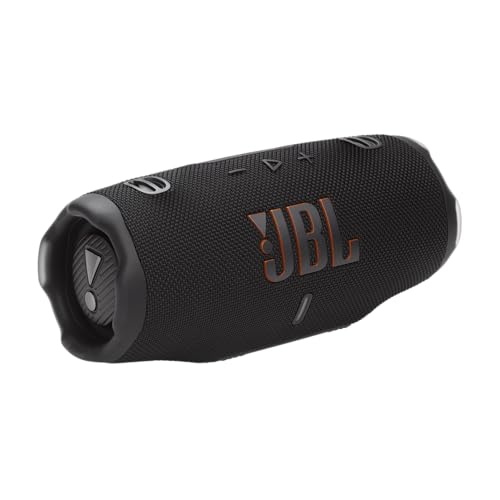
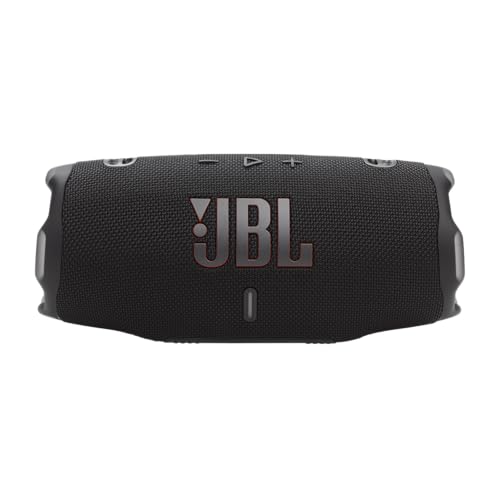
The most significant difference between these speakers lies in their audio architecture. The JBL Charge 6 uses what's called a mono configuration, meaning it has a single audio channel that processes both left and right stereo information and combines them. This might sound like a limitation, but JBL has engineered it thoughtfully with a large 53×93mm oval woofer (the main speaker driver) paired with a dedicated 20mm tweeter (a smaller driver specifically for high frequencies).
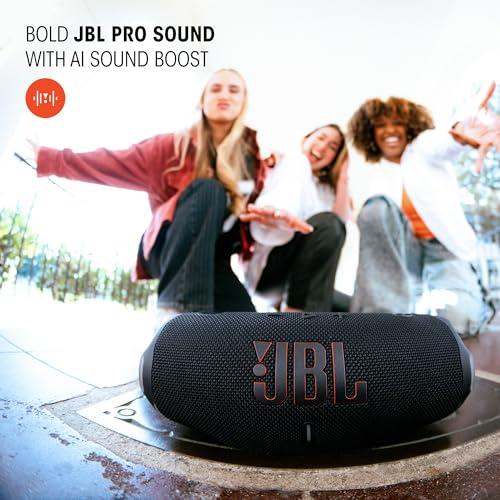
This 2-way system allows each driver to focus on what it does best—the woofer handles bass and midrange frequencies, while the tweeter ensures crisp, clear highs. JBL's new AI Sound Boost technology analyzes your music in real-time, automatically adjusting the drivers to prevent distortion while maximizing volume and clarity. Think of it as having a sound engineer constantly fine-tuning your audio.
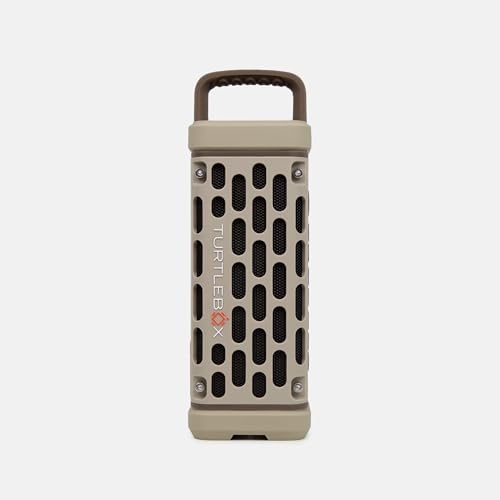
The Turtlebox Ranger, conversely, employs true stereo separation with dual 2-inch woofers. This means it can actually play distinct left and right audio channels simultaneously, creating what audiophiles call "soundstage"—the sense that instruments and voices occupy specific positions in space around you. When listening to a song where the guitar is panned to the left and vocals are centered, you'll actually hear that spatial separation with the Turtlebox Ranger.
In terms of sound signature, the JBL Charge 6 aims for a neutral, balanced profile that works well with any music genre. During our research into user reviews, most listeners describe it as "clear" and "well-balanced," with bass that's present but not overpowering. The Turtlebox Ranger leans toward a more bass-heavy, "fun" sound that emphasizes impact and power—what some reviewers describe as "boomier" than the JBL.
For most listening scenarios, including home theater use as a secondary speaker, the JBL Charge 6's balanced approach proves more versatile. However, if you're primarily playing modern pop, hip-hop, or electronic music outdoors, the Turtlebox Ranger's emphasis on bass impact can be more engaging.
Volume capabilities differ dramatically between these speakers, and this is where the Turtlebox Ranger truly shines. It can reach 105 decibels—roughly equivalent to a motorcycle or lawn mower. That might sound excessive until you consider the realities of outdoor use. Wind, waves, ambient noise, and the acoustic absorption of open spaces can easily overwhelm quieter speakers.
The JBL Charge 6, with its 45-watt RMS output, delivers respectable volume for most scenarios but can't match the Ranger's raw power. During beach parties or large outdoor gatherings, this difference becomes apparent. The JBL Charge 6 works perfectly for intimate groups of 10-15 people, while the Turtlebox Ranger can fill spaces with 50+ people or overcome challenging acoustic environments.
However, maximum volume isn't everything. The JBL Charge 6's AI Sound Boost technology means it maintains better audio quality at high volumes, with less distortion and cleaner sound. The Turtlebox Ranger's extreme volume comes with trade-offs—some reviewers noted that vocals can become overwhelmed when cranked to maximum levels.
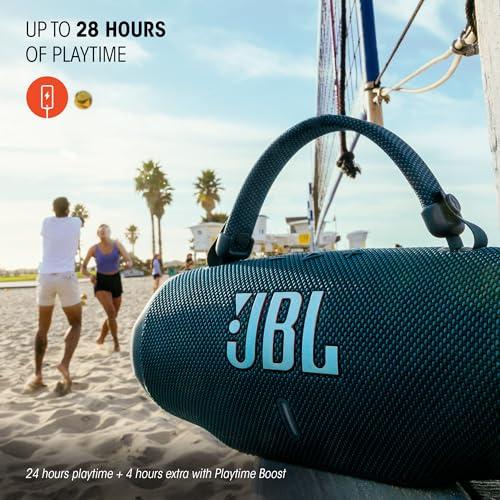
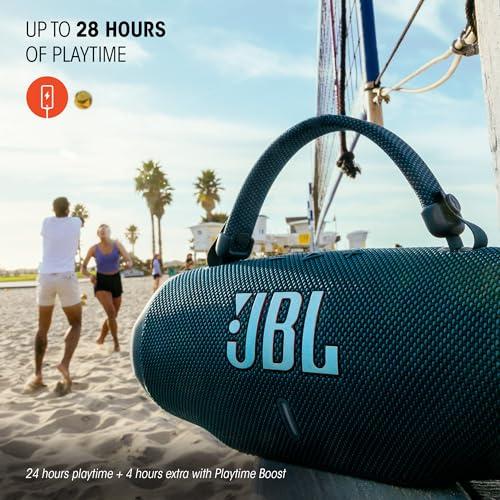
Battery performance represents the starkest difference between these speakers' design philosophies. The JBL Charge 6 delivers an impressive 24 hours of continuous playback, extending to 28 hours with its Playtime Boost mode. This mode reduces bass frequencies and power consumption to squeeze extra runtime from the 34Wh battery—essentially an eco-mode for audio.
The Turtlebox Ranger's battery story is more complex. With a 25.2Wh battery, it provides 12+ hours at moderate volumes but only about 5 hours when cranked to maximum output. This dramatic variance reflects a fundamental engineering choice: Turtlebox prioritized having extreme amplification available when needed, even if it drains the battery quickly at peak performance.
For most users, the JBL Charge 6's consistent, all-day battery life proves more practical. Whether you're at the beach, camping, or using it around the house, you rarely need to think about charging. The Turtlebox Ranger requires more strategic power management—save the extreme volume for when you really need it, or accept more frequent charging.
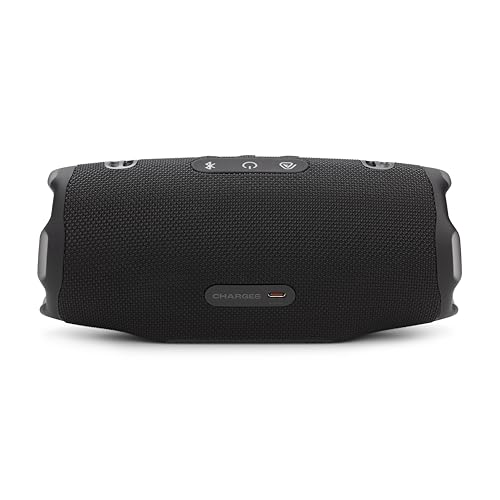
Both speakers function as power banks, allowing you to charge phones and other devices through their USB-C ports. However, the JBL Charge 6's larger battery makes it more practical for this purpose during extended trips.
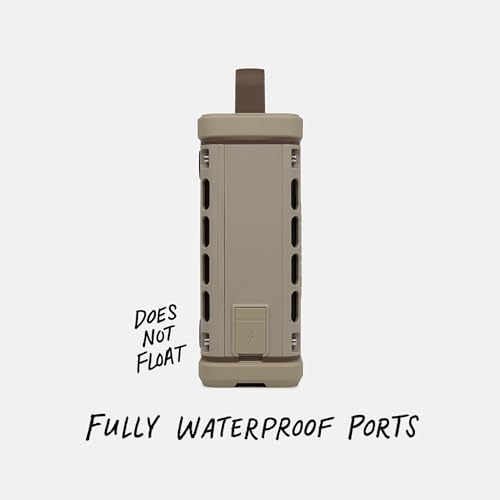
Both speakers meet professional waterproof standards, but with different emphases. The JBL Charge 6 achieves IP68 rating, meaning it's completely dust-proof and can handle indefinite submersion up to 1.5 meters deep. It also passes 1-meter drop tests, making it reliably durable for normal outdoor use.
The Turtlebox Ranger has IP67 rating (submersion up to 3 feet for 30 minutes) but adds crush-proof ABS housing and stainless steel hardware designed for serious abuse. Where the JBL Charge 6 is built for "outdoor adventures," the Turtlebox Ranger is engineered for job sites, construction environments, and situations where equipment failure creates real problems.
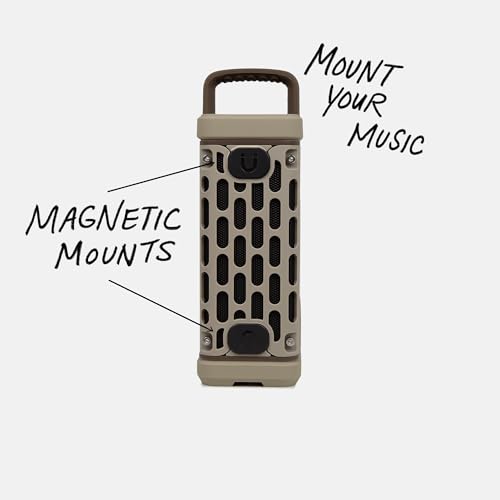
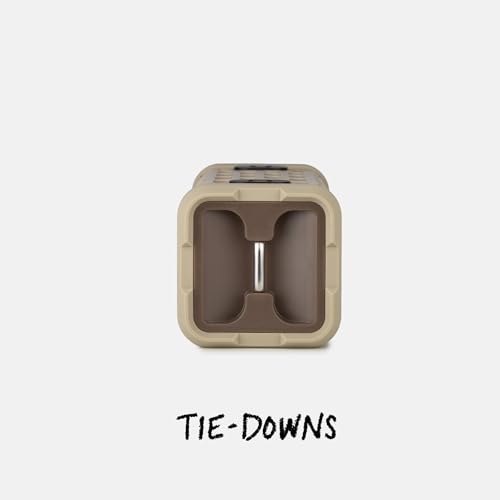
The Ranger's magnetic mounting system deserves special mention. Two powerful magnets let you stick it to metal surfaces—vehicle panels, toolboxes, boat railings, or construction equipment. Combined with stainless steel tie-down points, this creates mounting options that the JBL Charge 6 simply can't match.
For home theater use, where the speaker might sit on a shelf or entertainment center, these extreme durability differences matter less. But if you're taking your speaker to job sites, on boats, or into genuinely harsh environments, the Turtlebox Ranger's specialized construction becomes valuable.
The JBL Charge 6 offers more sophisticated connectivity through its companion app and Bluetooth 5.4 implementation. The JBL Portable app provides a 7-band equalizer, letting you fine-tune bass, midrange, and treble to your preferences or room acoustics. This proves particularly valuable for home theater use, where you might want to adjust the sound profile based on your room's characteristics.
Auracast technology allows multiple JBL speakers to connect wirelessly, though you're limited to other compatible JBL models. For stereo separation, you'd need two JBL Charge 6 units paired together.
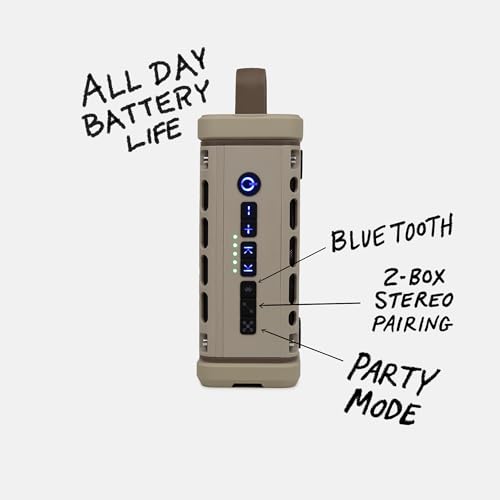
The Turtlebox Ranger takes a simpler approach with no app required—everything is controlled through physical buttons on the speaker. It offers two multi-speaker modes: Party Mode for unlimited speaker connections (all playing the same audio) and True Wireless Stereo mode for proper left/right channel separation when pairing two Rangers.
The lack of app control appeals to users who prefer device independence, but it eliminates customization flexibility. There's no EQ adjustment, no firmware updates, and no advanced features—just straightforward audio playback.
One unique advantage of the JBL Charge 6 is its support for lossless Hi-Res audio through USB-C connection, supporting up to 24-bit/192kHz quality. This makes it genuinely useful as a desktop speaker for high-quality audio setups or home theater applications where you want the best possible sound quality.
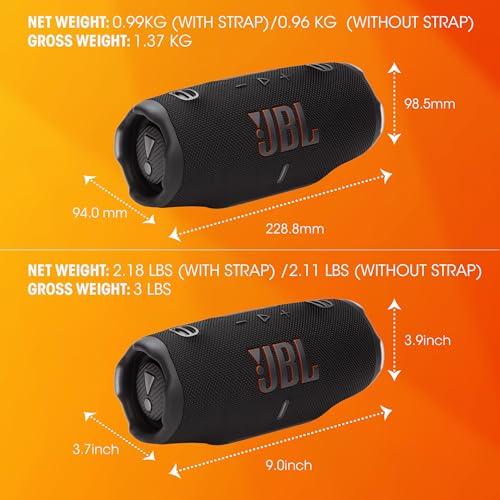
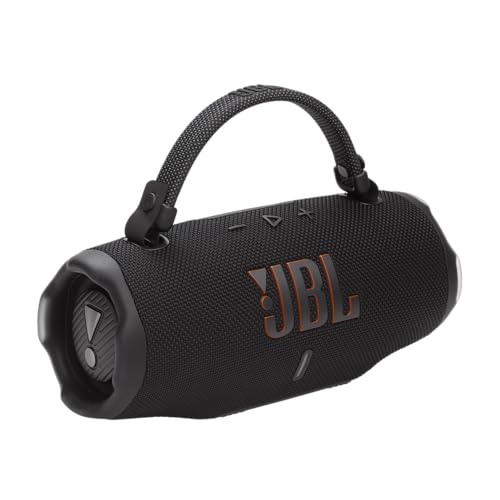
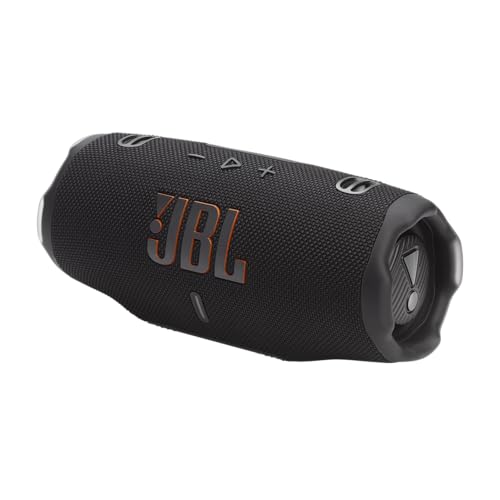
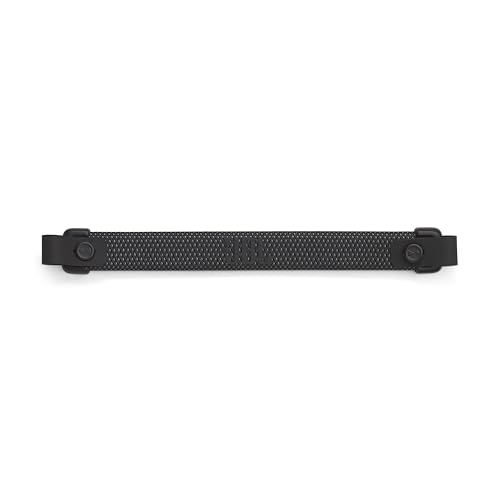
The JBL Charge 6 weighs 2.11 pounds and includes a detachable handle strap that improves both carrying comfort and packability. Its horizontal orientation and fabric-wrapped design give it a more consumer-friendly appearance that works well in home environments.
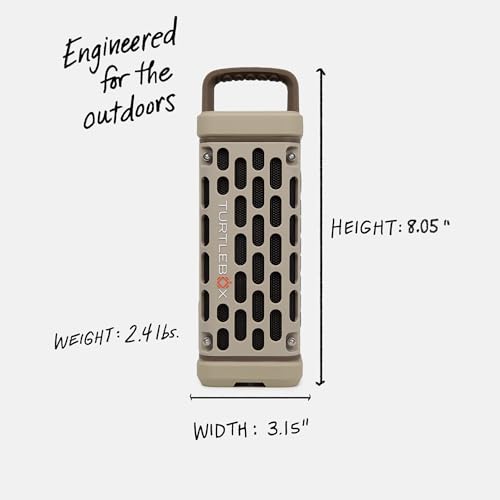
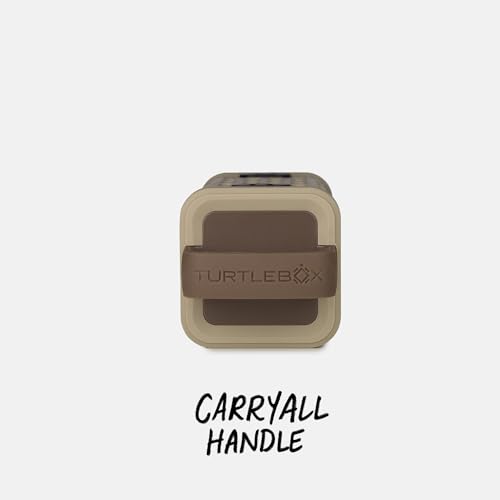
The Turtlebox Ranger, at 2.4 pounds, has a distinctive vertical pillar design that's optimized for 360-degree sound dispersion. The additional weight provides stability at high volumes—the speaker won't vibrate or "walk" across surfaces when producing powerful bass. Its industrial aesthetic makes it look more at home on a construction site than a living room shelf.
For travel and general portability, the JBL Charge 6's lighter weight and compact profile prove more convenient. The Turtlebox Ranger's unique shape and magnetic mounting capabilities offer different advantages for stationary use in challenging environments.
At the time of writing, the JBL Charge 6 commands a significantly lower price than the Turtlebox Ranger—roughly $80 less depending on current promotions. This price difference reflects their different target markets and engineering priorities.
The JBL Charge 6 delivers exceptional value for mainstream users, offering premium features like Hi-Res audio support, app-based customization, excellent battery life, and solid build quality at a reasonable price point. It's the kind of speaker that works well for 80% of use cases without major compromises.
The Turtlebox Ranger's premium pricing is justified only for users who specifically need its specialized capabilities: extreme volume output, true stereo separation, magnetic mounting, or crush-proof durability. If you don't regularly encounter situations where these features matter, the extra cost is hard to justify.
Through extensive research into user reviews and expert testing, clear use-case patterns emerge for each speaker.
The JBL Charge 6 consistently receives praise for its versatility and reliability. Users love the all-day battery life, balanced sound quality, and the convenience of app-based EQ adjustment. It excels in scenarios like beach trips, pool parties, camping, travel, and even as a secondary home theater speaker. The fast charging (3 hours to full) and quick-charge feature (10 minutes for 150 minutes of playback) prove particularly valuable for spontaneous use.
The Turtlebox Ranger earns enthusiastic reviews from users with demanding environments: construction workers who need audio that cuts through tool noise, boaters who require magnetic mounting and extreme volume, and outdoor enthusiasts who prioritize maximum durability over convenience features. Its true stereo capability creates notably more immersive listening experiences when space and volume allow.
However, the Ranger's limitations become apparent in casual use scenarios. The shorter battery life at high volumes requires planning, and the lack of EQ adjustment means you're stuck with its bass-heavy tuning regardless of music preference or acoustic environment.
For home theater use, the JBL Charge 6 offers more practical advantages. Its balanced sound signature, app-based EQ adjustment, and Hi-Res audio support through USB-C make it suitable as a secondary speaker for casual movie watching or gaming. The horizontal orientation works better on entertainment center shelves, and the more refined aesthetic fits typical home decor.
The Turtlebox Ranger's vertical design and bass-heavy tuning make it less suitable for home theater applications. While its stereo separation could theoretically enhance movie audio, the lack of EQ adjustment limits your ability to optimize it for dialogue clarity or room acoustics.
Choose the JBL Charge 6 if you:
Choose the Turtlebox Ranger if you:
The JBL Charge 6 represents the sweet spot for most portable speaker buyers—excellent battery life, balanced performance, useful features, and reasonable pricing create a compelling package for mainstream use. Its versatility means it handles diverse scenarios well, from casual home use to serious outdoor adventures.
The Turtlebox Ranger serves a more specialized market segment with specific needs that justify its premium pricing. If you regularly encounter situations where standard speakers aren't loud enough, durable enough, or don't provide the mounting flexibility you need, the Ranger delivers capabilities that mainstream speakers simply can't match.
Both speakers represent the current state of the art in their respective categories, incorporating 2024's latest Bluetooth technology, battery chemistry, and audio processing. Your choice ultimately depends on whether you prioritize mainstream versatility or specialized extreme-performance capabilities.
For most readers, the JBL Charge 6 will prove more satisfying and practical. But for those with genuinely demanding use cases, the Turtlebox Ranger's specialized engineering delivers performance that justifies its premium positioning.
| JBL Charge 6 | Turtlebox Ranger |
|---|---|
| Audio Configuration - Affects stereo separation and soundstage quality | |
| Mono (2-way system with woofer + tweeter) | True stereo (dual 2" woofers with left/right separation) |
| Maximum Volume Output - Critical for outdoor use and large gatherings | |
| 45W RMS (suitable for most outdoor scenarios) | 105 dB (extremely loud, cuts through environmental noise) |
| Battery Life - Most important for extended outdoor use | |
| 24 hours standard (28 hours with Playtime Boost) | 12+ hours moderate / 5 hours at max volume |
| Waterproof Rating - Determines submersion capabilities | |
| IP68 (indefinite submersion up to 1.5m) | IP67 (submersion up to 3 feet for 30 minutes) |
| Weight - Affects portability for hiking and travel | |
| 2.11 lbs (more portable for extended carrying) | 2.4 lbs (heavier but provides stability at high volumes) |
| Sound Tuning - Impacts music genre compatibility | |
| Balanced, neutral profile (versatile across genres) | Bass-heavy, "boomier" profile (great for modern music) |
| Multi-Speaker Connectivity - Enables larger sound setups | |
| Auracast (connects multiple JBL speakers) | Party Mode (unlimited) + TWS (true stereo pairing) |
| App Support - Allows sound customization | |
| JBL Portable app with 7-band EQ | No app (simple touch controls only) |
| Charging Speed - Important for quick turnaround | |
| 3 hours full charge (10 min = 150 min playback) | 4.5 hours full charge |
| Special Features - Unique capabilities that differentiate | |
| AI Sound Boost, Hi-Res USB-C audio, Playtime Boost | Magnetic mounting, crush-proof housing, stainless steel hardware |
| Durability Focus - Type of protection prioritized | |
| General outdoor durability with excellent water protection | Extreme-duty construction for job sites and harsh environments |
| Target Use Cases - Who each speaker serves best | |
| Mainstream outdoor use, travel, home audio, versatility | Construction sites, marine use, large gatherings, extreme conditions |
The Turtlebox Ranger is significantly louder, reaching 105 decibels compared to the JBL Charge 6's 45W output. The Turtlebox Ranger can cut through wind, ambient noise, and fill large outdoor spaces, while the JBL Charge 6 provides adequate volume for most standard outdoor gatherings and indoor use.
The JBL Charge 6 offers superior battery life with 24 hours of continuous playback (28 hours with Playtime Boost mode). The Turtlebox Ranger provides 12+ hours at moderate volumes but only 5 hours at maximum output. For all-day use without worrying about charging, the JBL Charge 6 is the clear winner.
The JBL Charge 6 has better water protection with an IP68 rating, allowing indefinite submersion up to 1.5 meters. The Turtlebox Ranger has IP67 rating (submersion up to 3 feet for 30 minutes). However, the Turtlebox Ranger offers superior overall durability with crush-proof housing for extreme conditions.
Sound preference depends on your taste. The JBL Charge 6 delivers balanced, neutral audio that works well across all music genres. The Turtlebox Ranger offers true stereo separation with a bass-heavy profile that's more immersive but less versatile. The JBL Charge 6 also includes app-based EQ customization.
Both speakers support multi-speaker connectivity. The JBL Charge 6 uses Auracast technology to connect with other compatible JBL speakers. The Turtlebox Ranger offers Party Mode for unlimited speaker pairing and True Wireless Stereo mode for proper left/right stereo separation between two Rangers.
The JBL Charge 6 is better for most outdoor activities due to its 24-hour battery life, lighter weight (2.11 lbs), and excellent water protection. The Turtlebox Ranger excels when you need extreme volume or magnetic mounting capabilities, but its shorter battery life requires more planning for extended trips.
The JBL Charge 6 charges faster, reaching full capacity in 3 hours compared to the Turtlebox Ranger's 4.5 hours. The JBL Charge 6 also offers quick charging—just 10 minutes provides 150 minutes of playback time, making it more convenient for spontaneous use.
The JBL Charge 6 works better for home use and as a secondary TV speaker. It supports Hi-Res audio through USB-C, has balanced sound suitable for dialogue, and includes app-based EQ adjustment. The Turtlebox Ranger's vertical design and bass-heavy tuning make it less ideal for home theater applications.
The Turtlebox Ranger is specifically engineered for harsh work environments with crush-proof ABS housing, stainless steel hardware, and magnetic mounting for secure attachment to metal surfaces. While the JBL Charge 6 is durable for general outdoor use, it's not designed for the extreme conditions where the Turtlebox Ranger excels.
Yes, both the JBL Charge 6 and Turtlebox Ranger function as power banks through their USB-C ports. However, the JBL Charge 6's larger 34Wh battery makes it more practical for charging devices during extended trips compared to the Turtlebox Ranger's 25.2Wh battery.
The JBL Charge 6 offers better value for most users, providing excellent battery life, balanced sound, app customization, and Hi-Res audio support at a lower price point. The Turtlebox Ranger justifies its premium pricing only if you specifically need extreme volume, magnetic mounting, or crush-proof durability for specialized use cases.
For large outdoor parties, the Turtlebox Ranger is the better choice due to its 105 dB maximum output and true stereo separation that creates a more immersive listening experience. The JBL Charge 6 works well for smaller gatherings but may struggle to fill large spaces or compete with ambient noise at bigger events.
We've done our best to create useful and informative comparisons to help you decide what product to buy. Our research uses advanced automated methods to create this comparison and perfection is not possible - please contact us for corrections or questions. These are the sites we've researched in the creation of this article: rtings.com - youtube.com - stereoguide.com - whathifi.com - youtube.com - elomymelo.com - soundguys.com - elomymelo.com - wifihifi.com - soundguys.com - jbl.com - whathifi.com - soundguys.com - youtube.com - smarthomesounds.co.uk - jbl.com - sweetwater.com - youtube.com - bestbuy.com - jbl.com.sg - jbl.com - dell.com - ca.jbl.com - soundguys.com - soundguys.com - dell.com - fieldandstream.com - tylerstx.com - comparisontabl.es - gearjunkie.com - rogerssportinggoods.com - youtube.com - armorsound.com - simmonssportinggoods.com - turtleboxaudio.com - outdoorhub.com - backpackeroutdoors.com - youtube.com - tennesseevalleyoutsider.com - turtleboxaudio.com - mrfc.com - linecutterz.com - russells.com - turtleboxaudio.com - flyfishfood.com

Privacy Policy
Terms and Conditions - Affiliate Policy
Home Security
© Copyright 2008-2026.
11816 Inwood Rd #1211, Dallas, TX 75244