



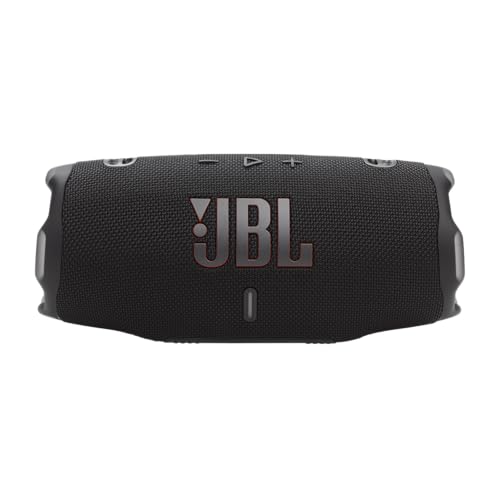
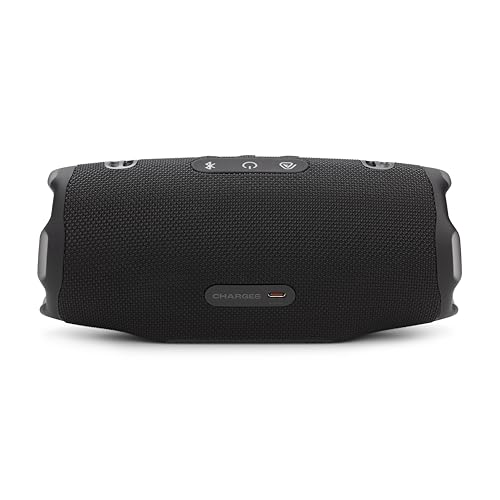
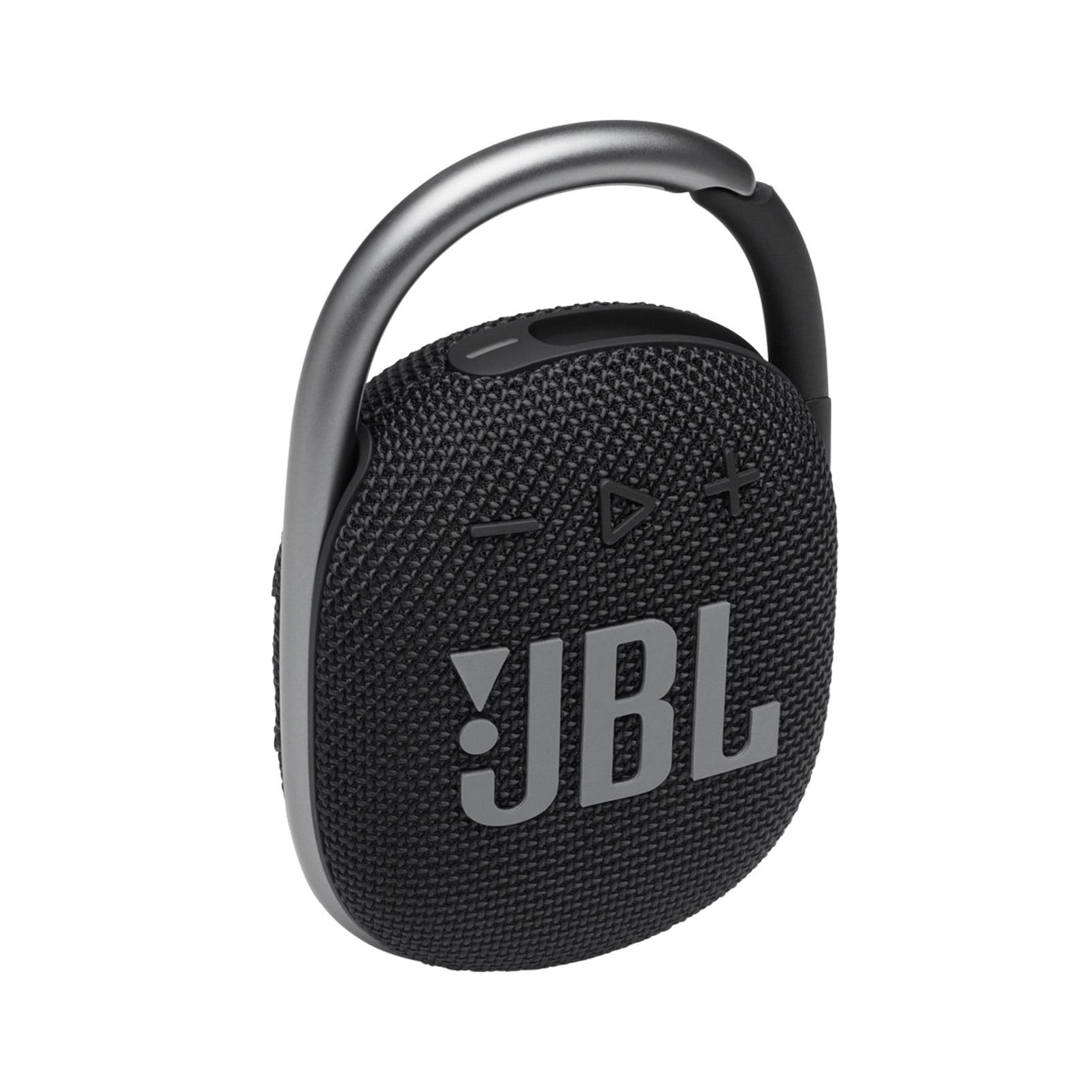



When you're shopping for a portable Bluetooth speaker, you're really choosing between two completely different philosophies. Do you want something that disappears into your backpack but still delivers decent sound? Or are you willing to carry a bit more weight for significantly better audio performance and battery life? The JBL Charge 6 and JBL Clip 4 perfectly represent these opposing approaches, and choosing between them comes down to understanding what matters most for how you actually use a speaker.
The portable Bluetooth speaker market has exploded over the past decade, with manufacturers creating distinct categories to serve different needs. At the ultra-portable end, you have speakers like the JBL Clip 4 that prioritize convenience above all else. These speakers weigh less than a smartphone and clip directly onto your gear. At the other end, mid-sized speakers like the JBL Charge 6 focus on delivering room-filling sound while maintaining reasonable portability.
The key trade-offs in this category revolve around physics that can't be cheated. Bigger drivers (the components that actually produce sound) need more space and power to create better bass response and overall volume. Larger batteries provide longer runtime but add weight. More advanced features require additional circuitry and processing power. Understanding these trade-offs helps you pick the right speaker for your specific needs.
Water resistance has become table stakes in this category, but the ratings matter. IP67 means a device can handle brief submersion, while IP68 indicates it can survive being underwater for extended periods. For most people, both ratings provide sufficient protection for poolside use or getting caught in rain.
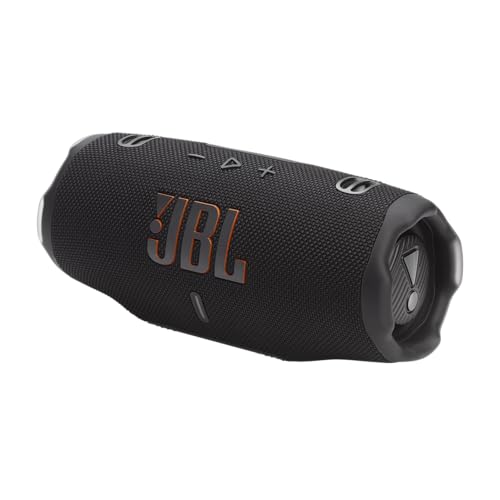
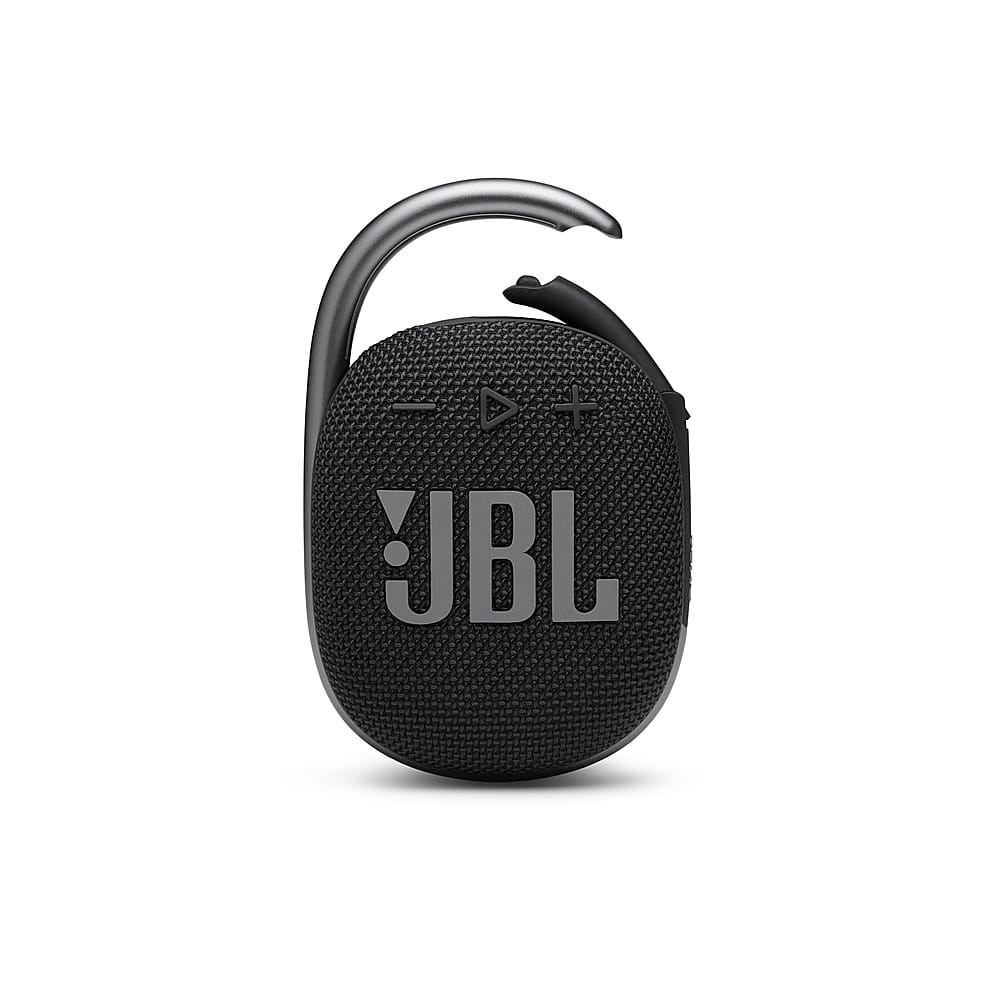
JBL released the Clip 4 in 2021 as part of their ongoing effort to perfect the ultra-portable speaker formula. The original JBL Clip launched in 2014, pioneering the integrated carabiner design that lets you attach the speaker to virtually anything. Each generation has improved sound quality while maintaining the compact form factor that makes the Clip series unique.
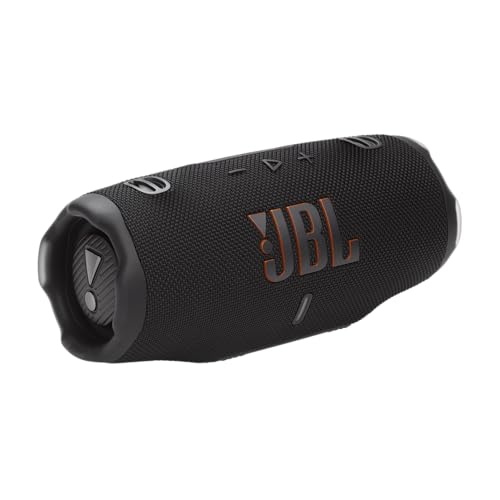
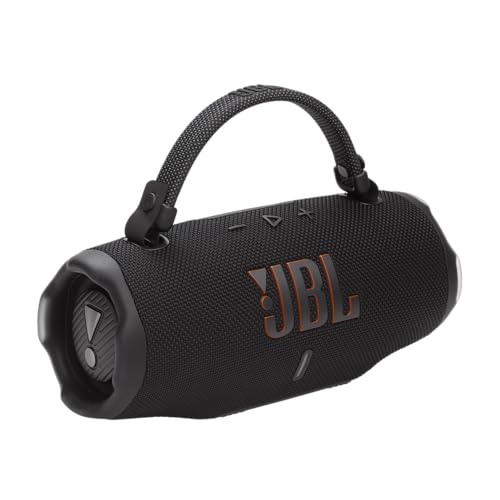
The Charge 6 arrived in 2024 as the latest evolution of JBL's most popular mid-sized portable speaker line. The Charge series debuted in 2013 and quickly became known for combining solid audio performance with power bank functionality—letting you charge your phone from the speaker's battery. The Charge 6 introduces several meaningful upgrades over the Charge 5, including improved durability, longer battery life, and JBL's new AI Sound Boost technology.
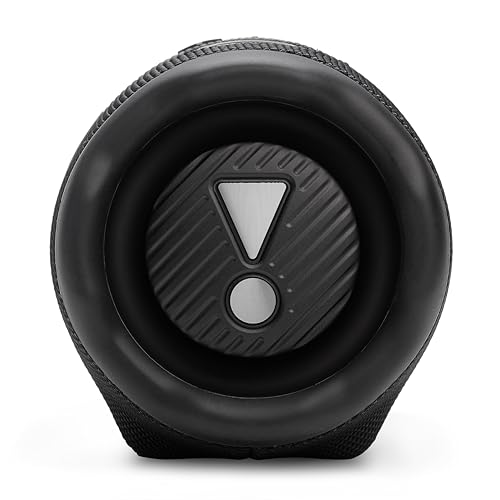
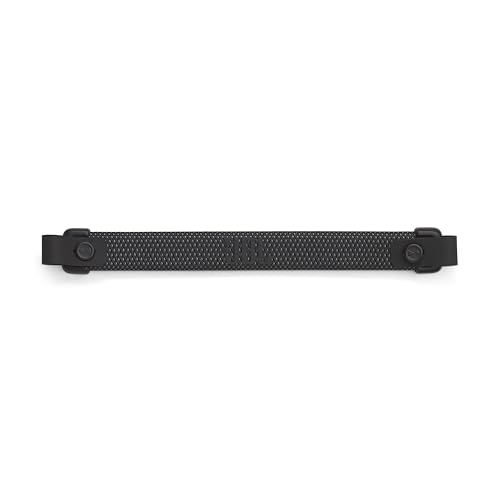
Since the Charge 5's release, JBL has refined their approach based on user feedback. The most obvious improvement in the Charge 6 is the addition of a detachable carrying strap—something users had been requesting for years. They also upgraded the base design, replacing thin silicone strips that could wear out with a more robust flat base that provides better stability.
The performance gap between these speakers is dramatic, and it all comes down to fundamental physics. The Charge 6 produces 45 watts of total power through a sophisticated two-way driver system, while the Clip 4 manages just 5 watts through a single full-range driver. That might not sound like a huge difference until you understand that audio power works logarithmically—the Charge 6 is actually capable of playing roughly nine times louder than the Clip 4.
But raw power only tells part of the story. The Charge 6 uses a dedicated tweeter (a small driver optimized for high frequencies) measuring 20mm alongside a much larger woofer (53mm x 93mm) specifically designed for bass and midrange frequencies. This two-way configuration allows each driver to focus on what it does best, resulting in clearer highs and much more substantial bass response.
The Clip 4 takes a different approach by necessity. With only room for a single 40mm full-range driver, it has to handle everything from bass to treble. JBL cleverly adds a passive radiator (essentially a speaker cone without a magnet that vibrates in response to the main driver) to boost bass response, but there's only so much you can accomplish in such a small package.
Here's where the frequency response specs become important. The Charge 6 can reproduce sounds as low as 56Hz, getting into proper bass territory where you feel the music as much as hear it. The Clip 4 bottoms out at 100Hz, missing the lowest bass frequencies entirely. For reference, the fundamental frequency of a bass guitar's lowest note is around 41Hz, so the Clip 4 simply can't reproduce the full richness of most music.
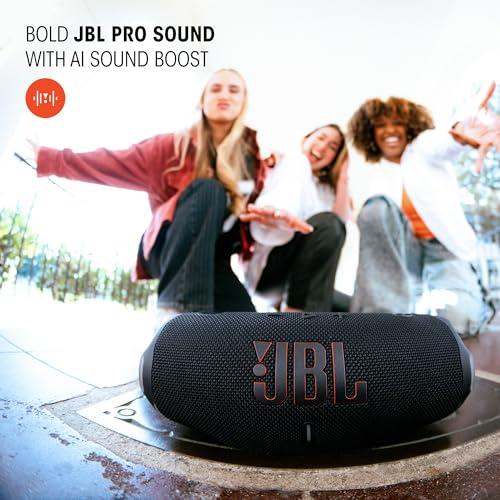
Based on our research into user experiences and professional reviews, the Charge 6 delivers genuinely room-filling sound that works well for small to medium-sized groups. Users consistently praise its ability to maintain clarity even at higher volumes, thanks in part to JBL's AI Sound Boost technology. This system analyzes the audio signal in real-time and adjusts the drivers' performance to minimize distortion—essentially letting the speaker push harder without falling apart sonically.
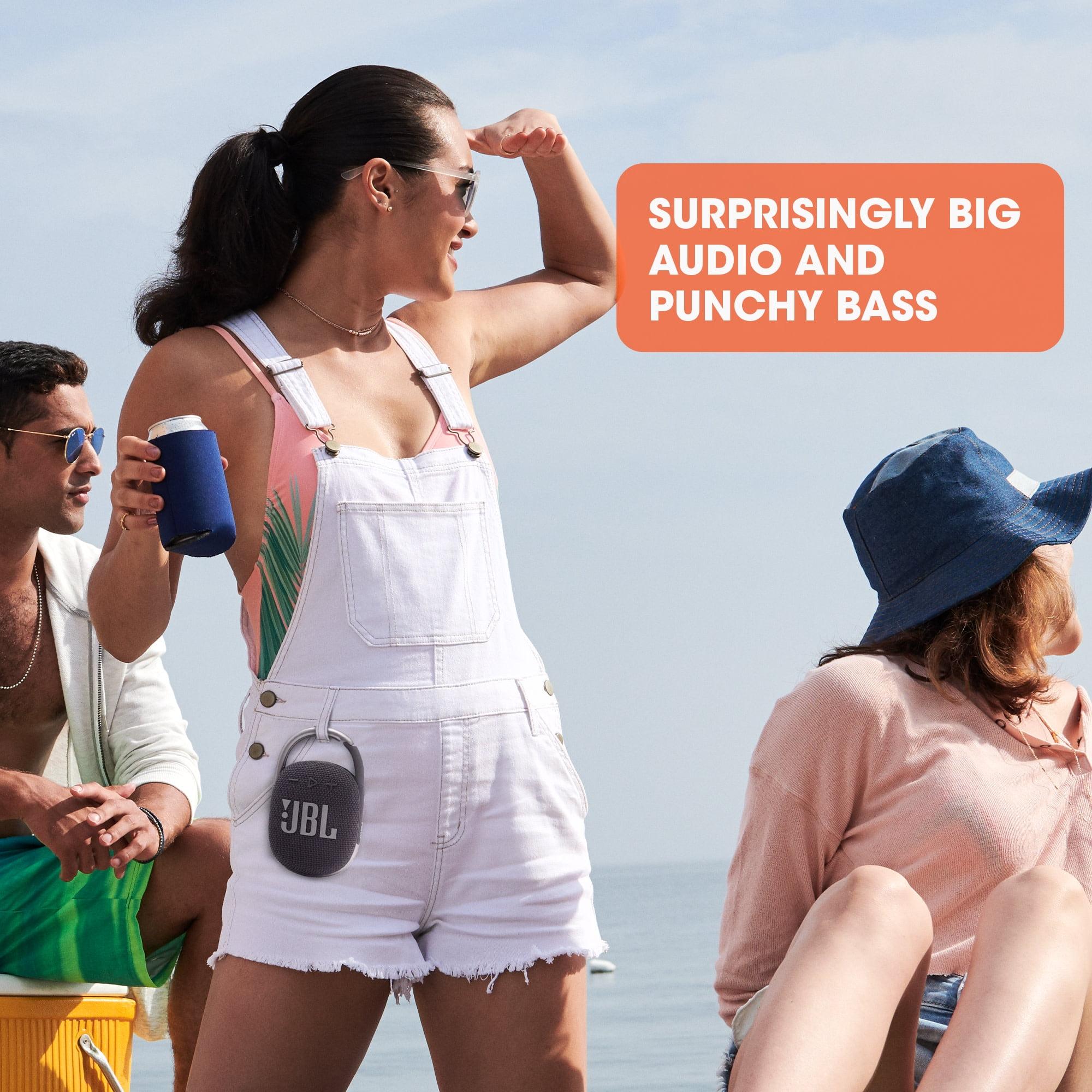
The Clip 4, while obviously limited by its size, punches above its weight class. Users report that it's surprisingly effective for personal listening scenarios like podcast consumption during commutes or providing background music while working. However, it struggles in any situation where you need to fill a space or overcome ambient noise.
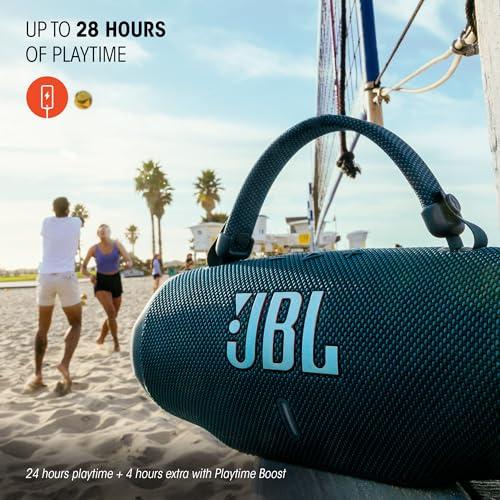
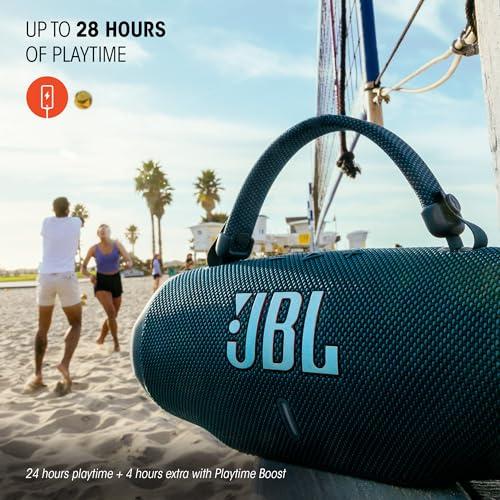
Battery performance represents another area where these speakers serve completely different needs. The Charge 6 delivers up to 24 hours of playback under normal conditions, extending to an impressive 28 hours when you enable Playtime Boost mode. This feature reduces bass output and optimizes power consumption, essentially trading some sound quality for extended runtime.
This exceptional battery life transforms how you use the speaker. You can take the Charge 6 on a weekend camping trip without worrying about charging. Users regularly report getting through multi-day festivals or beach weekends on a single charge. The fast charging feature adds practical value too—just 10 minutes of charging provides 150 minutes of playback, perfect for those moments when you forgot to charge overnight.
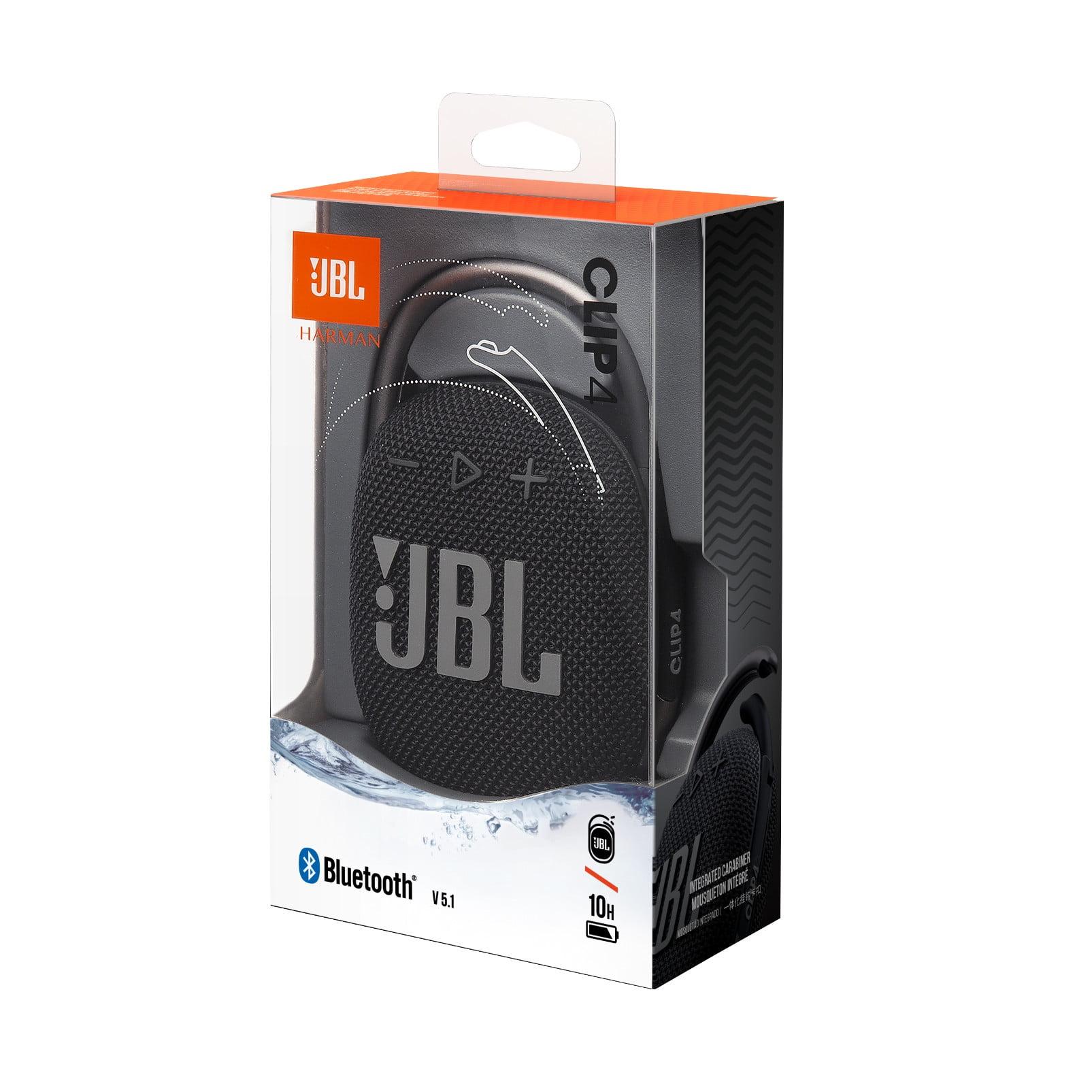
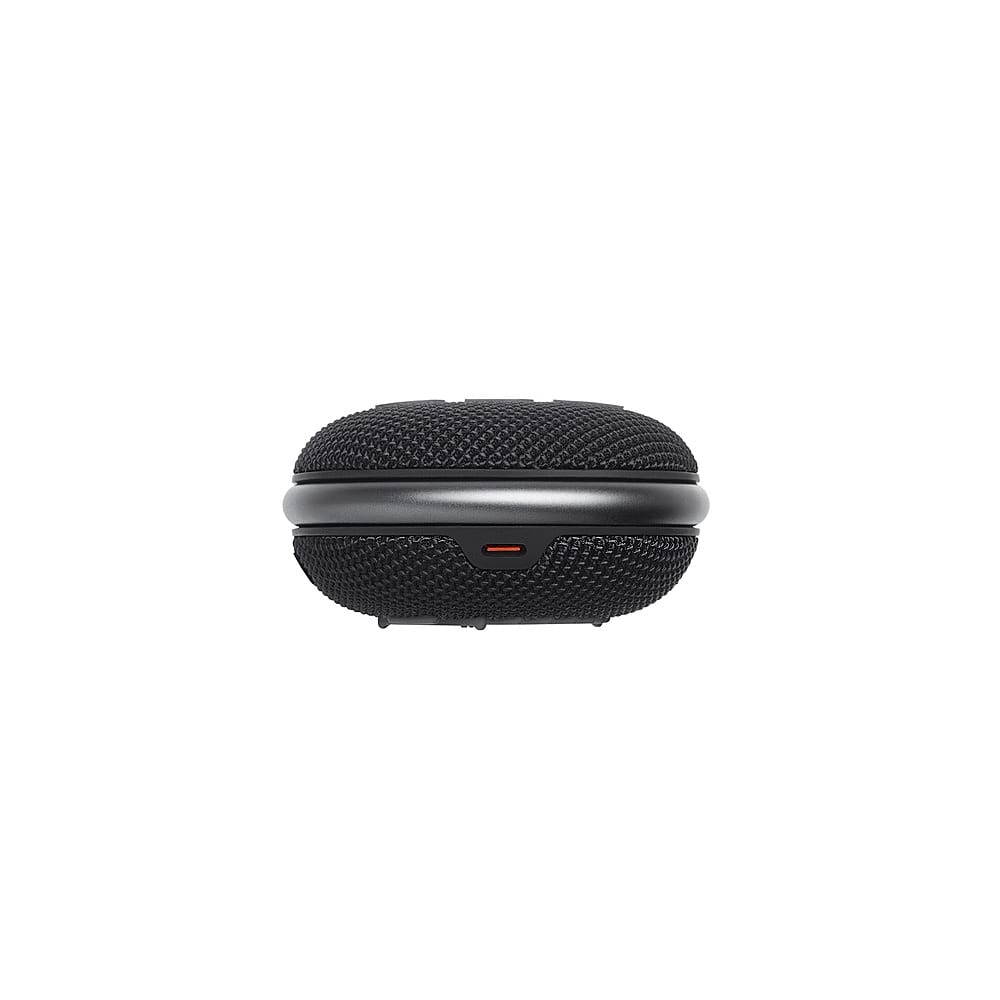
The Clip 4 provides up to 10 hours of battery life, which sounds modest in comparison but actually works well for its intended use cases. If you're using it for personal listening during commutes or workouts, 10 hours covers several days of typical use. The smaller battery also charges quickly, reaching full capacity in about three hours.
One unique feature of the Charge 6 is its power bank functionality. The speaker can charge your phone or other devices through its USB-C port, effectively serving as a backup battery when you're away from wall power. This dual-purpose design adds significant value for outdoor enthusiasts or travelers who want to minimize the number of devices they carry.
Both speakers meet high durability standards, but they approach ruggedness differently. The Charge 6 earns an IP68 rating, meaning it can survive submersion in up to 1.5 meters of water for 30 minutes. Based on JBL's testing, it can also survive drops from one meter onto concrete—impressive for a speaker with this much glass and electronics inside.
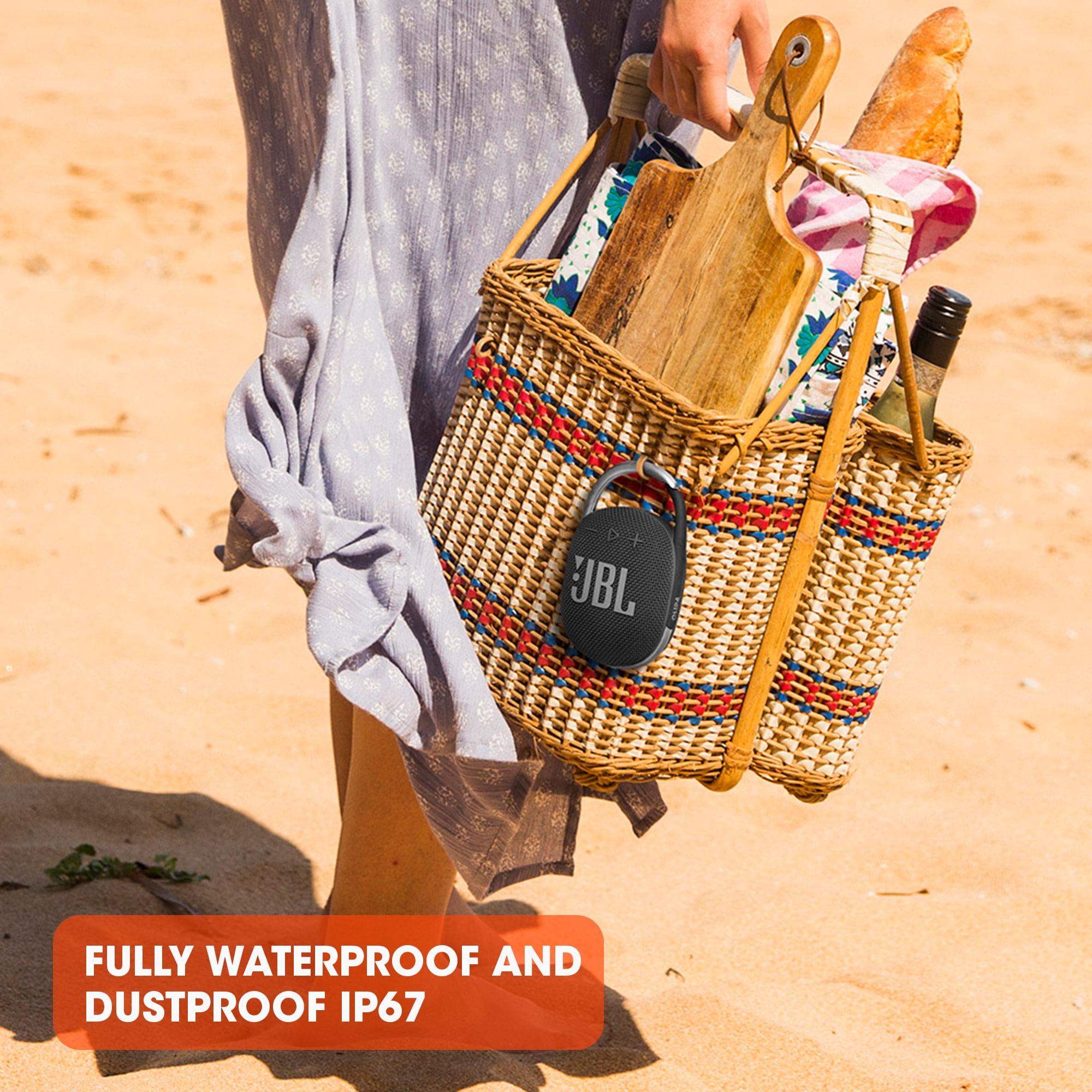
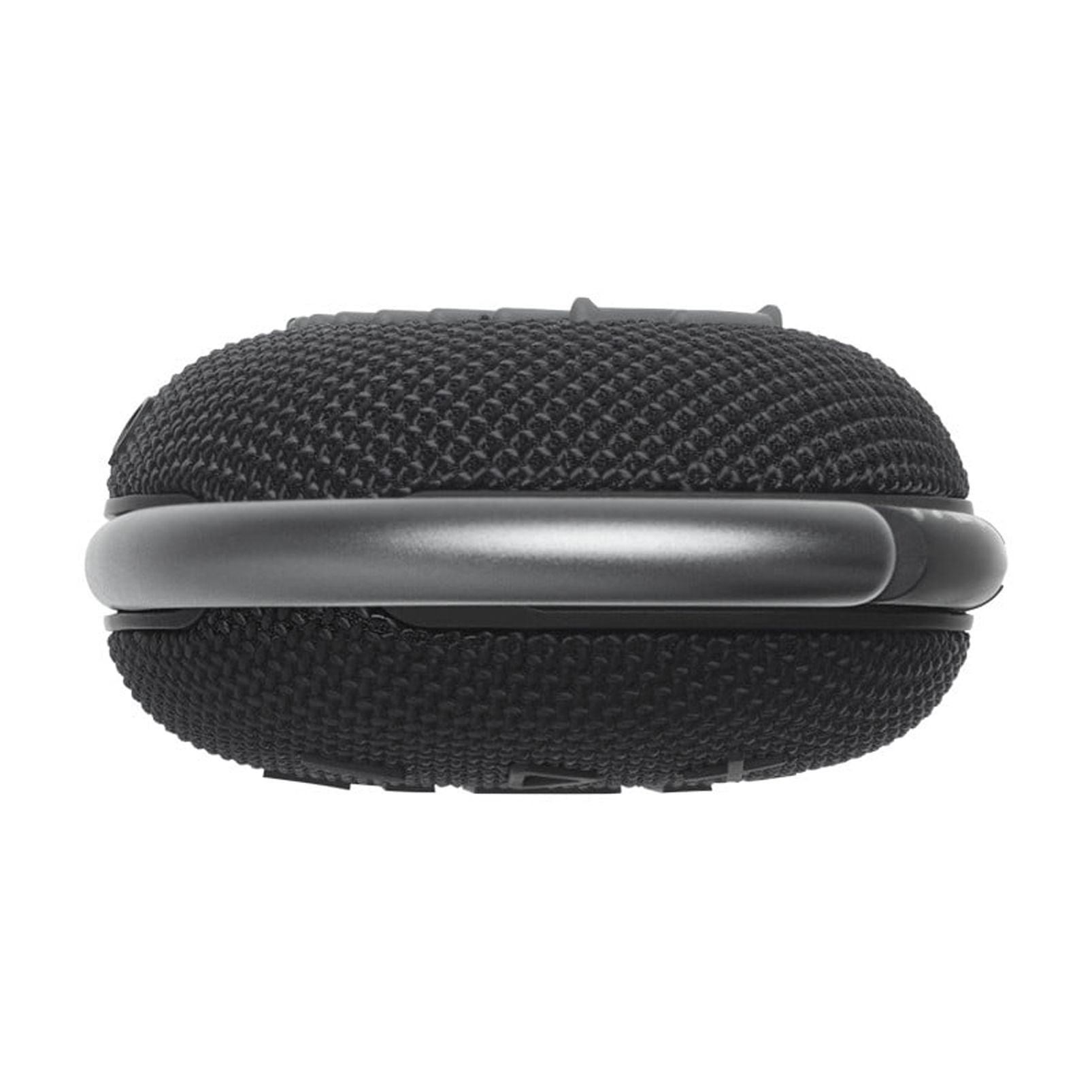
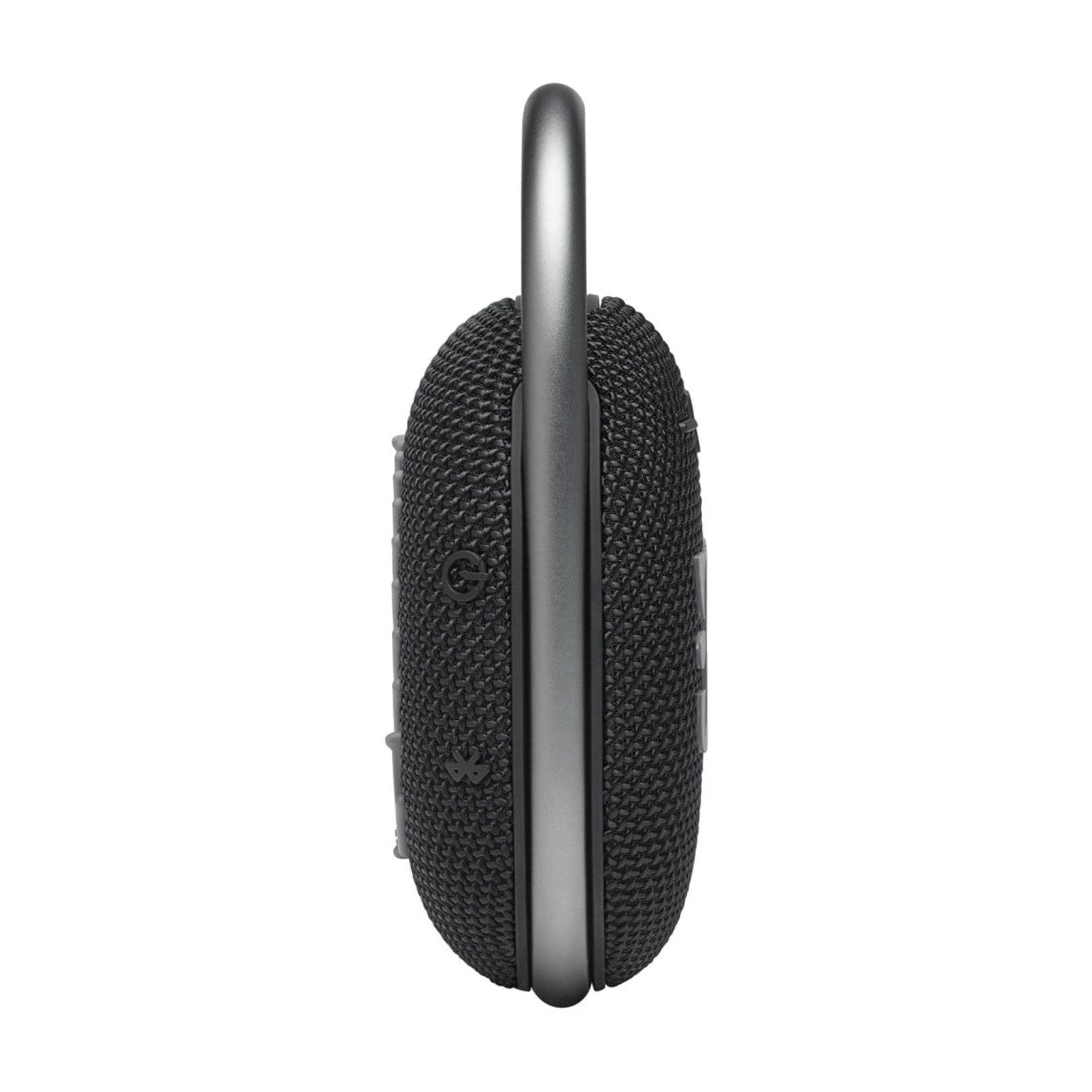
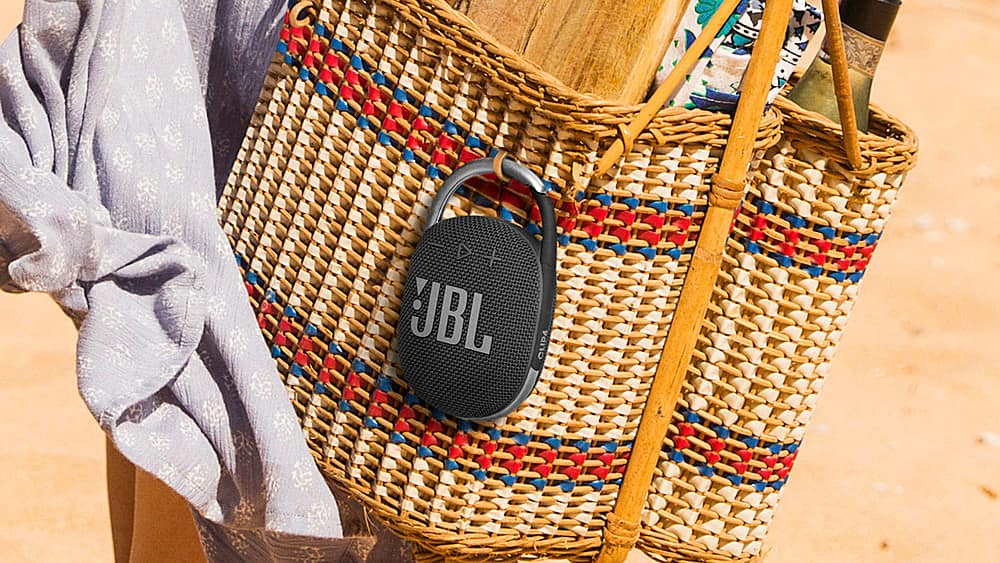
The Clip 4 achieves IP67 protection, which provides excellent water and dust resistance for typical outdoor use but doesn't quite reach the submersion levels of the Charge 6. However, its ultra-lightweight construction and integrated carabiner design actually make it less likely to suffer damage in the first place. The carabiner isn't just a convenient attachment point—it also protects the speaker by keeping it securely fastened rather than bouncing around loose in a bag.
JBL has made sustainability improvements in both speakers, though more extensively in the Charge 6. The larger speaker uses 85% post-consumer recycled plastic and 100% recycled fabric for its grille. While these environmental considerations don't affect performance directly, they reflect JBL's commitment to responsible manufacturing.
Modern Bluetooth speakers need to work seamlessly with today's devices, and both speakers handle basic connectivity well. The Charge 6 uses the newer Bluetooth 5.4 standard compared to the Clip 4's Bluetooth 5.1, but in practical terms, both provide reliable connections with good range.
Where they differ significantly is in advanced features. The Charge 6 supports Auracast, JBL's new multi-speaker pairing technology that lets you connect multiple compatible speakers for wider coverage or stereo sound. You can also pair two Charge 6 speakers for true stereo separation, something the single Clip 4 obviously can't offer.
The Charge 6 also supports lossless audio playback up to 24-bit/192kHz when connected via USB-C cable. While this might seem like overkill for a portable speaker, it actually makes sense for users who want to use the speaker at their desk or in situations where they can appreciate higher-quality audio sources. Streaming services like Tidal and Apple Music offer high-resolution tracks that can take advantage of this capability.
The JBL Portable app adds significant value to the Charge 6 experience. The 7-band graphic equalizer lets you customize the sound signature to match your preferences or acoustic environment. Want more bass for outdoor use? Boost the lower frequencies. Need clearer vocals for podcasts? Adjust the midrange. The Clip 4 offers no app support or customization options—you get the sound profile JBL chose, period.
Understanding how these speakers perform in actual situations helps clarify which one makes sense for your needs. For beach or poolside use, the Charge 6 excels because it can fill the outdoor space with sound and its IP68 rating means submersion accidents won't end your day. The 24+ hour battery life easily covers full day outings without needing to find power outlets.
The Clip 4 shines in active scenarios where every gram matters. Hikers consistently praise its ability to clip securely to backpack straps without bouncing or creating annoying noise. The lightweight design means you barely notice it's there, but it still provides enough sound for trail breaks or campsite ambiance.
For home use, the Charge 6 works surprisingly well as a desktop speaker when connected via USB-C for lossless audio. Its compact footprint fits on most desks, and the sound quality easily beats most computer speakers. The Clip 4 can work in small spaces like bathrooms or bedrooms where you want background audio without overwhelming the space.
Commuters find the Clip 4 ideal for public transportation scenarios. It clips to bags or clothing and provides personal audio enhancement without disturbing others. The Charge 6 would be overkill and potentially antisocial in these situations.
At the time of writing, the Charge 6 typically retails for around three to four times the price of the Clip 4, reflecting their different market positions. The Clip 4 often appears in the budget-friendly category at around $50, while the Charge 6 commands premium pricing in the $150-200 range.
When evaluating value, consider cost per use rather than just upfront price. If you need a speaker primarily for personal listening and maximum portability, the Clip 4 delivers excellent value by focusing exclusively on those priorities. Its simple operation means no learning curve or compatibility concerns.
The Charge 6 justifies its higher price through versatility and performance. You're getting multiple devices in one: a high-quality speaker, a power bank, and a lossless audio player. The extended battery life means fewer charging cycles over its lifetime, and the robust build quality suggests it will last for years of regular use.
Choose the JBL Clip 4 if portability trumps all other considerations. It's perfect for solo travelers, hikers, cyclists, or anyone who values convenience above maximum sound quality. The integrated carabiner design remains unique in the market, and the ultra-lightweight construction means you can take it anywhere without compromise.
The Clip 4 also makes sense if you primarily listen to podcasts, audiobooks, or other voice-heavy content where bass extension matters less. Its clear midrange reproduction handles spoken word content well, and the compact size works perfectly for personal listening scenarios.
Select the JBL Charge 6 if you want genuine room-filling sound and extended battery life. It's ideal for people who regularly listen with others, whether at beach gatherings, camping trips, or home entertainment. The power bank functionality adds significant value for outdoor enthusiasts who need to keep devices charged.
The Charge 6 is also the better choice if you appreciate audio customization through the companion app, or if you might want to expand into a multi-speaker setup using Auracast pairing. Its lossless audio capability makes it suitable for users who care about sound quality and have high-resolution music sources.
For most people, the decision comes down to primary use case. If you need maximum portability for personal use, the Clip 4 excels at its specific mission. If you want better sound quality and versatility with reasonable portability, the Charge 6 offers much more capability for the price premium. Both speakers represent well-executed approaches to their respective market segments, making either a solid choice when matched to the right user needs.
| JBL Charge 6 | JBL Clip 4 |
|---|---|
| Power Output - Determines maximum volume and sound quality | |
| 45W RMS (9x more powerful for room-filling sound) | 5W RMS (adequate for personal listening only) |
| Driver Configuration - Affects sound clarity and bass response | |
| 2-way system: 53mm x 93mm woofer + 20mm tweeter | Single 40mm full-range driver with passive radiator |
| Frequency Response - Lower numbers mean better bass extension | |
| 56Hz - 20kHz (reproduces deep bass you can feel) | 100Hz - 20kHz (misses lowest bass frequencies) |
| Battery Life - Critical for extended outdoor use | |
| 24-28 hours (multi-day trips without charging) | 10 hours (covers daily personal use) |
| Weight - Affects true portability for active use | |
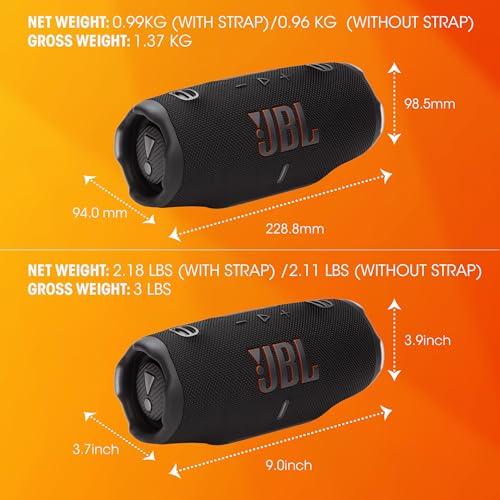
| 990g/2.2 lbs (substantial but manageable) | 239g/0.53 lbs (ultra-lightweight, barely noticeable) |
| Water Protection - Higher IP68 rating means submersible | |
| IP68 (survives underwater submersion up to 1.5m) | IP67 (waterproof but not submersible) |
| Connectivity - Modern Bluetooth and additional features | |
| Bluetooth 5.4 + USB-C lossless audio + Auracast pairing | Bluetooth 5.1 (basic connectivity only) |
| Smart Features - App control and customization options | |
| 7-band EQ via JBL Portable app + AI Sound Boost | No app support or sound customization |
| Power Bank Function - Charges other devices | |
| Yes, via USB-C port (extends device battery life outdoors) | No charging capability |
| Portability Design - How you carry and attach the speaker | |
| Detachable carrying strap (handle or loop configuration) | Integrated carabiner clip (attaches to gear hands-free) |
| Multi-Speaker Capability - Expand your audio setup | |
| Auracast pairing with other JBL Charge 6 units for stereo | No multi-speaker connectivity |
| Charging Speed - Recovery time when battery runs low | |
| 3 hours full charge, 10 min = 150 min playback | 3 hours full charge (faster relative to capacity) |
The JBL Charge 6 delivers significantly better sound quality with its 45W output and dedicated tweeter/woofer system, compared to the JBL Clip 4's 5W single driver. The Charge 6 produces deeper bass (down to 56Hz vs 100Hz) and clearer highs, making it the clear winner for audio performance.
The JBL Charge 6 offers 24-28 hours of playback time, while the JBL Clip 4 provides up to 10 hours. For extended outdoor trips or multi-day use, the Charge 6 eliminates daily charging concerns, whereas the Clip 4 works well for daily personal use.
The JBL Clip 4 wins for pure portability at just 239g with an integrated carabiner that clips to backpacks or gear. The JBL Charge 6 weighs 990g but offers a detachable carrying strap. For hiking where every gram matters, choose the Clip 4.
The JBL Charge 6 works well for small to medium groups with its room-filling 45W output, while the JBL Clip 4 is designed for personal listening only. For parties, beach gatherings, or any group setting, the Charge 6 is the appropriate choice.
The JBL Charge 6 features IP68 rating and can survive submersion up to 1.5 meters, while the JBL Clip 4 has IP67 protection for water resistance but isn't submersible. Both handle rain and splashes well, but the Charge 6 offers superior protection for poolside use.
Only the JBL Charge 6 supports the JBL Portable app with a 7-band equalizer for sound customization. The JBL Clip 4 has no app support or sound adjustment options - you get the fixed sound profile JBL programmed.
The JBL Charge 6 functions as a power bank and can charge devices via its USB-C port, making it valuable for camping or travel. The JBL Clip 4 cannot charge other devices and only charges itself.
The JBL Charge 6 supports multi-device pairing for up to 2 devices simultaneously and features Auracast for connecting multiple speakers. The JBL Clip 4 connects to one device at a time with basic Bluetooth functionality.
Both speakers handle podcasts well, but the JBL Charge 6 provides clearer voice reproduction due to its dedicated tweeter. The JBL Clip 4 works adequately for spoken content and its lightweight design makes it perfect for commuting with podcasts.
Value depends on your needs: the JBL Clip 4 offers excellent value for ultra-portable personal listening, while the JBL Charge 6 provides better value for versatile use with superior sound quality, longer battery life, and power bank functionality.
The JBL Charge 6 works well as a desktop speaker with USB-C lossless audio support and room-appropriate volume levels. The JBL Clip 4 suits small spaces like bathrooms or bedrooms but lacks the power for main living areas.
Both the JBL Charge 6 and JBL Clip 4 take about 3 hours for full charging, but the Charge 6 offers fast charging with 10 minutes providing 150 minutes of playback. The Clip 4's smaller battery charges relatively faster for its capacity.
We've done our best to create useful and informative comparisons to help you decide what product to buy. Our research uses advanced automated methods to create this comparison and perfection is not possible - please contact us for corrections or questions. These are the sites we've researched in the creation of this article: rtings.com - youtube.com - stereoguide.com - whathifi.com - youtube.com - elomymelo.com - soundguys.com - elomymelo.com - wifihifi.com - soundguys.com - jbl.com - whathifi.com - soundguys.com - youtube.com - smarthomesounds.co.uk - jbl.com - sweetwater.com - youtube.com - bestbuy.com - jbl.com.sg - jbl.com - dell.com - ca.jbl.com - soundguys.com - soundguys.com - dell.com - youtube.com - outeraudio.com - jbl.com - rtings.com - youtube.com - jbl.com - harmanaudio.com - youtube.com - ggelectronics.com - greentoe.com - soundstagexperience.com

Privacy Policy
Terms and Conditions - Affiliate Policy
Home Security
© Copyright 2008-2026.
11816 Inwood Rd #1211, Dallas, TX 75244