






When shopping for a portable Bluetooth speaker, you'll quickly discover that not all speakers are created equal. The portable audio market spans everything from tiny clip-on devices to substantial boom boxes, each designed for completely different scenarios. Today we're comparing two JBL speakers that represent opposite ends of this spectrum: the powerful JBL Charge 6 and the ultra-portable JBL Clip 5.
Understanding which speaker fits your lifestyle requires looking beyond simple specs to consider how you'll actually use the device. Do you need something that disappears into your pocket for solo workouts, or are you looking for a speaker that can handle your next backyard barbecue? The answer will determine whether you should invest in the room-filling power of the Charge 6 or embrace the effortless portability of the Clip 5.
Before diving into our comparison, it's helpful to understand what makes a portable speaker truly useful. The most important factors are audio performance (how good it sounds and how loud it gets), battery life (how long it plays), portability (size and weight), durability (can it survive drops and weather), and connectivity options.
The challenge is that these factors often conflict with each other. Bigger speakers sound better and play louder, but they're harder to carry around. Longer battery life usually means larger batteries, which add weight. More durable construction typically increases bulk. The best portable speakers find clever ways to balance these trade-offs for their intended use case.
Released in 2024, both the Charge 6 and Clip 5 represent JBL's latest thinking on how to solve these challenges. The Charge 6 builds on decades of refinement in the popular Charge series, while the Clip 5 continues JBL's leadership in ultra-compact clip speakers. Each takes a fundamentally different approach to the question of what "portable" really means.
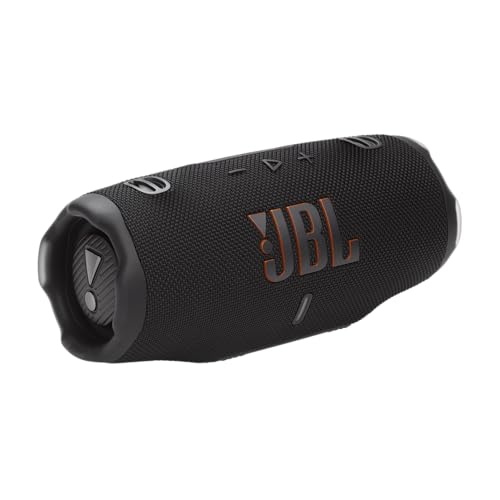
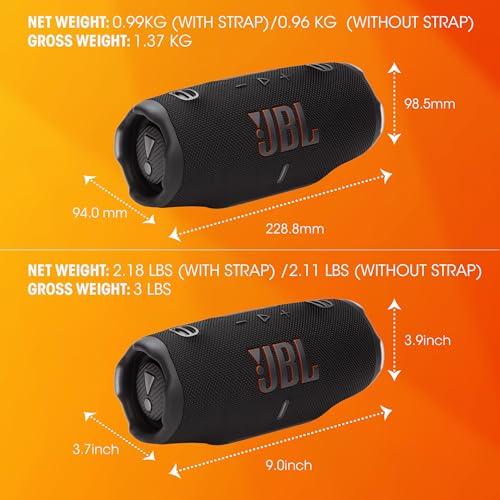
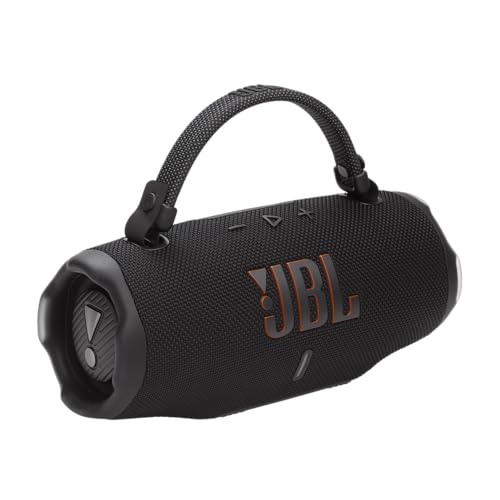
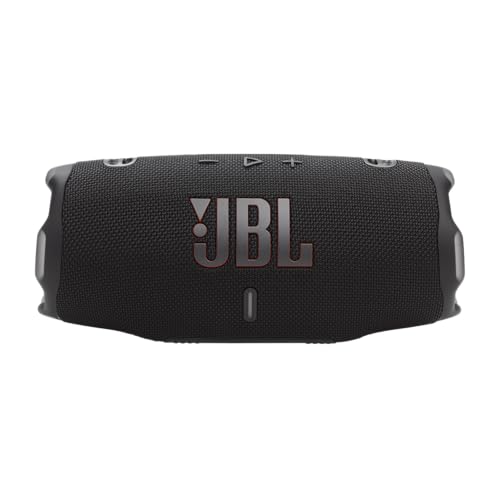
The JBL Charge 6 embodies the "maximum performance in a semi-portable package" philosophy. At just under 1 kilogram (about 2.2 pounds), it's what we'd call "portable with intention"—you can definitely carry it around, but you'll plan where it goes rather than tossing it in your pocket.
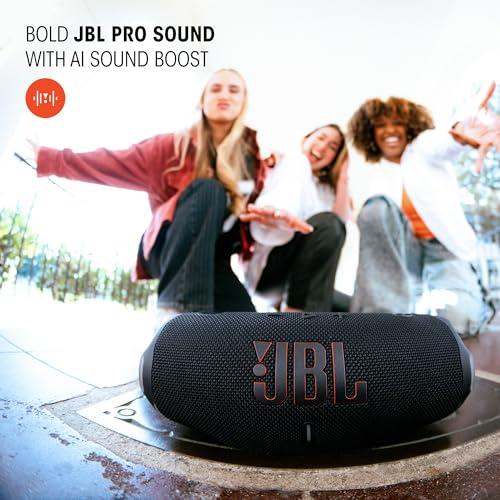
Released in 2024 as the latest evolution of JBL's most popular speaker series, the Charge 6 introduces several meaningful improvements over its predecessor. The most significant upgrade is the new AI Sound Boost technology, which represents a major leap forward in how portable speakers handle audio processing. This proprietary algorithm continuously analyzes your music in real-time, automatically adjusting the speaker's performance to deliver maximum volume and clarity while preventing distortion.
Think of AI Sound Boost as having a sound engineer constantly fine-tuning your speaker. When you're playing bass-heavy electronic music, it optimizes the woofer's performance to deliver punchy low-end without muddiness. When you switch to an acoustic track, it adjusts to ensure vocals remain clear and instruments stay separated. This isn't just marketing fluff—the technology enables the Charge 6 to sound significantly better than speakers with similar hardware specifications.
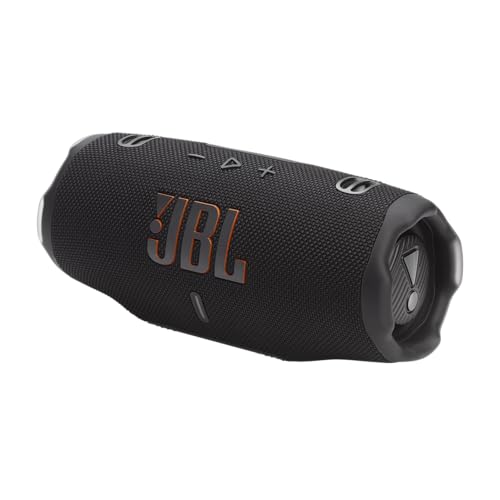
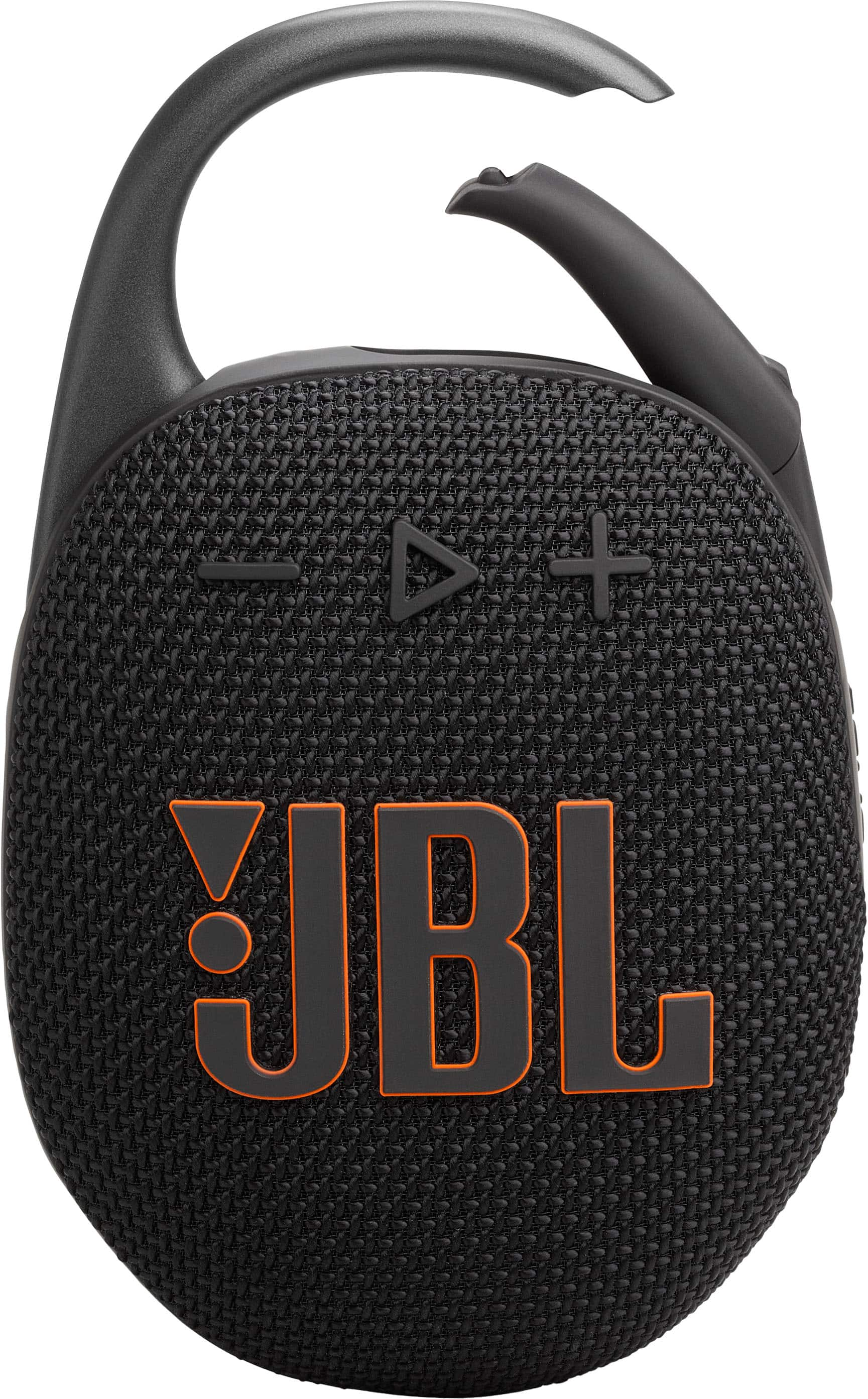
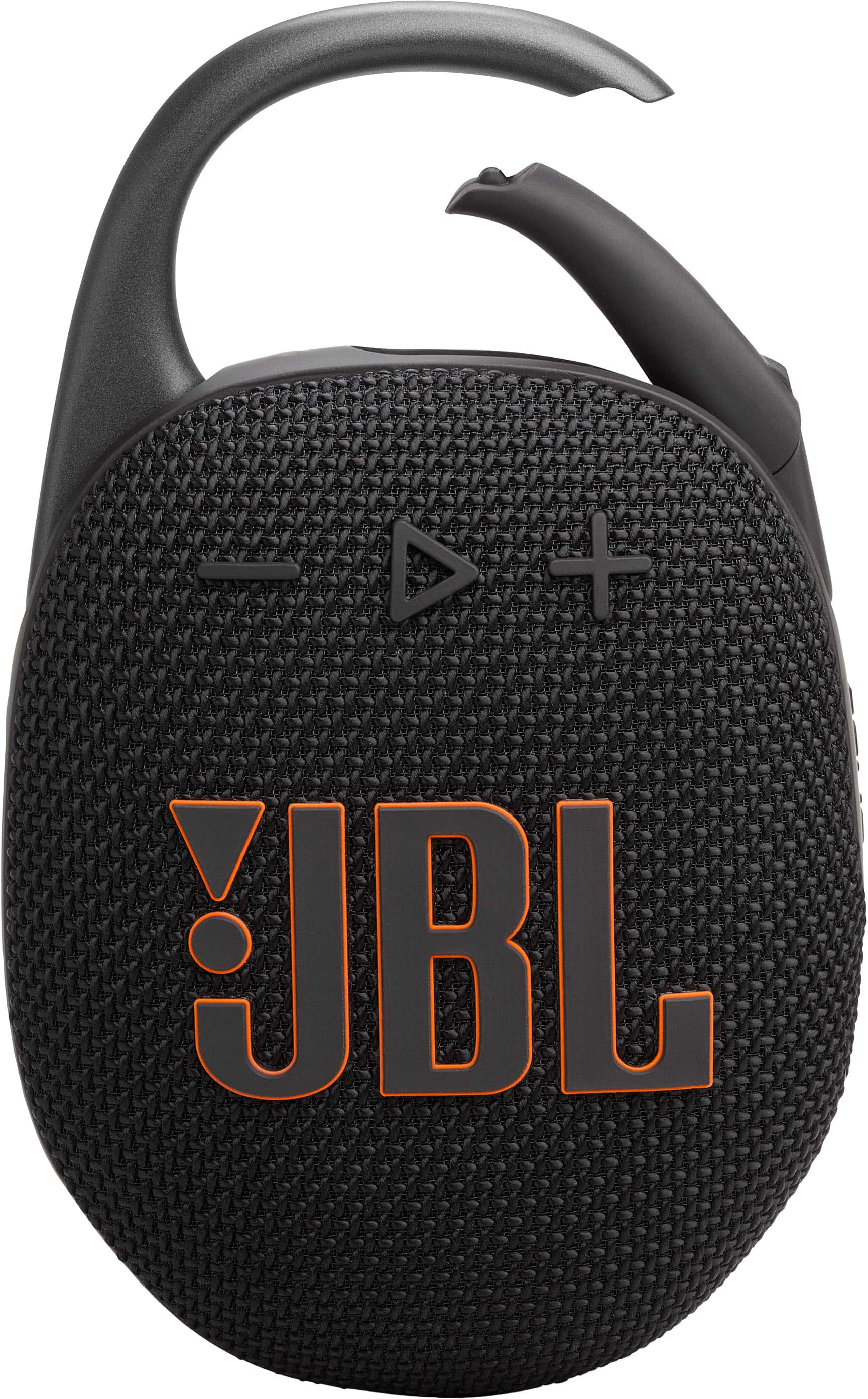
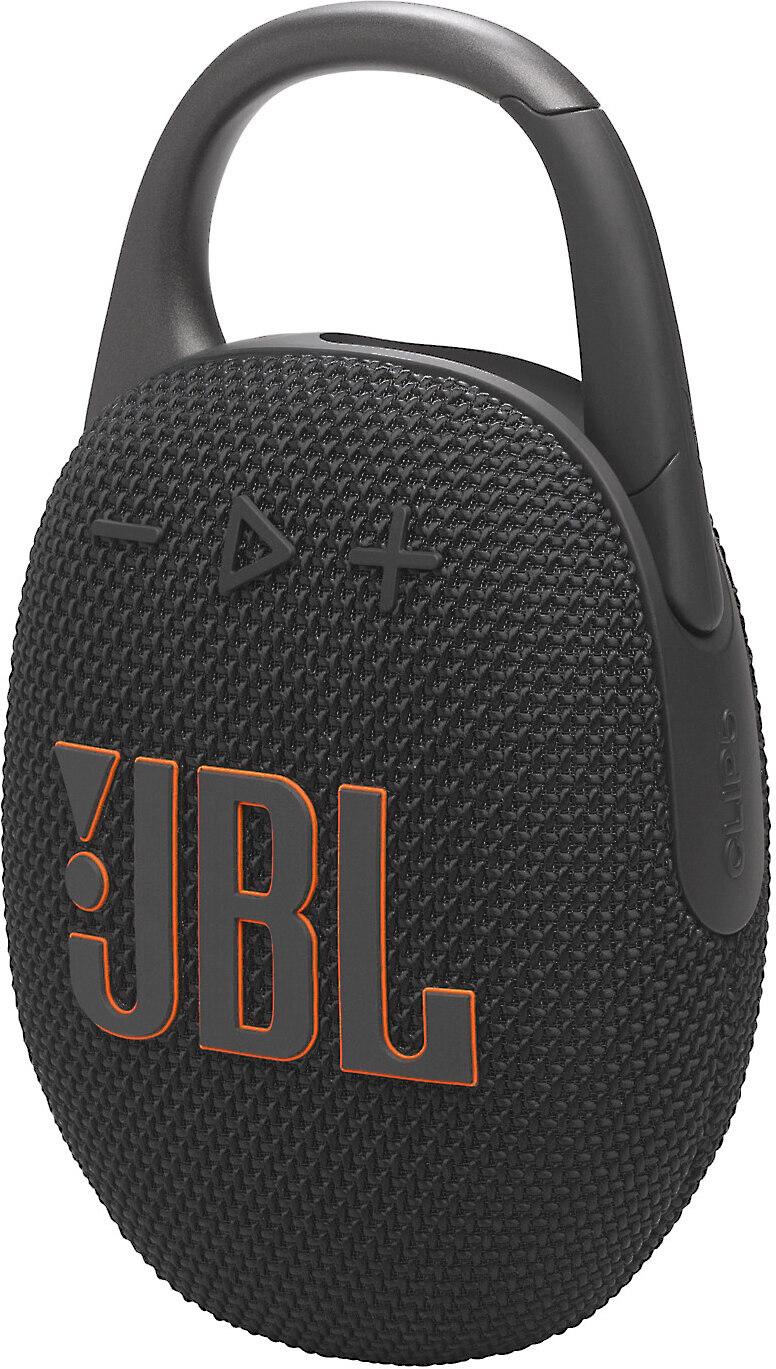
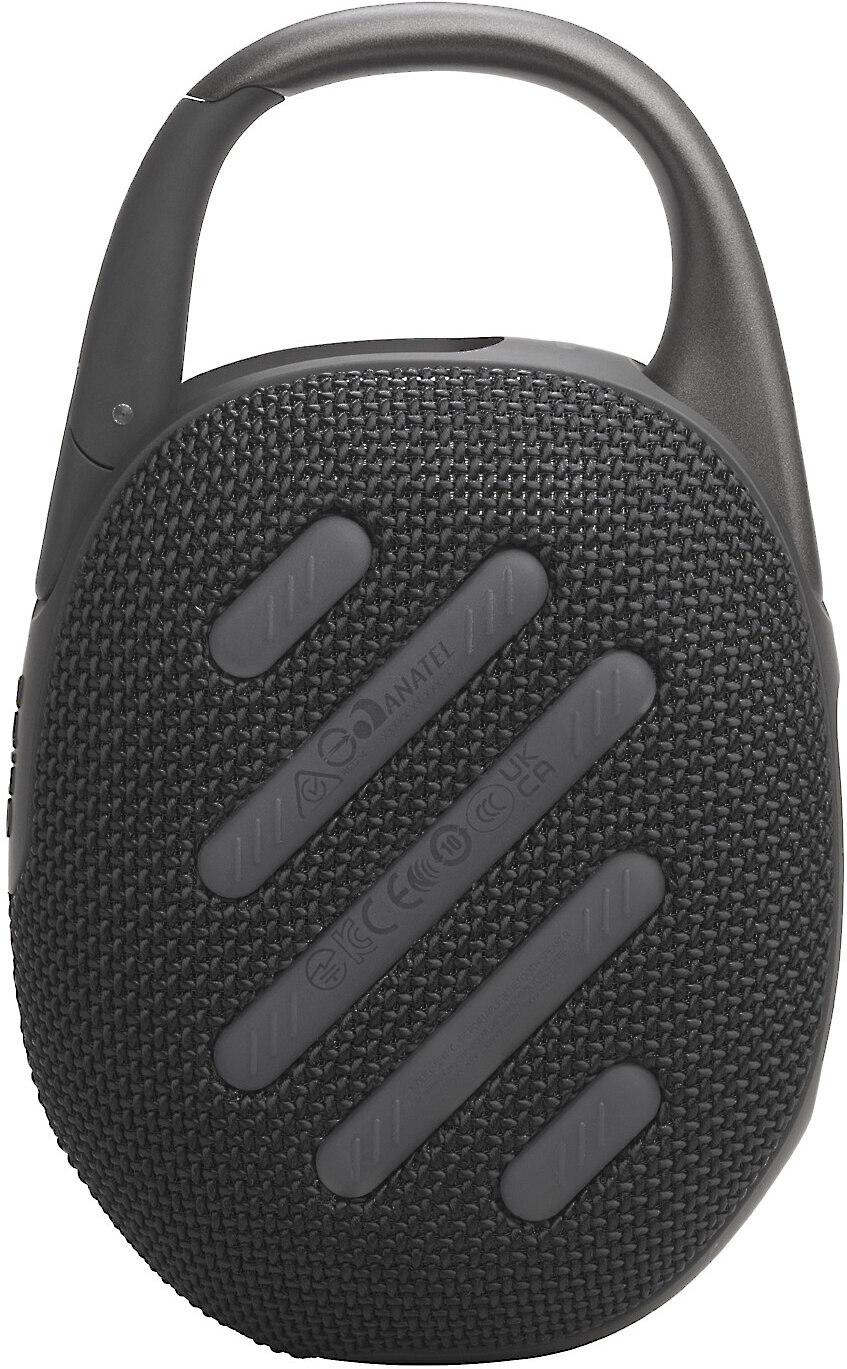
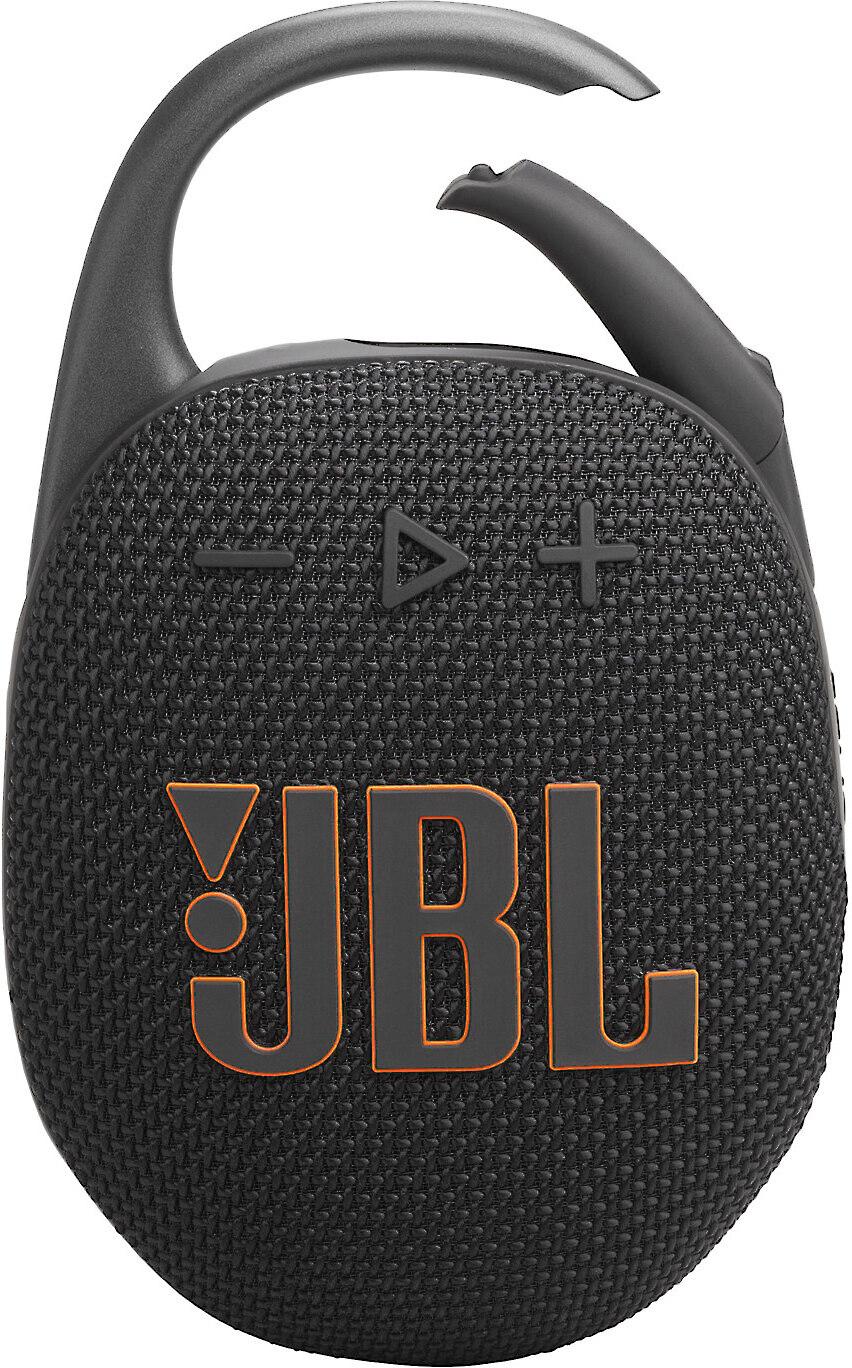
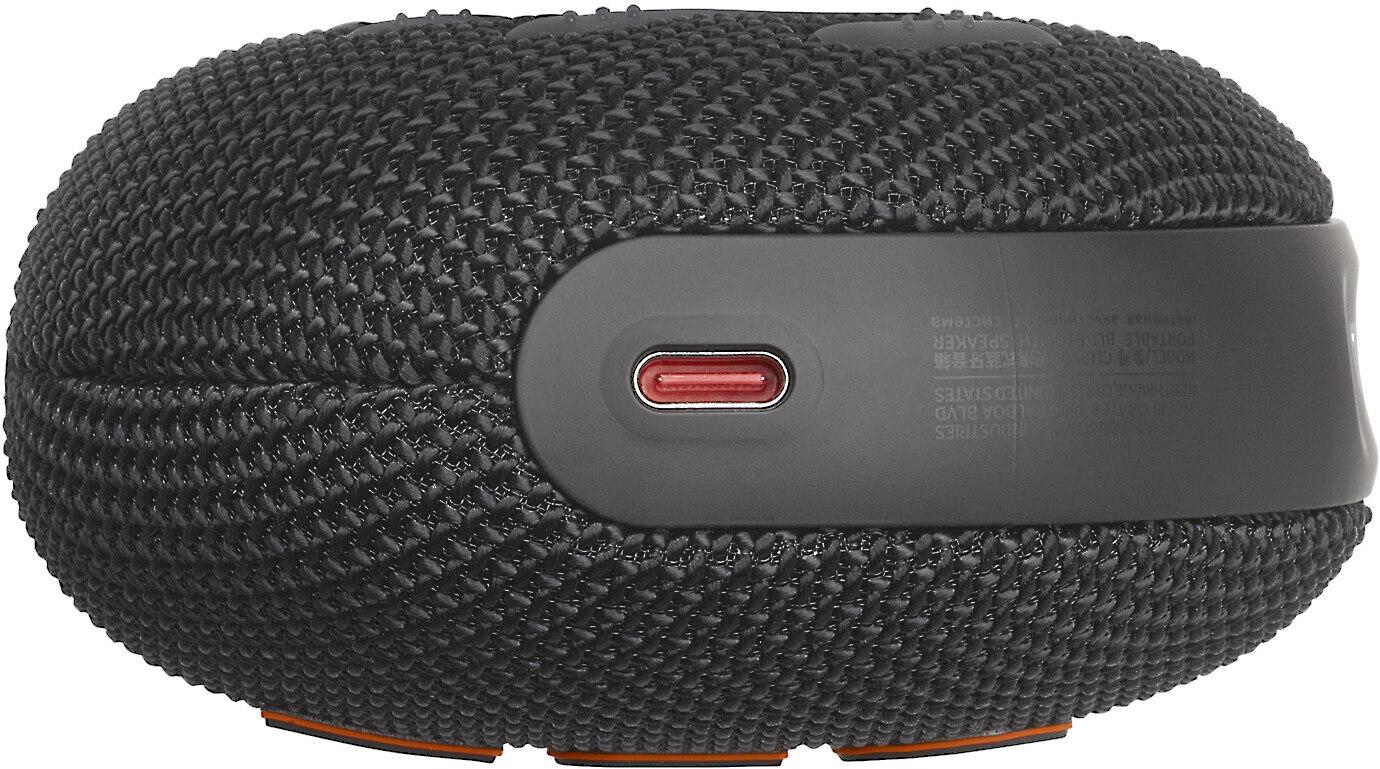
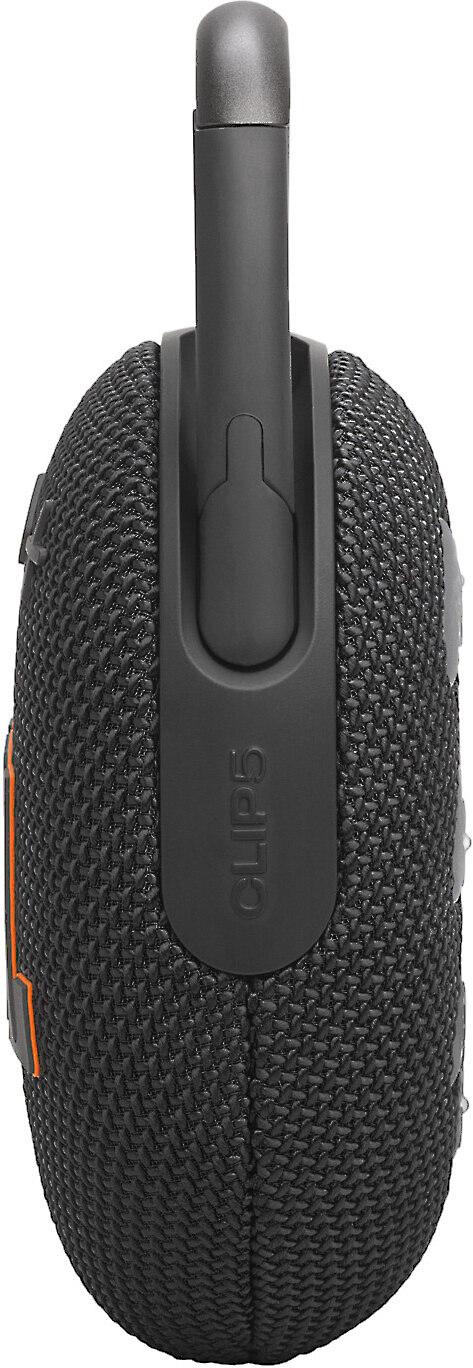
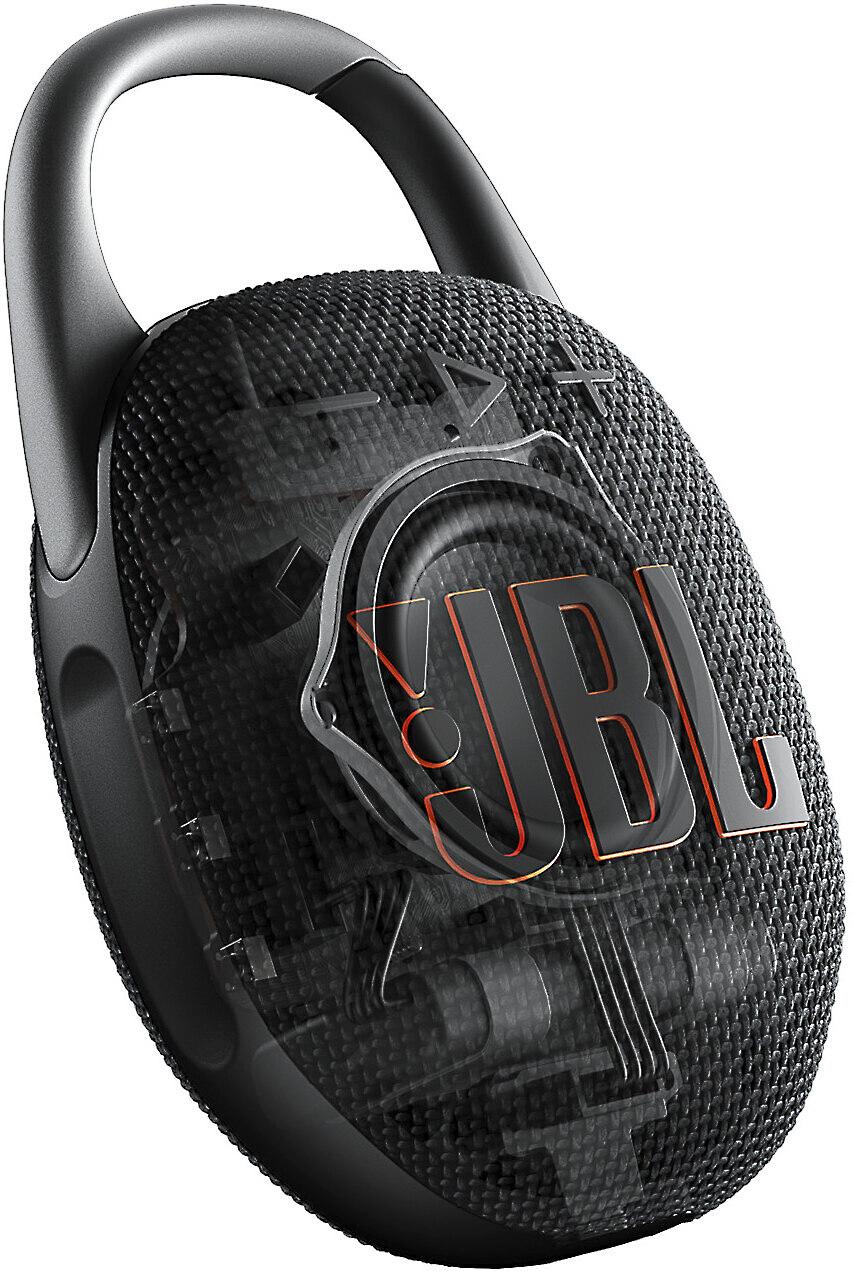
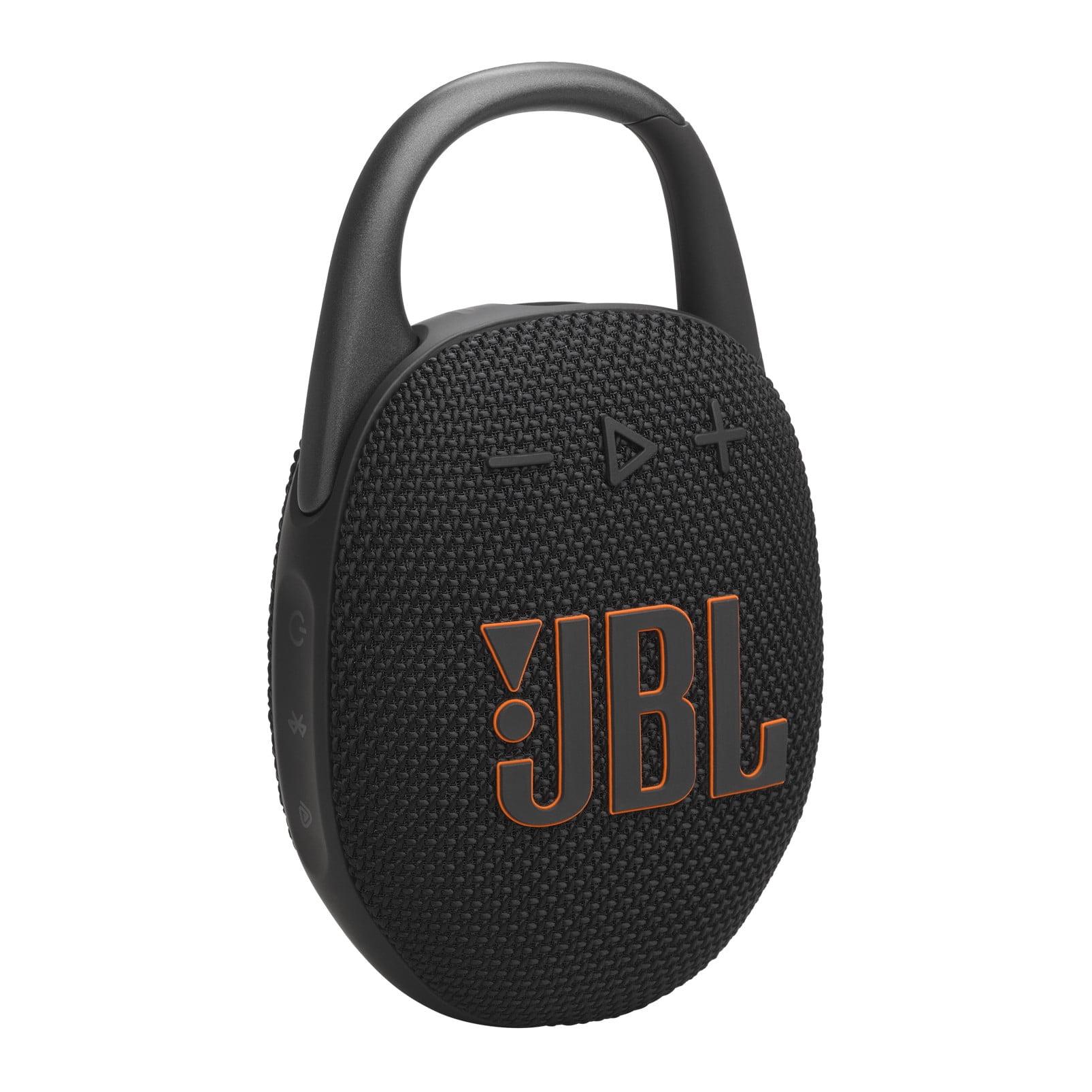
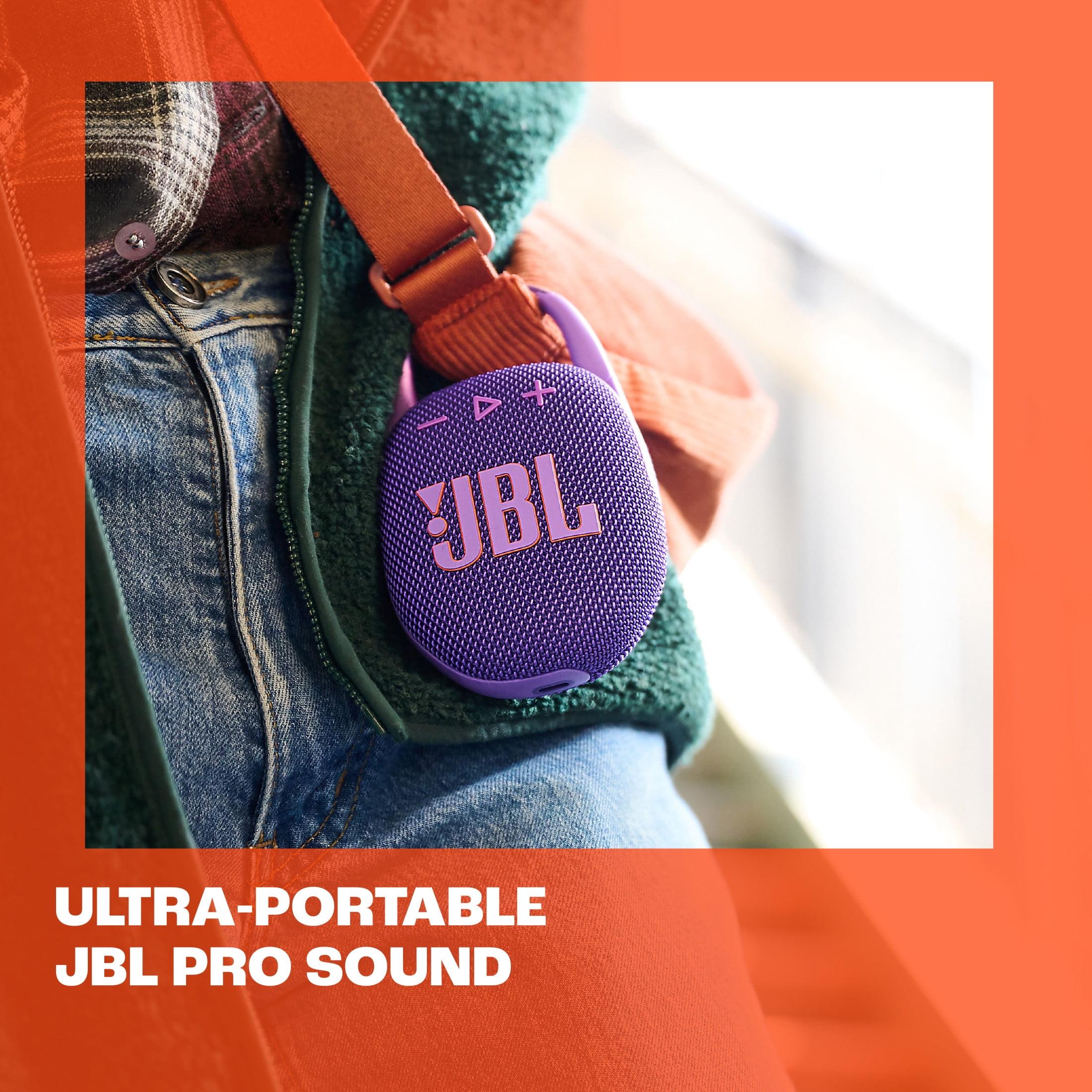
The JBL Clip 5, also released in 2024, takes the opposite approach. Weighing just 285 grams (about 10 ounces) with dimensions that easily fit in your palm, it prioritizes absolute portability above all else. The defining feature is its integrated carabiner—a sturdy metal clip that lets you attach the speaker to backpacks, belt loops, bike frames, or virtually anything else.
This isn't just a speaker with a clip attached as an afterthought. The entire design revolves around the carabiner, with the speaker housing shaped to balance properly when clipped. The result is a device that truly disappears into your active lifestyle. Unlike traditional portable speakers that you carry in your hand or bag, the Clip 5 goes wherever you go without requiring any thought or planning.
When it comes to audio performance, the laws of physics heavily favor the JBL Charge 6. Sound quality, particularly bass response, is closely tied to speaker size and internal air volume. The Charge 6 has approximately ten times more internal space than the Clip 5, and it uses this advantage effectively.
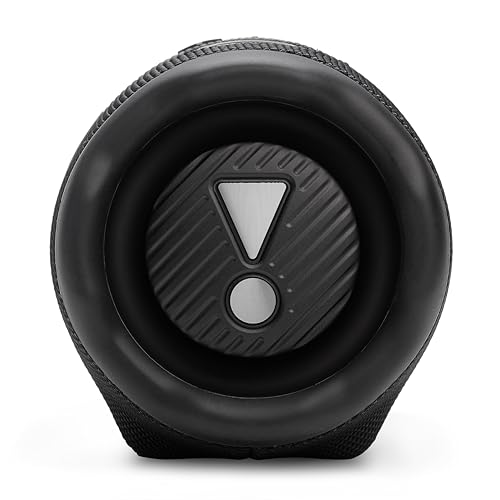
The Charge 6 delivers 45 watts RMS (Root Mean Square—the actual sustained power output, not peak marketing numbers) through a sophisticated two-way driver system. The main woofer measures 53mm x 93mm in an oval "racetrack" configuration, maximizing the driver surface area within the available space. This is paired with a dedicated 20mm tweeter for high frequencies, plus dual passive radiators that enhance bass response without requiring additional amplification.
In practical terms, this means the Charge 6 can fill a medium-sized room or outdoor space with clear, detailed sound. At maximum volume, it's loud enough for parties, beach gatherings, or poolside use without the harsh distortion that plagues many portable speakers when pushed hard. The AI Sound Boost technology becomes particularly valuable at higher volumes, where traditional speakers often sacrifice clarity for loudness.
The JBL Clip 5, by contrast, is designed for personal listening scenarios. While JBL doesn't publish exact power specifications, our research suggests it delivers roughly 5-8 watts—appropriate for one or two people in close proximity but inadequate for group listening or outdoor use where ambient noise competes with your music.
Frequency response describes which musical frequencies a speaker can reproduce and how well. The Charge 6 covers 56 Hz to 20 kHz, meaning it can reproduce most of the bass frequencies in your music (human hearing typically extends down to around 40 Hz, but most music has meaningful content starting around 60 Hz). The Clip 5 starts at 95 Hz, which means it misses the deep bass that gives music its foundation and impact.
This difference is immediately apparent when listening to bass-heavy genres like hip-hop, electronic music, or rock. The Charge 6 delivers the chest-thumping low-end that makes these genres exciting, while the Clip 5 presents a more midrange-focused sound that's pleasant but lacks physical impact.
However, the Clip 5 holds its own in the midrange frequencies where vocals and many instruments live. For podcasts, audiobooks, or acoustic music, the difference is less dramatic. The smaller speaker actually benefits from having fewer frequency extremes to manage, allowing its single driver to focus on reproducing speech and midrange content cleanly.
Both speakers connect to JBL's mobile app, but the Charge 6 offers more sophisticated audio customization. Its 7-band equalizer lets you adjust specific frequency ranges to match your preferences or compensate for different listening environments. The Clip 5 provides a 5-band EQ, which is respectable for its category but offers less precise control.
This difference matters more than you might expect. The ability to boost bass when listening outdoors, reduce harsh frequencies in echoey rooms, or enhance vocals for podcast listening transforms a good speaker into one that adapts to your specific needs.
Battery performance reveals another fundamental difference in design philosophy between these speakers. The JBL Charge 6 is built for extended sessions, while the Clip 5 targets daily use patterns.
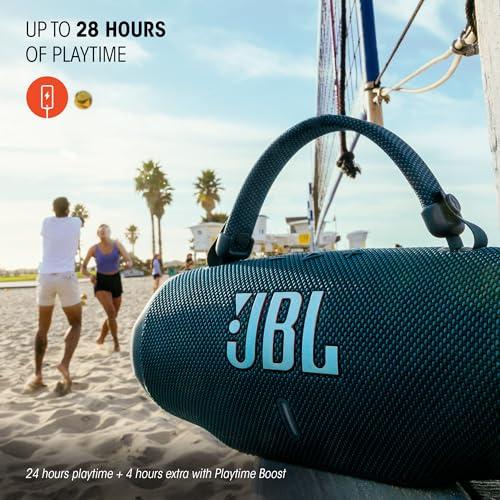
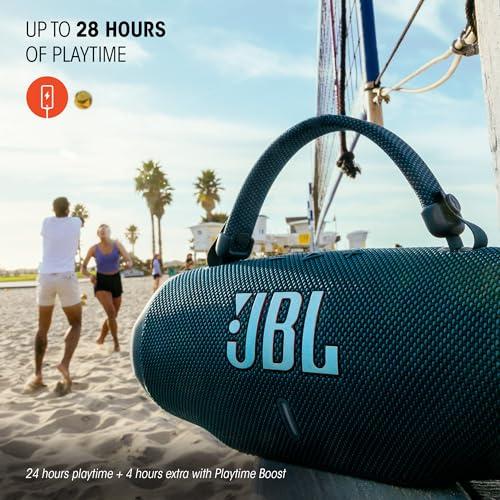
The Charge 6 houses a substantial 34Wh battery (equivalent to 4722mAh at 7.2V), enabling up to 28 hours of playback when using the Playtime Boost feature. Playtime Boost is essentially an energy-saving mode that reduces bass output and overall power consumption to extend battery life. Even in standard mode, you'll get around 24 hours of listening time—enough for weekend camping trips or all-day outdoor events.
The Clip 5 offers 12-15 hours of playback (15 with its own Playtime Boost mode), which is impressive given its tiny size but clearly designed for different use cases. This is perfect for daily gym sessions, commuting, or casual listening, but inadequate for extended outdoor adventures or multi-day events.
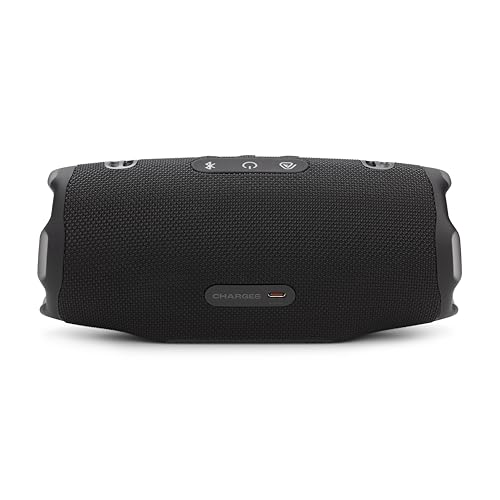
One of the Charge 6's defining characteristics is its ability to charge other devices while playing music. The USB-C port can output power to charge phones, tablets, or other small electronics. This dual functionality explains part of the "Charge" branding and makes the speaker particularly valuable for camping, beach days, or any situation where electrical outlets are scarce.
This feature fundamentally changes how you think about the speaker. Rather than being just an audio device that eventually needs charging, it becomes a portable power hub that happens to play excellent music. For outdoor enthusiasts or frequent travelers, this capability can be genuinely life-saving.
Both speakers charge via USB-C, but the Charge 6 offers superior fast-charging capabilities. A 10-minute charge provides 150 minutes of playback—enough for most short-term needs. This quick-charge feature makes the speaker more practical for spontaneous use, reducing the planning required to ensure adequate battery life.
The concept of portability exists on a spectrum, and these two speakers occupy very different positions on it. Understanding this difference is crucial for making the right choice.
The JBL Clip 5 achieves true portability—it goes wherever you go without thought or planning. The integrated carabiner means you can clip it to your gym bag, backpack, or belt and forget about it until you want music. This hands-free carrying method is genuinely liberating for active lifestyles.
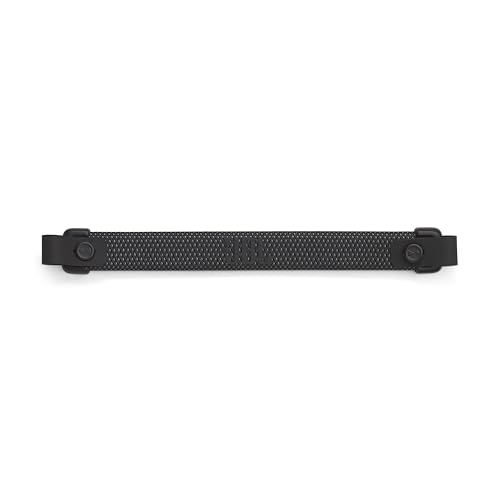
The Charge 6 requires what we call "planned portability." You can definitely carry it around, and the included handle strap helps significantly, but you'll consciously decide when and where to bring it. It's perfect for planned activities like picnics, beach days, or house parties, but too substantial for casual everyday carry.
The 285-gram weight of the Clip 5 is essentially negligible—you'll forget you're carrying it. The Charge 6's 990 grams (with strap) is noticeable but not burdensome for short distances. However, this weight difference becomes significant during activities like hiking, cycling, or air travel where every gram matters.
Consider your typical use scenarios carefully. If you frequently find yourself choosing between bringing a speaker or leaving it behind due to weight or bulk concerns, the Clip 5 eliminates that decision entirely.
Both speakers are designed to survive outdoor use, but they approach durability differently.
The Charge 6 carries an IP68 rating, the highest standard for consumer electronics. This means it's completely dust-tight and can survive submersion in up to 1.5 meters of water for 30 minutes. You could literally drop it in a swimming pool and fish it out later with no damage.
The Clip 5 has an IP67 rating, which means it's also dust-tight and waterproof, but only against water jets and rain—not submersion. For most real-world scenarios, this difference won't matter, but the Charge 6 offers more peace of mind around water.
JBL claims the Charge 6 can survive drops from 1 meter onto concrete, thanks to its rubberized construction and internal shock mounting. The Clip 5's lighter construction is inherently less robust, though its smaller mass means it's less likely to be damaged by typical drops.
The carabiner on the Clip 5 is actually a significant durability advantage—it prevents most drops entirely by keeping the speaker securely attached to your gear.
Both speakers use current Bluetooth standards, but the Charge 6 offers more advanced connectivity options.
The Charge 6 uses Bluetooth 5.4, while the Clip 5 uses 5.3. Both versions provide reliable connections and good range, but 5.4 offers slightly better power efficiency and connection stability. More importantly, the Charge 6 can maintain connections to two devices simultaneously, letting you easily switch between your phone and laptop without re-pairing.
Both speakers support Auracast, JBL's latest multi-speaker pairing technology. This allows you to connect multiple compatible JBL speakers for wider sound coverage or stereo pairing. For the Charge 6, this means you can create a true stereo system with two units or expand coverage for large outdoor areas. For the Clip 5, Auracast enables multiple people to add their own speakers to a shared listening session.
The Charge 6 includes a unique feature: lossless audio playback through USB-C. This wired connection supports up to 24-bit/192kHz audio—far superior to any Bluetooth codec. For critical listening at home or in the office, this transforms the speaker from a purely portable device into a legitimate desktop audio solution.
At the time of writing, the Charge 6 costs approximately three times as much as the Clip 5, but this price difference reflects fundamentally different products rather than simple feature scaling.
When considering pure audio performance, the Charge 6 delivers roughly eight to ten times the volume and significantly better sound quality for three times the price. From a performance-per-dollar perspective, it's actually the better value.
However, the Clip 5 provides unique functionality that no amount of money can buy in the Charge 6—true hands-free portability. If that capability matters to your lifestyle, the price difference becomes irrelevant.
The Charge 6's superior build quality, longer battery life, and power bank functionality suggest it will remain useful longer than the Clip 5. The ability to use it as a home speaker via USB-C also extends its utility beyond pure portability.
The Clip 5, while less expensive, serves a more limited role. As your audio needs evolve, you're more likely to outgrow its capabilities.
While neither speaker is designed primarily for home theater use, the Charge 6 can serve as a surprisingly capable desktop or TV speaker thanks to its USB-C lossless audio input. Connected to a computer or TV with USB-C output, it provides significantly better audio than built-in speakers while maintaining portability for outdoor use.
The Clip 5 lacks this flexibility, serving purely as a portable device without meaningful home audio applications.
Outdoor Entertaining: If you regularly host backyard parties, beach gatherings, or poolside events, the Charge 6 has the volume and battery life to be your primary sound source.
Camping and Extended Outdoor Activities: The combination of 24+ hour battery life, power bank functionality, and superior weather protection makes it ideal for multi-day outdoor adventures.
Shared Listening: When you need to fill a room or outdoor space with music for multiple people, the Charge 6 has the power and clarity to ensure everyone enjoys the experience.
Home Office or Desktop Use: The USB-C lossless audio capability makes it an excellent computer speaker that you can also take on the go.
Active Lifestyles: If you work out regularly, cycle, hike, or engage in activities where traditional speakers are impractical, the clip design is genuinely revolutionary.
Personal Listening: For solo listening during commutes, casual outdoor activities, or around the house, it provides perfectly adequate audio quality.
Travel: The minimal size and weight make it ideal for air travel, hotel rooms, or any situation where luggage space is limited.
Budget-Conscious Users: If you need basic Bluetooth audio capability without premium features, the Clip 5 delivers solid performance at an accessible price point.
The choice between these speakers ultimately depends on how you define "portable" and what you need from your audio experience.
Choose the JBL Charge 6 if sound quality, volume, and battery life are your primary concerns. It's the speaker for people who want their portable audio to rival home stereo systems, even if it means carrying a bit more weight. The power bank feature and superior durability make it particularly appealing for outdoor enthusiasts and frequent travelers.
Choose the JBL Clip 5 if true portability trumps everything else. It's perfect for people who want music to effortlessly accompany their active lifestyle without adding bulk or requiring planning. While it won't impress audiophiles or fill large spaces with sound, it excels at making personal listening convenient and accessible.
Consider your most common use scenarios honestly. If you frequently choose between bringing a speaker or leaving it behind due to size concerns, the Clip 5 eliminates that friction entirely. If you primarily use speakers in planned situations where you can accommodate the extra size, the Charge 6's superior performance justifies its bulk.
Both speakers represent excellent engineering focused on different priorities. The Charge 6 pushes the boundaries of what's possible in a semi-portable package, while the Clip 5 perfects the art of disappearing into your lifestyle. Choose based on which philosophy better matches your needs, and you'll be happy with either decision.
| JBL Charge 6 | JBL Clip 5 |
|---|---|
| Power Output - Determines maximum volume and room-filling capability | |
| 45W RMS (room-filling volume for parties/outdoor use) | ~5-8W (personal listening only, not suitable for groups) |
| Weight & Portability - Critical factor for how you'll actually use the speaker | |
| 990g with strap (planned portability, requires bag/carrying) | 285g with integrated carabiner (clip anywhere, truly hands-free) |
| Battery Life - How long you can listen without charging | |
| Up to 28 hours with Playtime Boost (24 hours standard) | Up to 15 hours with Playtime Boost (12 hours standard) |
| Frequency Response - Affects bass depth and overall sound quality | |
| 56 Hz - 20 kHz (deep bass reproduction for full sound) | 95 Hz - 20 kHz (limited bass, better for vocals/midrange) |
| Water Resistance - Protection level for outdoor/water activities | |
| IP68 (fully submersible up to 1.5m, pool/beach safe) | IP67 (waterproof against rain/splashes, not submersible) |
| Power Bank Function - Ability to charge other devices | |
| Yes, USB-C output can charge phones/tablets while playing | No power bank capability |
| Audio Customization - Control over sound tuning | |
| 7-band EQ via app (precise frequency control) | 5-band EQ via app (basic sound adjustment) |
| Connectivity Options - How you can connect audio sources | |
| Bluetooth 5.4 + USB-C lossless audio (up to 24-bit/192kHz) | Bluetooth 5.3 only |
| Multi-Device Pairing - Convenience for switching between sources | |
| Connects to 2 devices simultaneously | Single device connection |
| Charging Speed - How quickly you can get back to listening | |
| 10 minutes = 150 minutes playback (excellent fast charging) | Standard USB-C charging (no quick charge specified) |
| Form Factor Design - How the speaker integrates into your lifestyle | |
| Traditional portable with detachable handle strap | Integrated carabiner clip design for attachment to gear |
| AI Audio Processing - Technology that enhances sound quality | |
| AI Sound Boost (real-time optimization, reduces distortion) | Standard audio processing |
The JBL Charge 6 is significantly better for outdoor parties and gatherings. With 45W of power output, it can fill outdoor spaces with clear, loud sound that multiple people can enjoy. The JBL Charge 6 also offers up to 28 hours of battery life, ensuring your party won't run out of music. The JBL Clip 5 is designed for personal listening and lacks the volume needed for group entertainment.
The main difference is size and intended use. The JBL Charge 6 is a full-size portable speaker designed for powerful sound and group listening, while the JBL Clip 5 is an ultra-compact speaker with an integrated carabiner clip designed for personal use. The JBL Charge 6 weighs nearly 1kg and delivers room-filling audio, whereas the JBL Clip 5 weighs just 285g and clips to your gear for hands-free portability.
The JBL Charge 6 has significantly better bass quality. Its frequency response extends down to 56 Hz with a dedicated woofer and passive radiators, delivering deep, punchy bass suitable for all music genres. The JBL Clip 5 starts at 95 Hz, missing much of the low-end frequency range that gives music its foundation and impact.
Neither the JBL Charge 6 nor the JBL Clip 5 includes a built-in microphone for hands-free calling. Both speakers are designed purely for music playback and don't support speakerphone functionality.
The JBL Clip 5 is much better for workouts. Its integrated carabiner lets you clip it directly to gym bags, workout gear, or clothing, keeping your hands free during exercise. At just 285g, it won't weigh you down during active movement. The JBL Charge 6 is too large and heavy for most workout scenarios.
The JBL Charge 6 offers superior battery life with up to 28 hours using Playtime Boost mode (24 hours in standard mode). The JBL Clip 5 provides up to 15 hours with Playtime Boost (12 hours standard). The JBL Charge 6 also functions as a power bank to charge other devices while playing music.
The JBL Charge 6 has better water protection with an IP68 rating, meaning it can be fully submerged in up to 1.5 meters of water for 30 minutes. The JBL Clip 5 has an IP67 rating, making it waterproof against rain and splashes but not submersible. Both are excellent for outdoor use, but the JBL Charge 6 offers more peace of mind around water.
Yes, both speakers support JBL's Auracast technology for multi-speaker pairing. You can pair two JBL Charge 6 units for true stereo sound, or connect multiple JBL Clip 5 speakers for wider coverage. However, each individual speaker outputs mono sound, so pairing is necessary for stereo separation.
The JBL Clip 5 is far better for travel due to its compact size and weight. It easily fits in any luggage without taking up significant space or adding noticeable weight. The integrated clip also makes it convenient for hotel rooms or outdoor activities while traveling. The JBL Charge 6 requires dedicated packing space and planning.
Yes, both the JBL Charge 6 and JBL Clip 5 connect to the JBL Portable app for customization. The JBL Charge 6 offers a 7-band equalizer for precise sound tuning, while the JBL Clip 5 provides a 5-band EQ. Both can access Playtime Boost mode and multi-speaker pairing through the app.
The JBL Charge 6 works excellently as a computer speaker thanks to its USB-C lossless audio input, supporting up to 24-bit/192kHz audio quality. This makes it suitable for both portable and desktop use. The JBL Clip 5 only connects via Bluetooth and is designed purely for portable personal listening rather than desktop audio.
The better value depends on your needs. The JBL Charge 6 offers more features, power, and versatility per dollar spent, making it better value for users who need substantial audio performance. The JBL Clip 5 provides excellent value for users prioritizing extreme portability and hands-free convenience, delivering unique functionality that the JBL Charge 6 cannot match regardless of price.
We've done our best to create useful and informative comparisons to help you decide what product to buy. Our research uses advanced automated methods to create this comparison and perfection is not possible - please contact us for corrections or questions. These are the sites we've researched in the creation of this article: rtings.com - youtube.com - stereoguide.com - whathifi.com - youtube.com - elomymelo.com - soundguys.com - elomymelo.com - wifihifi.com - soundguys.com - jbl.com - whathifi.com - soundguys.com - youtube.com - smarthomesounds.co.uk - jbl.com - sweetwater.com - youtube.com - bestbuy.com - jbl.com.sg - jbl.com - dell.com - ca.jbl.com - soundguys.com - soundguys.com - dell.com - howtogeek.com - soundguys.com - youtube.com - rtings.com - gymcaddy.net - jbl.com - mm.jbl.com - soundguys.com - th.jbl.com - hu.harmanaudio.com

Privacy Policy
Terms and Conditions - Affiliate Policy
Home Security
© Copyright 2008-2026.
11816 Inwood Rd #1211, Dallas, TX 75244