

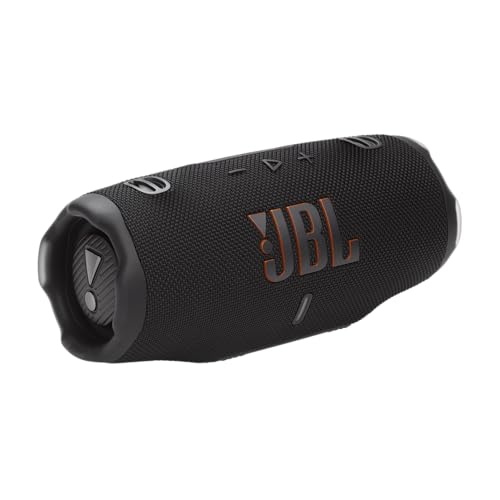


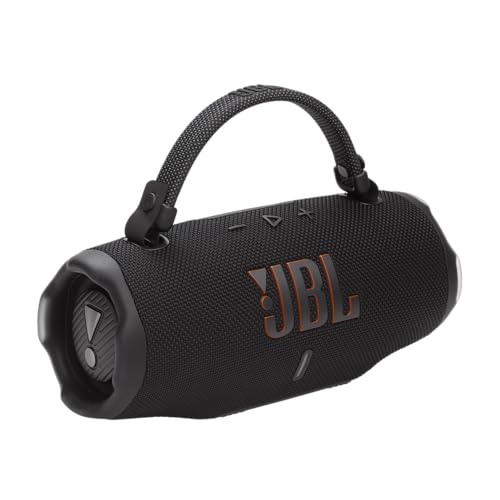
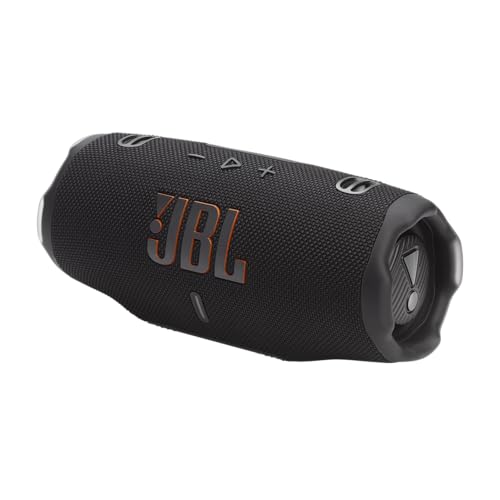
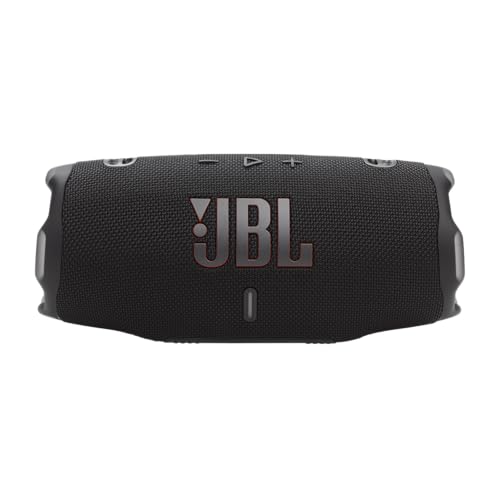
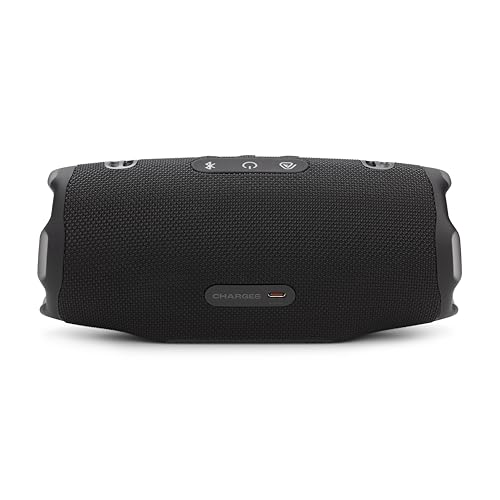
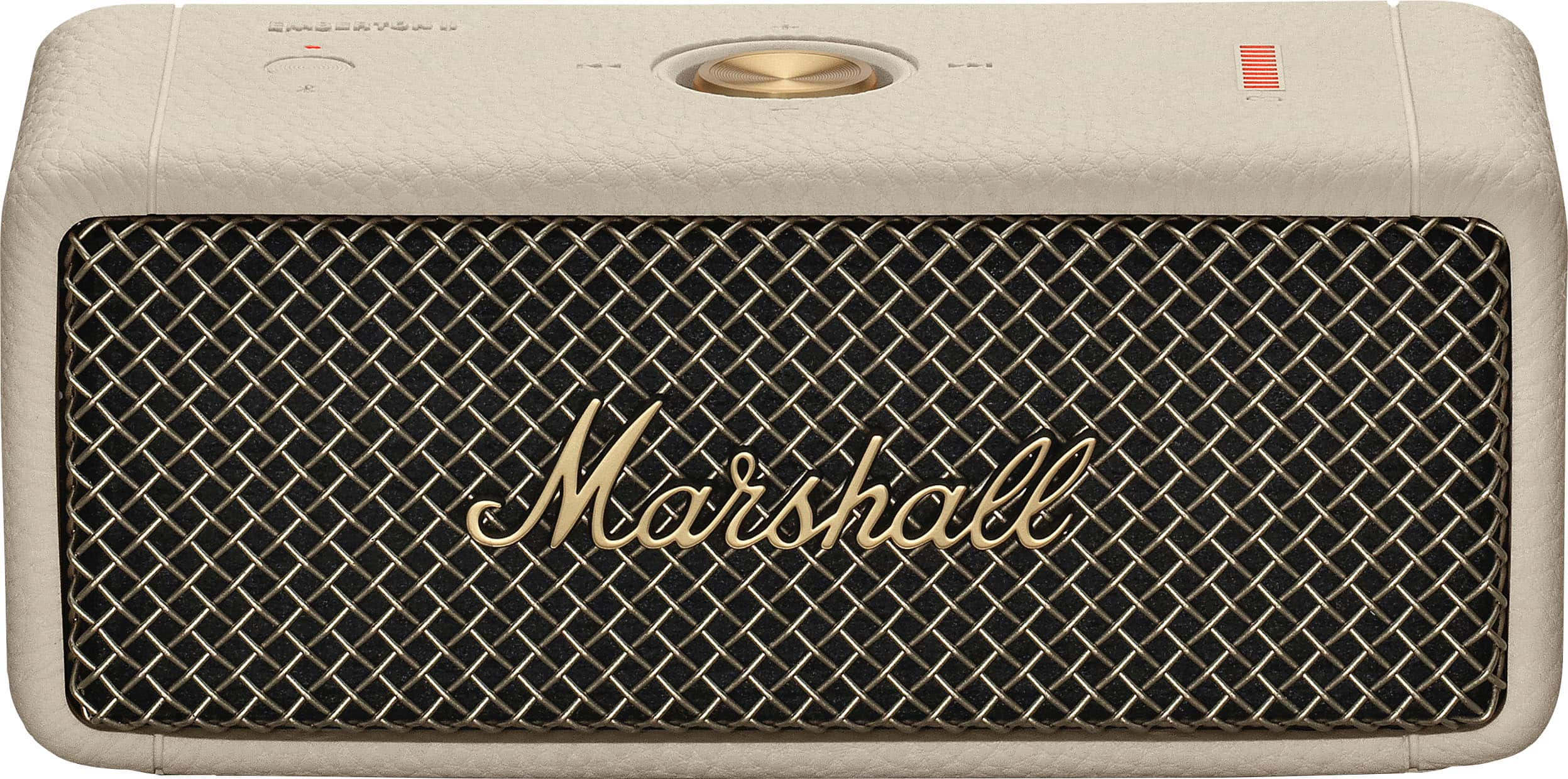




Portable Bluetooth speakers have evolved dramatically over the past few years, transforming from tinny, underpowered gadgets into legitimate audio powerhouses that can fill entire rooms with rich, detailed sound. Two speakers that perfectly illustrate this evolution are the JBL Charge 6 (released in 2025) and the Marshall Emberton II (released in 2022). While both occupy the premium portable speaker space, they represent fundamentally different approaches to what a great speaker should be.
The choice between these two isn't just about which sounds better—it's about understanding what you actually need from a portable speaker. Do you want something that disappears into your backpack but delivers surprisingly sophisticated sound? Or do you need a powerhouse that can anchor your next beach party while doubling as a backup battery for your phone? Let's dig into the details that matter.
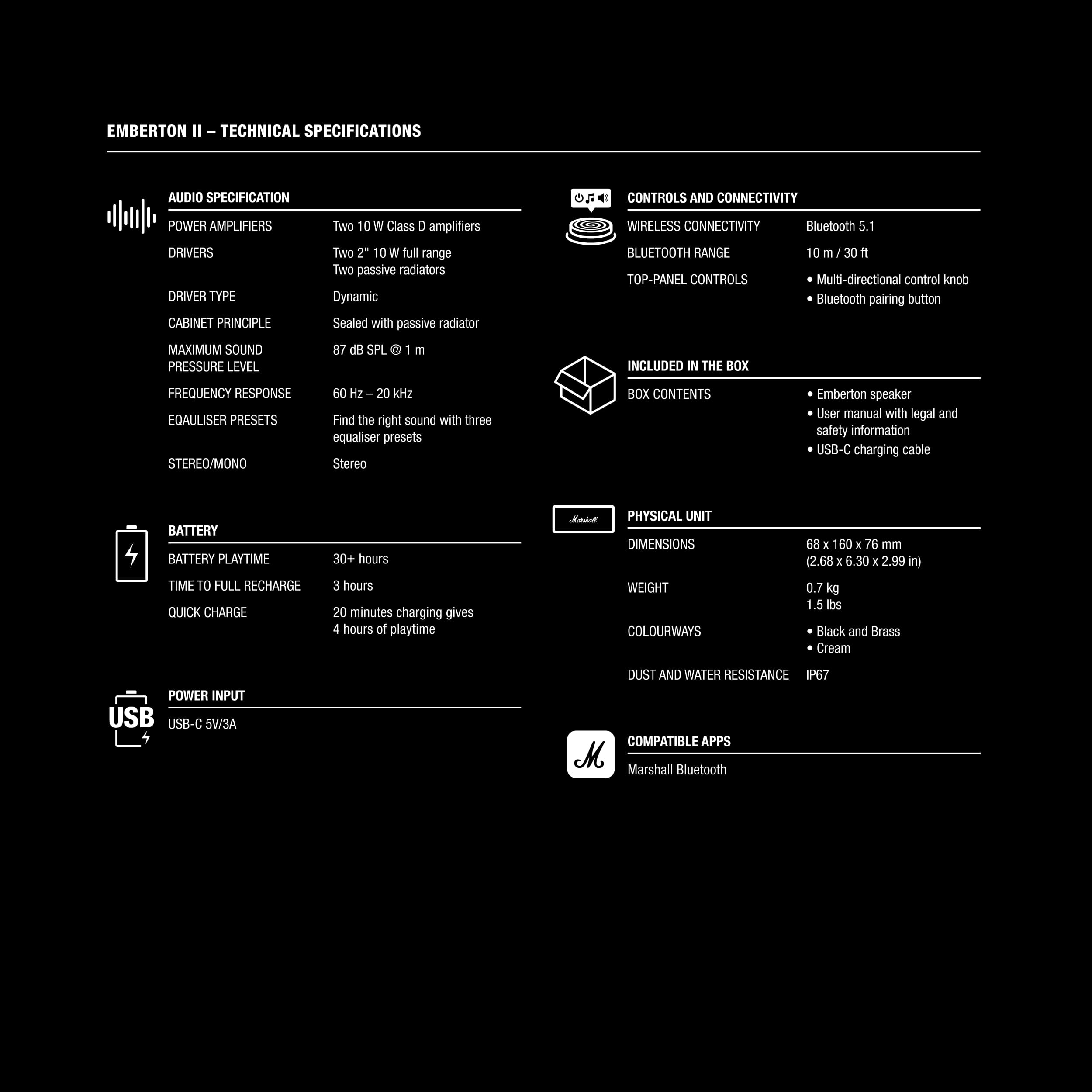
Before diving into specifics, it's worth understanding what separates an excellent portable speaker from a mediocre one. The most critical performance characteristic is frequency response—how evenly the speaker reproduces sound across different pitches, from deep bass rumbles around 60 Hz to crisp treble notes at 20,000 Hz (20 kHz). A speaker with good frequency response won't boost certain frequencies artificially, giving you sound that's true to the original recording.
Power output, measured in watts, determines how loud your speaker can get without distorting. But here's where it gets interesting: more watts don't automatically mean better sound. A well-designed 20-watt speaker can often sound clearer and more balanced than a poorly tuned 50-watt monster. The quality of the digital signal processing (DSP)—the computer brain that fine-tunes the audio signal before it hits the drivers—often matters more than raw power.
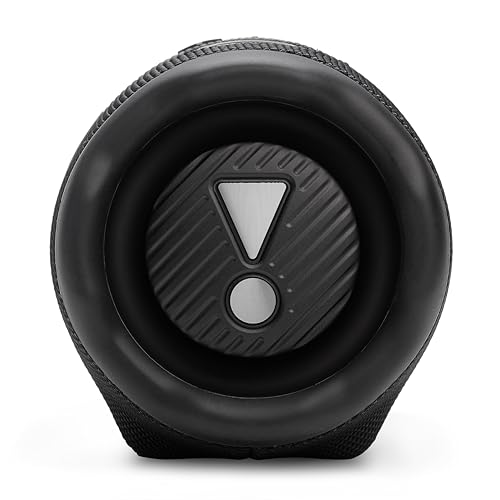
Driver configuration is equally important. Drivers are the individual speakers inside your Bluetooth speaker—some handle bass frequencies (woofers), others tackle high frequencies (tweeters). The Marshall Emberton II uses what's called a "full-range" setup, where each driver handles the entire frequency spectrum. The JBL Charge 6, meanwhile, uses a two-way system with dedicated woofers and tweeters, plus passive radiators (basically, drivers without magnets that move air to enhance bass response).
Here's where these speakers diverge most dramatically. The JBL Charge 6 delivers 45 watts of total power through a mono configuration—meaning it combines left and right audio channels into a single output. This might sound like a limitation, but JBL's approach prioritizes bass impact and maximum volume over stereo separation. When you're at a pool party or camping with friends, having thunderous bass that everyone can feel often matters more than precise stereo imaging.
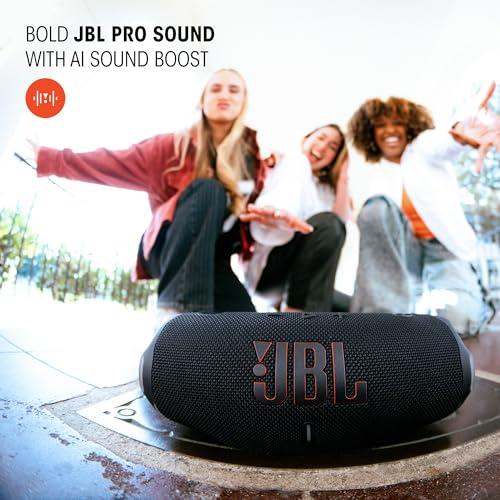
The secret weapon here is JBL's AI Sound Boost technology, which analyzes your music in real-time and adjusts the drivers accordingly. Think of it as having a sound engineer constantly tweaking the levels to prevent distortion and maximize clarity, even when you're pushing the volume to its limits. This tech, combined with a larger 53mm x 93mm oval woofer and dedicated 20mm tweeter, means the JBL Charge 6 can fill larger spaces with authoritative sound.
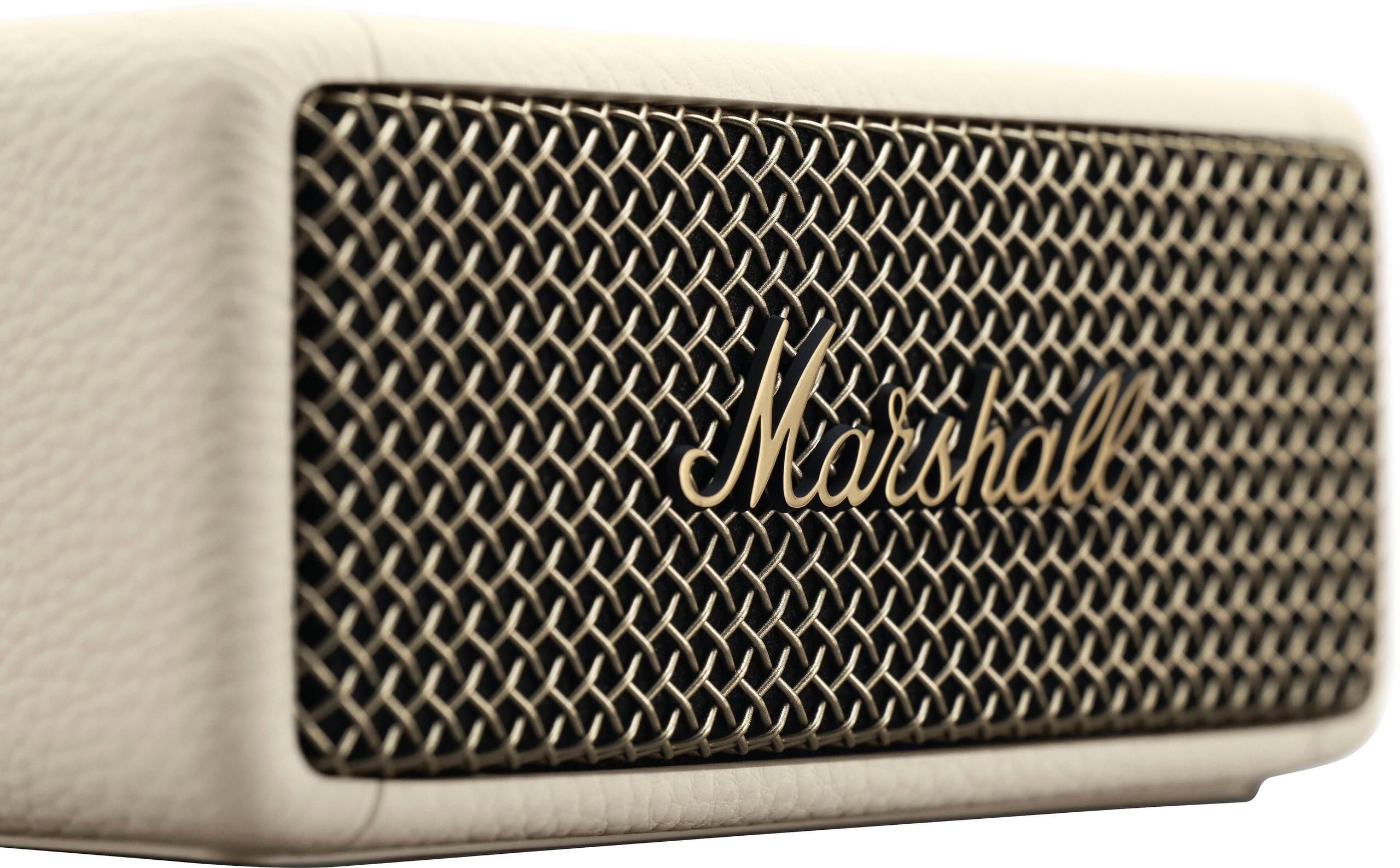
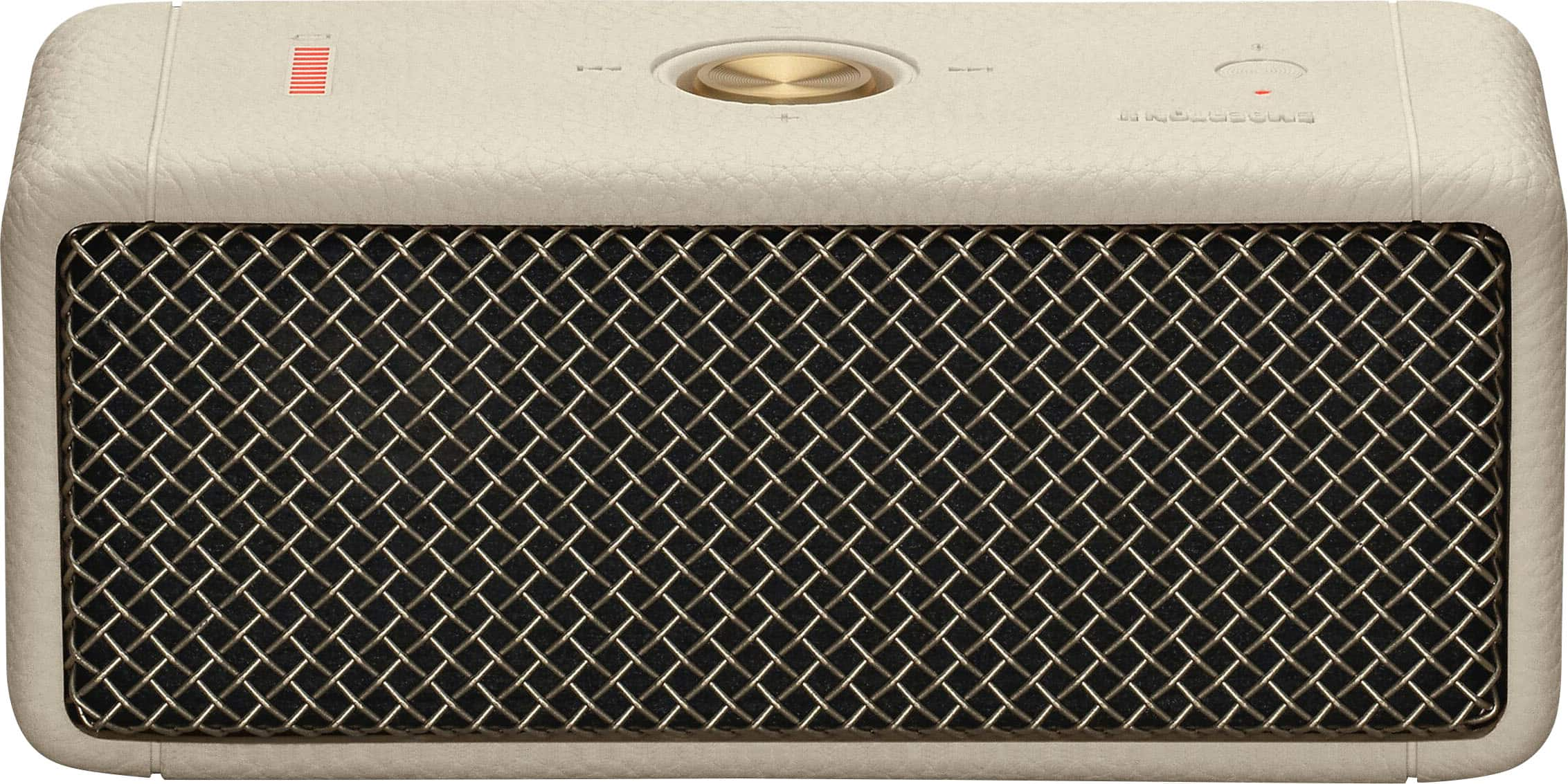
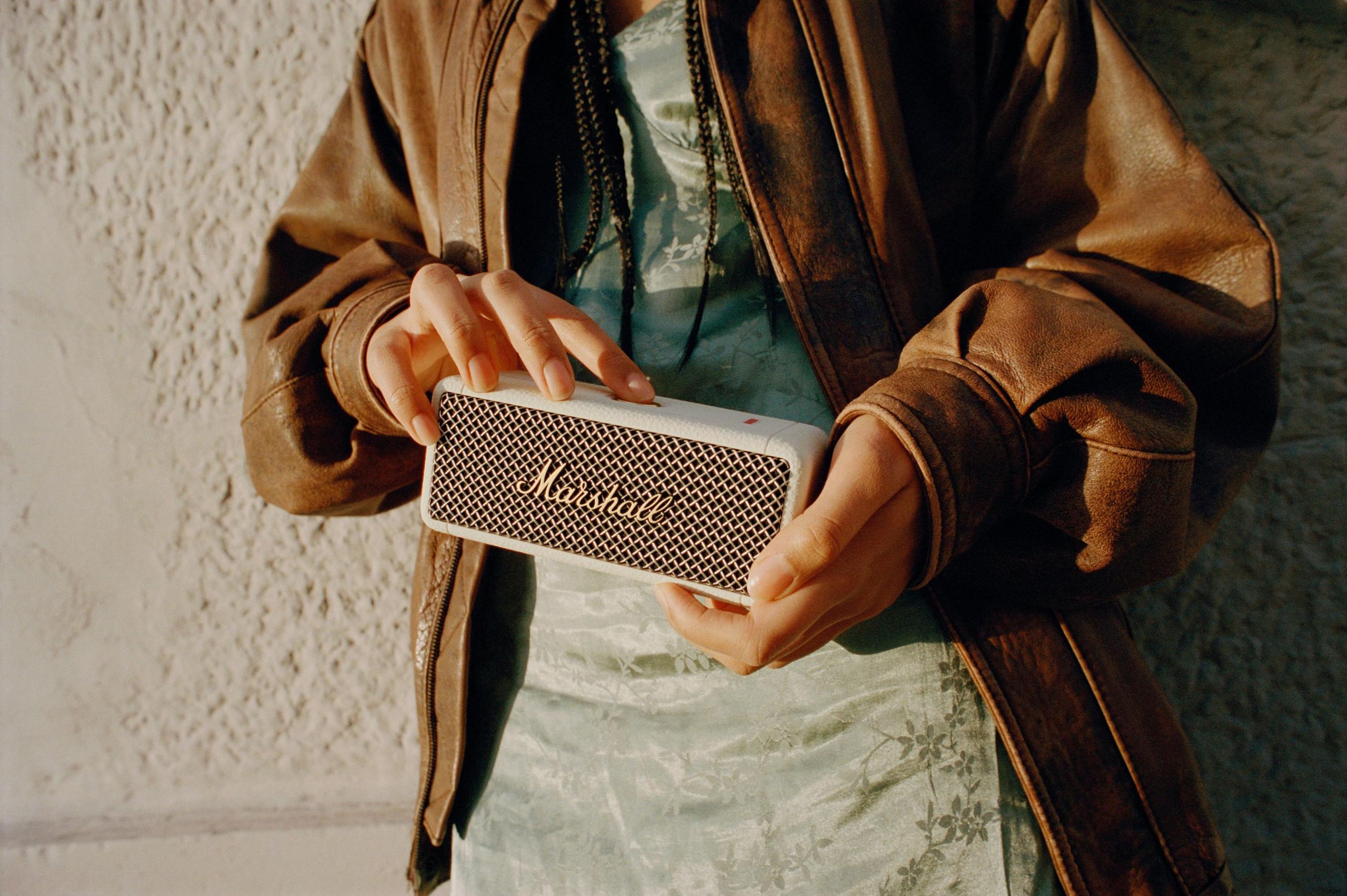
The Marshall Emberton II, by contrast, takes a more refined approach with true stereo output through its dual 2-inch full-range drivers. This creates what Marshall calls "360-Degree True Stereophonic" sound—essentially, the speaker separates stereo recordings spatially so you get a much wider soundstage than the speaker's compact size would suggest. When you're listening to a well-recorded album, you'll hear instruments positioned across a believable left-to-right spectrum, something the mono JBL Charge 6 simply can't replicate on its own.
Based on our research into user experiences and expert reviews, the Marshall Emberton II excels with genres that benefit from stereo separation—rock, jazz, acoustic music, and anything with complex instrumental arrangements. The JBL Charge 6 dominates with bass-heavy electronic music, hip-hop, and pop where impact and volume matter more than subtle positioning cues.
The power difference between these speakers is substantial. The JBL Charge 6's 45 watts versus the Marshall Emberton II's 20 watts translates into a real-world volume difference you'll definitely notice. In practical terms, the JBL can comfortably fill a large backyard or beach area, while the Marshall is better suited for patios, hotel rooms, or anywhere you might use a high-quality bookshelf speaker.
But here's what's interesting: volume isn't just about the watt rating. The JBL Charge 6 uses Class D amplification, which is incredibly efficient and generates less heat than older amplifier designs. This means more of those 45 watts actually reach the drivers instead of being lost as waste heat. The Marshall Emberton II also uses efficient amplification, but its smaller drivers and lower power output mean it starts compressing dynamic range (the difference between quiet and loud parts of a song) when you really crank it up.
For home theater use, neither speaker is designed to replace a proper soundbar or surround system, but they can serve as decent alternatives in smaller spaces. The JBL Charge 6's mono output actually works well for dialogue-heavy content since it doesn't spread voices across a wide soundstage. However, the lack of a built-in microphone means you can't use it for hands-free calls—something to consider if you're taking work calls in your home office.
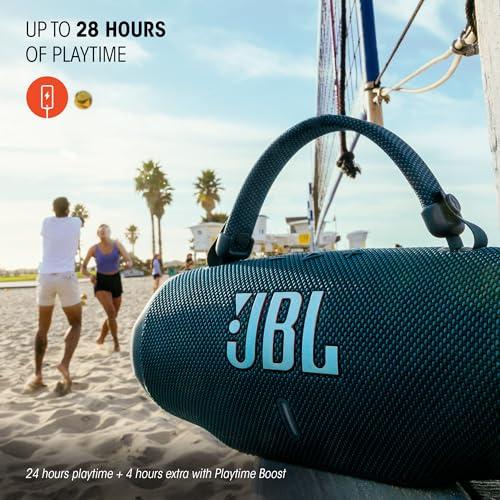
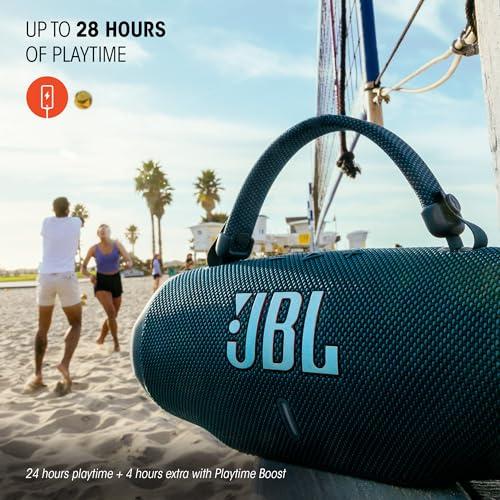
Battery specifications tell only part of the story. The Marshall Emberton II claims 30 hours of playback, while the JBL Charge 6 advertises 24 hours (or 28 with its Playtime Boost feature enabled). In our research of user reports and independent testing, these numbers hold up reasonably well at moderate volume levels, but real-world performance varies significantly based on how you actually use the speaker.
The Marshall Emberton II consistently delivers closer to its advertised battery life because its efficient drivers don't require as much power to produce satisfying volume levels. Users report getting 22-25 hours of mixed-volume listening, which is genuinely impressive for a speaker this compact.
The JBL Charge 6's battery story is more complex. At maximum volume—which you'll likely use if you bought it for parties—expect closer to 14-16 hours. But here's where JBL's Playtime Boost becomes interesting: this feature reduces bass frequencies and lower midrange to extend battery life. It's essentially an automatic EQ preset that prioritizes runtime over audio quality. Some users love having this option for long camping trips; others find the sound quality compromise too noticeable.
The JBL Charge 6 also doubles as a power bank, letting you charge your phone or tablet through its USB-C port. This feature alone can justify the speaker's existence on multi-day adventures where every device's battery matters. The Marshall Emberton II lacks this capability entirely.
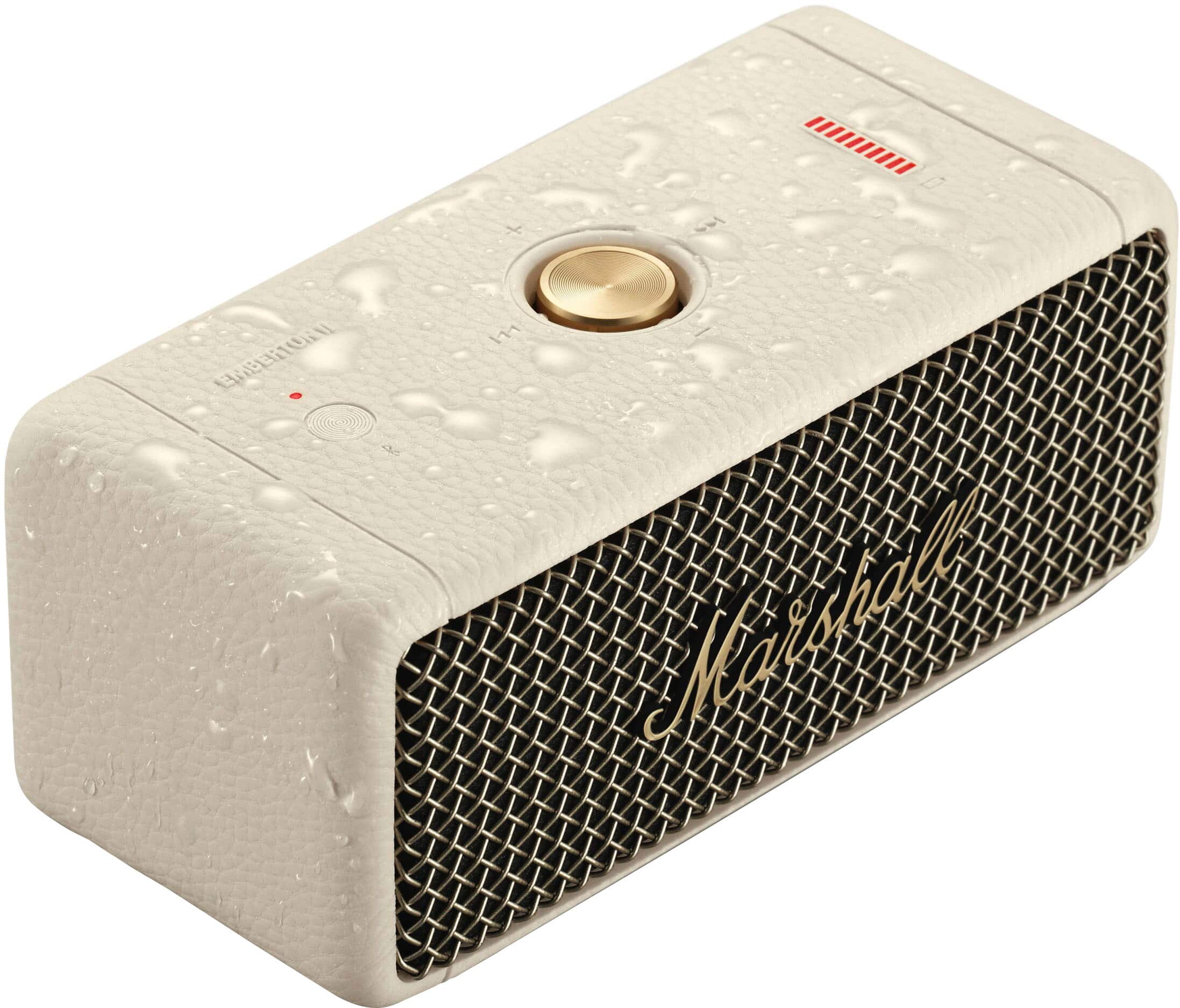
Water resistance ratings can be confusing, so let's break them down. The Marshall Emberton II's IP67 rating means it's completely dust-tight and can handle being submerged in up to 1 meter of water for 30 minutes. That's plenty for poolside use or getting caught in rain.
The JBL Charge 6 ups the ante with an IP68 rating, allowing submersion in up to 1.5 meters of water for 30 minutes. This might seem like a minor difference, but it reflects JBL's focus on extreme outdoor use. If you're kayaking, stand-up paddleboarding, or spending time around deeper water, that extra protection matters.
Both speakers use substantial amounts of recycled materials—the JBL Charge 6 incorporates 85% post-consumer recycled plastic, while the Marshall Emberton II uses 50%. Beyond environmental considerations, this speaks to build quality; recycled plastics often require more sophisticated engineering to maintain durability standards.
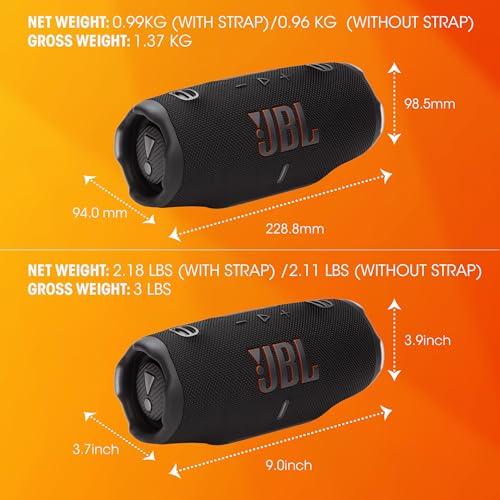
The Marshall Emberton II weighs just 1.5 pounds compared to the JBL Charge 6's 2.11 pounds. That 40% weight difference is immediately noticeable when carrying either speaker for extended periods. The Marshall disappears in a backpack; the JBL announces its presence.
Bluetooth versions matter more than most people realize. The JBL Charge 6 uses Bluetooth 5.4, the latest standard at the time of writing, while the Marshall Emberton II uses the still-excellent Bluetooth 5.1. The practical difference: the JBL should maintain more stable connections at longer distances and handle interference better in crowded wireless environments like apartment buildings or festivals.
Both speakers can connect to two devices simultaneously, but they handle switching differently. The Marshall Emberton II uses traditional multi-host switching—you manually choose which device controls playback. The JBL Charge 6 allows truly simultaneous connections, so two people can take turns controlling music without manually disconnecting and reconnecting.
The JBL Charge 6 also supports Auracast, JBL's new multi-speaker connectivity standard. This lets you wirelessly link multiple compatible JBL speakers for either synchronized playback (party mode) or stereo pairing. Here's the catch: Auracast replaced JBL's older PartyBoost system, so the Charge 6 can't connect to older JBL speakers like the popular Charge 5. If you already own JBL speakers, verify compatibility before assuming they'll work together.
The Marshall Emberton II offers Stack Mode, which connects multiple Emberton II units for expanded sound, but lacks wireless stereo pairing entirely. You can't create a left/right stereo setup with two Marshall speakers, which limits its appeal for serious listening setups.
At the time of writing, the JBL Charge 6 typically costs about $50 more than the Marshall Emberton II. Whether that premium is justified depends entirely on your priorities.
The Marshall Emberton II offers exceptional value in pure audio quality per dollar. Its true stereo output, balanced frequency response, and superior battery life make it feel like a premium hi-fi component shrunk down to portable size. Marshall also includes a USB-A to USB-C charging cable in the box—a small touch that JBL surprisingly omits at its higher price point.
The JBL Charge 6 justifies its premium through features that extend beyond audio. The powerbank functionality, superior waterproofing, latest Bluetooth standard, and significantly higher power output create a value proposition that's harder to quantify but genuinely useful in real-world scenarios.
For home theater supplementation, neither speaker is designed to replace a dedicated soundbar, but they can enhance smaller setups. The Marshall Emberton II's stereo output and balanced frequency response work better for movies and TV shows where dialogue clarity matters. The JBL Charge 6's mono output can actually work well for dialogue-heavy content, but you'll miss spatial audio cues in action scenes.
The Marshall Emberton II is the better choice if you value audio refinement and true portability. Its compact size and 30-hour battery make it ideal for daily commuting, hotel room listening, or any scenario where you want surprisingly good sound from something that barely takes up space in your bag. The natural stereo imaging works beautifully with well-recorded music, making it feel like a legitimate hi-fi component rather than a portable speaker compromise.
Choose the JBL Charge 6 if you need a speaker that can adapt to more demanding situations. The powerbank functionality alone makes it invaluable for camping trips or long days at the beach where multiple devices need charging. Its superior power output and bass response make it the obvious choice for parties, outdoor gatherings, or anywhere you need to compete with ambient noise.
The JBL Charge 6 also makes sense if you're building a multi-speaker setup. Its Auracast compatibility and stereo pairing capabilities mean you can start with one speaker and expand later, something the Marshall Emberton II simply can't match.
For pure music listening in quieter environments, the Marshall Emberton II consistently impresses with its sophisticated sound and effortless portability. For everything else—from pool parties to power outages—the JBL Charge 6's combination of power, features, and durability makes it the more versatile choice, even if you'll pay extra for that flexibility.
| JBL Charge 6 | Marshall Emberton II |
|---|---|
| Power Output - Determines maximum volume and bass impact | |
| 45W RMS (30W woofer + 15W tweeter) - Much louder for parties | 20W RMS (2×10W drivers) - Adequate for personal/small group listening |
| Audio Configuration - Affects stereo imaging and soundstage | |
| Mono output with AI Sound Boost - Prioritizes bass and volume over stereo | True stereo with 360° sound - Natural left/right separation and wider soundstage |
| Battery Life - Critical for all-day outdoor use | |
| 24 hours (28 with Playtime Boost) - Good but not class-leading | 30 hours - Industry-leading endurance for extended trips |
| Water/Dust Protection - Essential for outdoor durability | |
| IP68 (submersible to 1.5m) - Full waterproofing for water sports | IP67 (submersible to 1m) - Excellent protection for poolside/rain use |
| Weight & Portability - Affects daily carry comfort | |
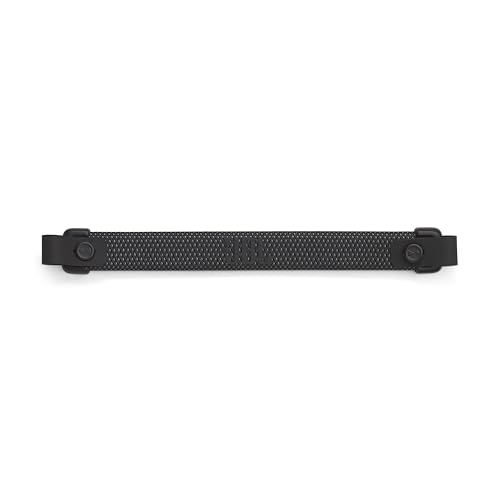
| 2.11 lbs with removable strap - Heavier but includes carrying solution | 1.5 lbs compact design - 40% lighter, disappears in backpack |
| Powerbank Function - Adds utility beyond audio | |
| Yes, via USB-C port - Can charge phones/tablets during long trips | No - Audio-only functionality |
| Multi-Speaker Connectivity - For expanding your setup | |
| Auracast pairing + wireless stereo - Can create true left/right setup with two units | Stack Mode only - Links multiple units but no stereo pairing |
| Bluetooth Version - Affects connection stability and range | |
| 5.4 (latest standard) - Best performance in crowded wireless environments | 5.1 - Excellent performance, slightly older standard |
| Included Accessories - Affects out-of-box value | |
| No charging cable included - Surprising omission at premium price point | USB-A to USB-C cable included - Better complete package value |
| Frequency Response - Determines bass depth and treble clarity | |
| 56 Hz - 20 kHz - Slightly deeper bass extension | 60 Hz - 20 kHz - Well-balanced across full spectrum |
| Best Use Cases - Where each speaker excels | |
| Outdoor parties, water activities, multi-day camping with device charging needs | Daily commuting, hotel rooms, acoustic music, maximum portability priority |
The JBL Charge 6 is significantly louder with 45 watts of power compared to the Marshall Emberton II's 20 watts. This makes the JBL Charge 6 better for outdoor parties and large gatherings, while the Marshall Emberton II is more suitable for personal listening and smaller spaces.
The Marshall Emberton II offers superior battery life with up to 30 hours of playback, compared to the JBL Charge 6's 24 hours (or 28 hours with Playtime Boost enabled). For extended trips or all-day use, the Marshall Emberton II provides more reliable endurance.
Only the JBL Charge 6 can charge other devices through its USB-C port, functioning as a power bank. The Marshall Emberton II does not offer this feature. This makes the JBL Charge 6 more versatile for camping trips or situations where device charging is important.
The JBL Charge 6 has superior water protection with an IP68 rating, allowing submersion up to 1.5 meters for 30 minutes. The Marshall Emberton II has an IP67 rating, protecting against submersion up to 1 meter. Both are excellent for poolside use, but the JBL Charge 6 offers better protection for water sports.
The Marshall Emberton II generally provides better sound quality for music with its true stereo output and balanced frequency response. The JBL Charge 6 focuses more on bass impact and volume with its mono configuration. For detailed music listening, the Marshall Emberton II is typically preferred.
Both speakers support multi-speaker connectivity but use different systems. The JBL Charge 6 uses Auracast technology and can create wireless stereo pairs, while the Marshall Emberton II offers Stack Mode for synchronized playback but cannot create stereo pairs. The JBL Charge 6 provides more flexible expansion options.
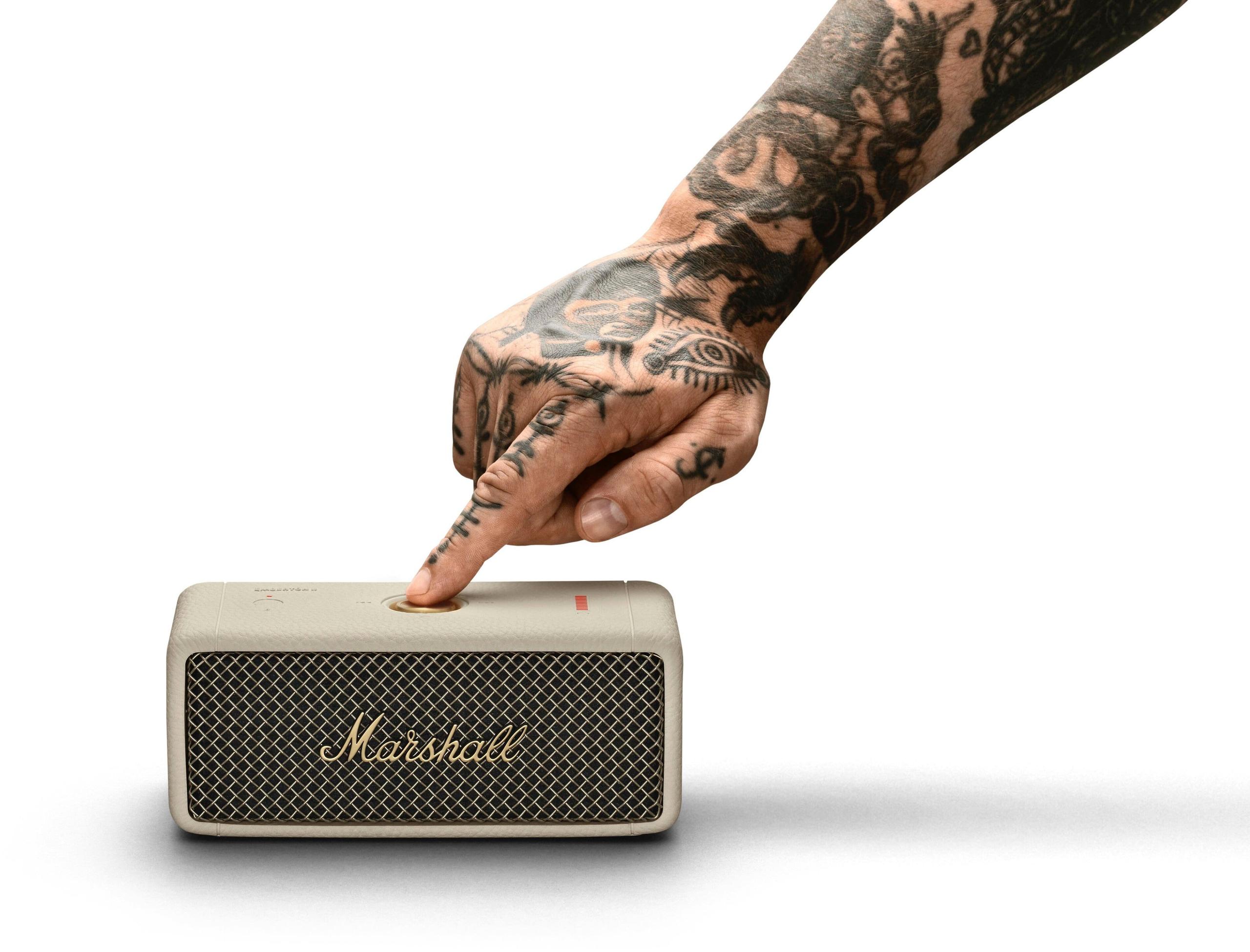
The Marshall Emberton II is more portable at 1.5 pounds compared to the JBL Charge 6's 2.11 pounds. The Marshall Emberton II also has a more compact design that fits easily in backpacks. For daily commuting and travel, the Marshall Emberton II is the lighter, more convenient choice.
Neither speaker is designed to replace a dedicated soundbar, but they can supplement smaller home theater setups. The Marshall Emberton II works better for dialogue-heavy content with its stereo output and balanced sound, while the JBL Charge 6 provides more bass impact for action scenes but lacks stereo separation.
The Marshall Emberton II typically offers better value with its longer battery life, true stereo sound, and included charging cable at a lower price point. The JBL Charge 6 costs more but justifies the premium with higher power output, better waterproofing, and power bank functionality. Value depends on which features matter most to you.
Neither the JBL Charge 6 nor the Marshall Emberton II has built-in voice assistant support or microphones for hands-free calls. Both speakers focus purely on audio playback rather than smart features. You'll need to use your connected device for voice commands or phone calls.
The JBL Charge 6 is better suited for outdoor activities with its higher power output, superior IP68 waterproofing, and power bank functionality. The removable carrying strap also makes transport easier. The Marshall Emberton II works for outdoor use but is better for quieter settings where portability matters more than maximum volume.
The JBL Charge 6 uses the newer Bluetooth 5.4 standard for potentially better range and stability, while the Marshall Emberton II uses Bluetooth 5.1. Both can connect to two devices simultaneously, but the JBL Charge 6 handles device switching more seamlessly. In real-world use, both provide reliable wireless connections.
We've done our best to create useful and informative comparisons to help you decide what product to buy. Our research uses advanced automated methods to create this comparison and perfection is not possible - please contact us for corrections or questions. These are the sites we've researched in the creation of this article: rtings.com - youtube.com - stereoguide.com - whathifi.com - youtube.com - elomymelo.com - soundguys.com - elomymelo.com - wifihifi.com - soundguys.com - jbl.com - whathifi.com - soundguys.com - youtube.com - smarthomesounds.co.uk - jbl.com - sweetwater.com - youtube.com - bestbuy.com - jbl.com.sg - jbl.com - dell.com - ca.jbl.com - soundguys.com - soundguys.com - dell.com - techradar.com - dreamwaveus.com - crutchfield.com - soundguys.com - gadgets360.com - rtings.com - youtube.com - youtube.com - youtube.com - shop.ash-asia.com - crutchfield.com - gadgetstyler.com - youtube.com - avstore.in

Privacy Policy
Terms and Conditions - Affiliate Policy
Home Security
© Copyright 2008-2026.
11816 Inwood Rd #1211, Dallas, TX 75244