

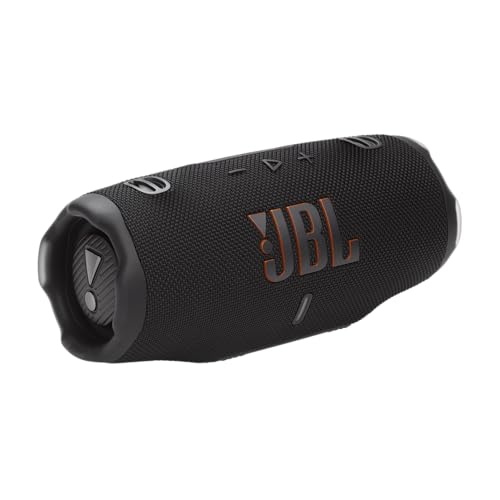
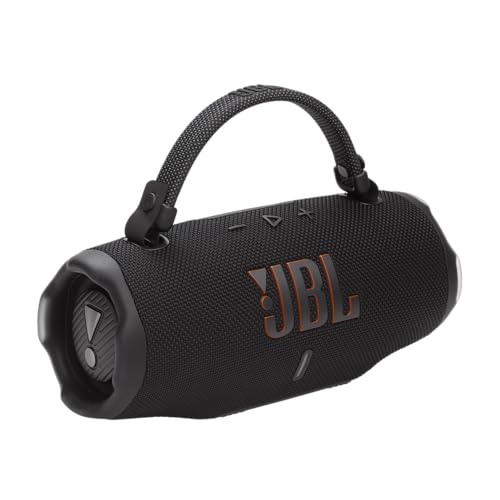
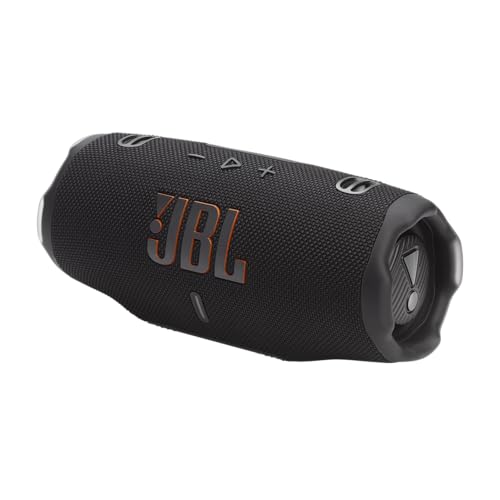
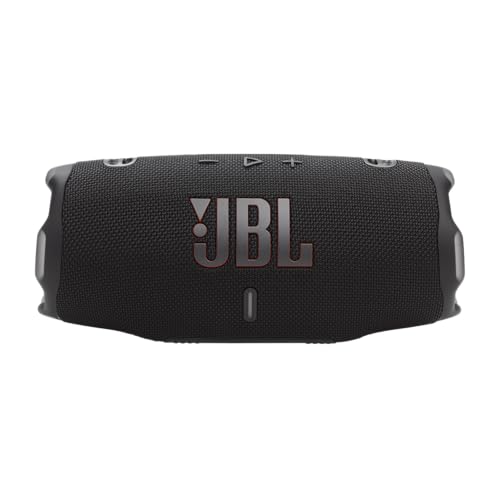
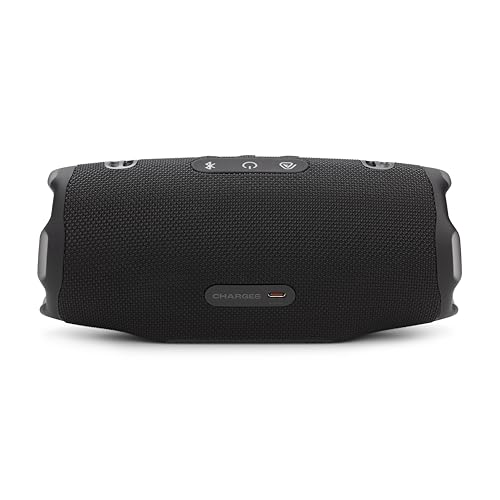
Portable Bluetooth speakers have become essential companions for music lovers, but choosing the right one can be overwhelming. The market offers everything from pocket-sized budget options to premium powerhouses, each designed for different lifestyles and listening preferences. Today, we're comparing two speakers that represent opposite ends of this spectrum: the JBL Charge 6 and the Anker Soundcore Mini.
Released in 2024, the JBL Charge 6 represents JBL's latest thinking in mid-to-premium portable audio, building on decades of speaker engineering expertise. Meanwhile, Anker's Soundcore Mini has been a budget champion since its introduction, proving that impressive sound doesn't always require a hefty price tag. At the time of writing, these speakers sit about $125 apart in pricing, which immediately tells you they're targeting completely different audiences.
Before diving into specifics, it's worth understanding what separates good portable speakers from mediocre ones. The most critical factors include audio power output (measured in watts), driver configuration (the actual speakers inside the housing), frequency response (how low and high the speaker can reproduce sound), battery efficiency, and build quality.
Modern Bluetooth speakers also incorporate digital signal processing (DSP) – essentially computer chips that analyze and optimize audio in real-time. This technology has revolutionized small speakers, allowing manufacturers to extract surprising performance from compact drivers that would have sounded terrible just a decade ago.
The most fundamental difference between these speakers lies in their raw audio capability. The JBL Charge 6 packs a hefty 45 watts of total power through what's called a two-way driver system. This means it has separate drivers optimized for different frequency ranges: a larger woofer handling bass and midrange sounds, plus a smaller tweeter dedicated to high frequencies. This specialized approach allows each driver to excel at its intended job rather than compromising across the entire audio spectrum.
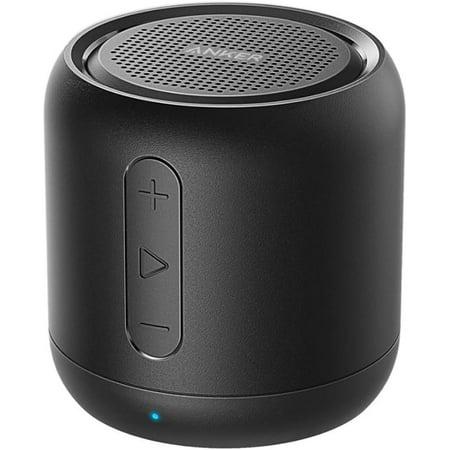
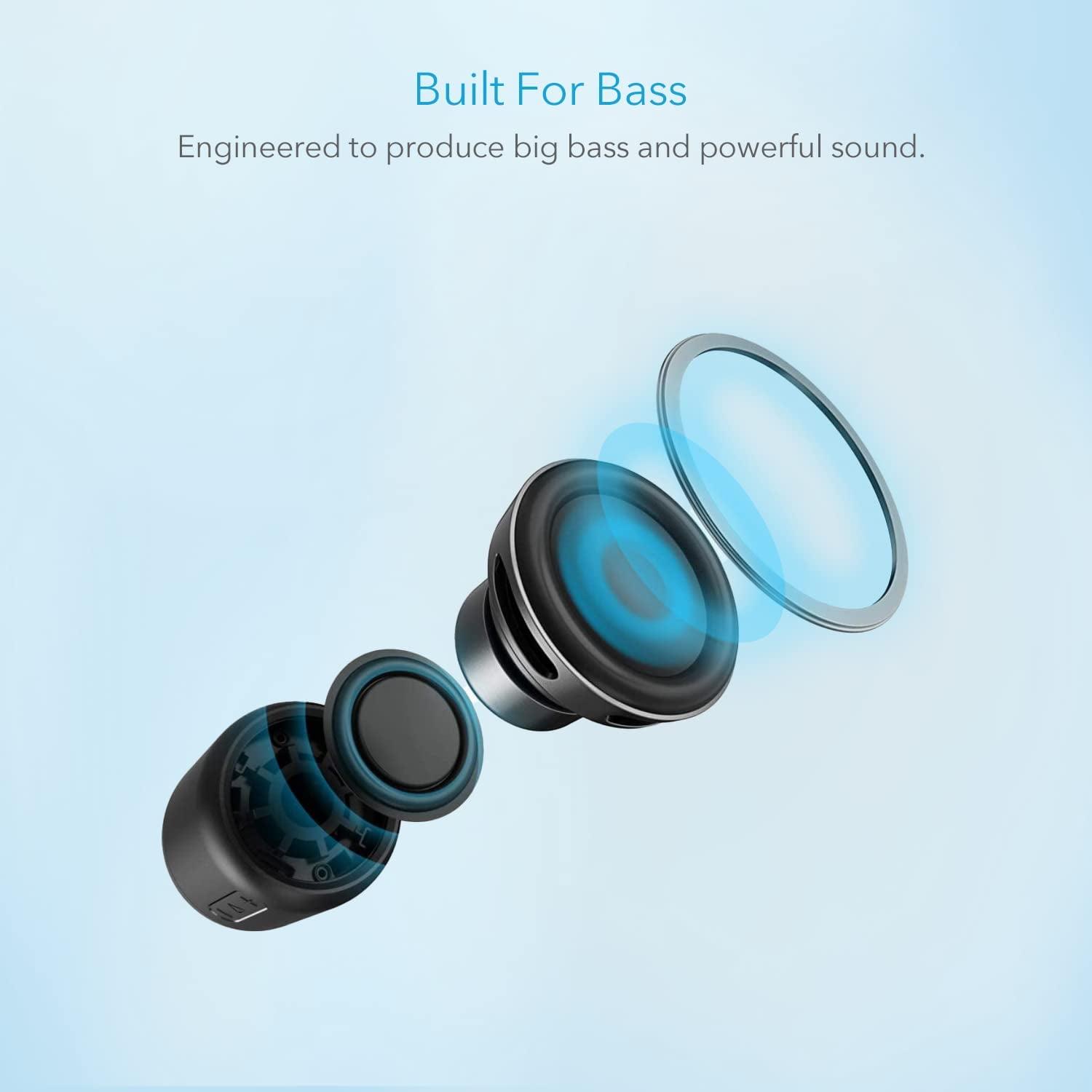
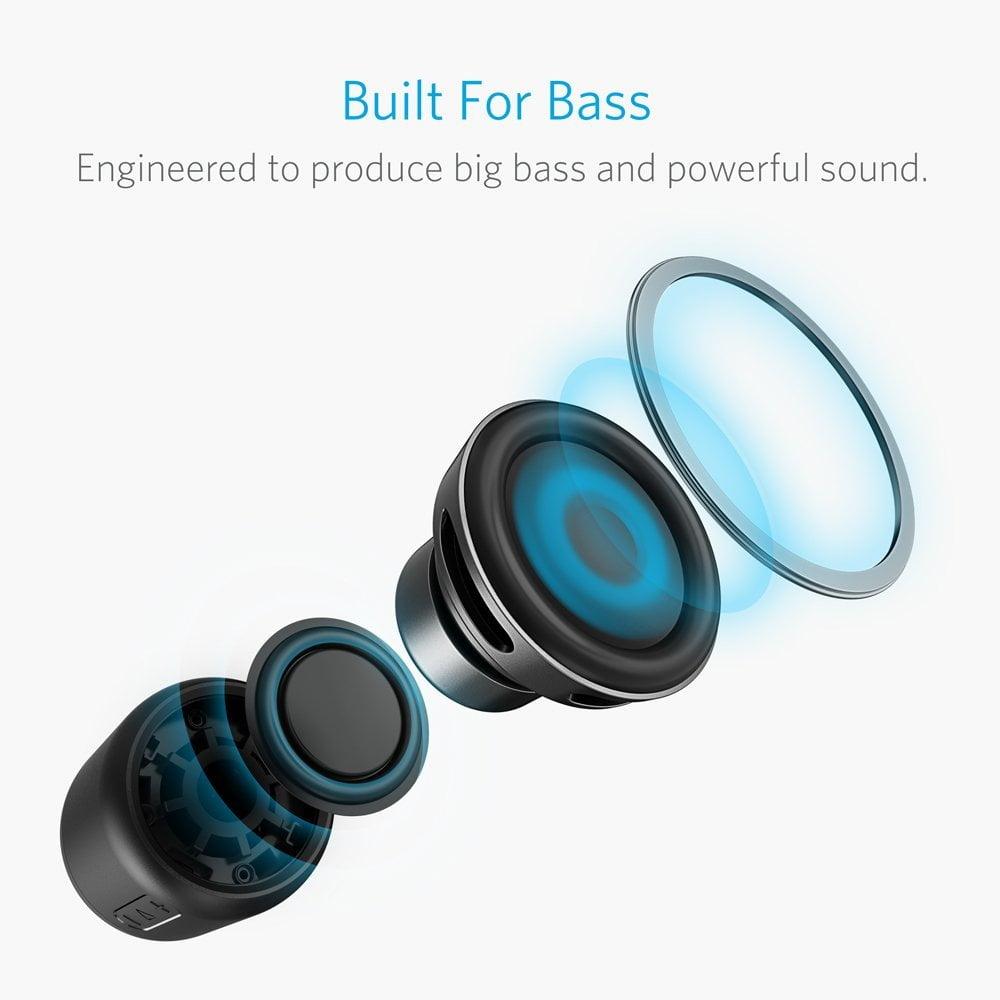
In contrast, the Anker Soundcore Mini relies on a single 5-watt driver assisted by a passive radiator (essentially a speaker cone without magnets that moves in response to air pressure from the main driver, helping boost bass response). While this is an impressive engineering achievement for such a tiny package, it's fighting physics – you simply can't move as much air with a 5-watt driver as you can with 45 watts.
To put this in perspective, the power difference means the JBL Charge 6 can comfortably fill a medium-sized room or outdoor gathering of 15-20 people, while the Soundcore Mini excels at personal listening or small indoor spaces with 2-4 people maximum.
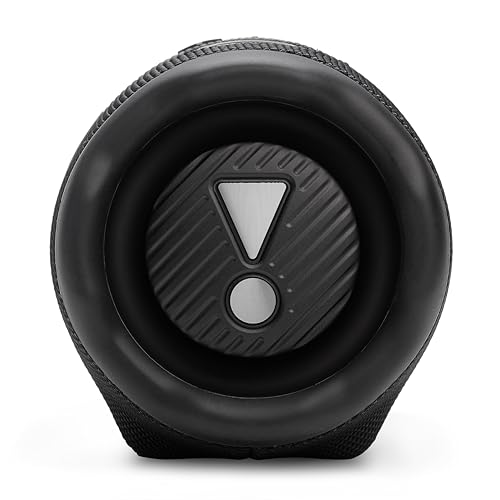
The JBL Charge 6 operates across a frequency range of 56 Hz to 20 kHz, which covers nearly the entire range of human hearing. Those low-end 56 Hz frequencies represent genuine bass – the kind you feel in your chest during action movies or bass-heavy music. The speaker achieves this through its larger woofer and sophisticated port tuning (carefully designed openings that help enhance bass response).
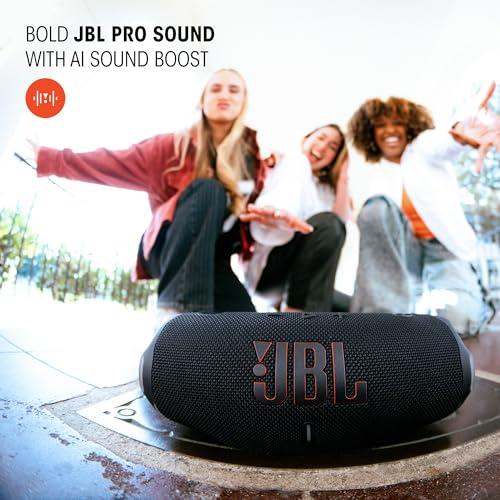
JBL has also implemented what they call AI Sound Boost technology in the Charge 6. This system continuously analyzes the audio signal and adjusts the speaker's output in real-time to prevent distortion and maximize clarity. It's like having a sound engineer constantly tweaking the speaker's performance to match whatever you're playing.
The Soundcore Mini, while lacking published frequency specifications, focuses its energy on midrange frequencies where most vocals and instruments live. Based on user feedback and our analysis of similar designs, it likely operates from around 80-100 Hz up to 15 kHz. This means you'll hear voices and most instruments clearly, but deep bass notes and the finest high-frequency details get lost.
The Mini's upward-facing driver creates what's called 360-degree sound dispersion – music radiates in all directions rather than being focused forward. This design choice works well for personal listening since you get consistent sound no matter where you're sitting, but it can't match the focused power and bass impact of the Charge 6's forward-firing configuration.
Here's where the power difference becomes most apparent. The JBL Charge 6 maintains impressive clarity and punch even at maximum volume, thanks to both its higher power output and sophisticated DSP processing. You can crank it up for a pool party or outdoor barbecue without the sound becoming harsh or distorted.
The Soundcore Mini hits its limitations much sooner. Push it beyond moderate levels, and you'll notice compression (where loud and soft sounds get squashed together) and distortion. This isn't a design flaw – it's physics. The tiny driver simply can't move enough air to reproduce loud, dynamic music without strain.
For context, if you're planning to use your speaker primarily for background music while cooking or reading, the Mini's limitations won't matter. But if you want to feel the impact of movie explosions or dance to bass-heavy electronic music, the Charge 6 is in a completely different league.
One of the most significant practical differences between these speakers is their approach to environmental protection. The JBL Charge 6 boasts an IP68 rating – the highest standard for consumer electronics. The "IP" stands for Ingress Protection, and those numbers tell a specific story: "6" means completely dust-tight, while "8" indicates the speaker can handle continuous submersion in water deeper than one meter.
In practical terms, this means you can literally drop the Charge 6 in a swimming pool, lake, or even take it in the shower without worry. JBL tests this specific model for submersion up to 1.5 meters deep for 30 minutes – far beyond what most people will ever encounter.
The Soundcore Mini has no official water resistance rating, making it strictly an indoor or protected outdoor speaker. A spilled drink or unexpected rain shower could potentially damage it permanently. This limitation significantly affects where and how you can use the speaker.
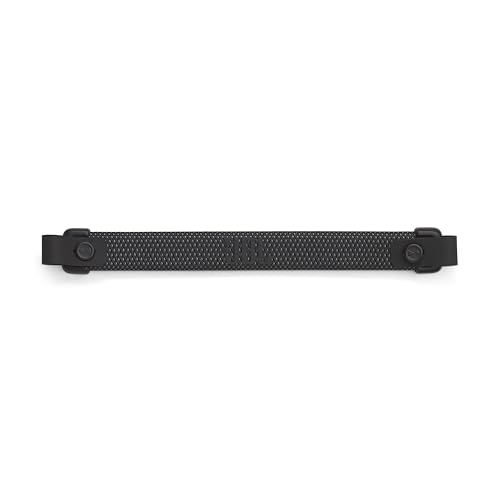
The JBL Charge 6 features what the company calls drop-proof construction, tested to survive falls from one meter onto concrete. The speaker uses a combination of rubber bumpers, reinforced corners, and a durable fabric grille to protect the internal components. JBL has also made environmental commitments, using 85% post-consumer recycled plastic in the housing – proving that durability and sustainability can coexist.
The Soundcore Mini uses more basic plastic construction adequate for gentle handling but not designed for rough treatment. At its price point, this isn't surprising or necessarily problematic if you plan to use it carefully. However, the longevity difference could be significant – the Charge 6 is likely to survive years of outdoor adventures, while the Mini might need replacement sooner with heavy use.
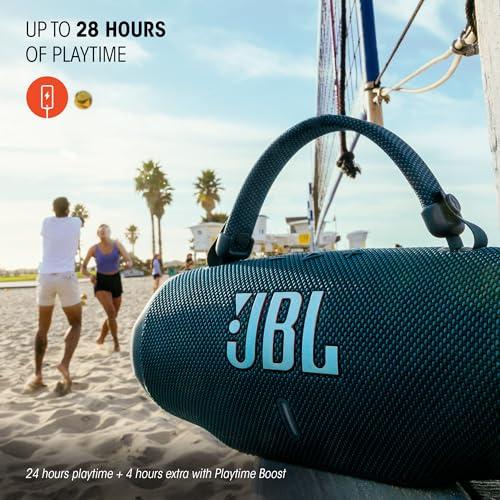
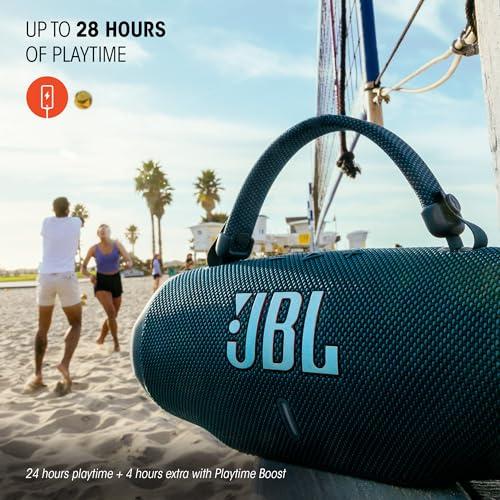
Battery performance represents another area where these speakers take different approaches. The JBL Charge 6 claims up to 28 hours of playback with its Playtime Boost mode activated, or 24 hours in standard operation. Playtime Boost works by reducing bass frequencies and lower-midrange output to conserve battery power – essentially trading some audio quality for extended runtime.
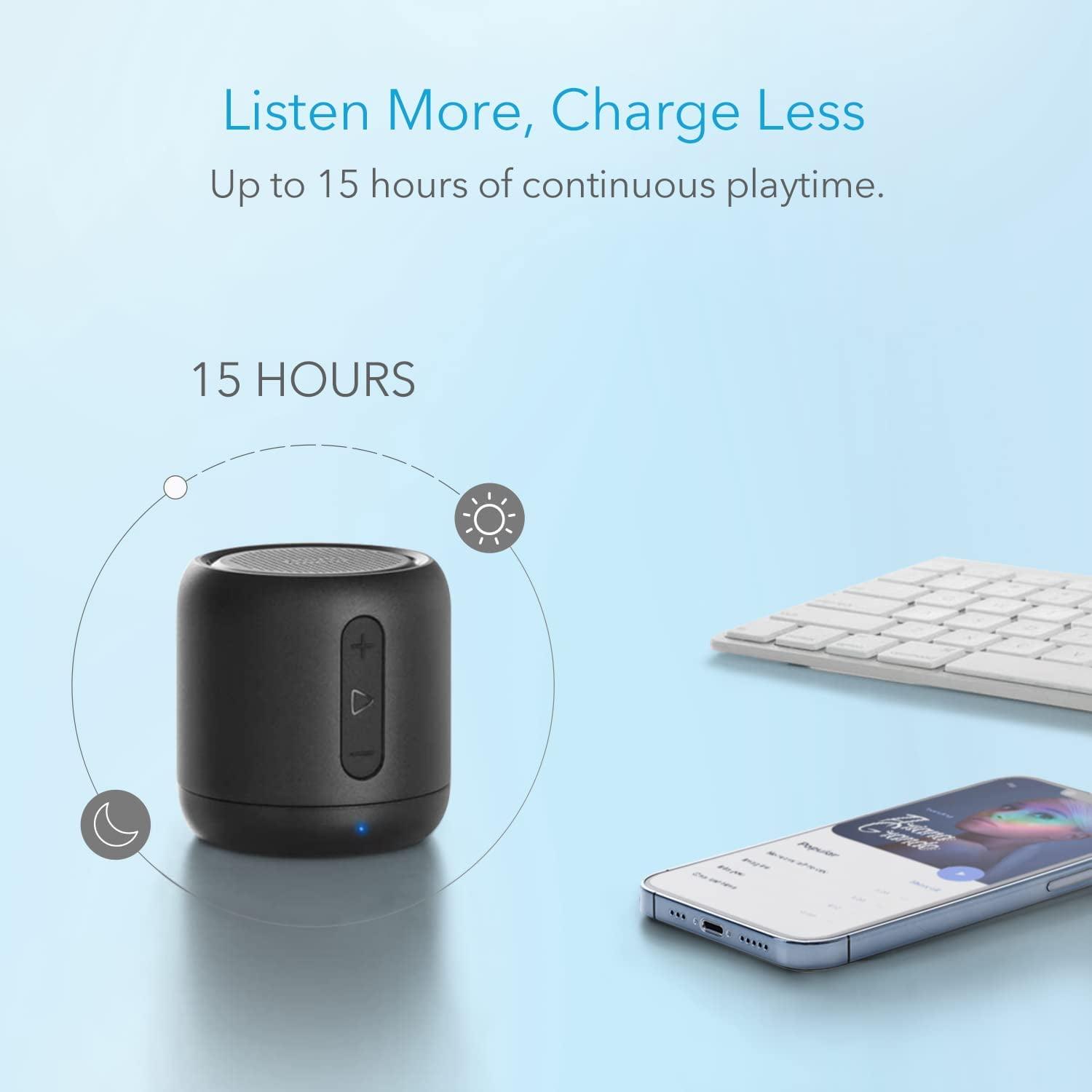
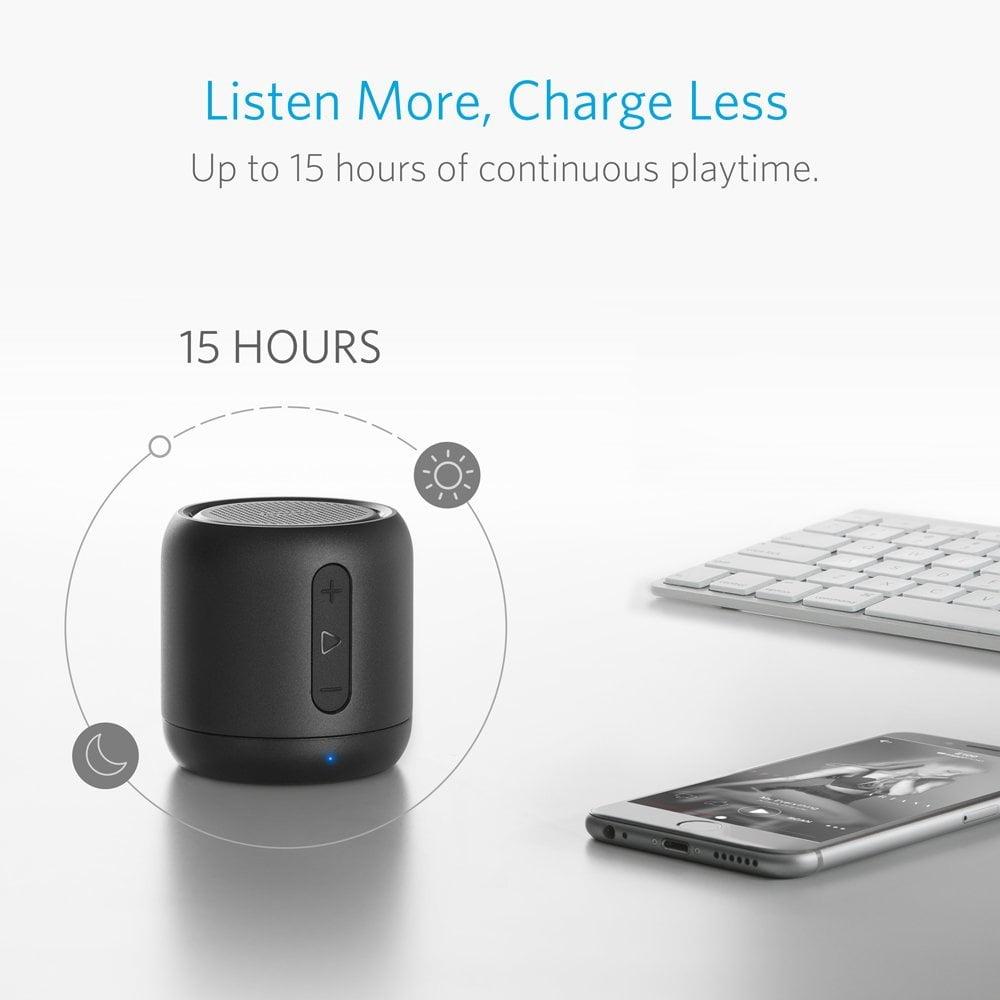
The Soundcore Mini provides up to 15 hours of continuous playback, which is actually quite impressive given its tiny battery. The efficiency comes from that 5-watt power consumption – it simply doesn't need as much energy to operate.
Real-world battery life depends heavily on volume levels and music content. Bass-heavy tracks at high volumes drain batteries much faster than acoustic music at moderate levels. Based on user reports, expect the Charge 6 to deliver roughly 12-16 hours of typical mixed-volume listening, while the Mini should provide 10-12 hours under similar conditions.
Here's where the JBL Charge 6 demonstrates true versatility. Beyond playing music, it functions as a power bank capable of charging smartphones, tablets, or other USB devices. The USB-C port can output up to 3 amps, providing reasonably fast charging for most devices.
This dual functionality transforms the speaker from a single-purpose audio device into a multi-tool for travel, camping, or long days away from wall outlets. During a beach day or camping trip, you can listen to music all day and still have enough battery reserve to charge your phone for emergencies.
The Soundcore Mini dedicates its entire battery to audio playback, which isn't necessarily wrong but limits its utility in situations where device charging becomes important.
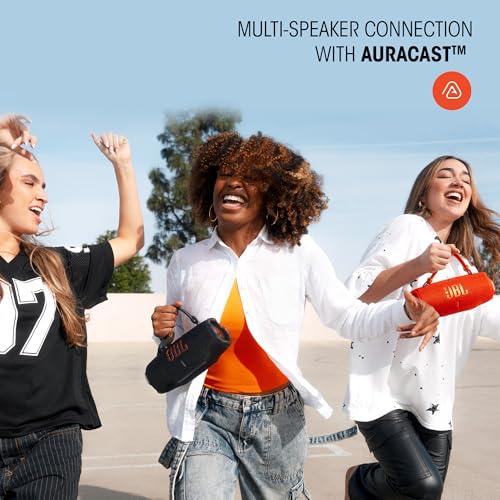
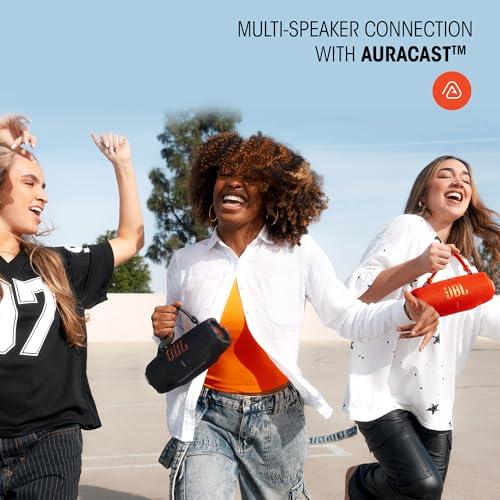
The JBL Charge 6 uses Bluetooth 5.1, a relatively recent standard offering improved connection stability and extended range compared to older versions. More importantly, it supports JBL's Auracast technology – a new approach to multi-speaker connectivity that allows you to link multiple compatible JBL speakers for expanded coverage or stereo sound.
Auracast represents a significant improvement over older pairing systems because it's based on Bluetooth LE Audio, a newer standard designed specifically for multiple device connections. You can stereo pair two Charge 6 speakers for true left-right channel separation, or connect several for whole-house audio coverage.
The Soundcore Mini uses older Bluetooth 4.0, which works fine for basic connectivity but lacks the advanced features and connection stability of newer standards. It can pair with one other Mini for basic stereo, but doesn't offer the sophisticated multi-speaker capabilities of the JBL.
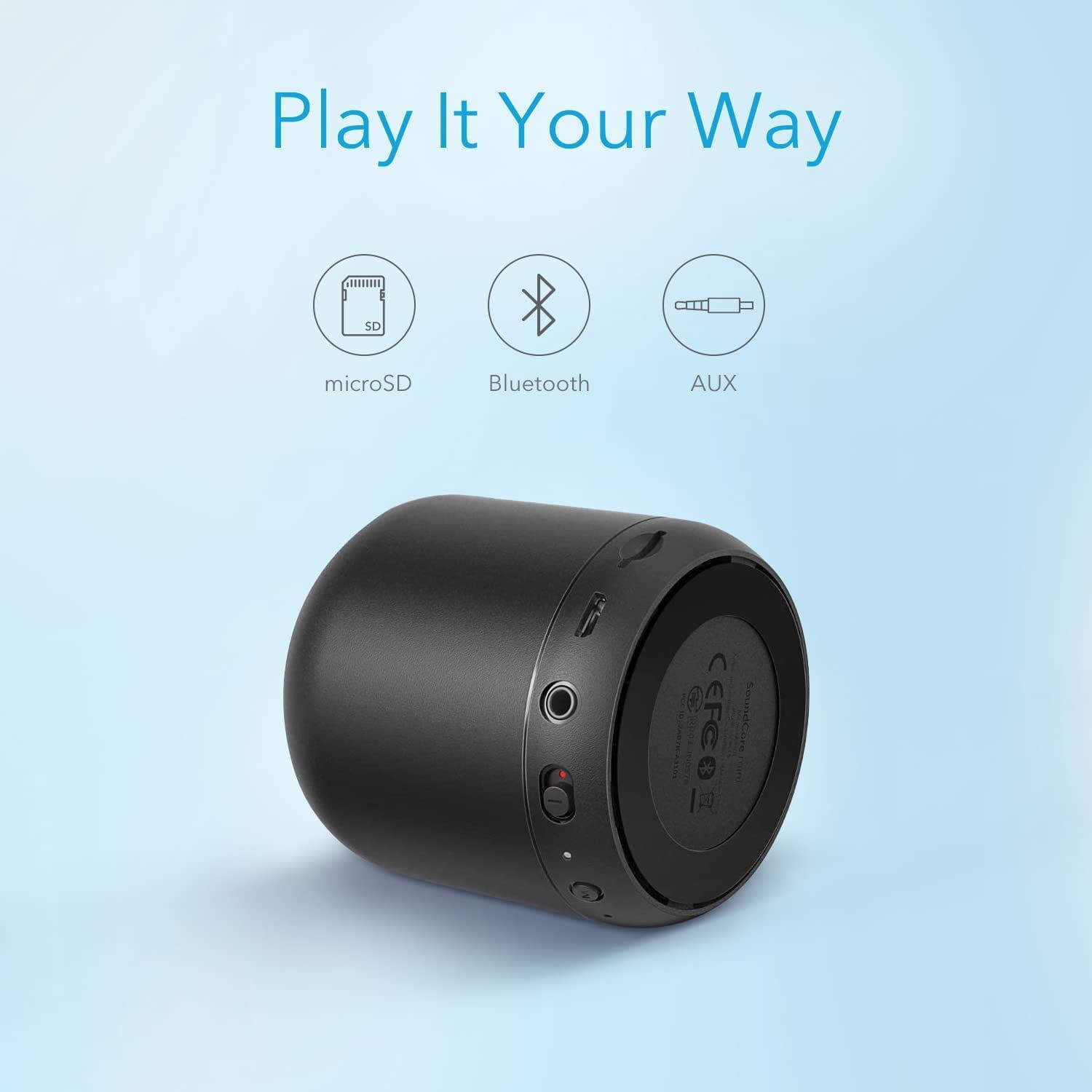
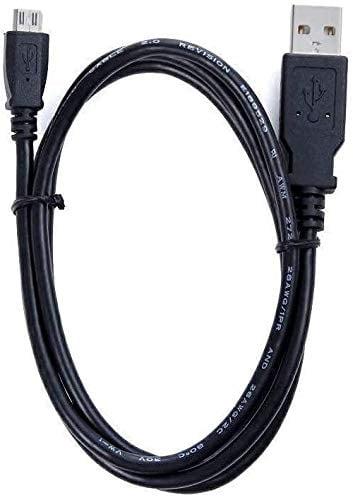
Interestingly, the Soundcore Mini compensates for its audio limitations with impressive connectivity flexibility. Beyond Bluetooth, it includes a 3.5mm auxiliary input for wired connections, a microSD card slot for playing music directly from storage cards, and even FM radio capability (using the micro-USB cable as an antenna).
This versatility can be genuinely useful. The aux input works with any device that has a headphone jack, the microSD slot lets you play music without connecting any device, and the FM radio provides entertainment when cellular data is limited or unavailable.
The JBL Charge 6 focuses primarily on wireless connectivity, though it does offer lossless audio playback through its USB-C connection when connected to compatible devices. This wired connection can actually provide better audio quality than Bluetooth by avoiding wireless compression, though most users won't notice the difference except with high-end audio files.
Surprisingly, the JBL Charge 6 lacks a built-in microphone, meaning it can't handle hands-free phone calls or voice assistant commands. This seems like an oversight at its price point, especially since the much cheaper Soundcore Mini includes microphone functionality.
The Soundcore Mini does include that microphone, allowing hands-free calling and basic voice commands when connected to smartphones. The call quality isn't exceptional due to the single small microphone, but it's adequate for casual conversations.
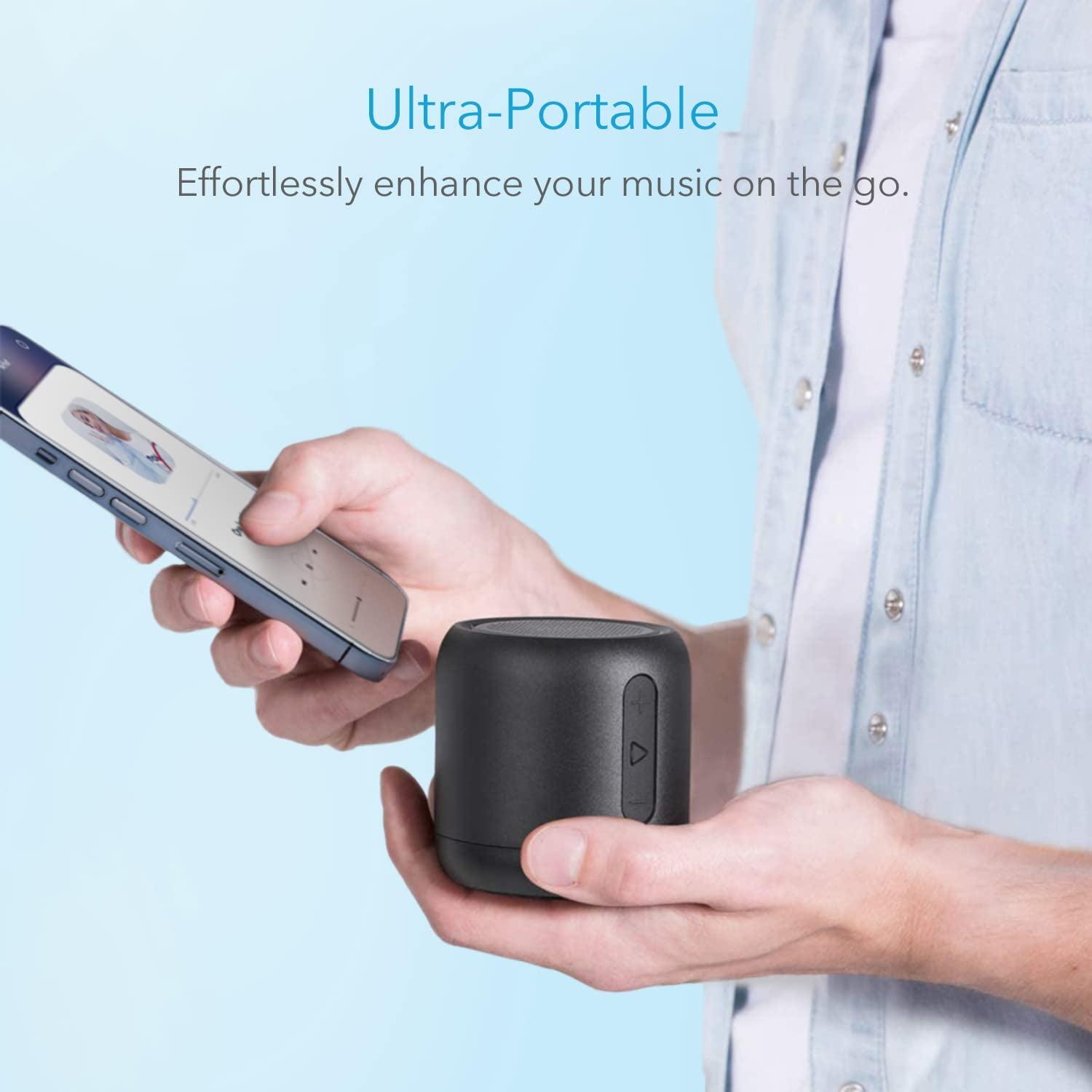
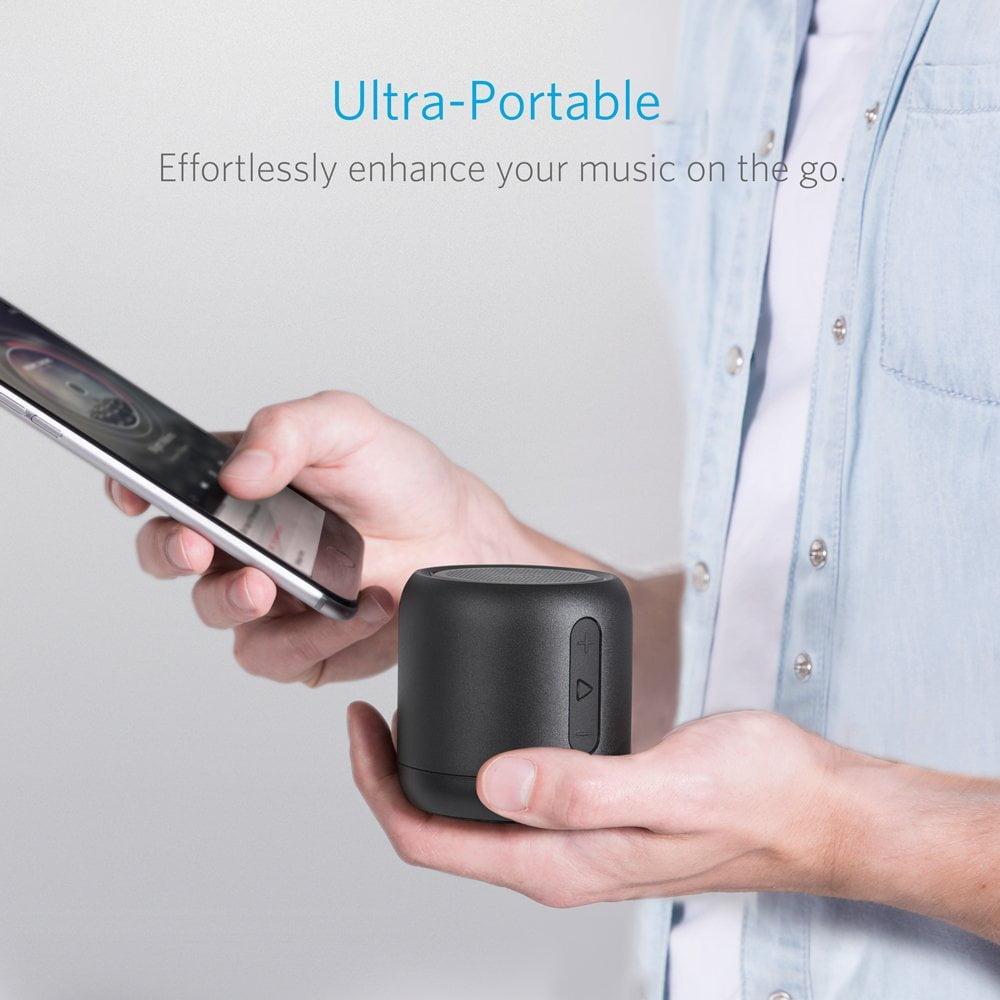
The Soundcore Mini lives up to its name with dimensions of just 6.9 inches cubed and a weight of only 0.44 pounds. This makes it genuinely pocketable – you can slip it into a jacket pocket, small purse, or any travel bag without thinking twice about space or weight.
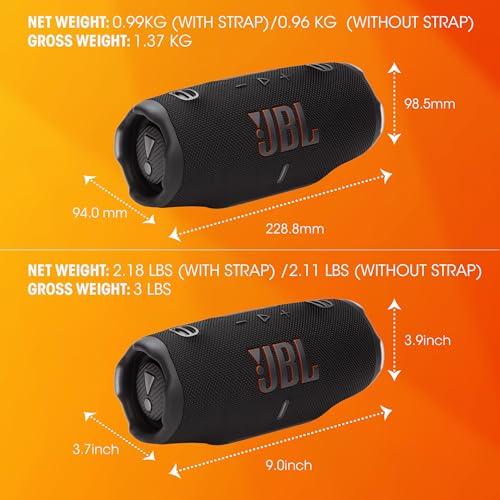
The JBL Charge 6 weighs nearly 2.2 pounds and measures significantly larger in all dimensions. While still portable, it requires dedicated bag space and adds noticeable weight to travel gear. However, this size accommodates the larger drivers, bigger battery, and robust construction that enable its superior performance.
For frequent air travelers or minimalist packers, the Mini's size advantage is substantial. For car camping, beach days, or situations where performance matters more than ultimate portability, the Charge 6's larger size becomes worthwhile.
Neither speaker is designed primarily for home theater use, but they serve different indoor roles effectively. The JBL Charge 6 can work as a TV speaker upgrade for small to medium rooms, providing much better dialogue clarity and bass response than typical TV speakers. Its USB-C input even allows direct connection to many modern TVs for potentially better audio quality than Bluetooth.
However, both speakers output mono audio (combining left and right channels), which isn't ideal for movies or shows mixed in stereo. For serious home theater use, you'd want to pair two Charge 6 speakers for true stereo separation, though this obviously doubles the cost.
The Soundcore Mini works better as a personal TV speaker for small spaces like dorm rooms or bedrooms where volume and bass aren't priorities. Its compact size makes it easy to position near a laptop or small TV without dominating the space.
This is where the differences become most pronounced. The JBL Charge 6's waterproof construction, powerful output, and power bank functionality make it ideal for beach days, pool parties, camping trips, and outdoor gatherings. You can literally use it in or around water without concern, and its volume capability means everyone at a barbecue or campsite can hear the music clearly.
The Soundcore Mini's lack of water resistance severely limits outdoor use. It's fine for covered patios or picnics in guaranteed dry conditions, but any moisture risk makes it unsuitable. Its lower volume output also means it struggles in noisy outdoor environments or when trying to cover larger areas.
For travel, the situation reverses somewhat. The Mini's tiny size and diverse connectivity options (aux, microSD, FM radio) make it ideal for hotel rooms, where you might not have reliable WiFi for streaming but could use FM radio or music stored on a memory card. Its 15-hour battery life typically covers multiple days of casual listening without charging.
At the time of writing, these speakers represent fundamentally different value propositions. The Soundcore Mini delivers remarkable performance for its budget price point – you'd be hard-pressed to find comparable sound quality for less money. It's not trying to compete with premium speakers; instead, it maximizes what's possible within severe cost constraints.
The JBL Charge 6 commands premium pricing but justifies it through professional-grade performance, rugged durability, extended battery life, and multi-device functionality. When you factor in its power bank capability, the effective cost per function becomes more reasonable.
The Charge 6's superior build quality and comprehensive weather protection suggest it will last significantly longer under regular use. Its higher-quality drivers and robust construction should maintain performance over years of use, while the waterproof design prevents the moisture damage that commonly kills cheaper speakers.
The Soundcore Mini's simpler construction and lack of environmental protection mean it may require replacement sooner, but at roughly one-fourth the cost, you could potentially buy three or four Mini speakers over the lifespan of one Charge 6. For budget-conscious users who handle electronics carefully, this math might work in the Mini's favor.
You should seriously consider the JBL Charge 6 if audio quality matters significantly to you and your budget allows for the premium pricing. It's the clear choice for anyone who regularly hosts gatherings, spends time around water, or needs a speaker that can fill larger spaces with authority. The power bank functionality adds genuine value for travelers or outdoor enthusiasts who need device charging capabilities.
The Charge 6 also makes sense if you prefer owning fewer, higher-quality devices rather than multiple cheaper alternatives. Its durability and performance should satisfy most users for years, potentially making it more economical long-term despite the higher upfront cost.
The Soundcore Mini is ideal if budget is your primary constraint but you still want decent sound quality. It's perfect for users who prioritize ultimate portability – frequent flyers, hikers, or anyone who needs music capability that fits anywhere without weight penalty.
The Mini also appeals to users who value connectivity flexibility over pure audio performance. Its aux input, microSD slot, and FM radio provide entertainment options that don't require smartphone connectivity or data usage. The built-in microphone for hands-free calling is another practical advantage the Charge 6 surprisingly lacks.
These speakers succeed in their intended markets by making different compromises. The JBL Charge 6 prioritizes performance, durability, and versatility at the cost of size and price. The Anker Soundcore Mini maximizes portability and value while accepting significant limitations in power and environmental protection.
Your choice should align with how you actually plan to use a portable speaker. If you imagine pool parties, camping trips, and filling rooms with music, the Charge 6 is worth the investment. If you mainly want personal background music that travels easily and doesn't strain your budget, the Soundcore Mini delivers exactly what you need without paying for capabilities you won't use.
Both speakers represent successful engineering within their respective constraints, proving that there's no single "best" portable speaker – only the best speaker for your specific needs and circumstances.
| JBL Charge 6 | Anker Soundcore Mini |
|---|---|
| Audio Power Output - Determines maximum volume and room-filling capability | |
| 45W total (30W woofer + 15W tweeter) - fills medium rooms and outdoor spaces | 5W single driver - best for personal listening in small spaces |
| Driver Configuration - Affects sound quality and frequency range | |
| Dual-driver system (tweeter + woofer) with passive radiators for enhanced bass | Single 5W driver with passive subwoofer - simpler but more limited |
| Water Resistance - Critical for outdoor and poolside use | |
| IP68 rating (fully waterproof/dustproof, submersible up to 1.5m) | No water resistance - indoor/protected use only |
| Battery Life - How long you can listen without charging | |
| Up to 28 hours (24 hours standard, 28 with Playtime Boost mode) | Up to 15 hours continuous playback |
| Size & Weight - Impacts portability and travel convenience | |
| 2.2 lbs, larger dimensions - requires dedicated bag space | 0.44 lbs, 6.9" cube - fits in pockets and small bags |
| Bluetooth Version - Affects connection stability and range | |
| Bluetooth 5.1 with Auracast multi-speaker pairing | Bluetooth 4.0 with basic stereo pairing |
| Power Bank Function - Ability to charge other devices | |
| Yes, USB-C output up to 3A for charging phones/tablets | No power bank capability |
| Charging Port - Convenience and future compatibility | |
| USB-C (modern standard, faster charging) | Micro-USB (older standard, slower charging) |
| Input Options - Flexibility for different audio sources | |
| Primarily Bluetooth + USB-C for lossless audio | Bluetooth + 3.5mm aux + microSD + FM radio |
| Built-in Microphone - Hands-free calling capability | |
| No microphone (cannot take calls or use voice commands) | Yes, built-in microphone for hands-free calling |
| Frequency Response - Range of sound reproduction | |
| 56 Hz - 20 kHz (deep bass to crisp highs) | Not specified (estimated 80-100 Hz to 15 kHz) |
| Special Audio Features - Advanced sound processing | |
| AI Sound Boost technology for real-time optimization and distortion reduction | 360-degree sound dispersion from upward-facing driver |
| Durability Rating - Protection against drops and impacts | |
| Drop-proof tested (1-meter drop), premium materials with recycled content | Basic plastic construction for gentle handling |
| Multi-Speaker Connectivity - Expanding your sound system | |
| Auracast technology for connecting multiple JBL speakers seamlessly | Limited to pairing with one other Soundcore Mini |
| Price Category - Value positioning in the market | |
| Premium pricing for professional-grade performance and features | Budget-friendly pricing with focus on essential functionality |
The JBL Charge 6 is significantly louder with 45W of power output compared to the Anker Soundcore Mini's 5W. This means the JBL Charge 6 can fill medium-sized rooms and outdoor spaces, while the Soundcore Mini is best suited for personal listening or small indoor areas with just a few people.
Only the JBL Charge 6 is safe for water exposure, featuring an IP68 waterproof rating that allows submersion up to 1.5 meters. The Anker Soundcore Mini has no water resistance and should be kept away from moisture, making it unsuitable for poolside or bathroom use.
The JBL Charge 6 offers superior battery life with up to 28 hours of playback (24 hours standard), compared to the Anker Soundcore Mini's 15 hours. The Charge 6 also functions as a power bank to charge your devices, while the Soundcore Mini cannot charge other devices.
The Anker Soundcore Mini is much more portable, weighing only 0.44 pounds and measuring 6.9 inches cubed, making it easily pocketable. The JBL Charge 6 weighs 2.2 pounds and requires dedicated bag space, though it offers significantly better performance for the size trade-off.
Both speakers support Bluetooth, but the JBL Charge 6 uses newer Bluetooth 5.1 with better stability and Auracast multi-speaker pairing. The Anker Soundcore Mini uses older Bluetooth 4.0 but compensates with more input options including 3.5mm aux, microSD card slot, and FM radio.
Only the Anker Soundcore Mini includes a built-in microphone for hands-free calling. Surprisingly, the JBL Charge 6 lacks microphone capability, so it cannot handle phone calls or voice assistant commands despite its premium positioning.
The JBL Charge 6 delivers superior sound quality with its dual-driver system (separate tweeter and woofer), AI Sound Boost technology, and ability to reproduce deep bass down to 56 Hz. The Soundcore Mini provides decent sound for its size but cannot match the Charge 6's dynamic range, bass response, or clarity at higher volumes.
The JBL Charge 6 takes about 3 hours to fully charge via USB-C and offers fast charging (10 minutes provides 2.5 hours of playback). The Anker Soundcore Mini uses older micro-USB charging, which is typically slower than the Charge 6's modern USB-C standard.
The JBL Charge 6 supports Auracast technology, allowing you to connect multiple compatible JBL speakers for expanded coverage or stereo pairing. The Anker Soundcore Mini has more limited connectivity, only able to pair with one other Soundcore Mini for basic stereo sound.
This depends on your needs and budget. The Anker Soundcore Mini offers exceptional value for budget-conscious buyers who need basic portable audio. The JBL Charge 6 provides premium performance, waterproofing, and power bank functionality that justify its higher cost for users who need those capabilities.
The JBL Charge 6 excels at outdoor gatherings with its powerful 45W output, waterproof design, and ability to fill larger spaces with sound. The Anker Soundcore Mini lacks the volume and weather resistance needed for outdoor parties, making it better suited for personal or small group listening indoors.
The JBL Charge 6 features superior durability with IP68 water/dust resistance, drop-proof construction tested to 1 meter, and premium materials including recycled plastics. The Anker Soundcore Mini uses basic plastic construction suitable for gentle handling but isn't designed for rugged use like the Charge 6.
We've done our best to create useful and informative comparisons to help you decide what product to buy. Our research uses advanced automated methods to create this comparison and perfection is not possible - please contact us for corrections or questions. These are the sites we've researched in the creation of this article: rtings.com - youtube.com - stereoguide.com - whathifi.com - youtube.com - elomymelo.com - soundguys.com - elomymelo.com - wifihifi.com - soundguys.com - jbl.com - whathifi.com - soundguys.com - youtube.com - smarthomesounds.co.uk - jbl.com - sweetwater.com - youtube.com - bestbuy.com - jbl.com.sg - jbl.com - dell.com - ca.jbl.com - soundguys.com - soundguys.com - dell.com - outeraudio.com - soundcore.com - youtube.com - unwiredforsound.com - community.anker.com - youtube.com - soundcore.com - community.anker.com

Privacy Policy
Terms and Conditions - Affiliate Policy
Home Security
© Copyright 2008-2026.
11816 Inwood Rd #1211, Dallas, TX 75244