

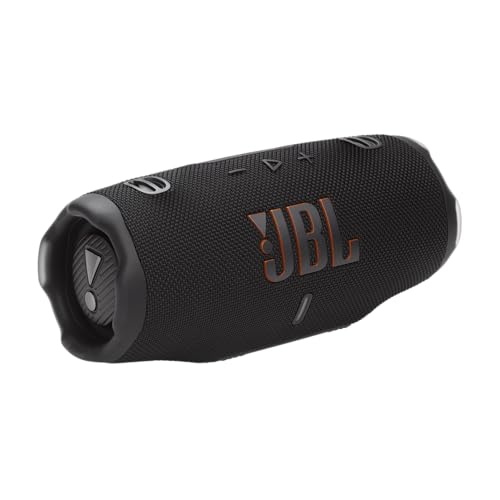


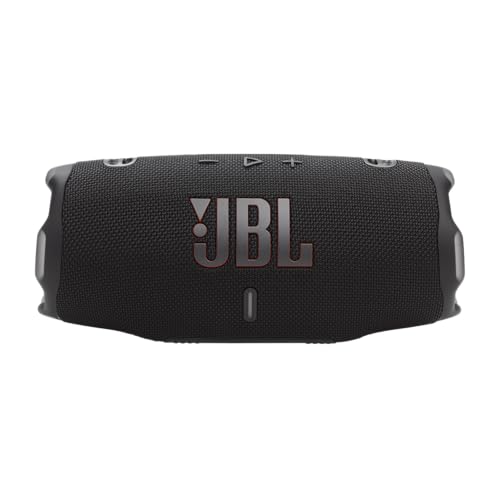
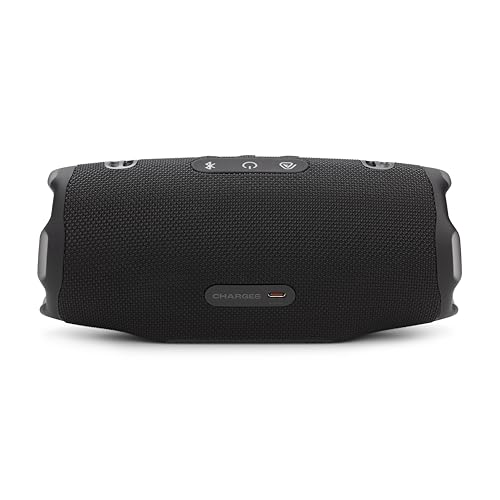
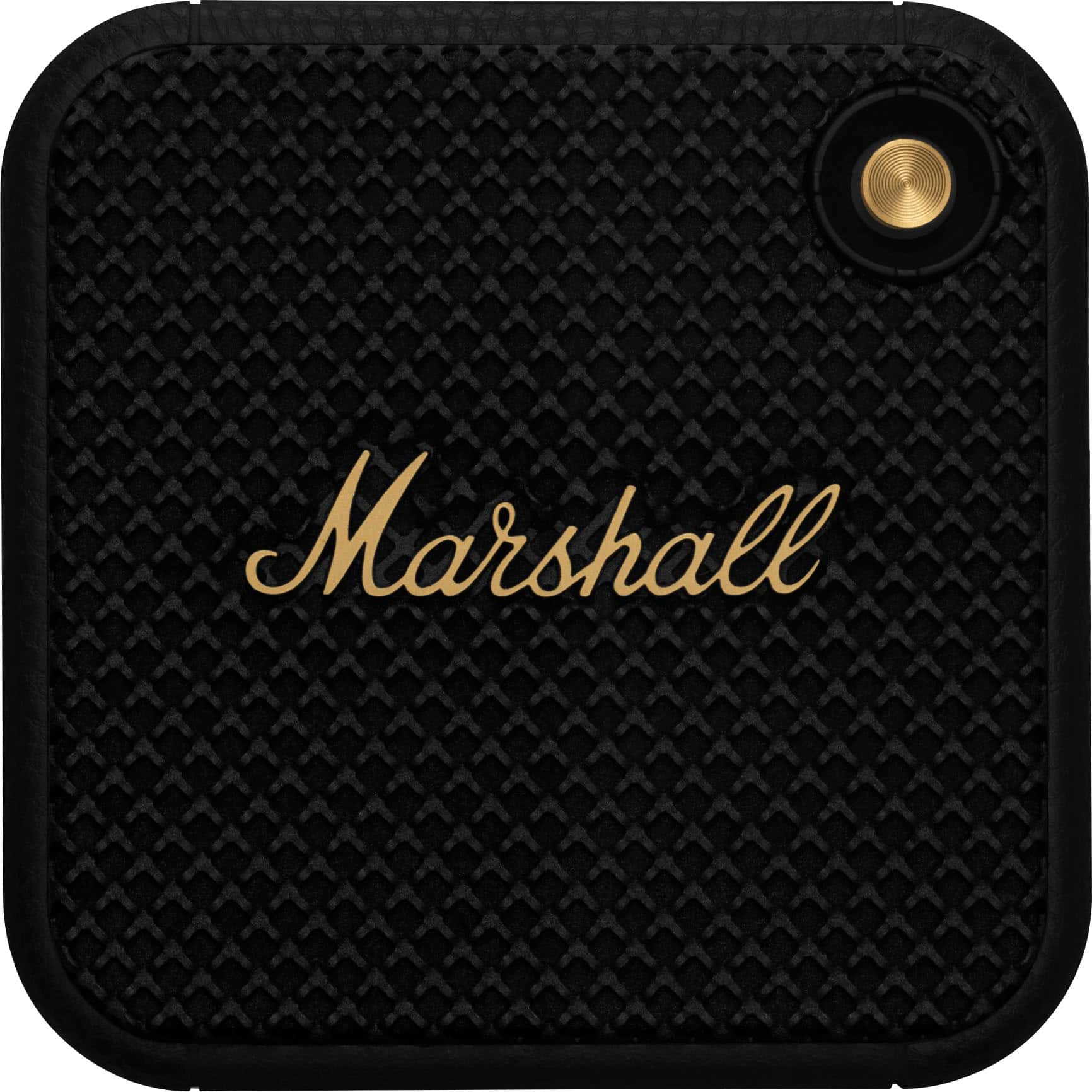
When you're shopping for a portable Bluetooth speaker, you're essentially choosing a companion that will soundtrack your life—whether that's poolside parties, camping trips, or just better audio while working from home. The speaker market is flooded with options, but two models that often catch people's attention represent very different philosophies: the JBL Charge 6 (released in 2024) and the Marshall Willen (released in 2022).
At the time of writing, these speakers sit in different price tiers, with the JBL Charge 6 commanding nearly double the price of the Marshall Willen. But price alone doesn't tell the whole story—sometimes paying more gets you dramatically better performance, while other times you're just paying for brand premium without meaningful benefits.
Before diving into the specifics, it's worth understanding what separates good portable speakers from mediocre ones. The most critical factors are sound quality (how good the music actually sounds), volume capability (how loud it can get without distorting), battery life (how long the party lasts), and durability (whether it survives your lifestyle).
When manufacturers talk about "drivers," they're referring to the individual speakers inside the unit—think of them as the engines that convert electrical signals into sound waves. Larger drivers typically move more air, which translates to better bass response and overall volume. The "frequency response" tells you the range of sounds the speaker can reproduce, measured in Hertz (Hz). Human hearing spans roughly 20 Hz to 20,000 Hz, with lower numbers representing bass and higher numbers representing treble.
Water resistance ratings use an "IP" system (Ingress Protection) followed by two numbers. The first number rates dust protection (0-6), while the second rates water protection (0-8). So IP68 means complete dust protection and can handle submersion, while IP67 means complete dust protection but only handles water jets and splashing.
The JBL Charge 6 represents JBL's flagship portable speaker approach—maximizing performance within a still-portable package. Since its 2024 release, it's incorporated several technological advances including AI Sound Boost processing (which analyzes audio in real-time to prevent distortion) and Auracast connectivity (a newer Bluetooth standard that allows seamless multi-speaker connections).
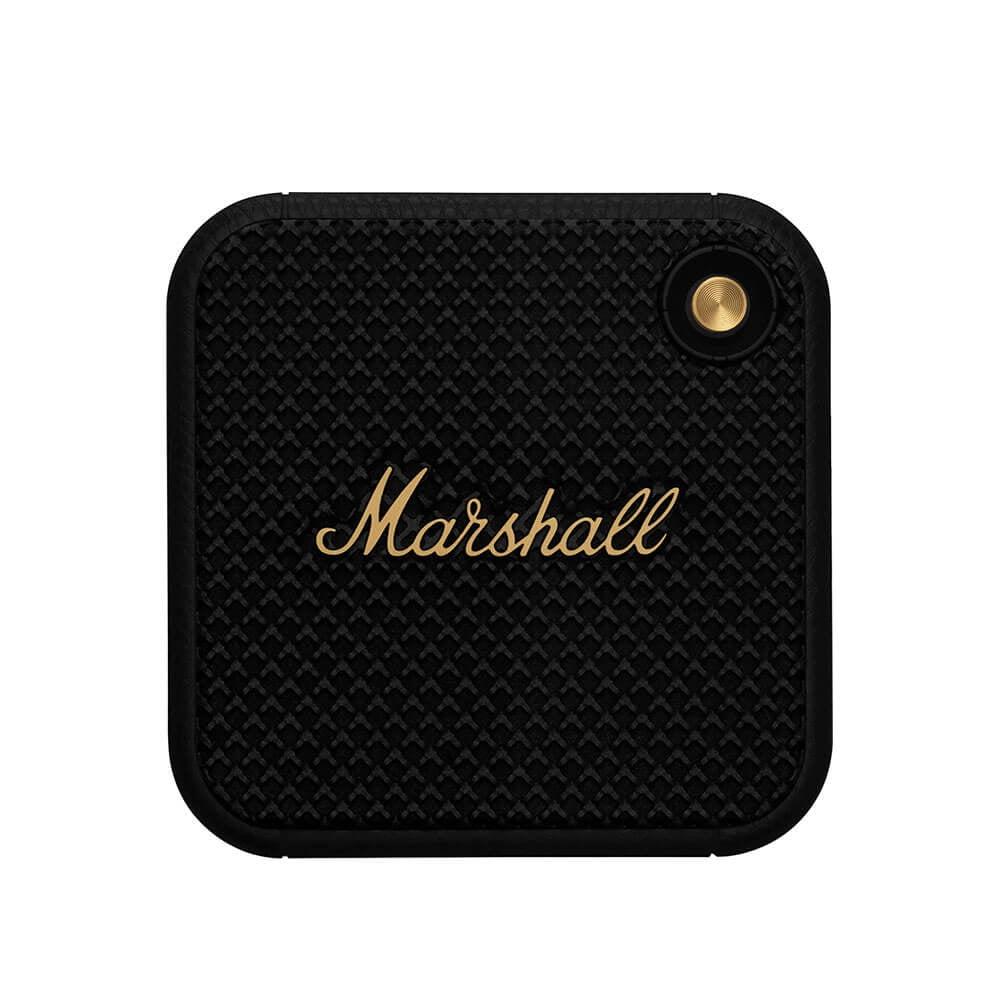
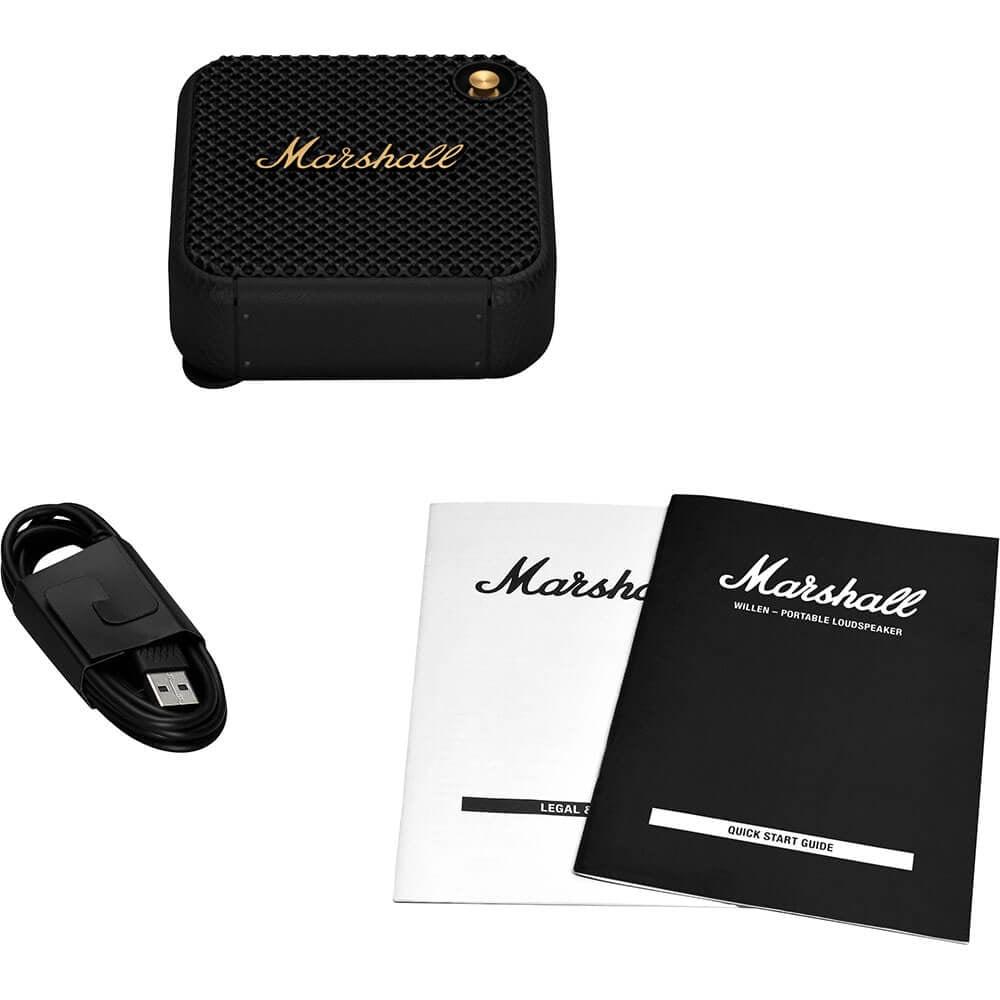
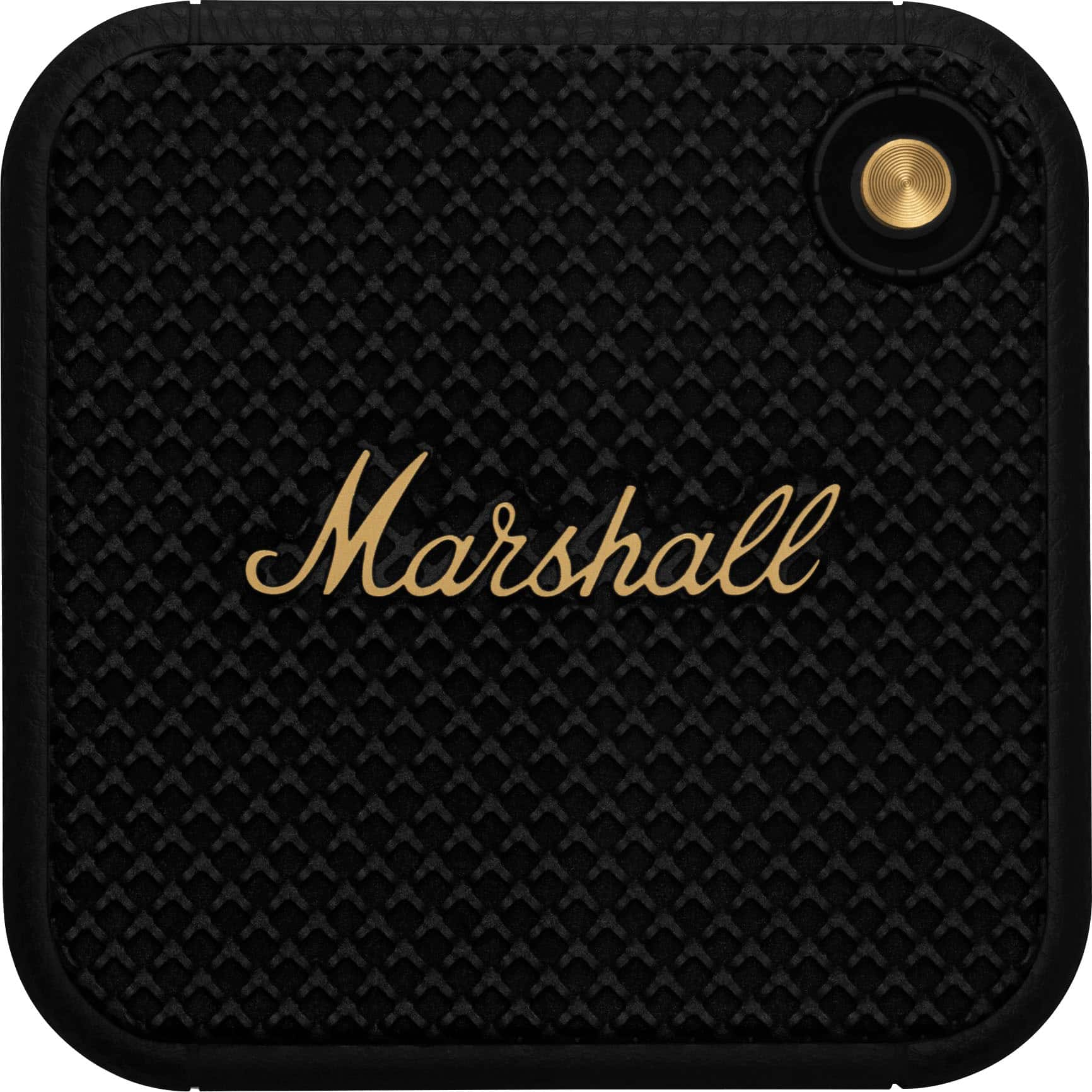
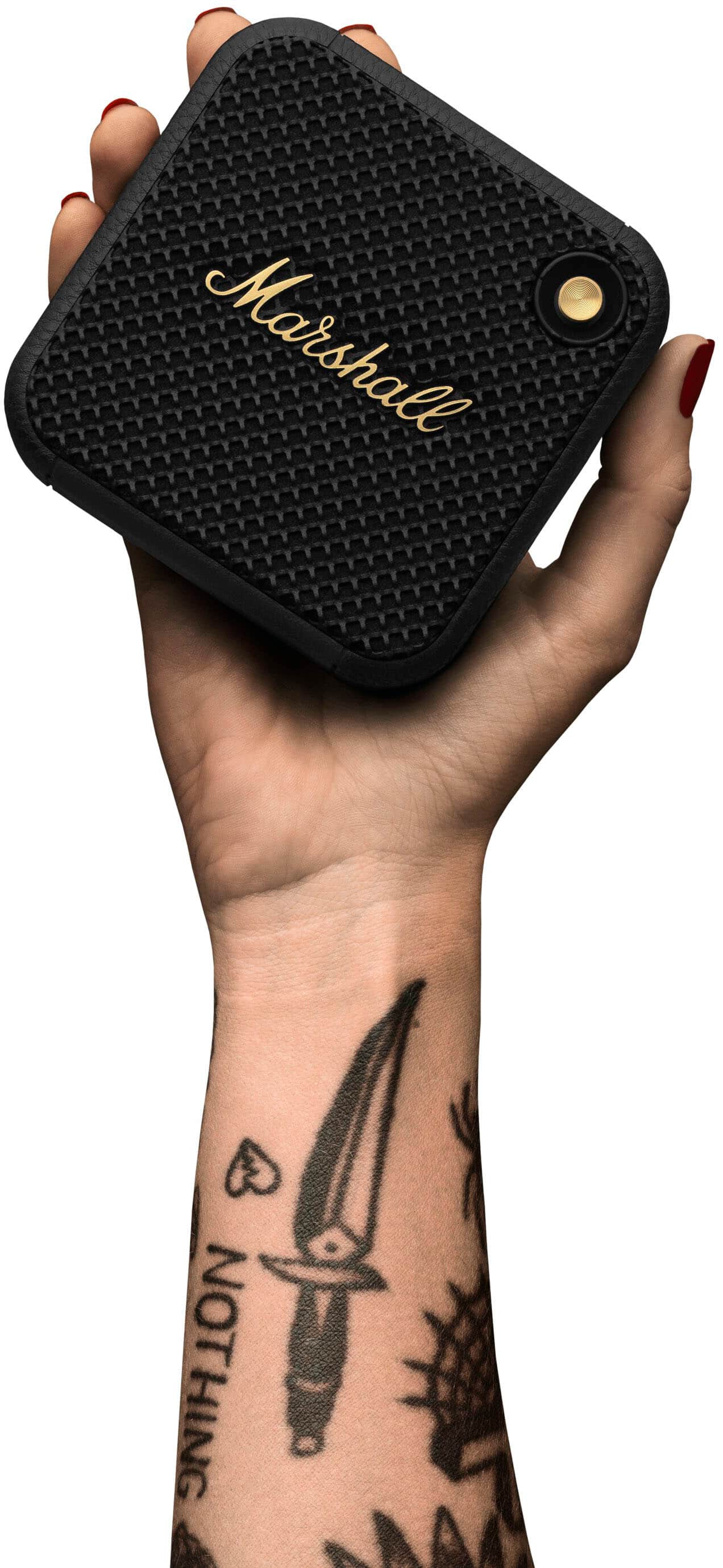
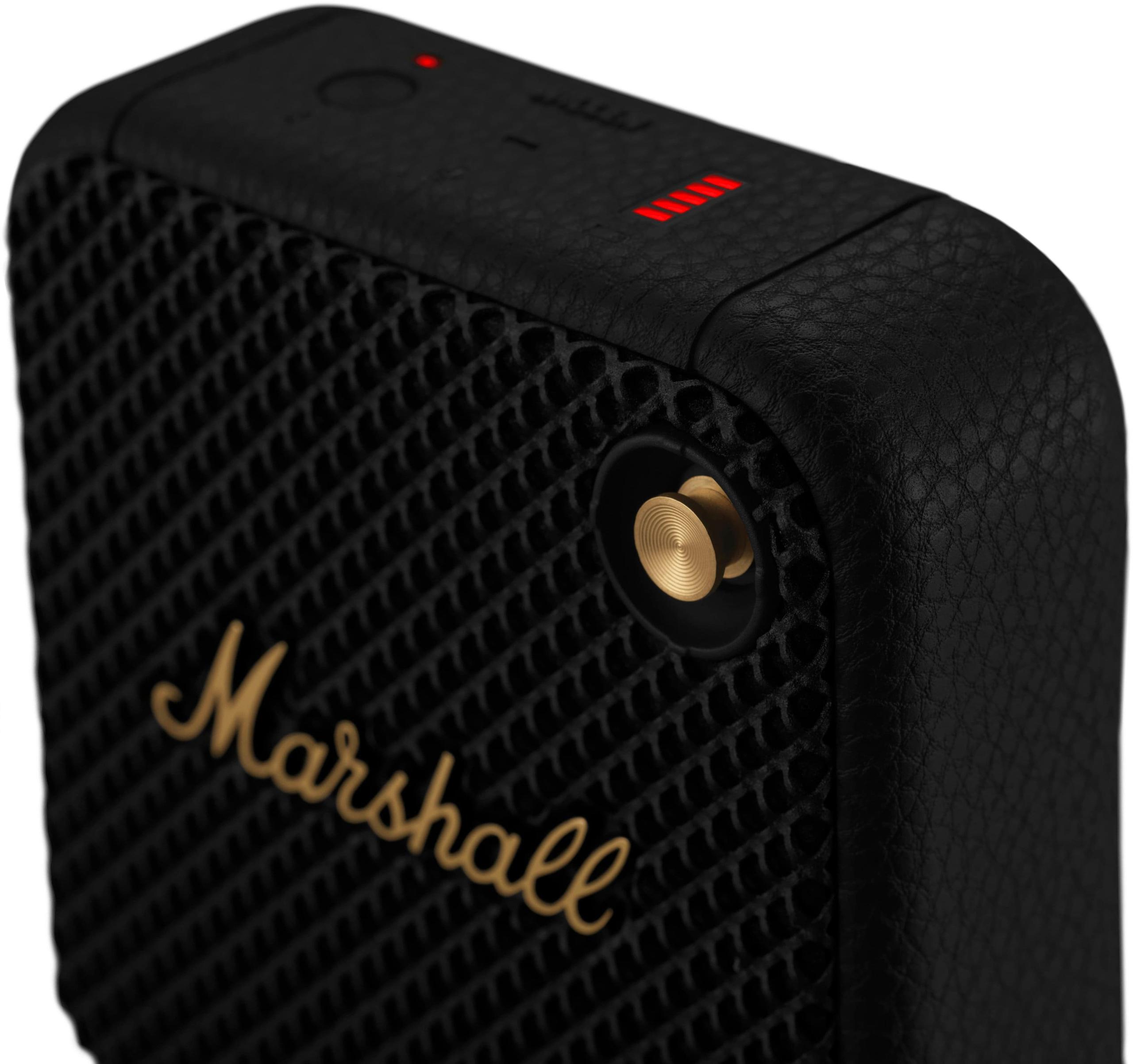
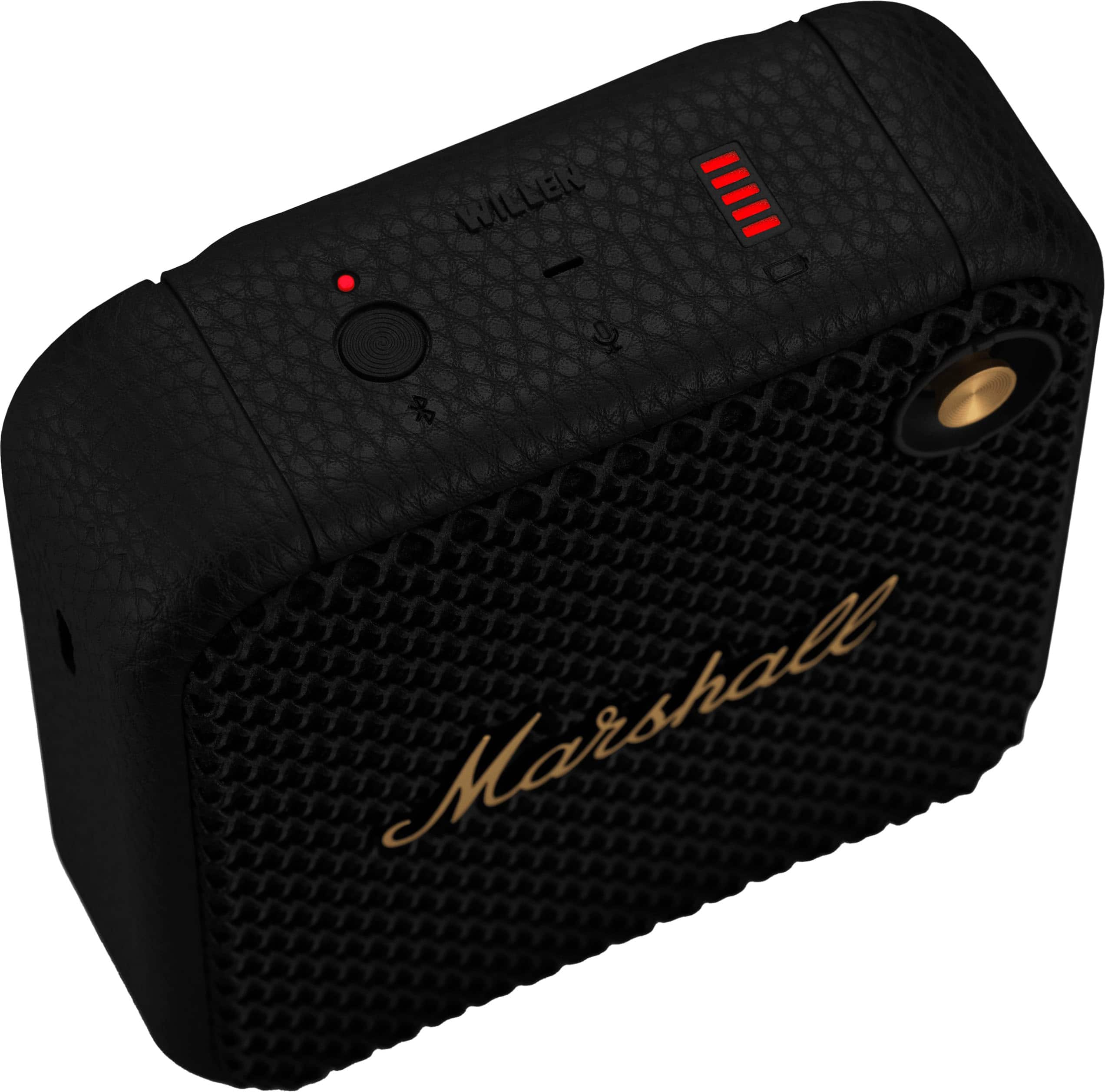
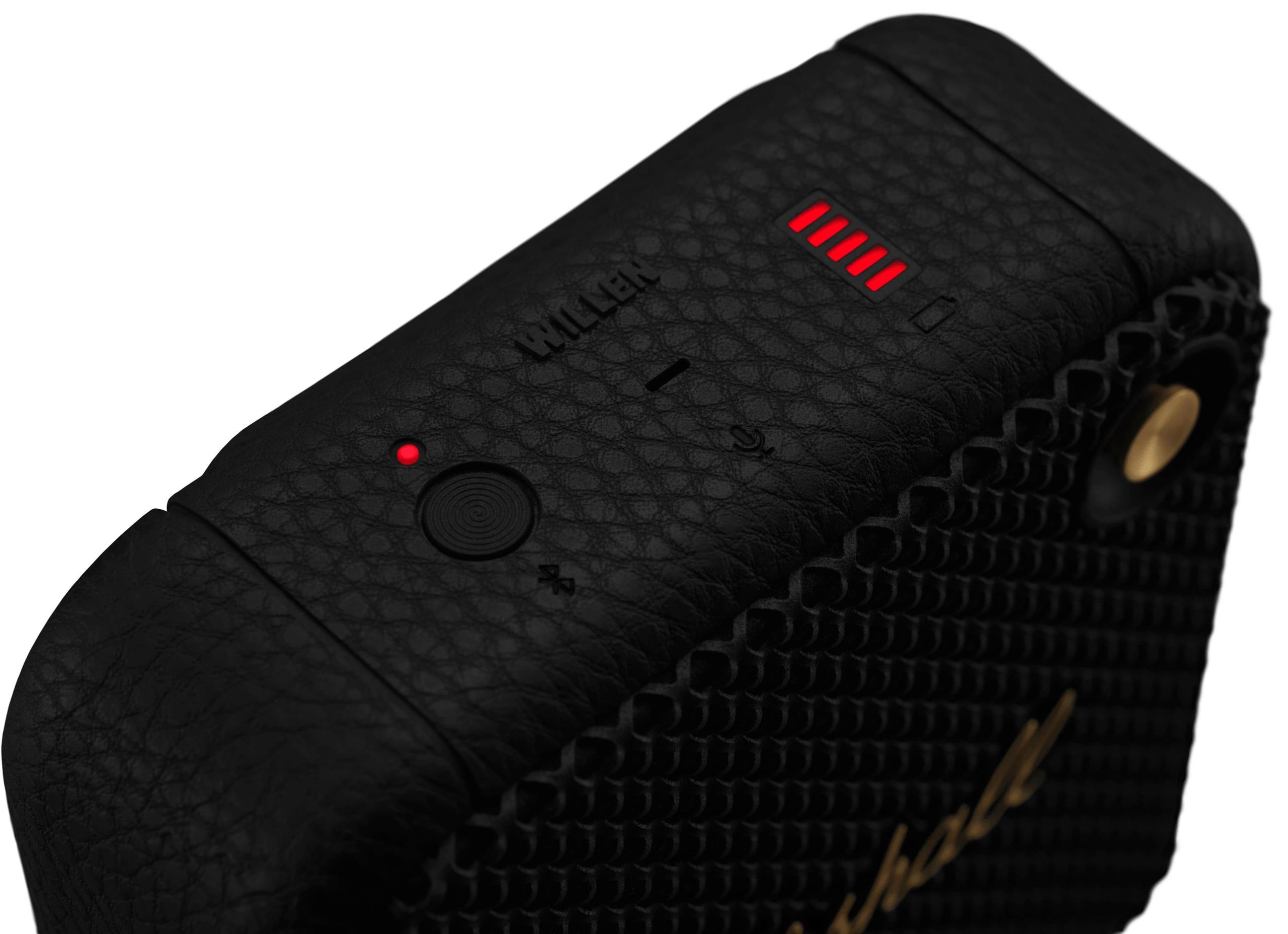
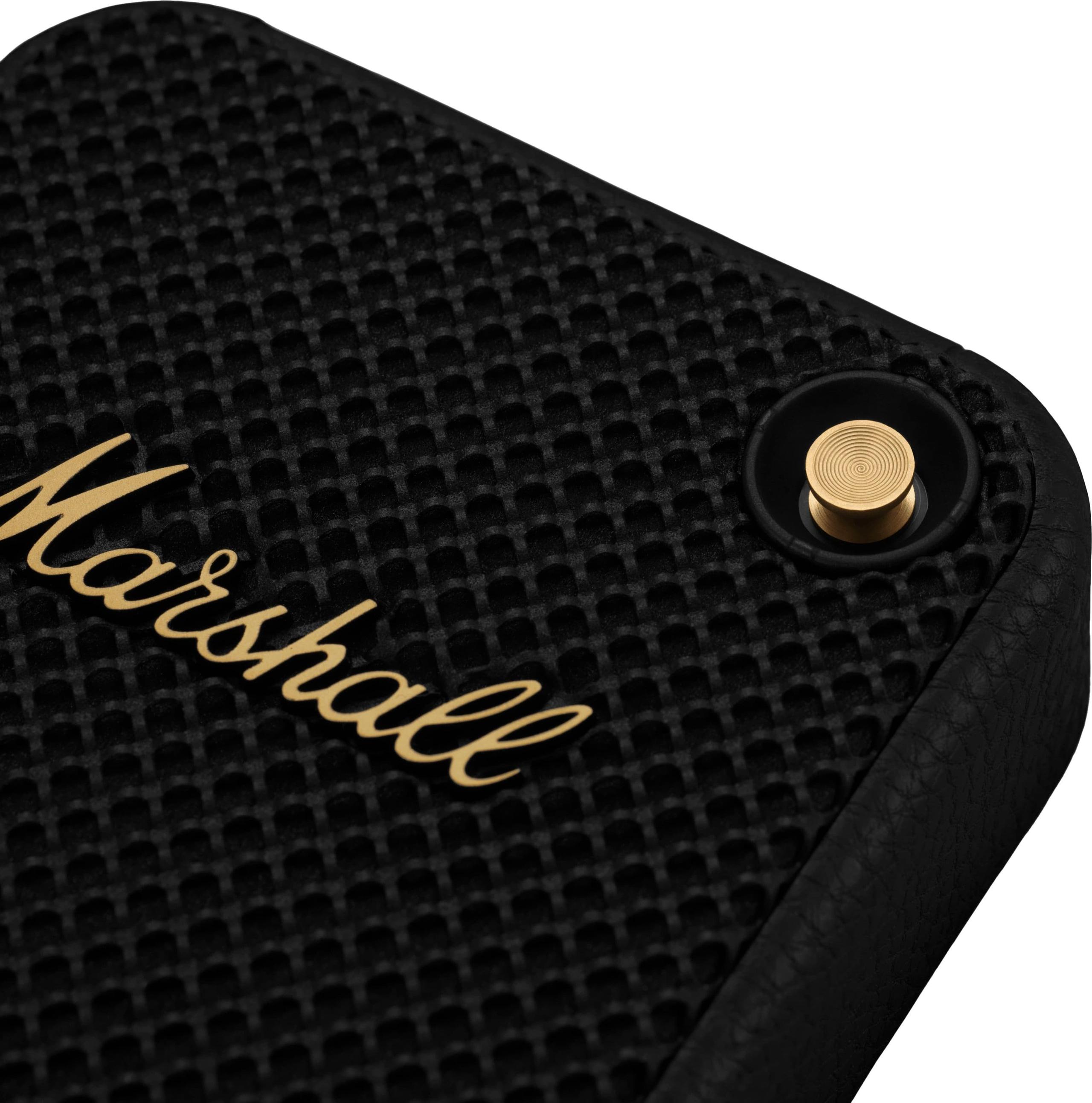
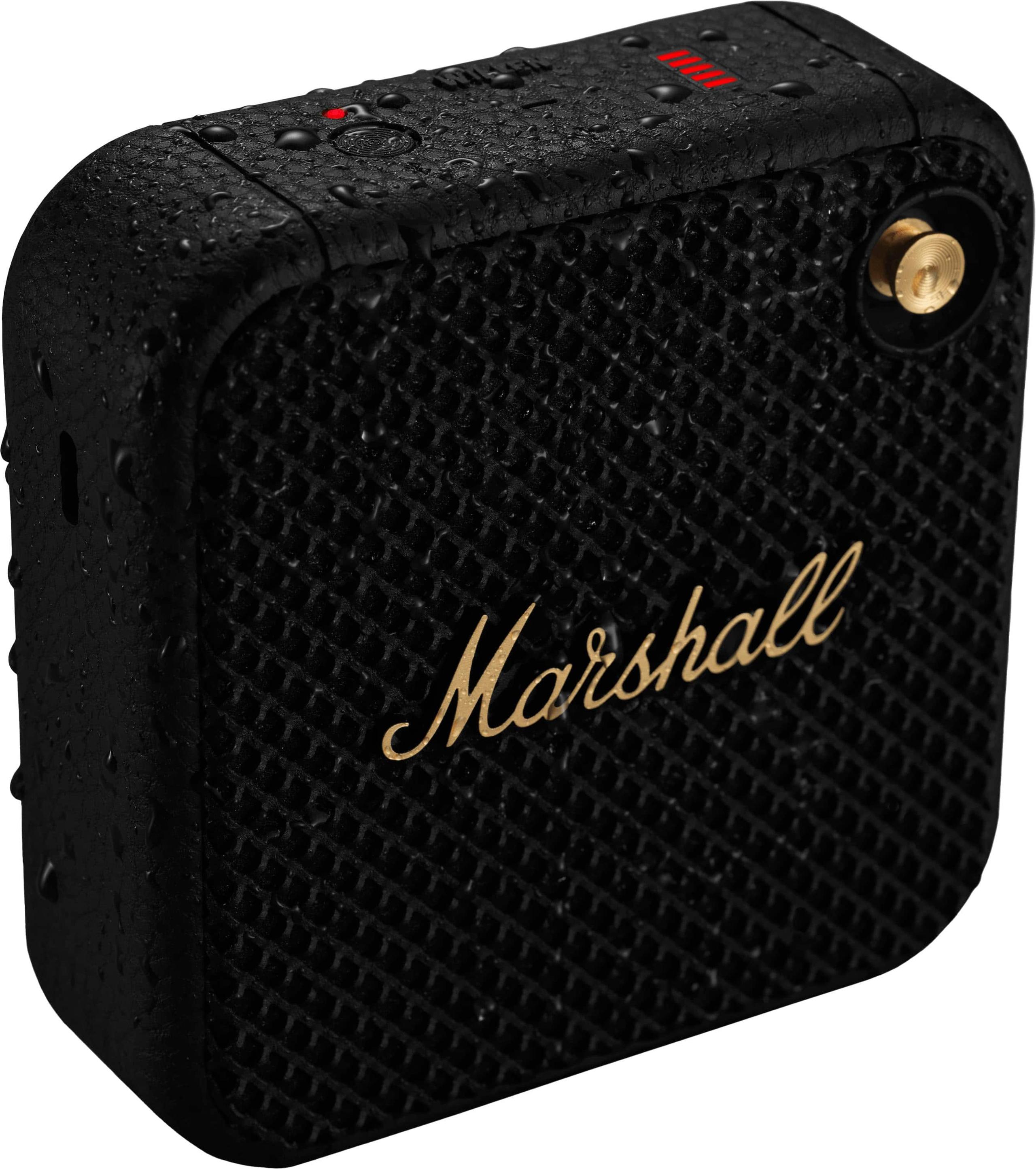
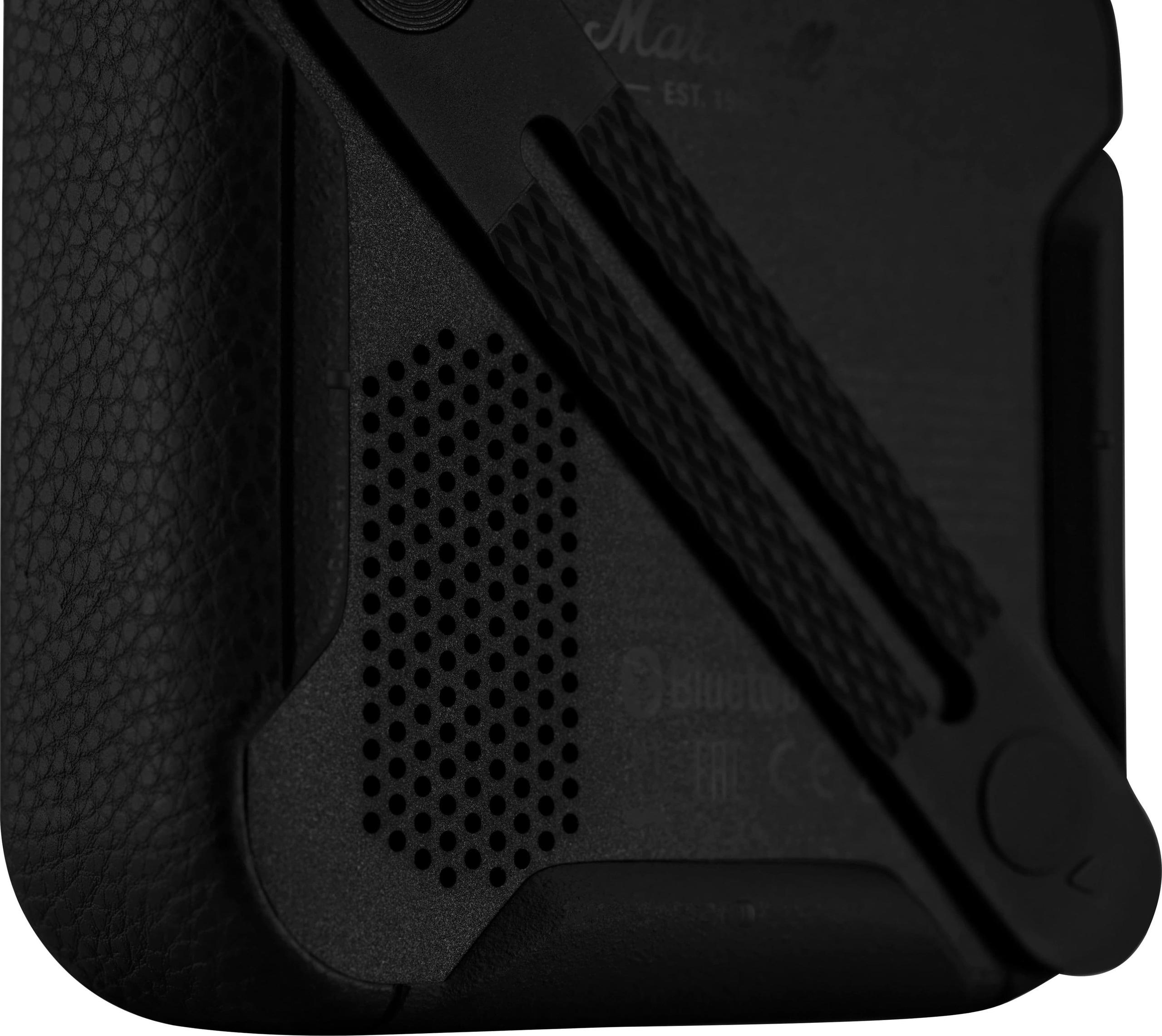
The Marshall Willen, launched in 2022, takes the opposite approach: minimize size while maintaining Marshall's signature sound character. It prioritizes ultra-portability and iconic styling over maximum performance, targeting users who want decent audio in the smallest possible package.
The most significant difference between these speakers lies in their audio capabilities, and it's not even close. The JBL Charge 6 produces 45 watts of total power through a two-way driver system—a dedicated 53mm x 93mm oval woofer handling bass and midrange, plus a separate 20mm tweeter for high frequencies. This separation allows each driver to focus on what it does best, like having specialists instead of generalists on a sports team.
In contrast, the Marshall Willen relies on a single 10-watt full-range driver that must handle everything from bass to treble. It's like asking one person to play both piano and drums simultaneously—possible, but with compromises.
The power difference translates to real-world volume capability. Based on our research into user experiences and expert testing, the JBL Charge 6 can comfortably fill medium-sized rooms or outdoor spaces, while the Marshall Willen works best for personal listening or small gatherings. If you've ever been to a party where the music couldn't compete with conversation, you understand why power matters.
But volume isn't everything—bass response tells an equally important story. The JBL Charge 6 can reproduce frequencies down to 56 Hz, while the Marshall Willen bottoms out at 100 Hz. That 44 Hz difference represents the thump you feel in your chest when a kick drum hits or the rumble that makes movie explosions immersive. For bass-heavy genres like hip-hop, electronic, or modern pop, this difference is immediately noticeable.
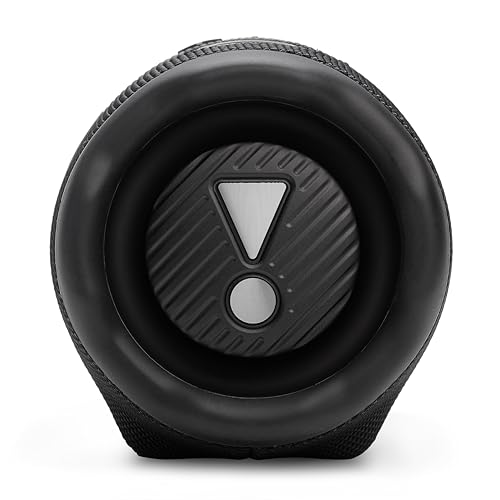
The JBL Charge 6 also includes dual passive radiators—essentially speakers without magnets that vibrate in response to the main driver, amplifying bass response without requiring additional power. It's an elegant engineering solution that helps smaller speakers punch above their weight class.
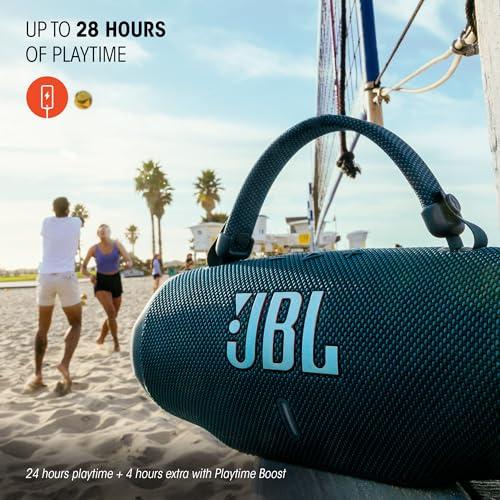
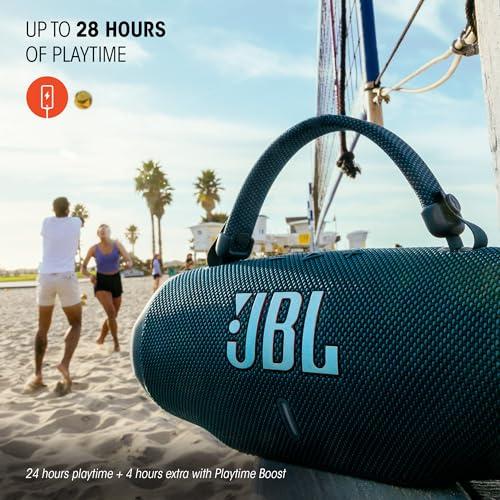
Nothing kills the vibe like a dead speaker, which makes battery performance crucial. Here, the JBL Charge 6 demonstrates clear superiority with up to 24 hours of playback, extensible to 28 hours using its "Playtime Boost" mode. This feature reduces bass and lower-midrange frequencies to conserve power—essentially trading some sound quality for extended runtime when needed.
The Marshall Willen offers respectable 15+ hours of playback, which covers most use cases but falls short for extended camping trips or multi-day events. Both speakers charge fully in about 3 hours, but the JBL Charge 6 includes faster quick-charging: 10 minutes of charging provides 150 minutes of playback compared to the Willen's 20 minutes for 180 minutes.
More importantly, the JBL Charge 6 doubles as a powerbank, letting you charge phones, tablets, or other USB devices. This eliminates the need for a separate portable charger, effectively making the speaker a two-in-one device. For travelers or outdoor enthusiasts, this functionality can be genuinely valuable.
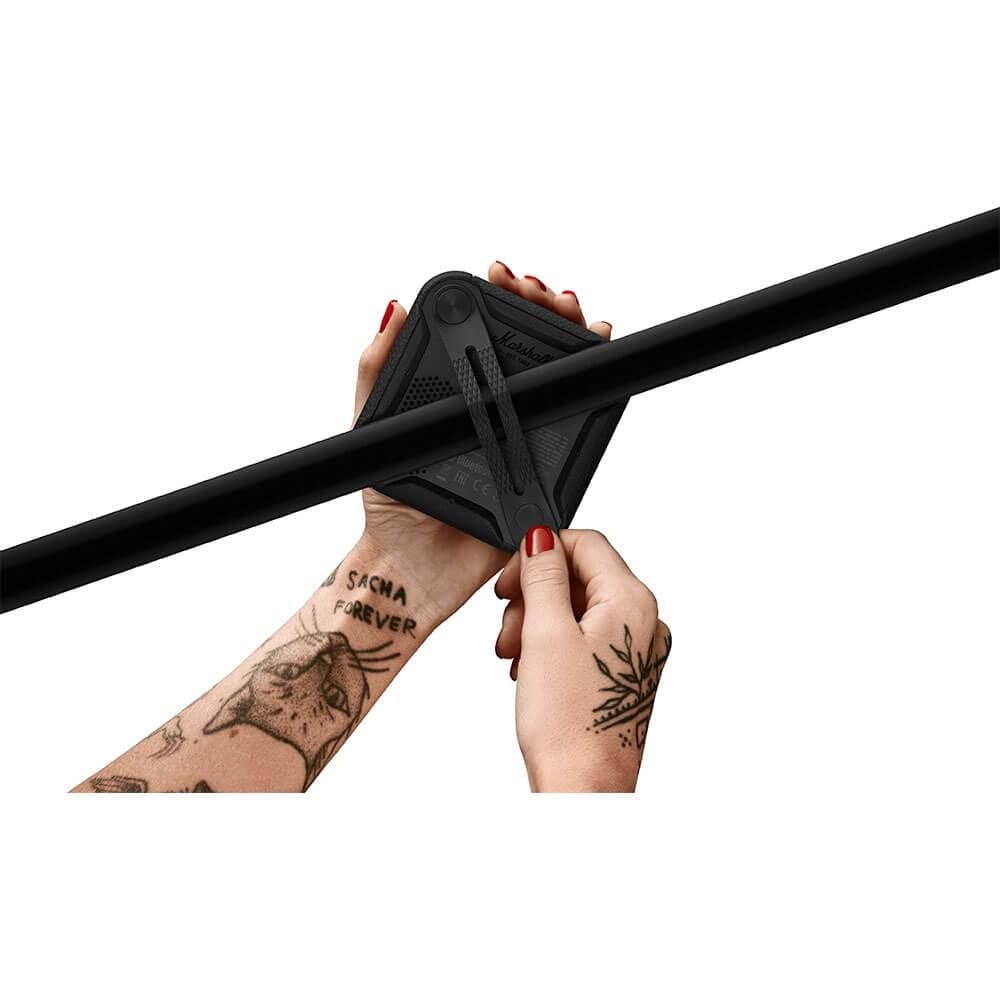
This is where the Marshall Willen shines. At roughly one-fifth the volume and one-third the weight of the JBL Charge 6, it represents true pocket portability. The Willen measures about the size of a thick smartphone and weighs just 310 grams—light enough that you forget it's in your bag.
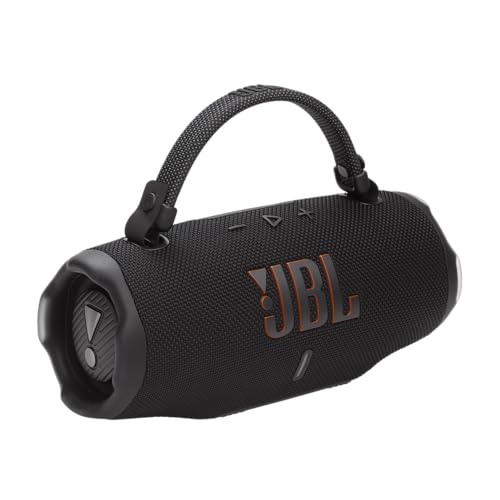
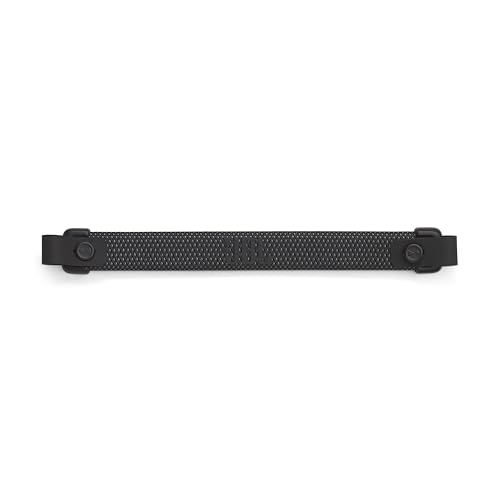
The JBL Charge 6, while still portable, requires dedicated space in a backpack or large purse. However, JBL has made carrying easier by including a detachable handle strap, something missing from the previous Charge 5 generation.
For context, I regularly carry portable speakers for outdoor activities, and size matters more than you might expect. The difference between a speaker that fits in your jacket pocket versus one that requires a bag can determine whether you actually bring it along on impromptu adventures.
Both speakers handle outdoor conditions well, but with different capabilities. The JBL Charge 6 boasts IP68 rating, meaning it's completely dustproof and can survive submersion up to 1.5 meters for 30 minutes. It's also rated to survive 1-meter drops onto concrete—useful for poolside or beach use where accidents happen.
The Marshall Willen carries IP67 rating, providing complete dust protection and handling water jets or splashing, but not full submersion. For most users, this difference won't matter, but if you're planning beach trips or poolside parties, the JBL Charge 6 offers better peace of mind.
Modern speakers aren't just about playing music—they're part of increasingly connected ecosystems. The JBL Charge 6 supports Auracast, a newer Bluetooth 5.4 standard that enables seamless connections between multiple compatible speakers. You can create stereo pairs or connect several speakers for wider coverage, all controlled through the JBL Portable app.
The app also provides a 7-band equalizer, letting you customize sound signatures for different music genres or personal preferences. This level of control can transform the listening experience—boosting mids for podcasts, enhancing bass for hip-hop, or creating a brighter sound for acoustic music.
The Marshall Willen offers its own multi-speaker "Stack Mode" and includes Marshall's app with EQ presets, but with less granular control. It also includes a built-in microphone for hands-free calls, something the JBL Charge 6 lacks—an interesting omission for such a premium speaker.
One unique feature of the JBL Charge 6 is lossless audio support via USB-C, handling up to 24-bit/192kHz resolution. For audiophiles with high-resolution music files, this wired connection can provide noticeably better sound quality than Bluetooth, though most people won't have content that takes advantage of this capability.
While both speakers are designed for portability, many people end up using them around the house, and some even consider them for casual home theater use. Here, the JBL Charge 6 makes more sense due to its superior volume and bass response. It can serve as a decent upgrade to TV speakers for smaller rooms, though serious home theater enthusiasts should consider dedicated soundbars or surround systems.
The mono output of both speakers limits their home theater effectiveness—you're missing the stereo imaging that makes movies immersive. However, you could pair two JBL Charge 6 units for true stereo, though the cost approaches dedicated home theater solutions at that point.
Determining value requires matching features to your actual needs. At the time of writing, the JBL Charge 6 costs nearly double the Marshall Willen, but it delivers more than double the performance in key areas—4.5 times more power, 60% longer battery life, plus powerbank functionality that has standalone value.
For users prioritizing sound quality, volume, and battery life, the JBL Charge 6 represents better value despite its higher price. The performance improvements are substantial, not incremental, and features like the powerbank function and superior water protection add meaningful utility.
However, if ultra-portability is paramount—you want something genuinely pocket-friendly that still sounds decent—the Marshall Willen offers compelling value. Its sound quality, while limited by physics, is respectable for its size, and Marshall's iconic styling has genuine appeal.
The JBL Charge 6's 2024 release incorporates several advances from earlier generations. The AI Sound Boost processing represents genuine innovation, using real-time analysis to optimize driver performance and minimize distortion. This isn't marketing fluff—it allows the speaker to push its drivers harder while maintaining audio quality.
The upgrade from PartyBoost (used in previous JBL models) to Auracast represents the industry's move toward more sophisticated multi-device connectivity. Auracast promises better synchronization and easier setup when connecting multiple speakers.
The Marshall Willen, released in 2022, focuses more on refinement than revolution. Marshall's challenge has always been delivering their signature sound character in increasingly compact packages, and the Willen represents a successful execution of this philosophy.
The JBL Charge 6 makes sense for users who prioritize performance over portability. If you host gatherings, enjoy outdoor activities, or simply want the best sound quality available in a portable package, it delivers meaningful advantages that justify its higher price. The powerbank functionality and superior durability add real utility for travelers and outdoor enthusiasts.
The Marshall Willen serves users who need genuine ultra-portability without completely sacrificing audio quality. If you primarily listen alone or in small groups, travel frequently and need to minimize luggage space, or simply prefer Marshall's aesthetic, it offers respectable performance at a more accessible price point.
Based on our research into user experiences and expert evaluations, the JBL Charge 6 represents the better overall value for most users, assuming budget allows. Its superior sound quality, exceptional battery life, and useful additional features create a more satisfying ownership experience that justifies the price premium.
However, the Marshall Willen succeeds in its specific mission—delivering Marshall-quality audio in an impossibly compact package. For users who genuinely need ultra-portability, it's one of the best options available, though you're making significant performance compromises.
The choice ultimately depends on your priorities: Do you want the best possible sound and features in a still-portable package, or do you need maximum portability with acceptable audio performance? Both speakers execute their respective visions successfully, but they're designed for fundamentally different users and use cases.
| JBL Charge 6 | Marshall Willen |
|---|---|
| Audio Power Output - Determines maximum volume and room-filling capability | |
| 45W total (30W woofer + 15W tweeter) | 10W single driver |
| Driver Configuration - Affects sound clarity and frequency separation | |
| 2-way system: 53mm x 93mm oval woofer + 20mm tweeter | Single 2" full-range driver with dual passive radiators |
| Frequency Response - Shows bass depth and treble extension | |
| 56 Hz - 20 kHz (deeper bass for better impact) | 100 Hz - 20 kHz (limited low-end response) |
| Battery Life - Critical for extended listening sessions | |
| 24 hours (up to 28 hours with Playtime Boost mode) | 15+ hours |
| Water/Dust Protection - Important for outdoor durability | |
| IP68 (submersible up to 1.5m for 30 minutes) | IP67 (splash-resistant but not submersible) |
| Size and Weight - Affects true portability | |
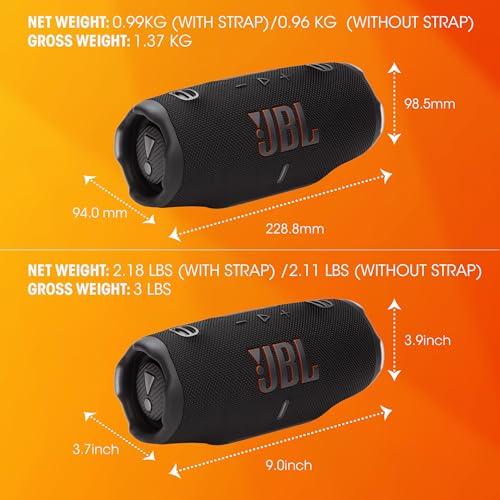
| 229 x 99 x 94 mm, 990g (backpack-friendly with strap) | 102 x 101 x 40 mm, 310g (genuinely pocket-sized) |
| Charging Features - Convenience and versatility | |
| 3-hour full charge, 10min = 150min playback, functions as powerbank | 3-hour full charge, 20min = 3 hours playback |
| Multi-Speaker Connectivity - For larger sound coverage | |
| Auracast technology (latest Bluetooth 5.4 standard) | Stack Mode for multiple Marshall Willen units |
| App Control and EQ - Sound customization options | |
| 7-band custom equalizer in JBL Portable app | Marshall app with EQ presets |
| Additional Features - Extra functionality beyond music playback | |
| Lossless USB-C audio (24-bit/192kHz), no microphone | Built-in microphone for hands-free calls |
| Best Use Case - Who should choose this speaker | |
| Parties, outdoor gatherings, users prioritizing sound quality | Ultra-portable personal listening, travel, style-conscious buyers |
The JBL Charge 6 is significantly louder with 45 watts of power compared to the Marshall Willen's 10 watts. This means the JBL Charge 6 can fill larger rooms and outdoor spaces much more effectively, making it better for parties or gatherings where you need higher volume levels.
The JBL Charge 6 offers superior battery performance with 24-28 hours of playback time, while the Marshall Willen provides 15+ hours. The JBL Charge 6 also functions as a powerbank to charge your devices, adding extra utility for longer trips or outdoor adventures.
The JBL Charge 6 delivers much deeper bass, reaching down to 56 Hz compared to the Marshall Willen's 100 Hz limit. This 44 Hz difference means the JBL Charge 6 produces more impactful low-end for genres like hip-hop, electronic, and pop music.
The Marshall Willen is dramatically more portable, weighing just 310g and measuring roughly smartphone-sized, making it truly pocket-friendly. The JBL Charge 6 is much larger at 990g and requires bag space, though it includes a carrying strap for easier transport.
The JBL Charge 6 offers superior durability with IP68 rating, meaning it can be fully submerged in water up to 1.5 meters. The Marshall Willen has IP67 rating, which handles splashes but not submersion. Both are dust-proof and suitable for outdoor activities.
The JBL Charge 6 works better for casual home theater use due to its higher power output and better bass response. However, both speakers output mono sound, so you'd need two units for proper stereo. For serious home theater, dedicated soundbars are recommended over either portable speaker.
Both speakers support multi-device connectivity, but with different approaches. The JBL Charge 6 uses newer Auracast technology for connecting multiple JBL speakers, while the Marshall Willen offers Stack Mode for linking multiple Marshall units together.
The Marshall Willen includes a built-in microphone for hands-free calling, while the JBL Charge 6 surprisingly lacks this feature despite being the more expensive option. If taking calls through your speaker is important, the Marshall Willen is the clear choice.
The JBL Charge 6 provides more advanced sound customization with a 7-band equalizer in the JBL Portable app, allowing detailed frequency adjustments. The Marshall Willen offers EQ presets through Marshall's app but with less granular control over individual frequency bands.
Both speakers take about 3 hours for full charging, but the JBL Charge 6 offers better quick-charging with 10 minutes providing 150 minutes of playback. The Marshall Willen gives 3 hours of playback from 20 minutes of charging. The JBL Charge 6 also doubles as a powerbank for charging other devices.
The JBL Charge 6 offers better overall value despite its higher price, delivering significantly more power, longer battery life, better durability, and powerbank functionality. The Marshall Willen provides good value if ultra-portability is your top priority and you don't need maximum sound quality.
Choose the JBL Charge 6 if you prioritize sound quality, volume, battery life, and don't mind the larger size. Pick the Marshall Willen if you need genuine pocket portability, prefer Marshall's styling, want hands-free calling, or have budget constraints. The JBL Charge 6 is better for most users who want maximum performance.
We've done our best to create useful and informative comparisons to help you decide what product to buy. Our research uses advanced automated methods to create this comparison and perfection is not possible - please contact us for corrections or questions. These are the sites we've researched in the creation of this article: rtings.com - youtube.com - stereoguide.com - whathifi.com - youtube.com - elomymelo.com - soundguys.com - elomymelo.com - wifihifi.com - soundguys.com - jbl.com - whathifi.com - soundguys.com - youtube.com - smarthomesounds.co.uk - jbl.com - sweetwater.com - youtube.com - bestbuy.com - jbl.com.sg - jbl.com - dell.com - ca.jbl.com - soundguys.com - soundguys.com - dell.com - rtings.com - ldlc.com - crutchfield.com - bestbuy.com - techgadgetscanada.com - manuals.plus - youtube.com - myxprs.com - bhphotovideo.com - target.com - aplaze.com - avstore.in

Privacy Policy
Terms and Conditions - Affiliate Policy
Home Security
© Copyright 2008-2026.
11816 Inwood Rd #1211, Dallas, TX 75244