








Portable Bluetooth speakers have become essential gear for music lovers who refuse to compromise on sound quality when they leave home. Whether you're planning a beach day, setting up for a backyard barbecue, or just want better audio for your morning routine, the right speaker can transform any space into your personal concert venue.
Two speakers that consistently appear in "best of" lists are the JBL Charge 6 and the Marshall Middleton. Both arrived on the market relatively recently—the Marshall Middleton debuted in 2023 while the JBL Charge 6 launched in early 2025—representing the latest thinking in portable audio design. But they take dramatically different approaches to the same goal: delivering great sound wherever you go.
After diving deep into expert reviews, user feedback, and technical specifications, it's clear these speakers cater to different priorities. The question isn't which one is objectively better—it's which one matches your lifestyle and listening habits.
Before comparing these specific models, it's worth understanding what separates great portable speakers from mediocre ones. The category has evolved tremendously over the past few years, driven by improvements in battery technology, digital signal processing (DSP), and driver miniaturization.
Modern portable speakers juggle several competing demands. You want impressive sound quality, but that typically requires larger drivers and more power, which means bigger batteries and heavier construction. You need durability for outdoor use, but rugged materials can muffle sound or add bulk. You want long battery life, but that conflicts with compact size and lightweight design.
The most important performance metrics include frequency response (how evenly the speaker reproduces different pitches), maximum output (how loud it can get without distortion), dynamic range (the difference between quiet and loud passages), and stereo imaging (how well it creates a sense of space and instrument placement). Battery life, charging speed, and build quality round out the practical considerations that determine daily usability.
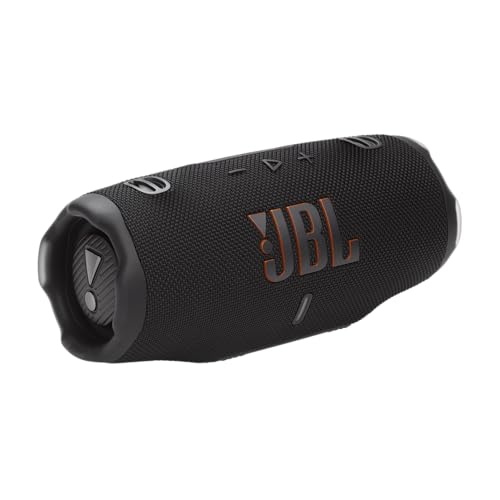
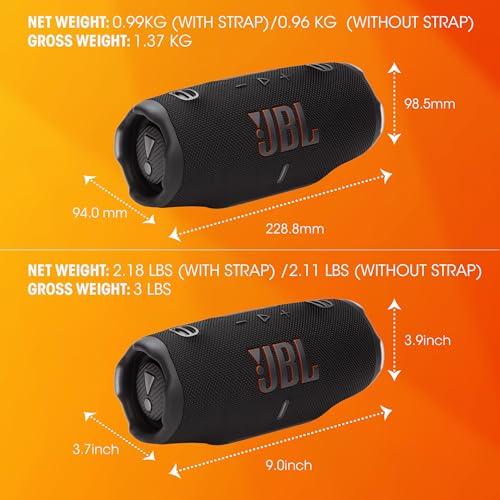
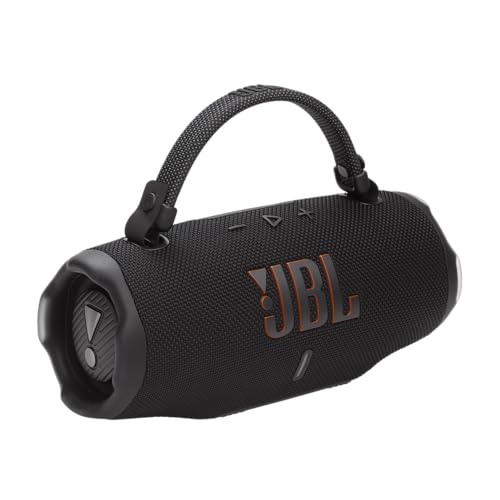
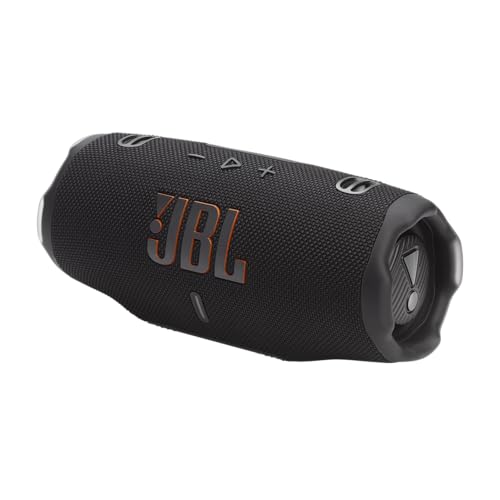
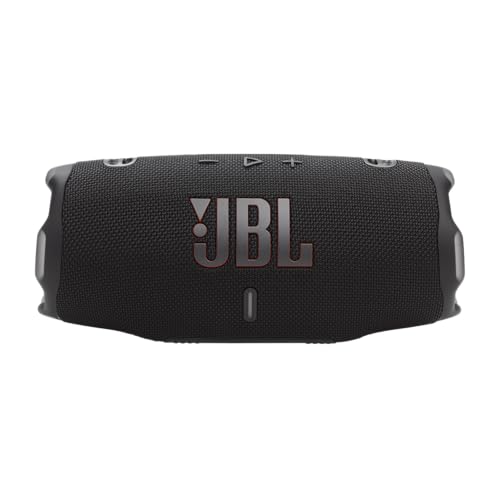
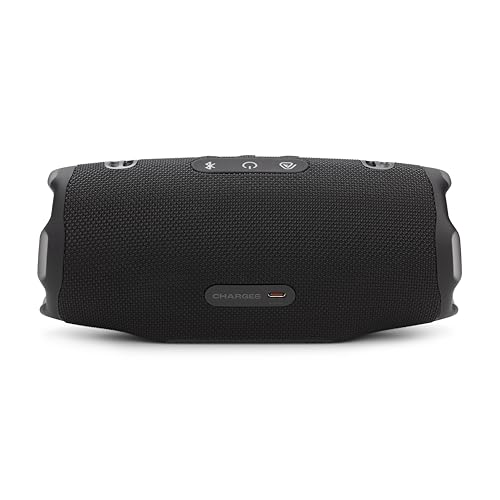
The JBL Charge 6 and Marshall Middleton represent two distinct approaches to portable audio. The JBL embodies the "take it everywhere" philosophy—prioritizing portability, maximum battery life, and bombproof construction. At just over 2 pounds with a convenient carrying strap, it's genuinely portable in a way that encourages daily use.
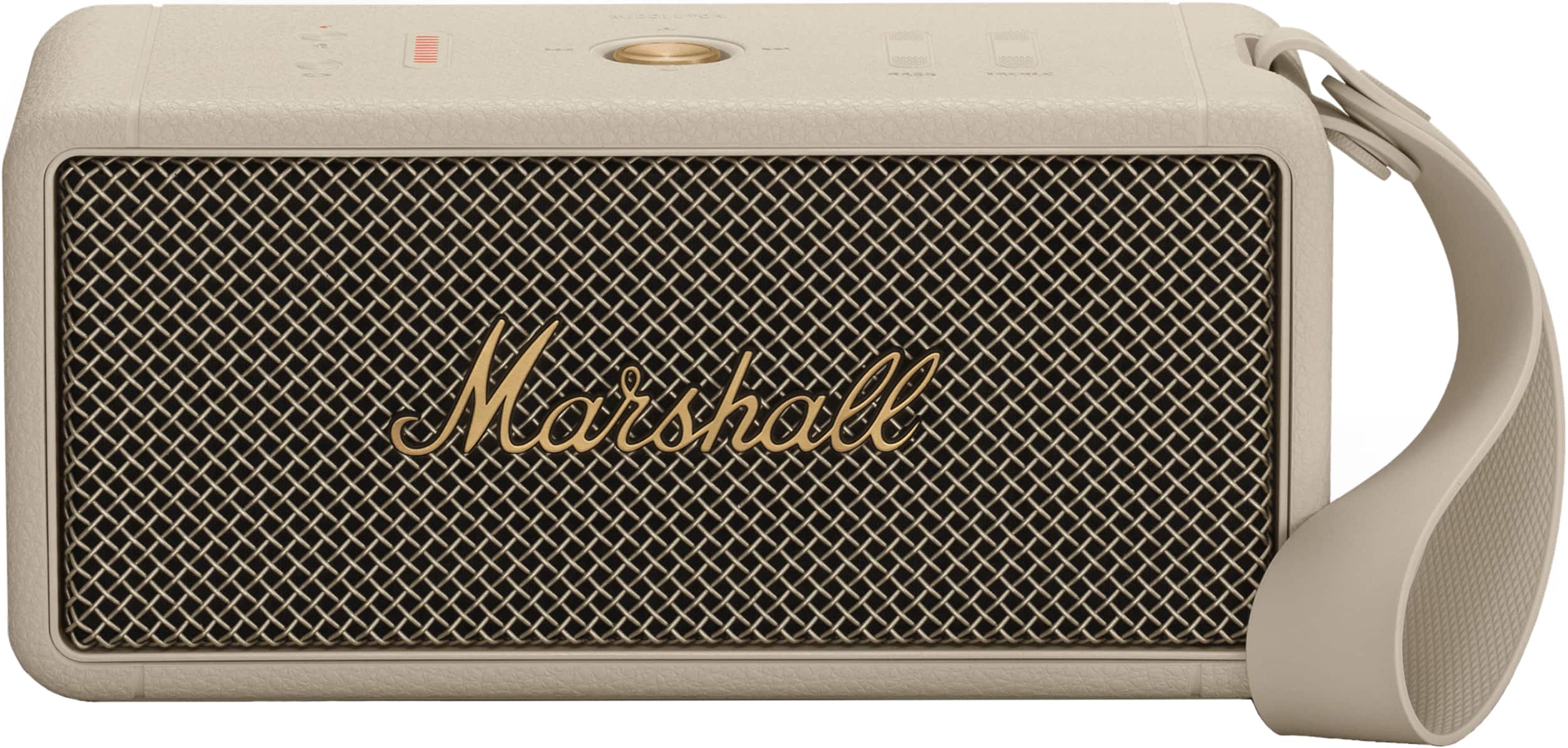
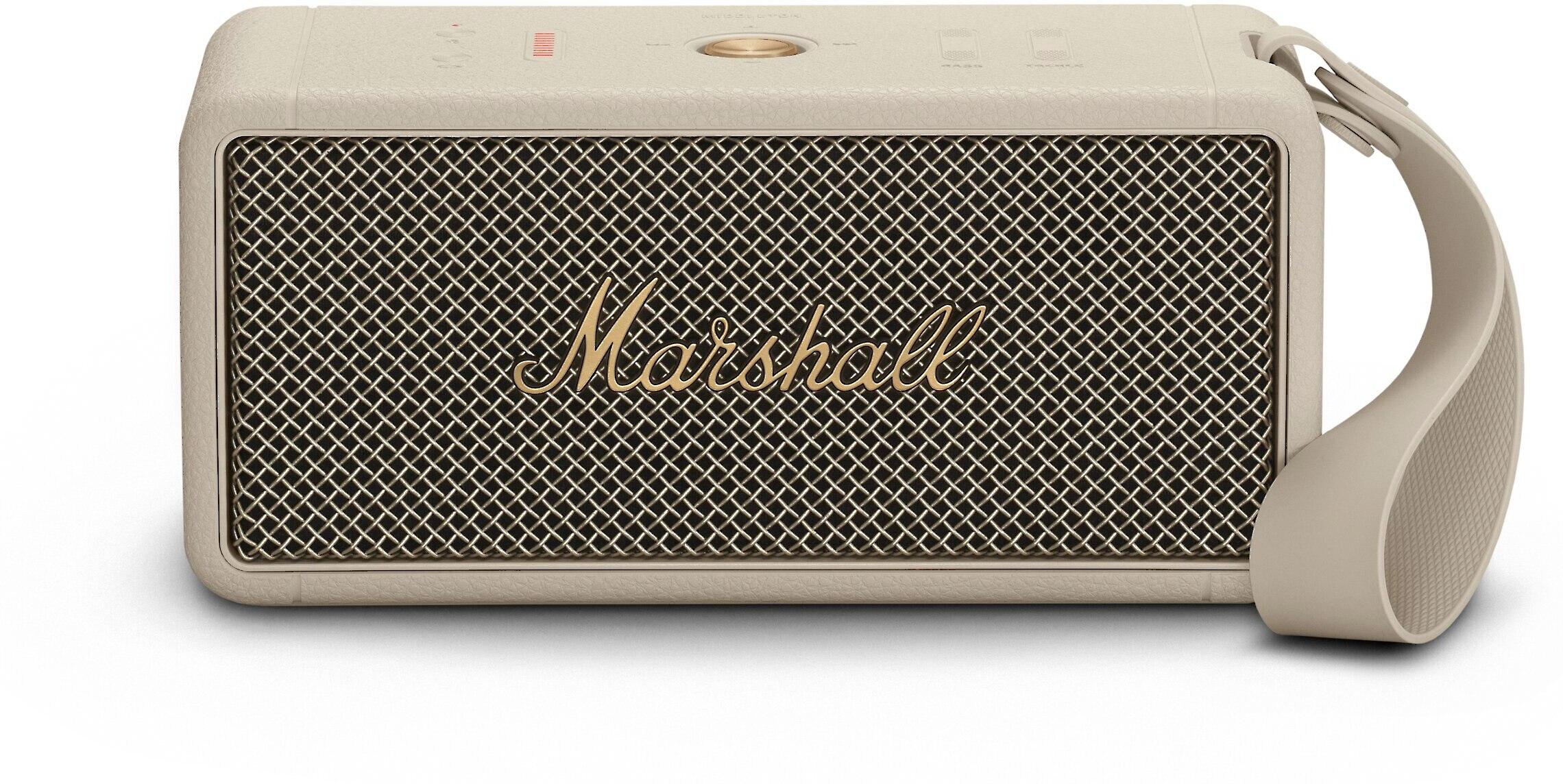
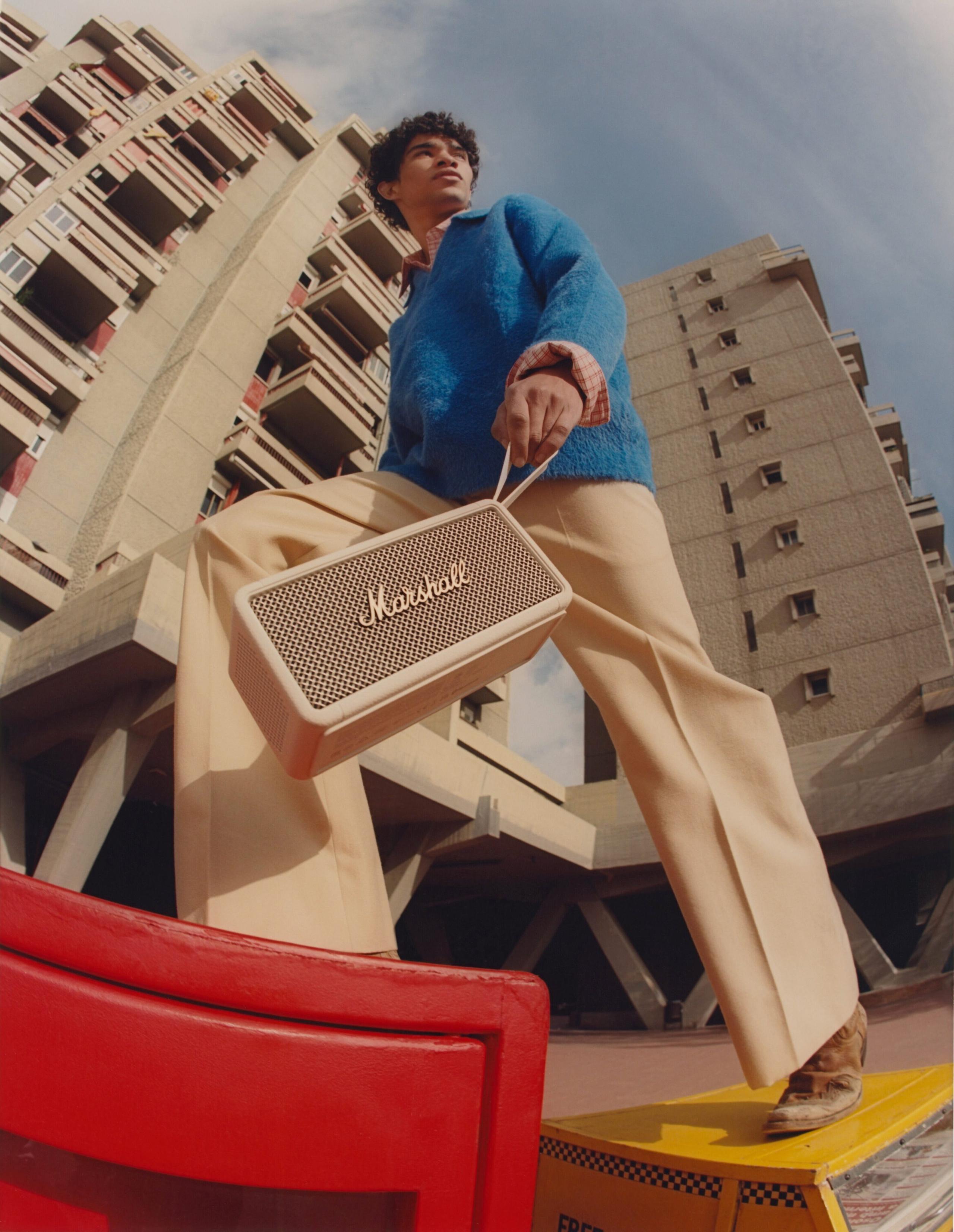
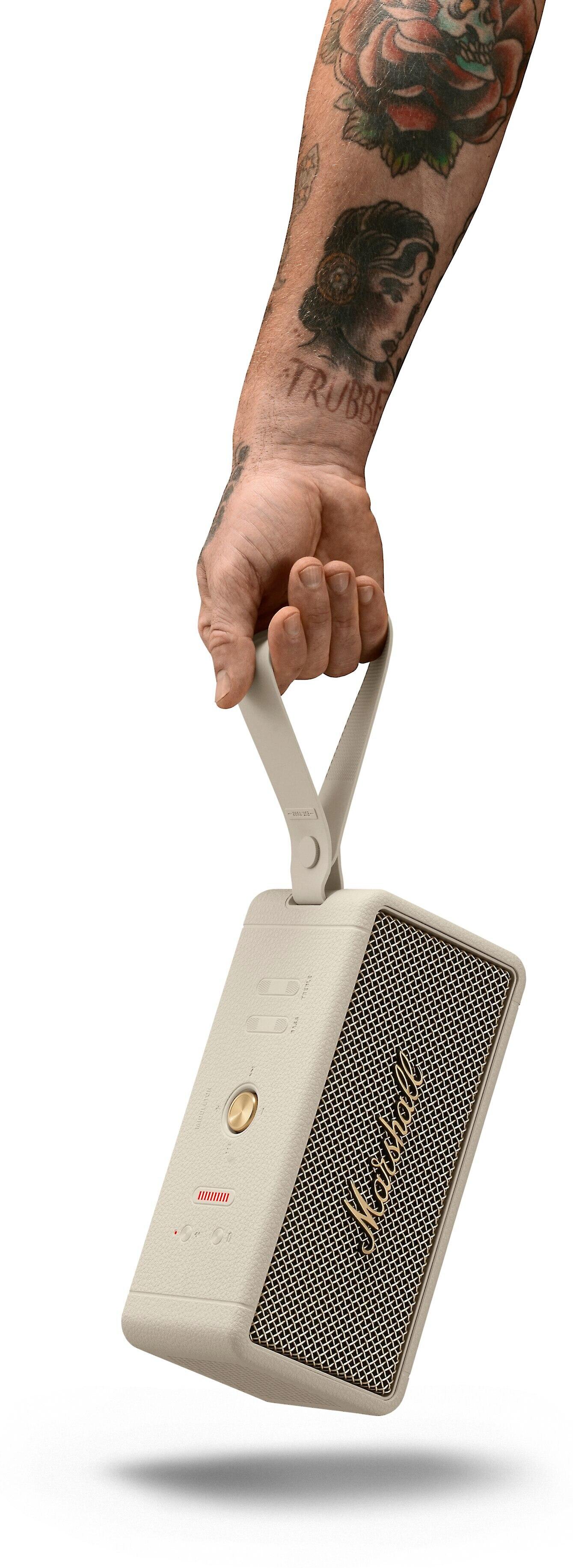
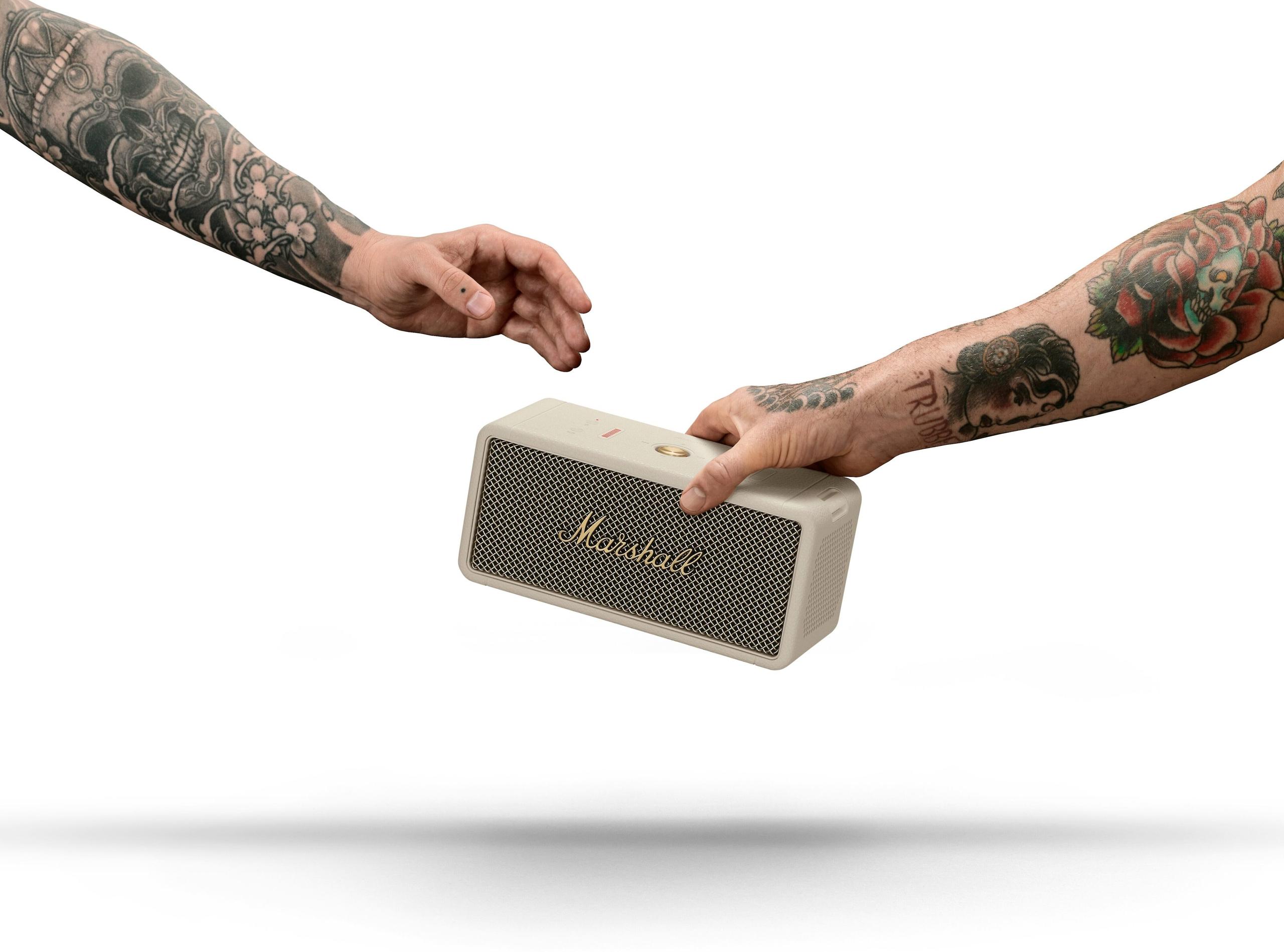
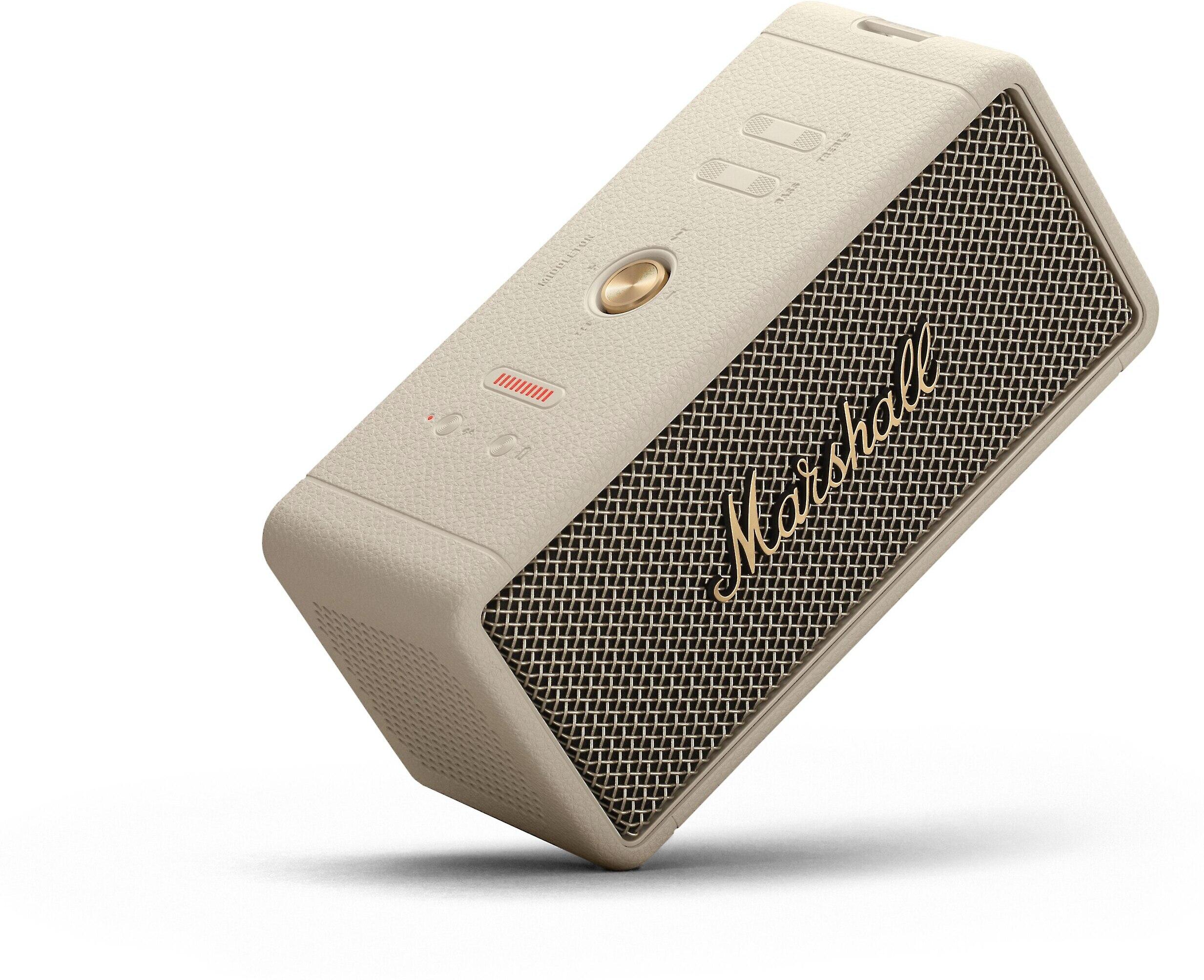
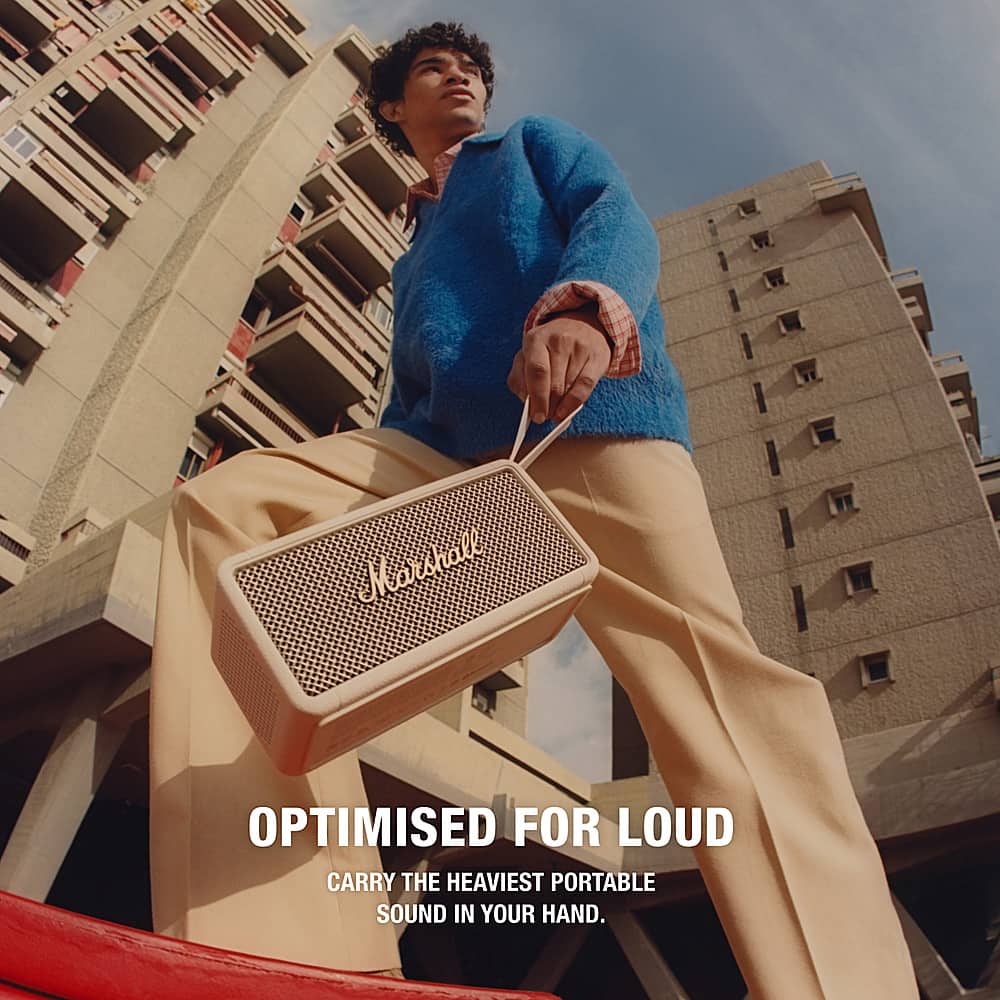
The Marshall Middleton, weighing in at 4 pounds, takes a "portable hi-fi" approach. It sacrifices some portability for significantly better sound quality and the iconic Marshall amplifier aesthetic that music enthusiasts recognize instantly. This isn't a speaker you'll forget you're carrying, but it rewards that compromise with substantially better audio performance.
These design differences reflect broader trends in the portable speaker market. As battery technology has improved, some manufacturers have chosen to pack more features and longer runtime into compact packages, while others have used those advances to create more powerful, better-sounding speakers that remain reasonably portable.
Audio performance reveals the starkest differences between these speakers. The Marshall Middleton employs a sophisticated quad-driver system with two 3-inch woofers and two 0.6-inch dome tweeters, powered by 60 watts of Class D amplification. This configuration allows each driver to specialize in its optimal frequency range, resulting in cleaner, more accurate sound reproduction.
Class D amplification deserves explanation—it's a highly efficient design that generates minimal heat while delivering maximum power to the speakers. Unlike older amplifier designs that waste significant energy as heat, Class D amps convert nearly all their power into sound, which is crucial in battery-powered devices.
The Marshall's True Stereophonic technology represents another significant advantage. Most portable speakers, including the JBL Charge 6, output mono sound—they take stereo recordings and mix them down to a single channel. The Marshall Middleton maintains stereo separation, creating a much wider soundstage that places instruments and vocals in specific spatial locations. This makes music feel more immersive and natural, especially for complex recordings with multiple instruments.
In contrast, the JBL Charge 6 uses a simpler dual-driver setup with one woofer and one tweeter delivering 45 watts total power. While this is less sophisticated on paper, JBL's AI Sound Boost technology partially closes the gap. This real-time digital signal processing analyzes incoming audio and optimizes the drivers' performance to minimize distortion and maximize clarity. Think of it as having a sound engineer constantly adjusting the speaker's output for optimal performance.
The frequency response differences are telling. The Marshall Middleton delivers deeper, more controlled bass extending down to around 50 Hz, while the JBL Charge 6 rolls off earlier around 56 Hz. This might seem like a small difference, but those lowest frequencies provide the foundation that makes music feel full and present rather than thin.
Our research into user reviews consistently shows the Marshall delivering more balanced sound across all genres, while the JBL tends toward a brighter, more treble-forward signature that emphasizes vocals and cymbals. The Marshall handles complex classical pieces and bass-heavy electronic music with equal aplomb, while the JBL excels with rock, pop, and podcast content where vocal clarity is paramount.
For maximum volume output, the Marshall's extra power and larger drivers provide a clear advantage. It can fill larger spaces without the dynamic compression—basically, the flattening of loud and quiet parts—that affects most portable speakers when pushed hard. The JBL Charge 6 reaches respectable volumes but shows more strain at maximum output.
Here's where real-world usage patterns become crucial. The JBL Charge 6 weighs 2.11 pounds compared to the Marshall Middleton's 4 pounds—a difference that seems small until you're carrying it for hours during a hiking trip or stuffing it into an already-packed suitcase.
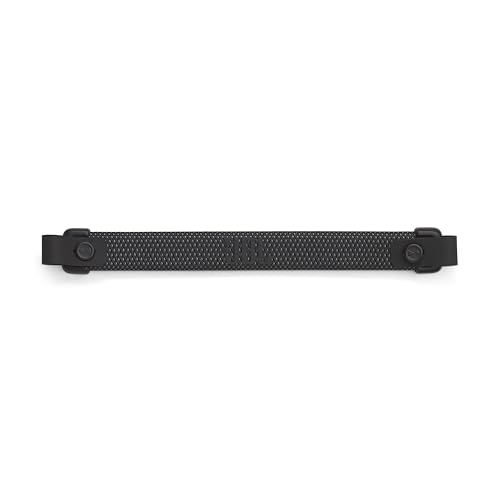
The JBL's compact dimensions and included carrying strap make it genuinely grab-and-go portable. You can toss it in a backpack without thinking twice, and its cylindrical shape fits well in car cup holders or beach bags. The weight distribution feels natural in one hand, encouraging spontaneous use.
The Marshall Middleton's bulk becomes noticeable during extended carrying, despite its detachable strap. It's better suited for scenarios where you carry it to a location and set it down—think pool parties, camping base camps, or moving between rooms at home. The extra weight comes from beefier drivers, larger magnets, and more substantial construction, all of which contribute to its superior sound quality.
Both speakers achieved significant durability improvements compared to their predecessors. The JBL Charge 6 earned an IP68 rating, meaning it can survive submersion in up to 1.5 meters of water for 30 minutes. It's also been drop-tested to survive 1-meter falls onto concrete—impressive for a speaker with this much glass and plastic.
The Marshall Middleton's IP67 rating provides excellent water and dust protection, though not quite to the JBL's submarine-like standards. Both speakers will easily survive pool splashes, beach sand, and outdoor weather, but the JBL offers more peace of mind for truly rough usage.
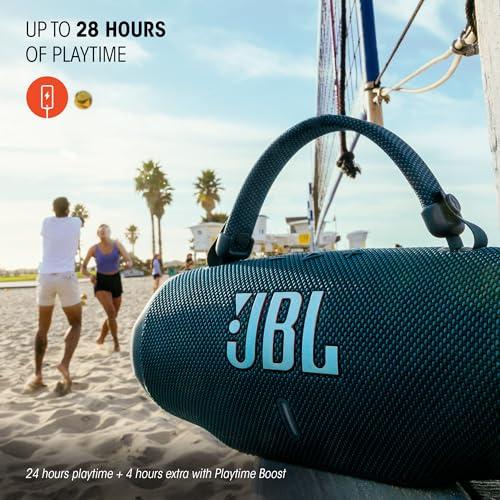
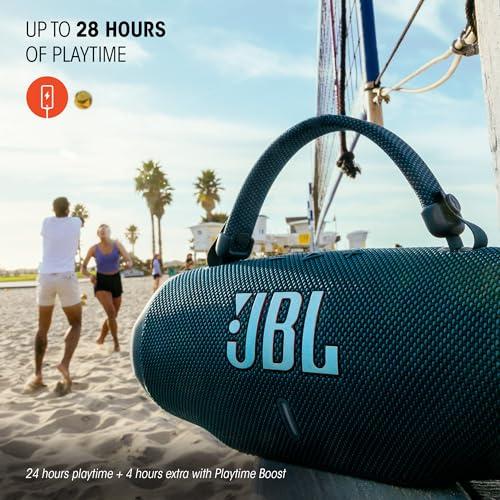
Battery performance has become a crucial differentiator as speakers have grown more powerful. The JBL Charge 6 delivers exceptional endurance with 24 hours of standard playback, extendable to 28 hours using its Playtime Boost feature. Playtime Boost essentially reduces bass output and optimizes other power-hungry functions to squeeze every minute from the battery—a clever engineering solution that provides emergency extension when needed.
The fast-charging capability deserves special mention. Just 10 minutes of charging provides 150 minutes of playback, which has saved countless beach days and camping trips. The full charge time of 3 hours means you can easily top up overnight or during lunch breaks.
The Marshall Middleton provides 20 hours of playback with a longer 4.5-hour charging time. While still respectable, its higher power consumption and less aggressive power management make it less convenient for extended trips or users who frequently forget to charge their devices.
Both speakers include power bank functionality through their USB-C ports, allowing you to charge phones, tablets, or other devices in emergencies. This dual-purpose design has become expected in modern portable speakers, effectively turning them into multi-tool devices for outdoor adventures.
The approach to user controls reveals each manufacturer's design philosophy clearly. The Marshall Middleton includes physical bass and treble knobs directly on the speaker, allowing immediate sound adjustments without pulling out your phone or opening apps. This tactile approach appeals to users who prefer direct, immediate control over their audio experience.
The JBL Charge 6 takes the opposite approach, requiring its companion app for EQ adjustments but offering a sophisticated 7-band equalizer that allows precise frequency tuning. You can boost specific frequency ranges, create custom profiles for different music genres, or compensate for acoustic environments. This digital approach provides more flexibility but requires smartphone interaction.
Bluetooth connectivity has improved significantly in both speakers compared to earlier generations. The JBL Charge 6 uses Bluetooth 5.4 with Auracast technology, allowing seamless pairing of multiple speakers for larger sound coverage. The Marshall Middleton employs Bluetooth 5.1 with Stack Mode for multi-speaker connections. Both approaches work reliably, though the JBL's newer Bluetooth standard may offer slightly better range and connection stability.
The Marshall's inclusion of a 3.5mm auxiliary input provides flexibility for older devices or situations where Bluetooth isn't ideal—like connecting to airplane entertainment systems or older computers. The JBL Charge 6 eliminates the analog input in favor of USB-C connectivity, which supports lossless audio up to 24-bit/192kHz resolution for audiophile-quality playback from compatible sources.
Understanding how these speakers perform in specific situations helps clarify their strengths and weaknesses. For outdoor use—beach days, camping, poolside gatherings—the JBL Charge 6's superior portability and weatherproofing provide clear advantages. Its lighter weight encourages you to bring it along, while its robust construction survives inevitable drops and splashes.
The extended battery life proves crucial during outdoor adventures where charging opportunities are limited. The ability to quick-charge during brief stops or power other devices in emergencies adds genuine utility that justifies the speaker's inclusion in your gear.
For home use, particularly as a desktop speaker or kitchen audio system, the Marshall Middleton's superior sound quality and physical controls become more valuable. When portability isn't the primary concern, the better drivers and more sophisticated audio processing deliver a noticeably more enjoyable listening experience.
The Marshall's 360-degree sound dispersion works particularly well in open floor plans or when multiple people are listening from different positions. Unlike traditional speakers that have a "sweet spot" directly in front, the Marshall Middleton's True Stereophonic technology maintains sound quality from various angles.
For commuting and travel, weight becomes the deciding factor for most users. The JBL Charge 6's compact size and light weight make it practical for daily carry, while the Marshall Middleton's bulk limits it to occasional transport between locations.
At the time of writing, both speakers occupy similar price ranges in the premium portable segment, though the Marshall Middleton occasionally appears at deeper discounts as Marshall phases out inventory for newer models. This creates an interesting value dynamic where the Marshall sometimes offers superior audio performance at a lower price point, though with potential concerns about long-term product support and availability.
The JBL Charge 6 represents better long-term value for most users through its combination of practical benefits: superior portability, longer battery life, faster charging, and more robust durability. These daily-use advantages compound over time, making the speaker more likely to accompany you on adventures and get regular use.
The Marshall Middleton provides better immediate audio value for listeners who prioritize sound quality above convenience factors. If you're primarily using the speaker in stationary locations and want the best possible audio performance in this size class, the Marshall delivers more music enjoyment per dollar.
The decision between these speakers ultimately depends on how you plan to use them and what compromises you're willing to make. The JBL Charge 6 makes the most sense for active users who frequently travel with their speaker, prioritize maximum battery life, or need serious weatherproofing for outdoor adventures. Its combination of true portability and solid audio performance hits the sweet spot for versatile daily use.
Choose the JBL Charge 6 if you're a frequent traveler, outdoor enthusiast, or want one speaker that works well in multiple scenarios. Its lighter weight and extended battery life make it more likely to accompany you places, while its rugged construction provides peace of mind during active use.
The Marshall Middleton appeals to listeners who prioritize audio quality above all other factors and don't need maximum portability. If you primarily use speakers in stationary locations—home office, kitchen, patio—and want noticeably better sound reproduction, the Marshall's superior drivers and processing justify the extra bulk and shorter battery life.
Choose the Marshall Middleton if you're an audio enthusiast who values sound quality, prefers physical controls, or want a speaker that doubles as attractive room décor when not in use. Its distinctive Marshall styling and superior audio performance make it an appealing choice for home-focused use.
For most users, particularly those new to premium portable speakers, the JBL Charge 6 represents the safer choice. Its practical advantages—weight, battery life, durability—matter more in daily use than the Marshall's audio superiority. However, dedicated music lovers who can live with the trade-offs will find the Marshall Middleton's sound quality genuinely rewarding.
Both speakers represent solid choices in the premium portable category, but they're optimized for different user profiles and use cases. The key is matching their strengths to your lifestyle and priorities rather than chasing specifications alone.
| JBL Charge 6 | Marshall Middleton |
|---|---|
| Weight - Critical for portability and daily carrying | |
| 2.11 lbs (genuinely portable for travel/hiking) | 4.0 lbs (nearly double weight, limits portability) |
| Audio Power Output - Determines maximum volume and bass depth | |
| 45W total (adequate for most situations) | 60W total (significantly louder, better for large spaces) |
| Driver Configuration - Affects sound quality and stereo imaging | |
| Dual-driver mono (1 woofer + 1 tweeter) | Quad-driver stereo (2 woofers + 2 tweeters) |
| Battery Life - Essential for extended use without charging | |
| 24 hours standard, 28 hours with Playtime Boost | 20 hours (good but shorter runtime) |
| Charging Speed - Matters for quick turnarounds between uses | |
| 3 hours full charge, 10 min = 150 min playback | 4.5 hours full charge (slower recovery) |
| Water Resistance - Critical protection for outdoor use | |
| IP68 (submersible to 1.5m for 30 min) | IP67 (excellent but less extreme protection) |
| Sound Control Method - Affects ease of audio adjustments | |
| App-based 7-band EQ (detailed but requires phone) | Physical bass/treble knobs (immediate tactile control) |
| Connectivity Options - Determines device compatibility | |
| Bluetooth 5.4, USB-C lossless audio, no aux | Bluetooth 5.1, USB-C, 3.5mm aux input |
| Stereo Output - Affects music immersion and spatial sound | |
| Mono output (stereo when paired with second unit) | True stereo with 360° sound dispersion |
| Best Use Cases - Where each speaker excels | |
| Travel, outdoor activities, daily portability | Home/office use, stationary listening, audiophile focus |
The JBL Charge 6 is significantly better for outdoor activities due to its lighter 2.11-pound weight, superior IP68 waterproofing that allows submersion up to 1.5 meters, and longer 24-28 hour battery life. The Marshall Middleton at 4 pounds is nearly twice as heavy and has lower IP67 water resistance, making it less practical for hiking, beach trips, or camping.
The Marshall Middleton delivers superior sound quality with its quad-driver system (two woofers and two tweeters) producing 60 watts of power and true stereo sound. The JBL Charge 6 uses a simpler dual-driver setup with 45 watts but includes AI Sound Boost technology for real-time audio optimization. The Marshall offers deeper bass, better stereo imaging, and more balanced sound across all frequencies.
The JBL Charge 6 has longer battery life with 24 hours of standard playback, extendable to 28 hours using Playtime Boost mode. The Marshall Middleton provides 20 hours of playback. The JBL Charge 6 also charges faster at 3 hours versus the Marshall's 4.5 hours, plus offers 10-minute quick charging for 150 minutes of playback.
Yes, but differently. The Marshall Middleton has physical bass and treble control knobs directly on the speaker for immediate adjustments without using your phone. The JBL Charge 6 requires the companion app but offers a more detailed 7-band equalizer for precise frequency tuning across multiple ranges.
The JBL Charge 6 is much more portable at 2.11 pounds with a compact cylindrical design and included carrying strap. The Marshall Middleton weighs 4 pounds—nearly double—making it less convenient for extended carrying during travel, hiking, or daily commuting, though it includes a detachable strap.
Yes, both the JBL Charge 6 and Marshall Middleton can charge external devices through their USB-C ports. However, the JBL Charge 6's longer battery life makes it more practical as a power bank during extended outdoor activities where charging opportunities are limited.
The Marshall Middleton gets significantly louder with its 60-watt output compared to the JBL Charge 6's 45 watts. The Marshall's larger drivers and True Stereophonic technology also provide better sound dispersion, making it more effective for filling large rooms or outdoor spaces with balanced audio from any listening position.
The Marshall Middleton offers Bluetooth 5.1, USB-C charging/audio, and a 3.5mm auxiliary input for older devices. The JBL Charge 6 uses newer Bluetooth 5.4 with Auracast multi-speaker pairing, USB-C for lossless audio up to 24-bit/192kHz, but eliminates the aux input. Both support power bank functionality through USB-C.
Yes, both speakers support multi-speaker connectivity. The JBL Charge 6 uses Auracast technology to wirelessly connect multiple compatible JBL speakers. The Marshall Middleton features Stack Mode for pairing multiple Marshall speakers. Both allow stereo pairing of two identical units for wider soundstage.
The Marshall Middleton is better for stationary home use due to its superior sound quality, physical control knobs for easy adjustments, 360-degree sound dispersion, and auxiliary input for connecting non-Bluetooth devices. The JBL Charge 6 works well too but is optimized more for portability than stationary listening.
The JBL Charge 6 has superior water protection with IP68 rating allowing submersion up to 1.5 meters for 30 minutes, plus 1-meter drop protection. The Marshall Middleton has IP67 rating providing excellent water and dust resistance but cannot handle full submersion like the JBL Charge 6. Both easily survive pool splashes and outdoor weather.
The JBL Charge 6 offers better value for most users through its combination of true portability, longer battery life, superior durability, and faster charging. The Marshall Middleton provides better audio value for stationary listeners who prioritize sound quality over portability, especially when found at discounted prices during inventory clearance.
We've done our best to create useful and informative comparisons to help you decide what product to buy. Our research uses advanced automated methods to create this comparison and perfection is not possible - please contact us for corrections or questions. These are the sites we've researched in the creation of this article: rtings.com - youtube.com - stereoguide.com - whathifi.com - youtube.com - elomymelo.com - soundguys.com - elomymelo.com - wifihifi.com - soundguys.com - jbl.com - whathifi.com - soundguys.com - youtube.com - smarthomesounds.co.uk - jbl.com - sweetwater.com - youtube.com - bestbuy.com - jbl.com.sg - jbl.com - dell.com - ca.jbl.com - soundguys.com - soundguys.com - dell.com - t3.com - whatsthebest.co.uk - youtube.com - techradar.com - timesofindia.indiatimes.com - crutchfield.com - bestbuy.com - camelcamelcamel.com - marshall.com - marshall.com - crutchfield.com - corporatespecialties.com - rtings.com - itworld.com.my

Privacy Policy
Terms and Conditions - Affiliate Policy
Home Security
© Copyright 2008-2026.
11816 Inwood Rd #1211, Dallas, TX 75244