



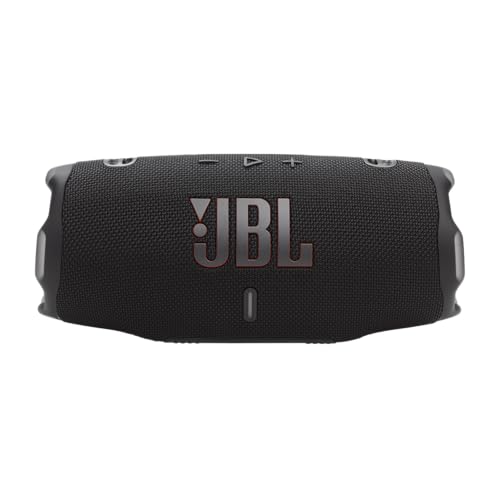
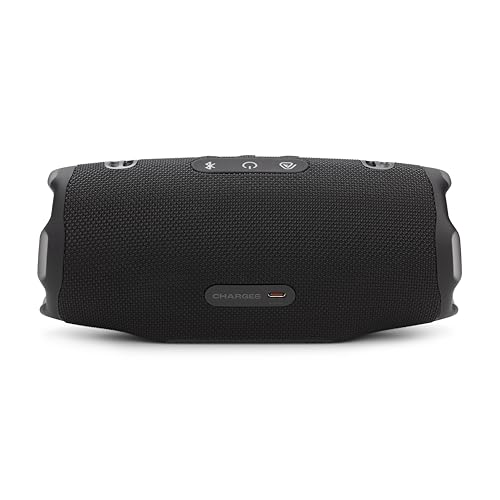
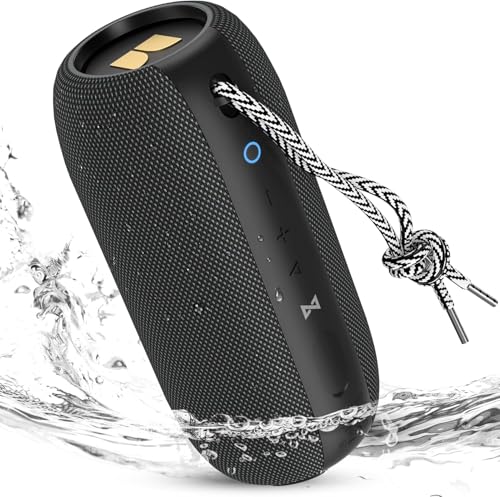
Choosing the right portable Bluetooth speaker has become surprisingly complex. What started as simple wireless audio devices have evolved into sophisticated entertainment systems that need to juggle sound quality, battery life, durability, and a growing list of smart features. After diving deep into user reviews, professional testing, and technical specifications, two speakers stand out in very different ways: the established JBL Charge 6 and the value-focused Monster S320 Superstar.
At the time of writing, these speakers occupy vastly different price tiers—the JBL Charge 6 commands premium pricing while the Monster S320 aims for aggressive value positioning. But price alone doesn't tell the whole story. Let's break down what really matters when choosing between these fundamentally different approaches to portable audio.
The portable Bluetooth speaker market has matured dramatically since the early 2010s. What began as tinny, low-powered devices that barely managed phone calls has transformed into a category where speakers routinely deliver 40+ watts of power, survive underwater adventures, and double as power banks for your devices.
The key factors that separate good speakers from great ones come down to several core areas: audio performance (how they actually sound), battery endurance (real-world runtime, not marketing claims), build quality (surviving drops, water, and daily abuse), connectivity reliability (staying connected when you need them), and overall value proposition.
Both the JBL Charge 6 and Monster S320 represent different philosophies in addressing these priorities. The JBL focuses on being a comprehensive portable audio solution, while the Monster concentrates on delivering exceptional sound quality at an accessible price point.
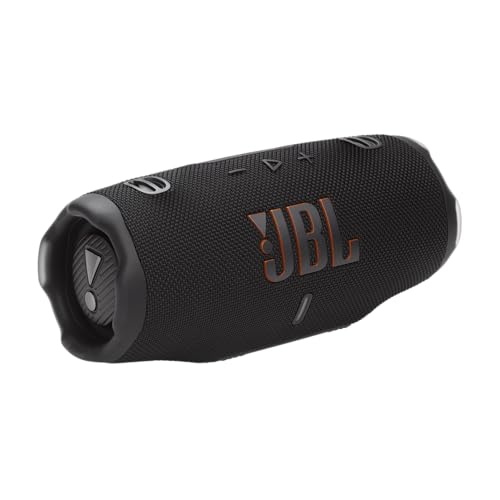
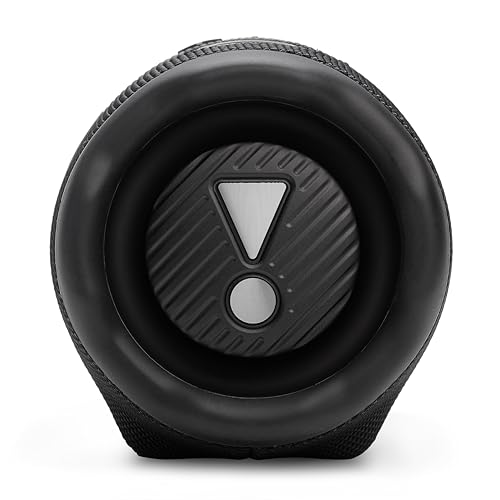
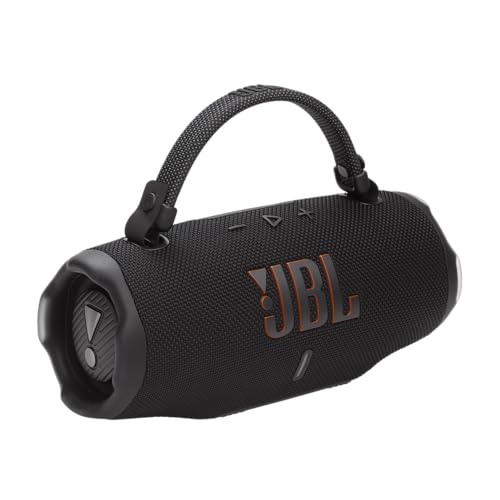
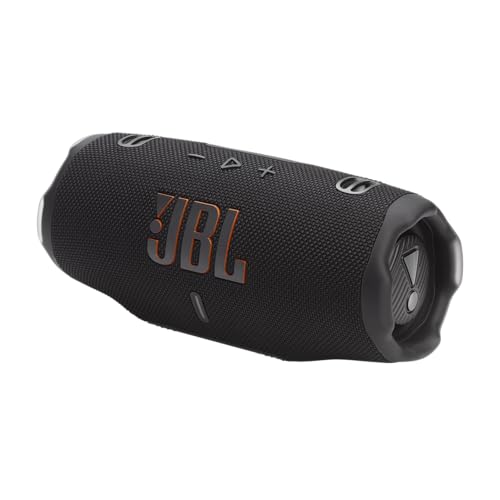
The JBL Charge 6 packs 45 watts RMS through a sophisticated two-way driver system. This means it uses separate drivers optimized for different frequency ranges—a larger 53mm x 93mm oval woofer handles bass and midrange frequencies, while a dedicated 20mm tweeter reproduces the crisp highs. Think of it like having a mini hi-fi system: each driver does what it does best rather than one driver trying to handle everything.
What makes this particularly interesting is JBL's oval "racetrack" woofer design. Traditional round drivers waste space in rectangular enclosures, but the oval shape maximizes the driver surface area within the Charge 6's housing. More driver surface area generally means better bass response and lower distortion—physics you can actually hear.
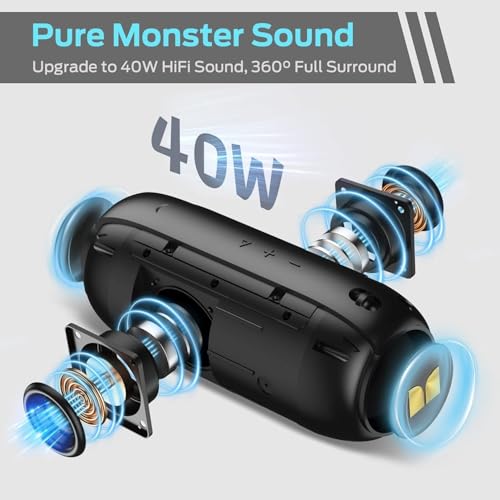
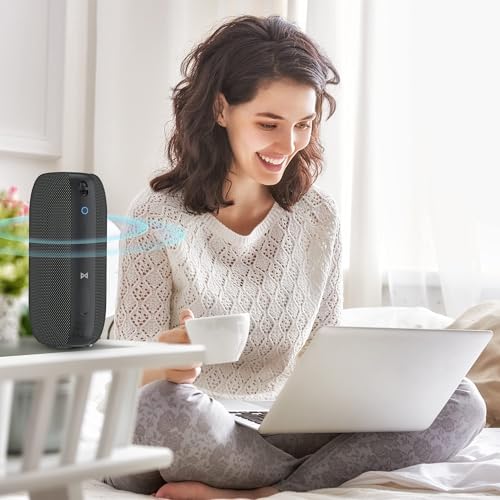
The Monster S320 takes a completely different approach with its 40-watt, 360-degree omnidirectional design. Instead of focusing sound in one direction like most speakers, it radiates audio equally in all directions. Imagine the difference between a flashlight (directional) and a light bulb (omnidirectional). This design eliminates the "sweet spot" problem where you need to sit directly in front of the speaker for optimal sound.
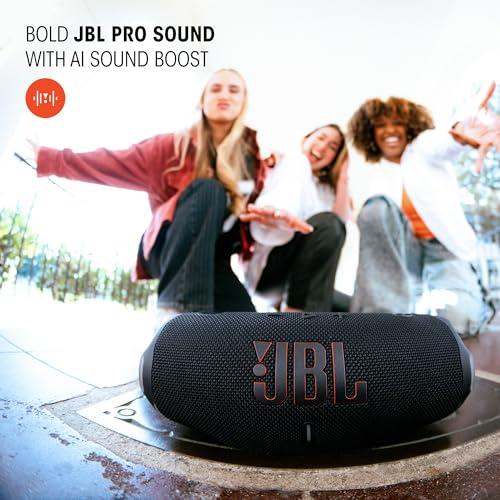
Here's where things get technically interesting. The JBL Charge 6 incorporates something called AI Sound Boost—a real-time audio processing algorithm that analyzes your music and optimizes the drivers' performance on the fly. This isn't marketing fluff; it's actually preventing distortion by monitoring the audio signal and adjusting power delivery to keep the drivers operating within their optimal range.
Based on our research into professional reviews and user feedback, this technology makes a noticeable difference at higher volumes. Where many portable speakers start sounding harsh or compressed when cranked up, the Charge 6 maintains composure and clarity. The frequency response spans from 56Hz to 20kHz, which means solid bass extension without muddy mids—a common problem in smaller speakers.
The Monster S320 approaches audio quality differently, emphasizing what Monster calls "Pure Monster Sound." This is essentially Monster's signature bass-forward tuning that made their headphones famous in the early 2000s. User reviews consistently describe the sound as "concert-like" with punchy bass and clear vocals. The claimed frequency response of 20Hz-20kHz looks impressive on paper, though real-world bass extension in a speaker this size typically doesn't reach those theoretical lows.
What's particularly noteworthy about the Monster S320 is how its 360-degree design affects sound quality. Because audio radiates in all directions, you get more consistent volume and tonal balance regardless of where you're sitting. However, this design typically sacrifices some maximum volume compared to directional speakers like the Charge 6.
Maximum volume capabilities matter more than you might think, especially for outdoor use. The JBL Charge 6 consistently receives praise for maintaining audio quality even when pushed to its limits. This comes down to both the AI Sound Boost processing and the larger drivers having more headroom before distortion sets in.
Professional testing suggests the Charge 6 can fill medium-sized outdoor spaces effectively while preserving detail in the music. The directional design helps here—by focusing sound forward, it achieves higher perceived volume in the listening area compared to omnidirectional designs.
The Monster S320 approaches volume differently. While it may not achieve quite the same peak levels as the Charge 6, its 360-degree design means everyone around gets relatively consistent volume. This makes it particularly effective for group listening scenarios where people are positioned around the speaker rather than in front of it.
Battery life claims in portable speakers have become almost meaningless due to wildly varying testing conditions. Manufacturers often test at unrealistically low volumes with specific audio tracks, leading to claims that bear little resemblance to real-world use.
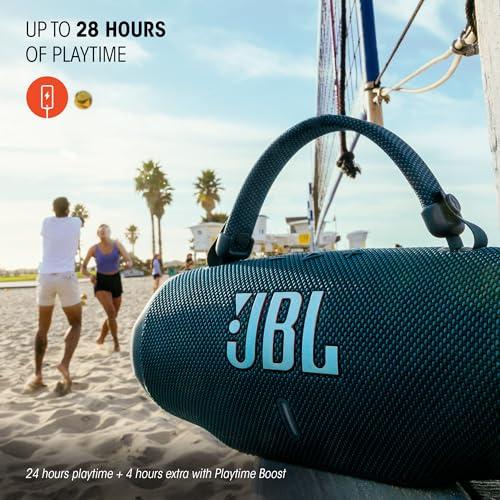
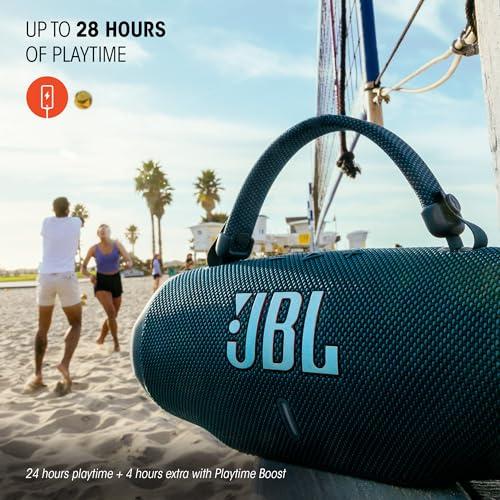
The JBL Charge 6 claims up to 28 hours with its Playtime Boost feature enabled, or 24 hours in standard mode. But here's what actually matters: independent testing shows approximately 14 hours at full volume and around 19 hours with Playtime Boost active. Playtime Boost works by reducing bass frequencies and lower-mids to decrease power consumption—essentially an EQ preset that trades some sound quality for extended runtime.
What sets the Charge 6 apart is its fast charging capability. Ten minutes of charging provides 150 minutes of playback, which is genuinely useful when you need a quick top-up before heading out. The speaker also functions as a power bank, letting you charge your phone while playing music—a feature that becomes invaluable during camping trips or long days at the beach.
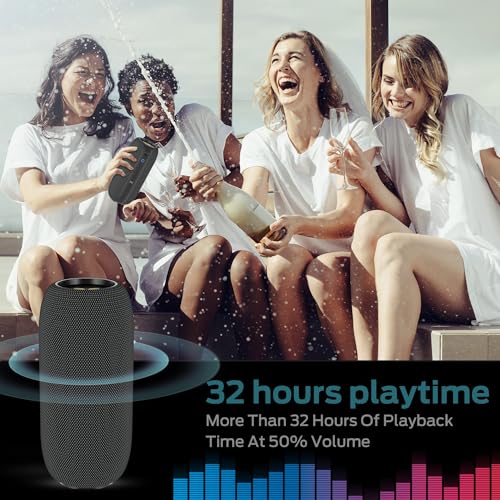
The Monster S320 presents a more concerning battery story. While it claims up to 32 hours of playback, user reviews reveal actual performance ranging from 8-18 hours at moderate volumes. This significant gap between claimed and actual performance raises questions about Monster's testing methodology and sets unrealistic expectations for buyers.
However, the Monster S320 focuses its battery capacity entirely on audio playback rather than splitting power between speaker operation and device charging like the Charge 6. For users who don't need power bank functionality, this could theoretically provide longer music-only runtime.
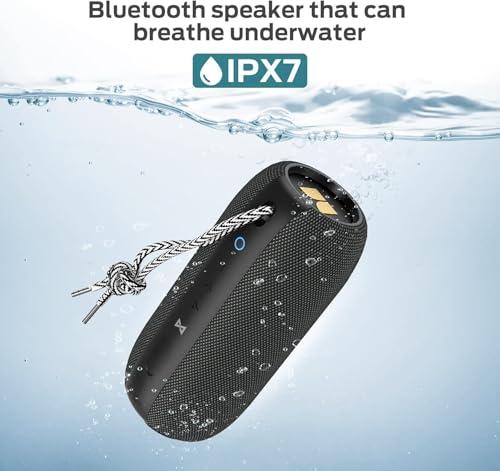
Both speakers achieve IPX7 waterproof ratings, meaning they can survive submersion in up to one meter of water for 30 minutes. But the JBL Charge 6 goes further with an IP68 rating that adds dust protection and extends submersion capability to 1.5 meters. In practical terms, this means better protection against sand, dirt, and deeper water encounters.
JBL has also certified the Charge 6 as drop-proof from one meter onto concrete. This isn't just marketing—JBL has an established reputation for building speakers that survive real-world abuse. The speaker incorporates 85% post-consumer recycled plastics and 100% recycled fabric grille, proving that environmental consciousness doesn't require sacrificing durability.
The Monster S320 emphasizes rugged construction with its shockproof and dustproof claims, though it lacks specific testing certifications. Monster's recent return to the speaker market means less long-term reliability data compared to JBL's established track record. However, user reviews generally report solid build quality despite the aggressive pricing.
Modern Bluetooth connectivity goes far beyond just pairing with your phone. The JBL Charge 6 uses Bluetooth 5.4 with Auracast technology—a next-generation standard that enables sophisticated multi-speaker setups. You can connect multiple JBL speakers for synchronized playback across larger areas, essentially creating a wireless sound system.
The Charge 6 also supports lossless audio playback up to 24-bit/192kHz when connected via USB-C. This means you can achieve CD-quality or better audio when using wired connections, bypassing Bluetooth's inherent compression. For critical listening at home, this makes a meaningful difference.
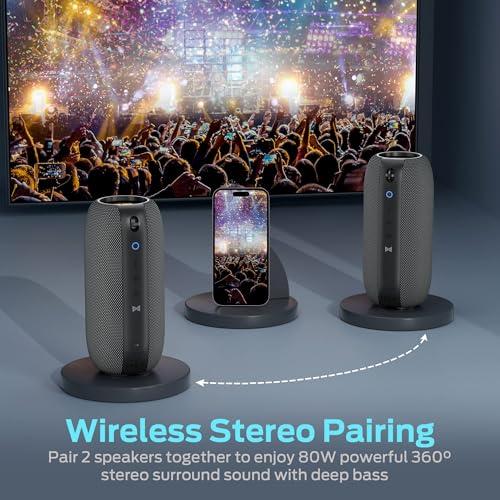
The Monster S320 uses Bluetooth 5.0 (some units may have 4.2 depending on production variants) with True Wireless Stereo (TWS) pairing capability. Two Monster S320 speakers can connect wirelessly to create genuine left-right stereo separation for a combined 80 watts of output. This is particularly compelling given the speaker's lower price point—buying two S320s might cost less than a single Charge 6 while delivering more total power.
The JBL Portable app transforms the Charge 6 from a simple speaker into a customizable audio system. The 7-band graphic equalizer allows precise sound tuning for different music genres or listening environments. You can boost bass for electronic music, enhance vocals for podcasts, or create custom profiles for indoor versus outdoor use.
The app also manages Playtime Boost, multi-speaker connections, and firmware updates. This level of software support extends the speaker's lifespan by adding new features and compatibility improvements over time.
The Monster S320 relies entirely on physical controls without app integration. While this simplifies operation, it limits sound customization to the speaker's built-in tuning. For users who prefer set-it-and-forget-it operation, this isn't necessarily a drawback, but it does reduce flexibility.
Neither speaker is designed as a home theater solution, but both can enhance your indoor listening experience in different ways. The JBL Charge 6's directional design works well for desktop placement or shelf positioning where you want focused sound. The USB-C audio input supports high-quality playback from computers or audio interfaces.
The Monster S320's omnidirectional design excels in open living spaces where consistent sound coverage matters more than focused listening. It's particularly effective in kitchens or workshops where you might move around while listening.
For serious home theater use, you'd want to look at dedicated soundbars or bookshelf speakers, but both of these portable options can serve as secondary audio sources or temporary solutions.
At the time of writing, the price difference between these speakers is substantial—the JBL Charge 6 costs roughly three times more than the Monster S320. This price gap raises important questions about value and priorities.
The Charge 6 justifies its premium through comprehensive functionality: power bank capability, advanced app control, superior water resistance, established brand reliability, and sophisticated multi-speaker connectivity. You're paying for a complete portable audio ecosystem, not just a speaker.
The Monster S320 focuses entirely on audio performance per dollar. The 40-watt output, 360-degree sound design, and TWS pairing capability deliver features typically found in much more expensive speakers. If your priority is sound quality and basic functionality, the Monster offers exceptional value.
The JBL Charge 6 makes sense for users who need a reliable, feature-complete portable audio solution. If you frequently use speakers outdoors, need device charging capability, want app-based sound customization, or plan to integrate multiple speakers, the premium is justified. It's also the safer choice for buyers who prioritize established brand support and proven durability.
The Monster S320 appeals to budget-conscious users who prioritize audio performance above additional features. If you want impressive sound quality, unique 360-degree design, and don't need power bank functionality or app control, the Monster delivers remarkable value. It's also ideal for buyers willing to accept some uncertainty about long-term reliability in exchange for significant cost savings.
These speakers represent fundamentally different approaches to portable audio. The JBL Charge 6 is a comprehensive solution that does many things well, while the Monster S320 excels at its core mission of delivering impressive sound at an accessible price.
For most users, the JBL Charge 6 provides better long-term value despite the higher upfront cost. The combination of proven reliability, comprehensive features, and JBL's established support ecosystem makes it a safer investment. However, the Monster S320 offers genuinely impressive performance for its price tier and could be the better choice for budget-conscious buyers who prioritize audio quality over additional features.
Ultimately, your choice depends on whether you want a feature-rich portable audio system or exceptional sound quality at a value price. Both speakers succeed at their respective goals—it's just a matter of which philosophy aligns with your needs and budget.
| JBL Charge 6 | Monster S320 Superstar |
|---|---|
| Audio Output Power - Determines maximum volume and room-filling capability | |
| 45W RMS (30W woofer + 15W tweeter) | 40W total (10W + 10W x 2 drivers) |
| Driver Configuration - Affects sound quality and frequency separation | |
| 2-way system: 53mm x 93mm oval woofer + 20mm tweeter | Dual 2" drivers in 360-degree omnidirectional setup |
| Sound Design Philosophy - Changes how audio is distributed in space | |
| Directional forward-facing for focused listening | 360-degree omnidirectional for consistent coverage |
| Battery Life (Real-World Testing) - Actual usage time, not marketing claims | |
| 14-19 hours at moderate volume, 24-28 hours claimed | 8-18 hours at moderate volume, 32 hours claimed |
| Water/Dust Protection - Critical for outdoor durability | |
| IP68 (submersion to 1.5m, dust-proof) | IPX7 (submersion to 1m, no dust rating) |
| Charging Speed and Power Features - Convenience for extended use | |
| 3-hour full charge, 10-min = 2.5 hours playback, power bank function | 3-hour full charge, no power bank capability |
| Bluetooth Technology - Affects connection stability and features | |
| Bluetooth 5.4 with Auracast multi-speaker pairing | Bluetooth 5.0 with True Wireless Stereo (TWS) pairing |
| Audio Processing Technology - Real-time sound optimization | |
| AI Sound Boost for distortion reduction at high volumes | Pure Monster Sound tuning with bass emphasis |
| App Integration - Sound customization and control options | |
| JBL Portable app with 7-band EQ and advanced controls | Physical controls only, no app support |
| Weight and Portability - Affects ease of transport | |
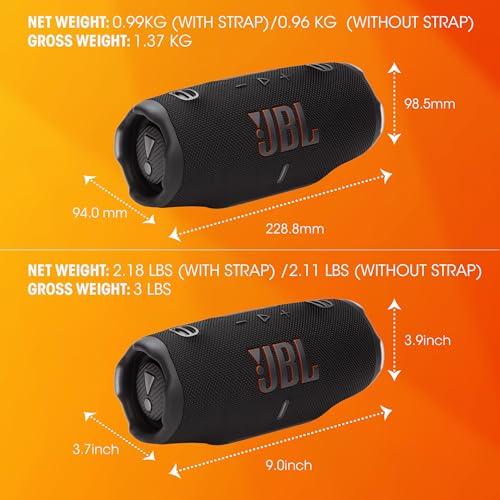
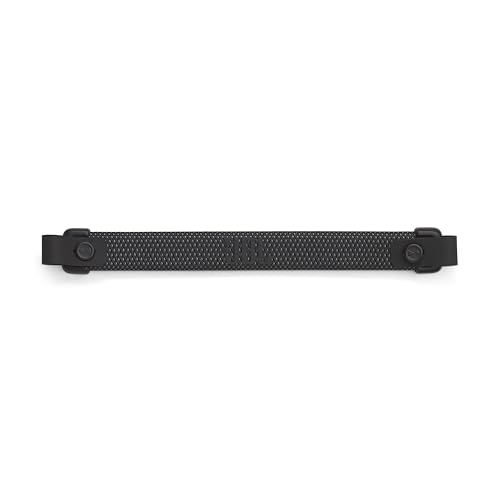
| 990g (2.18 lbs) with strap | 720g (1.6 lbs) |
| Additional Inputs - Connectivity flexibility | |
| USB-C audio input (24-bit/192kHz lossless) | 3.5mm aux input + USB-C charging |
| Multi-Speaker Capability - Expanding your sound system | |
| Connect multiple JBL Charge 6 speakers via Auracast | Pair two Monster S320 units for 80W stereo |
| Brand Track Record - Long-term reliability and support | |
| Established JBL reputation with proven durability | Monster's return to speakers, less reliability data |
The JBL Charge 6 delivers more refined audio with its 2-way driver system and AI Sound Boost technology, maintaining clarity even at high volumes. The Monster S320 offers impressive bass-forward sound with 360-degree coverage, making it ideal for group listening. The JBL Charge 6 excels in focused listening scenarios, while the Monster S320 provides more consistent sound regardless of your position around the speaker.
The JBL Charge 6 typically achieves higher peak volumes thanks to its 45W output and directional design that focuses sound forward. The Monster S320 with 40W provides solid volume but distributes it in all directions, which can make it seem quieter in direct comparison. For maximum loudness in outdoor settings, the JBL Charge 6 has the advantage.
Real-world testing shows the JBL Charge 6 delivers 14-19 hours at moderate volumes, with up to 24-28 hours using Playtime Boost mode. The Monster S320 provides 8-18 hours of actual playback despite claiming 32 hours. The JBL Charge 6 offers more consistent and reliable battery performance for extended use.
The JBL Charge 6 features superior protection with IP68 rating (waterproof to 1.5m and dustproof) plus drop-proof certification from 1 meter. The Monster S320 has IPX7 waterproofing (1m submersion) and claims shockproof construction. For harsh outdoor conditions, the JBL Charge 6 provides better overall durability and peace of mind.
Yes, both support multi-speaker pairing but use different technologies. The JBL Charge 6 uses Auracast to connect with other compatible JBL speakers for synchronized playback. The Monster S320 supports True Wireless Stereo (TWS) pairing with another identical Monster S320 unit for genuine stereo separation and 80W combined output.
The Monster S320 provides exceptional audio performance per dollar, delivering 40W output and unique 360-degree sound at a budget-friendly price point. The JBL Charge 6 costs significantly more but includes premium features like power bank functionality, advanced app control, and superior durability. Value depends on whether you prioritize core audio performance or comprehensive features.
The JBL Charge 6 works well for desktop or shelf placement with its directional design and USB-C audio input for high-quality wired connections. The Monster S320 excels in open living spaces where its 360-degree sound provides consistent coverage throughout the room. Neither is designed for serious home theater use, but both serve well as secondary audio sources.
The JBL Charge 6 integrates with the JBL Portable app offering a 7-band equalizer, Playtime Boost controls, and multi-speaker management. The Monster S320 relies entirely on physical controls without any app support. For users who want sound customization and advanced features, the JBL Charge 6 is the clear winner.
Only the JBL Charge 6 includes power bank functionality, allowing you to charge devices via USB while playing music. This feature makes it invaluable for camping, beach trips, or anywhere you need backup power. The Monster S320 focuses its battery capacity solely on audio playback without device charging capability.
The Monster S320 excels at pool parties with its 360-degree sound ensuring everyone around gets consistent audio coverage, plus it's significantly lighter for easy transport. The JBL Charge 6 offers superior water protection (IP68 vs IPX7) and can charge phones, making it better for extended outdoor events. Both handle pool environments well, but serve different needs.
The JBL Charge 6 uses newer Bluetooth 5.4 technology with enhanced stability and Auracast multi-speaker capabilities. The Monster S320 features Bluetooth 5.0 (some units have 4.2) with reliable connectivity and TWS pairing support. The JBL Charge 6 provides more advanced connectivity features and better future-proofing.
If budget is your primary concern, the Monster S320 delivers remarkable audio performance for its price point, including 40W output and unique 360-degree sound design. However, if you can stretch your budget, the JBL Charge 6 offers better long-term value through superior durability, comprehensive features, and established brand reliability that justify the higher investment.
We've done our best to create useful and informative comparisons to help you decide what product to buy. Our research uses advanced automated methods to create this comparison and perfection is not possible - please contact us for corrections or questions. These are the sites we've researched in the creation of this article: rtings.com - youtube.com - stereoguide.com - whathifi.com - youtube.com - elomymelo.com - soundguys.com - elomymelo.com - wifihifi.com - soundguys.com - jbl.com - whathifi.com - soundguys.com - youtube.com - smarthomesounds.co.uk - jbl.com - sweetwater.com - youtube.com - bestbuy.com - jbl.com.sg - jbl.com - dell.com - ca.jbl.com - soundguys.com - soundguys.com - dell.com - youtube.com - runbazaar.com - youtube.com - exceldisc.com - youtube.com - 961souq.com - walmart.com - eshtir.com - mct-audio.com - hk.monsterstore.com - alibaba.com - cdn.tgdd.vn - device.report - manualslib.com - alibaba.com

Privacy Policy
Terms and Conditions - Affiliate Policy
Home Security
© Copyright 2008-2026.
11816 Inwood Rd #1211, Dallas, TX 75244