

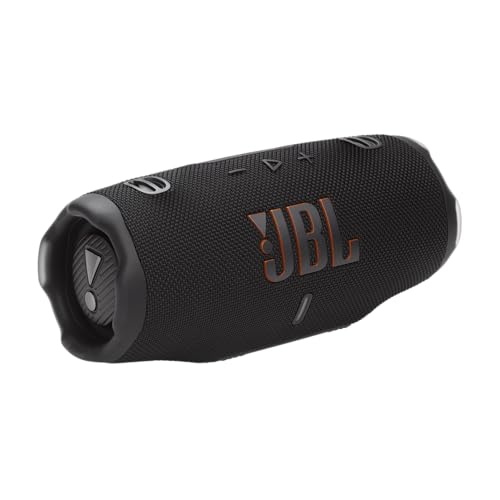


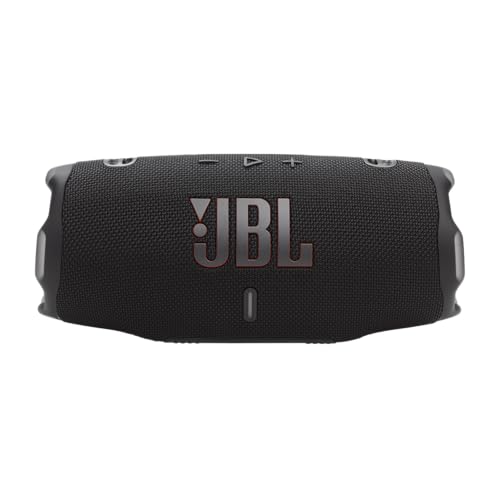
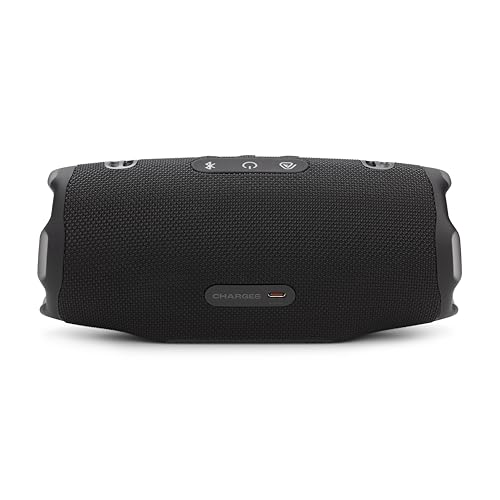
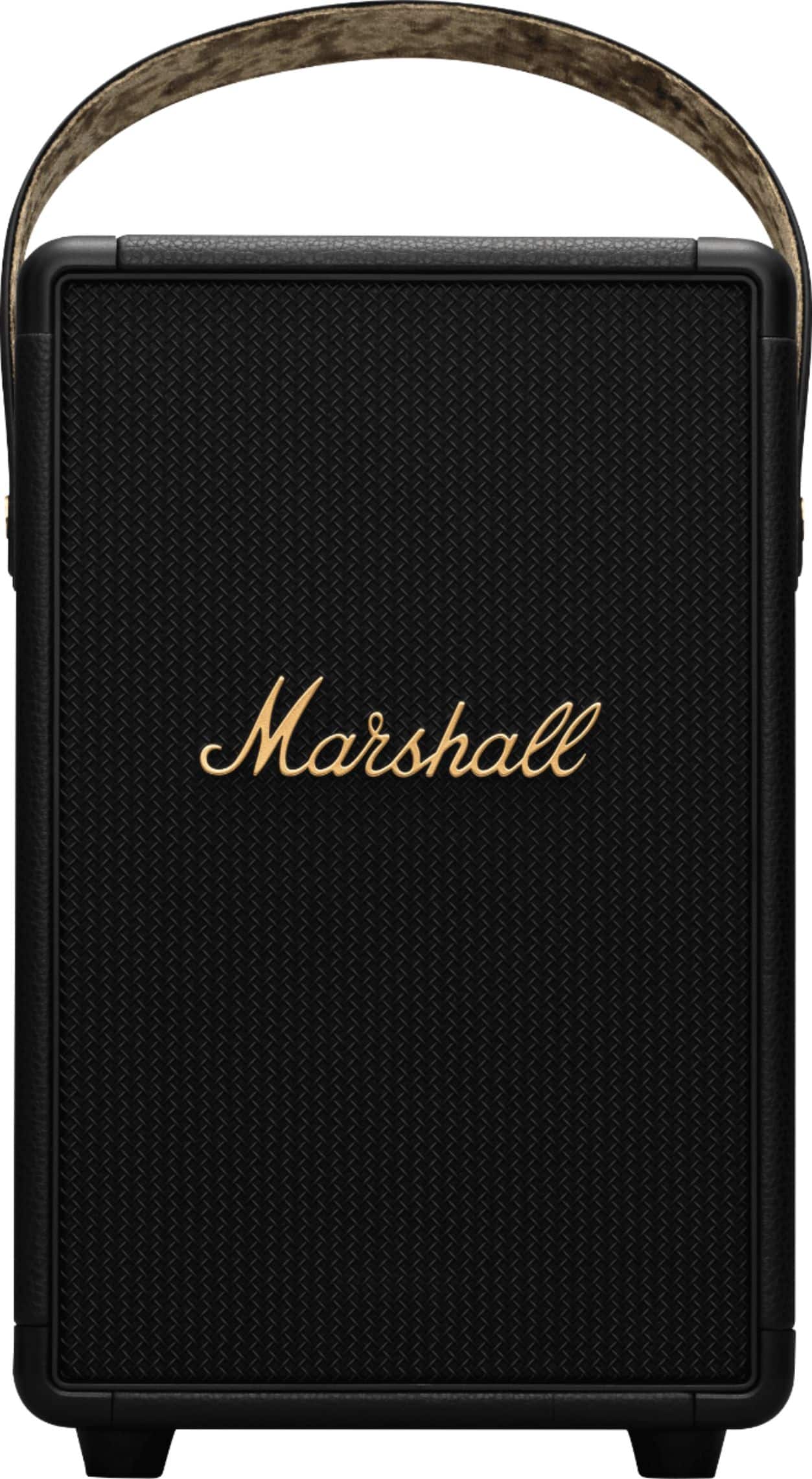
When you're shopping for a portable Bluetooth speaker, you might think all speakers in this category serve the same purpose. But the reality is more nuanced. The JBL Charge 6 and Marshall Tufton represent two completely different philosophies about what "portable" actually means, and understanding this difference is crucial to making the right choice.
Both speakers arrived on the market with different goals in mind. The Marshall Tufton launched in 2019 as Marshall's attempt to bring their iconic amplifier aesthetic into the wireless speaker world, while the JBL Charge 6 represents the latest evolution of JBL's popular Charge series, released in 2025 with cutting-edge features like AI-enhanced audio processing.
The portable Bluetooth speaker category has evolved into distinct subcategories, and these two speakers perfectly illustrate this division. When evaluating any speaker in this space, you should consider several key factors: true portability (how easy it is to actually carry around), sound quality, durability, battery performance, connectivity options, and overall value for money.
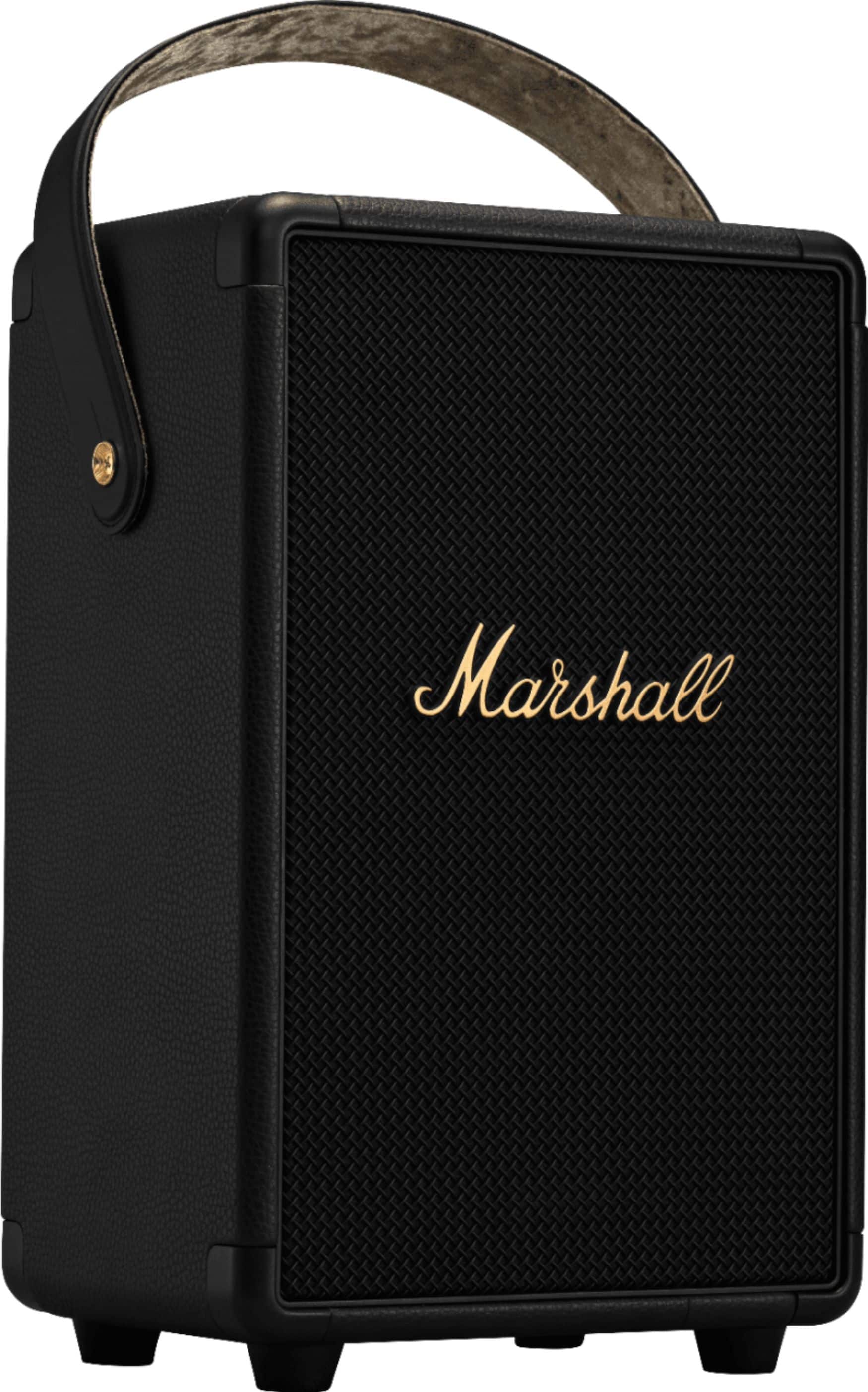
The JBL Charge 6 embodies what most people think of when they hear "portable speaker" – it's compact, lightweight, and genuinely designed to go everywhere you do. The Marshall Tufton, on the other hand, is more accurately described as a "moveable" speaker. It's portable in the sense that it has a handle and runs on battery power, but it's really designed for people who want premium audio quality with the occasional ability to relocate their music setup.
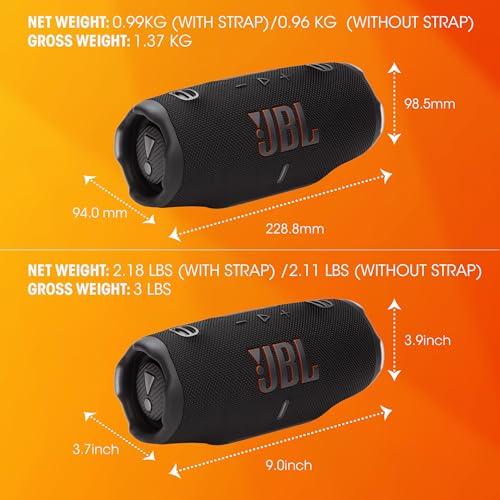
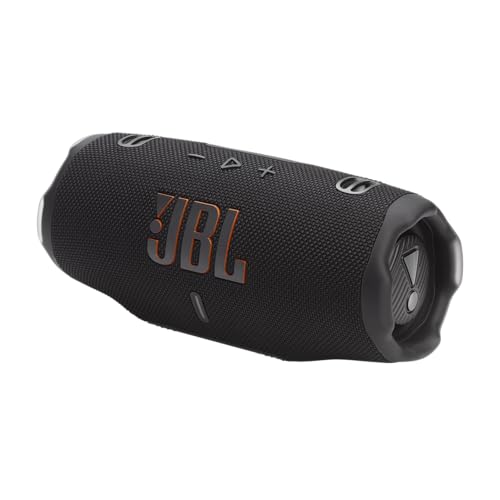
Here's where the rubber meets the road. The JBL Charge 6 weighs just over 2 pounds and measures roughly 4 inches tall by 9 inches wide – about the size of a large water bottle. You can easily toss it in a backpack, carry it one-handed, or clip it to a bike rack without thinking twice.
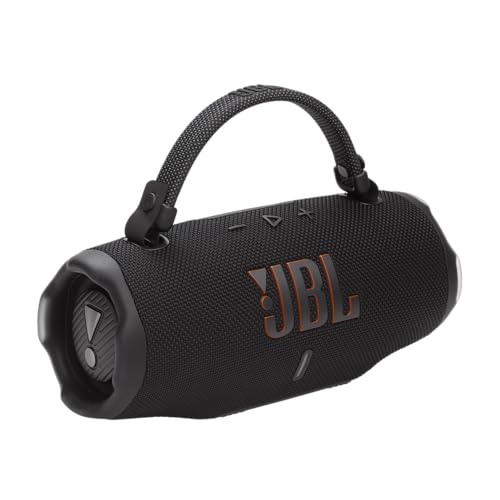
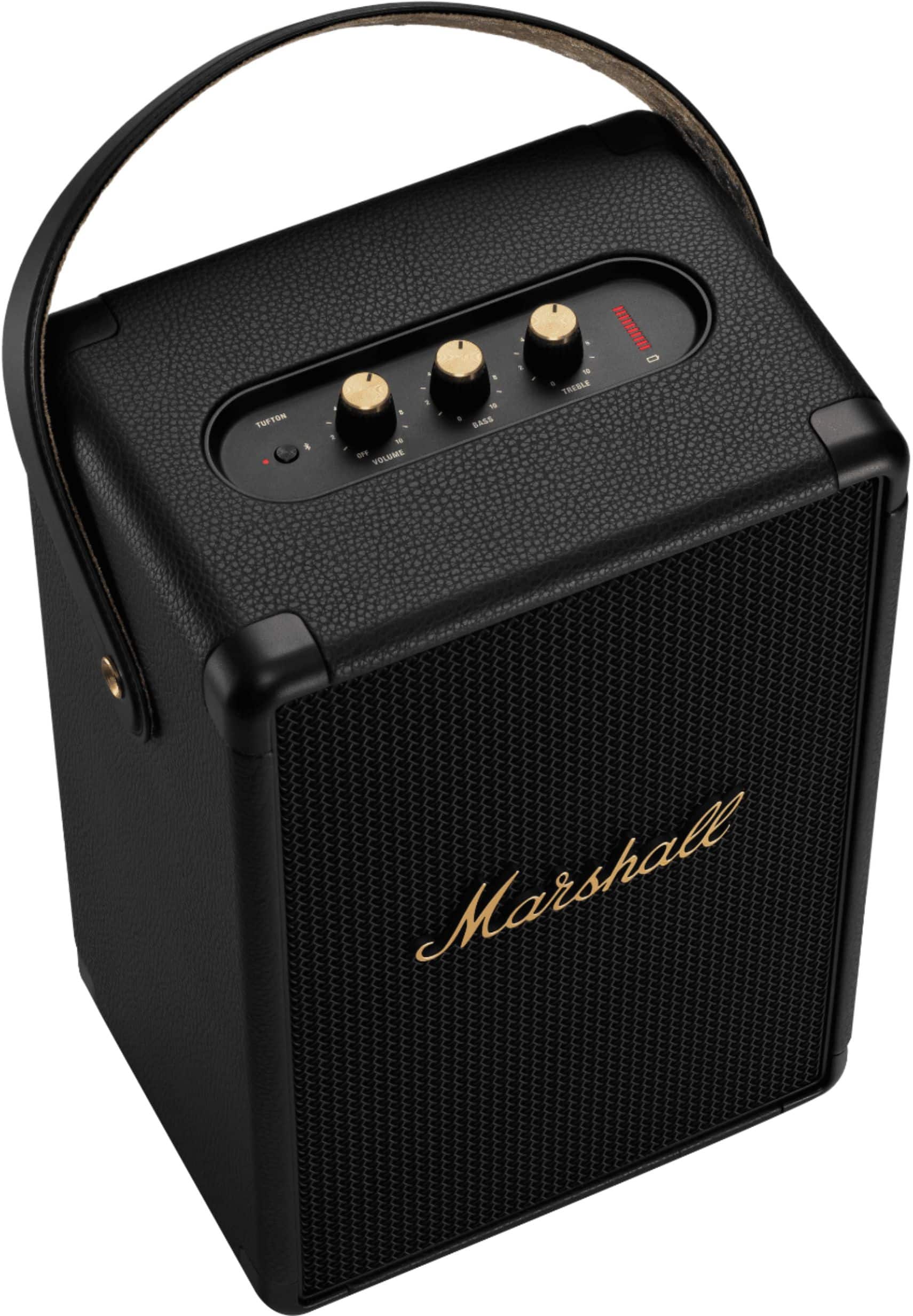
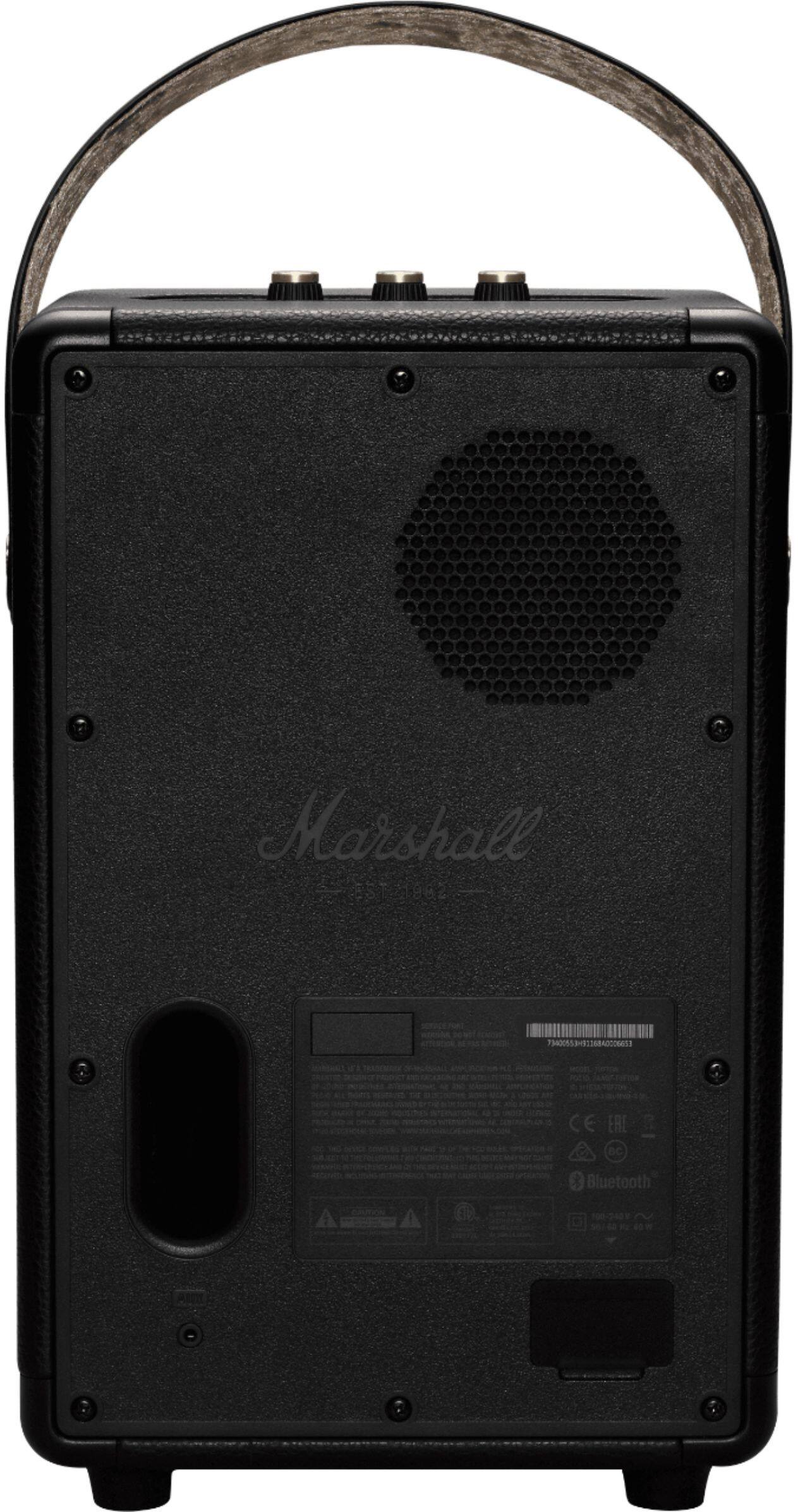
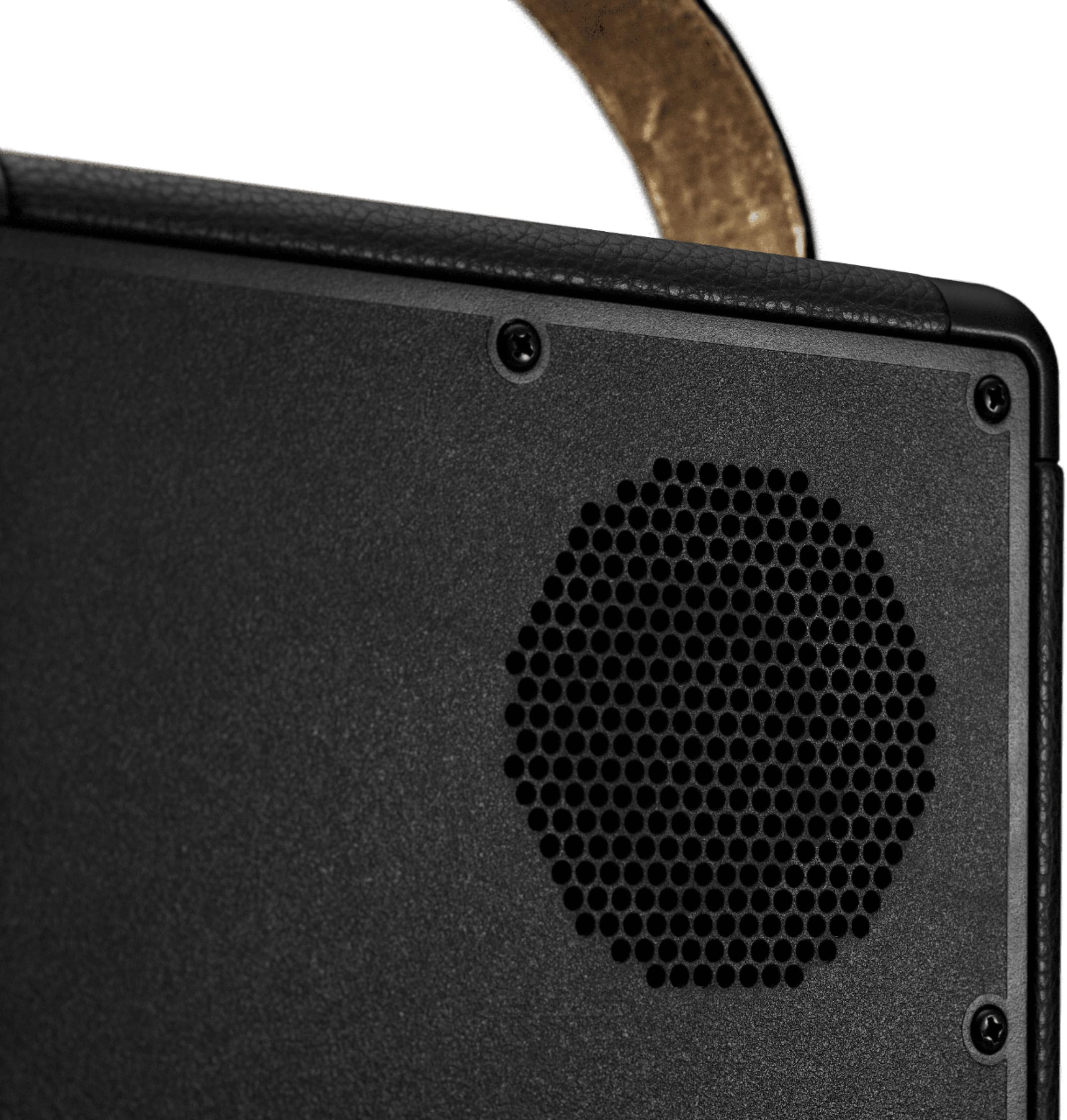
The Marshall Tufton is a different beast entirely. At nearly 11 pounds and measuring almost 14 inches tall, it's more like carrying a small guitar amplifier (which is exactly the aesthetic Marshall was going for). This isn't a speaker you'll casually throw in a bag for a hike. It requires two-handed carrying and some planning about where you're going to set it up.
This size difference isn't just about convenience – it fundamentally changes how you'll use each speaker. The Charge 6 becomes a constant companion for outdoor adventures, travel, and spontaneous listening sessions. The Tufton is more likely to live in one primary location with occasional moves for special events or seasonal transitions.
When it comes to raw audio power, the Marshall Tufton dominates with 80 watts of total output compared to the Charge 6's 45 watts. But wattage alone doesn't tell the complete story – it's how that power is delivered that matters.
The Tufton uses a sophisticated three-way driver system, meaning it has separate drivers optimized for different frequency ranges: two tweeters handle the high frequencies (think cymbals and vocal sibilance), two midrange drivers manage the crucial mid frequencies where most vocals and instruments live, and a dedicated woofer produces the low-end bass. This separation allows each driver to focus on what it does best, resulting in cleaner sound reproduction across the entire frequency spectrum.
The JBL Charge 6 takes a different approach with a two-way system featuring a specially designed oval "racetrack" woofer (which maximizes the driver surface area within the compact housing) paired with a dedicated tweeter and dual passive radiators. Passive radiators are like speakers without magnets – they move in response to the air pressure created by the active drivers, effectively extending bass response without requiring additional power or space.
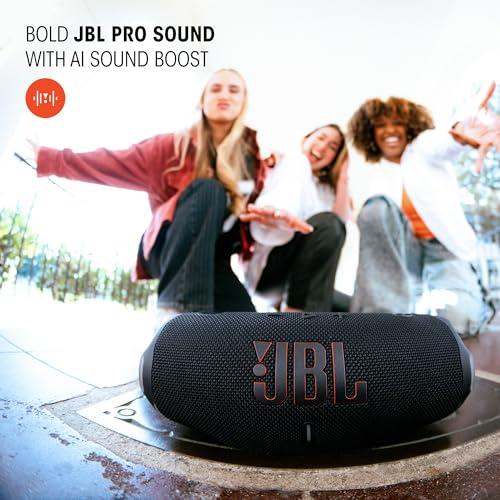
What makes the Charge 6 particularly interesting is its AI Sound Boost technology. This isn't just marketing speak – it's a real-time audio processing system that analyzes the music as it plays and automatically adjusts the speaker's output to minimize distortion while maximizing volume. Think of it as having a sound engineer constantly tweaking the audio to get the best possible performance from the small drivers.
In practical terms, the Marshall Tufton can reach maximum volumes of around 102 decibels (about as loud as a motorcycle), while the Charge 6 tops out around 95 decibels (similar to city traffic). The Tufton also delivers what Marshall calls "True Stereophonic" sound with 360-degree coverage, meaning it fills a space more evenly than traditional directional speakers.
However, the Charge 6 punches well above its weight class thanks to that AI processing. Where many small speakers become muddy or distorted at high volumes, the Charge 6 maintains clarity and control. This means that while it can't match the Tufton's room-shaking power, it delivers surprisingly satisfying sound for its size.
The Marshall Tufton excels at reproducing complex musical arrangements. If you're listening to jazz with multiple instruments, classical music with full orchestration, or rock albums with layered guitar tracks, the Tufton's driver separation really shines. You can pick out individual instruments in the mix, and the soundstage (the perceived width and depth of the audio) feels expansive and immersive.
The bass response on the Tufton extends deeper and hits harder, but it's controlled rather than boomy. This makes it excellent for genres that rely on tight, punchy bass like funk, hip-hop, or electronic music. The midrange, where vocals live, is rich and present, while the high frequencies sparkle without becoming harsh.
The JBL Charge 6, despite its size limitations, delivers remarkably balanced sound. The midrange is particularly impressive – vocals come through with clarity and presence that rivals much larger speakers. The bass, while not as deep or powerful as the Tufton's, has character and punch that adds energy to music without overwhelming the other frequencies.
One area where the Charge 6 sometimes struggles is with very complex musical passages at high volumes. The AI processing works hard to maintain clarity, but physics ultimately limits what's possible from compact drivers. However, for most popular music, podcasts, and casual listening, the difference is less noticeable than you might expect.
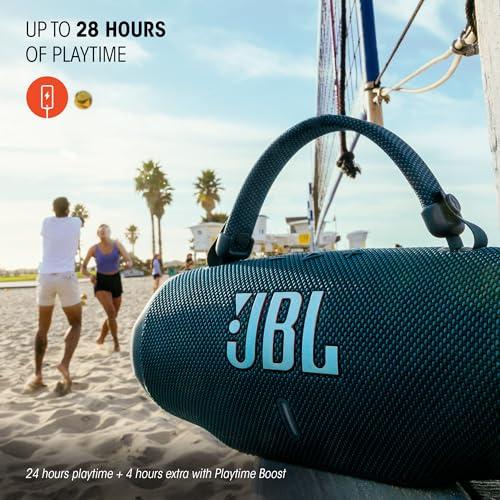
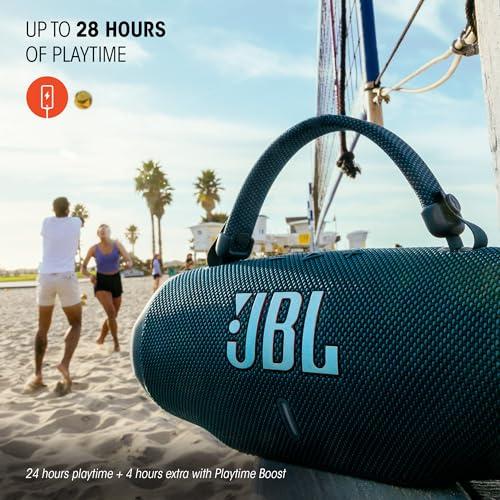
Both speakers excel in battery performance, but with different strengths. The JBL Charge 6 claims 24-28 hours of playback time, with the higher number achieved using a feature called Playtime Boost. This mode extends battery life by reducing bass frequencies and lower-midrange output – essentially trading some sound richness for longer runtime.
The Marshall Tufton delivers 20+ hours of playback, which is impressive given its much higher power output. Think of it like comparing the fuel efficiency of a motorcycle to a truck – the Tufton uses more power but still manages excellent endurance.
Fast charging is where both speakers show their modern design. The Charge 6 can gain 150 minutes of playback from just 10 minutes of charging, while the Tufton provides 4 hours of music from a 20-minute charge. These quick-charge capabilities mean you're rarely stuck without music for long.
The Charge 6 adds a practical bonus: it doubles as a power bank, letting you charge your phone or other devices from its battery. This feature transforms it from just a speaker into a multi-functional travel companion.
Here's where the fundamental design philosophies become crystal clear. The JBL Charge 6 sports an IP68 rating, which means it's completely dustproof and can survive being submerged in water up to 1 meter deep for 30 minutes. This isn't just splash-resistance – you could literally drop this speaker in a swimming pool, fish it out, and keep listening to music.
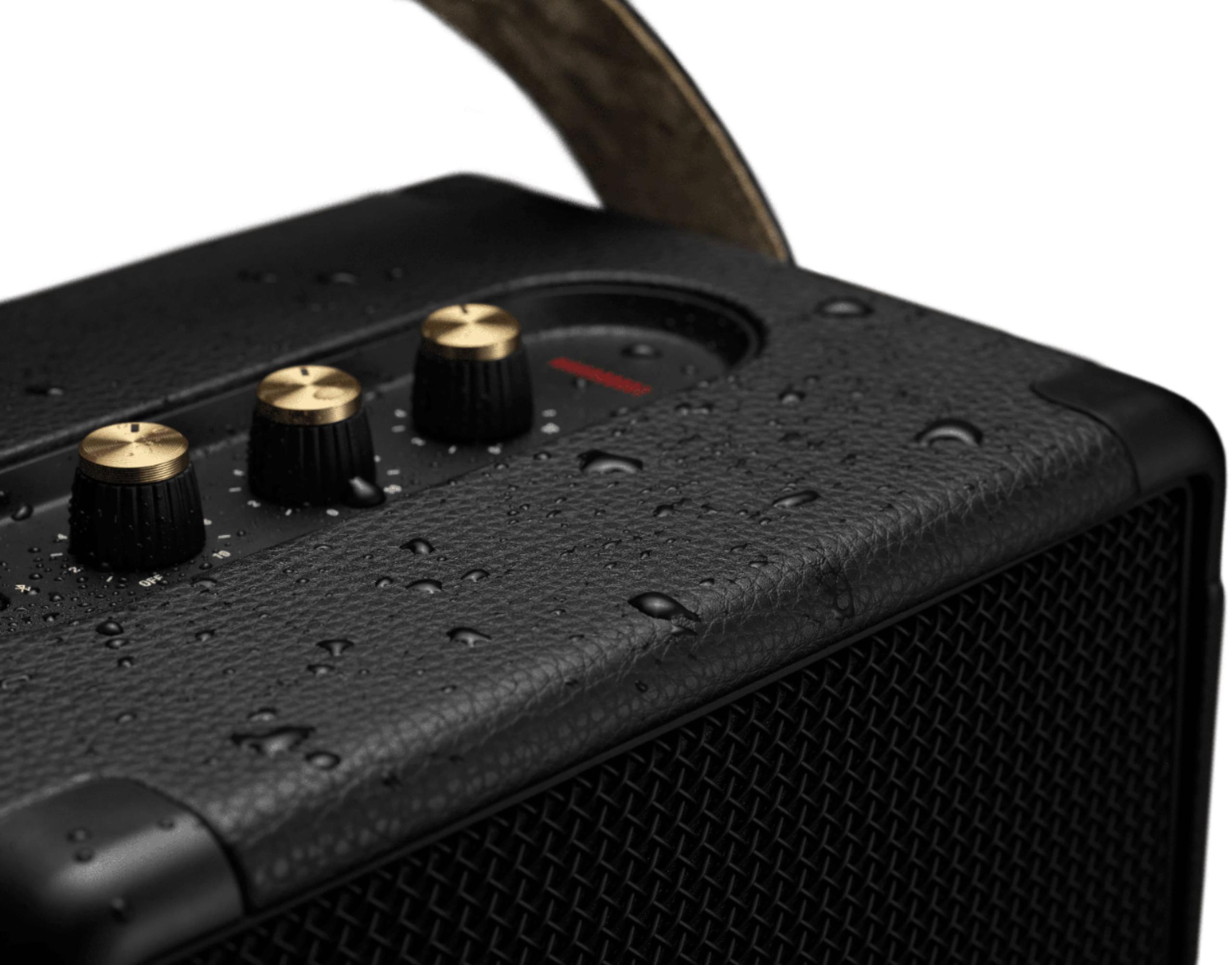
The Marshall Tufton has only an IPX2 rating, which provides basic protection against light water splashes from above. This means you need to keep it away from pools, beaches, and even heavy rain. The Tufton's premium materials and vintage-inspired design prioritize aesthetics and audio performance over environmental resistance.
This durability difference dramatically affects where and how you can use each speaker. The Charge 6 thrives at beach parties, poolside gatherings, camping trips, and any scenario where water or dust might be present. The Tufton is better suited for patios, living rooms, and controlled environments where its superior audio quality can be appreciated without environmental concerns.
The JBL Charge 6 embraces modern connectivity with Bluetooth 5.4, which offers improved range, better battery efficiency, and more stable connections in crowded wireless environments. It supports Auracast, a new technology that lets you wirelessly connect multiple compatible JBL speakers for larger-scale audio coverage. The speaker also features a USB-C port that supports lossless audio playback up to 24-bit/192kHz resolution – significantly higher quality than Bluetooth can deliver.
Sound customization happens through the JBL Portable app, which provides a 7-band equalizer. This lets you adjust specific frequency ranges to match your preferences or optimize the sound for different types of content. Want more bass for hip-hop? Boost the low frequencies. Need clearer dialogue for podcasts? Lift the midrange slightly.
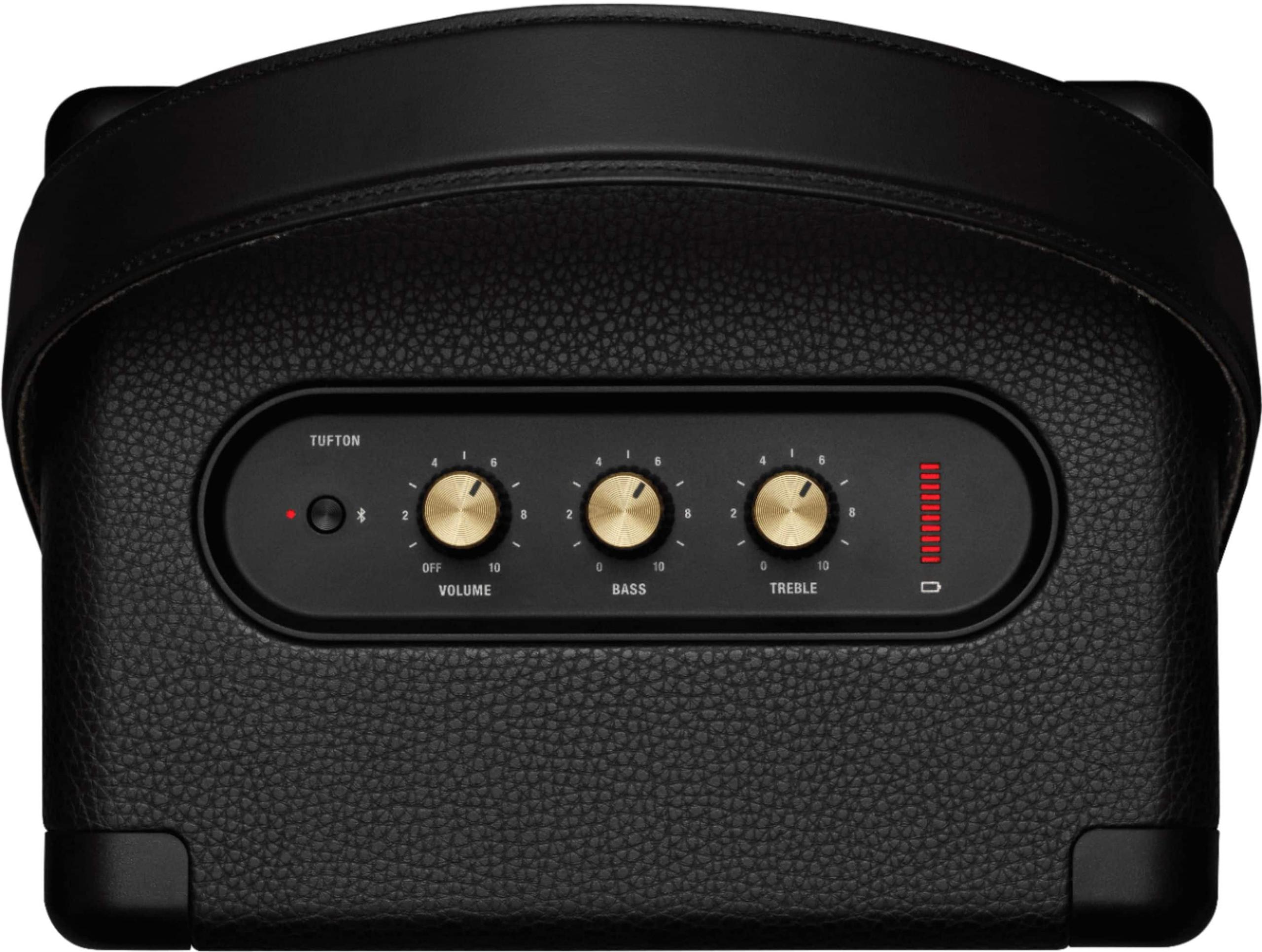
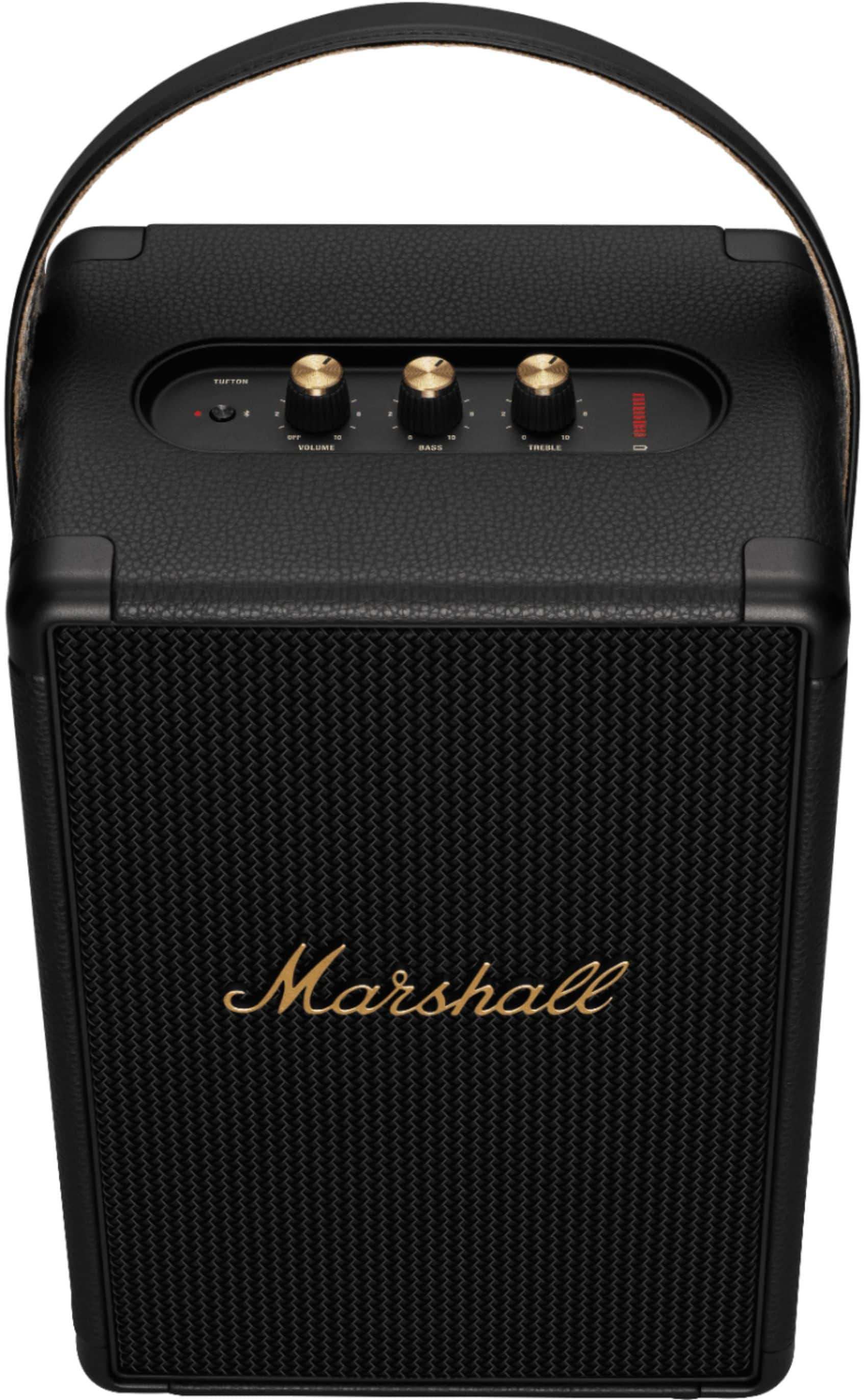
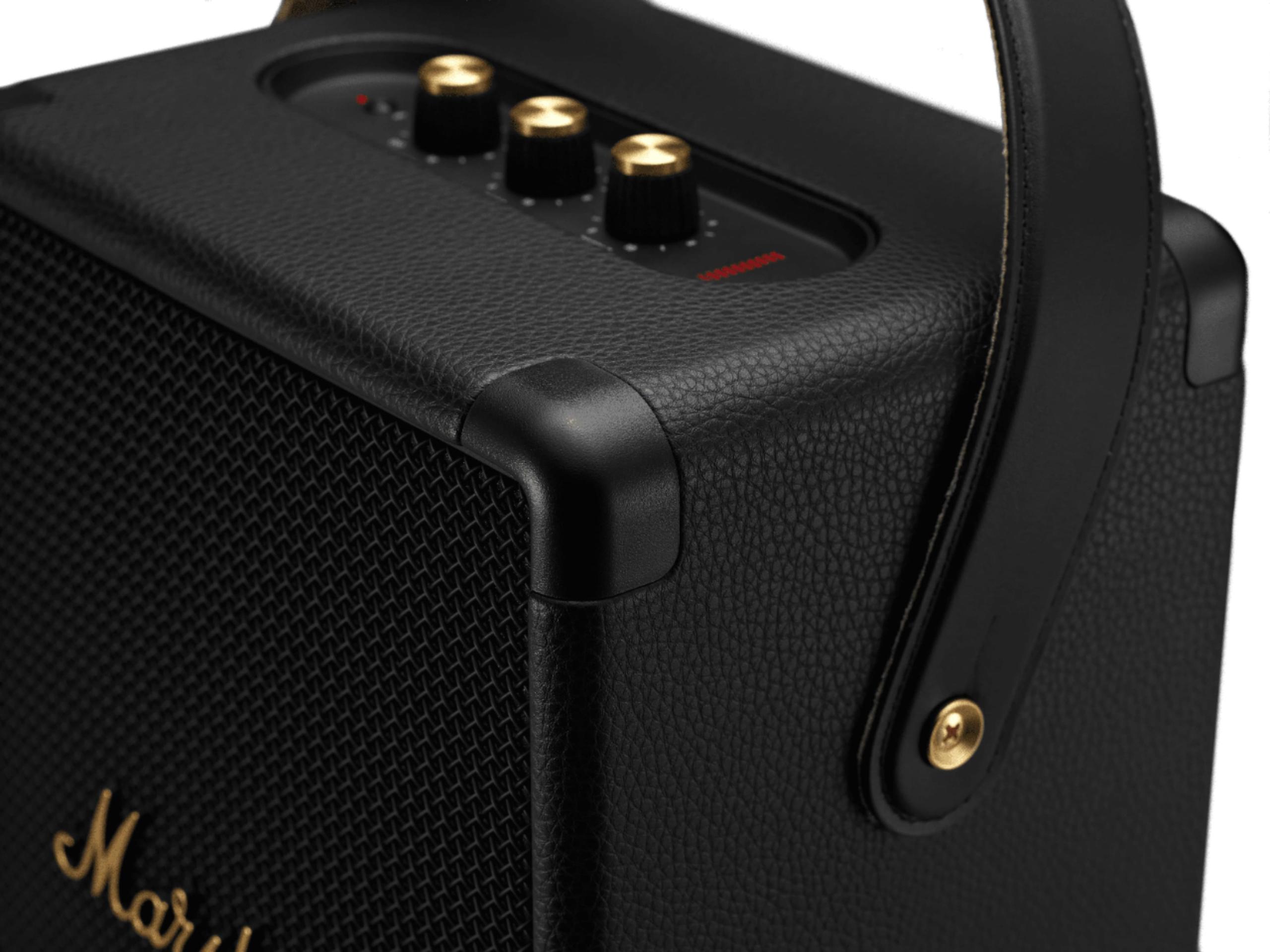
The Marshall Tufton takes a more traditional approach with physical control knobs for bass, treble, and volume adjustments. There's something satisfying about turning actual knobs to adjust your sound, and it means you don't need to fiddle with apps or remember which button combination does what. The Tufton also includes a 3.5mm auxiliary input, letting you connect devices that don't have Bluetooth or when you want to preserve phone battery.
At the time of writing, the JBL Charge 6 represents exceptional value in the portable speaker market. You're getting waterproof durability, impressive battery life, power bank functionality, modern connectivity, and AI-enhanced sound quality at a price point that won't break the bank. For most people's needs and budgets, it delivers premium features at a reasonable cost.
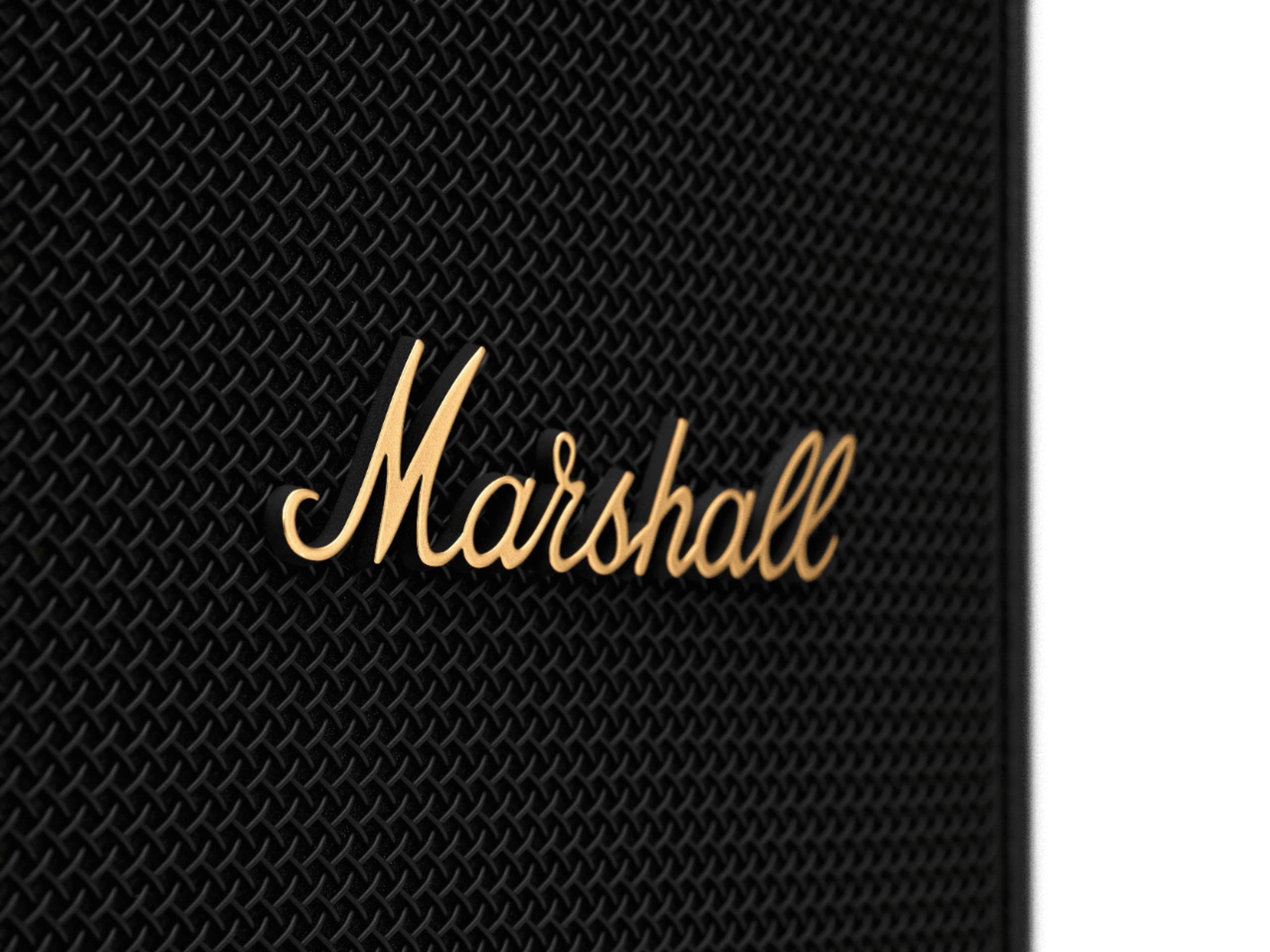
The Marshall Tufton commands a premium price but justifies it with significantly superior audio performance and build quality. This is an investment piece – a speaker you buy because audio quality matters more than budget constraints. The vintage Marshall aesthetic and premium materials make it as much a lifestyle statement as a functional device.
The JBL Charge 6 excels in active scenarios. It's perfect for beach trips where sand and saltwater are constant threats, hiking adventures where weight matters, pool parties where splashing is inevitable, and travel situations where luggage space is precious. The power bank feature becomes invaluable during camping trips or long days away from power outlets.
I've seen people clip these speakers to bike racks for cycling soundtracks, throw them in kayaks for on-water music, and use them as shower speakers without worry. The durability and compact size make it genuinely versatile in ways that larger speakers simply cannot match.
The Marshall Tufton shines in more controlled environments where its audio capabilities can be fully appreciated. It's excellent as a primary speaker for apartments, home offices, or covered outdoor spaces like patios and decks. The 360-degree sound coverage makes it great for house parties where people will be positioned all around the speaker.
For home theater use, neither speaker is ideal as a primary solution, but the Tufton could serve as impressive background music or fill-in audio for casual viewing. Its stereo separation and power output make it more suitable than the Charge 6 for this application, though dedicated home theater systems will always perform better.
The JBL Charge 6's AI Sound Boost represents genuine innovation in portable audio. This technology addresses one of the fundamental challenges of small speakers: the physics limitations of tiny drivers trying to produce big sound. By continuously analyzing and optimizing the audio signal, it squeezes more performance from the hardware than should theoretically be possible.
The Auracast connectivity standard positions the Charge 6 for future expansion possibilities. As more devices support this technology, you'll be able to create more sophisticated multi-speaker setups without the complexity of traditional wireless systems.
The Marshall Tufton's approach is more traditional but proven. The three-way driver system and analog controls represent time-tested audio engineering principles. While it lacks cutting-edge processing features, its fundamental audio architecture is sound and unlikely to become obsolete.
Choose the JBL Charge 6 if your lifestyle involves regular movement, outdoor activities, or unpredictable environments. This speaker adapts to your life rather than forcing you to adapt to it. The combination of true portability, environmental resistance, and surprisingly good sound quality makes it an ideal companion for active people, frequent travelers, and anyone who values versatility over maximum audio performance.
The waterproofing alone makes it worth considering if you spend time near water, while the power bank feature adds practical value for outdoor adventures. The modern connectivity options and AI processing suggest this speaker will remain relevant and useful for years to come.
Choose the Marshall Tufton if audio quality is your primary concern and you can work within its size and environmental limitations. This speaker is for people who want their music to sound as good as possible, even if it means sacrificing some convenience. The superior driver configuration, higher power output, and vintage aesthetic make it an excellent choice for audio enthusiasts and style-conscious buyers.
The physical controls and auxiliary input make it particularly appealing for people who prefer traditional interfaces over app-based systems. If you're primarily using the speaker in controlled environments and occasionally moving it for special events, the Tufton's audio advantages justify its limitations.
Ultimately, these speakers serve different purposes despite superficially similar marketing. The Charge 6 prioritizes adaptability and convenience, while the Tufton prioritizes audio performance and style. Both excel in their intended roles, but choosing the wrong one for your lifestyle will lead to disappointment regardless of which is "better" on paper.
Consider how you actually live, where you'll realistically use the speaker, and what compromises you're willing to make. The right choice depends more on matching the speaker to your lifestyle than finding the objectively "best" option.
| JBL Charge 6 | Marshall Tufton |
|---|---|
| Size & Weight - Critical for true portability | |
| 3.9" x 9.0" x 3.7", 2.11 lbs (genuinely portable) | 13.8" x 9.1" x 6.4", 10.8 lbs (semi-portable) |
| Power Output - Determines maximum volume and room-filling capability | |
| 45W total (impressive for size) | 80W total (nearly double the power) |
| Water/Dust Resistance - Essential for outdoor use | |
| IP68 (fully waterproof, submersible to 1m) | IPX2 (basic splash resistance only) |
| Battery Life - How long you can listen without charging | |
| 24-28 hours (with Playtime Boost mode) | 20+ hours (impressive despite higher power draw) |
| Driver Configuration - Affects sound quality and frequency separation | |
| 2-way system (woofer + tweeter + passive radiators) | 3-way system (2 tweeters + 2 midrange + woofer) |
| Maximum Volume - How loud it gets for parties/large spaces | |
| ~95 dB (suitable for medium spaces) | ~102 dB (can fill large rooms and outdoor areas) |
| Connectivity Technology - Modern features and compatibility | |
| Bluetooth 5.4 with Auracast, USB-C lossless audio | Bluetooth 5.0, 3.5mm aux input |
| Sound Customization - How you control audio characteristics | |
| 7-band EQ via app, AI Sound Boost processing | Physical bass/treble knobs, no app required |
| Additional Features - Bonus functionality beyond music playback | |
| Built-in power bank, stereo pairing capability | 360-degree sound coverage, vintage Marshall aesthetic |
| Charge Time - How quickly you get back to full battery | |
| 3 hours full charge, 10 min = 150 min playback | 2.5 hours full charge, 20 min = 4 hours playback |
| Best Use Cases - Where each speaker truly excels | |
| Travel, outdoor adventures, pool/beach parties | Home audio, patios, house parties, style-conscious spaces |
The JBL Charge 6 is significantly better for outdoor use thanks to its IP68 waterproof rating, which means it can handle submersion in water up to 1 meter deep. The Marshall Tufton only has IPX2 splash resistance, making it unsuitable for pools, beaches, or heavy rain. The Charge 6's compact size and lightweight design also make it much easier to transport for camping, hiking, or beach trips.
The Marshall Tufton delivers superior sound quality with its 80-watt output and three-way driver system, providing better instrument separation and deeper bass. However, the JBL Charge 6 offers impressive sound for its size, with AI Sound Boost technology that minimizes distortion and maintains clarity at high volumes. While the Tufton wins on raw audio performance, the Charge 6 punches well above its weight class.
The JBL Charge 6 has slightly better battery life at 24-28 hours (with Playtime Boost mode) compared to the Marshall Tufton's 20+ hours. Both speakers offer excellent endurance, but the Charge 6 also includes power bank functionality to charge your devices, making it more versatile for extended outdoor use.
The JBL Charge 6 is truly portable at just 2.11 pounds and compact dimensions that fit easily in a backpack. The Marshall Tufton weighs nearly 11 pounds and requires two-handed carrying, making it more of a "moveable" speaker rather than genuinely portable. If you need something for travel or frequent transport, the Charge 6 is the clear winner.
Neither speaker is ideal for dedicated home theater use, but the Marshall Tufton could serve as background music or casual viewing audio thanks to its higher power output and 360-degree sound coverage. The Charge 6 lacks the power and stereo separation needed for home theater applications. For serious home theater audio, you'd want dedicated surround sound systems instead.
The Marshall Tufton gets significantly louder, reaching maximum volumes around 102 decibels compared to the Charge 6's approximately 95 decibels. The Tufton's 80-watt power output nearly doubles the Charge 6's 45 watts, making it better suited for large rooms and outdoor parties where you need room-filling volume.
The JBL Charge 6 features modern Bluetooth 5.4 with Auracast multi-speaker pairing and USB-C for lossless audio playback. The Marshall Tufton uses Bluetooth 5.0 and includes a 3.5mm auxiliary input for wired connections. The Charge 6 offers more advanced wireless features, while the Tufton provides traditional wired connectivity options.
The JBL Charge 6 offers better overall value with its combination of waterproof design, long battery life, power bank functionality, and modern features at a more accessible price point. The Marshall Tufton costs significantly more but justifies it with superior audio quality and premium build materials. Your choice depends on whether you prioritize features and versatility versus maximum sound quality.
The Marshall Tufton produces deeper, more powerful bass thanks to its dedicated woofer and larger cabinet space. The JBL Charge 6 delivers surprisingly good bass for its size using passive radiators, but it can't match the Tufton's low-frequency extension and impact. For bass-heavy music genres, the Tufton is the better choice.
The JBL Charge 6 offers a 7-band equalizer through the JBL Portable app, allowing detailed sound customization. The Marshall Tufton features physical bass and treble control knobs for hands-on adjustment without needing an app. Both approaches work well, with the Charge 6 offering more precision and the Tufton providing immediate tactile control.
The JBL Charge 6 is significantly more durable for everyday use with its IP68 rating and drop-proof design tested to survive 1-meter falls. The Marshall Tufton uses premium materials but lacks water resistance and is more vulnerable to environmental damage. If durability is a priority, especially for outdoor activities, the Charge 6 is the safer choice.
Choose the JBL Charge 6 if you need true portability, waterproof protection, long battery life, and modern connectivity features for active lifestyles and travel. Choose the Marshall Tufton if you prioritize maximum sound quality, prefer vintage aesthetics, mainly use speakers in controlled environments, and don't mind the larger size and higher cost for premium audio performance.
We've done our best to create useful and informative comparisons to help you decide what product to buy. Our research uses advanced automated methods to create this comparison and perfection is not possible - please contact us for corrections or questions. These are the sites we've researched in the creation of this article: rtings.com - youtube.com - stereoguide.com - whathifi.com - youtube.com - elomymelo.com - soundguys.com - elomymelo.com - wifihifi.com - soundguys.com - jbl.com - whathifi.com - soundguys.com - youtube.com - smarthomesounds.co.uk - jbl.com - sweetwater.com - youtube.com - bestbuy.com - jbl.com.sg - jbl.com - dell.com - ca.jbl.com - soundguys.com - soundguys.com - dell.com - techradar.com - youtube.com - youtube.com - bestbuy.com - trustedreviews.com - crutchfield.com - eriksonconsumer.com - youtube.com - runbazaar.com - marshall.com

Privacy Policy
Terms and Conditions - Affiliate Policy
Home Security
© Copyright 2008-2026.
11816 Inwood Rd #1211, Dallas, TX 75244