




Portable Bluetooth speakers have become the Swiss Army knives of audio—they need to handle everything from quiet evening listening to raucous pool parties, all while surviving drops, splashes, and the occasional sandy beach adventure. But here's the thing: not all portable speakers are created equal, and the differences between them can make or break your listening experience.
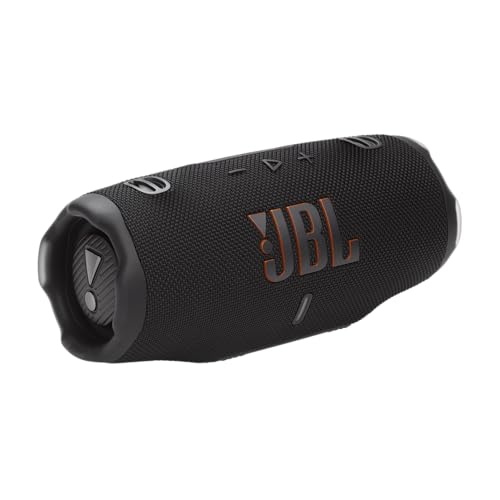
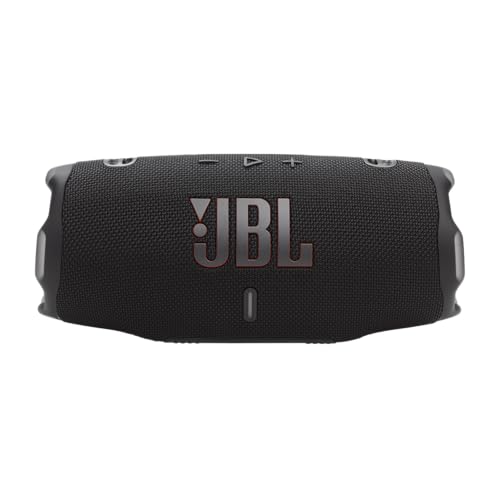
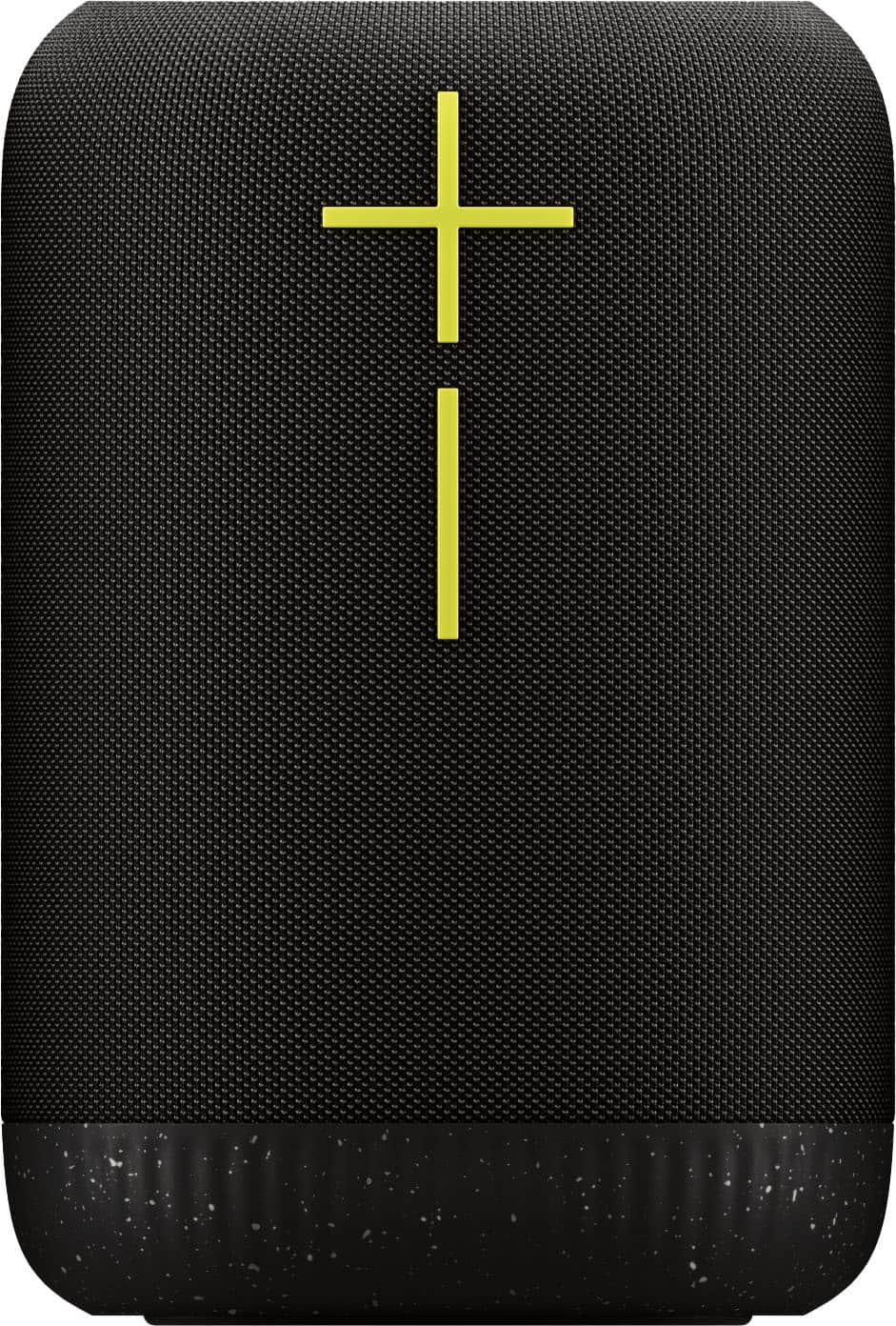
Today we're diving deep into two speakers that represent very different philosophies in portable audio: the JBL Charge 6, released in 2025 as JBL's latest practical powerhouse, and the Ultimate Ears EPICBOOM, which hit the market in 2023 as UE's flagship "go big or go home" statement piece.
Before we get into the nitty-gritty, let's talk about what actually makes a great portable speaker. It's not just about being loud—though that certainly helps at parties. The best portable speakers nail a tricky balance between several key factors.
First, there's sound quality, which encompasses everything from how balanced the audio sounds across different frequencies (bass, mids, and treble) to how clean it stays when you crank the volume. Then there's battery life, which has become increasingly important as people expect their speakers to last through weekend camping trips or all-day beach sessions.
Durability is absolutely crucial—these things need to survive drops, splashes, and the kind of rough handling that comes with portable use. And finally, there's the eternal trade-off between size and performance: bigger speakers generally sound better, but they're harder to carry around.
What makes this comparison particularly interesting is that the JBL Charge 6 and Ultimate Ears EPICBOOM take fundamentally different approaches to solving these challenges.
Let's start with the most important question: how do these speakers actually sound?
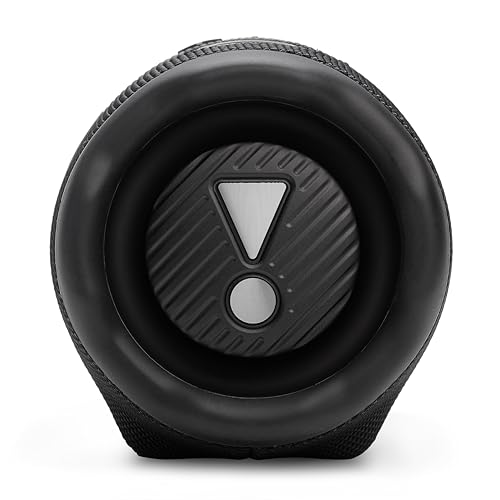
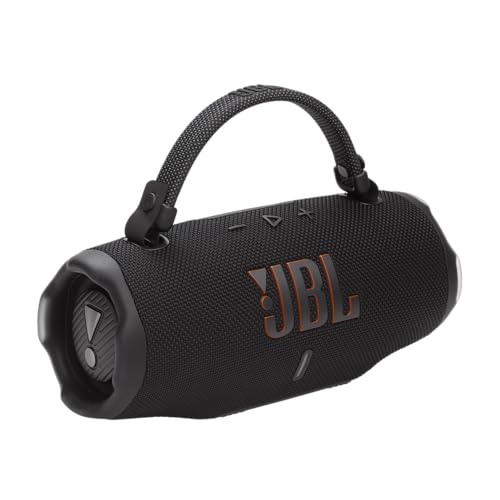
The JBL Charge 6 uses what's called a directional sound design. It packs a 53×93mm woofer (the driver that handles bass and midrange frequencies) paired with a separate 20mm tweeter (which handles the higher frequencies like cymbals and vocal details). This two-way system produces 45 watts RMS of power and covers a frequency range from 56 Hz up to 20 kHz—basically the full range of human hearing.
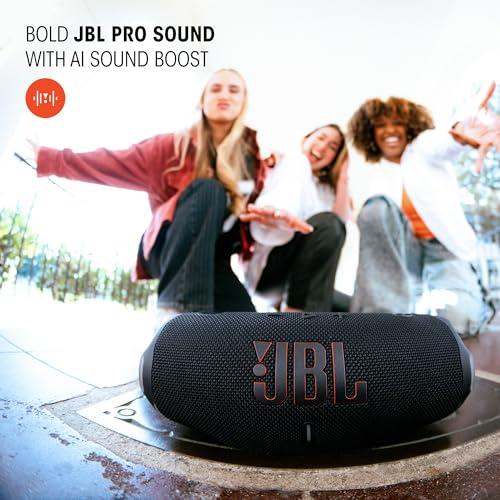
Here's where it gets interesting: JBL has implemented something called AI Sound Boost technology. This isn't just marketing fluff—it's a real-time audio processing algorithm that analyzes your music as it plays and adjusts the drivers to minimize distortion while maximizing clarity. Think of it as having a tiny sound engineer inside the speaker constantly tweaking things for optimal performance.
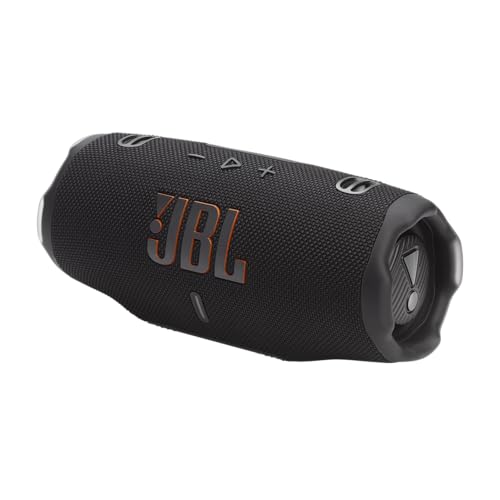
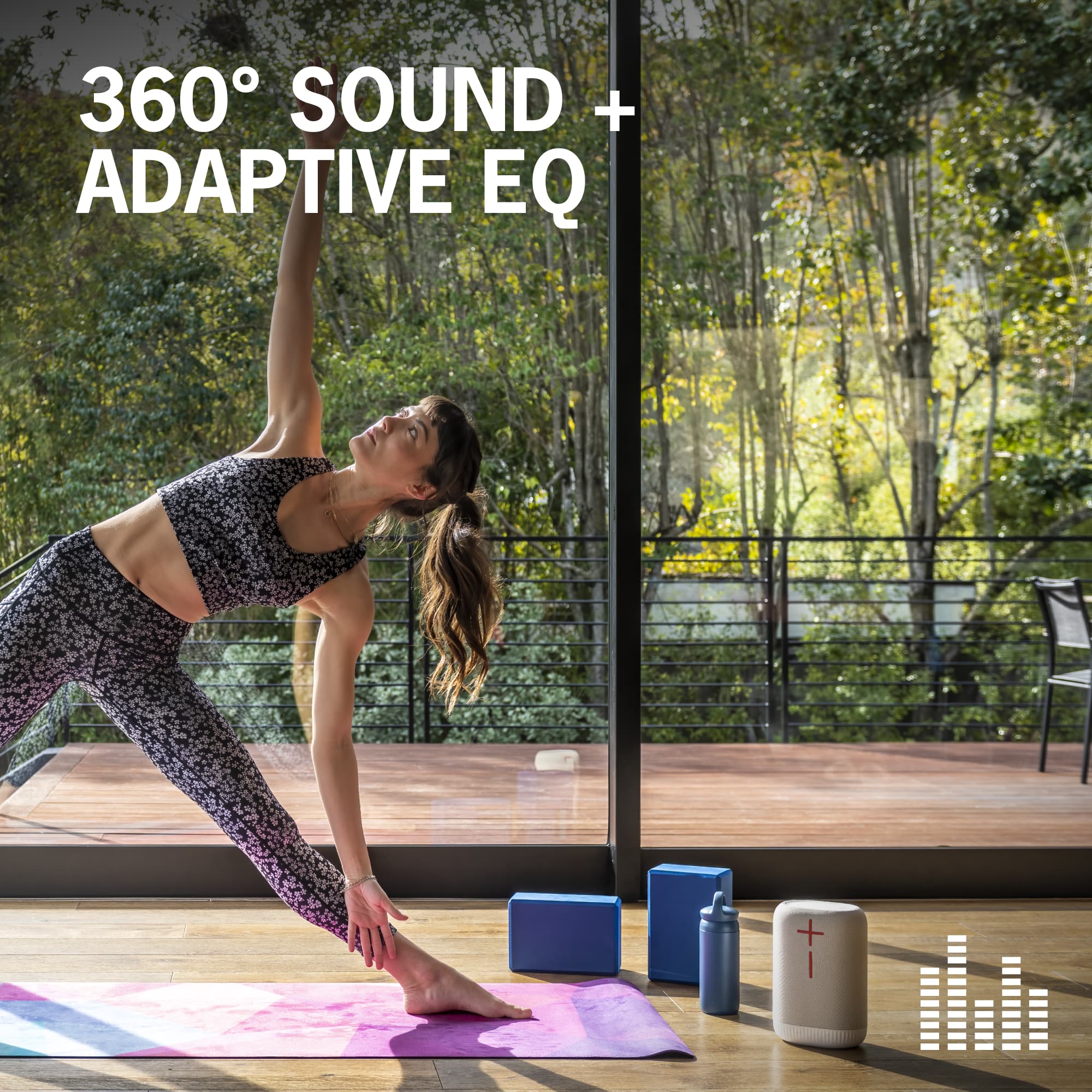
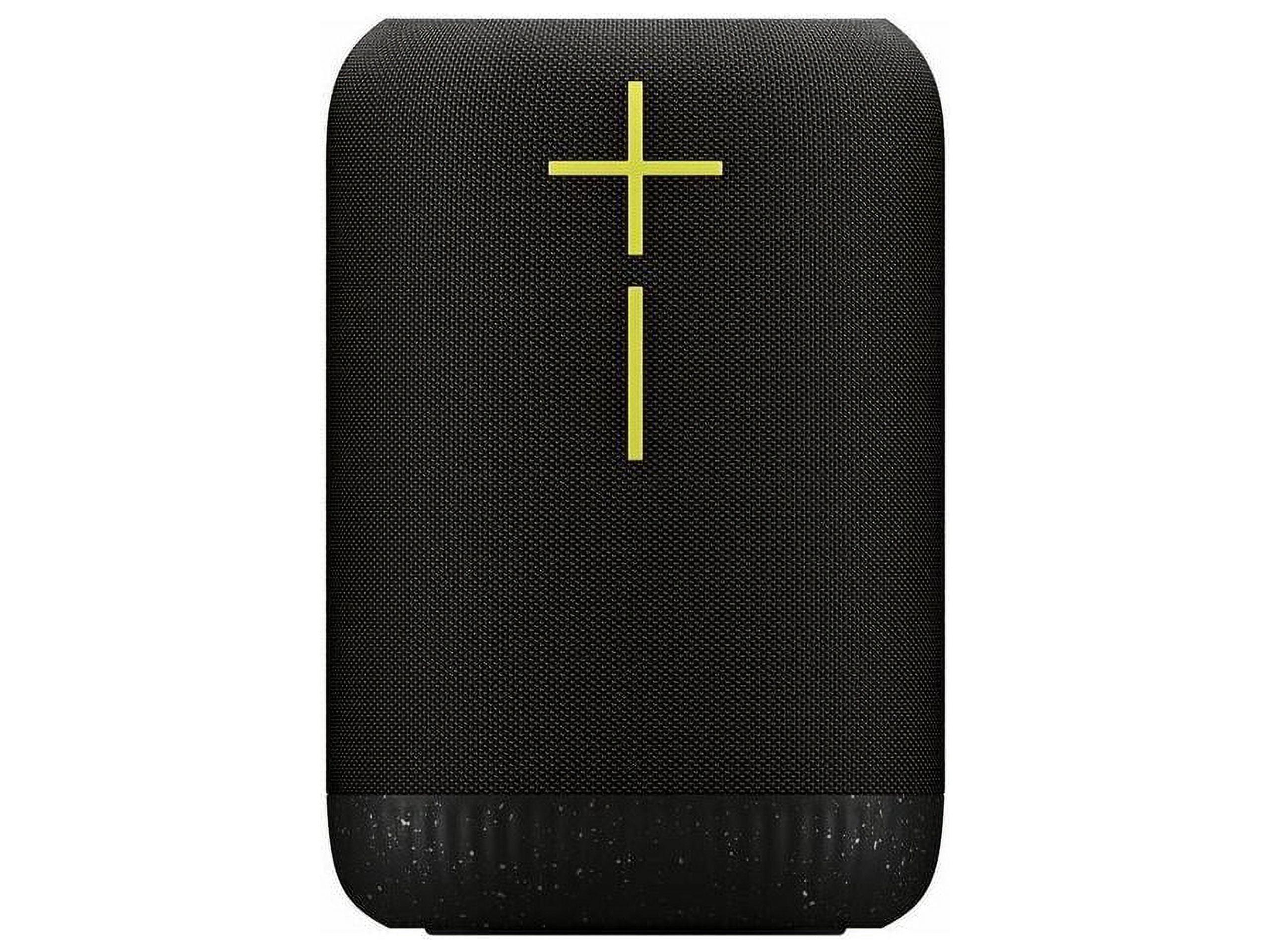
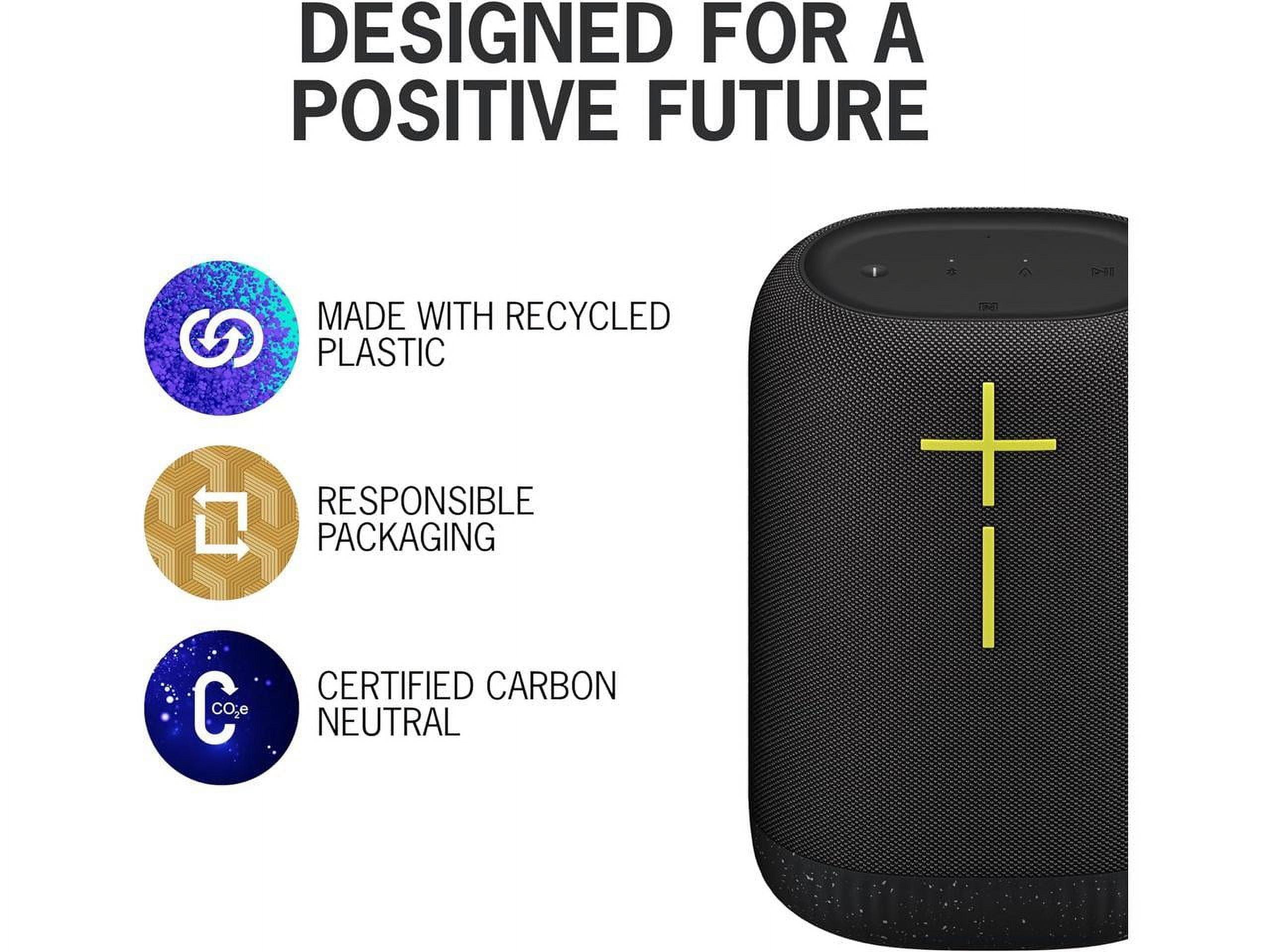
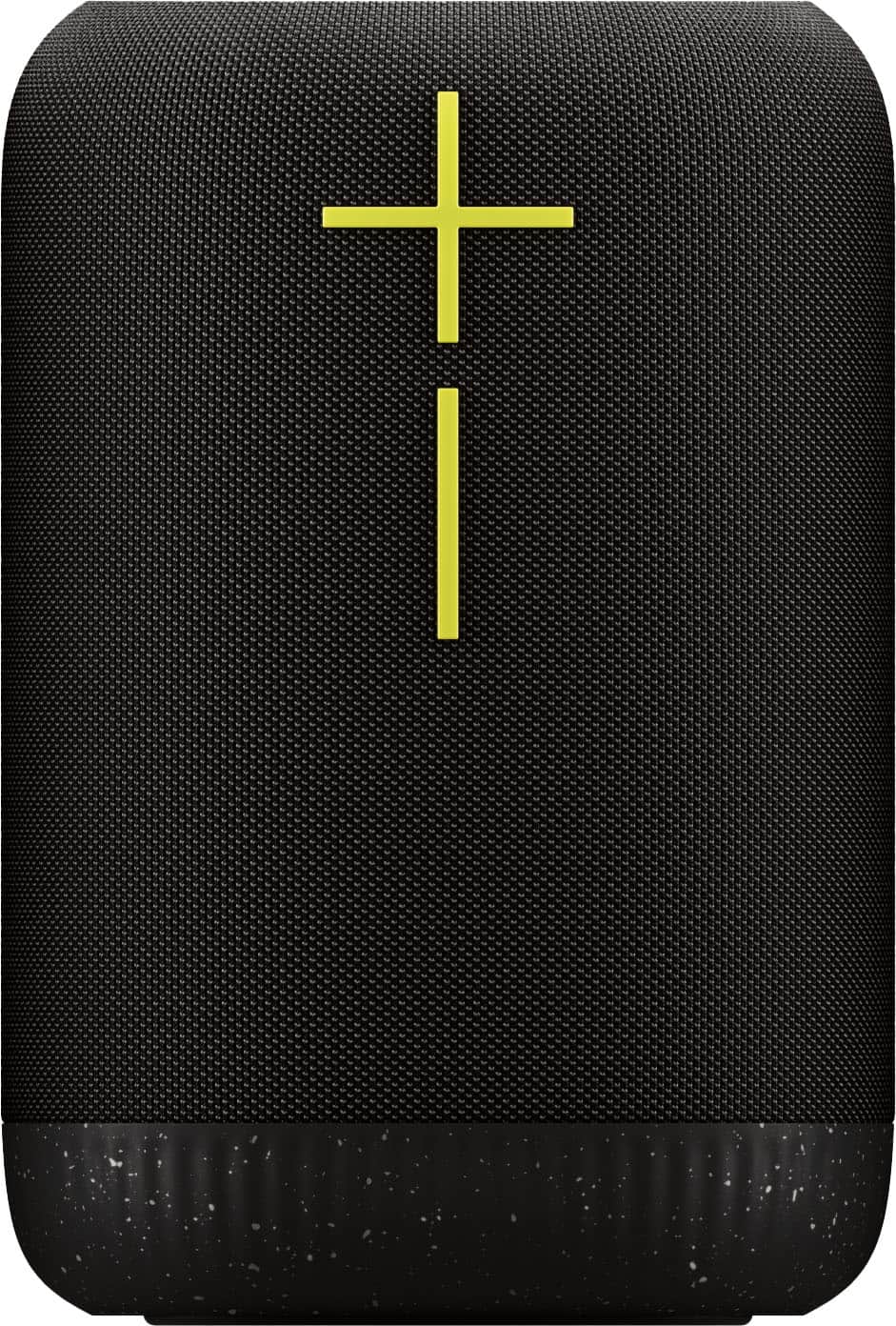
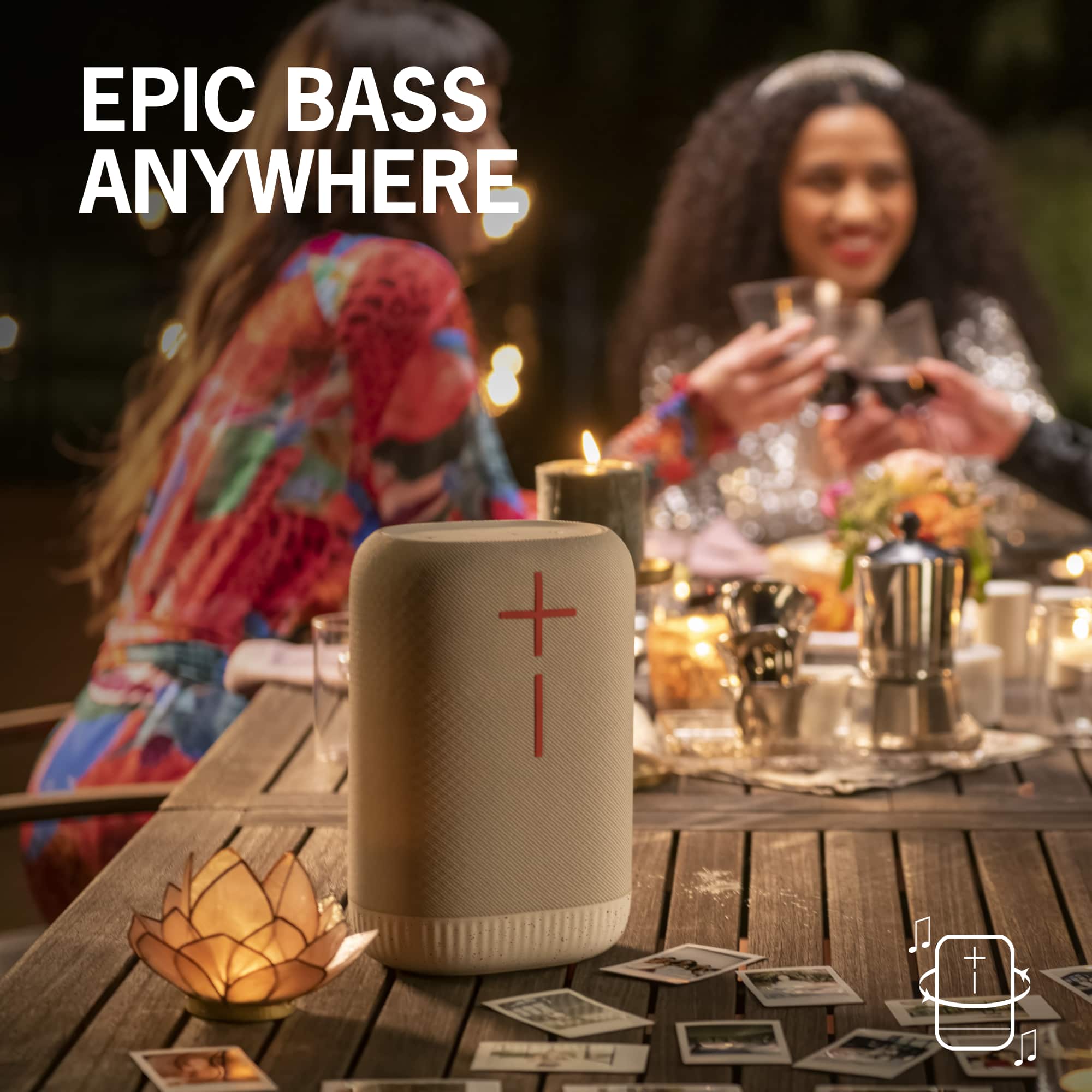
The Ultimate Ears EPICBOOM, on the other hand, takes a completely different approach with its 360-degree omnidirectional design. Instead of focusing sound in one direction, it uses two 45mm mid-high frequency drivers plus a larger 120mm woofer to spread sound evenly in all directions. This means whether you're sitting in front of the speaker, behind it, or off to the side, you're getting essentially the same audio experience.
From our research into user and expert reviews, this difference plays out in predictable ways. The JBL Charge 6 excels at detailed, focused listening—perfect for when you want to sit down and really hear your music. Its directional design means you get more precise imaging and better separation between instruments, especially if you position yourself in the "sweet spot" where the JBL logo faces you.
The EPICBOOM, meanwhile, shines in social situations. That 360-degree sound dispersion means everyone at the party gets good audio, regardless of where they're standing. It's particularly impressive outdoors, where the omnidirectional design helps fill large spaces with sound. The trade-off is that you lose some of that pinpoint detail and stereo imaging that makes music feel more immersive during solo listening sessions.
Volume-wise, the EPICBOOM has a clear advantage, pushing out 94-95 dBC compared to the Charge 6's more modest output. In practical terms, this means the UE speaker can get genuinely loud without falling apart—crucial for outdoor gatherings or large rooms where you need to overcome ambient noise.
However, the Charge 6 has a secret weapon in its AI Sound Boost technology. While it might not get as loud as the EPICBOOM, it maintains better clarity and less distortion as volume increases. This means you get cleaner, more enjoyable sound at the volume levels most people actually use day-to-day.
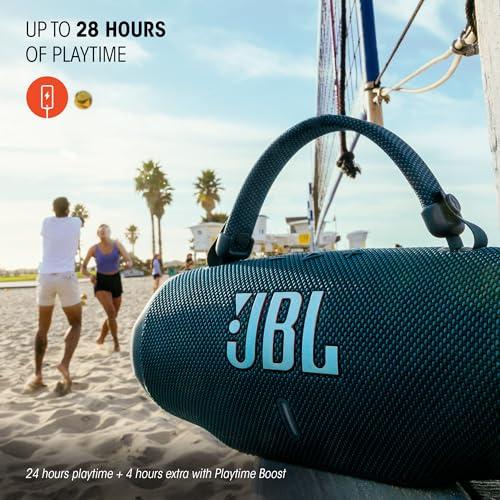
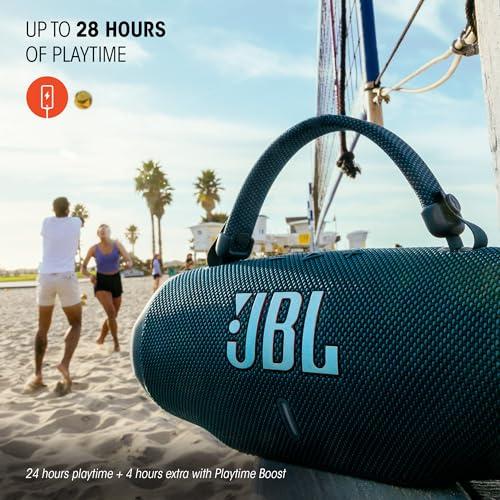
This is where the JBL Charge 6 pulls significantly ahead. With its 34 Wh lithium-ion polymer battery, it delivers an impressive 24 hours of playback time under normal conditions. But here's the kicker—JBL has included something called Playtime Boost mode, which extends battery life to an incredible 28 hours by reducing power-hungry bass frequencies and lower-mids.
Now, Playtime Boost does change the sound signature (it's essentially a power-saving EQ preset), but for those marathon listening sessions during camping trips or multi-day festivals, that extra 4 hours can be absolutely crucial. The Charge 6 also supports fast charging—just 10 minutes plugged in gives you 150 minutes of playback, perfect for those "oh no, I forgot to charge it" moments.
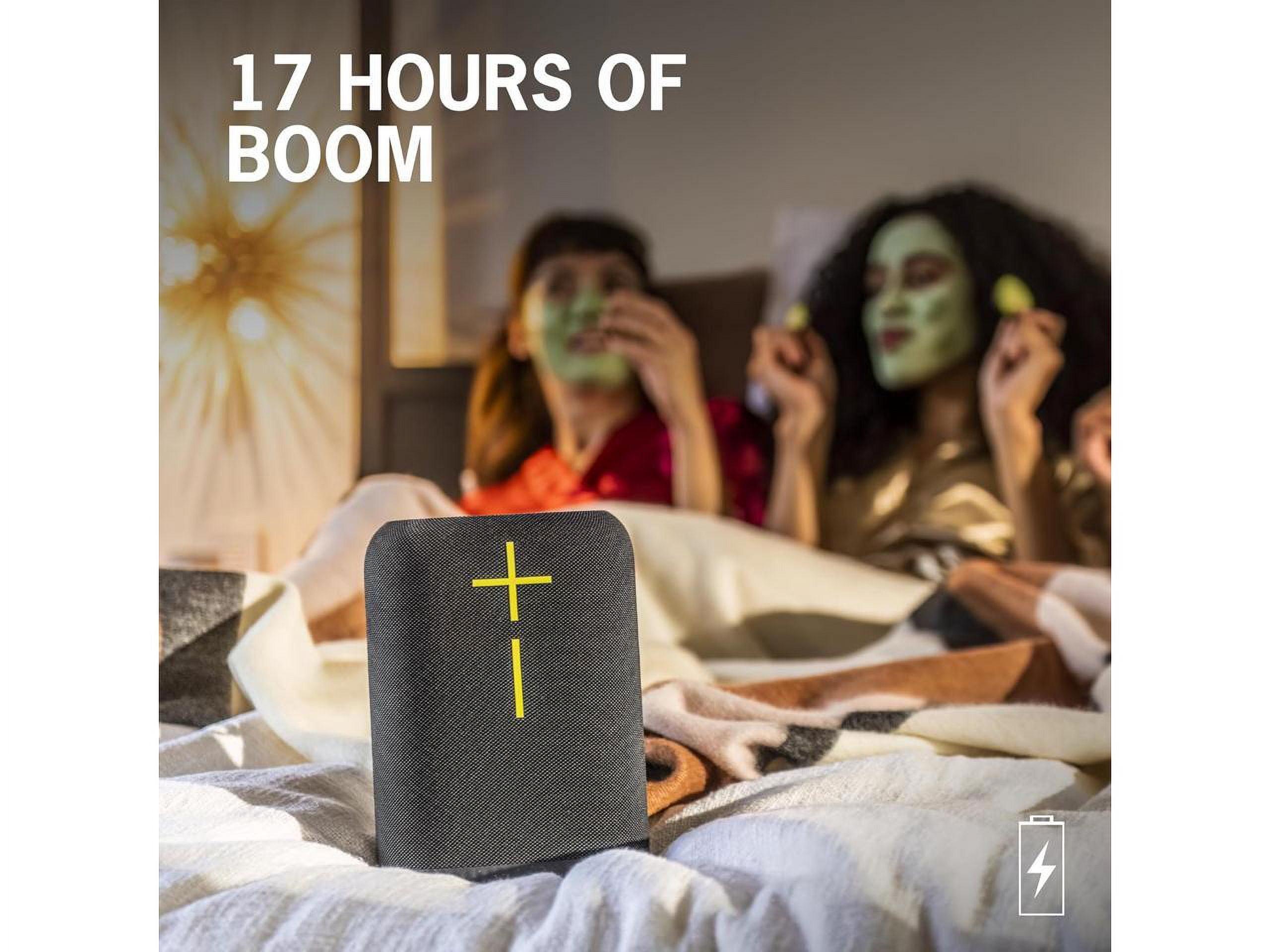
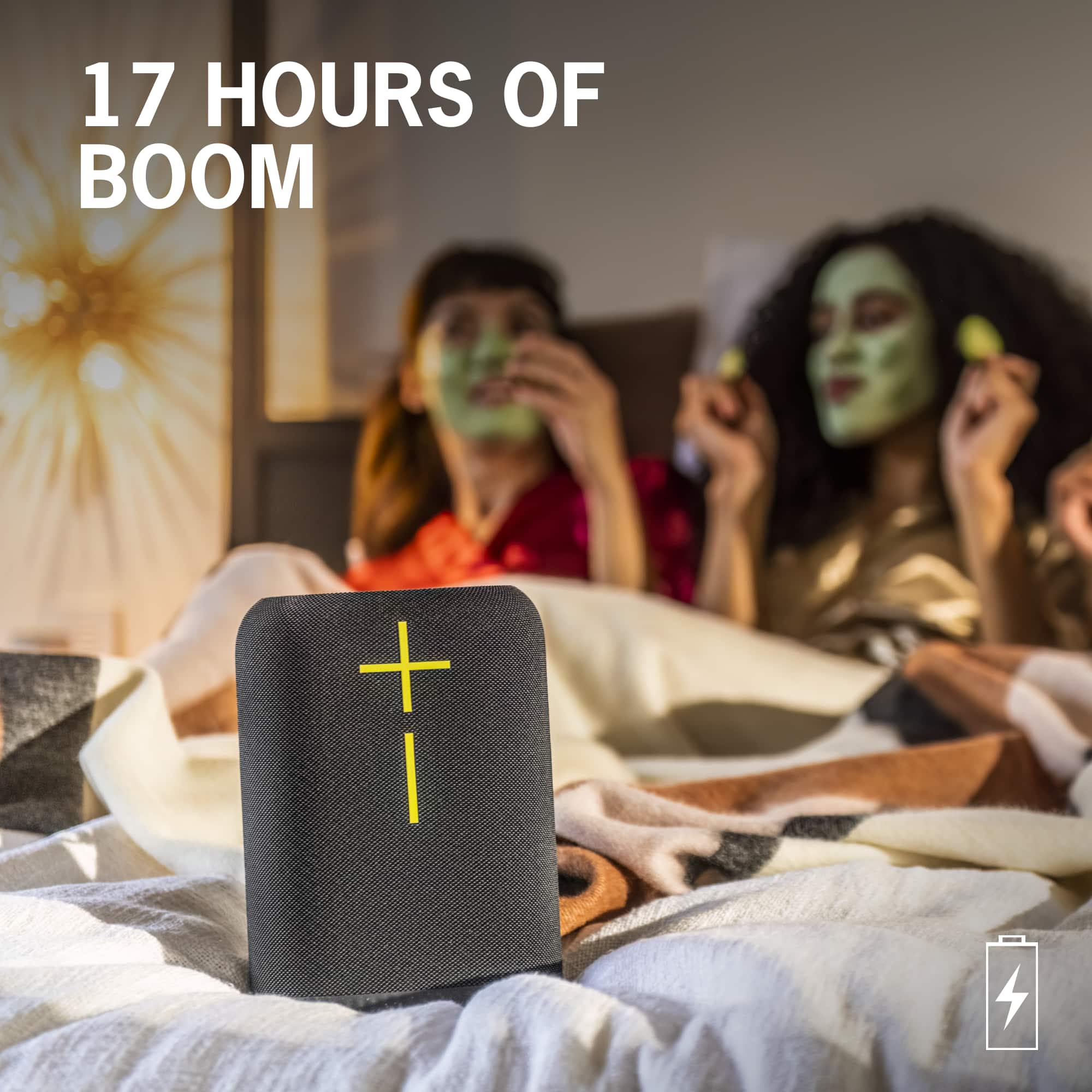
The EPICBOOM offers a respectable 17 hours of battery life, but that 7-hour difference between it and the Charge 6 is substantial. In real-world terms, that's often the difference between your speaker dying at the end of day one versus lasting through day two of a weekend trip.
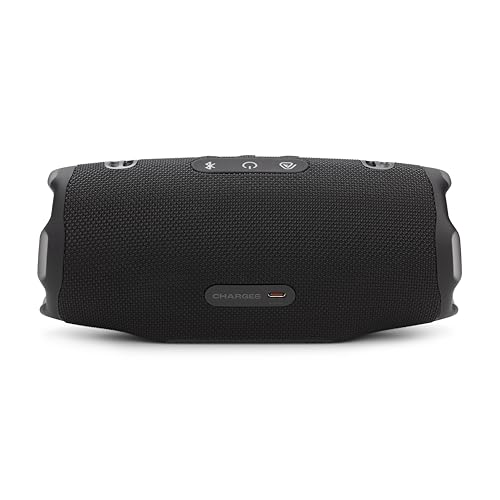
But here's where the Charge 6 really shows its practical side: it doubles as a power bank. That USB-C port doesn't just charge the speaker—it can also juice up your phone, tablet, or other devices. This feature transforms the Charge 6 from just a speaker into a legitimate piece of camping or travel gear. The EPICBOOM doesn't offer this functionality at all.
From our analysis of user feedback, this power bank feature consistently ranks as one of the most appreciated aspects of the Charge series. There's something reassuring about knowing your speaker can keep your phone alive during emergencies or extended outdoor adventures.
Both speakers are built to survive the real world, but they approach durability differently.
The JBL Charge 6 earns an IP68 rating, which is the gold standard for portable electronics. The "6" means it's completely dust-tight—no particles can get inside. The "8" means it can handle continuous immersion in water beyond 1 meter deep. Specifically, JBL rates it for submersion up to 1.5 meters for 30 minutes, and it's been drop-tested to survive 1-meter falls onto concrete.
The EPICBOOM carries an IP67 rating, which is still excellent but slightly less protective. It's also completely dust-tight, but the "7" rating means it can only handle temporary immersion up to 1 meter for 30 minutes. In practical terms, both speakers will easily survive poolside splashes, rain, or accidental drops in shallow water.
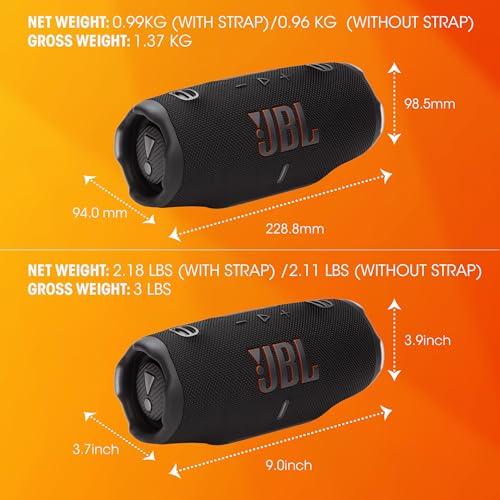
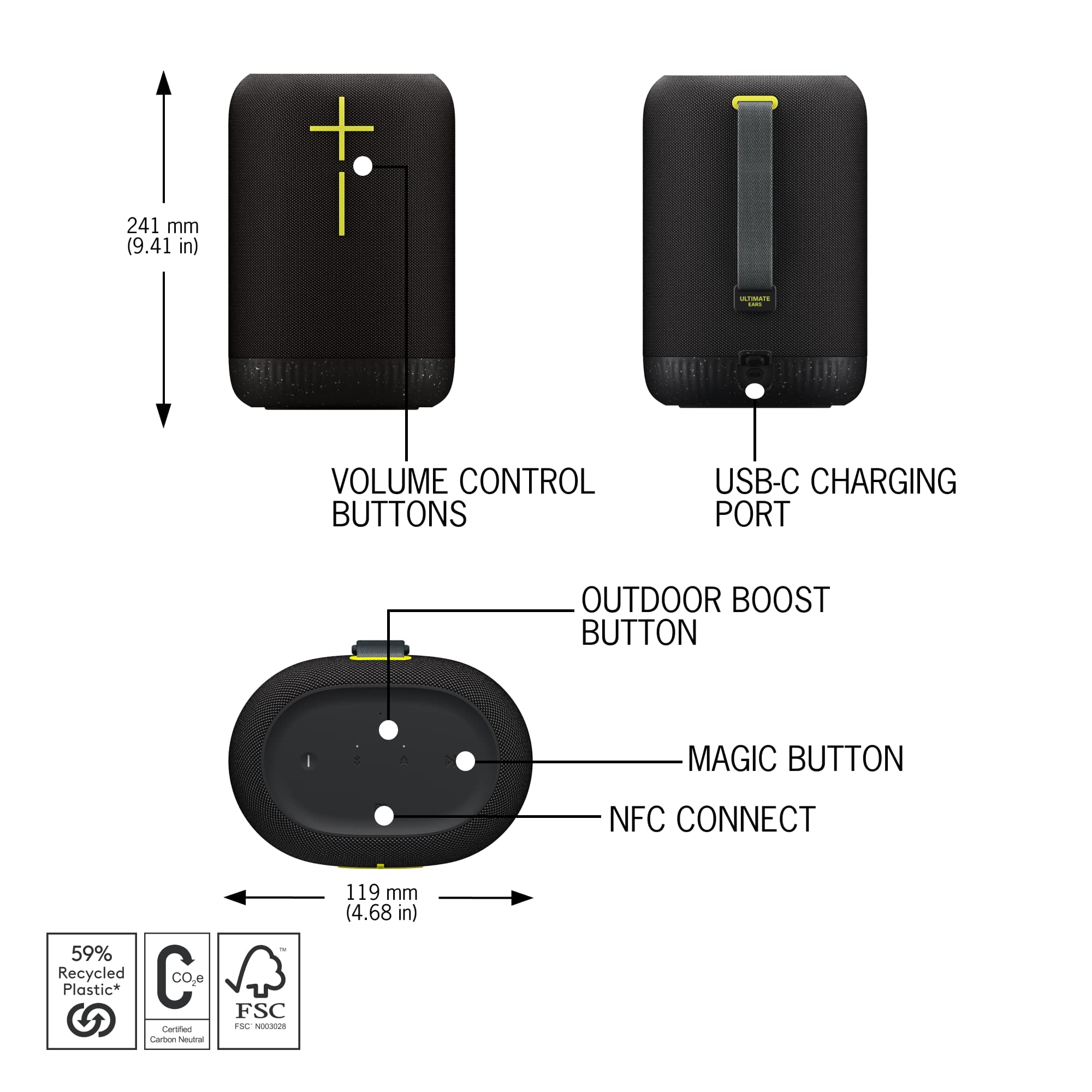
The real difference comes down to size and weight. The Charge 6 weighs just 960 grams without its detachable strap, making it genuinely portable for hiking, biking, or daily carry. The EPICBOOM, at nearly 2 kilograms, is roughly twice as heavy and significantly larger. It's still technically portable, but it's more suited to being carried from house to pool to patio rather than stuffed in a backpack for a mountain hike.
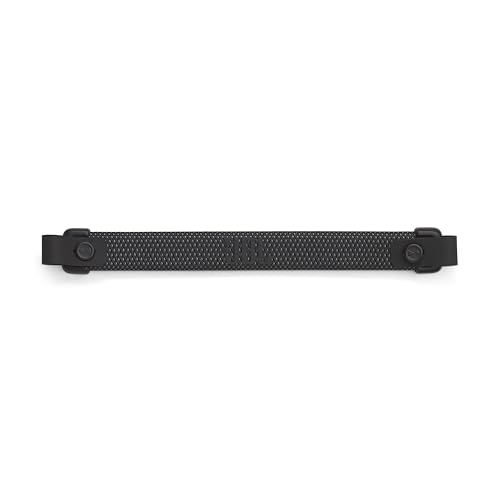
The Charge 6's detachable handle strap is a thoughtful touch—you can remove it when you want a cleaner look for home use, or attach it when you need easy carrying. The EPICBOOM's attached strap feels more like an afterthought, and several reviews noted that it doesn't significantly improve the carrying experience given the speaker's bulk.
Both speakers use modern Bluetooth standards, but with different emphases. The JBL Charge 6 features Bluetooth 5.4, the latest standard at the time of writing, which provides improved connection stability and efficiency. It can maintain connections to two devices simultaneously—handy when you and a friend want to take turns controlling the music without constantly re-pairing.
The EPICBOOM uses Bluetooth 5.3 but compensates with an impressive 55-meter range compared to the more typical 30-meter range you get from most speakers, including the Charge 6. This extended range is genuinely useful in large outdoor spaces or when you want to leave your phone inside while enjoying music on the deck.
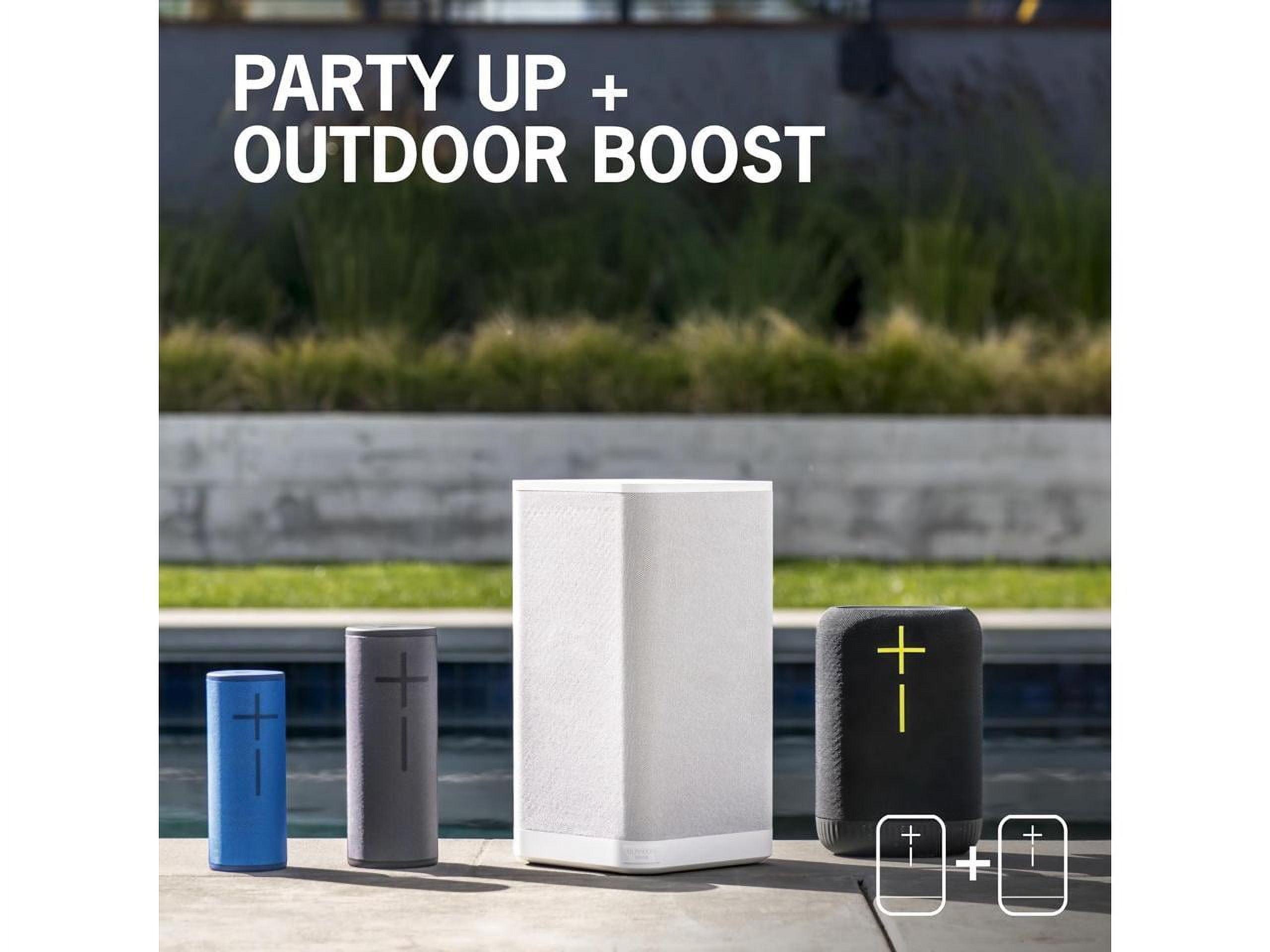
For multi-speaker setups, both brands offer their own solutions. The Charge 6 supports Auracast, which is part of the newer Bluetooth LE Audio standard. It's designed to be more efficient and future-proof, though it's still relatively new technology. The EPICBOOM uses UE's PartyUp system, which has been around longer and can theoretically connect up to 150 compatible UE speakers—though you'd need a small stadium to justify that many speakers.
The app experiences differ significantly. JBL's Portable app provides a comprehensive 7-band equalizer, letting you fine-tune exactly how your music sounds. This level of customization is genuinely useful—you can boost bass for hip-hop, enhance mids for podcasts, or create completely custom sound profiles for different environments.
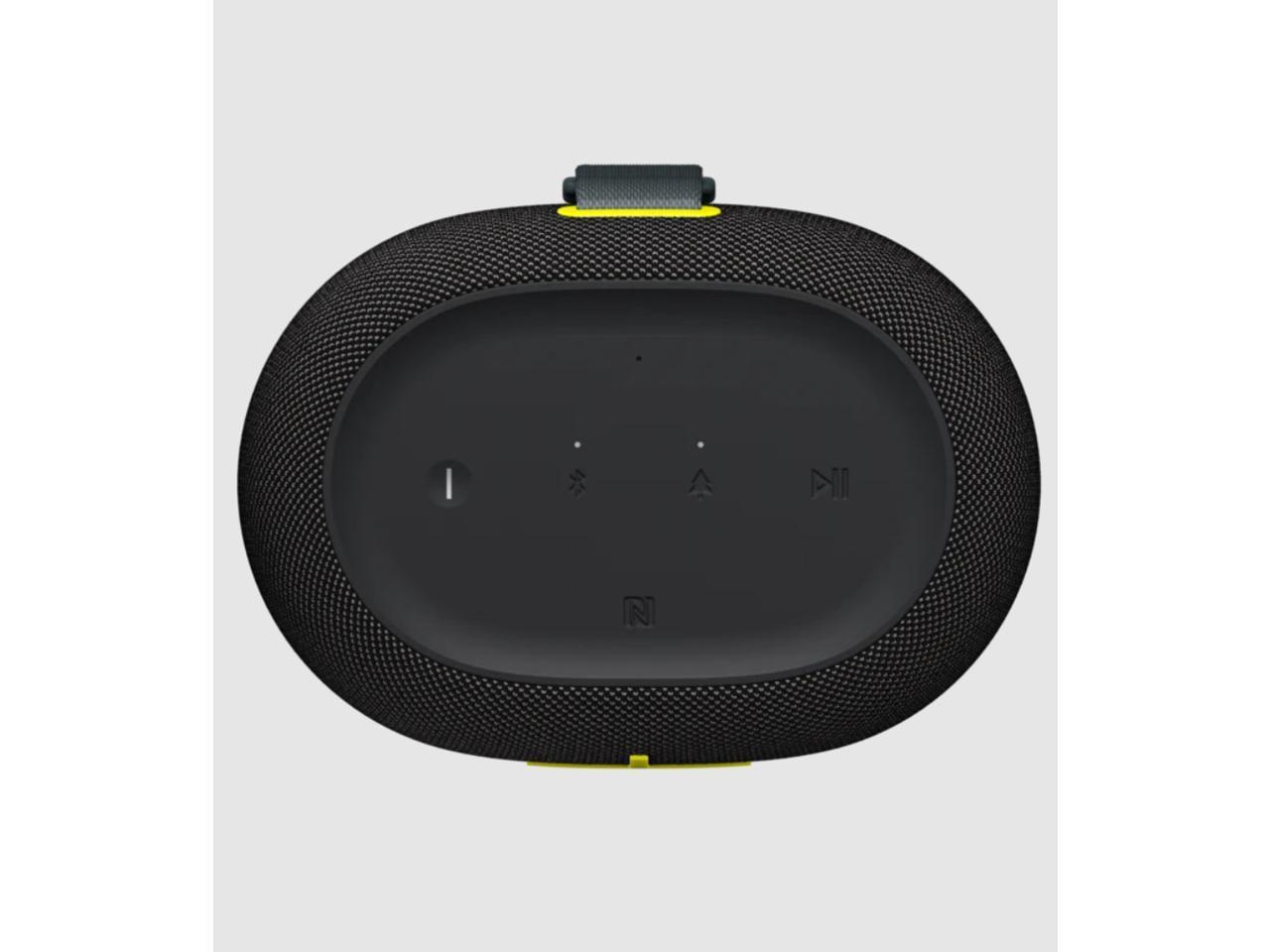
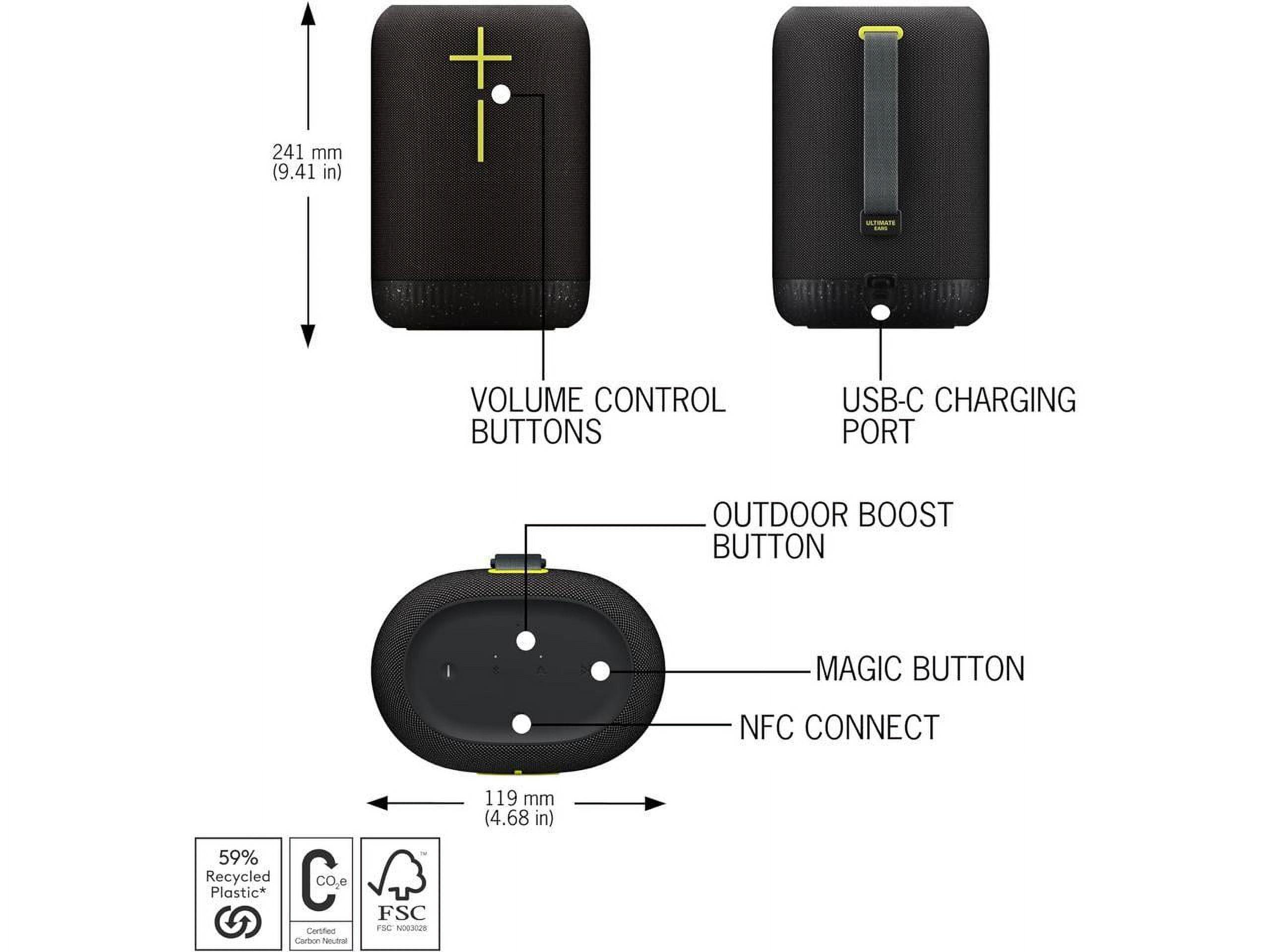
Ultimate Ears' app focuses more on preset modes and convenience features. It includes useful options like Outdoor Boost (which optimizes sound for large spaces) and integration with music streaming services, but it doesn't offer the granular control that audio enthusiasts often appreciate.
One unique feature of the Charge 6 is its support for lossless audio playback via USB-C. Connect it to a computer or compatible device with a cable, and it can handle high-resolution audio up to 24-bit/192kHz. This is genuine audiophile territory and represents a significant upgrade over Bluetooth's inherent compression.
While neither speaker is designed as a primary home theater solution, they can serve as convenient audio upgrades for casual TV watching or streaming.
The EPICBOOM's 360-degree design actually works against it in home theater scenarios. When you're watching TV, you want directional sound that creates a sense of space and dialogue clarity, not omnidirectional dispersion that can make everything feel ambient and unfocused.
The JBL Charge 6, with its directional design, works better for casual TV enhancement. Its clearer midrange reproduction helps with dialogue, and the AI Sound Boost technology can help maintain clarity at lower volumes during evening watching. The USB-C lossless connection is also valuable here—many streaming devices and computers support high-quality audio output that the Charge 6 can take full advantage of.
However, both speakers output mono sound by default (they downmix stereo sources unless you pair two identical units). For serious home theater use, you'd want to consider two Charge 6 speakers in stereo configuration, which would provide genuine left-right separation and create a more immersive soundstage.
After analyzing numerous professional reviews and user experiences, certain performance characteristics consistently matter most to real-world users.
Clarity at moderate volumes is crucial because most listening happens at 30-70% volume, not maximum output. Here, the Charge 6's directional design and AI processing provide better detail retrieval and instrument separation.
Bass response under load determines how well a speaker handles complex, bass-heavy music without muddying the midrange. The EPICBOOM's larger woofer gives it an advantage in pure bass extension and impact, especially at high volumes.
Dynamic range—the difference between quiet and loud passages—affects how engaging music sounds. Both speakers handle this well, but the Charge 6 maintains better dynamic contrast thanks to its AI processing preventing excessive compression.
Outdoor performance varies significantly between the two. The EPICBOOM's 360-degree design and higher maximum output make it superior for large outdoor gatherings. The Charge 6's directional design can sound thin in very large spaces but excels in smaller outdoor settings like campsites or patios.
At the time of writing, the Ultimate Ears EPICBOOM commands a significant premium over the JBL Charge 6—roughly 40% more expensive. This price difference reflects their different market positioning and feature sets.
The EPICBOOM justifies its premium pricing through maximum volume output, 360-degree sound dispersion, and premium build quality. It's targeting users who prioritize maximum impact and don't mind paying extra for it.
The Charge 6 offers exceptional value by delivering strong performance across all categories while adding genuinely useful features like power bank functionality and extended battery life. The 40% lower price makes it accessible to a much broader audience.
From a cost-per-feature analysis, the Charge 6 is hard to beat. You get longer battery life, better water protection, power bank functionality, lossless audio support, and competitive sound quality for significantly less money. The EPICBOOM essentially charges a premium for maximum volume and omnidirectional design—valuable features, but ones that benefit specific use cases rather than everyday listening.
After extensive research into both products, clear usage patterns emerge.
Choose the JBL Charge 6 if you: prioritize versatility and value. It's the better choice for people who want one speaker that handles multiple roles—daily listening, outdoor adventures, travel, and emergency power backup. The combination of 24-hour battery life, power bank functionality, superior water protection, and competitive audio quality makes it the practical choice for most users.
The Charge 6 is particularly well-suited for active lifestyles. Hikers, campers, beach-goers, and frequent travelers will appreciate its true portability and extended battery life. The directional sound design also makes it excellent for personal listening or small group settings where you want to focus on audio quality rather than maximum coverage.
Choose the Ultimate Ears EPICBOOM if you: regularly host gatherings or need to fill large spaces with sound. Its maximum volume output and 360-degree dispersion make it genuinely superior for parties, poolside entertaining, or large outdoor spaces where the Charge 6 might feel underpowered.
The EPICBOOM is also the better choice if you already own other UE speakers and want to expand your system using PartyUp connectivity. The ability to sync multiple speakers can create impressive sound coverage for large events.
However, the EPICBOOM makes less sense for users who primarily listen alone or in small groups, where its size and weight become disadvantages without providing corresponding benefits.
Both speakers excel in their intended roles, but the JBL Charge 6 offers broader appeal and better value for most users. Its combination of practical features, competitive audio quality, and significantly lower price makes it the safer choice for general-purpose portable audio.
The Ultimate Ears EPICBOOM is the specialist—excellent at what it does (maximum volume, omnidirectional sound) but less versatile overall. It's the right choice for specific scenarios but harder to recommend as an only speaker.
For most people reading this, the Charge 6 will provide everything they need while leaving money in their pocket for other gear. But if you know you need maximum volume and 360-degree coverage for regular large gatherings, the EPICBOOM's premium pricing becomes easier to justify.
The beauty of the current portable speaker market is that both approaches can succeed—there's room for the practical all-rounder and the specialized powerhouse. Your choice should depend on honest assessment of your actual usage patterns, not just what sounds impressive in theory.
| JBL Charge 6 | Ultimate Ears EPICBOOM |
|---|---|
| Audio Configuration - Determines sound character and dispersion | |
| 53×93mm woofer + 20mm tweeter, directional design with AI Sound Boost | Two 45mm mid-high drivers + 120mm woofer, 360-degree omnidirectional |
| Maximum Output Power - Critical for large spaces and outdoor use | |
| 45W RMS total output, optimized for clarity over volume | 94-95 dBC maximum output, designed for room-filling sound |
| Battery Life - Most important spec for portable use | |
| 24 hours standard (28 hours with Playtime Boost mode) | 17 hours standard playback |
| Weight & Portability - Key factor for travel and daily carry | |
| 960g without strap, highly portable with detachable handle | 1,979g with permanent strap, better for stationary use |
| Water Resistance - Essential for outdoor durability | |
| IP68 (submersible to 1.5m for 30 minutes, superior dust protection) | IP67 (submersible to 1m for 30 minutes, good dust protection) |
| Power Bank Function - Adds utility beyond music playback | |
| USB-C output can charge phones and devices | No power bank capability |
| Bluetooth Range - Important for large spaces and outdoor use | |
| Standard ~30m range with Bluetooth 5.4 | Extended 55m range with Bluetooth 5.3 |
| Multi-Speaker Connectivity - For expanding your setup | |
| Auracast technology (newer standard, fewer compatible speakers) | PartyUp connects up to 150 UE speakers (mature ecosystem) |
| App Control & EQ - Customization options matter for audio enthusiasts | |
| 7-band customizable EQ with detailed sound tuning | Preset EQ modes with outdoor boost and convenience features |
| Lossless Audio Support - Premium feature for audiophiles | |
| USB-C input supports 24-bit/192kHz lossless playback | Bluetooth only, no lossless wired option |
| Price Positioning - Value considerations at time of writing | |
| Mid-range pricing with premium features | Premium pricing for maximum performance |
The Ultimate Ears EPICBOOM is significantly better for outdoor parties and large gatherings. Its 360-degree omnidirectional sound design ensures everyone gets good audio regardless of where they're standing, and it can reach 94-95 dBC maximum output—much louder than the JBL Charge 6. The EPICBOOM also includes an outdoor boost mode specifically designed to optimize sound for large open spaces.
The JBL Charge 6 offers superior battery life with 24 hours of standard playback, extendable to 28 hours with Playtime Boost mode. The Ultimate Ears EPICBOOM provides 17 hours of battery life. This 7-hour difference makes the Charge 6 better for extended trips or multi-day events where charging opportunities are limited.
The JBL Charge 6 is much more portable, weighing only 960 grams compared to the EPICBOOM's 1,979 grams. The Charge 6 includes a detachable handle strap and compact dimensions that make it ideal for backpacking, travel, or daily carry. The EPICBOOM is better suited for stationary or occasional transport due to its larger size and weight.
Only the JBL Charge 6 can charge external devices through its USB-C port, functioning as a power bank. This feature is particularly valuable during camping trips or emergencies when you need to keep your phone charged. The Ultimate Ears EPICBOOM does not offer any power bank functionality.
The JBL Charge 6 has superior water protection with an IP68 rating, allowing submersion up to 1.5 meters for 30 minutes. The Ultimate Ears EPICBOOM has an IP67 rating, which handles submersion up to 1 meter for 30 minutes. Both are excellent for poolside use, but the Charge 6 offers better protection against deeper water exposure.
The JBL Charge 6 offers more focused, directional sound with better clarity and detail, enhanced by AI Sound Boost technology that reduces distortion. The Ultimate Ears EPICBOOM provides 360-degree omnidirectional sound with stronger bass impact and higher maximum volume. The Charge 6 is better for critical listening, while the EPICBOOM excels at filling rooms with sound.
The JBL Charge 6 provides more comprehensive customization through its 7-band equalizer in the JBL Portable app, allowing precise sound tuning. The Ultimate Ears EPICBOOM focuses on preset modes and convenience features like outdoor boost and music service integration. Audio enthusiasts will prefer the Charge 6's detailed control options.
Both speakers support multi-speaker connectivity but use different systems. The JBL Charge 6 uses newer Auracast technology for linking compatible JBL speakers. The Ultimate Ears EPICBOOM uses PartyUp, which can connect up to 150 compatible UE speakers and has a more mature ecosystem. The EPICBOOM currently has more compatible speakers available.
The JBL Charge 6 offers significantly better value, providing longer battery life, power bank functionality, superior water protection, and competitive sound quality at a lower price point. The Ultimate Ears EPICBOOM commands a premium for its maximum volume output and 360-degree design, which benefits specific use cases but may not justify the extra cost for most users.
The JBL Charge 6 works better for casual TV enhancement due to its directional design, which provides clearer dialogue and better focus for screen-based content. The EPICBOOM's 360-degree sound dispersion works against it in home theater scenarios, making audio feel ambient rather than focused. Both speakers output mono sound unless paired with identical units for stereo.
The Ultimate Ears EPICBOOM offers superior Bluetooth range at 55 meters compared to the JBL Charge 6's standard 30-meter range. However, the Charge 6 uses newer Bluetooth 5.4 technology for improved stability and can connect to two devices simultaneously. The EPICBOOM also includes NFC pairing for quick smartphone connections.
The JBL Charge 6 stands out with its power bank functionality, AI Sound Boost technology for real-time audio optimization, Playtime Boost mode for extended battery life, and lossless audio support via USB-C. The Ultimate Ears EPICBOOM is distinguished by its 360-degree omnidirectional sound, outdoor boost mode, extensive multi-speaker connectivity (up to 150 units), and significantly higher maximum volume output for large gatherings.
We've done our best to create useful and informative comparisons to help you decide what product to buy. Our research uses advanced automated methods to create this comparison and perfection is not possible - please contact us for corrections or questions. These are the sites we've researched in the creation of this article: rtings.com - youtube.com - stereoguide.com - whathifi.com - youtube.com - elomymelo.com - soundguys.com - elomymelo.com - wifihifi.com - soundguys.com - jbl.com - whathifi.com - soundguys.com - youtube.com - smarthomesounds.co.uk - jbl.com - sweetwater.com - youtube.com - bestbuy.com - jbl.com.sg - jbl.com - dell.com - ca.jbl.com - soundguys.com - soundguys.com - dell.com - techradar.com - ultimateears.com - youtube.com - tomsguide.com - ultimateears.com - cdw.com - connection.com - bestbuy.com - ultimateears.com

Privacy Policy
Terms and Conditions - Affiliate Policy
Home Security
© Copyright 2008-2026.
11816 Inwood Rd #1211, Dallas, TX 75244