

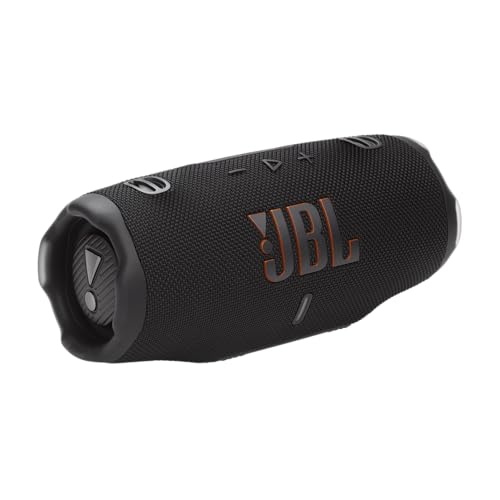


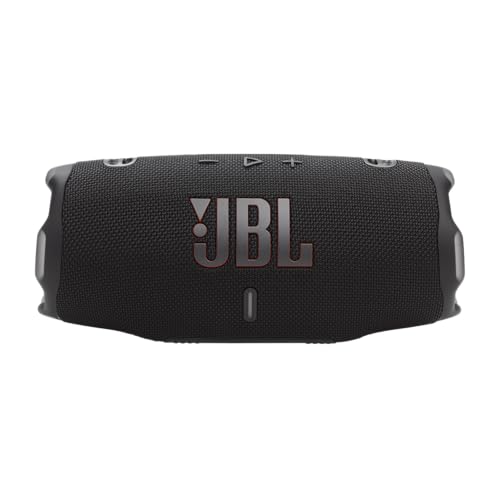
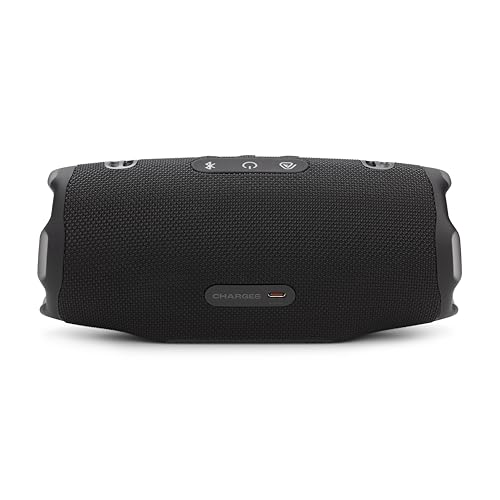

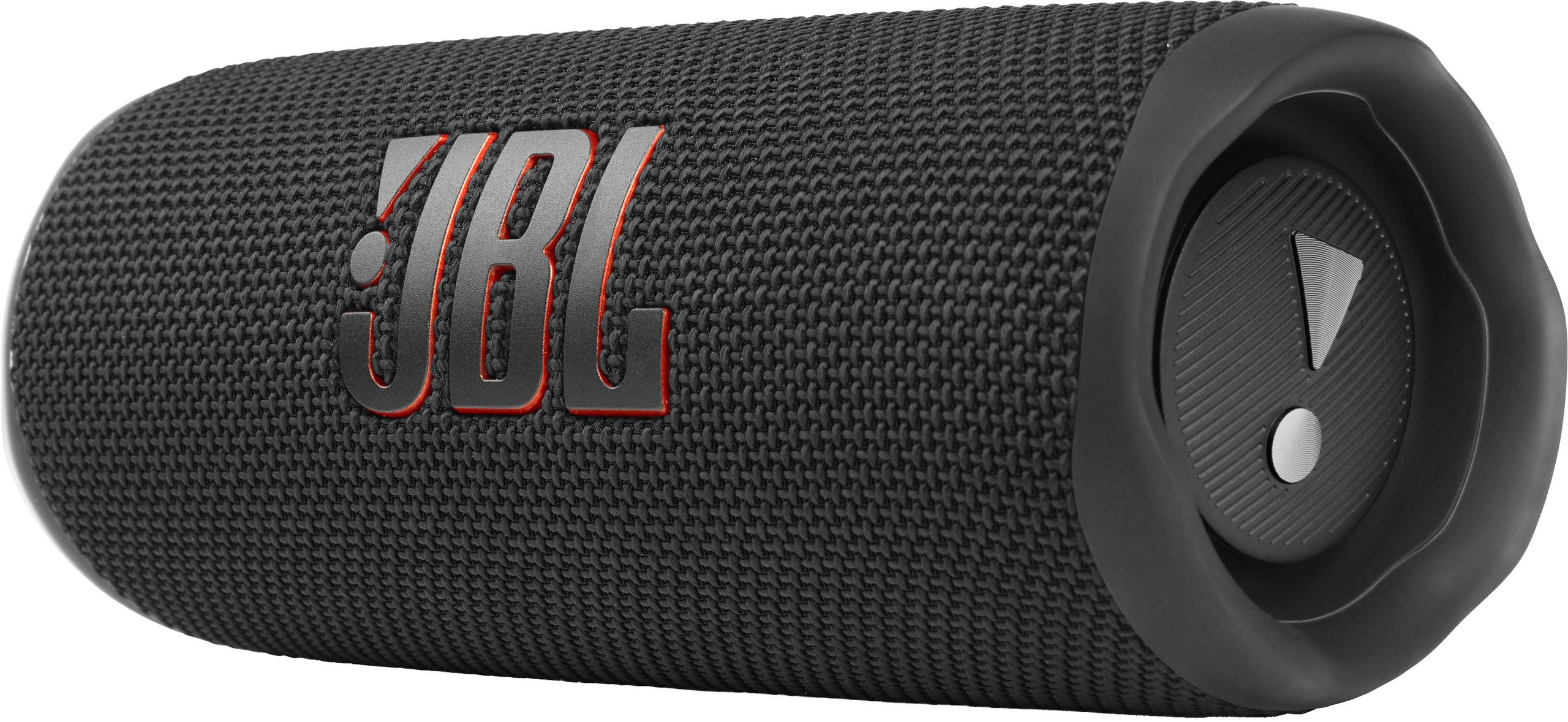
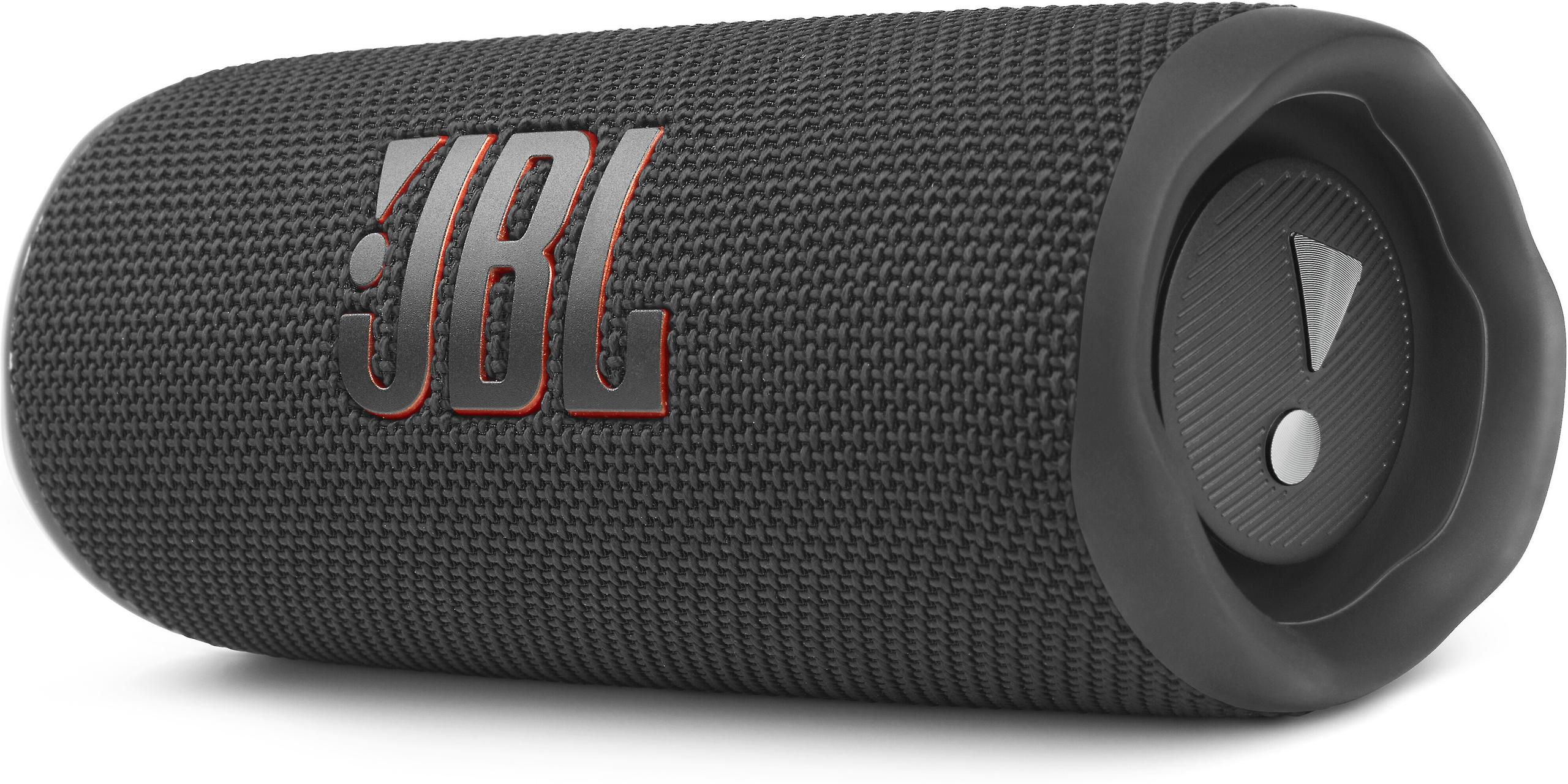
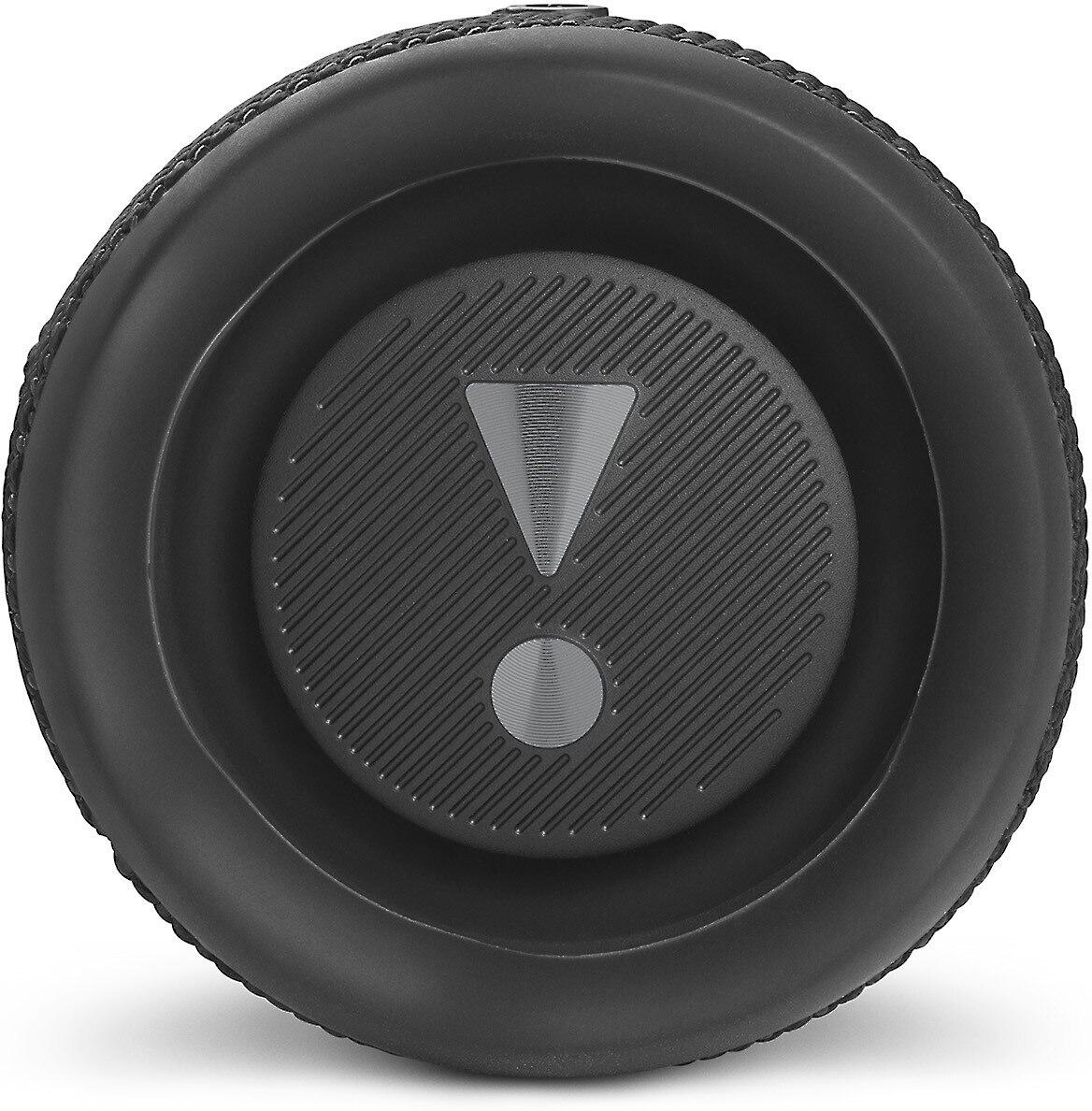
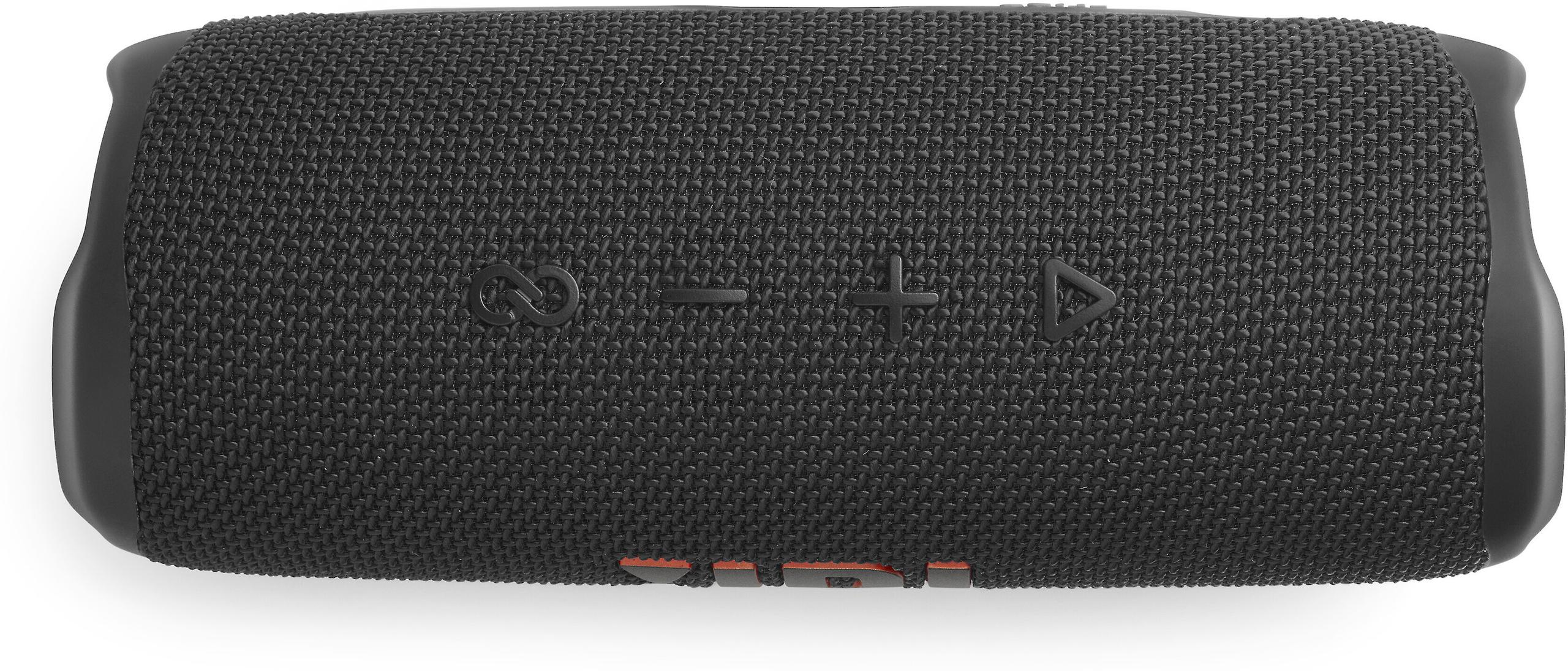
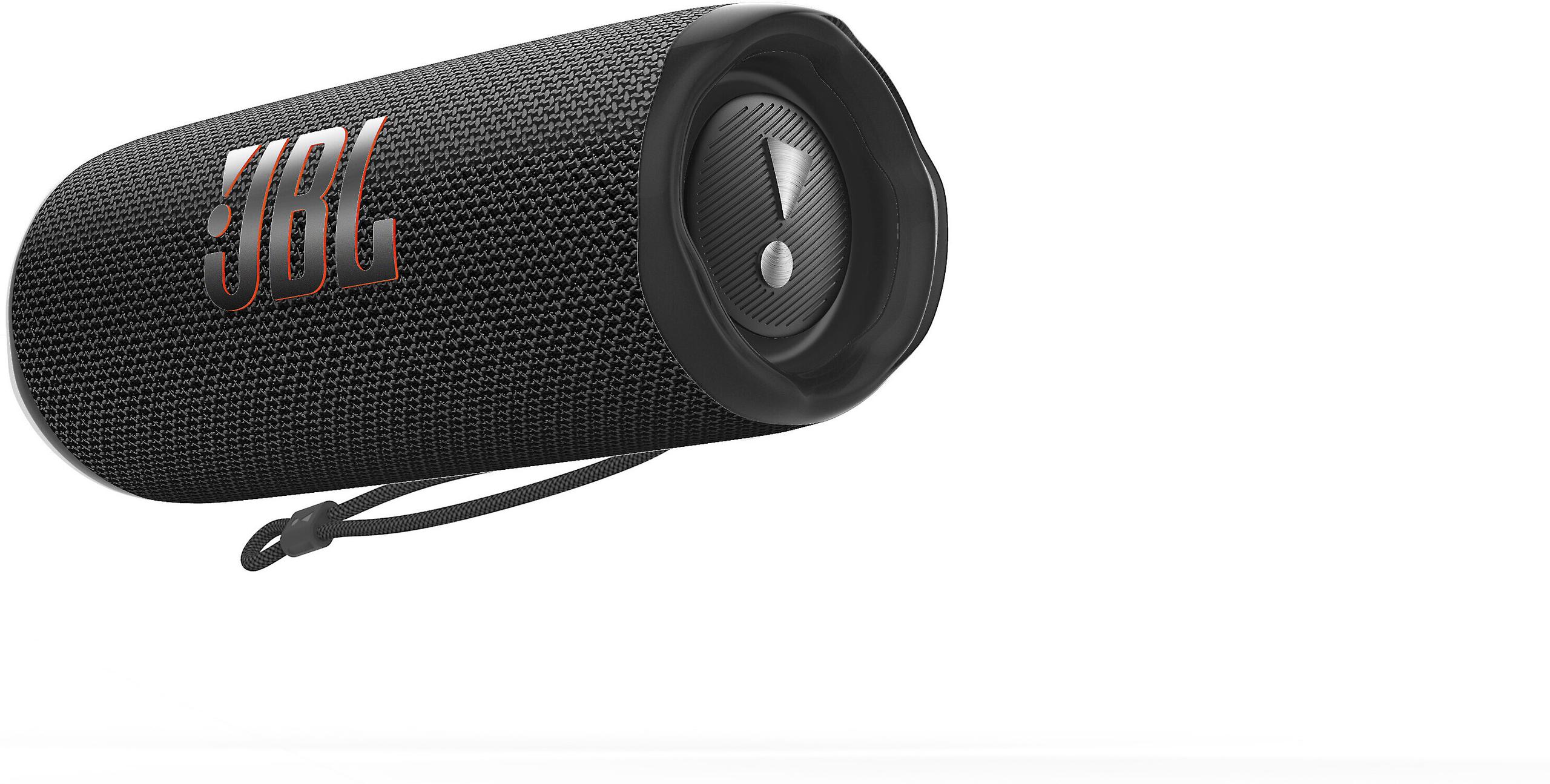
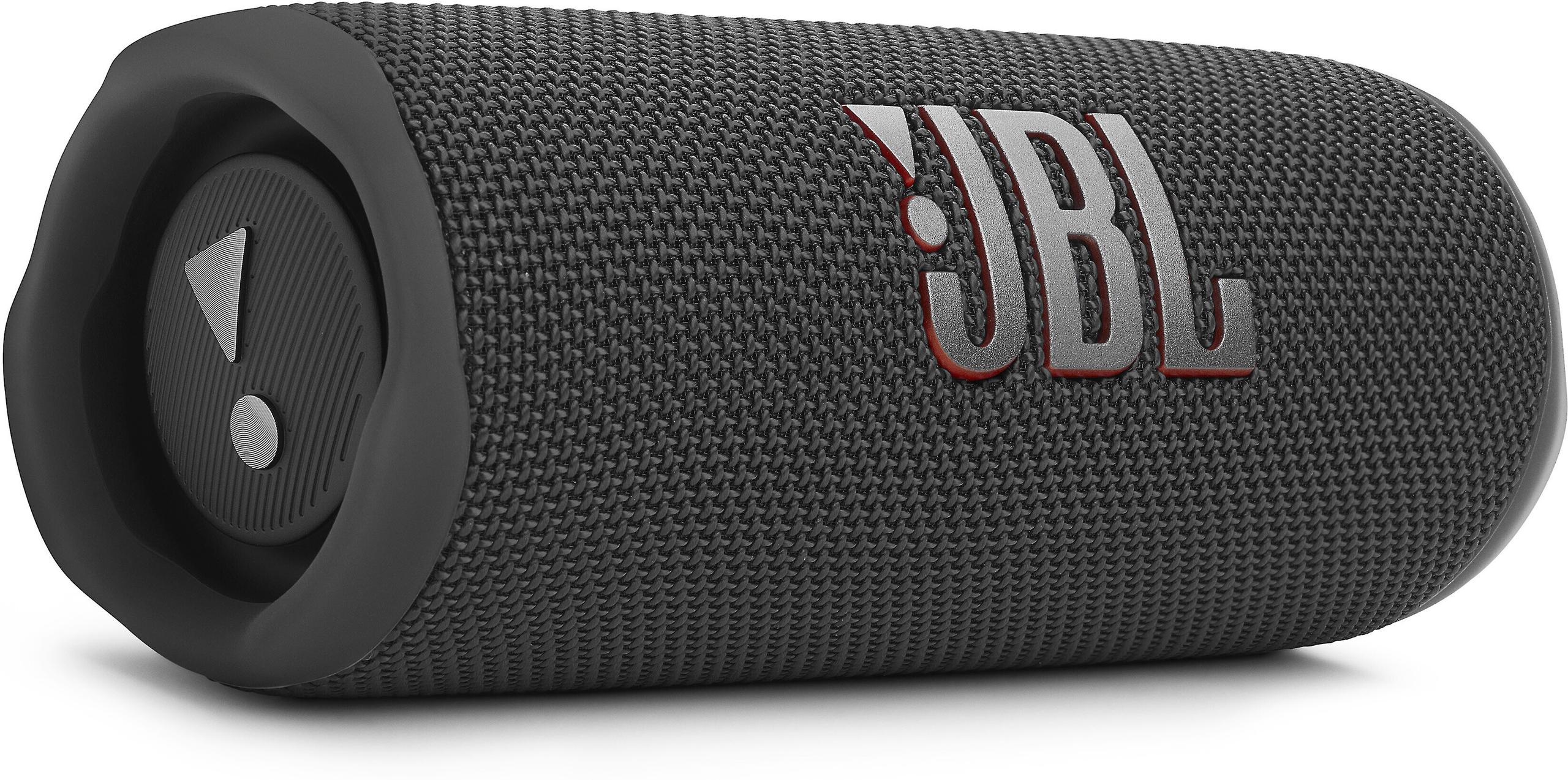
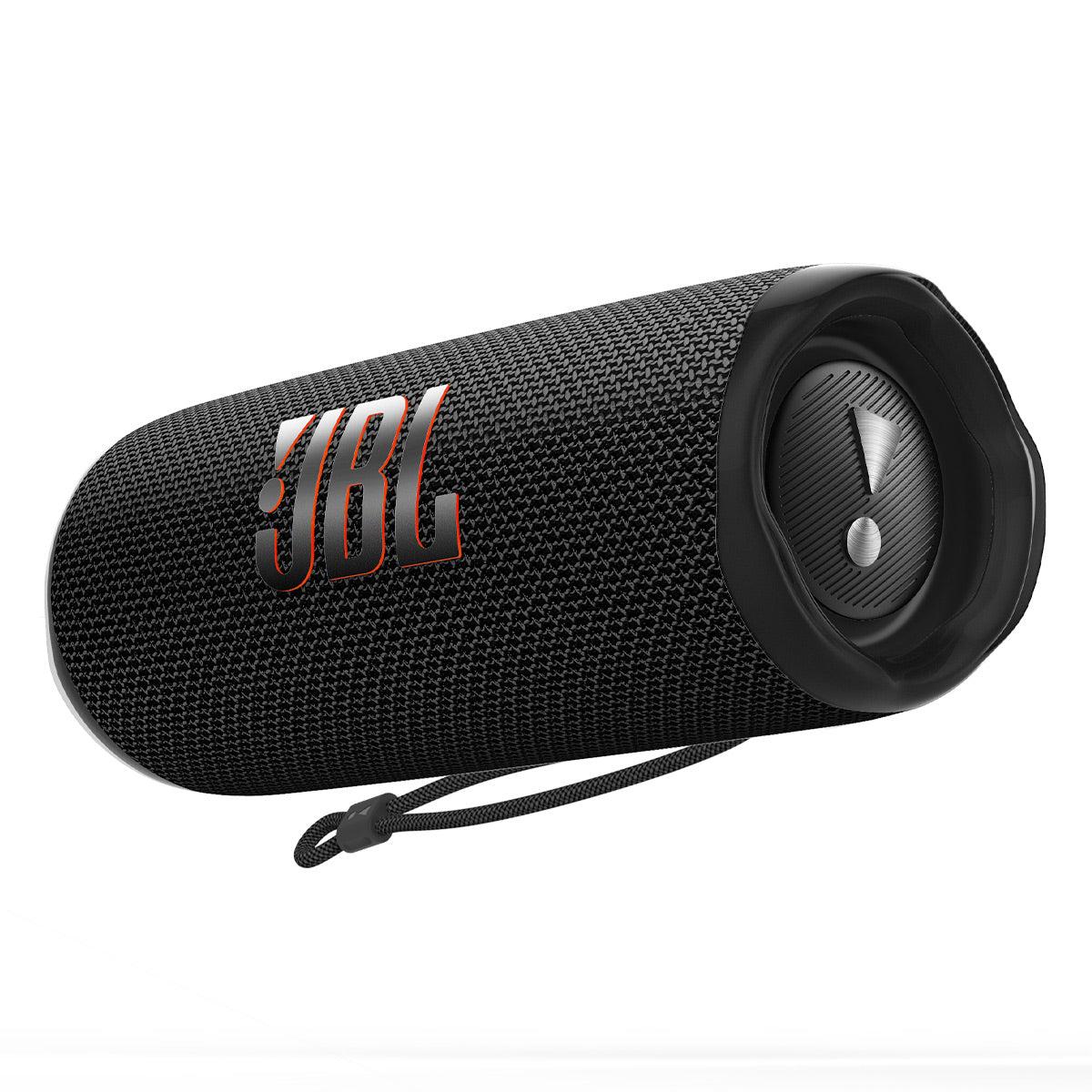
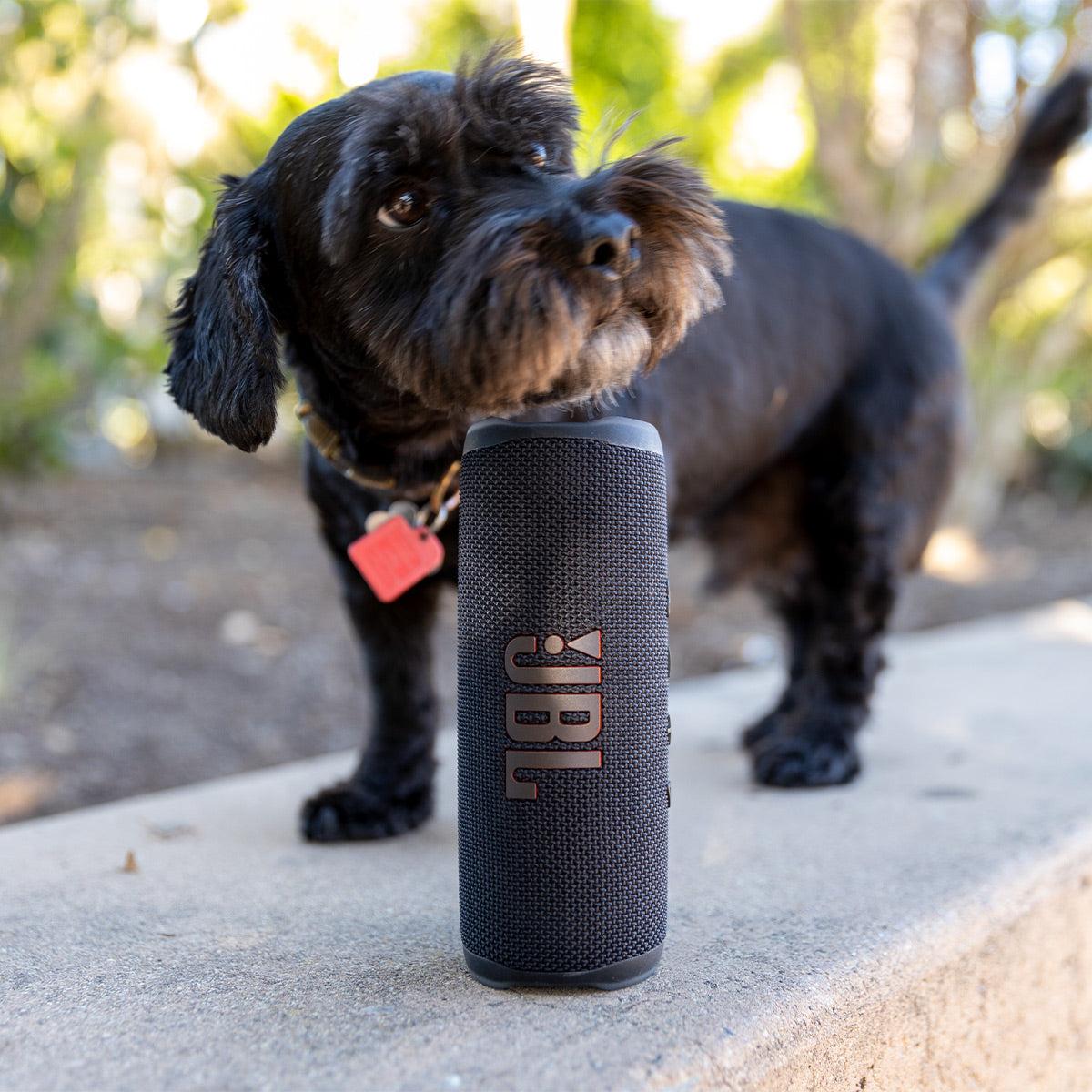
When it comes to portable Bluetooth speakers, JBL has consistently delivered some of the most reliable options on the market. But choosing between their popular models can be tricky, especially when comparing the JBL Charge 6 and JBL Flip 6. Both are excellent speakers, but they serve very different purposes despite sharing the same brand DNA.
At the time of writing, these speakers sit at different price points that reflect their distinct positioning in JBL's lineup. The Flip 6 typically costs significantly less than the Charge 6, making it an attractive budget option. However, that price difference tells an important story about what each speaker prioritizes.
Before diving into specifics, it's worth understanding what makes a great portable speaker. The category revolves around compromises—you're always trading something to get something else. Smaller speakers are easier to carry but can't move as much air for powerful bass. Bigger batteries last longer but add weight. More drivers (the individual speakers inside) generally sound better but require more space and power.
The most critical performance metrics for portable speakers include frequency response (how low and high the speaker can reproduce sounds), power output (how loud it can get), battery life, and build quality. Frequency response is particularly important because it determines whether you'll hear deep bass rumble or just mid-bass punch. A speaker that only goes down to 100Hz will sound thin compared to one that reaches 50Hz, where you can actually feel the low-end impact.
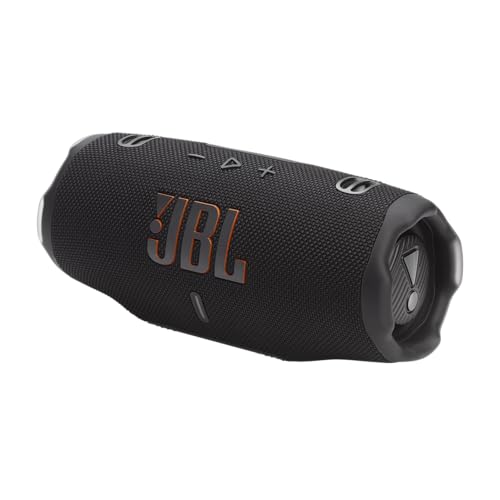
The JBL Flip 6 hit the market in 2021, representing a significant upgrade over its predecessor with the addition of a dedicated tweeter—a small driver specifically designed to handle high frequencies. This two-way design was a major improvement over earlier Flip models that used a single full-range driver trying to handle everything from bass to treble.
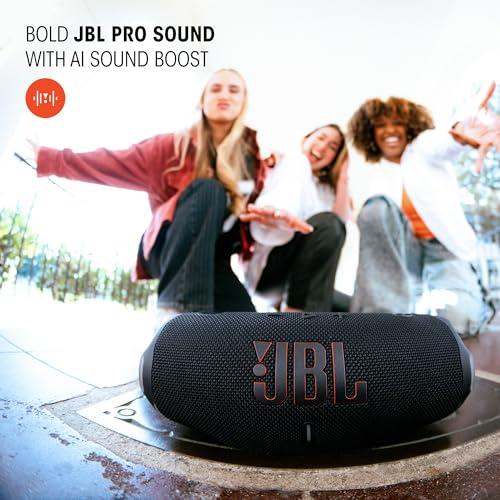
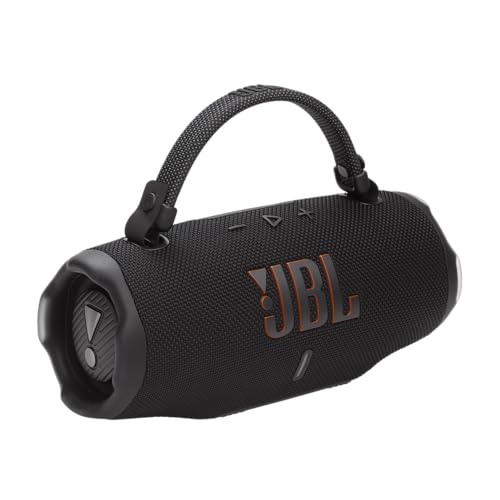
The JBL Charge 6, released in 2024, brought even more substantial changes. Most notably, it introduced AI Sound Boost, JBL's proprietary algorithm that analyzes music in real-time to optimize performance. This technology represents a shift toward smarter audio processing, where the speaker continuously adjusts itself based on what you're playing. It also upgraded to Bluetooth 5.4 and introduced Auracast, a newer multi-speaker connectivity standard that replaces the older PartyBoost system.
These release dates matter because they show JBL's evolution in speaker technology. The three-year gap between models brought meaningful improvements in processing power, connectivity, and battery technology that directly impact everyday use.
The JBL Charge 6 delivers 45 watts of total power compared to the Flip 6's 30 watts. But raw wattage numbers don't tell the complete story—it's how that power is distributed and managed that matters most.
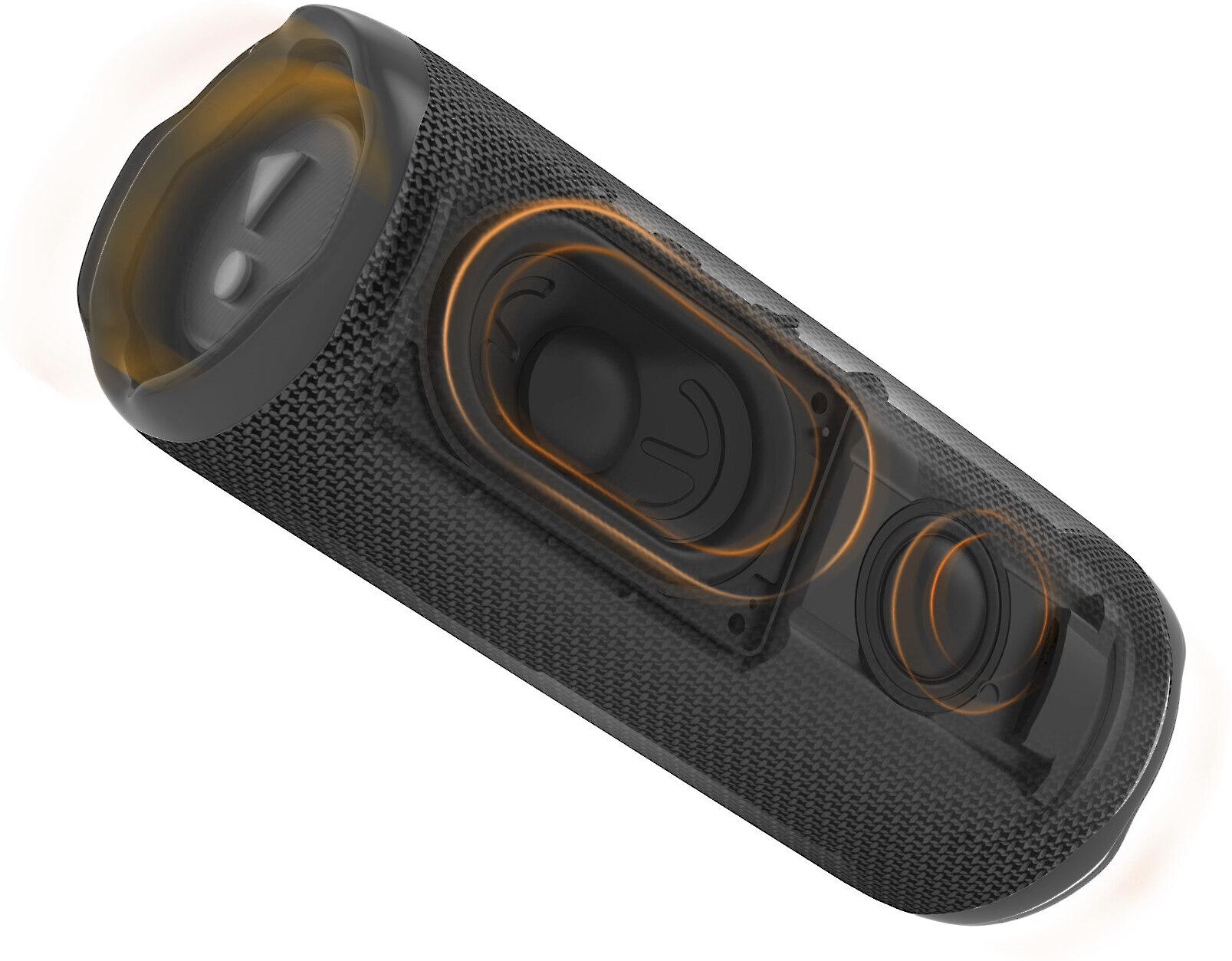
The Charge 6 uses a sophisticated setup with 30 watts dedicated to its large oval woofer and 15 watts powering a separate tweeter. This driver configuration allows each component to focus on what it does best. The woofer handles bass and midrange frequencies up to the crossover point (where frequencies are split between drivers), while the tweeter takes over for crisp highs.
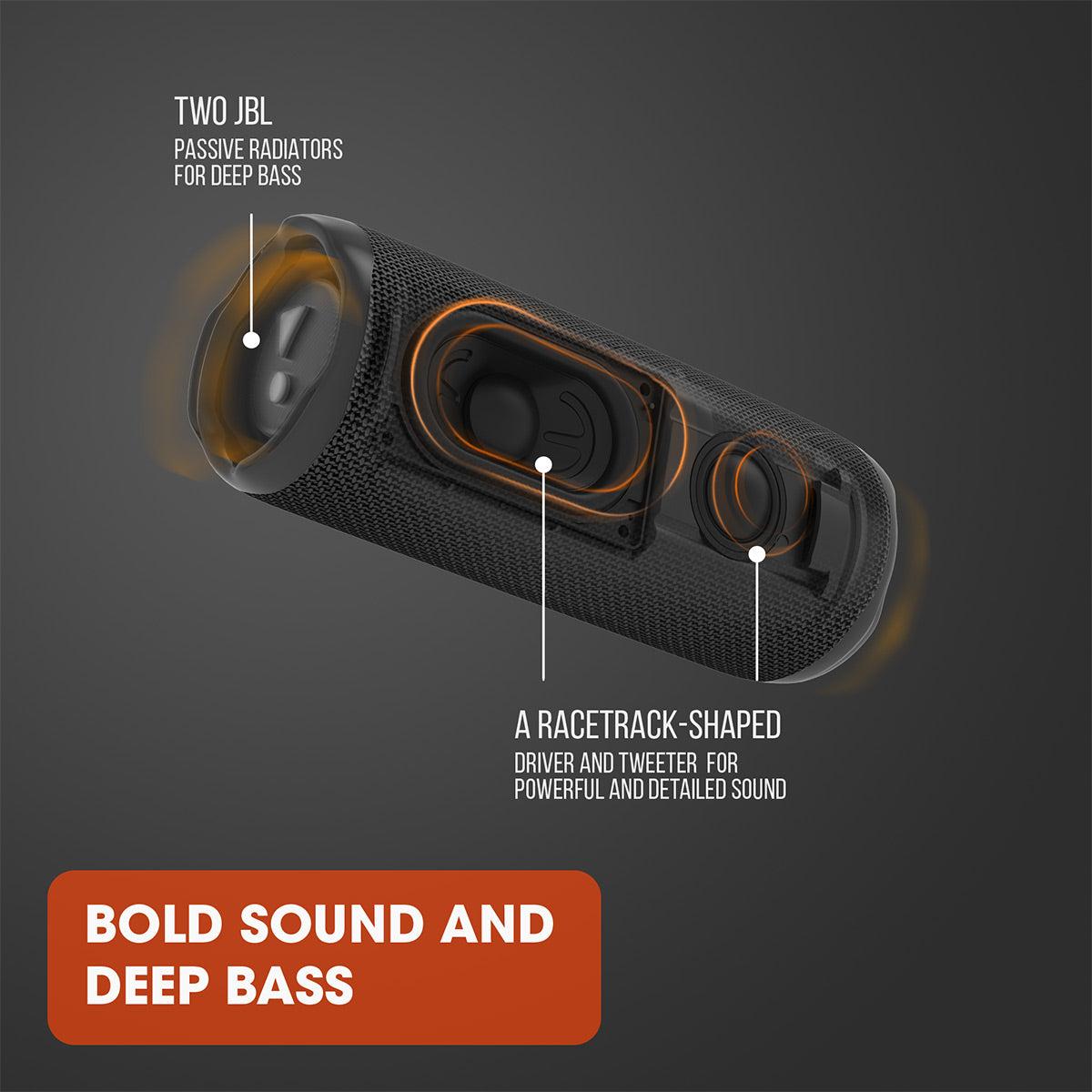
In contrast, the Flip 6 splits its 30 watts between a racetrack-shaped woofer and a smaller tweeter. While this still provides the benefits of a two-way design, the power distribution limits how loud it can play before running into thermal or mechanical limits—the point where drivers start distorting because they're being pushed beyond their capabilities.
Our research into user and professional reviews consistently shows that the Charge 6 maintains clarity and composure at party volumes where the Flip 6 begins to struggle. This isn't necessarily a flaw in the smaller speaker—it's physics. Smaller drivers simply can't move as much air without working harder, and when they're working at their limits, distortion becomes noticeable.
Here's where the differences become most apparent to listeners. The JBL Charge 6 reaches down to 56Hz, while the Flip 6 bottoms out at 63Hz. That 7Hz difference might seem small, but it represents a significant portion of the bass spectrum where you actually feel music rather than just hearing it.
Bass frequencies are incredibly demanding for speakers because they require moving large amounts of air. The Charge 6's larger cabinet volume and dual passive radiators (unpowered drivers that vibrate sympathetically to reinforce bass) give it a substantial advantage. These passive radiators work like additional subwoofers, taking the back-wave energy from the main woofer and using it to generate more low-end output.
The Flip 6 also uses passive radiators, but they're smaller and have less cabinet volume to work with. This means less bass extension and impact, though it still produces respectable low-end for its size category.
The Charge 6's AI Sound Boost represents genuinely innovative technology in the portable speaker space. Unlike simple EQ adjustments, this system analyzes the audio signal continuously and makes real-time adjustments to maximize the drivers' performance while minimizing distortion.
Think of it like having an experienced audio engineer constantly tweaking the speaker's performance based on what you're playing. If you're listening to a bass-heavy track, AI Sound Boost might adjust the woofer's behavior to prevent over-excursion (when the driver moves too far and distorts). For vocal-heavy content, it might optimize the crossover between woofer and tweeter for maximum clarity.
This technology is always active and can't be disabled, which initially concerned some audiophile reviewers. However, our analysis of professional reviews suggests the processing is transparent and beneficial rather than intrusive. The Flip 6 lacks this technology entirely, relying on traditional static tuning.
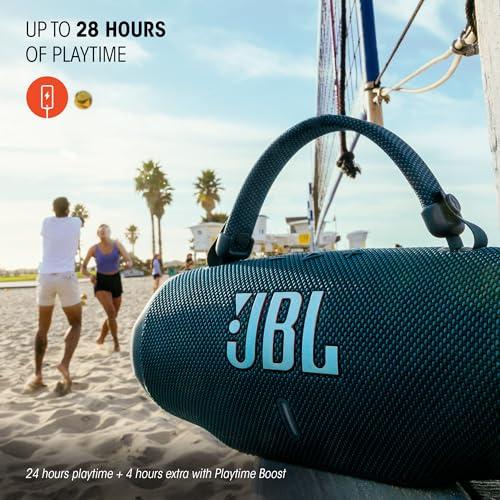
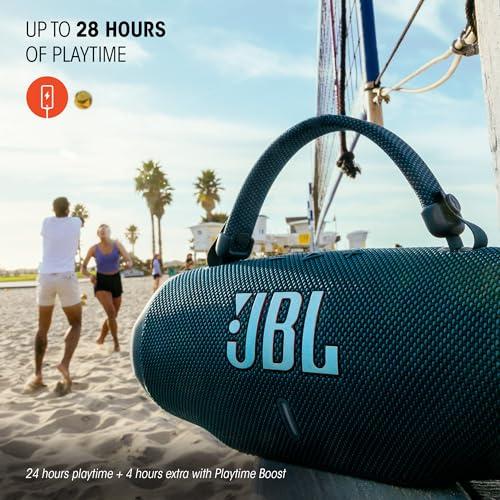
Battery performance represents the most dramatic difference between these speakers. The JBL Charge 6 provides up to 24 hours of playback, extendable to 28 hours with Playtime Boost mode. The Flip 6 offers 12 hours under similar conditions.
This isn't just a numbers game—it fundamentally changes how you use the speaker. With 12 hours, you need to think about charging every day or two with moderate use. With 24-28 hours, you can take weekend camping trips or multi-day festivals without worrying about power management.
The Charge 6's Playtime Boost mode achieves those extra four hours by reducing bass and lower-midrange frequencies, which are the most power-hungry parts of the audio spectrum. While this affects sound quality slightly, it's a clever way to extend battery life when you need maximum endurance more than maximum fidelity.
Interestingly, the Flip 6 charges faster—2.5 hours versus 3 hours for the Charge 6. This reflects the smaller battery capacity and can be advantageous if you frequently forget to charge overnight but need quick top-offs.
The Charge 6 doubles as a power bank, letting you charge phones, tablets, or other USB-C devices from its internal battery. This feature has become increasingly valuable as our devices become more power-hungry and outdoor activities extend longer.
The implementation is well-designed, with the speaker automatically managing power distribution between audio playback and device charging. However, charging devices will reduce music playback time proportionally—physics still applies to battery capacity.
The Flip 6 lacks this functionality entirely, which keeps it simpler but less versatile for extended outdoor use.
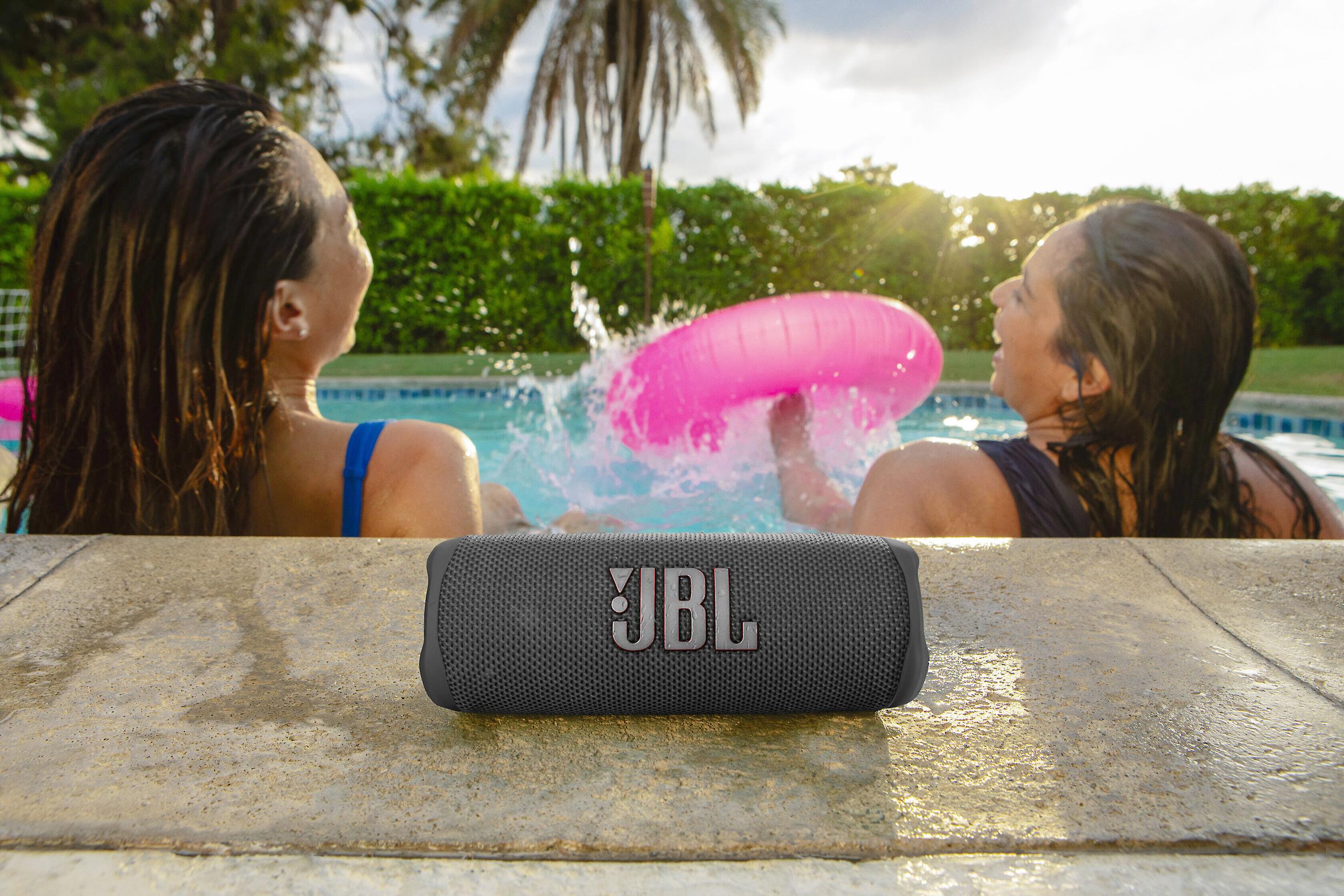
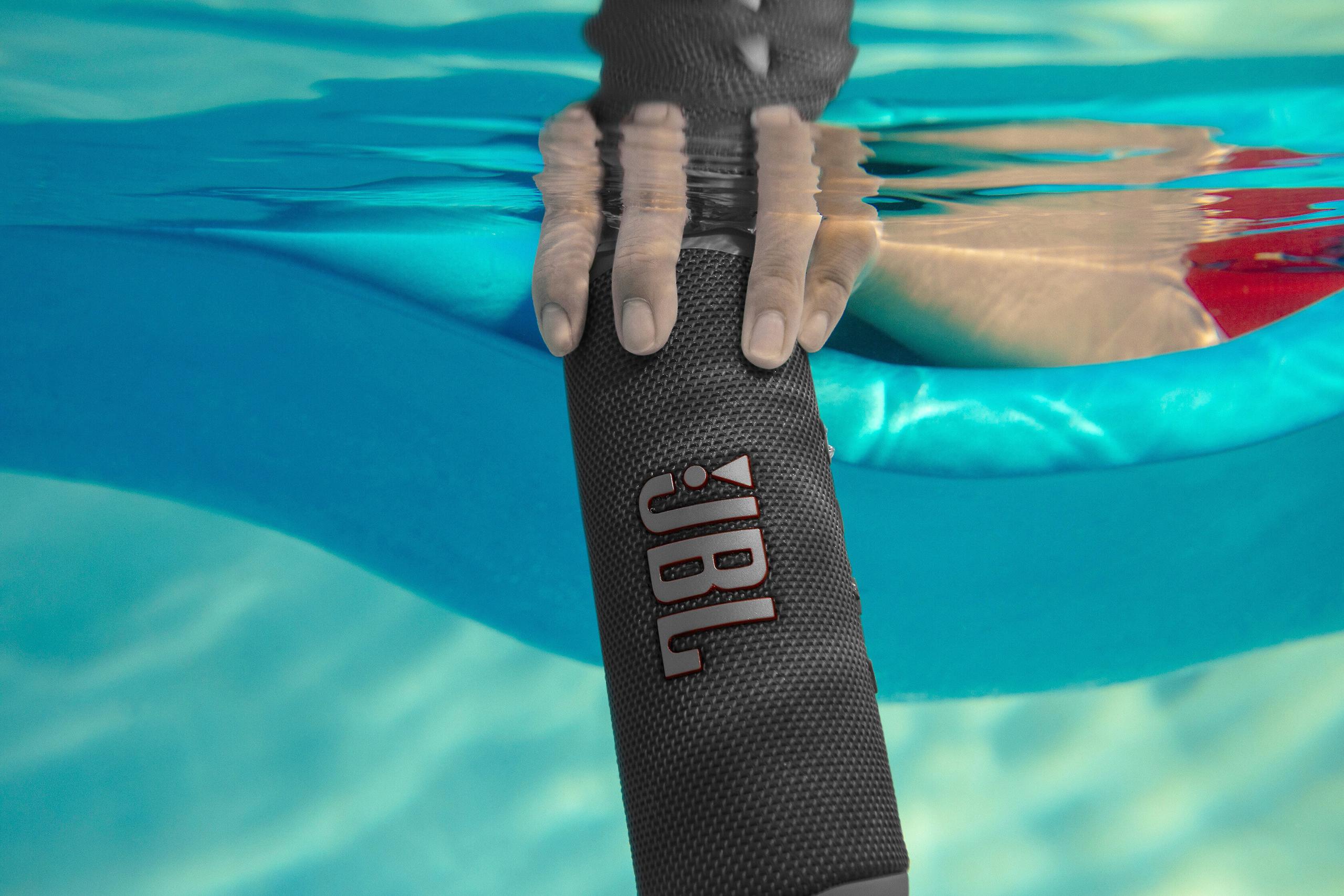
Both speakers meet high waterproofing standards, but with important differences. The Flip 6 carries an IP67 rating, meaning it's completely dustproof and can survive submersion in up to one meter of water for 30 minutes. This covers most real-world scenarios like poolside splashes or getting caught in rain.
The Charge 6 steps up to IP68, which allows deeper submersion—up to 1.5 meters for 30 minutes according to JBL's specifications. More importantly, IP68 represents a more stringent testing standard overall, suggesting better long-term durability in harsh conditions.
For most users, the practical difference between IP67 and IP68 is minimal. Both ratings handle typical outdoor use excellently. However, if you're frequently around water or work in demanding environments, that extra protection margin could matter.
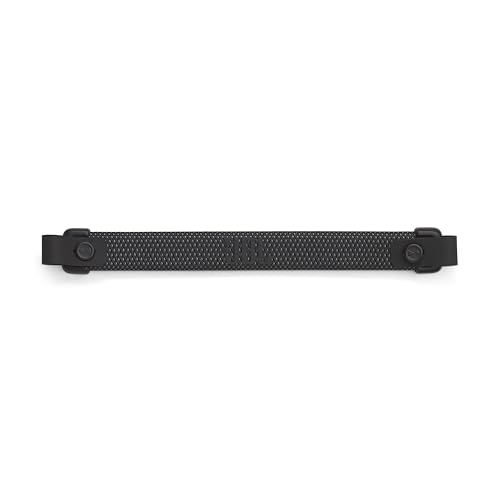
The Charge 6 adds drop-proof testing up to one meter, addressing a common failure point for portable speakers. The reinforced construction and integrated carrying strap show JBL's focus on real-world durability.
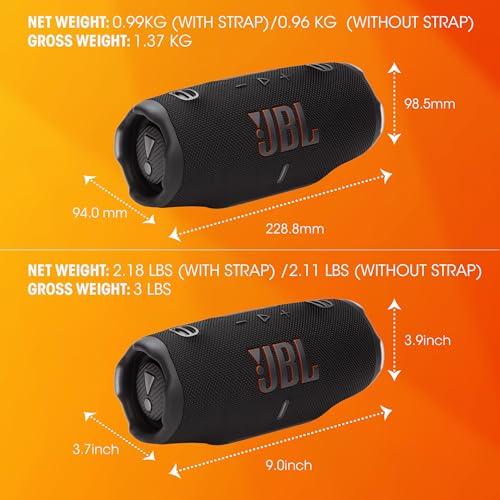
However, this robustness comes with size and weight penalties. The Charge 6 weighs nearly twice as much as the Flip 6 and takes up significantly more space in bags or backpacks. The Flip 6's slim profile fits easily in most bags without dominating storage space.
The Charge 6's Bluetooth 5.4 implementation brings several advantages over the Flip 6's Bluetooth 5.1. The newer standard offers improved range, more stable connections, and better power efficiency. More importantly, it enables Auracast—JBL's next-generation multi-speaker connectivity.
Auracast represents a significant upgrade over the older PartyBoost system used by the Flip 6. While PartyBoost requires speakers to be relatively close and paired in sequence, Auracast can handle larger networks of speakers with more flexible placement. This matters for large gatherings where you want to spread speakers around a wider area.
Both speakers can pair with identical models for stereo sound, but neither outputs true stereo by itself—they downmix stereo sources to mono. This is common in portable speakers but worth understanding if stereo imaging is important to you.
The JBL Portable app provides different levels of control for each speaker. The Charge 6 gets a comprehensive 7-band graphic equalizer, allowing detailed sound customization across the frequency spectrum. You can boost or cut specific frequency ranges to match your musical preferences or acoustic environment.
The Flip 6 typically offers more basic EQ options through the app, though exact features can vary with firmware updates. The app also handles speaker pairing, firmware updates, and battery monitoring for both models.
While both speakers are designed for portability, they can serve indoor roles effectively. The Charge 6 works well as a temporary home theater upgrade for smaller rooms, providing significantly better dialogue clarity and bass impact than typical TV speakers.
The USB-C lossless audio input on the Charge 6 supports high-resolution audio up to 24-bit/192kHz, making it suitable for critical listening from computers or high-end mobile devices. This wired connection bypasses Bluetooth compression entirely, delivering the full audio quality your source provides.
The Flip 6 makes an excellent bedroom or office speaker where space is limited but you want better sound than laptop or phone speakers. Its balanced sound signature works well for podcasts, video calls, and casual music listening.
At the time of writing, the Flip 6 frequently appears at significant discounts, sometimes approaching half the Charge 6's typical selling price. At these price points, it represents exceptional value for portable audio—you're getting genuinely good sound quality and build construction at budget speaker prices.
The Charge 6 commands a premium that reflects its advanced features and performance capabilities. While more expensive, the dramatically longer battery life alone can justify the cost difference for users who depend on portable audio regularly.
Choose the JBL Flip 6 if:
Choose the JBL Charge 6 if:
The choice ultimately hinges on usage intensity and priorities. If you use a portable speaker occasionally for background music or personal listening, the Flip 6's outstanding price-to-performance ratio makes it hard to beat. You'll get years of reliable service and good sound quality without overpaying for features you won't use.
However, if portable audio plays a central role in your lifestyle—whether through outdoor activities, entertainment hosting, or extended travel—the Charge 6's superior battery endurance and performance capabilities justify the investment. The frustration of a dead speaker during important moments often outweighs the initial cost savings.
Both speakers represent solid engineering and reliable build quality from a trusted brand. The Flip 6 maximizes value and portability, while the Charge 6 maximizes capability and endurance. Understanding which priorities matter most for your specific needs will guide you to the right choice.
The portable speaker market continues evolving rapidly, but both models should provide years of reliable service regardless of which direction you choose. Sometimes the best speaker is simply the one you'll actually use regularly, and both of these JBL models excel at making that easy.
| JBL Charge 6 | JBL Flip 6 |
|---|---|
| Power Output - Determines maximum volume and clarity at high levels | |
| 45W RMS (30W woofer + 15W tweeter) | 30W RMS (20W woofer + 10W tweeter) |
| Battery Life - Critical for outdoor use and extended listening | |
| 24 hours standard, 28 hours with Playtime Boost | 12 hours standard |
| Frequency Response - Lower numbers mean deeper bass you can feel | |
| 56Hz - 20kHz (deeper bass extension) | 63Hz - 20kHz (good bass for size) |
| Dimensions (W x H x D) - Affects portability and bag space | |
| 9.0" x 3.9" x 3.7" (larger, less portable) | 7.0" x 2.6" x 2.8" (compact, travel-friendly) |
| Weight - Important for hiking, travel, and daily carrying | |
| 2.11 lbs (nearly twice as heavy) | 1.21 lbs (lightweight and portable) |
| Waterproof Rating - Higher numbers mean better water protection | |
| IP68 (submersion up to 1.5m for 30min) | IP67 (submersion up to 1m for 30min) |
| Bluetooth Version - Newer versions offer better range and stability | |
| 5.4 (latest standard, future-proof) | 5.1 (reliable, widely compatible) |
| Charging Time - How long you wait for full battery | |
| 3 hours (larger battery takes longer) | 2.5 hours (faster turnaround) |
| Power Bank Function - Can charge your phone and other devices | |
| Yes, USB-C output for device charging | No power bank capability |
| AI Processing - Automatically optimizes sound based on content | |
| AI Sound Boost with real-time optimization | Standard static tuning |
| Multi-Speaker Pairing - Connect multiple speakers for bigger sound | |
| Auracast (newer, more flexible system) | PartyBoost (reliable, widely supported) |
| EQ Customization - Control over sound signature via app | |
| 7-band graphic EQ (detailed control) | Basic EQ options (simpler adjustment) |
| Lossless Audio Input - Bypass Bluetooth for highest quality | |
| USB-C input supports up to 24-bit/192kHz | Bluetooth only, no wired audio input |
| Included Accessories - What comes in the box | |
| Speaker and carrying strap (no charger) | Speaker and USB-C charging cable |
The JBL Charge 6 is significantly better for outdoor use thanks to its 24-28 hour battery life, louder 45W output, and superior IP68 waterproof rating. The JBL Flip 6 offers 12 hours of battery and IP67 protection, which works for day trips but the Charge 6 excels for camping, beach days, and extended outdoor events where charging isn't available.
The primary difference is battery life and power output. The JBL Charge 6 provides 24 hours of playback with 45W of power, while the JBL Flip 6 offers 12 hours with 30W output. The Charge 6 also functions as a power bank to charge your devices, whereas the Flip 6 focuses purely on portability and value.
The JBL Flip 6 is much more portable, weighing just 1.21 pounds compared to the Charge 6's 2.11 pounds. The Flip 6 measures 7" x 2.6" x 2.8" and fits easily in backpacks, while the larger Charge 6 at 9" x 3.9" x 3.7" takes up significantly more space and weight in bags.
The JBL Charge 6 is excellent for parties with its 45W output and ability to maintain clarity at high volumes. The JBL Flip 6 works for small gatherings but struggles at maximum volume with some distortion. For actual party use, the Charge 6 delivers the volume and bass impact you need.
The JBL Charge 6 has noticeably better bass with deeper extension down to 56Hz compared to the Flip 6's 63Hz. The Charge 6 also has larger drivers and more cabinet volume, producing more impactful low-end that you can actually feel. The Flip 6 has decent bass for its size but can't match the depth and punch of the Charge 6.
Yes, both the JBL Charge 6 and JBL Flip 6 work with the JBL Portable app for firmware updates and EQ adjustments. However, the Charge 6 offers a more advanced 7-band graphic equalizer for detailed sound customization, while the Flip 6 has more basic EQ options.
Both speakers support multi-speaker pairing but use different systems. The JBL Charge 6 uses the newer Auracast technology for more flexible speaker networks, while the JBL Flip 6 uses PartyBoost which is compatible with many existing JBL speakers. You can stereo pair two identical models for wider sound.
The JBL Flip 6 charges faster at 2.5 hours for a full charge compared to the Charge 6's 3 hours. This is due to the Flip 6's smaller battery capacity. However, the Charge 6 offers fast charging where 10 minutes provides 150 minutes of playback time.
Yes, both are waterproof but to different degrees. The JBL Flip 6 has IP67 rating for submersion up to 1 meter for 30 minutes, while the JBL Charge 6 has superior IP68 rating allowing submersion up to 1.5 meters. Both handle poolside splashes and rain excellently, but the Charge 6 offers better long-term durability.
The JBL Flip 6 typically offers better value per dollar with significantly lower cost while still delivering good sound quality and build construction. The Charge 6 costs more but justifies the premium with double the battery life, power bank functionality, and superior performance. Value depends on whether you need the Charge 6's extended capabilities.
Neither the JBL Charge 6 nor JBL Flip 6 includes a built-in microphone for hands-free phone calls. Both focus purely on music playback rather than communication features. If you need speakerphone capability, you'll need to look at other JBL models with integrated microphones.
The JBL Flip 6 is better for frequent travel due to its compact size, lighter weight, and included charging cable. It fits easily in carry-on luggage and doesn't add significant weight. The JBL Charge 6 works for longer trips where you need extended battery life and device charging capability, but its larger size makes it less convenient for regular travel.
We've done our best to create useful and informative comparisons to help you decide what product to buy. Our research uses advanced automated methods to create this comparison and perfection is not possible - please contact us for corrections or questions. These are the sites we've researched in the creation of this article: rtings.com - youtube.com - stereoguide.com - whathifi.com - youtube.com - elomymelo.com - soundguys.com - elomymelo.com - wifihifi.com - soundguys.com - jbl.com - whathifi.com - soundguys.com - youtube.com - smarthomesounds.co.uk - jbl.com - sweetwater.com - youtube.com - bestbuy.com - jbl.com.sg - jbl.com - dell.com - ca.jbl.com - soundguys.com - soundguys.com - dell.com - techradar.com - phonearena.com - youtube.com - tomsguide.com - outeraudio.com - wcucampusstore.com - jbl.com.sg - pcrichard.com - kh.jbl.com - musicarts.com - jbl.com - cnet.com - youtube.com

Privacy Policy
Terms and Conditions - Affiliate Policy
Home Security
© Copyright 2008-2026.
11816 Inwood Rd #1211, Dallas, TX 75244