





Portable Bluetooth speakers have become as essential as smartphones for many people. Whether you're hosting backyard barbecues, working from coffee shops, or just want better audio than your laptop can deliver, the right speaker makes all the difference. But with hundreds of options flooding the market, choosing between products like the JBL Charge 6 and Sony XB100 can feel overwhelming.
These two speakers represent fundamentally different approaches to portable audio. The JBL Charge 6, released in 2024, positions itself as a versatile powerhouse that can handle everything from intimate listening sessions to impromptu parties. Meanwhile, the Sony XB100, which hit the market in 2023, focuses on ultra-portability without completely sacrificing sound quality. Understanding which philosophy matches your needs will save you from buyer's remorse.
Before diving into specifics, it's worth understanding what separates good portable speakers from mediocre ones. The most important factors include sound quality (how balanced and clear the audio is), portability (can you actually carry this thing around comfortably?), battery life (will it last through your activities?), durability (can it survive real-world use?), and connectivity features (how well does it play with your devices?).
Sound quality in portable speakers involves trade-offs that don't exist with larger home audio systems. Cramming drivers (the components that create sound) into small enclosures means engineers must be clever about how they tune the audio. Larger speakers typically sound better because they have more room for bigger drivers and can move more air, but the best portable speakers use smart engineering to punch above their weight class.
The JBL Charge 6 and Sony XB100 illustrate these trade-offs perfectly. One prioritizes performance and versatility, while the other maximizes portability and value. Neither approach is inherently better – it depends entirely on how you plan to use your speaker.
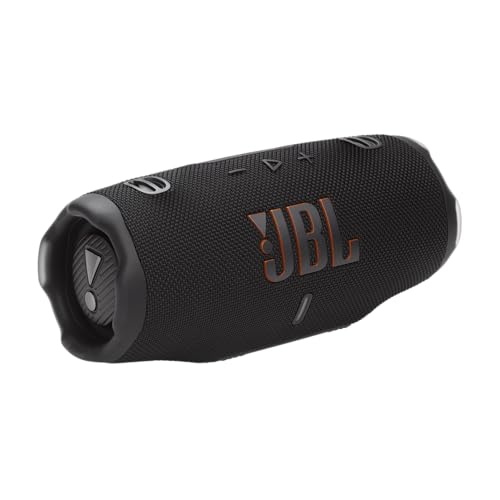
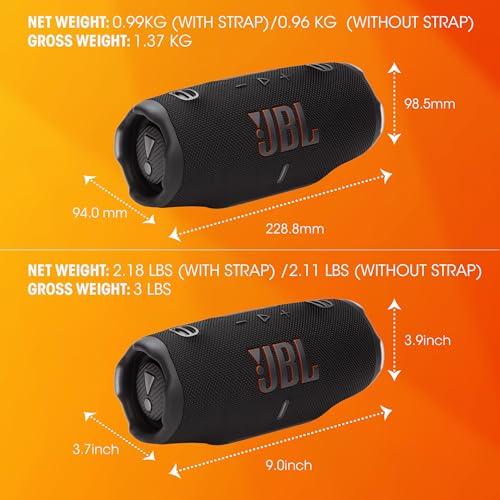
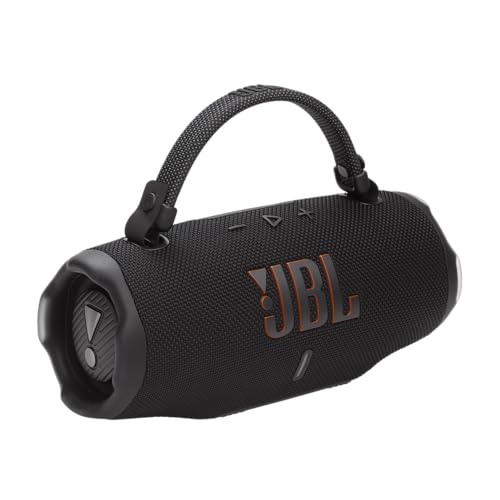
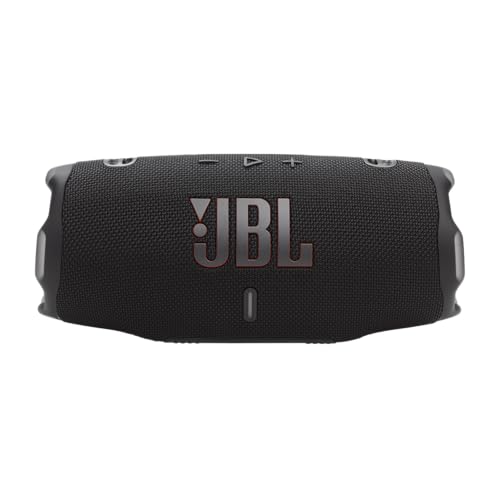
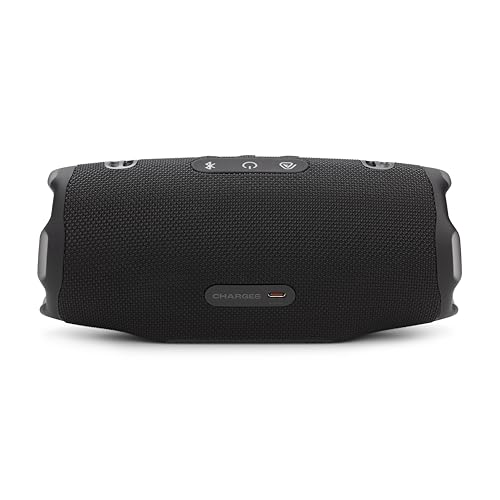
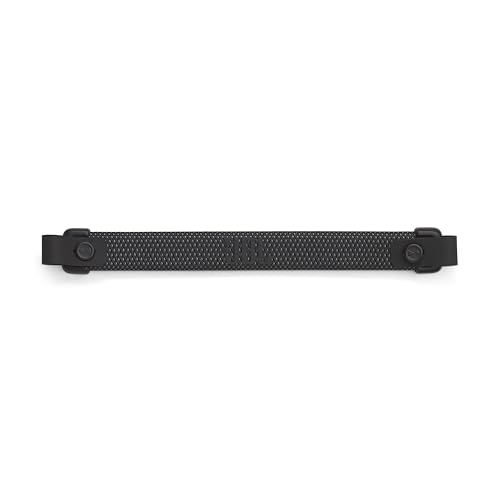
The JBL Charge 6 weighs nearly a kilogram and measures about 9 inches long, making it substantial enough that you'll want to pack it deliberately rather than toss it in a pocket. JBL designed this speaker for people who want one device that can handle multiple scenarios – from personal listening while working to providing soundtrack for small gatherings. The pill-shaped design with fabric mesh wrapping has become JBL's signature look, and the included carrying strap makes transport manageable despite the size.
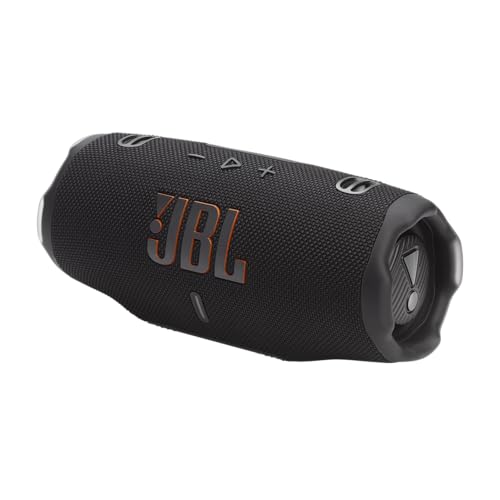
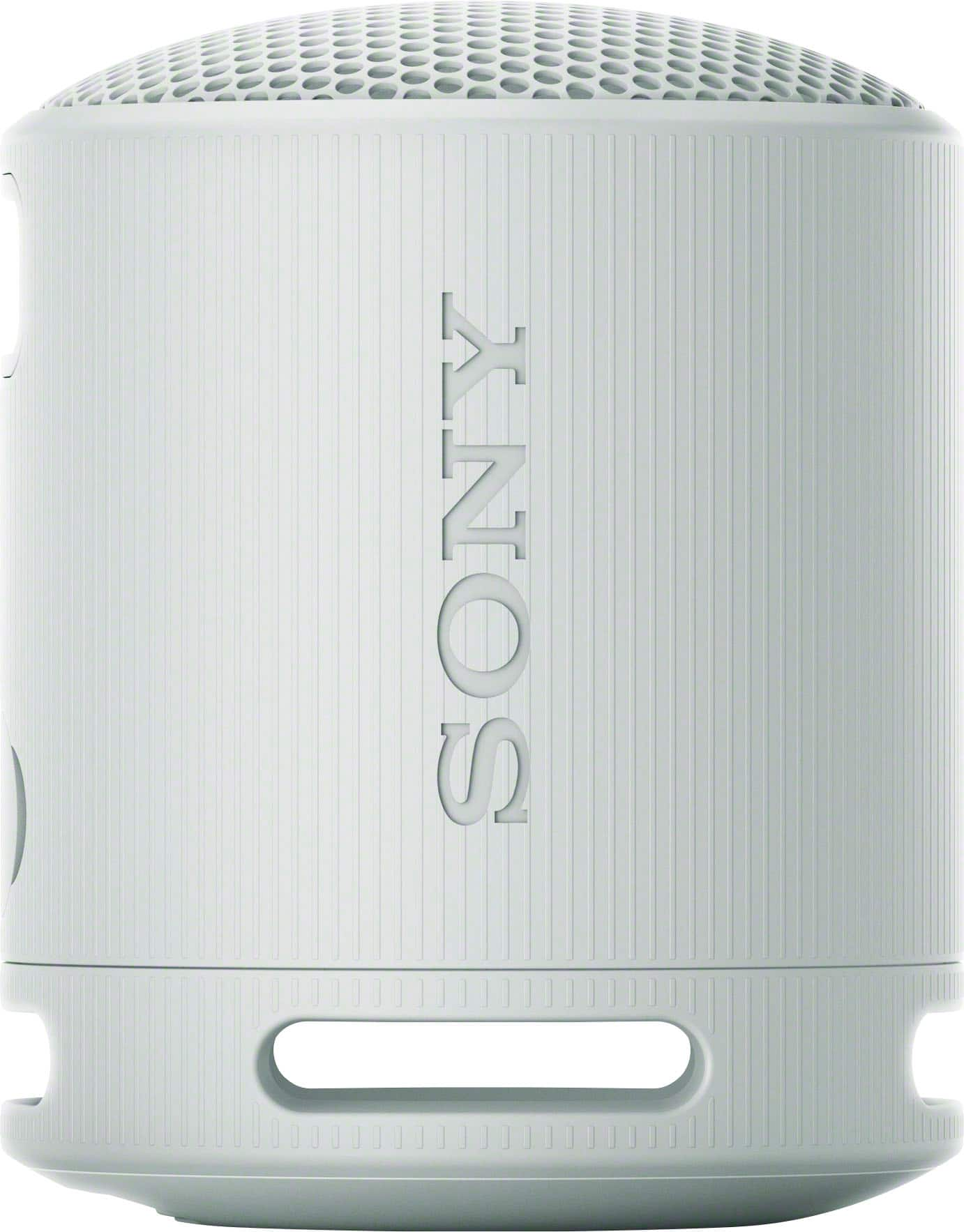
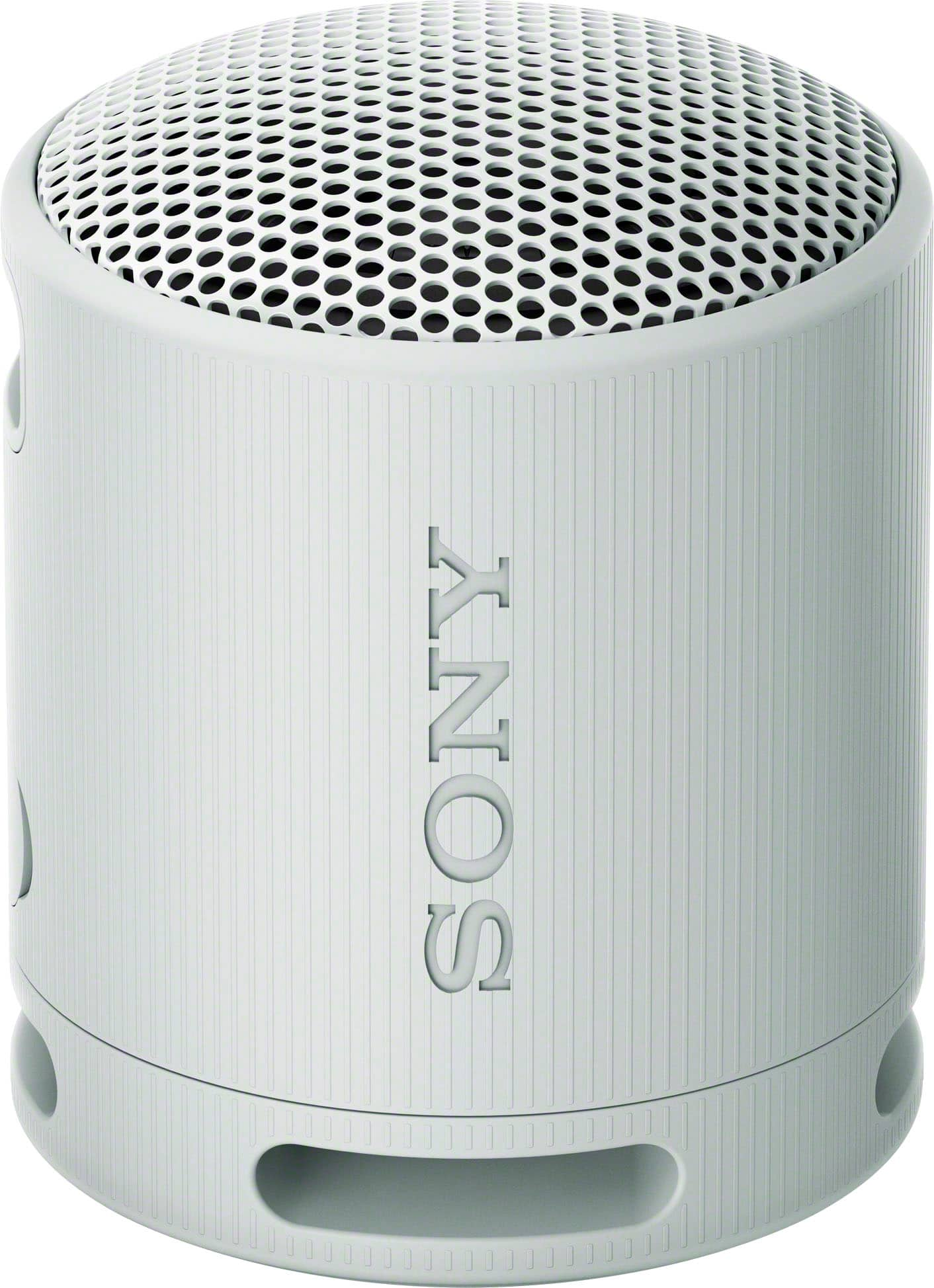
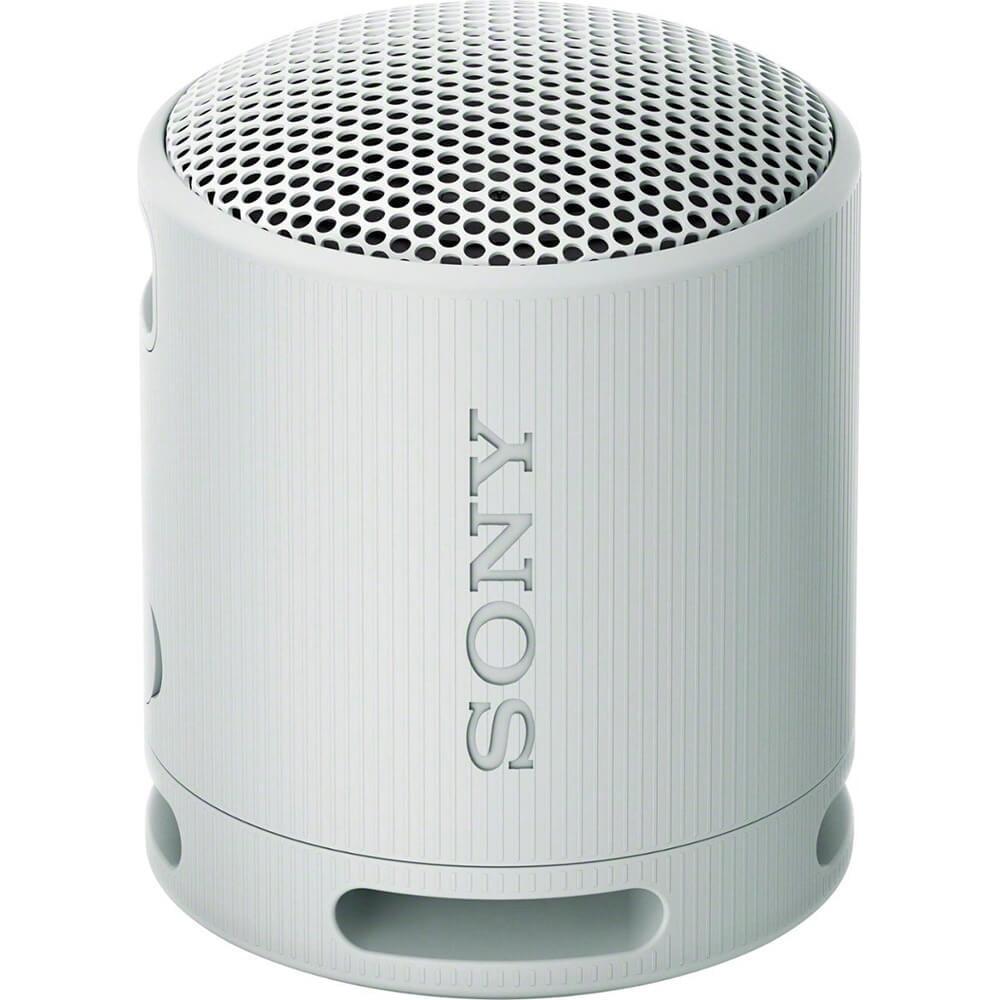
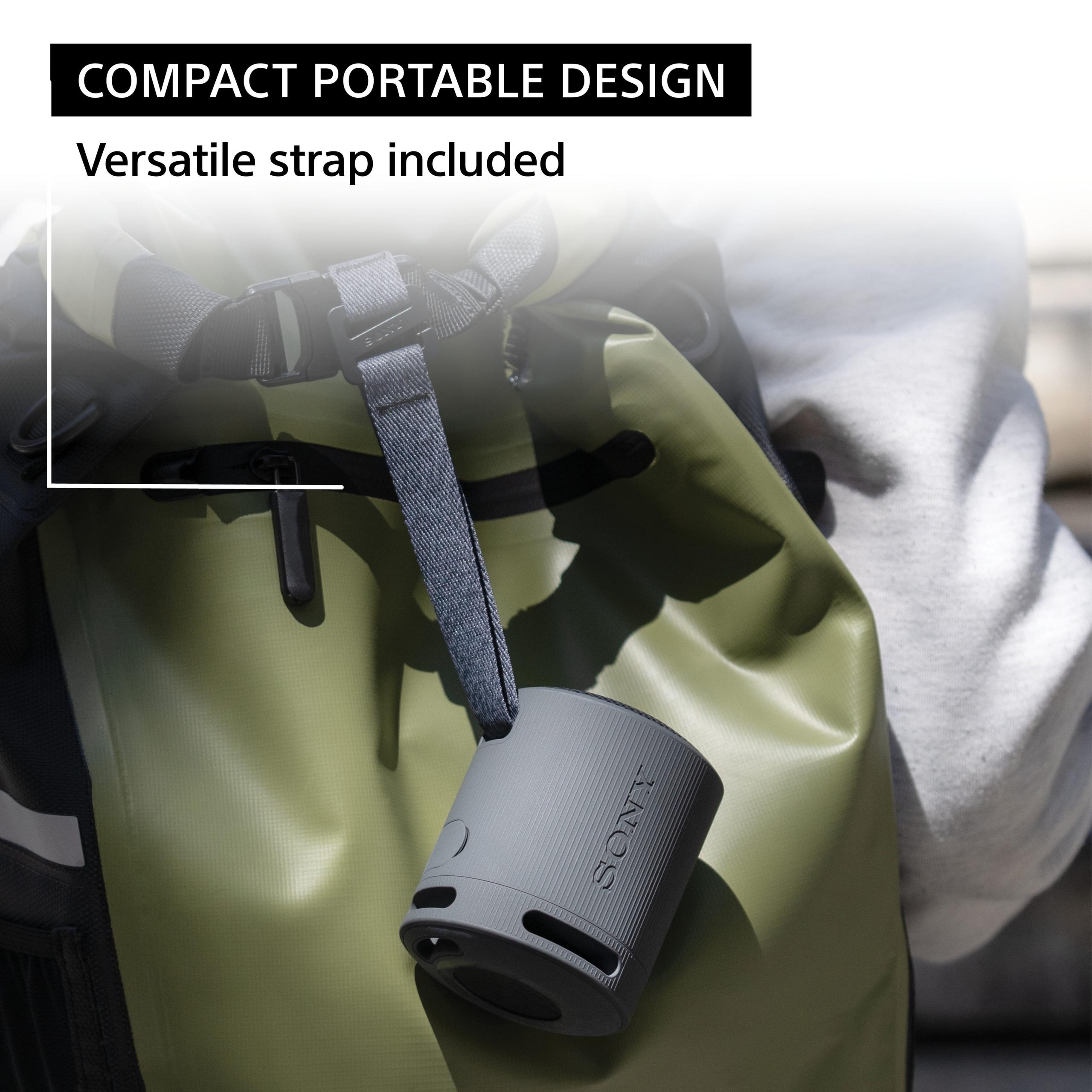
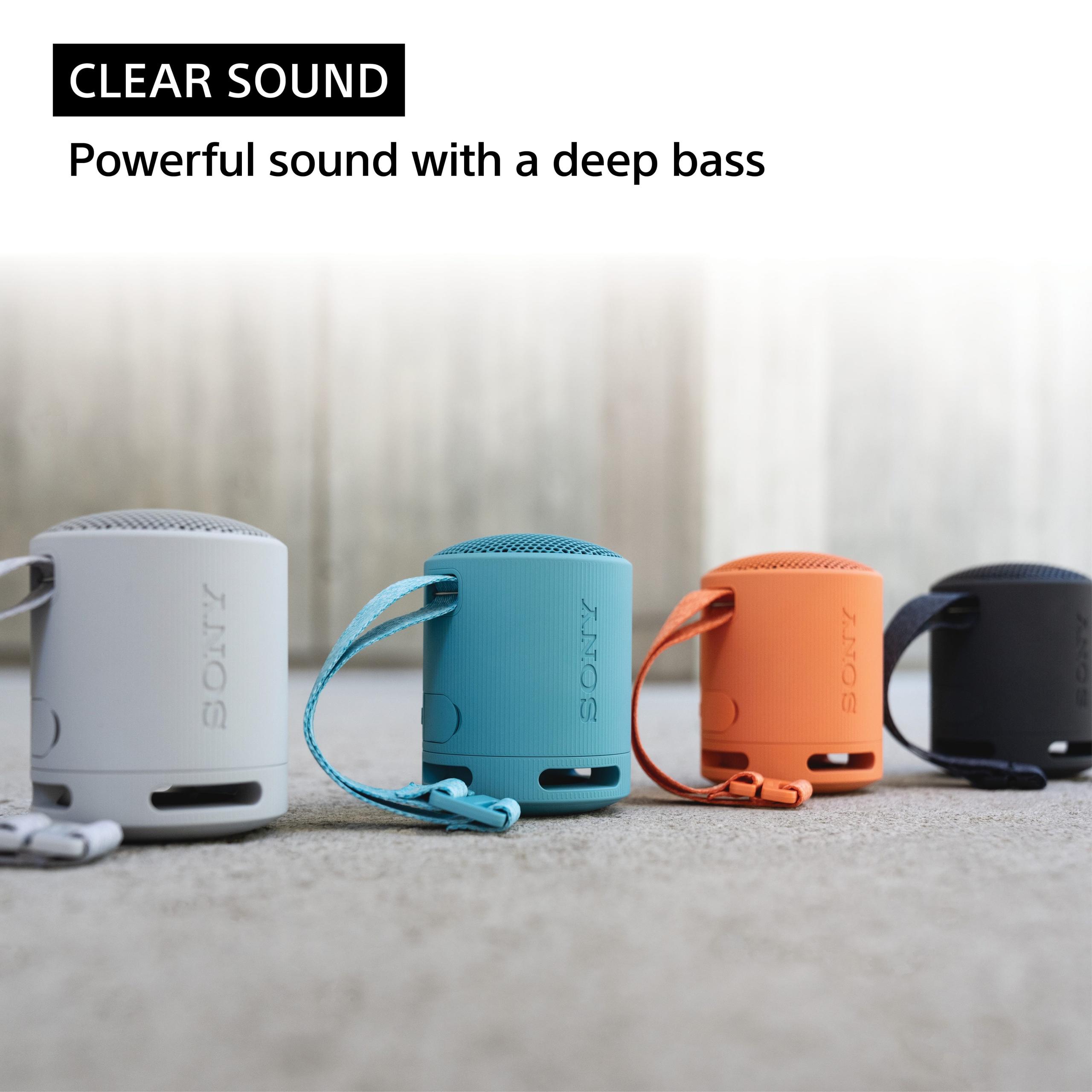
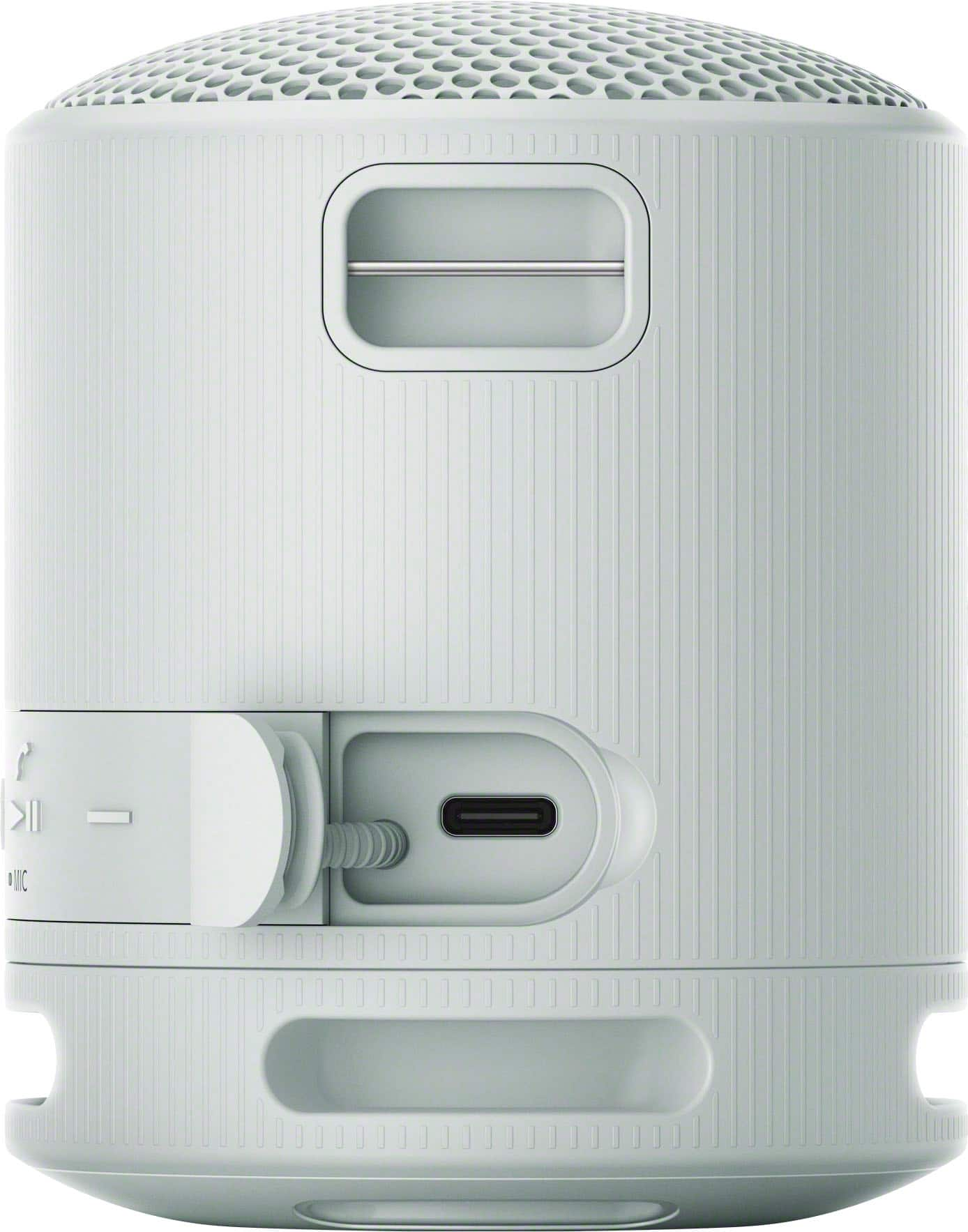
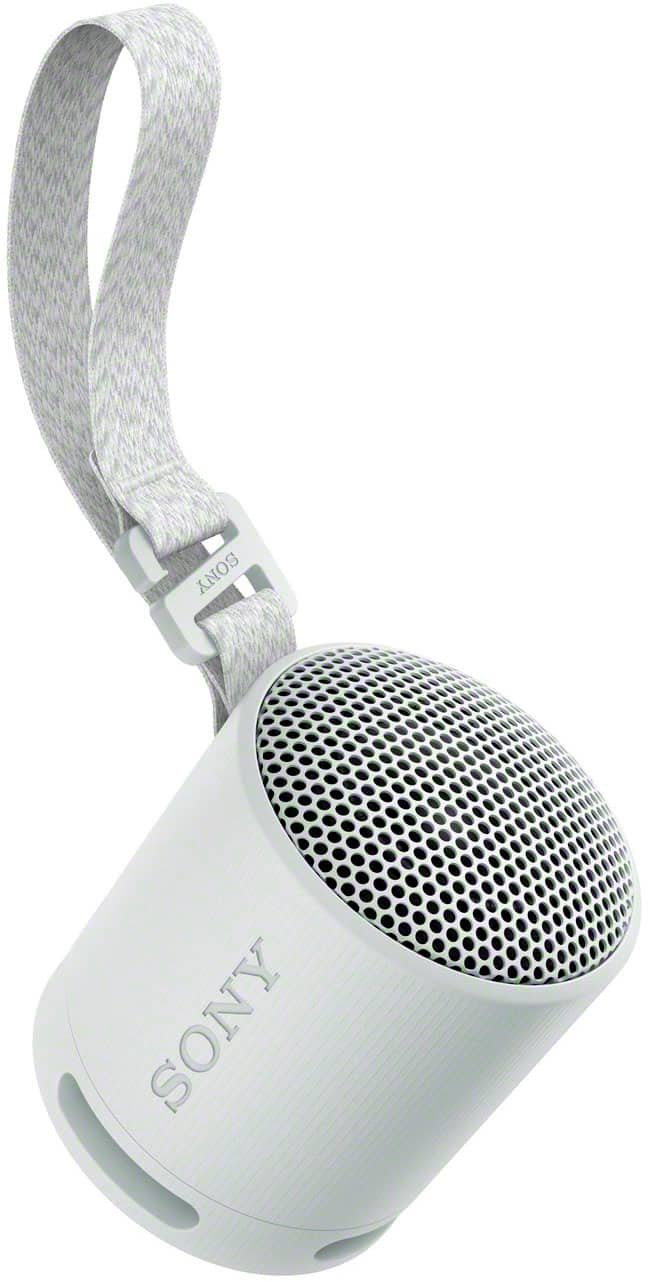
In contrast, the Sony XB100 weighs just 274 grams and fits in large pockets or easily disappears into any bag. Sony clearly designed this for people who prioritize convenience above all else. The compact cylindrical design looks rugged and built to survive being tossed around, which matches its intended use case perfectly.
These design decisions cascade into every other aspect of performance. The JBL Charge 6 has room for larger drivers and a bigger battery, while the Sony XB100 must accomplish everything within severe space constraints.
The JBL Charge 6 uses a sophisticated 2-way system featuring a specially designed oval woofer measuring 53mm x 93mm paired with a 20mm dome tweeter. This dual-driver approach allows each component to focus on what it does best – the woofer handles bass and midrange frequencies, while the tweeter reproduces crisp highs. The system delivers 45 watts RMS total power (30 watts to the woofer, 15 watts to the tweeter), which provides substantial headroom for dynamic music without distortion.
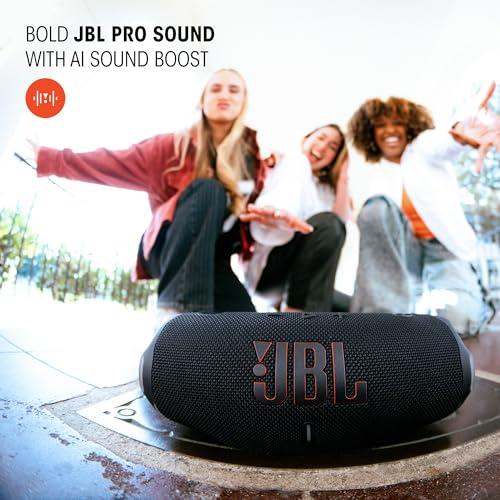
JBL's AI Sound Boost technology represents a significant advancement in portable speaker engineering. This proprietary algorithm analyzes incoming audio in real-time and adjusts the drivers accordingly to maximize performance while preventing distortion. Think of it as having an audio engineer constantly optimizing your music as it plays. This technology allows the Charge 6 to play louder and cleaner than speakers with similar power ratings.
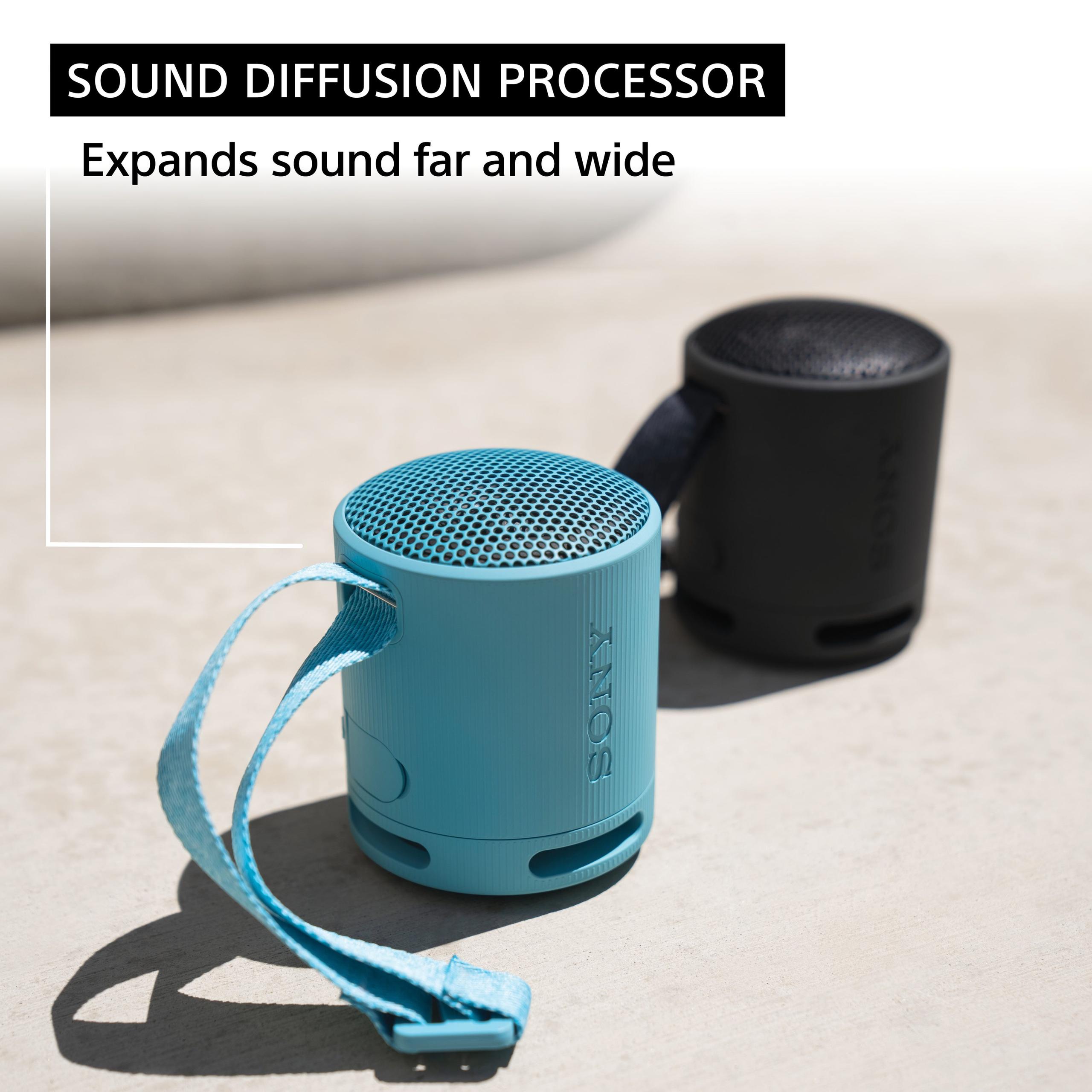
The Sony XB100, constrained by its compact size, takes a different approach with a single full-range driver accompanied by a passive radiator. A passive radiator looks like a speaker driver but doesn't have a voice coil or magnet – instead, it vibrates in response to the main driver's movement, effectively extending bass response without requiring additional power or space. Sony's Sound Diffusion Processor spreads the audio more evenly despite the upward-firing design, creating a surprisingly wide soundstage for such a small speaker.
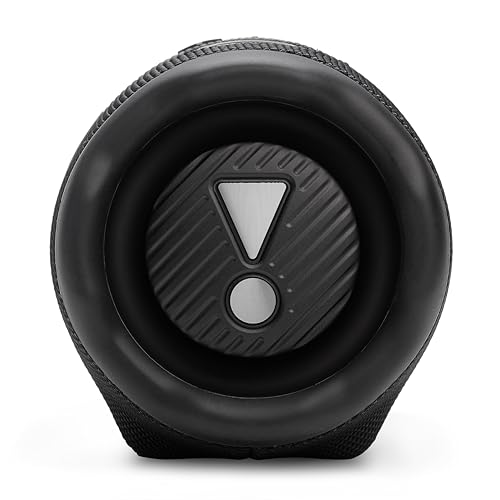
Bass performance often makes or breaks portable speakers because reproducing low frequencies requires moving substantial amounts of air – something small speakers struggle with. The JBL Charge 6 extends down to 56Hz with authority, thanks to its larger woofer and dual passive radiators positioned on opposite sides of the enclosure. This configuration creates room-filling bass that remains controlled and doesn't muddy the midrange, even at high volumes.
The Sony XB100's bass response impresses for its size, with the passive radiator helping the tiny driver produce surprisingly deep low-end. Sony's Extra Bass tuning emphasizes these frequencies to create impact that defies the speaker's dimensions. However, pushing the volume high causes the bass to become boomy and overwhelm other frequencies – a common limitation in ultra-compact speakers.
Midrange frequencies carry most vocal content and many instrumental details, making this range crucial for speech clarity and musical enjoyment. The JBL Charge 6's dedicated woofer handles midrange with aplomb, providing clear separation between bass and treble that keeps vocals prominent in the mix. This clarity makes it excellent for everything from podcasts to complex musical arrangements.
The Sony XB100 produces surprisingly clear midrange considering its single-driver design, though the emphasis on bass can sometimes crowd vocal frequencies. For podcast listening and simple musical content, it performs admirably, but complex orchestral pieces or dense rock mixes can sound congested compared to the Charge 6's more sophisticated driver arrangement.
Maximum volume matters for outdoor use and larger spaces, but how cleanly a speaker handles high volumes matters more. The JBL Charge 6 can genuinely fill medium-sized rooms and outdoor areas without strain, maintaining audio quality even when pushed hard. The AI Sound Boost technology prevents the harsh compression that plagues many speakers at high volumes.
The Sony XB100 gets surprisingly loud for its size but shows its limitations when pushed to maximum volume. The single driver can't maintain the same level of clarity and separation, particularly with vocal-heavy content. It's perfectly adequate for personal listening and small spaces but can't compete with larger speakers in demanding situations.
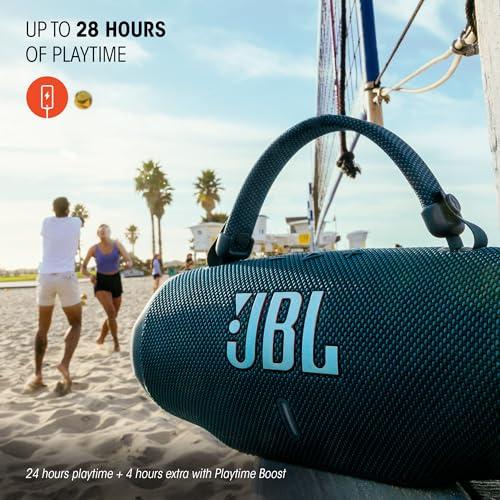
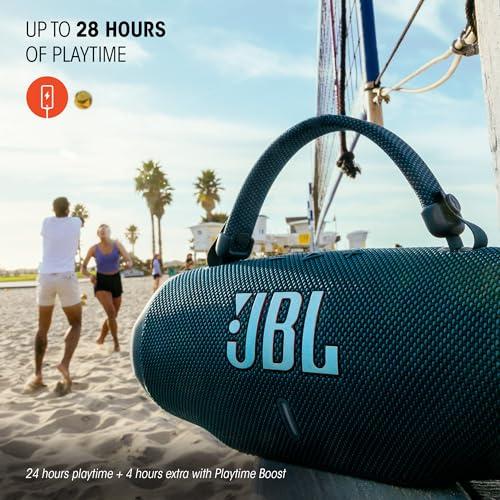
Battery life often determines whether a speaker truly qualifies as "portable" for your use case. The JBL Charge 6 excels here with up to 24 hours of standard playback, extendable to 28 hours using Playtime Boost mode. Playtime Boost reduces bass output and lower-midrange frequencies to minimize power consumption – think of it as an eco mode for audio. Real-world testing suggests around 14 hours at full volume and nearly 19 hours with Playtime Boost enabled.
The speaker's 34Wh Li-ion polymer battery charges fully in about 3 hours, but the 10-minute quick charge feature provides 150 minutes of playback – perfect for those "oops, I forgot to charge it" moments. More impressively, the Charge 6 functions as a power bank, letting you charge smartphones and other devices via its USB-C port. This dual functionality proves invaluable during camping trips or long days away from power outlets.
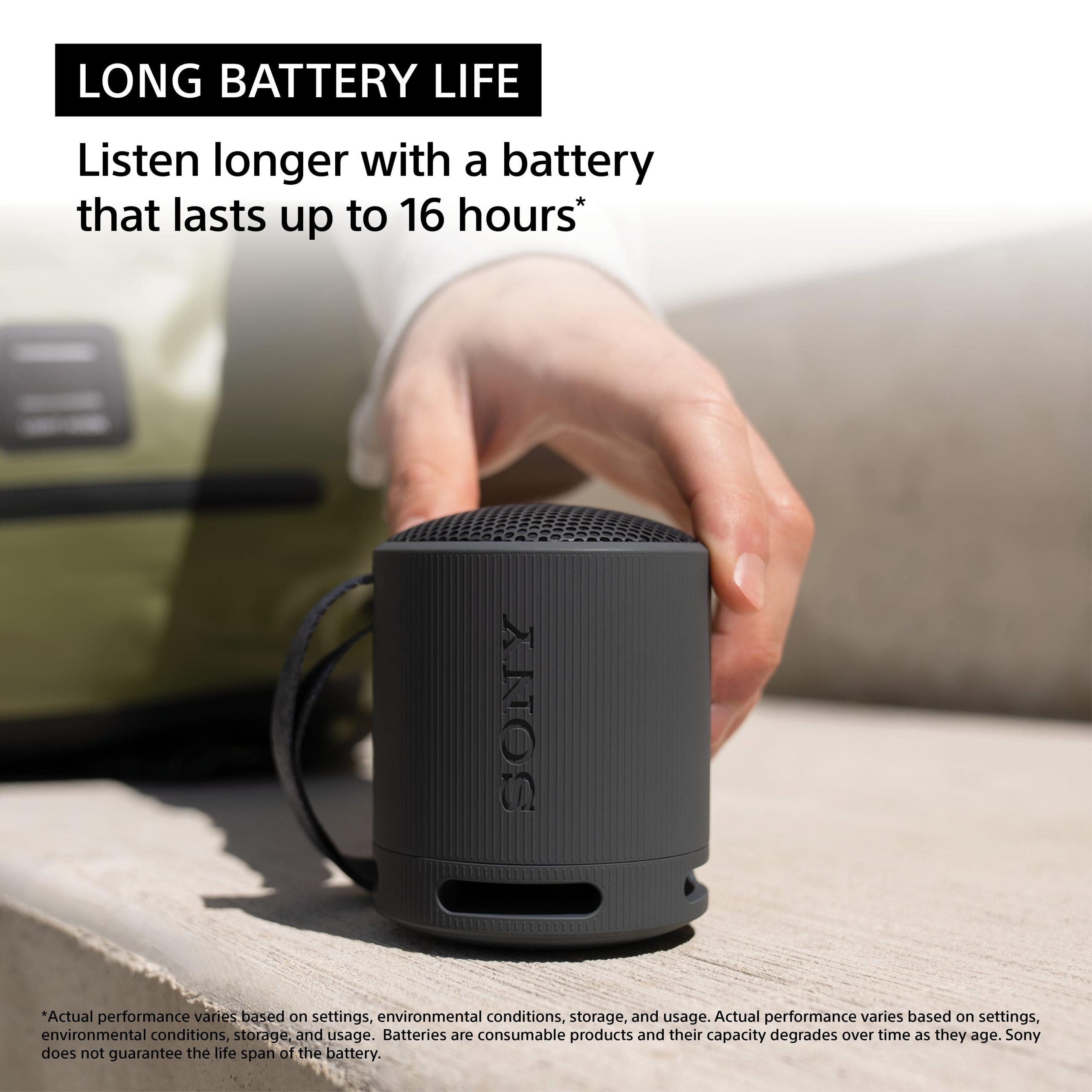
The Sony XB100 delivers 16 hours of playback, which is exceptional considering its tiny 2.5-watt power consumption. The more efficient operation means it charges faster too – just 2 hours for a full battery. While it can't match the Charge 6's endurance, it offers quicker turnaround between uses.
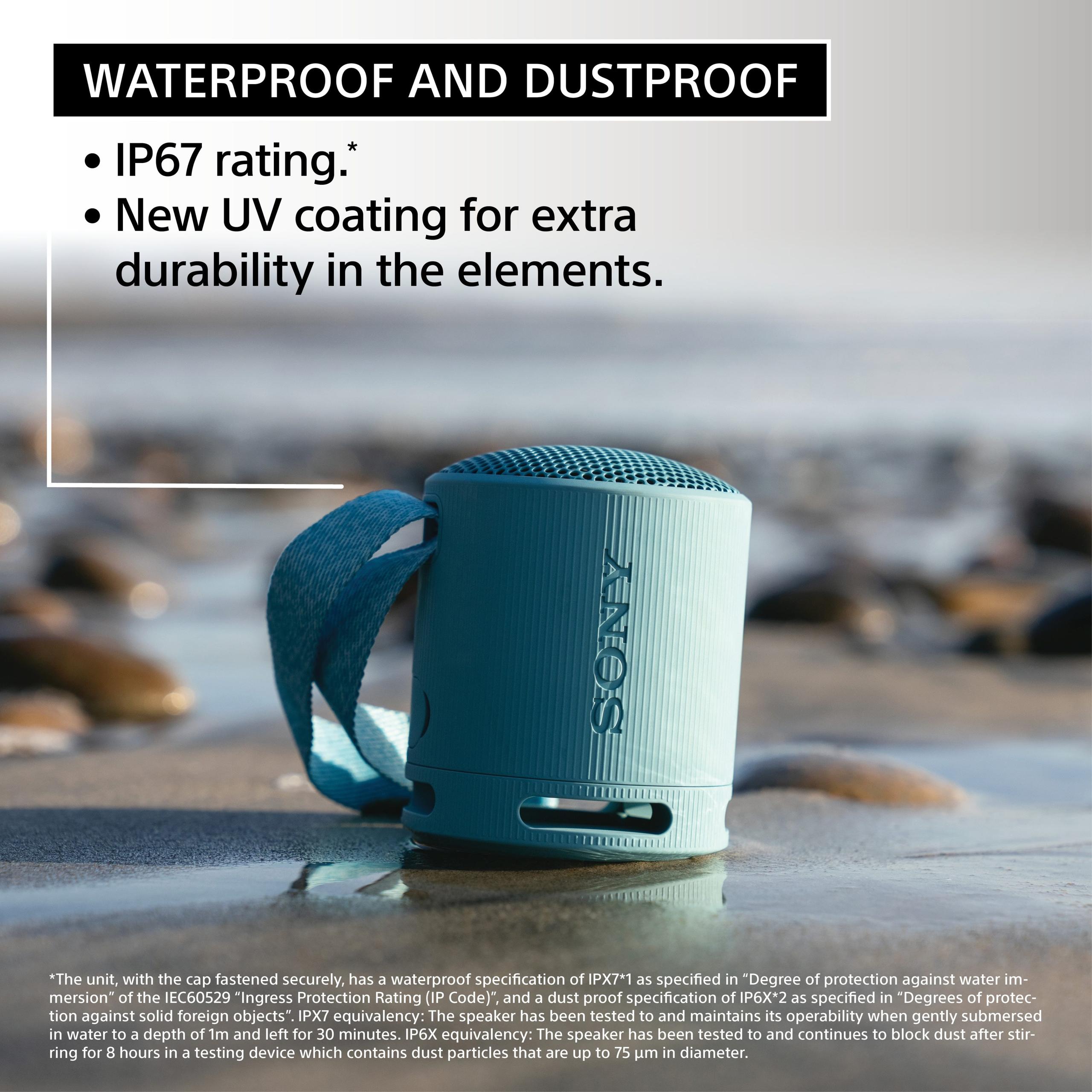
Both speakers feature IP67 ratings, meaning they're completely dust-tight and can survive submersion in up to 1 meter of water for 30 minutes. The JBL Charge 6 goes further with IP68 certification, allowing submersion up to 1.5 meters for 30 minutes. Perhaps more importantly, it's been drop-tested to survive 1-meter falls onto concrete – a realistic scenario for outdoor use.
The Sony XB100's compact design inherently makes it less vulnerable to drops, though Sony doesn't specify drop-test standards. Both speakers should survive typical beach, pool, and camping scenarios, but the Charge 6 provides more confidence for truly rugged use.
Modern portable speakers need to integrate seamlessly with our increasingly connected lives. The JBL Charge 6 uses Bluetooth 5.4 with support for connecting two devices simultaneously – useful for sharing control between friends or switching between phone and laptop audio. The Auracast technology enables connecting multiple compatible JBL speakers for expanded sound coverage, though this requires other Auracast-enabled devices.
More intriguingly, the Charge 6 supports lossless USB-C audio input up to 24-bit/192kHz resolution. This wired connection bypasses Bluetooth compression entirely, providing audiophile-quality playback when connected to compatible sources. For home use or critical listening, this elevates the speaker beyond typical portable limitations.
The Sony XB100 features Bluetooth 5.3 with basic connectivity and can stereo pair with another XB100 for wider soundstage. It includes Google Fast Pair for seamless Android device connection and supports voice assistants, though it lacks the broader ecosystem connectivity of JBL's approach.
The JBL Charge 6 integrates with the JBL Portable app, providing access to a comprehensive 7-band equalizer that allows precise sound customization. This level of control lets you optimize the speaker for different musical genres, acoustic environments, or personal preferences – something particularly valuable given the speaker's versatility.
The Sony XB100 connects to Sony's Music Center app primarily for firmware updates, with limited sound customization options. This simplified approach matches the speaker's focus on straightforward operation but limits personalization.
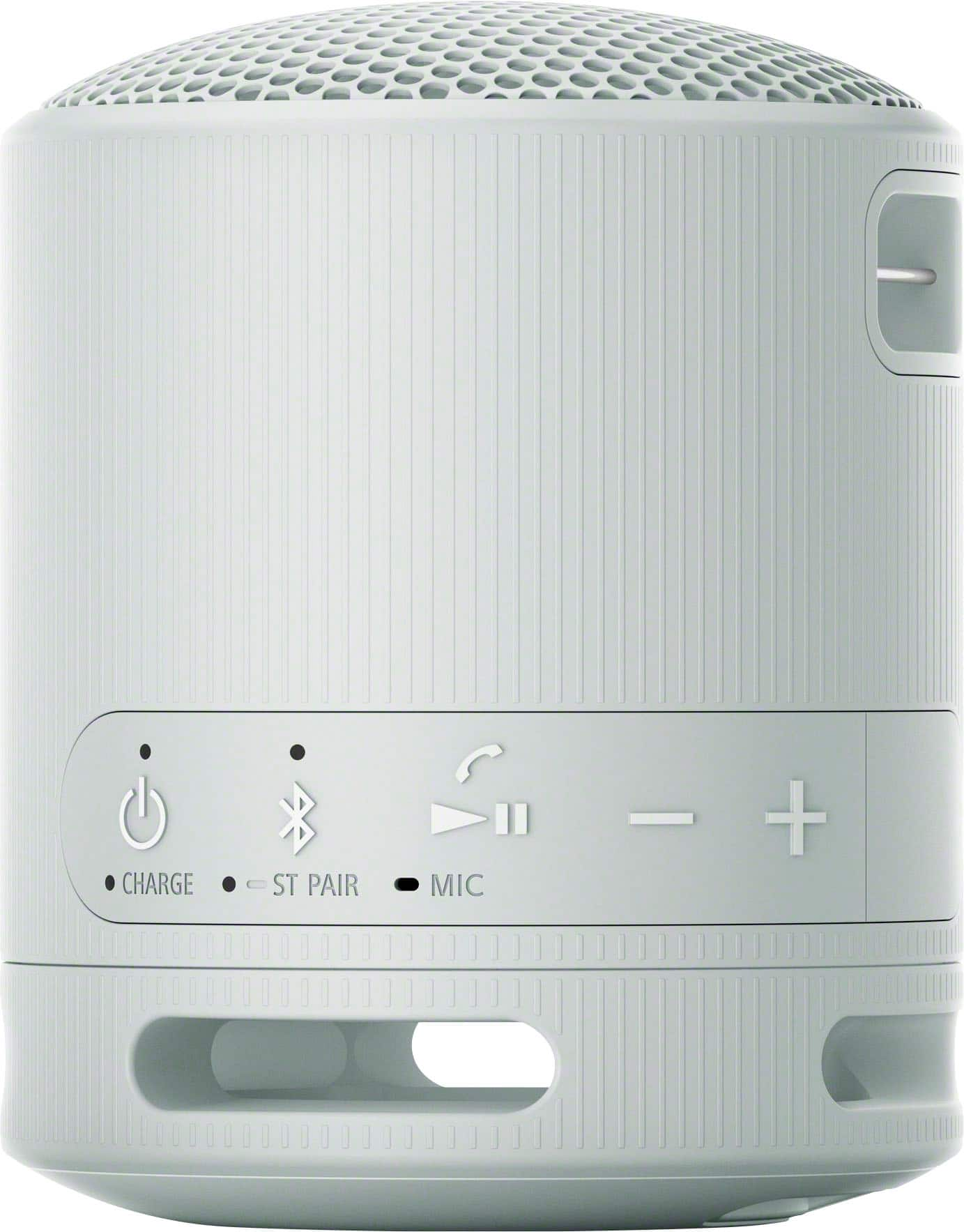
Interestingly, the Charge 6 lacks a microphone for hands-free calling, while the XB100 includes echo cancellation technology for clearer phone conversations. This represents different priorities – JBL focused on audio quality and utility features, while Sony included practical communication capabilities.
For home theater supplementation, the JBL Charge 6 offers genuine value through its lossless USB-C connection and balanced sound signature. While it can't replace a proper surround sound system, it significantly improves dialogue clarity and adds bass impact when placed appropriately. The 7-band EQ allows optimization for your room's acoustics.
The Sony XB100 works better as a personal audio device for laptops or tablets rather than home theater enhancement. Its compact size makes it perfect for desktop use or small bedroom setups where space matters more than ultimate performance.
The JBL Charge 6 excels for car camping, beach days, and backyard gatherings where you want quality audio without worrying about battery life. The power bank function eliminates the need for separate charging devices, and the robust construction handles environmental challenges confidently.
For backpacking, business travel, or daily commuting, the Sony XB100's ultra-portable design proves invaluable. It provides adequate audio quality without the weight penalty of larger speakers, and the faster charging means less planning required.
At the time of writing, the JBL Charge 6 commands a premium price that reflects its advanced features and superior performance. The combination of exceptional battery life, power bank functionality, lossless audio support, and sophisticated sound processing justifies the higher cost for users who need these capabilities.
The Sony XB100 represents outstanding value in the ultra-portable category, often available at significant discounts that make it incredibly affordable. For personal listening and basic portable audio needs, it delivers performance that far exceeds its price point.
Choose the JBL Charge 6 if you frequently entertain others, spend extended time outdoors, or want one speaker that handles multiple scenarios excellently. The superior sound quality, extensive battery life, and utility features make it worthwhile for users who prioritize performance and versatility over absolute portability.
The Sony XB100 makes sense for travelers, commuters, students, or anyone who values convenience above all else. If you primarily listen alone, need something truly portable, or have budget constraints, it provides remarkable capability in an incredibly small package.
Both speakers succeed in their intended roles, but understanding your primary use case determines which philosophy serves you better. The Charge 6 asks you to carry more weight and spend more money in exchange for superior performance and features. The XB100 prioritizes convenience and affordability while maintaining acceptable audio quality for personal use.
Consider how and where you'll actually use your speaker most often – that usage pattern should drive your decision more than any technical specification or review recommendation.
| JBL Charge 6 | Sony XB100 |
|---|---|
| Audio Power Output - Determines maximum volume and room-filling capability | |
| 45W RMS total (30W woofer + 15W tweeter) with AI Sound Boost processing | 2.5W with passive radiator bass enhancement |
| Driver Configuration - Affects sound quality and frequency separation | |
| 2-way system: 53mm x 93mm oval woofer + 20mm tweeter with dual passive radiators | Single full-range driver with one passive radiator |
| Frequency Response - Shows how deep the bass goes and how crisp the highs are | |
| 56Hz - 20kHz (excellent bass extension for portable speaker) | 20Hz - 20kHz (impressive specs for size, though real-world bass limited) |
| Battery Life - Critical for outdoor use and all-day listening | |
| Up to 24 hours standard (28 hours with Playtime Boost power-saving mode) | 16 hours (excellent for ultra-compact size) |
| Charging Time - How long you wait between uses | |
| 3 hours full charge (10-minute quick charge = 150 minutes playback) | 2 hours full charge (faster turnaround) |
| Weight & Dimensions - Determines true portability | |
| 990g (2.18 lbs) / 228.8 x 98.5 x 94.0 mm - requires bag space | 274g (0.6 lbs) / 76mm diameter x 95mm height - fits large pockets |
| Water & Dust Protection - Survival rating for outdoor adventures | |
| IP68 (submersion up to 1.5m for 30 minutes) + 1-meter drop-proof tested | IP67 (submersion up to 1m for 30 minutes) |
| Bluetooth Version - Affects connection stability and battery efficiency | |
| Bluetooth 5.4 with dual-device pairing and Auracast multi-speaker connectivity | Bluetooth 5.3 with basic connectivity and stereo pairing |
| Power Bank Function - Charges your devices on the go | |
| Yes, via USB-C port (major advantage for camping/travel) | No power bank capability |
| Audio Customization - Lets you tune sound to your preferences | |
| 7-band equalizer via JBL Portable app with preset options | No EQ customization available in Sony Music Center app |
| Wired Audio Input - For highest quality playback without Bluetooth compression | |
| USB-C lossless audio up to 24-bit/192kHz (audiophile-quality connection) | No wired audio input option |
| Hands-Free Calling - Important for conference calls and voice chats | |
| No built-in microphone | Echo cancellation technology with voice assistant support |
| Multi-Speaker Pairing - Expand your sound system | |
| Auracast technology connects multiple compatible JBL speakers | Stereo pairing with another XB100 only |
The JBL Charge 6 delivers significantly better overall sound quality with its 2-way driver system featuring a dedicated woofer and tweeter. This setup provides clearer separation between bass, mids, and treble compared to the Sony XB100's single full-range driver. The Charge 6 also offers 45W of power versus the XB100's 2.5W, resulting in fuller, more dynamic sound that can fill larger spaces without distortion.
The JBL Charge 6 is the clear winner for parties and outdoor gatherings. Its 45W output can easily fill outdoor spaces and handle background noise, while the 24-28 hour battery life ensures it won't die mid-party. The Sony XB100 works better for personal listening or very small groups, as its compact size and 2.5W output aren't designed for larger gatherings.
The JBL Charge 6 offers superior battery performance with up to 24 hours of standard playback (28 hours with Playtime Boost mode). The Sony XB100 provides 16 hours of playback, which is still excellent for its ultra-compact size. However, the Charge 6 also functions as a power bank to charge your devices, while the XB100 focuses purely on speaker functionality.
The Sony XB100 wins on portability, weighing just 274g and fitting easily in large pockets or small bag compartments. The JBL Charge 6 at 990g requires dedicated bag space and conscious packing decisions. For daily commuting, business travel, or backpacking, the XB100's ultra-compact design makes it the more practical choice.
The JBL Charge 6 works well as a TV audio supplement thanks to its lossless USB-C audio input and balanced sound signature that improves dialogue clarity. The 7-band EQ allows room optimization for better performance. The Sony XB100 is better suited for personal devices like laptops or tablets rather than home theater enhancement, though it can provide basic audio improvement for small bedroom setups.
Both speakers are well-suited for water activities, but the JBL Charge 6 has a slight edge with its IP68 rating allowing submersion up to 1.5 meters for 30 minutes, compared to the Sony XB100's IP67 rating (1 meter submersion). The Charge 6 has also been drop-tested from 1 meter, making it more durable for rough outdoor use around pools and beaches.
The Sony XB100 includes a built-in microphone with echo cancellation technology, making it excellent for hands-free calls and voice assistant use. Surprisingly, the JBL Charge 6 lacks a microphone entirely, focusing instead on audio playback quality and utility features. If conference calls or voice commands are important, the XB100 is the better choice.
Yes, both support multi-speaker connectivity but with different approaches. The JBL Charge 6 uses Auracast technology to connect with other compatible JBL speakers for expanded coverage. The Sony XB100 can stereo pair with another XB100 for wider soundstage but doesn't connect with other Sony speaker models. The JBL offers more ecosystem flexibility.
The Sony XB100 charges faster at 2 hours for a full battery, while the JBL Charge 6 takes 3 hours. However, the Charge 6 offers superior quick charging with 10 minutes providing 150 minutes of playback. For spontaneous use, both work well, but the XB100's faster full charge gives it an edge for frequent travelers.
The JBL Charge 6 produces deeper, more controlled bass thanks to its larger woofer and dual passive radiators, extending down to 56Hz. The Sony XB100 delivers impressive bass for its size using Extra Bass tuning and a passive radiator, but it can become boomy at high volumes and doesn't match the Charge 6's low-end extension or control.
This depends on your needs. The Sony XB100 provides exceptional value for ultra-portable use, delivering surprisingly good performance at a budget-friendly price point. The JBL Charge 6 costs more but justifies the premium with superior sound quality, much longer battery life, power bank functionality, and advanced features like lossless USB-C audio and comprehensive app control.
The JBL Charge 6 excels here with its USB-C lossless audio input supporting up to 24-bit/192kHz resolution, bypassing Bluetooth compression entirely. The Sony XB100 relies solely on Bluetooth connectivity with SBC and AAC codec support, which compresses audio quality. For audiophile listening or connecting to high-quality sources, the Charge 6 is the clear winner.
We've done our best to create useful and informative comparisons to help you decide what product to buy. Our research uses advanced automated methods to create this comparison and perfection is not possible - please contact us for corrections or questions. These are the sites we've researched in the creation of this article: rtings.com - youtube.com - stereoguide.com - whathifi.com - youtube.com - elomymelo.com - soundguys.com - elomymelo.com - wifihifi.com - soundguys.com - jbl.com - whathifi.com - soundguys.com - youtube.com - smarthomesounds.co.uk - jbl.com - sweetwater.com - youtube.com - bestbuy.com - jbl.com.sg - jbl.com - dell.com - ca.jbl.com - soundguys.com - soundguys.com - dell.com - techradar.com - bestbuy.com - bestbuy.com - tomsguide.com - electronics.sony.com - sony-asia.com - sony.com - sony.com - thesonyshop.ca - cornellstore.com - bestbuy.com

Privacy Policy
Terms and Conditions - Affiliate Policy
Home Security
© Copyright 2008-2026.
11816 Inwood Rd #1211, Dallas, TX 75244