

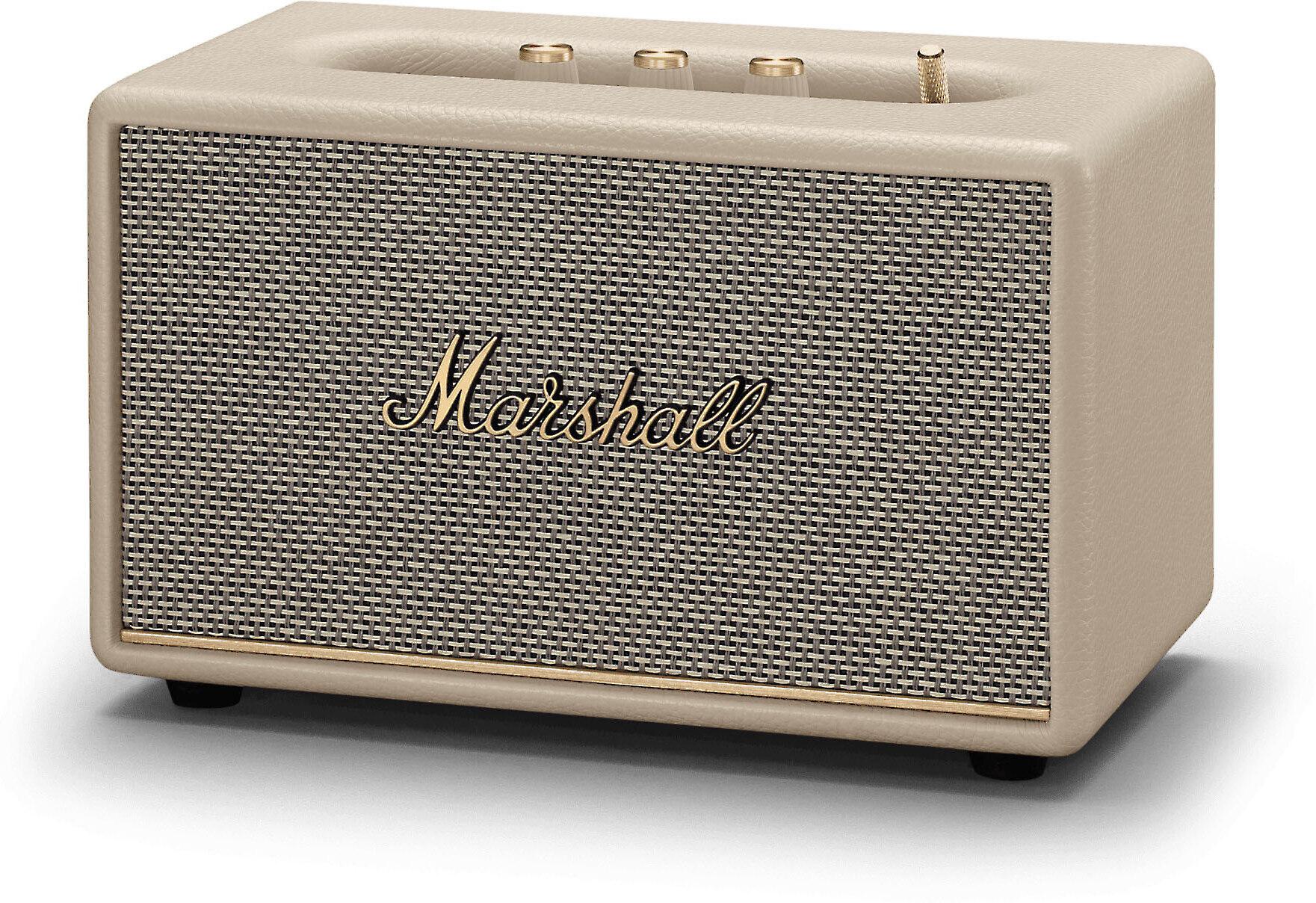
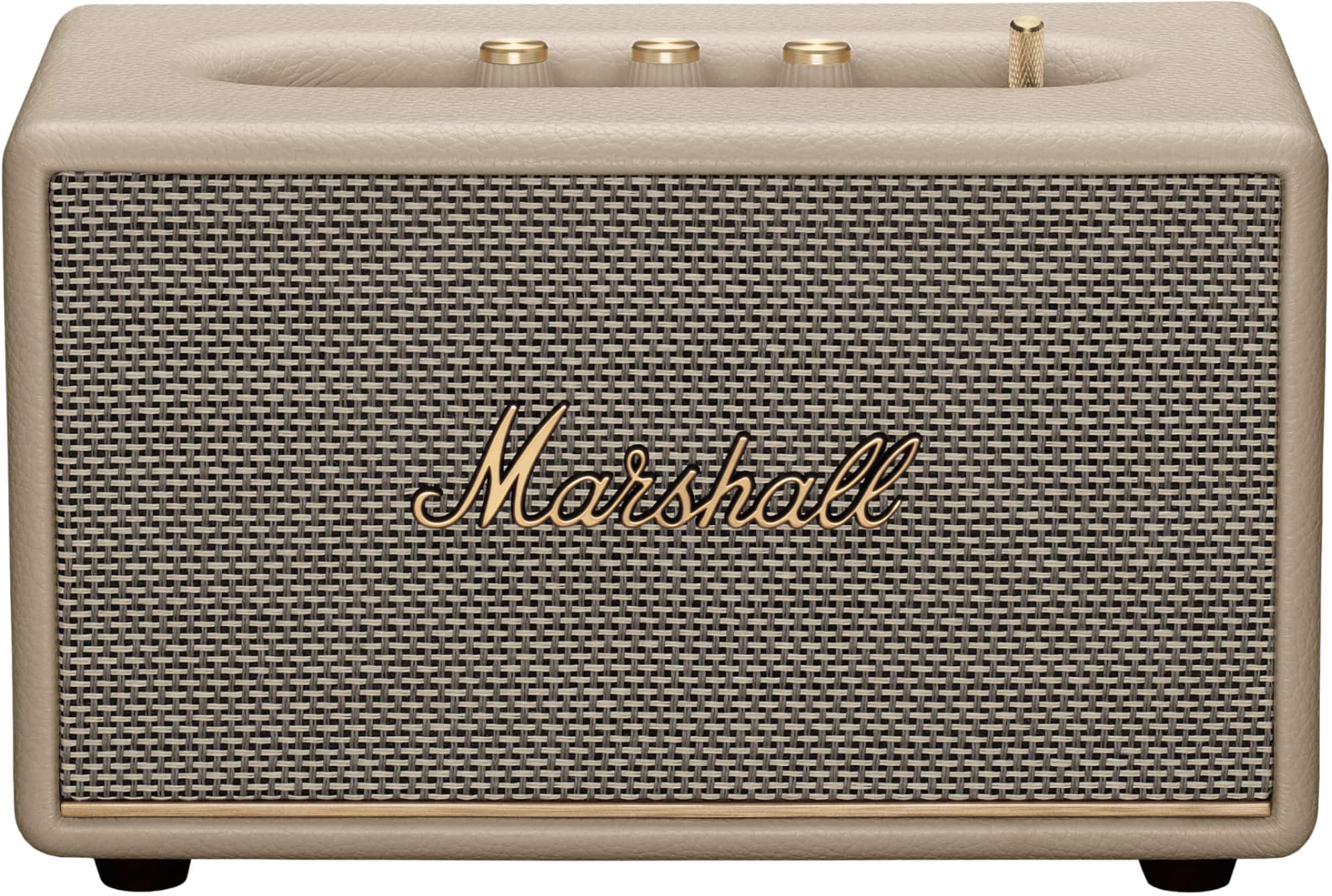
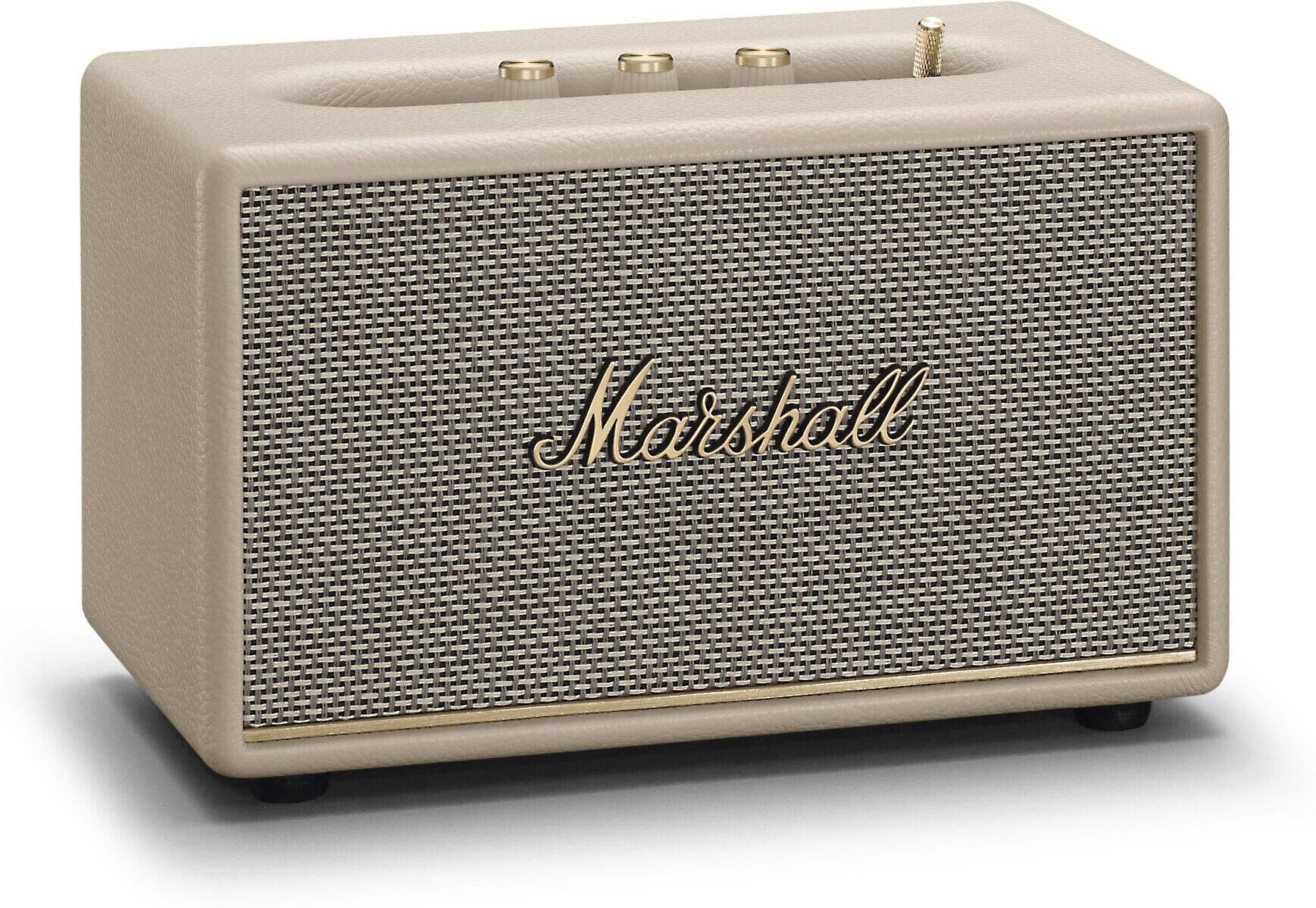
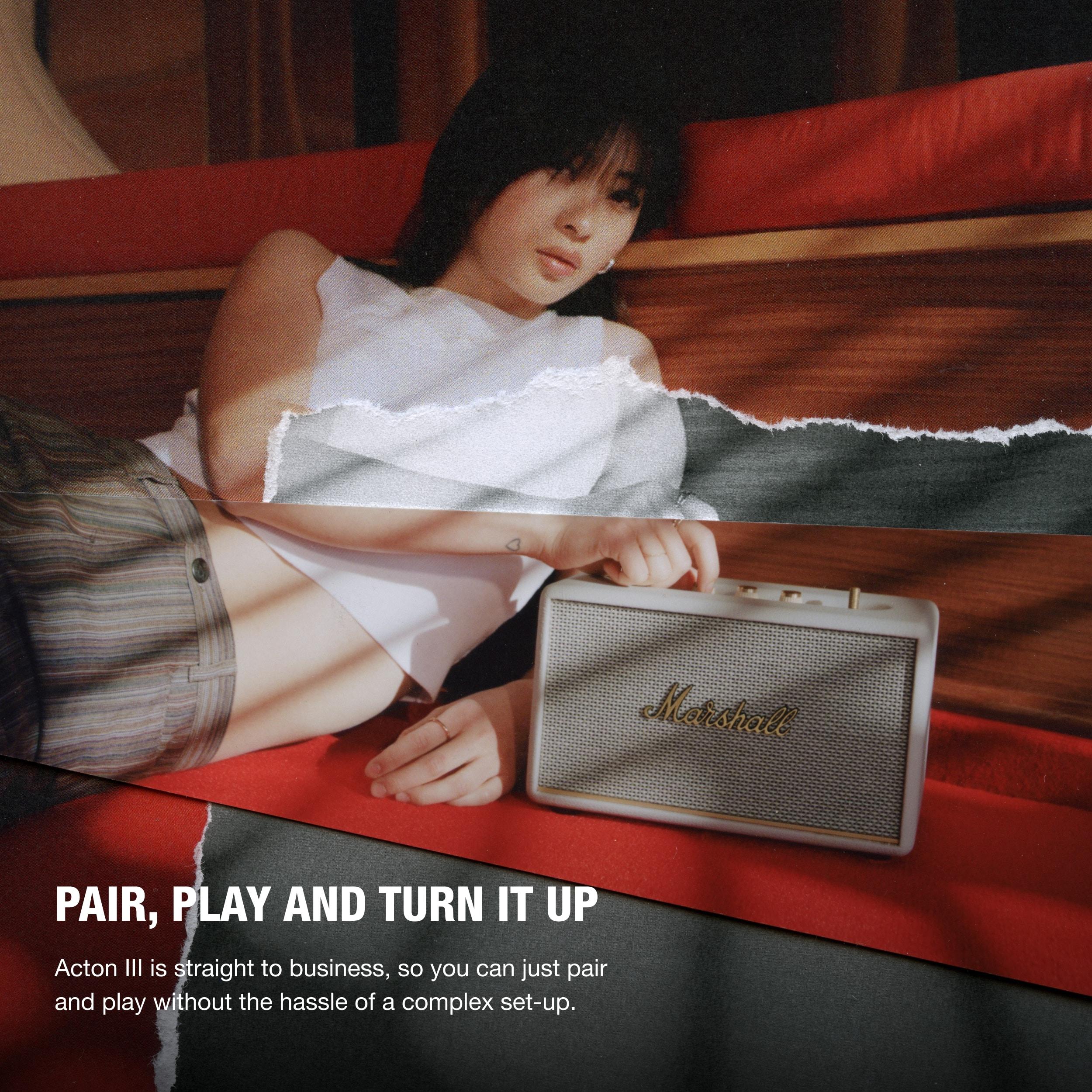
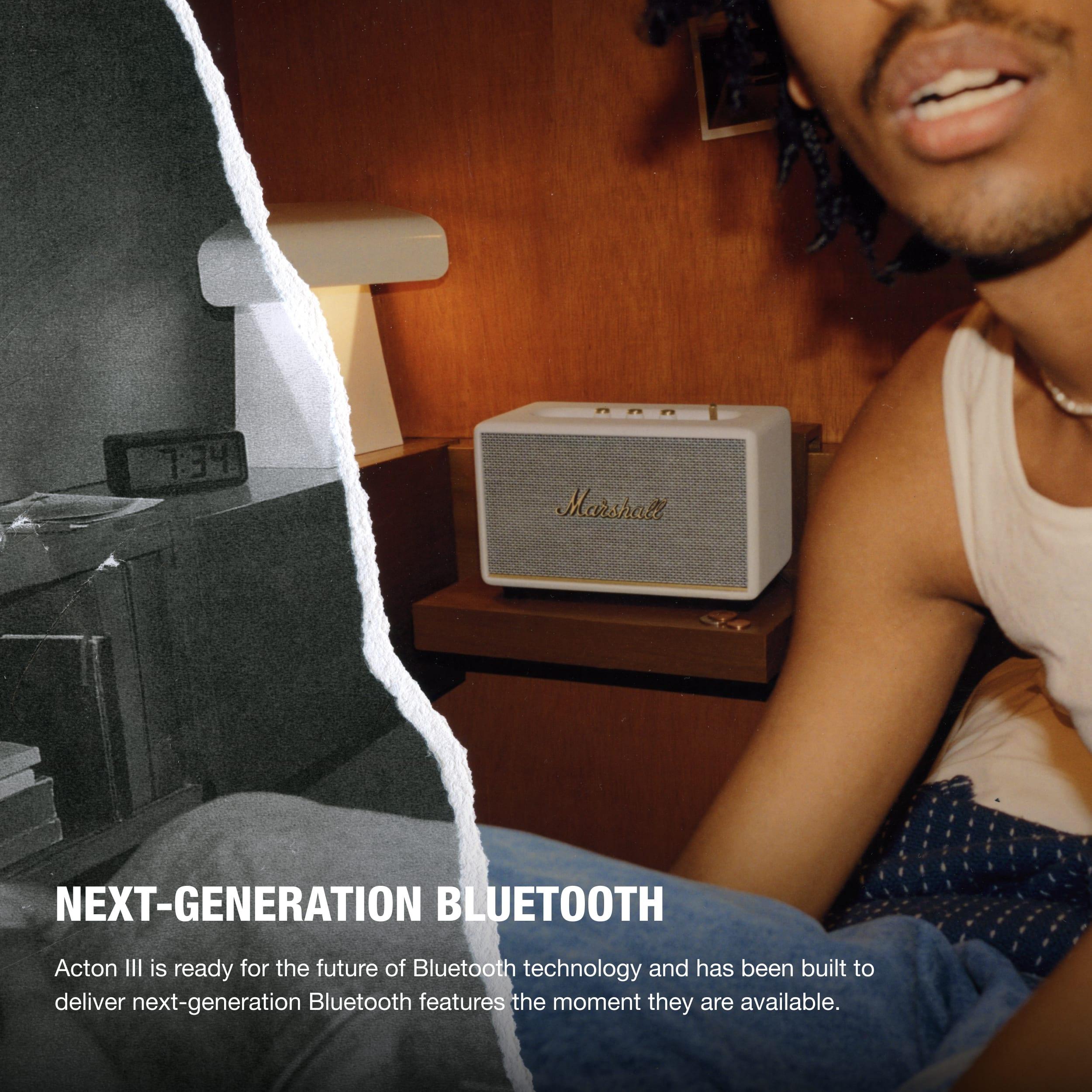
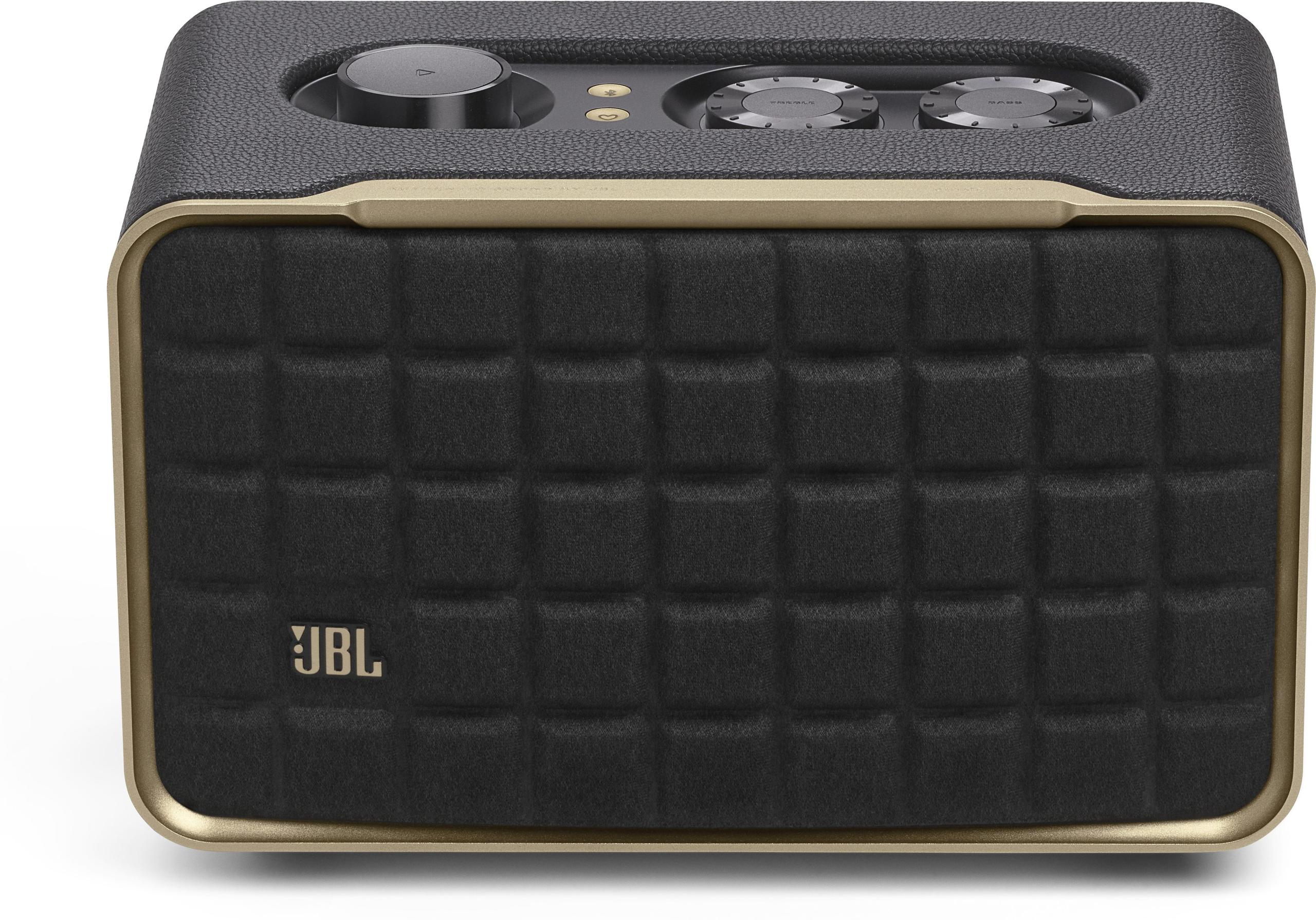
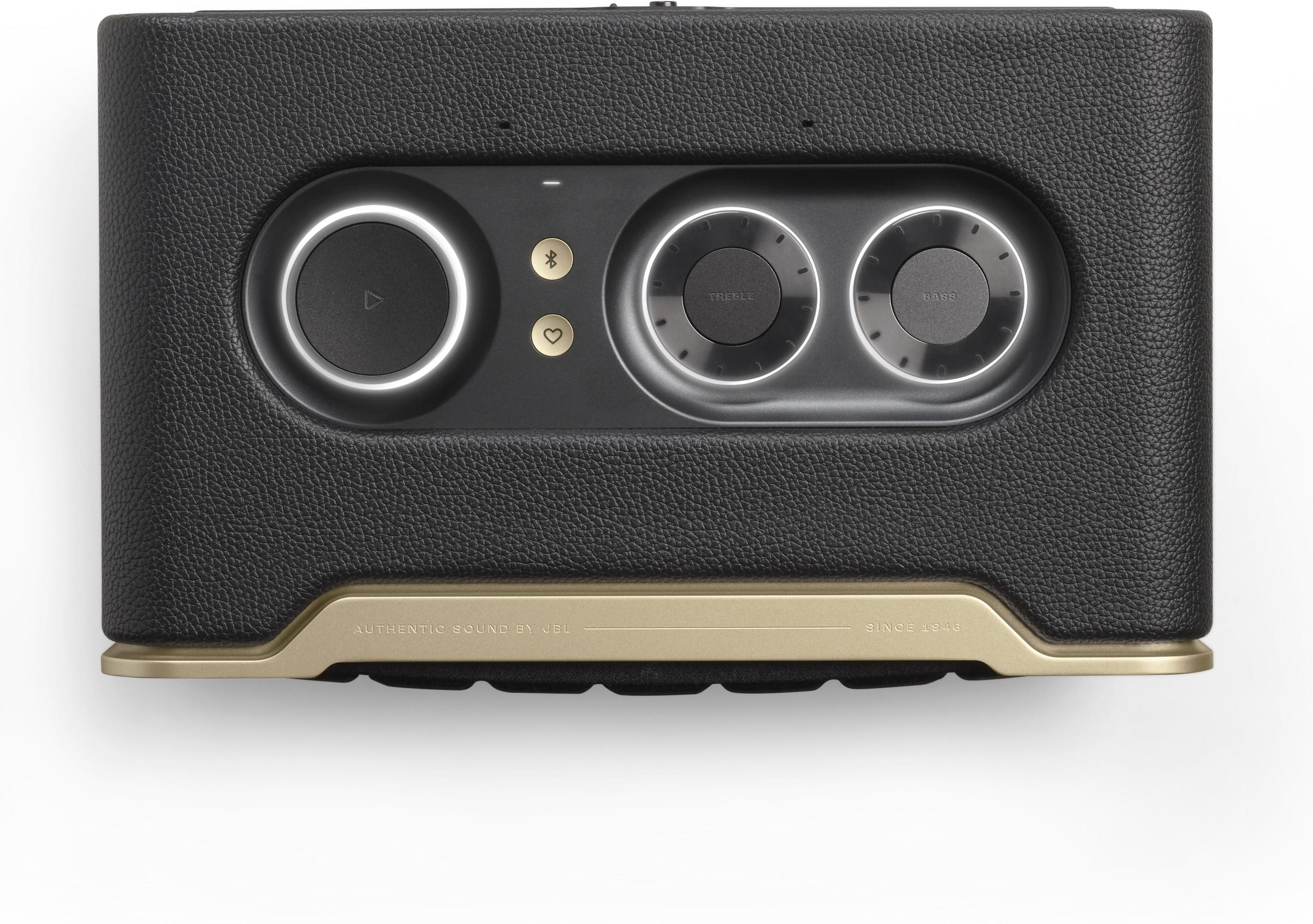
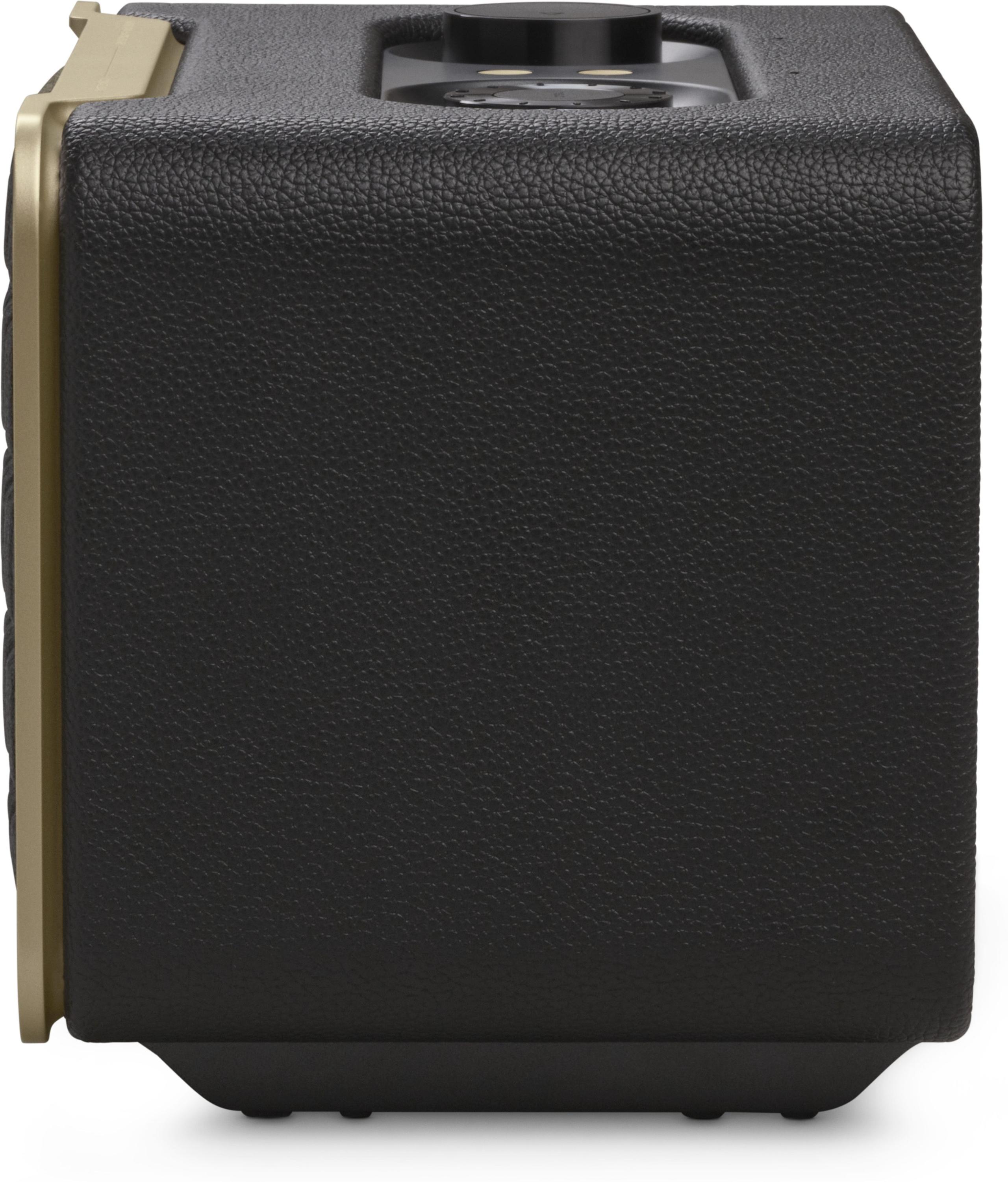
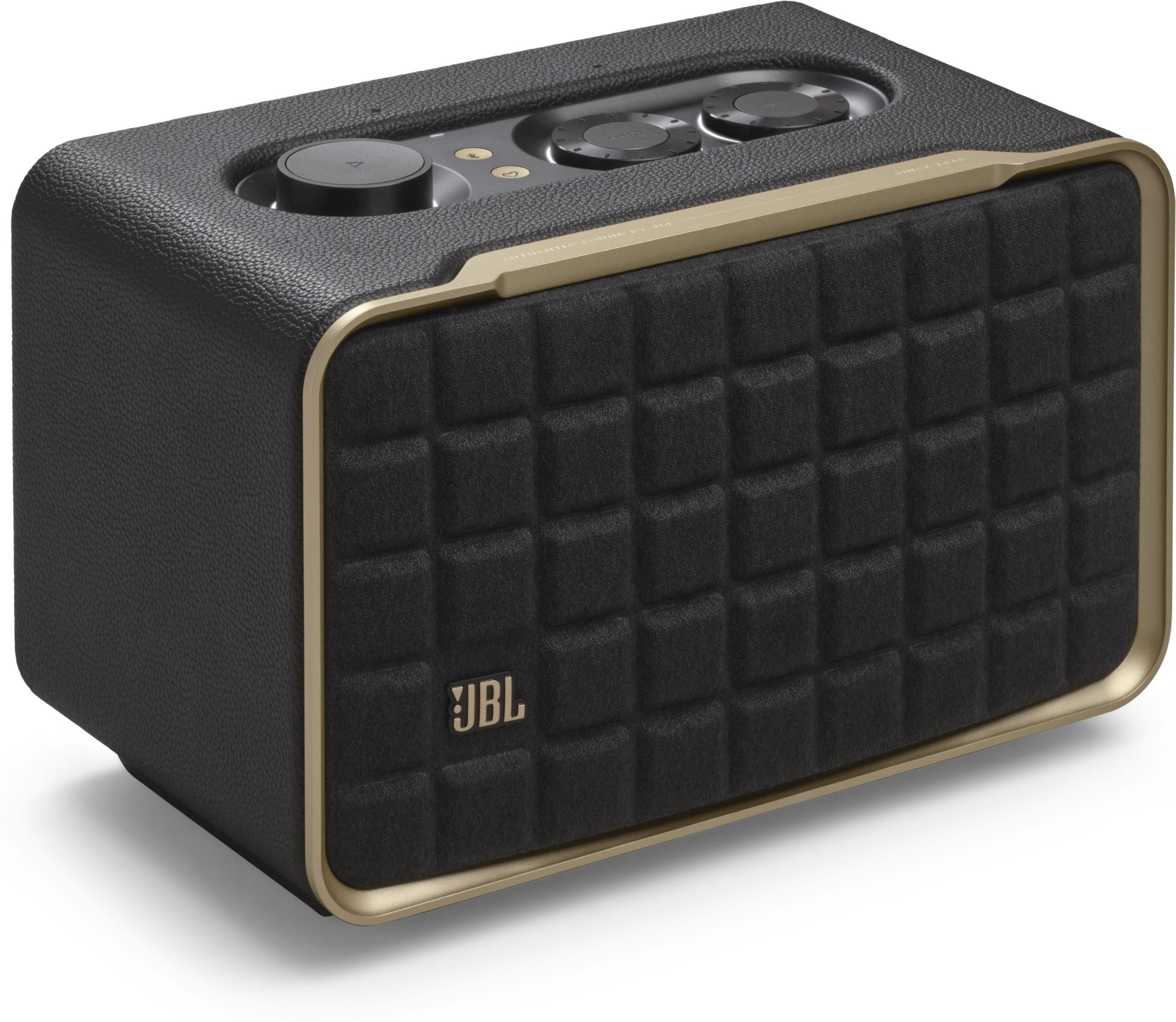
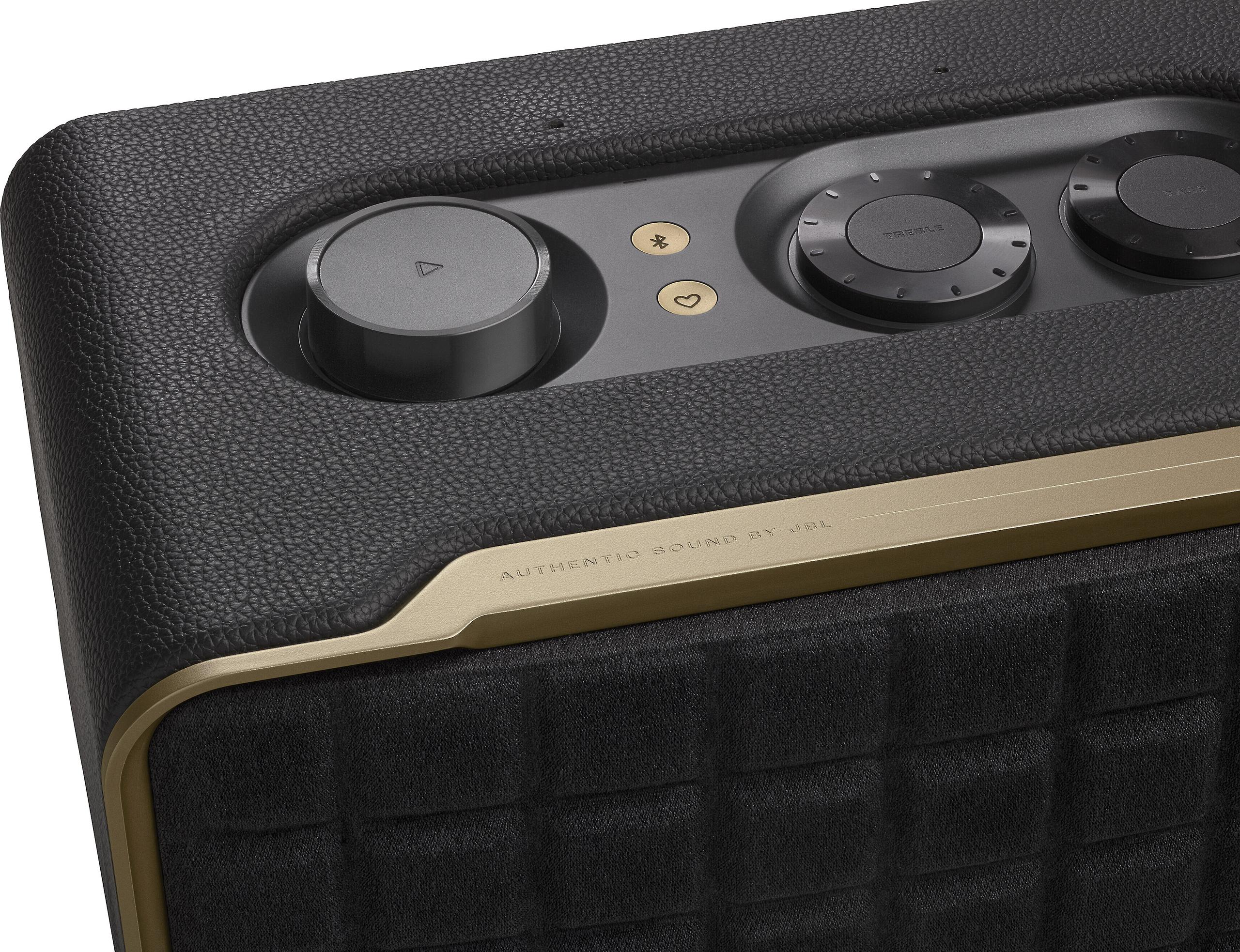
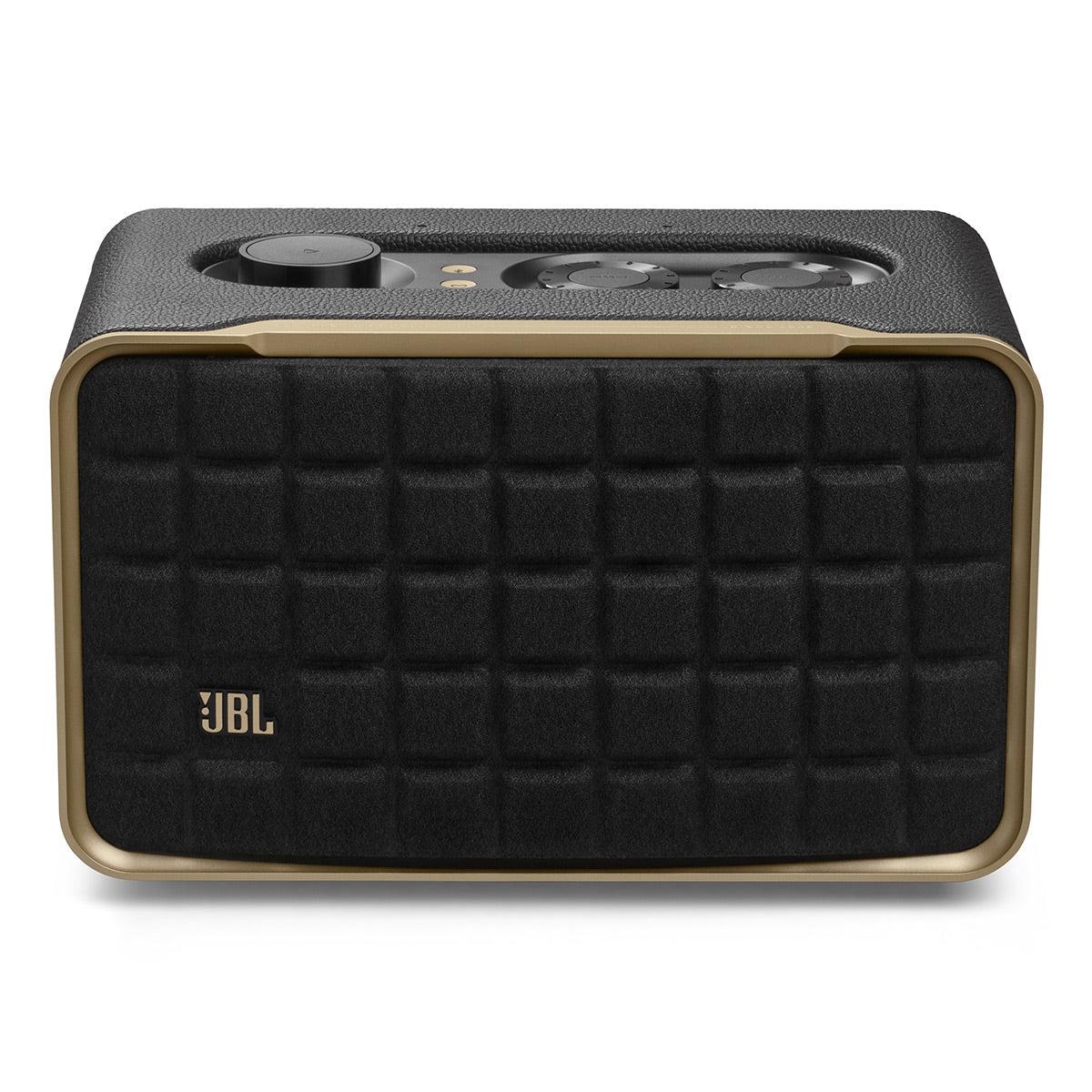
When it comes to filling your home with great sound, the Marshall Acton III ($279) and JBL Authentics 200 ($249) represent two distinct approaches to modern home audio. Both launched within the past two years - the Marshall in late 2022 and the JBL in 2023 - these speakers showcase how traditional audio brands are adapting to smart home demands while maintaining their signature sound qualities.
Home audio has changed dramatically in recent years. What started as simple Bluetooth speakers has evolved into sophisticated devices that can stream high-resolution audio, integrate with voice assistants, and form part of whole-home audio systems. Both these speakers reflect this evolution, though they take notably different approaches.
The Marshall Acton III maintains its heritage as a premium audio device first, with just enough modern features to stay relevant. Meanwhile, the JBL Authentics 200 embraces the full smart speaker experience while attempting to preserve the sound quality JBL is known for.
The raw numbers tell an interesting story. The Marshall delivers 60 watts through a carefully tuned system: one 30-watt amplifier driving the main woofer and two 15-watt amplifiers for the tweeters. This configuration, while not the most powerful, provides excellent stereo separation and clarity.
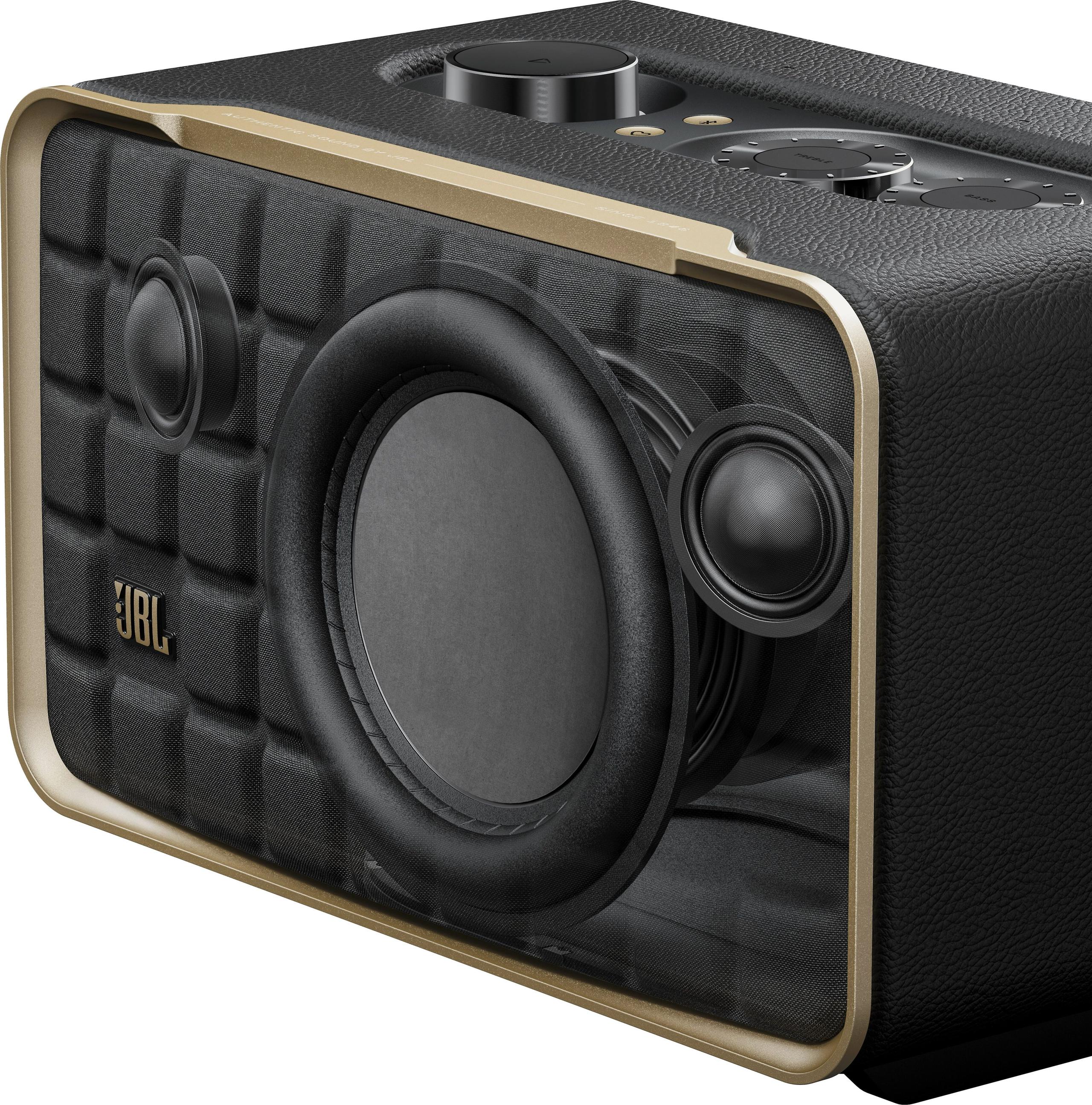
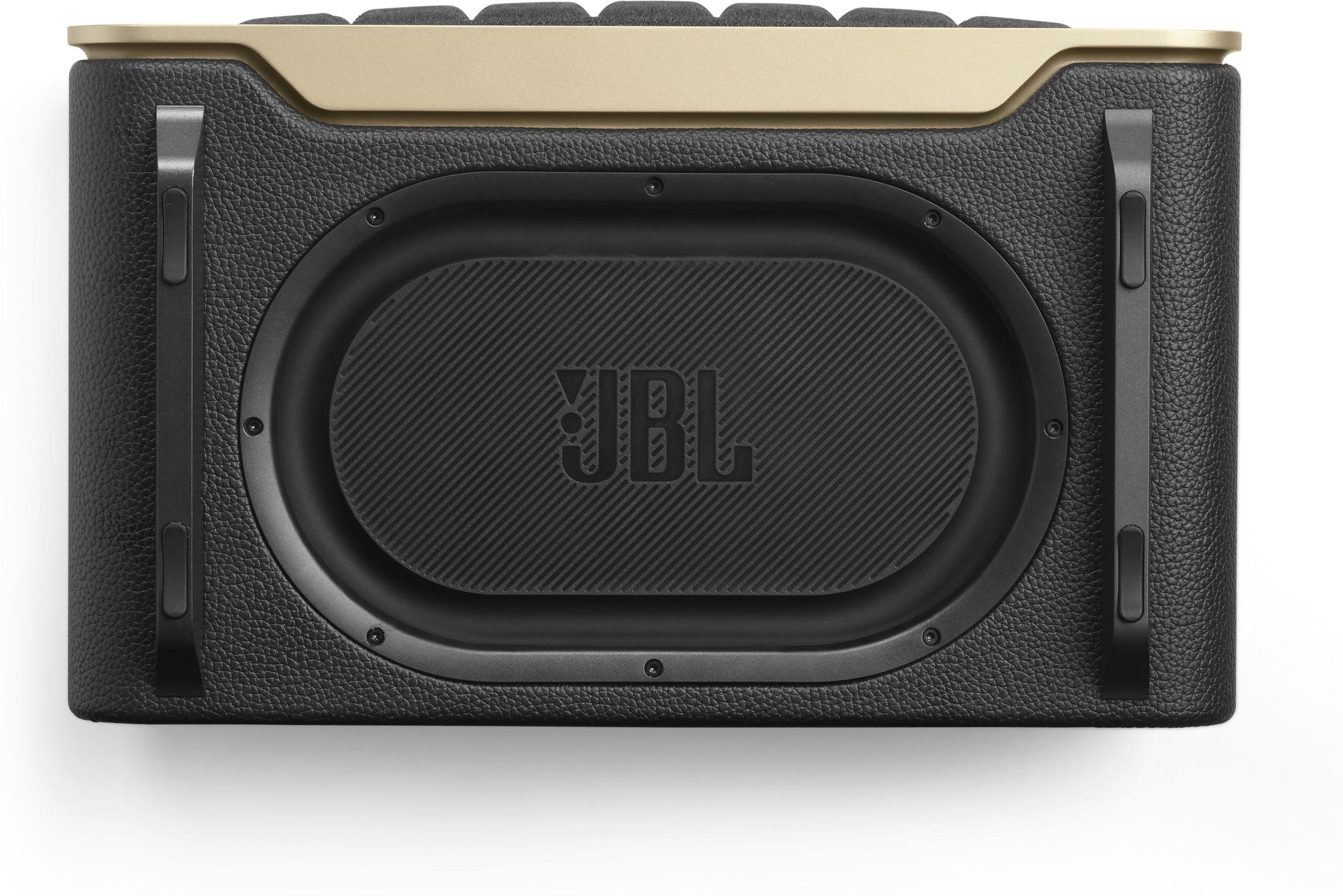
JBL takes a different approach with its 90-watt system, using larger drivers and adding a passive radiator for enhanced bass response. The passive radiator acts like an unpowered speaker cone that moves in response to air pressure from the powered woofer, effectively extending bass response without requiring additional amplification.
Having spent time with both speakers, their different sonic personalities become clear. The Marshall has that classic rock-ready sound signature - slightly warm in the midrange with a subtle emphasis on guitar frequencies that makes rock and acoustic music really shine. Its Dynamic Loudness feature, which automatically adjusts frequency response at different volumes, helps maintain sound quality even at lower listening levels.
The JBL presents a more neutral, modern sound profile. Its automatic self-tuning capability adjusts the speaker's output based on room placement, which is particularly useful if you tend to move your speaker around. The larger driver configuration gives it an advantage in larger rooms, while the Marshall might be better suited to medium-sized spaces.
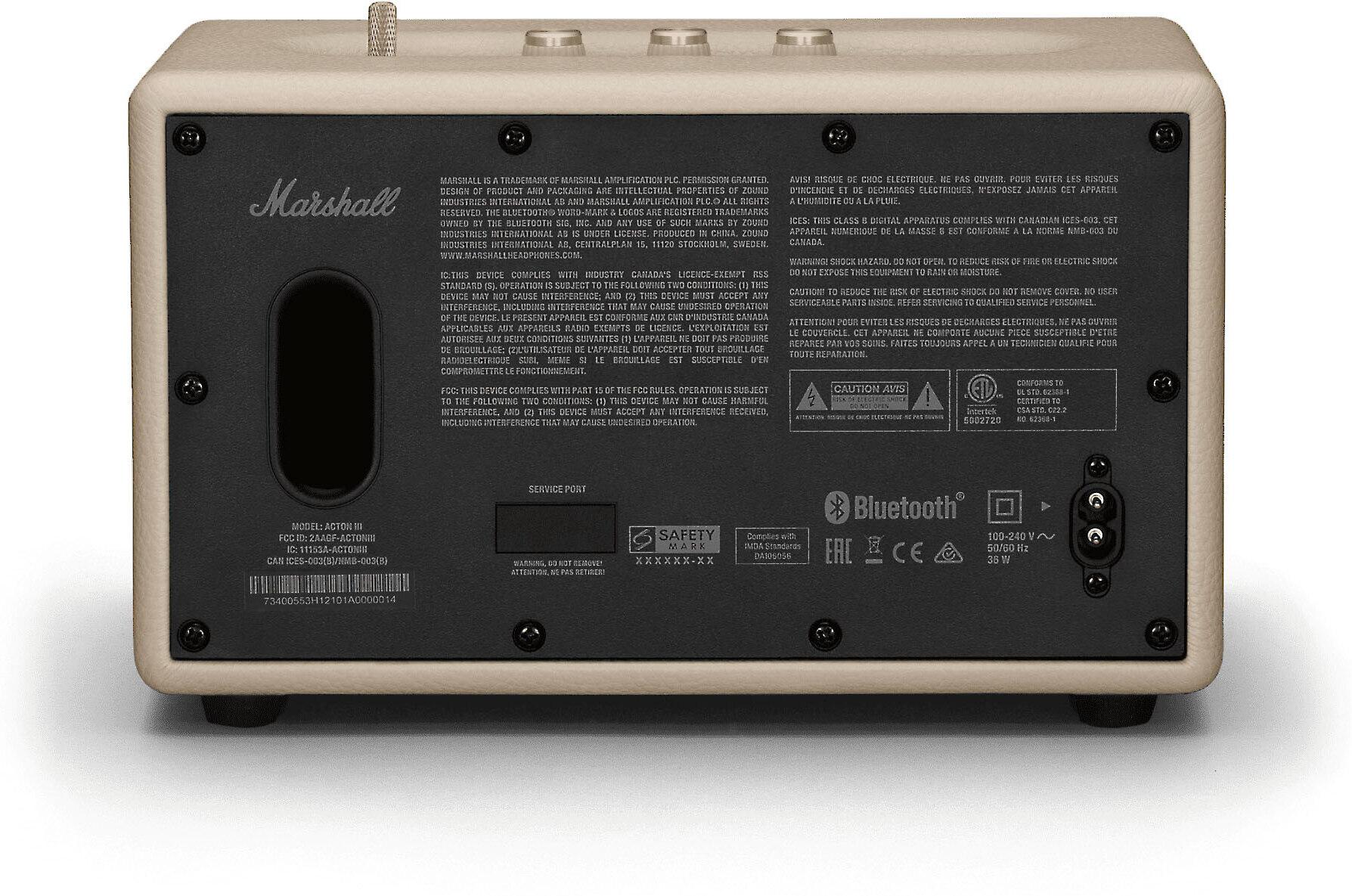
Here's where these speakers really diverge. The Marshall Acton III keeps things relatively simple with Bluetooth 5.2 and a 3.5mm auxiliary input. While this might seem limiting, the Bluetooth implementation is excellent, with support for high-quality audio codecs and very stable connectivity up to about 30 feet.
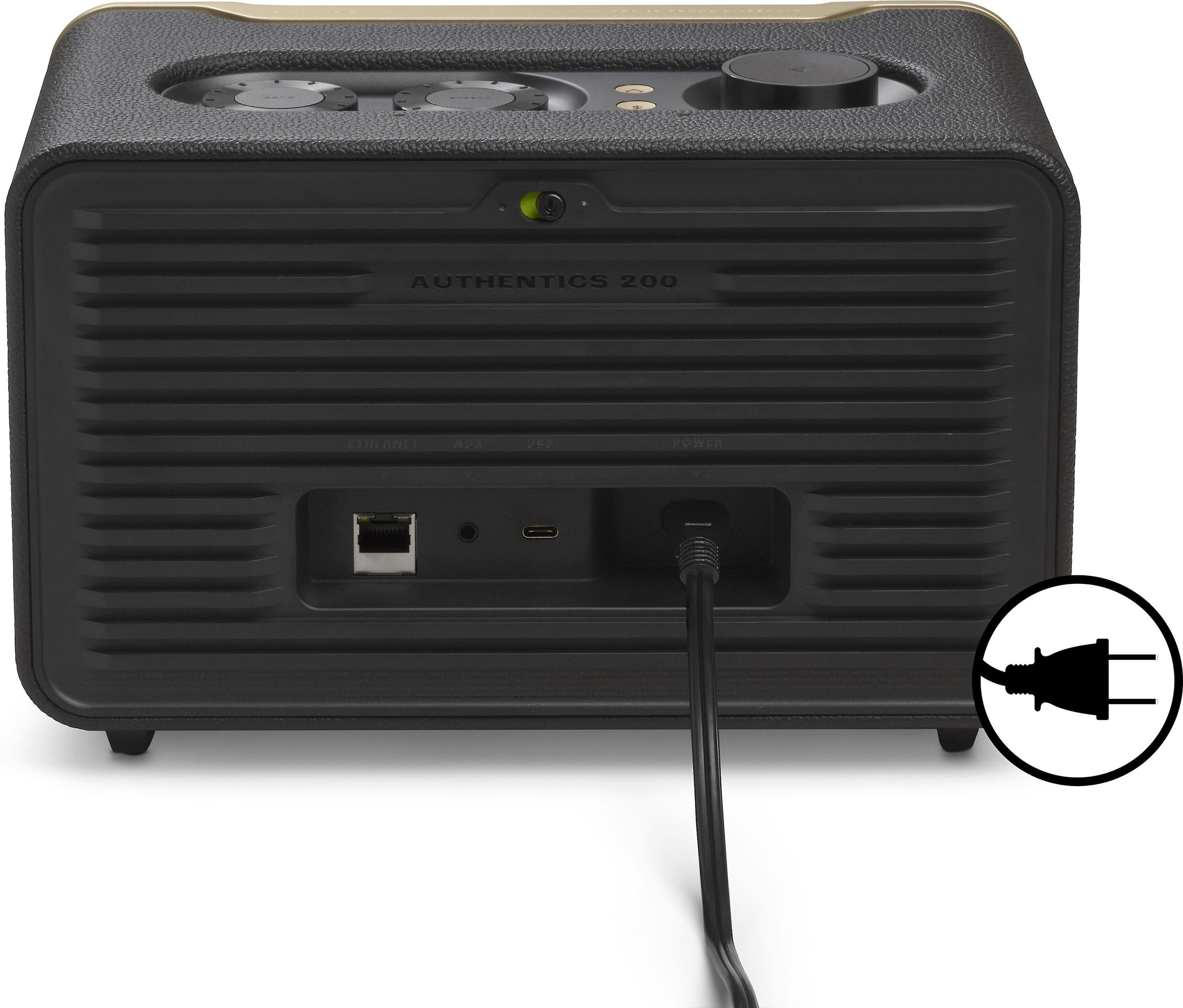
The JBL Authentics 200 goes all-in on connectivity. Beyond Bluetooth 5.3, you get:
This extensive connectivity makes the JBL more versatile, especially in a smart home environment. You can ask it to play music, control smart home devices, or sync it with other compatible speakers throughout your house.
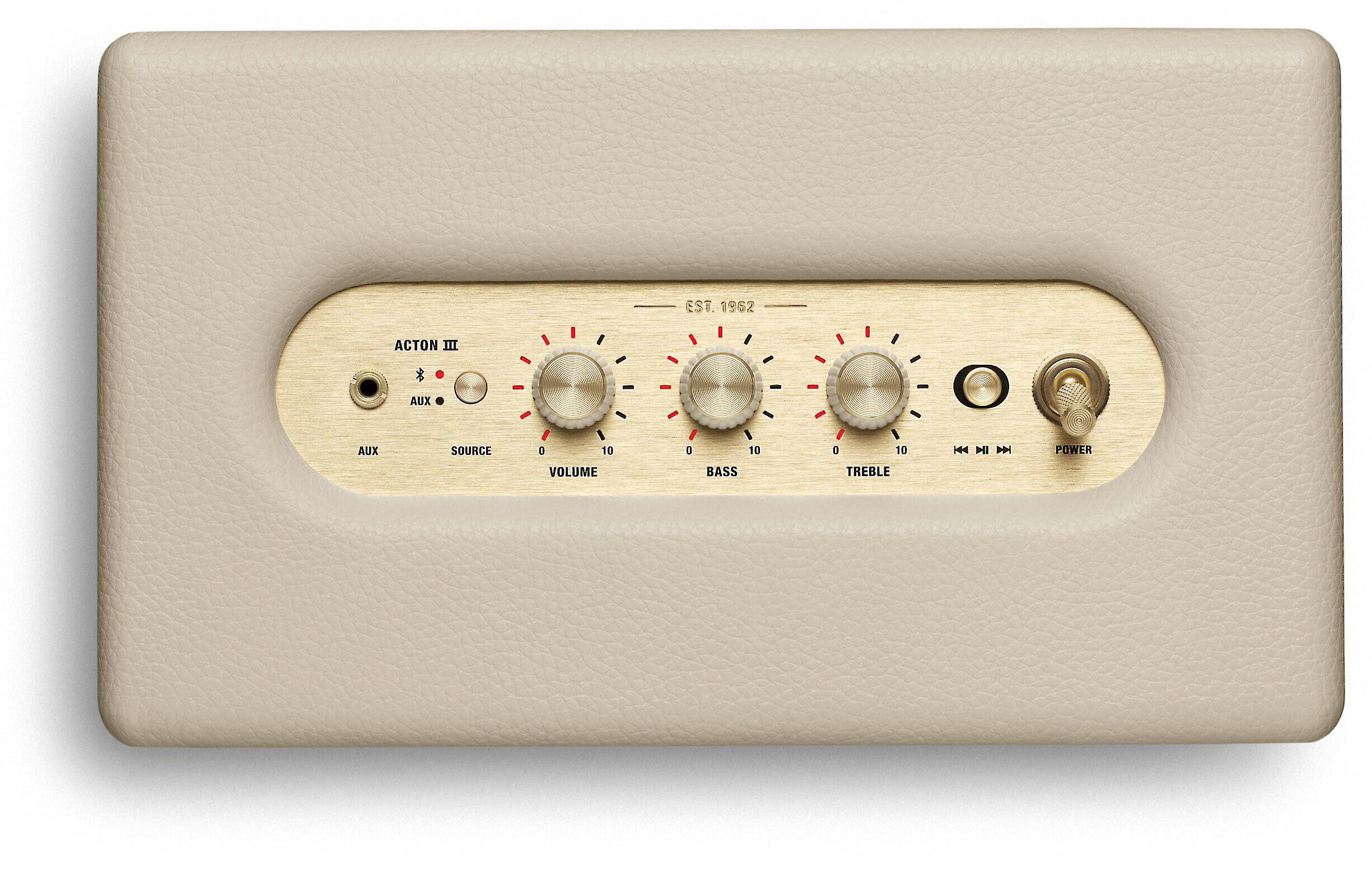
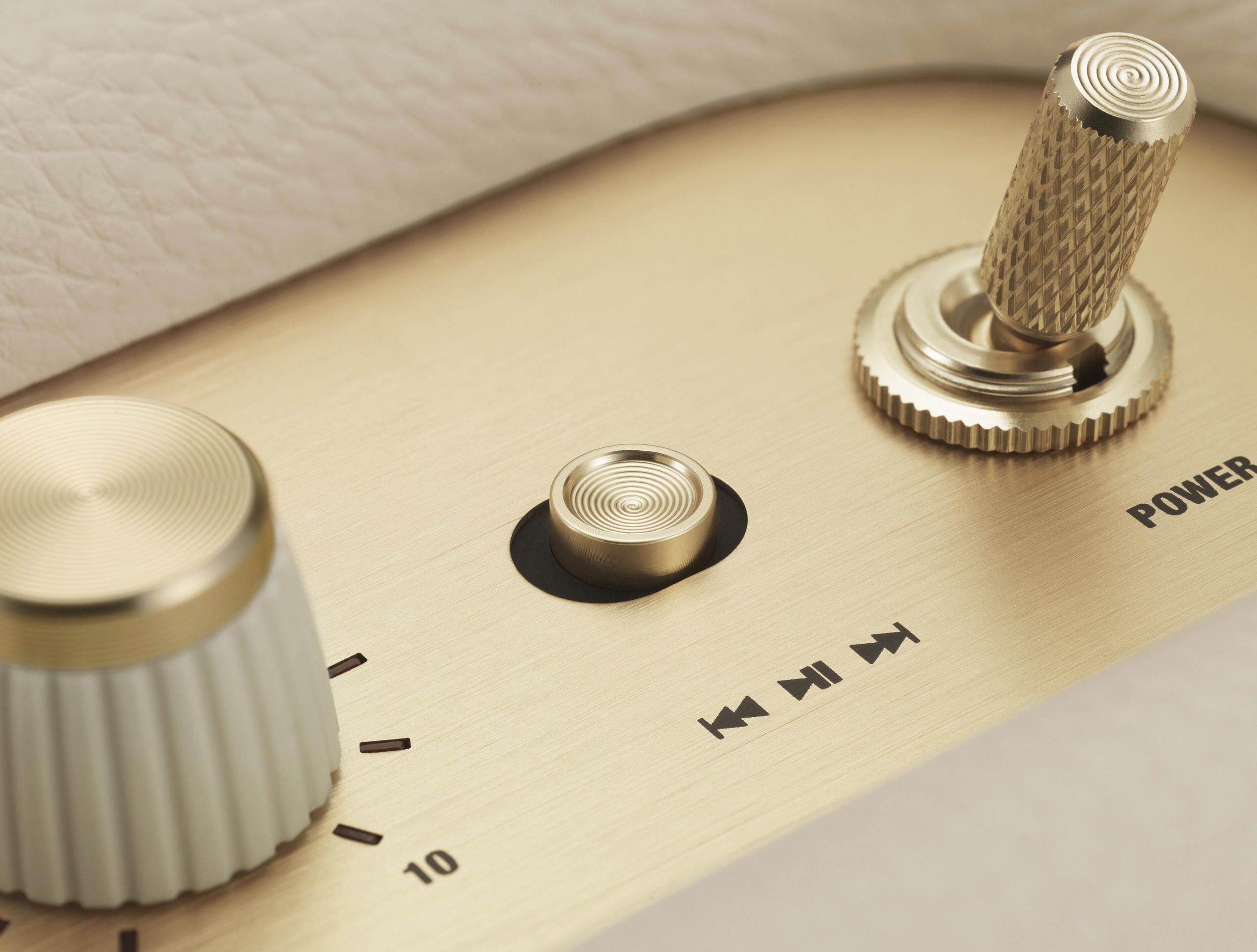
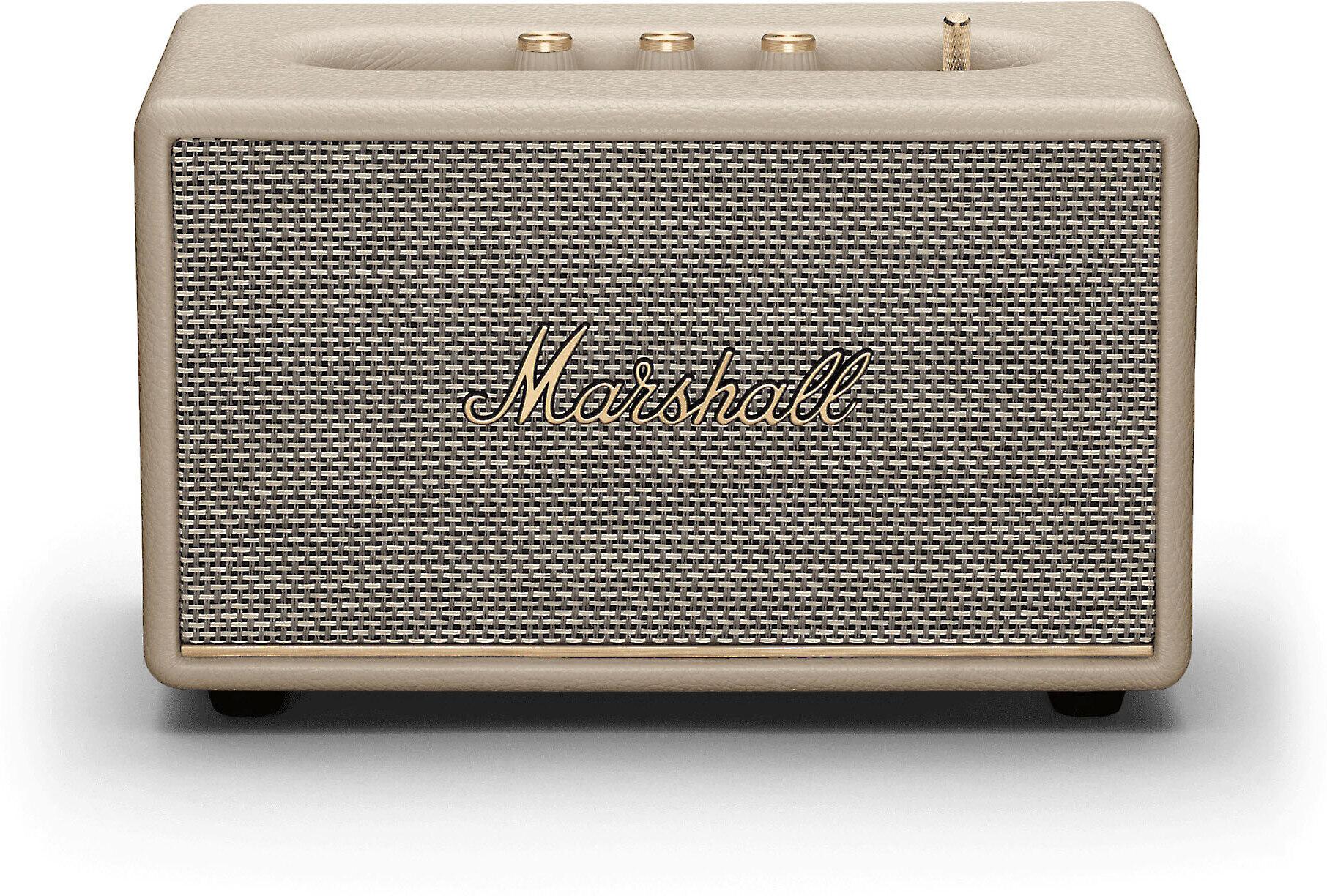
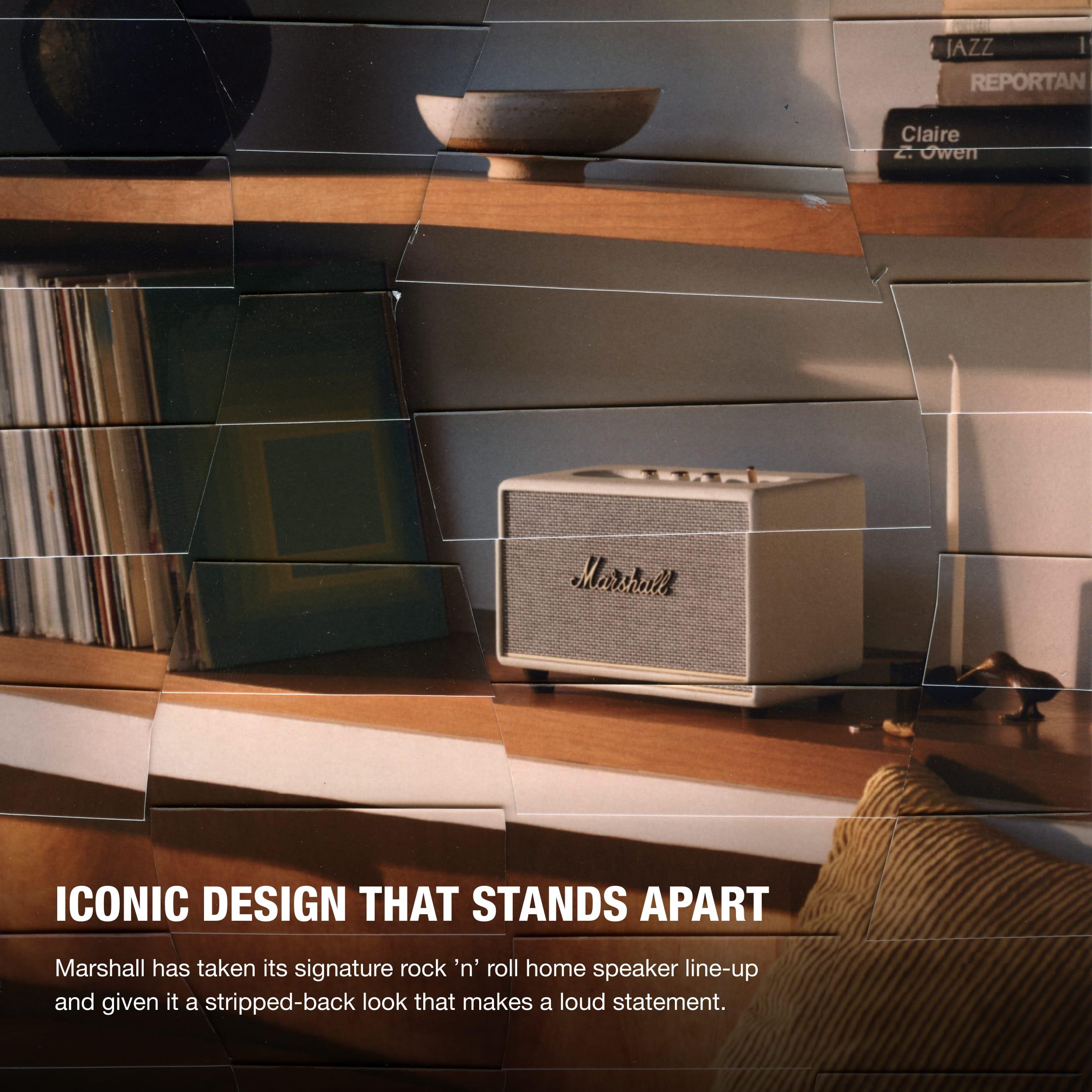
Marshall's approach to design is unmistakable. The Acton III looks like a miniature guitar amp, complete with brass-colored knobs and the iconic script logo. The physical controls are a highlight - there's something satisfying about adjusting actual knobs for volume, bass, and treble rather than using an app or touch controls.
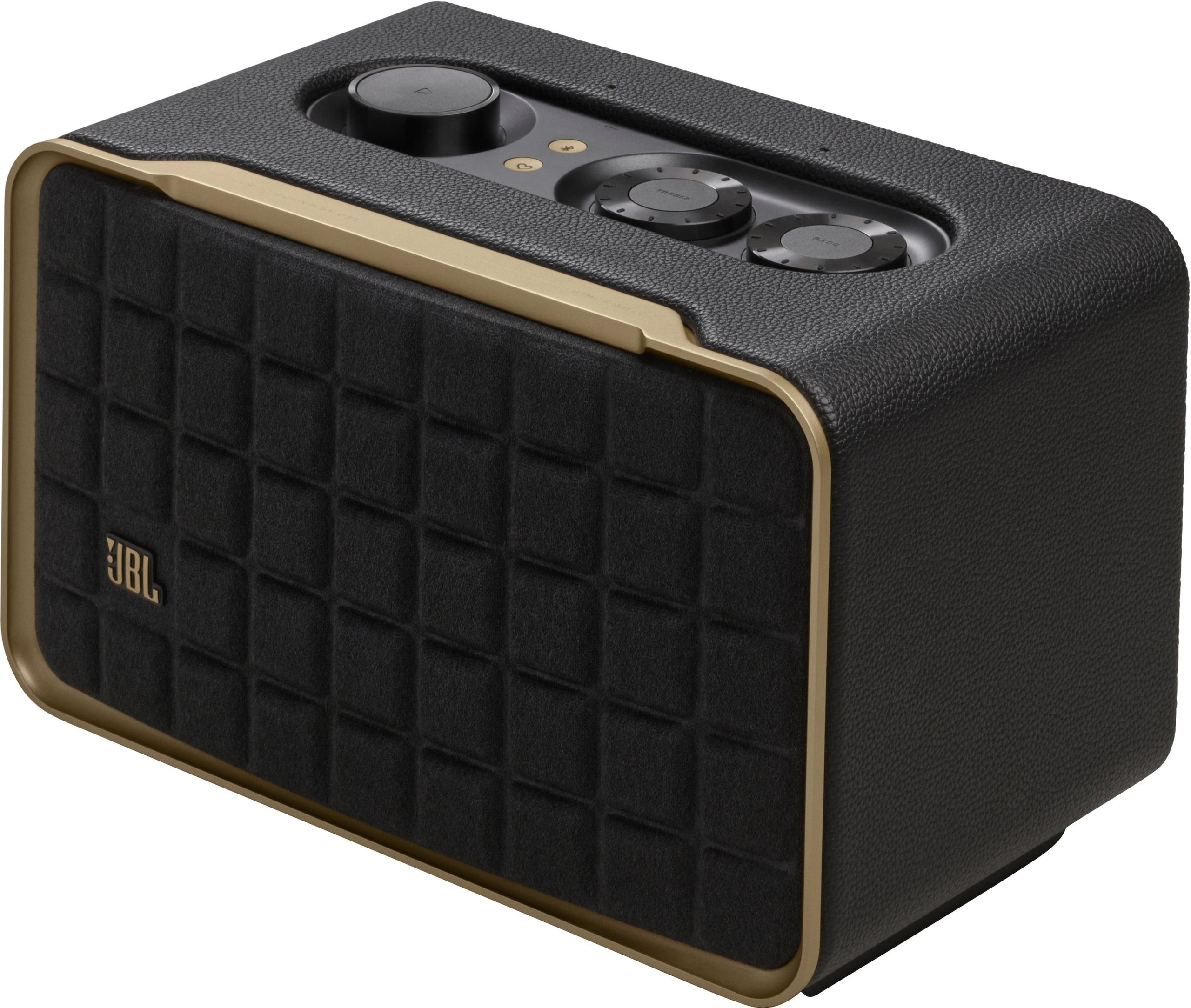
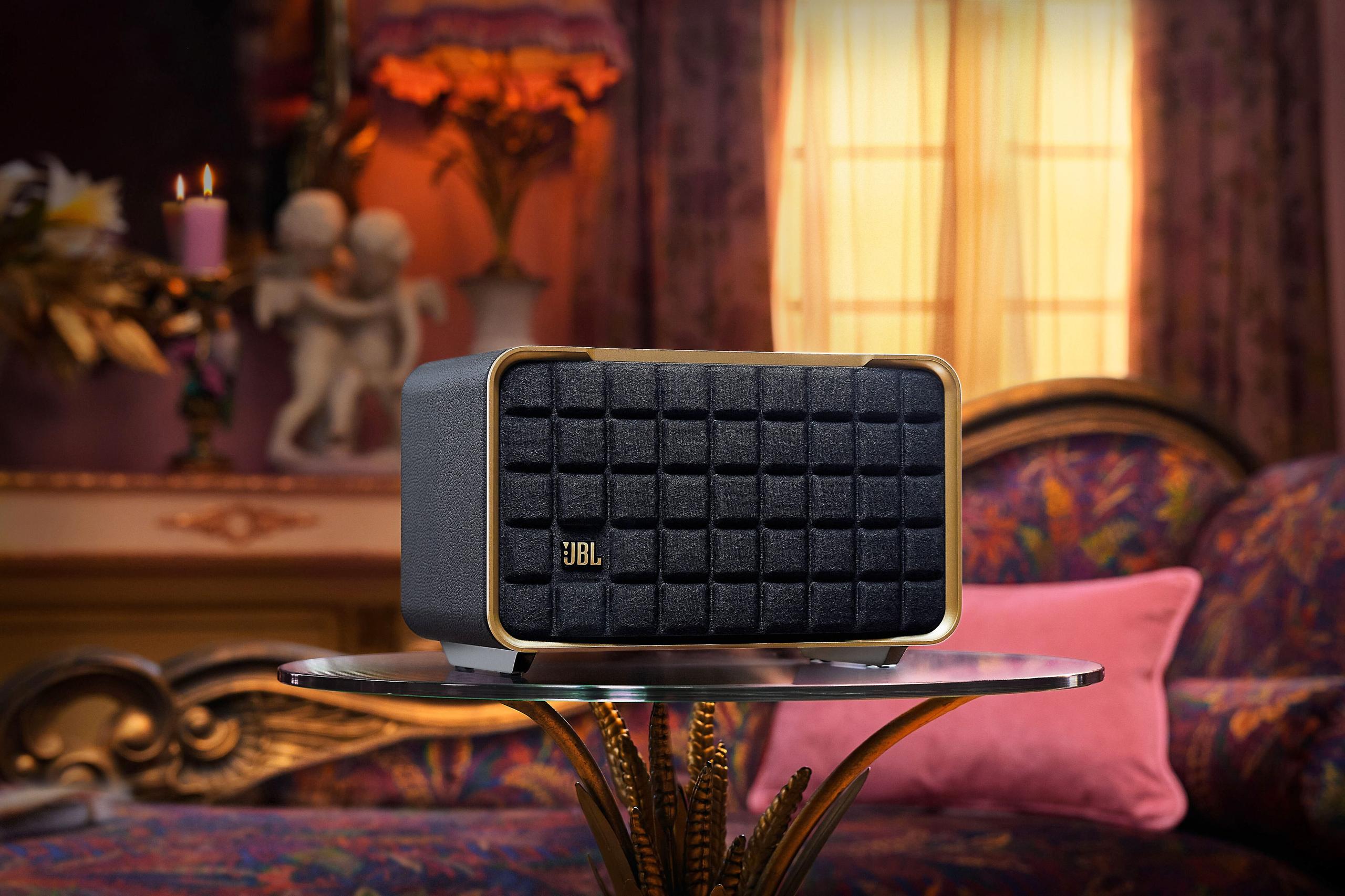
JBL takes a more subtle approach with the Authentics 200, drawing inspiration from their classic speakers of the 1970s. The sustainable materials used in construction are impressive: 100% recycled fabric, 85% recycled plastics, and 50% aluminum. Even the packaging is environmentally conscious, using FSC-certified materials and soy-based inks.
While neither speaker is primarily designed for home theater use, they can serve different roles in your entertainment setup. The Marshall's excellent stereo separation and clear midrange make it suitable for smaller TV rooms where you want better sound than built-in TV speakers can provide.
The JBL's WiFi connectivity and smart features make it more flexible for home theater use. You can easily integrate it into a whole-home audio system or use it as part of a multi-room setup for watching TV throughout your house.
At $279, the Marshall Acton III positions itself as a premium audio device for those who prioritize sound quality and classic styling over smart features. The build quality and sound performance justify the price, but the limited connectivity might feel restrictive to some users.
The JBL Authentics 200 at $249 offers more features for less money. The additional connectivity options, smart home integration, and powerful sound make it an excellent value proposition, especially if you're already invested in smart home technology.
Your choice between these speakers should come down to how you plan to use them and what you value most in a speaker system.
Choose the Marshall Acton III if:
Choose the JBL Authentics 200 if:
Both speakers represent excellent choices in their respective approaches to modern home audio. The Marshall excels as a premium, focused audio device, while the JBL offers a more versatile, feature-rich experience. Your specific needs and preferences will determine which approach makes more sense for your home.
| Marshall Acton III | JBL Authentics 200 |
|---|---|
| Price - Initial Investment | |
| $279.99 | $249.99 |
| Total Power Output - Impacts volume and room-filling capability | |
| 60W (1x30W woofer, 2x15W tweeters) | 90W total system power |
| Driver Configuration - Determines sound quality and clarity | |
| 4" woofer, 2x 0.75" tweeters | 5.25" woofer, 2x 25mm tweeters, 6.5" passive radiator |
| Connectivity Options - Affects flexibility and usage scenarios | |
| Bluetooth 5.2, 3.5mm aux input | WiFi, Bluetooth 5.3, Ethernet, USB-C, 3.5mm aux |
| Smart Features - Important for home integration | |
| App control only, no voice assistants | Google Assistant, Alexa, multi-room audio support |
| Frequency Response - Determines bass depth and overall range | |
| 45Hz - 20kHz | 50Hz - 20kHz |
| Size - Consider your space limitations | |
| 10.24 x 6.69 x 5.91 inches | 10.48 x 6.76 x 6.59 inches |
| Weight - Affects portability | |
| 6.28 lbs | 6.88 lbs |
| Special Features - Unique capabilities | |
| Dynamic Loudness, Placement Compensation | Auto room calibration, Multi-room sync |
| Materials and Build - Durability and environmental impact | |
| 70% recycled plastic, vegan materials | 100% recycled fabric, 85% recycled plastic, 50% aluminum |
| Control Interface - Ease of use | |
| Physical knobs for volume/bass/treble | Touch controls + app + voice commands |
| Power Source - Placement flexibility | |
| AC power only (100-240V) | AC power only (100-240V) |
| Warranty Coverage - Long-term value | |
| 1 year limited | 1 year limited |
The JBL Authentics 200 delivers more powerful sound with its 90W system and larger drivers, making it better for larger rooms. However, the Marshall Acton III offers excellent sound quality with a warmer, more vintage-inspired tone that some listeners prefer, especially for rock music.
At $249, the JBL Authentics 200 offers better value with more features, including smart home integration and multiple connectivity options. The Marshall Acton III at $279 focuses more on premium audio quality and classic design.
Both can work as TV speakers, but neither is specifically designed for home theater use. The JBL Authentics 200 has an advantage with its WiFi connectivity and multi-room capabilities, while the Marshall Acton III works well in smaller TV rooms.
The JBL Authentics 200 offers significantly more connection options, including WiFi, Bluetooth 5.3, Ethernet, and USB-C. The Marshall Acton III is more limited with just Bluetooth 5.2 and a 3.5mm aux input.
The JBL Authentics 200 supports both Google Assistant and Amazon Alexa. The Marshall Acton III doesn't have built-in voice assistant support.
The JBL Authentics 200 is better suited for larger spaces due to its higher 90W power output and larger driver configuration. The Marshall Acton III works best in small to medium-sized rooms.
The JBL Authentics 200 supports multi-room audio through WiFi connectivity. The Marshall Acton III doesn't have multi-room capabilities.
Both speakers are well-built, but use different materials. The Marshall Acton III features traditional materials with a classic design, while the JBL Authentics 200 uses more sustainable materials including recycled fabric and aluminum.
The JBL Authentics 200 needs WiFi for its smart features but can still work via Bluetooth. The Marshall Acton III doesn't require WiFi as it's primarily a Bluetooth speaker.
Both speakers offer app control. The Marshall Acton III uses the Marshall Bluetooth app, while the JBL Authentics 200 can be controlled through multiple apps including the JBL One app and smart home apps.
The JBL Authentics 200 offers more streaming options with WiFi, AirPlay, and Chromecast support. The Marshall Acton III relies on Bluetooth streaming but provides excellent audio quality.
Yes, both the Marshall Acton III and JBL Authentics 200 require constant AC power and don't have built-in batteries. They're designed as home speakers rather than portable units.
We've done our best to create useful and informative comparisons to help you decide what product to buy. Our research uses advanced automated methods to create this comparison and perfection is not possible - please contact us for corrections or questions. These are the sites we've researched in the creation of this article: bestbuy.com - youtube.com - bestbuy.com - pocket-lint.com - bestbuy.com - crutchfield.com - premiumsound.com.au - marshall.com - 2001audiovideo.com - youtube.com - t3.com - bestbuy.com - youtube.com - homeitlab.com - hifipicks.com - nfm.com - youtube.com - harmanaudio.com - jbl.com - jbl.com - youtube.com - jbl.com - harmanaudio.com - kh.jbl.com - youtube.com - homedepot.com

Privacy Policy
Terms and Conditions - Affiliate Policy
Home Security
© Copyright 2008-2026.
11816 Inwood Rd #1211, Dallas, TX 75244