

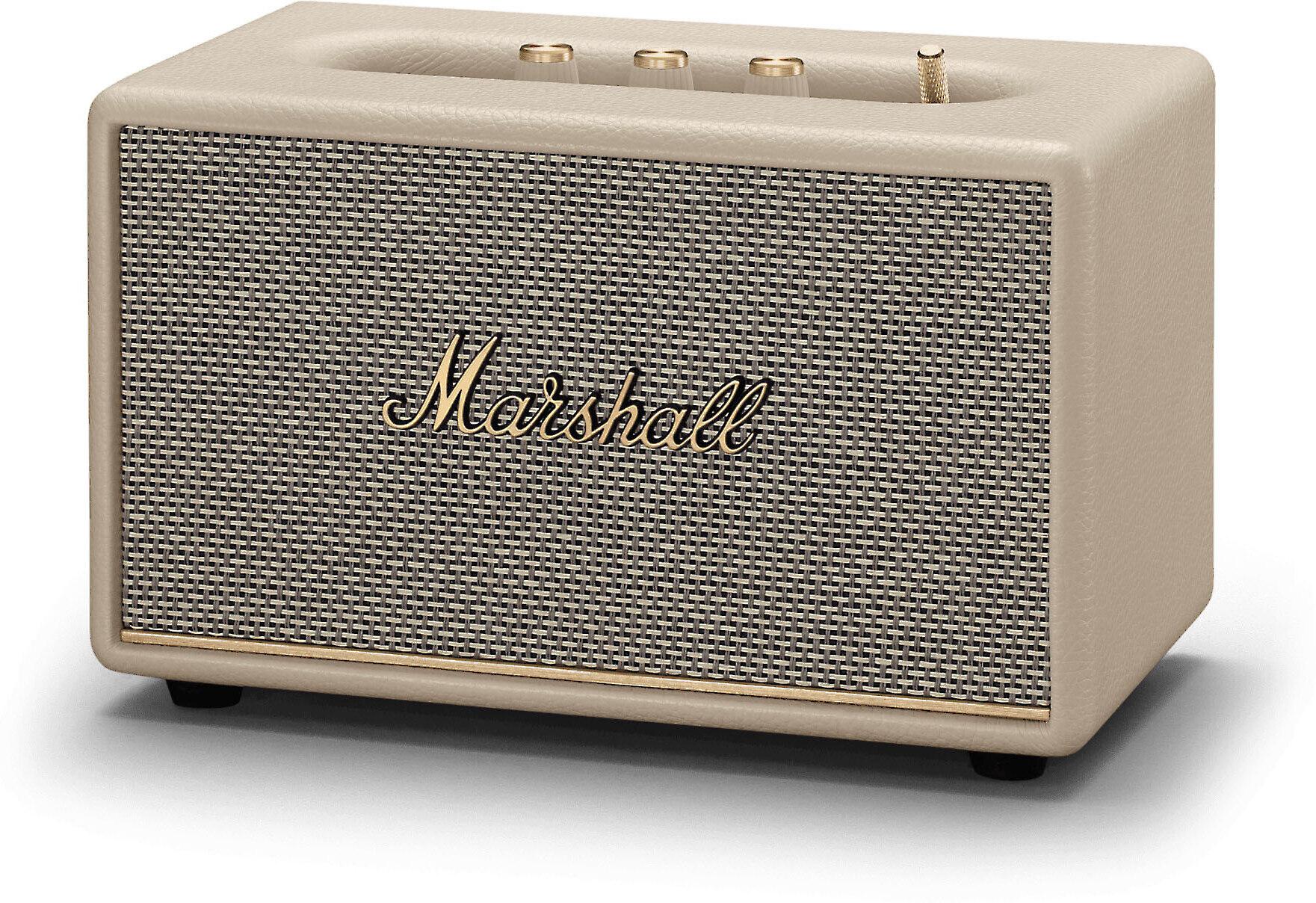
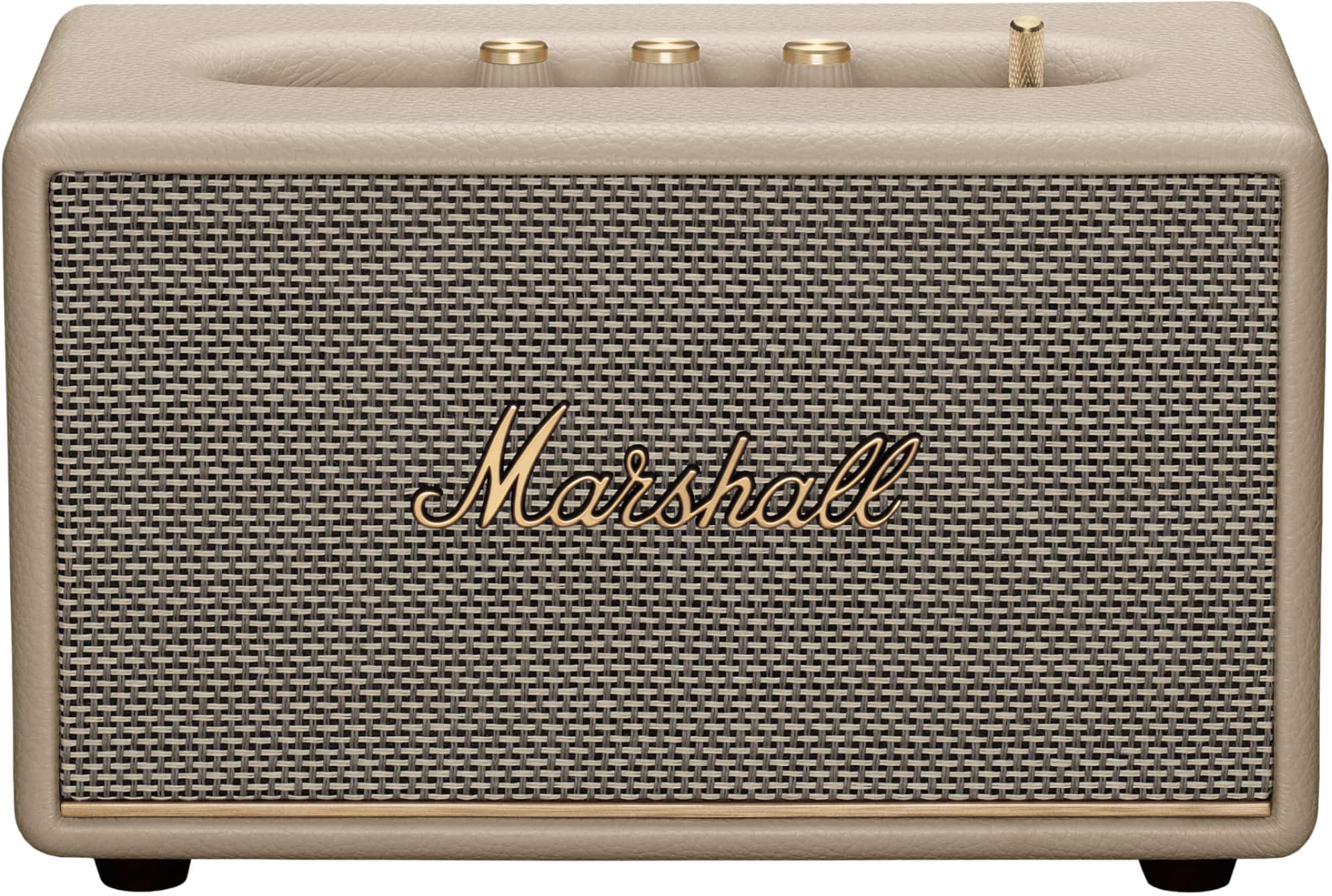
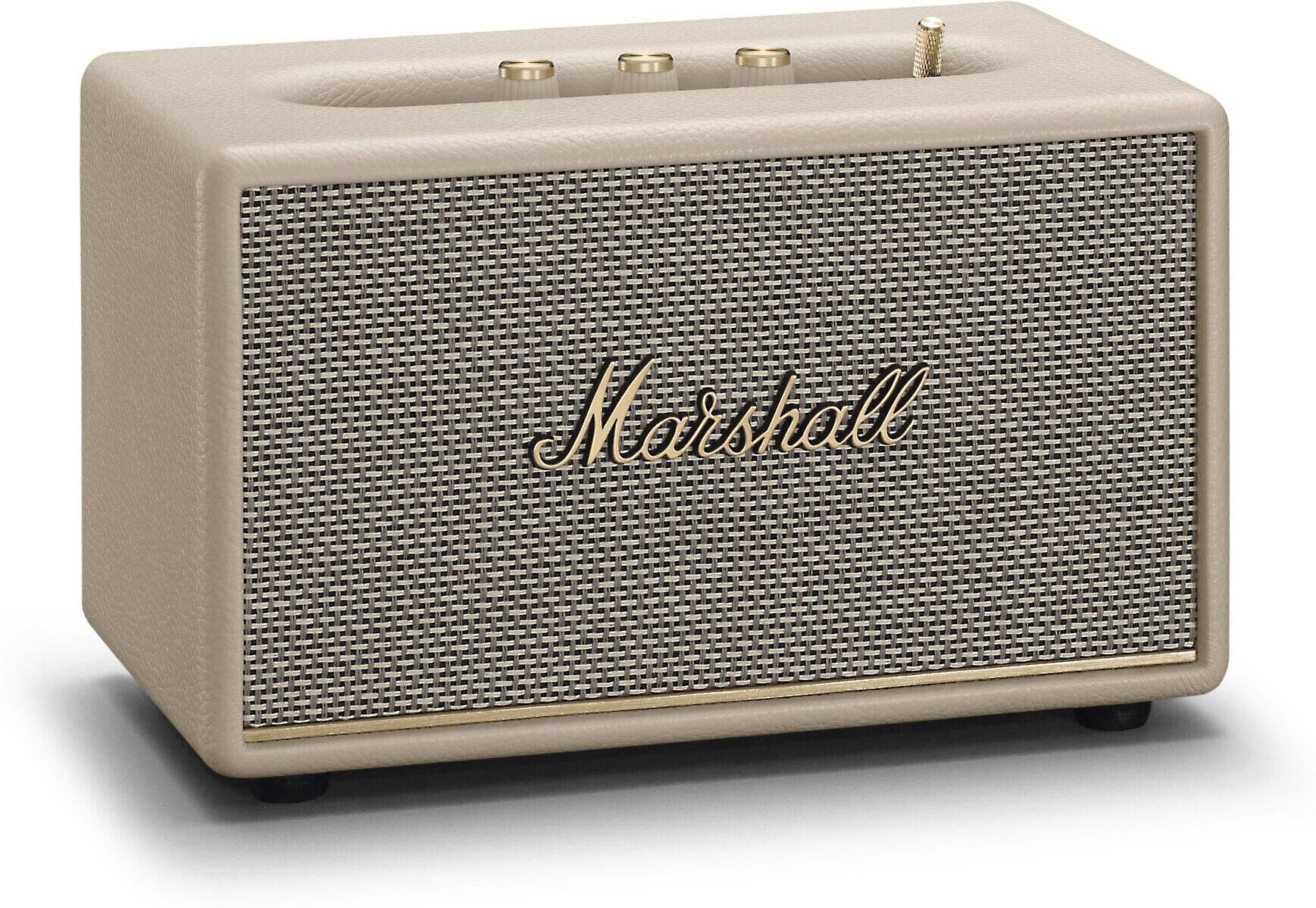
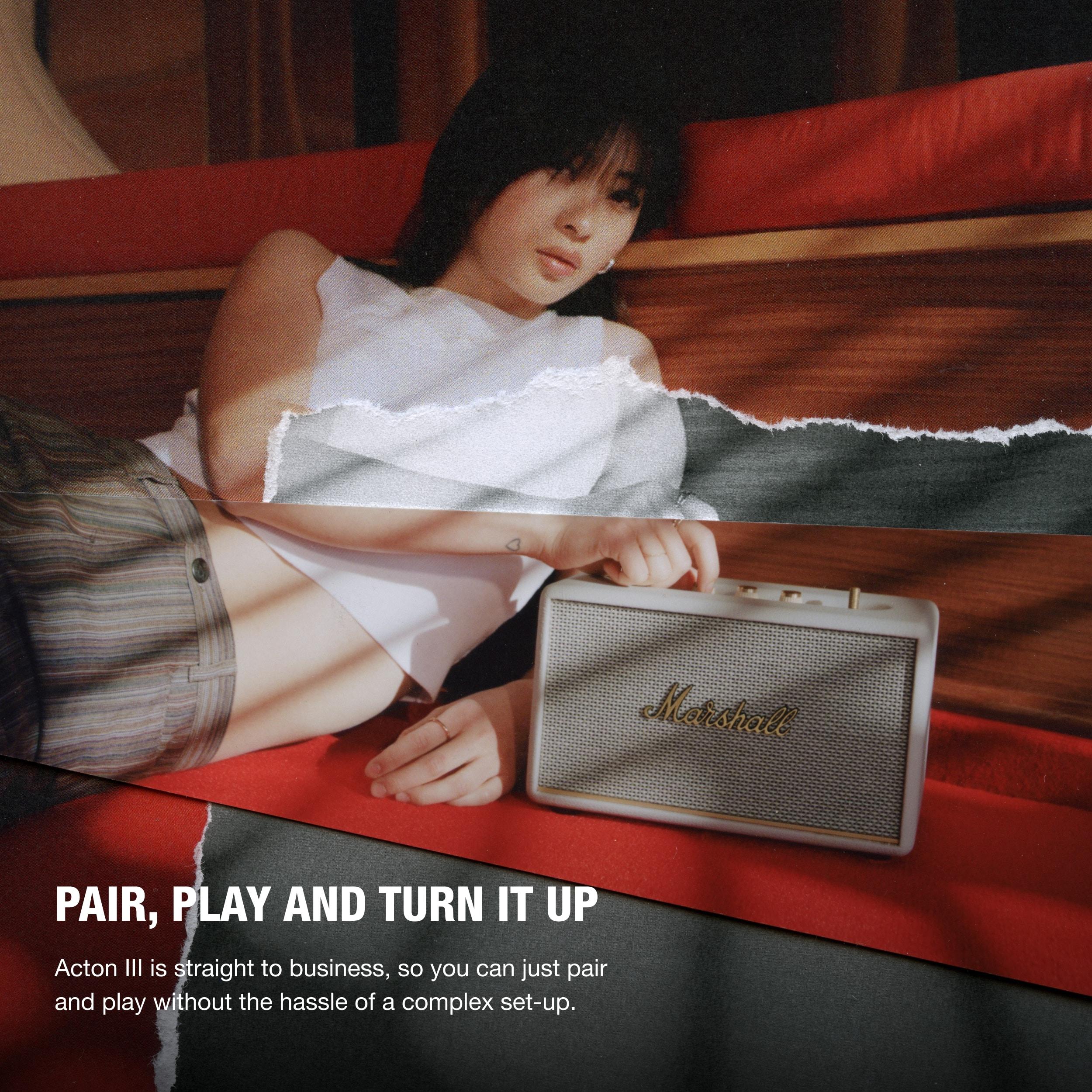
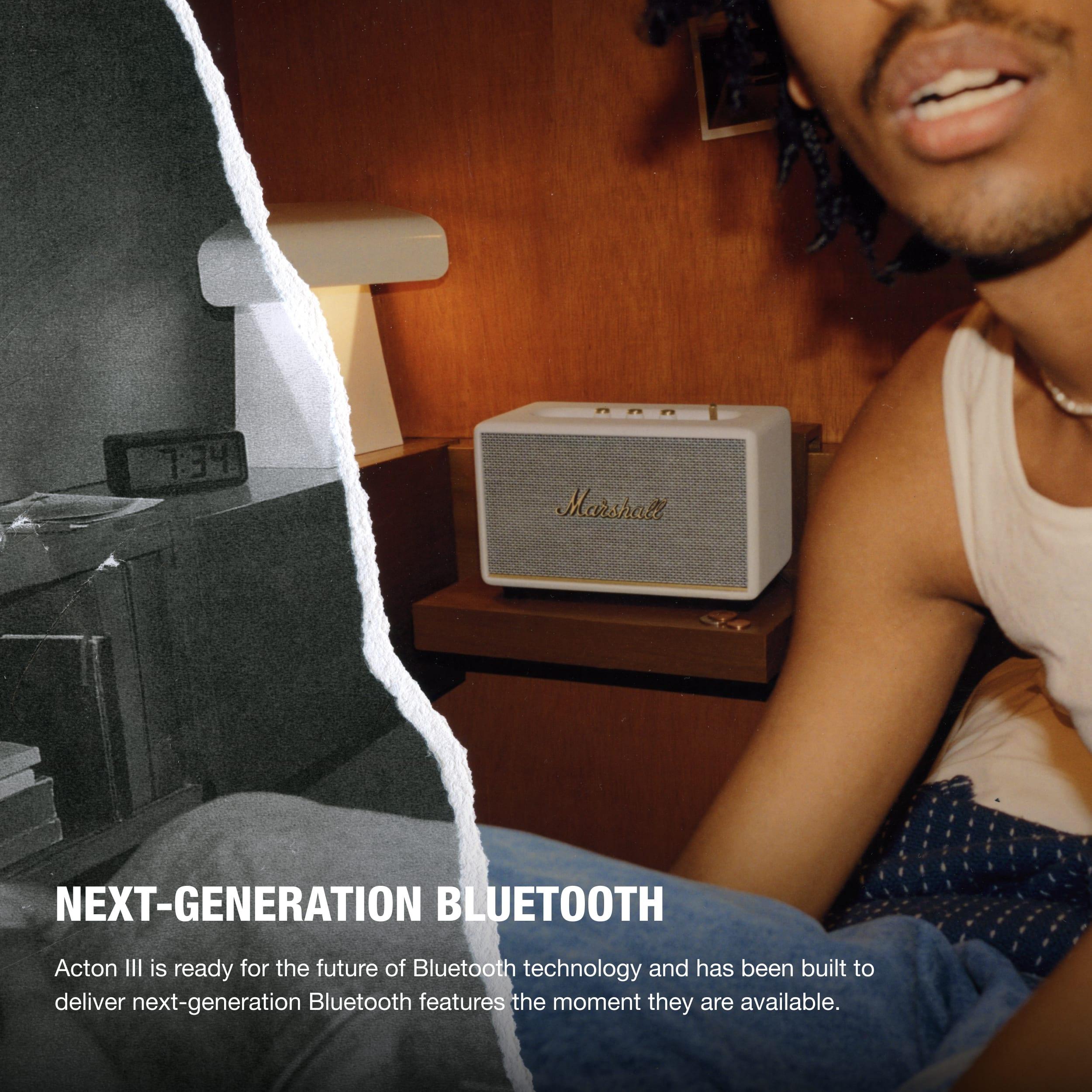
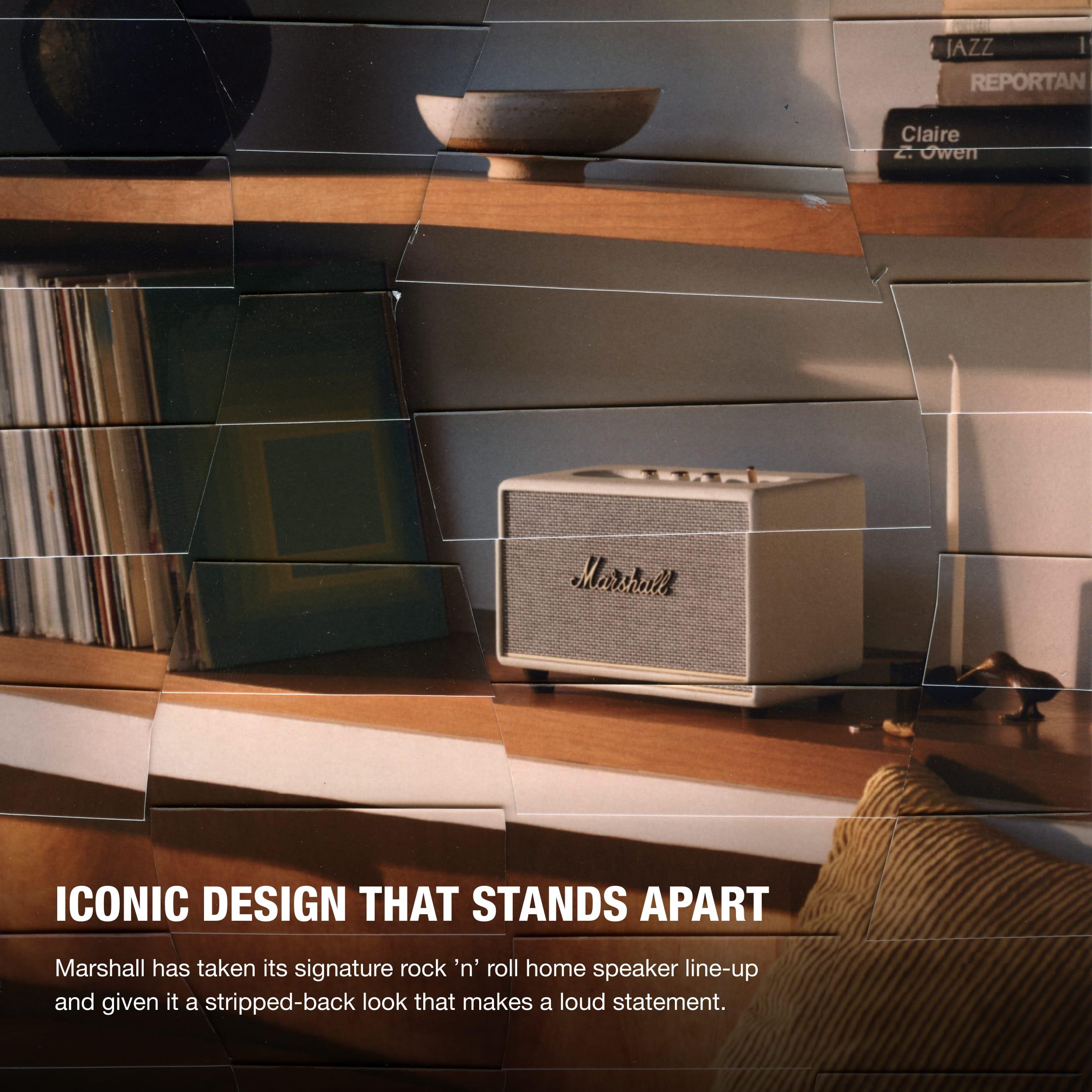
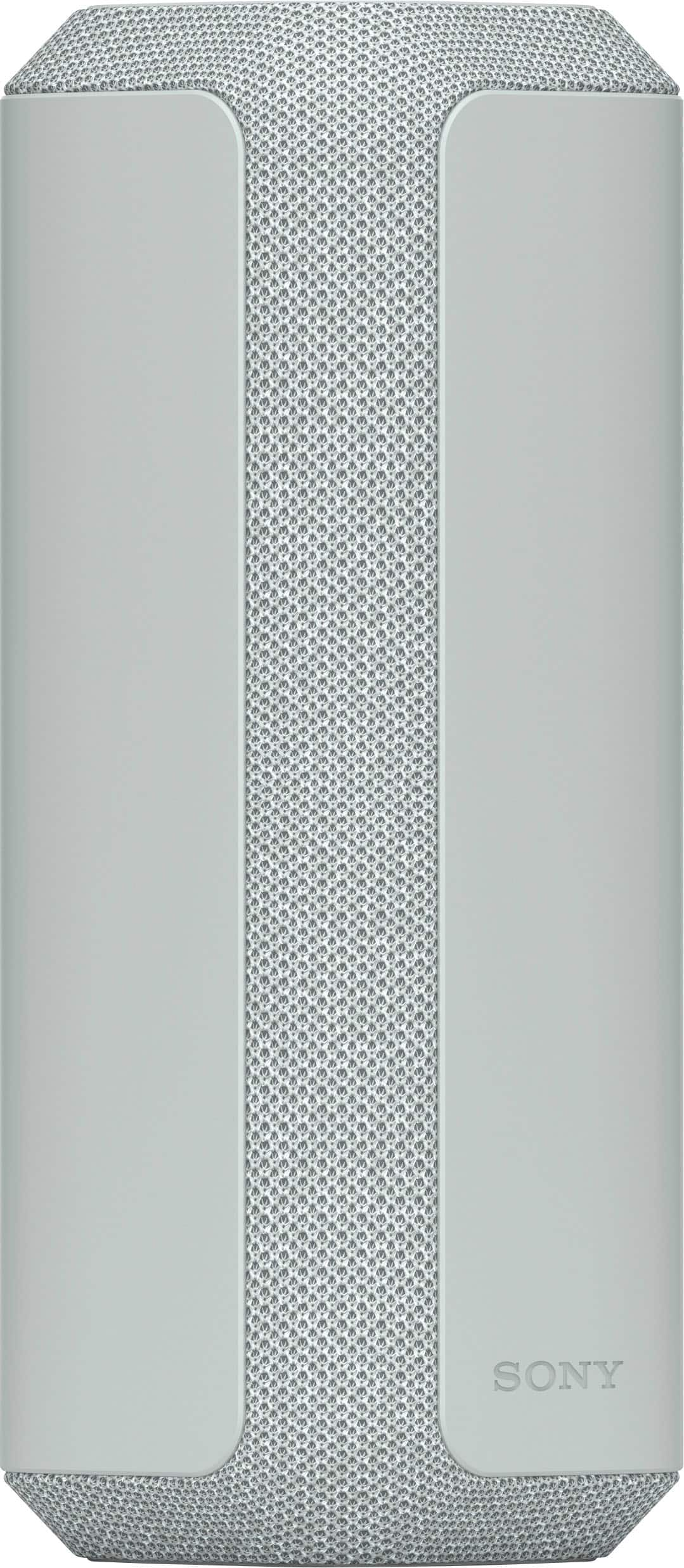




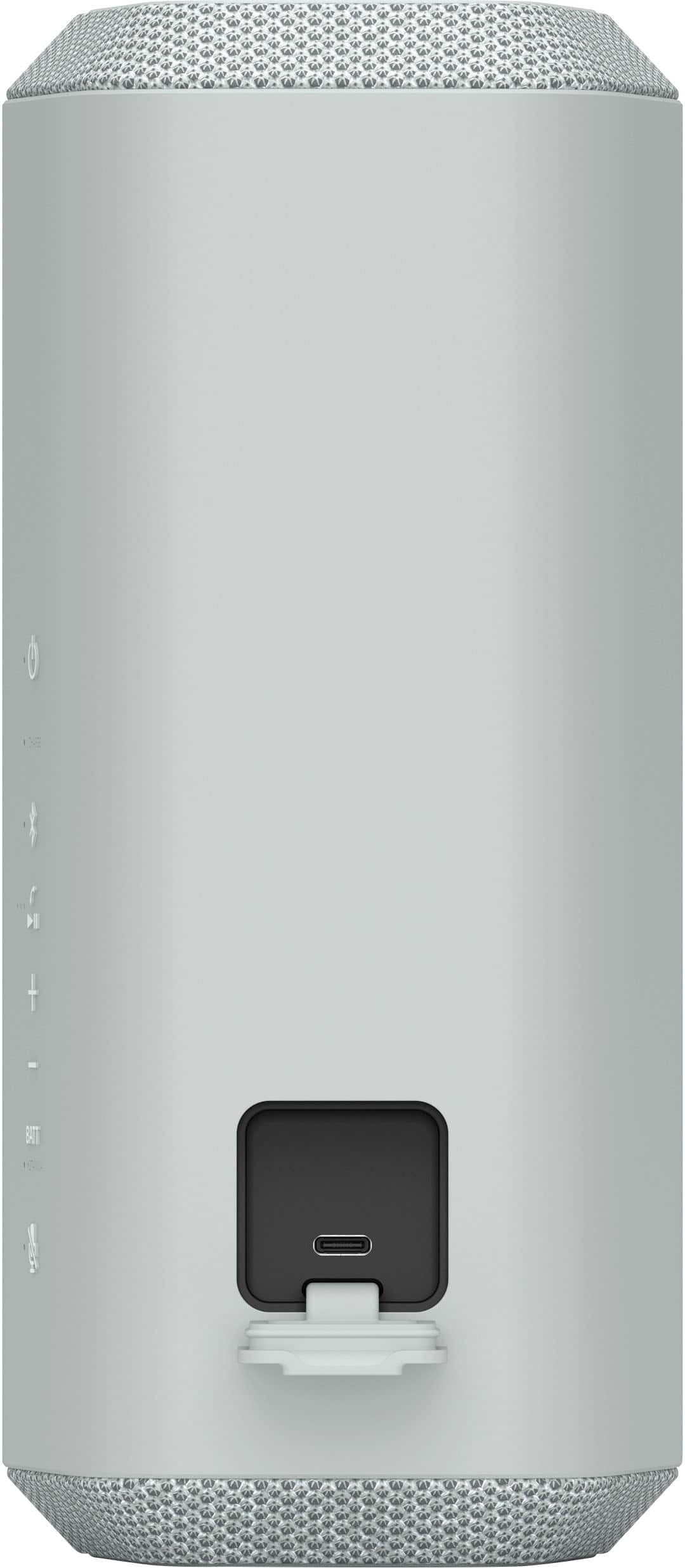
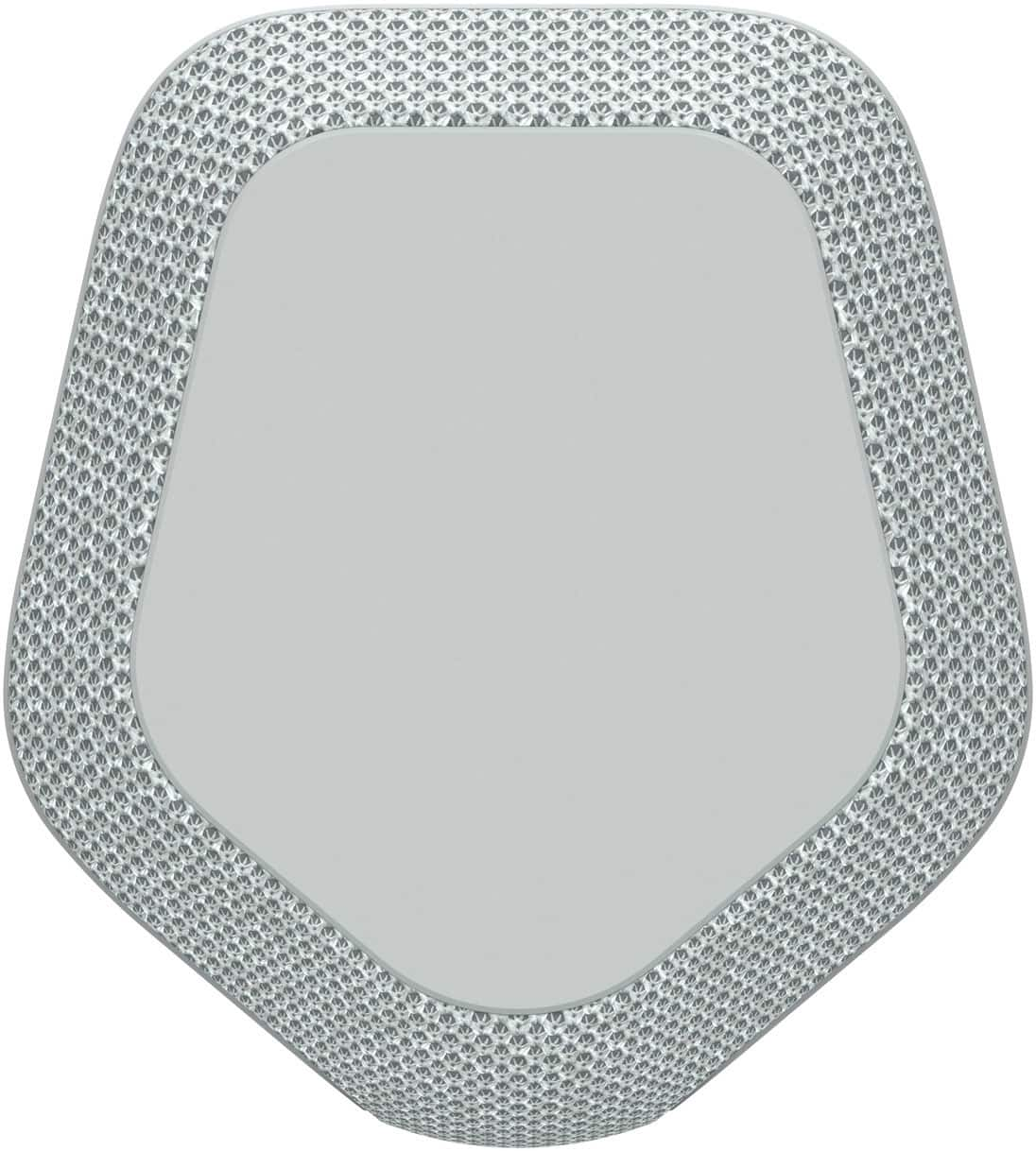
The Bluetooth speaker market has evolved significantly, offering everything from tiny portable units to premium home audio solutions. Released in late 2022, the Marshall Acton III ($279.99) and Sony XE300 ($199.99) represent two distinct approaches to wireless audio, each excelling in their intended use cases.
While both speakers serve the fundamental purpose of playing audio wirelessly, they target different needs. The Marshall focuses on delivering room-filling home audio with a classic aesthetic, while Sony prioritizes portability and durability for varied environments.
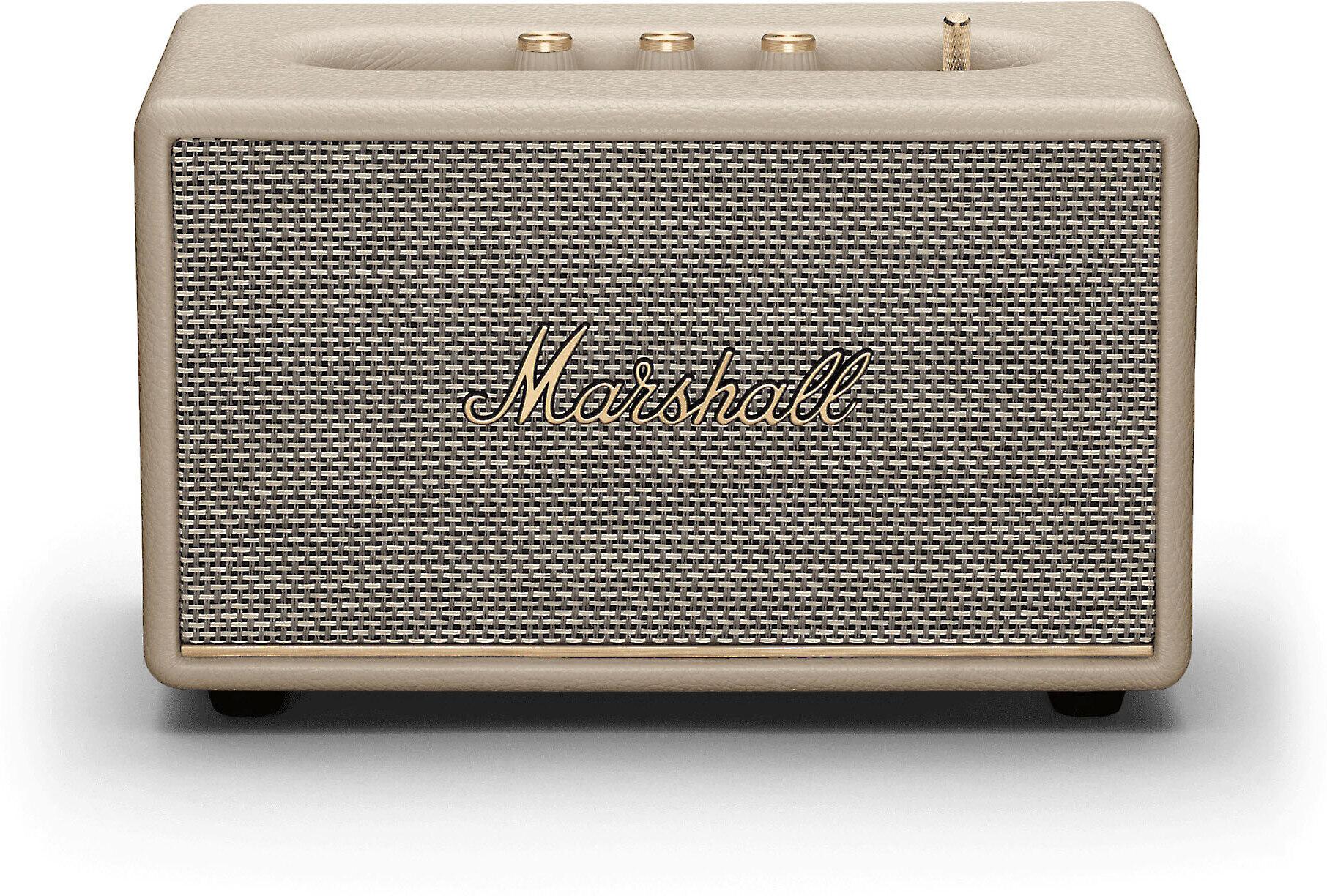
The Acton III employs a sophisticated two-way driver system: a 4-inch woofer handling the low frequencies, supported by two 0.75-inch tweeters for the highs. This separation of frequencies, combined with 60 watts of total power (30W for the woofer, 15W each for the tweeters), allows for more precise sound reproduction across the frequency spectrum.
The speaker's Dynamic Loudness feature automatically adjusts tonal balance at different volumes - a particularly useful feature for late-night listening or background music. When you turn down the volume, it maintains the balance between bass, mids, and treble instead of losing the low end like many speakers do.
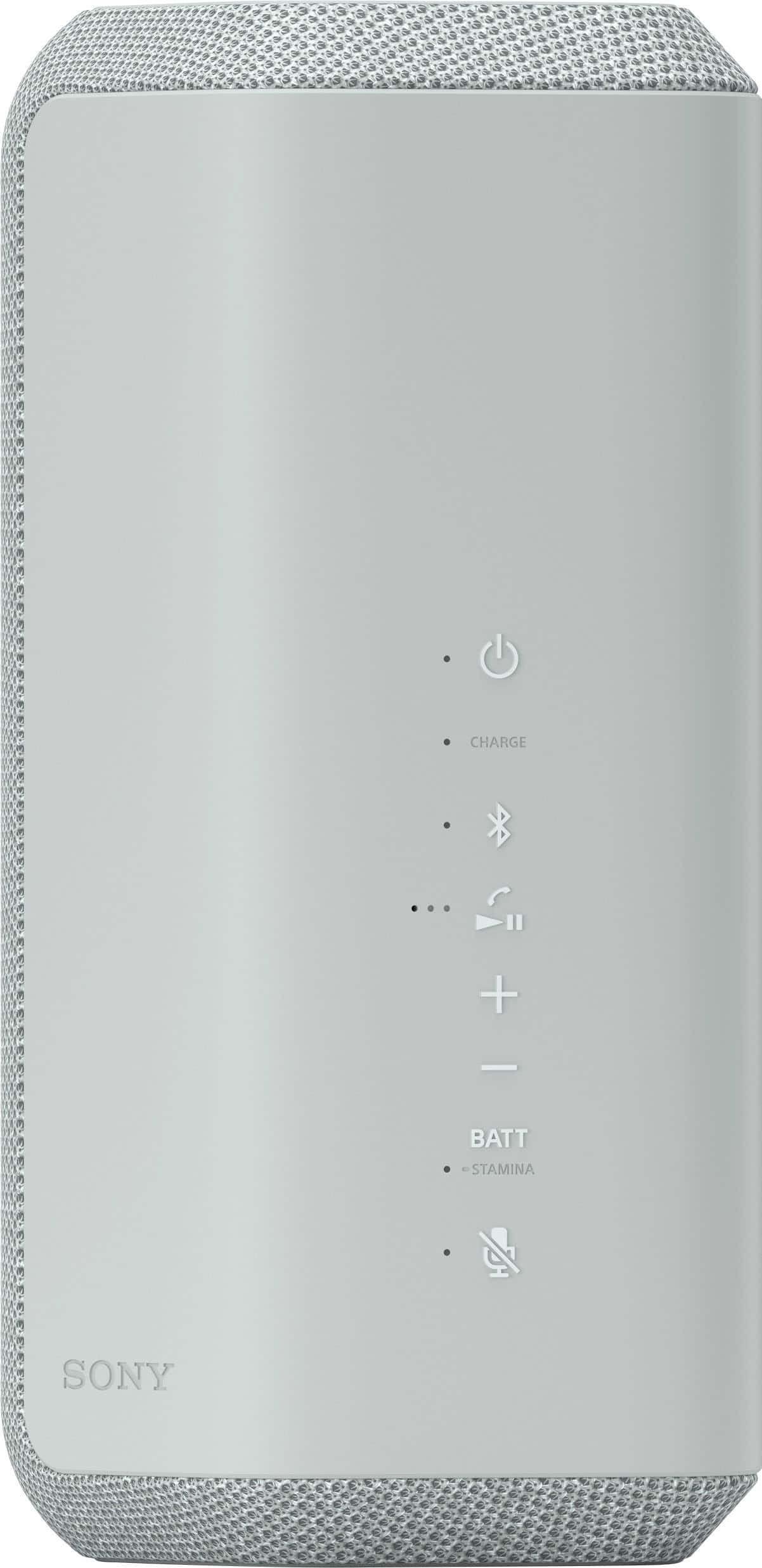
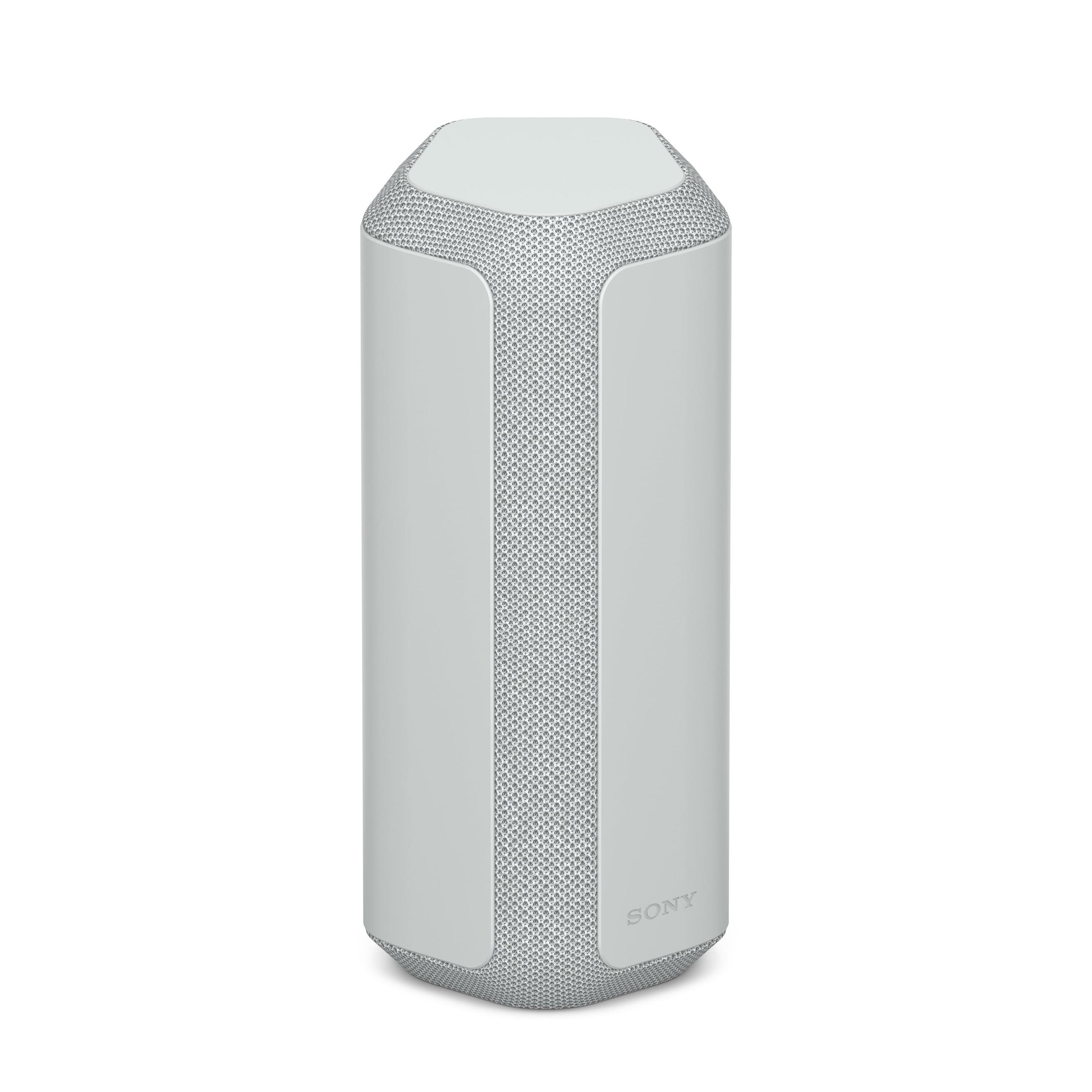
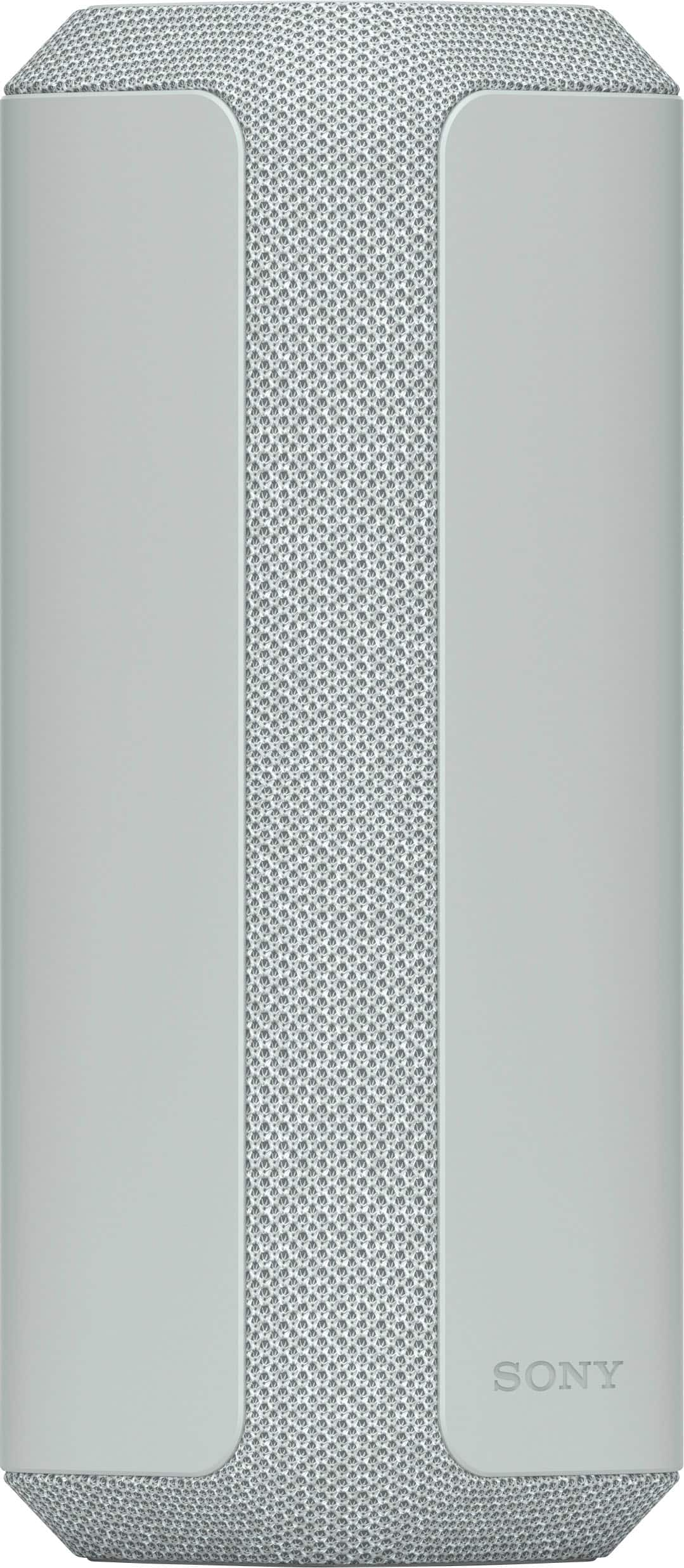
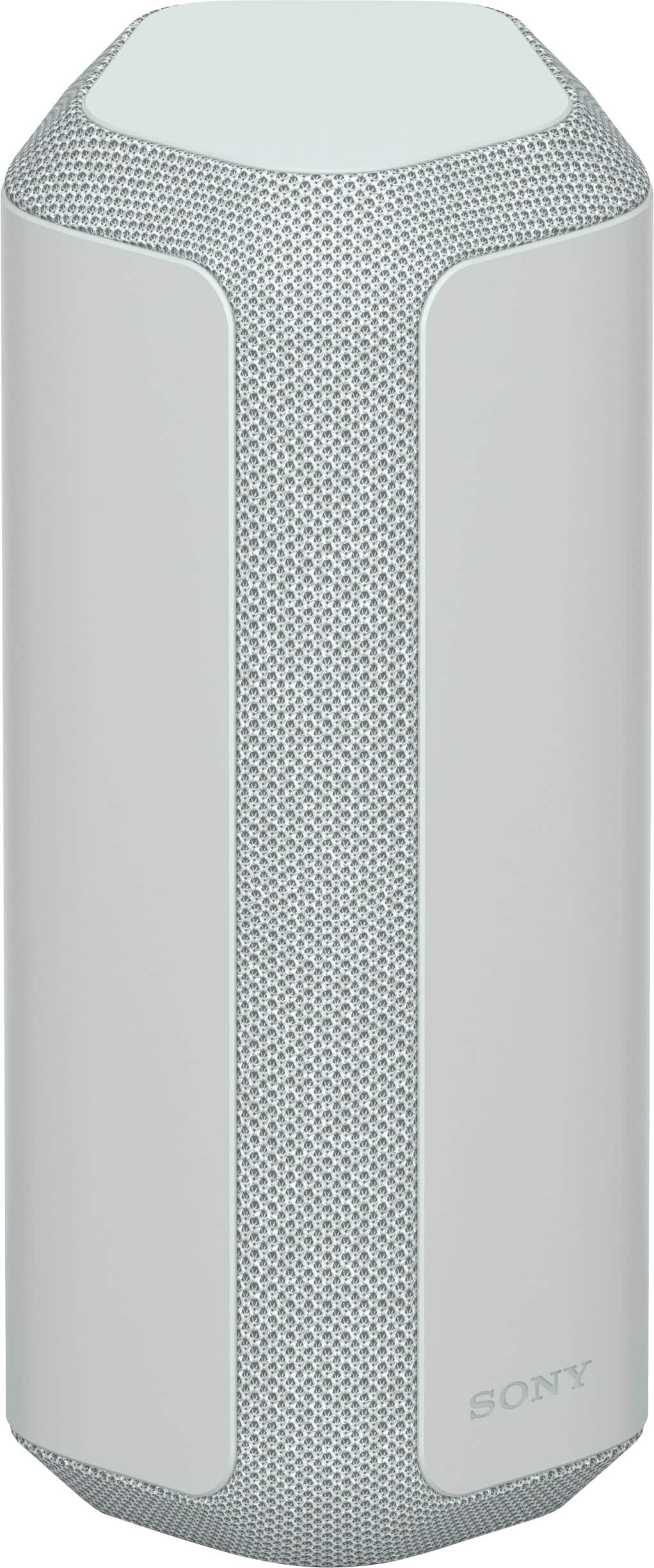
The XE300 takes a different approach with its X-Balanced Speaker Unit. This non-circular speaker design maximizes the diaphragm area while minimizing distortion - clever engineering that helps deliver bigger sound from a portable package. The Line-Shape Diffuser technology, borrowed from professional concert systems, helps spread sound more evenly across a wider area.
Both units support modern Bluetooth 5.2, offering improved range and stability over older versions. The Sony adds support for LDAC, Sony's high-resolution audio codec, which can transmit nearly three times the data of standard Bluetooth audio - though you'll need a compatible device to benefit from this.
In a living room or home theater setting, the Acton III shows its strengths. The 95 dB maximum volume easily fills medium to large rooms, and the stereo separation creates a more immersive soundstage. The bass response, particularly when placed near a wall, provides impressive depth for movies and music.
The XE300 can certainly function as a home speaker, but its single-unit design and lower power output make it less suited for primary home audio duty. However, its portability means it can easily move from room to room or out to the patio - versatility the Acton III can't match.
Here's where the Sony XE300 really shines. The IP67 rating means it's fully dustproof and can handle submersion in water up to 1 meter deep for 30 minutes. Combined with 24-hour battery life and quick charging (70 minutes of playback from a 10-minute charge), it's built for adventure.
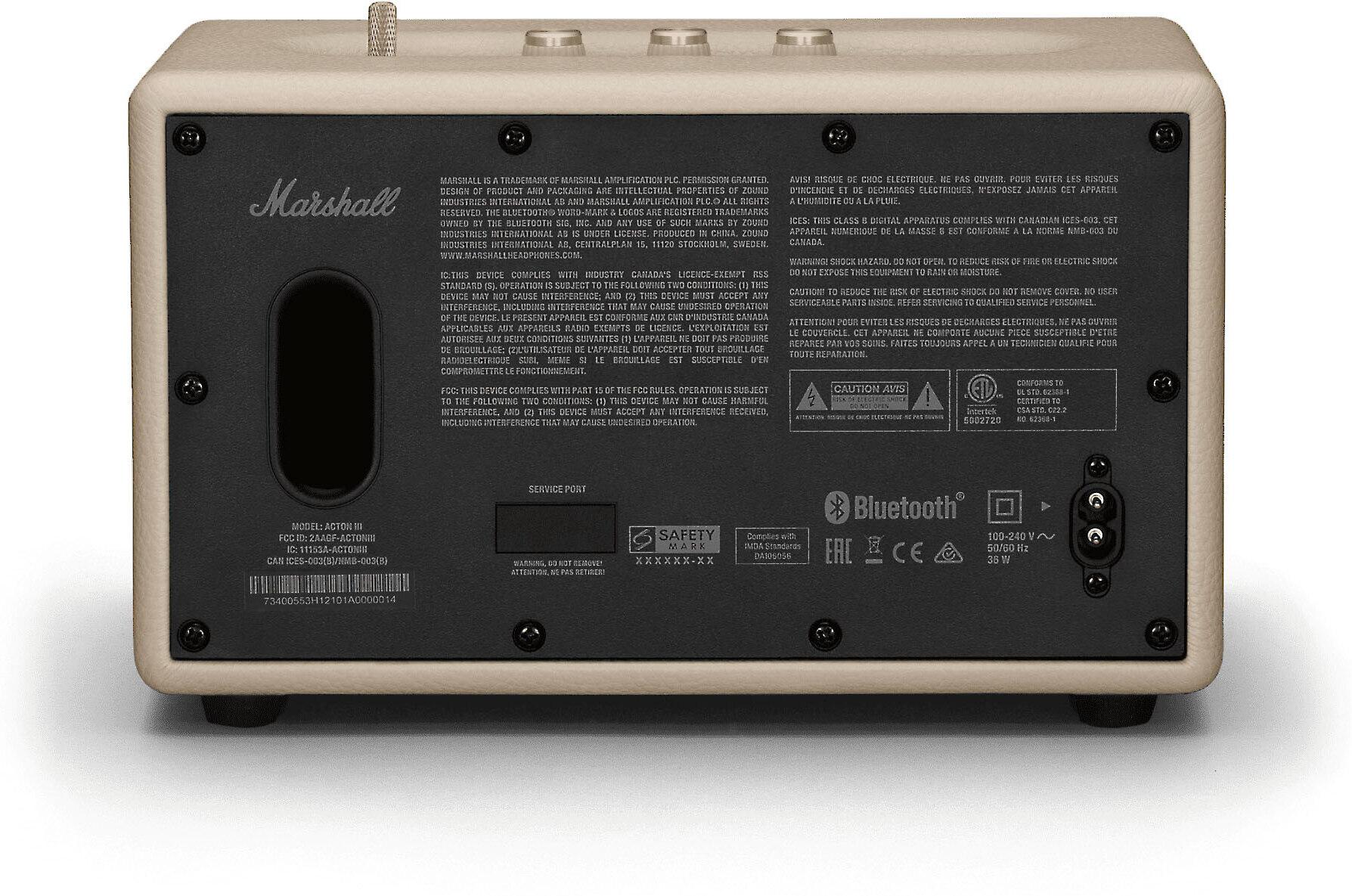
The Marshall, requiring constant AC power and weighing over 6 pounds, is strictly a home unit. It's not designed for portable use, which isn't a criticism but rather a reflection of its focused purpose.
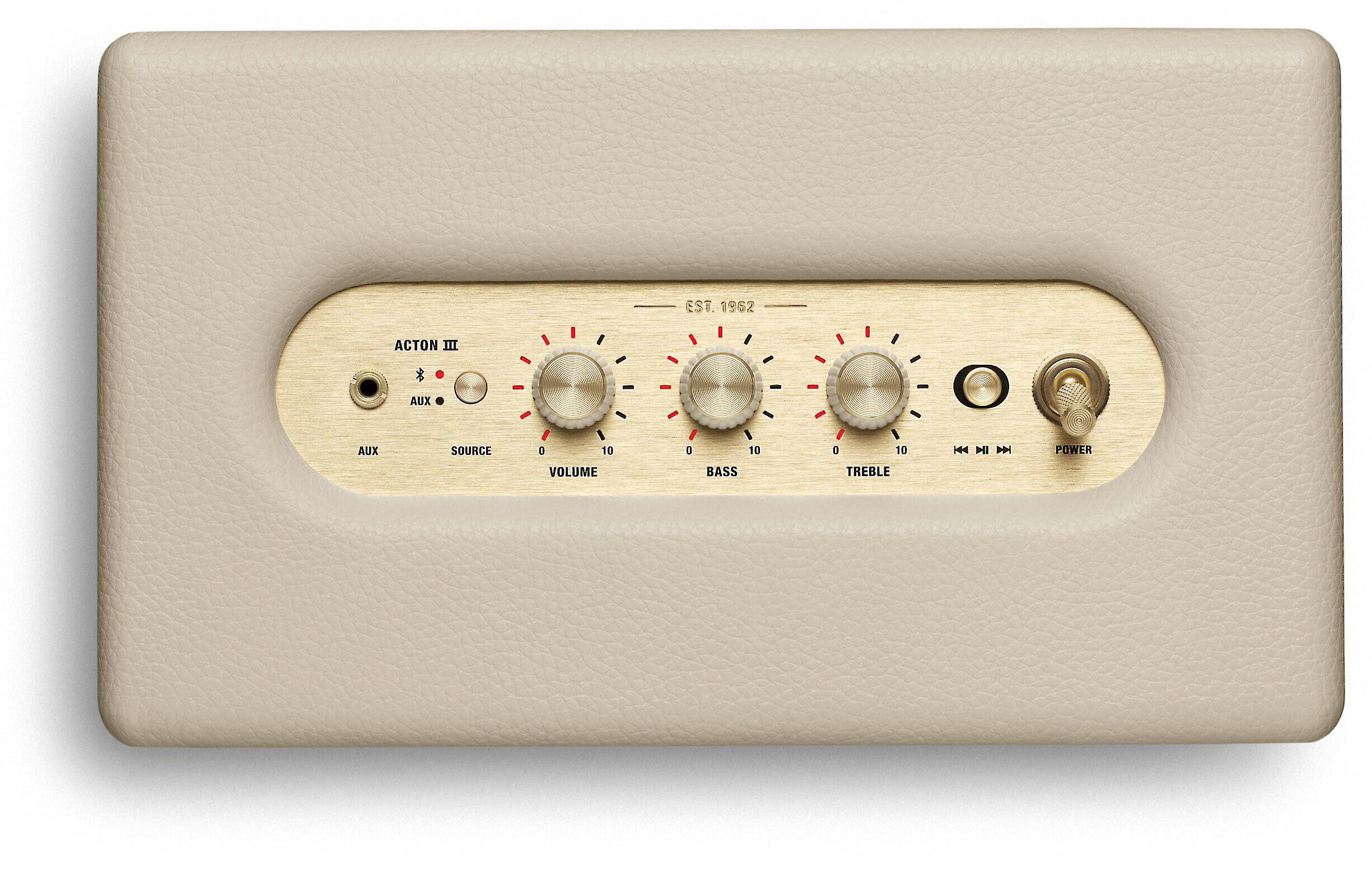
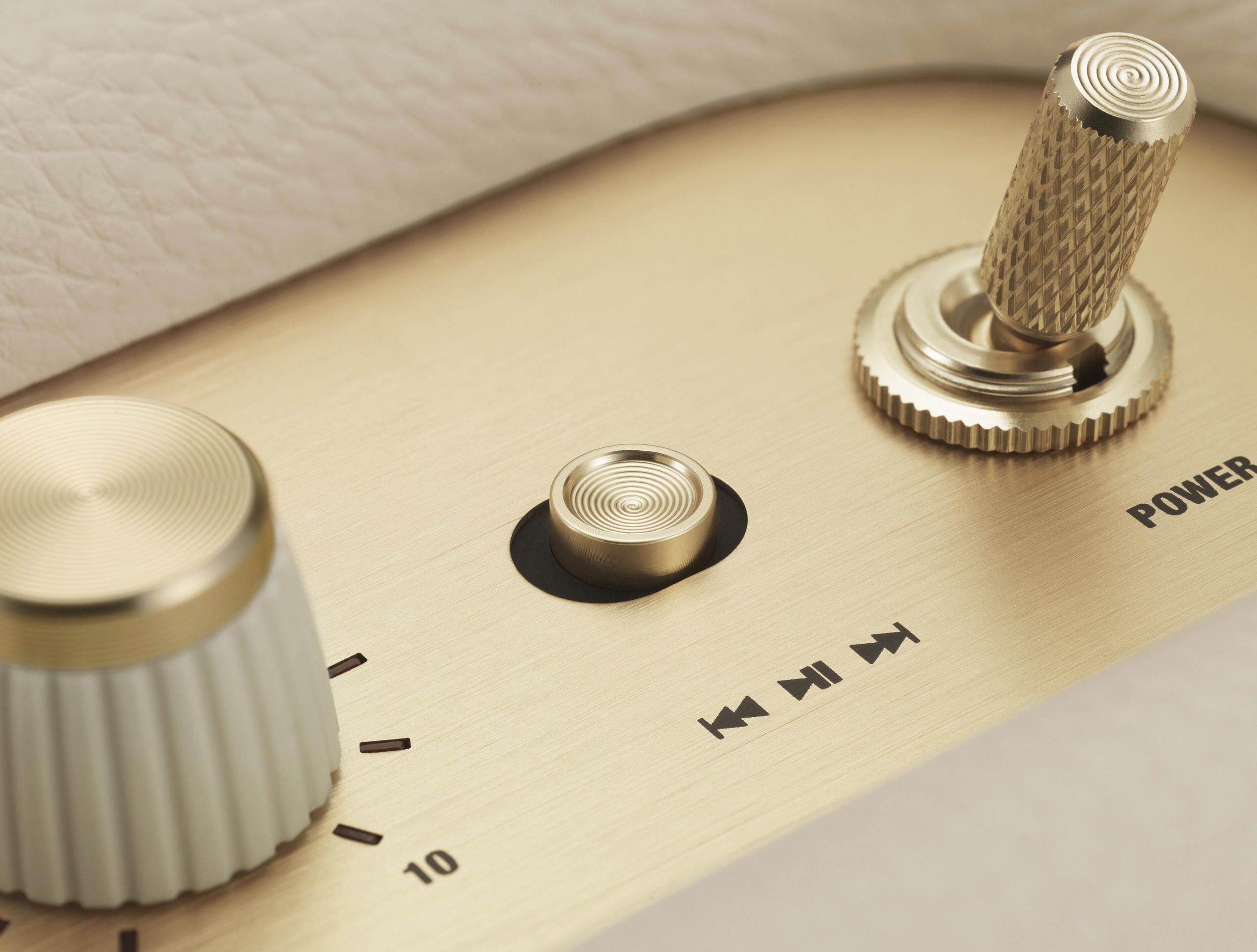
The Marshall Acton III justifies its higher price through superior sound quality and home audio focus. The physical controls are a joy to use, and the classic design adds aesthetic value. However, the lack of smart features or Wi-Fi connectivity at this price point may disappoint some users.
The Sony XE300 offers impressive value at $199.99, especially considering its versatility. The rugged construction and water resistance mean you're less likely to need a replacement, and the modern feature set includes useful additions like quick charging and multi-speaker pairing.
Consider your primary use case:
For Home Audio:
For Flexible Use:
Both speakers represent current technology well, but they take different approaches. The Marshall focuses on traditional audio excellence with modern wireless convenience, while Sony embraces newer technologies for maximum versatility.
The Acton III could benefit from adding Wi-Fi connectivity and smart features in future iterations. The XE300's main area for improvement would be expanding its soundstage and adding an auxiliary input for wired connections.
The choice between these speakers ultimately depends on your priorities. The Marshall Acton III excels as a premium home audio solution with superior sound quality, while the Sony XE300 offers exceptional versatility and value for those needing a go-anywhere speaker. Both represent excellent choices within their intended use cases, and neither disappoints in terms of build quality or performance.
Consider your typical listening environment, whether you need portability, and your budget. If you're primarily using the speaker in one room and value audio quality above all, the Marshall is worth the premium. If you want flexibility and durability with very good (though not quite Marshall-level) sound quality, the Sony offers better value and practicality.
| Marshall Acton III ($279.99) | Sony XE300 ($199.99) |
|---|---|
| Power Output - Determines maximum volume and sound clarity | |
| 60W total (30W woofer + 2x15W tweeters) | Single 20W driver with dual passive radiators |
| Speaker Configuration - Impacts sound quality and stereo separation | |
| 4" woofer + two 0.75" tweeters | Single X-Balanced driver with Line-Shape Diffuser |
| Frequency Response - Range of reproducible sound | |
| 45-20,000 Hz (deeper bass response) | 20-20,000 Hz (wider range but less power in bass) |
| Size & Weight - Affects placement options and portability | |
| 10.24 x 6.69 x 5.91" / 6.28 lbs (stationary) | 4.13 x 9.37 x 4.69" / 2.43 lbs (portable) |
| Power Source - Determines mobility and placement | |
| AC power only (requires outlet) | 24-hour battery life with quick charging |
| Durability Rating - Important for versatile use | |
| No water/dust resistance (indoor only) | IP67 waterproof/dustproof rated |
| Connectivity Options - Flexibility in audio sources | |
| Bluetooth 5.2 + 3.5mm aux input | Bluetooth 5.2 with LDAC support |
| Additional Features - Extra functionality | |
| Physical EQ controls, placement compensation | Party Connect, stereo pair, hands-free calls |
| Sound Dispersion - How sound fills the room | |
| Traditional forward-facing stereo | 360-degree with Line-Shape Diffuser |
| Primary Use Case - Best suited for | |
| Premium home audio, dedicated listening space | Portable use, outdoor events, multiple environments |
The Marshall Acton III delivers superior sound quality with its 60W total power and dedicated woofer/tweeter setup. While the Sony XE300 sounds good for a portable speaker, it can't match the Marshall's room-filling stereo sound and bass response.
The Sony XE300 is specifically designed for outdoor use with its IP67 waterproof rating and 24-hour battery life. The Marshall Acton III is not suitable for outdoor use as it requires AC power and has no weather protection.
The Marshall Acton III costs $279.99, while the Sony XE300 is priced at $199.99, making the Sony more budget-friendly with an $80 difference.
The Sony XE300 offers 24 hours of battery life and features quick charging. The Marshall Acton III doesn't have a battery and must be plugged into AC power at all times.
Yes, both the Marshall Acton III and Sony XE300 feature Bluetooth 5.2 connectivity for easy pairing with smartphones and other devices.
The Sony XE300 is better for parties due to its portability and Party Connect feature that can link multiple speakers. The Marshall Acton III provides better sound quality but is limited by its need for AC power.
The Marshall Acton III works better for TV audio due to its superior stereo separation and included aux input. The Sony XE300 can work but isn't optimized for this use case.
The Sony XE300 is significantly more durable with its IP67 rating for water and dust resistance. The Marshall Acton III is designed for indoor use only and lacks weatherproofing.
The Marshall Acton III is better for dedicated home audio in small spaces, offering superior sound quality. However, the Sony XE300 offers more flexibility if you want to move it between rooms.
Neither the Marshall Acton III nor the Sony XE300 has built-in voice assistant support. The Sony does include a microphone for hands-free calls.
The Marshall Acton III delivers stronger, more defined bass with its dedicated 30W woofer. While the Sony XE300 has good bass for a portable speaker, it can't match the Marshall's low-end performance.
We've done our best to create useful and informative comparisons to help you decide what product to buy. Our research uses advanced automated methods to create this comparison and perfection is not possible - please contact us for corrections or questions. These are the sites we've researched in the creation of this article: bestbuy.com - youtube.com - bestbuy.com - pocket-lint.com - bestbuy.com - crutchfield.com - premiumsound.com.au - marshall.com - 2001audiovideo.com - youtube.com - t3.com - bestbuy.com - youtube.com - bestbuy.com - sony.co.uk - soundguys.com - bestbuy.com - cgmagonline.com - sony.com - sony.com - bestbuy.com - sony.com - electronics.sony.com - helpguide.sony.net

Privacy Policy
Terms and Conditions - Affiliate Policy
Home Security
© Copyright 2008-2026.
11816 Inwood Rd #1211, Dallas, TX 75244