

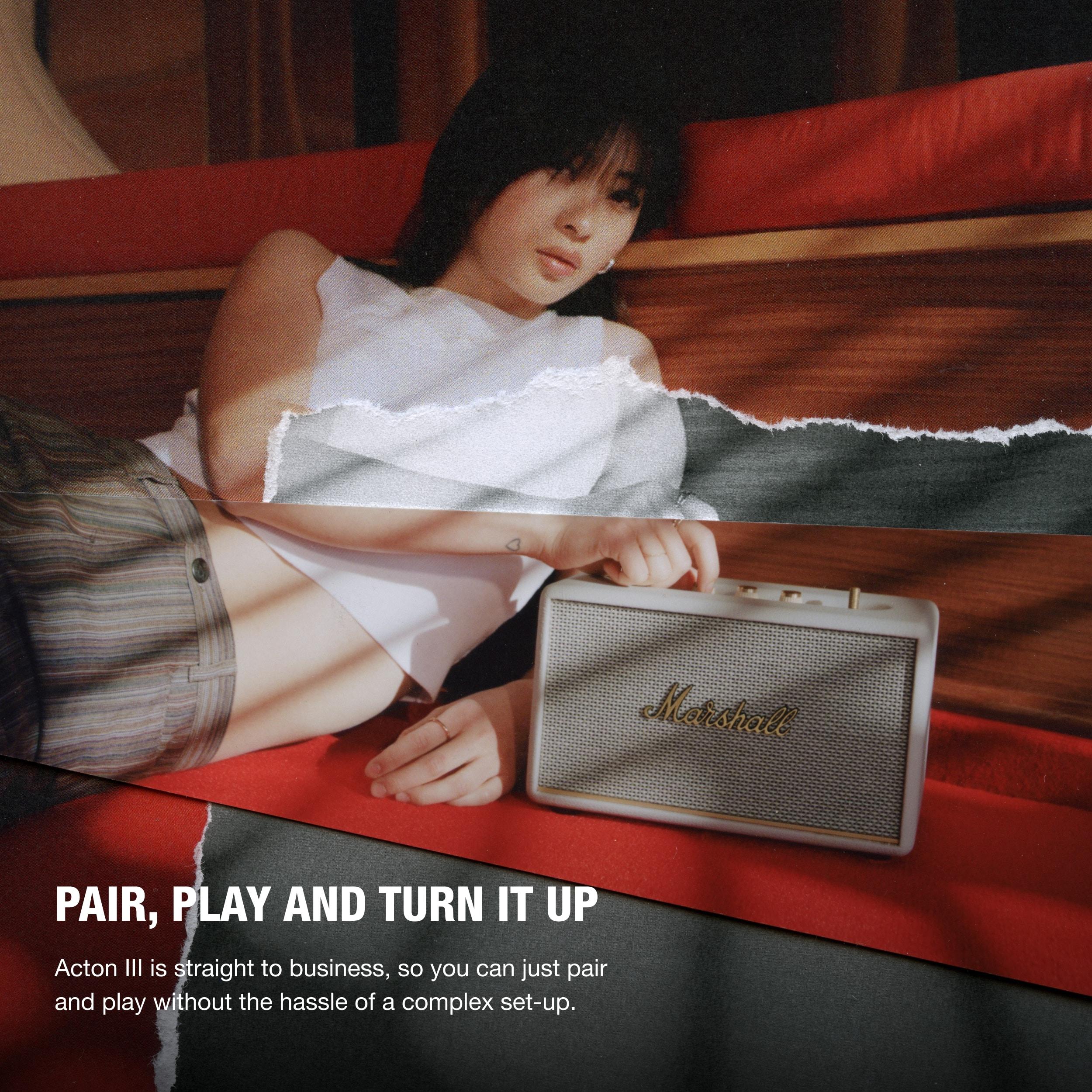
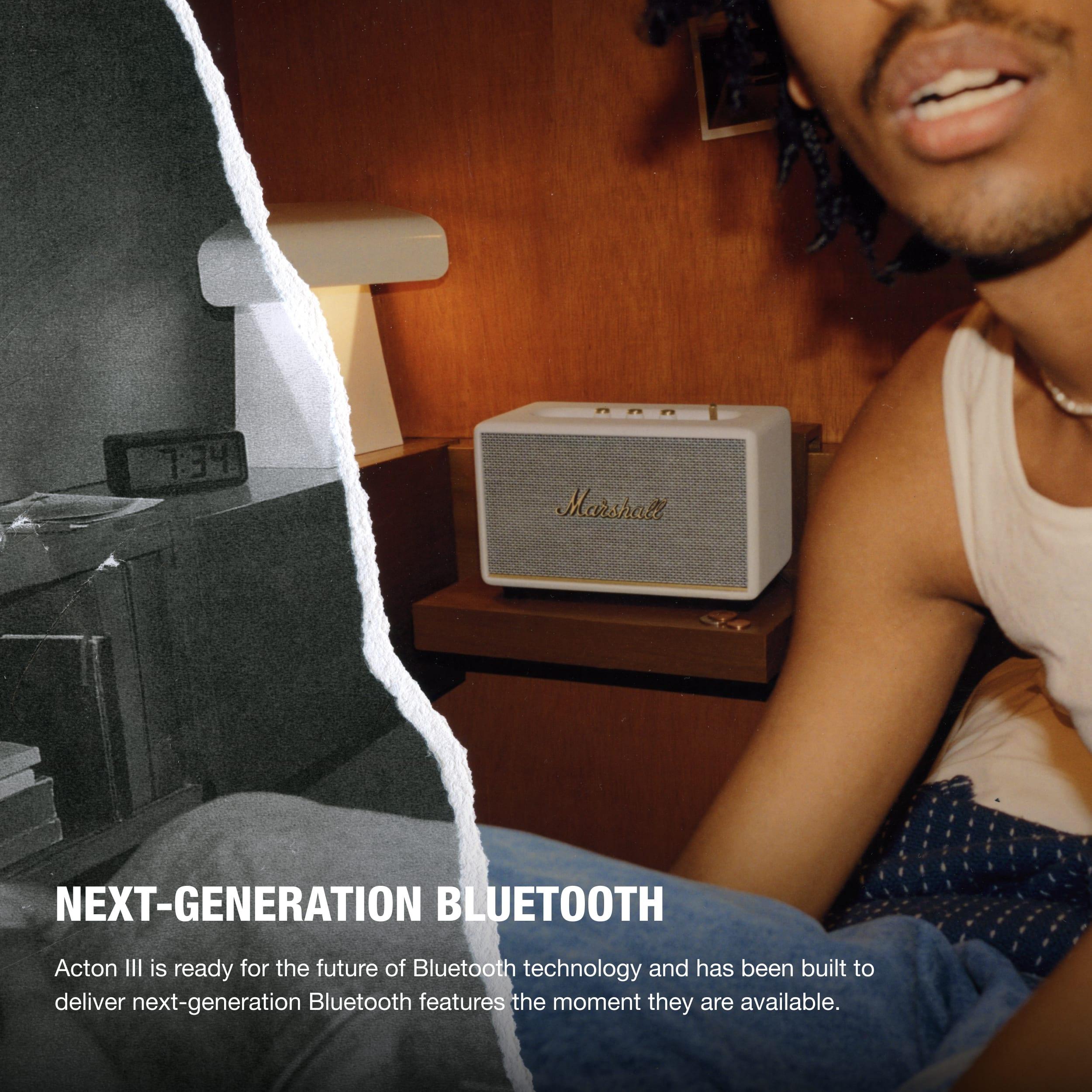
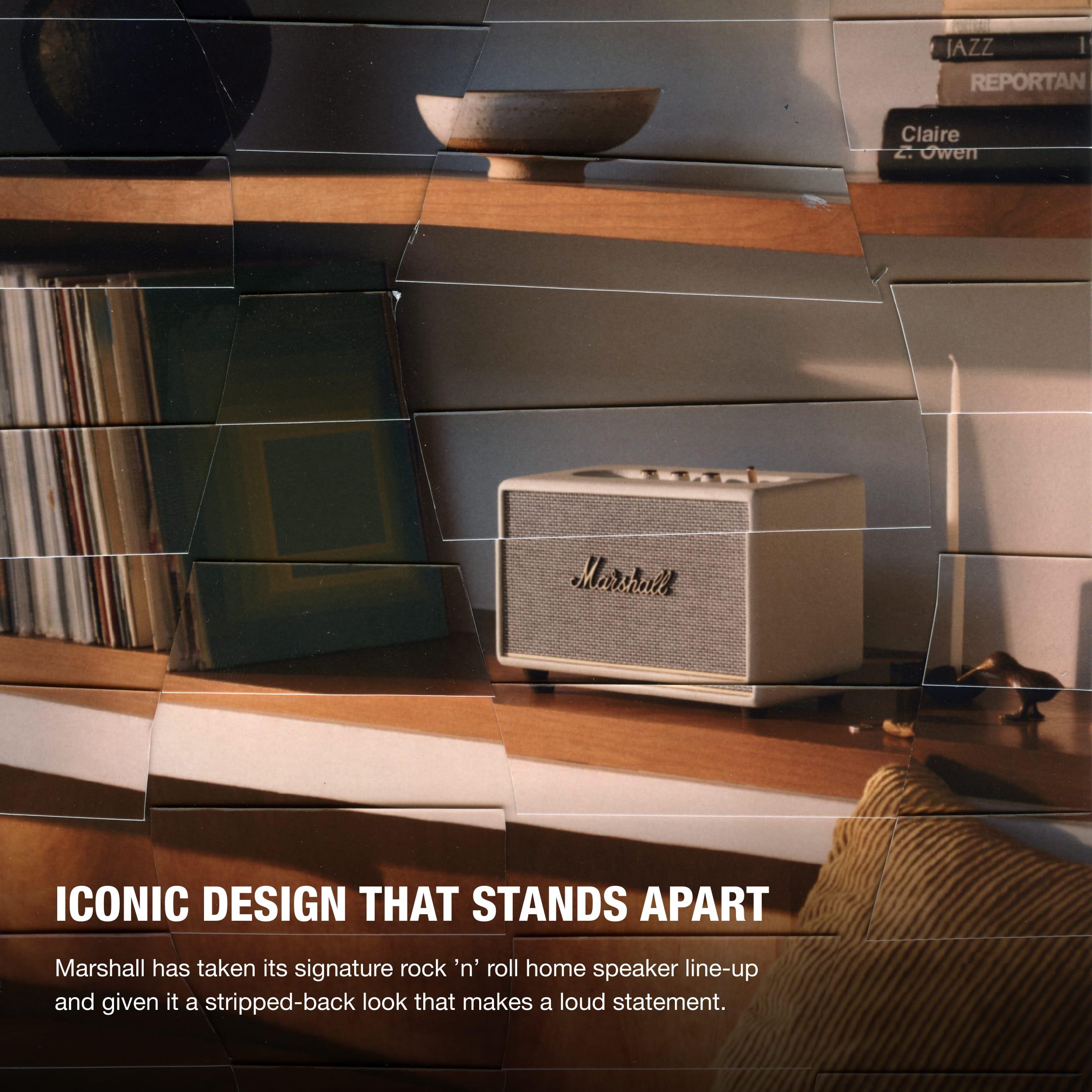

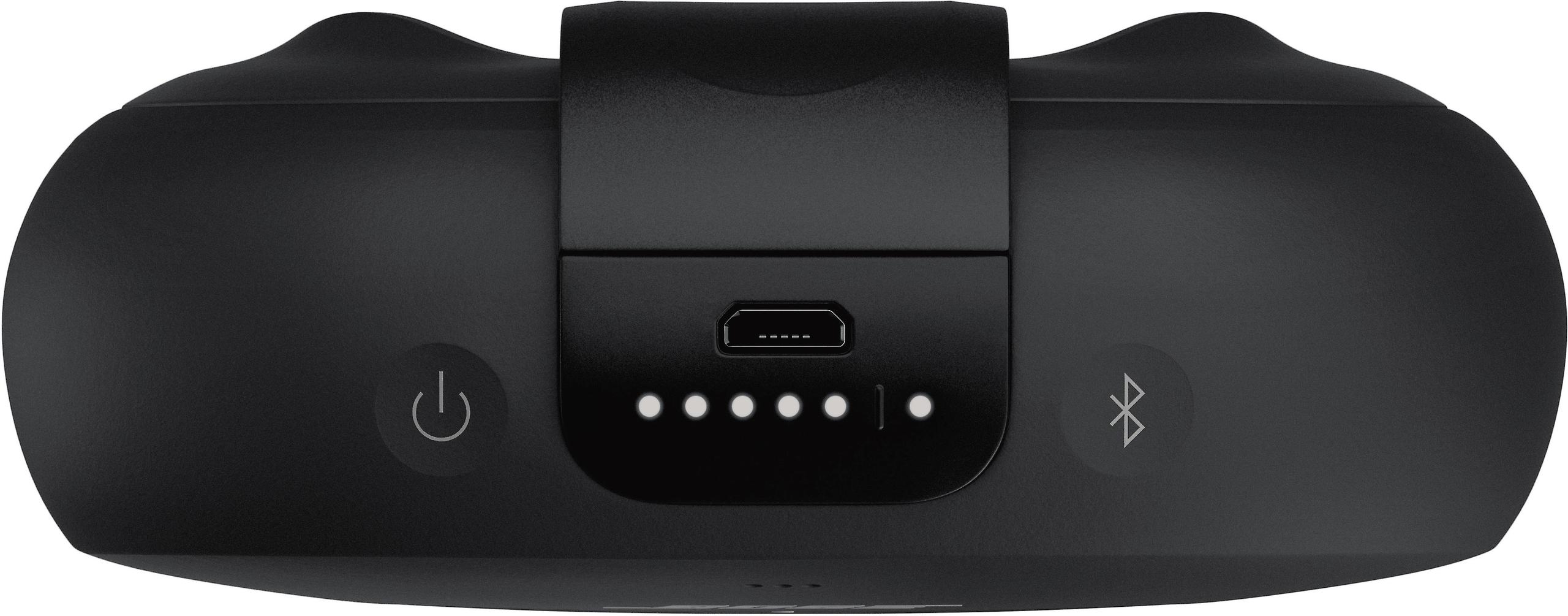
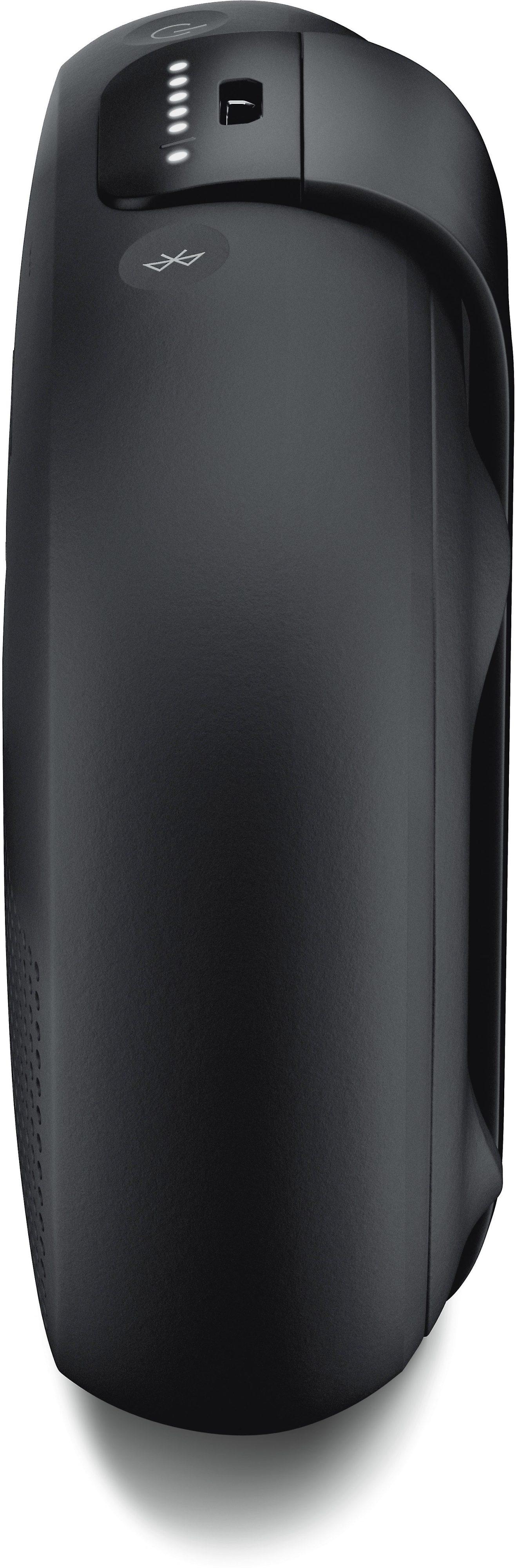
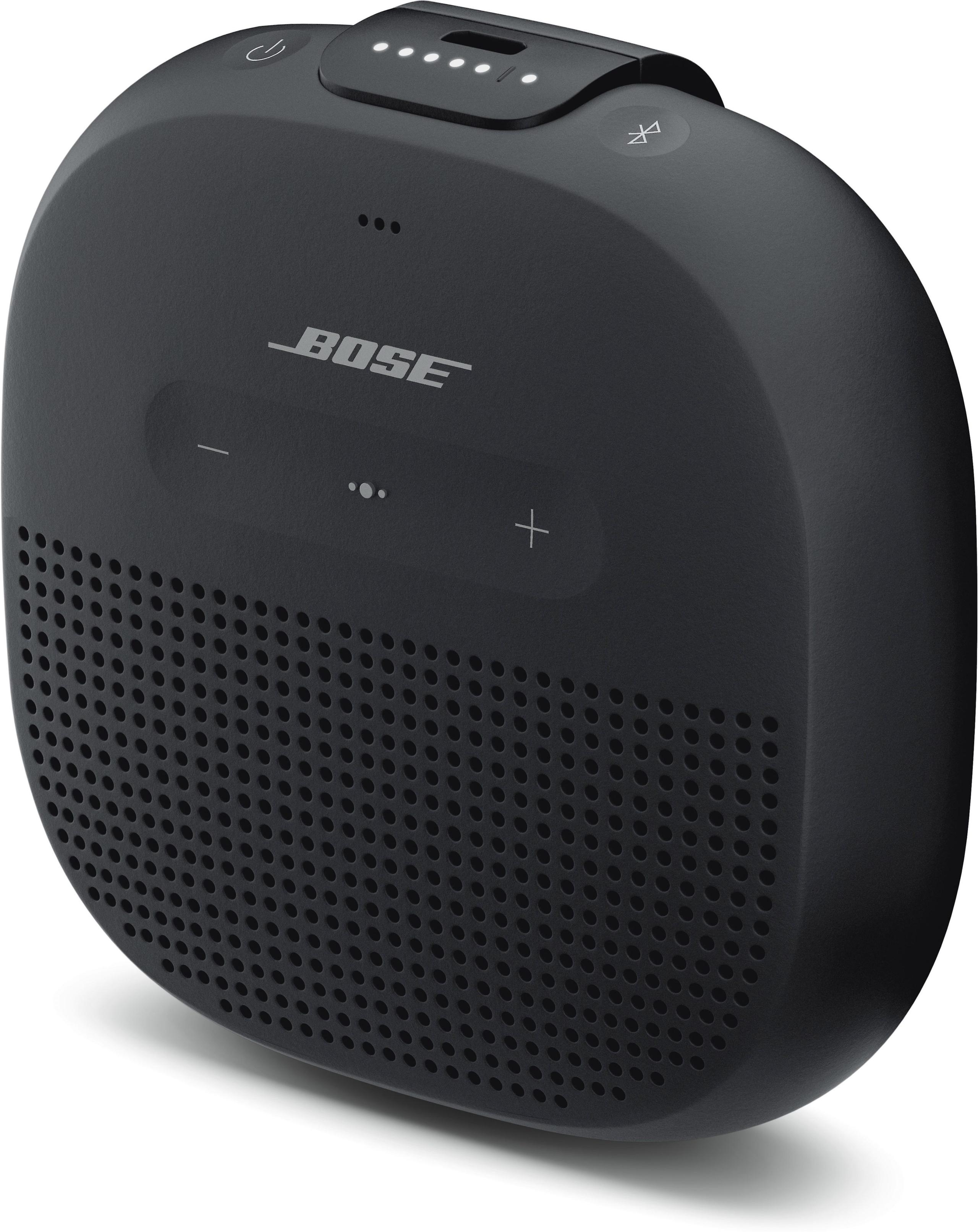
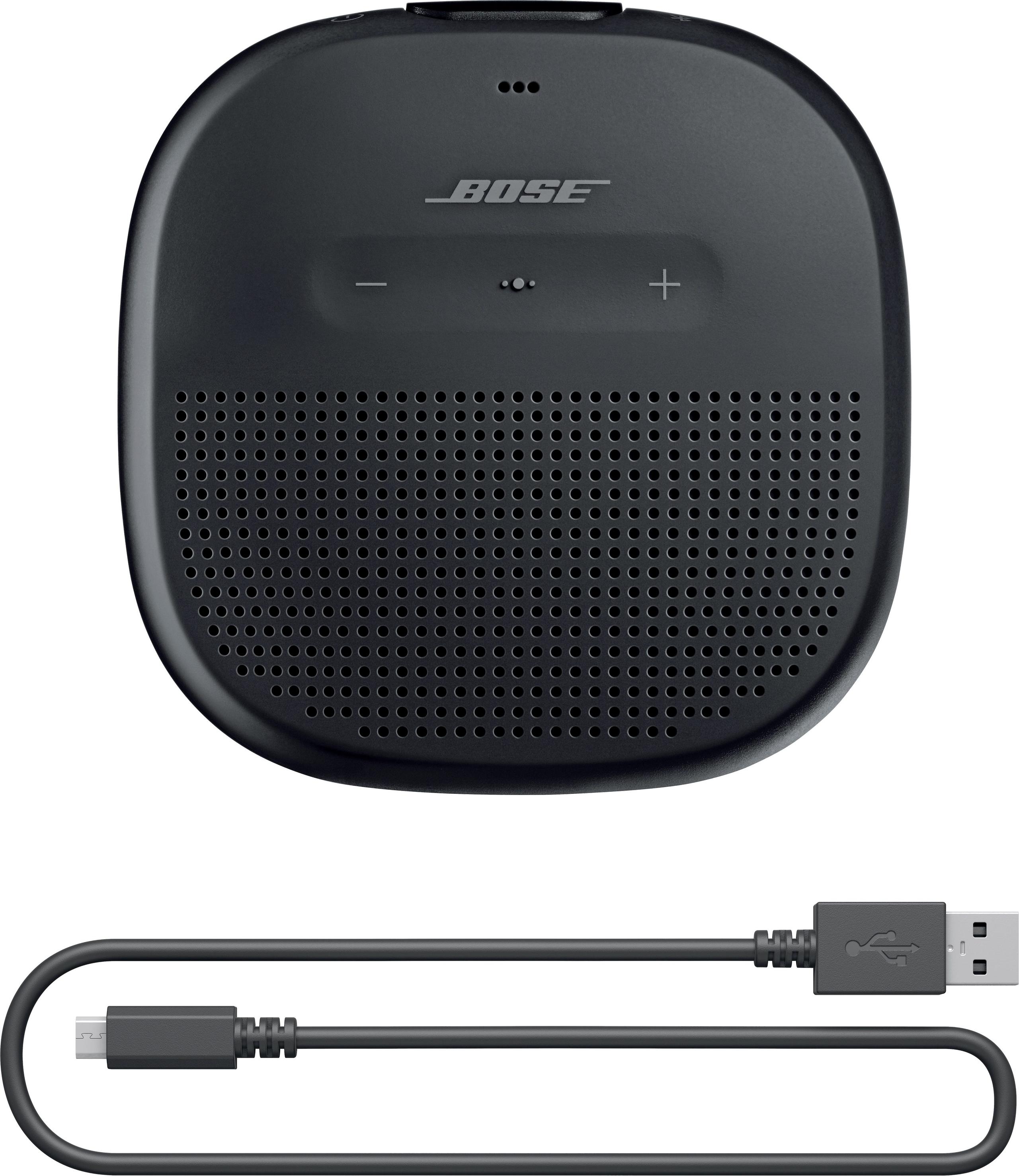
When it comes to wireless speakers, the Marshall Acton III ($279) and Bose SoundLink Micro ($99) represent two very different approaches to personal audio. Let's explore how these speakers serve different needs and help you decide which might be right for your situation.
Bluetooth speakers have evolved significantly over the past few years, with improvements in sound quality, connectivity, and versatility. The two speakers we're comparing today were released at different times - the SoundLink Micro in 2017 and the Acton III in 2022 - and this timing difference reflects in their technology and capabilities.
The category has split into distinct segments: premium home audio solutions that prioritize sound quality, and ultra-portable speakers designed for durability and convenience. This divergence has allowed manufacturers to optimize their products for specific use cases rather than trying to do everything adequately.
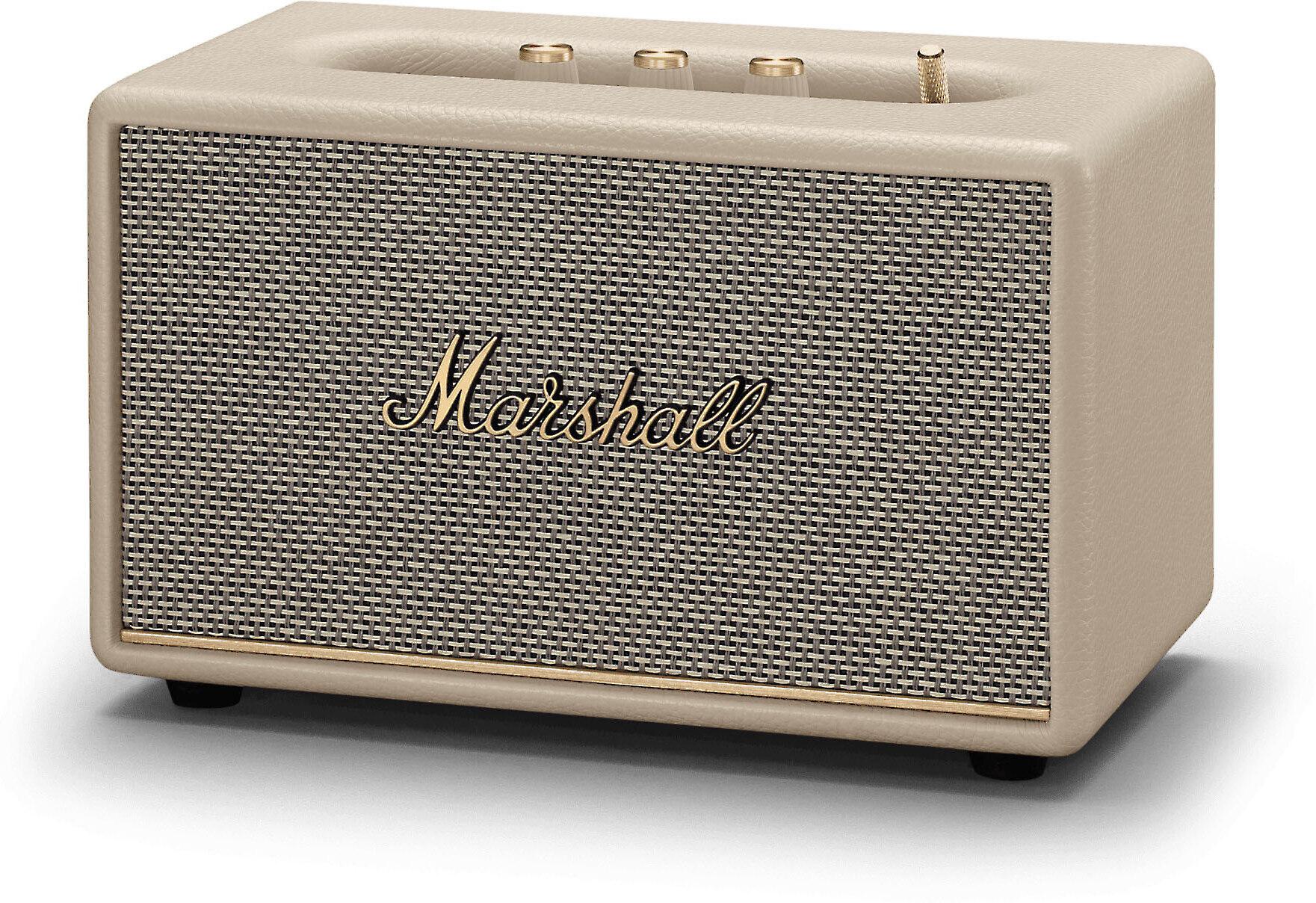
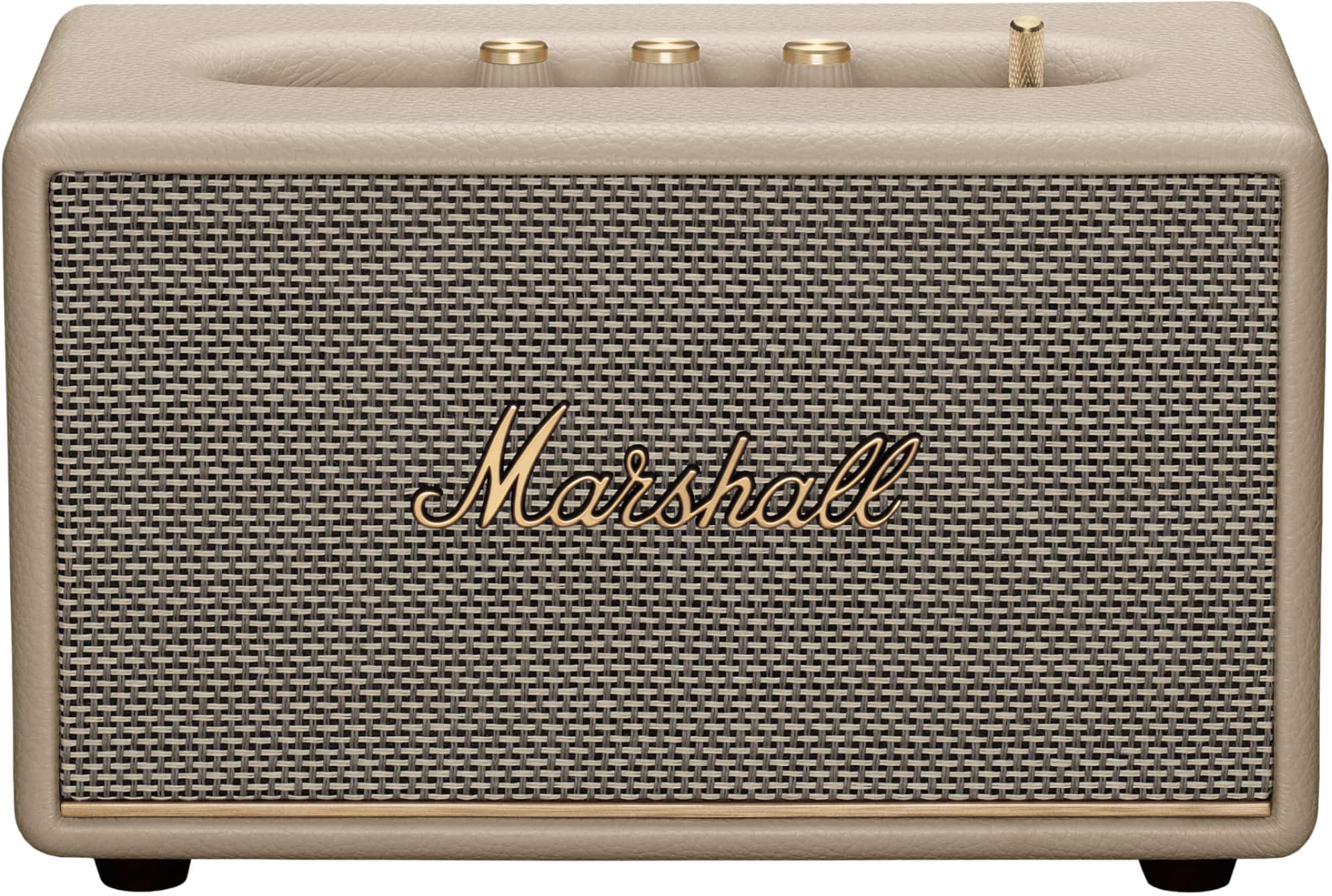
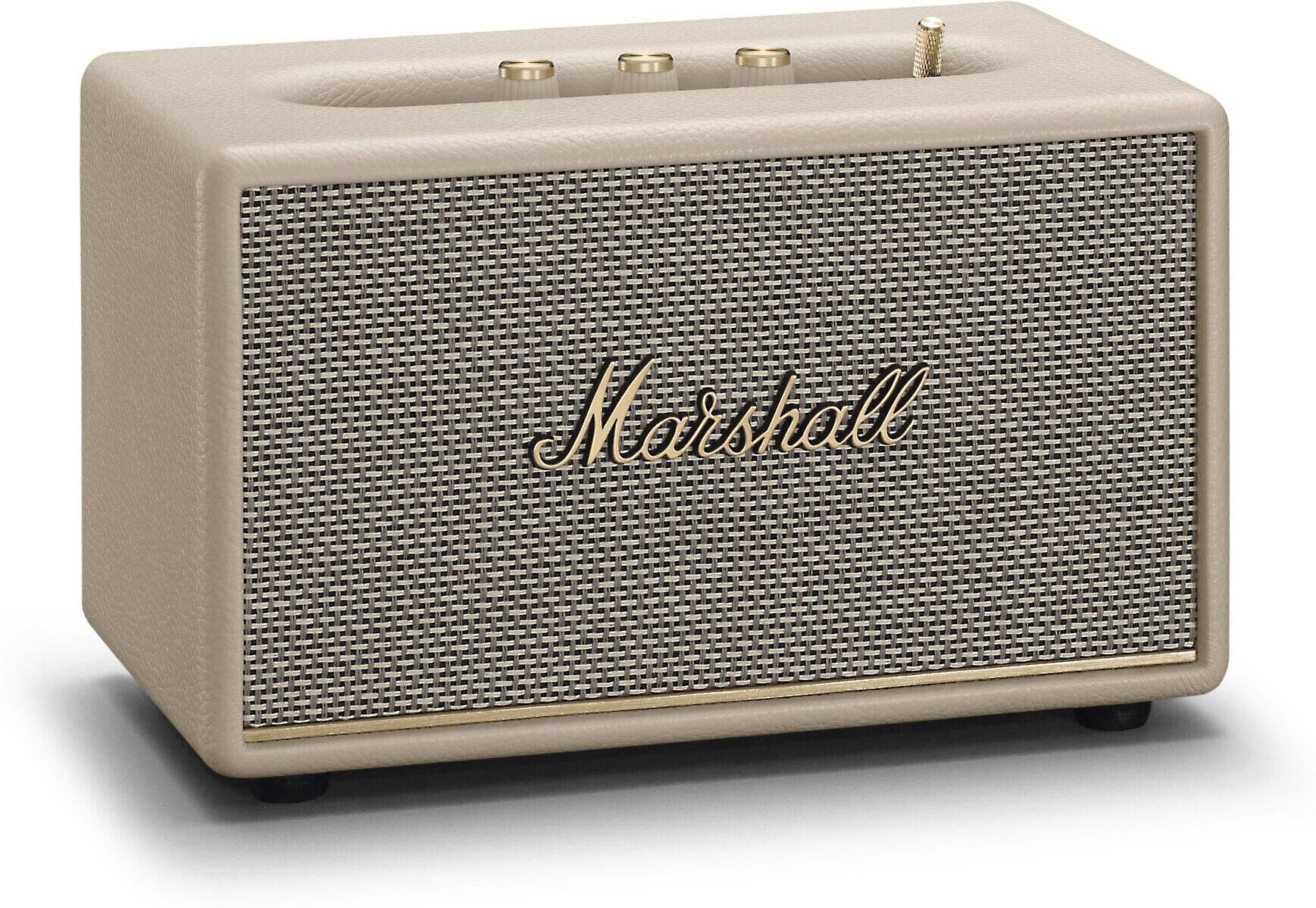
The Marshall Acton III delivers impressive room-filling sound through its three-amplifier system: one 30-watt amp driving the woofer (the main speaker that handles bass frequencies) and two 15-watt amps powering the tweeters (smaller speakers that handle high frequencies). This configuration allows for true stereo separation and more detailed sound reproduction.
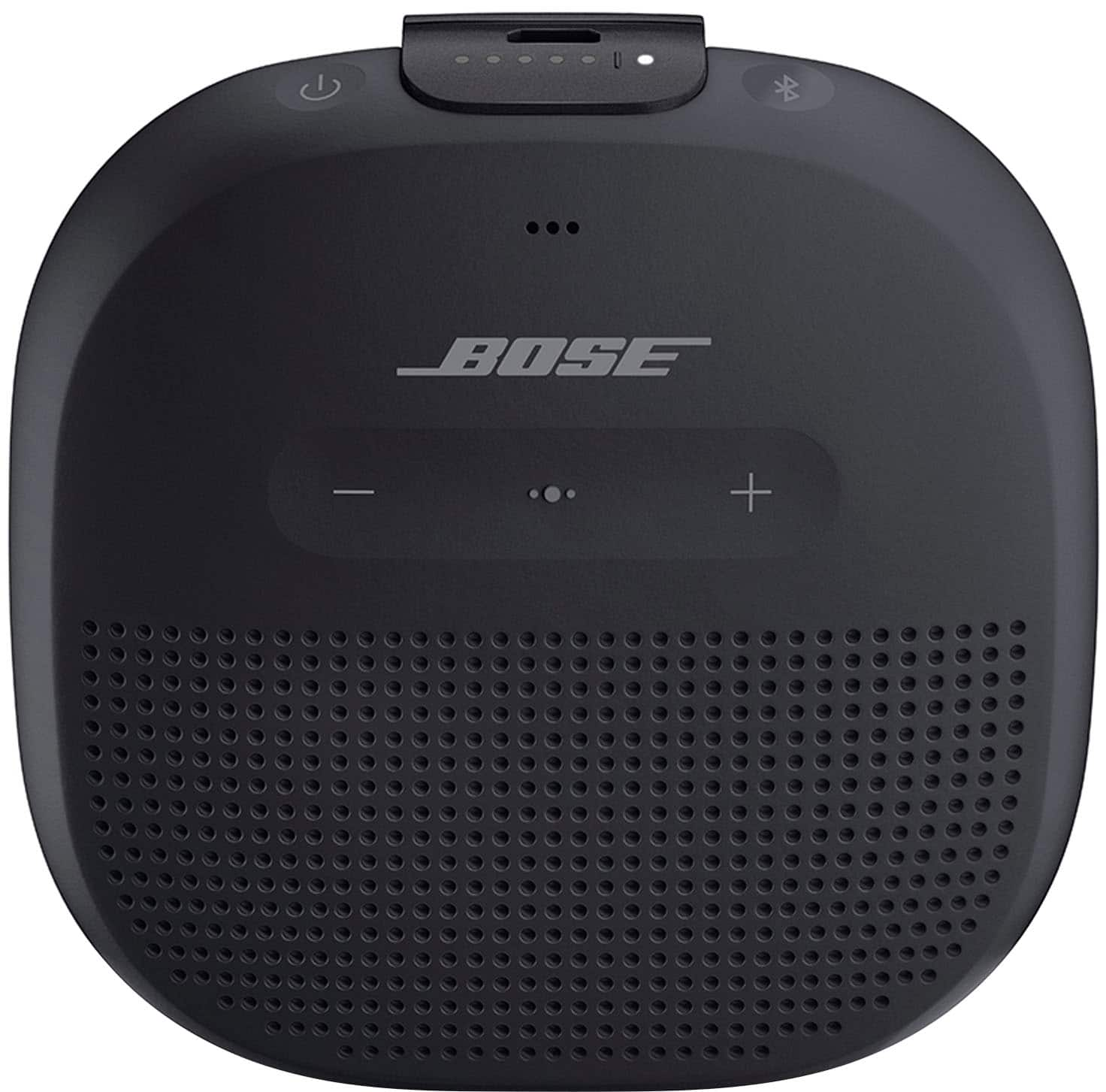
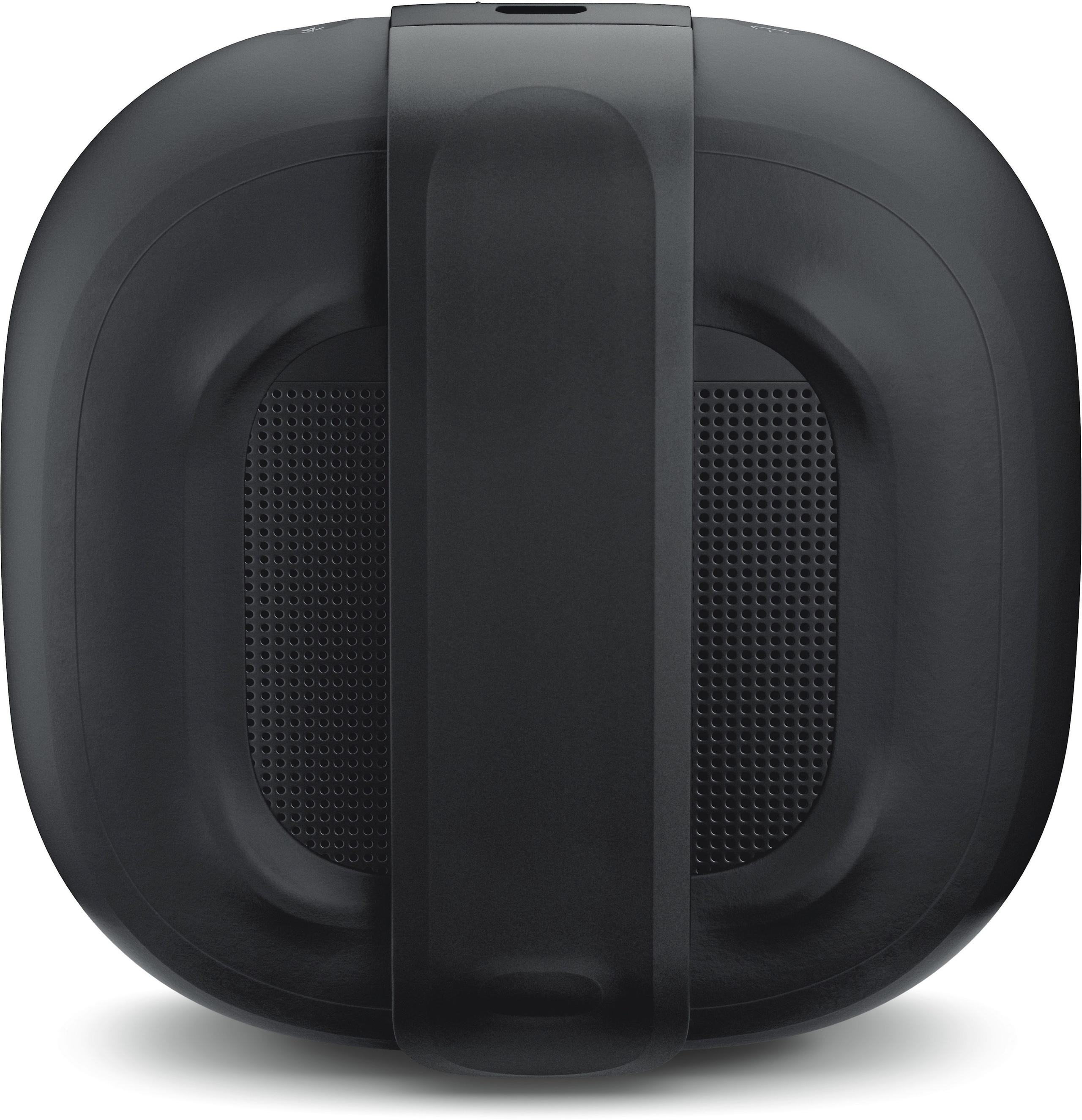
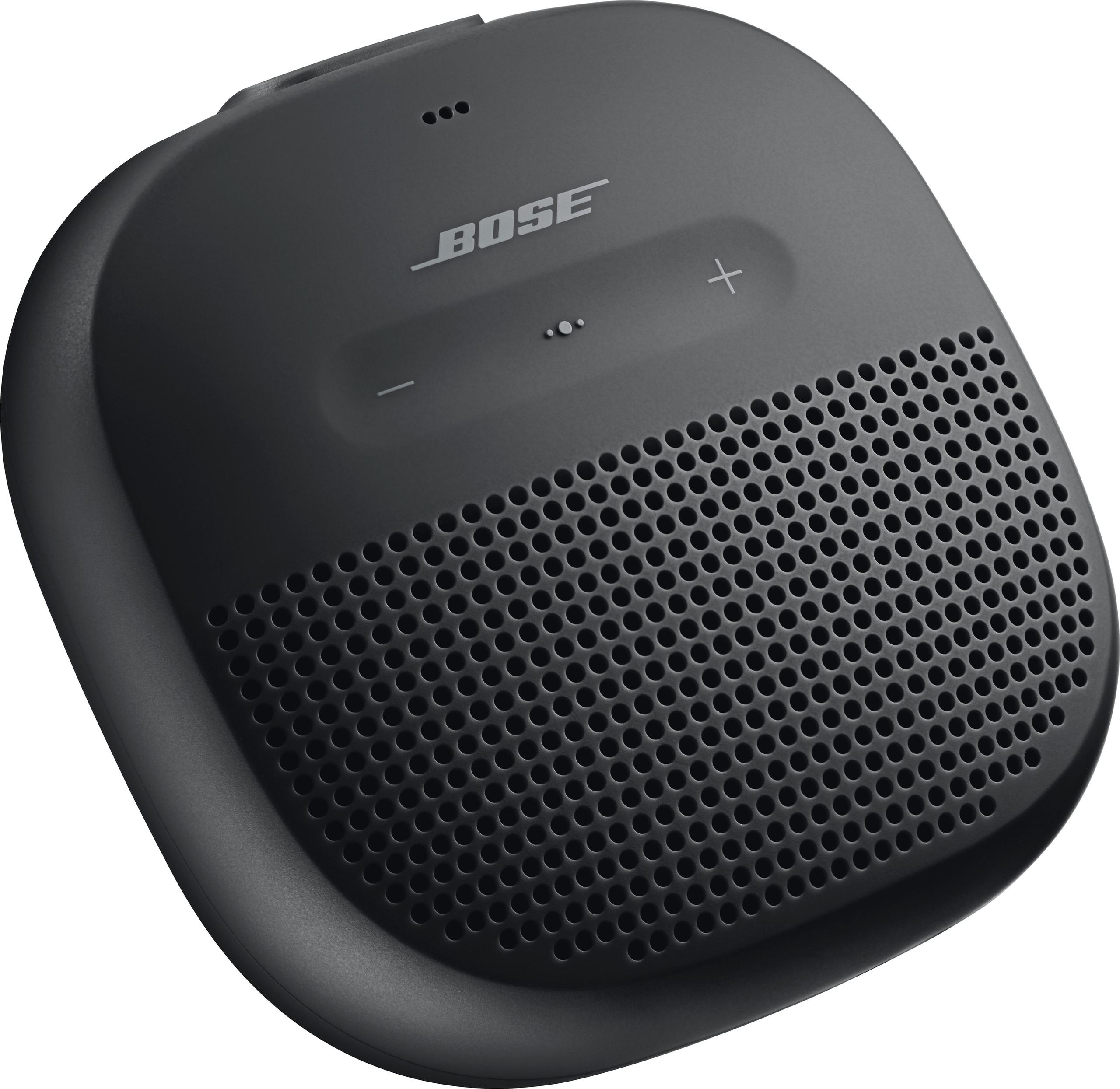
In contrast, the Bose SoundLink Micro uses a single custom-designed transducer (the technical term for the speaker driver) with dual passive radiators. Passive radiators are unpowered speakers that move in response to air pressure from the main driver, helping to produce more bass than you'd expect from such a small enclosure.
The Acton III's frequency response starts at 45Hz, allowing it to reproduce deep bass notes that you can feel as well as hear. This is particularly noticeable with genres like electronic music or movie soundtracks. The SoundLink Micro's frequency response begins at 75Hz, meaning it can't reproduce the lowest bass notes, though Bose's engineering makes the most of its limited size.
With its 60 watts of total power, the Acton III can easily fill a large room with clean, undistorted sound. It maintains clarity even at higher volumes, thanks to its Dynamic Loudness feature that automatically adjusts the tonal balance based on volume level.
The SoundLink Micro, while impressive for its size, has physical limitations on how loud it can play before distortion sets in. It's designed for close-range listening rather than filling large spaces.
The five-year gap between these products' releases is most evident in their Bluetooth implementations. The Acton III uses Bluetooth 5.2, which offers improved range, better stability, and lower power consumption. The SoundLink Micro's Bluetooth 4.2 is still functional but lacks some modern conveniences and may have more frequent connection drops.
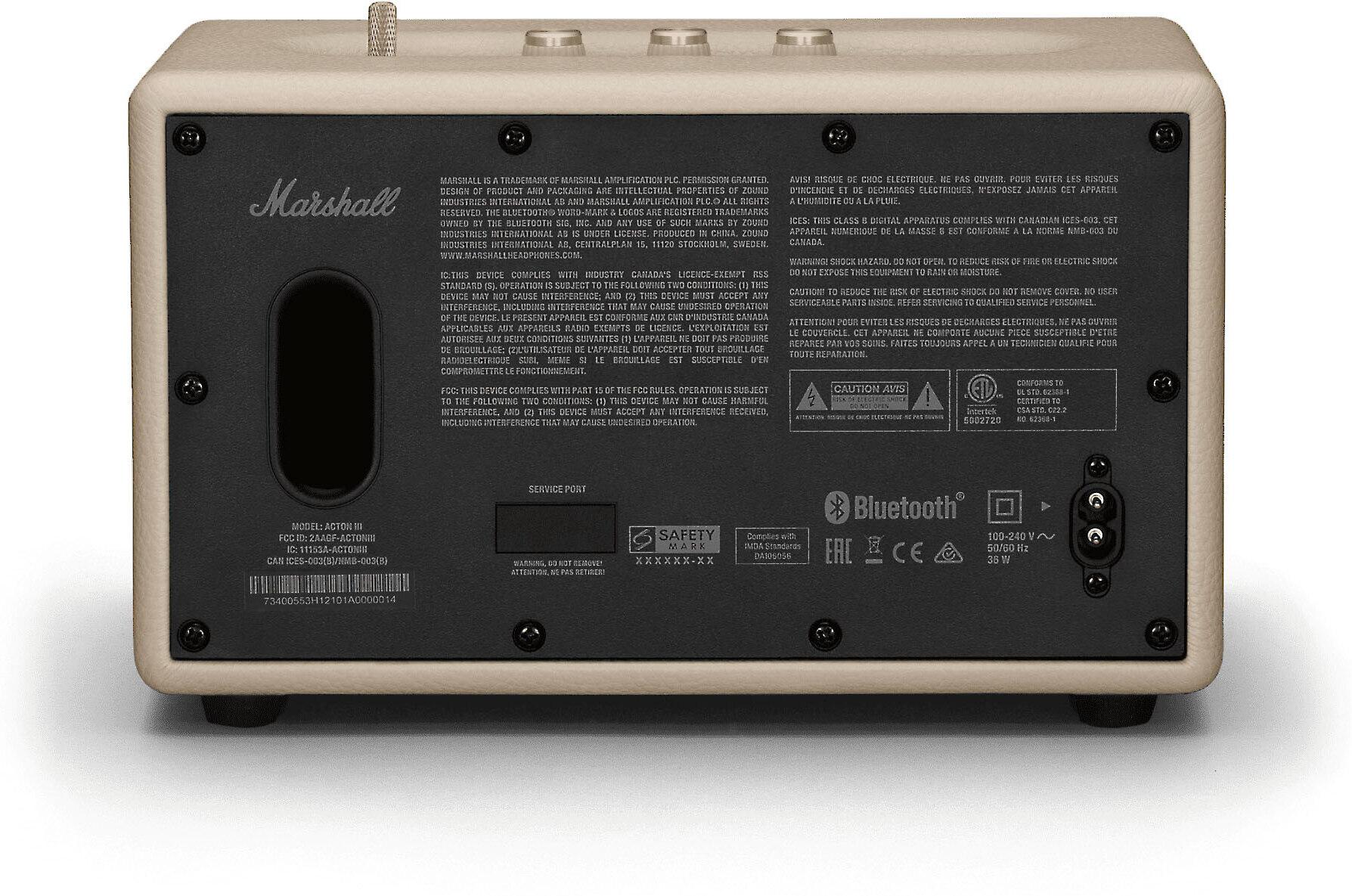
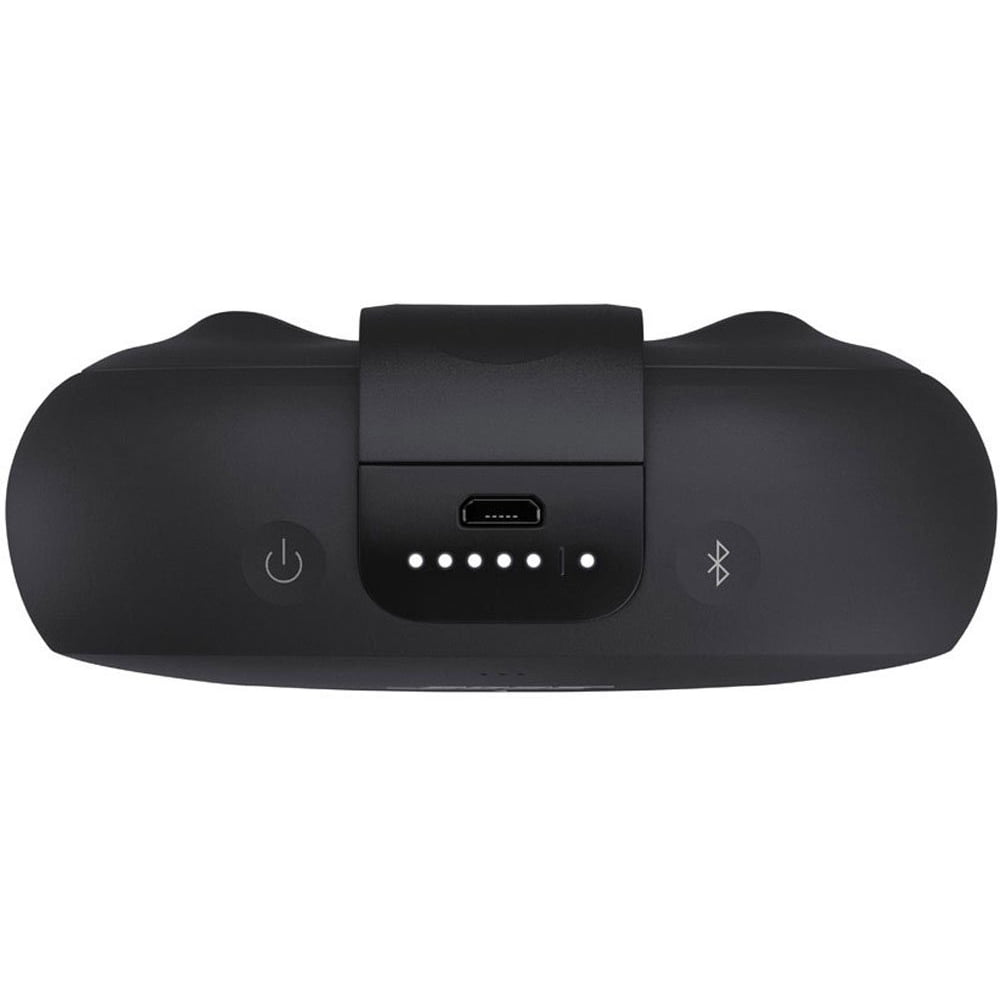
The Acton III includes a 3.5mm auxiliary input for connecting non-Bluetooth devices, while the SoundLink Micro is Bluetooth-only. However, the Bose can pair with other Bose speakers for stereo or party mode playback, a feature the Marshall lacks.
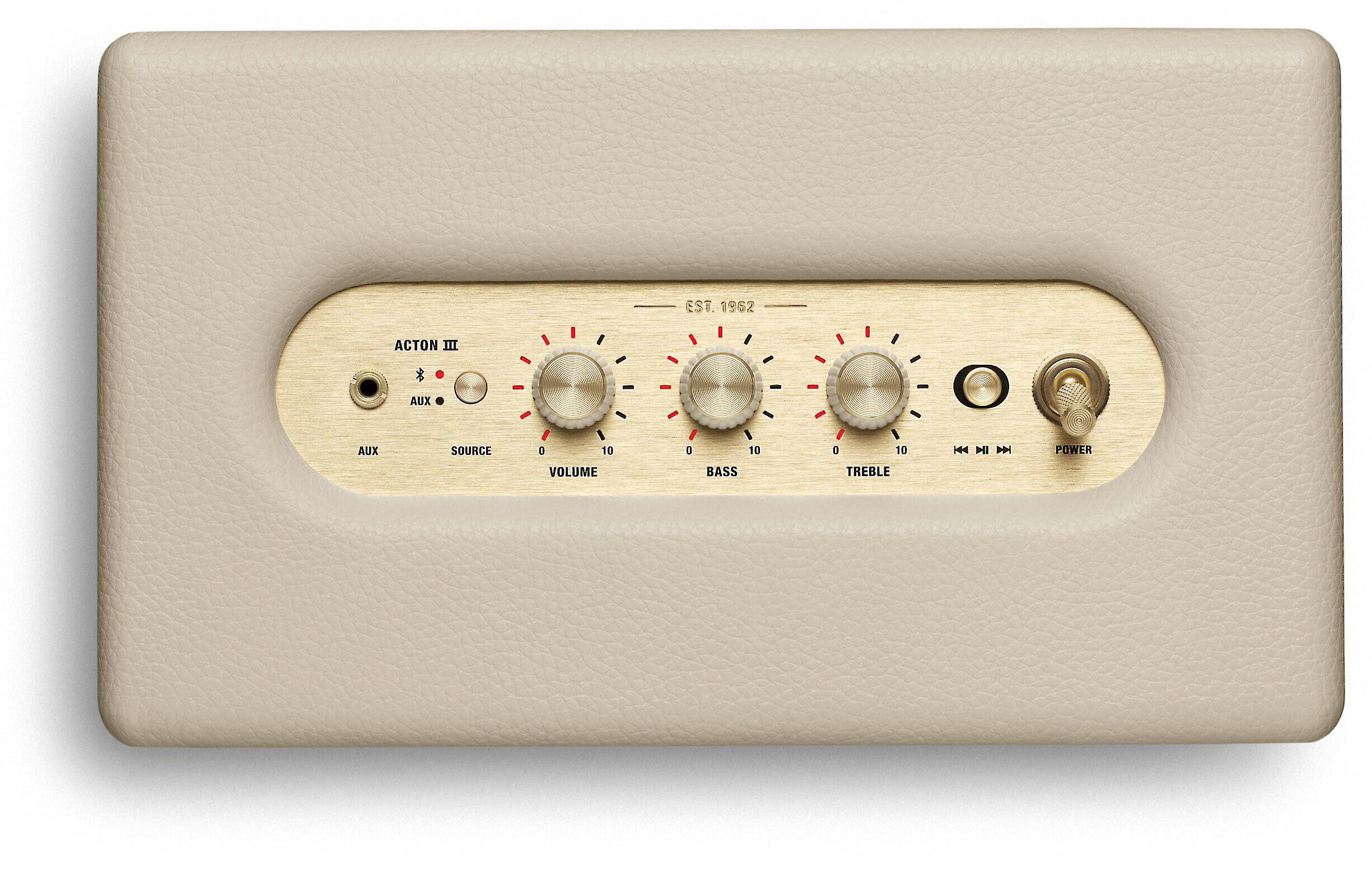
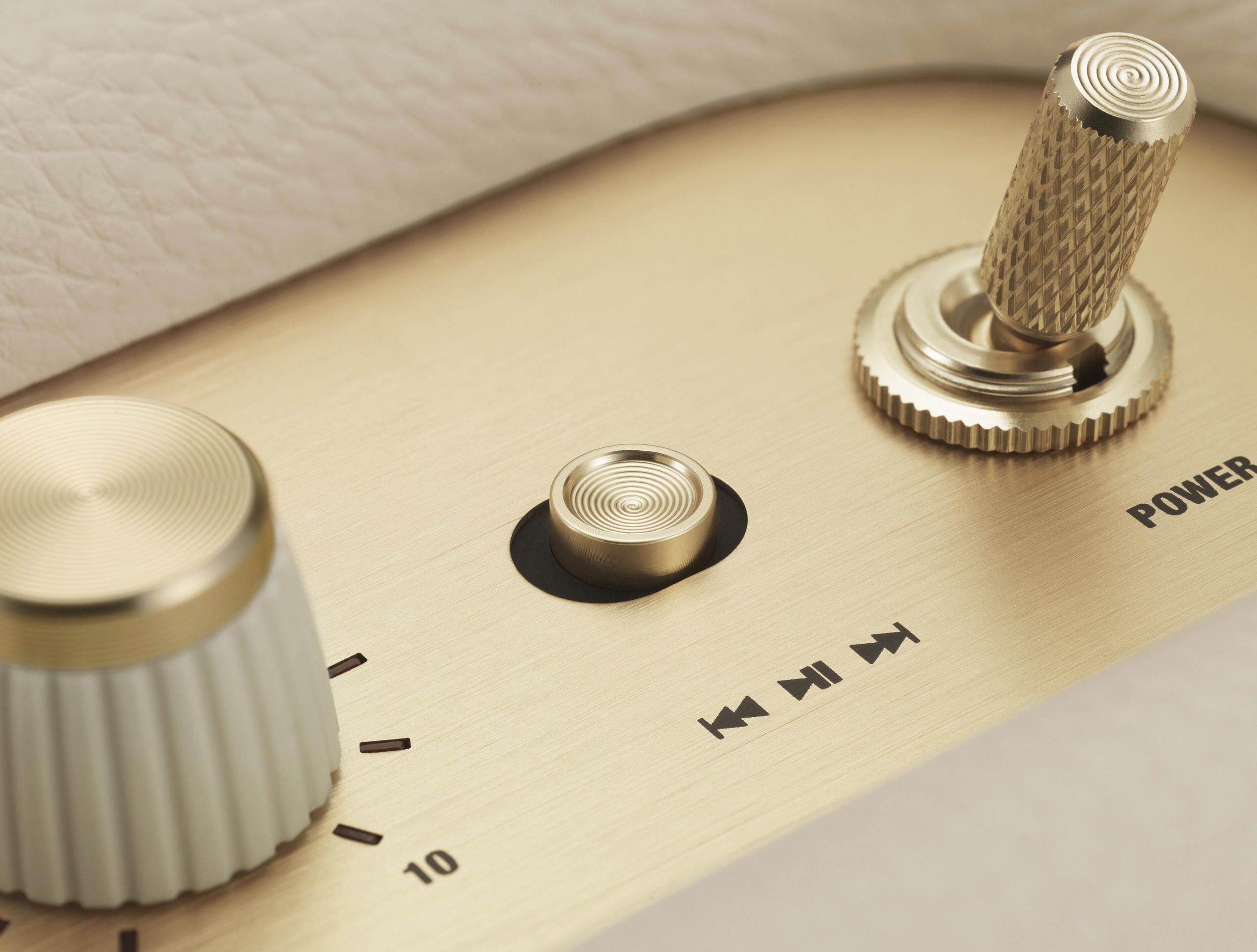
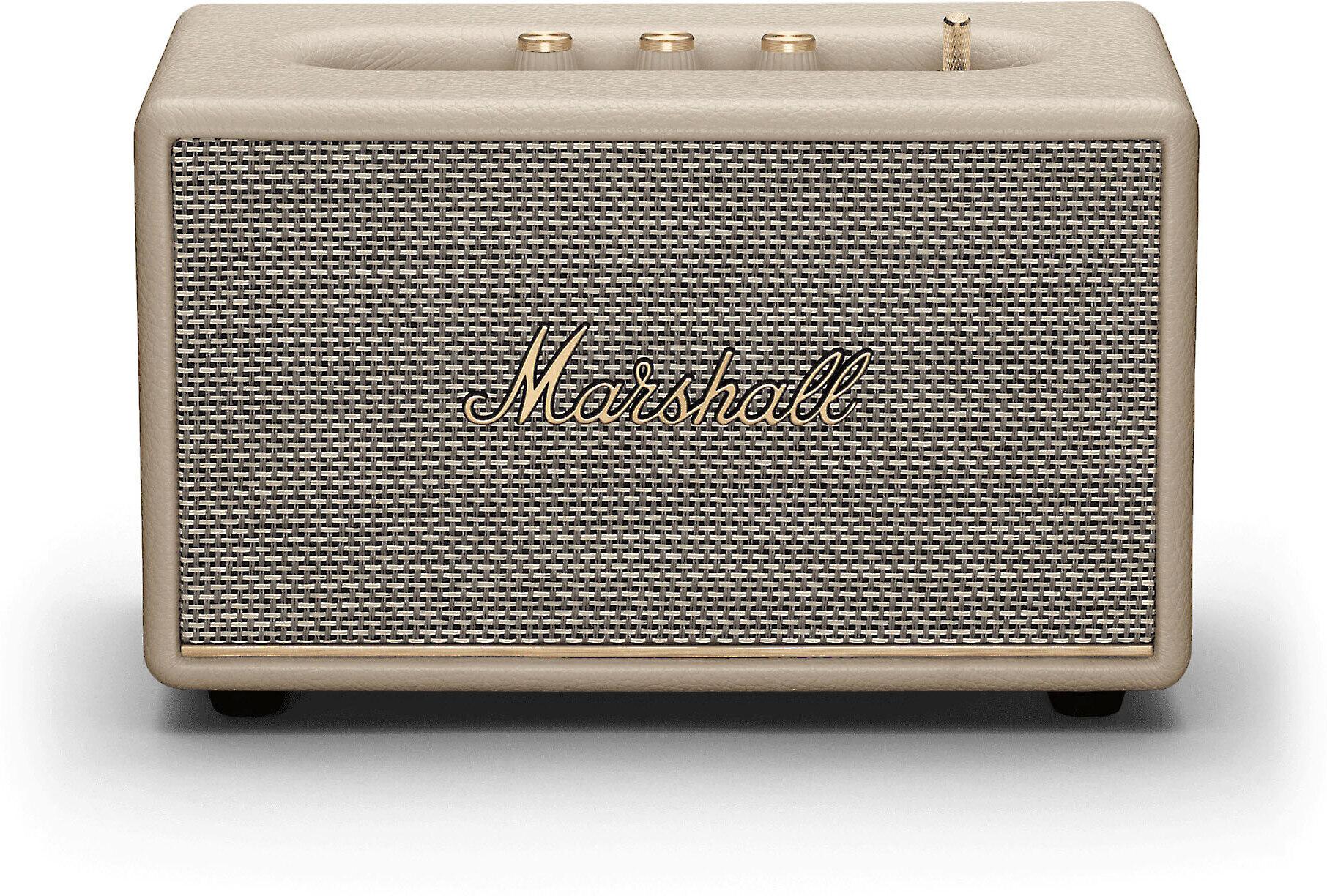
The Acton III embraces Marshall's heritage with a classic amplifier design, featuring metal grilles and tactile control knobs. It's built primarily for indoor use, with premium materials including recycled plastics and vegan leather.
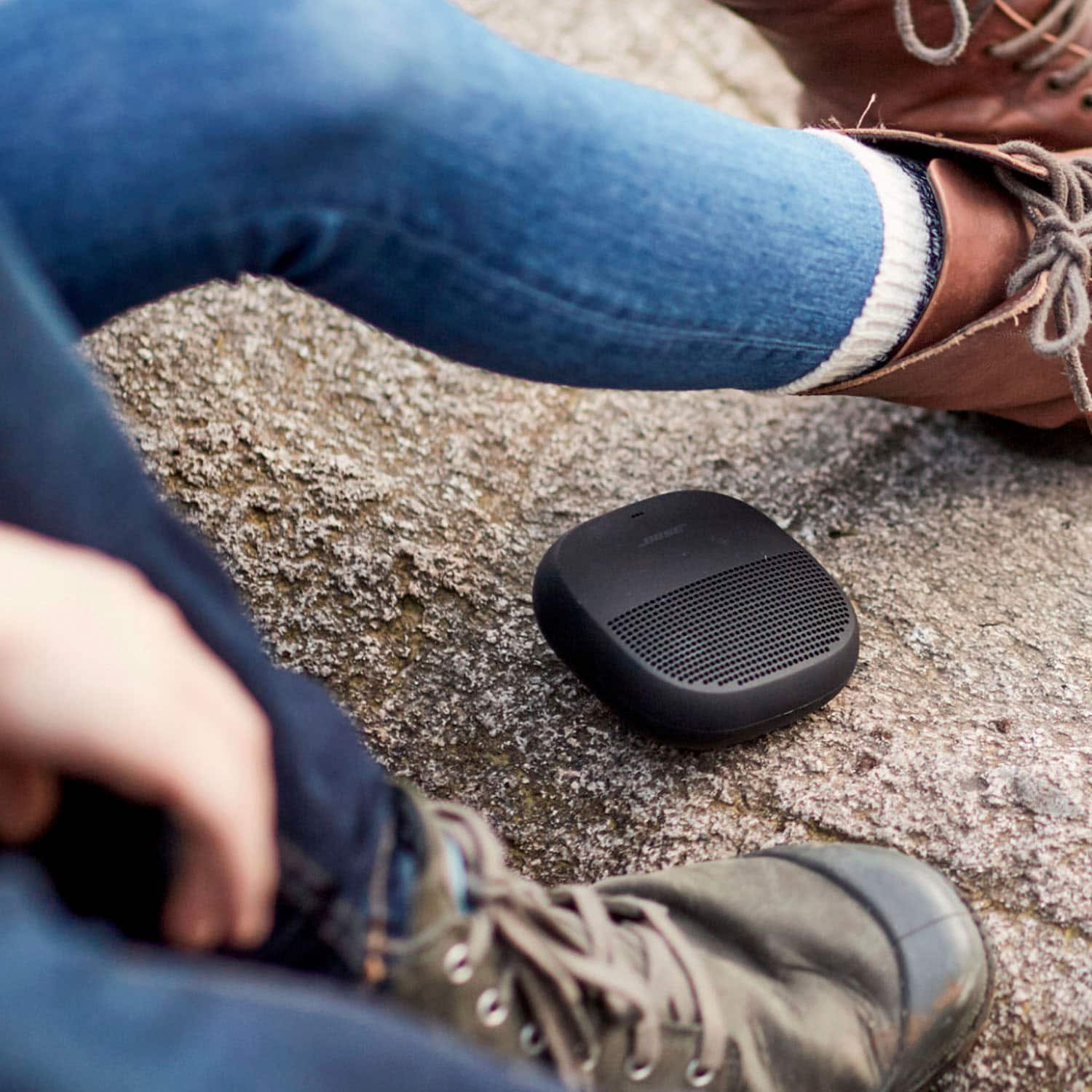
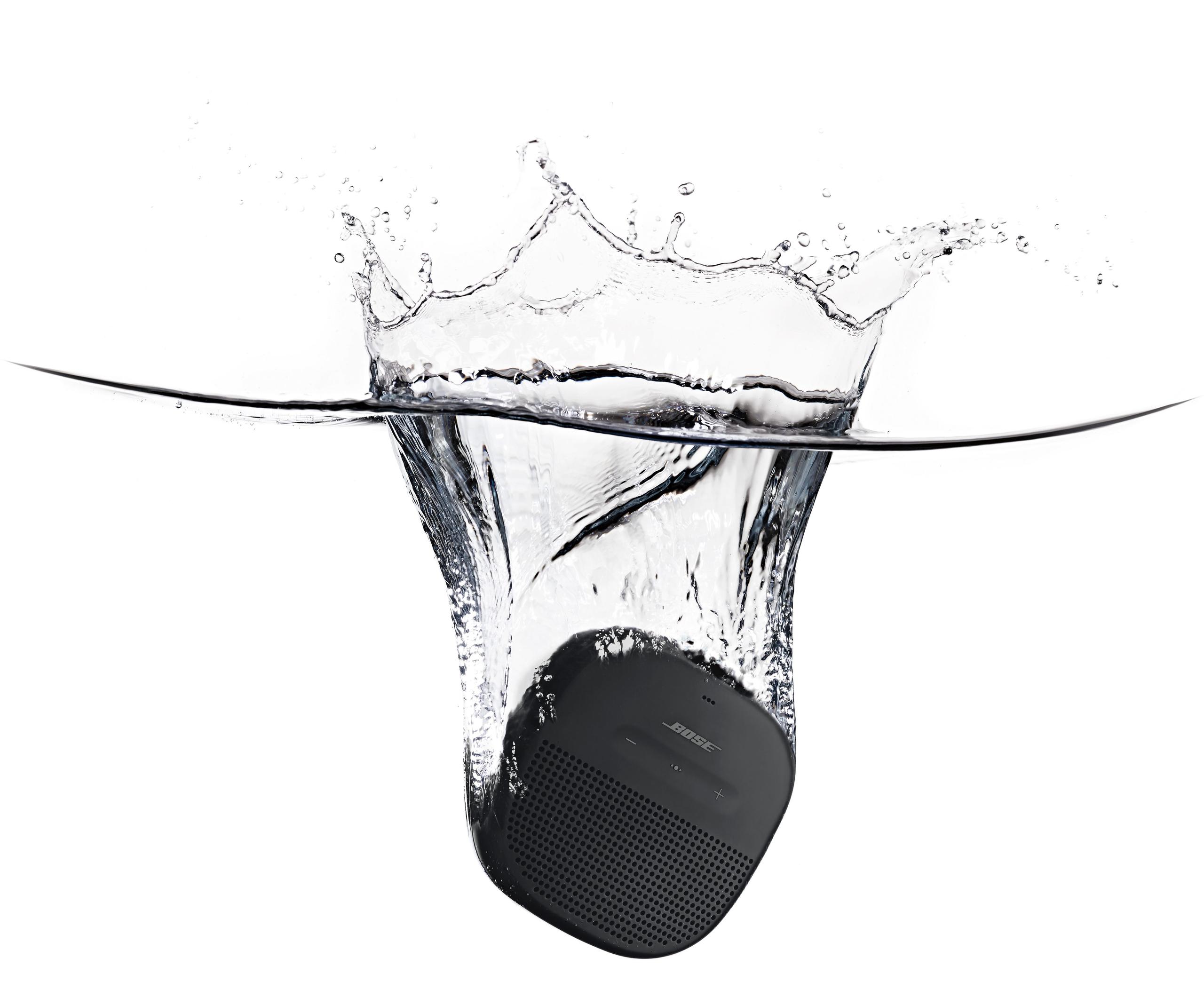
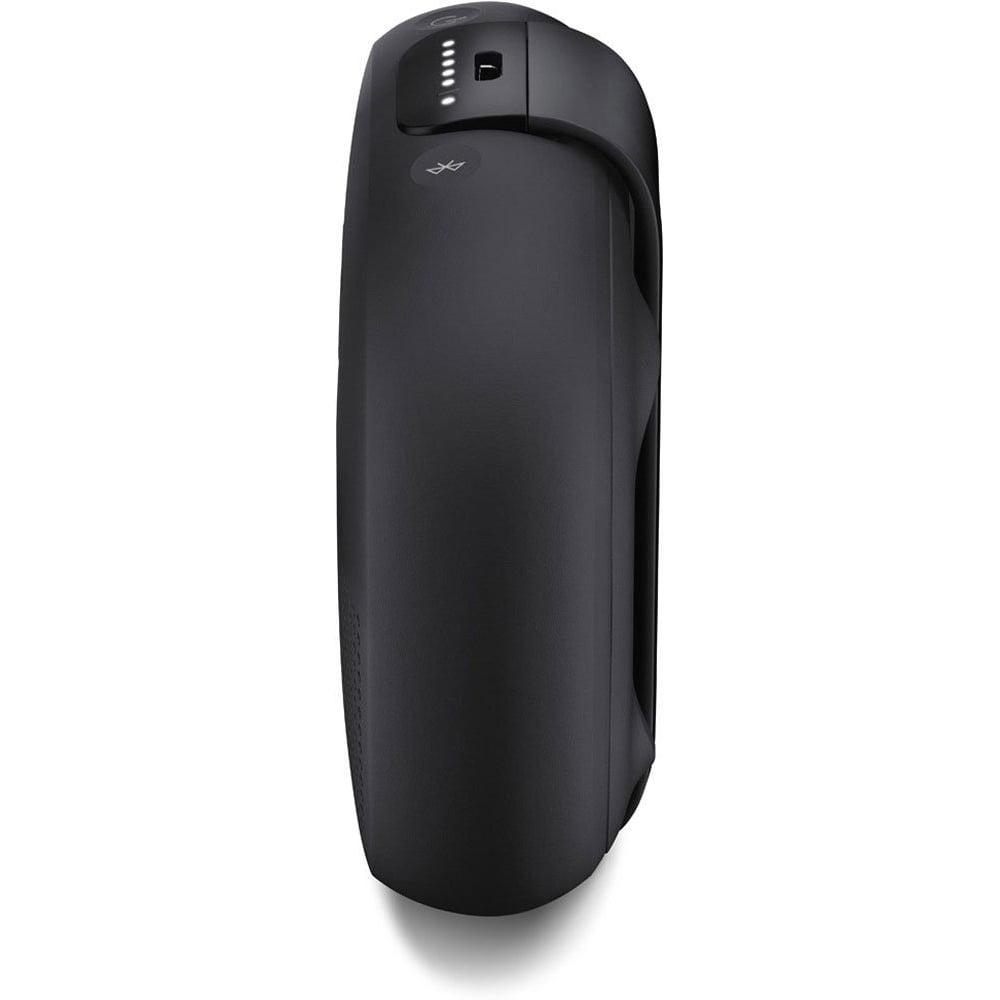
The SoundLink Micro takes a completely different approach with its rugged silicone exterior and IPX7 water resistance rating (meaning it can be submerged in 1 meter of water for 30 minutes). Its tear-resistant strap makes it easy to attach to bikes, backpacks, or other gear.
The Acton III requires AC power, which limits its placement but ensures consistent performance without charging concerns. The SoundLink Micro offers about 6 hours of battery life - not class-leading by today's standards but sufficient for most portable use cases.
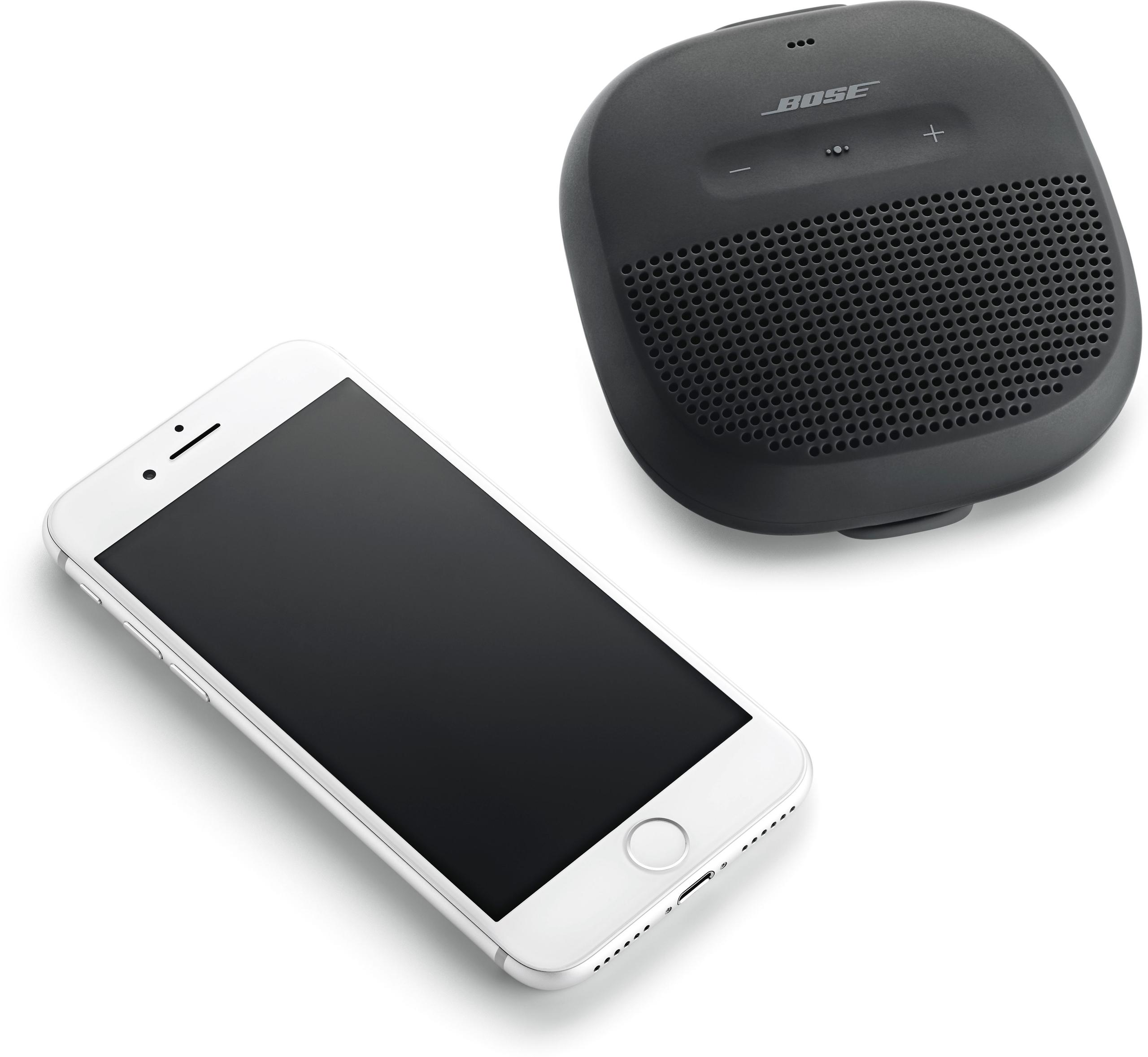
At 10.24 x 6.69 x 5.91 inches, the Marshall Acton III needs dedicated space on a shelf or table. The Bose SoundLink Micro, measuring just 3.87 x 3.87 x 1.37 inches, can fit in a coat pocket or small bag.
The Acton III's $279 price point positions it as a premium home audio solution. Its value comes from:
The SoundLink Micro's $99 price reflects its focus on portability over absolute sound quality. Its value derives from:
Consider these key factors when choosing between these speakers:
The Acton III's newer Bluetooth standard and higher-quality components make it more future-proof. However, the SoundLink Micro's simple design and robust construction mean it should remain useful for years, even though its technology is older.
These speakers serve different purposes and excel in their intended roles. The Marshall Acton III is the clear choice for those wanting premium home audio, while the Bose SoundLink Micro is perfect for active users who prioritize portability. The decision ultimately comes down to your specific needs and use cases rather than which speaker is "better" in absolute terms.
| Marshall Acton III | Bose SoundLink Micro |
|---|---|
| Price - Base investment required | |
| $279.99 | $99.00 |
| Sound Power - Determines volume capacity and room coverage | |
| 60W total (30W woofer + 2x15W tweeters) | Single driver with passive radiators (power not specified) |
| Frequency Response - Range of sound reproduction, especially bass | |
| 45-20,000 Hz (deep bass capable) | 75-20,000 Hz (limited low end) |
| Size - Impacts placement flexibility and portability | |
| 10.24 x 6.69 x 5.91 inches (home speaker) | 3.87 x 3.87 x 1.37 inches (ultra-portable) |
| Weight - Affects mobility and mounting options | |
| 6.28 lbs (stationary use) | 0.68 lbs (highly portable) |
| Bluetooth Version - Affects connection quality and range | |
| Bluetooth 5.2 (modern standard) | Bluetooth 4.2 (older technology) |
| Water Resistance - Important for outdoor use | |
| None | IP67 (fully waterproof) |
| Power Source - Impacts placement and usage flexibility | |
| AC power only (wall outlet required) | Rechargeable battery (6 hours playback) |
| Additional Inputs - Provides connection flexibility | |
| 3.5mm aux input | None |
| Sound Customization - Allows tailoring to personal preference | |
| Physical bass/treble knobs + app EQ | Basic app controls only |
| Special Features - Adds functionality beyond basic audio | |
| Dynamic Loudness, placement compensation | Party Mode, speakerphone, voice assistant support |
| Construction - Affects durability and aesthetics | |
| Premium materials, 70% recycled plastic | Rugged silicone exterior, tear-resistant strap |
| Multi-Speaker Support - Enables expanded audio setups | |
| No multi-speaker pairing | Can pair with other Bose speakers for stereo/party mode |
The Marshall Acton III ($279) is better for home audio with superior sound quality, while the Bose SoundLink Micro ($99) is better for portable use. They serve different purposes, so "better" depends on your specific needs.
The Marshall Acton III costs $279, while the Bose SoundLink Micro is $99, a difference of $180. The price difference reflects their different capabilities and target uses.
The Bose SoundLink Micro is specifically designed for outdoor use with IP67 waterproofing. The Marshall Acton III requires AC power and isn't water-resistant, making it unsuitable for outdoor use.
The Marshall Acton III has significantly better sound quality with 60W total power and deeper bass response. The Bose SoundLink Micro sounds good for its size but can't match the Marshall's audio performance.
Yes, both speakers work with phones via Bluetooth. The Marshall Acton III uses newer Bluetooth 5.2, while the Bose SoundLink Micro uses Bluetooth 4.2.
The Bose SoundLink Micro is highly portable at just 0.68 lbs with a built-in strap. The Marshall Acton III requires AC power and weighs 6.28 lbs, making it a stationary speaker.
The Bose SoundLink Micro can pair with other Bose speakers for stereo or party mode. The Marshall Acton III doesn't support multi-speaker pairing.
Only the Bose SoundLink Micro has a battery, lasting about 6 hours. The Marshall Acton III requires constant AC power.
The Marshall Acton III has physical knobs for bass and treble plus app controls. The Bose SoundLink Micro only offers basic EQ through its app.
The Marshall Acton III provides better room-filling sound for indoor parties. The Bose SoundLink Micro is better for small outdoor gatherings or personal listening.
The Marshall Acton III has a 3.5mm aux input for wired connections. The Bose SoundLink Micro is Bluetooth-only.
Both speakers provide good value for their intended use. The Marshall Acton III justifies its higher price with superior sound quality and home audio features, while the Bose SoundLink Micro offers excellent portability and durability at a lower price point.
We've done our best to create useful and informative comparisons to help you decide what product to buy. Our research uses advanced automated methods to create this comparison and perfection is not possible - please contact us for corrections or questions. These are the sites we've researched in the creation of this article: bestbuy.com - youtube.com - bestbuy.com - pocket-lint.com - bestbuy.com - crutchfield.com - premiumsound.com.au - marshall.com - 2001audiovideo.com - youtube.com - t3.com - bestbuy.com - youtube.com - rtings.com - mygolfspy.com - youtube.com - cnet.com - bose.com - bose.com - alwayswander.info - target.com - bose.com - bose.com

Privacy Policy
Terms and Conditions - Affiliate Policy
Home Security
© Copyright 2008-2026.
11816 Inwood Rd #1211, Dallas, TX 75244