

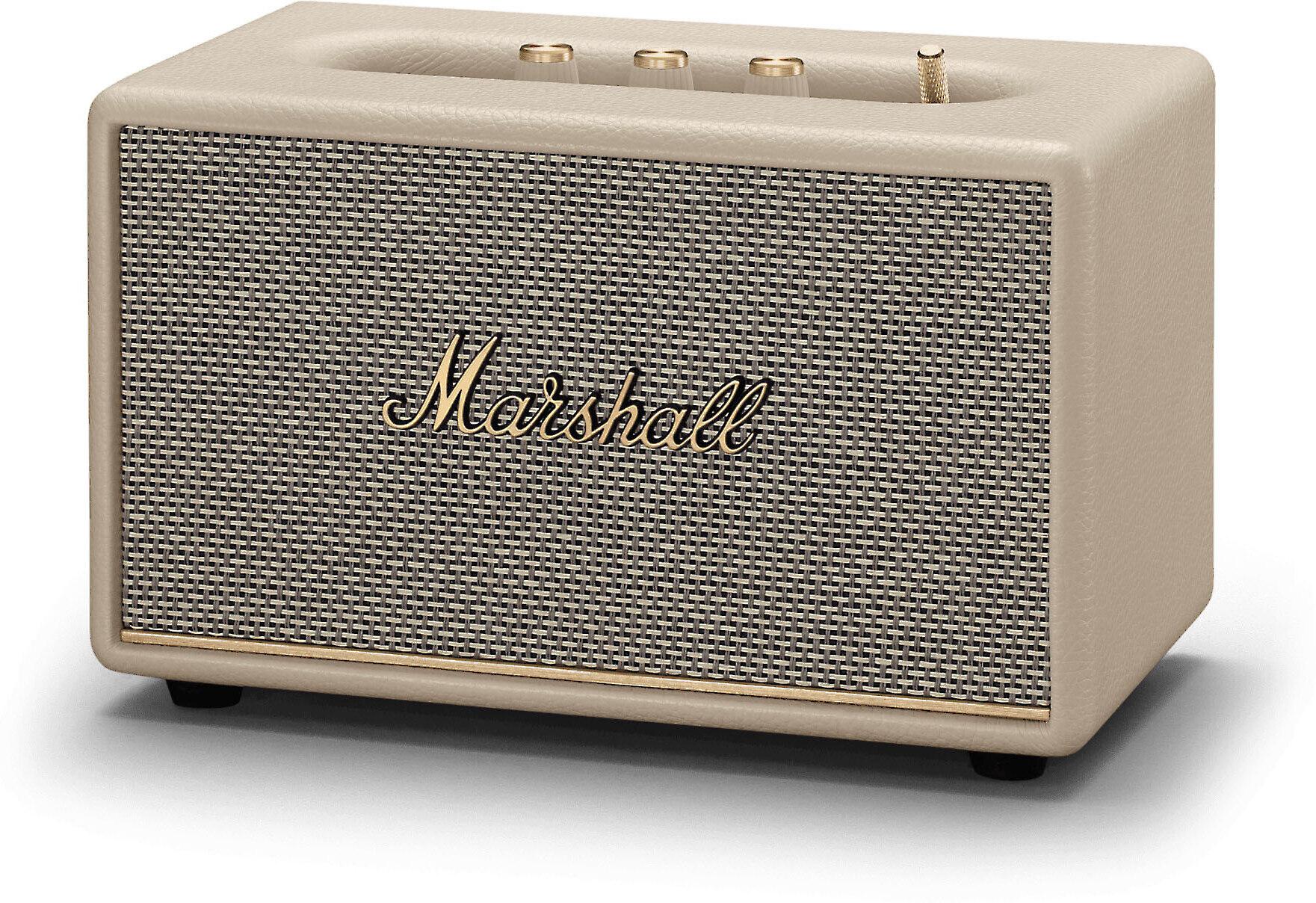
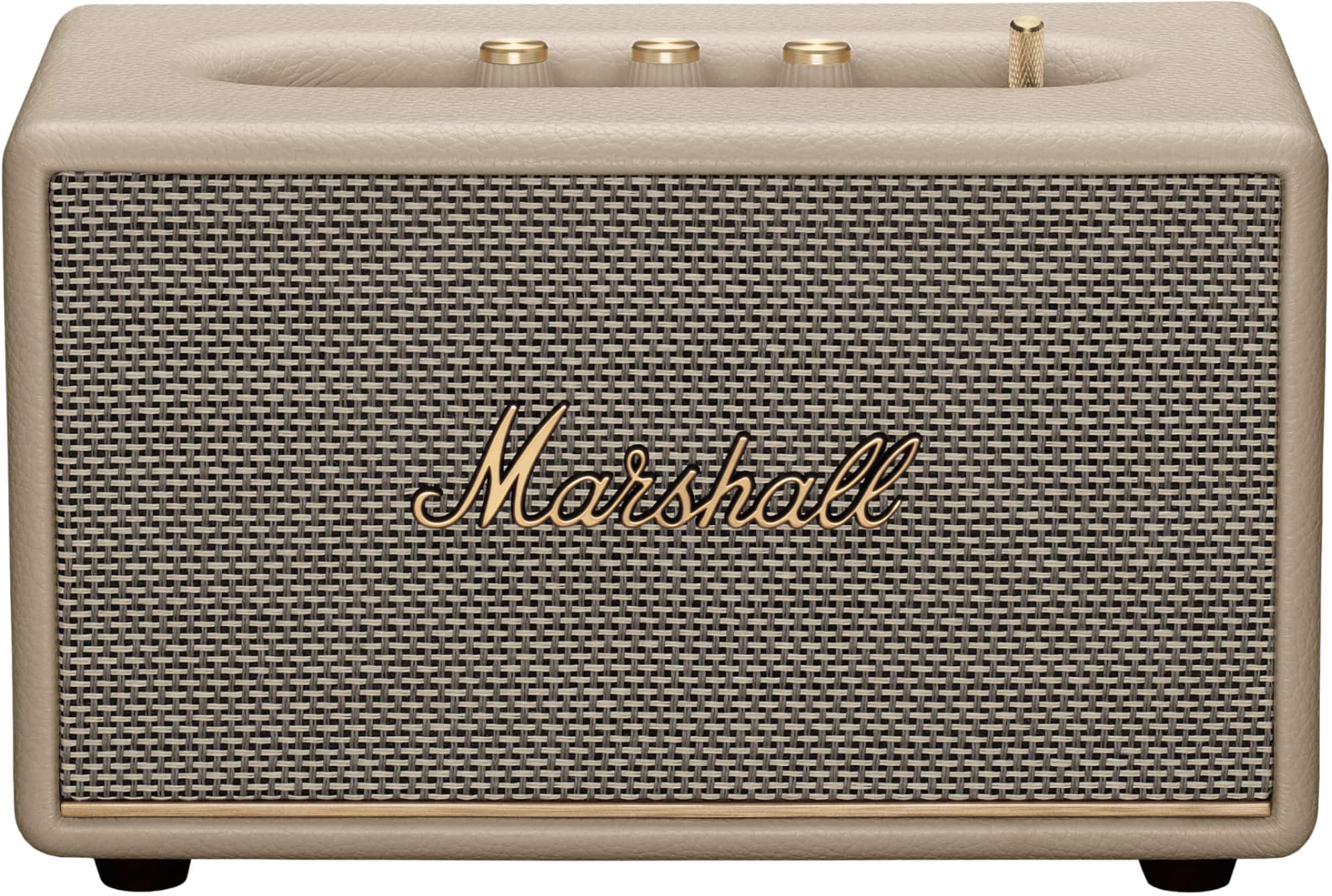
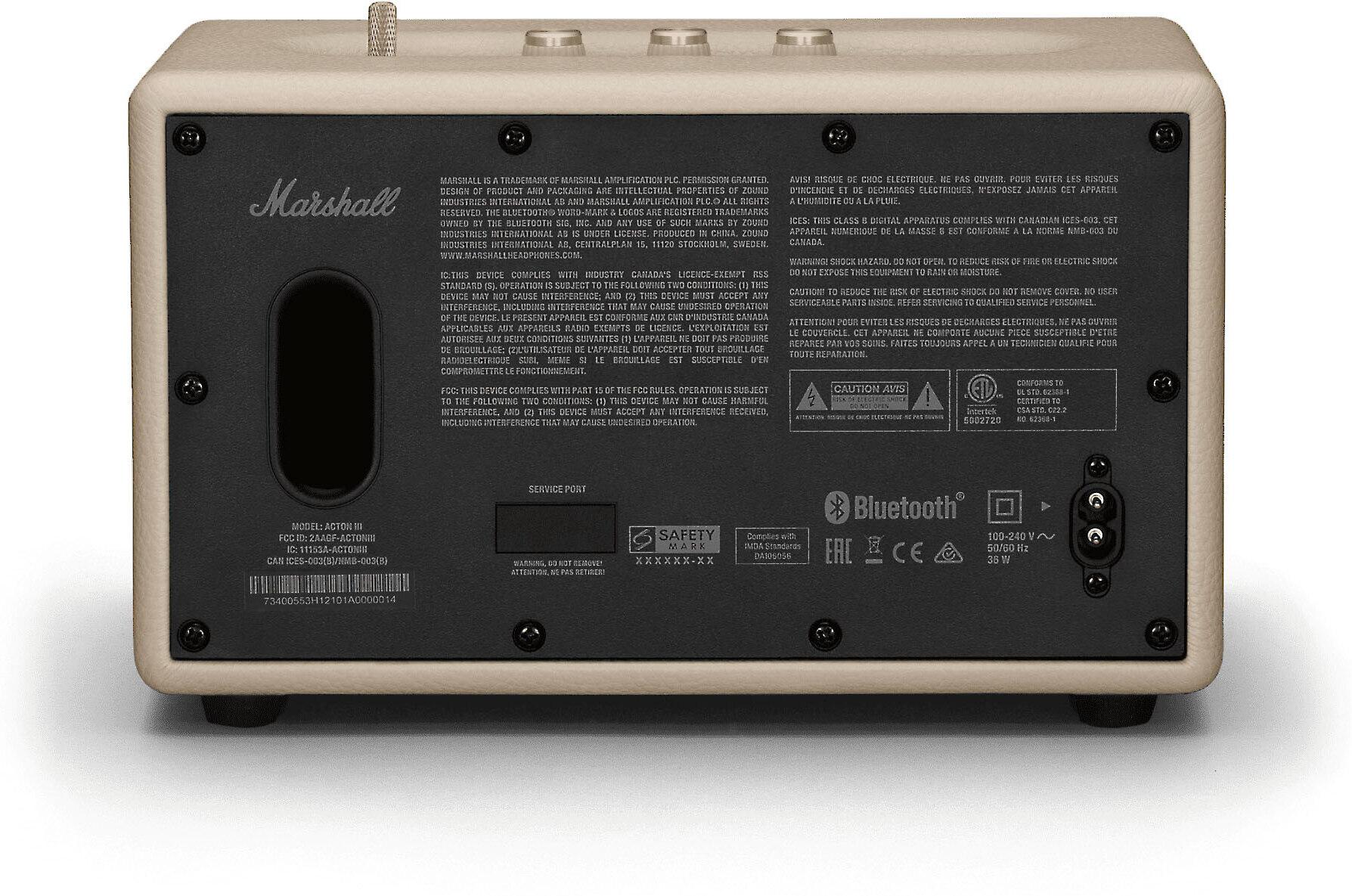
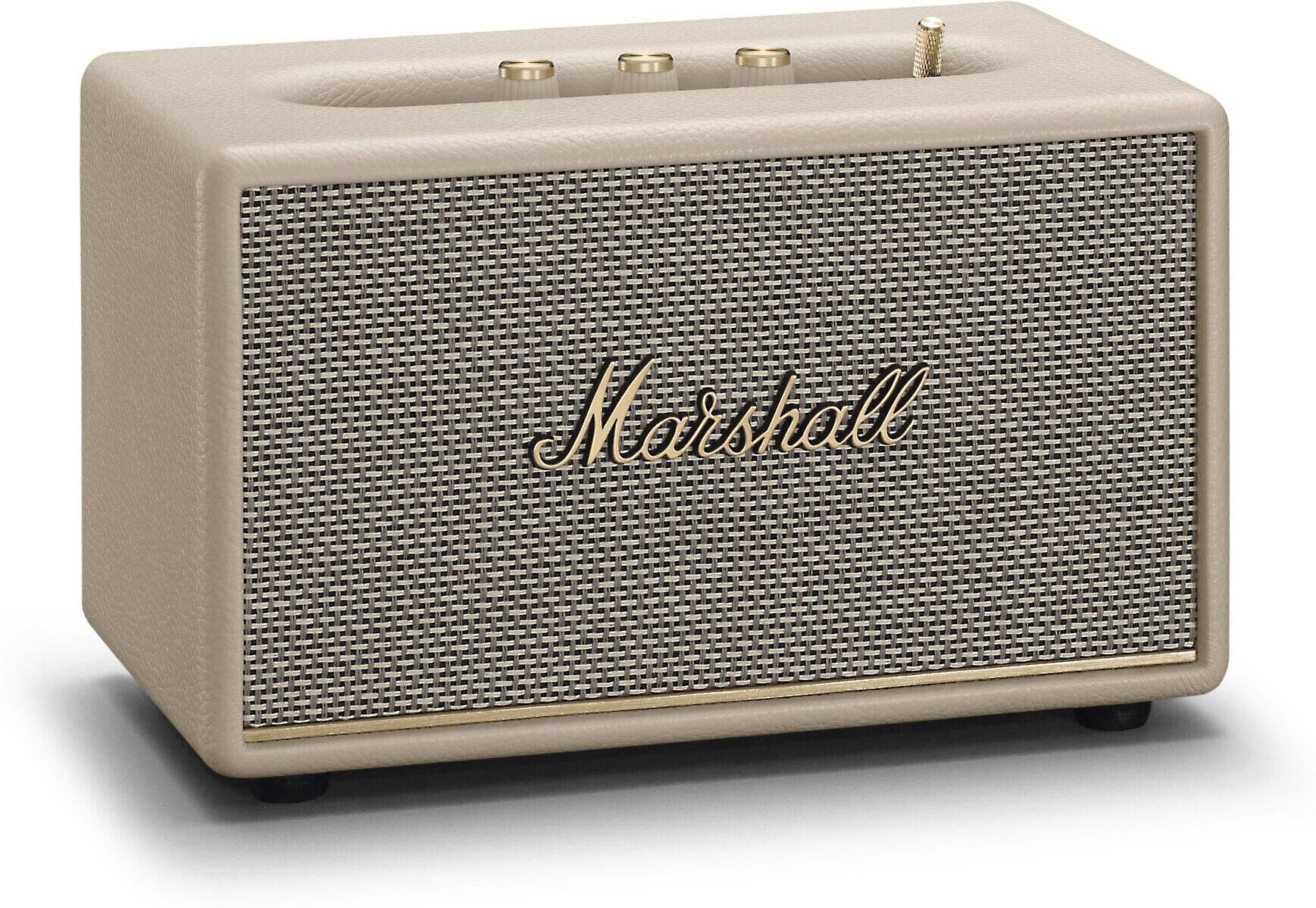
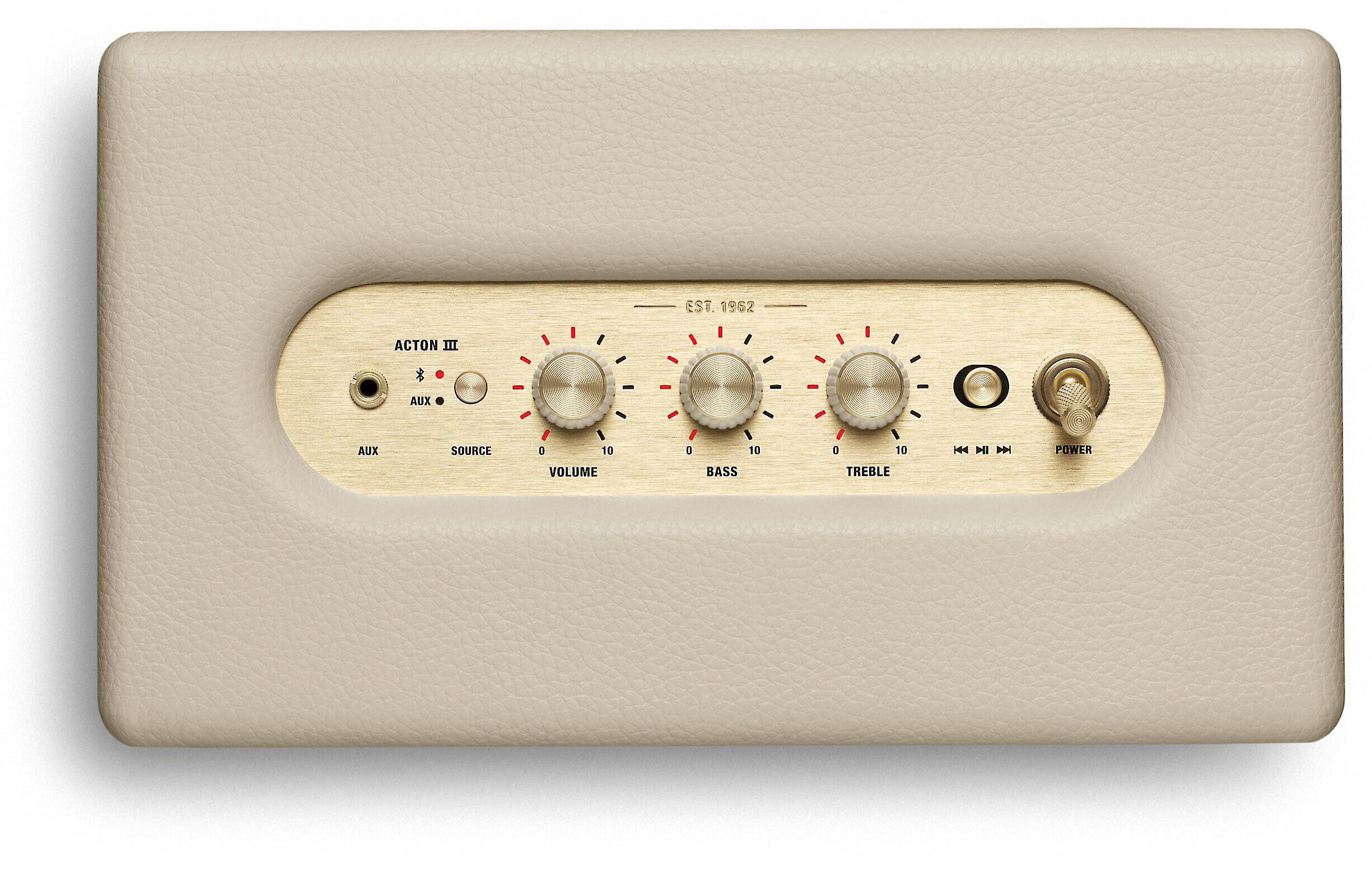
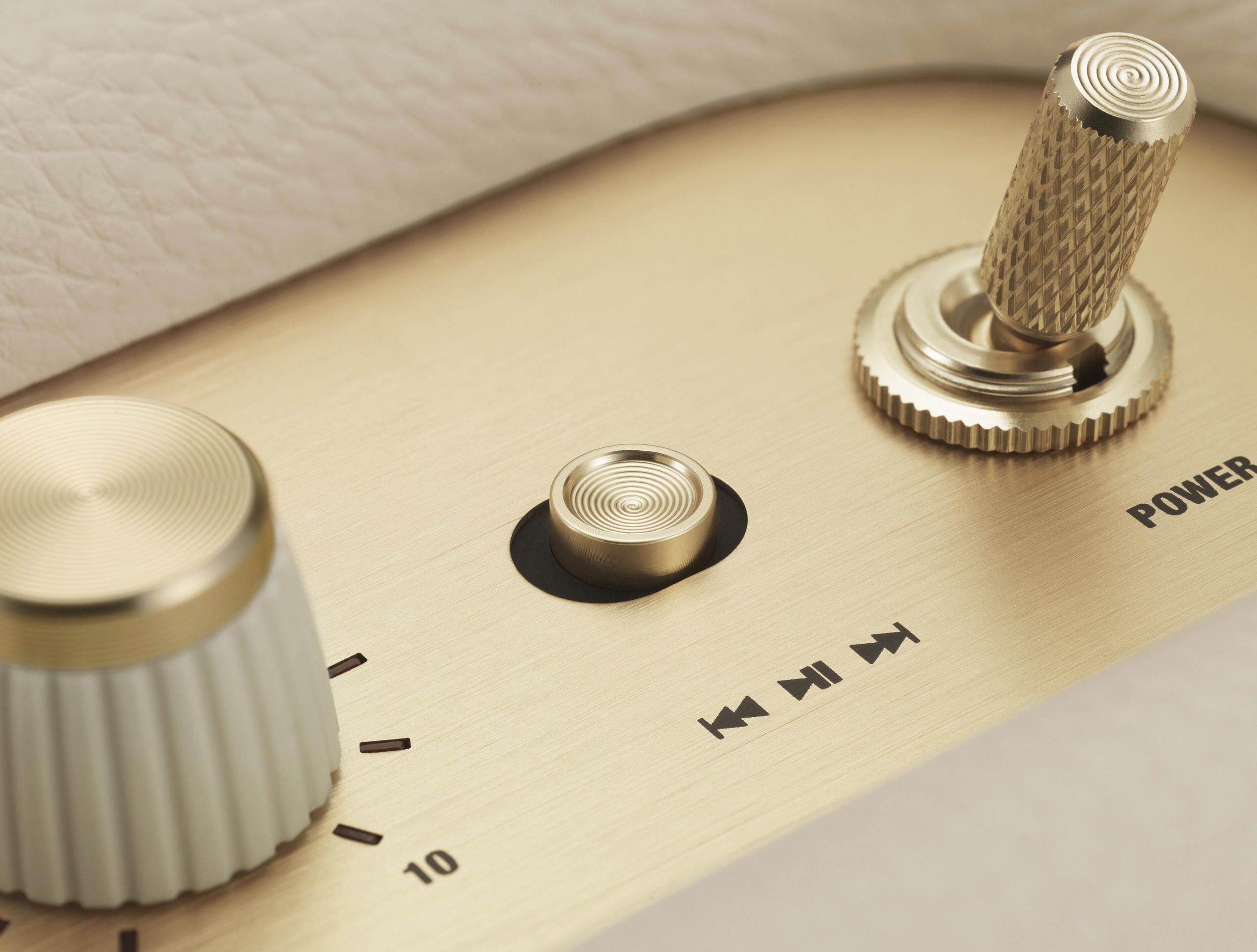
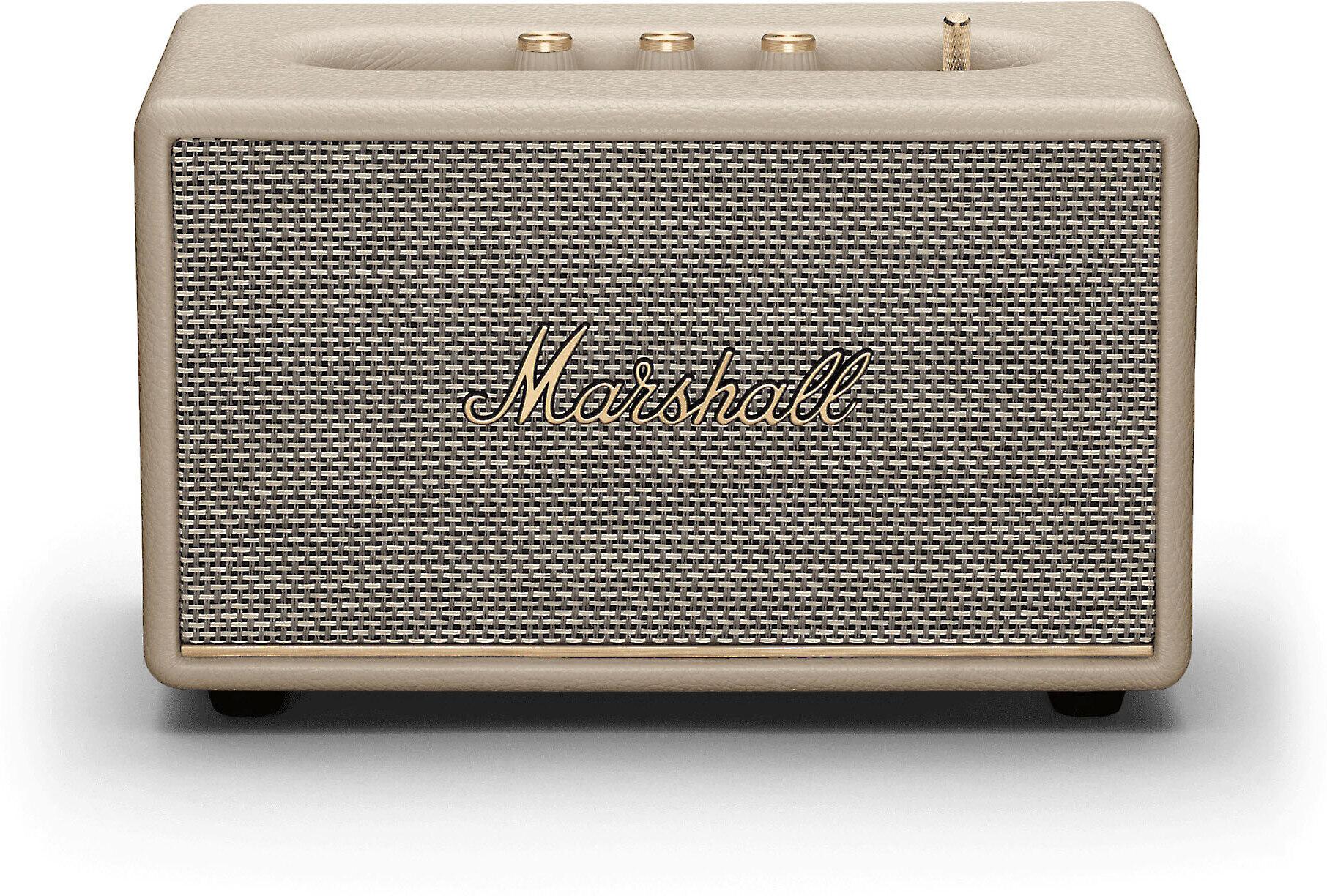

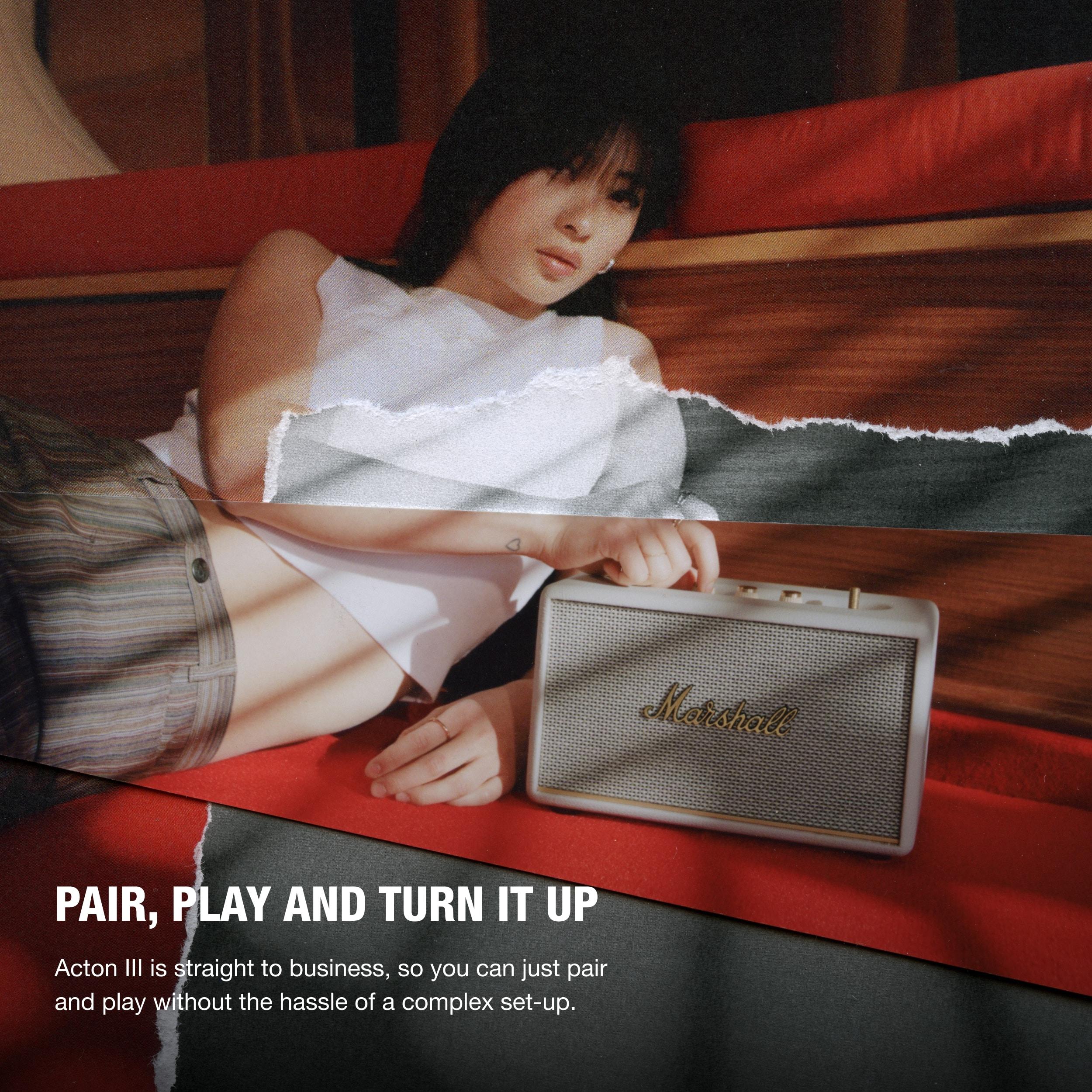
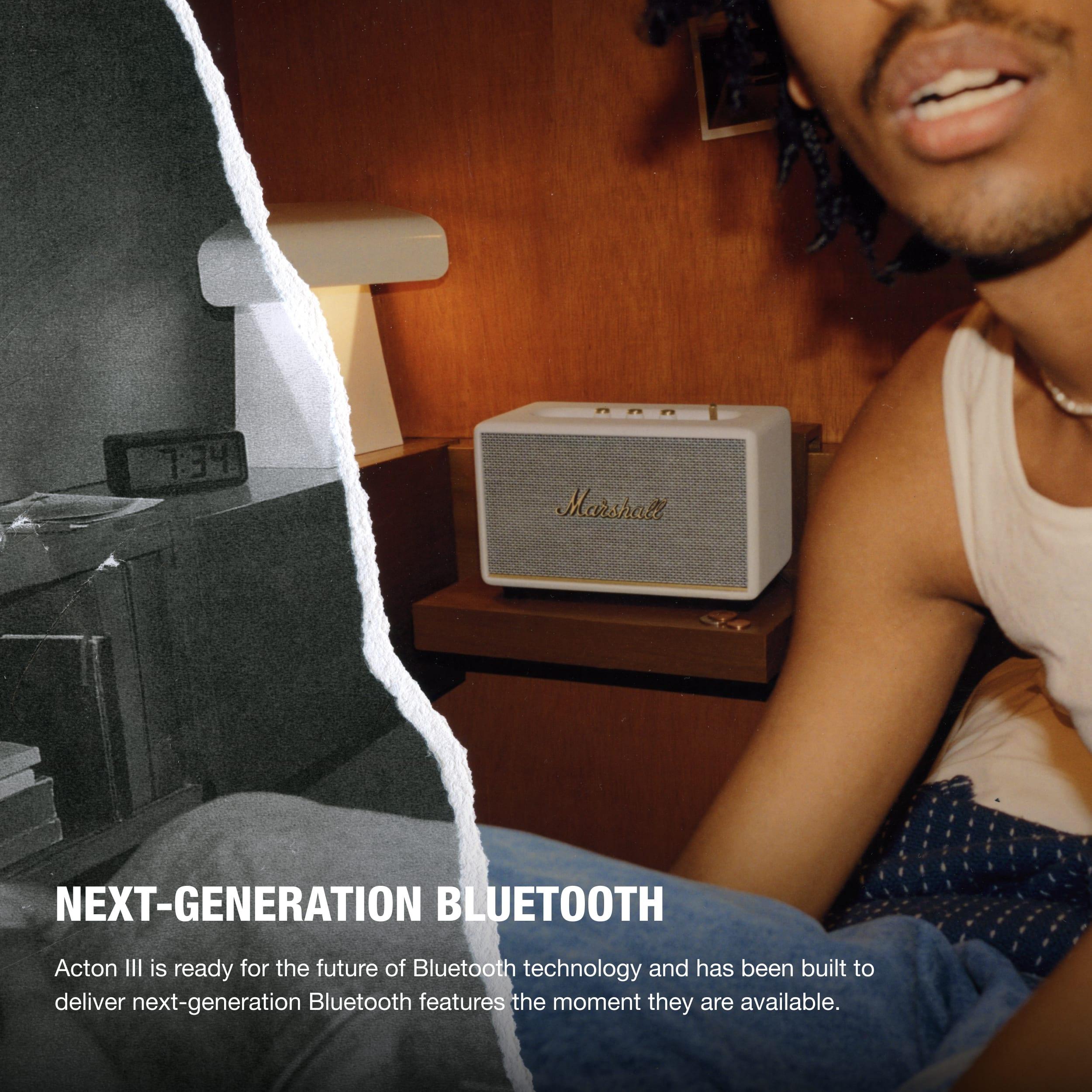
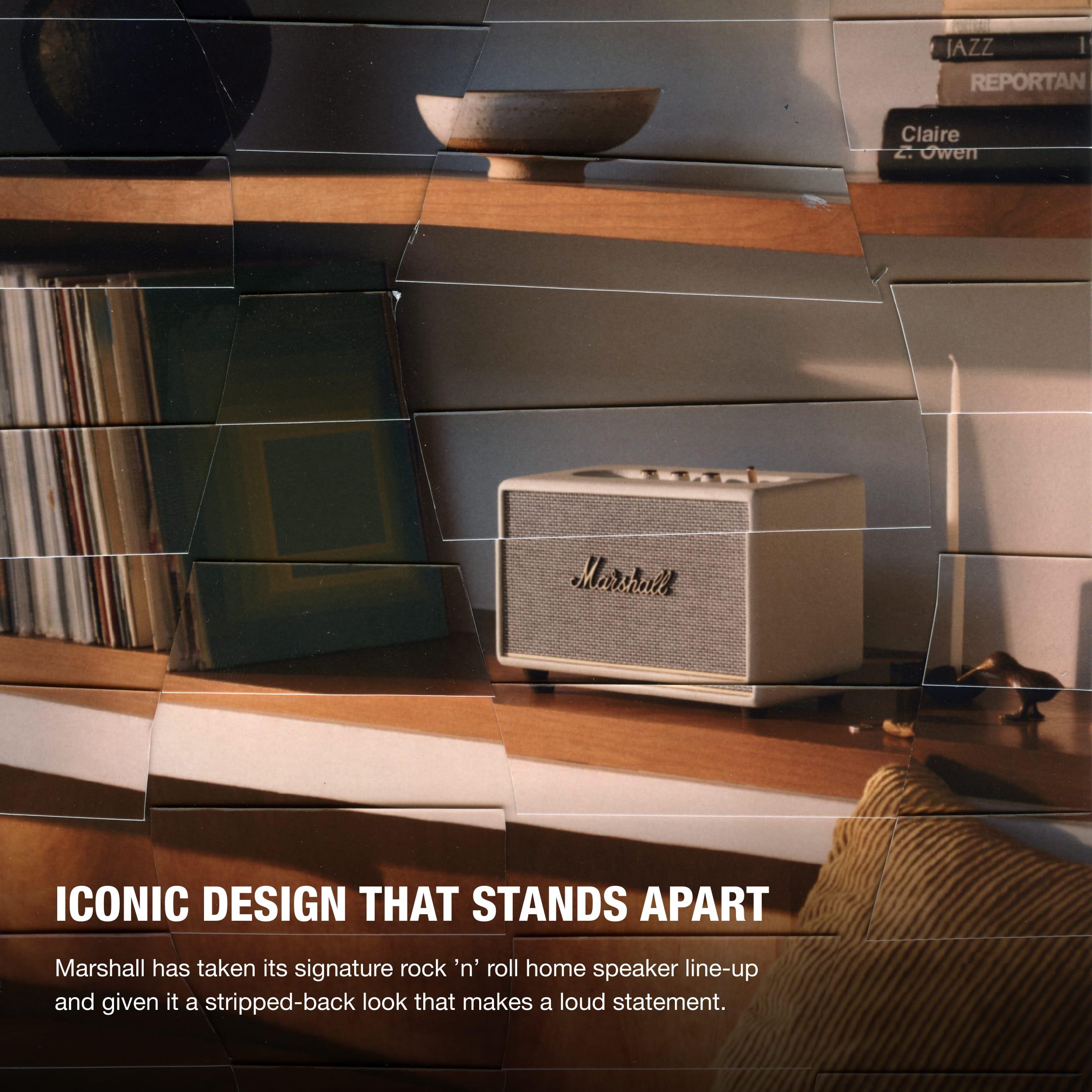
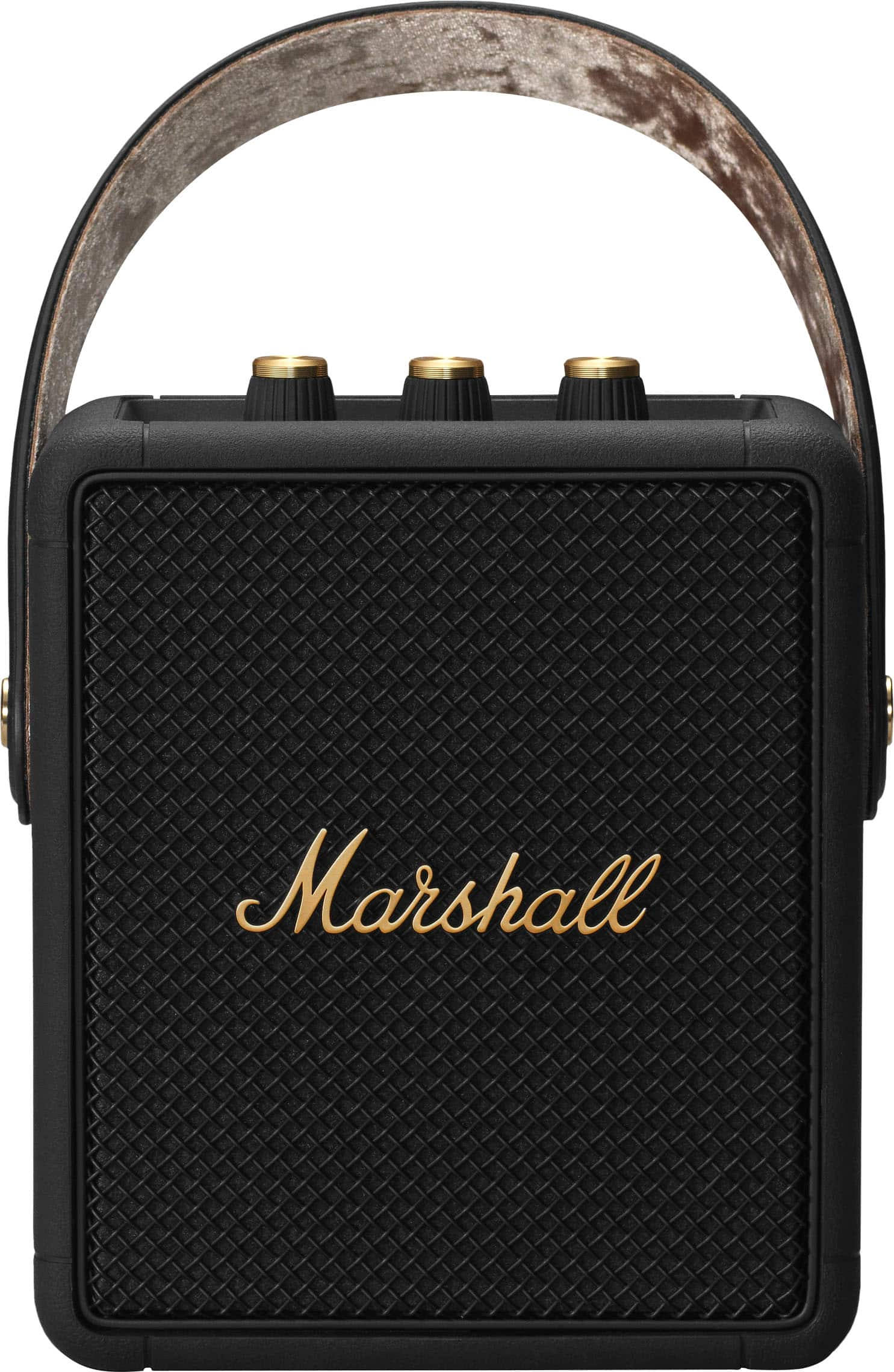
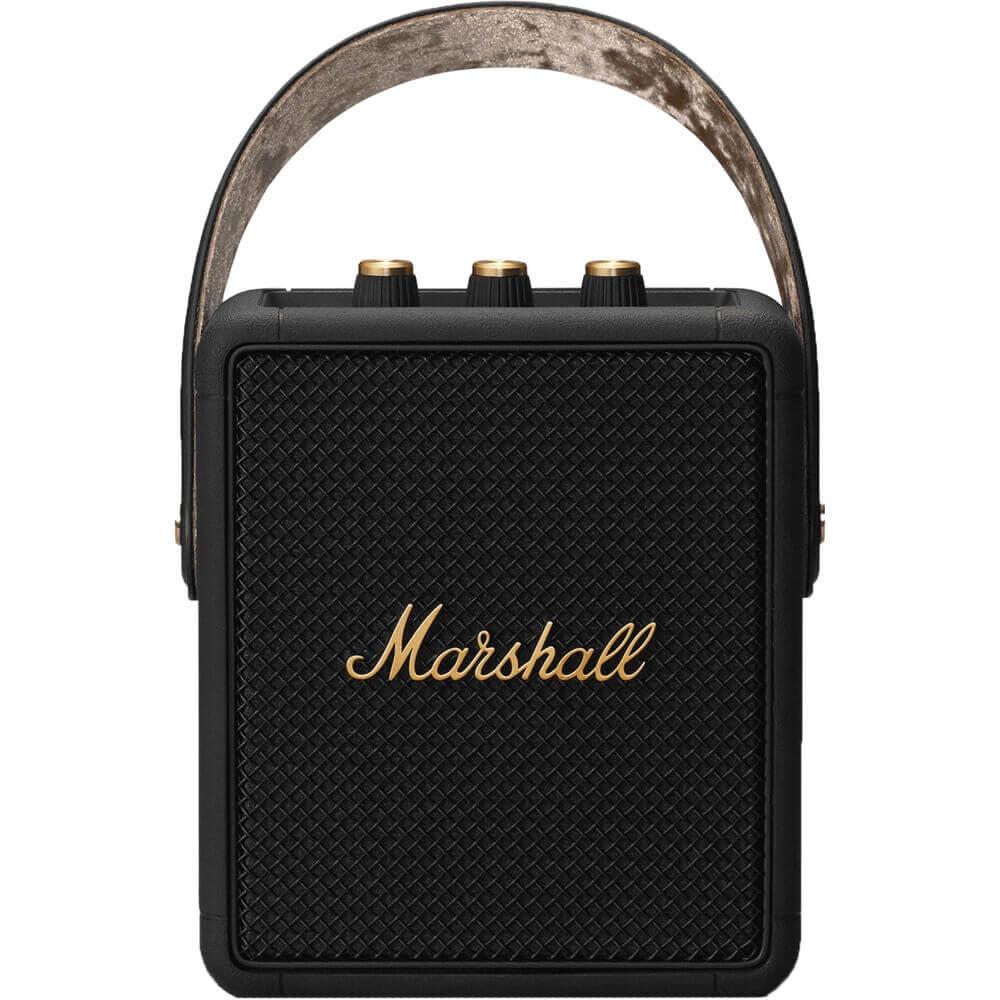

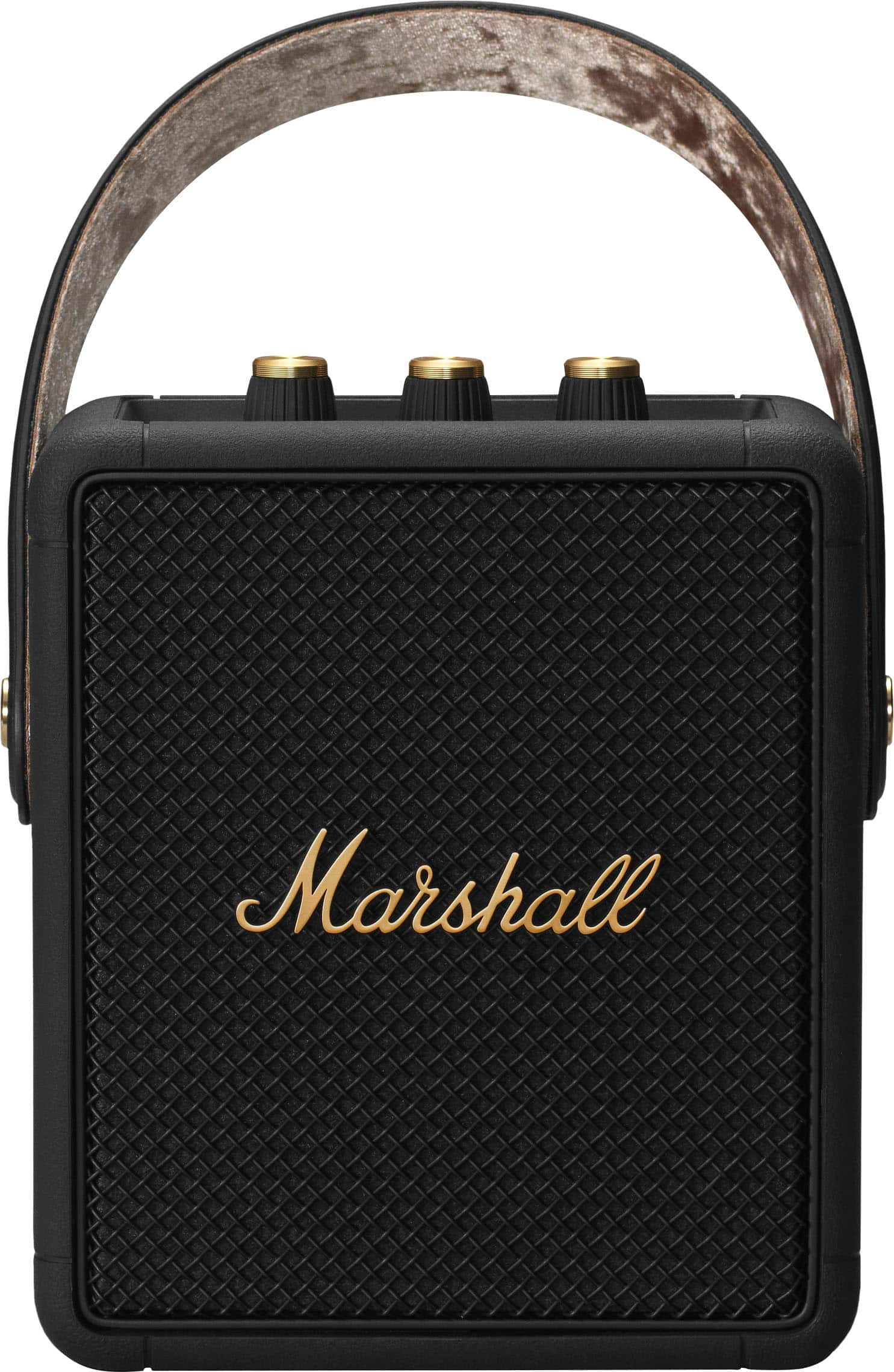
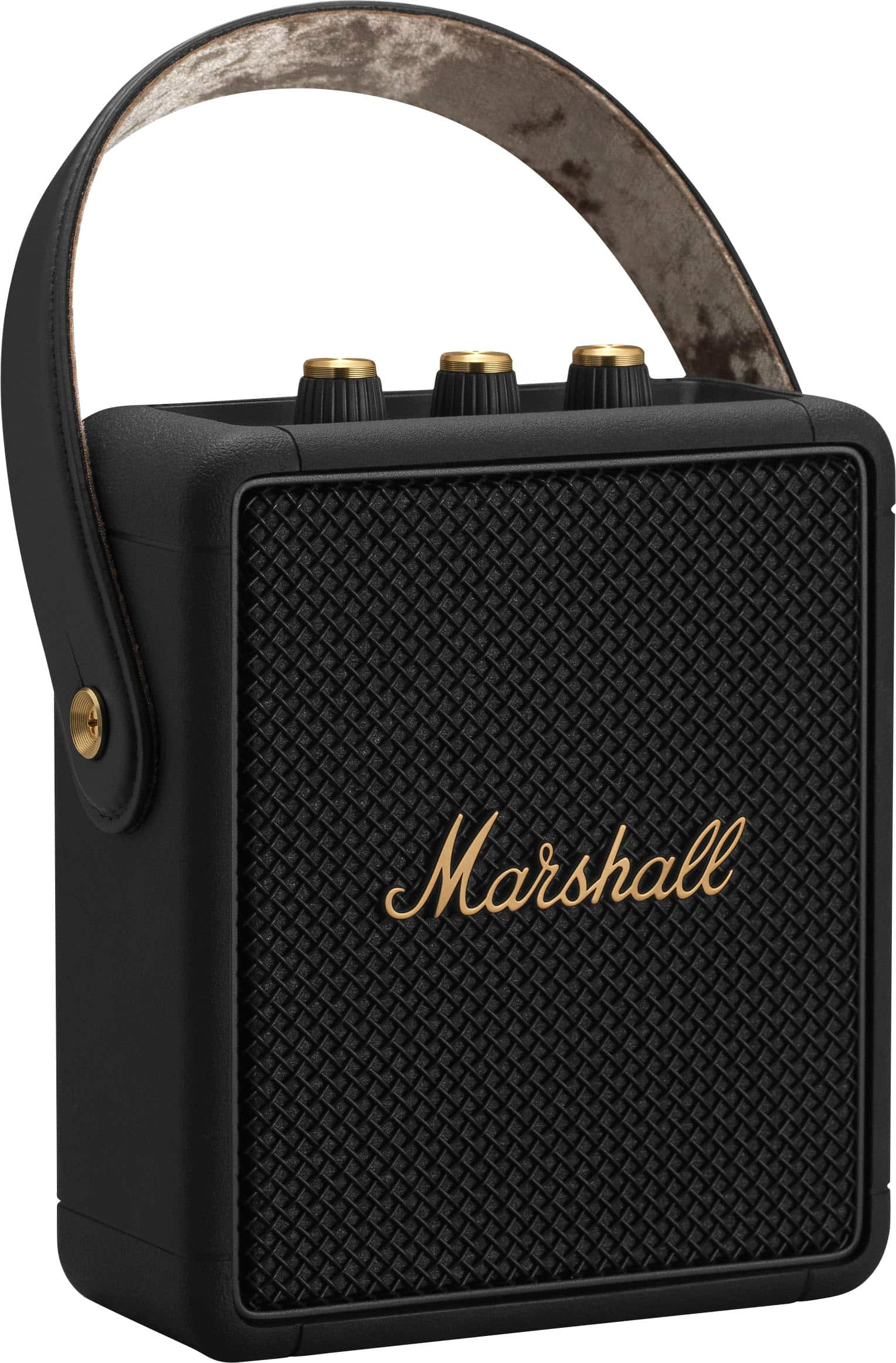
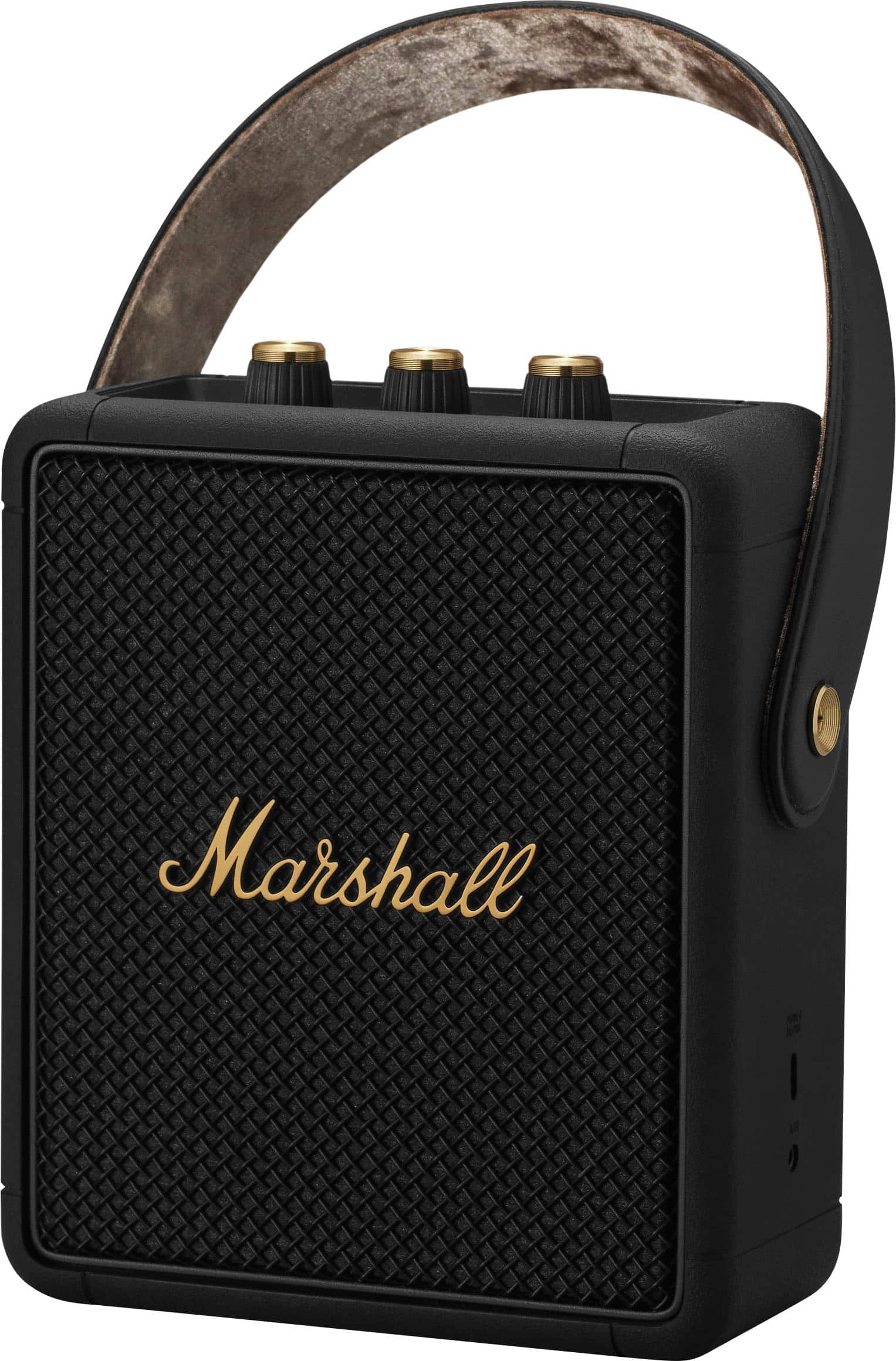
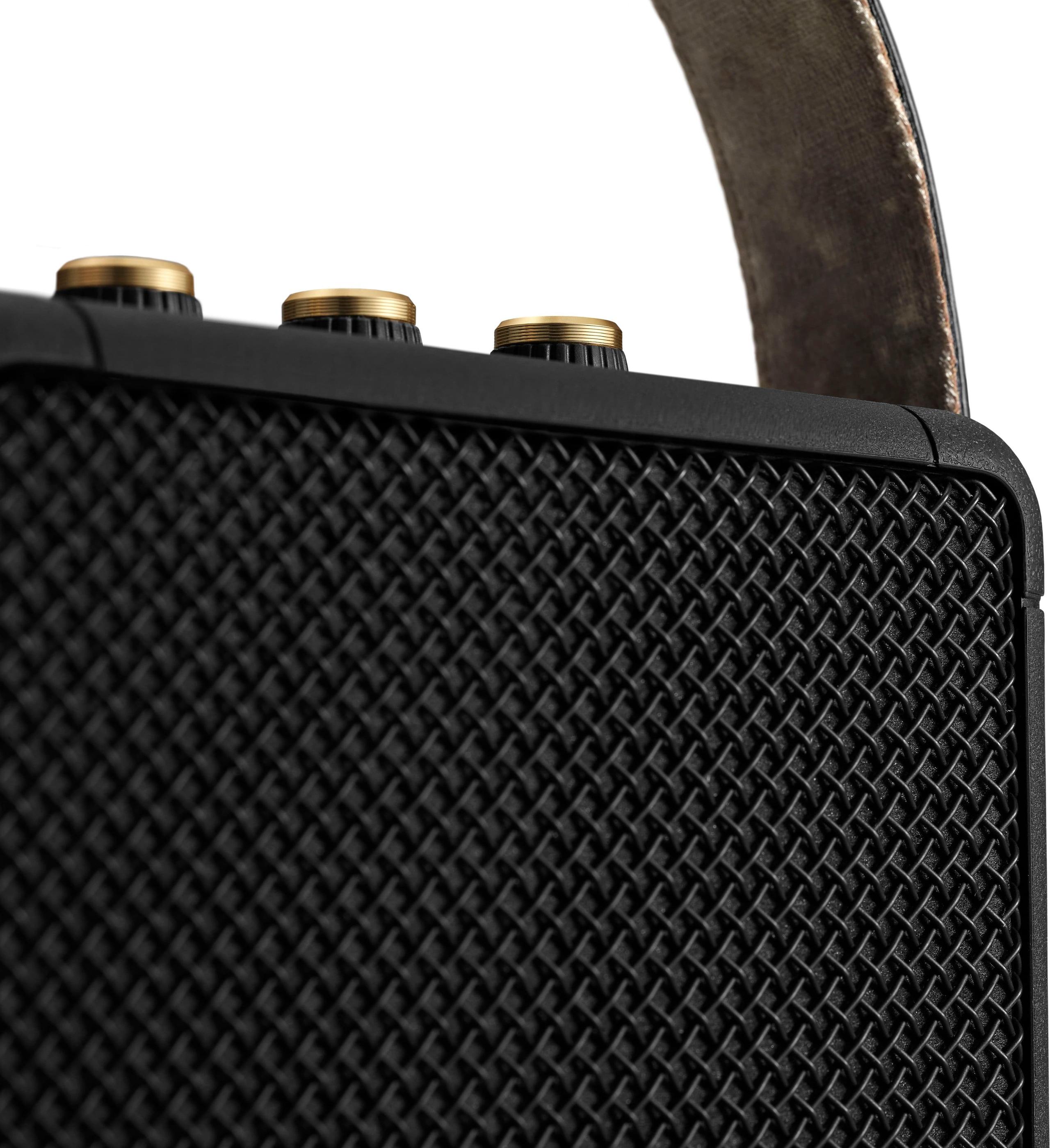
When it comes to Bluetooth speakers, Marshall's iconic designs stand out from the crowd. Today we're comparing two popular options: the Marshall Acton III ($279) and the Marshall Stockwell II ($149). While both deliver Marshall's signature sound quality, they serve distinctly different purposes. Let's dive into what makes each unique and help you choose the right one for your needs.
The Marshall Acton III, released in 2022, represents the latest iteration of Marshall's home speaker line. It brings significant upgrades in sound processing and connectivity over its predecessor, including Bluetooth 5.2 and dynamic loudness control - a feature that automatically adjusts frequency balance as you change volume levels.
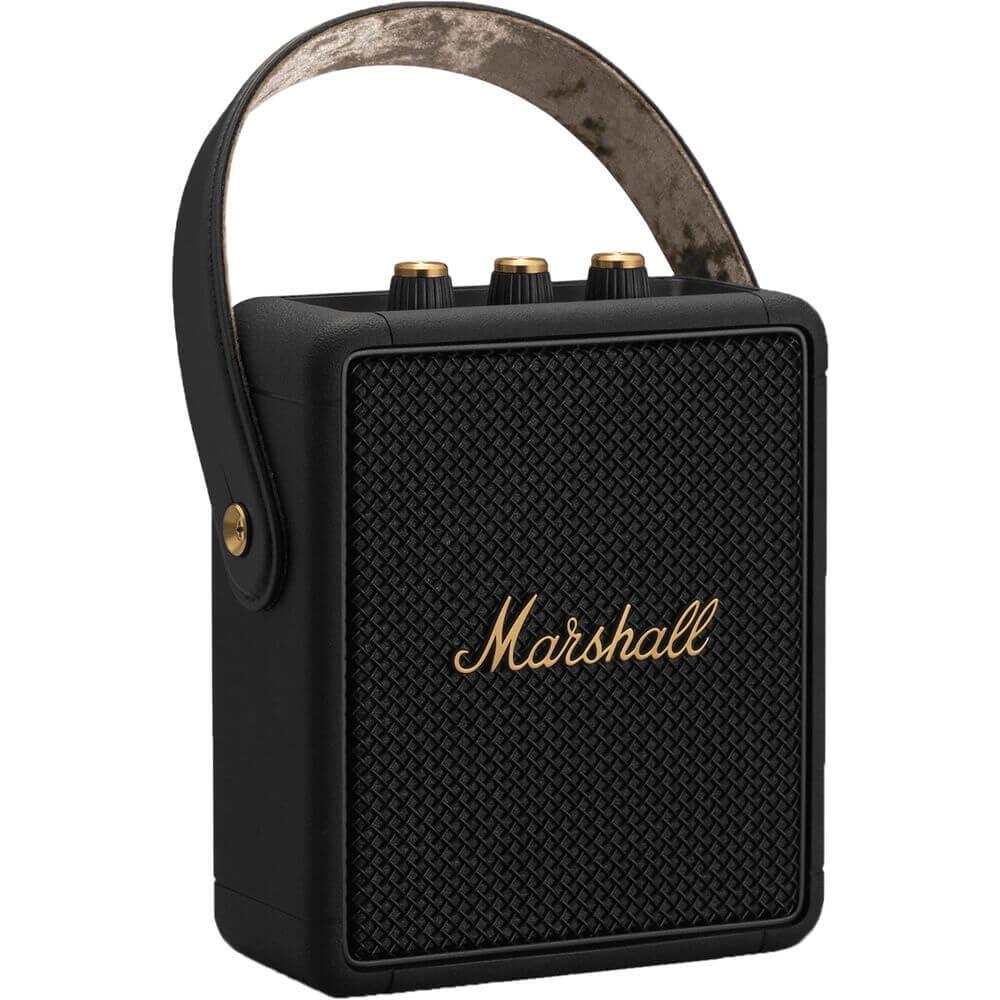
The Stockwell II, launched in 2019, focused on refining Marshall's portable speaker formula. While slightly older, it introduced multi-directional sound and impressive battery life that still competes well today.
The Acton III packs serious power into its compact frame. With 60 watts of total amplification split between a 30-watt woofer and two 15-watt tweeters (the speakers handling high frequencies), it delivers impressive volume and clarity. The bass response extends down to 45Hz, which means you'll feel those low notes in most music genres.
In comparison, the Stockwell II utilizes a 20-watt system (10W woofer + 2x5W tweeters) that's optimized for near-field listening - meaning it sounds best when you're relatively close to the speaker. While it can't match the Acton III's room-filling capability, it produces surprisingly full sound for its size, with bass extending to 60Hz.
The Acton III introduces several notable features:
The Stockwell II takes a different approach:
Having tested both speakers extensively, the performance differences become clear in practical use. The Acton III excels in home environments, particularly in:
The Stockwell II proves its worth in:
The Acton III offers:
The Stockwell II provides:
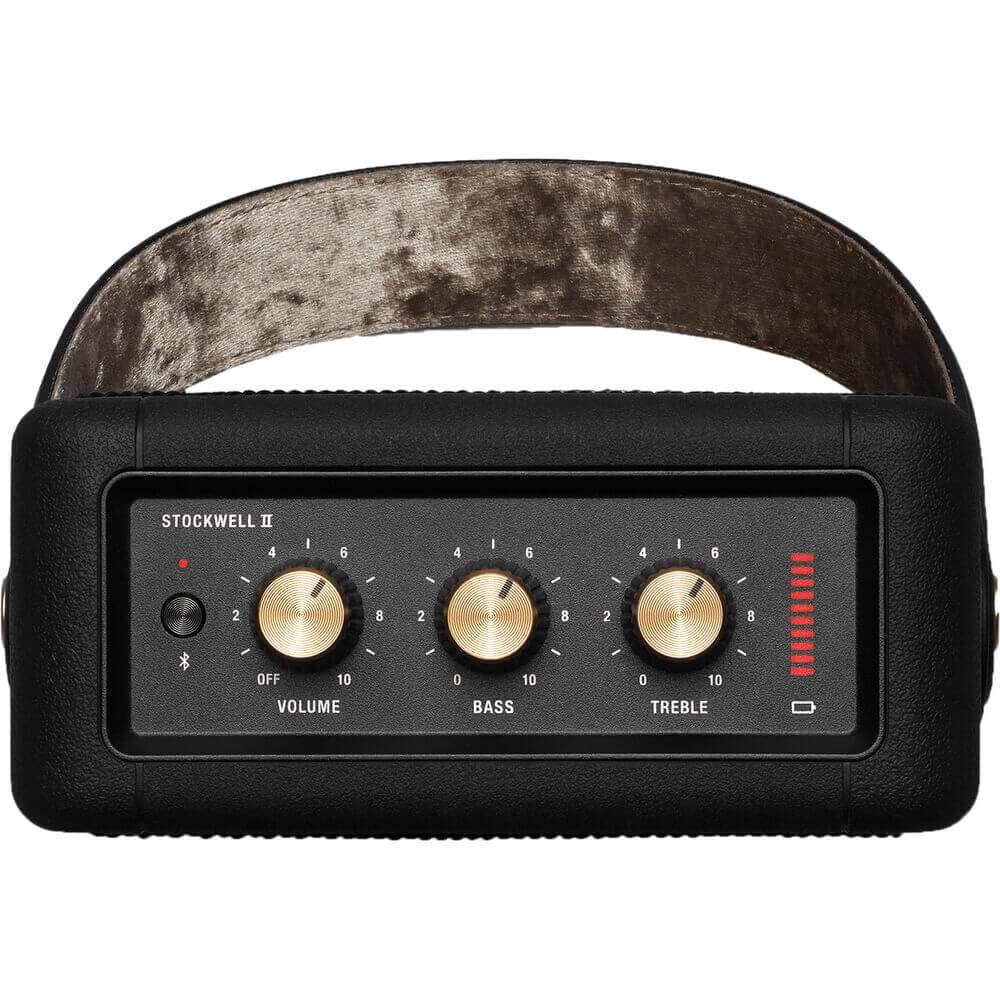
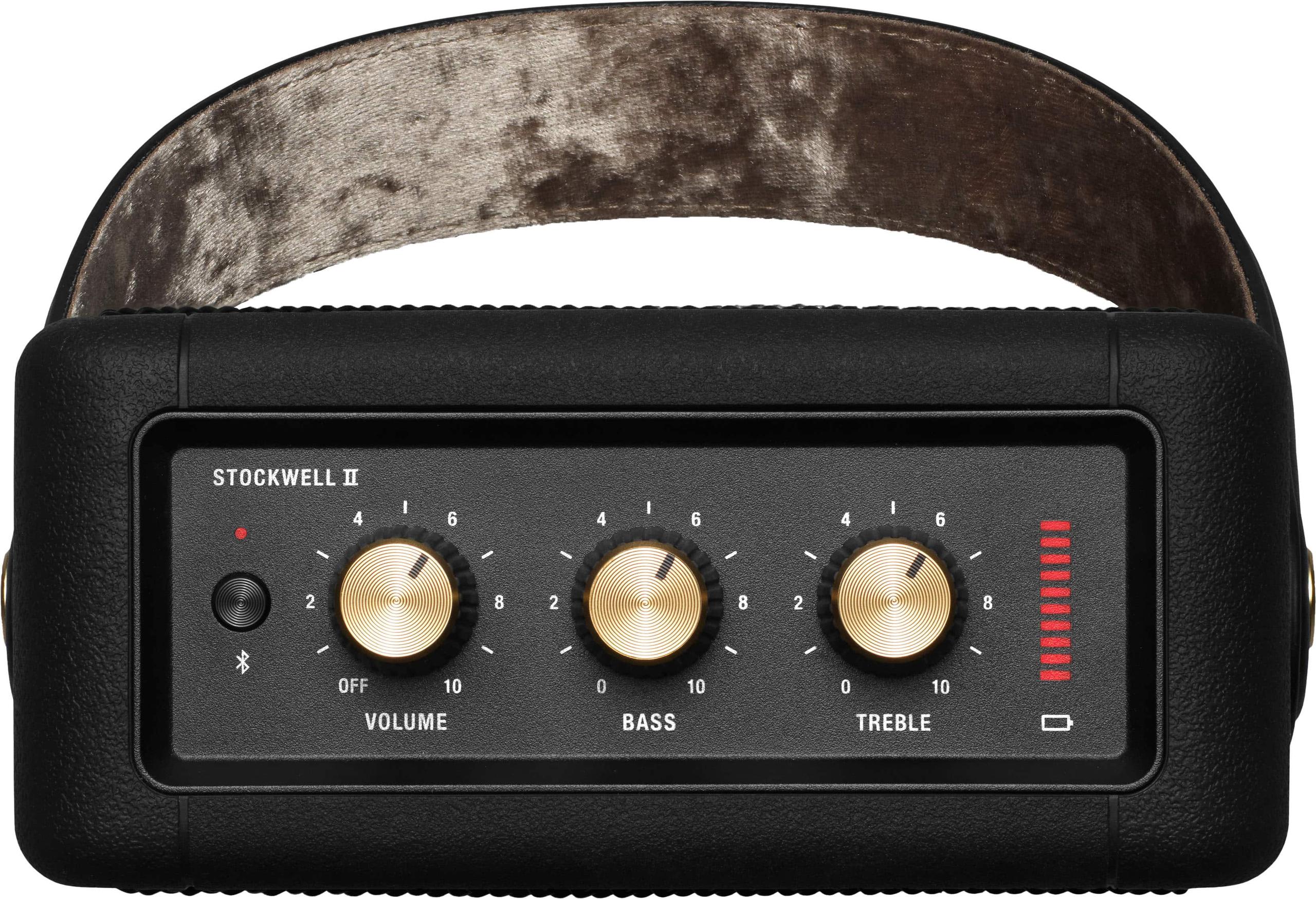
Both speakers offer straightforward operation, but the Acton III's app integration provides additional flexibility for sound customization. The Stockwell II's simpler approach focuses on essential controls, which some users might actually prefer.
Marshall's signature aesthetic carries through both models, but with different emphases:
Acton III:
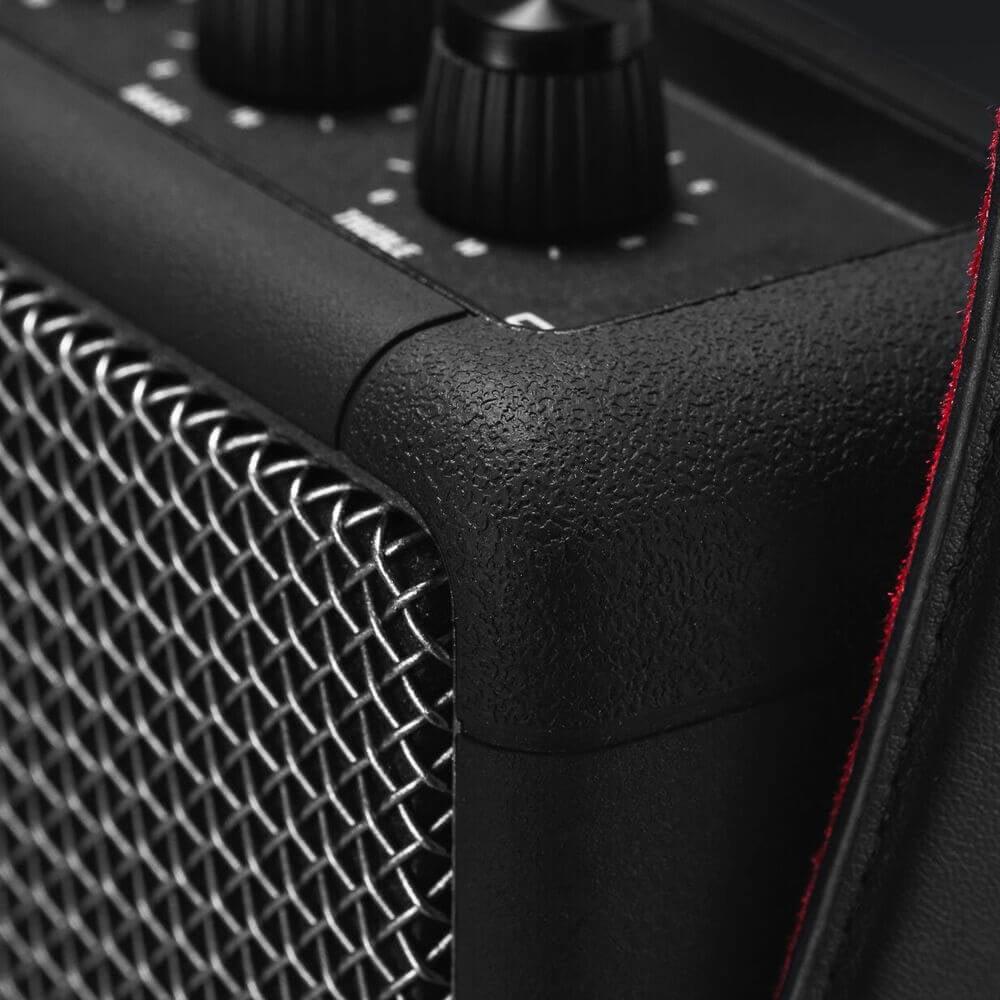
Stockwell II:
The Acton III at $279 represents a premium home speaker investment. Its value lies in:
The Stockwell II at $149 offers excellent value for a portable solution, providing:
Consider these key factors when choosing between these speakers:
Both speakers excel in their intended roles. The Acton III stands out as a premium home audio solution with forward-thinking features and superior sound quality. The Stockwell II impresses with its versatility and portability while maintaining good sound quality.
For home use focused on audio quality, the Acton III's additional investment delivers tangible benefits. However, if mobility matters or you need a speaker that can handle various environments, the Stockwell II offers impressive capability at a lower price point.
Consider your primary use case carefully - this, more than any single feature, should guide your decision between these two excellent but different speakers.
| Marshall Acton III | Marshall Stockwell II |
|---|---|
| Price - Investment vs Value | |
| $279.99 (premium home speaker) | $149.00 (mid-range portable) |
| Total Power Output - Impacts volume and sound quality | |
| 60W total (30W woofer + 2x15W tweeters) | 20W total (10W woofer + 2x5W tweeters) |
| Frequency Range - Determines bass depth and overall sound | |
| 45-20,000 Hz (deeper bass response) | 60-20,000 Hz (good for portable size) |
| Size - Affects placement flexibility | |
| 10.24 x 6.69 x 5.91 in (stationary design) | 7.09 x 6.34 x 2.76 in (portable friendly) |
| Weight - Important for mobility | |
| 6.28 lb (meant to stay put) | 3.04 lb (easy to carry) |
| Power Source - Determines usage flexibility | |
| Mains power only (100-240V) | Rechargeable battery + USB-C charging |
| Battery Life - Critical for portable use | |
| N/A (requires constant power) | 20+ hours, 6 hours from 20-min charge |
| Connectivity - Effects ease of use | |
| Bluetooth 5.2, 3.5mm input, app control | Bluetooth 5.0, 3.5mm input, multi-host |
| Special Features - Adds value and functionality | |
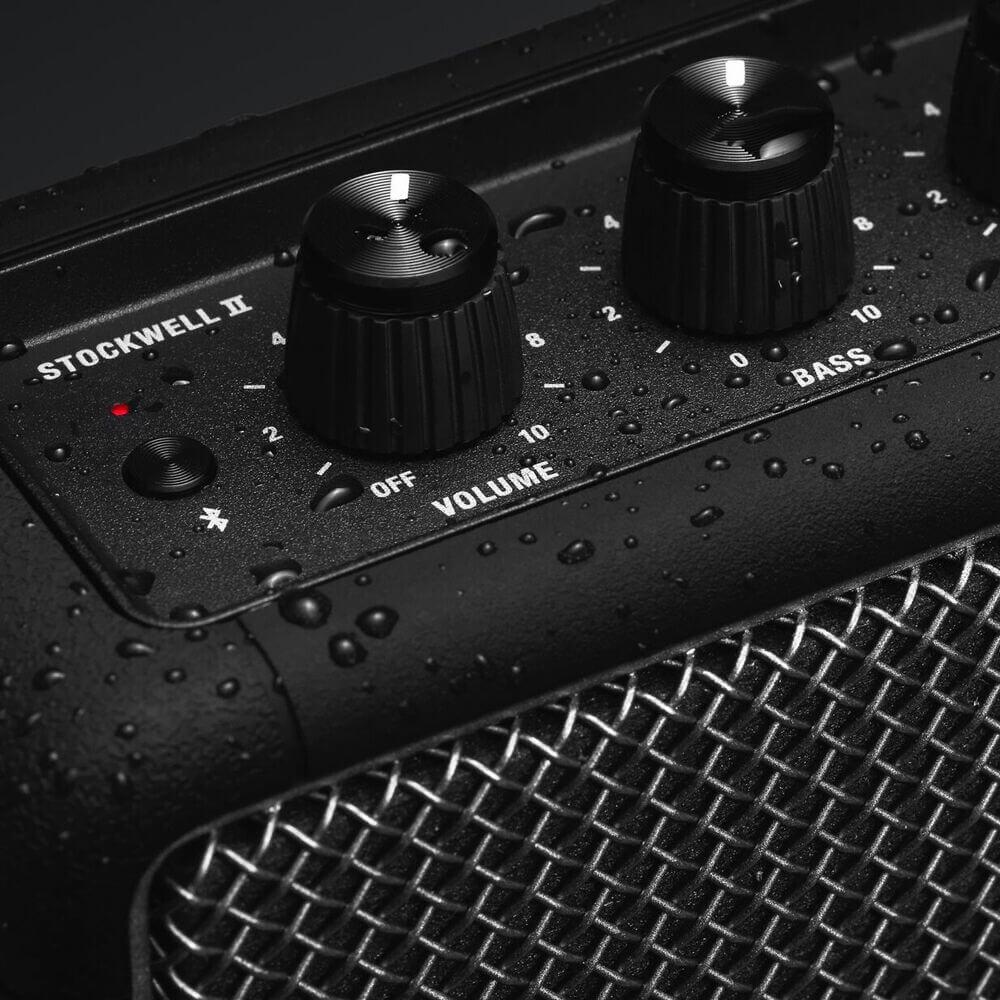
| Dynamic loudness, room compensation, placement EQ | IPX4 water resistance, multi-directional sound |
| Design Features - Build quality and materials | |
| 70% recycled plastic, vegan materials, classic design | Durable silicone exterior, steel grille, carrying strap |
| Sound Optimization - Affects audio quality | |
| App-based EQ, automatic room adjustment | Physical bass/treble controls only |
| Use Case - Primary intended purpose | |
| Premium home audio, room-filling sound | Portable audio, outdoor use, travel |
The Marshall Acton III has superior sound quality due to its more powerful 60W system compared to the Stockwell II's 20W output. The Acton III delivers deeper bass and clearer highs, making it the better choice for pure audio performance.
The Marshall Acton III costs $279.99, while the Stockwell II is priced at $149.00. The price difference reflects the Acton III's superior power output and advanced features.
The Stockwell II is designed for outdoor use with IPX4 water resistance and battery power. The Acton III requires mains power and isn't water-resistant, making it unsuitable for outdoor use.
The Stockwell II offers 20+ hours of battery life and quick charging (6 hours from 20 minutes). The Acton III doesn't have a battery and requires constant power connection.
The Marshall Acton III is better for indoor parties with its room-filling sound and higher volume capability. The Stockwell II works better for small outdoor gatherings where portability matters.
Yes, both the Acton III and Stockwell II feature Bluetooth connectivity. The Acton III uses newer Bluetooth 5.2, while the Stockwell II uses Bluetooth 5.0.
The Marshall Acton III is ideal for small apartments with its room optimization features and superior sound. However, if space is very limited, the compact Stockwell II might be more practical.
Neither the Marshall Acton III nor the Stockwell II has built-in voice control capabilities. Both rely on physical controls and device connectivity.
The Marshall Acton III provides better bass response with its 45Hz lower frequency range compared to the Stockwell II's 60Hz, plus its larger 30W woofer delivers more powerful low-end.
The Marshall Acton III offers app control for advanced features and EQ settings. The Stockwell II doesn't have app integration and relies on physical controls.
The Stockwell II is more durable with its IPX4 water resistance and portable design. While the Acton III is well-built, it's designed for stationary use rather than durability.
Both speakers allow Bluetooth connections, but the Stockwell II offers multi-host functionality to easily switch between devices. The Acton III requires disconnecting one device before connecting another.
We've done our best to create useful and informative comparisons to help you decide what product to buy. Our research uses advanced automated methods to create this comparison and perfection is not possible - please contact us for corrections or questions. These are the sites we've researched in the creation of this article: bestbuy.com - youtube.com - bestbuy.com - pocket-lint.com - bestbuy.com - crutchfield.com - premiumsound.com.au - marshall.com - 2001audiovideo.com - youtube.com - t3.com - bestbuy.com - youtube.com - bestbuy.com - stuff.tv - idownloadblog.com - stereoguide.com - kendallgiles.com - termagoods.com - aplaze.com - manua.ls - youtube.com - sg.tcacoustic.asia - marshall.com - youtube.com

Privacy Policy
Terms and Conditions - Affiliate Policy
Home Security
© Copyright 2008-2026.
11816 Inwood Rd #1211, Dallas, TX 75244