

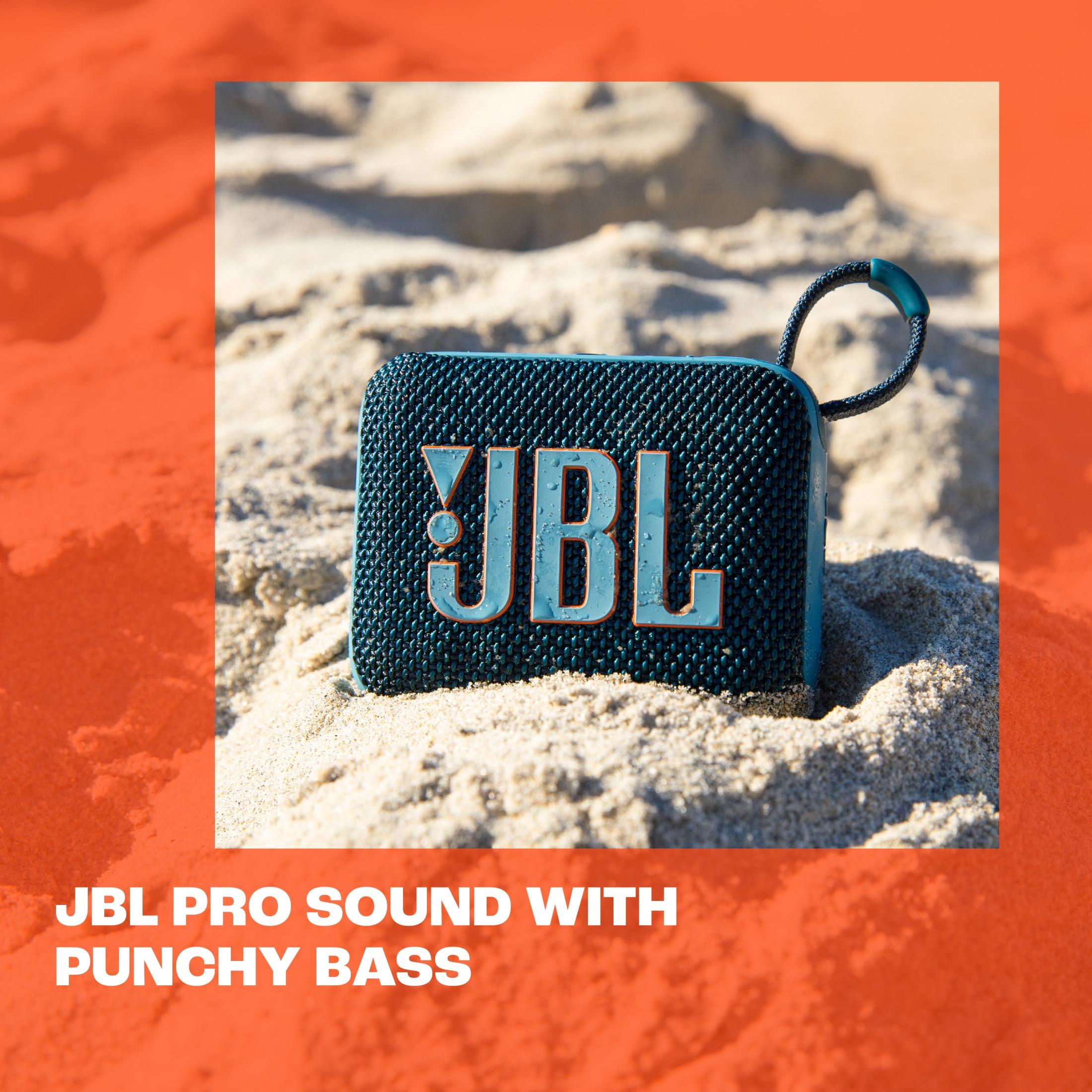

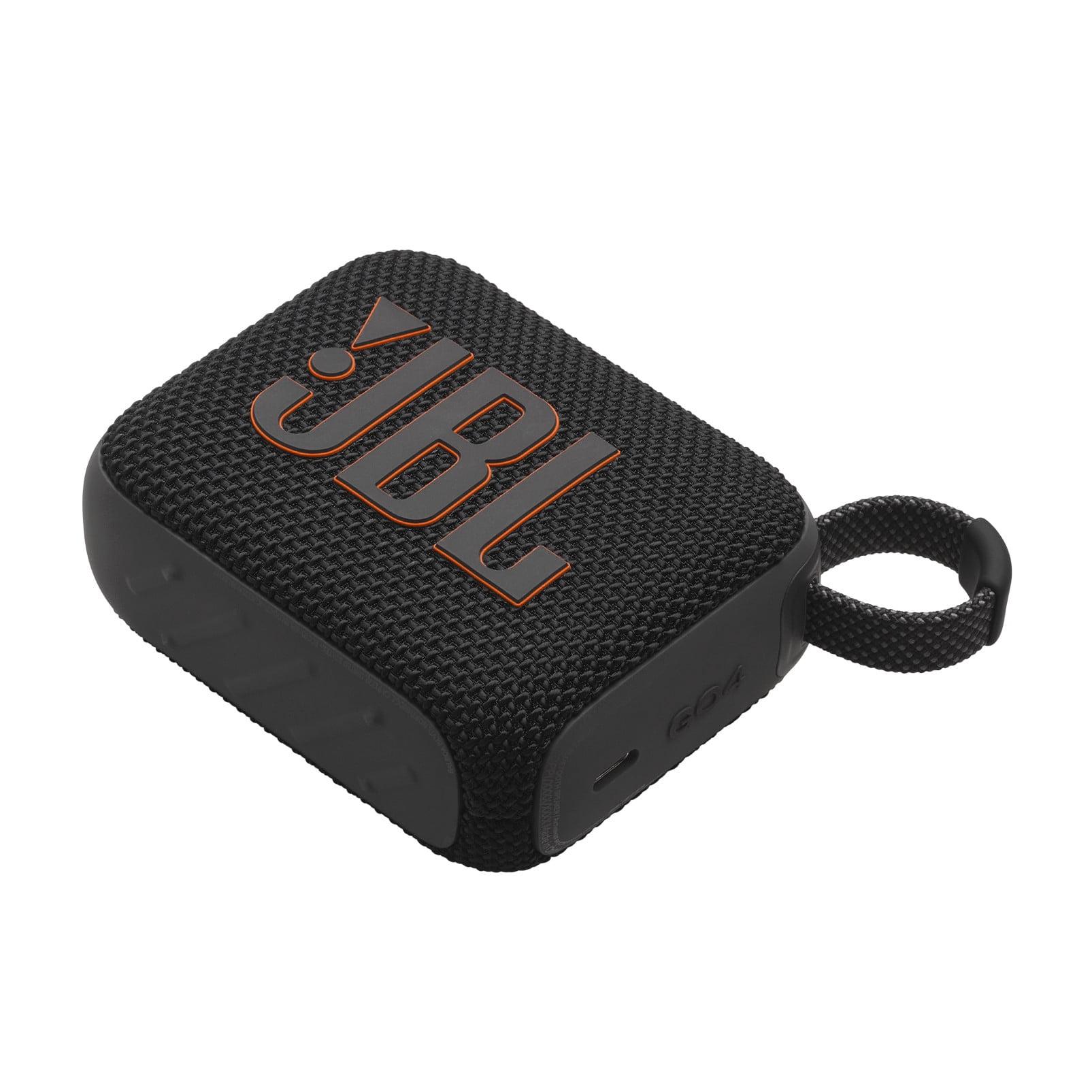
When you're hunting for a portable Bluetooth speaker, you'll quickly discover that "portable" means very different things to different people. The Skullcandy Terrain XL and JBL Go 4 perfectly illustrate this divide—one prioritizes power and endurance for outdoor adventures, while the other focuses on true pocket-sized convenience without sacrificing audio quality.
Both speakers launched in 2024, representing the latest thinking in their respective categories. The JBL Go 4 arrived in July as the long-awaited successor to the Go 3, while the Terrain XL debuted as part of Skullcandy's refreshed outdoor speaker lineup. What makes this comparison particularly interesting is how these speakers tackle similar needs through completely different approaches.
Before diving into specifics, it's worth understanding what matters most in portable speakers. The fundamental challenge is the physics of audio reproduction—larger speakers generally produce better sound, especially in the bass frequencies where you need more air movement to create those low rumbling notes. But bigger also means less portable, shorter battery life per unit of volume, and higher costs.
The key considerations break down into several categories: sound quality (how good does it actually sound), volume capability (how loud can it get before distorting), battery endurance (how long will it play), durability (can it handle your lifestyle), and portability (will you actually take it places). The trick is finding the right balance for your specific needs.
Modern Bluetooth speakers also incorporate smart features that weren't available just a few years ago. Multi-speaker pairing lets you connect multiple units for stereo sound or room-filling audio, while smartphone apps provide equalizer (EQ) controls to adjust bass, midrange, and treble frequencies to your taste. Water resistance ratings have become standard, with IPX7 meaning submersible and IP67 adding dust protection.
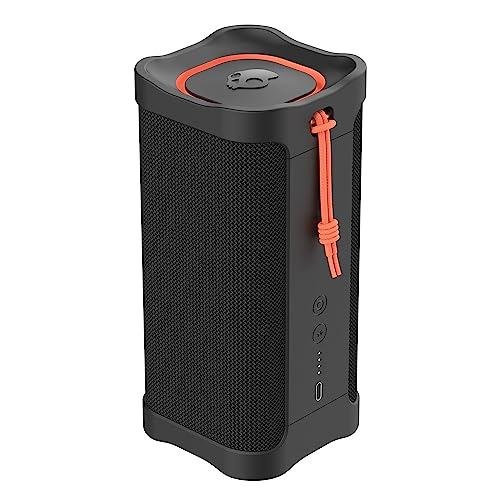
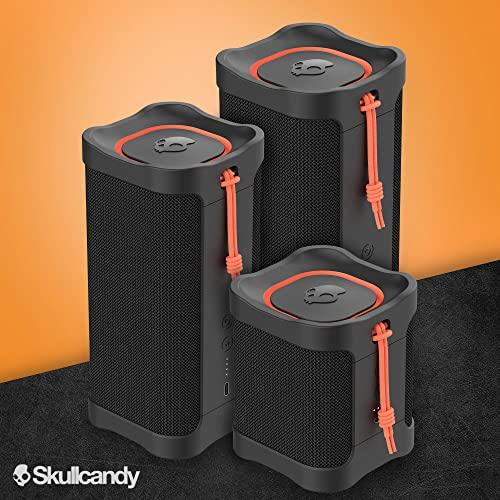
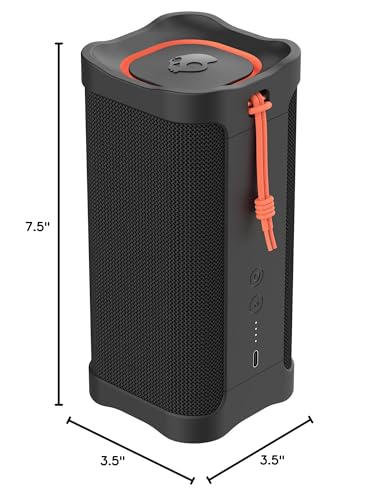
The most obvious difference between these speakers is size, but the implications run deeper than you might expect. The Skullcandy Terrain XL measures 3.5 by 3.5 by 7.5 inches and weighs just over two pounds. That's roughly the size of a large water bottle—definitely portable, but you'll know you're carrying it.
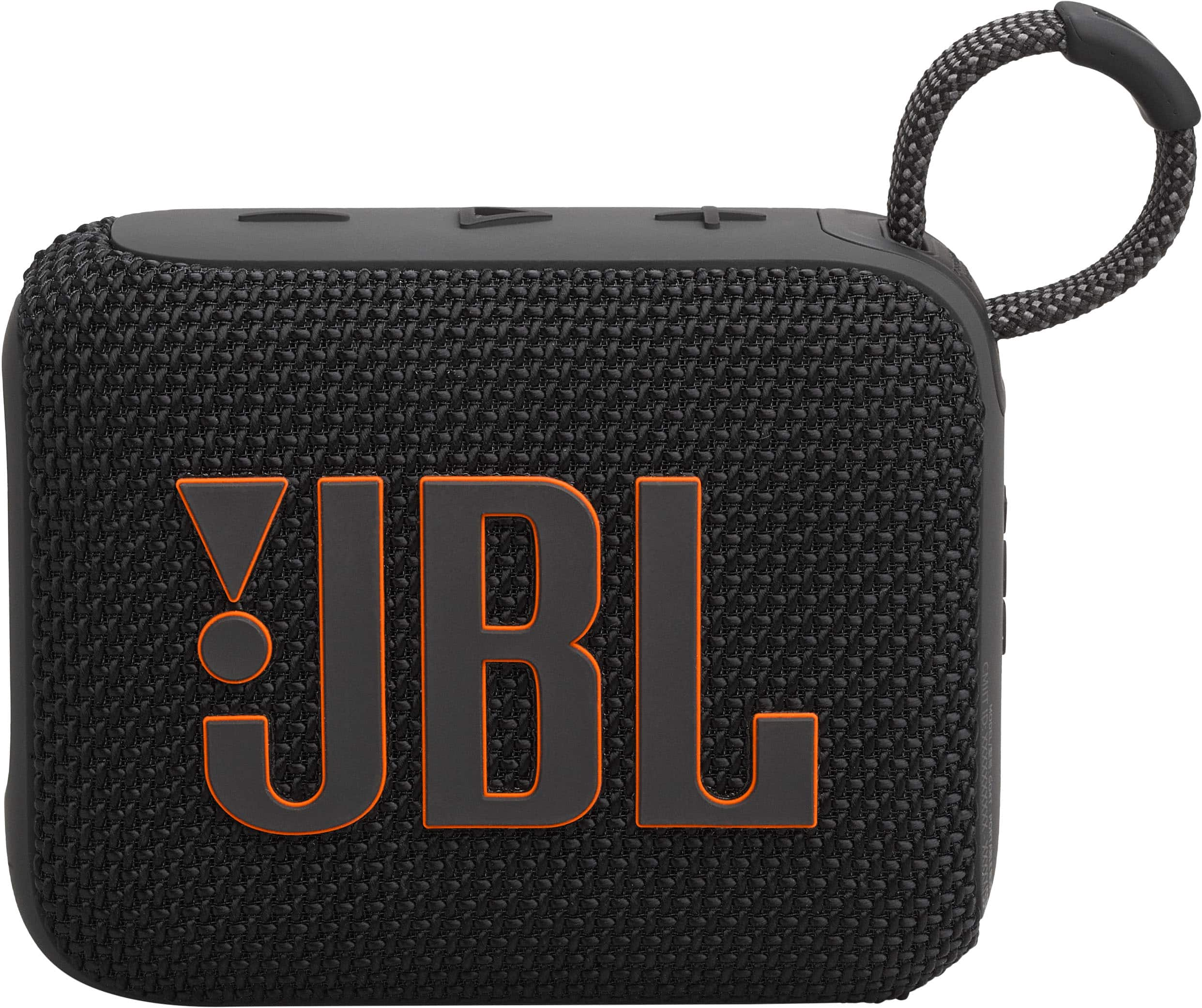
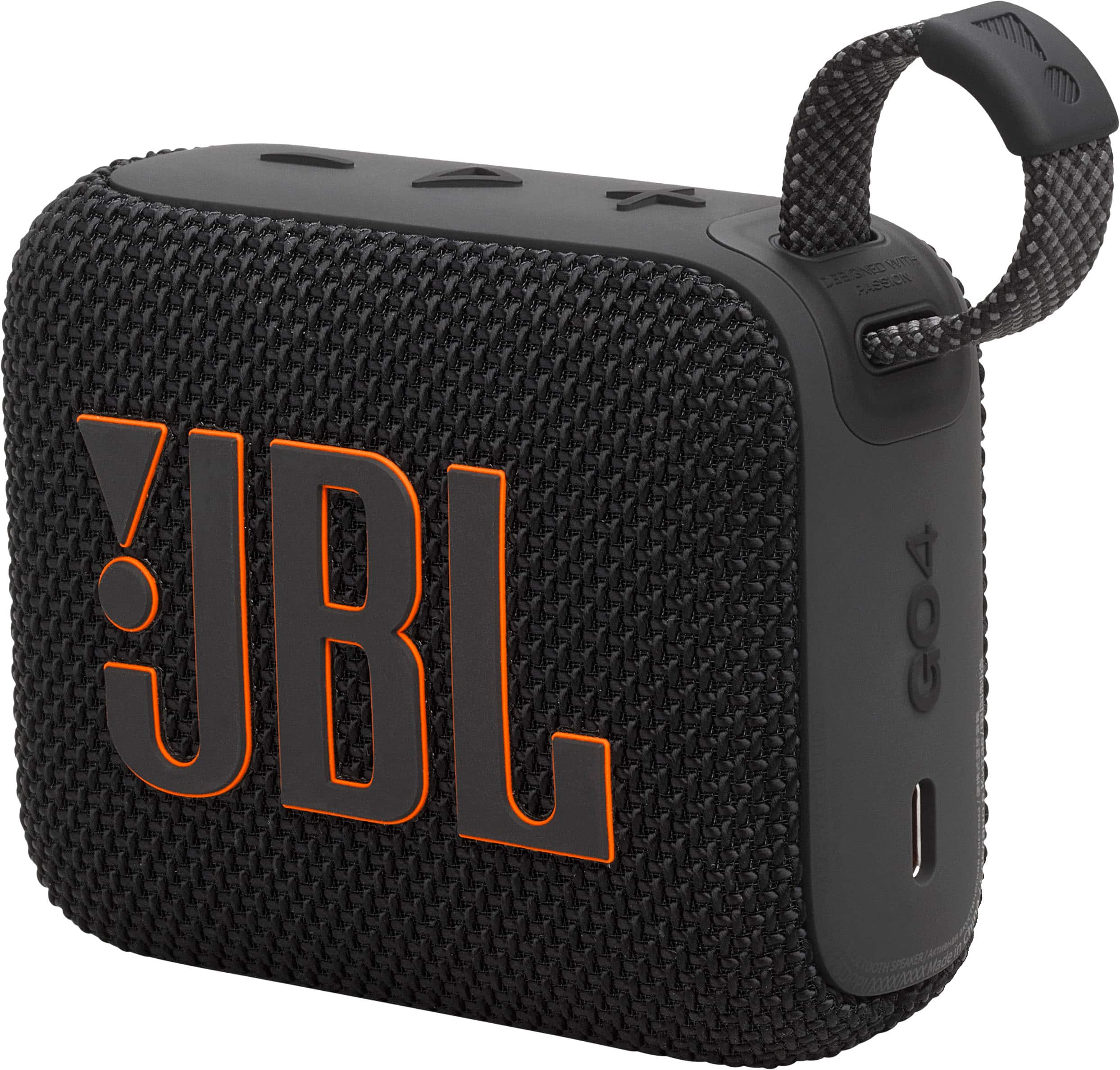
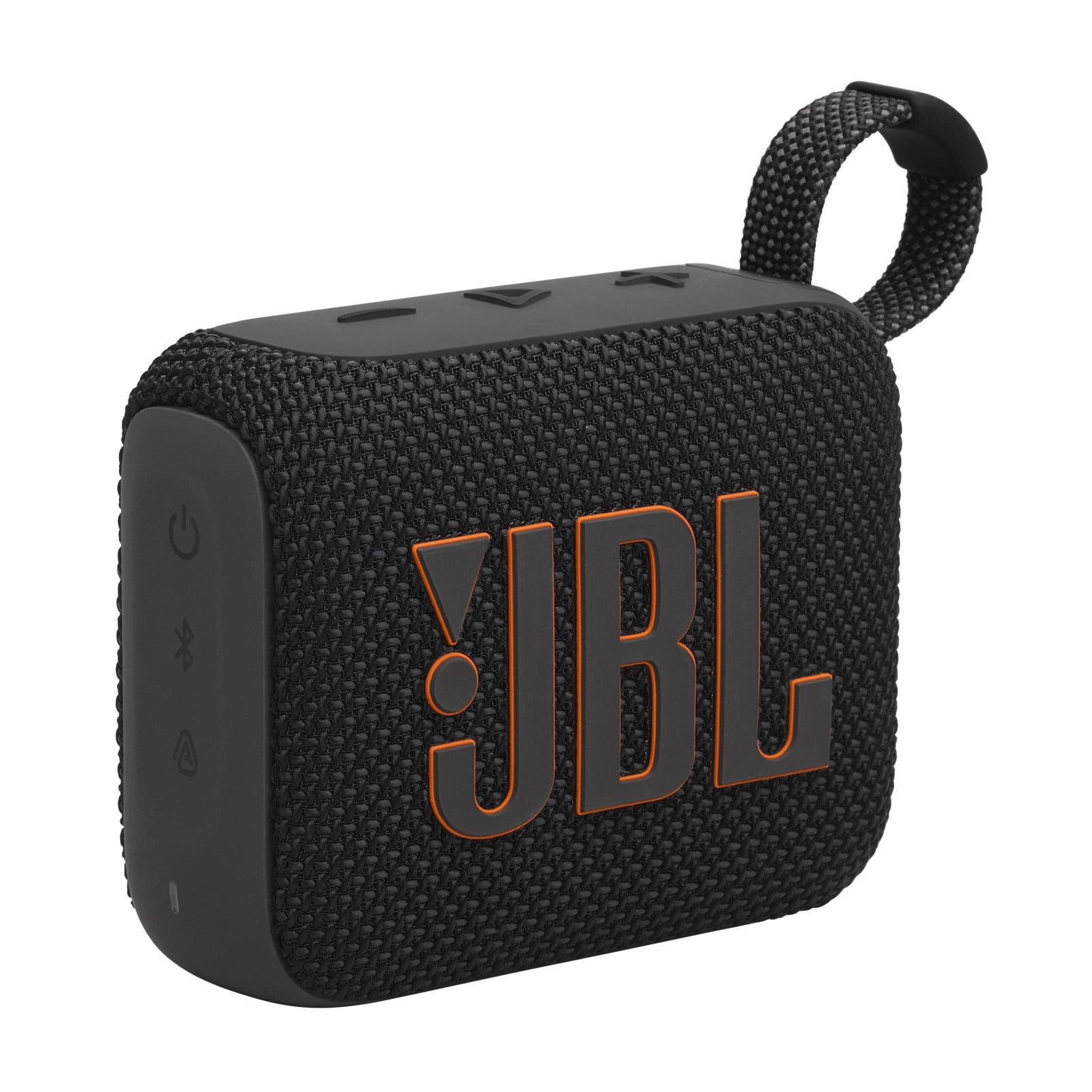
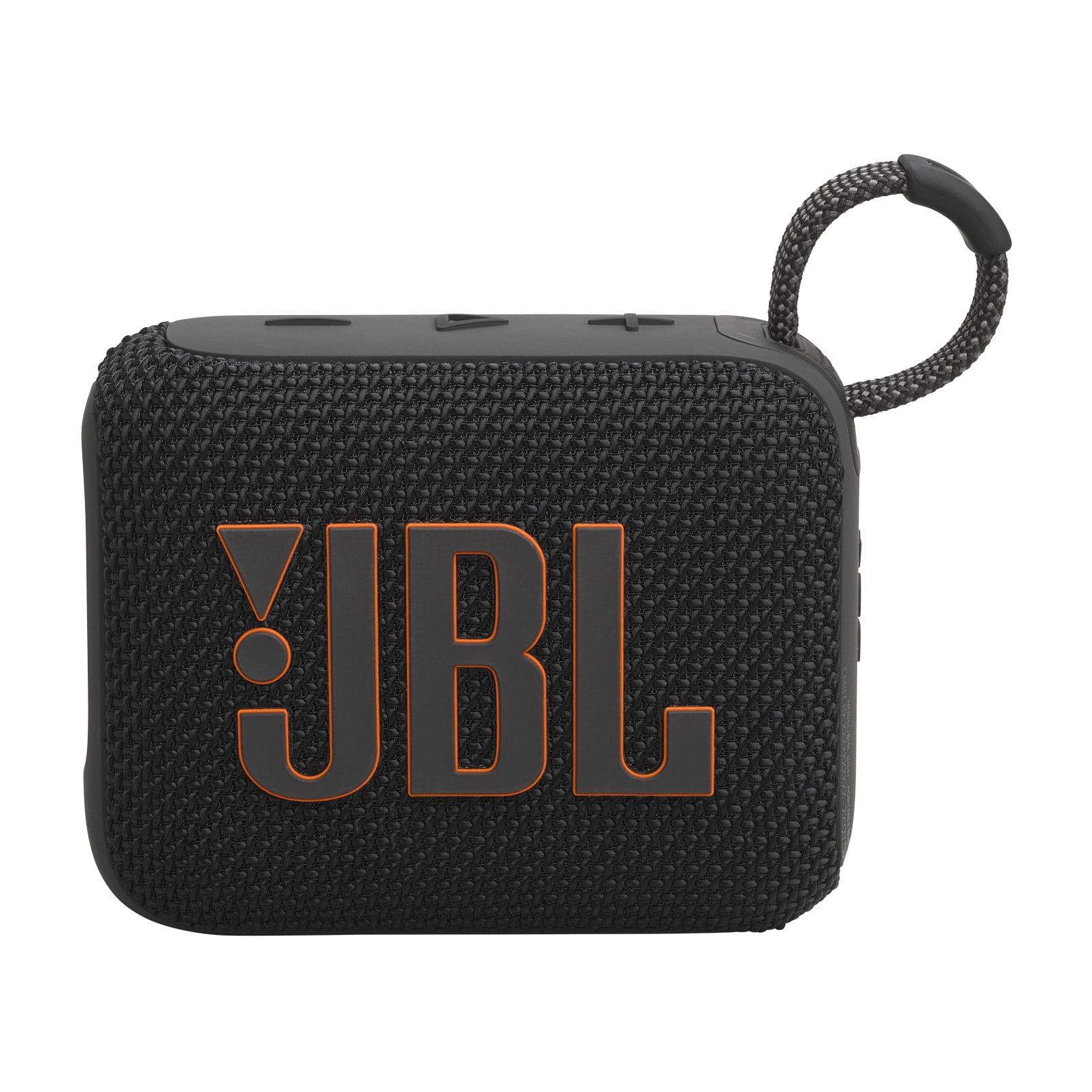
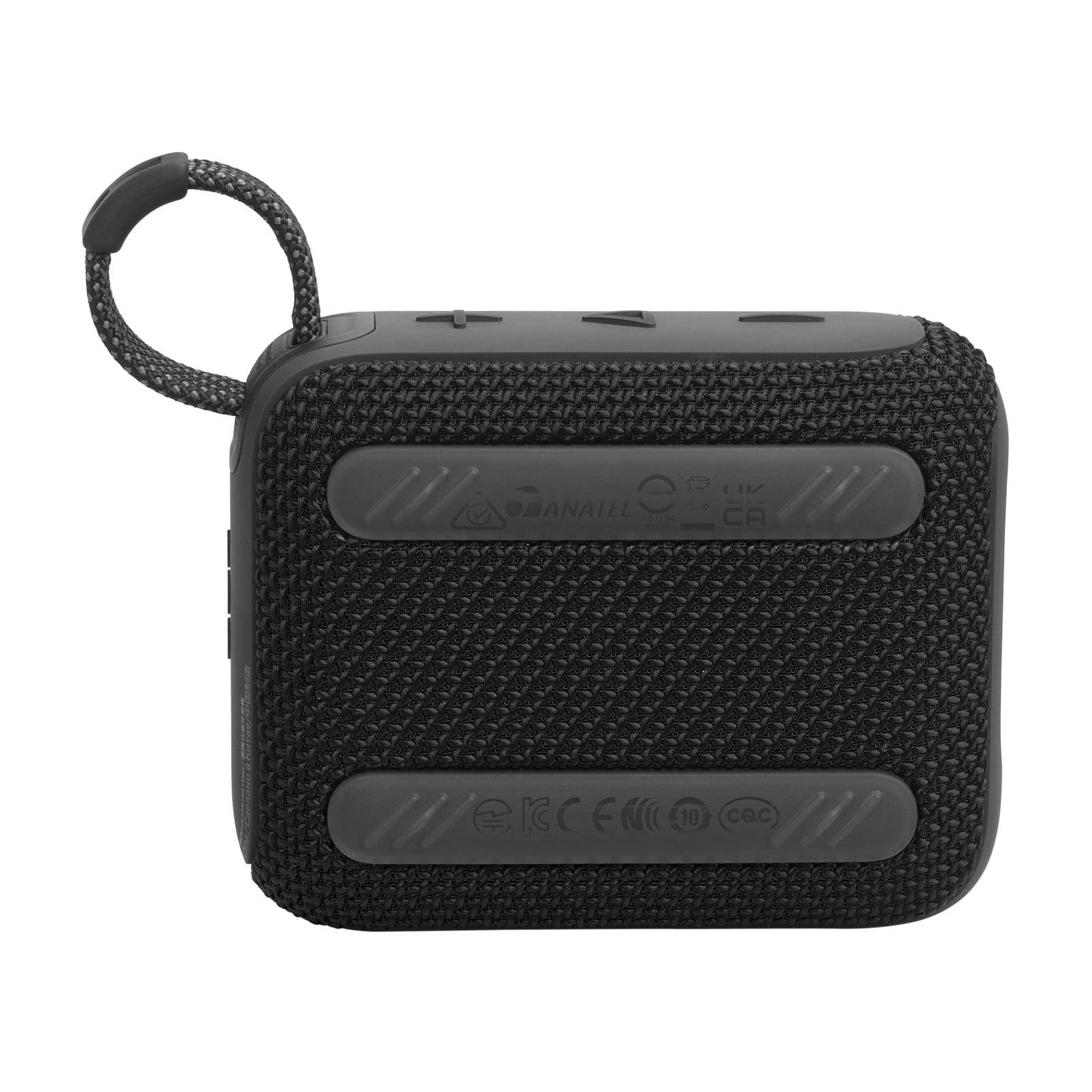
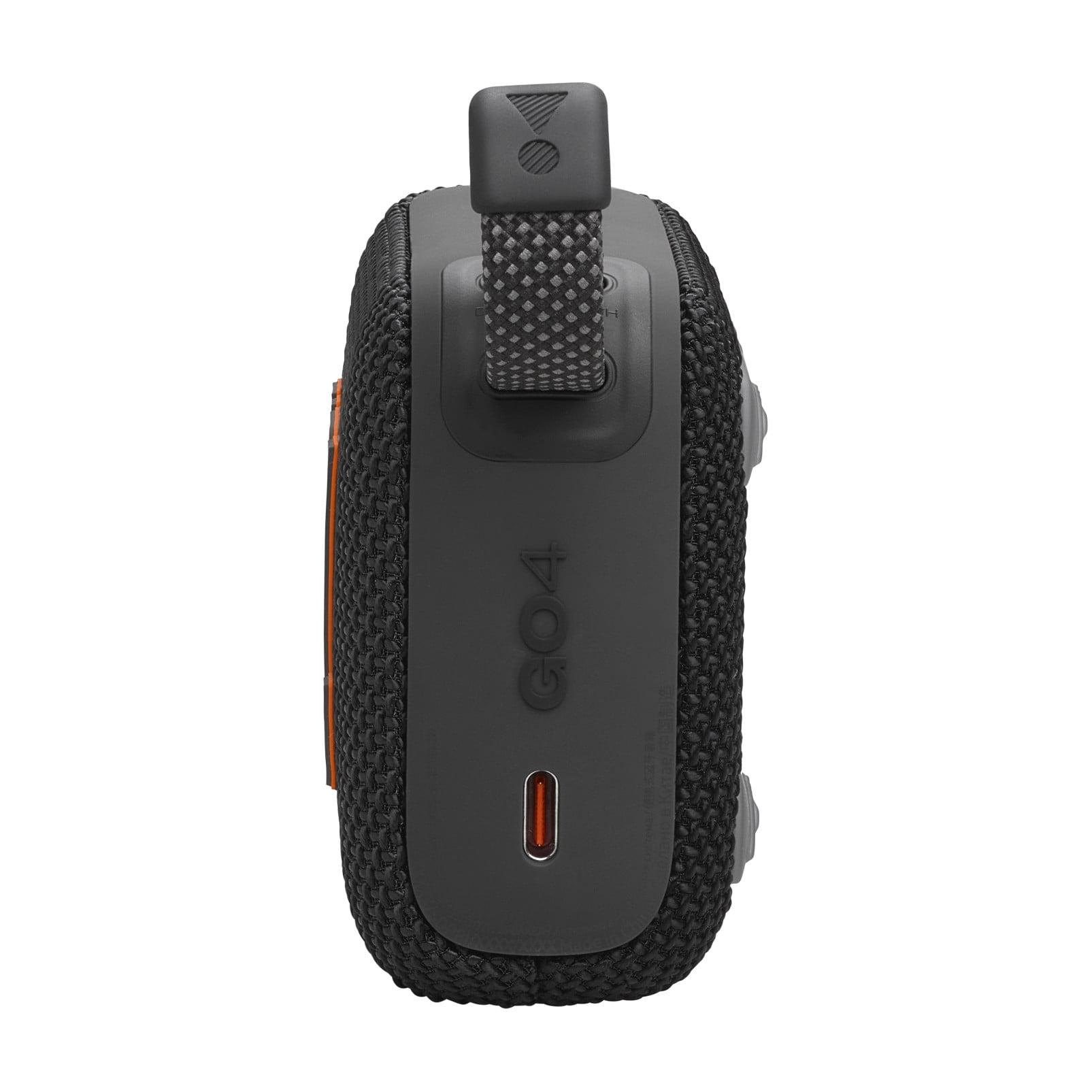
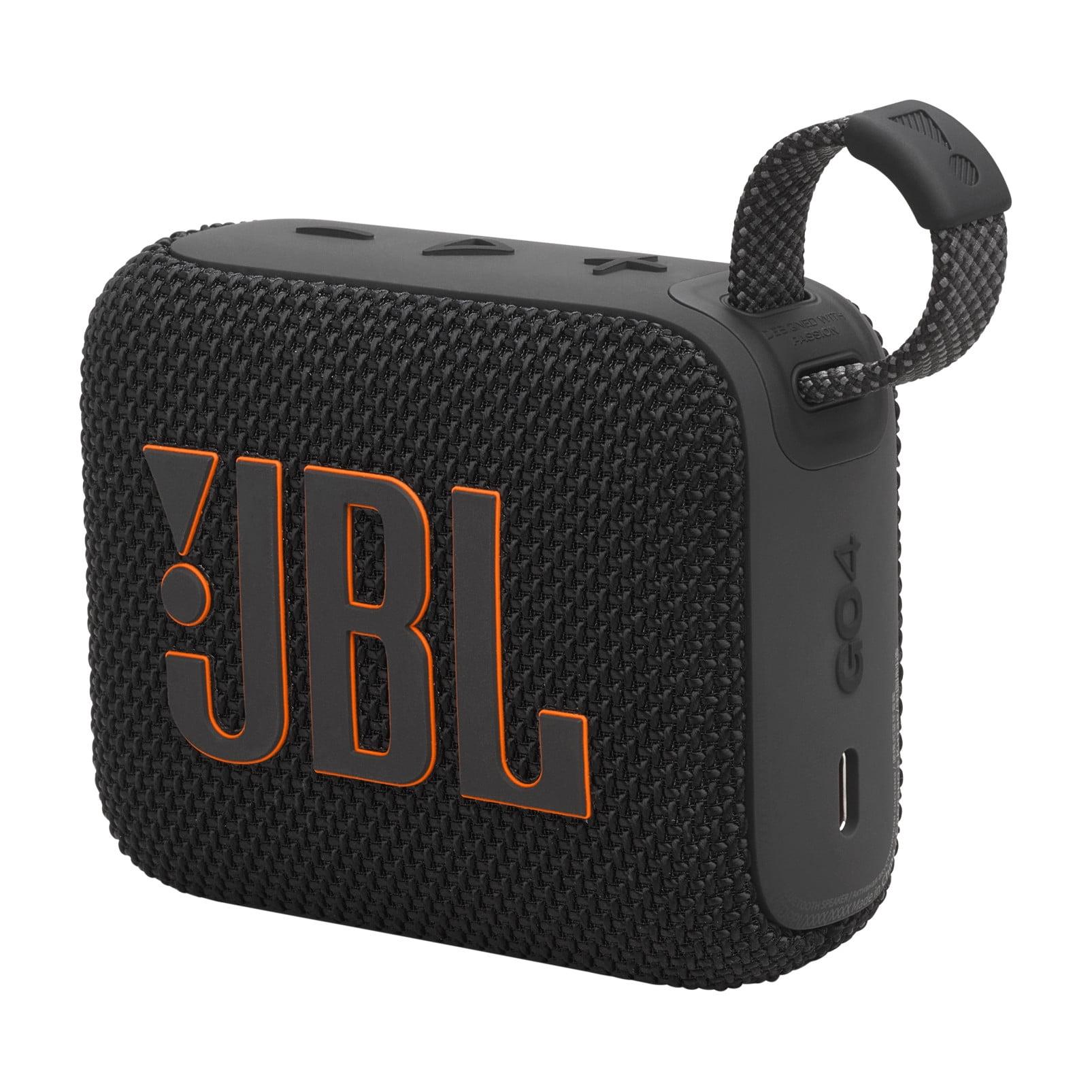
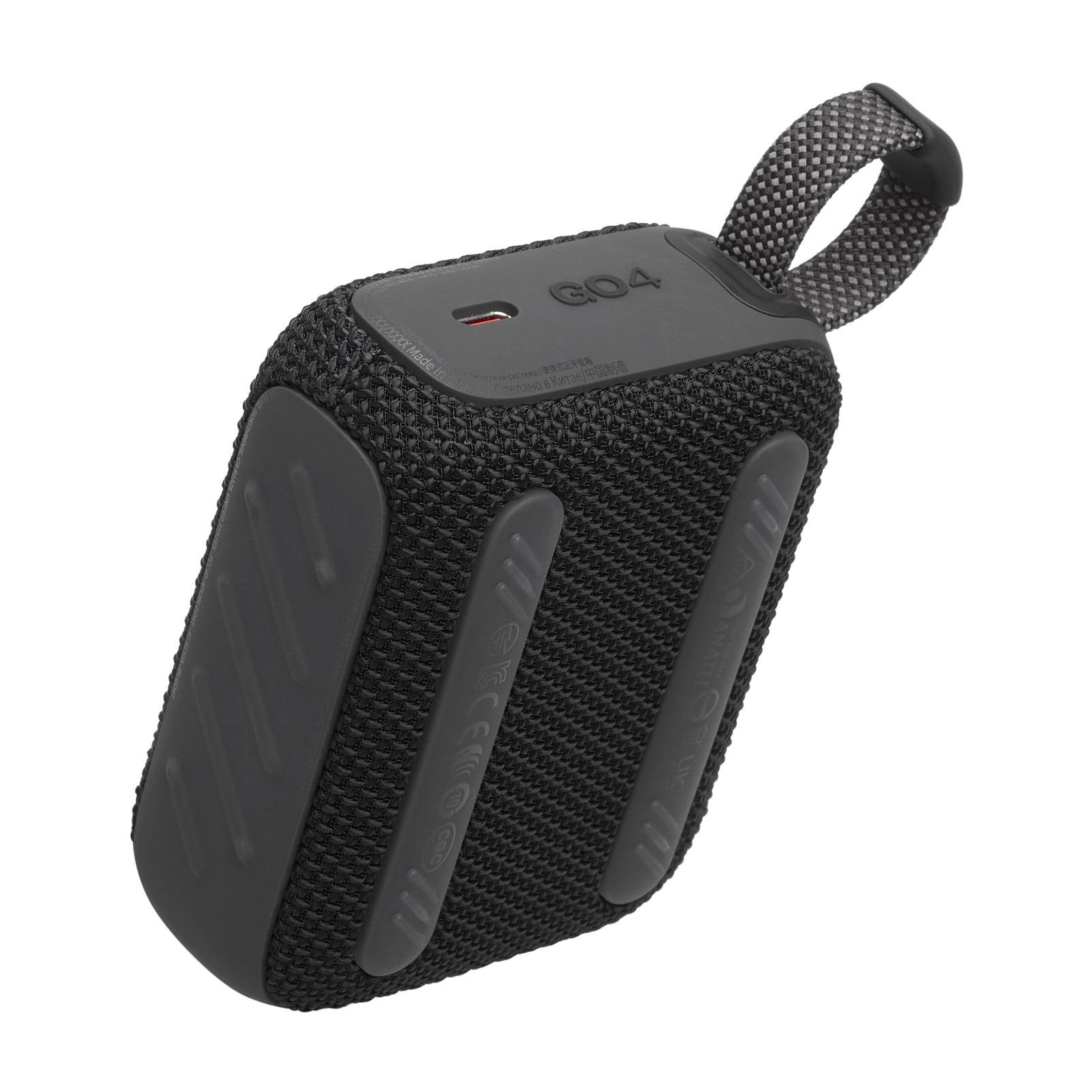
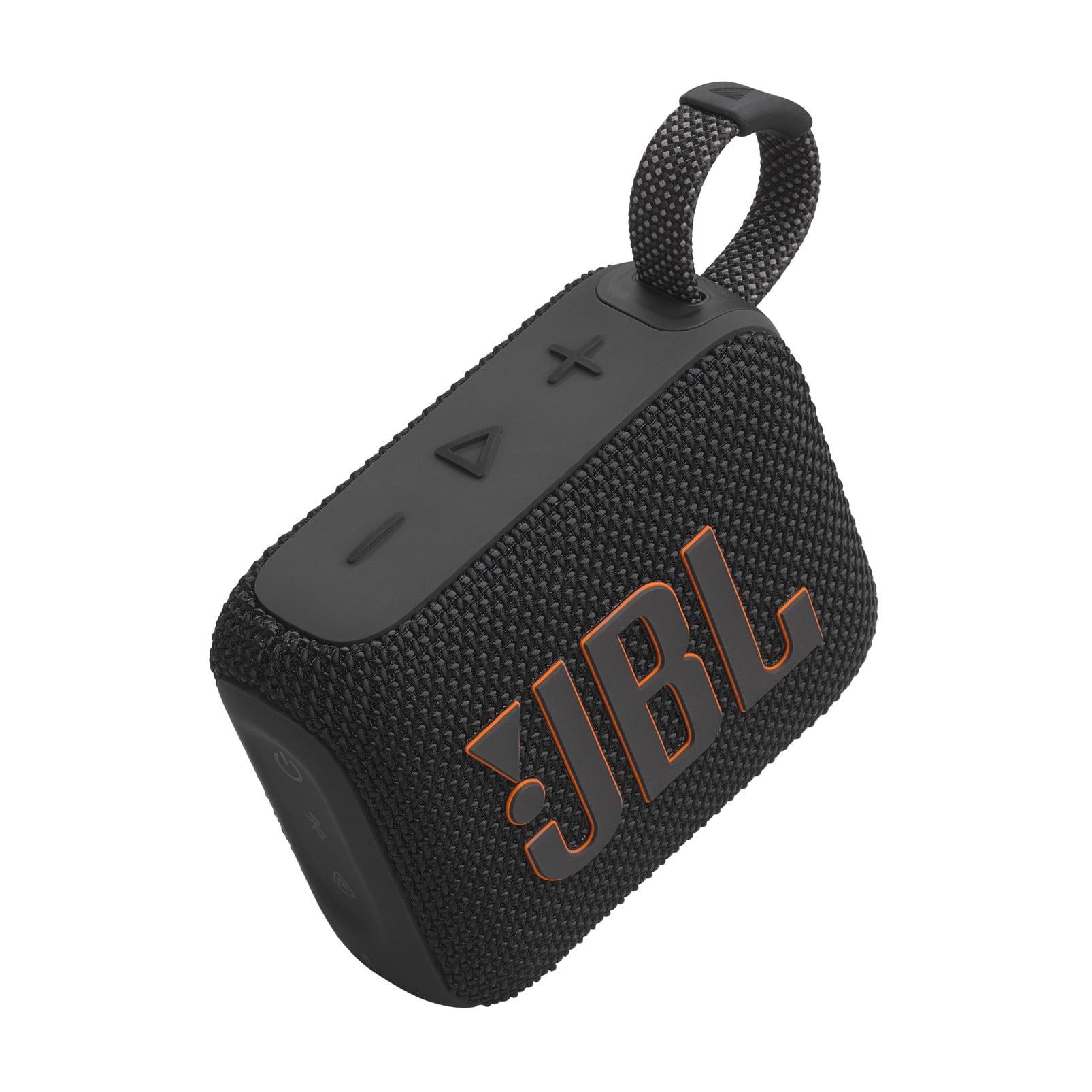
The JBL Go 4, meanwhile, fits in your palm at 3.7 by 3.0 by 1.7 inches and weighs less than half a pound. It's genuinely pocket-sized, though you might not want it bouncing around in your jeans. This size difference translates to about five times more internal volume for the Terrain XL, which matters significantly for audio performance.
Here's why size affects sound: speakers work by moving air, and bass frequencies require moving lots of air. The Terrain XL's larger internal volume allows for bigger drivers (the cone-shaped parts that actually produce sound) and more space for bass resonance. It packs dual front-firing woofers plus dual passive radiators—essentially extra bass-enhancing membranes that vibrate sympathetically with the main drivers.
The Go 4 makes do with a single 45mm driver, but JBL's engineers have clearly optimized every millimeter of internal space. Despite the size constraint, it still manages to produce surprisingly full sound through careful acoustic engineering and digital signal processing.
Raw power output tells an important part of the story. The Terrain XL delivers 20 watts of total output compared to the Go 4's 4.2 watts—nearly five times more electrical power pushing the drivers. In practical terms, this means the Terrain XL can get significantly louder and maintain clarity at higher volumes.
But maximum volume isn't everything. Based on our research into user experiences and technical reviews, the Terrain XL can fill a medium-sized room or outdoor space with sound, making it suitable for small parties or background music while cooking. However, several reviewers noted that it doesn't quite reach the volume levels of competitors like the JBL Charge 5, and some distortion creeps in when you really push it.
The Go 4, despite its size limitations, punches above its weight class. It produces clean, undistorted sound within its volume limits, making it ideal for personal listening or small groups. The maximum output reaches about 83.3 decibels according to technical measurements—loud enough for most intimate settings but not for filling large spaces.
This power difference becomes crucial when considering your intended use. If you're planning pool parties or outdoor gatherings, the Terrain XL's extra volume capability becomes essential. For commuting, hotel rooms, or small group listening, the Go 4's output is perfectly adequate while offering much better portability.
Here's where things get interesting, and frankly, where the JBL Go 4 delivers some surprises. Despite being significantly smaller and less powerful, it produces notably better overall sound quality than the Terrain XL.
The Terrain XL suffers from what audio engineers call a "harsh V-shaped" sound signature. This means it emphasizes the bass (low frequencies) and treble (high frequencies) while neglecting the midrange where most vocals and instrumental details live. In practical terms, you'll hear thumping bass and crisp highs, but vocals can sound distant and instrumental details get lost in the mix.
This tuning choice makes sense for outdoor use where bass can get lost in open spaces, and many listeners do prefer enhanced bass for genres like hip-hop or electronic music. However, it creates a somewhat artificial sound that can become fatiguing during longer listening sessions. The problem becomes more pronounced at higher volumes, where the treble can become harsh and distorted.
The Go 4 takes a more balanced approach. JBL's tuning provides what reviewers consistently describe as "fuller" and "more natural" sound. The frequency response is more even across the spectrum, meaning vocals sit properly in the mix, and you can hear instrumental details that get lost on the Terrain XL. This balanced approach works better across different music genres and listening scenarios.
The Go 4 also benefits from smartphone app integration through JBL's Portable app, giving you equalizer controls to adjust the sound to your preferences. Want more bass for hip-hop? You can boost it. Prefer more vocal clarity for podcasts? The app lets you emphasize midrange frequencies. The Terrain XL lacks any app support, so you're stuck with Skullcandy's factory tuning.
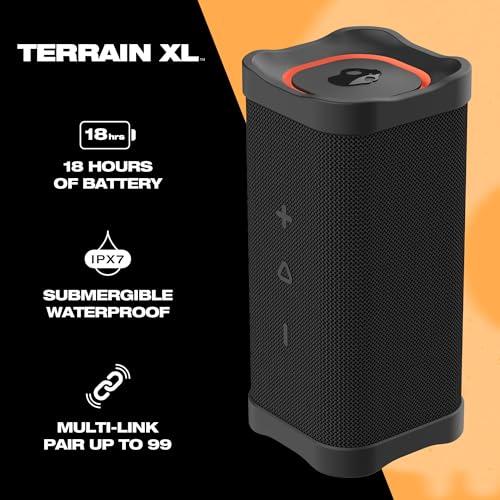
Battery performance represents one area where the Terrain XL clearly dominates. It delivers up to 18 hours of playback on a single charge, though this can vary based on volume levels and content. That's genuinely all-day performance that can handle camping trips, beach days, or outdoor events without worry.
The Go 4 provides 7-9 hours depending on volume and features used. JBL includes a "Playtime Boost" mode that can extend battery life by optimizing performance, but you're still looking at roughly half the endurance of the Terrain XL.
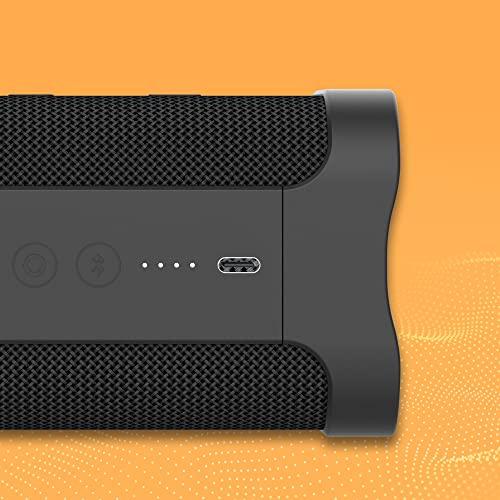
Both speakers charge via USB-C, which has become the standard for good reason—it's faster than older micro-USB ports and uses the same cable as most modern phones and laptops. The Go 4 fully charges in about 3 hours, while the Terrain XL takes longer due to its larger battery capacity.
For most daily use scenarios, 7-9 hours is actually plenty. That covers a full workday, most trips, or extended listening sessions. The Terrain XL's 18-hour capacity becomes valuable for specific scenarios: camping without power access, all-day outdoor events, or situations where you might forget to charge regularly.
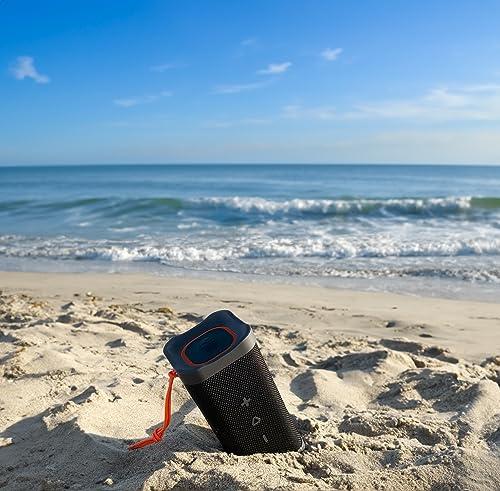
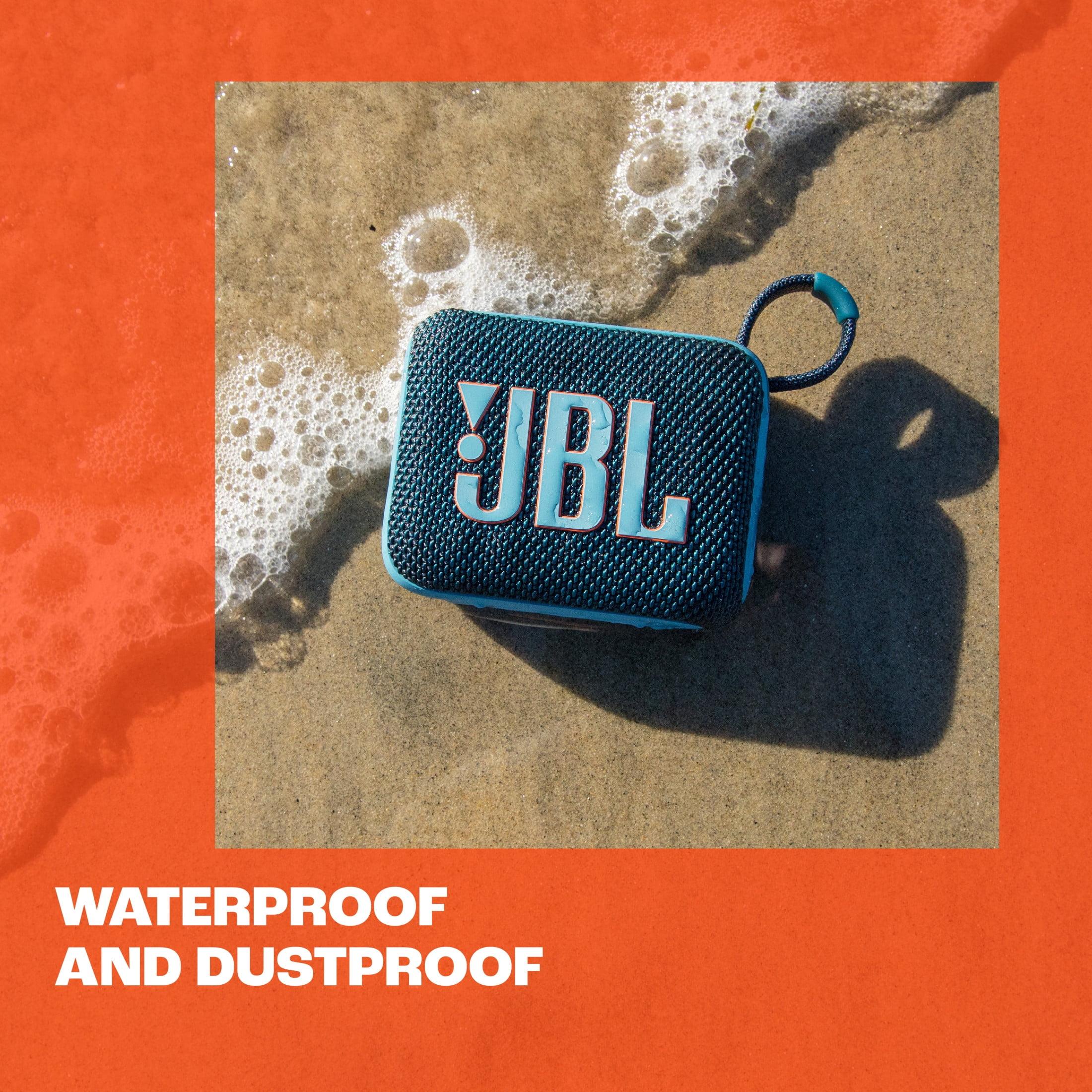
Both speakers are designed to handle wet conditions, but they approach durability differently. The JBL Go 4 carries an IP67 rating, meaning it's both waterproof (can be submerged) and completely dustproof. This makes it ideal for beach trips, hiking, or any scenario where dust and sand might be issues.
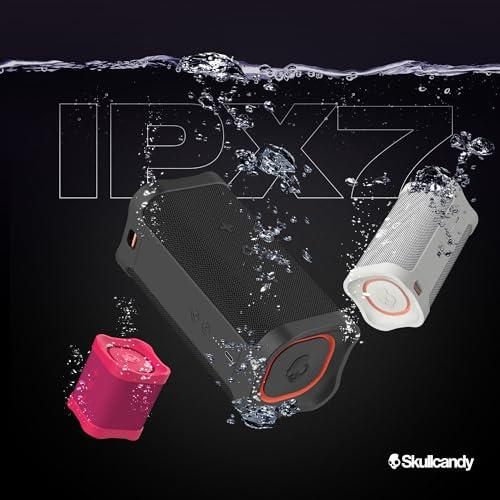
The Terrain XL has an IPX7 rating—waterproof but without official dust resistance certification. It can handle submersion up to one meter for 30 minutes, making it suitable for poolside use or getting caught in rain. The larger size and fabric mesh construction also provide natural protection against impacts.
In real-world durability, both speakers seem well-built based on user feedback. The Go 4's smaller size actually works in its favor here—there's less surface area to damage, and it's easier to protect in bags or pockets. The Terrain XL includes a wrist strap for carrying but feels substantial enough to handle some rough treatment.
Both speakers use Bluetooth 5.3, the latest standard that provides better connection stability and range compared to older versions. The practical difference is minimal for most users, but newer Bluetooth versions handle interference better and maintain connections more reliably.
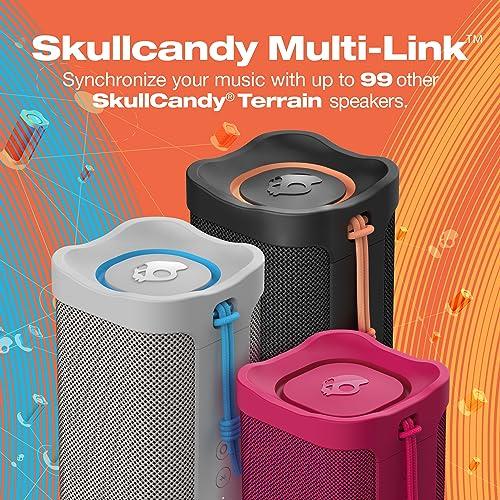
The Terrain XL includes Skullcandy's Multi-Link technology, which offers a genuinely useful advantage. You can pair up to 99 speakers together for synchronized playback, but more importantly, you can pair different Terrain models (mini, standard, XL) for stereo sound. This cross-model compatibility is unusual—most brands require identical speakers for stereo pairing.
The Go 4 supports JBL's Auracast technology for multi-speaker connections and includes comprehensive app support. The JBL Portable app provides equalizer controls, battery monitoring, and other customization options that enhance the user experience significantly.
The choice between these speakers really comes down to how you plan to use them. The Terrain XL excels in scenarios where you need sustained loud output: backyard barbecues, camping trips, pool parties, or any situation where the speaker stays in one place for extended periods. Its 18-hour battery life means you can literally forget about charging for days.
The Go 4 shines in mobility-focused scenarios: commuting with personal audio, hotel room listening, small gatherings, or any time you need to frequently move the speaker around. Its superior sound quality makes it excellent for diverse music genres and podcast listening where clarity matters.
For home theater applications, neither speaker is really designed as a primary solution, but they serve different supplementary roles. The Go 4 makes an excellent personal audio device for late-night viewing when you can't use your main system. The Terrain XL could work for casual outdoor movie setups where you need more volume.
At the time of writing, the JBL Go 4 typically costs less than the Terrain XL while delivering superior sound quality. This makes it an exceptional value proposition—you're getting better performance for less money, assuming the smaller size and shorter battery life meet your needs.
The Terrain XL justifies its higher price through specialized features: exceptional battery life, multi-speaker connectivity, and higher volume output. If these capabilities matter for your use case, the price premium becomes worthwhile.
After extensive research into user experiences and technical reviews, the JBL Go 4 emerges as the better choice for most people. Its combination of superior sound quality, lower price, and genuine portability addresses the most common portable speaker needs effectively.
Choose the Go 4 if you prioritize sound quality, need true portability, value app customization, or want the best overall value. It's particularly suited for personal listening, commuting, travel, and small group scenarios.
Select the Terrain XL if you need sustained loud output, all-day battery life, plan to build multi-speaker systems, or primarily use speakers in stationary outdoor settings. It's the better choice for camping, extended outdoor events, or situations where charging access is limited.
The fundamental question is whether you need a speaker that goes everywhere with you (Go 4) or one that stays put but performs for hours (Terrain XL). Both excel in their intended roles, but for most users, the Go 4's combination of portability, sound quality, and value makes it the more versatile choice.
| Skullcandy Terrain XL | JBL Go 4 |
|---|---|
| Size & Weight - Critical for how you'll actually use the speaker | |
| 3.5" × 3.5" × 7.5", 2.07 lbs (backpack/bag portable) | 3.7" × 3.0" × 1.7", 0.42 lbs (truly pocket-sized) |
| Power Output - Determines maximum volume and room-filling capability | |
| 20W total (significantly louder, suitable for groups) | 4.2W RMS (adequate for personal/small group listening) |
| Sound Quality - Most important for actual listening enjoyment | |
| Harsh V-shaped tuning, bass-heavy but lacks midrange detail | Balanced, fuller sound with better clarity across frequencies |
| Battery Life - How long you can listen without charging | |
| Up to 18 hours (exceptional for all-day events) | Up to 9 hours with Playtime Boost (sufficient for most uses) |
| Water Resistance - Protection level for outdoor/wet conditions | |
| IPX7 (waterproof, submersible to 1m for 30 mins) | IP67 (waterproof AND dustproof - better overall protection) |
| App Support - Customization and control options | |
| None (stuck with factory sound tuning) | JBL Portable app with full EQ customization |
| Multi-Speaker Pairing - Ability to connect multiple units | |
| Multi-Link up to 99 speakers, unique cross-model stereo pairing | Auracast technology for multi-speaker connections |
| Charging Method - Convenience and compatibility | |
| USB-C (longer charge time due to larger battery) | USB-C (3-hour charge time) |
| Bluetooth Version - Connection stability and range | |
| 5.3 with 33-foot range | 5.3 standard |
| Best Use Cases - Where each speaker excels | |
| Outdoor events, camping, pool parties, all-day listening | Commuting, travel, personal listening, small gatherings |
| Value Proposition - Performance per dollar spent | |
| Higher price for specialized outdoor/endurance features | Lower price with superior sound quality - exceptional value |
The Skullcandy Terrain XL is specifically designed for outdoor use with its 20W power output, 18-hour battery life, and IPX7 waterproof rating. It can get much louder than the JBL Go 4 and last all day without charging. While the Go 4 is also waterproof with IP67 rating, its smaller size and 9-hour battery make it better suited for personal outdoor listening rather than group gatherings.
The JBL Go 4 delivers notably better sound quality despite its smaller size. It offers balanced, clear audio across all frequencies, while the Skullcandy Terrain XL has a harsh V-shaped sound that emphasizes bass and treble but neglects midrange detail. The Go 4 also includes app-based EQ controls for customization, which the Terrain XL lacks.
The JBL Go 4 is significantly more portable, weighing just 0.42 pounds and fitting easily in a pocket or small bag. The Skullcandy Terrain XL weighs over 2 pounds and is five times larger, making it more suitable for stationary use or carrying in a backpack rather than true portability.
The Skullcandy Terrain XL offers exceptional battery life with up to 18 hours of playback, making it ideal for all-day events and camping trips. The JBL Go 4 provides 7-9 hours depending on volume and features used, which is sufficient for most daily activities but requires more frequent charging.
Both speakers support multi-speaker connectivity but with different approaches. The Skullcandy Terrain XL uses Multi-Link technology to connect up to 99 speakers and uniquely allows stereo pairing with different Terrain models. The JBL Go 4 uses Auracast technology for connecting multiple speakers but requires identical models for stereo sound.
The Skullcandy Terrain XL gets significantly louder with its 20W power output compared to the JBL Go 4's 4.2W. The Terrain XL can fill medium-sized rooms and outdoor spaces, making it suitable for parties and group listening, while the Go 4 is better for personal or small group use.
Yes, both speakers offer water protection but at different levels. The JBL Go 4 has an IP67 rating, making it both waterproof and dustproof. The Skullcandy Terrain XL has an IPX7 rating, meaning it's waterproof and can be submerged up to 1 meter for 30 minutes, but it doesn't have official dust protection certification.
The JBL Go 4 typically offers better overall value, providing superior sound quality at a lower price point. However, the Skullcandy Terrain XL can be worth the higher cost if you specifically need its longer battery life, higher volume output, or multi-speaker pairing capabilities for outdoor events.
Only the JBL Go 4 offers smartphone app integration through the JBL Portable app, which provides equalizer controls, battery monitoring, and sound customization options. The Skullcandy Terrain XL has no app support, so you're limited to its factory sound tuning with no customization options.
The JBL Go 4 is far superior for travel due to its compact size, lighter weight, and 9-hour battery life that's adequate for most trips. Its balanced sound quality also works well in hotel rooms and small spaces. The Skullcandy Terrain XL is too large and heavy for convenient travel, though its longer battery life could be beneficial for extended trips without charging access.
Both the Skullcandy Terrain XL and JBL Go 4 include built-in microphones for hands-free calling. However, user reviews suggest the call quality on both speakers is adequate but not exceptional, with the Go 4's smaller size potentially offering clearer voice pickup due to closer proximity to the user.
For small indoor gatherings, the JBL Go 4 provides better sound quality and sufficient volume for intimate settings. For larger groups or outdoor gatherings, the Skullcandy Terrain XL is the better choice due to its higher volume output, longer battery life, and ability to fill larger spaces with sound, despite its inferior audio quality compared to the Go 4.
We've done our best to create useful and informative comparisons to help you decide what product to buy. Our research uses advanced automated methods to create this comparison and perfection is not possible - please contact us for corrections or questions. These are the sites we've researched in the creation of this article: youtube.com - skullcandy.eu - youtube.com - blog.bestbuy.ca - support.skullcandy.com - youtube.com - youtube.com - walmart.com - versus.com - youtube.com - skullcandy.ae - versus.com - skullcandy.com - youtube.com - consumerreports.org - gearjunkie.com - newegg.com - manuals.plus - bestbuy.com - electronicexpress.com - skullcandy.com - tomsguide.com - outeraudio.com - youtube.com - techradar.com - corporategift.com - jbl.com - target.com - dell.com - projectorscreen.com - mm.jbl.com

Privacy Policy
Terms and Conditions - Affiliate Policy
Home Security
© Copyright 2008-2026.
11816 Inwood Rd #1211, Dallas, TX 75244