


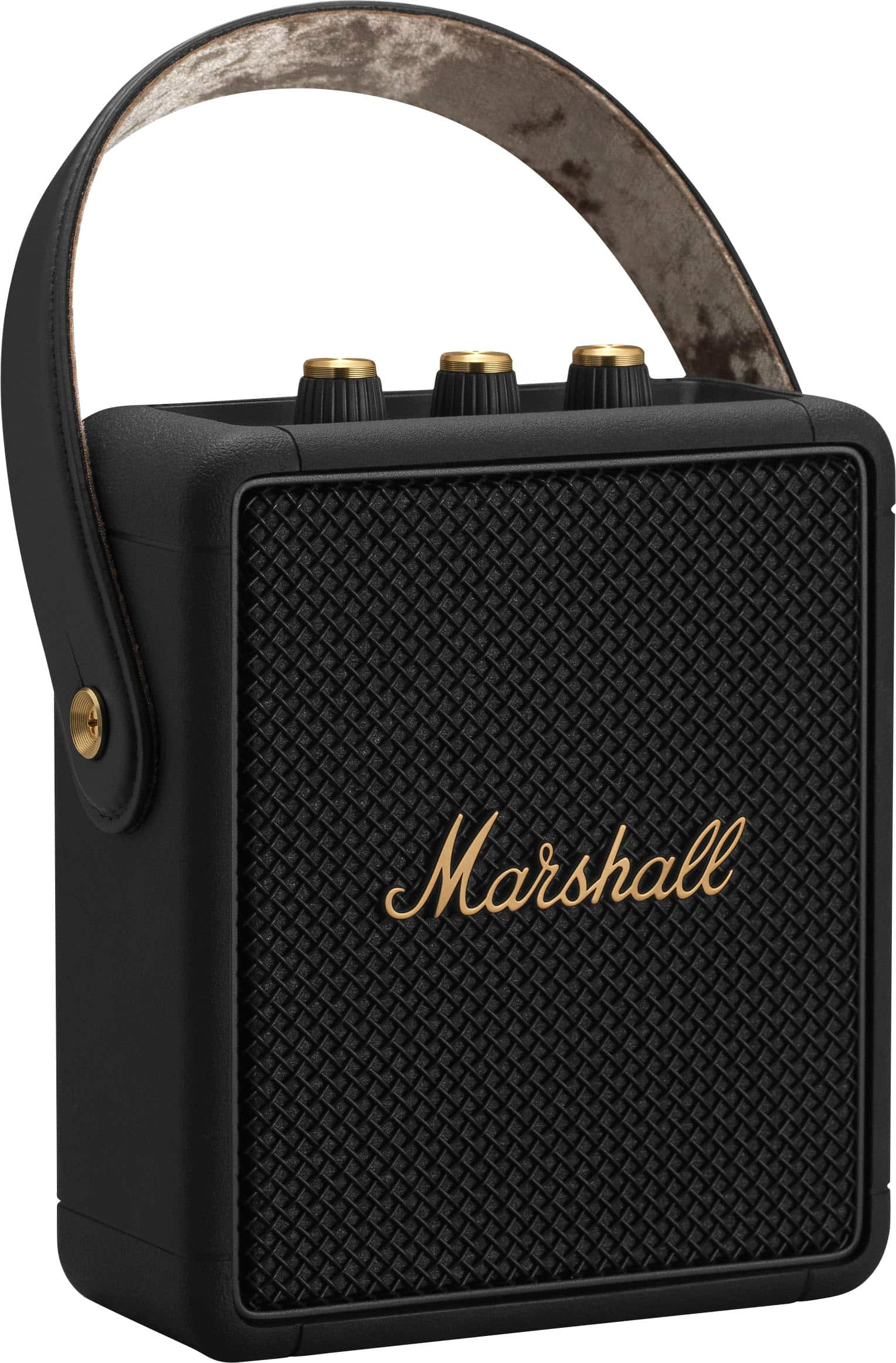
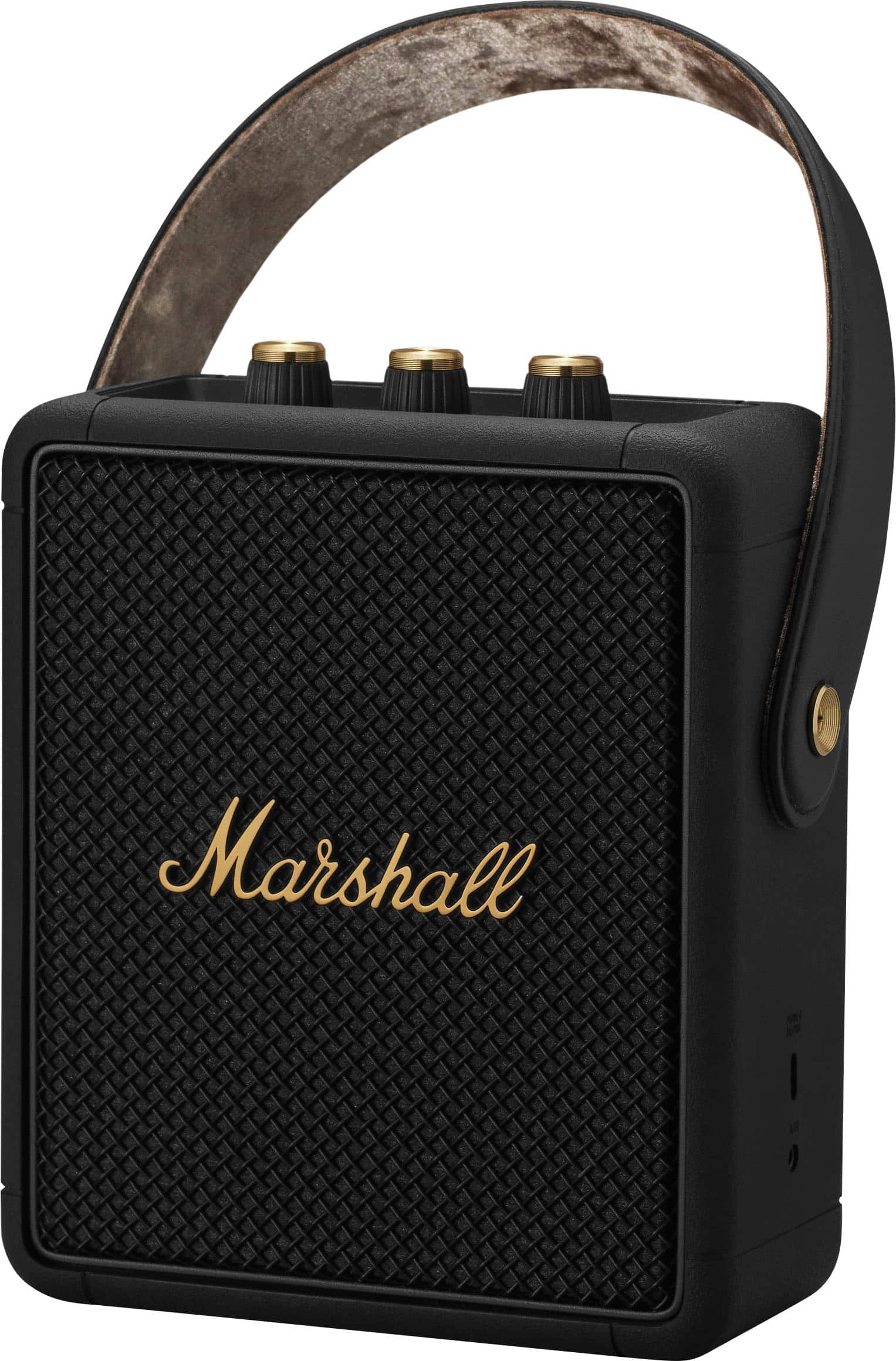
When you're shopping for a portable Bluetooth speaker in 2024, you're entering a market that's matured dramatically over the past few years. The category has split into distinct camps: rugged outdoor speakers designed for adventures, and refined portable units that prioritize sound quality. The Skullcandy Terrain XL and Marshall Stockwell II perfectly represent these two philosophies, and choosing between them requires understanding what matters most for your listening habits.
Both speakers launched in recent years—the Marshall Stockwell II arrived in 2019 as an evolution of Marshall's portable line, while the Skullcandy Terrain XL joined the market more recently as part of Skullcandy's adventure-focused speaker series. Since their releases, Bluetooth technology has continued advancing with better codecs and more stable connections, but these speakers remain relevant because they nail their respective target audiences.
The fundamental difference between these speakers isn't just price—it's philosophy. The Terrain XL asks "what if we made a speaker that could survive anything?" while the Stockwell II asks "what if we made hotel-room listening actually enjoyable?" This distinction shapes every design decision, from driver configuration to materials choice.
At the time of writing, you'll find the Skullcandy Terrain XL in the budget-friendly range, typically under $80, while the Marshall Stockwell II commands a premium price, often ranging from $150-250 depending on sales. That price gap isn't arbitrary—it reflects completely different approaches to portable audio.
The audio performance differences between these speakers start with their internal architecture. The Marshall Stockwell II uses a sophisticated three-driver setup: two tweeters (small drivers that handle high frequencies) and one woofer (larger driver for bass and midrange). This configuration creates what's called "True Stereophonic" sound—essentially, it tricks your ears into hearing a wider soundstage than you'd expect from a single unit.
The Terrain XL takes a different approach with dual front-firing woofers and dual passive radiators mounted on the sides. Passive radiators are essentially speakers without magnets—they move in response to air pressure from the active drivers, helping extend bass response. While this sounds impressive on paper, the execution matters more than the component count.
Here's where these speakers reveal their true colors. The Marshall Stockwell II delivers frequency response down to 60Hz, meaning it can reproduce the fundamental tones of bass guitars and kick drums with reasonable accuracy. Its midrange (the frequencies where vocals and most instruments live) receives careful tuning, resulting in what reviewers consistently describe as "natural and neutral" sound reproduction.
The Terrain XL starts its frequency response much higher, around 800Hz, which immediately tells you it's not designed for full-range audio reproduction. Instead, it employs what's called a "V-shaped" sound signature—boosted bass and treble with recessed midrange frequencies. This tuning makes vocals and bass prominent while pushing instrumental details into the background.
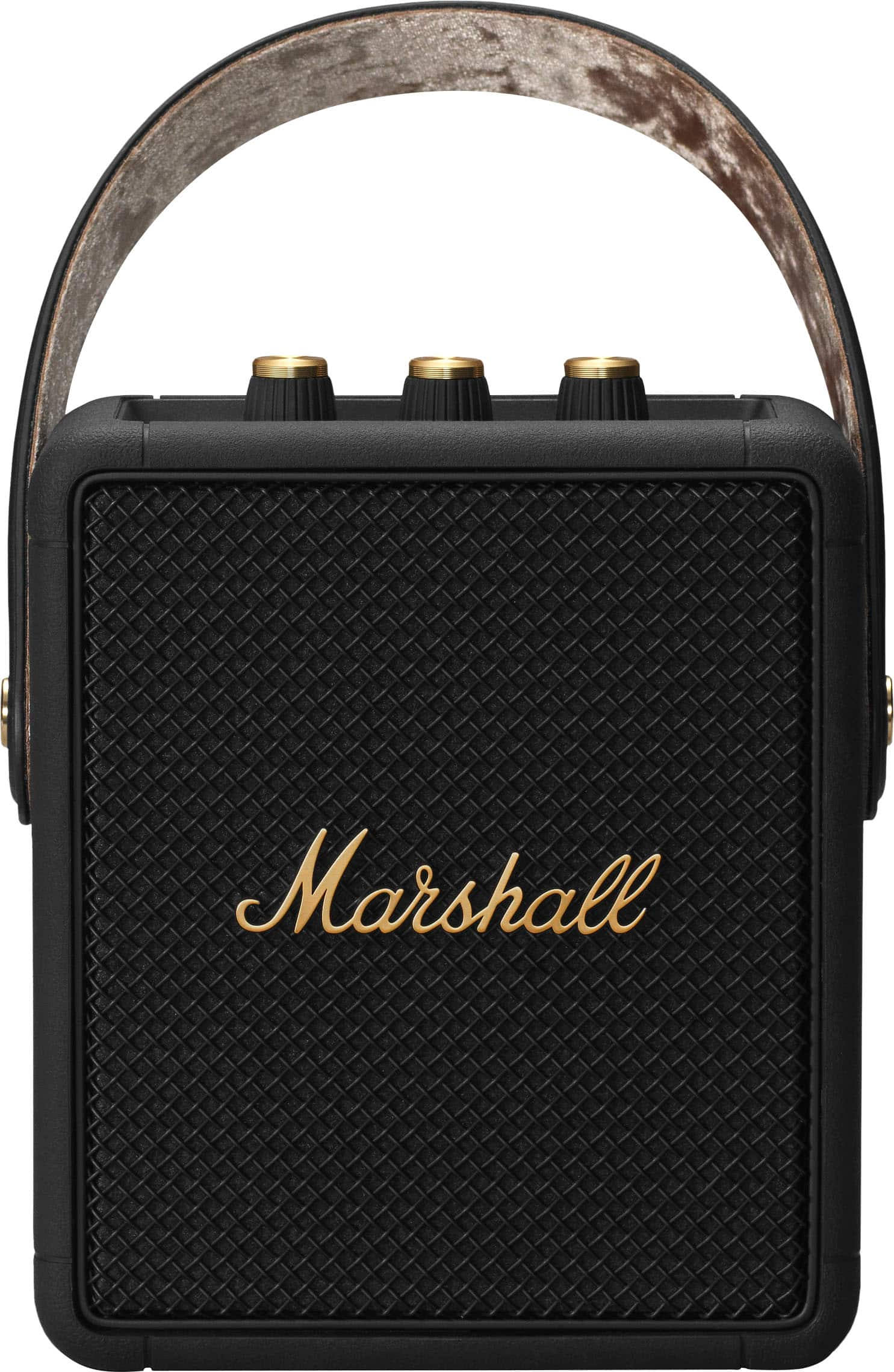
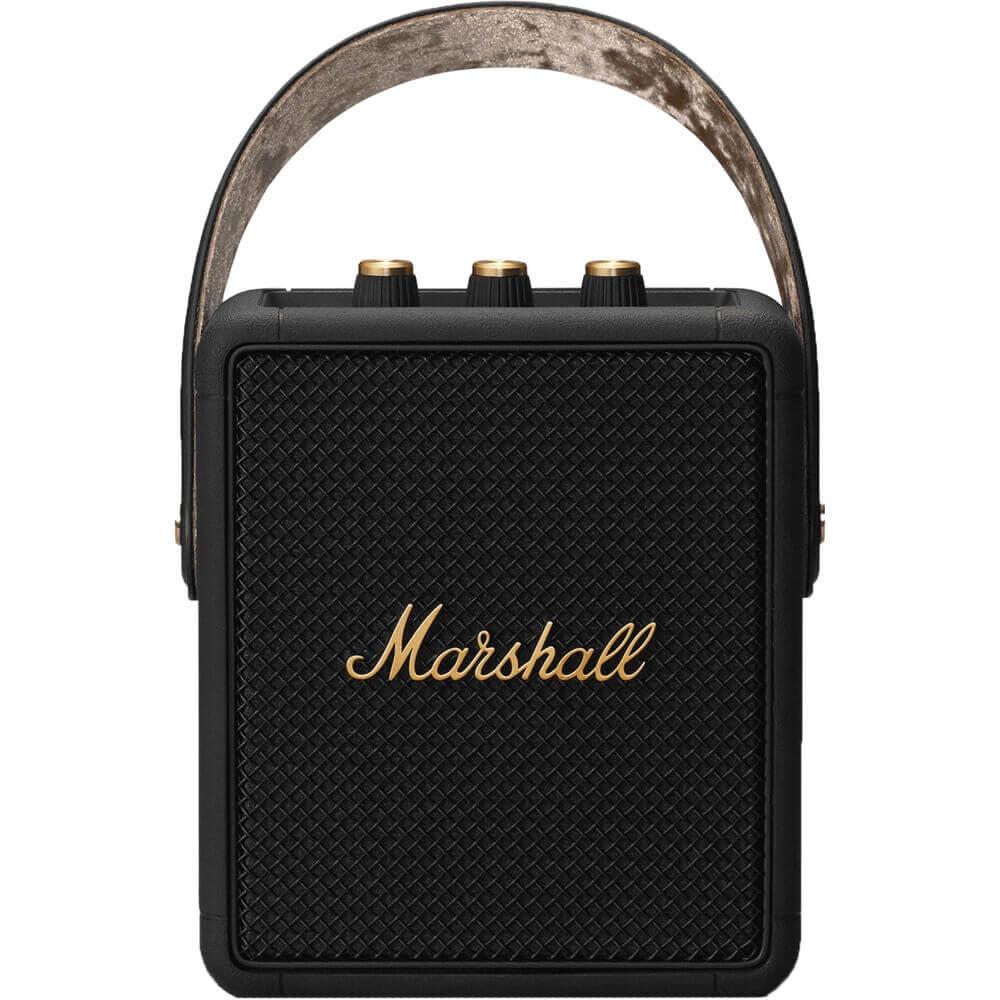
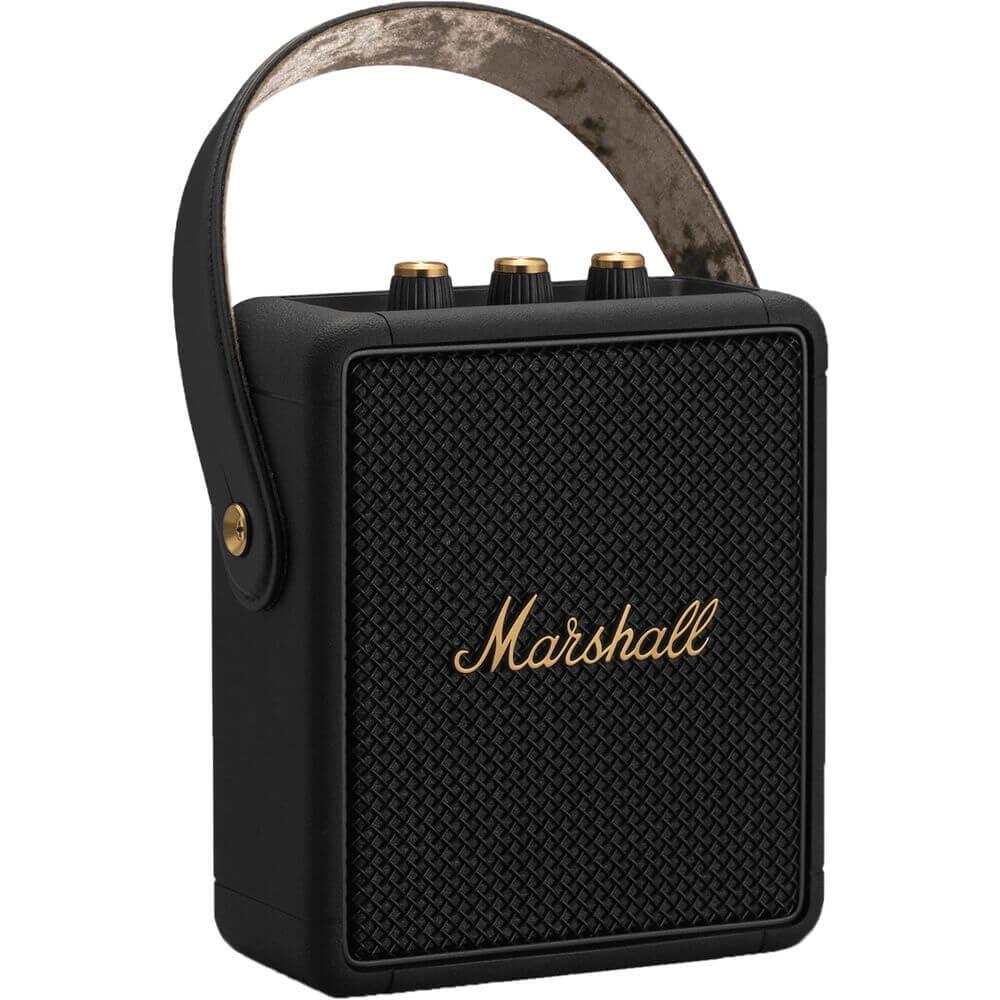
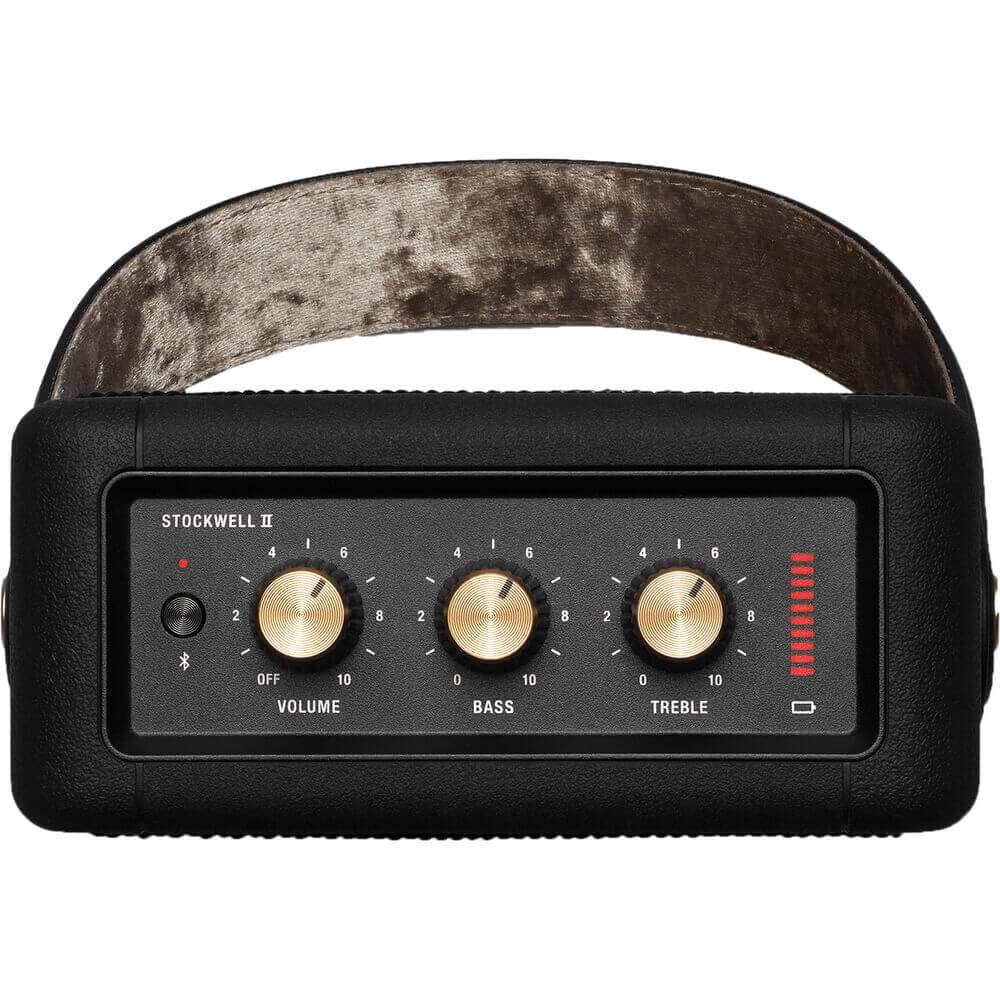
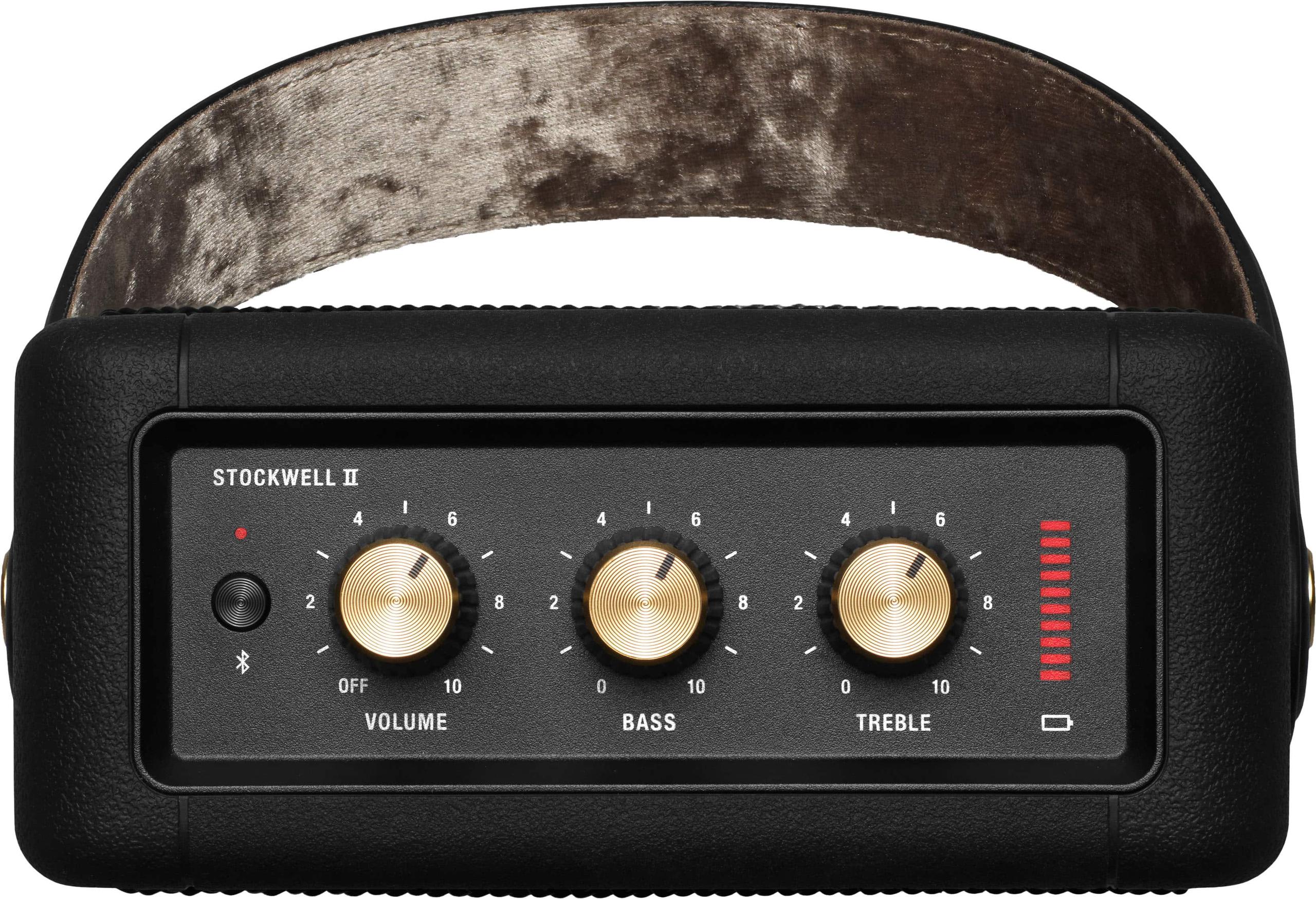
Based on our research across multiple expert and user reviews, the Marshall Stockwell II handles complex music better. Jazz recordings, classical pieces, and indie rock—genres with intricate instrumental arrangements—benefit from the Marshall's more balanced approach. The physical bass and treble knobs on top of the unit allow real-time sound adjustment, something increasingly rare in the era of app-controlled everything.
The Terrain XL, by contrast, excels with simpler music. Pop songs with prominent vocals, electronic dance music, and hip-hop tracks work well with its V-shaped tuning. However, expert reviews consistently note distortion in the high frequencies when pushed to higher volumes—a common issue with budget speaker designs.
One critical limitation of the Terrain XL: it offers zero sound customization. No app, no EQ controls, no way to adjust the signature beyond the volume knob. You're locked into Skullcandy's tuning choices.
Both speakers claim 20 watts of power output, but they achieve dramatically different results with that power. The Marshall Stockwell II delivers clean, distortion-free sound at moderate volumes, making it ideal for desktop listening, small gatherings, or hotel room entertainment.
The Terrain XL can get surprisingly loud for its size—loud enough for a small group at the beach or a backyard barbecue. However, multiple reviews note that maximum volume comes with compromises in sound quality, particularly harsh highs that can become fatiguing during extended listening sessions.
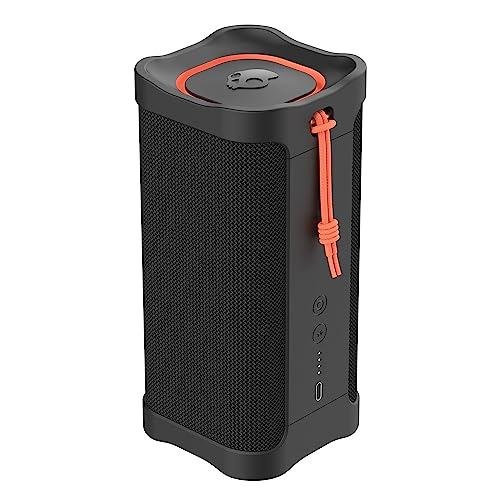
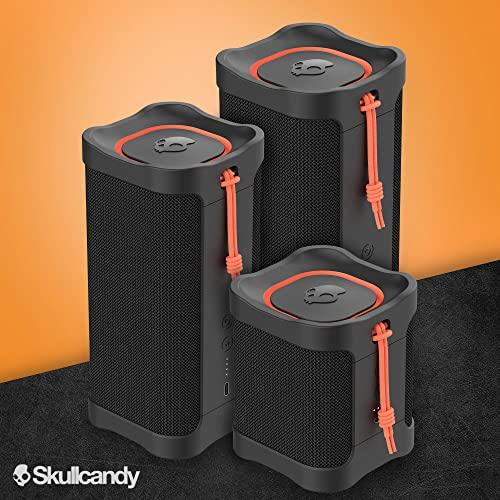
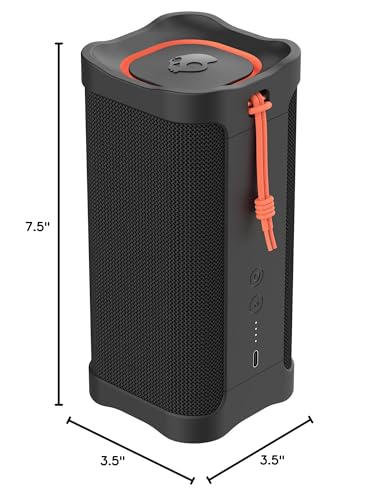
The Terrain XL weighs just 1.4 pounds, making it genuinely pocketable for larger pockets or easy to toss in any bag. Its rectangular design prevents rolling—a seemingly minor detail that becomes important when you're setting it on uneven outdoor surfaces. The fabric-wrapped body with silicone end caps provides excellent grip and impact protection.
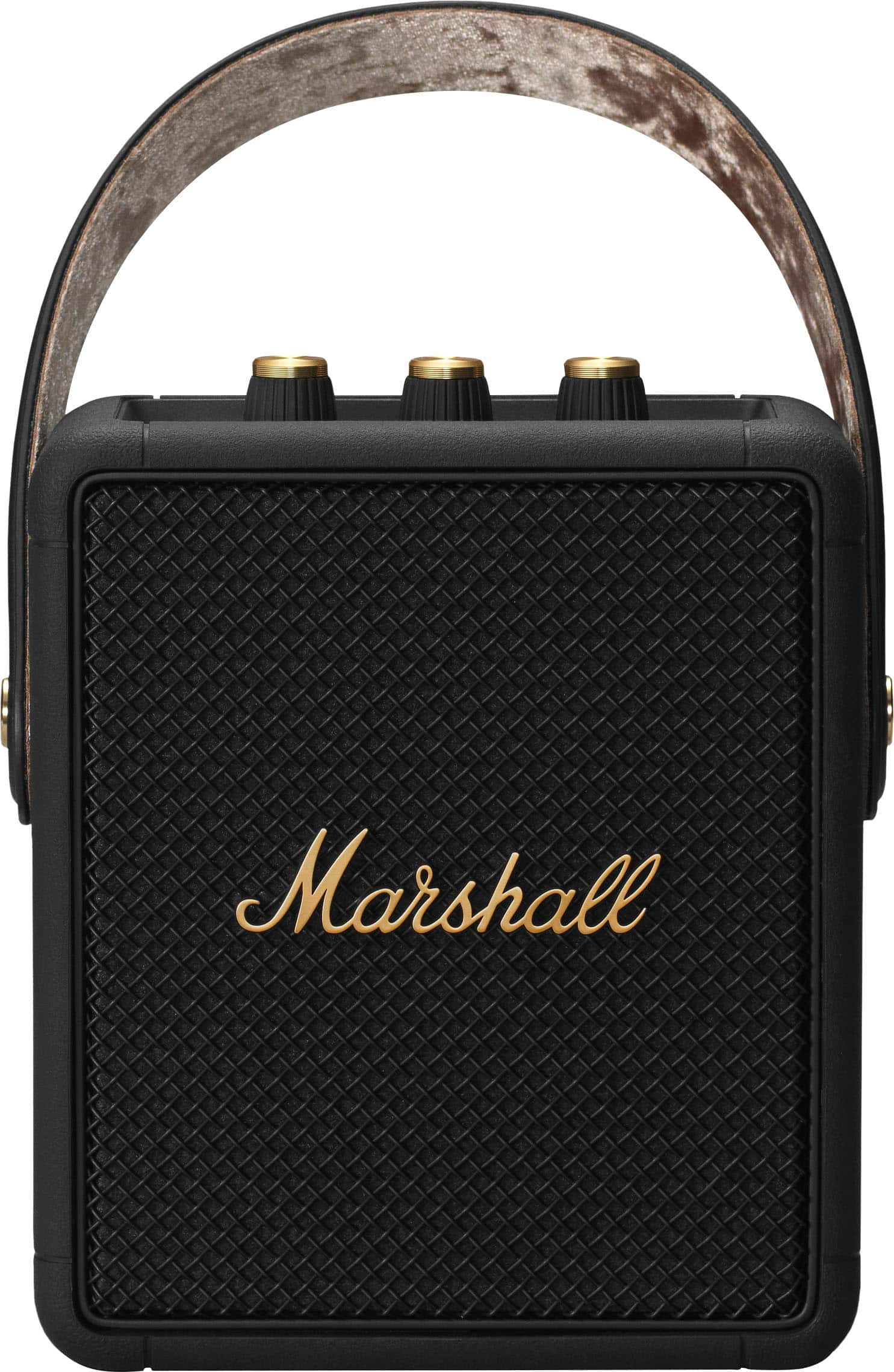
The Marshall Stockwell II at just over 3 pounds represents a different kind of portable. It's more "desktop portable" than "adventure portable"—the kind of speaker you'll happily carry between rooms or pack for a weekend trip, but probably won't strap to a backpack for a day hike.
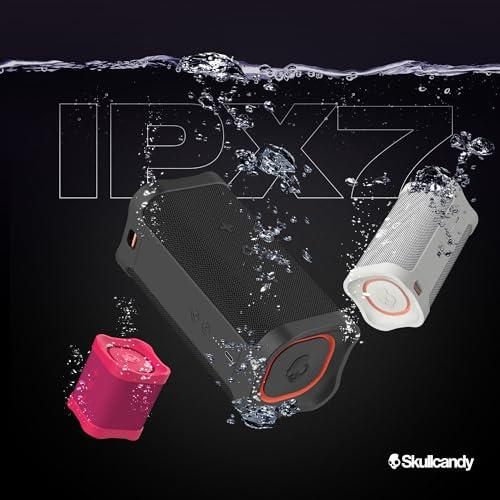
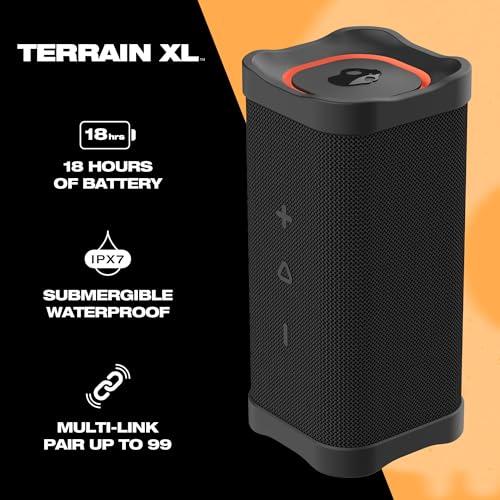
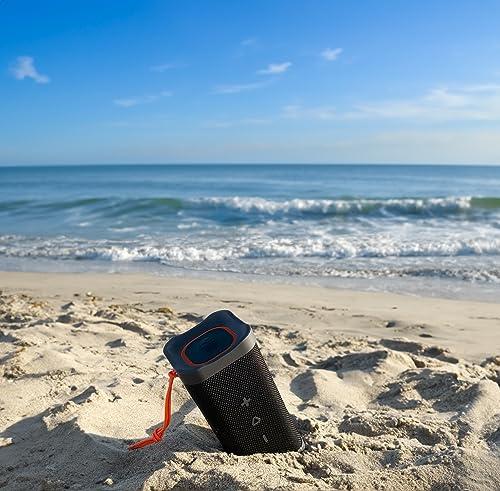
Here's where the Terrain XL absolutely dominates. Its IPX7 rating means it can survive complete submersion in up to three feet of water for 30 minutes. Translation: you can literally drop it in a pool, retrieve it, and keep listening. The fabric exterior and silicone caps provide excellent protection against drops and scrapes.
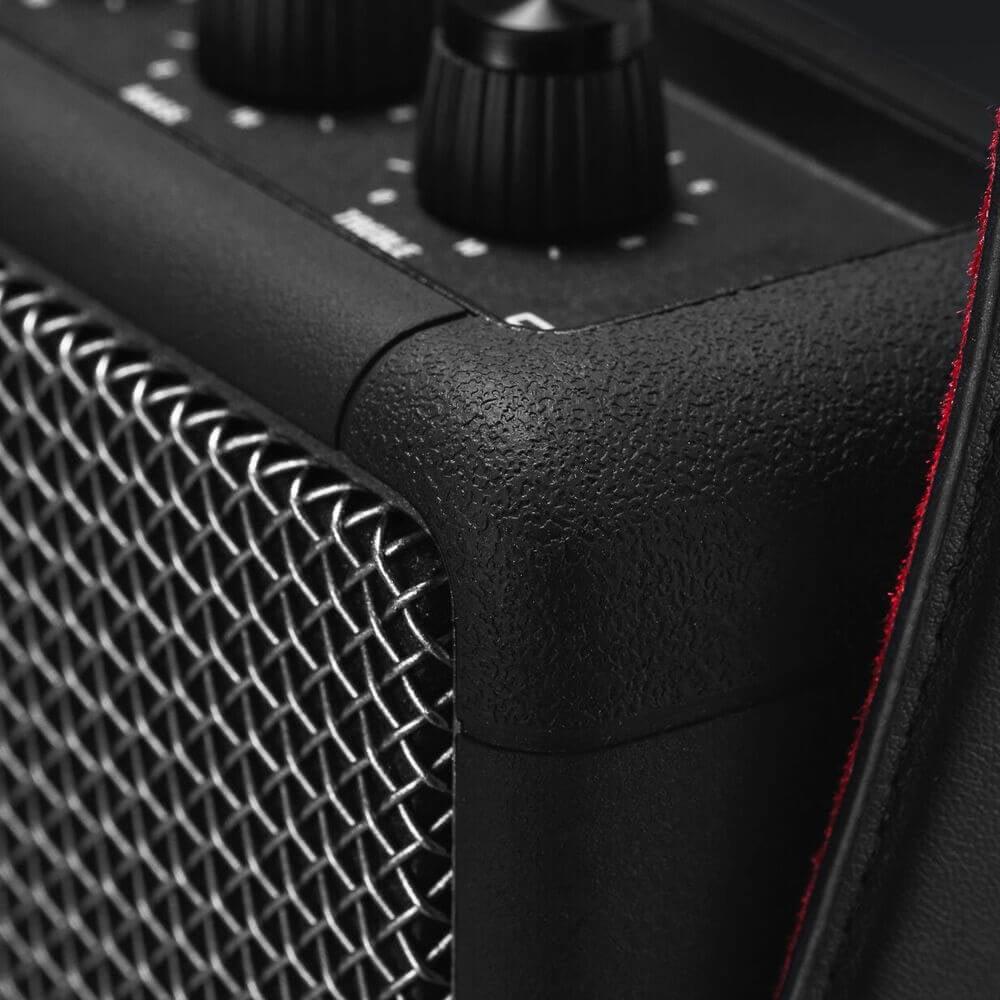
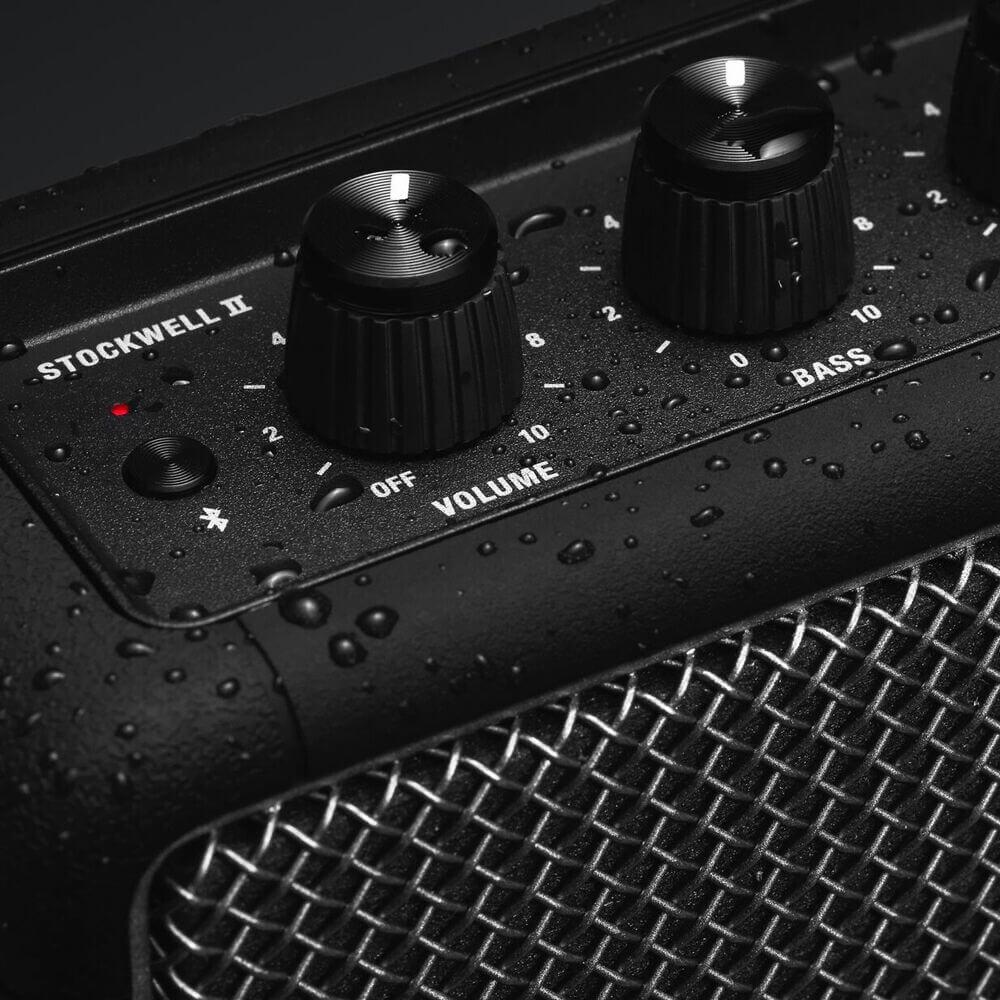
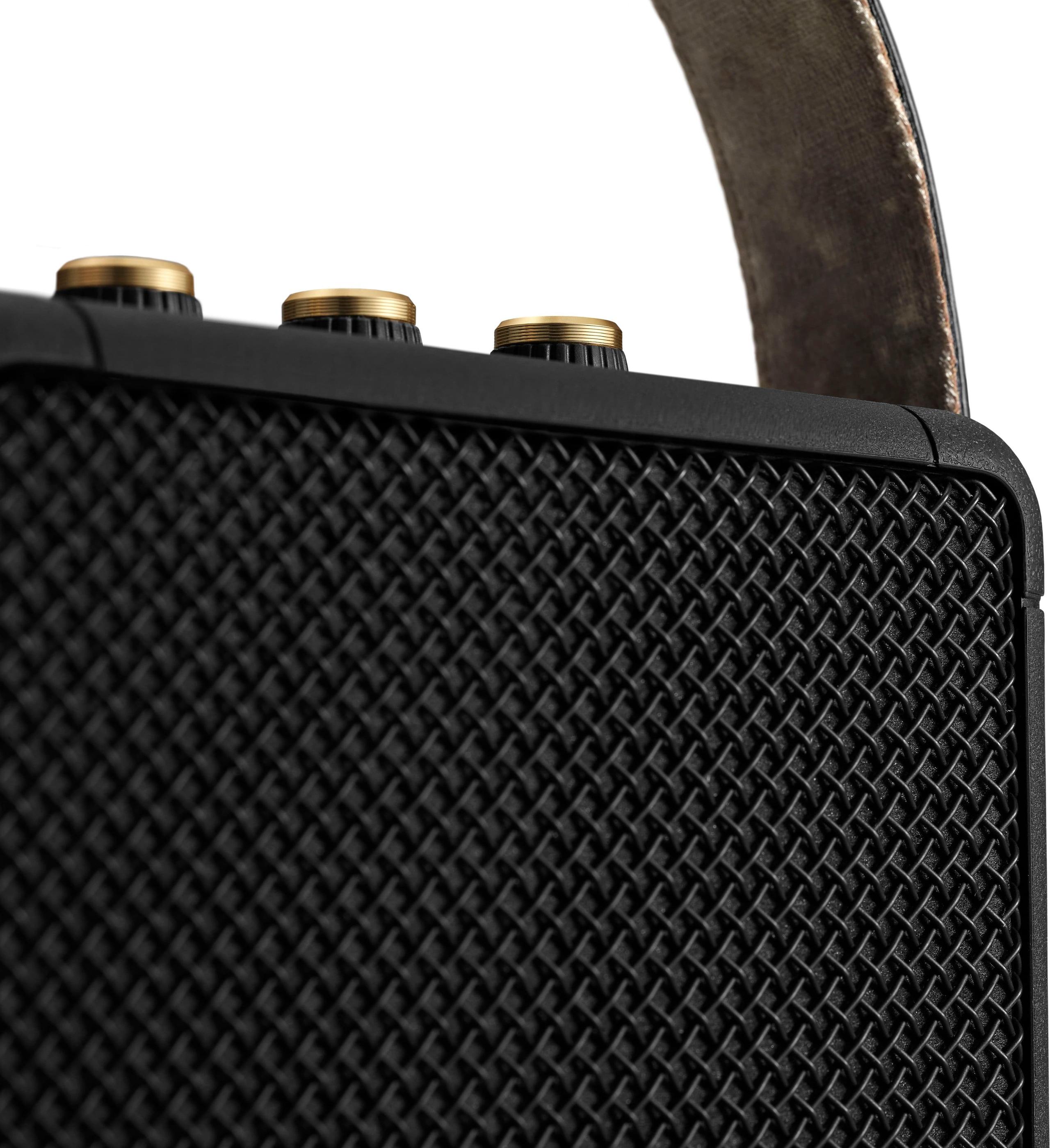
The Marshall Stockwell II offers IPX4 protection, which handles splashes and light rain but won't survive being dropped in water. The metal grille and premium materials look great but prioritize aesthetics over ruggedness.
Battery performance reveals another philosophical divide. The Terrain XL advertises 18 hours of playback, though real-world testing suggests closer to 8-10 hours at higher volumes. Still, this level of endurance makes it genuinely useful for multi-day camping trips or long beach days.
The Marshall Stockwell II delivers genuine 20+ hour performance and includes quick-charge technology—20 minutes of charging provides about 6 hours of playback. This combination makes it more suitable for daily use patterns where you can easily recharge between uses.
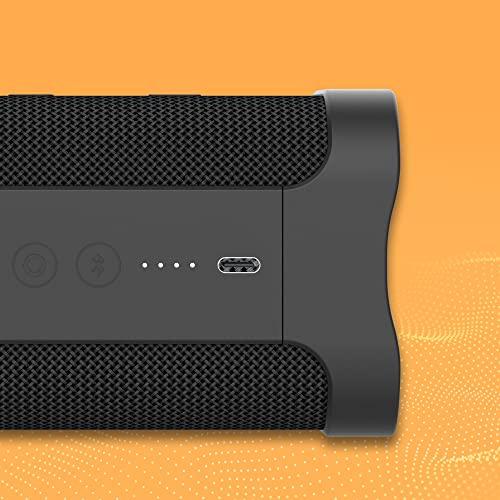
Both speakers use modern Bluetooth standards, but with important distinctions. The Terrain XL employs Bluetooth 5.3 for stable connections up to 33 feet but can only connect to one device at a time. More limiting, it completely lacks wired connectivity—the USB-C port handles charging only, no audio input.
The Marshall Stockwell II uses Bluetooth 5.0 with aptX codec support, which provides higher quality audio transmission than standard Bluetooth (though iPhone users won't benefit since Apple doesn't support aptX). It includes multi-host functionality, allowing connection to two devices with easy switching between them. Crucially, it retains a 3.5mm auxiliary input for wired connections.
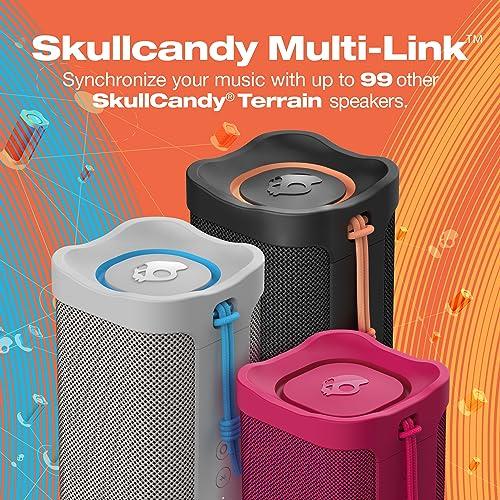
The Terrain XL offers impressive multi-speaker capabilities through Skullcandy's Multi-Link technology. You can connect up to 99 speakers (though who needs 99 speakers?), and uniquely, create stereo pairs using different Terrain models—pair an XL with a regular Terrain for left/right stereo sound. This flexibility is unusual in the speaker world.
Information about multi-speaker capabilities for the Marshall Stockwell II wasn't extensively documented in our research, suggesting it's not a primary feature for this model.
Neither speaker is designed as a home theater solution, but they serve different secondary roles. The Marshall Stockwell II works well as a desktop computer speaker or bedside music source, thanks to its balanced sound signature and auxiliary input compatibility. Its form factor suits permanent placement on a desk or shelf.
The Terrain XL makes more sense as a portable entertainment source—something you'd grab for outdoor movie nights or to bring music to different rooms. Its lightweight design encourages movement rather than permanent placement.
At the time of writing, the price difference between these speakers reflects their fundamental design priorities. The Terrain XL delivers remarkable value in the budget category, offering features typically found in more expensive speakers: long battery life, serious water resistance, and adequate sound quality for casual listening.
The Marshall Stockwell II commands a premium but justifies it with superior sound quality, premium materials, brand heritage, and more sophisticated features. It's expensive for a portable speaker, but reasonable for what it delivers.
The Terrain XL excels in scenarios where durability and portability matter most. Beach trips, camping adventures, pool parties, travel, and any situation where the speaker might face rough treatment. Its sound quality, while not exceptional, proves adequate for background music and casual listening. The ability to pair multiple units makes it interesting for larger gatherings.
The Marshall Stockwell II serves users who prioritize sound quality but still want portability. Hotel room listening, desktop computer audio, small dinner parties, and any scenario where you want better-than-average sound reproduction. Its premium build quality and brand cachet appeal to users who view their speaker as a design statement.
Since these speakers launched, the portable speaker market has continued evolving. Newer models often include features like voice assistant integration, app-based EQ customization, and improved codec support. However, both the Terrain XL and Stockwell II remain relevant because they execute their core missions well without feature bloat.
The absence of voice assistants in both speakers actually works in their favor—no privacy concerns, no accidental activations, just straightforward music playback. In an increasingly connected world, sometimes simpler is better.
Choose the Skullcandy Terrain XL if you prioritize adventure-ready durability, lightweight portability, and budget-conscious value. It's perfect for users who need a speaker that can survive outdoor activities while providing adequate sound quality for casual listening. The long battery life and waterproofing make it genuinely useful for camping, beach trips, and travel.
Choose the Marshall Stockwell II if sound quality is your primary concern and you're willing to pay a premium for it. It suits users who want desktop-quality audio reproduction in a portable package, appreciate physical controls, and value premium build quality. The auxiliary input and multi-device connectivity add useful flexibility.
The fundamental choice boils down to this: do you need a speaker that can survive anything, or do you want a speaker that makes everything sound better? Both approaches have merit, and both speakers execute their missions admirably. Your lifestyle and listening priorities should guide the decision.
Neither speaker will disappoint users who choose based on their actual needs rather than trying to find one speaker that does everything perfectly. The Terrain XL and Stockwell II represent honest, focused designs that excel in their intended roles—and in 2024's crowded speaker market, that focused excellence is exactly what smart buyers should seek.
| Skullcandy Terrain XL | Marshall Stockwell II |
|---|---|
| Sound Quality - Most important performance factor for music enjoyment | |
| V-shaped signature emphasizing bass/highs, harsh at volume | Balanced, natural midrange with physical EQ controls |
| Water Resistance - Critical for outdoor and poolside use | |
| IPX7 (survives full submersion up to 3 feet) | IPX4 (splash-resistant only, no submersion) |
| Weight - Key factor for true portability and travel | |
| 1.4 lbs (genuinely pocketable) | 3.04 lbs (desktop-portable, not adventure-ready) |
| Battery Life - Determines usefulness for extended outings | |
| Up to 18 hours advertised (8-10 hours real-world at volume) | 20+ hours with quick-charge (6 hours from 20-min charge) |
| Connectivity Options - Flexibility for different audio sources | |
| Bluetooth only, no wired input, single device pairing | Bluetooth + 3.5mm aux, multi-device switching |
| Frequency Response - Shows audio reproduction capabilities | |
| 800Hz-20kHz (limited bass extension) | 60Hz-20kHz (fuller range, better bass reproduction) |
| Power Output - Determines maximum volume potential | |
| 20W (gets loud but distorts at max volume) | 20W (cleaner output, better for moderate volumes) |
| EQ Customization - Ability to tune sound to preferences | |
| None (locked to factory tuning) | Physical bass/treble knobs on speaker |
| Multi-Speaker Pairing - Useful for larger spaces or stereo sound | |
| Up to 99 Terrain XL speakers, stereo with any Terrain model | Limited multi-speaker capabilities |
| Build Materials - Affects durability and premium feel | |
| Fabric wrap with silicone caps (impact-resistant) | Metal grille with premium construction (stylish but delicate) |
| Bluetooth Version - Affects connection stability and range | |
| 5.3 (33-foot range) | 5.0 with aptX support (better audio quality on Android) |
| Target Use Case - Who each speaker serves best | |
| Outdoor adventures, travel, budget-conscious buyers | Desktop listening, hotel rooms, audio quality prioritizers |
The Marshall Stockwell II delivers significantly better sound quality with its balanced frequency response, natural midrange reproduction, and physical EQ controls. The Skullcandy Terrain XL uses a V-shaped sound signature that emphasizes bass and highs while neglecting midrange frequencies, making it less suitable for complex music genres.
The Skullcandy Terrain XL offers IPX7 water resistance, meaning it can survive complete submersion in up to 3 feet of water for 30 minutes. The Marshall Stockwell II only provides IPX4 protection, which handles light splashes and rain but cannot survive being dropped in water.
The Skullcandy Terrain XL is significantly more portable at just 1.4 pounds compared to the Marshall Stockwell II at 3.04 pounds. The Terrain XL includes a built-in carrying strap and rectangular design that prevents rolling, making it ideal for backpacking and outdoor adventures.
Both speakers offer impressive battery life, with the Skullcandy Terrain XL providing up to 18 hours (though real-world usage at higher volumes yields 8-10 hours) and the Marshall Stockwell II delivering genuine 20+ hours with quick-charge capability that provides 6 hours of playback from just 20 minutes of charging.
The Marshall Stockwell II includes a 3.5mm auxiliary input for wired connections to any audio device. The Skullcandy Terrain XL only offers Bluetooth connectivity with no wired input option—its USB-C port is strictly for charging.
Both speakers output 20 watts of power, but they perform differently at high volumes. The Skullcandy Terrain XL can get surprisingly loud for its size but exhibits distortion in the highs when pushed to maximum volume. The Marshall Stockwell II maintains cleaner output but is better suited for moderate volume levels and smaller gatherings.
Neither speaker is designed as a primary home theater solution, but the Marshall Stockwell II works better as a secondary audio source for computers, tablets, or bedside entertainment thanks to its balanced sound signature and auxiliary input. The Skullcandy Terrain XL is better suited as a portable entertainment source for outdoor movie nights.
The Skullcandy Terrain XL offers excellent multi-speaker capabilities, allowing you to connect up to 99 speakers and create stereo pairs with any other Terrain model. The Marshall Stockwell II has limited multi-speaker functionality based on available information.
The Skullcandy Terrain XL provides exceptional value in the budget category with its combination of waterproofing, long battery life, and adequate sound quality. The Marshall Stockwell II justifies its premium pricing with superior audio performance, build quality, and additional features like EQ controls and wired connectivity.
The Skullcandy Terrain XL uses Bluetooth 5.3 with a 33-foot range but can only connect to one device at a time. The Marshall Stockwell II features Bluetooth 5.0 with aptX support for higher audio quality on compatible devices, plus multi-host functionality for easy switching between two paired devices.
The Skullcandy Terrain XL is specifically designed for outdoor adventures with its IPX7 waterproofing, lightweight design, impact-resistant construction, and long battery life. The Marshall Stockwell II is better suited for indoor or controlled outdoor environments due to its limited water resistance and heavier weight.
The Marshall Stockwell II includes physical bass and treble knobs on the speaker itself for real-time sound adjustment. The Skullcandy Terrain XL offers no sound customization options—no app support, no EQ controls, and no way to adjust the sound signature beyond volume control.
We've done our best to create useful and informative comparisons to help you decide what product to buy. Our research uses advanced automated methods to create this comparison and perfection is not possible - please contact us for corrections or questions. These are the sites we've researched in the creation of this article: youtube.com - skullcandy.eu - youtube.com - blog.bestbuy.ca - support.skullcandy.com - youtube.com - youtube.com - walmart.com - versus.com - youtube.com - skullcandy.ae - versus.com - skullcandy.com - youtube.com - consumerreports.org - gearjunkie.com - newegg.com - manuals.plus - bestbuy.com - electronicexpress.com - skullcandy.com - bestbuy.com - stuff.tv - idownloadblog.com - stereoguide.com - kendallgiles.com - termagoods.com - aplaze.com - manua.ls - youtube.com - sg.tcacoustic.asia - marshall.com - youtube.com

Privacy Policy
Terms and Conditions - Affiliate Policy
Home Security
© Copyright 2008-2026.
11816 Inwood Rd #1211, Dallas, TX 75244