




Portable Bluetooth speakers have evolved dramatically since their early days of tinny sound and questionable connectivity. Today's market offers everything from ultra-budget options to audiophile-grade portable systems, making the choice both exciting and overwhelming. Two speakers that perfectly illustrate this spectrum are the Skullcandy Terrain XL and the Bose SoundLink Flex 2nd Gen – representing fundamentally different approaches to portable audio.
At the time of writing, these speakers sit at opposite ends of the value proposition, with the Skullcandy Terrain XL targeting budget-conscious users and the Bose SoundLink Flex 2nd Gen commanding roughly double the price for premium features and performance. Understanding which approach suits your needs requires diving into what makes each speaker tick and where they excel.
Before comparing these specific models, it's worth understanding what separates good portable speakers from mediocre ones. The most critical factor is sound quality, which depends on several technical elements working together. Driver size and configuration determine how much air the speaker can move – larger drivers typically produce better bass, while smaller ones handle higher frequencies more precisely. However, driver size isn't everything; the quality of the materials and the engineering behind them matter enormously.
Digital signal processing (DSP) has become increasingly important in modern speakers. Think of DSP as a smart computer inside the speaker that constantly adjusts the audio signal to prevent distortion, enhance certain frequencies, and optimize sound based on volume level. Premium speakers often include sophisticated DSP algorithms that can make a small speaker sound much larger than its physical size would suggest.
Another crucial aspect is the enclosure design – how the speaker cabinet is built and tuned. Passive radiators, for example, are essentially speakers without magnets that vibrate in response to the active drivers, helping extend bass response without requiring additional power or space for more traditional drivers.
Battery technology and power management have also advanced significantly. Modern lithium-ion batteries can provide impressive runtime while maintaining relatively light weight, but the efficiency of the amplifier and DSP affects how long that battery actually lasts during real-world use.
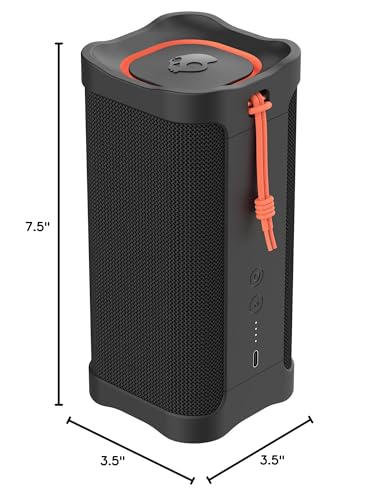
The Skullcandy Terrain XL, released in recent years as part of Skullcandy's outdoor speaker lineup, takes a straightforward approach to portable audio. At its core, this speaker prioritizes practicality and value over cutting-edge technology or audiophile-grade sound reproduction.
The Terrain XL uses dual 48mm drivers – these are relatively large for a portable speaker in this price range, which should theoretically provide good volume and bass response. However, our research into user experiences and expert reviews reveals that driver size alone doesn't tell the complete story. The speaker employs what's known as a "V-shaped" sound signature, meaning it emphasizes bass frequencies and high frequencies while de-emphasizing the midrange where vocals and many instruments naturally sit.
This tuning approach creates audio that initially sounds exciting and punchy, particularly for genres like electronic music or hip-hop where strong bass and crisp highs are desirable. However, this same tuning can make acoustic music, jazz, or classical pieces sound hollow or unnatural because the midrange frequencies that give instruments their warmth and presence are somewhat suppressed.
The Terrain XL lacks sophisticated DSP processing, which means it can't dynamically adjust its sound based on volume level or content type. At higher volumes, users report that the speaker can become harsh or distorted, particularly in the treble frequencies. This limitation is common in budget speakers where cost constraints prevent the inclusion of advanced processing chips.
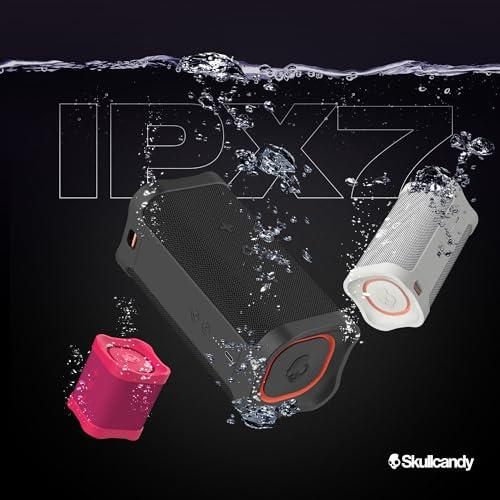
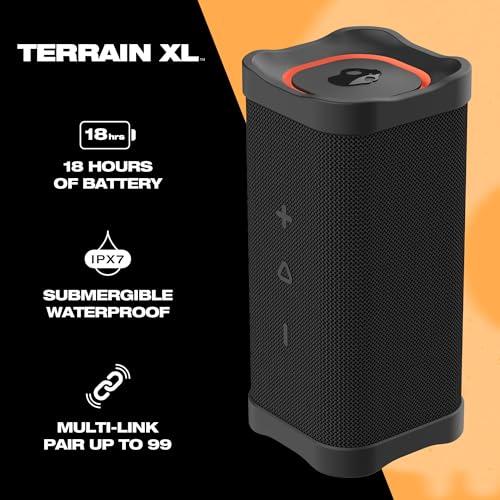
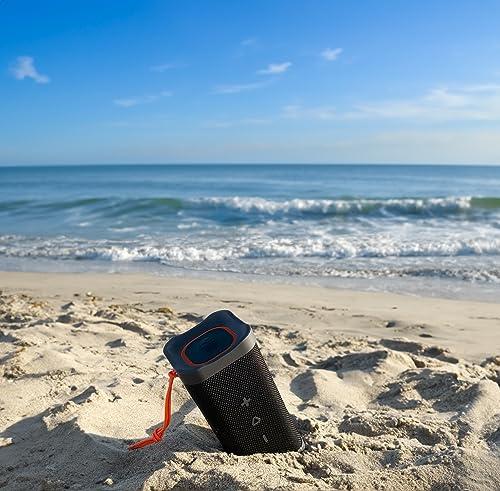
Where the Terrain XL does shine is in its practical design for outdoor use. The IPX7 water resistance rating means it can handle submersion in up to one meter of water for 30 minutes – perfect for poolside use or unexpected rain during camping trips. However, it's important to note that IPX7 only covers water resistance, not dust protection, which could be problematic in sandy or dusty environments.
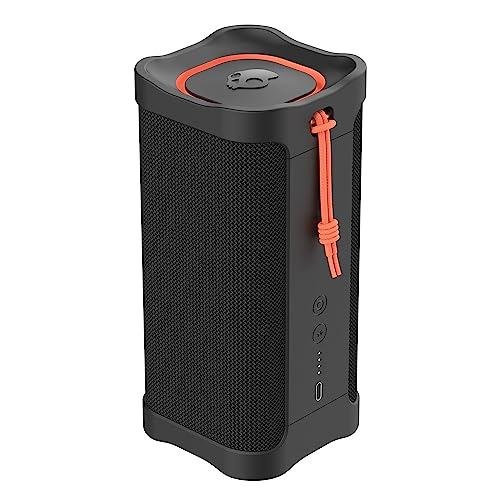
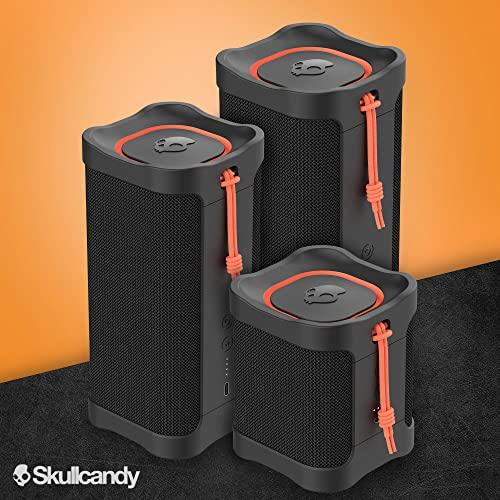
The speaker's rectangular shape provides excellent stability when placed on surfaces, and the included wrist strap makes it reasonably portable despite its larger size compared to more premium alternatives. The fabric wrap exterior feels durable and should withstand typical outdoor abuse, though it's not quite as premium as the materials found in higher-end speakers.
Perhaps the Terrain XL's greatest strength is its impressive 18-hour battery life. This exceptional runtime comes from combining a larger physical size (which allows for a bigger battery) with relatively simple electronics that don't consume much power. For extended camping trips, multi-day festivals, or situations where charging opportunities are limited, this extended battery life becomes a genuine competitive advantage.
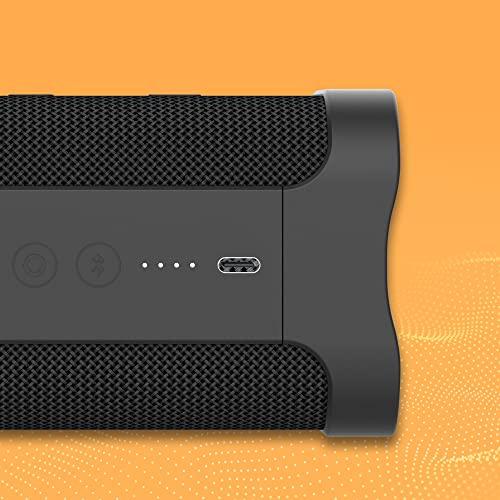
The speaker charges via USB-C, which is becoming the standard across most modern devices. While charging time takes several hours due to the large battery capacity, most users find this acceptable given the extended playback time it provides.
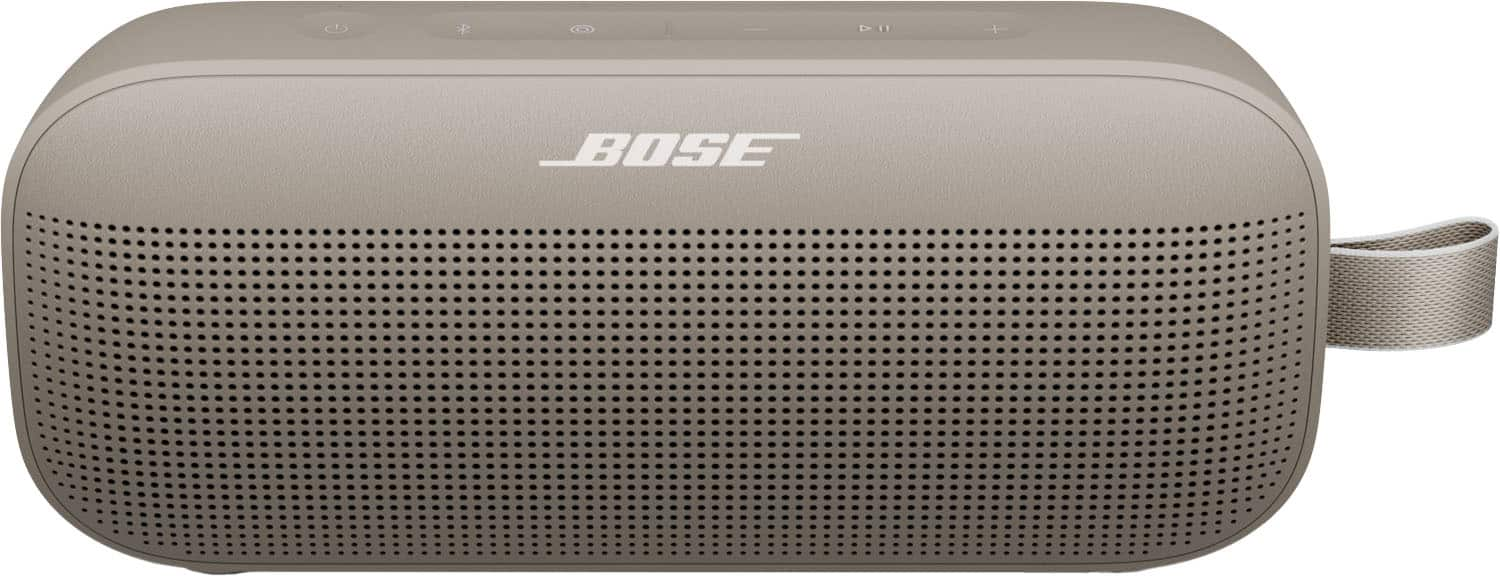
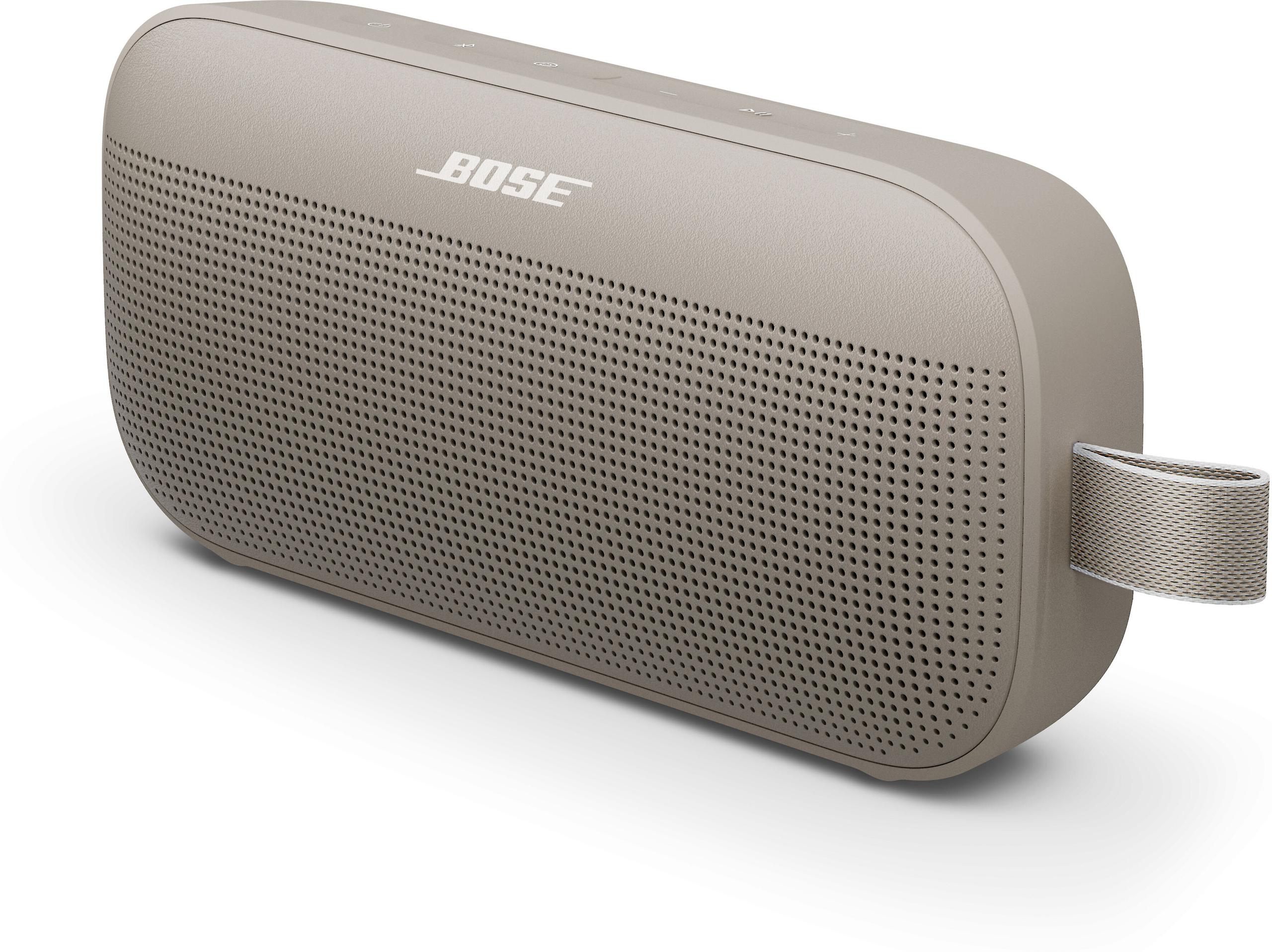
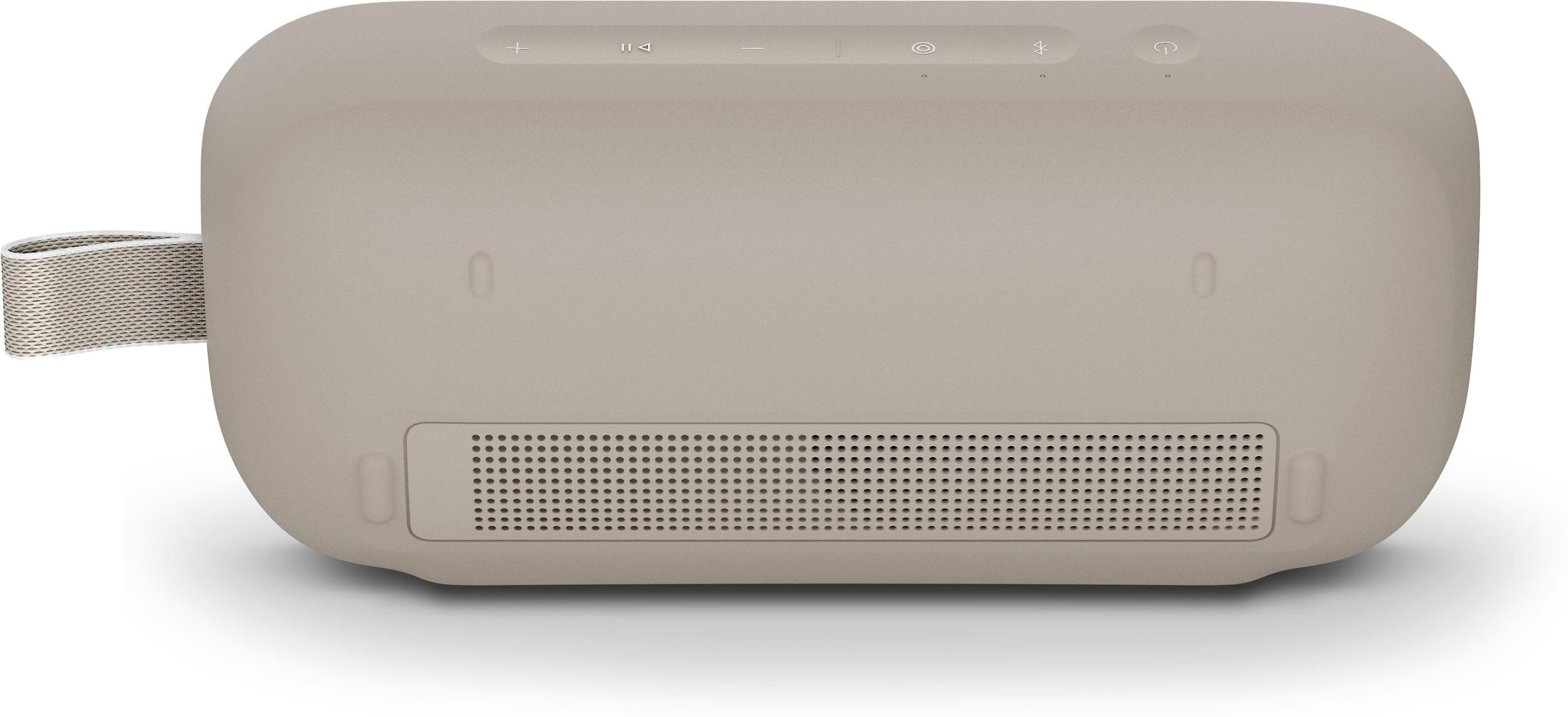
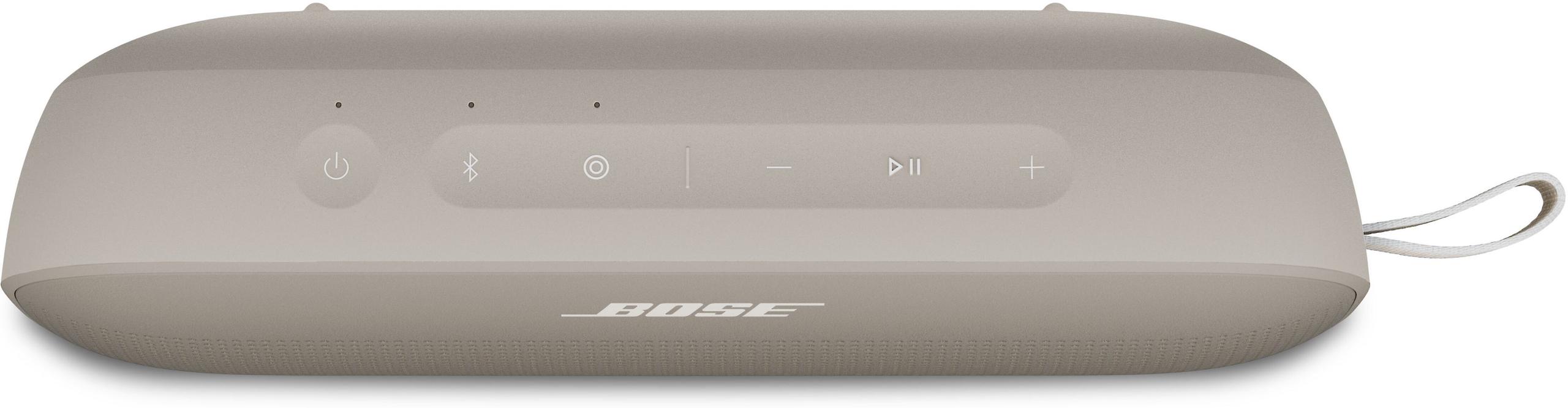
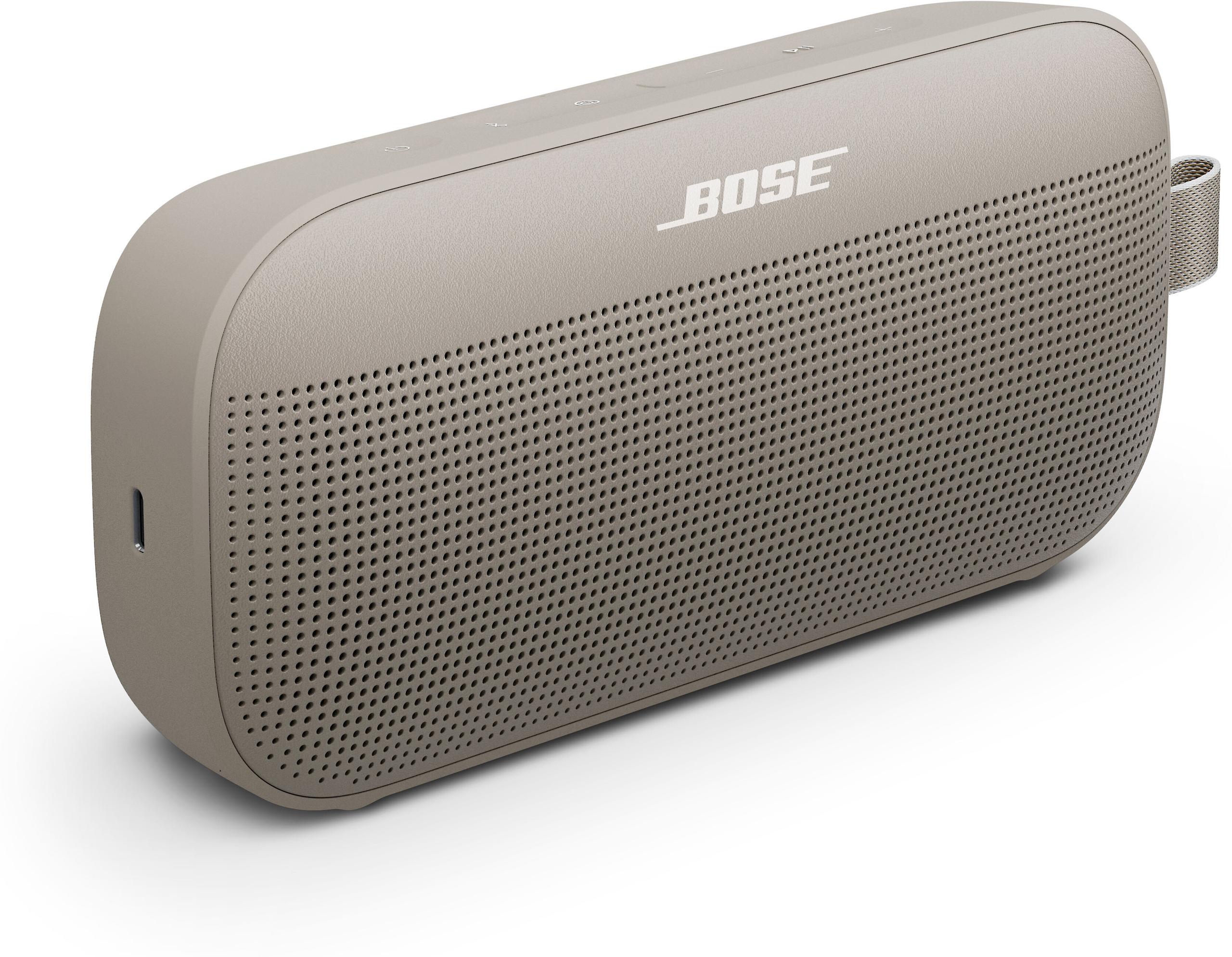
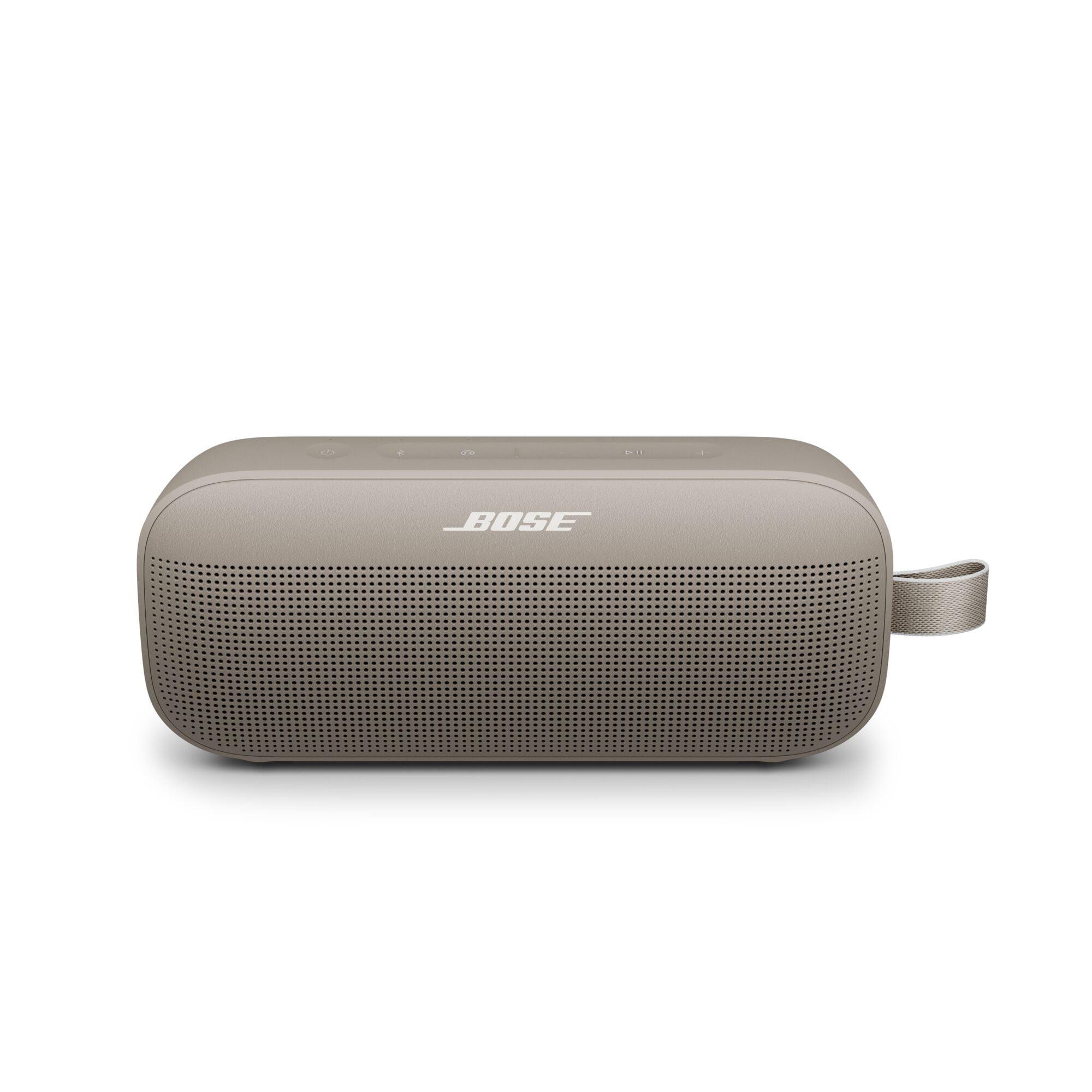
The Bose SoundLink Flex 2nd Gen, released in 2024, represents Bose's latest thinking on compact portable audio. This second-generation model builds upon the success of the original SoundLink Flex with improved connectivity, enhanced sound processing, and refined design elements.
What immediately sets the SoundLink Flex 2nd Gen apart is its sophisticated approach to sound reproduction. The speaker uses a custom-designed 2-inch transducer paired with dual passive radiators – one facing forward and one backward. This configuration allows the compact speaker to produce surprisingly deep bass while maintaining clarity in the midrange and treble frequencies.
The real magic happens with Bose's proprietary PositionIQ technology. This system uses internal sensors to detect whether the speaker is positioned vertically, horizontally, or lying flat, then automatically adjusts the EQ (equalization) settings to optimize sound quality for that orientation. This means the speaker sounds consistently good regardless of how you place it – a seemingly simple feature that requires sophisticated engineering to implement effectively.
The SoundLink Flex 2nd Gen also incorporates advanced DSP algorithms that prevent distortion even at high volume levels. Unlike the Terrain XL, which can become harsh when pushed hard, the Bose maintains its composure and delivers clean, undistorted audio even when you're trying to fill a larger outdoor space with sound.
Our research into professional reviews and user experiences consistently highlights the speaker's impressive instrument separation – the ability to distinguish individual instruments and voices in complex musical passages. This characteristic typically requires much larger speakers, making it particularly noteworthy in such a compact form factor.
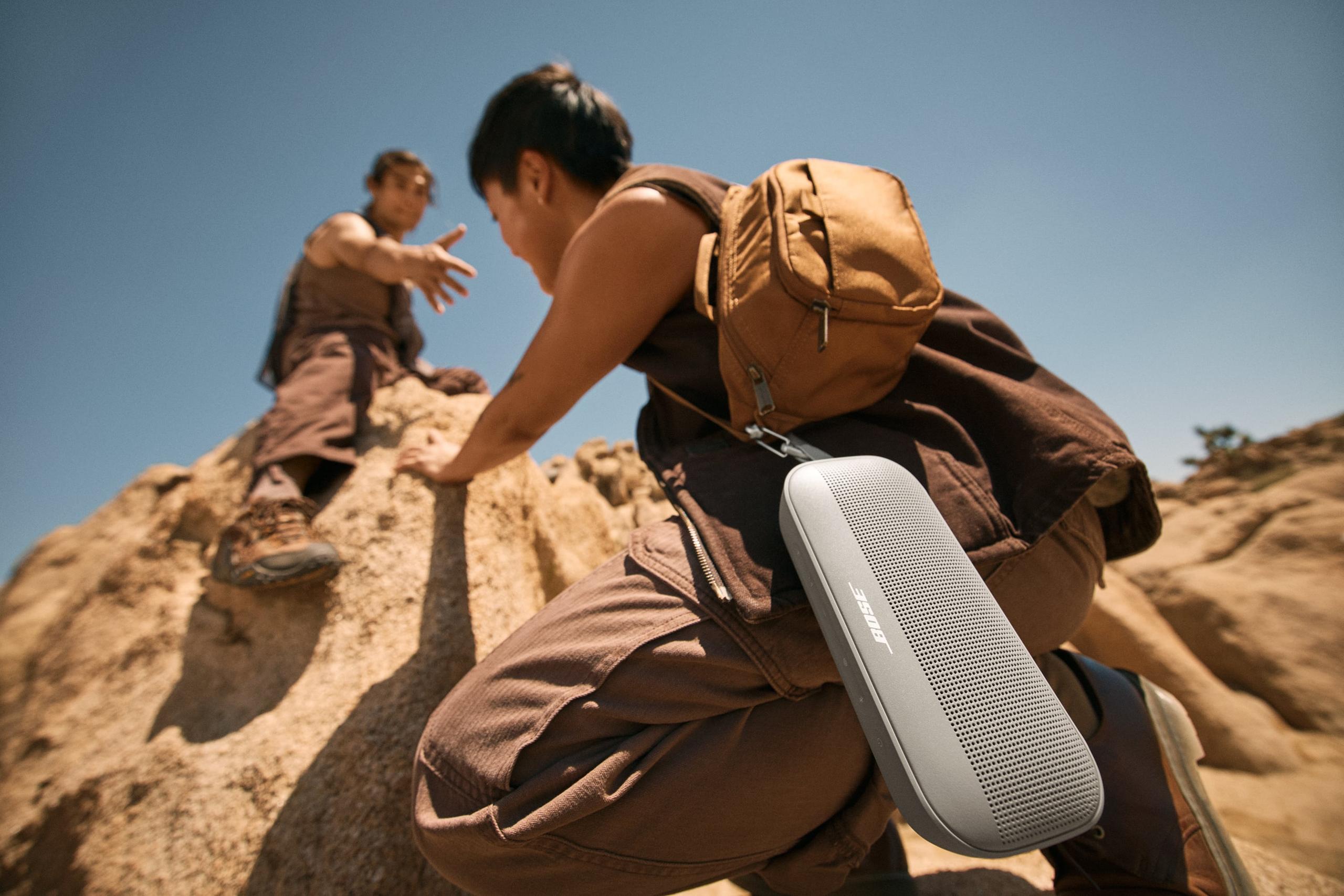
The SoundLink Flex 2nd Gen takes a radically different approach to portability compared to the Terrain XL. At just 1.3 pounds and with dimensions that easily fit in most backpacks, this speaker prioritizes true grab-and-go convenience. The included sport utility loop allows you to attach it to bags, belts, or carabiners, making it ideal for hiking, cycling, or any activity where hands-free carrying is valuable.
The IP67 rating provides both water and dust protection, making it more versatile than the IPX7-rated Terrain XL. More importantly, the SoundLink Flex 2nd Gen floats, which might seem like a minor detail but becomes crucial during pool parties, boat trips, or beach outings where accidental drops into water are likely.
The silicone-coated exterior feels premium and provides excellent grip, even when wet. The materials and build quality reflect the higher price point, with attention to detail that's immediately apparent when handling the device.
Where the SoundLink Flex 2nd Gen truly justifies its premium positioning is in its connectivity and smart features. The Bluetooth 5.3 implementation includes multipoint connectivity, allowing the speaker to maintain simultaneous connections to two devices. This means you can have it connected to both your phone and laptop, and it will automatically switch to whichever device starts playing audio.
The built-in microphone enables hands-free calling and voice assistant access – features completely absent from the Terrain XL. For users who frequently take calls while working outdoors or need voice assistant functionality, this becomes essential rather than merely convenient.
The speaker supports advanced audio codecs including aptX, which provides higher-quality wireless audio transmission when paired with compatible Android devices. This technical detail might seem minor, but it can make a noticeable difference in audio quality, particularly when streaming high-resolution music files.
The audio quality gap between these speakers is substantial and immediately apparent. The SoundLink Flex 2nd Gen delivers what most listeners would consider genuinely good sound – the kind that makes you forget you're listening to a small portable speaker. Bass response is tight and controlled, midrange frequencies are present and natural, and treble remains crisp without becoming fatiguing.
In contrast, the Terrain XL produces what's best described as acceptable sound for its price point. It's certainly adequate for background music at outdoor gatherings or casual listening, but it lacks the refinement and accuracy that music enthusiasts expect. The V-shaped tuning can make some genres sound exciting initially, but extended listening often reveals the midrange gaps and occasional harshness.
For acoustic music, jazz, or classical genres where instrument timbre and spatial relationships matter, the SoundLink Flex 2nd Gen performs in a completely different league. Electronic music and heavily produced pop fare better on the Terrain XL due to its bass emphasis, but even here, the Bose's superior processing and driver quality become apparent during critical listening.
Both speakers claim similar power output specifications, but real-world performance tells a different story. The SoundLink Flex 2nd Gen maintains its composure and sound quality even at maximum volume, while the Terrain XL becomes increasingly harsh and distorted as volume increases.
This difference stems from the quality of the amplification and DSP processing. The Bose's advanced algorithms prevent the drivers from being overdriven, while the Skullcandy's simpler electronics offer less protection against distortion. For outdoor gatherings where you need to fill a larger space with sound, the Bose's clean high-volume performance becomes a significant advantage.
The one area where the Terrain XL definitively outperforms its premium competitor is battery life. The 18-hour runtime versus the Bose's 12 hours represents a 50% advantage that becomes crucial for extended outdoor adventures.
This difference stems from the Terrain XL's larger physical size, which accommodates a bigger battery, and its simpler electronics, which consume less power. For camping trips, festivals, or any situation where charging opportunities are limited, this extended runtime can be the deciding factor.
However, it's worth noting that 12 hours is still substantial for most use cases. Few people actually need more than 12 hours of continuous music playback, and the Bose's USB-C charging means it can be quickly topped up during meal breaks or while setting up camp.
The Skullcandy Terrain XL makes the most sense for budget-conscious buyers who prioritize value and extended battery life over audio refinement. It's ideal for casual listeners who primarily use portable speakers for background music rather than critical listening.
College students, campers on tight budgets, or anyone organizing large outdoor gatherings where volume matters more than audio quality will find the Terrain XL perfectly adequate. The extended battery life makes it particularly suitable for multi-day camping trips or festivals where charging opportunities are scarce.
For home theater use, neither speaker is ideal, but the Terrain XL could serve as a basic wireless speaker for a bedroom or small apartment where space and budget are constraints. However, its V-shaped sound signature isn't optimized for movie dialogue or complex soundtracks.
The Bose SoundLink Flex 2nd Gen justifies its premium price for users who prioritize sound quality, portability, and modern features. It's perfect for audio enthusiasts who want genuinely good sound from a highly portable package.
Active individuals who need true grab-and-go portability – hikers, cyclists, travelers – will appreciate the compact size and robust feature set. The floating capability makes it ideal for water activities, while the IP67 rating provides confidence in various outdoor environments.
Business professionals who need microphone functionality for calls, or users who value advanced connectivity features like multipoint pairing, will find these capabilities essential rather than luxurious. The premium build quality and brand reputation also matter for users who view their audio gear as long-term investments.
For casual home theater use, the SoundLink Flex 2nd Gen could serve as a wireless speaker for a bedroom or small space, though dedicated home theater solutions would be more appropriate for serious movie watching.
Both speakers benefit from recent technological advances, but they implement these improvements differently. The SoundLink Flex 2nd Gen, being the newer design released in 2024, incorporates the latest Bluetooth 5.3 standard with its improved range, stability, and power efficiency. The advanced codec support and multipoint connectivity reflect current user expectations for wireless audio devices.
The Terrain XL, while also using Bluetooth 5.3, implements a more basic version focused on cost efficiency rather than premium features. This approach keeps costs down but limits functionality compared to what's possible with current technology.
Looking at the broader market evolution, we're seeing increasing emphasis on DSP processing and smart features in portable speakers. The days of simple speakers with basic drivers and minimal processing are giving way to sophisticated devices that use software to optimize hardware performance – exactly what differentiates these two approaches.
The choice between the Skullcandy Terrain XL and Bose SoundLink Flex 2nd Gen ultimately comes down to your priorities and budget constraints. At the time of writing, the price difference is substantial – roughly double for the Bose – but so is the performance gap.
If you're primarily concerned with getting adequate sound on a tight budget and need maximum battery life, the Terrain XL delivers excellent value. It's a perfectly functional speaker that will serve casual listeners well, particularly for outdoor activities where ruggedness and long runtime matter more than audiophile-grade sound quality.
However, if you can stretch your budget and care about sound quality, portability, or modern features, the SoundLink Flex 2nd Gen represents a significant step up in nearly every meaningful category. The superior audio engineering, compact portability, and comprehensive feature set justify the premium for most users who view their speaker as more than just a basic music playback device.
Consider your typical use cases carefully. For weekend camping trips where the speaker will play background music for hours on end, the Terrain XL's extended battery life might outweigh the Bose's superior sound quality. For daily commuting, travel, or situations where you'll be actively listening to music rather than just having it play in the background, the SoundLink Flex 2nd Gen provides a much more satisfying experience.
The bottom line: both speakers serve their intended markets well, but they target fundamentally different user priorities. The Terrain XL maximizes value and runtime, while the SoundLink Flex 2nd Gen maximizes performance and features. Choose based on which set of priorities better matches your needs and budget reality.
| Skullcandy Terrain XL | Bose SoundLink Flex 2nd Gen |
|---|---|
| Sound Quality - The primary reason people buy speakers | |
| V-shaped sound signature with emphasized bass/highs, lacks midrange detail, can distort at high volumes | Superior clarity with balanced sound, custom transducer with dual passive radiators, maintains quality at all volumes |
| Size & Portability - Critical for on-the-go use | |
| Larger at 1,505 cm³, rectangular design, includes wrist strap | Compact at 953 cm³, weighs 1.3 lbs, sport utility loop for attachment |
| Water Protection - Essential for outdoor activities | |
| IPX7 water resistant (submersible), no dust protection, does not float | IP67 rated (water + dust proof), floats on water, safer for pool/beach use |
| Battery Life - Determines how long you can listen | |
| 18 hours (excellent for extended camping/festivals) | 12 hours (still substantial for most use cases) |
| Smart Features - Modern conveniences that enhance usability | |
| Basic Bluetooth 5.3, no microphone, limited app support | Bluetooth 5.3 with multipoint pairing, built-in mic for calls, PositionIQ auto-EQ |
| Audio Technology - What makes sound quality possible | |
| Dual 48mm drivers, basic processing, no adaptive EQ | Custom 2" transducer, advanced DSP, PositionIQ orientation detection, aptX codec support |
| Build Quality - Affects durability and premium feel | |
| Fabric wrap with silicone caps, adequate for the price point | Silicone-coated premium materials, floating design, superior craftsmanship |
| Connectivity Features - How it works with your devices | |
| Single device connection, no stereo pairing documented | Multipoint connectivity (2 devices), stereo/party modes, Google Fast Pair |
| Value Proposition - What you get for your money | |
| Budget-friendly with exceptional battery life, good enough sound | Premium pricing justified by superior audio engineering and advanced features |
The Bose SoundLink Flex 2nd Gen delivers significantly better sound quality than the Skullcandy Terrain XL. The Bose features a custom 2-inch transducer with dual passive radiators and advanced digital signal processing that produces clear, balanced audio with impressive bass for its size. In contrast, the Terrain XL has a V-shaped sound signature that emphasizes bass and highs while lacking midrange detail, and it can become harsh at higher volumes.
The Bose SoundLink Flex 2nd Gen is much more portable, weighing just 1.3 pounds and measuring significantly smaller than the Skullcandy Terrain XL. The Bose includes a sport utility loop for easy attachment to backpacks or belts, making it ideal for hiking and travel. The Terrain XL is about 58% larger by volume and better suited for stationary outdoor use rather than active transportation.
The Skullcandy Terrain XL offers superior battery life with up to 18 hours of playback compared to 12 hours from the Bose SoundLink Flex 2nd Gen. This 6-hour advantage makes the Terrain XL better for extended camping trips, multi-day festivals, or situations where charging opportunities are limited. However, 12 hours is still substantial for most everyday use cases.
Both speakers offer water protection, but the Bose SoundLink Flex 2nd Gen is superior for water activities. It has IP67 rating (dust and water protection) and floats on water, preventing loss if dropped in a pool or lake. The Skullcandy Terrain XL has IPX7 water resistance but offers no dust protection and doesn't float, making it less ideal for beach or poolside use.
The Skullcandy Terrain XL offers better value for budget-conscious buyers who prioritize extended battery life over premium features. However, the Bose SoundLink Flex 2nd Gen provides significantly better overall performance, sound quality, and features that justify its higher price point. The value depends on whether you prioritize cost savings or premium audio performance.
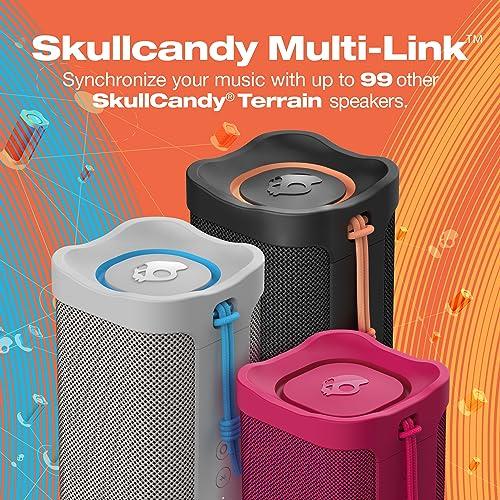
Only the Bose SoundLink Flex 2nd Gen supports multipoint connectivity, allowing it to maintain connections to two devices simultaneously and automatically switch between them. The Skullcandy Terrain XL can only connect to one device at a time. The Bose also offers stereo pairing with other compatible speakers, while stereo pairing isn't documented for the Terrain XL.
For outdoor parties, the choice depends on your priorities. The Skullcandy Terrain XL offers longer battery life for extended events, while the Bose SoundLink Flex 2nd Gen provides significantly better sound quality and can maintain clarity even at higher volumes. The SoundLink Flex 2nd Gen also offers party mode for connecting multiple speakers, making it more versatile for larger gatherings.
Only the Bose SoundLink Flex 2nd Gen includes a built-in microphone for hands-free calling and voice assistant access. The Skullcandy Terrain XL lacks microphone functionality, so you cannot use it for phone calls or voice commands. This makes the Bose more versatile for users who need communication features alongside music playback.
Both the Skullcandy Terrain XL and Bose SoundLink Flex 2nd Gen use USB-C charging ports. The SoundLink Flex 2nd Gen charges in approximately 4 hours, while the Terrain XL takes longer due to its larger battery capacity. Both include USB-C to USB-A charging cables, providing modern charging convenience.
Neither speaker is specifically designed for home theater use, as they're optimized for portable music playback rather than movie audio. However, if needed for casual bedroom or small apartment use, the Bose SoundLink Flex 2nd Gen would be the better choice due to its balanced sound signature and clarity for dialogue. The Terrain XL's V-shaped tuning isn't ideal for movie soundtracks.
The Bose SoundLink Flex 2nd Gen offers comprehensive app support through the Bose Connect app, providing 3-band EQ customization, device management, and firmware updates. The Skullcandy Terrain XL has limited or no dedicated app functionality, offering minimal customization options. The Bose app integration significantly enhances the user experience with personalization features.
The fundamental difference is that the Skullcandy Terrain XL prioritizes value and extended battery life at a budget-friendly price point, while the Bose SoundLink Flex 2nd Gen focuses on premium sound quality, advanced features, and superior portability at a higher price. Choose the Terrain XL for maximum battery life on a budget, or the SoundLink Flex 2nd Gen for significantly better audio performance and modern features.
We've done our best to create useful and informative comparisons to help you decide what product to buy. Our research uses advanced automated methods to create this comparison and perfection is not possible - please contact us for corrections or questions. These are the sites we've researched in the creation of this article: youtube.com - skullcandy.eu - youtube.com - blog.bestbuy.ca - support.skullcandy.com - youtube.com - youtube.com - walmart.com - versus.com - youtube.com - skullcandy.ae - versus.com - skullcandy.com - youtube.com - consumerreports.org - gearjunkie.com - newegg.com - manuals.plus - bestbuy.com - electronicexpress.com - skullcandy.com - techradar.com - worldwidestereo.com - bose.com - howtogeek.com - bose.com - crutchfield.com - visions.ca - pcrichard.com - staples.com - rtings.com - bose.com - soundguys.com

Privacy Policy
Terms and Conditions - Affiliate Policy
Home Security
© Copyright 2008-2026.
11816 Inwood Rd #1211, Dallas, TX 75244