





The portable speaker market has exploded over the past decade, creating distinct categories that serve wildly different needs. At one end, you have compact, budget-friendly speakers designed for everyday portability. At the other, powerful "party speakers" that prioritize room-filling volume and audiophile-quality sound. The Skullcandy Terrain XL and Ultimate Ears HYPERBOOM perfectly illustrate this divide, representing two completely different philosophies in portable audio design.
Released in 2023, the Terrain XL entered a crowded budget speaker market where waterproof protection and basic Bluetooth connectivity had become standard features. The HYPERBOOM, launched in 2020, arrived during the premium portable speaker boom when companies started incorporating adaptive EQ technology—software that automatically adjusts sound based on the speaker's environment—and multi-device connectivity that lets multiple people control music playback.
Understanding these speakers means grasping their fundamental differences in approach. The Terrain XL asks: "What's the minimum you can spend for a reliable, waterproof speaker that sounds decent?" The HYPERBOOM asks: "How good can portable audio get when you're willing to sacrifice some portability for serious performance?"
Before diving into specifics, it's worth understanding what separates good portable speakers from mediocre ones. The core challenge is physics: small drivers (the components that actually produce sound) simply cannot move as much air as large ones, limiting both volume and bass response. Engineers work around this using passive radiators—essentially speakers without voice coils that vibrate sympathetically to boost bass—and digital signal processing (DSP) that optimizes the frequency response.
The other major consideration is power efficiency. Every watt consumed by amplification is a watt not available for battery life, creating a constant balancing act between volume capability and runtime. This is why many portable speakers sound underwhelming at maximum volume—they're programmed to prioritize battery conservation over peak performance.
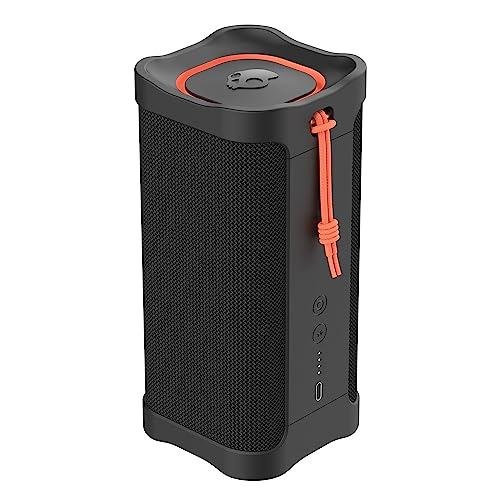
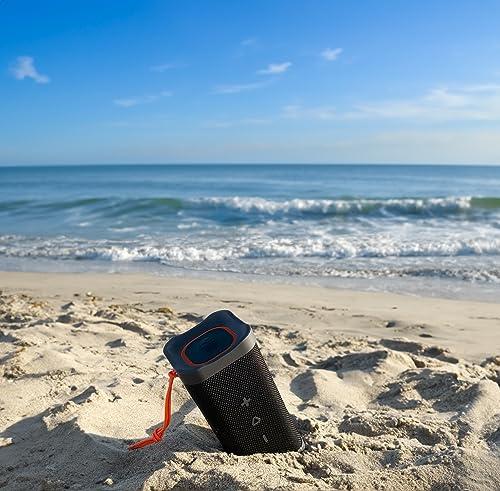
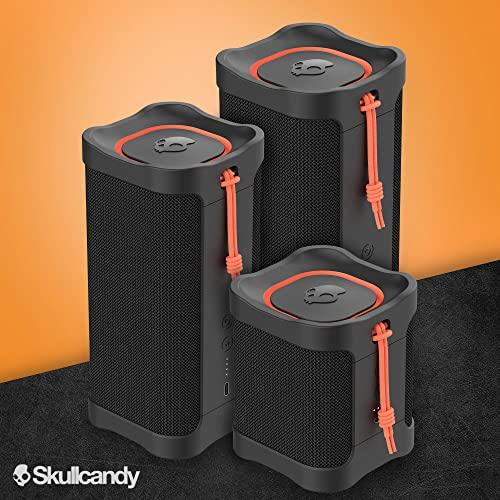
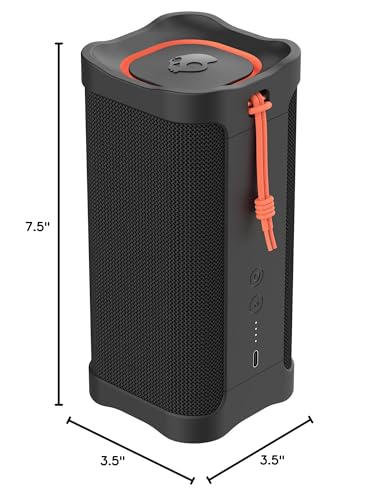
The difference in physical presence between these speakers immediately telegraphs their intended purposes. The Terrain XL measures just 3.5 inches wide and deep by 7.5 inches tall, weighing slightly over two pounds. This puts it firmly in the "throw it in a backpack" category. I've carried similar-sized speakers on hiking trips, to beaches, and around the house without giving their weight a second thought.
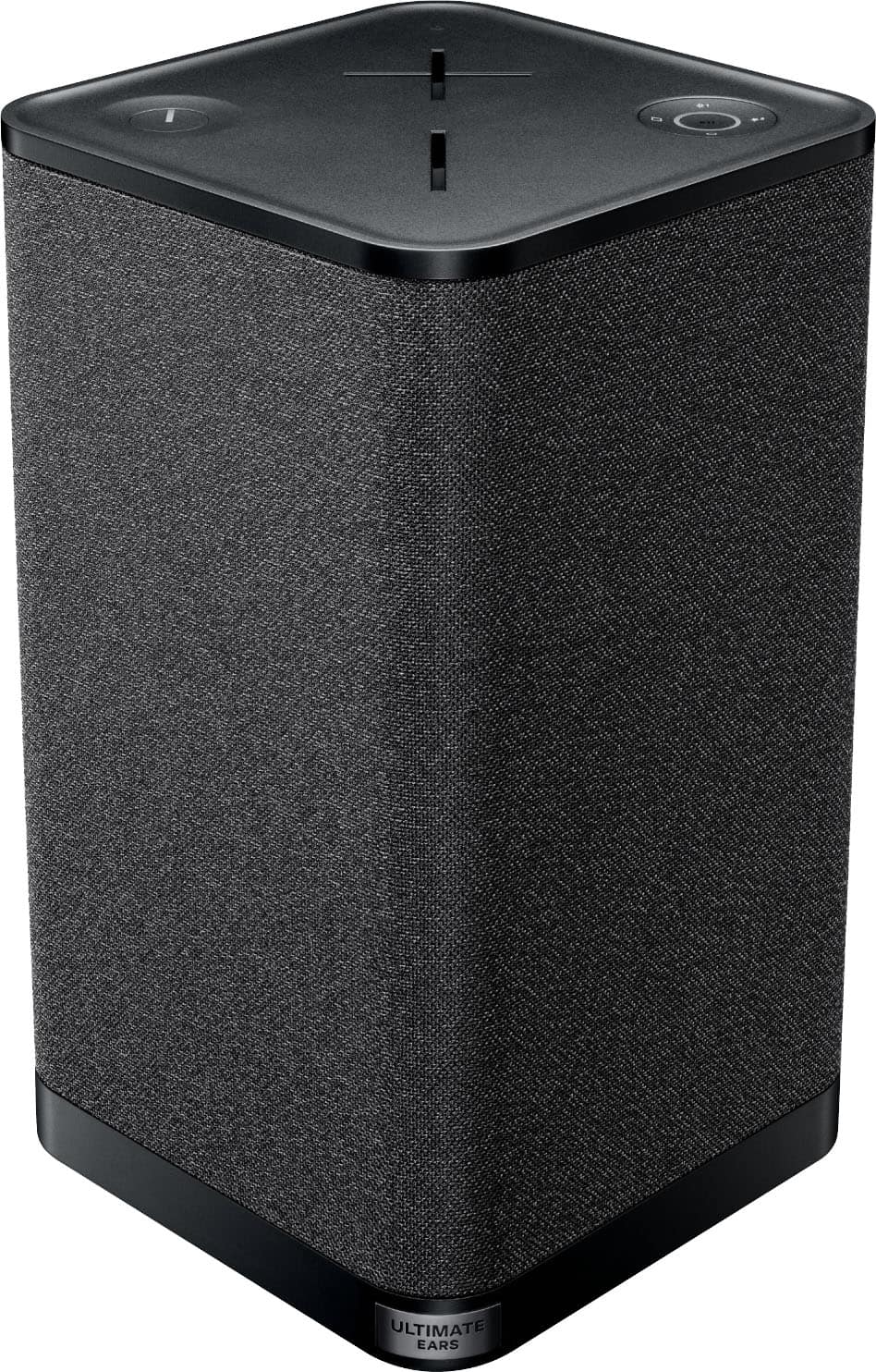
The HYPERBOOM, by contrast, stretches over 14 inches tall and weighs nearly 13 pounds. That's approaching the size of a small bookshelf speaker, and while it includes a carrying handle, this is clearly designed for "transportable" rather than "portable" use. You'll move it from your living room to the patio for a party, not carry it on a nature hike.
This size difference isn't arbitrary—it reflects the fundamental physics of audio reproduction. The HYPERBOOM's larger internal volume allows for bigger drivers and more substantial passive radiators, which translate directly into better sound quality and higher maximum volume. The Terrain XL makes smart compromises to achieve its compact form factor, but those compromises have sonic consequences.
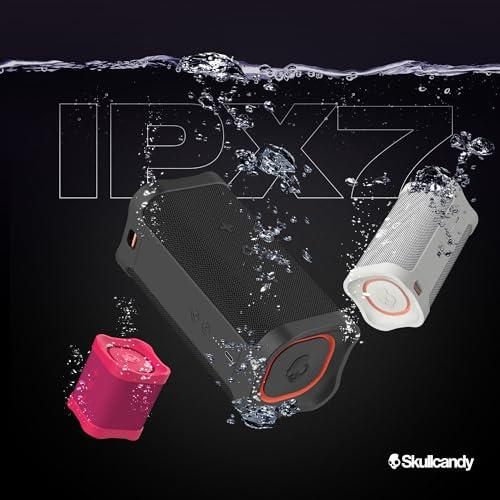
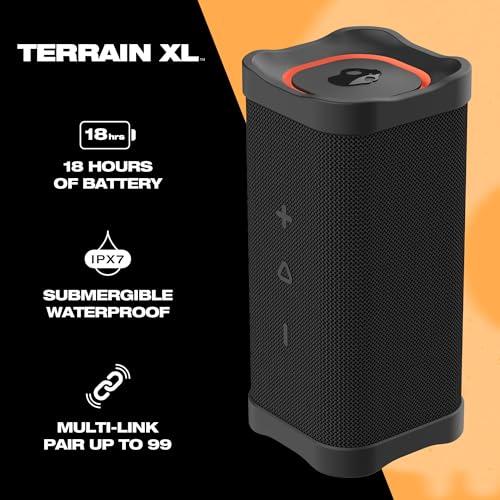
Water resistance ratings can be confusing, but they're crucial for outdoor speakers. The Terrain XL carries an IPX7 rating, meaning it can survive complete submersion up to one meter deep for 30 minutes. This is serious waterproofing—you could literally drop this speaker in a pool and fish it out unharmed. The "X" in IPX7 means dust protection wasn't tested, though the fabric construction likely provides reasonable protection anyway.
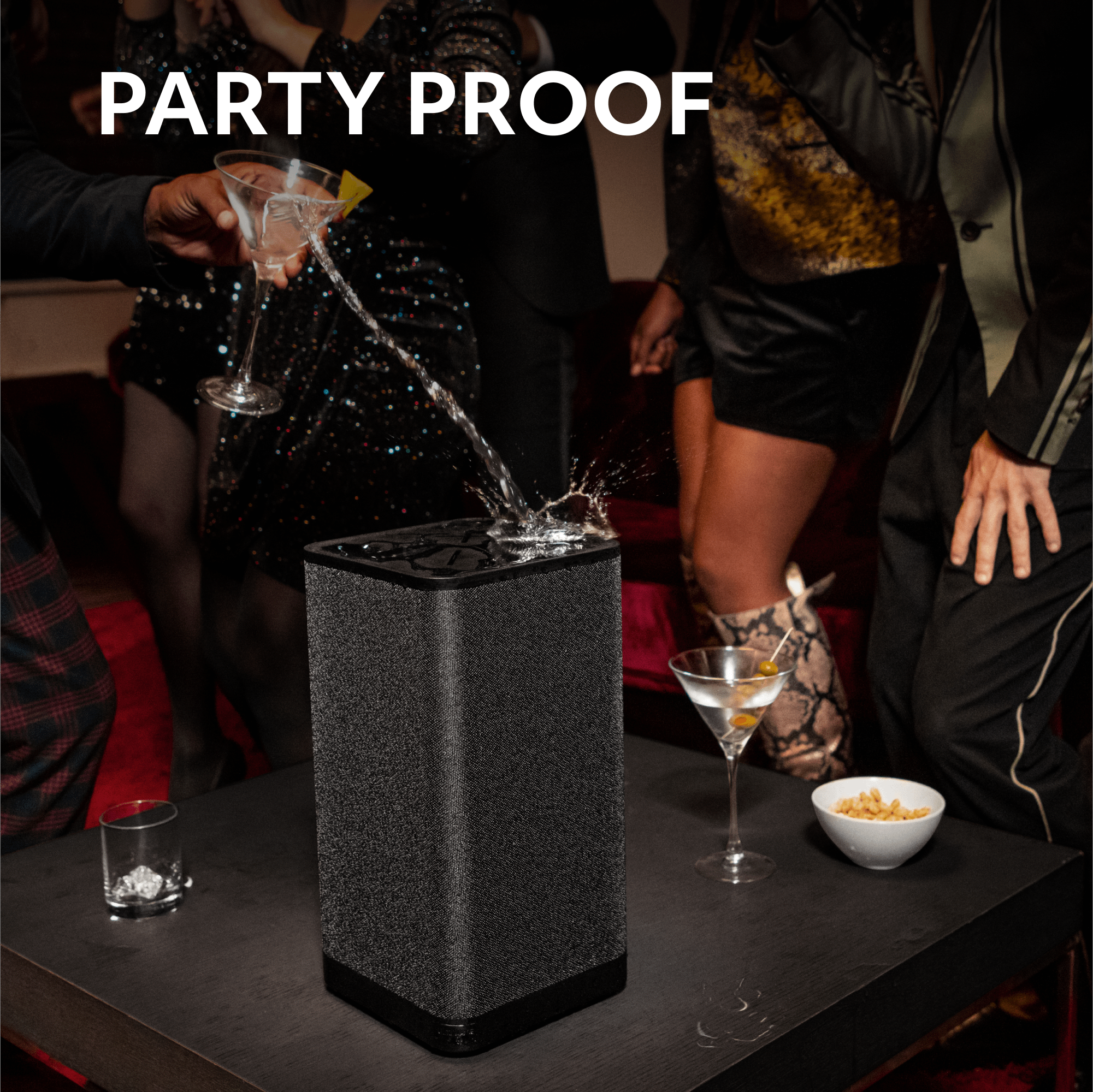
The HYPERBOOM only claims IPX4 rating, which covers splashing from any direction but not submersion. This makes sense given its size and the complexity of sealing multiple input ports, but it's a significant practical limitation. You can use it by the pool, but don't expect it to survive an accidental dunk.
This difference matters more than you might think. True waterproofing opens up use cases that splash resistance simply can't handle—beach trips where sand and surf are inevitable, poolside parties, or even shower use. The Terrain XL's superior water protection partially compensates for its other limitations.
Here's where the price difference becomes most apparent. The Terrain XL exhibits what audio engineers call a "V-shaped" frequency response—boosted bass and treble with recessed midrange frequencies. This creates an initially impressive sound with punchy bass and crisp highs, but it sacrifices the midrange where most vocals and instruments live. The result is music that sounds exciting for the first few songs but becomes fatiguing over longer listening sessions.
More problematically, reviews consistently note that the Terrain XL suffers from distortion when pushed to higher volumes. This happens because the small drivers reach their physical limits—they simply cannot move far enough to reproduce loud sounds cleanly. The speaker includes no adjustable EQ, so you're stuck with Skullcandy's tuning choices whether you like them or not.
The HYPERBOOM takes a completely different approach. Its larger drivers and more sophisticated DSP deliver what reviewers describe as a "well-balanced soundstage" where bass is powerful but never overwhelms vocals or instruments. This balanced approach works better across different music genres—whether you're playing jazz, rock, hip-hop, or electronic music, the HYPERBOOM maintains clarity and detail.
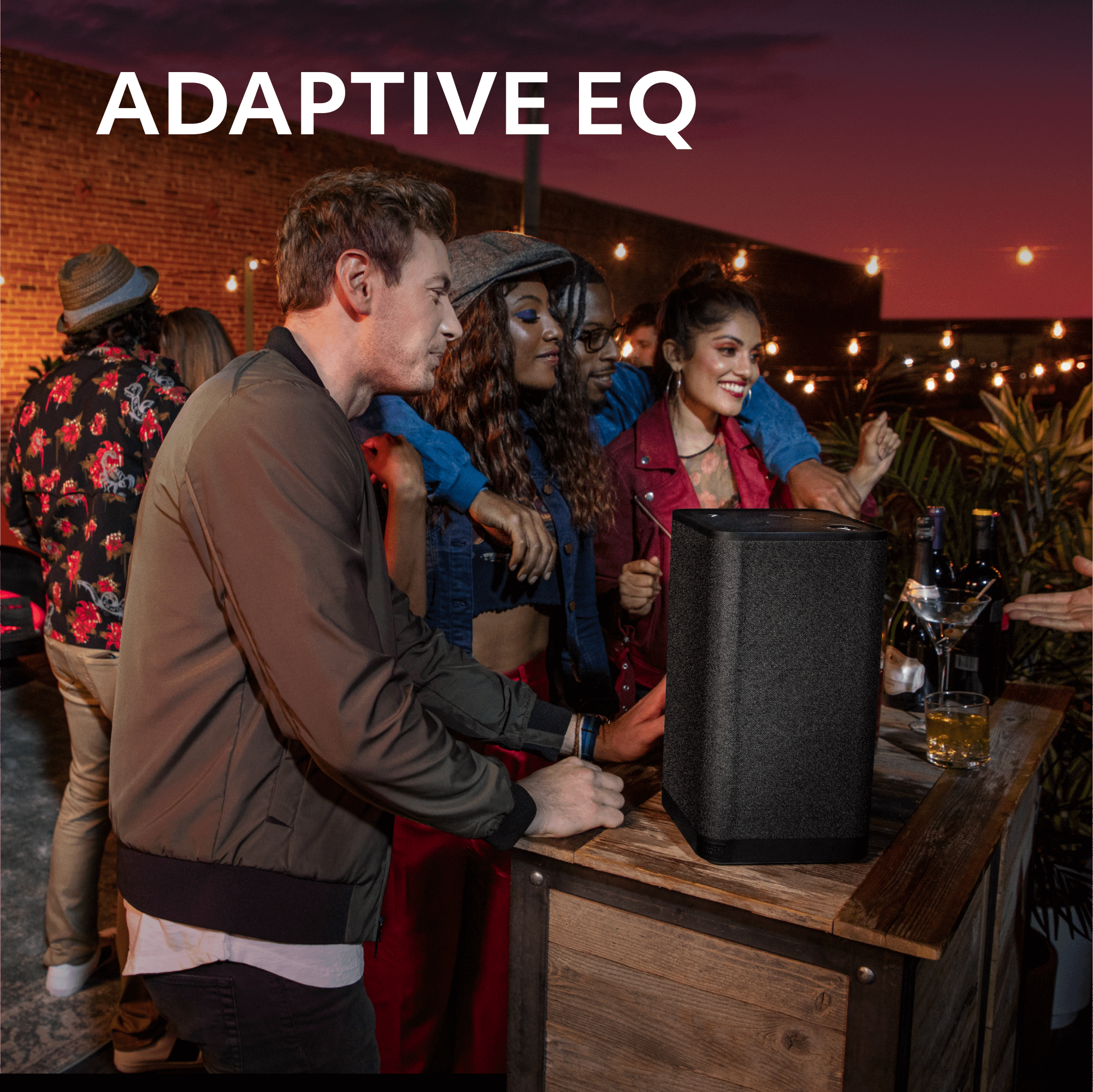
Perhaps more importantly, the HYPERBOOM includes adaptive EQ technology. Using internal microphones, it analyzes the acoustic environment and automatically adjusts the frequency response to compensate for room acoustics. Place it in a corner, and it reduces bass to prevent muddiness. Use it outdoors, and it boosts certain frequencies to maintain clarity in open spaces. This intelligent processing represents a significant technological advancement over fixed-tuning speakers like the Terrain XL.
Volume capability separates these speakers more than any other single factor. The Terrain XL produces adequate sound for small gatherings—think a few friends around a campfire or background music for a backyard barbecue. But it reaches its limits quickly. Push it to maximum volume, and you'll hear distortion creep into the highs while the overall sound becomes compressed and unpleasant.
The HYPERBOOM operates in a different league entirely. It can fill large rooms or outdoor spaces with clean, powerful audio that maintains its character even at ear-splitting volumes. This isn't just about being louder—it's about maintaining audio quality as volume increases. The larger drivers and more powerful amplification mean the HYPERBOOM never sounds stressed, even when pushed hard.
For context, the difference in maximum clean volume between these speakers is roughly equivalent to the difference between a normal conversation and someone shouting. That gap becomes crucial when you're trying to provide music for a party of 15-20 people or overcome ambient noise in outdoor environments.
Both speakers claim impressive battery life—up to 18 hours for the Terrain XL and 24 hours for the HYPERBOOM. However, these numbers come with important caveats that manufacturers often downplay.
Battery life varies dramatically with volume level and music content. Bass-heavy music consumes more power, as does playing at high volumes. In real-world testing, the Terrain XL delivers close to its claimed runtime at moderate volumes (around 50%), but this drops to roughly 8 hours when consistently played loud. The HYPERBOOM similarly delivers excellent runtime during normal use but sees reduced performance when used as a party speaker at maximum volume.
The HYPERBOOM's superior battery technology shows in its charging speed—it reaches full charge in about 2.6 hours compared to the Terrain XL's 4.5-5 hour charging time. When you're planning a last-minute gathering, that faster charging can be the difference between having music or not.
Bluetooth connectivity has evolved significantly since the early days of portable speakers, and these two devices reflect different generations of technology. The Terrain XL uses Bluetooth 5.3, which provides excellent connection stability and lower power consumption compared to earlier versions. However, it can only connect to one device at a time, requiring manual reconnection when switching between phones or tablets.
The HYPERBOOM remembers up to eight paired devices and makes switching between them nearly seamless. This multi-device capability transforms how you use the speaker at social gatherings—friends can easily take turns playing music without the awkward process of unpairing and repairing devices.
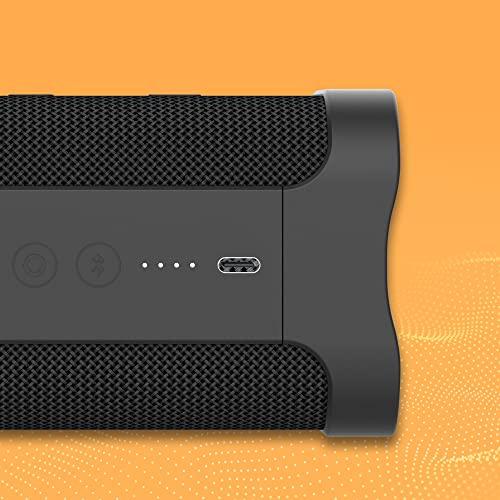
The HYPERBOOM also includes multiple input options beyond Bluetooth, including auxiliary and optical connections. This versatility makes it suitable for home theater applications or connecting to devices that don't support Bluetooth. The Terrain XL offers only Bluetooth connectivity, with its USB-C port reserved exclusively for charging.
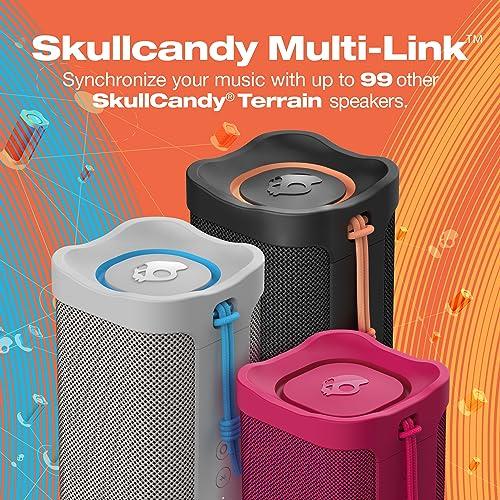
Both speakers support multi-speaker pairing, but with different approaches. The Terrain XL can link with up to 99 other Skullcandy Terrain speakers, and uniquely, you can create stereo pairs using different sizes within the Terrain lineup. The HYPERBOOM uses Ultimate Ears' PartyUp feature, allowing up to four people to simultaneously control music playback from different devices.
While neither speaker is designed primarily for home theater use, the HYPERBOOM has characteristics that make it surprisingly capable in this role. Its wide soundstage and ability to maintain clarity at high volumes work well for movie soundtracks and TV dialogue. The optical input allows direct connection to TVs, bypassing potentially compressed Bluetooth audio.
The adaptive EQ becomes particularly valuable in home theater applications, automatically adjusting the sound signature based on room acoustics and speaker placement. This intelligent processing can partially compensate for less-than-ideal room acoustics that would typically require manual EQ adjustment.
The Terrain XL lacks the volume capability and input flexibility for serious home theater use, though it works adequately for casual TV watching in smaller rooms.
At the time of writing, these speakers occupy completely different value territories, with the HYPERBOOM costing roughly eight times more than the Terrain XL. This price difference reflects not just better components but entirely different engineering approaches and target markets.
The Terrain XL represents exceptional value for users who prioritize portability, water resistance, and basic audio quality over peak performance. It's ideal for college students, outdoor enthusiasts, or anyone seeking a reliable speaker for casual use without breaking the bank. The waterproof design and decent battery life justify the modest price, especially considering that comparably waterproof speakers often cost significantly more.
The HYPERBOOM targets users who view their speaker as a serious audio investment. It's for people who host regular gatherings, appreciate high-quality sound reproduction, or need a speaker capable of filling large spaces. While expensive, it can often be found renewed or on sale for significantly less than full retail, improving its value proposition.
Choose the Terrain XL if you're primarily looking for a grab-and-go speaker for outdoor activities, casual listening, or situations where waterproof protection is essential. It's also the obvious choice if budget constraints make the HYPERBOOM unrealistic. The sound quality, while not exceptional, is perfectly adequate for most casual listening scenarios.
Opt for the HYPERBOOM if you regularly host parties, want a speaker that can serve double duty as a home audio system, or simply refuse to compromise on sound quality. The adaptive EQ technology and multi-device connectivity represent meaningful technological advantages that justify the premium pricing for serious users.
The decision ultimately comes down to intended use and budget. The Terrain XL excels at being a reliable, affordable companion for active lifestyles. The HYPERBOOM succeeds as a premium audio solution that happens to be portable. Both serve their intended markets well, but they're solving fundamentally different problems for different types of users.
| Skullcandy Terrain XL | Ultimate Ears HYPERBOOM |
|---|---|
| Size & Weight - Critical for portability and storage | |
| 3.5" x 3.5" x 7.5", 2.07 lbs (truly portable for backpacks) | 7.5" x 7.5" x 14.3", 13 lbs (transportable but requires two hands) |
| Water Resistance - Protection level for outdoor use | |
| IPX7 waterproof (submersible up to 1 meter for 30 minutes) | IPX4 splash resistant only (light rain/splashing, not submersion) |
| Power Output - Determines maximum volume and sound quality | |
| 20 watts (adequate for small gatherings of 3-5 people) | Significantly higher wattage (fills large rooms and outdoor spaces) |
| Sound Quality - Most important for audio experience | |
| V-shaped signature with harsh highs, distortion at max volume | Well-balanced with adaptive EQ that adjusts to room acoustics |
| Battery Life - Runtime for extended use | |
| Up to 18 hours moderate volume, ~8 hours at maximum | Up to 24 hours moderate volume, 10-12 hours at maximum |
| Charging Speed - How quickly you can get back to music | |
| 4.5-5 hours via USB-C | 2.6 hours via USB-C (much faster recovery time) |
| Bluetooth Connectivity - Device pairing and switching | |
| Bluetooth 5.3, single device connection only | Multi-device pairing remembers 8 devices with easy switching |
| Multi-Speaker Features - Expanding your sound system | |
| Links up to 99 Terrain XL speakers, stereo pairing with any Terrain model | PartyUp allows 4 simultaneous device connections |
| Input Options - Connection flexibility beyond Bluetooth | |
| Bluetooth only (USB-C for charging exclusively) | Bluetooth, auxiliary, and optical inputs available |
| EQ Customization - Sound personalization options | |
| No adjustable EQ (fixed Skullcandy tuning) | Adaptive EQ plus 5-band customizable EQ via app |
| Target Use Case - Best application scenarios | |
| Outdoor adventures, casual listening, budget-conscious buyers | Parties, home audio replacement, premium sound quality priority |
The Skullcandy Terrain XL is significantly better for outdoor activities due to its IPX7 waterproof rating, which means it can survive full submersion in water up to 1 meter deep. It's also much more portable at just 2.07 pounds and includes a wrist strap for easy carrying. The Ultimate Ears HYPERBOOM only has splash resistance (IPX4) and weighs 13 pounds, making it unsuitable for hiking, camping, or beach trips.
The Ultimate Ears HYPERBOOM gets significantly louder and maintains sound quality at maximum volume. It can fill large rooms and outdoor spaces with powerful, clear audio. The Skullcandy Terrain XL reaches adequate volume for small gatherings but experiences distortion when pushed to its limits and is better suited for 3-5 people rather than large parties.
The HYPERBOOM delivers superior sound quality with a well-balanced frequency response, adaptive EQ that adjusts to your environment, and clear audio across all music genres. The Terrain XL has a V-shaped sound signature that emphasizes bass and highs while neglecting midrange frequencies, resulting in less detailed sound that can become fatiguing during long listening sessions.
Both speakers offer excellent battery life, but the Ultimate Ears HYPERBOOM edges ahead with up to 24 hours compared to the Terrain XL's 18 hours. However, the HYPERBOOM charges much faster at 2.6 hours versus 4.5-5 hours for the Terrain XL. Real-world battery life for both speakers decreases significantly when played at maximum volume.
The Ultimate Ears HYPERBOOM remembers up to 8 paired devices and allows easy switching between them, plus supports PartyUp mode where 4 people can control music simultaneously. The Skullcandy Terrain XL only connects to one device at a time, requiring manual reconnection when switching between phones or tablets.
The Skullcandy Terrain XL offers exceptional value for budget-conscious buyers, providing waterproof protection, decent sound, and long battery life at a very affordable price point. The HYPERBOOM costs significantly more but justifies the premium with professional-grade sound quality, adaptive EQ technology, and party-filling volume capabilities.
The Ultimate Ears HYPERBOOM works surprisingly well for home theater use thanks to its wide soundstage, optical input for direct TV connection, and adaptive EQ that adjusts to room acoustics. The Terrain XL lacks the volume capability and input flexibility for serious home theater applications, though it works adequately for casual TV watching in smaller rooms.
The Skullcandy Terrain XL is far more portable, weighing only 2.07 pounds with compact dimensions that fit easily in backpacks. The HYPERBOOM weighs 13 pounds and is designed to be transportable rather than truly portable - you can move it from room to patio but wouldn't want to carry it on outdoor adventures.
Both speakers support multi-speaker connectivity but with different approaches. The Terrain XL can create stereo pairs with any other Skullcandy Terrain model and link up to 99 speakers together. The HYPERBOOM uses Ultimate Ears' PartyUp technology, though specific stereo pairing details vary by model and firmware version.
The Ultimate Ears HYPERBOOM offers multiple input options including Bluetooth, auxiliary, and optical connections, making it versatile for various devices and use cases. The Skullcandy Terrain XL only supports Bluetooth connectivity, with its USB-C port reserved exclusively for charging rather than audio input.
The Terrain XL includes a built-in microphone for handling phone calls, which is uncommon even in more expensive speakers. The HYPERBOOM focuses primarily on music playback, and while it may support calls, this isn't a highlighted feature of the larger party-focused speaker design.
The Ultimate Ears HYPERBOOM is specifically designed for parties and large gatherings, with powerful volume that fills big spaces, balanced sound quality that works across music genres, and multi-device connectivity for easy DJ switching. The Terrain XL is better suited for small, intimate gatherings rather than full parties due to its limited maximum volume and compact size.
We've done our best to create useful and informative comparisons to help you decide what product to buy. Our research uses advanced automated methods to create this comparison and perfection is not possible - please contact us for corrections or questions. These are the sites we've researched in the creation of this article: youtube.com - skullcandy.eu - youtube.com - blog.bestbuy.ca - support.skullcandy.com - youtube.com - youtube.com - walmart.com - versus.com - youtube.com - skullcandy.ae - versus.com - skullcandy.com - youtube.com - consumerreports.org - gearjunkie.com - newegg.com - manuals.plus - bestbuy.com - electronicexpress.com - skullcandy.com - techradar.com - ultimateears.com - youtube.com - youtube.com - rtings.com - provantage.com - target.com - forum.mygolfspy.com - order.staplestechnologysolutions.com - youtube.com - publicsector.shidirect.com - ultimateears.com

Privacy Policy
Terms and Conditions - Affiliate Policy
Home Security
© Copyright 2008-2026.
11816 Inwood Rd #1211, Dallas, TX 75244