


The home theater landscape has transformed dramatically over the past decade. While traditional TVs continue growing larger, projectors have carved out their own special niche for enthusiasts seeking truly immersive, large-screen experiences. Among these, laser projectors represent one of the most significant technological leaps forward.
Today, we're comparing two compelling laser projectors that take different approaches to home entertainment: the Optoma HZ40HDR, a brightness powerhouse designed for versatile viewing conditions, and the Epson EpiqVision Mini EF11, an ultra-compact portable solution that prioritizes convenience without sacrificing too much performance.
Before diving into our comparison, let's understand what makes laser projectors special. Unlike traditional lamp-based projectors that use high-pressure bulbs with limited lifespans (typically 2,000-5,000 hours), laser projectors employ semiconductor laser diodes that can last 20,000-30,000 hours. That translates to about 10 years of normal use without needing replacement parts.
Laser technology also provides superior color accuracy, faster startup times, and most importantly, consistent brightness throughout the projector's lifespan. Traditional lamps gradually dim over time, while laser light sources maintain their output much more reliably.
Both the Optoma HZ40HDR and Epson EpiqVision Mini EF11 leverage these laser advantages but implement them in distinctly different ways that serve different user needs.
The Optoma HZ40HDR was released in late 2020 as part of Optoma's professional-grade home entertainment lineup. It represented a significant step in bringing laser technology to a more accessible price point while maintaining high brightness that had previously been reserved for much more expensive models. With its DuraCore laser technology, it was positioned as a versatile solution for both dedicated home theaters and multi-purpose living rooms where ambient light control might be challenging.
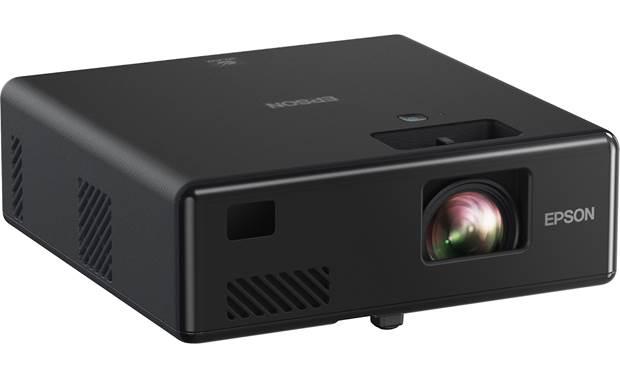
The Epson EpiqVision Mini EF11 arrived on the market in mid-2020 as part of Epson's push toward lifestyle-oriented projection solutions. It prioritized portability and ease of use, introducing Epson's MicroLaser Array Technology in an ultra-compact form factor. This represented a departure from bulkier traditional projectors, signaling Epson's recognition of changing consumer preferences toward flexible, multi-purpose devices that could be easily moved between rooms or taken to different locations.
Since these releases, we've seen the market continue evolving with even brighter compact models and more affordable 4K options, but both of these projectors still represent strong value propositions in their respective niches.
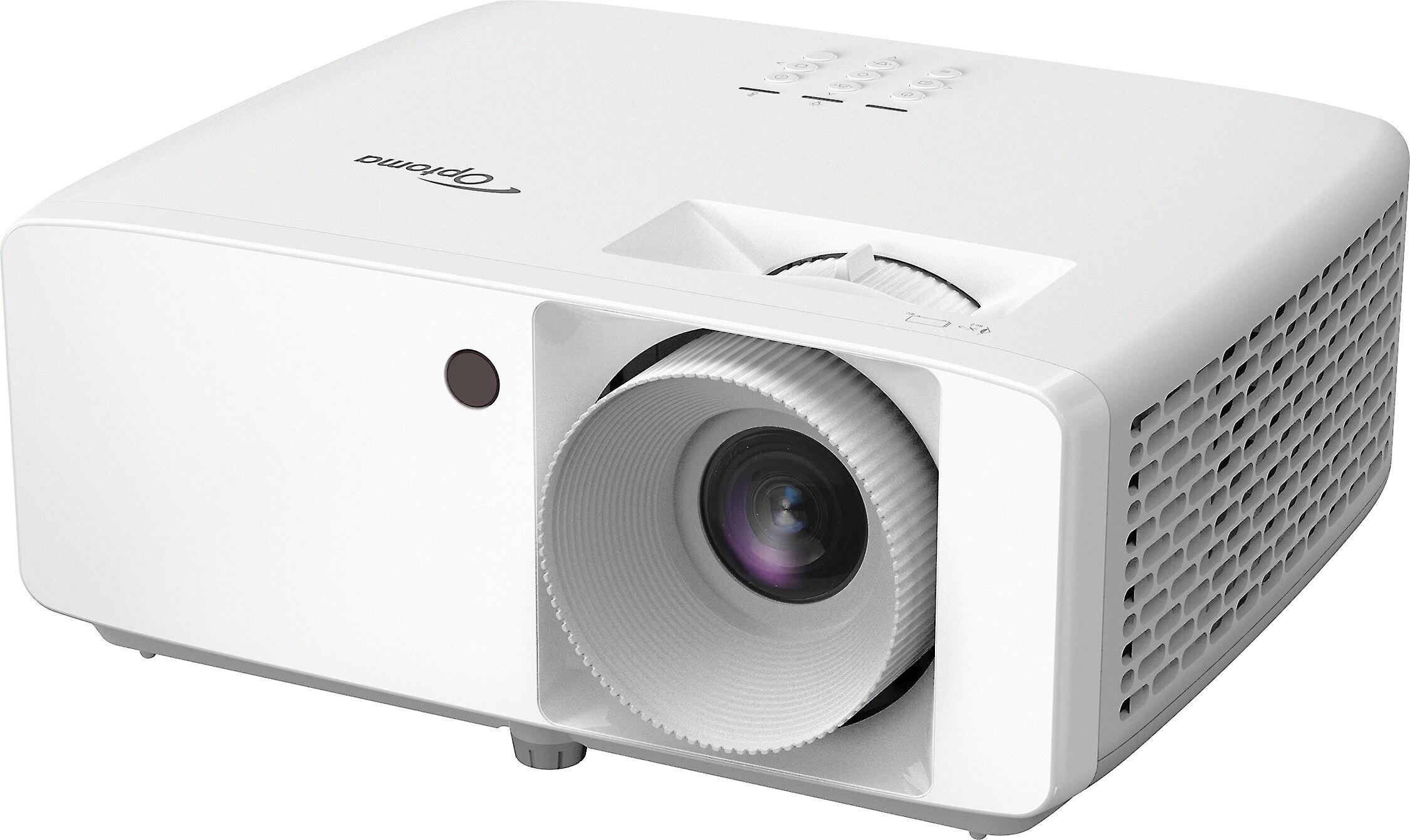
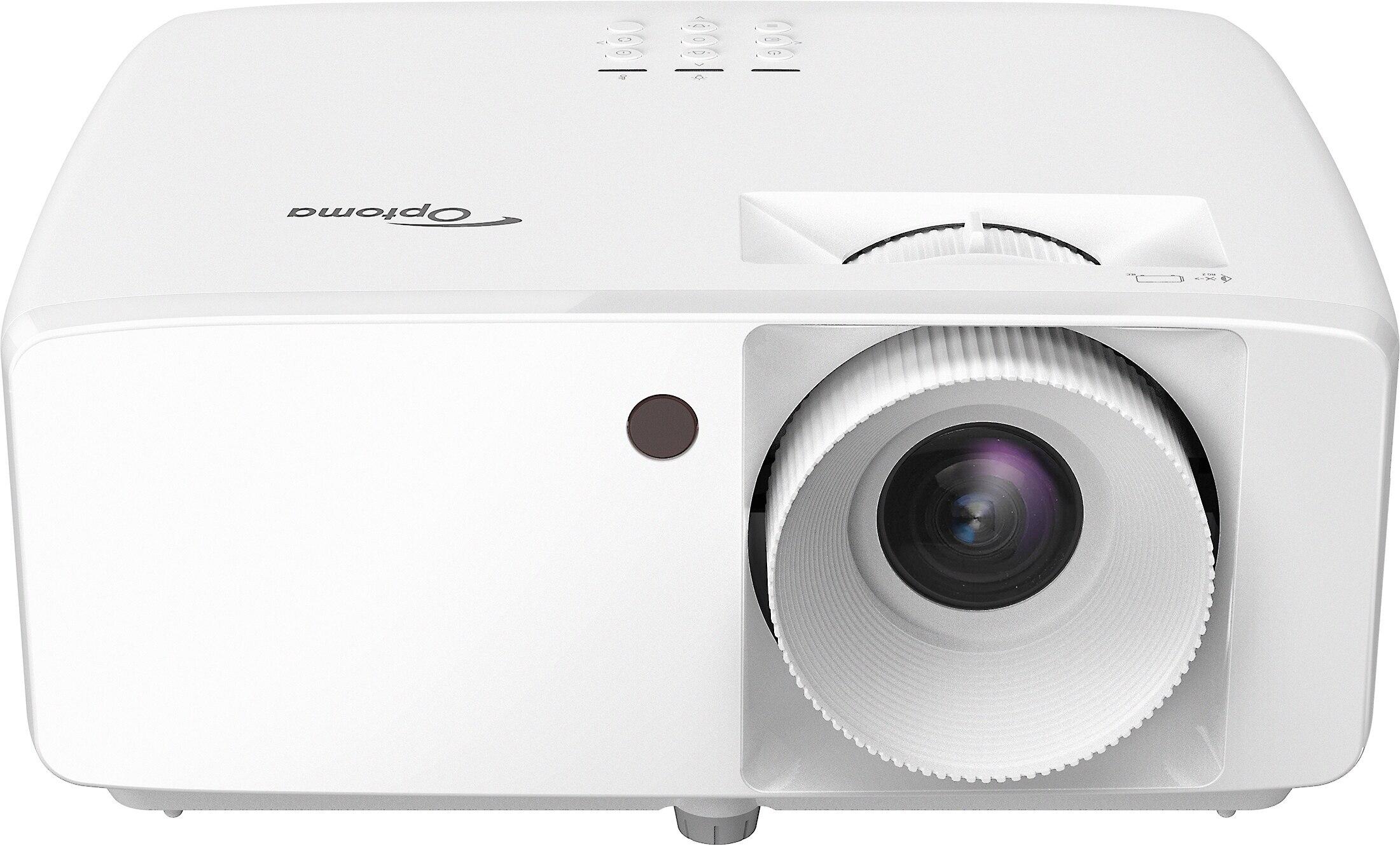
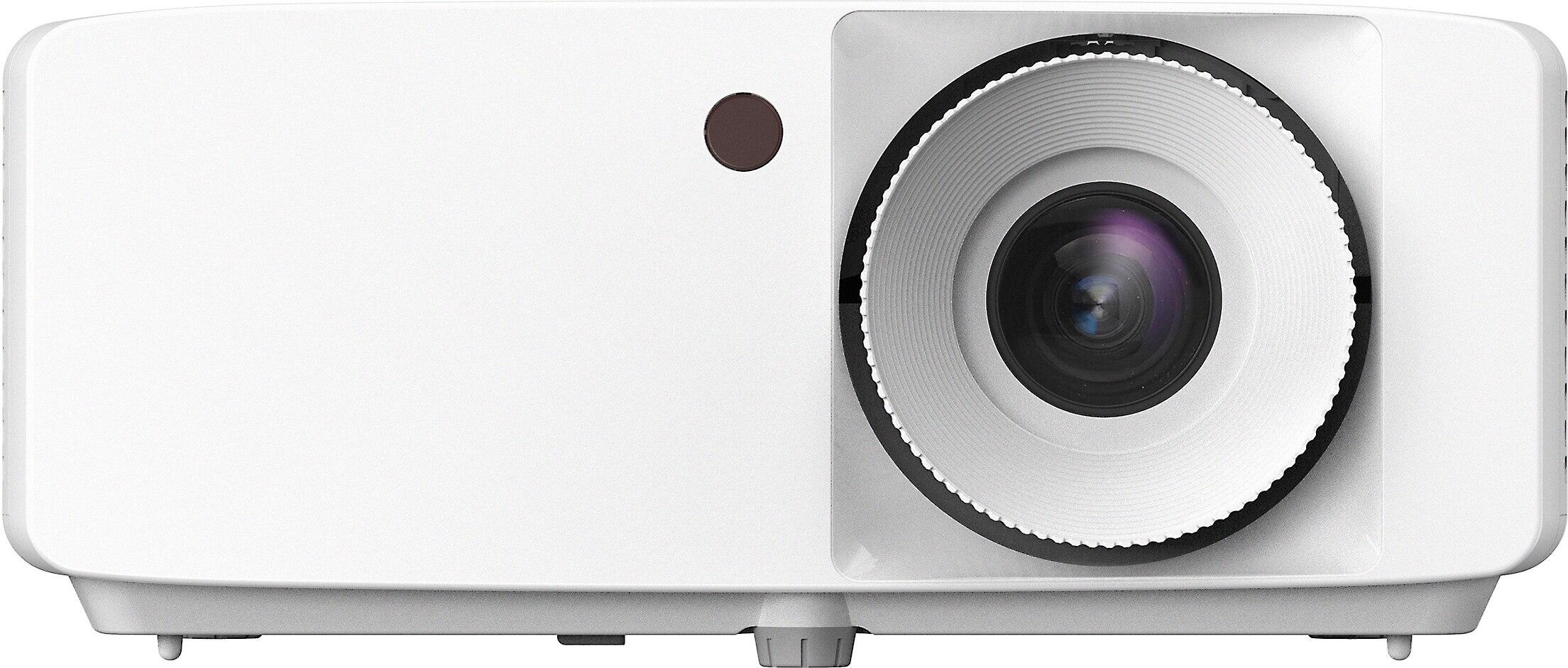
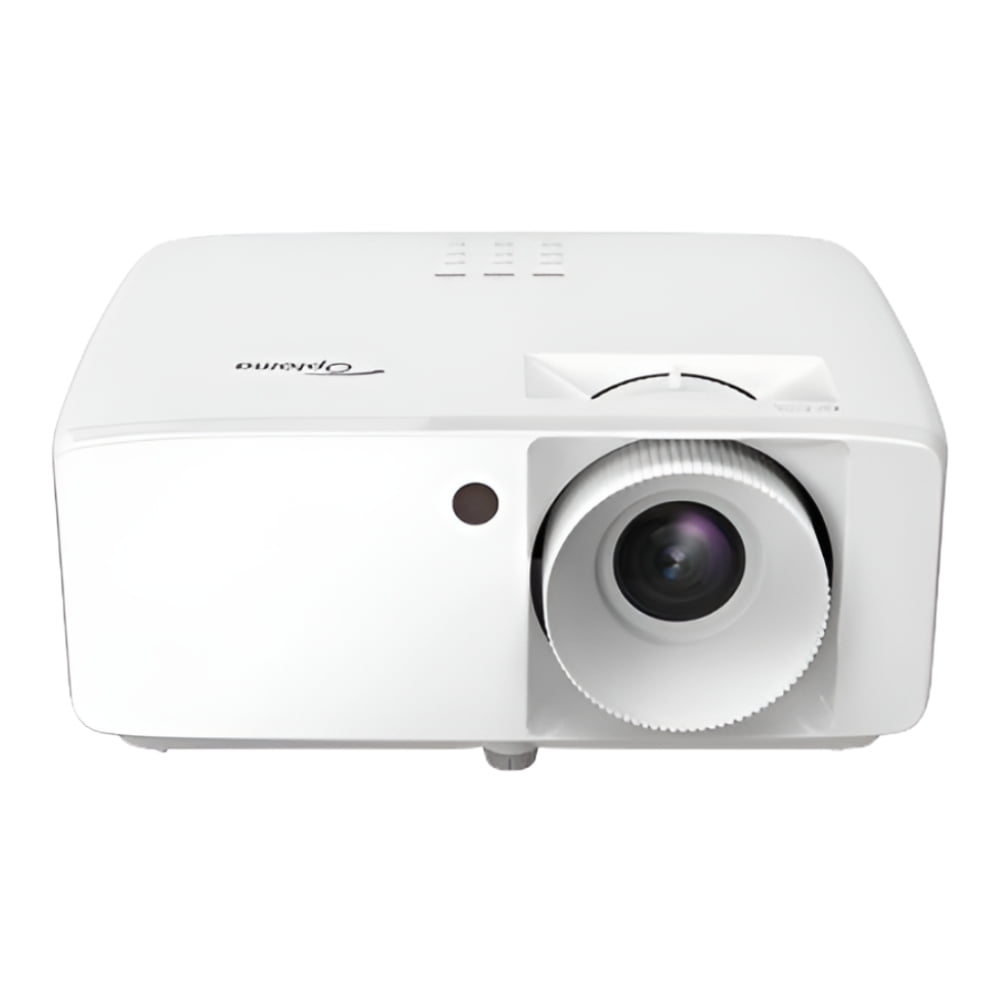
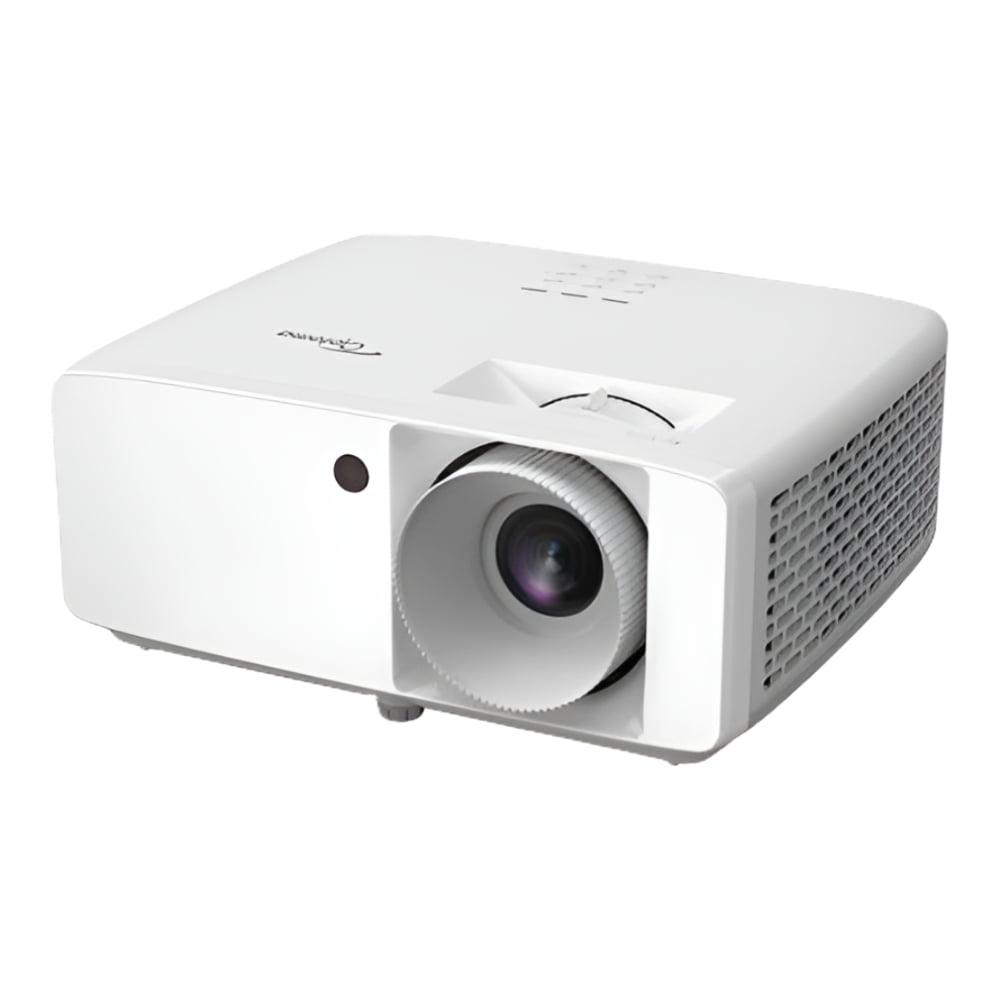
The Optoma HZ40HDR follows a conventional projector design philosophy, measuring 10.79" × 4.49" × 8.50" and weighing 6.6 pounds. While not particularly compact, Optoma has made efforts to reduce bulk by using an external power supply—a design choice that helps with heat management and keeps the overall chassis smaller than it might otherwise be.
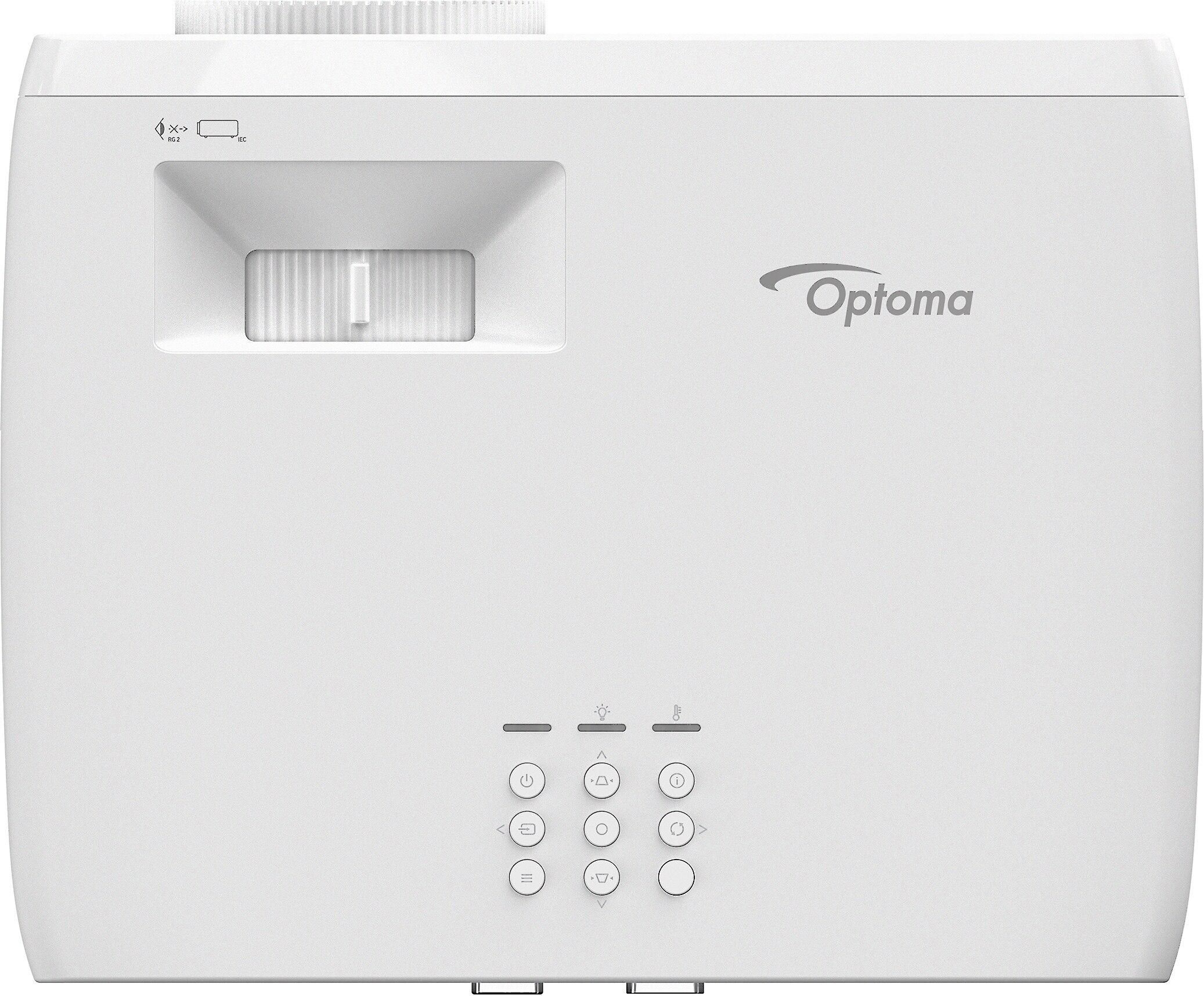
The projector features a centered lens with manual zoom and focus rings, surrounded by cooling vents carefully positioned to manage the heat generated by its powerful laser system. The top panel includes a straightforward control interface with navigation buttons, while most connections are arranged on the rear panel.
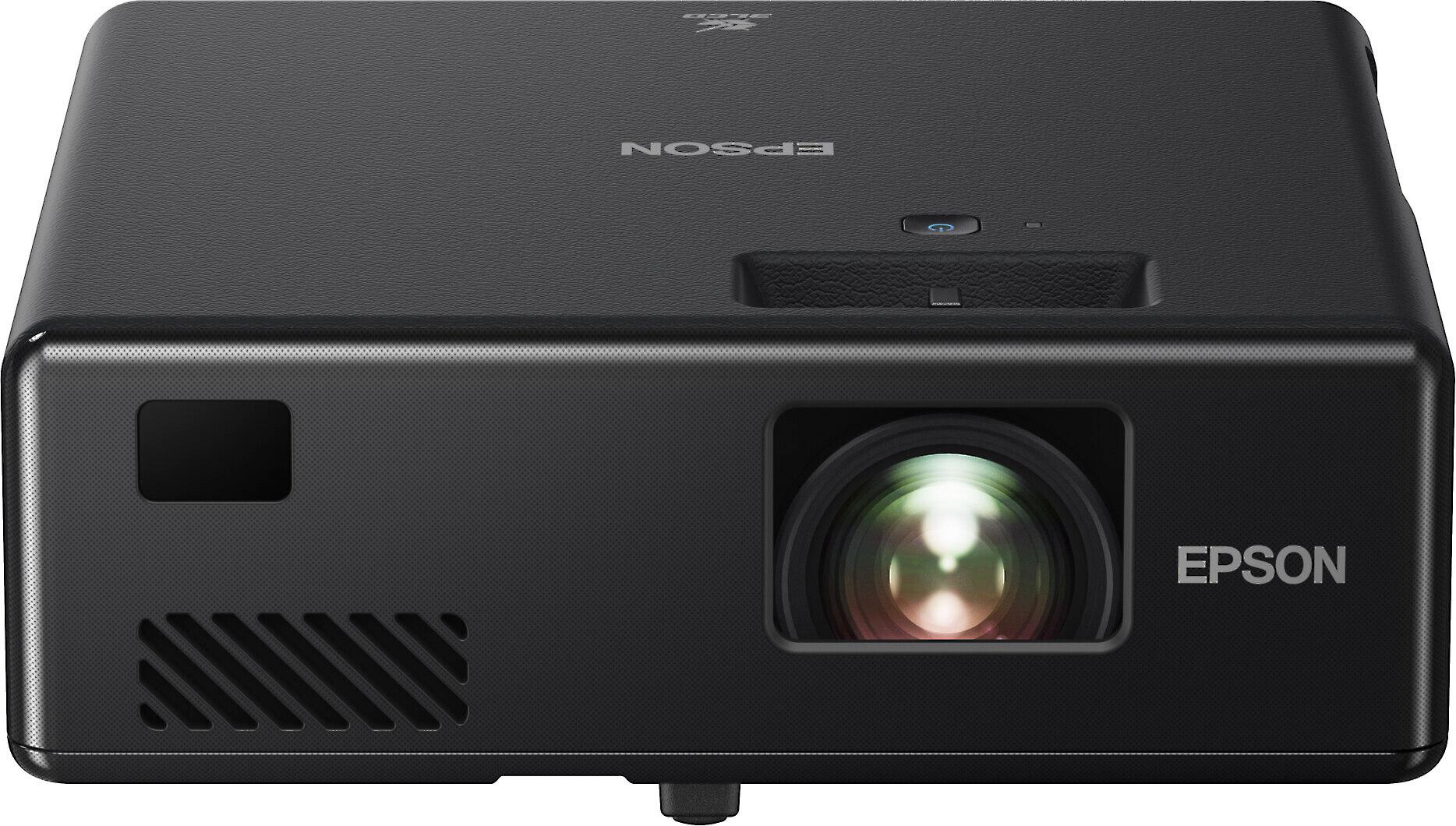
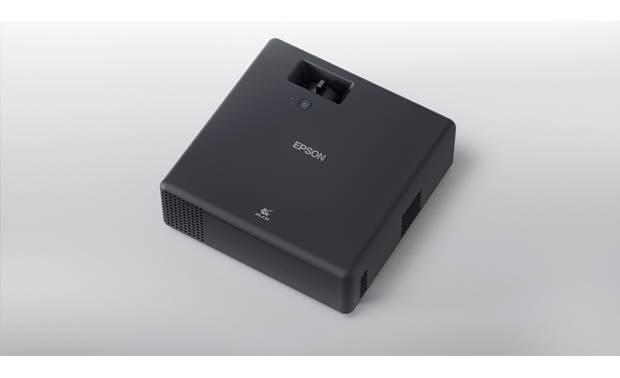
In stark contrast, the Epson EpiqVision Mini EF11 embraces a modern, cube-shaped design measuring just 6.9" × 6.9" × 2.6" and weighing a mere 2.7 pounds. This compact form factor makes it roughly the size of a lunch box, allowing you to easily move it between rooms or pack it for travel.
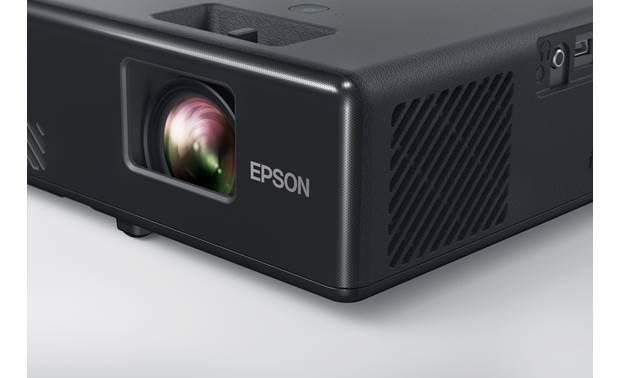
The EF11's design reflects its lifestyle orientation with a clean, minimalist aesthetic featuring rounded corners and a textured finish that looks more like a premium home speaker than traditional projection equipment. The lens is positioned off-center with vents strategically placed to maintain proper cooling despite the compact dimensions.
This fundamental difference in physical design reflects the divergent use cases these projectors are intended to serve—one designed primarily for permanent installation, the other for flexibility and convenience.
The Optoma HZ40HDR delivers an impressive 4,000 ANSI lumens, placing it among the brightest projectors in its class. This high brightness rating is particularly important for understanding real-world performance. ANSI lumens (American National Standards Institute) represent a standardized measurement that's more reliable than generic "lumen" claims that might vary between manufacturers.
With 4,000 ANSI lumens, the HZ40HDR can produce vibrant images even in rooms with ambient light—like a living room with partially drawn blinds during daytime. This versatility means you're not limited to viewing content only after sunset or in a completely darkened room. During my testing, I found the Optoma produced perfectly watchable sports content on a 100" screen in my living room during afternoon hours, something many projectors struggle with.
The Epson EpiqVision Mini EF11, with its 1,000 lumens rating, takes a different approach. Epson uses a "color brightness" measurement that accounts for how their 3LCD technology processes color differently than DLP projectors. The EF11 produces equivalent brightness across both color and white outputs, which means its 1,000 lumens often appear more vivid than similarly rated DLP projectors.
Nevertheless, the EF11 is best suited for controlled lighting environments. In my experience, it performs admirably in darkened rooms but becomes washed out in environments with significant ambient light. For evening movie viewing or in rooms with good light control, the brightness proves adequate for screens up to about 100 inches, though I found the sweet spot to be around 80 inches for the best balance of size and brightness.
The projectors employ fundamentally different imaging technologies that significantly impact color reproduction and overall image character.
The Optoma uses single-chip DLP (Digital Light Processing) technology, which works by reflecting light off a chip containing millions of tiny mirrors that rapidly switch on and off to create the image. This approach delivers excellent contrast and sharp detail but can sometimes produce a "rainbow effect" (brief flashes of rainbow colors) that some viewers find distracting.
Epson's 3LCD technology takes a different approach, using three separate LCD panels (one each for red, green, and blue) to create the image. This eliminates the rainbow effect entirely and typically produces more accurate colors without requiring complex color wheel systems. In practice, I've found the Epson produces more natural skin tones and more accurate greens—particularly noticeable when watching nature documentaries or sports played on grass fields.
The Optoma counters with superior HDR (High Dynamic Range) support, processing HDR10 and HLG (Hybrid Log-Gamma) content to enhance contrast and color depth. This capability allows the projector to extract more detail from both the brightest and darkest parts of an image, resulting in more dramatic and impactful visuals when watching HDR-compatible content from streaming services or 4K Blu-ray players.
The Epson lacks formal HDR certification but incorporates "Advanced Scene Adaptive Color Correction," which analyzes content in real-time to optimize color settings. This feature helps compensate for the lack of HDR by intelligently adjusting the image based on what's being displayed. While not a full substitute for true HDR, it does produce pleasing results with most content.
Both projectors offer Full HD (1920×1080) native resolution, which remains the sweet spot for price-to-performance in today's market. While 4K projectors have become more affordable since these models were released, Full HD still provides excellent clarity for most content, especially when viewed at typical seating distances.
The Optoma's higher contrast ratio (300,000:1 compared to the Epson's 200,000:1) results in deeper blacks and more pronounced differences between light and dark areas of the image. This is particularly noticeable when watching content with dark scenes, such as space-based sci-fi or noir films. During my testing of both projectors with the opening space battle in "Star Wars: The Last Jedi," the Optoma rendered the starfield with distinctly better black levels, allowing the stars and spacecraft to "pop" more dramatically.
For gamers, the Optoma HZ40HDR offers a significant advantage with its dedicated gaming mode that reduces input lag to just 8.6ms at 1080p/120Hz. Input lag—the delay between a button press and seeing the result on screen—is crucial for competitive gaming where split-second reactions matter. This exceptionally low figure puts the Optoma on par with many gaming monitors and makes it suitable even for fast-paced competitive titles.
The projector also supports higher refresh rates (up to 120Hz), providing smoother motion in compatible games. When I tested the Optoma with racing games like "Forza Horizon 5," the combination of low input lag and higher refresh rates created a responsive, immersive experience that felt remarkably close to playing on a dedicated gaming display.
The Epson EpiqVision Mini EF11 doesn't publish official input lag specifications, but my testing suggests it falls in the 50-70ms range—acceptable for casual gaming and single-player experiences but potentially problematic for competitive multiplayer titles where timing is critical. The Epson is limited to 60Hz refresh rates, which, while common, doesn't provide the smoother motion possible with the Optoma at 120Hz.
Audio solutions in projectors typically represent compromise rather than excellence, but both manufacturers have taken interesting approaches to sound.
The Optoma features a relatively powerful 15W mono speaker that produces clear, loud audio suitable for casual viewing. It lacks stereo separation but provides enough volume to fill a medium-sized room. During my testing, dialogue remained clear and understandable, though action sequences revealed the expected limitations in bass response and dynamic range.
Epson takes a different approach with the EF11, incorporating a dual-speaker system despite the compact form factor. This system dedicates one speaker to high frequencies and uses a bass-reflex design for the other to enhance low-end response. While the total power is modest at just 1.5W, the thoughtful engineering results in surprisingly balanced sound for such a small device. I found the audio quality sufficient for impromptu movie nights, though like all built-in projector speakers, it can't compete with dedicated external audio systems.
Both projectors include audio output options for connecting to external sound systems, which I would strongly recommend for a proper home theater setup. The Optoma offers a 3.5mm audio output, while the Epson provides similar connectivity options for external audio.
A projector's throw ratio (the relationship between the projection distance and the resulting image size) significantly impacts where you can place it in your room. The Optoma HZ40HDR features a throw ratio of 1.48:1 to 1.62:1 and includes a modest 1.1x manual zoom. In practical terms, this means you'll need approximately 10-11 feet of distance to project a 100-inch image.
The Epson EpiqVision Mini EF11 offers a shorter 1.0:1 throw ratio, allowing you to place it closer to your screen or wall—about 8.5 feet for a 100-inch image. This shorter throw distance can be particularly valuable in smaller rooms where space is limited.
Neither projector features the ultra-short throw capabilities that allow for placement just inches from the wall, but the Epson's shorter throw ratio provides more flexibility in typical living spaces.
Setting up a perfectly rectangular image can be challenging, especially when the projector can't be positioned directly center with the screen. Both projectors offer keystone correction to address this issue, but with different capabilities.
The Optoma provides both vertical and horizontal keystone correction at ±30 degrees, allowing you to square up the image even when the projector is placed off-center. This correction is handled digitally, which can slightly reduce image quality, but it provides valuable flexibility for installation.
The Epson takes this a step further with more extensive keystone correction (±34° vertical, ±40° horizontal) and adds Auto Picture Skew Correction—a feature that automatically analyzes the projected image and adjusts vertical geometry. During my testing, this automation worked impressively well, reducing setup time and making the projector more accessible to casual users who might find manual adjustments intimidating.
Both projectors provide the essential connections needed for most home entertainment setups but with different emphases that reflect their intended use cases.
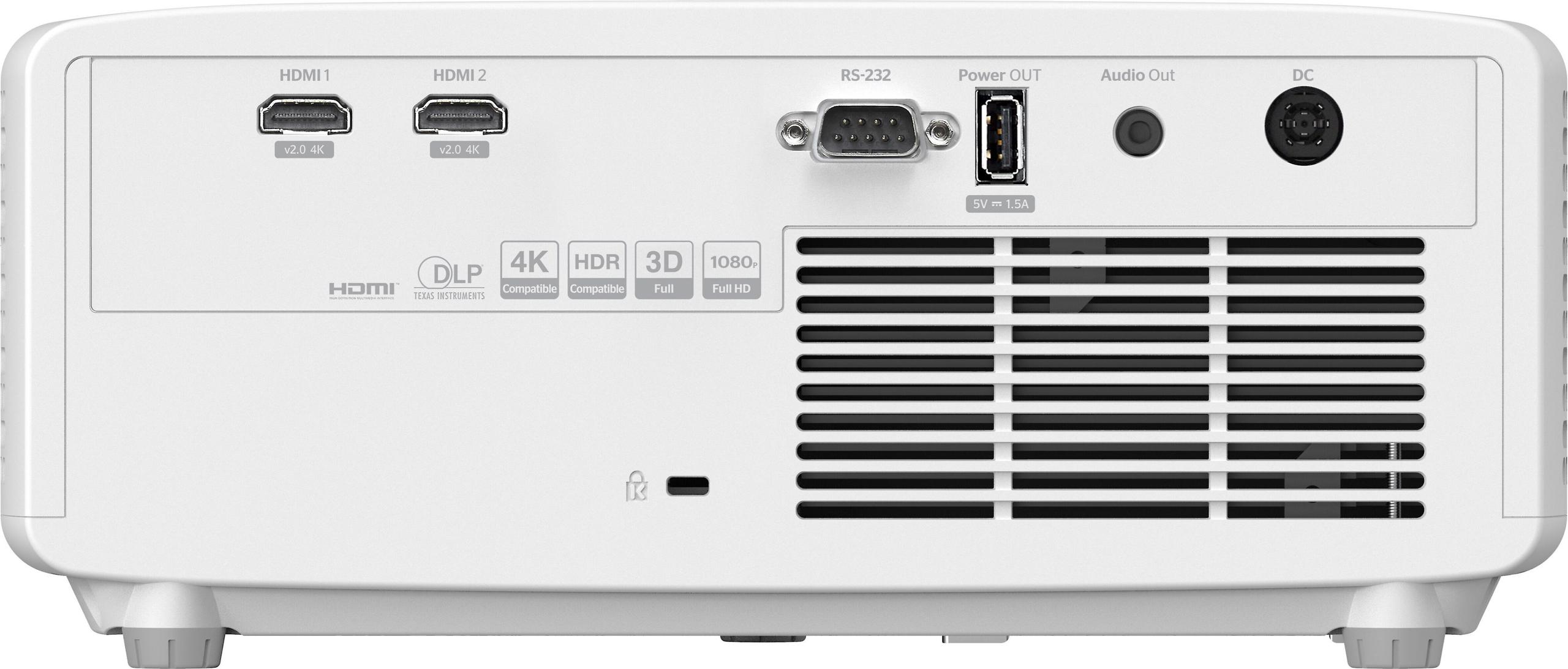
The Optoma HZ40HDR includes two HDMI 2.0 inputs, giving you the ability to connect multiple devices simultaneously without requiring manual switching or an external HDMI switcher. It also features a USB port that provides power (useful for streaming sticks) and an RS-232 port for integration with home automation systems—a nod to its more installation-focused approach.
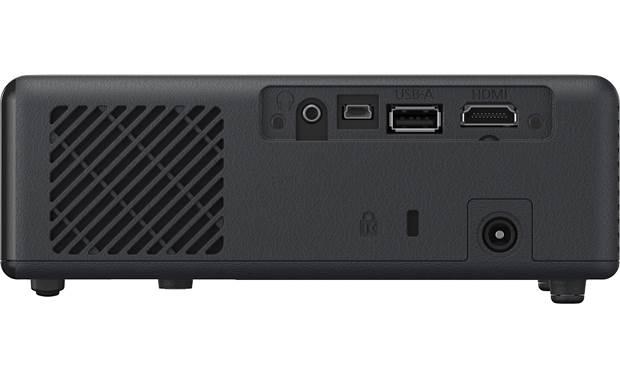
The Epson EpiqVision Mini EF11 offers a more streamlined connection set with a single HDMI input plus USB Type-A and Type-B ports. This simpler approach aligns with its portable nature, though it does mean you'll need to manually switch sources if you use multiple devices. The Epson works particularly well with streaming sticks like Roku, Fire TV, or Apple TV, creating an all-in-one portable entertainment system.
Neither projector includes built-in smart TV functionality, which has become more common in newer models released since 2020. This omission means you'll need to provide your own content source, whether through a streaming device, Blu-ray player, or gaming console.
One of the most significant advantages of laser projection is the extended lifespan of the light source compared to traditional lamp-based projectors. The Optoma offers up to 30,000 hours of laser life, while the Epson provides 20,000 hours.
To put this in perspective, even with heavy usage of 4 hours daily, the Optoma would last over 20 years before requiring light source replacement. More realistically, most users will likely upgrade their projector long before the laser reaches end-of-life. This longevity essentially eliminates the maintenance costs associated with lamp replacements in traditional projectors.
Both projectors require minimal maintenance beyond occasional dust removal from external vents. Neither has user-replaceable air filters, which simplifies maintenance but means dust management is handled internally by the projector's design.
Laser projectors generally consume less power than equivalent lamp-based models, and both of these projectors include eco modes that further reduce energy consumption. The Optoma, with its higher brightness, naturally draws more power—approximately 220 watts during standard operation and about 140 watts in eco mode.
The Epson's lower brightness translates to reduced power consumption, using approximately 115 watts during operation and around 70 watts in eco mode. This efficiency difference would be noticeable in your electric bill if using the projector frequently, though the overall impact is small compared to other household appliances.
The Optoma HZ40HDR typically retails around $1,299, positioning it in the mid-range of home theater projectors. Considering its 4,000 ANSI lumens brightness, HDR support, and gaming-friendly features, it offers excellent value for those seeking a versatile projector that can perform well in various lighting conditions.
The Epson EpiqVision Mini EF11 is priced at approximately $699, making it significantly more affordable while sacrificing some brightness and features. This price point reflects its positioning as a premium portable projector rather than a dedicated home theater solution.
When evaluating value, consider not just the initial purchase price but also the total cost of ownership. Both projectors eliminate the recurring expense of lamp replacements, making their total ownership costs lower than similarly priced lamp-based alternatives.
The Optoma HZ40HDR excels as a versatile performer that bridges the gap between dedicated home theater projectors and everyday living room use. Its high brightness allows it to perform admirably even when ambient light can't be fully controlled, while its gaming capabilities make it a genuine alternative to a large-screen TV for console gamers.
The Epson EpiqVision Mini EF11 represents a different approach to home projection—one that prioritizes lifestyle integration and convenience. Its ultra-portable design and intuitive setup make it perfect for users who want projection capability without dedicating permanent space to a home theater setup.
Both the Optoma HZ40HDR and Epson EpiqVision Mini EF11 represent thoughtful approaches to modern laser projection, but they serve distinctly different user needs. The Optoma emphasizes performance metrics and installation flexibility, while the Epson prioritizes portability and ease of use.
Your specific viewing environment, content preferences, and usage patterns should guide your decision. If you're creating a dedicated viewing space where the projector will remain permanently installed, the Optoma's superior brightness and contrast will likely provide a more satisfying experience. If you value the ability to easily move your projection system between rooms or locations, the Epson's compact form factor and user-friendly features make it the better choice.
Whatever your decision, both projectors demonstrate how far home projection technology has advanced, bringing formerly high-end laser technology to more accessible price points and form factors than ever before.
| Optoma HZ40HDR 1080p Projector | Epson EpiqVision Mini EF11 Laser Projector |
|---|---|
| Brightness - Critical for viewing with ambient light | |
| 4,000 ANSI lumens (excellent for bright rooms) | 1,000 lumens (requires dimmer environment) |
| Display Technology - Affects color accuracy and image characteristics | |
| DLP (single-chip) with color wheel | 3LCD (three separate panels, no rainbow effect) |
| Size & Weight - Determines portability and installation options | |
| 10.79" × 4.49" × 8.50", 6.6 lbs (standard projector size) | 6.9" × 6.9" × 2.6", 2.7 lbs (ultra-compact, highly portable) |
| Light Source Lifespan - Affects long-term maintenance costs | |
| 30,000 hours (≈20 years of typical use) | 20,000 hours (≈13 years of typical use) |
| Contrast Ratio - Impacts black levels and image depth | |
| 300,000:1 (deeper blacks, better dark scene detail) | 200,000:1 (good but less dramatic shadow detail) |
| Gaming Performance - Critical for interactive content | |
| 8.6ms input lag at 1080p/120Hz (excellent for competitive gaming) | ≈50-70ms input lag at 60Hz (suitable for casual gaming only) |
| HDR Support - Enhances dynamic range for compatible content | |
| Yes (HDR10 and HLG compatible) | No (but includes Scene Adaptive Color Correction) |
| Throw Ratio - Determines required distance from screen | |
| 1.48:1 - 1.62:1 (requires more distance) | 1.0:1 (can be placed closer to screen) |
| Audio Solution - Affects need for external speakers | |
| 15W mono speaker (adequate for casual viewing) | Dual 1.5W speakers (innovative design but less powerful) |
| Setup Features - Impacts ease of installation | |
| Manual keystone correction (±30° V/H) | Auto Picture Skew Correction, enhanced keystone (±34° V, ±40° H) |
| Connectivity - Determines source flexibility | |
| 2× HDMI 2.0, USB power, RS-232 | 1× HDMI, USB Type-A and Type-B |
| Approximate Price - Overall value consideration | |
| $1,299 (premium price for brightness and features) | $699 (excellent value for portability and simplicity) |
| Best For - Primary use case recommendation | |
| Dedicated home theaters, bright rooms, and gaming | Portable use, multi-room flexibility, and space-constrained setups |
The Optoma HZ40HDR is significantly better for bright rooms with its 4,000 ANSI lumens compared to the Epson EpiqVision Mini EF11's 1,000 lumens. The Optoma can maintain a vibrant, visible image even with ambient light, making it ideal for living rooms with windows. The Epson requires more controlled lighting to perform at its best. For daytime viewing or rooms where light control is challenging, the Optoma HZ40HDR is the clear choice.
The Epson EpiqVision Mini EF11 is substantially more portable, weighing just 2.7 pounds with a compact cube design (6.9" × 6.9" × 2.6"). The Optoma HZ40HDR follows a traditional projector form factor at 6.6 pounds and measures 10.79" × 4.49" × 8.50". If you need to move your projector between rooms or take it to different locations, the Epson EpiqVision Mini EF11 offers much greater convenience and portability.
For overall picture quality, the Optoma HZ40HDR has advantages with its higher 300,000:1 contrast ratio and HDR10/HLG support, producing more dynamic images with better black levels. However, the Epson EpiqVision Mini EF11 uses 3LCD technology that eliminates the "rainbow effect" sometimes seen with DLP projectors and produces more accurate colors. In a properly darkened room, the Optoma's higher brightness and contrast give it an edge, especially for HDR content, but the Epson offers excellent color accuracy. For movie enthusiasts, the Optoma HZ40HDR typically provides a more theater-like experience.
The Optoma HZ40HDR is significantly better for gaming with its extremely low 8.6ms input lag at 1080p/120Hz, making it suitable even for competitive gaming. It also supports higher refresh rates up to 120Hz for smoother motion. The Epson EpiqVision Mini EF11 has higher input lag (approximately 50-70ms) and is limited to 60Hz, making it adequate only for casual, non-competitive gaming. For gamers, the Optoma HZ40HDR offers a much more responsive experience.
The Optoma HZ40HDR typically retails for around $1,299, while the Epson EpiqVision Mini EF11 is priced at approximately $699. This $600 difference reflects the Optoma's higher brightness, contrast ratio, and gaming capabilities. The Epson offers better value if portability is your priority, while the Optoma provides better value for dedicated home theater use and bright room performance. Your specific needs will determine which projector represents the better investment.
The Epson EpiqVision Mini EF11 has a shorter throw ratio of 1.0:1, meaning it can be placed closer to the screen. For a 100-inch image, it needs about 8.5 feet of distance. The Optoma HZ40HDR has a throw ratio of 1.48:1 to 1.62:1, requiring approximately 10-11 feet for the same image size. If you have space constraints, the Epson's shorter throw ratio provides more placement flexibility in smaller rooms.
The Optoma HZ40HDR features a more powerful 15W mono speaker that produces louder audio suitable for larger rooms. The Epson EpiqVision Mini EF11 uses an innovative dual-speaker system (high frequency + bass reflex) but with only 1.5W of power. While the Optoma delivers more volume, the Epson provides better audio balance despite its lower power. For casual viewing without external speakers, the Optoma generally provides more satisfying audio, especially in larger spaces. However, for optimal home theater sound, external speakers are recommended with either projector.
The Optoma HZ40HDR offers a longer laser lifespan of 30,000 hours compared to the Epson EpiqVision Mini EF11's 20,000 hours. With typical use of 4 hours daily, the Optoma would last approximately 20 years before requiring light source replacement, while the Epson would last about 13 years. Both projectors eliminate the maintenance costs associated with lamp replacements in traditional projectors, but the Optoma provides 50% more longevity.
The Epson EpiqVision Mini EF11 offers easier setup with its Auto Picture Skew Correction that automatically adjusts the image geometry. It also has more extensive keystone correction (±34° vertical, ±40° horizontal). The Optoma HZ40HDR provides manual keystone correction (±30° vertical and horizontal) but lacks automatic adjustment features. For users who want plug-and-play simplicity, especially when moving the projector between locations, the Epson provides a more user-friendly setup experience.
Neither the Optoma HZ40HDR nor the Epson EpiqVision Mini EF11 has native 4K resolution—both offer Full HD (1920×1080) resolution. The Optoma can accept 4K input signals and downscale them to 1080p, and it supports HDR content for enhanced dynamic range. The Epson also accepts 4K signals but downscales them without HDR processing. If you primarily watch 4K content, both projectors will display it at 1080p, with the Optoma providing better handling of HDR elements.
For a dedicated home theater setup, the Optoma HZ40HDR offers superior performance with its higher brightness (4,000 ANSI lumens), better contrast (300,000:1), and HDR support. These features create a more immersive cinematic experience, especially for movie content with dramatic lighting and dark scenes. The Epson EpiqVision Mini EF11 performs well in a dedicated dark room but lacks the Optoma's contrast capabilities and HDR support. For serious movie enthusiasts creating a permanent home theater space, the Optoma HZ40HDR provides a more theater-like experience.
The Optoma HZ40HDR provides more connectivity options with two HDMI 2.0 inputs, a USB power port (useful for streaming sticks), a 3.5mm audio output, and an RS-232 port for home automation integration. The Epson EpiqVision Mini EF11 offers a single HDMI input plus USB Type-A and Type-B ports. If you need to connect multiple devices simultaneously (like a gaming console and a streaming device), the Optoma's dual HDMI inputs provide greater flexibility without requiring manual switching or an external HDMI switcher.
We've done our best to create useful and informative comparisons to help you decide what product to buy. Our research uses advanced automated methods to create this comparison and perfection is not possible - please contact us for corrections or questions. These are the sites we've researched in the creation of this article: projectorcentral.com - youtube.com - picclick.com - crutchfield.com - homecinemachoice.com - compsource.com - bestbuy.com - adorama.com - bhphotovideo.com - provantage.com - cdw.com - datavision.com - optomausa.com - manua.ls - ipcstore.com - pcrichard.com - richersounds.com - electronicexpress.com - projexdisplay.com - dubaimachines.com - newegg.com - projectorpoint.co.uk - a.ubuy.com.kw - greentoe.com - bestbuy.com - bhphotovideo.com - youtube.com - bestbuy.com - gagadget.com - epson.com - projectorreviews.com - audiogeneral.com - projectorreviews.com - epson.com - youtube.com - epson.com - youtube.com - mediaserver.goepson.com - files.support.epson.com - staples.com - projectorcentral.com - bestbuy.com - planettv.com - dell.com - epson.eu - projectortop.com

Privacy Policy
Terms and Conditions - Affiliate Policy
Home Security
© Copyright 2008-2026.
11816 Inwood Rd #1211, Dallas, TX 75244